Specs are compiled from manufacturer listings and verified buyer reviews and can change over time — please confirm the key details on the product page before buying.
You want protection that you will actually wear on a Tuesday commute, not gear that hangs in the closet because it looks like a racing suit. That is the real test for street bike clothing, and the picks below pass it. Each one hides CE armor inside something you would wear off the bike too — a flannel, a pair of jeans, a plain black textile jacket. The trick is knowing what the armor ratings mean and how the cut fits a normal body, and this guide walks you through both before you spend a dime.
This guide is built by comparing the manufacturers’ published specifications and the patterns across verified customer reviews, so you get each pick’s real strengths and trade-offs instead of marketing spin.
Fit and armor placement decide whether a jacket actually protects you, so the picks below cover both. The real goal is street bike clothing that disappears into your daily routine rather than announcing itself.
Top Picks

How To Choose The Best Street Bike Clothing
The biggest mistake new riders make is buying gear for the showroom mirror instead of the road. A jacket with gorgeous styling but armor that shifts out of place when you raise your arms gives you almost nothing in a fall. Start with protection that stays put, then work backward to the look you want.
Start With The Armor, Not The Look
CE armor is rated impact foam that sits at your shoulders, elbows, hips, or knees. CE Level 2 armor absorbs more force in a test than Level 1, which is why you see it called out on premium jackets. Removable pads matter because you can pull them for a wash or swap in a thinner set if a jacket feels tight. Always check that shoulder and elbow pads are included and adjustable — a pad that floats an inch off your joint will not help when it counts.
Match The Fabric To The Season You Actually Ride
Mesh textile jackets breathe like a screen door and keep you cool in summer heat. Leather jackets are heavier and block wind better when the temperature drops. A denier rating tells you how thick the fabric yarn is: 600D Oxford is a durable everyday weave, while 1300D nylon is a heavier build meant for abrasion. If you ride year-round, look for a zip-out thermal liner that turns one jacket into two.
Size For The Armor, Not Your Street Clothes
Armored gear runs snugger than the T-shirt you measure against, so nearly every maker here suggests a size up when padding is installed. Riding jeans are their own puzzle: waist size on the tag does not match your jeans size, so use the maker’s chart (waist, hip, thigh) rather than guessing. A jacket you cannot move your arms in is worse than no jacket at all, because you will leave it in the closet.
Side-by-Side Comparison
| Model | Best For | Armor | Season | Material | Amazon |
|---|---|---|---|---|---|
| Milwaukee Leather MPM1730★ Best Overall | Year-round riders who want an all-season workhorse | Reflective skull stitching, padded panels | All season with zip-out liner | 1300D Nylon / Textile | Amazon |
| RIDEIRON / LOMENG Riding Jean (Model LMPM06A)Best Value Pants | Riders who want jeans that pass for regular jeans | Removable CE armor (hip and knee pads included) | Mild weather | Cotton / Polyester / Spandex | Amazon |
| IRON JIA’S Summer JacketSummer Pick | Hot-climate riders, city commuting | CE-certified shoulders/elbows + EVA back | Warm weather mesh | 600D Oxford fabric | Amazon |
| Milwaukee Leather MPM1792 | Summer city riding with high-visibility needs | Removable CE armor at shoulders and elbows | Warm weather mesh | 100% Nylon Mesh / Textile | Amazon |
| RIDEIRON Vintage Jacket | Cold-weather riders who want CE Level 2 | Removable CE Level 2 shoulders/elbows + EVA back | Cold weather with thermal liner | Polyester | Amazon |
| ILM JAM1 | All-weather commuters who want one jacket to do it all | CE protectors at elbows, shoulders and back | All season with detachable liner | Mesh + 600D Oxford | Amazon |
| COMMUTER Buffalo Leather | Leather purists who ride in every weather | 5PC removable CE armor, pre-installed | All seasons with quilted liner | 1.2 – 1.3 mm Buffalo Leather | Amazon |
| WICKED STOCK Riding Pants | High-mileage riders who want aramid-reinforced denim | CE Level 2 armor with 3 placement options | Mild to warm weather | 13OZ Denim + Aramid Fabric | Amazon |
| Vance Leathers Flannel | Cruisers who want armor without a stiff outer shell | CE approved armor + DuPont/Kevlar reinforcement | All seasons with underarm vents | 90% Cotton / 10% DuPont | Amazon |
Detailed Reviews
1. Milwaukee Leather MPM1730 Motorcycle Jacket
Our pick — 4.5+★ from 500+ verified ratings; the strongest balance of quality and price.
The all-season textile jacket that goes from cold morning commute to warm afternoon ride without swapping gear.
This jacket takes the top spot because its shell should last longer against road rash. The shell is 1300D nylon (a heavy, thick weave), heavier than the 600D Oxford (a lighter nylon weave) on several other picks in this list, so it feels more substantial in the hand. The reflective skull artwork runs across the chest, arms, and back, so oncoming headlights catch it from every angle at night. A zip-out liner (a removable inner layer) lets you wear it insulated in fall and strip it down in warmer weather.
The 2015 launch date might make you wonder about stale design, but that longevity tells you something else: this jacket still sells because riders keep coming back to it. It holds a 4.5+ rating across 500+ ratings, which is the kind of staying power that rarely happens with gear that disappoints. The 4.2-pound weight keeps it from dragging on your shoulders during long rides, and the venting setup — two chest vents, arm vents, and back vents — lets you control airflow without taking the jacket off.
The honest catch is sizing: the pattern runs small, and even a size up stays snug for some riders. The pattern runs small for some riders, and a size up is still snug in a few cases, so a proper measurement against their chart matters more than usual here. The padded collar helps comfort, but this is a jacket that rewards an accurate fit. Also worth noting: the reflective skulls are a style choice that divides people — if you want a plain look, this is not the one.
What Makes It The Winner
- 1300D nylon shell is heavier than the 600D Oxford on most competitors, giving more abrasion resistance in a slide.
- Reflective artwork on chest, arms and back keeps you visible from behind at night.
- Zip-out liner plus chest, arm and back vents handle temperature swings across seasons.
- Conceal-and-carry interior pockets work as regular storage too, which is useful for phones and wallets.
- Genuine YKK zippers hold up over repeated use.
What To Size Around
- Sizing runs small for some riders — the pattern often needs a full size up, and a few find even that snug.
- Reflective skull graphics are bold and not for a low-key look.
- This is a padded textile jacket, not a hard-armor shell, so extreme-impact riders may want dedicated CE armor.
Choose this if: you want one jacket that handles a three-season commute and you like a bit of visual personality in your gear.
Measure first: order against Milwaukee’s own size chart, because a guess here costs you a return shipping label.
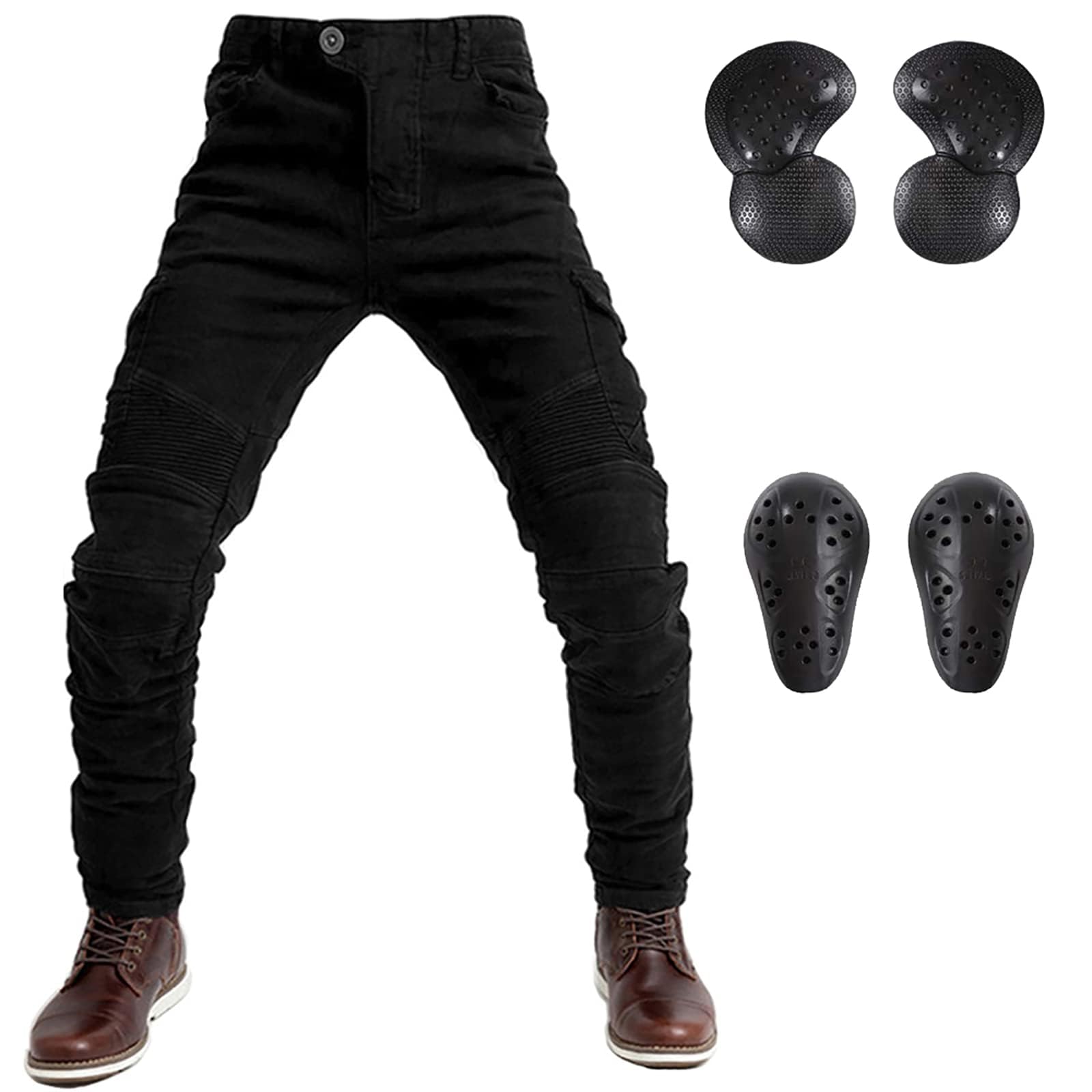
2. LOMENG Armored Motorcycle Pants
Armored riding jeans that come with knee and hip pads in the box, not as a paid add-on.
For riders who want protection without the full-leather look, these jeans are the entry point. The cotton, polyester, and spandex blend gives a bit of stretch so you can swing a leg over the bike without fighting the fabric, and the knee and hip pads arrive included rather than as a separate purchase. Breathable soft denim keeps them wearable in mild weather, and five color options — military green, blue, black, camouflage, and khaki — mean you can match a jacket you already own.
Sizing is where these jeans need real attention. The chart lists waist, hip, thigh, and length across six sizes, but the sizing feedback is split: some riders find the fit good while others say the jeans run big and the chart reads inaccurately. That means you should measure your actual waist and compare it to the recommended inch range for each size rather than trusting your normal jeans label. The indigo dye is note too — it can fade with sweat and friction, so wash these separately from other clothes.
The protection level is honest about what it is: hip and knee padding, not full abrasion armor across the whole leg. Riders who slide at highway speed will want more, while city commuters get a sensible compromise. Given the included pads and the breathable denim, this is a fair way to add leg protection when you are building a wardrobe piece by piece.
Where the value lands: included knee and hip pads at an entry-level price make these a smart first armored pant — you are not buying the pads separately.
Set your expectations: this is padding, not full-coverage abrasion protection, and the size chart is worth double-checking with a tape measure before you order.
Fits your plan if: you are building a starter kit and want leg armor without a big outlay.
Keep shopping if: you ride mostly at highway speed and want aramid or heavier denim across the whole leg.
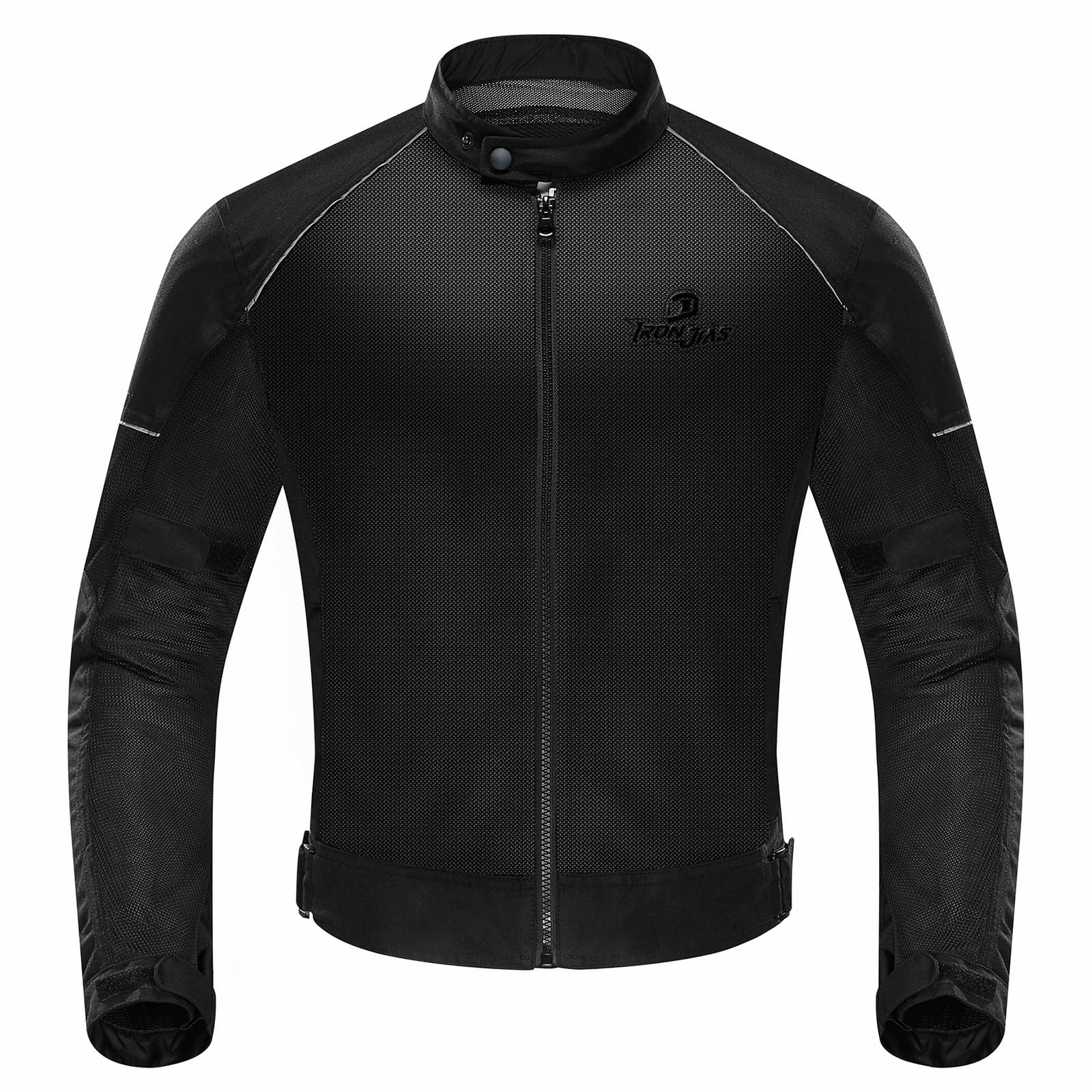
3. IRON JIA’S Summer Motorcycle Riding Jacket with CE Certified
Mesh that moves air at a standstill, so a Texas summer commute does not turn into a sauna.
Hot-weather riding is a different problem from cold-weather riding, and this jacket is built for the first. The 600D Oxford fabric is paired with mesh construction so air actually flows through the shell while you ride — the breathability is the point, not a bonus. CE-certified armor sits at the shoulders and elbows with an EVA back protector, all removable so you can wash the jacket or swap pads. Reflective strips on the shoulders carry over to night riding, and zippered side pockets hold keys and a phone.
What wins people over beyond the cooling is the cut. This is a fitted, lightweight jacket, and the longer back means it stays tucked under your jacket line and covers the top of your pants instead of riding up at speed. Adjustable hook-and-loop straps at the upper arms, cuffs, collar, and hem let you snug it down so the armor stays where you put it. The sleeve length is generous enough that reaching for the handlebars does not pull the cuffs away from your gloves.
The recurring gripe is sizing — it runs small, and the maker says so in plain language. If you normally wear an extra-large, you likely want the size above it, especially with armor in. The fitted cut and no-stretch fabric mean there is no forgiveness if you guess wrong. Get the size right, though, and this is a jacket that keeps you cool through the hottest months without stripping away protection.
Why Riders Keep It On
- Mesh construction across a 600D Oxford shell keeps airflow moving in hot weather.
- CE-certified shoulder and elbow armor with an EVA back protector, all removable.
- Longer back and sleeve length stop the jacket riding up at the bars.
- Adjustable straps at arms, cuffs, collar and hem lock the armor in place.
- Reflective shoulder strips help at night.
The Sizing Reality
- Runs small — the maker recommends going one size up when armor is installed.
- No-stretch fitted fabric means a wrong size cannot be shrugged off.
- Built for warm weather only, so you need a second jacket for cold mornings.
Worth grabbing if: your riding season is mostly hot and you want armor that does not roast you.
Plan around: ordering a size up and keeping a heavier jacket for the shoulder seasons.
4. Mens Armored Checkered Flannel Biker Shirt
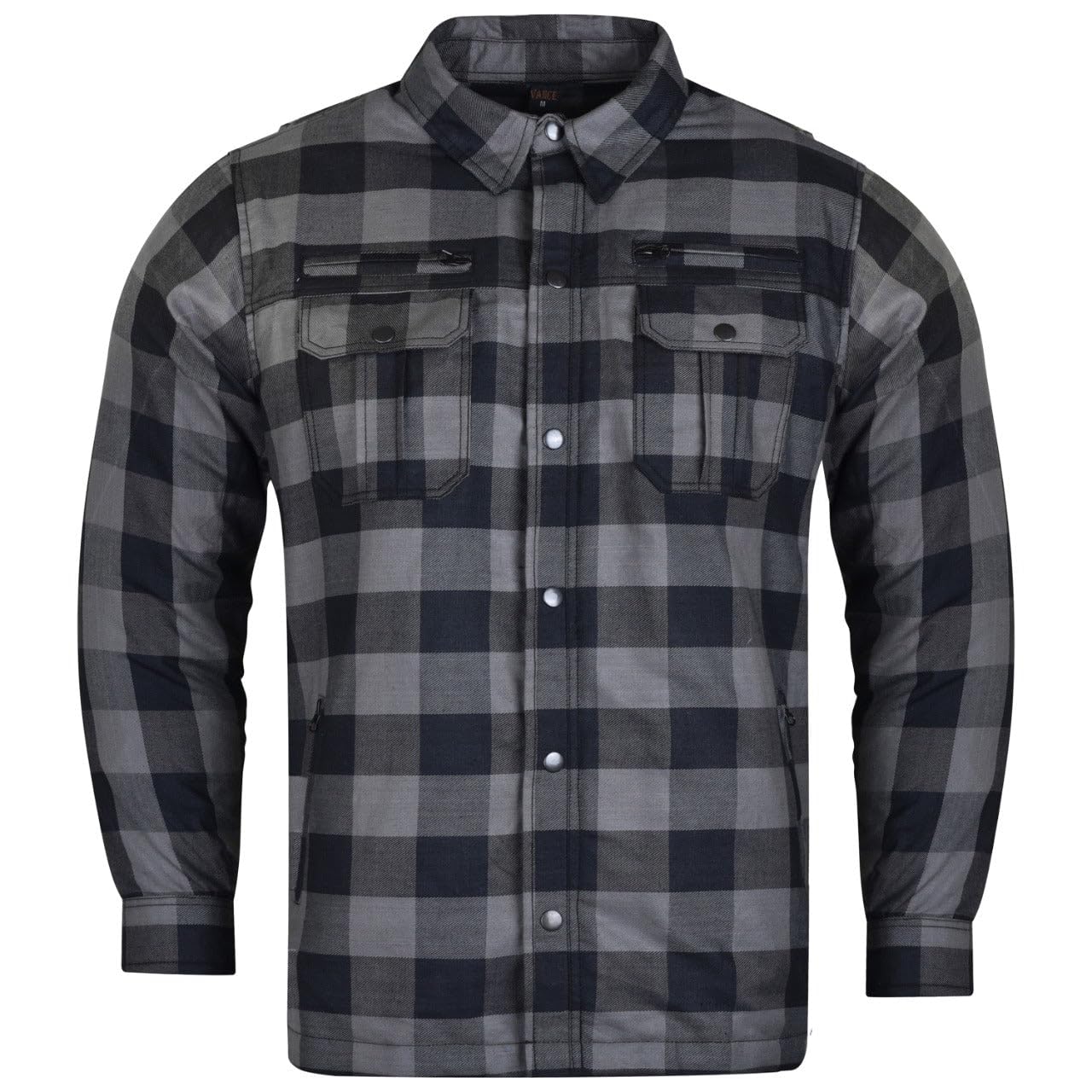
A plaid flannel that looks like workwear and hides CE armor under the snaps.
This is the pick for the rider who wants to walk into a bar or a job site and not look like they just stepped off a track bike. The shell is 90% cotton with 10% DuPont, reinforced with Kevlar fiber for abrasion resistance during a slide. CE-approved armor sits at the shoulders and elbows, and underarm ventilation zippers let you dump heat on warm rides. A fixed mesh liner keeps the inside from clinging, and the hidden front zipper behind snap buttons means the closure actually holds at speed.
The color range is the widest on this list — red, black and white, blue and black, black and grey, orange and black, green and black, plus a blue and white and a Timberwolf white and grey. Waterproof zipper pockets and snap-close outer pockets handle storage, and there are inner pockets too. If you ride a cruiser and want the flannel look with real protection built in rather than a jacket thrown over a T-shirt, this fits the bill without a costume-change at your destination.
Two trade-offs matter. First, sizing runs small for a good number of riders, so measure rather than assume your normal flannel size. Second, the zipper quality draws mixed feedback — treat the front zip and pocket zips with some care rather than yanking them. Neither issue makes the shirt bad; it just means you should respect the closure and confirm the fit before you order.
The real draw: cotton flannel comfort with CE armor and Kevlar reinforcement underneath, so the protection is there without a stiff outer shell.
Sizing caveat: fit feedback splits between true-to-size and runs-small, so a tape measure settles the argument.
Reach for this if: you want armored gear that passes as a normal shirt on and off the bike.
Look elsewhere if: you need waterproofing across the whole garment rather than just the pocket zips.
5. Milwaukee Leather MPM1792 Motorcycle Jacket

The mesh jacket that puts high-viz green and reflective piping where drivers will actually see it.
Mesh jackets protect you in the heat, but the visibility problem is just as real on a city street. This jacket solves both. The 100% nylon mesh outer shell flows air, reflective piping runs on both the front and back for night visibility, and the high-viz green panels give drivers a reason to notice you in daylight. CE-approved armor sits at the shoulders and elbows, removable, and the maker states it passes the EN1621-1 and EN1621-2 impact tests — those are the standard European ratings for limb and back impact protection.
A full-sleeve zip-out liner means one jacket carries you from a hot afternoon into a cool evening, and adjustable side straps and arm straps let you dial in the fit so the armor stays put. The interior gets a cell phone pocket with a bonus media pocket, plus dual inside pockets that work for concealed carry or plain storage. YKK zippers appear throughout, which matters on a jacket you plan to zip and unzip daily. At 7 pounds it is heavier than the IRON JIA’S summer mesh jacket, so the trade-off is more structure for slightly more heft.
What makes it worth a look for urban riders is the combination: CE armor, reflective piping, high-viz color, and a zip-out liner in one garment. The mesh shell itself is thin, so it is warm-weather gear at heart, and the high-viz green is not a subtle color choice. If you want to be seen in traffic and you ride where summer is long, this is a sensible match.
Best for: city riders who want to be seen by drivers and stay cool at the same time.
Know before you buy: the high-viz green is loud, and the mesh shell is built for warm weather first.
6. RIDEIRON Motorcycle Jacket
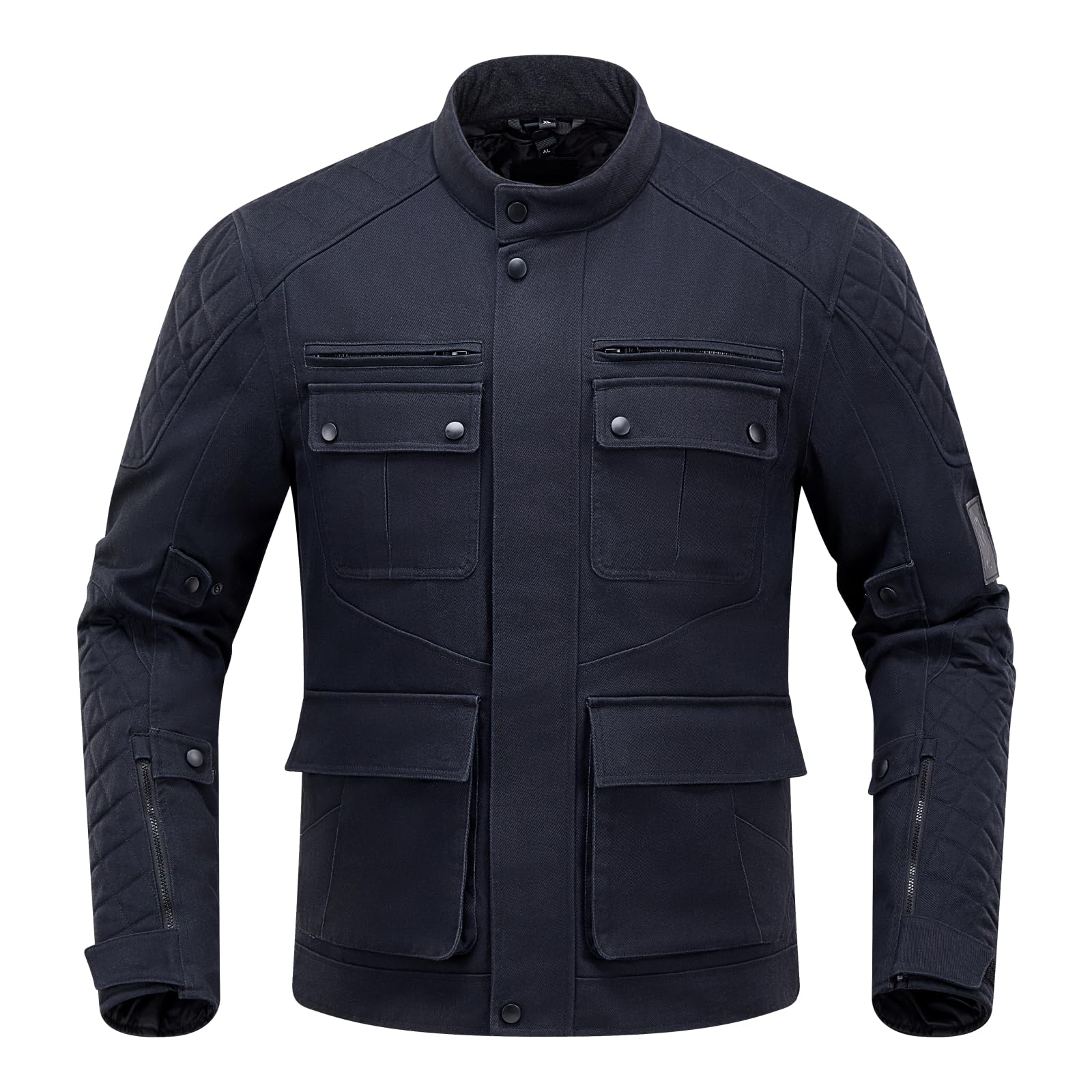
Vintage workwear looks with CE Level 2 armor and a thick liner for the cold months.
CE Level 2 armor is the highest impact rating commonly sold in consumer riding gear, and this jacket has it at the shoulders and elbows, removable, plus a removable EVA back protector. For a cold-weather jacket, that matters: you are often riding at speed with less ability to react, and the extra impact absorption is genuine protection. The shell is heavyweight polyester with a band collar and an aviator silhouette, and the diamond-quilted shoulders and retro pockets carry the vintage look. Windproof and insulated, according to the maker’s own climate specs.
The thick removable thermal liner zips out when the day warms up, so this jacket can work in mild conditions too. Back ventilation zips let you dump heat on a warm afternoon, and adjustable cuffs keep the sleeves from flapping. Multiple outer pockets hold your essentials without stuffing your jeans. The 4.5+ rating across 90+ ratings suggests this newer model is landing well with the riders who have tried it.
The honest limitation is fit: the cut is fitted with no stretch, and the maker recommends a size up if you wear the armor or the liner. That is typical of vintage-cut jackets, but it means you should not assume your usual size works. The small review base also means fewer long-term durability reports than the older jackets on this list, so early buyers are the ones setting the track record.
What makes it protective: CE Level 2 shoulder and elbow armor plus an EVA back protector is a step above the padded textile jackets on this list.
What to plan for: a full size up if you are layering armor and liner, and a smaller owner base than the established Milwaukee picks.
The right call for: cold-weather riding where you want the highest armor rating and a vintage look.
Better to look at: the mesh picks if you ride mostly in heat and want maximum airflow.
7. WICKED STOCK Riding Pants

Jeans with aramid reinforcement and CE Level 2 armor you can place three different ways.
Aramid fabric — the same family of fiber used in racing suits — is flame resistant and abrasion resistant, and it is woven into these jeans to help you in a worst-case slide. The denim is 13OZ heavy, meaning it feels more like a work pant than the stretchy riding jeans elsewhere on this list. CE Level 2 armor at knee height is adjustable across three possible placements, so you can position the pad where your knee actually sits. Four color options give you some flexibility with the rest of your kit.
What owners keep coming back to is the look. These are styled like regular jeans rather than a riding pant with visible pad bulges, so you can wear them into a restaurant and not feel out of place. The armor settles in a way that many describe as unnoticed while riding, and the heavy denim gives a solid feel. For a commuter who wants the denim aesthetic with real armor built in, this is the premium leg-protection choice on this list.
The 4.0+ rating across 360+ ratings signals that this is a good product that is not for everyone. The heavier denim takes some break-in, and the armor position is a matter of personal fit — you may need to adjust the knee pads more than once to get them to sit right. If you want lightweight summer jeans, these will feel substantial. If you want to know the armor is there, that weight is the point.
Why They Earn A Spot
- Aramid fabric inside the denim adds flame and abrasion resistance.
- CE Level 2 armor with three positioning options lets you refine the knee placement.
- 13OZ heavy denim holds up to real-world wear.
- Styled to look like regular jeans rather than obvious riding gear.
Weigh These Against Your Ride
- Heavier denim takes some break-in and feels substantial in summer heat.
- Armor positioning may need adjusting to find your balance.
- Lower overall rating than the top textile jackets on this list.
Go for these if: you want premium leg armor that looks like denim, not like a track suit.
Hold off if: you want featherweight summer riding pants — the 13OZ denim is not that.
8. ILM JAM1 Motorcycle Riding Jacket

A mesh jacket with a waterproof thermal liner that can handle a cold morning and a warm afternoon.
This is the do-everything jacket on the list. Abrasion-resistant mesh sits where you need airflow, with thickened 600D Oxford fabric at the shoulders and elbows for extra abrasion resistance at the high-impact points. CE protectors at the elbows, shoulders, and back come installed and are lightweight. The detachable waterproof and warm liner flips it from summer airflow to cold-weather riding without a second jacket, and the adjustable hem and cuffs let you dial in the fit to your riding position.
What riders report is that the ventilation works while riding and the warmth holds up when layered properly — one customer specifically notes it is comfortable down to about 50 degrees Fahrenheit with the liner in. That is a useful real-world benchmark because it tells you the season window. The 4.5+ rating across 270+ ratings puts it at the higher end of this list, and the mesh-plus-600D construction is a sensible compromise between airflow and durability.
The catch is that no single jacket does both seasons perfectly. With the liner out, this is a warm-weather mesh jacket; with it in, you get cold protection but less airflow. If your commuting season is genuinely four-season, this is a strong middle ground, but a dedicated mesh-only jacket and a dedicated cold jacket will each outperform it at the extreme ends. That is the trade-off for the convenience of one piece of gear.
Why it made the list: installed CE protectors, 600D Oxford at the shoulders and elbows, and a waterproof thermal liner make this a genuine all-season jacket.
What to expect: it is a compromise between a summer mesh jacket and a winter jacket, so expect to feel some trade-off at both extremes.
Ideal for: commuters who ride through multiple seasons and want one jacket to cover it.
Alternatively: if you ride only in summer, a mesh-only jacket breathes better.
9. COMMUTER Motorcycle Jacket
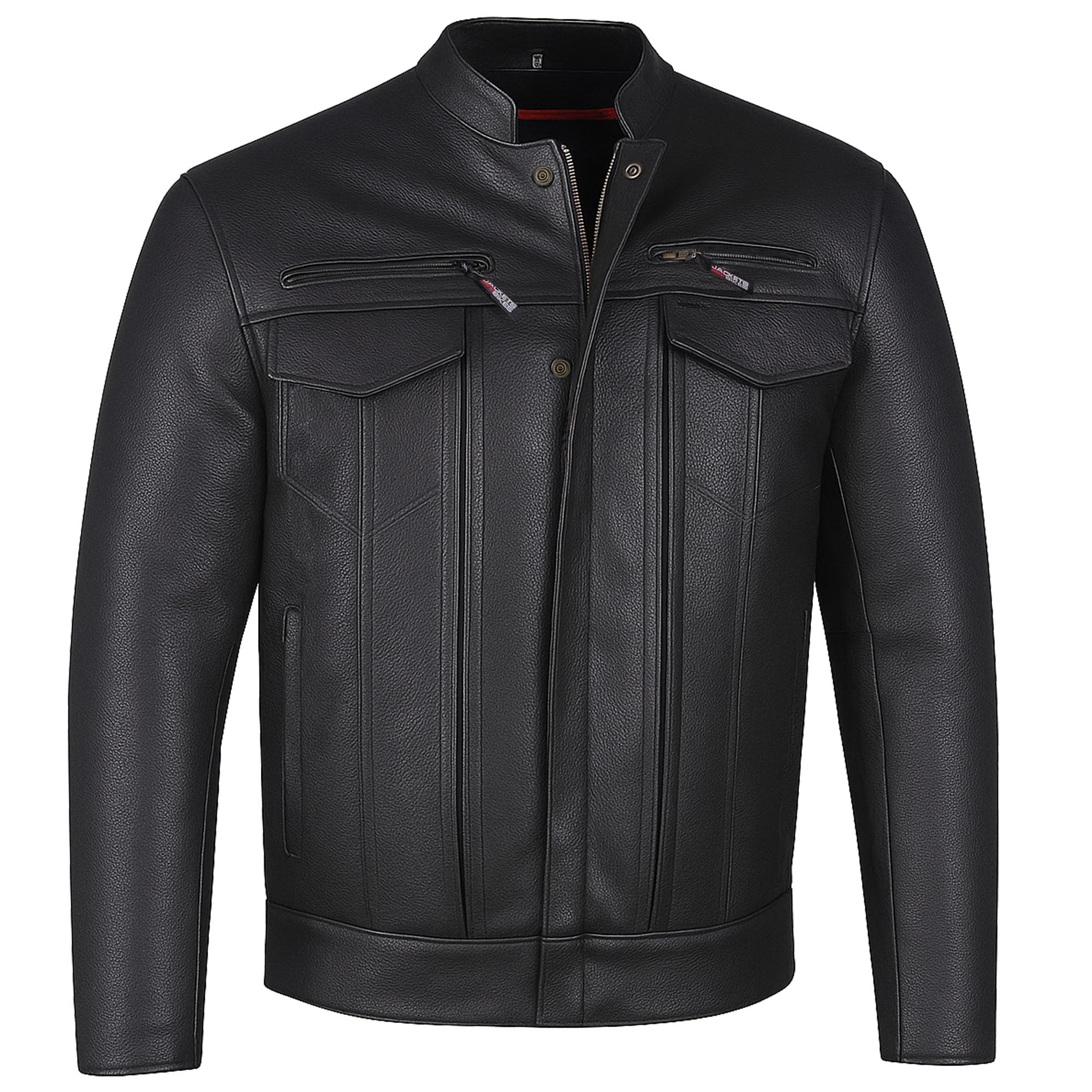
Buffalo leather that breaks in soft like cotton and carries five removable CE armor pads.
The leather is 1.2 – 1.3 mm thick buffalo hide, and it feels soft and supple from the start. The maker says it resists normal wear and tear, and buyers report the same — the leather starts tough and softens over time until it feels like cotton. Five-piece CE armor (impact padding tested to the CE safety standard) comes pre-installed at the shoulders and elbows. A large leather back panel takes patches if you want to add club or event colors. Eight pockets — four outside and four inside — include two secure interior pockets and a phone pocket, so it carries your gear in a way leather jackets rarely do.
What wins people over is the finish. Riders call out the quality of the leather, the tight stitching, and the smooth zippers — and one consequence is that it does not have the plastic sheen of cheaper leather. Original YKK metal zippers, full-sleeve zip-out liner, action back for shoulder mobility, zippered cuffs, grommets under each arm, and a mandarin collar round out the build. The concealed carry pockets on both sides work for left- and right-handed riders, which is rare.
The honest trade-off is weight: 1.2 – 1.3 mm buffalo hide is heavy on the shoulders and needs break-in before it moves like a second skin. This is a heavy jacket — riders note it and it is the price of real leather. It also needs a bit of break-in time before it moves like a second skin. The durability feedback is mixed in that some riders report long life and others have had issues, so treat it as a well-made jacket that you should care for rather than a piece you ignore. The sizing runs true for most, with room to layer underneath, which is welcome on a leather jacket.
The leather difference: 1.2 – 1.3 mm buffalo leather feels noticeably softer than thicker hides and breaks in over time instead of staying stiff.
Know what you are lifting: this is a heavy jacket with a real break-in period — the durability mixed feedback makes careful care worthwhile.
Built for: riders who want a leather jacket they can keep for years and wear both on and off the bike.
Not your pick if: you want lightweight summer gear or you are not ready for a break-in period.
Know the Specs
CE Armor Levels Explained
CE armor is rated impact foam tested to a European standard. Level 2 absorbs more force than Level 1 in that test, which is why jackets like the RIDEIRON and the WICKED STOCK pants call it out. The armor is usually removable, so you can wash the garment or swap in thinner pads. Always check that the shoulder, elbow, or knee pads are included and adjustable — a pad that floats away from your joint in a slide does very little.
Denier And Fabric Ratings
Denier is a measure of how thick the yarn is in a woven fabric. 600D Oxford is a durable everyday weave used on several jackets here; 1300D nylon is a heavier build for more abrasion resistance. Higher denier tends to mean a stiffer, heavier garment, so summer jackets often drop to a lighter mesh with 600D at the high-wear points. Pick based on where you ride — city speeds are different from highway slides.
Common Questions
Do I need CE Level 2 armor or is Level 1 enough for city riding?
Will a mesh summer jacket work for cold morning commutes?
Why do armored riding jeans run big or small compared to my normal jeans?
Can I wash a riding jacket with armor inside?
Is leather or textile better for a daily street commuter?
How do I keep the armor pads in the right position while I ride?
Does a vented jacket actually keep you cool in hot weather?
What does “1300D nylon” or “600D Oxford” mean on a riding jacket?
Can I wear a riding flannel instead of a jacket?
How should I layer under an armored jacket for cold riding?
The Bottom Line
For most riders, the best all-round buy in street bike clothing is the Milwaukee Leather MPM1730. Its 1300D nylon shell is heavier than the 600D Oxford jackets on this list, its zip-out liner covers three seasons with one jacket, and its reflective skull artwork adds visibility at night. Ride mostly in heat and want CE armor that breathes? The IRON JIA’S Summer Jacket is the better summer match. Want leg protection that looks like regular denim? The WICKED STOCK Riding Pants put aramid fabric (a strong, abrasion-resistant fiber) and CE Level 2 armor (a higher impact rating) into a jean you can wear off the bike too. One honest nudge: the top-rated jackets here are the ones riders have worn for years, so skip the new releases — match the armor rating and season to your ride and you are set.
How we choose
We do not accept paid placement. Every pick is matched to a real buyer and a real use-case; we do not hands-on test units.
Sources
Specifications: manufacturer listings and product documentation. Review insights: verified customer reviews, as of November 2026. Pricing: not shown on this page (it changes often); check the current price via the retailer link.
As an Amazon Associate, Tactical Gear Guy earns from qualifying purchases. This does not affect which products we feature.