Specs are compiled from manufacturer listings and verified buyer reviews and can change over time — please confirm the key details on the product page before buying.
You already know the routine: bust the ice at dawn, haul a bucket from the house, repeat before dark. A stock tank deicer ends that chore by keeping a patch of open water in the trough around the clock, so your animals drink whenever they want and you stop swinging an axe. The list below covers nine units that actually belong on a livestock tank — floating cups, cast-aluminum drop-ins, and drain-plug heaters built into the wall of a Rubbermaid tank — with the real differences in wattage, thermostat behavior, and tank fit spelled out in plain terms.
This guide is built by comparing the manufacturers’ published specifications and the patterns across verified customer reviews, so you get each pick’s real strengths and trade-offs instead of marketing spin.
The right unit depends on your tank material, your coldest nights, and whether livestock can reach the water. This breakdown shows which units float, which plumb through a drain hole, and which hold up to hard winters. Read on to match a stock tank deicer to your barn, corral, or coop before the first freeze.
Top Picks


How To Choose The Best Stock Tank Deicer
The wrong deicer is not a heater that fails outright — it is one that runs all night, keeps the water open, and quietly drives your electric bill while a plastic trough softens against the element. Getting the pick right starts with four things: how many gallons you are heating, how cold your winters actually get, what your tank is made of, and whether the cord sits where livestock can reach it.
Match wattage to gallons and your coldest nights
A 250-watt unit is enough to keep a five-gallon bucket or a chicken waterer from icing over. Step up to a floating cup in the 1000 to 1250-watt range for a 70 to 100-gallon trough, and go higher still for a big Rubbermaid or a 300-gallon tank in a hard-freeze zone. Underpowered heaters are the ones that leave a skin of ice at dawn; oversized ones cost more to run than you need.
Floating cup or drain-plug heater
A floating deicer sits on the surface and is easy to move from tank to tank. A drain-plug heater screws into the hole at the bottom of a Rubbermaid tank, stays out of the way of hooves, and looks tidy — but it ties you to that tank. If you move water between several tanks, a floater wins on flexibility. If you have one permanent Rubbermaid trough, the plug-in design is the cleaner answer.
Thermostat control and cord protection
A thermostat shuts the element off once the water is open, so the heater cycles instead of drawing its full wattage around the clock. Chew-proof or anti-rub cord guards matter in any pen where cattle, horses, or goats can reach the lead. And if your trough is plastic, confirm the heater is rated for plastic before you drop it in.
Side-by-Side Comparison
| Model | Best For | Wattage | Type | Weight | Amazon |
|---|---|---|---|---|---|
| Farm Innovators Cast Aluminum Convertible★ Best Overall | Most tanks, one unit | 1250 watts | Floating or submersible | 3.1 pounds | Amazon |
| K&H Stock Tank Deicer 1000WBest for Cooler Climates | Cooler climates, plastic or metal | 1000 watts | Floating or submersible | 2.03 pounds | Amazon |
| Allied Precision 7621 Floating De-IcerFeatherweight Float | 70–100 gallon ponds and troughs | 1000 watts | Floating | 16 ounces | Amazon |
| K&H Stock Tank Deicer 1500W | Bigger tanks in hard freezes | 1500 watts | Floating or submersible | 3 ounces | Amazon |
| Farm Innovators Submersible 500W | Small troughs and poultry | 500 watts | Submersible | 1.73 pounds | Amazon |
| Sxmprail Rubbermaid Stock Tank Heater | Rubbermaid drain-hole fit | 1500 watts | Drain-plug | — | Amazon |
| API Utility Bucket De-Icer | 5-gallon buckets and coops | 250 watts | Submersible | 1 pound | Amazon |
| Allied Precision 15DP Drain Plug | Rubbermaid 75-gallon tanks | 1500 watts | Drain-plug | 1.1 pounds | Amazon |
| API Universal Drain Plug 2002DP | 100–300 gallon tanks | 1500 watts | Drain-plug | 2 pounds | Amazon |
Detailed Reviews
1. Farm Innovators Cast Aluminum De-Icer
Our pick — 4.5+★ from 650+ verified ratings; the strongest balance of quality and price.
One heater that changes identity — float it on the surface or sink it to the floor.
For anyone moving between a galvanized trough and a poly water tank, this is the unit that stops the shopping. With the ring on it floats on the surface like a cup; pop the ring off and the same 1250-watt cast-aluminum body rests on the tank floor, out of the way of hooves and feed. It is the Most Versatile heater here for exactly that reason.
The cast-aluminum body is what earns its keep: it moves heat into the water faster than a plastic shell and survives a season of freeze and thaw. Solid metal moves heat into the water faster than a plastic shell and stands up to a season of freeze and thaw. And the thermostat is the real money-saver: it kicks the element on as the water nears freezing and shuts it off once the water is open, so a mild stretch in January does not leave you paying for a heater that runs flat out.
Two details make it farm-friendly. A heavy-duty cord guard sleeves the full length of the lead, which matters in a pen where cattle and goats investigate everything they can reach while they drink. And it is rated for plastic buckets and poly troughs as well as galvanized steel, so one unit can move between every tank on the place without warping or melting the container wall.
The case for one heater everywhere
- Flips between floating and submersible so it suits nearly any tank on the property.
- Self-regulating thermostat cuts runtime and electric cost in mild weather.
- Rated for plastic and metal containers alike.
- Chew-resistant cord sleeve protects the lead from livestock.
Where it gives you pause
- Cord length draws some gripes, so check the run from your outlet to the tank.
- At 3.1 pounds it is heavier to lift out than the featherweight API bucket unit.
- Effectiveness and durability reviews come in mixed, so the heaviest freeze zones may want more wattage.
Reach for this if: you run multiple tanks and want one heater that adapts to each.
Think twice if: your outlet is far from the trough — the shorter lead will leave you running an extension cord.
2. K&H Stock Tank Deicer 1000W
A zone-charted heater aimed at buyers who know their winter lows.
K&H builds this series around a zone/wattage chart, and that is the smartest thing about it. You match the heater to your tank size and climate zone rather than guessing, which keeps you from overspending on electricity for a tank that only sees a light freeze. This 1000-watt model suits plastic, rubber, and metal tanks with no extra cage, and it works either floating on the surface or submersible with the included cage and cord clip.
The thermostat cycles the element on and off to hold the water just above freezing, not boil it. And “safety listed” is not just a sticker word here — K&H certifies the whole product rather than only the parts, which matters when a metal element sits in water your animals drink from all day.
The honest catch: this heater has a mixed reputation on longevity. The recurring note across the review pages is the red plastic housing melting away over time, with some units failing within a season or so. That does not make it a bad buy — plenty of buyers run it through hard winters — but it is the one to watch if you want a unit you can leave in the tank for years without a second thought.
Who it fits: buyers in moderate freeze zones who want a zone-matched 1000-watt unit and a brand that safety-certifies the whole build.
The thing to know: the plastic housing is the weak link over the long haul, so inspect it each spring and keep the element clear of mineral buildup.
Suits you if: your winters are cool rather than brutal and you like matching wattage to a chart.
Look elsewhere if: you want a set-and-forget heater to leave submerged for many seasons.
3. Allied Precision 7621 1000-Watt Floating De-Icer
A 16-ounce floating cup that lifts out with two fingers.
At 16 ounces, this is the lightest floating heater on the list — and the contrast is real: the K&H 1500W above weighs just 3 ounces, so weight is the wrong spec to chase here. What the Allied Precision gives you is a plastic floating cup with a 1000-watt element, sized for 70 to 100 gallons of water, running on 120-volt power with a 6-foot cord. That cord is longer than the run on the Farm Innovators convertible, which buys you a little slack from the outlet to the tank.
Floating heaters like this one are the least fussy way to move water protection between tanks. You lift it out by the cord, drop it in the next trough, and it settles on the surface on its own — no cage, no bracket, no drain hole to match. For a stock tank or a cold-weather pond in the 70 to 100-gallon range, the sizing lines up well.
The trade-off is breadth: this is a floater, so it does not convert to a submersible bottom-of-tank unit the way the Farm Innovators does. And with a plastic body rather than cast aluminum, it is built for surface duty rather than bouncing off a steel floor under hooves.
Pick this if: you want a light floater you can drop into a mid-size trough or cold-weather pond in seconds.
Skip the surface-only design if: you need a heater that can sink to the tank bottom out of reach of livestock.
4. K&H Stock Tank Deicer 1500W
The bigger-hammer version of the K&H, for when 1000 watts is not enough.
This is the same zone-charted design as the 1000-watt model above, stepped up to 1500 watts for larger tanks and deeper cold. It runs floating or submersible with the included cage and cord clip, works in plastic, rubber, and metal, and cycles on its thermostat to hold water just above freezing rather than heating it hard. If your winter lows push past what a 1000-watt unit keeps open, this is the discharge you reach for.
It also carries the full-product safety certification K&H is built around, and it demands the same maintenance discipline: keep the element free of mineral buildup and fully submerged, or the unit will trip your GFCI. That last point is not a quirk — it is what protects the motor and the animals drinking from the tank.
Be clear-eyed on reliability. This model shares the mixed reputation of its smaller sibling, with a meaningful share of buyers reporting units that quit outright. For many, it runs a whole winter fine. But if you want the least fuss over years, a cast-aluminum heater like the Farm Innovators is the safer long-run bet.
What it buys you: 1500 watts and a full protective cage for bigger tanks in real cold, with the same cycling thermostat to keep the bill down.
Watch the housing: the recurring complaint is durability rather than power, so treat the plastic shell as a wear item and inspect it each season.
A good match if: you heat a larger trough and your winters regularly dip below what a 1000-watt heater can hold open.
Not the one for you if: long-term durability tops your wish list over raw wattage.
5. Farm Innovators Submersible De-Icer
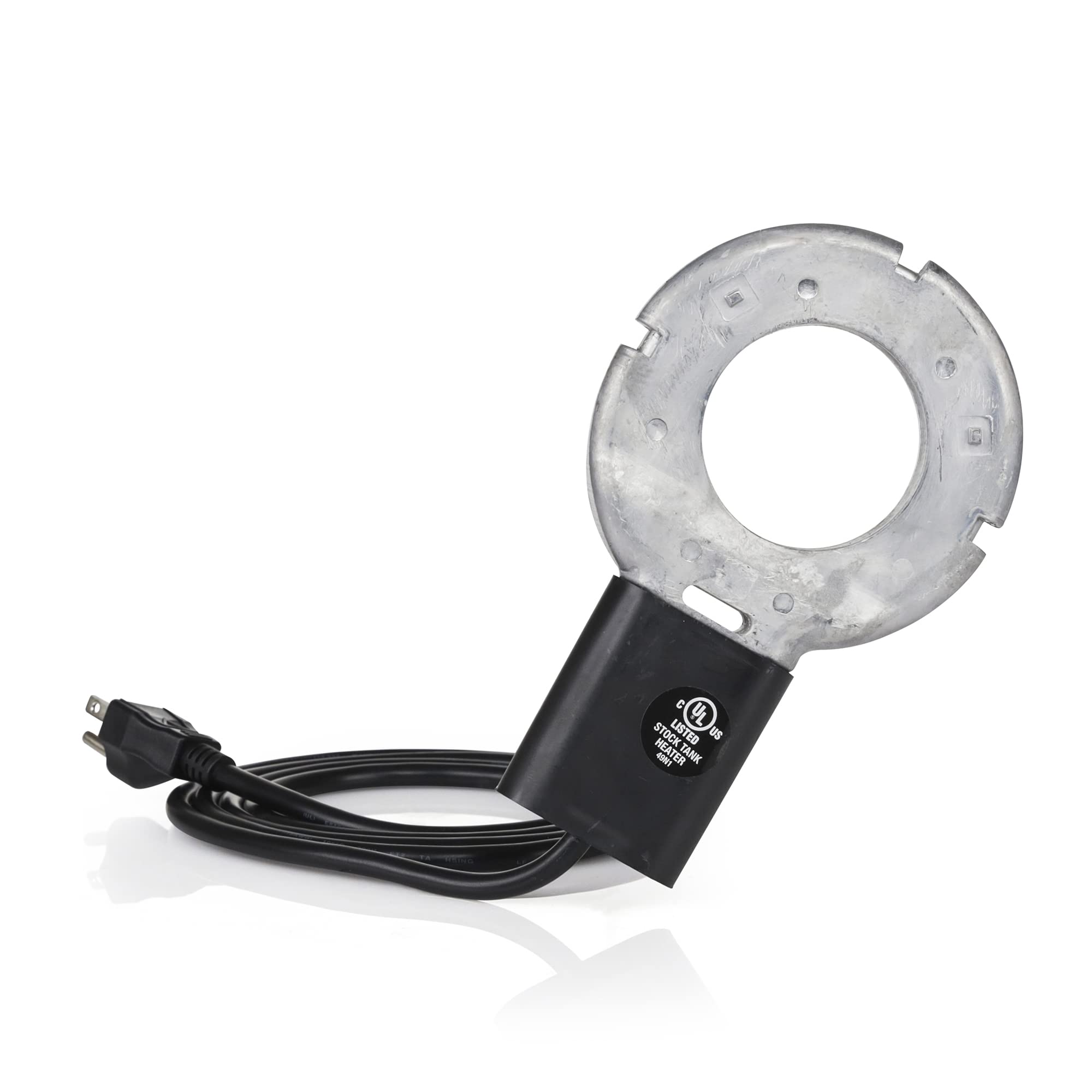
Half the wattage of the big heaters, sized for a shallow trough or a coop fount.
Drop this one into a plastic barrel, a utility tub, or a small trough holding up to 50 gallons and it keeps the drinking area open through winter. At 500 watts it is less than half the draw of the Farm Innovators convertible, so it is the sensible pick where you are heating a modest amount of water and do not want the element working overtime. The cast-aluminum body moves heat into the water faster than a plastic shell and shrugs off freeze and thaw, and it is rated for plastic containers as well as steel.
The built-in thermostat means the element only runs when the water approaches freezing, so a mild spell does not leave 500 watts drawing around the clock. It sits flat enough for a shallow trough, which suits a chicken water fount, a duck pool, or a heated drinker for poultry.
The honest limit is durability. Some of these only last about a year before they give out, and a share of owners feel they did not get their money’s worth. Plenty of buyers run them through hard freezes in horse troughs and bird baths without trouble — the ones that fail tend to fail early. So watch the first season closely and you will know what you have.
What wins people over
- 500 watts suits smaller containers without overspending on power.
- Cast-aluminum body heats fast and handles ice.
- Works for poultry founts, duck pools, and small troughs alike.
- Thermostat keeps it from running flat out in mild weather.
The honest trade-off
- Durability is hit-or-miss — some units fail after a single season.
- Capped at 50 gallons, so it is not the heater for a big stock tank.
Worth a look if: you are heating a small trough, bucket, or coop waterer and want efficient low wattage.
Step up if: your tank is larger than 50 gallons — a bigger heater will do the job better.
6. Submersible Stock Tank Heater Fit for Rubbermaid Stock Tanks
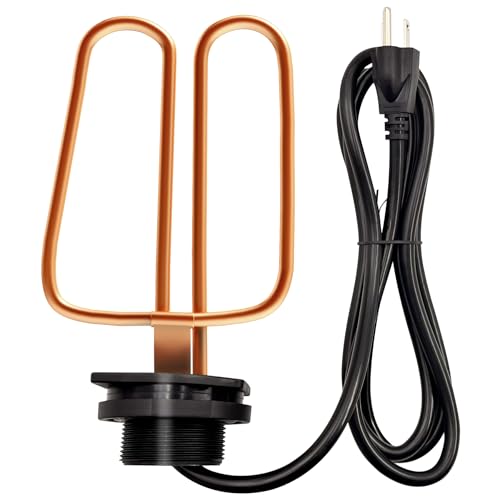
A drain-hole heater that hides at the bottom of your Rubbermaid tank, out of the way.
This one is built for a specific job: screwing into the drain hole of a Rubbermaid stock tank so the heater sits low and concealed, out of reach of hooves. It covers 50/70/100/150/300 gallon Rubbermaid tanks, and the maker notes it also works in other agricultural tanks with a drilled hole. Before you order, check your hole size — the drain hole must be larger than 1.75 inches or the fit will not work without drilling.
The build is the selling point: PA plastic threads hold the seal tight, and the high-purity copper tubing conducts heat fast and resists corrosion. High-density PA plastic threads hold the seal tight and resist detaching under water pressure, and the copper tubing is 385 W/(m·K) high-purity electrolytic copper, which conducts heat quickly and resists corrosion over time. It runs at 1500 watts with a thermostat that kicks in below 41°F and shuts off as the water warms, so it is not heating around the clock.
Two things to know. First, the fit is where buyers split — some report it drops right in, others find it does not seat as expected, so measure your hole before committing. Second, durability is uneven: a fair number of units arrive and fall apart on the first day or melt. The maker backs it with a three-year free replacement, which softens that risk, but you will want to test it the day it lands.
The strong suit: concealed drain-hole mounting keeps the element away from livestock, and the copper-and-PA-plastic build is meant to seal tight and last.
Do this first: freeze-test the thermostat to confirm it activates, and measure your drain hole — the 1.75-inch minimum is not optional.
Right for you if: you have a Rubbermaid trough with the right hole size and want a hidden bottom-mounted heater.
Rethink it if: your tank hole is under 1.75 inches or you are not prepared to test the unit on day one.
7. API Utility Bucket De-Icer | 250 Watt

A one-pound bucket heater for coops, pails, and small waterers.
Not every job is a 300-gallon trough. This 250-watt API unit is built for a five-gallon bucket or a chicken waterer, and it weighs just 1 pound, so you can hang it or set it in a pail and forget it. It carries a large surface area for cooler running, multiple thermostats for stepped control, and over-temperature protection, so a small container of water stays open without overheating.
Buyers use it in 5-gallon buckets with chicken watering nipples and keep the water unfrozen even through extreme cold snaps. The multiple-thermostat design is the clever part — the element does not just bang on and off at one threshold, it holds a steadier water temperature for the birds.
The catch to size into your plan: circuit reliability is the one area with real complaints, so be sure the bucket is not sharing a loaded circuit and that your GFCI is sound. At 250 watts it will not keep a big stock tank open — it is a bucket tool, not a trough heater.
Why it earns a spot
- 250 watts is efficient for a five-gallon bucket or waterer.
- Multiple thermostats plus over-temperature protection for safe control.
- At 1 pound it is easy to move and set.
- Large heating surface runs cooler.
What to keep in mind
- Circuit reliability draws some complaints — mind your GFCI and outlet load.
- 250 watts will not hold open anything much bigger than a bucket.
The pick for you if: you keep chickens or small stock in pails and waterers rather than a big tank.
Not for you if: your goal is a full-size trough — you will need far more wattage.
8. Allied Precision 15DP De-Icer

Threaded for a Rubbermaid drain hole, sized to drop in and stay put.
If your tank is a Rubbermaid and you want the heater threaded into the drain hole, this 15DP is the straight-line answer. It is designed for Rubbermaid tanks only, runs on 120 volts at 1500 watts, and weighs just 1.1 pounds — light enough to handle at the drain hole and built to sit out of the animals’ way. The 120-volt rating means it runs on a standard outlet, and it installs into the factory hole with no new drilling.
The appeal is the clean installation. Effectiveness and fit both earn steady praise, and buyers report it seats perfectly in a Rubbermaid 75-gallon tank and keeps water open right through cold Montana winters. When a heater is matched to a specific tank like this, the fitting is the whole game, and this one does not disappoint on that front.
The trade-off is narrowness. Designed for Rubbermaid tanks only, it will not drop into a metal trough or a poly barrel the way a floating unit would. If you run a mixed assortment of tanks, a convertible floater is the more flexible buy.
Where it shines: a factory-fit drain-plug heater for Rubbermaid tanks that keeps water open in hard winters with no new drilling.
Stay away if: your trough is not a Rubbermaid — this one is purpose-built and will not fit other tank brands.
Made for you if: you own a Rubbermaid tank and want a drain-hole heater that fits and works without fuss.
Pass on it if: you heat more than one tank brand and need a heater that moves between them.
9. API Universal Drain Plug De-Icer

A 1500-watt drain-plug heater built to keep 100 to 300 gallons open.
For a big tank, this is the unit that stakes the claim: a 1500-watt drain-plug heater recommended for 100 to 300 gallons of water. The patented drain-plug adapter routes through the tank’s drain hole and fits a 3/4-inch opening, so it installs from the bottom rather than floating on top. The heating element is stainless steel, which discourages rust and corrosion over the seasons.
Two specs carry the safety side. It has over-temperature protection built into its thermostat, so the water cannot be overheated, and it carries CSA and UL listing along with a 6-foot anti-rub cord that takes the wear of a barn wall. Owners mention it melting a 100-gallon tank in hours and holding open water through -40°F winters.
Where it asks something of you: that 3/4-inch drain-hole requirement means it is not a universal drop-in for every tank, and at 2 pounds it is a touch heavier than the 15DP. If your tank’s drain hole is the right size and you need to hold a lot of water open, this is the pick that earns its keep.
This is your heater if: you have a 100 to 300-gallon tank with a 3/4-inch drain hole and need real heating capacity.
Look at a floater instead if: your tank lacks the right drain hole or you move water between several containers.
Know the Specs
Wattage and tank size
Wattage is the heater’s raw heating power — how much heat it puts into the water per hour. A 250-watt unit handles a bucket or waterer, a 1000 to 1250-watt unit suits a 70 to 100-gallon trough, and 1500 watts is meant for larger tanks and deeper cold. Match wattage to gallons and your coldest nights, or you will either leave ice at dawn or pay to overheat a small container.
Thermostat control
A thermostat is a switch that reads water temperature and cycles the element on only as the water nears freezing. It turns the heater into something that runs part-time instead of drawing its full wattage around the clock, which is where the electric savings come from. A good thermostat also shuts off once the water is open, so it never overheats the tank.
Floating versus drain-plug
A floating deicer sits on the surface and moves easily between tanks; a drain-plug heater threads into the hole at the bottom of a Rubbermaid tank and stays out of the way of hooves. Floaters win on flexibility, drain-plugs win on tidiness and animal safety. Match the type to your tank and whether you move water around.
Cord safety and plastic ratings
A chew-proof or anti-rub cord guard sleeves the lead so livestock cannot gnaw through it, which matters in any pen where animals investigate. And a heater rated for plastic tanks will not warp or melt a poly trough; a metal-only unit can soften a plastic wall. Confirm both before the first freeze.
Common Questions
What wattage deicer do I need for my stock tank size?
Can I use a floating deicer in a plastic tank?
Do drain-plug deicers fit any tank?
How does a thermostat save electricity on a tank heater?
Why does my deicer trip the GFCI outlet?
Can a stock tank deicer keep water open in subzero weather?
What is the difference between a stock tank deicer and a pond heater?
How long do stock tank deicers usually last?
Should I float or submerge my tank deicer?
Will a 1500-watt deicer keep 300 gallons from freezing?
The Bottom Line
For most buyers, the stock tank deicer winner is the Farm Innovators Cast Aluminum Convertible because it does the two jobs that matter — it flips between floating and submersible so one unit covers every tank, and its 1250-watt cast-aluminum body with a cycling thermostat keeps water open without running flat out. If you keep chickens or small stock in pails, the API Utility Bucket De-Icer is the efficient 250-watt answer. And if you have a 100 to 300-gallon tank with a 3/4-inch drain hole, the API Universal 2002DP is the one to reach for, with its stainless element and over-temperature protection sized for the big job.
One honest nudge: the Farm Innovators Convertible earns its 4.5+ stars across 600+ ratings, but its shorter cord means planning your outlet run before the freeze.
How we choose
We do not accept paid placement. Every pick is matched to a real buyer and a real use-case; we do not hands-on test units.
Sources
Specifications: manufacturer listings and product documentation. Review insights: verified customer reviews, as of November 2026. Pricing: not shown on this page (it changes often); check the current price via the retailer link.
As an Amazon Associate, Tactical Gear Guy earns from qualifying purchases. This does not affect which products we feature.