Specs are compiled from manufacturer listings and verified buyer reviews and can change over time — please confirm the key details on the product page before buying.
Your Steam Deck’s built-in storage fills up faster than you expect — a handful of modern games and the internal drive is already sending warnings. The fix is a microSD card, and an A2-rated one with a high read speed loads games nearly as fast as the internal drive while adding up to a terabyte of room. This guide covers nine cards that genuinely fit the Deck’s slot, with the read speeds, capacities and price tiers that actually matter.
This guide is built by comparing the manufacturers’ published specifications and the patterns across verified customer reviews, so you get each pick’s real strengths and trade-offs instead of marketing spin.
One heads-up before you scroll: this list uses flexible matching on capacity, so a few picks land at 256GB or 1TB rather than one exact number you may have searched for. The nearest same-type size does the same job in the Deck’s single card slot. Every card below fits the microSD slot, and the picks are ordered for balanced quality and value first, premium tiers after — a sensible path through the best Steam Deck memory card options.
Top Picks


How To Choose The Best Steam Deck Memory Card
The Deck has one microSD slot and no second chance at it, so the card you slide in is the card you live with. Get the read speed and A2 rating right and load times feel almost identical to the internal drive. Get them wrong and every fast-travel is a long load screen.
Read speed versus write speed — which one you actually feel
Read speed is how fast the Deck pulls game data off the card. That governs how quickly a level loads and how fast the Deck resumes from sleep. Write speed is how fast data goes onto the card — that governs how long a game download or a large update takes. Most decks spend their life reading, so a card with a strong read figure feels snappy even if writes are modest. A card advertising up to 205MB/s read will hand you a noticeably quicker load than a slower 30MB/s card.
The A2 rating and why it beats a plain speed class number
A2 is a rating for random read and write performance — the small, scattered file reads that game engines actually do constantly. It is measured in IOPS (input/output operations per second), and A2 cards are built to hit at least 4000 read IOPS and 2000 write IOPS. In plain terms, that means textures and small game files arrive quickly, so menus open without a hitch and assets stream in while you play. A card with no A2 rating can still hit a big sequential number and still feel sluggish in-game.
Capacity: how much room your library really needs
Modern games routinely run past 50GB each, so a 256GB card holds only a handful. If you plan to keep several large titles installed at once, a 512GB or 1TB card saves you the constant shuffle of deleting and re-downloading. The Deck’s card slot accepts microSDXC, which is the standard for anything at 64GB and above — every pick here is microSDXC.
Side-by-Side Comparison
| Model | Best For | Capacity | Read Speed | Write Speed | Amazon |
|---|---|---|---|---|---|
| SANDISK 256GB Extreme + Adapter★ Best Overall | Best overall balance | 256 GB | Up to 190 MB/s | Up to 130 MB/s | Amazon |
| Lexar 256GB PlaySpeed Leader | Fastest load times on a budget | 256 GB | Up to 205 MB/s | Up to 140 MB/s | Amazon |
| Silicon Power 512GBCapacity Bargain | Cheapest big capacity | 512 GB | 30 MB/s | 80 MB/s | Amazon |
| Samsung EVO Plus 512GB | Reliability-first build | 512 GB | Up to 160 MB/s | — | Amazon |
| Silicon Power 1TB Gaming | Deck-branded 1TB value | 1 TB | 80 MB/s | — | Amazon |
| Samsung PRO Plus Sonic 512GB | Fast, themed gaming card | 512 GB | Up to 180 MB/s | Up to 130 MB/s | Amazon |
| PNY 1TB PRO Elite Prime | Fastest 1TB sequential read | 1 TB | Up to 200 MB/s | Up to 150 MB/s | Amazon |
| TEAMGROUP A2 Pro Plus 1TB | Highest-capacity all-rounder | 1 TB | Up to 160 MB/s | Up to 110 MB/s | Amazon |
| Lexar 1TB Play Blue | Big capacity with quick reads | 1 TB | Up to 160 MB/s | — | Amazon |
Detailed Reviews
1. SANDISK 256GB Extreme microSD Card + Adapter
Our pick — 4.5+★ from 151,000+ verified ratings; the strongest balance of quality and price.
The 256GB card that loads your library fast and survives a backpack.
This is the card most Deck owners reach for first, and the specs explain why. You get up to 190MB/s read speeds and up to 130MB/s write speeds, which in practice means fast level loads and quicker game downloads. SanDisk’s QuickFlow technology pushes past the standard UHS-I ceiling of 104MB/s, so the card squeezes more speed out of the Deck’s slot than a budget card can. The 256GB capacity holds several large games at once instead of one.
What wins people over is simple functionality — the card just works, in the Deck and in drones, action cams and Switches. The same card gets used in DJI drones, GoPros and Switches, and the 256GB size holds roughly three weeks of dashcam footage for camera users. It is rated A2 for app performance and U3/V30 for 4K and 5K capture, so you are covered whether you are shooting 4K or storing game builds. At 10 grams it is about twice the weight of the Lexar Play below, though you will never notice that in a slot.
The honest catch: the card’s own reliability discussion is genuinely mixed, with a real share of long-term owners reporting failures, so keep backups of anything irreplaceable. Speed and quality score overwhelmingly positive, and compatibility with the Deck is well documented. If you want a card that loads quickly, works across multiple devices and is available in vast numbers, this is the one.
What the spec sheet buys you
- Up to 190MB/s read via QuickFlow Technology — fast level loads
- A2 rating for snappy app and game loading from the card
- Rated for 4K and 5K UHD with U3 and V30 classes
- Temperature, water and X-ray proof for portable use
Where it asks patience
- 256GB fills quickly with a modern game library
- Reliability experiences are split — some units fail, so back up saves
- 10g is noticeably heavier than the 4.54g Lexar Play
Reach for this if: you want a trusted all-rounder that loads fast in the Deck and doubles as a camera card.
Look elsewhere if: your library already runs past 256GB — a 512GB or 1TB pick suits you better.
2. Lexar 256GB Play Micro SD Card
The speed winner of the 256GB class, built for portable gaming.
If load times are your priority, this card leads the 256GB pack. Read speed reaches up to 205MB/s and write speed up to 140MB/s, so games load faster and downloads finish sooner. The gap is real: this card reads at 205MB/s versus the Silicon Power 512GB’s 30MB/s, a difference you will feel every time a level loads. At 4.54g it also undercuts the SanDisk Extreme’s 10g if you care about that — you won’t, in a slot, but it is the lighter card.
The A2-rated performance is the piece that matters most for gaming — it lets apps and games load from the card with quick, responsive reads. A five-year limited warranty backs it, and Lexar lists Steam Deck and ASUS ROG Ally among compatible devices. The 256GB capacity covers a portion of your library, not all of it, which is the trade-off on every 256GB pick here.
Two things to know before you commit. The card is explicitly not compatible with the Nintendo Switch 2, so it is a Deck and Switch 1 performer. And its reliability picture is mixed in a way that long-term owners will want to weigh — treat saves with care. It is a fast, light, well-warranted card with real limitations in capacity and a split record on longevity.
Tied to the numbers: 205MB/s read and 140MB/s write put this at the top of the 256GB group, and the A2 rating keeps app loads quick.
The one to weigh: the reliability record is split, and 256GB only gets you partway through a large library — a 1TB card is the long-term play if that concerns you.
The fast pick: buy this when load speed is the whole game and 256GB is enough for your rotation.
Not for big libraries: if you keep more than a few large titles installed, a 512GB or 1TB pick serves you longer.
3. Silicon Power 512GB Micro SD Card U3 SDXC
Half a terabyte for a modest outlay — with speed you should understand first.
A 512GB card at this tier is the most room per dollar on the list, and the storage capacity is what most owners come for. It works with the Steam Deck and with Switch OLED and Wyze cameras, and it includes an SD adapter for moving files to a laptop. The U3 rating means it is built for sustained video writes, though the manufacturer’s figures are where you need to read carefully.
Here is the number that matters: this card lists a 30MB/s read speed and 80MB/s write. Compare that to the Lexar Play’s 205MB/s read and you can see the gap — 205MB/s versus 30MB/s is a serious difference for load times. As a low-cost storage card it does fine; as a game card it asks you to accept slower level loads in exchange for all that capacity.
The honest picture on this one is a mixed durability record, with some owners reporting failures over time and even data loss — the exact reason the reliability discussion sits as a fit note, not praise. It is not a card for irreplaceable saves you never back up. But for downloadable games you can re-fetch and for a budget-minded library, 512GB of room is real value.
Where it earns a spot: 512GB of space at a low tier, with an adapter and documented Deck compatibility.
The speed reality: a 30MB/s read figure is on the slow side for games — this is a storage card more than a fast-play card.
Fit note: its durability discussion runs negative in places, so keep backups of anything you cannot re-download.
Budget room: pick this when capacity is what you need most and load speed can take a back seat.
Skip for save-sensitive libraries: if you store irreplaceable captures, a card with a cleaner durability record is the safer choice.
4. Samsung EVO Plus 512GB microSDXC + SD Adaptor

Built for confidence: half a terabyte, a 10-year warranty and a clean record.
Reliability is the headline here, and it is the reason this card is worth the premium tier. It carries a 10-year limited warranty with 6-proof protection covering water and extreme temperatures, which matters for a handheld that lives in a bag. Read speeds reach up to 160MB/s, and the card is rated U3, Class 10, A2, V30 and UHS-I — so 4K UHD capture and quick app loads are both covered. That 512GB capacity doubles the room you get on the 256GB SanDisk Extreme above.
The A2 rating keeps game and app loads responsive, and the adapter means you can pop the card into a laptop’s SD slot to move files without hunting for a reader. It is listed as compatible with the original Nintendo Switch, gaming systems, cameras, tablets and PCs, which makes it a card you can move between devices rather than dedicate.
The trade-off is speed ceiling. At up to 160MB/s read it trails the Lexar Play’s 205MB/s, so a fast-loading card still wins on raw read. But for a huge number of buyers, a clean durability record and a 10-year warranty beat a few dozen megabytes per second. That is a defensible swap for a card holding hundreds of hours of game progress.
Why confidence wins
- 10-year limited warranty plus 6-proof protection
- 512GB of capacity — twice the 256GB SanDisk
- U3, V30, A2 and UHS-I rated for 4K and app loads
- Adapter included for laptop file transfers
What you give up
- Up to 160MB/s read falls short of the 205MB/s Lexar Play
- 1TB options exist for buyers who need more room still
Warranty-first buyer: the 10-year coverage and 512GB capacity make this the calm choice for a handheld you carry everywhere.
For speed chasers: if a 205MB/s card’s faster loads matter more than the warranty, the Lexar Play is your card.
5. Silicon Power 1TB Gaming Memory Card

A full terabyte aimed squarely at portable gaming consoles.
A full terabyte of room is a real upgrade for a Deck, and this Silicon Power card is built for exactly that job. It is designed for dependable storage on portable gaming consoles, with automatic error correction code (ECC) to catch data errors as they occur, and a 5-year limited manufacturer warranty. A terabyte means you stop deleting games to make room for the next install.
The caveat is in Silicon Power’s own recommendation: for optimal gaming performance, the company points Deck owners toward a Gen4x4 2230 SSD rather than a card. That is a candid note worth taking seriously — this is a capacity card first, a speed card second. It is also explicitly not compatible with the Nintendo Switch 2, and only stores screenshots or videos there, not game install data. At 9.07g it is a touch heavier than the Lexar Play’s 4.54g.
For owners whose Deck is mostly full and who want one card to hold a big installed library, the terabyte capacity is the reason to buy. Just go in expecting solid, reliable storage rather than the fastest loads on the list.
Room to breathe: 1TB of capacity ends the delete-and-redownload cycle, backed by a 5-year limited warranty and ECC error correction.
The honest caveat: the maker itself suggests a Gen4x4 2230 SSD over a card for optimal Deck performance — this is capacity over speed.
For the library builder: buy if you want a single card to hold most of your installed games and value the 5-year warranty.
Not for speed purists: if load times rule your decision, a card with a bigger read figure is a better fit.
6. Samsung PRO Plus Sonic The Hedgehog 512GB microSDXC
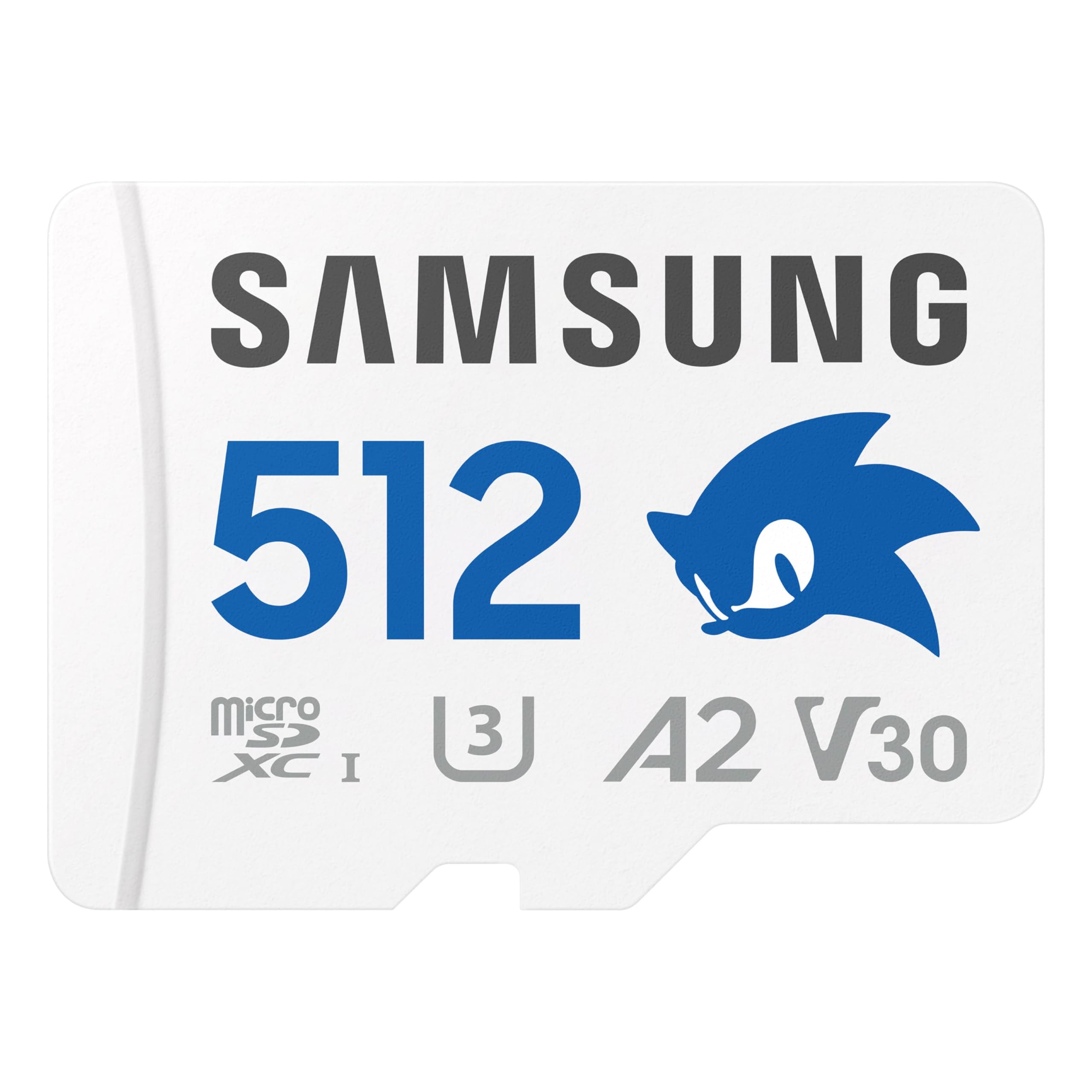
Sonic-branded, but the load speeds and warranty are the real story.
Strip away the mascot and you have a genuinely fast gaming card. Read speeds reach up to 180MB/s and write speeds up to 130MB/s, so load screens pass quickly and switching between games is snappy. The 512GB capacity is enough for a substantial installed library, and every card includes a full-size SD adapter along with 6-proof protection and a 10-year limited warranty.
Samsung lists it as compatible with the original Nintendo Switch and Steam Deck, plus action cams and drones, which makes it a versatile pick rather than a single-purpose one. Samsung Magician Software adds product authenticity verification and drive health monitoring — useful for spotting a fading card before it becomes a problem, and a hedge against counterfeit cards that plague the memory market.
Two honest notes. At up to 180MB/s read it lands just behind the PNY 1TB’s 200MB/s, so it is fast but not the fastest on this list. And the card’s compatibility discussion runs mixed specifically because it does not work with the Switch 2 — a non-issue for Deck owners, but worth knowing if you also own the newer console.
What you get: 180MB/s read, 130MB/s write, a 10-year warranty and Magician health monitoring in a 512GB gaming card.
The catch: a bit behind the 200MB/s PNY on raw read, and not built for the Switch 2.
Gamer’s pick: reach for this if you want fast loads, a long warranty and health monitoring in a 512GB card.
Speed-first alternative: if a bigger read figure and a terabyte matter more, the PNY 1TB PRO Elite Prime waits below.
7. PNY 1TB PRO Elite Prime C10 U3 V30 A2
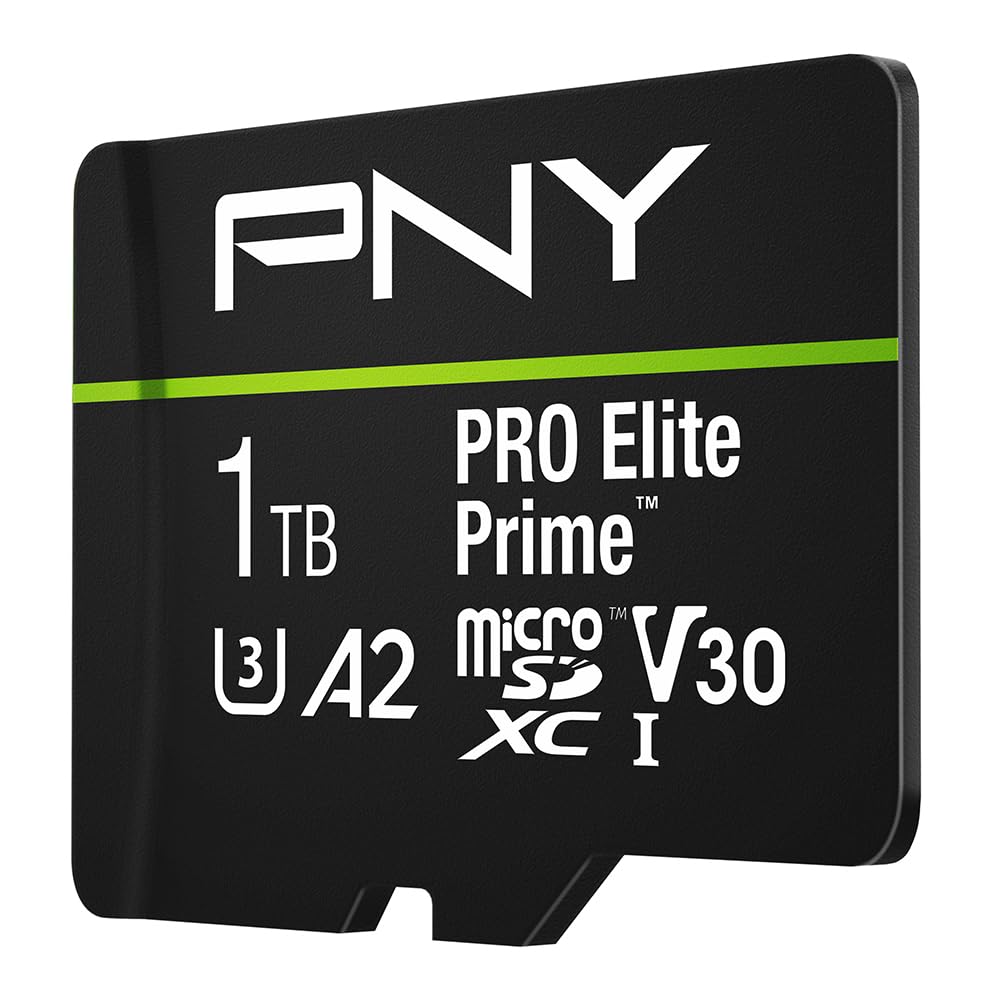
The biggest terabyte with the fastest sequential numbers on the list.
This is where raw speed and raw capacity meet. The PNY 1TB lists read speeds up to 200MB/s and write speeds up to 150MB/s when paired with the PNY Performance Prime reader, and those figures top the 1TB group — a notch above the TEAMGROUP and Lexar 1TB cards at 160MB/s read. It is rated U3 (a speed class for smooth video recording), V30 (a video speed class for 4K recording) and A2 (an app performance rating for faster app loading), so game and app loads are quick, and the included SD adapter makes it easy to move files to a laptop.
Real-world use is where the card proves out. Buyers report it working dependably in GoPros and the Steam Deck, and it handles 4K and Full HD recording alongside smartphone and drone duty. The A2 rating means apps can run directly from the card with the IOPS to keep things responsive. One warning worth honoring: it is not compatible with the Nintendo Switch 2.
The honest catch is that speed discussion is mixed — some owners mention read and write figures that do not meet the headline, which is common with any card claiming a reader-dependent maximum. Buy it for the 1TB capacity and the best 1TB read figure on this list, and expect solid rather than guaranteed peak numbers.
The case for the big PNY
- Up to 200MB/s read and 150MB/s write — best 1TB numbers here
- A2 rating for direct-from-card app performance
- Full terabyte for a large installed library
- Drop, temperature and water proof
Where to temper expectations
- Headline speeds need the PNY Performance Prime reader — not the Deck’s slot
- Some owners see real-world numbers below the max
- Not compatible with Nintendo Switch 2
Capacity plus pace: pick the PNY when you want a terabyte and the quickest 1TB reads on this list.
Temper the peak: if you demand the advertised maximum every time, note those speeds depend on the PNY reader, not the Deck.
8. TEAMGROUP A2 Pro Plus 1TB Micro SDXC

A terabyte of gaming storage built for the Deck — with mixed experiences worth weighing.
A full terabyte of room is the draw, and the card delivers on the basic promise. Read speeds reach up to 160MB/s and write speeds up to 110MB/s, with an A2 rating for direct app performance and a V30 class for 4K shooting. Teamgroup names the Nintendo Switch, Steam Deck, tablets and smartphones among compatible devices. Functionality is where it proves itself — owners specifically report it working well in the Steam Deck.
The honest part comes quickly. This is the highest-capacity card on the list, but its speed, reliability and compatibility discussions each run mixed. Some owners see performance that drops toward the lower end of the range, and a share of users report units that were not recognized by their device at all. That is not a reason to dismiss the card — it is a reason to buy it knowing what you are getting.
For a buyer who wants a terabyte of storage and treats games as re-downloadable rather than precious, the capacity per dollar is real. Back up anything irreplaceable, verify your card on arrival, and the A2 Pro Plus serves its purpose as a big library card.
Big and capable on paper: a terabyte, A2 rated, V30, and confirmed to work well in the Steam Deck.
The honest split: speed and reliability experiences are mixed, with some reports of slow writes and cards that were not recognized — verify on arrival.
For the biggest library: choose this when a terabyte of capacity is the whole point and you can accept some variability in performance.
Look elsewhere if: you want the cleanest durability record available — the Samsung EVO Plus above is calmer on that front.
9. Lexar 1TB Play Blue Micro SD Card

A terabyte of quick loads, built to survive the trip and the temperature swings.
This card pairs a full terabyte with up to 160MB/s read for fast load times, and builds in real protection against the road: temperature resistance, waterproofing, X-ray protection and vibration resistance. It is A2 rated for direct game and app performance, and Lexar names the Steam Deck, ASUS ROG Ally, Nintendo Switch 1, GoPro Hero12 Black and smartphones as compatible devices. Customers note it behaving well across devices, including the Steam Deck OLED.
File transfers are quick, and the A2 rating takes the lag out of loading games and apps straight from the card. It is explicitly built for Nintendo Switch 1 and not the Switch 2, so keep that in mind if you also game on the newer console. Storage capacity here is the full terabyte, so your installed library stops being a juggling act.
The honest fit note: reliability discussion is mixed, with some owners reporting file corruption over time. That is true of far more cards than this one, but it is the caveat to keep in view. For a buyer who wants capacity and speed together with solid physical protection, the Play Blue is a confident all-rounder.
What earns it a spot
- 1TB capacity with up to 160MB/s read for fast loads
- A2 rated for direct-from-card gaming performance
- Temperature, water, vibration and X-ray protection
- Confirmed working in the Steam Deck OLED
The honest footnote
- Compatibility discussion is mixed — some devices and the Switch 2 are out
- Reliability experiences split, with file corruption reported by a share of users
All-round terabyte: grab this if you want speed, a terabyte of room and protection against a bag’s rough treatment.
For the cautious: if irreplaceable saves ride on the card, back them up and treat reliability as the one thing to watch.
Know the Specs
Read speed and write speed
Read speed is how fast the Deck pulls data off the card — that controls load times and how quickly games resume. Write speed is how fast a game installs or a large update downloads. A card advertising up to 205MB/s read loads levels noticeably quicker than one at 30MB/s. Max figures often depend on a specific reader, not the Deck’s own slot, so treat them as a ceiling rather than a promise.
A2 rating and speed classes
A2 is a rating for random read and write performance — the small, scattered file reads games rely on, measured in IOPS and built to reach at least 4000 read IOPS and 2000 write IOPS. V30 and U3 are video and UHS speed classes for sustained recording; V30 means a sustained video capture rate of 30MB/s. In a Deck, A2 is the rating to care about most for smooth in-game loading.
Common Questions
Will any of these cards actually fit the Steam Deck slot?
Does a microSD card slow games down compared to the Deck’s internal drive?
Is a 256GB card enough for a Steam Deck library?
What does the A2 rating mean for gaming on the Deck?
Do these cards work in the Nintendo Switch 2 as well as the Deck?
Will a higher-capacity card load games any slower?
How do I move games onto the card once it is in the Deck?
Are the advertised read and write speeds guaranteed in the Deck?
Is it worth buying a cheaper card with a lower read speed?
Should I worry about counterfeits when buying a microSD card?
The Bottom Line
The smartest starting point for the steam deck memory card is the SANDISK 256GB Extreme — a card that loads games fast at up to 190MB/s, carries an A2 rating (an app performance rating for faster app loading) for snappy app loading, and doubles as a reliable camera card when you are not gaming. If load speed is your absolute priority, the Lexar 256GB Play tops the list at up to 205MB/s read with a lighter 4.54g build. And if you want a full terabyte with a quick read, the PNY 1TB PRO Elite Prime is the capacity-plus-pace pick at up to 200MB/s. Match the capacity to your library, pick a card with a high read speed, and your Deck stops making you choose which games to keep.
How we choose
We do not accept paid placement. Every pick is matched to a real buyer and a real use-case; we do not hands-on test units.
Sources
Specifications: manufacturer listings and product documentation. Review insights: verified customer reviews, as of November 2026. Pricing: not shown on this page (it changes often); check the current price via the retailer link.
As an Amazon Associate, Tactical Gear Guy earns from qualifying purchases. This does not affect which products we feature.