Specs are compiled from manufacturer listings and verified buyer reviews and can change over time — please confirm the key details on the product page before buying.
Quick answer first: if you want one bracket that handles the widest range of TVs with the least fuss, the Mounting Dream Full Motion MD2380 is the safe buy — it holds up to 110 lbs (about the weight of a large 65 inch TV) and swivels to almost any seat in the room. The rest of this list splits by job: renters who cannot drill, corner rooms with no flat wall, and very large screens that need serious muscle. One quick note before you shop — this list uses flexible matching for wall-mounted brackets, so not every pick is the exact model you searched, but each one mounts to the wall and serves the same purpose.
This guide is built by comparing the manufacturers’ published specifications and the patterns across verified customer reviews, so you get each pick’s real strengths and trade-offs instead of marketing spin.
Below you get the stud spacing (the distance between the wooden beams inside your wall), VESA pattern (the screw-hole layout on the back of your TV), weight limit, and arm reach on every pick, plus the honest catch on each one. The right stand for wall mount tv depends on your studs, your screen size, and how far you need the arm to swing.
Top Picks

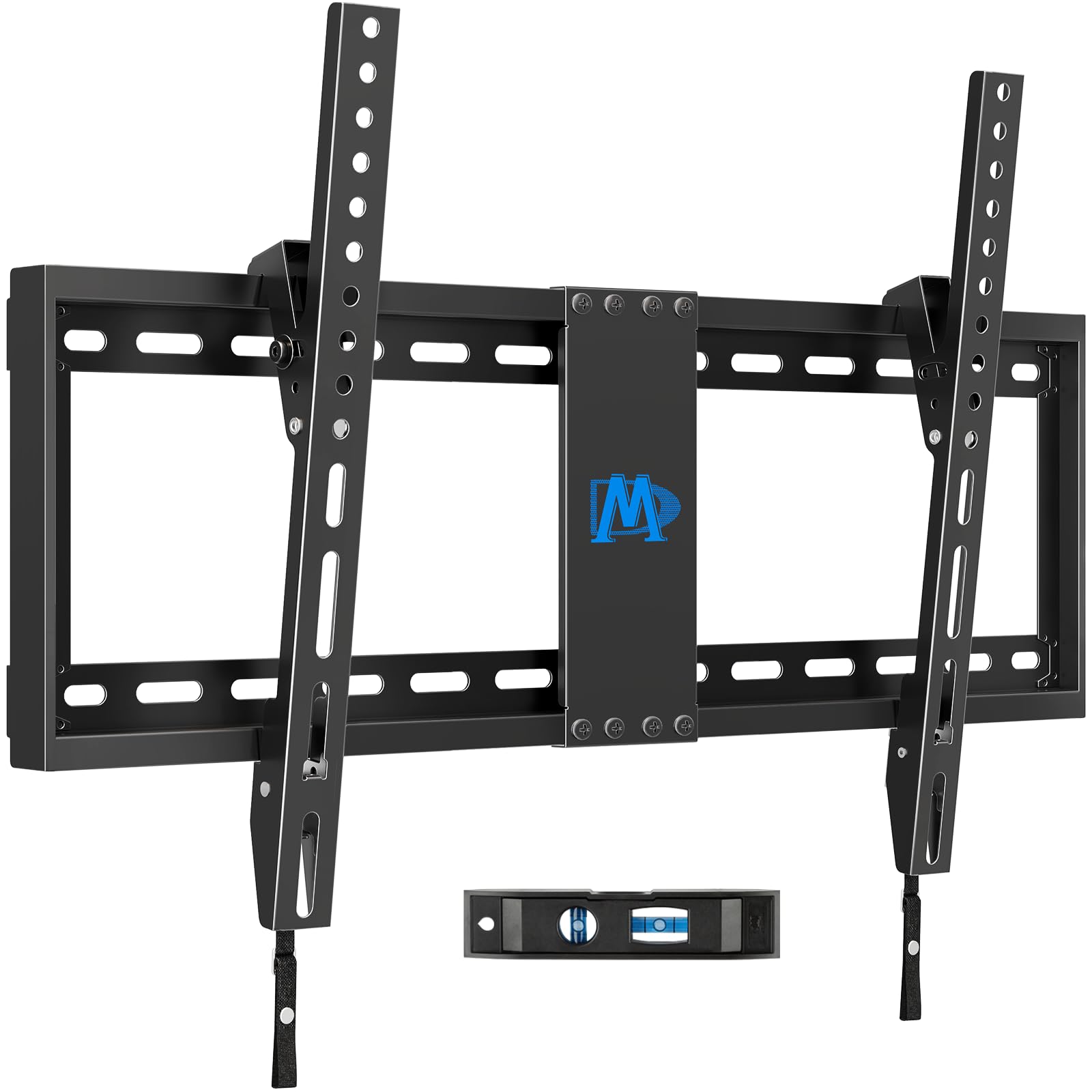

How To Choose A Stand For Wall Mount TV
Three numbers decide almost everything here, and you can check all of them in about two minutes before you buy anything. Miss either number and the bracket will not bolt to your wall or your TV, no matter how good the reviews are.
Start with your TV’s VESA pattern
VESA is the four-screw hole pattern on the back of your TV. You measure the horizontal and vertical gap between the holes in millimeters — a common one is 400x400mm, which means 400mm apart side to side and 400mm top to bottom. Every mount on this list publishes its supported VESA range, so match your TV’s number to that range first. A bracket rated 200x100mm to 600x400mm covers most mid-size to large sets, and the widest pick here reaches 900x600mm for very big screens.
Then find your studs — or accept that you cannot
Most of these brackets bolt into wood wall studs (the vertical framing inside your wall), usually at 16 inch spacing. Some accept 12, 18, or 24 inch spacing too, which matters in newer homes. If you rent, or your wall has no usable studs where you want the TV, you need a no-drill option — and that is exactly what one pick on this list is built for. Never confuse a no-drill drywall bracket with a standard stud mount; they solve different problems.
Decide how much motion you actually need
A fixed bracket pins the TV flat to the wall and is the simplest, cheapest shape. A tilting bracket adds a downward angle to knock out window glare, often 8 to 15 degrees. A full-motion bracket adds swivel arms, which is the only way to point one screen at two different seating spots. If your sofa and your kitchen both need to see the TV, you want full motion with a long arm, and a stiffer, pricier joint to keep that long arm from sagging.
Side-by-Side Comparison
Every row uses the same three numbers so you can scan trade-offs at a glance: the largest screen it will hold, the most weight it will carry, and the widest hole pattern it accepts.
| Model | Best For | Max Screen | Max Weight | Max VESA | Amazon |
|---|---|---|---|---|---|
| Mounting Dream MD2380★ Best Overall | Most living rooms | 70 inches | 110 lbs | 400x400mm | Amazon |
| Mounting Dream MD2268-LKLow-Profile Pick | Big screens, flat to wall | 90 inches | 132 lbs | 600x400mm | Amazon |
| USX MOUNT XMM908Best Value | Narrow stud bays | 70 inches | 99 lbs | 400x400mm | Amazon |
| EZISE TA3105 | Renters, no studs | 75 inches | 150 lbs | 600x400mm | Amazon |
| USX STAR Long Arm | Corner placement | 84 inches | 100 lbs | 600x400mm | Amazon |
| USX MOUNT XML008-1K | Large TV, full motion | 84 inches | 132 lbs | 600x400mm | Amazon |
| MOUNTUP MU0047-L | Room-to-room reach | 75 inches | 99 lbs | 600x400mm | Amazon |
| ECHOGEAR MaxMotion | Wide swivel rooms | 90 inches | 125 lbs | Not listed | Amazon |
| monTEK HW1277BK | Massive 100 inch TVs | 120 inches | 265 lbs | 900x600mm | Amazon |
Detailed Reviews
1. Mounting Dream Full Motion TV Wall Mount 32-70 Inch
Our pick — 4.5+★ from 98,500+ verified ratings; the strongest balance of quality and price.
The bracket that pulls a 70 inch TV 17.5 inches off the wall, then tucks it back to 3.4
Owners of this one have done the hard work for you — it is the crowd favorite here at 4.5+ stars across 98,000+ owners, and the satisfaction traces straight back to two things: it goes up easily and it does not move afterward. The steel frame carries up to 110 lbs on a 400x400mm VESA pattern (the screw-hole layout on the back of your TV), which covers the standard 32-70 inch set in most living rooms. Six articulating arms (jointed arms that let the TV swing out) do the swivel and tilt work, so a 65 inch screen can pivot toward the sofa or the kitchen without you touching the wall plate.
Where it earns its keep day to day is the movement. The arm pulls out to 17.5 inches and retracts to 3.4 inches — that 3.4 inch retract is the tightest of the full-motion picks against the USX MOUNT XMM908’s 2.59 inch figure, which matters if your wall is a narrow walkway. Tilt runs 5 degrees up and 15 degrees down to knock out glare from a window, and you get +/-3 degrees of post-install leveling (a small adjustment after mounting) so a slightly crooked drill hole does not ruin the look. Owners with 55 inch screens mounted nearly six feet off the floor report swiveling the TV out from the wall with no drama.
The paperwork side is where this bracket quietly wins people over. Hardware arrives in pre-labeled bags, a paper template marks your drill holes, and an Allen key stores right on the frame so it does not vanish mid-job. The catch is real and worth reading twice: this bracket is not for drywall-only installation. You need wood studs behind it, and if your studs sit wider than 16 inches apart, you want the wider-stud version rather than this one. Bracket arms that sit too close to the wall can also fight the TV’s own cables, so check your HDMI ports before you commit.
What makes it the default pick
- 110 lb weight limit and 400x400mm VESA cover the common 32-70 inch TV
- 17.5 inch pull-out with a 3.4 inch retract — real motion without eating the room
- Labeled hardware bags, paper drill template, and onboard Allen key storage
- +/-3 degrees leveling fixes a slightly off drill line
Where it stops short
- Not for drywall — wood studs at 16 inches or tighter are required
- The tilt joint is the one part that shows wear over long use
Buy this if: your TV is 32-70 inches, under 110 lbs, and your wall has 16 inch wood studs.
Pass if: you rent, or your studs are wider than 16 inches apart.
2. Mounting Dream Tilting TV Wall Mount 37-90 Inch
For the big screen that should look painted onto the wall, not parked in front of it
If your goal is a 90 inch TV that reads as part of the wall, this is the shape you want. It hangs the panel just 1.5 inches off the plaster — the slimmest figure here — so it disappears into a living room instead of jutting out. The weight ceiling is the story, though: 132 lbs handles far more television than the USX MOUNT XMM908’s 99 lbs, and the VESA support climbs to 600x400mm where that same XMM908 stops at 400x400mm. It also grips stud spacings up to 24 inches, which rescues newer homes that the standard 16 inch brackets cannot reach.
What wins people over is how little drama the install brings. The kit ships with a level magnetized to the frame so one person can position the plate alone, and the whole job breaks into three steps. A 65 inch Vizio or Sony goes up on a wall in under an hour, and the side-to-side shift adjustment is what people mention when a drill hole lands a few millimeters off-center. Tilt adds 8 degrees of forward lean to kill overhead glare — and here the honest caveat lives. The tilt joint is the one lever that draws mixed feelings; some owners find the angle it holds is not the angle it delivers after the screws go tight. If you want a big range of downward tilt, that is a different bracket.
Straight talk on the tilt: 8 degrees is a small nod, not a deep angling mechanism, and the joint is the part buyers like least. Treat tilt as a bonus here, not the reason you buy.
Who it wins for: anyone with a large panel, 24 inch stud bays, and a wall that should stay visible after the TV goes up.
The right call when: your studs are up to 24 inches apart and you want the flattest possible profile on a 37-90 inch set.
Look elsewhere if: you need meaningful downward angling — 8 degrees is all you get.
3. USX MOUNT Full Motion TV Wall Mount 32-70 inch
The smooth mover — 13.89 inches of extension with a swivel that glides instead of grinds
Motion is the whole point here, and this bracket delivers it on a budget. The dual arms pull out to 13.89 inches and tuck back to 2.59 inches, and that 2.59 inch retract beats the top pick’s 3.4 inch figure — note if your wall sits in a busy hallway. Swivel turns the TV toward whichever seat needs it, and the tilt sweeps -12 to +5 degrees to cut glare from a window. Cold-rolled steel does the carrying, and it is rated for 99 lbs on sets from 32 to 70 inches.
Where this one earns its spot is the flexibility on the wall side. It mounts to 12 inch or 16 inch wood studs, plus concrete and brick, so it covers more wall types than the Mounting Dream MD2380’s 16 inch stud-only spec. The 3-step install keeps it approachable — bracket to TV, plate to wall, TV onto plate. One trade-off worth knowing: the base plate is modest in width, so if your studs sit far apart, you may be cutting into the bay rather than spanning it. A couple of owners mention the bracket flexing slightly under a larger TV, so it behaves like a well-made budget bracket rather than a heavy-duty industrial one.
The honest read on this pick: it saves you money and gives you smoother motion than its price suggests, but the arms flex a little on big screens. Keep it to the mid-size sets and it behaves beautifully.
Where the money goes: into the swivel mechanism, not the steel thickness — 99 lbs is the ceiling.
Reach for this if: you want a smooth full-motion bracket for a 32-70 inch TV and your wall has 12 or 16 inch studs.
Think twice if: your TV is heavy, or your studs sit at 24 inches.
4. EZISE Studless TV Wall Mount 32-75 inch
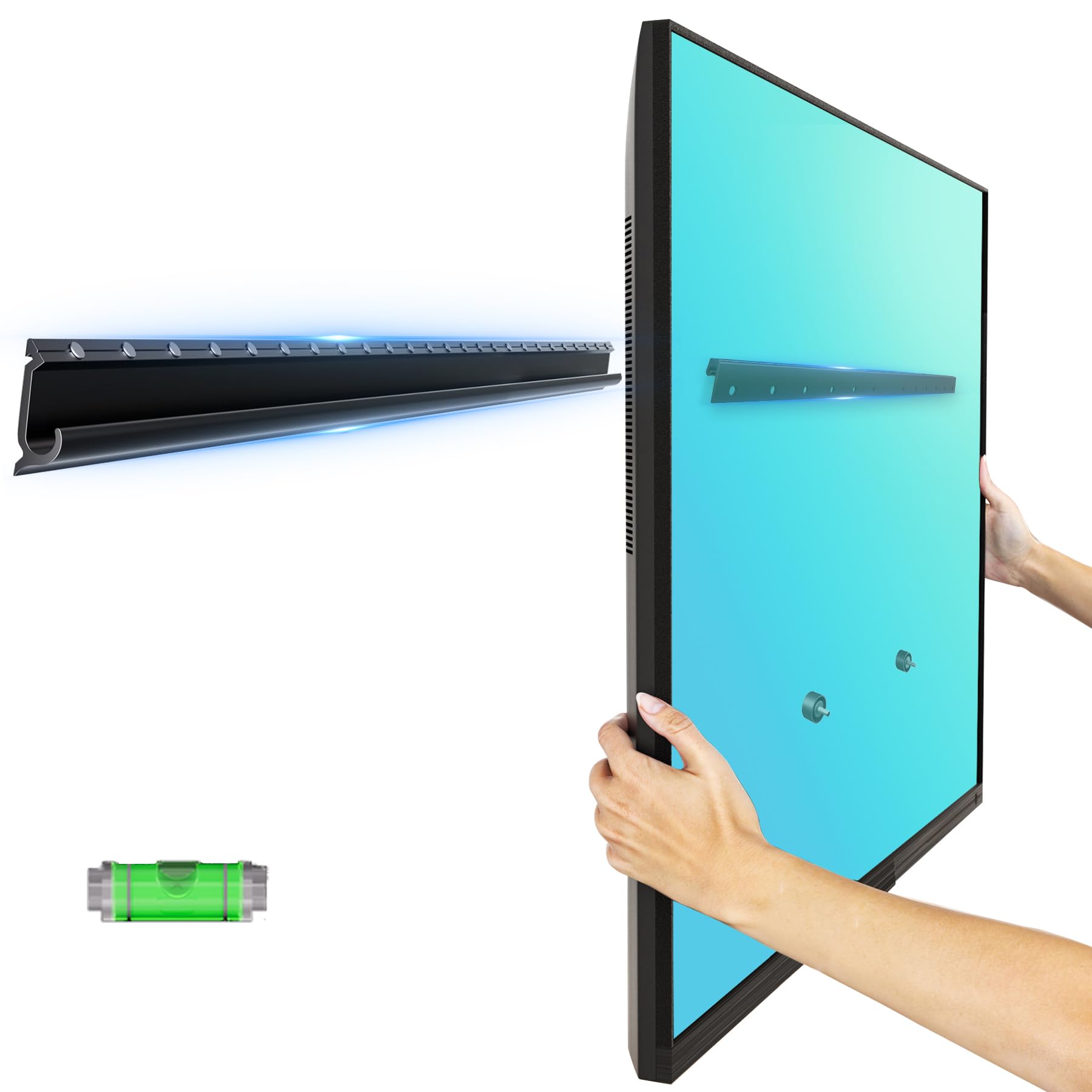
For renters and wall-panel homes where drilling a hole is not an option
Here is the odd duck that solves the problem the others ignore: no studs, no drill, no wall damage. It hammers onto drywall and holds itself there with an aluminum alloy frame rated to 150 pounds — the same 150 lb ceiling as the Mounting Dream MD2380’s steel build, except here it hangs on nothing but plaster. That 150 lb figure is also well beyond the USX MOUNT XMM908’s 99 lbs, and the VESA range reaches 600x400mm for a big 75 inch panel. The profile is the other headline: 0.8 inch from the wall, the flattest bracket here, so the TV looks recessed into the room.
What buyers rave about is how fast it goes up — somewhere under ten minutes is the common report, and one proud owner says it looks like a professional hung it. Because it is a fixed bracket rather than a swiveling arm, though, it delivers no motion at all: the picture stays where you point it, flat against the wall. It cannot swivel or tilt, so a corner seat off to the side will see the screen at an angle. And because it hangs from drywall rather than studs, treat that 150 lb figure as the limit of what the wall itself is holding — an anchor points into plaster, not into framing lumber.
Why renters keep buying it
- No drilling, no stud-finding, no wall damage beyond the anchor holes
- 150 lb rating on a 600x400mm VESA handles a 75 inch screen
- 0.8 inch profile — the flattest here by a wide margin
- Mounting hardware and a level included in the box
The trade-offs that come with that
- Fixed — no swivel, no tilt, no extension
- The included level is a basic one; a second opinion is worth having
Choose it when: you rent, or your wall is a panel or brick and you want zero drilling.
Not for you if: your TV needs to point in more than one direction.
5. USX STAR Corner TV Wall Mount 32″ Long Arm
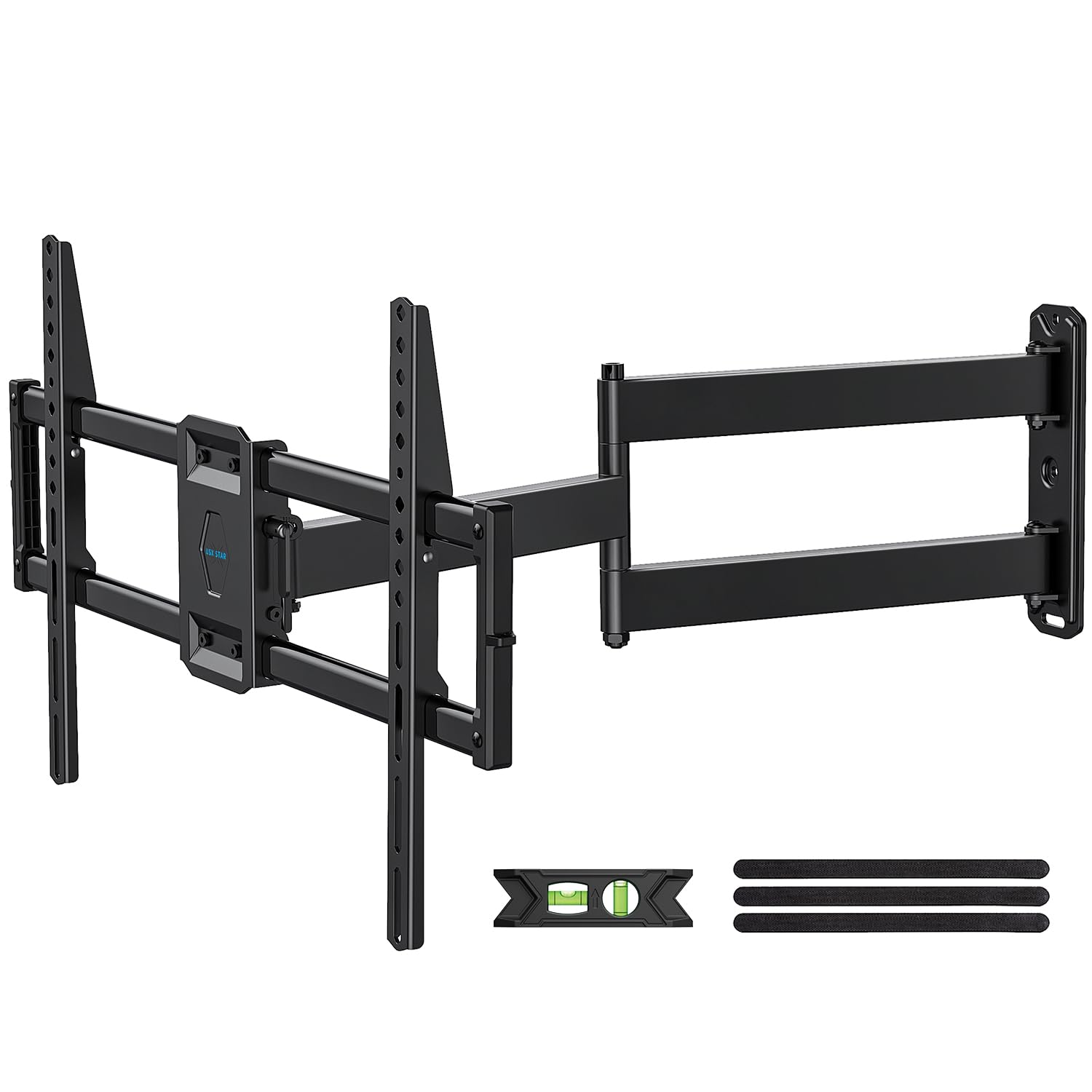
Thirty-two inches of steel arm that drags the TV out of a corner and into view
When a room has no usable flat wall, this is the mount that makes a corner work. A single 32 inch arm reaches out and swings the screen around — retracting to 2.52 inches when you want it tidied away — and swivel runs a full +/-90 degrees (a quarter turn each way), with tilt of +5 to -15 degrees and +/-4 degrees of leveling. It grips a single wood stud, solid brick, or concrete, and covers VESA patterns (the screw-hole layout on the back of your TV) all the way up to 600x400mm, so most 37 to 84 inch sets under 100 pounds fit. Owners who have to mount in a basement, on vinyl siding, or around a stuck corner tend to land here.
What stands out in this bracket is how it handles awkward spaces. One buyer hung a 55 inch outside and reported the box had everything needed; another put it in a basement and found the arm long enough to point the screen out of the corner at the right angle. The 100 lb ceiling pairs with the 84 inch screen range — the same ceiling the Mounting Dream MD2380 carries, but on a far longer arm. If your TV runs heavier than 100 pounds, this bracket is not the answer, and the swing is where it shows: an arm of that length adds reach but a small amount of sway when fully extended.
The corner advantage: single-stud mounting plus a 180 degree swivel means one bracket can serve two seating zones in a room with no true focal wall.
Size honestly: a 100 lb screen on a 32 inch arm is a lot of leverage — fine at the wall, softer at full stretch.
This one wins when: your room is all windows, doors, or odd angles, and you need a single-stud corner mount.
skip it if: your TV weighs more than 100 lbs, or you want a mount that hugs the wall flush.
6. USX MOUNT Full Motion TV Wall Mount 42-90 inch
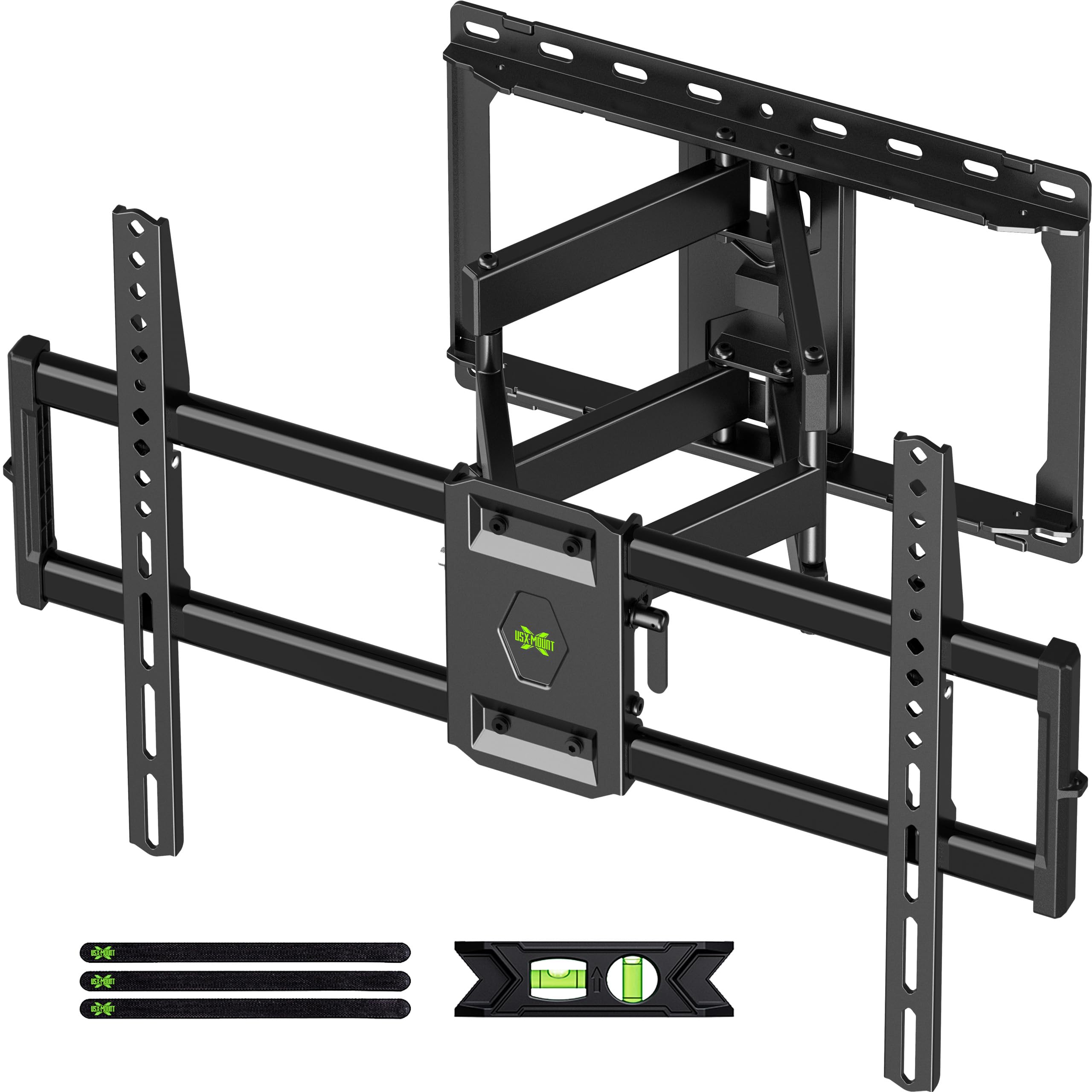
Six arms, 132 pounds, and a swivel that actually reaches the corners of a wide room
This is the bracket that pushes a very large screen into a genuinely wide arc. The six-arm articulating frame holds 132 lbs across 42 to 90 inches, reaches a 600x400mm VESA, and swings +/-45 degrees with a 15 degree tilt to kill glare. The pull-out reaches 16.49 inches while the retract tucks to 2.40 inches — the arm is longer and the folded profile slimmer than the Mounting Dream MD2380’s 17.5 inch / 3.4 inch pair. If your sofa and your dining table sit on opposite sides of the room, this width of movement is what makes one TV work for both.
The install drama is low, and owners say so: clear instructions in labeled bags, plus a quick-lock lever on the tilt that takes some of the wrench work out of the job. The bracket also ships with a bubble level and cable ties so the wires stay tidy behind the panel. It is a heavy unit — the weight around 11.9 pounds, so plan on a second pair of hands for the lift. And here is the honest limit: some owners found the arms noticeably flex when pushed out on a 75 inch or larger panel, and a few reported it cannot hold its level on the heaviest sets. On 50 to 70 inch screens the same bracket feels right at home.
The real-world read: on a 50 to 65 inch panel, this is a lot of motion for a modest outlay and behaves like a mount costing far more. Push it onto a 75 inch or heavier screen and the arms give a little more than you would like.
The easiest call: match it to your screen, not to its headline maximum, and this is one of the best-balanced brackets here.
Best fit for: a 50-70 inch TV where you want +/-45 degrees of swivel and a 16.49 inch extension.
Look past it if: your set is 75 inches or heavier — the arms flex at that size.
7. MOUNTUP 37.2″ Long Arm TV Wall Mount for Most 42-75 Inch TVs
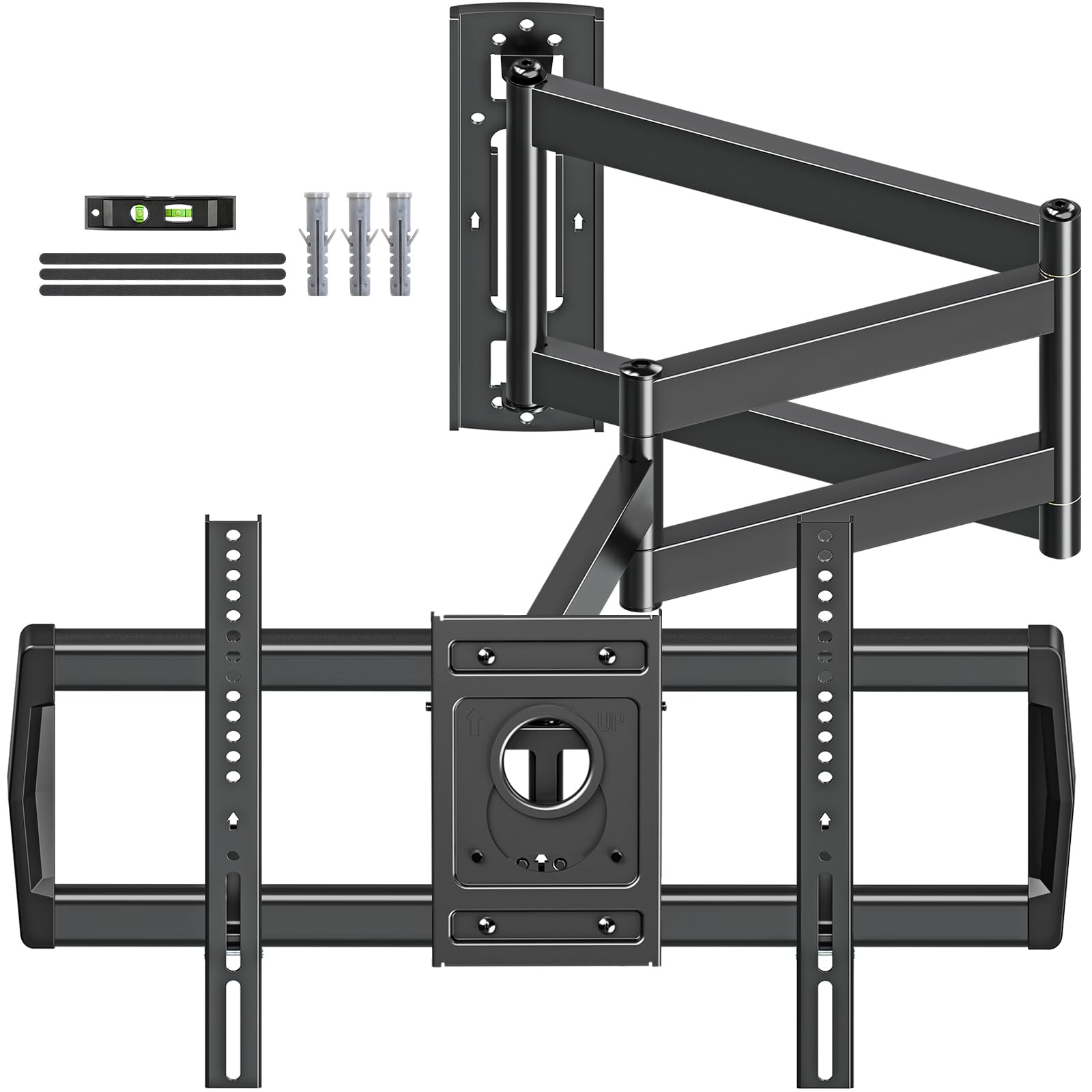
The triple-fold arm that reaches 37.2 inches into the room and still tucks to 2.5
This is the longest arm on the list, and it is built for a specific job: putting one screen where two rooms can see it. The triple folding arm stretches 37.2 inches out from the wall — longer than the USX STAR’s 32 inch reach — and retracts to about 2.5 inches when you want the room back. Full motion means +/-90 degree swivel plus +5 to -9 degrees of tilt and +/-4 degrees leveling, so the angle holds wherever you park it. It fits 42 to 75 inch screens up to 99 pounds on a 600x400mm VESA, and the single-stud design means it hangs from one anchor point rather than spanning a bay.
Where this earns its name is the cable and corner work. Because the arm folds all the way out, you can pull the TV clean away from the wall to reach the inputs, then push it back — a job that usually demands two people and a flashlight. One buyer put it around a corner and said it was the reason they bought a second one. The honest limit is the hinge stiffness. The joints come tight from the factory, and a heavy 65 inch panel takes a firm shove to swing on a fresh unit. A couple of buyers needed extra bolts from a hardware store to match their TV, so double-check your VESA holes before ordering.
Why the long arm matters
- 37.2 inch reach clears a corner and reaches a second room
- Full +/-90 degree swivel plus tilt and leveling
- Single-stud mounting works in tight corners
- Mounting hardware, anchors, level, and template all included
What you should know before you buy
- Stiff hinges until they break in — a heavy 65 inch screen takes a firm shove
- The 99 lb ceiling rules out very heavy panels
Go here if: you need the longest reach on the list and your TV is 42-75 inches under 99 lbs.
Choose another if: your panel is heavy — the 99 lb ceiling is firm.
8. ECHOGEAR MaxMotion TV Wall Mount for 42-90” TVs up to 125lbs

A 130 degree swivel and a 22 inch extension for the room where everyone sits off to the side
If your furniture layout puts the seating at a sharp angle to the wall, this bracket swings further than anything else here — 130 degrees, compared with the USX MOUNT XML008-1K’s +/-45 degrees. It extends up to 22 inches and folds back to just 2.4 inches, so it can sit sleek when idle and reach out when you need it. The steel frame carries 125 lbs on screens from 42 to 90 inches, and a 15 degree tool-free tilt lets you drop the angle for glare without hunting for a wrench. The build is heavy and the impression is heavy-duty, which matches what the price buys.
The install is where this one pulls ahead for anyone nervous about drilling. A drilling template and a full hardware kit come in the box, and the makers claim a 30 minute job — the general feedback from owners is that it goes up without a fight. The mounting template is where many brackets leave you guessing; this one does not. The honest caveat: the swivel joint is a stiff joint, and on the largest screens it takes real effort to push the panel around. The 850+ range-of-motion reviews land positive overall, but a few owners with very large panels noted the arms will sag under the strain.
Where it shines: 130 degrees of swing and a 22 inch extension are the most generous here, and the UL listing adds a layer of independent safety review the budget brackets skip.
Where it strains: treat 90 inches as the outside edge of what it handles gracefully — on 65 inch sets it is thoroughly solid.
Pick it for: a 42-75 inch TV in a room where the seats sit far off-axis, and you want the widest swing on the list.
Think again if: you are mounting an 85 inch or heavier screen — the arms sag at that weight.
9. monTEK Heavy Duty Full Motion TV Wall Mount 60-120 Inch
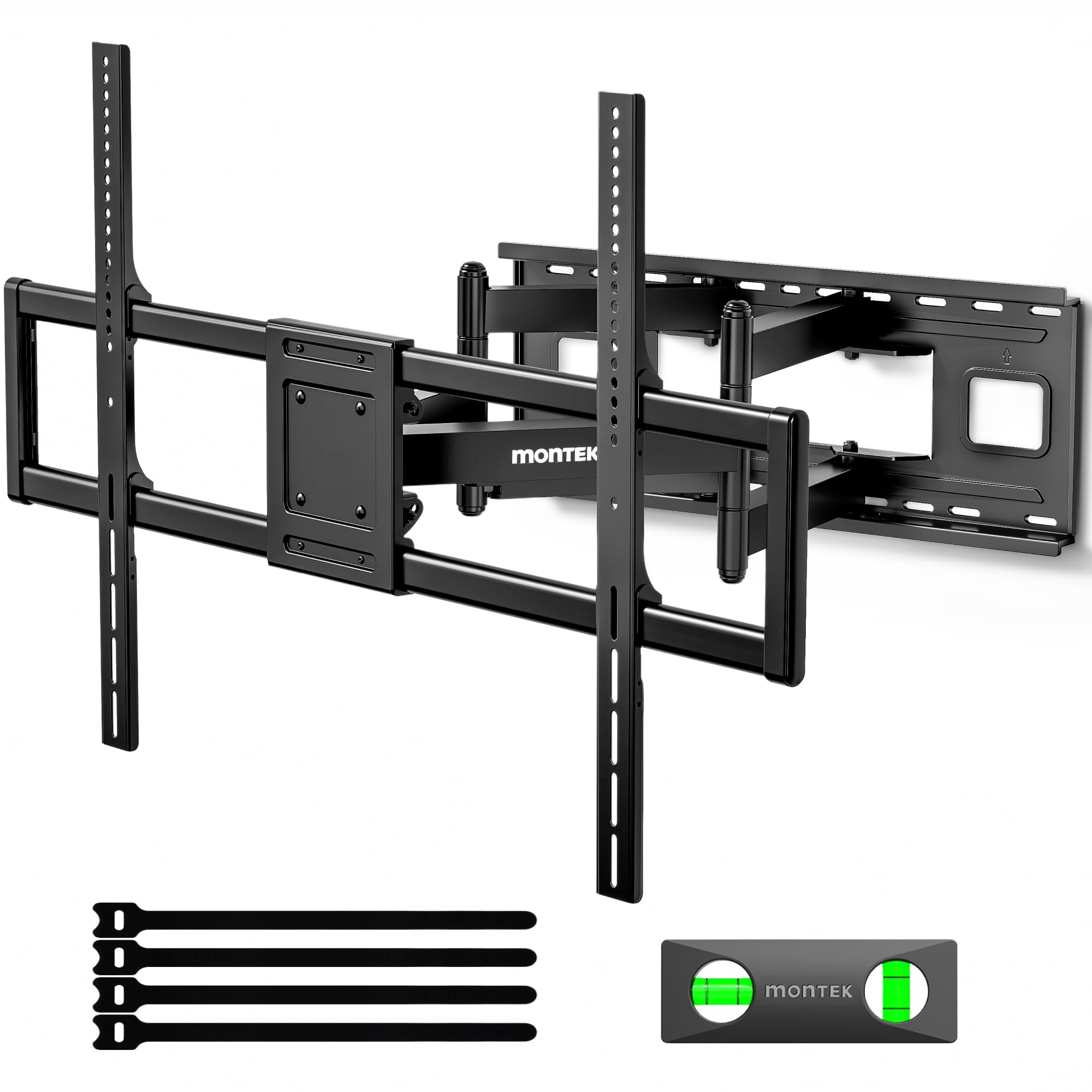
The bracket you buy when the TV is a 100 inch panel and the wall has to carry a monster
Very few mounts handle a 100 inch screen with any grace. This one is engineered for it — 265 lbs of weight capacity, screens up to 120 inches, and a VESA span out to 900x600mm. That weight ceiling dwarfs the Mounting Dream MD2380’s 110 lbs, and it mounts into wood studs at 12, 16, 18, or 24 inches plus concrete and brick. The arm extends 27.7 inches, swivels +/-60 degrees, and tilts +5 to -15 degrees without tools. Four-times load-bearing testing is the maker’s claim here, and the reinforced dual-arm frame is the reason it can hang so much steel.
The clever bit is the install. The frame arrives preassembled, so you save a couple of hours of bolting arms together, and a quick-lock release snaps the TV on and off in seconds. That matters on a 100 inch panel that might need to come down for a cable swap. Owners describe it as built like a tank and hold their 85 to 98 inch screens with confidence. Here is where the weight goes the other way, though — the unit tips the scale around 34.6 pounds, and the maker itself recommends a two-person installation. Any balance adjustment on a fresh unit needs a careful hand; the leveling system has a firm break-in period.
The honest weight story: 265 lbs of capacity comes with 34.6 lbs of mount to lift and hold, so this is not a solo job no matter how experienced you are.
For the giant-screen buyer: very few brackets reach 120 inches and 900x600mm, and this one is specifically built for it.
For the giant-screen buyer: a 60-120 inch TV that needs real reach and a 265 lb ceiling.
Not the pick if: your screen is under 60 inches — the mass of this mount is overkill.
Know the Specs
VESA Pattern
VESA is the four-hole grid on the back of your TV, measured in millimeters. A 400x400mm rating means the holes sit 400mm apart both ways. Match your TV’s pattern to the bracket’s supported range — the widest on this list reaches 900x600mm for very large panels. A bracket that does not list your VESA number will not bolt to your TV, however well it reviews.
Weight Capacity
Every bracket lists a maximum load — the weight of the TV it will hold safely. The lightest here handles 99 lbs, the heaviest 265 lbs. Always compare your TV’s actual weight, not its screen size, against the rating. Exceeding the weight rating puts the full load on anchors and arms never designed for it, and that is how TVs come off walls.
Stud Spacing
Wood studs are the framing inside your wall, usually 16 inches apart, with 12, 18, or 24 inch spacings in some homes. A bracket that accepts your spacing bolts straight into framing and is the strongest option. If none of the spacings match, a no-drill drywall bracket is the alternative — but it hangs from the wall material rather than the framing.
Extension and Retract
Extension is how far the arm reaches out from the wall — this list runs from 0.8 inch fully folded to 37.2 inches at full stretch. Retract is how close it folds back. A longer extension gives more viewing angles but adds leverage on the bracket, which is why weight ceilings tie so closely to arm length.
Common Questions
How do I find the VESA pattern on my TV?
Can I mount a TV on drywall without studs?
What is the difference between tilt and full motion?
Will a wall mount work on a brick or concrete wall?
How much does a TV wall mount reduce my available room?
Is a longer extension arm less safe for a heavy TV?
Will my TV still be level after I install the mount?
Do I need to keep my old TV stand?
Which mounting height gives the best viewing angle?
The Bottom Line
For most rooms the stand for wall mount tv that earns the top spot is the Mounting Dream MD2380 — it hits the 110 lb weight ceiling that covers most 32-70 inch sets, carries a 17.5 inch reach and a tidy 3.4 inch retract, and goes up with labeled parts and a template. If your priority is a big screen sitting invisibly close to the wall, the Mounting Dream MD2268-LK gets you to 1.5 inches. And when the room is all corners or the wall has no studs, the USX STAR long arm or the EZISE no-drill mount is the one to reach for. Match your stud spacing and VESA pattern before anything else — weight limit and arm reach only matter once the bracket fits your wall.
How we choose
We do not accept paid placement. Every pick is matched to a real buyer and a real use-case; we do not hands-on test units.
Sources
Specifications: manufacturer listings and product documentation. Review insights: verified customer reviews, as of November 2026. Pricing: not shown on this page (it changes often); check the current price via the retailer link.
As an Amazon Associate, Tactical Gear Guy earns from qualifying purchases. This does not affect which products we feature.