Specs are compiled from manufacturer listings and verified buyer reviews and can change over time — please confirm the key details on the product page before buying.
A softball pitcher stands roughly 43 feet from the plate, and a well-struck line drive can close that gap before you can react. That is the entire reason a pitching screen exists, and the right one lets you throw front toss and live BP without flinching. This guide walks through nine real screens, what each one blocks well, and which one matches how you actually practice.
This guide is built by comparing the manufacturers’ published specifications and the patterns across verified customer reviews, so you get each pick’s real strengths and trade-offs instead of marketing spin.
You will see which frames use heavier steel, which nets are rated for weather, and which screens are built for a backyard cage rather than a school field. The right pick depends less on brand name and more on who is hitting at you, and this breakdown of the best softball pitching screen makes that choice straightforward.
Top Picks


How To Choose The Best Softball Pitching Screen
Buying a screen is really about one question: what is flying back at you, and how hard? A youth practice session and a high school front-toss drill put very different stress on a frame and a net. Pick the screen for the hardest hitter you regularly face, not the average one.
Match the screen shape to your drill
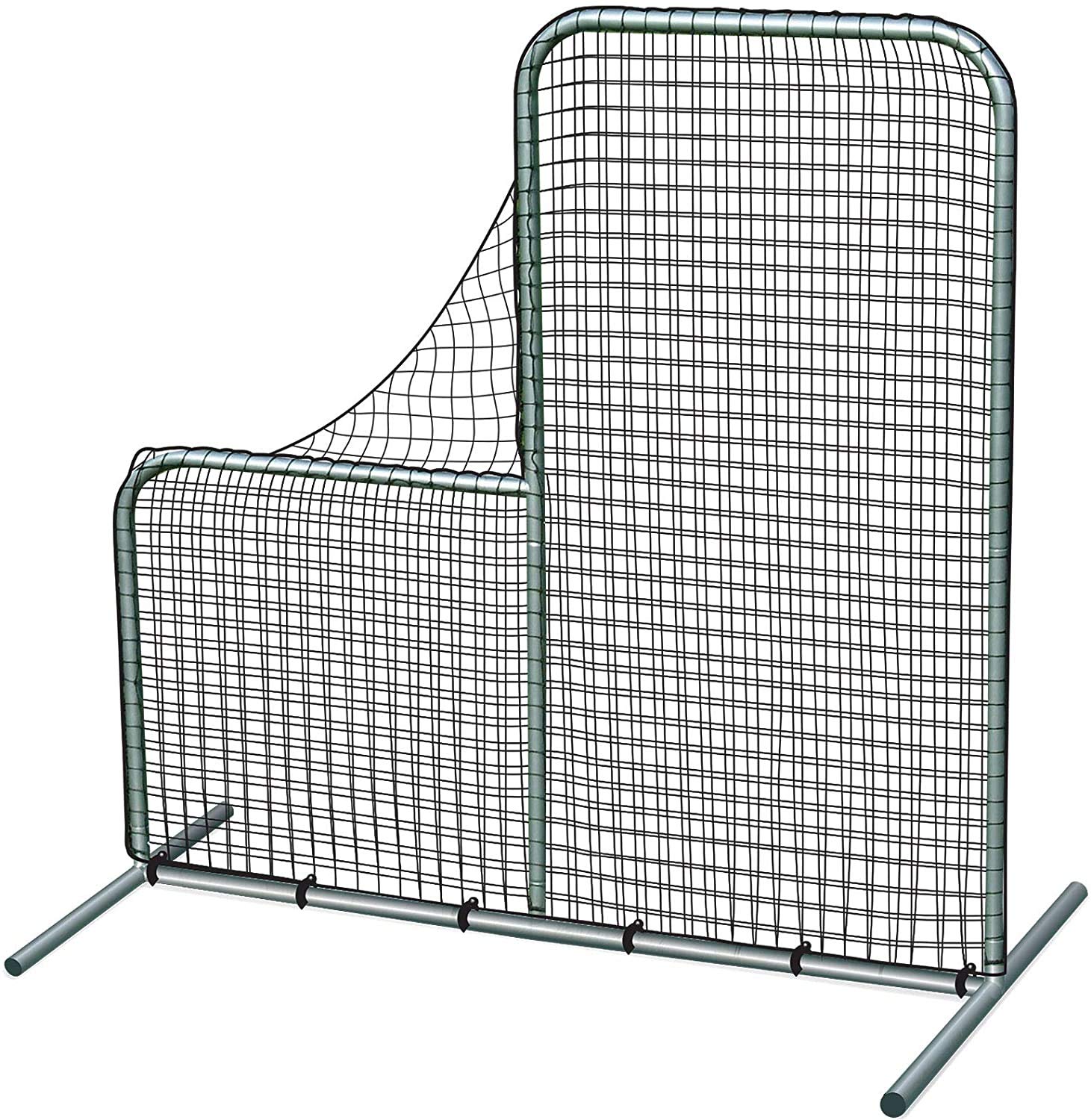
An L-screen is the classic rectangle with a notch cut into one side, so the pitcher stands partly behind the net and partly in the open notch. That shape lets you see the hitter while the net covers the middle of the field where comebackers travel. A Z-screen uses a stepped profile instead, and its makers build it to flip around for left- or right-handed pitchers. If you throw both overhand and underhand to the same hitters, a reversible design saves you dragging the frame around between reps.
Check the steel before the netting
The frame takes the first hit, so tube size matters. Look for a screen that states its tube diameter and gauge in the specs, because a thicker wall resists bending when a hard line drive catches an upright. Screens that list a specific diameter, such as 1.5-inch steel, give you something concrete to compare. A frame that lists no tube size at all is a question mark, especially if you practice with adult hitters.
Understand net ply and weather ratings
Netting is graded by ply, which describes how many strands are twisted into the material, and a higher ply generally means a denser, heavier net. Weatherized polyethylene netting is treated to survive sun and rain, which matters if the screen lives outdoors rather than in a garage. If your cage sits in the backyard year-round, prioritize a net the maker describes as weatherized or UV treated over a bare net.
Plan for one-person setup and moving
Most buyers are a single coach or parent, so assembly time and weight decide whether the screen actually gets used. A screen with push-pins or snap-together poles sets up without tools, and wheels let one person roll it from the truck to the field. A carrying case helps if you transport it often. Check the listed weight too, because a heavier frame is usually sturdier but harder to haul alone.
Side-by-Side Comparison
| Model | Best For | Screen Size | Frame / Net | Listed Weight | Amazon |
|---|---|---|---|---|---|
| Skywalker Sports Safety Screen★ Best Overall | Backyard and cage practice on a budget | 7 ft x 7 ft | Powder-coated steel frame, UV-protected net | — | Amazon |
| Champro Pitcher’s Safety L-ScreenBest Value | On-field practice and home cages | 7 ft x 7 ft, 40″ drop | 1.5″ 18-gauge steel, 45-ply P.E. net | 30.7 pounds | Amazon |
| GoSports 7 ft x 7 ft PRO L ScreenMost Portable | Coaches who move the screen constantly | 7 ft x 7 ft | Powder-coated steel, reinforced netting | 32 pounds | Amazon |
| Fortress Regulation L-Screen | Clubs and schools wanting top-tier steel | 7 ft x 7 ft | 1.5″ steel, #42 HDPP pillowcase net | — | Amazon |
| Murray Sporting Goods L-Screen | College and adult front toss with wheels | 7 ft x 7 ft | Lightweight metal poles, 90-ply net | — | Amazon |
| Champro Brute Z-Screen | Fastpitch coaches throwing both hands | 7 ft x 5 ft | 1.5″ 13.5-gauge steel, 60-ply weatherized P.E. | 46 pounds | Amazon |
| MR 10 ft x 10 ft Pitching Screen | Large-yard and facility use | 10 ft x 10 ft | 1.5″ steel tube, 5-ply polyester net | — | Amazon |
| Bownet L-Screen Pro | Traveling coaches and gym sessions | 8 ft x 7 ft | Fiberglass poles, powder-coated steel base | 20 pounds | Amazon |
| Muhl Tech 5×7 Pro L Screen | Serious hitters on a fixed practice field | 5 ft x 7 ft | 2″ galvanized steel, #60 pillowcase net | 46 pounds | Amazon |
Detailed Reviews
1. Skywalker Sports Baseball & Softball Safety Screen
Our pick — 4.5+★ from 150+ verified ratings; the strongest balance of quality and price.
The screen that covers the whole strike zone without making you dread setup day.
Start with the shape: this is a full 7 ft x 7 ft screen, so the net stands tall enough to cover a pitcher throwing from a mound and wide enough to cover the middle of the plate. The frame is powder-coated steel and the netting is UV-protected, which is what lets it stand in the weather rather than rust or rot. A full 7 ft x 7 ft net plus a UV-protected, powder-coated build is why this is the default pick for backyard and cage work.
Setup is the part most buyers worry about, and this is where the screen wins people over. Assembly takes a wrench and the included hardware, and owners routinely describe getting from a box to a working screen in about 20 minutes. Better still, the hardware uses a single size of nut and bolt, so you never dig through a mixed pile hunting for the right piece. Instructions ship inside the box and read clearly enough that a parent can finish it solo.
The honest catch is weight. The specs list no weight figure, and a full 7 ft x 7 ft steel screen is not something you carry under one arm, so plan on two hands or a short walk rather than a long haul. The 3-year frame warranty and 1-year net warranty tell you the maker expects the steel to outlast the net. As the crowd favorite here at 4.5+ stars across 150+ ratings, it earns the top spot on both score and the sheer number of buyers behind it.
What earns it the top spot
- Full 7 ft x 7 ft coverage blocks the middle of the field where comebackers go
- Powder-coated steel frame plus UV-protected netting handles outdoor storage
- Single-size hardware and clear instructions cut assembly to about 20 minutes
- Backed by a 3-year frame warranty and a 1-year net warranty
Where it asks a little patience
- No listed weight and no wheel kit, so relocating it takes two hands
- Slip-on net means re-seating it after wind or a hard hit
Settle on this one: a parent or coach who wants one sturdy, weather-ready screen for backyard and cage work and does not need to roll it across a field.
Think twice: if you haul your screen in and out of a truck every session, the wheeled picks below save your back.
2. Champro Pitcher’s Safety L-Screen – 7’x7′ w/ 40″ Drop
A pro-grade steel spec at the price most backyard coaches can actually justify.
The number to know here is the tube: 1.5-inch diameter steel at 18 gauge (a standard measure of steel thickness). That is the same diameter class the top club screens use, and it is why the frame shrugs off ricochets that would dent a thinner tube. The net is a 45-ply polyethylene envelope (45 layers of plastic mesh), and the maker describes it as weatherized, so an outdoor cage does not shorten its life. At 30.7 pounds it is the lighter of the two screens in this guide with a published weight, and it beats the GoSports PRO on that figure at 30.7 pounds versus 32 pounds.
Push-pins are the assembly story. The frame snaps together with pins instead of bolts, so you can break it down and rebuild it on the field without a tool bag. Owners like its light-but-sturdy feel and how easily it maneuvers, and a home cage is exactly where it earns its keep. The one thing to read carefully is the maker’s own note: this screen is intended for on-field use and is not recommended for batting cages, and Champro points cage buyers toward their Brute line instead.
Durability is where opinions split. The net takes visible dings from baseballs and keeps holding, which is normal for practice-grade mesh. Some heavier hitters have pushed it harder than it wants, and one owner found the mesh starting to open within a season of steady use. Keep the hardest adult swings for a club-grade frame and this one gives you years. What the review pages sum up is that it does the job and saves people from real shots up the middle, which is the whole point.
The push-pin payoff: if your practice moves between the field and the driveway, tool-free setup matters more than any single spec, and this frame delivers it.
Field-first by design: the maker’s own note steers cage users to a different line, so buy this for open-field BP rather than a permanent backyard cage.
Made for: high school and travel teams throwing on the field who want real steel without stepping into club pricing.
Not the match for: a permanent cage that takes adult line drives every week, where the mesh will wear faster than you would like.
3. GoSports 7 ft x 7 ft PRO Baseball & Softball L Screen
Wheels already on the frame, so moving it counts as no work at all.
If you have ever dragged a rigid steel screen across a field by one upright, the preassembled wheels here are the feature you will pay for. Add the included carrying case and this becomes the screen that actually travels. The 7 ft x 7 ft footprint gives you full coverage, and the reinforced netting is built to resist tearing after extended use. At 32 pounds it is a bit heavier than the Champro above on paper, so the wheels are less of a perk and more of a requirement to move it comfortably.
Assembly is quick by design. The maker states the entire screen assembles in 5 minutes with no tools required, and the reviews back up how straightforward in practice the setup is. It also works for both right- and left-handed pitchers, so you can flip it depending on who is throwing. Set one up with a pitching machine and it needs 1.5 ft of clearance, which is worth measuring before you commit a layout.
Safety is what buyers bring up, and the double-sided design is the reason. The net is described as quality cage net built on both sides, which is what lets it protect the pitcher from either direction of play. With 4.0+ stars across 50+ ratings it sits a notch behind the top pick on score, and the smaller review base means fewer long-term stories to lean on. The trade-off is that reinforced netting and real steel are heavy, so this is a roll-it screen, not a carry-it one.
Why traveling coaches like it
- Wheels come preassembled and a carrying case is included
- Maker states a 5-minute, no-tool assembly
- Double-sided netting protects from either side of play
- Handles both right- and left-handed pitchers without a rebuild
What to plan around
- Reinforced steel and netting make it a roll-it, not carry-it, screen
- Pitching machine setups need 1.5 ft of clearance
Grab it if: your practice moves between locations and you set up alone, where the wheels and case genuinely change how often you train.
Look past it if: the screen never leaves one spot, and you would rather put the budget into netting thickness.
4. Fortress Regulation L-Screen 7ft x 7ft

Club-grade netting in a frame built for schools that practice every day.
The net is the headline: #42 grade HDPP, a pillowcase-style mesh with overlocked edges and a UV-treated, rot-proof finish. Higher-ply netting like this is what resists tearing after repeated contact, and the rot-proof treatment means rain does not quietly destroy it over a season. The frame is 1.5-inch diameter steel with a powder coat for rust resistance, so the two halves of the screen are spec-matched rather than one being strong and the other a budget afterthought.
For stability, the maker uses a button locking system to hold the frame together, and wide steel feet to keep it planted on uneven ground. That button design matters on a field with a soft infield, where a narrow base rocks and a wide one does not. Setup goes together efficiently enough that the maker pitches it as ready almost immediately, and the whole thing is sized 7 ft x 7 ft, so it covers a full pitcher’s sightline.
What wins people over is the sturdiness, and that same sturdiness is the honest catch. This is not a light screen, and if you plan to move it every session, you will notice the weight. One buyer would have liked a carrying bag included, since the frame is bulky to store. Some assembly resistance shows up around the poles fitting together, so expect a bit of force on the joints. With 4.5+ stars across 170+ ratings and a #42 net, this is the pick when the screen lives on a fixed field.
The netting argument: #42 HDPP with overlocked edges is built to take repeated contact without fraying, the spec a school athletic director looks for first.
The honest caveat: no carrying case and a heavy frame mean this belongs on a field you practice at, not in a truck bed.
Reach for this if: you run a school or club program and want a screen that stays put and takes daily abuse on the same field.
Look elsewhere if: portability tops your list, since this one is heavy and ships without a bag.
5. Murray Sporting Goods Baseball Batting L-Screen

The one with a hip protector bar, aimed at the line drive that sneaks under everything else.
Most screens protect your body and leave your legs exposed to a low line drive. Murray adds a 45-degree hip protector bar for exactly that gap, and it is the feature that sets this screen apart on the field. The net is a high-grade 90-ply, built to absorb hard shots up the middle, and the metal poles snap together so one person can assemble it without help. A baseball sack that hangs on the frame keeps balls up off the ground, so you are not bending over between pitches.
The wheels are deliberately small so the bottom bar sits close to the turf, and that detail stops grounders from sliding underneath the screen. It rolls as a one-person job on the backyard or from the tailgate to the field. It is rated for every level too, from tee ball through adult leagues, so the same frame serves a family across years. For a coach throwing front toss from a short distance, the hip bar adds a layer of confidence that a plain L-screen does not.
Here is the fair warning. The frame and build have drawn mixed feedback, with some buyers finding it sturdy and plenty of others reporting poles that bent or broke under hard contact. It is not a club-grade tank, and the durability experiences range widely. If you are throwing to young hitters, it holds up well; if adult power hitters are unloading on it, weigh that against the heavier screens here. With 4.0+ stars across a modest review base, the picture is still forming, so treat it as a value pick for lighter use.
What no other pick here has
- 45-degree hip protector bar shields the legs from low line drives
- Included baseball sack keeps balls up off the ground
- Small wheels sit low to stop grounders sliding underneath
- Rated from tee ball through adult league
Where to be honest about it
- Frame durability draws mixed reports under hard adult contact
- Not built to club-grade standards; treat it as a lighter-duty screen
Best for: youth and high school coaches who want the hip protection and the ball sack without stepping up to a heavy frame.
skip it if: adult power hitters are your regular practice partner, where its frame is outmatched by the tougher picks above.
6. Champro Brute Pitcher’s Z Screen 7′ x 5′

A reversible Z-screen that flips for both hands and takes a fastpitch front toss all day.
The Z-shape is the whole idea. That stepped profile lets a pitcher work from behind the net and still see the hitter, and the maker builds it reversible so you just spin it around to switch between right- and left-handed pitchers. It also handles both overhand and underhand pitching, which is why it fits a softball program as neatly as a baseball one. The frame is 13.5-gauge steel at 1.5-inch diameter, and the net is 60-ply weatherized polyethylene with bungee straps holding it around the bottom tube.
For fastpitch coaches, this is the pick that comes up in practice after practice. The screen has held up for owners front tossing to 16u teams from 10 to 15 feet away, which is the kind of short distance that puts real stress on a net. A high schooler throwing front toss underhand gets the same coverage as an overhand pitcher. It also shields a coach feeding a pitching machine or tossing to hitters, so it protects more than just the pitcher.
The catch is bulk. At 46 pounds this is the heaviest 7 ft x 5 ft frame here, and the net is sized to that footprint rather than a full 7 ft x 7 ft, so it covers less width. If you protect a tall pitcher, the extra height comes from a buyer standing 6’5 who found this tall enough to fully shield them. It works best on a field or cage where it can stay put, and the orange frame is a nice visibility touch when the light goes flat. With 4.5+ stars across 130+ ratings, it has a record that says it lasts.
The redesign that pays off: flipping the Z-screen between left and right pitchers takes seconds, and a 60-ply weatherized net means the sun is not quietly killing it between seasons.
Size down, weigh up: the 7 ft x 5 ft net covers less width than a full square, and at 46 pounds you will not want to carry it far.
Made for: fastpitch coaches who front toss from close range to both left- and right-handed pitchers and want a net rated to outlast the weather.
Pass it over if: you need a lighter screen to carry between fields or a full square footprint.
7. MR 10’x10′ Professional Baseball Pitching Screen
A ten-foot wall of net for lots of space and hitters who swing big.
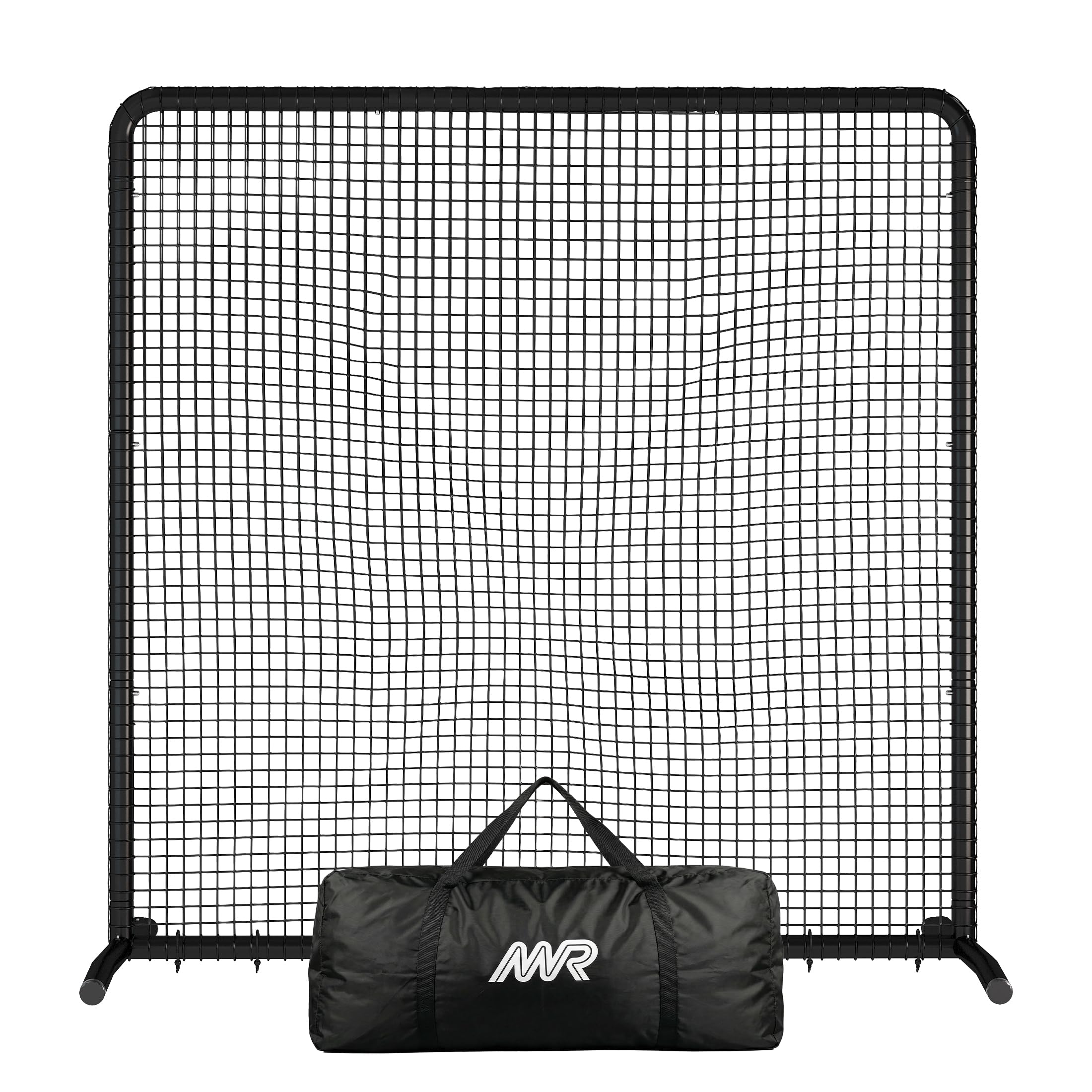
The size is the story: 10 ft x 10 ft, the largest square on this list by a wide margin. That extra coverage matters if you pitch from a distance where the hitter has room to spray the ball, because a bigger net blocks more of the field. The frame is 1.5-inch diameter steel tube with a powder coat for rust resistance, and the net is a 5-ply polyester pillowcase mesh with overlocked edges that slides on and off for fast setup.
It is built for both baseball and softball, so a program can throw one net over the other without buying twice. The maker pitches it for facilities, schools, and backyards, and rates it for any level of player from children to adults. The pillowcase netting with overlocked edges (a sewn, reinforced border) is the design detail that makes setup quicker, since the net slides over the frame rather than being tied in dozens of points. A lifetime warranty backs the frame, which is the strongest coverage claim in this guide.
The trade-off is the footprint. A 10 ft x 10 ft screen needs real space to stand and to store, so measure your yard or cage before you order. At this size it is a set-it-and-leave-it piece of equipment rather than something you fold up and carry home. The 5-ply net is the lightest build here, so it is sized for practice reps rather than a net expected to swallow adult line drives every day. With 4.5+ stars across a smaller base, the long-term word is still coming in, so weigh the huge coverage against the lighter net.
The case for the big square
- 10 ft x 10 ft covers more of the field than any other screen here
- Serves baseball and softball players from children to adults
- Pillowcase net with overlocked edges slides on for quick setup
- Lifetime warranty on the frame
What the size demands
- Needs real yard or cage space to stand and store
- 5-ply net is the lightest build here, best for practice reps
Right for: schools and facilities with space to spare that want maximum field coverage from one screen.
Wrong for: someone with a tight backyard who needs a compact screen to pack away.
8. Bownet L-Screen Pro for Pitching, 8×7, Steel Base

Twenty pounds, taller than most, and it breaks down without a single tool.
The weight is the reason to look at this one: the maker lists it at just 20 lbs, the lightest screen here, and that makes it a one-person carry from the truck to the gym to the field. It stands 8 ft tall by 7 ft wide, so it is taller than the standard 7 ft square and gives a pitcher more headroom to work behind. The frame pairs thicker fiberglass poles with a powder-coated steel base, which is how it stays stable on an indoor floor or a field while staying light.
The design flips for both left- and right-handed pitchers, so one screen serves an entire staff. That applies to batting practice, live pitching, and front toss, which covers most of what a coach does in a single session. Setup needs no tools, so break-down at the end of practice is quick. A carry bag sized 48″ x 7″ x 6″ is included, which lets the whole screen ride in a trunk or a corner of the dugout.
The fair caveat is the review base, which is still small, so there is less long-term feedback than the steel-framed standards above have built up. Fiberglass poles keep the weight low but flex under hard contact, so a buyer looking to stop repeated adult line drives may prefer the all-steel screens. The upside is that at 20 lbs with no-tool setup, this is the screen that actually comes out of the trunk every session. With 4.0+ stars, it trades a little heft for a lot of portability.
What wins travelers over: at 20 lbs with a carry bag and no-tool setup, it is the screen a solo coach can handle without thinking about it, one-handed travel from trunk to field.
The honest catch: fiberglass poles and a small review base mean less of a track record against adult power hitters than a steel frame.
Pick it for: coaches who practice in different places and want a tall screen they can set up and haul alone.
pass on it if: your hitters are adults with real power, where an all-steel frame gives more confidence.
9. Muhl Tech 5×7 Pro L Screen

The heaviest steel and the thickest net here, in the smallest footprint on the list.
Two specs jump out: 2-inch galvanized and powder-coated steel tubing (steel dipped in zinc, then coated in powder for rust resistance), the thickest frame in this guide, and true #60 pillowcase netting (60 layers of mesh), the highest ply here. That combination is built for a practice field that gets used hard, where a lesser frame bends and a lesser net frays. Vinyl-wrapped padding at 1.5 inches covers the contact points, and gussets (reinforcing plates) added to the bottom uprights are there for long-term strength, which is exactly where an L-screen tends to fail first.
The footprint is the deliberate trade: 5 ft x 7 ft, smaller than the full squares, so it protects a tighter window of the field. That is fine for a fixed practice station where you know where the pitcher stands, but it throws less of a shield than a 7 ft x 7 ft net. At 46 pounds with real steel, it is a leave-it-in-place screen rather than a portable one. It comes with a six-month manufacturer warranty, which is shorter than some here, so factor that in.
This is the pick for a serious program with a dedicated field and hitters who are not gentle. The 2-inch tubing and #60 net together are the most sturdy build on this list, and the review base scores it at 4.5+ stars, the highest here, though on a smaller set of ratings than the picks above. If you need maximum durability in a compact, fixed position, the 2-inch tubing and #60 net are the most sturdy build here. If you need to move it or cover the whole plate, a bigger or lighter screen serves better.
Built for the long haul
- 2″ galvanized, powder-coated steel tubing is the thickest frame here
- True #60 pillowcase net is the highest ply on this list
- Gussets reinforce the bottom uprights where screens fail first
- 1.5″ vinyl-wrapped padding on the contact points
The trade-offs to weigh
- 5 ft x 7 ft footprint covers less field than a full square
- 46 pounds with a six-month warranty makes it a fixed-field pick
Suits: a serious program with a set practice station that wants the thickest steel and densest net here and will leave it in place.
Does not suit: a coach who moves a screen between fields or wants full-plate coverage.
Know the Specs
Frame Tube Diameter and Gauge
Two numbers describe the steel frame. Diameter is the width of the tube itself, and gauge describes how thick the steel wall is. A screen with 1.5-inch or 2-inch tubing has a bigger, stiffer frame, and that resists bending better when a hard line drive catches an upright. Gauge works in reverse to intuition: a lower gauge number means a thicker wall, so 13.5-gauge steel is heavier than 18-gauge. If a listing gives both the diameter and the gauge, you can compare toughness directly; if it gives neither, treat the frame as unknown.
Net Ply and Weather Treatment
Ply describes how many strands are twisted into the netting material, and a higher ply means a denser, heavier net that resists tearing after repeated contact. A 45-ply net and a 90-ply net are very different in the kind of shot they can absorb. Weather treatment matters just as much if the screen lives outdoors, so look for terms like weatherized, UV treated, or rot-proof. Polyethylene is a common netting material because it stands up to the elements; a treated polyethylene net will outlast a bare one left in the sun.
Common Questions
What is the difference between an L-screen and a Z-screen for softball?
Will a pitching screen stop a hard-hit softball line drive?
Can I use a pitching screen with a pitching machine?
How much does a softball pitching screen weigh, and does weight matter?
Do pitching screens hold up outdoors in the weather?
Do I need a hip protector on a pitching screen?
What size hitting screen is best for softball practice?
Which side does a pitcher stand on behind an L-screen?
Can a pitching screen work for both baseball and softball?
Does an L-screen come with a carrying case?
The Bottom Line
For most coaches and parents, the softball pitching screen to start with is the Skywalker Sports Safety Screen, because it pairs a full 7 ft x 7 ft footprint with a powder-coated steel frame and UV-protected net, backed by a 3-year frame warranty and a 1-year net warranty. If rolling the screen between fields is your routine, grab the GoSports 7 ft x 7 ft PRO L Screen, which ships with preassembled wheels and a carrying case. And for fastpitch coaches throwing front toss to both hands from close range, the Champro Brute Z-Screen is the one to reach for.
The Skywalker also holds the top score here at 4.5+ stars across 150+ ratings, and that volume of buyers makes it the safest first purchase. Match the net ply and frame gauge to the hardest hitter you actually face, and the screen will last through years of practice.
How we choose
We do not accept paid placement. Every pick is matched to a real buyer and a real use-case; we do not hands-on test units.
Sources
Specifications: manufacturer listings and product documentation. Review insights: verified customer reviews, as of November 2026. Pricing: not shown on this page (it changes often); check the current price via the retailer link.
As an Amazon Associate, Tactical Gear Guy earns from qualifying purchases. This does not affect which products we feature.