Specs are compiled from manufacturer listings and verified buyer reviews and can change over time — please confirm the key details on the product page before buying.
The right snowblower motor gets your machine throwing snow again instead of sitting dead in the garage. What you actually need depends on one thing: whether you are replacing a tired electric starter on an Ariens-style machine or swapping the whole gas engine that turns the auger. Most buyers get burned by ordering before they count their teeth, measure their shaft, or check which engine their housing was built around.
This guide is built by comparing the manufacturers’ published specifications and the patterns across verified customer reviews, so you get each pick’s real strengths and trade-offs instead of marketing spin.
Three motors cover the real replacement jobs: a starter that swaps into Ariens and Husqvarna housings, a mid-size recoil engine for repowers, and a big electric-start unit with serious torque. Below you will find the fitment numbers that decide whether a snowblower motor drops straight in.
Top Picks

How To Choose The Best Snowblower Motor
The hardest part of buying a snowblower motor is not picking one — it is picking one that physically fits the machine you already own. A starter motor and a full gas engine are two completely different jobs, and mixing them up is the most expensive mistake here. Read your old part number and tooth count before you spend anything.
Starter motor or whole engine?
A starter motor spins the engine so you do not have to pull a cord. It mounts on the engine block and drives the flywheel, so it has to match the engine family it was built for. A gas engine, by contrast, is the entire power unit — cylinder, crankshaft, fuel tank, and all. If your engine runs fine but the electric start just clicks, you want a starter. If the engine itself has seized, you want a full engine.
Count the teeth and measure the shaft
On a starter, the number of teeth on the drive gear has to match your flywheel exactly. The JQ170-2 runs a 14-tooth gear, and that is the first number you should compare against your old unit. On a full engine, the shaft is the critical measurement. A shaft that is too short will not reach your pulley, and a bore that does not match your keyway will not seat. Write both numbers down before you shop.
Match the engine family to your housing
Snowblowers are built around a specific engine family, and the bolt pattern usually follows it. Ariens machines with an AX291 or AX306 engine take a different starter than a generic unit. Engines listed for Husqvarna and Jonsered housings often share mounting dimensions with the Ariens family, which is why one starter can cover several brands at once. Check your model number against the listing before ordering.
Side-by-Side Comparison
| Model | Best For | Power / Voltage | Displacement | Weight | Amazon |
|---|---|---|---|---|---|
| Electric Starter Motor JQ170-2 14Teeth★ Best Overall | Replacing a dead electric starter on Ariens and Husqvarna housings | 120V AC | 291 cc engine family | — | Amazon |
| Aceup Energy 7HP 212cc Horizontal Shaft | Repowering a small two-stage blower with recoil pull start | 7 hp | 212 cc | 28.9 lb | Amazon |
| Aceup Energy 18HP 459cc Electric Start | Big two-stage blowers and heavy repower builds | 18 hp | 459 cc | 50.5 lb | Amazon |
Detailed Reviews
1. Electric Starter Motor JQ170-2
Our pick — 4.0+★ from 50+ verified ratings; the strongest balance of quality and price.
The cheap fix that turns a dead electric start back into a one-key twist.
If your Ariens or Husqvarna fires up fine once you pull the cord, the engine is healthy and only the starter has quit. This JQ170-2 is the part that spins the flywheel for you, running on 120V AC (standard household current from the machine’s onboard plug) with a counter-clockwise rotation. It carries a 14-tooth drive gear, which is the number you must match against your old starter before ordering.
The spec sheet behind this one is not marketing filler. It passed a 1500V withstand test at ≤5mA leakage, carries IP44 insulation grading (protection against solid objects and splashing water), and was run through 5000+ electric start cycles before release. The cord runs 5.51 inches (140mm), which is a short pigtail meant to reach the machine’s own wiring harness — not a long lead to a wall outlet.
Fitment is the honest trade-off here, and it is worth sizing before you buy. The unit covers Ariens ST28DLE Deluxe Plus with the AX291 engine, Ariens Deluxe 28″ SHO with the AX306 (LCT 306cc) engine, and the 30″ Deluxe with the AX291. It also lists Husqvarna ST327P, ST230P, ST424 and ST424T, plus Jonsered ST2376, Poulan Pro PR12530 and McCulloch MC12527 housings. Some installs need the tin skirt above the starter bent slightly, because this unit has a larger reduction gear and Bendix housing (the housing around the gear that kicks out to engage the flywheel). That is a minor clearance job, not a wiring problem.
What makes it the default pick
- 14-tooth gear matches the Ariens AX291 and AX306 starter family directly
- UL approved, with a 1500V withstand test at ≤5mA leakage recorded on the spec sheet
- 5000+ electric start cycles tested before it ships — built for repeat cold-morning starts
- One part covers Ariens, Husqvarna, Jonsered, Poulan Pro and McCulloch housings
Where the install bites
- The larger reduction gear and Bendix housing can foul the tin skirt above it, so expect minor bending
- 14 teeth is a hard requirement — a different flywheel will not engage
- Short 5.51-inch (140mm) cord, so it only reaches your machine’s own harness
Reach for this if: your blower cranks by rope but the electric start is dead, and your housing runs an Ariens AX291 or AX306 family engine.
Look elsewhere if: you have not counted your old starter’s teeth yet — get that number first, because 14 is not universal.
2. Aceup Energy Gas Engine 7HP 212cc
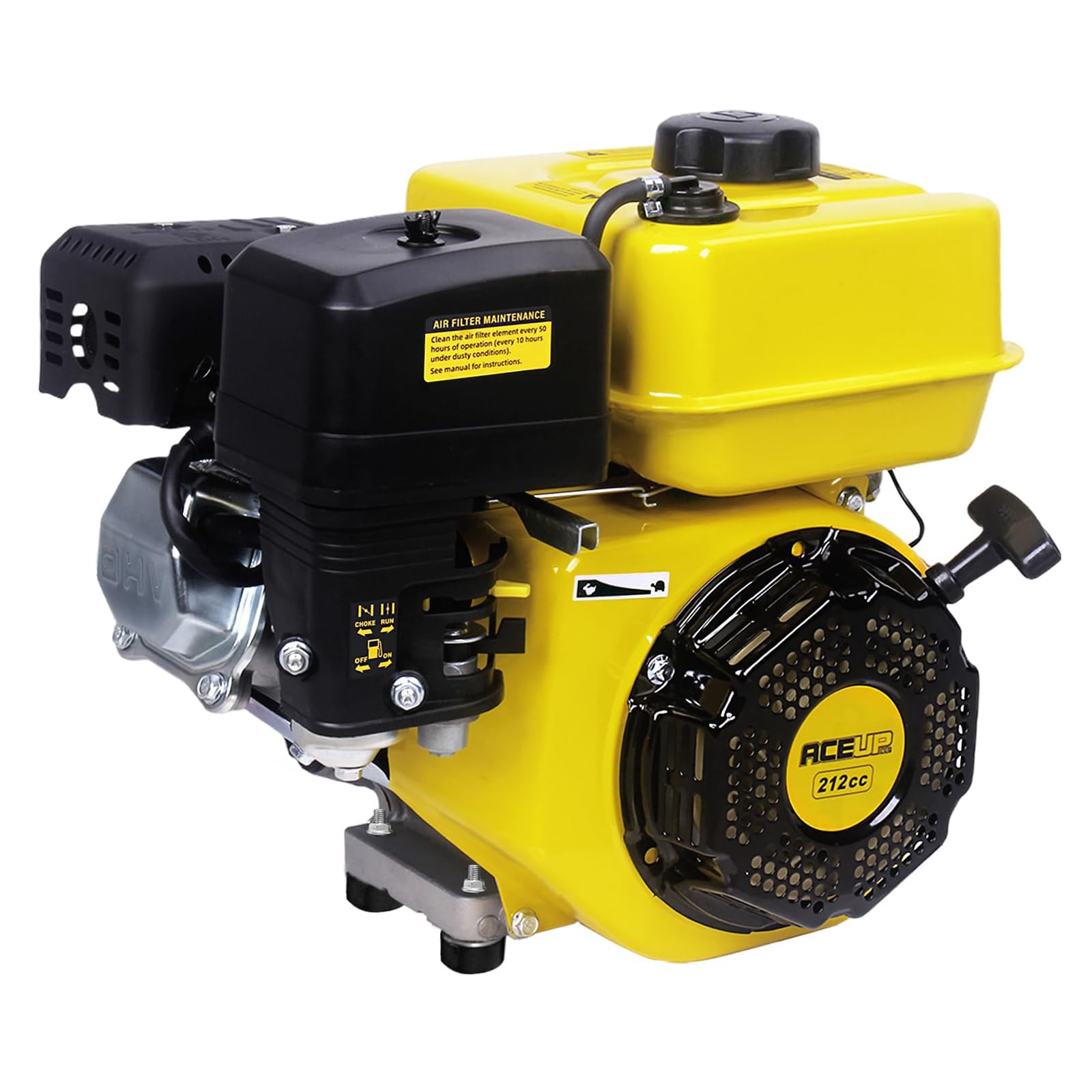
A whole replacement power plant for the blower you were about to scrap.
This is not a starter — it is the 7 hp engine itself, and it is the sensible step up if your old block is worn out and you want to keep the rest of the machine. The 212cc displacement (the volume of the cylinder, which sets how much work each stroke does) is a smaller power plant than the 459cc unit below, and it is aimed at compact two-stage blowers rather than commercial rigs.
The shaft is the number that decides whether it bolts on. You get a 3/4″ diameter shaft, 2-3/8″ long, tapped with 5/16″-24 UNF threads and fitted with a 3/16″ keyway — all standard small-engine dimensions that let an existing pulley or auger drive seat properly. Under the cover there is a steel camshaft and cast iron cylinder liner, and the whole motor weighs 28.9 pounds, which a single person can lift onto a housing without a hoist. It runs a 0.9 gallon fuel tank.
Starting is by recoil only, so there is no electric option here. Once going, owners describe it as quiet for its size and quick to catch — a tiller and go-kart builder both reported it firing on the second pull and running cleanly. The one clear limitation is the throttle setup: it does not support a dual throttle cable configuration, which complicates builds that need two cables running to one carburetor. On a snowblower, where you typically work one throttle lever, that is far less of an issue.
What the 212cc buys you: a full 4-stroke, air-cooled engine with a steel camshaft and cast iron liner, EPA compliant (meaning the emissions meet the federal standard) and functionally tested before it leaves the factory. Aceup covers it with a 1-year limited warranty on normal use plus free lifetime technical guidance.
The right call when: your compact blower’s original engine has given up and a 3/4″ keyed shaft matches your pulley setup.
The deal to accept: recoil-only starting means you are pulling a cord every cold morning — there is no button on this one.
3. Aceup Energy 18HP 459cc Gas Engine
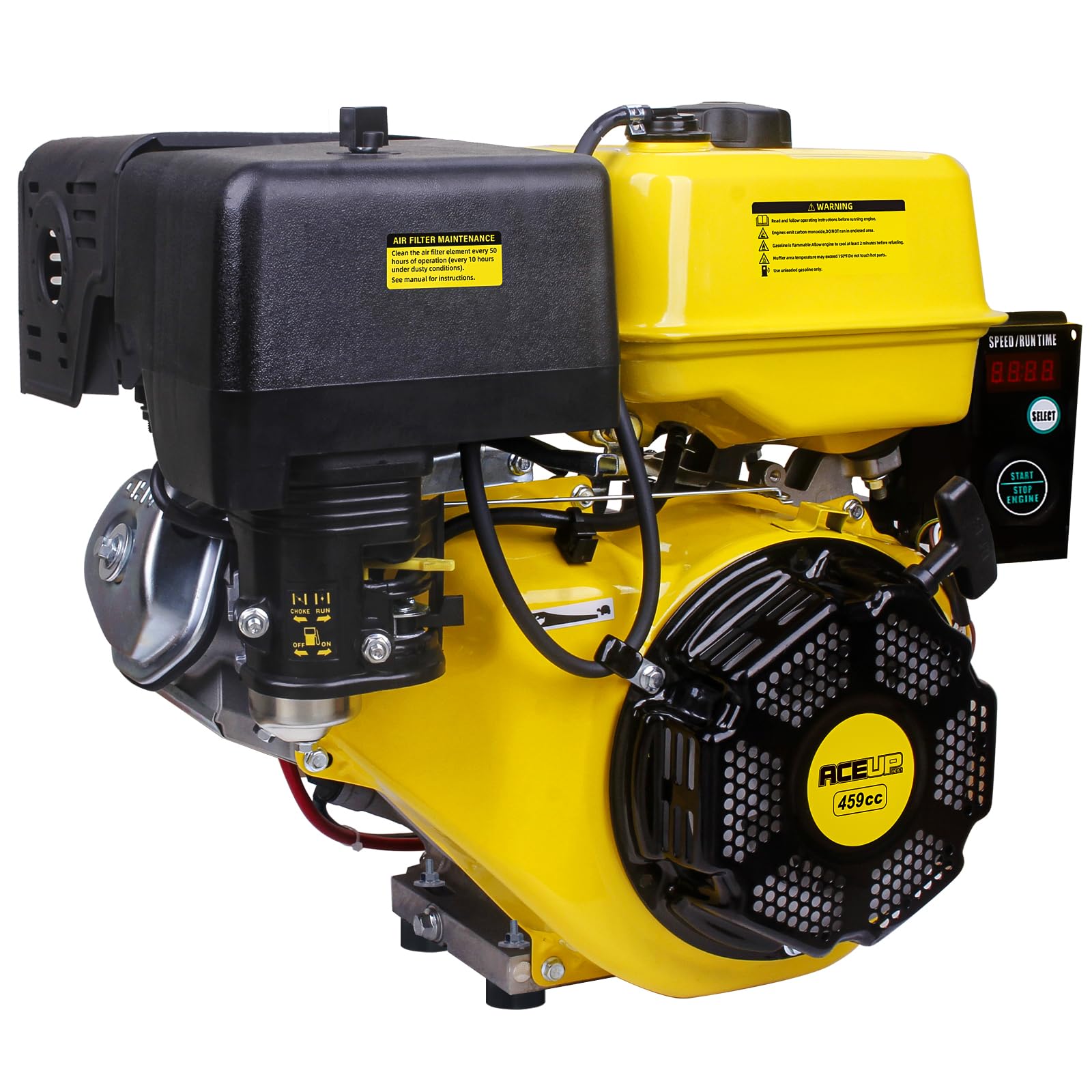
Twice the muscle of the mid-size engine, with a key start on a freezing morning.
Here is the difference stated in raw numbers: the 18 hp output against the 7 hp engine is a 2.6x gap in engine power maximum, and the 459cc displacement against 212cc is a 2.2x gap. That is the whole reason this unit exists — it is for wide two-stage blowers, log splitters, and heavy repower builds where a small block simply stalls in wet snow.
Weight scales with that power in a way you need to plan for. The shaft also changes size, not just strength. You get a 1″ diameter shaft, 3.48″ long, tapped 3/8″-24 UNF with a 1/4″ keyway — so any pulley built for the 3/4″ shaft engine will not transfer over. Measure your existing pulley bore before you commit.
Starting is the feature that justifies this pick for snowblower duty. It runs both recoil and an EZ electric start, backed by an electronic ignition system. You also get low oil shutdown (the engine cuts itself off before running dry) and a 1.7 gallon fuel tank. The internals are steel camshaft, forged crankshaft and cast iron cylinder liner. Owners are clear about where it lands: it starts on the first pull, drops straight in where a Predator engine sat, and the power draws attention for a motor at this level. The honest repeat complaint is the recoil starter — some units have arrived with a broken pull assembly, so check it before you bolt everything down.
The measured take: performance and build quality are what this engine is known for, and the first-pull starts are consistent across owner reports. It is EPA compliant, functionally tested at the factory, and carries a 1-year limited warranty plus free lifetime technical guidance.
Buy it for: a large two-stage blower or a heavy repower where you want key-start convenience and the 459cc displacement to stay ahead of deep, wet snow.
Go smaller if: you are working a compact machine, because 50.5 pounds and a 1-inch shaft demand a housing built to take them.
Know the Specs
Tooth count on a starter gear
The teeth on a starter’s drive gear mesh with the flywheel on your engine. If the count is wrong, the gear grinds instead of cranking. The JQ170-2 runs 14 teeth — compare that against the gear on the old starter you are removing, and if the number does not match, the part will not turn your engine.
Displacement in cc
Displacement is the volume swept by the engine’s piston, measured in cubic centimeters. A 212cc engine is a compact power plant; a 459cc engine is roughly twice that size and moves more snow per pass. Match displacement to the blower’s width and the weight of snow you typically face.
Shaft diameter and keyway
The shaft is the rod that spins your pulley or auger drive. Diameter, length and keyway size all have to line up with your existing hardware. A 3/4″ shaft will not fit a pulley bored for 1″, and a 3/16″ keyway will not seat a pulley cut for 1/4″.
Start types explained
A recoil starter is the pull cord. An electric starter spins the engine from a 120V AC source so you do not have to yank a cord in the cold. EZ start is an electric-assisted setup that reduces the effort needed. Machines with both give you a backup when the electric side fails.
Common Questions
Will the JQ170-2 starter fit my Ariens Deluxe 28?
How do I know if I need a starter motor or a whole engine?
Does the 7HP Aceup engine fit a snowblower?
Can I swap a 212cc engine for the 459cc one?
What does EPA compliant mean on a small engine?
Is electric start worth having on a snowblower engine?
Why did my new starter need bending to fit?
Does the 459cc engine come with a warranty?
What oil and fuel does a 4-stroke snowblower engine take?
Can a 120V starter motor run off a wall outlet?
The Bottom Line
For most people staring at a snowblower that will not start, the Electric Starter Motor JQ170-2 is the sensible first move, because it fixes the electric start on an otherwise healthy engine and covers a wide spread of Ariens and Husqvarna housings with a 14-tooth gear. If the engine itself is finished, the Aceup Energy 7HP 212cc replaces the whole power plant on a compact blower with a standard 3/4″ shaft. And when you need real muscle for a wide two-stage machine, the Aceup Energy 18HP 459cc brings 459cc of displacement and a key start to the job. Measure your shaft and count your teeth, and the right snowblower motor will drop straight in.
How we choose
We do not accept paid placement. Every pick is matched to a real buyer and a real use-case; we do not hands-on test units.
Sources
Specifications: manufacturer listings and product documentation. Review insights: verified customer reviews, as of November 2026. Pricing: not shown on this page (it changes often); check the current price via the retailer link.
As an Amazon Associate, Tactical Gear Guy earns from qualifying purchases. This does not affect which products we feature.