Specs are compiled from manufacturer listings and verified buyer reviews and can change over time — please confirm the key details on the product page before buying.
You want one ceiling unit that senses smoke and carbon monoxide (CO, the odorless gas from faulty heaters and engines), and you want it to alert your phone instead of waking the whole street. That is the whole promise of a smart combo alarm. The catch most shoppers miss is that these devices split into three very different setups: ones that only work inside a paid security ecosystem, ones that talk over your home Wi-Fi (your wireless internet network), and ones that keep working without either. Pick the wrong one and your “smart” alarm either locks you into a monthly plan or refuses to connect at all.
This guide is built by comparing the manufacturers’ published specifications and the patterns across verified customer reviews, so you get each pick’s real strengths and trade-offs instead of marketing spin.
A combo alarm is two sensors sharing one housing, so the real question is not what it detects but how it reaches you. Below you will find the four models worth a look, sorted by who each one actually fits — with what genuine buyers praise, and where each one falls down in daily life. It is my honest read on the smart smoke and carbon monoxide alarm options that are genuinely worth mounting on your ceiling.
Top Picks

How To Choose The Best Smart Smoke and Carbon Monoxide Alarm
The first thing to settle is how the alarm reaches you when you are not home. Everything else — mounting, voice alerts, sensor speed — follows from that one decision, because a combo alarm that cannot get a message to your phone is just a very loud ceiling disc.
Decide if you want an ecosystem unit or a standalone Wi-Fi unit
An ecosystem alarm only reports through its own hub. That is what you get with the SimpliSafe unit, which needs the SimpliSafe Gen 3 security system behind it to send alerts and trigger its siren at the base station. The trade-off is real: the alarm is cheaper and simpler to fit, but it is useless as a smart device without that hub already in your house.
A Wi-Fi alarm reports straight over your router. The Kidde hardwired model uses 2.4 GHz Wi-Fi and sends smoke, carbon monoxide, and low battery alerts through the Kidde app with no subscription. If your router runs a single 5 GHz band only, check that it can also broadcast 2.4 GHz before you buy — this is the single most common reason a smart alarm will not pair.
Check if you need hardwired power or battery only
Hardwired alarms connect to 120V AC and hold AA batteries for backup, so detection continues through a power cut. Battery-only alarms skip the wiring entirely and mount in minutes with a screw and a twist. If your ceilings already have alarm wiring and you want like-for-like replacement, go hardwired. If you are adding a unit to a room that never had one, battery power is far less fuss.
Look at how loudly and clearly it tells you what is wrong
A combo alarm has to distinguish two emergencies, and the good ones say the word out loud. Voice alerts that announce “Fire” or “Warning, Carbon Monoxide” save you the seconds you would otherwise spend decoding a beep pattern. Interconnect is the other half: when one compatible alarm triggers, the rest sound too, which is what protects you from a detector on the far side of the house.
Finally, check how each alarm handles false alarms. Cooking smoke is the number one reason people rip a working alarm off the ceiling, so a sensor that can tell burnt toast apart from a real fire matters. So does an app that lets you silence it from your phone. Day to day, those two things matter more than any spec sheet claim.
Side-by-Side Comparison
| Model | Best For | Power Source | App / Alerts | Weight | Amazon |
|---|---|---|---|---|---|
| SimpliSafe Smoke & Carbon Monoxide Detector★ Best Overall | Homes already running a SimpliSafe system | Battery powered | SimpliSafe app, needs Gen 3 system | 10.4 ounces | Amazon |
| Kidde Smart Smoke & CO Detector with Ring (RGCUDR-RW) | Renters and no-wiring installs | 2 AA alkaline batteries (included) | Ring app, no subscription required | — | Amazon |
| Kidde Smart Smoke & CO Detector 30CUAR-W | Replacing an existing hardwired alarm | 120V AC with 2 AA backup | Kidde app, 2.4 GHz Wi-Fi, no subscription | — | Amazon |
| First Alert SC5 Battery Smart Alarm | Nest-heavy homes wanting voice location alerts | 3V CR123A lithium batteries | First Alert app, works with Nest Protect | 16 ounces | Amazon |
Detailed Reviews
1. SimpliSafe Smoke & Carbon Monoxide Detector, Battery Powered
Our pick — 4.5+★ from 550+ verified ratings; the strongest balance of quality and price.
One detector that handles both hazards and pings your phone without a single wire.
The SimpliSafe unit earns its spot by doing both jobs a combo alarm exists for inside one housing. It senses smoke and carbon monoxide together, so you cut down on sensors cluttering your ceiling. Then it pushes that alert to the SimpliSafe app in real time, even when nobody is home. At 10.4 ounces it is the lightest of the wired-comparable pick set — 5.6 ounces lighter than the First Alert SC5 at 16 ounces. That makes it a one-hand twist into its wall anchor rather than a two-person job.
Where it separates from the crowd is the professional layer. Paired with a Gen 3 SimpliSafe security system, the detector can trigger the 24/7 professional dispatch, so a real emergency gets a real response rather than just a notification you might sleep through. The built-in siren fires here and sets off the siren in the base station at the same time, and the system sends daily checks so you know the unit is still alive. Fitting one takes minutes: screw the anchor into the ceiling, snap the detector in, done — no wiring at all.
The plain-English use case is the person who already owns a SimpliSafe setup and wants their alarm to be part of it. It also earns its keep by telling dangerous smoke from burning food, which is the nuisance alarm that sends most people hunting for a screwdriver. Reliability is the honest wobble — the less flattering reviews describe repeat false alarms, and that is the one thing worth keeping an eye on in the first month. It holds a 4.5+ rating, higher than the budget-tier Kidde RGCUDR-RW, and that score plus the ecosystem fit is what earns it the top slot.
What earns it the crown
- Smoke and CO in one housing, so one ceiling spot covers both hazards
- Real-time app alerts through the SimpliSafe app, even while you are out
- Built-in siren triggers the base station siren at the same time
- Daily system checks confirm the detector is still working
- 10.4 ounces makes the twist-and-snap mount easy overhead
Where it needs care
- Smart features depend on a Gen 3 SimpliSafe system — no hub, no phone alerts
- Professional dispatch needs a select monitoring plan
- Repeat false alarms show up in the critical reviews
Built for: anyone already running a SimpliSafe Gen 3 system who wants a no-wiring combo alarm wired into their existing alert chain.
Think twice if: you have no SimpliSafe hub — this becomes a loud local alarm and little more.
2. Kidde Smart Smoke & CO Detector RGCUDR-RW
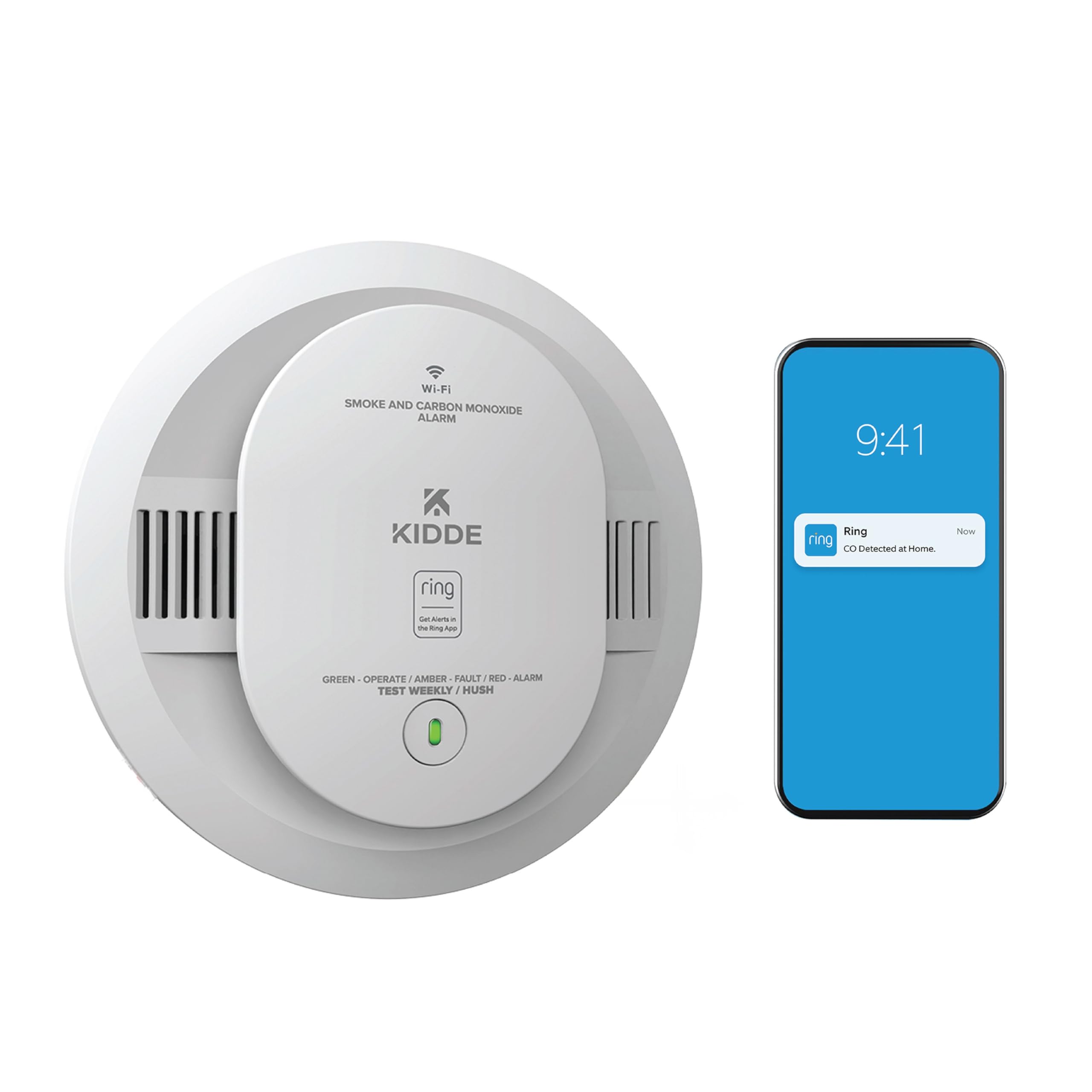
Two AA batteries, Ring app alerts, and no electrician anywhere near your ceiling.
This is the one for renters and for anyone who flinches at the idea of cutting into a ceiling. It runs on 2 AA alkaline batteries, which come included, so the whole install is a screw and a twist. No wiring, no hub, no electrician. And the app alerts arrive through the Ring app without a subscription, which matters because a lot of smart alarms will happily sell you back your own safety data every month.
The detection side is genuinely competitive. It watches smoke and carbon monoxide at once, and Kidde says its sensing is engineered to cut cooking-related false alarms versus earlier generations of its own alarms. It also pushes low-level carbon monoxide alerts to your phone, flagging a slow buildup before it reaches a standard alarm threshold. The interconnect feature is the quiet win: when one Kidde alarm sounds, the compatible alarms in your home sound with it, all over the air. Kidde also claims 25% faster smoke detection, based on its own internal testing against a leading competitor.
Plainly put, the Ring ecosystem gets you 24/7 smoke and CO monitoring only if you add the optional Ring subscription, which is a separate cost. If you skip it, you still get the free phone notifications and the alarms. It is rated 4.3, and the honest weak spot is Wi-Fi pairing — the mixed feedback is almost entirely about linking, with some setups connecting smoothly and others needing a few attempts. Give the app two tries before you assume the unit is faulty. It also talks to Alexa-enabled devices, so your voice assistant can read out the alerts.
The real sell: a combination alarm that requires no wiring, no hub, and no monthly fee to reach your phone is the shortest path from box to ceiling for most homes.
The recurring snag: Wi-Fi pairing is where this one demands patience — plan to sit with the app for a few minutes rather than expecting instant pairing.
Reach for this if: you rent, you want zero wiring, and you already live in Ring or Alexa territory.
Look elsewhere if: your router cannot easily serve a 2.4 GHz signal to a ceiling device.
3. Kidde Smart Smoke & CO Detector 30CUAR-W
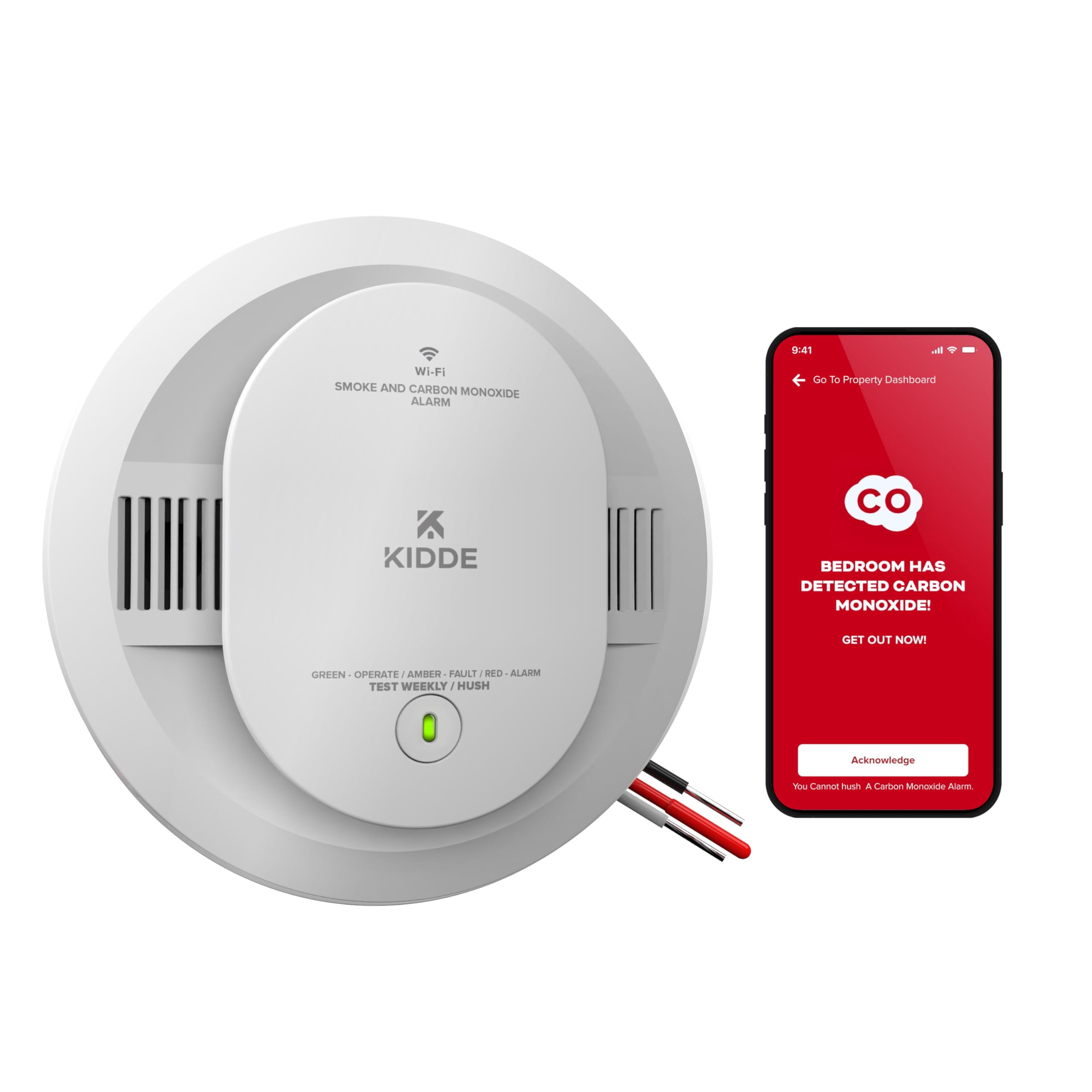
The one that keeps watching through a blackout, then tells you which danger it found.
If your ceiling already has an alarm wired into it, replacing it with a battery-only unit is a downgrade you will notice at the worst moment. This Kidde connects to 120V AC power and carries 2 AA backup batteries so it keeps detecting through a power outage — a real-life difference, because house fires and outages have an unhappy habit of arriving together. It also runs the rest of your hardwired network: add this one smart alarm and compatible interconnected Kidde alarms report to your phone too.
What makes it pleasant in a dark hallway is the voice. It announces “Fire” or “Warning, Carbon Monoxide” out loud rather than leaving you to decode a beep pattern at 3 a.m. That voice works alongside the Kidde app, which sends smoke, carbon monoxide, and low battery alerts with no subscription, and it connects over 2.4 GHz Wi-Fi to Alexa-enabled devices and Google Home. Physically it is compact and low-profile — 2″D x 5″W x 5″H, against 5.75″D x 1.6″W x 5.75″H on the First Alert SC5 — so it tucks closer to the ceiling instead of hanging down into the room.
Its certification paperwork is the most complete of the group: tested to UL 217 10th Edition (the safety standard for smoke alarms) and UL 2034 5th Edition (the standard for CO alarms), meets FCC standards (US radio-interference rules), is ETL listed (independently safety-certified), and carries a 10-year limited warranty on the alarm. Buyers report warm installation experiences, noting the confidence and the straightforward fitting. At 3.5+ stars it is the honest weak link on score. Check the 2.4 GHz requirement (the older, longer-range Wi-Fi band) before ordering — a router that hides that band is the most likely reason a pairing attempt stalls.
The trade you are making: full hardwired safety with battery backup and spoken hazard names, in exchange for a slightly more involved install than a battery-only unit.
One honest note: this is the lowest-rated pick on the page, so read the pairing advice in the app before you climb the ladder.
Suits you when: you are swapping out an old hardwired alarm and want it smarter without tearing up the ceiling.
Wrong pick if: you have no existing alarm wiring — a battery-only unit saves you the run of cable.
4. First Alert SC5 Battery Smart Smoke & Carbon Monoxide Alarm
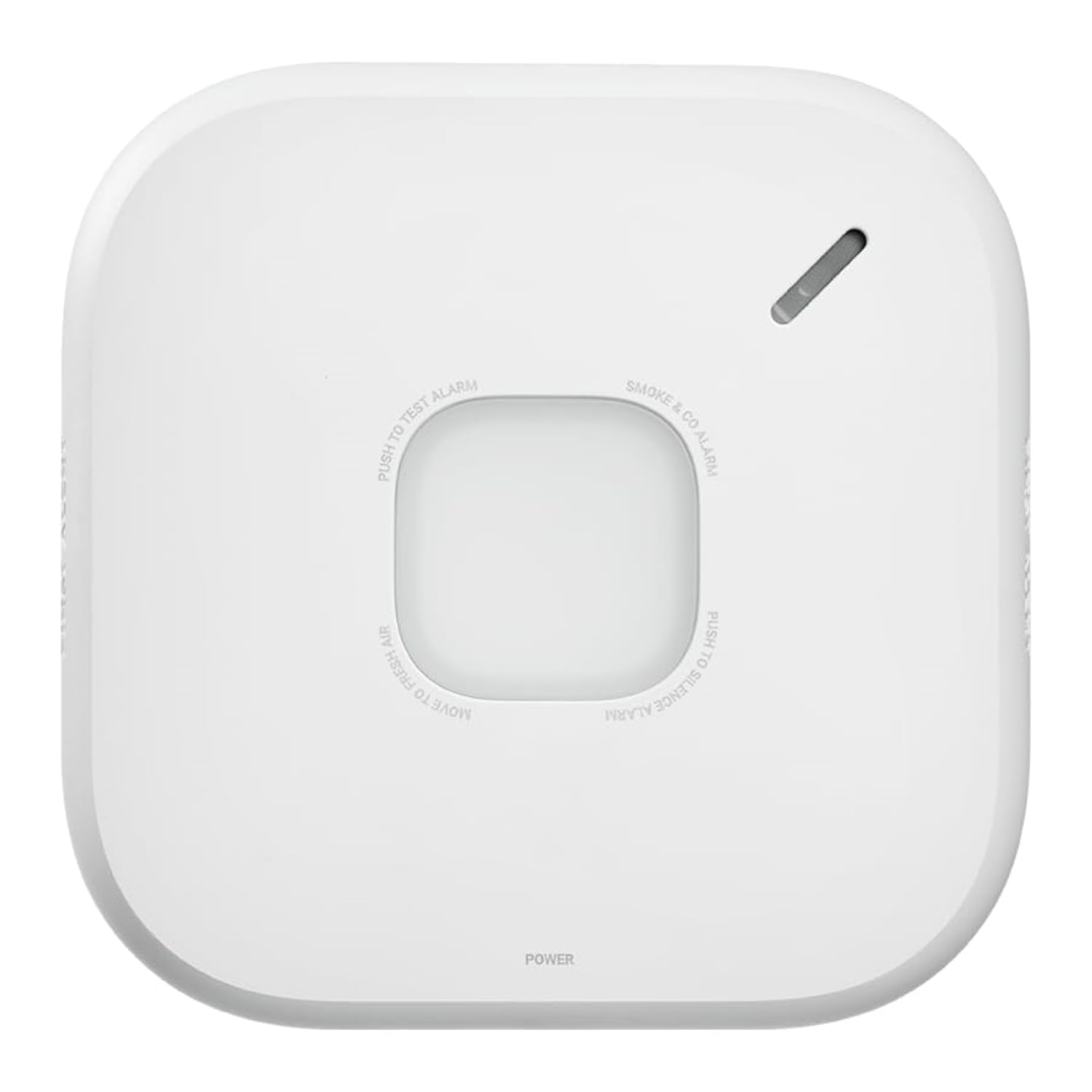
Voice alerts that name the room and the danger, in a home already speaking Nest.
What this one does better than anything else here is tell you where. The Heads-Up warning speaks the type and location of the danger, so instead of a mystery beep you hear what it found and where. It works alongside Google’s Nest Protect alarms, so if you already run Nest Protect the two chime in together, and combined with the interconnect feature, one alarm sounding gets the compatible ones sounding too.
Both hazards are covered in a single housing — smoke and carbon monoxide — with Precision Detection Technology that First Alert says reduces nuisance alarms and warns you earlier. It runs on 3V CR123A lithium batteries and nudges you before they run flat, which is the polite way to avoid the 2 a.m. chirp. Alerts reach your phone through the First Alert app when smoke or CO is detected.
Setup is the part that lands well — fitting and connecting is widely reported as quick and easy, and the Google Home integration is genuinely well-liked. The real caution is reliability. This model carries the lowest score of the four at 2.9, and the criticism centres on alarms going off without cause, difficulty silencing them, and a quality read that is far less flattering than the price suggests. Some buyers also miss a path light feature they expected. Treat this as a fit for homes already deep in Google’s ecosystem, not as a safe first smart alarm.
Its one clear edge: spoken alerts that name both the hazard and its location, paired with Nest Protect compatibility, are hard to find elsewhere in this set.
What to weigh first: the reliability record is the weakest here, so budget for a test run before you rely on it.
Best match for: a home already running Nest Protect that wants voice location alerts and one more combined detector on the network.
Not the first buy if: you want a set-and-trust alarm — the false-alarm feedback is the loudest caveat on the page.
Know the Specs
Power source and battery backup
This tells you whether the alarm still works when the mains power drops. A hardwired model connects to 120V AC and carries AA batteries as backup, so it keeps sensing through an outage. A battery-only model has no mains connection and lives entirely on its cells. If your ceiling already has alarm wiring, hardwired is the drop-in replacement. If it does not, battery-only saves you the cable run — and the good ones tell you when the cells are running low so you are not woken by a chirp.
Interconnect and app alerts
Interconnect means one alarm sounding triggers the compatible alarms around your home, so a fire in the basement does not stay a basement problem. App alerts are the other half of smart: smoke, carbon monoxide, and low battery warnings pushed straight to your phone, so the alarm reaches you at work. Some units report through their own ecosystem hub, others over 2.4 GHz Wi-Fi. Read which one you are buying before you order, because a hub-dependent alarm does nothing smart without its hub.
Common Questions
Do I need a security system hub for a smart smoke and carbon monoxide alarm to send phone alerts?
Will a hardwired Kidde alarm work if the power goes out?
Can I use a smart combo alarm without paying a monthly subscription?
Why will my smart alarm not connect to Wi-Fi?
What is the difference between a smoke alarm and a combination smoke and carbon monoxide alarm?
How long does a smart smoke and carbon monoxide alarm last?
Does interconnect mean every alarm in my house will sound at once?
Is a battery-powered combo alarm as safe as a hardwired one?
Can I silence a nuisance alarm from my phone?
The Bottom Line
For most homes, the smart smoke and carbon monoxide alarm winner is the SimpliSafe Smoke & Carbon Monoxide Detector. It watches both hazards in one housing, sends real-time alerts through the app, and adds professional dispatch when paired with a Gen 3 system. If you want no wiring and no hub at all, reach for the Kidde with Ring. And if you are replacing an existing hardwired alarm, the Kidde 30CUAR-W keeps detecting through a power cut and says the hazard out loud.
How we choose
We do not accept paid placement. Every pick is matched to a real buyer and a real use-case; we do not hands-on test units.
Sources
Specifications: manufacturer listings and product documentation. Review insights: verified customer reviews, as of November 2026. Pricing: not shown on this page (it changes often); check the current price via the retailer link.
As an Amazon Associate, Tactical Gear Guy earns from qualifying purchases. This does not affect which products we feature.