Specs are compiled from manufacturer listings and verified buyer reviews and can change over time — please confirm the key details on the product page before buying.
For branch pruning, PVC repair, or cutting out a rusted bolt under a sink, you do not need a two-handed monster saw. A small reciprocating saw does those jobs with one hand while the other hand holds the pipe steady. The nine picks below are all compact one-handed machines, and the DEWALT ATOMIC DCS369B is the one worth buying first for most people: it measures 12.5 inches from front to back and keeps a 4.5+ star rating across 8,000+ owners.
This guide is built by comparing the manufacturers’ published specifications and the patterns across verified customer reviews, so you get each pick’s real strengths and trade-offs instead of marketing spin.
The short answer for most garages and tool bags is the compact class, where a brushless motor does the heavy work of a full-size saw. Here is how the best small reciprocating saw splits into one-handed power, bare-tool platform value, and kit-ready convenience.
Top Picks


How To Choose The Best Small Reciprocating Saw
The wrong assumption most first-time buyers carry is that small means weak. In this class a brushless motor pushes enough strokes to cut a 2×6 or a PVC pipe, and the compact body is the point — it fits where a full-size saw cannot reach. The trade-off is usually run time and heavy demo work, not raw cutting ability.
Handle the saw in one hand before anything else
A one-handed body is the whole reason to buy this category. Check the front-to-back length so it clears tight spaces, and confirm the grip feels balanced with your battery fitted. An overhead cut with a tail-heavy saw tires your wrist fast.
Match the battery platform to the tools you already own
Bare-tool models cost less but need a battery and charger you may not have. If you already run one brand’s cordless system, staying in it saves buying a second set of packs. If you are starting fresh, a kit with battery and charger in the box is the simpler path.
Stroke length and strokes per minute drive real cutting speed
Strokes per minute (how many times the blade moves back and forth each minute) sets the speed, and stroke length in inches sets how much material each pass bites. A longer stroke moves more material per stroke; a short one is easier to control in tight work.
Side-by-Side Comparison
| Model | Best For | Weight | Power Source | Speed / Stroke | Amazon |
|---|---|---|---|---|---|
| DEWALT ATOMIC DCS369B★ Best Overall | All-round one-handed work | 16 ounces | Bare tool, 20V MAX | Variable-speed trigger | Amazon |
| SKIL PWR CORE 20 RS5825B-10Best Kit Value | Kit-ready compact cutting | 4 pounds | Kit, 2.0Ah battery | Brushless motor | Amazon |
| RIDGID R8648BSubcompact Pick | Subcompact tight-space cuts | 3.9 pounds | Bare tool, 18V | Brushless motor | Amazon |
| RYOBI ONE+ HP PSBRS01B | High-speed cutting | 4.1 pounds | Bare tool, 18V | 3,000 strokes per minute | Amazon |
| Milwaukee 2420-21 Hackzall Kit | Lightest kit option | 2.6 pounds | Kit, 12V battery | 0-3000 SPM / 1/2-inch stroke | Amazon |
| CRAFTSMAN CMCS340B | Light bare tool | 3.2 pounds | Bare tool, V20 | 2,800 SPM | Amazon |
| Milwaukee 2520-20 M12 FUEL | Premium one-handed control | 1.4 kg | Bare tool, M12 | Brushless POWERSTATE | Amazon |
| Milwaukee 2719-20 M18 FUEL | Heavy jobs, full power | — | Bare tool, M18 | Brushless POWERSTATE | Amazon |
| BOSCH PS60-102 | Pocket-sized kit | 2.3 pounds | Kit, 2.5Ah battery | 0-3,600 SPM | Amazon |
Detailed Reviews
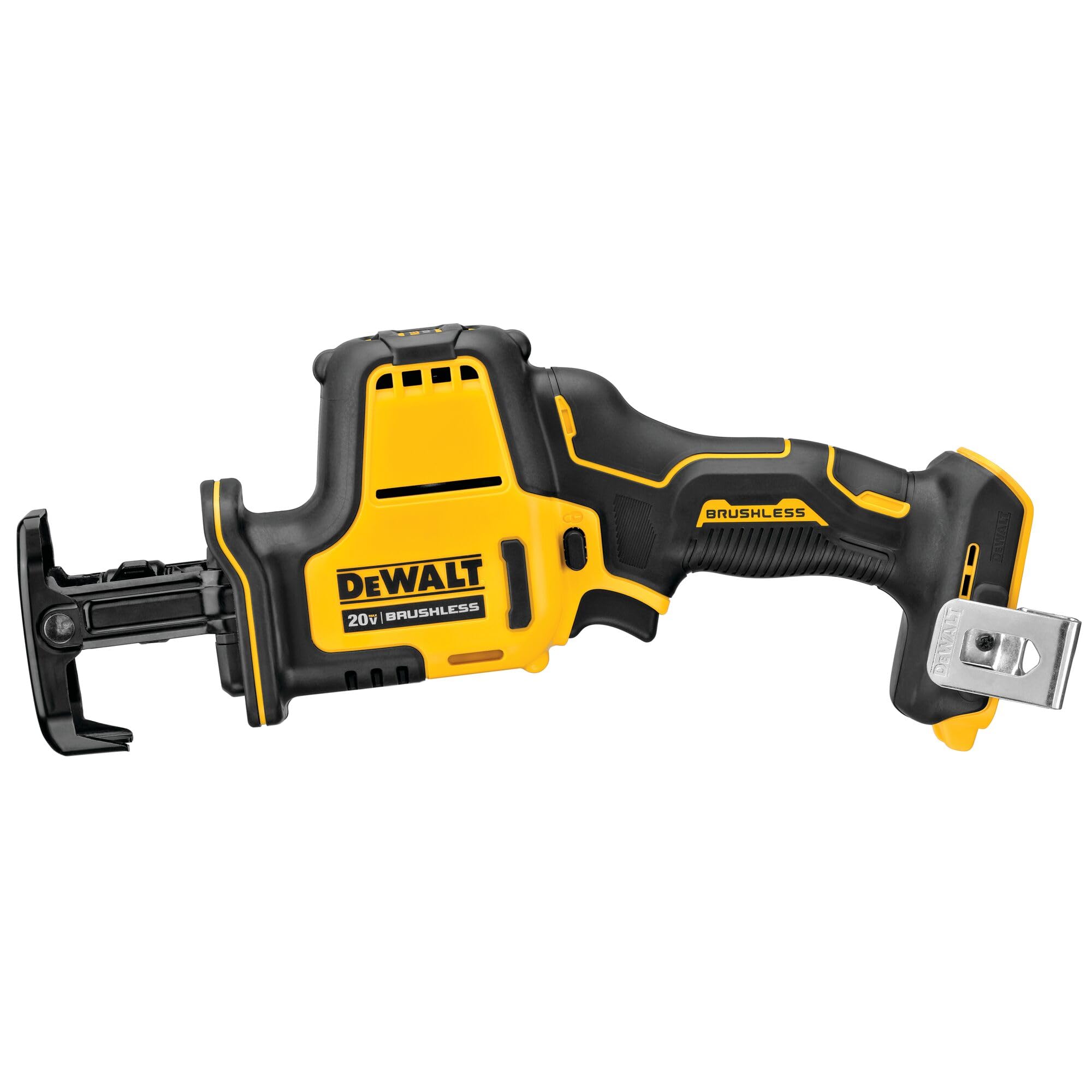
1. DEWALT ATOMIC 20V MAX Reciprocating Saw DCS369B
Our pick — 4.5+★ from 8,500+ verified ratings; the strongest balance of quality and price.
The one-handed saw that does full-size work without the full-size bulk.
The number that decides this pick is 12.5 inches — the body length from front to back. That short nose slips between studs and up over your head where a long saw will not fit. DEWALT says it is 37% lighter than the DCS367 reciprocating saw, and at 16 ounces as a bare tool you can hold it up with one hand through a whole overhead cut. It also sits 0.5 inches shorter than the SKIL PWR CORE 20 at 14.37 inches, so it wins the tight-space contest in this list.
What makes this the pick for most people is the combination of a brushless motor (a motor design that runs cooler and lasts longer than a brushed one) and a variable-speed trigger that lets you start slow and ramp up. Owners run it through 2×6 lumber and metal without stalling, and it handles the same jobs as a much larger saw. A tool-free blade release swaps blades fast, and the pivoting shoe keeps more of the blade in contact with the work. It is a bare tool, so you supply your own 20V MAX battery and charger.
The catch is the obvious one: no battery in the box. If you are not already on the 20V MAX platform, price the kit before you commit. Owners also point out it is a light-duty tool compared to a full-size reciprocating saw, so heavy demolition days will drain a pack faster. An LED lights dark cabinets and crawl spaces, and a belt hook keeps it close between cuts.
What earns it the top spot
- 12.5-inch body reaches into stud bays a full-size saw cannot.
- Brushless motor holds speed through wood, metal, and plastic.
- Runs at 16 ounces bare, so overhead work stays one-handed.
- Tool-free blade changes and a pivoting shoe for cleaner cuts.
What to know before you buy
- Bare tool only — you need a 20V MAX battery and charger.
- Heavy demo work drinks battery faster than a full-size saw.
The verdict: For a homeowner or remodeler already on the 20V MAX platform, this is the small saw to own.
Think twice if: you have no 20V MAX batteries — price the battery and charger into the total first.
2. SKIL PWR CORE 20 Reciprocating Saw RS5825B-10
Comes with the battery and charger — charge it, cut, and go.
If you own no cordless tools yet, this is the simplest way in. The box holds the saw, a wood cutting blade, a 2.0Ah battery, and an Auto PWR JUMP charger — no separate shopping trip. That charger is the standout: it puts 25% charge back into the pack in 5 minutes, and a full pack in 50 minutes. Fitting a fresh battery between tasks is faster than swapping a whole pack out.
The digital brushless motor gives you speed and torque control instead of a fixed full-throttle pull, and the counterbalance gearbox and pivoting shoe cut down vibration for smoother lines. Owners say it does the job and feel it is well worth what they paid. Portability is the other theme — it is built to be picked up and carried to the next cut. It runs 14.37 inches front to back, so it is longer than the DEWALT ATOMIC above but still a one-hand tool.
The honest caveat is the battery. Experience with run time splits both ways, and the sharpest complaint is a pack that will not take a charge at all. Factor in a second battery if you plan long sessions. A 5-year limited warranty with registration backs the tool. It carries mixed feelings on weight, so handle one if a light saw matters to you.
Where the money goes: You are buying a complete starter kit — battery, charger, and blade in one box. For a first cordless saw, that is real value, and buyers report it performs the tasks they bought it for.
The one to plan around: Buy a spare battery if you plan to cut all afternoon. Run time is the part buyers disagree on most.
Go for this if: you have no battery platform yet and want to unbox and cut the same afternoon.
Hold off if: you already own other 20V batteries — you would be paying for a duplicate.
3. 18V SubCompact Brushless Reciprocating Saw
Built small enough to disappear into a toolbox and still make the cut.
RIDGID’s R8648 is the subcompact of the group, running on 18V and a brushless motor at 3.9 pounds. The RIDGID label makes one-handed cuts where a standard saw will not fit, and the rubberized handle keeps your grip in place. It ships with a 6-inch high-speed steel blade ready to go. Buyers like it enough to say they wish they had bought it sooner — that reads as a tool people keep reaching for.
Quality is the thing owners respond to here. It cuts the way you would expect a small saw to cut and handles the everyday trim and rough-opening work well. Ease of use is the other consistent note: it feels light and manageable in one hand.
Two things to weigh first. It is a bare tool, and the battery and charger are sold separately — the listing is explicit on that. RIDGID also notes this model is not eligible for its Lifetime Service Agreement, so you get a 30-day limited warranty instead. If long-term brand backing matters to you, that is a real consideration. This is also the least-reviewed of the top picks, so there is less owner history behind it than the DEWALT above.
The compact build: At 3.9 pounds and one-hand sized, it goes where a bigger saw will not. Owners praise how it handles the small, everyday cuts.
The warranty note: No Lifetime Service Agreement on this one, and a 30-day limited warranty is short. Know that before you commit.
Worth reaching for if: you already run RIDGID 18V batteries and want a pocket-sized saw for trim and tight cuts.
Pass on it if: the short warranty matters to you more than the tiny footprint.
4. RYOBI ONE+ HP 18V Reciprocating Saw PSBRS01B

Top speed cutting in a one-hand body, backed by a huge battery family.
The 3,000 strokes per minute on the PSBRS01B are the selling point. That is the blade-a-second count that makes short work of branches and PVC, and it matches the top speed of the Bosch below. Combine it with the compact one-hand layout and you get a fast saw that still cuts overhead without a second hand for balance. Owners run it through wood, metal, and plastic without complaint.
The other reason to pick RYOBI is the battery family: the ONE+ 18V system takes over 300 ONE+ batteries. If you already own a RYOBI drill or trimmer, you already have your power source. A rapid tool-free blade change keeps you moving between materials. Owners use it on tree branches and PVC pipe and find it easy to operate with one hand.
Here is the catch. On long overhead sessions you will feel it. Durability is the other split in owner reports, with a few units giving out early. Most owners run theirs hard for years without issue; treat it as a value tool, not a jobsite workhorse.
Why it climbs the list
- 3,000 strokes per minute makes it one of the fastest small saws here.
- Over 300 ONE+ batteries keep you covered on the RYOBI platform.
- One-handed design with a two-finger trigger pull.
- Rapid tool-free blade changes between materials.
The honest trade-offs
- At 4.1 pounds, it is the heaviest saw in this comparison.
- Durability stories split, so do not expect full-size-saw toughness.
The best fit: Anyone already inside the RYOBI ONE+ system who wants speed without a new platform.
The one caution: The heft shows on long overhead cuts — plan breaks or use a stand.
5. Milwaukee 2420-21 12-Volt Hackzall Saw Kit
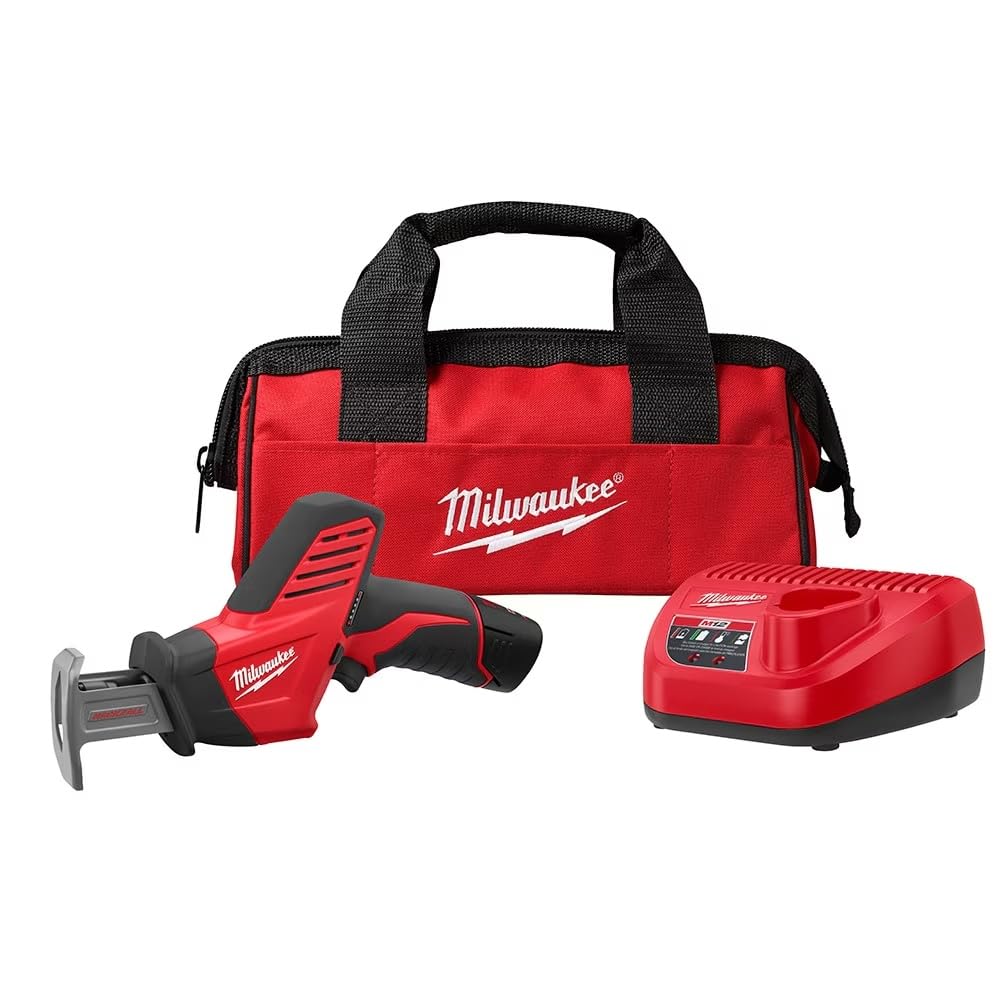
A full kit at 2.6 pounds — the easiest saw here to wave overhead.
Two numbers define this pick. The first is 2.6 pounds — the lightest tool in this article. That is the weight that lets you hold it up in a ceiling line without your arm cramping. The second is the 12V battery, charger, blade, and carrying case all in the box, so you are ready to cut on day one. The variable-speed trigger and 0-3000 SPM deliver a controlled cut, and the QUIK-LOK clamp takes standard 1/2-inch tang blades.
A 1/2-inch stroke length keeps each pass controlled, and owners say it cuts small material smoothly and cleanly. The Hackzall fits tight spots that a standard reciprocating saw skips, and owners describe it as the saw they reach for on small jobs around the house. It is backed by a 5-year tool warranty, which is generous for this class.
The compromise is the battery. Owners are split on run time — the recharge is fast, but the pack does not last long on sustained cutting. That is the trade for a 12V saw, so buy it as a light-duty tool for quick jobs rather than all-day demolition. The 11-inch blade length keeps it nimble, but heavy material will slow you down.
The real draw: The lightest saw in this guide, and it comes with a battery, charger, blade, and case. You are cutting within minutes of unboxing.
The honest limit: 12V run time is short on big jobs. Keep a second pack charged or save the heavy cutting for another tool.
Buy it if: you want a featherweight kit for branch cuts, PVC, and small jobs around the house.
skip it if: you need to saw through long runs of thick material in one session.
6. CRAFTSMAN V20 Cordless Reciprocating Saw CMCS340B

Front-to-back it is 12.75 inches, and it weighs just 3.2 pounds.
The CMCS340B gets you into a one-handed reciprocating saw at the lowest point on this list. At 3.2 pounds you can use it one-handed through a cut, and at 12.75 inches front to back it squeezes into tight openings. It is a bare tool, so a V20 battery and charger are a separate purchase. The 2,800 SPM speed is a touch below the RYOBI’s 3,000, but for trim and rough work you will not notice the gap.
Owners keep coming back to three things: it is light, it is easy to handle in one hand, and it does the job for the price. A variable-speed trigger gives you control, and the pivoting shoe keeps the blade seated on the work. Tool-free blade release means you change out without hunting for a wrench, which matters when you are moving between wood and metal on one project. It carries a 3-year limited warranty, a 1-year free service window, and a 90-day satisfaction guarantee.
The concession on this budget pick is that it is a value saw, not a workhorse. Stick to the light trim, branch, and repair jobs it was built for and it will serve you well. This is also the least-reviewed saw in the roundup, so there is less owner history behind it than the top picks carry.
Best reason to buy: A light 3.2-pound one-handed saw at the entry price of the group, with a 3-year limited warranty behind it.
Stay realistic: Treat it as a trim and repair tool. Heavy material will remind you why it is a budget pick.
Pick it if: you want a first one-handed saw for trim, branches, and small repairs without spending on a premium model.
Look elsewhere if: you need to cut thick material all day — step up to the heavier saws above.
7. Milwaukee 2520-20 M12 Fuel Hackzall Bare Tool
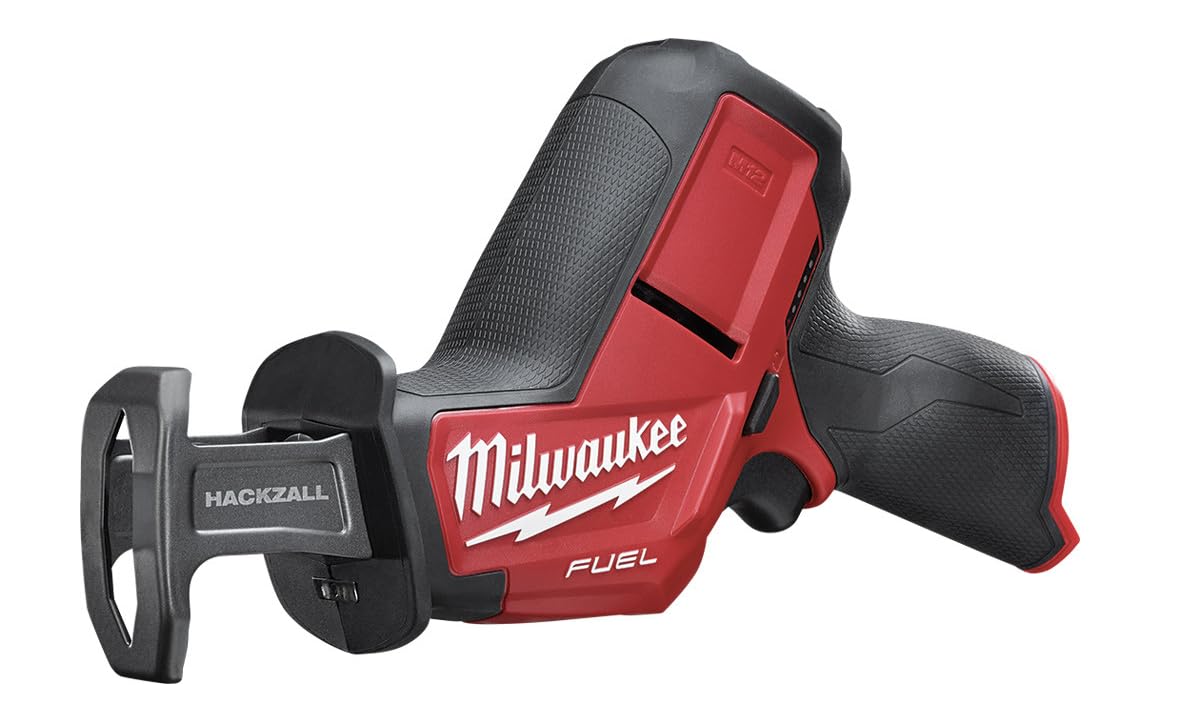
Milwaukee’s one-handed answer for control in spaces a big saw cannot reach.
The M12 FUEL Hackzall is the saw for anyone doing overhead or in-wall work. The one-handed design gives you control a standard recip saw cannot match, and the compact body fits inside a stud bay. A POWERSTATE brushless motor keeps power steady for faster cuts with less heat, and REDLINK PLUS electronics coordinate with the battery for overload protection. That combination is what you are paying for at the premium tier.
Owners treat this as a trade tool, not a weekend gadget. They like that it works in tight spaces and is versatile enough for plumbing, trim, and rough openings. Power is the theme that comes up most — it cuts confidently through what you point it at. Owners have no shortage of kind words about cutting performance and value, and most say it simply does what they need it to. It takes standard M12 batteries, so if you run that system you are set.
The honest note on a 12V tool is run time. Big jobs will drain a pack, and the battery is not included here, so you need to own M12 packs already. This is a bare tool and the listing is clear about that. It is a serious step up in control from the value picks, and it shows in how smooth it cuts in awkward positions.
The case for the FUEL
- One-handed design built for overhead and tight-space cuts.
- POWERSTATE brushless motor holds power under load.
- REDLINK PLUS overload protection between tool, battery, and charger.
Where it asks more of you
- Bare tool — M12 batteries are not in the box.
- 12V run time is short on big jobs, so keep a spare pack.
The right buyer: A pro or serious DIYer already on M12 who wants the smoothest one-handed control here.
The reality check: No battery included and short run time on heavy work — this is a light-duty specialist, not a demolition saw.
8. Milwaukee 2719-20 M18 FUEL HACKZALL (Bare tool)
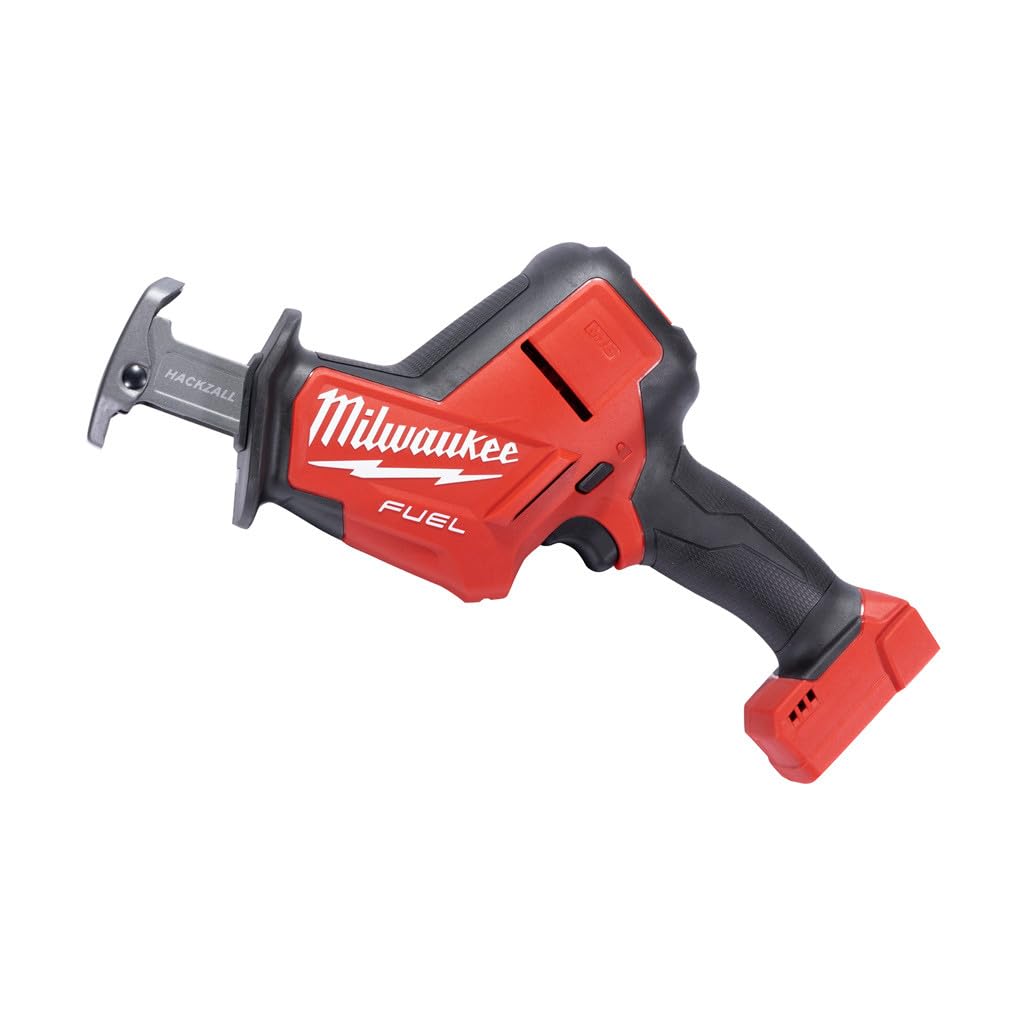
The M18 FUEL is the saw you grab when the small saws run out of steam.
This is the most powerful one-handed saw in the group. The M18 FUEL motor delivers cutting speed and power for the toughest applications, and REDLINK Plus electronics protect it under load. If you routinely cut thick material and want a one-hand grip, this is the saw built for it. It is a bare tool on the M18 platform, so you supply the battery.
The pivoting shoe is what makes the M18 stand out for smooth cuts. It keeps constant contact with the work, which means less bucking and vibration in the blade. Owners say it is easy to use, light for its size, and portable enough to carry between jobs. Versatility and value come up again and again — people are happy with what this tool does. It carries a 24-tooth blade spec and runs on any M18 pack.
The honest trade-off is that it is the premium choice in this roundup. If you are not already on the M18 platform, the battery and charger add real cost. For heavy cutting with one hand, though, few saws in this class keep up with it.
Where it earns its keep: More raw cutting power than any saw here, with a pivoting shoe that keeps the blade planted and the cut smooth.
What it costs you: The highest list position in the group and a bare tool — buds into your existing M18 packs to make sense.
Step up to it if: you are on M18 and want the most power a one-handed saw can deliver.
Stay with a value pick if: your cutting is light trim and branches — the extra power is money you may not need to spend.
9. BOSCH PS60-102 12V Max Pocket Reciprocating Saw Kit
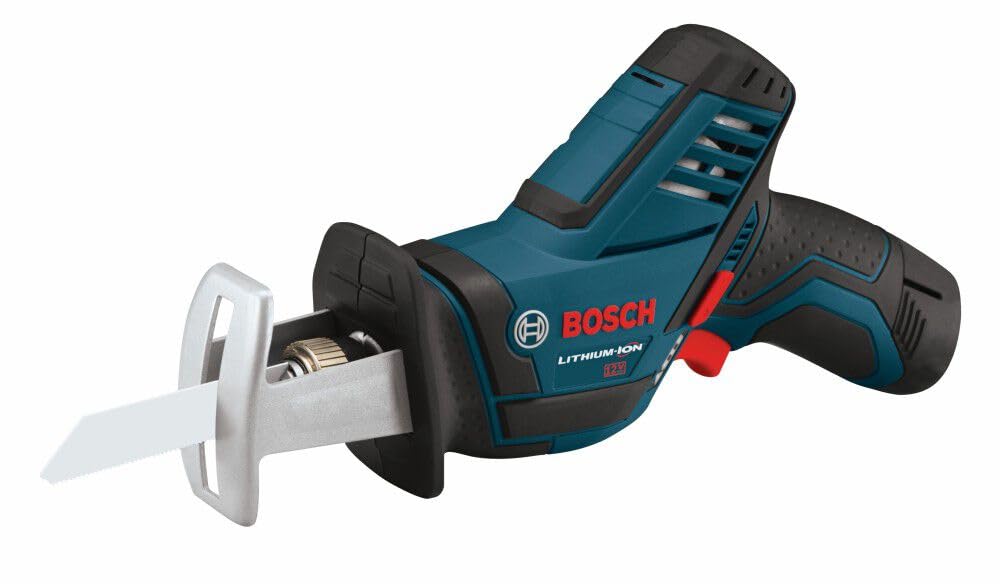
A 2.3-pound pocket saw that cuts copper and conduit with one hand.
The PS60-102 is the true “pocket” saw here. At 2.3 pounds it sits lighter than every other kit in the roundup, and the compact body works one-handed or overhead. The 0-3,600 SPM speed is the highest in the group, so it cuts fast for its size. It takes a battery, charger, and blade in the box, so you are ready to work. Owners describe it as a compact, easy-to-use saw for tighter jobs.
The Bosch shines on the jobs that a small saw should handle: cutting copper pipe and conduit in tight spots. A fast motor brake stops the blade quickly for safer, more accurate cuts, and the protection system guards against overheating, overloading, and low voltage. A front rubber wrap shields the internal parts from dust, debris, and water, and a bumper design keeps vibration down. An LED lights dark work areas and a battery fuel gauge shows how much charge is left.
Run time is the split here. Owners who love it call the performance phenomenal; others note it drinks batteries on bigger cuts — and there is a claim the 2.5Ah capacity is overstated. The practical read is that this is a pocket saw for smaller tasks, so keep a spare pack nearby. A 3-year limited warranty covers the platform.
Its real strengths: The highest speed here at 0-3,600 SPM, a 2.3-pound body, and a front rubber wrap that protects the internals from dust, debris, and water.
The honest catch: It is a small-task specialist and it goes through batteries fast. Have a spare charged before a long project.
Best matched to: Plumbers and DIYers cutting copper, conduit, and small pipe in tight spots who want a kit that fits a tool bag.
Look past it if: you need long run time on bigger cuts or are not already on the Bosch 12V platform.
Know the Specs
Strokes Per Minute (SPM)
SPM is how many times the blade moves back and forth each minute — the saw’s speed. Higher SPM cuts faster, but control matters as much as speed. The RYOBI and Bosch lead this group at 3,000 and 3,600 SPM respectively. For trim and pipe, a controlled trigger pull beats raw speed.
Stroke Length
Stroke length is how far the blade travels in each pass, measured in inches. A longer stroke moves more material per pass; a short stroke is easier to control in tight spots. The Milwaukee 2420-21 lists a 1/2-inch stroke. Match stroke to your work: short for pipe and trim, longer for thicker lumber.
Bare Tool Vs Kit
A bare tool ships with just the saw, so you supply the battery and charger. A kit includes them. Bare tools are the better value if you already own the platform’s packs. If you are new to cordless, a kit gets you cutting without a second purchase — the SKIL, Milwaukee 2420-21, and Bosch include battery and charger.
Brushless Motor
A brushless motor runs without the carbon brushes that wear out on older designs. That means less heat and longer tool life, and more power from the same battery. Every premium pick here uses one. Look for the word brushless on a spec sheet if you plan to cut often.
Common Questions
Can a small reciprocating saw cut through a 2×4 or a 2×6?
What does bare tool mean on a reciprocating saw?
Is a 12V saw strong enough compared to an 18V or 20V?
How long does a small reciprocating saw battery last on a charge?
What blade should I use on a small reciprocating saw?
Do these saws work with my existing battery platform?
How do I change the blade on a one-handed reciprocating saw?
Can I cut overhead with a small reciprocating saw?
Is a small reciprocating saw better than a full-size saw for demolition?
What warranty comes with these small reciprocating saws?
The Bottom Line
For most people shopping for the small reciprocating saw, the DEWALT ATOMIC DCS369B is the one to get. It measures 12.5 inches front to back, runs at 16 ounces bare, and handles wood, metal, and plastic without stalling. On the strength of that owner record, it is the pick that suits most jobs.
If you want a complete kit and own no cordless tools, take the SKIL PWR CORE 20 — battery, charger, and blade in the box, with a 5-minute PWR JUMP charge. And if cutting overhead or inside cabinets is your job, the Milwaukee 2520-20 M12 FUEL Hackzall at 2.6 pounds is the one to reach for.
The honest nudge: skip the bare tools entirely if you do not already own the batteries — a bare saw with no pack is a paperweight. Check your platform first, then pick the one that fits the cuts you actually make.
How we choose
We do not accept paid placement. Every pick is matched to a real buyer and a real use-case; we do not hands-on test units.
Sources
Specifications: manufacturer listings and product documentation. Review insights: verified customer reviews, as of November 2026. Pricing: not shown on this page (it changes often); check the current price via the retailer link.
As an Amazon Associate, Tactical Gear Guy earns from qualifying purchases. This does not affect which products we feature.