Specs are compiled from manufacturer listings and verified buyer reviews and can change over time — please confirm the key details on the product page before buying.
Buying a small hiking bag looks simple until you realize most of them are either so flimsy they sag after one season or so loaded with straps you never touch that they feel like a harness. The short answer: match the pack to the length of your hike, not to the number of pockets on the listing. For a half-day out, somewhere between 12 and 20 liters of space is the useful range — enough for water, a layer, snacks and a first-aid kit without making you carry air. Below are nine daypacks that actually earn their place on the trail, sorted by what each one does best.
This guide is built by comparing the manufacturers’ published specifications and the patterns across verified customer reviews, so you get each pick’s real strengths and trade-offs instead of marketing spin.
Some packs here fold into a pocket and weigh next to nothing, while others cost more because they carry weight properly on a long climb. The trick is knowing if you need a packable spare or a load-carrying frame before you click buy. This breakdown of the small bag for hiking market separates the packable spares from the packs built to carry real load.
Top Picks


How To Choose The Best Small Bag for Hiking
The most common mistake is buying the lightest pack you can find and then discovering it has no structure to hold weight against your back. The second most common is buying a heavy, overbuilt pack for a two-hour walk. Pick your capacity by how many hours you will be out, then pick your carry system by how much water and gear you are hauling.
Capacity: match liters to hours, not to ambition
A 12-liter pack (the WATERFLY, for example) holds a layer, snacks and a small water bottle for a short jaunt. A 20-liter pack gives you room for a hydration bladder, lunch and a rain shell. If you routinely carry a big camera or a stove, go up; if you carry a phone and a bottle, go down. Oversized packs encourage you to fill them with things you do not need.
Packable versus structured: two different jobs
A packable bag like the Nanobag stuffs into its own pouch and disappears into a daypack or a glovebox. It is a backup or a travel spare. A structured pack like the Osprey Hikelite has a frame, padded hipwings and load lifters that push the weight onto your hips. Neither is better — one is a backup, the other carries load — and picking the wrong one for your hike is where buyers get frustrated.
Straps and ventilation on a real trail
A sternum strap (the chest clip) stops the shoulder straps from sliding outward when you climb. A hipbelt (the band around your waist) takes weight off your shoulders on longer walks. A breathable mesh backpanel keeps a layer of air between the pack and your spine, which matters most in warm, humid conditions when you are working hard.
Side-by-Side Comparison
| Model | Best For | Capacity | Weight | Carry System | Amazon |
|---|---|---|---|---|---|
| Nanobag Daypack 16L★ Best Overall | Packable backup and travel spare | 16 L | 1.15 oz | Shoulder straps only | Amazon |
| Seektop Packable 20LRain-Ready Pick | Rainy day hikes and trips | 20 L | 13.6 oz | Padded harness + chest strap | Amazon |
| RealCool 20LHydration Setup | Hydration-ready day hikes | 20 L | 1.1 lb | Contoured harness | Amazon |
| WATERFLY 12L | Short jaunts and commuting | 12 L | 0.72 lb | Padded straps + chest strap | Amazon |
| MOUNTAINTOP 20L | Overnight and gear-heavy trips | 20 L | — | Mesh harness + sternum strap | Amazon |
| Osprey Sportlite 20L | All-day day hikes | 20 L | 595 g | Hipbelt + AirScape backpanel | Amazon |
| Cotopaxi Batac 16L Del Día | Travel and one-of-a-kind looks | 16 L | — | Shoulder harness | Amazon |
| Osprey Hikelite 18L | Long, wet, load-heavy hikes | 18 L | — | AirSpeed frame + hipbelt | Amazon |
Detailed Reviews
1. Nanobag Daypack 16L
Our pick — 4.5+★ from 600+ verified ratings; the strongest balance of quality and price.
The pack that disappears in your palm, then hauls 66 pounds of trail gear.
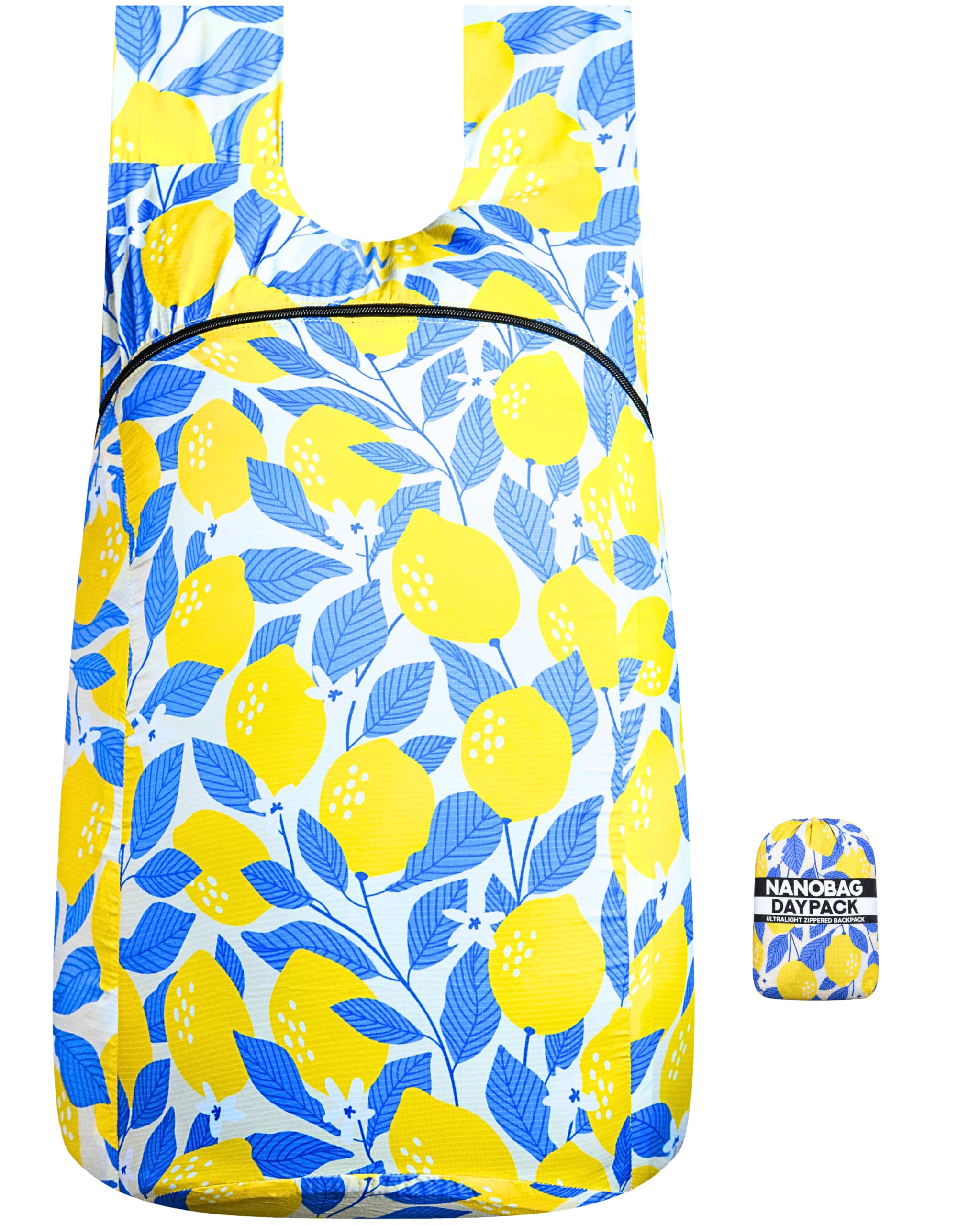
Nothing else here comes close on weight. The Nanobag tips the scale at 1.15 ounces — that is lighter than a single granola bar, and it is the number that makes this pack a genuine everyday carry. Compare that to the Seektop at 13.6 ounces and you get the picture: this one you will never notice clipped to your belt or buried in a suitcase. It stuffs into its own attached pouch, no folding needed, and that pouch is small enough to ride in a glove compartment or a jacket pocket.
What wins people over is the quality of the build relative to that near-weightless body. The diamond ripstop nylon (a grid-woven fabric that resists tears spreading) carries up to 66 lb, and the reinforced bartack stitching (extra dense stitches at the high-stress points) holds the straps on under load. A YKK zipper (a well-regarded zipper brand) keeps your gear shut, and a PFC-free water-repellent coating shrugs off light rain. The 16-liter main body swallows a lunch, a layer and a water bottle without bulging.
Here is the honest trade-off. A pack this thin has no frame, no hipbelt and no padding, so all the weight rides on those wide 27-inch shoulder straps. It is a great spare and a fine light-load daypack, not a pack for hauling a heavy load up a mountain all afternoon. Buyers report it survived a full three-week international trip, but the fabric-thin profile that makes it packable is also why it stays a light-duty companion.
What earns it the top spot
- Weighs 1.15 ounces — effectively invisible in your kit
- Stuffs into its own pouch with no folding required
- Carries up to 66 lb on ripstop nylon with reinforced stitching
- Packs small enough for a pocket, purse or glovebox
- One tree planted for every pack sold
Where it asks you to compromise
- No hipbelt or frame — load sits entirely on your shoulders
- Ultra-thin 0.05mm fabric needs care around sharp brush
- Water repellent handles light rain, not sustained downpours
Reach for this if: you want a genuine always-with-you backup that adds almost nothing to your load.
Think twice if: your day involves a heavy hydration bladder and a full pack all day — you will feel it in your shoulders.
2. Seektop 20L Daypack
A 20-liter pack that keeps your phone dry when the sky opens up.
Start with the fabrication, because it is the reason this pack exists. The shell is high-density nylon with waterproof zippers, and every stress point and strap junction is reinforced with knots. That means rain runs off rather than soaking through the seams — the kind of thing that matters when a drizzle turns into a proper shower two miles from the trailhead. The 20-liter body is roomy for a day out, with five zippered compartments to split wet layers from snacks from your phone.
On your back, it is a different animal from the Nanobag above. Where the Nanobag is a bare shoulder-strap spare, this pack has breathable soft padding across the shoulder straps and the back panel, plus a removable, adjustable chest strap. That chest strap does real work on a climb — it stops the pack swaying and keeps the load close to your spine. There is also an external suspension system and a trekking pole attachment, so poles and a jacket can ride outside the main body.
Folded, it shrinks to 7.4 by 8.4 inches and slides into a suitcase; unfolded it runs 18.5 inches long, 10.6 wide and 6.6 thick, and it meets carry-on standards. Owners mention the waterproof shell works well in rain and holds up across two-week vacations. The catch is weight: at 13.6 ounces it is a real presence in your pack compared with a true ultralight spare, so it earns its place on trips where weather is a question mark.
Why it holds up outdoors: the waterproof fabric and sealed zippers are the standout, backed by reinforced stress points and a chest strap that keeps the load steady on uneven ground.
One thing to weigh: 13.6 ounces is a fair chunk of a light kit — this is a pack you commit to carrying, not a stash-and-forget spare.
Best matched to: hikers heading out in shoulder-season weather who want their gear to stay dry without a separate raincover.
Less ideal for: minimalists chasing the absolute lowest carry weight on a dry-forecast hike.
3. RealCool 20L Daypack
The daypack built around a hydration bladder and a back-friendly fit.
If you drink from a bladder rather than a bottle, this pack was designed with you in mind. The main compartment has a Velcro strap to hang a hydration bladder, and a water tube outlet at the upper right corner routes the hose over your shoulder without kinking. Add reflective strips for visibility and elastic side cords that hold trekking poles, and you have a trail-ready 20-liter pack that covers the hydration basics most budget daypacks skip entirely.
You can carry a full day’s gear in this pack, not just a phone and a bottle. The main body holds 20 liters versus 12 liters on the WATERFLY — 67% more room, enough for lunch, a layer, a first-aid kit and a bladder. The fabric is 210D nylon (a mid-weight, tightly woven material) with a water-repellent coating, so light rain and dew bead off instead of soaking in. That same fabric resists tears and scratches, which helps when a branch rakes the side of the pack. Customers note the built-in holders for sunscreen and bug spray are a nice practical touch, and reviewers praise how it flexes across day trips, hikes and plane travel.
The honest limit is the rain protection. The coating repels a drizzle but is not built for a sustained downpour — pack a dry bag for your electronics if the forecast turns serious. And at 1.1 pounds it sits in the middle of this group, lighter than the Seektop but far heavier than the packable Nanobag. That weight buys you a hydration sleeve, elastic pole cords and a padded harness, which is a trade most day hikers are happy to make.
Pick this one when: your hikes involve a hydration bladder and you want the hose already routed and secure.
Look elsewhere if: you are hiking in heavy, prolonged rain and need a fully waterproof shell, not a water-repellent one.
4. WATERFLY Small Hiking Backpack: 12L Outdoor Daypack
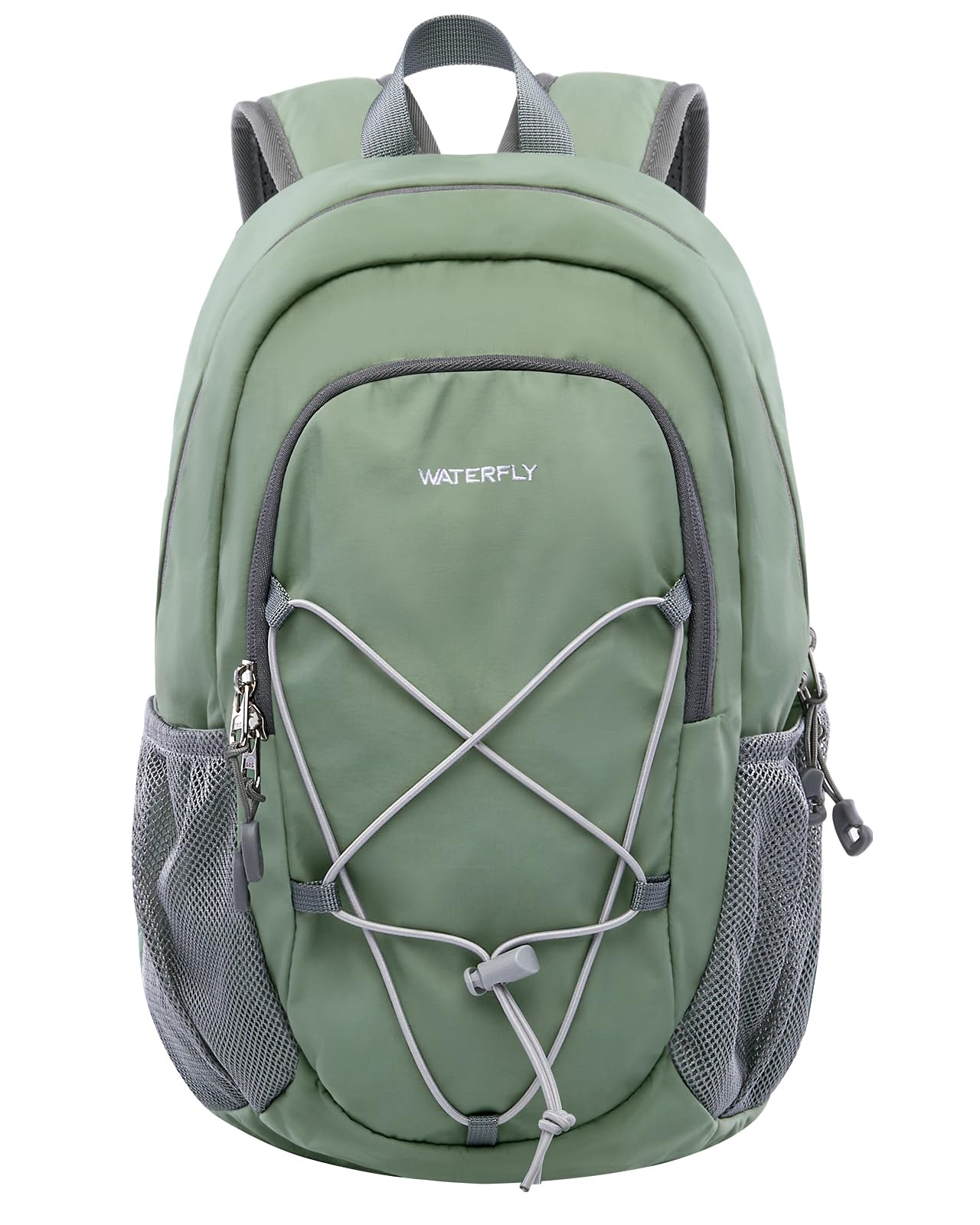
Twelve liters of lightweight comfort for short trails and town days.
This is the lightest structured pack in the lineup at 0.72 pounds — roughly half the heft of the RealCool — which makes it the obvious pick if a heavy pack bugs you on a quick loop. The soft nylon body and SBS zippers (a smooth-running zipper brand) keep opening and closing clean, and the adjustable chest strap plus padded back panel add stability without bulk. It carries like a small daypack should: close to your body and not much of a burden.
The 12-liter capacity is the constraint, and it is the one aspect to think about honestly. That is a phone, a layer, a bottle and a few snacks — enough for a two-hour outing, not a full day at altitude. Unlike the RealCool above, there is no hydration sleeve, so plan on a bottle. The main compartment does include an inner sleeve that holds a 13-inch laptop, which is what makes this a crossover pick for people who walk from the office to a short trail.
Fit runs toward the compact side, and some find the volume tighter than expected once a jacket is stuffed in. If you pack deliberately and keep it to essentials, the 0.72-pound body and padded straps reward you on every step. If you routinely carry a camera, a lunch box and a rain shell all at once, size up to a 20-liter option.
The weight story: at 0.72 pounds, the WATERFLY is built to be forgotten on your back, and the padded straps and back panel mean that lightness does not cost you all-day comfort.
A capacity caveat: 12 liters leaves little slack — great for a short hike, tight for a full day’s gear.
Suits you if: your hikes are short and you want a featherweight daypack you can also commute with.
skip it if: you need to haul a full day’s worth of clothes, food and water in one bag.
5. MOUNTAINTOP 20L Daypack
A rugged 20-liter pack with the straps and attachments for extra gear.
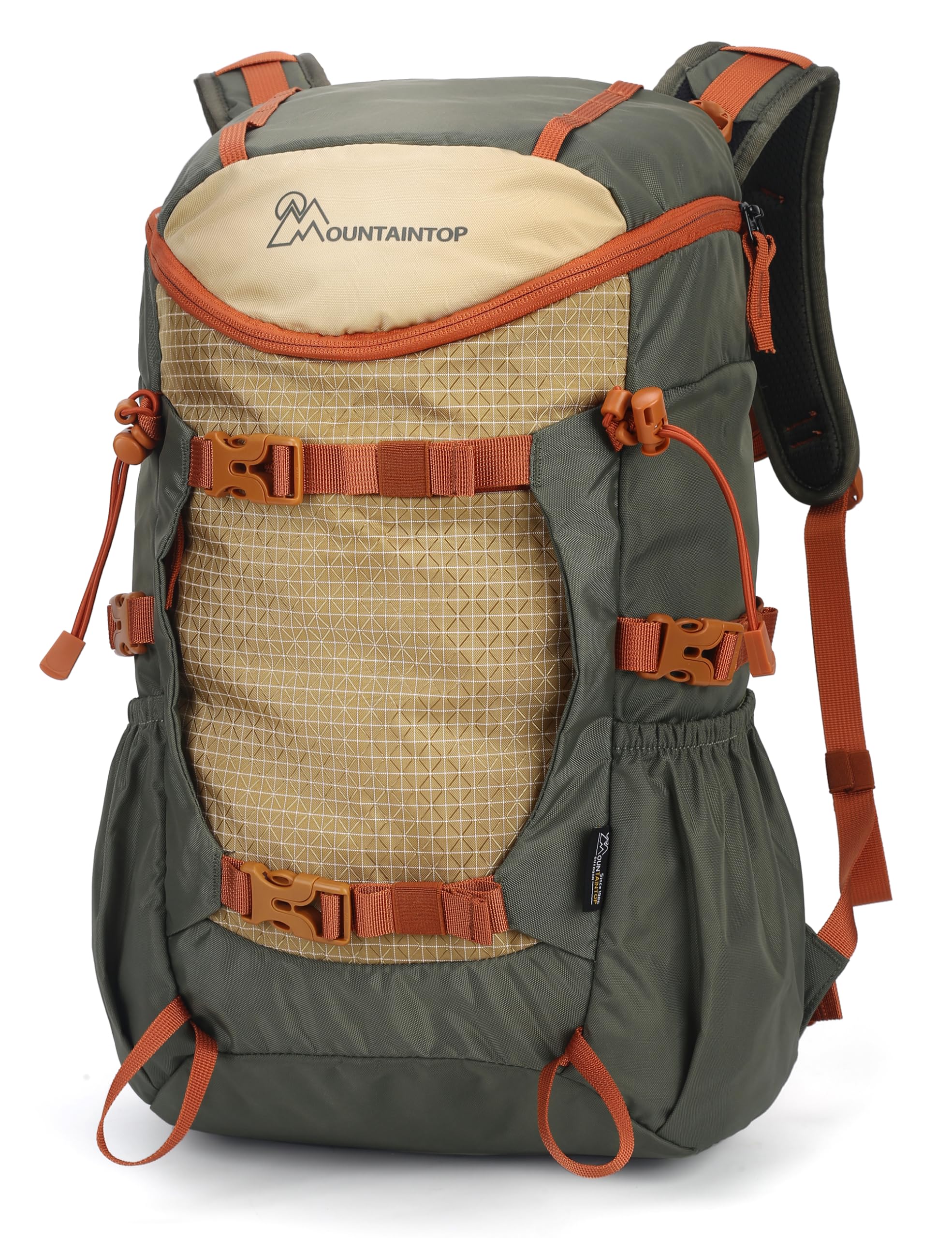
You can lash a foam pad or a sleeping bag to the outside of this pack instead of cramming it in. The 20-liter main compartment comes with exterior compression straps and trekking pole attachments, so bulky gear rides on the outside. That external carry is what separates it from the RealCool and the WATERFLY, and it is why the MOUNTAINTOP can handle an overnight warm-weather trip from a small pack. If you never strap gear to the outside, the RealCool or the WATERFLY will do the same job with less to fiddle with.
The shell is 600D polyester (a thick, tough weave) with reinforced stitching at every stress point, and YKK zippers to match. That heavier fabric is the reason it shrugs off rocks and branches but also costs you some weight. The harness is mesh-padded with a contoured back panel and airflow channels to cut pressure points, and the adjustable sternum strap incorporates an emergency whistle — a small but genuinely useful detail on a solo hike.
Pockets are plentiful: multiple interior and exterior compartments keep a hydration bladder, snacks, a map and a phone separated and easy to grab. Buyers find the 600D shell sturdy and the 20 liters roomy, and it doubles as a travel daypack. The honest note is that the heavier fabric and hardware make it the least packable option — this one lives in your closet or on your back, not folded in a side pocket.
Reasons it stands out
- 600D polyester shell with reinforced stress-point stitching
- External compression straps and pole attachments for bulky gear
- Mesh-padded straps and airflow back panel reduce pressure
- Sternum strap includes an emergency whistle
- Plenty of interior and exterior pockets for organized packing
The trade-offs to know
- Heavier fabric means more weight than the packable picks
- Not foldable into a pouch, so it is not a travel spare
- Load still rides on a shoulder harness with no hipbelt
Go for it if: you want to strap a sleeping pad or extra layer to the outside of a small pack for a one-night trip.
Not for you if: you need a bag that folds into a pocket for travel.
6. Osprey Sportlite 20L Lightweight Hiking Backpack, Blue OS

The 20-liter version of a trail pack that knows how to spread a load.
The Sportlite 20 adds 5 liters and 85 grams over its 15L sibling, and those extra liters are the difference between a bare-essentials hike and a full day out. You get the same AirScape backpanel, the same webbing hipbelt with padded hipwings, and the same sternum strap with safety whistle — all reassuring when you are carrying water, food and a layer through a load-heavy afternoon. Dimensions run 8.7 by 11 by 19.7 inches, so it still fits under a seat and holds overnight-trip order without bulk.
The front shove-it pocket is the detail that makes this one worth its place. It lets you stash a jacket or a shell without unpacking the main compartment, which saves you stopping to fuss with zippers when the weather shifts. Add stretch side pockets, a zippered front pocket with key clip, and an internal hydration sleeve (reservoir sold separately), and you have a pack that carries a full day’s essentials in an organized way. Ripstop ocean-sourced nylon and bluesign PRODUCT compliance round out the build.
Downside, as with any framed daypack, is a bit of added structure weight versus a packable spare. At 595 grams it is light on the trail but cannot fold into a pocket for travel. If you want a pack that disappears in a suitcase, this is not it — for a full day on the trail with real weight, it is the better call.
Where it shines: the front shove-it pocket and hipbelt let you stash a layer fast and carry weight on your hips instead of your shoulders.
The reality check: 595 grams and a fixed frame mean this is a trail daypack, not a fold-away travel spare.
Made for: the hiker with a full day on the trail who wants ventilation and load support in a compact pack.
Not built for: travelers who need a bag that compresses into a pocket.
7. Cotopaxi Batac 16L Backpack Del Día
A 16-liter daypack where the colors are a surprise on purpose.
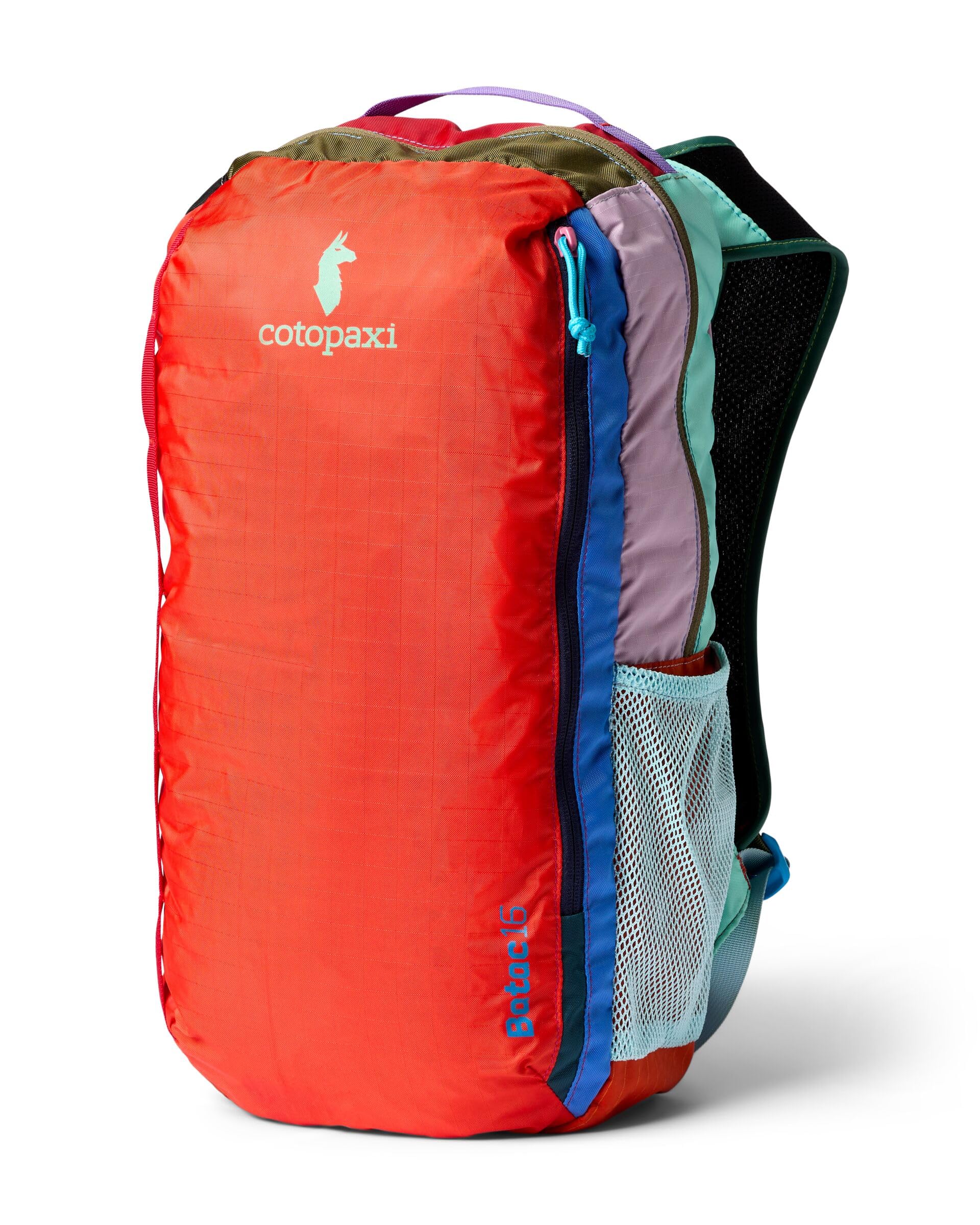
Every Del Día pack is made in the Philippines by an employee who controls the colorway, so no two are the same — you get a random color selection and a genuinely unique bag in return. That is the whole idea, and it is why this pack suits people who want personality in their gear rather than a uniform look. The 16-liter body, in 100% polyester, carries a day’s essentials with room for a jacket and a water bottle, and the zipper closure keeps it secure.
What the pack does well is organize a flexible day. Buyers get lots of pockets and spaces, and the layout makes it easy to find stored items without digging. It packs small inside luggage for travel, doubles as a day-trip or weekend bag, and stays light on the shoulders. That catch-all versatility is the real reason it earns space in a suitcase — one bag that handles the trail and the town in the same trip.
Be ready for the randomness. Your pack arrives in a color scheme you did not choose, and for some buyers that is the fun; for others it is a deal to think over before ordering. If you are set on a specific color to match your gear, pick one of the fixed-color packs here instead. If you like the idea of a one-off, this is the pick.
A match for: travelers and casual hikers who like a small daypack with a surprise colorway and easy packing.
Not the fit for: shoppers who need to choose the exact color to match existing gear.
8. Osprey Hikelite 18L Hiking Backpack, Tan OS

The one daypack here that ships with its own waterproof raincover built in.
If you hike in unpredictable weather, this is the pack that stops you buying a raincover separately. The Hikelite tucks a waterproof, 100% recycled polyester raincover into its own bottom compartment, so it is always there when a shower rolls in. That one feature alone is why it commands the highest price in this lineup. The AirSpeed suspension adds a mesh trampoline backpanel for supportive back contact and strong ventilation, while a LightWire peripheral frame stabilizes the load and moves weight off your shoulders.
The harness is loaded with carry features: a padded, ergonomic harness with adjustable sternum strap and load lifters, a hipbelt with padded hipwings, side compression, and seven pockets in total. Stretch side pockets and trekking pole loops keep quick-access items handy, and a front zippered pocket secures small essentials. The hydration reservoir sleeve in the main compartment is there if you run a bladder (reservoir sold separately), and the unisex fit is designed to cover a broad range of body shapes.
The honest limit is storage. Capacity feedback is mixed — the 18 liters suit a light-to-medium load, and the compact main compartment tightens fast once a bulky layer goes in. Buyers do find the harness comfortable and well-fitting, and the pack fits in the bottom of a standard carry-on bag. If you regularly pack a full day of food plus spare layers, look at the larger Osprey 20L above instead.
Why the price makes sense
- Waterproof recycled polyester raincover included and stowed in the base
- AirSpeed trampoline backpanel with LightWire frame for ventilation and load transfer
- Hipbelt, load lifters and sternum strap for a stable carry
- Seven pockets plus trekking pole loops and stretch side pockets
What to expect
- 18 liters is a compact ceiling — bulky loads fill it quickly
- Fixed frame means it will not fold away for travel
- Premium construction pushes it to the top of the group on cost
Best for: committed day hikers who want built-in rain protection and proper load-carrying hardware in one pack.
Look elsewhere if: you need maximum space on a tight budget and rarely hike in wet weather.
Know the Specs
Capacity in liters
Liters measure the volume inside the pack, not the size on your back. A 12-liter pack holds a layer, snacks and a bottle; a 20-liter pack adds a lunch, a rain shell and a hydration bladder. Choose by hours on the trail and how much water you carry, then pick the smallest pack that fits so you do not haul dead space up the hill.
Pack weight in ounces and pounds
A packable spare comes in around an ounce; a structured daypack can weigh 510 grams or more. Lower weight means less fatigue on a long walk, but it often means no hipbelt and no frame. If you carry a heavy load, the few extra ounces of structure pay you back by moving weight onto your hips.
Hipbelt versus shoulder-only
A shoulder-only harness puts all the load on your traps, which is fine for light weight and short distance. A hipbelt with padded hipwings transfers some weight to your pelvis and keeps the pack from swaying. On a multi-hour hike with a full load, a hipbelt is the single upgrade that changes how your back feels at the end of the day.
Water resistance versus waterproof
Water-repellent coatings shed light rain and dew but will wet through in sustained downpours. Waterproof zippers and a sealed fabric hold up better, and a pack that ships with its own raincover like the Hikelite is the safest bet for wet climates. For electronics, add a dry bag regardless of what the pack claims.
Common Questions
How many liters do I need for a half-day hike?
Is a packable daypack strong enough for real hiking?
Does a hipbelt actually matter on a small daypack?
Can a 20-liter pack work as a carry-on for travel?
What is the difference between water-repellent and waterproof?
How do I carry trekking poles on a small hiking bag?
Will a 12-liter pack hold a hydration bladder?
Is a heavier pack always worse for hiking?
How should I clean and store a small hiking pack?
Can one small pack handle both hiking and daily commuting?
The Bottom Line
For most hikers, the lightest pack that still does the job is the one you will actually carry — which is why the Nanobag Daypack 16L takes the top spot. At 1.15 ounces with a 66 lb load rating, it is the one you can stash anywhere and forget about until you need it. If your hikes run long or wet, though, reach for the Osprey Hikelite 18L and its included raincover, or the MOUNTAINTOP 20L if you need to lash extra gear to the outside. Finally, if a hydration bladder is part of your routine, the RealCool 20L is the daypack built around that setup. Pick the pack that matches the weight you actually carry, and you will be happy with any of these on the trail.
How we choose
We do not accept paid placement. Every pick is matched to a real buyer and a real use-case; we do not hands-on test units.
Sources
Specifications: manufacturer listings and product documentation. Review insights: verified customer reviews, as of November 2026. Pricing: not shown on this page (it changes often); check the current price via the retailer link.
As an Amazon Associate, Tactical Gear Guy earns from qualifying purchases. This does not affect which products we feature.