Specs are compiled from manufacturer listings and verified buyer reviews and can change over time — please confirm the key details on the product page before buying.
You want a helmet that protects your head in the park and still feels comfortable on the lift. Prioritize a dial fit, a real impact liner like MIPS, and enough vents for spring slush.
This guide is built by comparing the manufacturers’ published specifications and the patterns across verified customer reviews, so you get each pick’s real strengths and trade-offs instead of marketing spin.
What follows is the practical breakdown — which lids run cool, which ones carry MIPS, and where sizing goes wrong. Everything you need to judge the best ski park helmets is in the specs and the fit notes below.
Top Picks


How To Choose The Best Ski Park Helmets
Park riding is harder on a helmet than cruising groomers. You fall more often, you catch edges on landings, and you spend half the day standing around in the cold. That mix of repeated low-speed knocks and long wait times drives what actually matters here.
Start with the fit system, not the shell size
A dial at the back of the helmet is your real fit control. It cinches the shell against your head so the helmet does not rotate on a fall. Look for a system that lets you dial in more than one plane of adjustment, because head shapes vary and a shell that fits at the shop counter can ride high after an hour of riding.
Count the vents if you ride in spring or spend time hiking the park
More vent holes mean more airflow across your head, which matters on warm days and during hike-to features. Fewer vents keep you warmer on cold storm days. If you run hot, a lid with a wide field of vents keeps your goggles from fogging from the inside.
Know what MIPS gets you
MIPS is a thin slip layer inside the shell that lets the helmet rotate slightly relative to your head on an angled impact. It is not a guarantee of anything, but it is a real, checkable feature — and in this segment it separates the mid-range options from the entry ones.
Side-by-Side Comparison
| Model | Best For | Vents | MIPS | Shell Type | Amazon |
|---|---|---|---|---|---|
| OutdoorMaster Kelvin II MIPS★ Best Overall | All-round park value | 14 | Yes | In-mold ABS | Amazon |
| Giro Surface-S Snow HelmetAirflow King | Max airflow for warm days | 22 | — | Hard shell | Amazon |
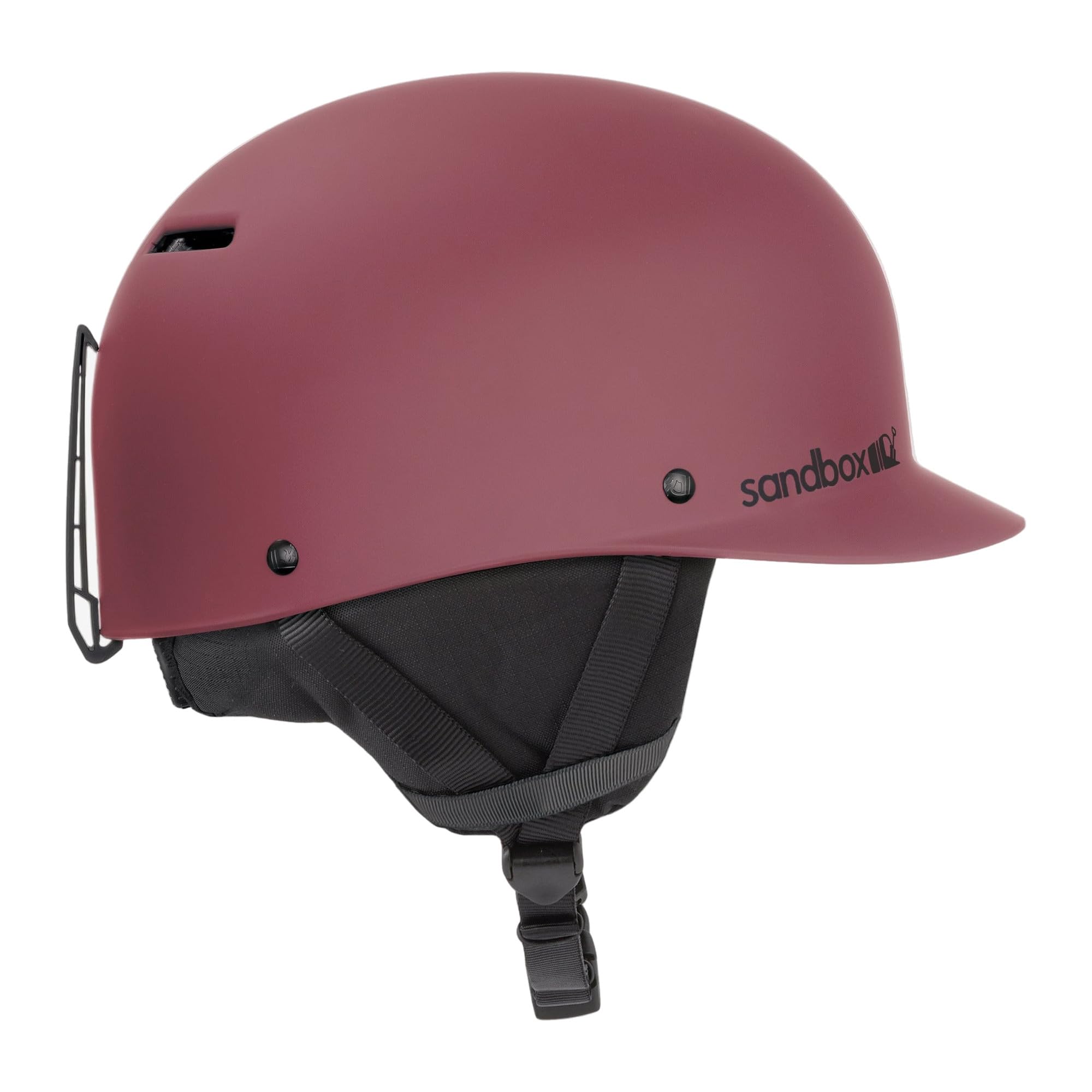
| Sandbox Classic 2.0Street Style | Street-style park look | 3 | — | Injection ABS | Amazon |
| Oakley MOD1 | Glove-friendly daily lid | Fixed | — | — | Amazon |
| SMITH Rodeo | Lightweight all-season crossover | 10 | Yes | ABS | Amazon |
| Giro Ratio MIPS | Dial-in fit on a hard shell | Thermostat control | Yes | Hard shell | Amazon |
| SMITH Method | Koroyd-lined light build | 8 | Yes | Zonal Koroyd | Amazon |
| Oakley MOD3 | Brim and goggle integration | 6 | — | In-mold EPS | Amazon |
| Sweet Protection Switcher MIPS | Hard-charging hybrid build | 22 | Yes | Hybrid hard shell | Amazon |
Detailed Reviews
1. OutdoorMaster Kelvin II MIPS Ski Snow Sport Helmet
Our pick — 4.5+★ from 300+ verified ratings; the strongest balance of quality and price.
MIPS impact protection and a real dial fit, without the boutique markup.
This is the lid that does the most work for the least drama. It carries MIPS (the slip-plane liner that lets the shell rotate a little on an angled hit), and it wraps that around an in-mold ABS shell with a shock-absorbing EPS core. That combination is what usually costs more, and it is why this one sits at the top of the list for park riders who want protection first.
Ventilation runs through 14 air vents, and the apertures are shaped to block freezing wind while still letting hot air out. Cold mornings you will not feel a draft through your scalp; warm slush afternoons you will not be steaming. The detachable lining, earmuffs and soft chin band all come off or stay on as the weather shifts, and the adjustable dial lets you snug the shell down after you pull it over a beanie.
Sizing is the make-or-break spec on this lid. The fit chart is the part to read twice: Small is 48-54 cm, Medium is 54-58 cm, and Large is 58-62 cm. Measure the circumference just above your ears and level around your head, then buy on that number rather than your hat size — the shell does not have a lot of extra give, and the dial has to do the rest of the work. What wins people over is the build quality relative to the rest of this field. The softer note: a handful of owners find the electronics-free simplicity a limitation if they wanted audio built in, since there is no chip pocket on the spec sheet.
What earns the top spot
- MIPS liner plus in-mold ABS shell and EPS core — the safety stack you want in the park
- 14 vents tuned to block wind without trapping heat
- Detachable liner and earmuffs let you run it warm or stripped back
- Adjustable dial and chin band tighten the fit with gloves on
What to know before you buy
- Sizing is strict — measure in centimeters, don’t guess on hat size
- No audio-chip pocket listed, so plan on no in-helmet music
Go for it if: you want MIPS and a dial fit in one lid and you ride park and groomers in equal measure.
Look elsewhere if: you need a built-in audio pocket or you sit right at a size boundary between medium and large.
2. Giro Giro Surface-S Snow Helmet
Twenty-two vents and mesh covers — the coolest head in the lift line.
If you are the rider who strips their jacket at the top of the lift, this is your shell. It runs 22 super cool vents with mesh covers, which is a huge jump over the three vents on the Sandbox Classic 2.0 below — 22 to 3 is a different category of airflow entirely. On spring slush and long park sessions, that vent field is the whole reason to pick it.
The build is a hard shell with an In Form Fit System, a dial-driven fit that adjusts at the back of the head. The half shell design keeps the profile low. At 2 pounds it is the heaviest carry here, and the 10 x 10 x 10-inch box is bulky in a gear bag. The SMITH Rodeo, by contrast, comes in at 1.2 pounds, so if lightness is your priority the Giro is the heavier carry.
The honest catch here is the fit and the goggle strap. Fit is the most-discussed topic on this helmet and it splits — plenty find it true to size, others find the shell runs big, so measure rather than assume. Buyers also report that Durability is also mixed, with some finding it sturdy while others report the goggle strap breaking after two days of use. Treat the strap as the wear point and you will be fine.
The vent argument: 22 mesh-covered vents are the most airflow in this lineup, and that is not a small thing when you are hiking a jump line in spring.
Reach for this if: you overheat easily and want the maximum open-vent design on your head.
Think twice if: your head sits at the top of the size chart — the shell runs large for some riders.
3. Sandbox Unisex Classic 2.0 Snow Ski and Snowboard Helmet
A brim, a fit dial, and audio pockets — built to look like the park, not a rental rack.
Sandbox is a rider-owned company and the Classic 2.0 is the shape that made them — a signature brim up front and a street silhouette rather than the aero teardrop most ski lids go for. If your park riding comes with a filmer, a camera and a look you actually care about, this is the one that reads right on the hill.
The protection is an injection-molded ABS outer shell over an EPS foam liner, which is the tough, resilient construction you want when you are catching edges on rails. The feature list is the interesting part: a fit system, a removable vented comfort liner, removable padded ear covers, a removable goggle trip clip, and audio pockets. That audio pocket is a real differentiator — you can drop chips in and ride with music without buying a separate system.
What it does not do is ventilate much. It runs a patented vent system with three vents, so this is a cold-day and storm-day helmet, not the one you want for a warm spring session. Compare that to the Giro Surface-S at 22 vents and the gap is obvious. Sizing runs to XL here, and fit is what buyers talk about most — most are happy, a few find it snug, so check the chart against your measurement.
Fit-first build: the removable liner and ear covers mean you can tune both the warmth and the depth of the shell against your head.
Best match for: park riders who want audio pockets and a brimmed, street-style look over maximum ventilation.
Pass if: you ride in spring slush — three vents will not keep you cool.
4. Oakley MOD1 Snow Helmet

The magnetic buckle you can clip one-handed, in mittens, at the top of the lift.
Oakley’s MOD1 solves the smallest, most repeated annoyance in snowboarding: fastening your helmet with gloves on. The Fidlock buckle is magnetic, so it snaps together instead of hunting for a clip in the cold. Pair that with the BOA 360 fit system — a dial that wraps adjustment around the whole head rather than just the back — and you get a helmet that goes on and stays put without fiddling.
At 430 g it stays light enough to forget you are wearing it. Fixed ventilation lets hot air escape from the top, which is a simpler airflow design than the multi-vent Giro and Sweet builds but keeps the shell tight and clean. The liner and earpads come out entirely, and they are machine washable — a genuinely useful detail after a season of sweat and hat hair.
The one honest question is value. Oakley gives you a helmet travel bag and a decal in the box, and the build quality is excellent by consensus. But the ventilation is fixed rather than adjustable, so you cannot close it down on a bitter day the way you can with a thermostat-style vent. If you ride cold mornings and want to seal the airflow, that is the gap.
Worth it when: you ride with mittens and want a one-handed magnetic buckle plus a fit system that wraps the whole head.
Not the one if: you want to close off the vents on a sub-zero day — this one is fixed.
5. SMITH Rodeo Snow Helmet
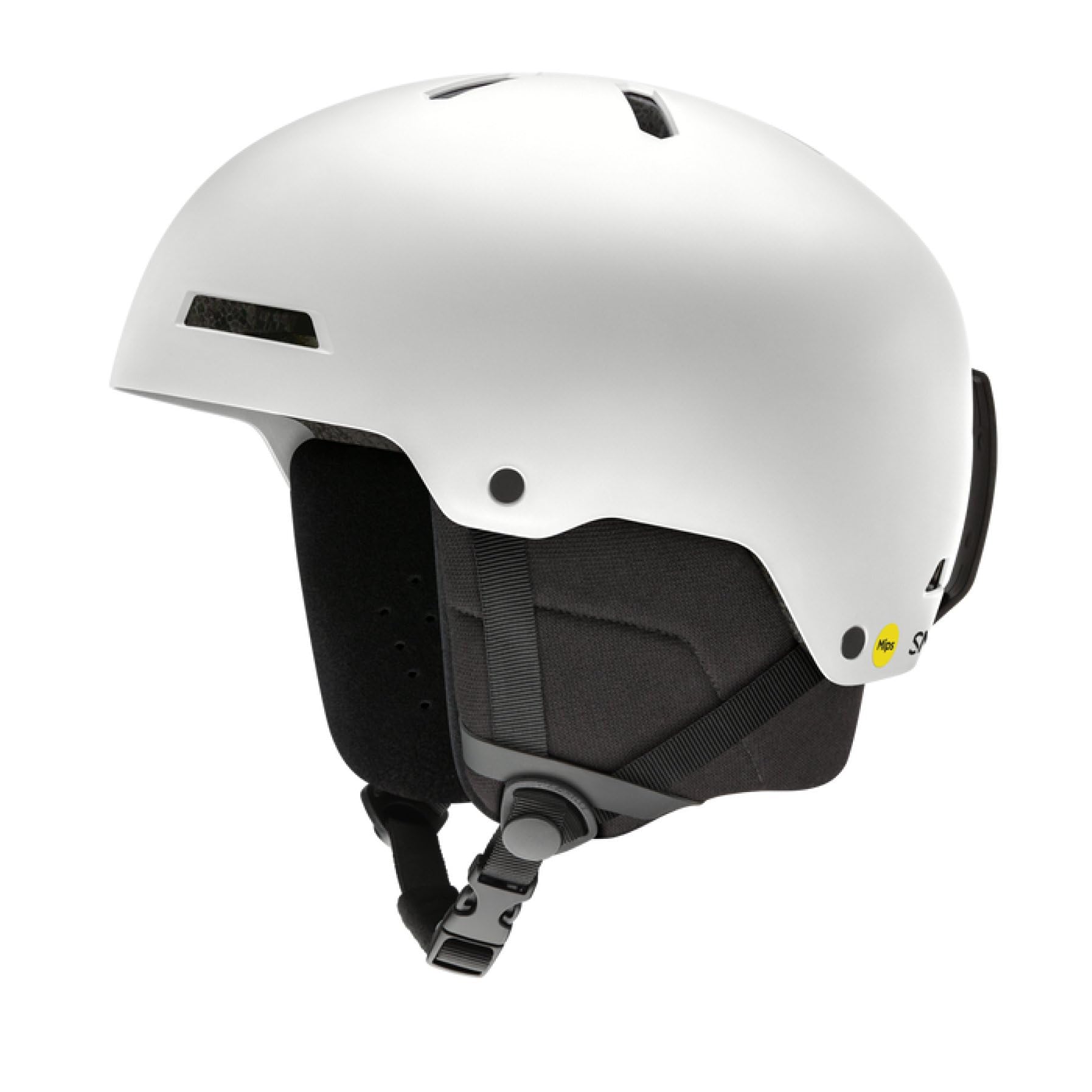
One point two pounds with MIPS — the lightest lid in this whole lineup.
On a long park day the difference lands on your neck by the last lift, not the first. A lighter shell is one you keep on for the full session instead of leaving in the car.
The protection is legit, not just light. It pairs MIPS with an ABS construction, and it carries both ASTM F2040 and CE EN 1077 certification. Those two ratings mean this one is not limited to the snow: it is built to work in the skate park, on a mountain bike, or on an electric scooter in the off-season. Few ski helmets carry both snow certifications and a bike-and-skate rating.
Ventilation is 10 fixed vents with Smith’s AirEvac system, which channels air over the top of your goggles to keep the lens clear. The micro-adjustable dial and removable earpads let you tune the fit from first run to last in any weather. The trade-off is the small stuff: 10 vents is a decent middle ground rather than a max-airflow design, and there is no audio pocket on the spec sheet, so music needs a separate setup.
The weight win: 1.2 pounds is the lightest build here, and it is the kind of spec you feel in your neck, not just on a spec sheet.
Pick this one if: you want a light, MIPS-equipped helmet you can also wear on a bike or scooter in summer.
Skip if: you want an audio-ready helmet — there is no chip pocket listed.
6. Giro Ratio MIPS Adult Snow Helmets
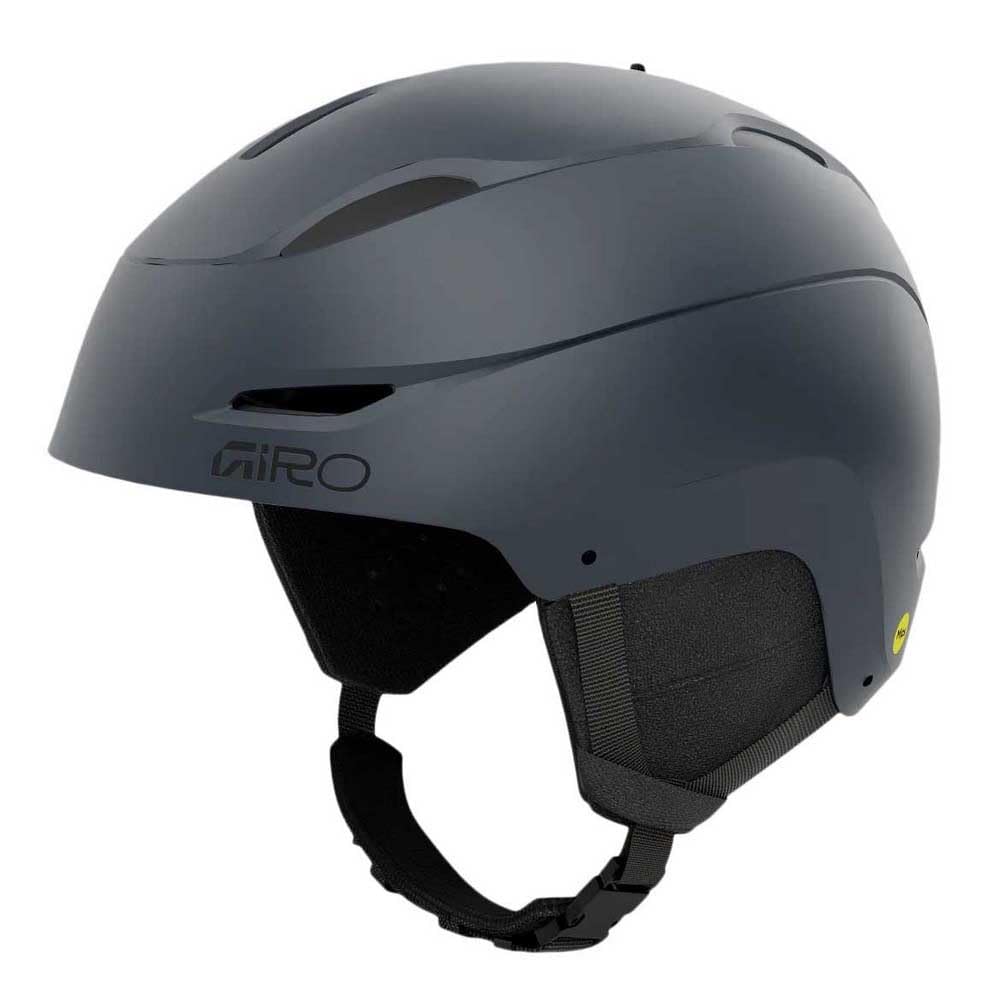
A 6cm fit dial and a thermostat vent you can open and close mid-run.
The Ratio’s party piece is the Thermostat Control venting — a low-profile button on the outside of the shell you can flip to open or close the airflow with gloves on. That is a real difference from the fixed vents on the Oakley MOD1: ride cold in the morning with it shut, open it up when the sun comes over the ridge. The Stack Vent at the front lines up with your goggles to push warm air away from the lens and keep it from fogging.
The In Form Fit System dials in a custom fit in seconds, and it gives up to 6cm of adjustment with the Vertical Tuning feature letting you set the angle so goggles sit flush without a gap. MIPS is in there, over a hard shell that forms a rugged outer layer bonded to the EPS foam liner. At 2.4 pounds it is the heaviest build here — a solid, substantial feel rather than a featherweight one.
That bulk is the honest trade-off. A notable cluster of owners find it looks oddly large on the head, and durability takes a mixed read, with the retention clips called out as the wear point. Giro builds it to pair best with its own Roam and Moxie goggles, so matching brands here is worth it if you already run Giro eyewear.
Airflow on demand: the thermostat vent is the feature that makes this helmet work across the whole season rather than just one temperature band.
Made for: riders who want to control airflow by hand and already run Giro goggles for a flush fit.
Not ideal if: a big, rounded profile puts you off — the dome reads large on the head.
7. SMITH Method Helmet

Zonal Koroyd over MIPS, in a 16-ounce shell you can wear with a beanie underneath.
The Method stacks two protection layers: MIPS plus zonal Koroyd coverage, which is a tube-based energy-absorbing material built into sections of the liner. It also carries ASTM F 2040 and CE EN 1077:2007 CLASS B certification. At 16 ounces it stays light, and the 8 fixed vents pair with Smith’s AirEvac system to route air over your goggles and keep the lens clear during a storm session.
The fit side is handled by a self-adjusting lifestyle fit system that flexes to match your head shape, plus removable Snapfit SL2 ear pads that add warmth and take an audio chip. Here is the detail that surprises people: the Method is built to be beanie compatible, so you can ride it over a hat on a bitter day without the shell riding up. That is a small thing until you have fought a helmet that refuses to sit down over a knit hat.
What keeps it from being the top pick is the vent count. Eight fixed vents is a middle-of-the-road number compared with the 22 on the Giro Surface-S or the Sweet Protection Switcher, so on a warm spring day you will notice the difference. It is a storm-and-cold-day helmet first.
Why it earns a spot
- Two-layer protection: MIPS plus zonal Koroyd coverage
- 16 ounces keeps it in the light class
- Beanie compatible, so it works over a hat in deep cold
- Removable Snapfit SL2 ear pads take an audio chip
The honest caveats
- 8 fixed vents is mid-range airflow — not built for warm slush days
- Fixed venting means you cannot widen the airflow mid-run
Choose it if: you ride cold days, want a beanie under your lid, and value the Koroyd-plus-MIPS protection stack.
Better elsewhere if: you need maximum ventilation for a warm park session.
8. Oakley MOD3 Snow Helmet
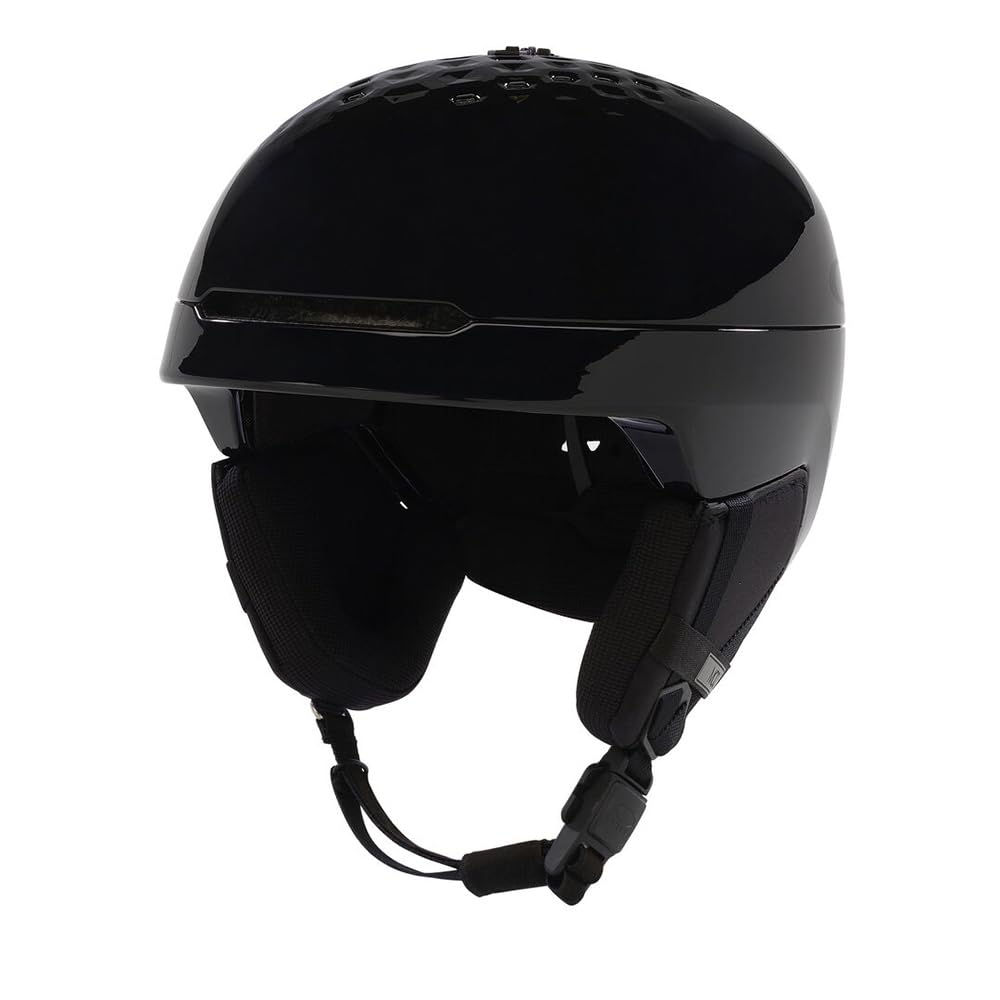
A modular brim that locks your goggles flush and fights lens fog while you ride.
The MOD3’s centerpiece is the modular brim system, which mates the helmet and goggles together so the two act as one unit. That flush fit is not just cosmetic: it helps the goggles stay sealed against your face, which is what actually keeps the lens from fogging. The Boa closure gives 270 degrees of adjustment, so the fit wraps the head rather than just cinching at the back.
The shell is in-mold with an EPS impact liner, and the comfort liner comes out and is machine washable. Ear pads sit around the ear without pressing on it, and they have a slot for audio systems. At 0.99 kg it sits in the middle of this pack on weight. The design is what buyers talk about most, with the look and the build quality getting uniform praise.
Ventilation is 6 static vents, which is on the low side for warm days and fixed, so you cannot open them up mid-run. There is also no MIPS listed on this helmet’s spec sheet, which is the clearest dividing line between it and the MIPS options higher up this list. If impact-slip protection is your priority, this is the one to think hardest about.
The goggle-first fit: the modular brim is the reason to buy it — it lines up smoothly with your goggles, and that does real anti-fog work.
Right for you if: goggle integration and a clean brimmed profile matter more to you than vent count.
Weigh it against: the MIPS-equipped options if slip-plane protection is on your must-have list.
9. Sweet Protection Switcher MIPS Helmet
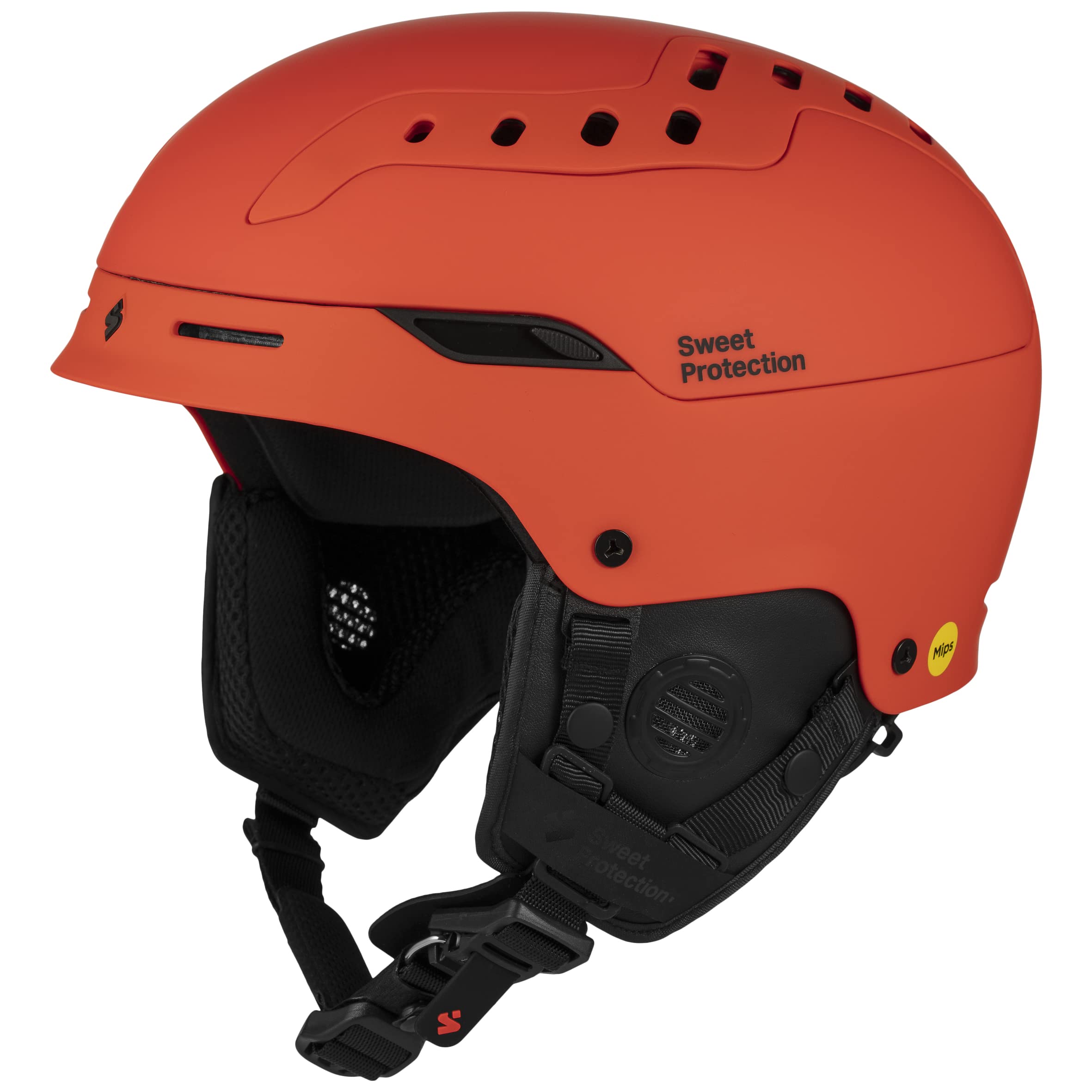
A hybrid shell with 22 adjustable vents and an impact-shield liner — the full-send lid.
The Switcher is the most heavily engineered helmet here. It combines in-mold and hard shell technology in a hybrid build meant to give you low weight and low volume with extra reinforcement where it counts. Inside is Sweet Protection’s Impact Shields liner for protection performance, and MIPS rides alongside it. Both CE EN1077 Class B and ASTM 2040 certification are on the spec sheet.
Ventilation runs through 22 easily adjustable vents — the same count as the Giro Surface-S, but adjustable here rather than fixed, so no day is too hot or too cold. The magnetic chin buckle fastens with mittens or gloves on, which is the same convenience the Oakley MOD1 offers with its Fidlock closure. Fit comes in S/M from 20.85 to 22 inches, M/L from 22 to 23.20 inches, and L/XL from 23.20 to 24 inches, with adjustment and fit pads to snug it down.
The catch worth knowing is the vents themselves. The design is a genuine strength, but a cluster of riders note the vents whistle in the wind, so at speed you will hear it. That is a small, specific annoyance rather than a safety issue, and it is the kind of thing you either notice or do not. Audio chips are sold separately if you want music.
Where the money goes: a hybrid hard-shell build, impact-shield liner, MIPS and 22 adjustable vents — this is the most feature-dense helmet in the lineup.
For the hard charger: riders who want the hybrid shell, the impact-shield liner and fully adjustable airflow in one lid.
Know before you go: the vents can whistle at speed, so bring patience for wind noise.
Know the Specs
MIPS — What the Slip Layer Does
MIPS stands for Multi-Directional Impact Protection System. It is a thin liner inside the shell that lets the helmet rotate a few millimeters relative to your head on an angled hit. Angled falls are the common kind in a park, so this layer is aimed at exactly the impact you are most likely to take. It is not a guarantee — it is an added layer that several helmets in this lineup carry and a few do not.
Vent Count — Why 3 vs 22 Changes Your Day
Vent count is the single most visible spec in this category, and it decides which season you can ride a helmet in. Three vents traps heat, so that lid is for cold storm days. Twenty-two vents dumps heat fast, so that one works in spring slush. Fixed vents stay where they are; adjustable venting with a control button lets you open or close airflow mid-run. Match the vent style to the weather you actually ride in.
Common Questions
What does MIPS actually protect against in a ski park helmet?
How do I measure my head for a ski helmet?
Is an ABS hard shell or an in-mold shell better for park riding?
Can I wear a beanie under my ski helmet?
Are more vents always better on a park helmet?
How do I stop my goggles from fogging under a helmet?
Can I use a ski helmet in the skate park or on a bike in summer?
Do any of these helmets have audio built in?
How long should a ski helmet last before I replace it?
The Bottom Line
For most park riders, the OutdoorMaster Kelvin II MIPS is the strongest pick — it carries MIPS (a liner that redirects angled impacts), an in-mold ABS shell, a dial fit and 14 vents, and it averages 4.5+ stars from 300+ Amazon reviewers. That is the best combination of protection and value on this list. If you run hot and want the most airflow here, the Giro Surface-S gives you 22 vents and a hard shell, just know the fit splits and the carry weight is 2 pounds. And if you ride cold storms and want a beanie-compatible lid with Koroyd (a crushable tube core that absorbs impact) over MIPS, the SMITH Method is the one to reach for. Any of the three will ride the park well — the deciding factor is your head’s measurement and the weather you ride in.
How we choose
We do not accept paid placement. Every pick is matched to a real buyer and a real use-case; we do not hands-on test units.
Sources
Specifications: manufacturer listings and product documentation. Review insights: verified customer reviews, as of November 2026. Pricing: not shown on this page (it changes often); check the current price via the retailer link.
As an Amazon Associate, Tactical Gear Guy earns from qualifying purchases. This does not affect which products we feature.