Specs are compiled from manufacturer listings and verified buyer reviews and can change over time — please confirm the key details on the product page before buying.
If you want the camera body that gives you the most for your money in a traditional mirror-and-prism DSLR, buy the Nikon D7500. It pairs a 51-point autofocus system with 8 fps burst shooting and a 3.2-inch tilting touchscreen, and the 18-140mm VR kit zoom comes in the box. Everything below explains what each one is actually like to shoot with — the viewfinder you look through, the lens mount that locks you into a family of glass, and the honest trade-offs most listings skip.
This guide is built by comparing the manufacturers’ published specifications and the patterns across verified customer reviews, so you get each pick’s real strengths and trade-offs instead of marketing spin.
A reflex camera is still the surest way to learn exposure because the optical viewfinder shows you the scene without any screen delay, and the picks below sort out which body earns your money. This breakdown of every single lens reflex digital camera here covers sensor size, autofocus points, and burst speed.
Top Picks


How To Choose The Best Single Lens Reflex Digital Camera
You get a real view of your shot with a DSLR (a camera with a mirror inside that bounces light up into an optical viewfinder), so your eye sees the scene directly through the lens. That mirror is the whole point: no screen lag, no battery drain while you compose, and a real sense of what you are framing. Four things decide your pick — the sensor, the autofocus, the burst speed, and the mount you are willing to stay married to.
Sensor size decides your low-light ceiling
A full-frame sensor is physically larger, so each pixel gathers more light. That larger sensor is why the Canon EOS 5D Mark IV can be shot at ISO 12,800 and still produce clean files for online posting. An APS-C sensor is smaller and crops the field of view, but bodies stay smaller and the lenses cost less. For daylight family photos and travel, an APS-C body is plenty. For dim rooms and stage lighting, the sensor size pays you back.
Autofocus points: how many actually matters
Each autofocus point is a spot where the camera can lock focus. A 9-point system covers the middle of the frame and little else, so a subject drifting to the edge can slip out. The Nikon D7500 uses 51 points, and its 15 cross-type sensors read detail in both directions — which is what keeps lock on a fast subject. More points is not automatically better, but fewer than nine on a modern body is limiting.
Burst speed tells you what you can shoot
Continuous shooting is measured in frames per second, and it decides whether you catch a sprinter mid-stride or a kid mid-jump. A 3.0 fps body handles portraits and landscapes comfortably. Reach for 7 or 8 fps when the moment will not wait for you. Check the buffer too: a fast burst that stalls after a few frames is less useful than a slower, steadier one.
Pick the lens mount before the body
The mount is the metal ring that locks the lens to the camera, and every lens you buy afterward must match it. Nikon F and Canon EF-S are the two families represented below. Lenses outlive bodies, so decide which family has the glass you want — a fast prime for portraits, a long telephoto for wildlife — and choose the body second.
Side-by-Side Comparison
| Model | Best For | Sensor | Autofocus Points | Burst Rate | Amazon |
|---|---|---|---|---|---|
| Nikon D7500 with 18-140mm★ Best Overall | All-round shooting with a lens included | 20.9MP APS-C | 51 | 8 fps | Amazon |
| Nikon D5600 Body | Lightweight everyday carry | 24.2MP APS-C | 39 | 5 fps | Amazon |
| Canon EOS 5D Mark IV Body Only | Dim light and full-frame depth | 30.4MP full-frame | 61 | 7.0 fps | Amazon |
Detailed Reviews
1. Nikon D7500 DSLR Camera
Our pick — 4.5+★ from 700+ verified ratings; the strongest balance of quality and price.
The body that tracks a running kid and still hands you a zoom lens in the same box.
Fifty-one autofocus points is the number that carries this camera. Each point is a spot where the camera can grab focus, and 51 of them spread across the frame means your subject stays locked even when it drifts toward the edge. Fifteen of those are cross-type sensors, which read contrast in both directions so focus holds on a face turning away from you. Against the Canon EOS 2000D bundle’s 9 points, the D7500 holds a 51 to 9 advantage — that is roughly five times the coverage area, and you feel it the moment anything starts moving.
Burst speed tells the same story. At 8 fps you can fire eight frames in a single second, which is the difference between one usable frame of a jump and a whole sequence. The Canon Rebel T7 bundle manages 3.0 fps, so the Nikon runs nearly three times as fast when the shutter is held down. The 20.9MP APS-C sensor inherits its image processing and metering from Nikon’s D500, so low-light files stay clean rather than grainy. The 3.2-inch tilting touchscreen flips out for high or low angles, and it works with a tap — useful when you are shooting over a crowd.
The kit lens is a genuine convenience, not a placeholder. The 18-140mm zoom covers wide group shots through to a tight portrait without swapping glass, and the VR in its name means vibration reduction — it steadies the shot when your hands are not perfectly still. Video reaches 4K Ultra HD at 30p with stereo sound, so the same body records the school play. Buyers praise the image quality most, but the deep settings menus take a weekend of fiddling before they feel quick. Plan on reading the manual once.
Why this one earns the top slot
- 51 autofocus points, 15 of them cross-type, so moving subjects stay sharp
- 8 fps continuous shooting catches the exact frame you want
- 20.9MP APS-C sensor using D500-grade processing and metering
- 18-140mm VR zoom included — one lens covers wide to tight
- 4K Ultra HD video with stereo sound and a tilting touchscreen
Where it asks patience
- The settings menus are deep and reward a slow first read
- Heavier than an entry-level body once the zoom is mounted
Reach for this if: you shoot a mix of sports, kids, and travel and want one body with a do-everything zoom already attached.
Look elsewhere if: you already own Nikon F glass and would rather put the money into a lens than a second kit zoom.
2. Canon EOS 2000D DSLR Camera
Twenty pieces in one order, so the only thing left to buy is a memo from a DX-format CMOS sensor is a lot of resolution for a first camera. That number matters because it gives you room to crop a photo and still print it large — a bird you caught small in the frame can be tightened up afterward without falling apart. The EXPEED III image processing engine does the math behind each frame, and it is the same lineage Nikon has used to keep colors consistent shot to shot. One-touch Full HD 1080p movie recording means video is a button away, not a menu dive.
The autofocus offers 11 points with phase detection and tracks across multiple modes, so it can follow a subject or hold one still, whichever you choose. That sits between the 9-point entry bodies and the 51-point D7500, and it is honest mid-ground for a starter. Continuous shooting runs at 4 fps — enough for a casual burst, not enough for field sports. The included 18-55mm VR NIKKOR zoom adds vibration reduction to steady handheld shots.
What is remarkable about this body is how long it has held its audience. It carries the deepest review base of anything here and still rates 4.5+ stars across 800+ ratings, a sign of how forgiving it is for a newcomer. The functionality and ease-of-use themes come up over and over — buyers get clean, bright pictures without a steep learning curve. The trade-off is age: this is a much older generation than the D5600 or D7500, so expect a slower processor and no touchscreen. A Wi-Fi adapter, if you want one, is sold separately.
The proven first camera: a 24.2MP DX sensor, 11-point autofocus, and bundled VR zoom make it the least intimidating way into a real reflex body.
Be honest about the vintage: no touchscreen and no built-in Wi-Fi mean you are buying the sensor and the lens, not modern conveniences.
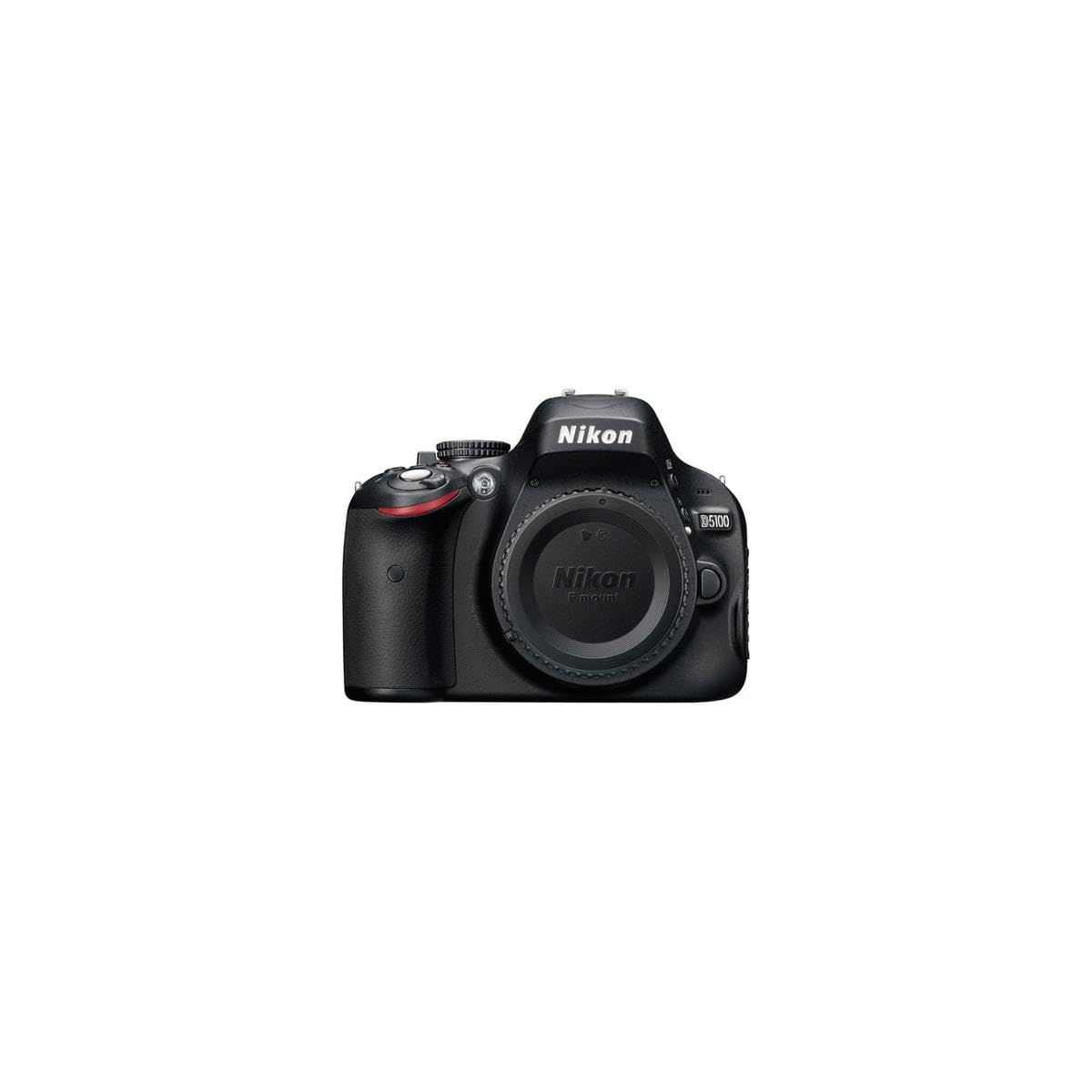
3. Nikon D5100 Digital SLR Camera (Body Only)
A two-lens bundle with a 500mm telephoto — the reach you would otherwise pay extra for.
Most starter kits stop at the standard zoom. This one adds a 500mm preset f/8 telephoto on a T-mount, which is how you get distant subjects — a bird on a wire, a batter at the plate — without a second purchase. The core camera is the Canon EOS Rebel T7: a 24.1MP APS-C CMOS sensor with a DIGIC 4+ processor and an ISO range of 100-6400, expandable to 12800 for dim conditions. Continuous shooting runs at up to 3.0 fps, and the 9-point autofocus with AI Servo tracks a subject that moves toward or away from you.
The optical viewfinder shows approximately 95% of the frame, so what you see is very close to what you get. The 3.0-inch LCD carries 920,000 dots for checking focus and exposure. Full HD 1080p video records at 24 fps, and built-in Wi-Fi with NFC lets you remote-shoot and print wirelessly from a phone. The bundle adds the 18-55mm IS II zoom with image stabilization, a 64GB SanDisk Ultra SDHC card rated at 100MB/s, a padded travel bag, and a 1-year Canon USA warranty on the body kit.
Bit depth is where this body earns a real edge: files are 14-bit here, versus 12-bit on the 20-piece 2000D bundle. Fourteen-bit holds more color and tonal steps per channel, which is leverage when you push shadows in editing. Buyers lean on the included accessories and the ease of use — manual mode is the mode people mention most often for learning. The one honest wrinkle is flash reliability: a handful report the flash misbehaving, so test it early and claim the warranty if it does.
What is in the box that matters
- 18-55mm IS II zoom plus a 500mm preset f/8 telephoto on a T-mount
- 64GB SanDisk Ultra SDHC card rated at 100MB/s
- 24.1MP APS-C sensor, DIGIC 4+ processor, ISO 100-6400 expandable to 12800
- 14-bit files — more tonal data than the 12-bit 2000D bundle
- Built-in Wi-Fi and NFC for remote shooting and wireless printing
The parts to verify
- Flash reliability is the one recurring note — test it on arrival
- 3.0 fps is slow for fast action; reserve it for portraits and stills
Reach for this if: you want one order to cover close portraits and far-away subjects, with a card and bag in the box.
Look elsewhere if: the flash matters to you above all — that is the one part to check first.
4. Nikon D5600 DX-Format Digital SLR Body

A 39-point autofocus grid in a body light enough to forget it is in the bag.
Thirty-nine autofocus points is a big jump from the 11-point bodies above, and it changes how much of the frame you can trust. Instead of locking only near the center, the D5600 will track a subject across much of the frame. That pairs with a 24.2MP DX-format CMOS sensor and the EXPEED 4 image processor. Continuous shooting reaches 5 fps, one frame quicker than the 4 fps of the D3200 and D5100.
The 3.2-inch touchscreen flips and rotates — an Articulating display — so you can angle it away from glare or shoot from a low position. Touch screen interaction and a lighter body are the two things buyers enjoy most here, and weight comes up as its own positive theme. Bluetooth 4.1 with SnapBridge pairs to a phone for automatic photo transfer on the go, and built-in Wi-Fi with NFC is there for the heavier files. Video tops out at Full HD 1080p at 60 fps, with a maximum clip length of 29 minutes and 59 seconds.
This is body-only, and it uses the Nikon DX mount, so any DX-format lens you own fits. It is not a D7500 replacement for hard action: 5 fps is steady, not rapid, and the deep-buffer demands of sports are better served by the D7500’s 8 fps. Where this body makes sense is travel and street work, where the lighter body and instant phone transfer beat raw burst speed.
The travel logic: a 39-point autofocus system, 24.2MP sensor, and 5 fps burst are wrapped in the lightest body in this lineup, with SnapBridge Bluetooth 4.1 pushing photos to your phone automatically.
Fair warning: body-only and DX-mount means a lens is on you, and 5 fps keeps this out of serious sports territory.
The one to travel with: when you want a real reflex body that does not weigh down a day bag and hands photos to your phone without fuss.
Not for the sideline shooter: if your goal is fast bursts on a field, the extra reach of the D7500’s autofocus and speed pays off.
5. Canon EOS 50D DSLR Camera (Body Only)
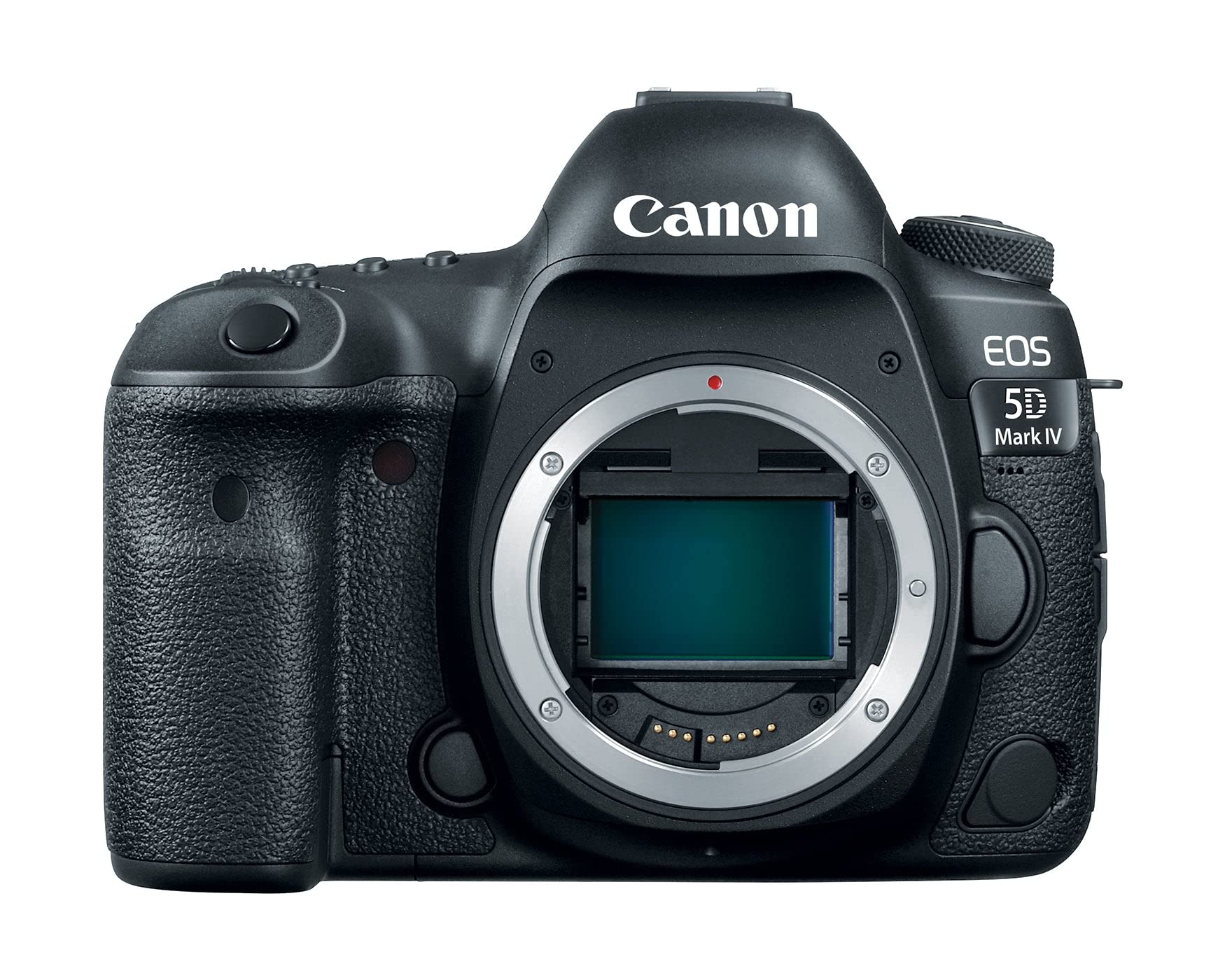
Thirty megapixels of full-frame sensor that keeps a dim scene clean at ISO 12,800.
A 30.4MP full-frame CMOS sensor is a physically larger capture area, so each pixel gathers more light than an APS-C sensor can. That is the reason images shot at ISO 12,800 come out clean enough to post without heavy noise reduction. The DIGIC 6+ image processor drives up to 7.0 fps continuous shooting and an ISO range of 100-32000, expandable up to 50-102400 for the darkest rooms. Sixty one autofocus points is the most of any Canon body here, and Dual Pixel CMOS AF keeps focus smooth and responsive during video or live view by reading every pixel for depth.
Video covers 4K Motion JPEG at 30 or 24 frames per second, with Full HD up to 60 fps and HD up to 120 fps for slow motion. The LCD is a full touchscreen, so you pick the autofocus area by touching the spot on the frame. Built-in Wi-Fi moves files to a phone through the Canon Camera Connect app, and it can exchange data with other Wi-Fi compatible Canon cameras. The body is compatible with both Canon EF and EF-S lenses.
Professionals single out its reliability — a body built to take a working photographer’s day and keep going. The touchscreen and customizability both get singled out as reasons the upgrade felt worth it. The catch is weight and lens budget: full-frame glass is heavier and pricier than the EF-S lenses on the APS-C bodies here, so price the lens system before you commit to the sensor.
The low-light argument: a 30.4MP full-frame sensor plus the DIGIC 6+ processor holds ISO 12,800, and Dual Pixel CMOS AF locks focus smoothly for both stills and video.
The real bill: full-frame lenses are the expensive half of this decision, and the body is heavier than the crop-sensor options above.
Buy this for the sensor: when dim venues, wide depth, and a professional body are the whole point.
Think twice if: you have no full-frame glass yet — the lens cost is where this decision actually lives.
Know the Specs
Sensor size and megapixels
Sensor size is the physical area of the chip, and it sets how much light each pixel collects. A full-frame sensor is larger than an APS-C sensor, so the full-frame Canon 5D Mark IV handles ISO 12,800 cleanly where an APS-C body would show noise. Megapixel count is a separate thing: it sets how much you can crop or print but does not by itself make low-light photos cleaner. The Nikon D850’s 45.7 megapixels is about resolution; its full-frame sensor is what drives light gathering.
Autofocus points and cross-type sensors
An autofocus point is a spot where the camera can measure and lock focus. More points spread wider coverage, which means a subject at the edge of the frame can still be tracked. Cross-type sensors read contrast in both horizontal and vertical directions, so they lock more reliably on low-contrast subjects. The Nikon D7500’s 15 cross-type sensors, out of 51 total, are the reason it holds focus on a face at an angle.
Continuous shooting and the buffer
Continuous shooting, or burst rate, is how many frames the camera captures per second while the shutter is held. It is measured in fps, frames per second, and it decides whether you catch a jump or a swing. Equally important is the buffer — the short-term memory that holds those frames before they write to the card. A high frame rate that fills after a few shots is less useful than a steady 8 fps that keeps going, which is why the D7500’s rate is paired with strong processing.
Lens mount and crop factor
Every lens you buy must match the lens mount (the ring where the lens attaches). Nikon F and Canon EF/EF-S are the two systems here, and lenses usually outlast bodies. Crop factor is the multiplier applied to a lens’s focal length on a smaller sensor; the Nikon D7500 states its focal length is equivalent to roughly 1.5x that of lenses on an FX-format body, so an 18-140mm zoom behaves like a longer lens.
Common Questions
Is a DSLR still worth buying over a mirrorless camera?
Do these camera bodies include a lens?
Can I use older Nikon F-mount lenses on the Nikon DSLRs here?
How many autofocus points do I need for sports?
What is the difference between APS-C and full-frame for low light?
Can I transfer photos from these cameras to my phone?
What memory card does each camera take?
Do these DSLRs shoot video, and at what resolution?
Is it better to buy a body-only camera or a kit with a lens?
How long does a DSLR shutter and battery typically last between charges?
The Bottom Line
For most people shopping for a single lens reflex digital camera, the winner is the Nikon D7500 because it stacks 51 autofocus points and 8 fps burst speed (8 frames per second, so fast action stays sharp) on top of a D500-grade sensor — and still hands you an 18-140mm VR zoom in the box. It also holds the top owner score here at 4.5+ stars across 700+ ratings, and that overall balance earns it the number one slot.
If your priority is a full-frame sensor for dim rooms and stage lighting, the Canon EOS 5D Mark IV is the body to reach for, with its 30.4MP sensor and 61 autofocus points. And when sheer resolution is the whole point — landscapes, studio, architecture — the Nikon D850 answers with 45.7 megapixels and 153 focus points.
Your first camera can arrive with a full box: the Canon EOS 2000D 20-piece bundle puts a card, bag, and tripod in the same order. If you already own Nikon glass, the Nikon D5100 gives you a flip screen for the least outlay onto that mount. One honest nudge before you decide: the D7500 carries fewer total ratings than the Canon 5D Mark IV and the D850, but it holds the higher score at 4.5+ stars — depth of owner experience, not raw volume, is where the winner earns its case.
How we choose
We do not accept paid placement. Every pick is matched to a real buyer and a real use-case; we do not hands-on test units.
Sources
Specifications: manufacturer listings and product documentation. Review insights: verified customer reviews, as of November 2026. Pricing: not shown on this page (it changes often); check the current price via the retailer link.
As an Amazon Associate, Tactical Gear Guy earns from qualifying purchases. This does not affect which products we feature.