Specs are compiled from manufacturer listings and verified buyer reviews and can change over time — please confirm the key details on the product page before buying.
The short answer: buy a hotspot that accepts your own SIM card and matches the network you already trust, and you get pocket Wi-Fi without a new contract. On this list that means the HOSAYA HF26 for a cheap plug-and-play dongle, the GL.iNet MUDI for travel-heavy users who want VPN control, and the GlocalMe Numen Air 5G if you want to skip SIM hunting entirely. Every pick below takes a SIM or a built-in data plan — none is welded to a single carrier.
This guide is built by comparing the manufacturers’ published specifications and the patterns across verified customer reviews, so you get each pick’s real strengths and trade-offs instead of marketing spin.
One honest note before you scroll: this list uses flexible matching for “open up, works with a user-supplied SIM,” so not every pick is the exact model a search engine might have shown you. The nearest same-type device serves the same purpose. Below you’ll find what each one actually does, what the band support means for your carrier, and where the trade-offs sit. That way the right SIM card hotspot device is obvious before you tap buy.
Top Picks
How To Choose The Best SIM Card Hotspot Device
Band support — the exact radio frequencies your carrier broadcasts on — decides whether a hotspot works for you. Buy a device that lists your carrier’s bands and it connects; buy one that doesn’t and you’ll be returning it. Buy one that doesn’t, and you’ll be returning it.
Match the bands to your carrier first
Each device here lists its supported bands in plain terms. The HOSAYA HF26, for instance, runs 4G LTE on B2/B4/B5/B7/B12/B17/B28/B66 and 3G on B2/B5, which the maker says covers most American countries. Check your carrier’s band list against that before anything else.
Decide between your own SIM and a built-in plan
A SIM-slot hotspot runs on the data plan you already have, or a cheap prepaid SIM you pick up locally. A CloudSIM (a built-in virtual SIM) or included-data device skips the SIM entirely but ties you to its own plan pricing. Both are valid. Pick based on if you want full carrier control or zero setup.
Size the battery to your real day
A 3,500mAh cell and a 7,000mAh cell are very different animals. The larger battery means fewer top-ups on a long travel day, but it also adds bulk. Match the mAh rating to how many hours you’ll genuinely be away from power.
Side-by-Side Comparison
| Model | Best For | Max Speed | Battery | Device Limit | Amazon |
|---|---|---|---|---|---|
| HOSAYA HF26 USB WiFi Router★ Best Overall | Cheap plug-and-play dongle | 150 Mbps | — | 10 | Amazon |
| NomadsFi PocketFi XMost Travel-Ready | Traveling with zero setup | 150 Mbps | 3,500mAh | 10 | Amazon |
| Verizon Jetpack MiFi 8800LBuilt-In VPN Pick | Built-in VPN tinkerers | 1,200 Mbps | 4,400mAh | — | Amazon |
| GL.iNet GL-E750V2 MUDI | VPN-heavy travel | 433 Mbps | 7,000mAh | — | Amazon |
| NETGEAR Nighthawk M6 Pro | 5G mmWave speed chasers | 8 Gbps | 5,040mAh | 32 | Amazon |
| NETGEAR Nighthawk M1 MR1100 | Ethernet backup internet | 1 Gbps | 5,040mAh | 20 | Amazon |
| GlocalMe Numen Air 5G | Global travel, no SIM | 2.5 Gbps | — | 16 | Amazon |
| NETGEAR Nighthawk M6 MR6150 | Whole-home 5G backup | 2.5 Gbps | — | 32 | Amazon |
Detailed Reviews
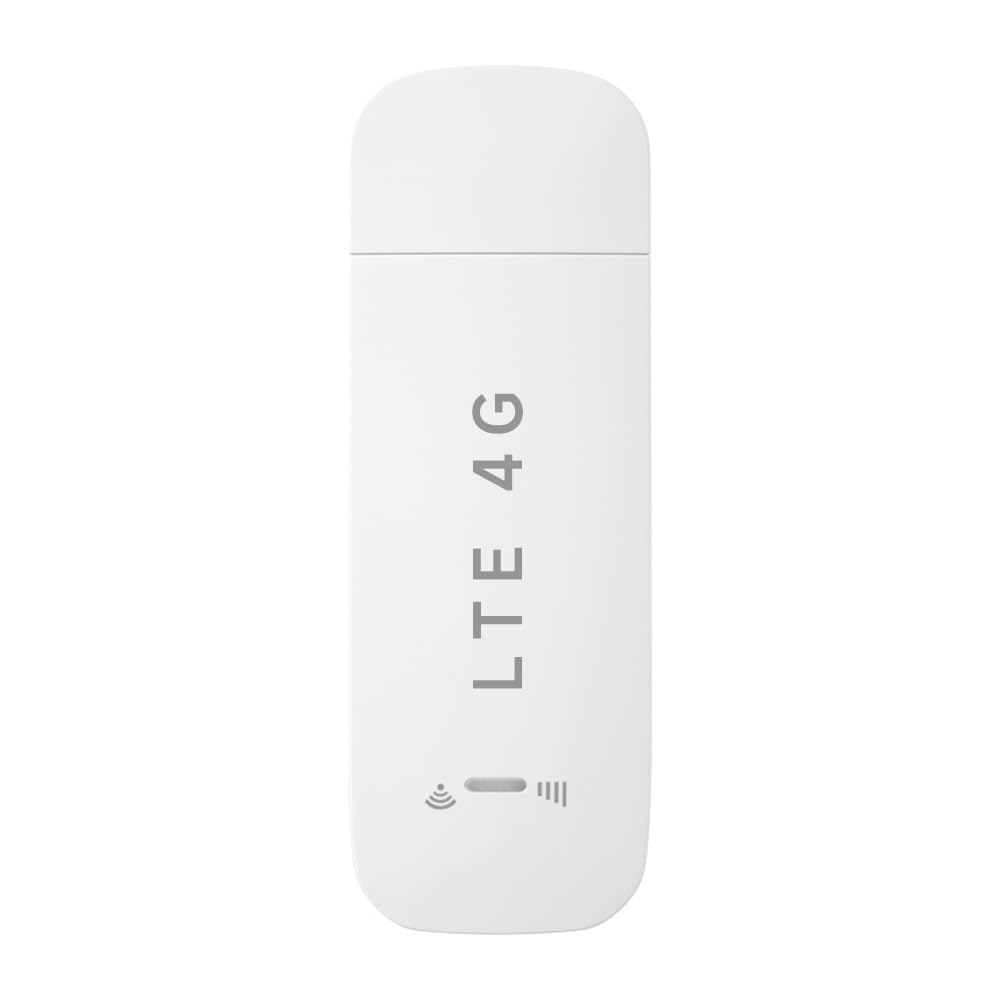
1. HOSAYA HF26 Portable WiFi 4G LTE USB Router
Pocket internet for car, backpack, laptop — from a dongle smaller than a flash drive.
The way you use this thing is simple: you drop a SIM card from your local operator into the slot, and it beams out a Wi-Fi signal on the 2.4 GHz band (the standard short-range Wi-Fi frequency). It pulls its power straight from a USB port at 5V1A — plug it into a car socket, a power bank, or a laptop and it starts broadcasting. No CD driver, no setup software.
Its data transfer rate is 150 megabits per second, which is enough for browsing, email, and standard-definition video on a laptop. It supports 10 Wi-Fi users at once, so a small carload or a family road trip can all hop on. The American version covers 4G LTE bands B2/B4/B5/B7/B12/B17/B28/B66 and 3G bands B2/B5, which HOSAYA says works across the USA, Canada, Mexico, and much of South America.
Here’s the honest catch: it only accepts universal SIM cards. Contract SIMs or carrier-locked SIMs that operators restrict to their own devices may simply not connect. It also auto-detects most SIM cards and APN settings (the access point name your carrier uses), but if it misses, you have to type that APN in yourself. If your computer’s antivirus or firewall blocks the USB modem driver, the modem mode won’t work.
Where it earns its keep
- USB-powered at 5V1A — no battery to charge, runs off a car socket or power bank
- 150 Mbps LTE and 10 connected devices covers a carload
- Wide band list including B12, B17, and B66 for North American carriers
Where you’ll have to meet it halfway
- Locked or contract SIMs may refuse to connect at all
- 2.4 GHz only — no 5 GHz band for congested areas
The case for it: the cheapest way onto your own carrier’s SIM data, ideal for a car, a power bank, or a laptop bag.
Look elsewhere if: you need a built-in battery and true untethered portability — this one always wants a USB socket.
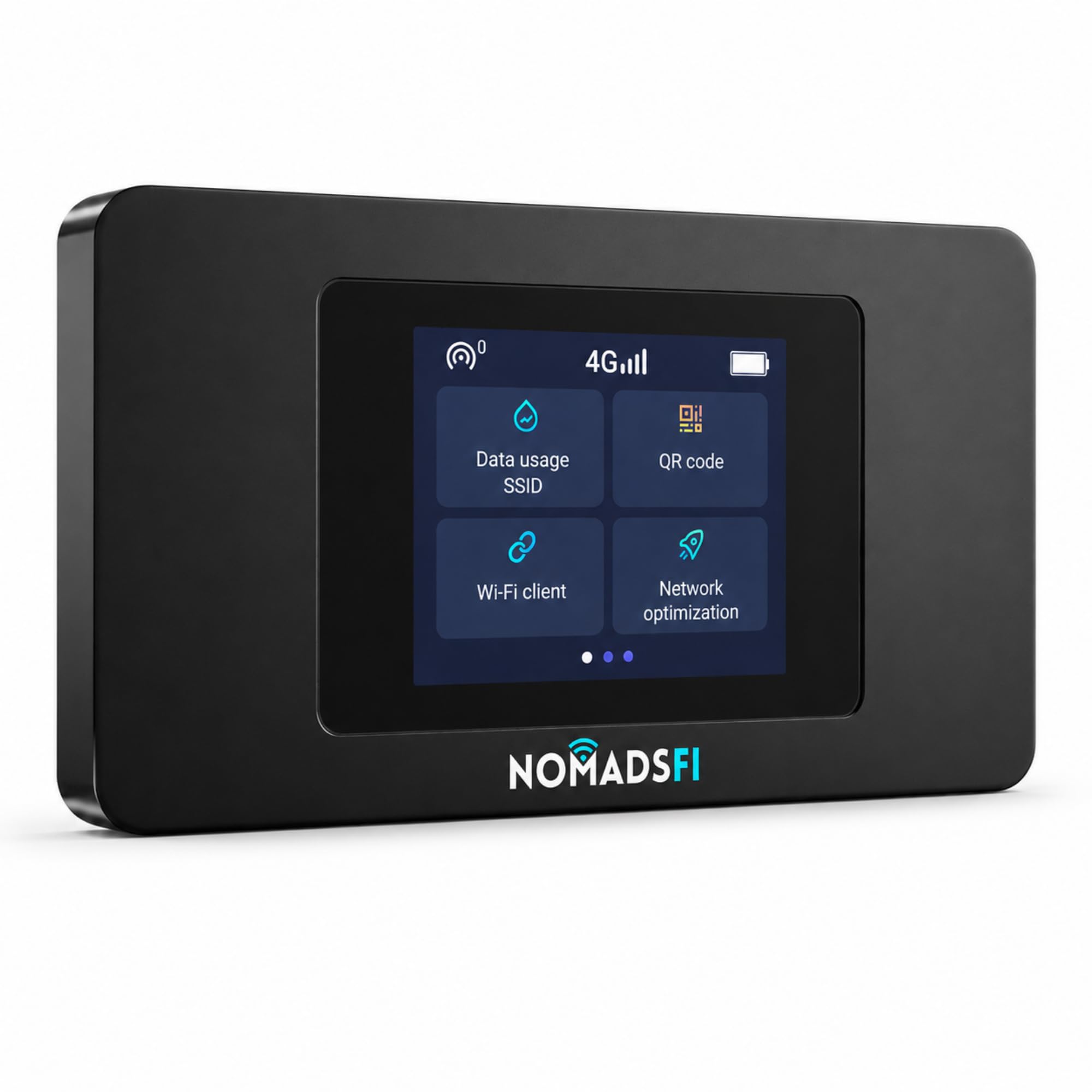
2. NomadsFi PocketFi X 4G LTE Mobile Hotspot
Slim as a wallet, ships with 10GB of data already loaded, and you can skip SIM hunting on day one.
Its 3,500mAh battery is the spec that matters most. The listing claims over 14 hours of continuous streaming, browsing, and gaming — enough for a cross-country drive or a full conference day without hunting for an outlet. Against the GL.iNet MUDI below, the PocketFi X claims longer runtime despite the MUDI’s larger 7,000mAh cell, which holds twice the stored charge.
On arrival you activate and claim 10GB of U.S. data valid for 30 days, and note carefully that this included plan is U.S.-only. For any other country you buy a plan through the NomadsFi portal. It combines a Qualcomm chipset with dual modems and claims access to 390+ carriers across 200+ countries, with automatic local network selection. Under the hood it does 150 Mbps over 4G, and shares to 10 devices at once.
A 2.4-inch touch screen gives you a direct read of your data usage and signal strength — no app required. It also takes a physical SIM if you’d rather use your own carrier, or you can connect via CloudSIM with a NomadsFi plan and skip SIM swapping entirely. The trade-off is plan economics: the free data is a starter taste, so long trips mean buying NomadsFi packages rather than freeloading off your home plan.
Why travelers stay hooked: a 14-hour battery in a slim body, plus included U.S. data that gets you online before your plane lands.
The other side of the ledger: the complimentary 10GB plan works inside the United States only — every international trip needs a plan purchase through the portal.
Reach for this if: you’re a road-tripper or RV traveler who wants to power on and connect without touching a plan setup.
Skip if you want total carrier control: CloudSIM works, but a NomadsFi plan is the path of least resistance here.
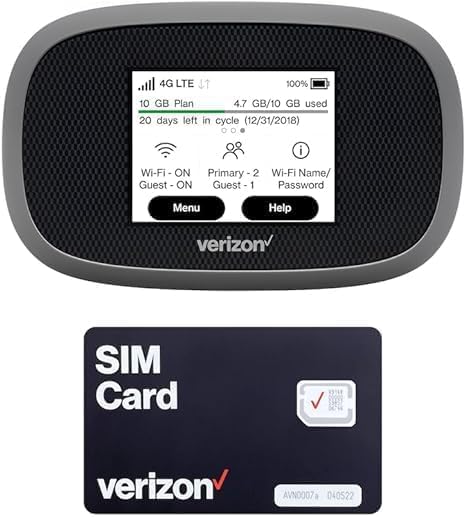
3. Verizon Wireless Jetpack Inseego MiFi 8800L
A built-in VPN and 1,200 Mbps speeds, in a form factor that still uses your own Verizon SIM.
You get faster Wi-Fi than the portable 4G router on this list, which runs only on 2.4 GHz at 150 Mbps. This Jetpack is dual-band (it runs on both 2.4 GHz and 5 GHz), and the listing puts its top Wi-Fi throughput at up to 1,200 Mbps (near 5G). The 5 GHz band matters most in crowded places, where 2.4 GHz gets bogged down. It covers 17 LTE bands and 5 3G bands across 180+ countries, so a local prepaid SIM has a better chance of working abroad.
The embedded VPN lets you set a virtual location — USA IP while in Europe, for instance — and it’s free, though the activation needs some technical comfort or a support call. A subscriber-paid VPN runs faster according to the listing. The battery is a 4,400mAh cell, sized for up to 10 hours of active use and 24 hours of standby, and Quick Charge reports a 2.5-hour fill from empty. It also works as a battery boost for your phone.
Be clear about carrier fit: this hotspot does not work with T-Mobile. It runs on Verizon, AT&T, and most US carriers — but you supply the data plan. Two MIMO antenna connectors (not included) can pull in a weak signal where one bar is all you’d otherwise get. Setting it up tends to go smoothly, but long-term connection reliability is the running conversation point — treat it as a device where the data SIM you pair with it does a lot of the work.
What makes it distinctive: dual-band 5 GHz Wi-Fi at up to 1,200 Mbps and a free VPN you configure yourself — rare in a pocket hotspot.
Where to be careful: the T-Mobile lockout and the need for a separate data plan mean you must confirm your carrier first.
Suits you if: you’re a Verizon or AT&T customer who wants faster speeds and a VPN without adding a subscription.
Better to look past if: you’re on T-Mobile, or you don’t want to learn a VPN activation flow.
4. GL.iNet GL-E750V2 MUDI 4G LTE Travel Router

A 7,000mAh travel router with real VPN muscle — for people who configure before they connect.
Start with that battery: 7,000mAh, the largest cell on this list by a wide margin, rated for up to 8 hours of use. The listing quotes its Wi-Fi as 300 Mbps on 2.4 GHz plus 433 Mbps on 5 GHz, so it’s a dual-band device. Its travel dimensions are compact enough to drop in a jacket pocket at 285g.
The real story is security tooling. It ships with OpenVPN and WireGuard support built in, plus a custom DNS server, and it lets you connect through 30+ VPN servers. WireGuard speeds are quoted up to 50 Mbps and OpenVPN up to 10 Mbps — so VPN traffic is where this device shines, but not where it races. It also stores profiles for a separate physical eSIM card (sold separately) that can be edited and switched between operators by country.
Now the trade-offs, told straight. A lot of buyers report good overall performance with this router, but heat comes up repeatedly — it gets hot during use. Speed is capped at 4G, and VPN throughput is not comparable to raw cellular speed. There’s also a small amount of RAM — DDR2 128MB — and a MicroSD slot that takes up to 1 TB, which is handy if you want shared files in the field. The pre-installed EM060K Cat6 4G module means no SIM fiddling to get started beyond the card itself.
What it does brilliantly
- 7,000mAh battery and 285g frame — genuinely portable with serious runtime
- OpenVPN and WireGuard from the start with up to 50 Mbps VPN speeds
- MicroSD up to 1 TB plus USB 2.0 for file sharing on the road
- Physical eSIM support lets you swap operators without buying new hardware
The honest caveats
- It runs hot under load — a real handling concern on long sessions
- 4G only, so no 5G where your carrier offers it
- Configuration comfort is expected — this is not a plug-and-play dongle
Who it’s built for: remote workers and frequent travelers who need VPN privacy and can handle a router admin panel.
Not the pick for you if: you want to switch on and connect — this is a device you configure first.
5. NETGEAR Nighthawk M6 Pro (MR6500) 5G Mobile Hotspot

The spec monster of the group — mmWave 5G, a Snapdragon X65 chip, and a 2.5G Ethernet port.
If raw numbers move you, here they are: 8 Gbps on paper, 5G mmWave and Sub-6 bands, and a Qualcomm SD X65 chipset under the hood. Its Wi-Fi is AXE3600, giving 2.9Gbps on 5GHz/6GHz and 700Mbps on 2.4GHz. It also carries a 2.5G Ethernet port — so on a desk it can serve as a wired router, not just a hotspot.
You can check usage and signal at a glance on the 2.8-inch color touch LCD. A 5040mAh battery keeps it running, and guest Wi-Fi privacy separation gives visitors their own network slice. It can push 5G data to up to 32 devices at once. It takes a Nano SIM (the smallest SIM size; no SIM card or service included). The AT&T-open up listing says it works with most GSM and CDMA carriers (the two main US network types), including AT&T and T-Mobile, plus Verizon and Sprint, when you bring a compatible data-only plan.
Here’s the part buyers need to hear: the compatibility conversation dominates this device, with a mixed record on 5G performance depending on which carrier’s SIM you feed it. Battery behavior is the recurring trouble spot — the listing-claimed stamina doesn’t always hold up, and some report it stops charging after a day. This is a renewed unit, so a factory-refurbished discount sits behind that risk. For the committed tinkerer on the right carrier, it’s an outstanding piece of hardware; on a mismatched network, it’s just expensive plastic.
The standout: 8 Gbps mmWave 5G, AXE3600 Wi-Fi, a 2.5G Ethernet port and 32-device sharing — spec-for-spec, nothing else on this list comes close.
The honest friction: carrier compatibility runs hot and cold, and battery life draws steady complaints — verify your SIM works before committing.
Buy this if: you’re on AT&T or T-Mobile and want the fastest pocket hotspot available, or you need a wired Ethernet branch from a cellular link.
Think twice if: you’re on Verizon, or you want low-maintenance battery management. The battery is this model’s weak point.
6. NETGEAR Nighthawk M1 MR1100 4G LTE Mobile Hotspot
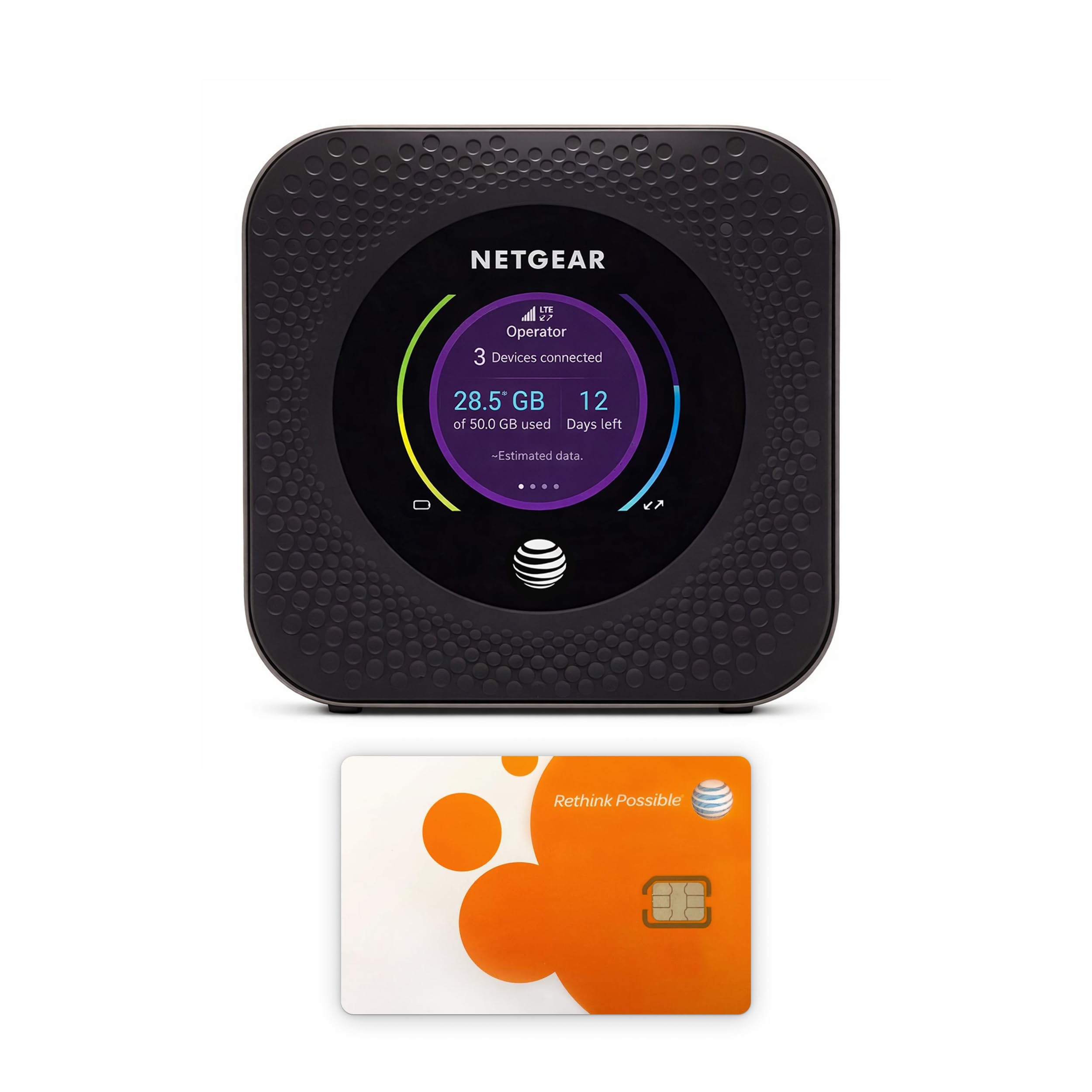
Gigabit LTE and a real Ethernet jack — a cellular modem for rural homes where cable fails.
The defining spec here is the built-in Gigabit Ethernet port. That turns the M1 from a pocket hotspot into a broadband substitute: you plug it into your home router and it feeds primary or backup internet into a house where the cable line drops or doesn’t exist. Its 4G LTE tops out around 1 Gbps downloads, so streaming and gaming over cellular are realistic, not aspirational.
Sharing goes up to 20 Wi-Fi devices — phones, laptops, tablets, smart TVs, gaming consoles — so it covers a family or a small team. Wi-Fi is dual-band 802.11ac, and a 2.4-inch LCD shows data usage, signal strength, and settings at a glance. A MicroSD slot and USB port let you turn it into a small media hub, sharing files and music to anything on the network.
The battery situation is unusual for a hotspot: a high-capacity 5040mAh removable cell that the listing rates for up to 24 hours of continuous use, and it can charge your phone via USB (called JumpBoost). It’s AT&T hotspot hardware that’s open up to work with any GSM provider — it works best on AT&T and T-Mobile and is not compatible with Sprint’s legacy network. Insert a micro SIM, activate a BYOD data plan, and you’re online without a contract.
Why it’s a rare find: a Gigabit Ethernet port plus a removable 5040mAh battery that the maker rates for up to 24 hours — a mini router that lives in a bag.
What to confirm first: it’s GSM-oriented, works best on AT&T and T-Mobile, and won’t run on Sprint’s legacy network.
Ideal partner for: rural or home users who want cellular fallback internet with a wired handoff, or anyone who wants removable-battery flexibility.
Not for Sprint loyalists: the legacy Sprint network isn’t supported, so check your carrier before ordering.
7. GlocalMe Numen Air 5G Mobile Hotspot
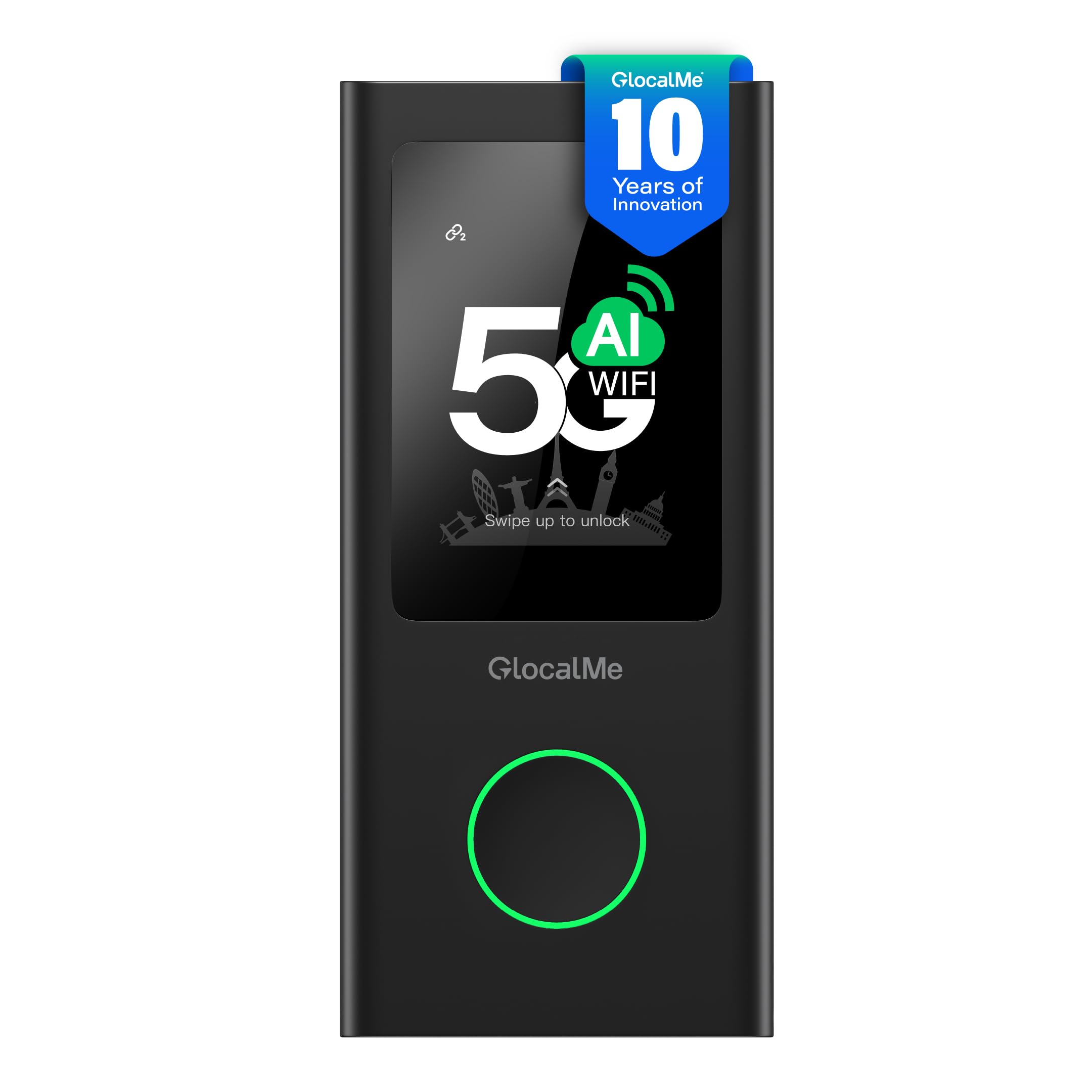
Cross six borders and never buy a SIM — CloudSIM picks the network for you.
This is the one to reach for when you’d rather not deal with SIM cards at all. Patented CloudSIM technology lets the Numen Air work without a physical SIM, intelligently picking the network with the best signal in 200+ countries. GlocalMe quotes 5G speeds up to 2.5 Gbps, which it calls 15 times faster than 4G. It covers more than 90 commercialized 5G countries and 390+ operator networks, and it supports both 2.4GHz and 5GHz bands.
If you prefer to use your own data, there’s also an open up SIM card slot that takes any SIM. Reviews focus on performance: owners mention real-world speeds in the mid-200 Mbps range on T-Mobile and a stable 5G connection. A 2.4-inch LCD touch screen shows your data use, signal, and connected devices, and it can share to 16 devices at once. It doubles as a power bank for your phone.
The catch is the cost of convenience. Plan pricing is the most-discussed downside — some owners find the per-GB or per-day rates steep against a standard 4G hotspot with a cheap prepaid SIM. In exchange you get no contract, no roaming fees, and the ability to buy service by the day, month, region, or GB. If you travel internationally and hate SIM swapping, that trade makes sense; if you stay domestic, a plain 4G hotspot is cheaper.
The winning move: speeds quoted up to 2.5 Gbps on 5G, 200+ countries on CloudSIM, and 16 shared devices — best for travelers who want to skip SIM logistics entirely.
The recurring gripe: data plans run more expensive than a prepaid SIM, so the flexibility has a premium built in.
Make it yours if: you cross borders often and want one device that connects anywhere without a SIM card purchase.
Look elsewhere if: you mostly stay in one country and want the lowest ongoing data cost — a SIM-slot device is more economical.
8. NETGEAR Nighthawk M6 (MR6150) 5G Mobile Hotspot

A pocket-size 5G router that swaps SIMs in seconds and covers a home when the cable dies.
The headline setting for this one is carrier freedom. It’s open up and certified with AT&T, T-Mobile, and Verizon — you just swap SIM cards and data plans in seconds using your own activated SIM. That’s a different approach from the M6 Pro’s, which is more particular about carriers. Equipped with WiFi 6 and a Snapdragon X62 5G modem, it tops out at 2.5 Gbps, and it can connect up to 32 devices simultaneously.
The feature that sells it to home users is the battery-free mode. When you’re stationary, you pull the battery and run it off the power adapter, which boosts Wi-Fi coverage up to 2,000 square feet. That’s your primary or backup internet during a cable or DSL outage — ideal for a home office, surveillance cameras, or smart-home devices needing round-the-clock connection. Portable, it runs up to 13 hours on a single charge. A 2.4-inch color LCD touchscreen handles setup, WiFi settings, and data monitoring.
Now the honest accounting. The 2.5 Gbps figure is real on supported 5G, but battery life has a mixed record — some customers note it stops charging, and overheating comes up repeatedly. Reliability is the most-discussed topic, and it’s a mixed bag: many units run perfectly well, but some don’t work from the start. Treat it as a device to buy from a seller with a clean return policy, and confirm your carrier’s 5G bands before you commit.
What makes it a keeper
- open up and certified for AT&T, T-Mobile, and Verizon — the broadest carrier acceptance here alongside the M6 Pro
- Battery-out desk mode boosts Wi-Fi coverage up to 2,000 sq ft, turning it into a home router
- WiFi 6 and Snapdragon X62 supporting speeds up to 2.5 Gbps across 32 devices
- Up to 13 hours of portable battery life
The trade-offs to weigh
- Battery reliability is uneven and overheating gets mentioned repeatedly
- A few units arrive dead from the start
Pounce on this one if: you want a 5G hotspot that can also act as full home backup internet, with the widest carrier compatibility on the list.
Steer clear if: you need rock-solid battery performance — that’s the recurring weak spot.
Know the Specs
Band support and carrier lock
A hotspot’s band list is the frequencies it can hear; your carrier transmits on specific bands. Match those numbers and you connect, mismatch them and you won’t. “open up” describes the hardware — it will accept other carriers’ SIMs — but the SIM itself can still be locked by your carrier’s contract terms, which is why a universal SIM regularly works when a contract SIM won’t.
Battery mAh vs. real hours
A mAh rating is capacity, not runtime — manufacturers quote hours separately, and those hours shift with signal strength and how many devices share the connection. A bigger number means more stored energy, not automatically more time. Where a battery is removable, you get the option of carrying a spare or running on wall power so the cell barely matters.
Data rates explained
Megabits per second (Mbps) measures download throughput; 150 Mbps handles browsing and video comfortably, while gigabit-class figures like 1 Gbps and 2.5 Gbps are for heavy streaming, large transfers, and multi-device homes. Real speeds depend on your operator’s network and signal — the device can only pass through what the tower sends.
Device limits and shared bandwidth
Every extra device on the same cellular link pulls from the same pipe. Connecting 10, 20, or 32 devices is a ceiling, not a guarantee of speed. In practice, a handful of laptops and phones share well; 32 devices only works smoothly if the load per device stays light.
Common Questions
Will any open up hotspot work with my carrier’s SIM card?
Do I need a separate data plan for a portable hotspot?
How many devices can a SIM card hotspot handle at once?
What is the difference between an open up hotspot and a carrier-locked one?
Can a mobile hotspot replace home internet during an outage?
How long does a hotspot battery actually last on a charge?
Is a 5G hotspot worth it over a 4G one?
What does a micro SIM or nano SIM slot mean for compatibility?
Do CloudSIM hotspots need a SIM card at all?
What should I check before traveling abroad with a hotspot?
The Bottom Line
The strongest all-round pick is the HOSAYA HF26 — 150 Mbps, 10 devices, USB-powered, and the cheapest way to get your own SIM online without a battery to manage. It’s ideal for a car, a power bank, or a bag of gear. If you want a built-in battery and included data straight from the start, the NomadsFi PocketFi X delivers up to 14 hours from its 3,500mAh cell. And for serious security-minded travelers, the GL.iNet MUDI brings OpenVPN and WireGuard, a 7,000mAh battery, and a MicroSD slot for up to 1 TB of shared files.
The one thing worth saying plainly: the two highest-rated picks in this shortlist, the GlocalMe Numen Air at 4.0+ stars and the NomadsFi PocketFi X at 4.0+ stars, are also the ones that make data-plan decisions for you. If you want full control over your SIM and your carrier’s data plan, accept that and go with one of the SIM-slot devices. Either way, the features you actually need are band coverage, a battery life that matches your real day, and a device limit that fits your group. Pick the device that serves those three, and the hotspot becomes the least notable, most useful piece of gear you own.
How we choose
We do not accept paid placement. Every pick is matched to a real buyer and a real use-case; we do not hands-on test units.
Sources
Specifications: manufacturer listings and product documentation. Review insights: verified customer reviews, as of November 2026. Pricing: not shown on this page (it changes often); check the current price via the retailer link.
As an Amazon Associate, Tactical Gear Guy earns from qualifying purchases. This does not affect which products we feature.