Specs are compiled from manufacturer listings and verified buyer reviews and can change over time — please confirm the key details on the product page before buying.
Buying a Level 2 station for your garage really depends on three things: how many amps it can pull, whether it plugs into an existing outlet or needs an electrician to hardwire it, and whether the plug on the end matches your car. Get those three right and the rest is app polish. Get them wrong and you are either paying an electrician twice or hunting for an adapter. Below you will find the stations that get those three things right, plus the small print on each one that the listing photos never show.
This guide is built by comparing the manufacturers’ published specifications and the patterns across verified customer reviews, so you get each pick’s real strengths and trade-offs instead of marketing spin.
Amperage, connector type, and cable length decide what a station can actually do in your driveway, and the picks below cover every combination. This breakdown of the best shop ev charging stations sorts hardwired from plug-in so you buy once.
Top Picks


How To Choose The Best Shop EV Charging Stations
Every station on this list is a Level 2 unit that runs on 240 volts, which is the voltage a clothes dryer uses. That is the baseline. A Level 1 trickle charger running on a standard 120-volt wall outlet adds range too slowly to be worth a permanent garage install for most people. From there, the choices narrow fast.
Decide hardwired or plug-in first
A plug-in station connects to a NEMA 14-50 outlet, which is a big four-prong dryer-style receptacle. You pay an electrician once to run that outlet, then you can unplug the station and take it with you when you move. A hardwired station gets wired directly into the circuit with no outlet at all. Hardwiring usually open up higher amperage — 48A instead of the 40A most plug-in units top out at — because there is no outlet to limit the circuit. The trade-off is that moving house means paying an electrician again to disconnect it.
Match the amp rating to your breaker
Amperage is the size of the pipe the electricity flows through. A 40A station needs a 50A circuit breaker. A 48A station needs a 60A breaker and a licensed electrician. Several stations here let you dial the amperage down — 40A to 16A on the Grizzl-E Classic Connect, 6A to 48A in 1A steps on the IYILO — so a smaller panel does not rule the station out. Check your panel’s spare capacity before you fall in love with a 48A unit.
Check the connector against your car’s port
J1772 is the round-ish plug that most non-Tesla EVs sold in North America use. NACS is the Tesla-style connector that newer cars are adopting. A J1772 station will not fit a Tesla without an adapter, and an NACS station will not fit a Chevy Bolt. Two picks here ship with both connectors or a bundled adapter, which is the simplest way to future-proof a two-car household. Look at the port on your own car before anything else.
Weather rating matters more outdoors
A NEMA 4X rating means the enclosure is sealed against dust and water spray. IP65 means the same thing in a different rating language. If the station hangs on an exterior wall and winters bring ice, that rating is the difference between a unit that survives and one that fills with moisture. Stations mounted inside a garage can get away with less.
Side-by-Side Comparison
| Model | Best For | Amperage | Connector | Cable Length | Amazon |
|---|---|---|---|---|---|
| EMPORIA Level 2 w/ J1772★ Best Overall | Most garages overall | 48 A | J1772 | 25 ft | Amazon |
| Lectron Level 2Most Portable | Renters and road trips | 40 A | J1772 | 16 ft | Amazon |
| Grizzl-E Classic ConnectBuilt For Weather | Harsh outdoor installs | 40 A | J1772 | 25 ft | Amazon |
| IYILO 48A/11.5KW | Panel-limited homes | 48 A | J1772 | 25 ft | Amazon |
| Grizzl-E Ultimate 48A | Two-charger households | 48 A | J1772 | 25 ft | Amazon |
| ApexCharger MACH 2 | Mixed Tesla and J1772 fleet | 48 A | J1772 + NACS | 30 ft | Amazon |
| Autel 40A Level 2 | Plug-in without an electrician | 40 A | J1772 | 25 ft | Amazon |
| WOLFBOX 40A | Screen-at-a-glance charging | 40 A | J1772 | 25 ft | Amazon |
| Autel 50A Level 2 | Highest amp hardwired | 50 A | J1772 | 25 ft | Amazon |
| EMPORIA Level 2 w/ NACS | Tesla owners | 48 A | NACS | 24 ft | Amazon |
| ChargePoint HomeFlex | Public network access | 50 A | NACS | — | Amazon |
Detailed Reviews
1. EMPORIA Level 2 EV Charger
Our pick — 4.5+★ from 500+ verified ratings; the strongest balance of quality and price.
The 48-amp hardwired anchor of this list, and the one most garages should start with.
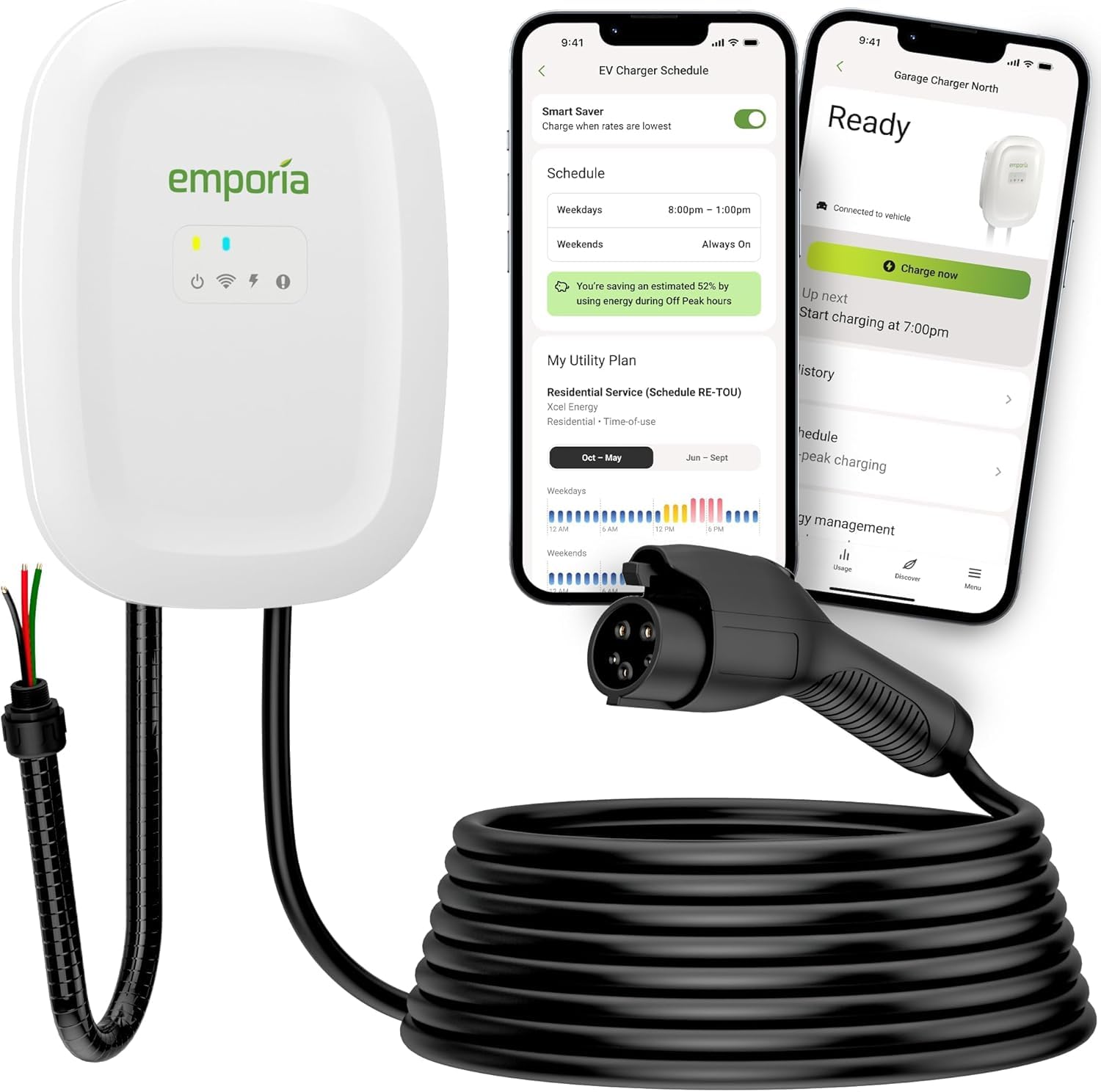
Forty-eight amps is the top of the consumer Level 2 ladder, and this Emporia pulls it through a hardwired connection with a whip included in the box. The payoff is up to 46 miles of range added per hour, enough to refill a typical EV overnight. The cable runs 25 feet, so a car parked nose-in or backed in still reaches the port without stretching.
If you are on a time-of-use electricity plan, the app is where this charger earns its keep. It connects over 2.4 GHz WiFi — the older, longer-range WiFi band rather than the newer 5 GHz one — and lets you schedule charging sessions for off-peak hours from your phone. Owners who also run the Emporia Vue3 energy monitor see both in a single app dashboard. Build quality is the thing that wins people over, with owners calling it a solid piece of home hardware, and the charging speed itself draws consistent praise: buyers report it takes a car from 25% to 80% in 3.5 hours.
Certification is the quiet reason to trust it: UL listed and ENERGY STAR certified, meeting UL 2594 and SAE J1772 among a longer list of standards. The catch is the install. This unit ships preconfigured for hardwiring, so you are booking a licensed electrician and a 60A breaker rather than plugging into an existing outlet. The SAE J1772 connector also means no direct fit on a Tesla — Emporia sells a separate NACS version for that.
What holds up over time
- 48A hardwired output for up to 46 miles of range per hour
- UL listed and ENERGY STAR certified to UL 2594 and SAE J1772
- 25-foot cable reaches across a two-car garage
- 2.4 GHz WiFi scheduling to dodge peak electricity rates
- Integrates with the Emporia Vue3 monitor for one energy view
Where it asks more of you
- Hardwire install means an electrician and a 60A breaker
- J1772 connector needs an adapter for Tesla
- App pairing depends on a steady 2.4 GHz WiFi signal
Reach for this if: you own a J1772 car, own your home, and want the fastest standard hardwired setup with smart scheduling.
Look elsewhere if: you drive a Tesla — the NACS version of this same station sits further down this list.
2. Lectron Level 2 EV Charger
A charger that lives in its own carrying case and goes wherever a 14-50 outlet exists.
This is the pick for anyone who does not own a garage wall. The 40A output delivers a 9.6 kW charging rate, and the NEMA 14-50 plug connects straight to a dryer-style 240V outlet with no electrician involved. Unplug it, drop it in the included case, and it charges again at a rental or a friend’s house. Amperage and cable are where it trails the Emporia at the top: 40A against 48A, and 16 feet of cable against 25 feet.
Sixteen feet is the honest limit here, and Lectron says so itself — the listing spells out “not 25 ft” in plain words. That is fine for a driveway where the outlet sits near the parking spot. It gets tight if the outlet is on the far garage wall. The IP65 rating means the housing is sealed against dust and water spray, so a rainy driveway is not a problem, and ETL certification to the UL 2594 standard plus ENERGY STAR rounding out the safety file.
Owners like the build and the simplicity of it, and plug-and-go is the right description: no app, no scheduling, just plug in. The honest wrinkle is that reliability and charging-speed feedback is genuinely split — some units run flawlessly with a Ford Escape PHEV, while others throw an error light right away. Treat that as a reason to test it thoroughly inside the return window rather than a reason to skip it.
Best use case on the list: renters, road-trippers, and anyone whose panel cannot spare a dedicated hardwired circuit.
The trade-off to weigh: the 16-foot cable is the shortest here, so measure from outlet to charge port before you commit.
Buy it when: portability and a no-electrician install matter more than raw speed.
Think twice when: your outlet is far from where you park — the shot cable will frustrate you daily.
3. Grizzl-E Classic Connect 40A / 9.6 kW Level 2 EV Charger
A cast-metal box from Canada that treats an outdoor wall like a garage wall.
Most stations are plastic. This one sits inside a heavy-duty NEMA-4 metal enclosure rated NEMA 4X for water and fire resistance, which is the spec that matters if the unit hangs outside through ice and salt. It comes with a 25-foot cable and a NEMA 14-50 plug, so installation is an outlet rather than a hardwire job. The heavy-duty metal body is the first thing owners call out, and the install itself lands as straightforward.
The adjustable amperage is the underrated feature. You can set it anywhere from 40A down to 16A, which maps to breaker sizes: 40A on a 50A breaker, 32A on a 40A breaker, 24A on a 30A breaker, 16A on a 20A breaker. Charging rate scales with it too — 28-30 miles per hour at 40A, down to 10-12 miles per hour at 16A. That flexibility means a modest panel does not disqualify the station.
Smart features run through Grizzl-E Connect over WiFi: real-time monitoring, schedules, energy statistics, diagnostics. Charging works even with no internet connection, which is the right design. The one fine-print catch is the premium OCPP tier — that advanced capability carries a one-time activation fee, so the free software is the everyday app, not the open-protocol features. A 3-year warranty and built-in GFCI round out the package.
Why outdoor owners gravitate here: the NEMA 4X metal enclosure is genuinely the toughest housing on this list.
The fine print nobody mentions upfront: premium OCPP features need a one-time activation fee, so budget for the free tier.
An easy yes if: the station lives outdoors and the weather is unforgiving.
Pass if: you need open-protocol fleet software without an extra fee.
4. IYILO Level 2 EV Charger — 48Amp / 11.5KW / 240V
The one that watches its own connector temperature and cuts the power if it climbs.
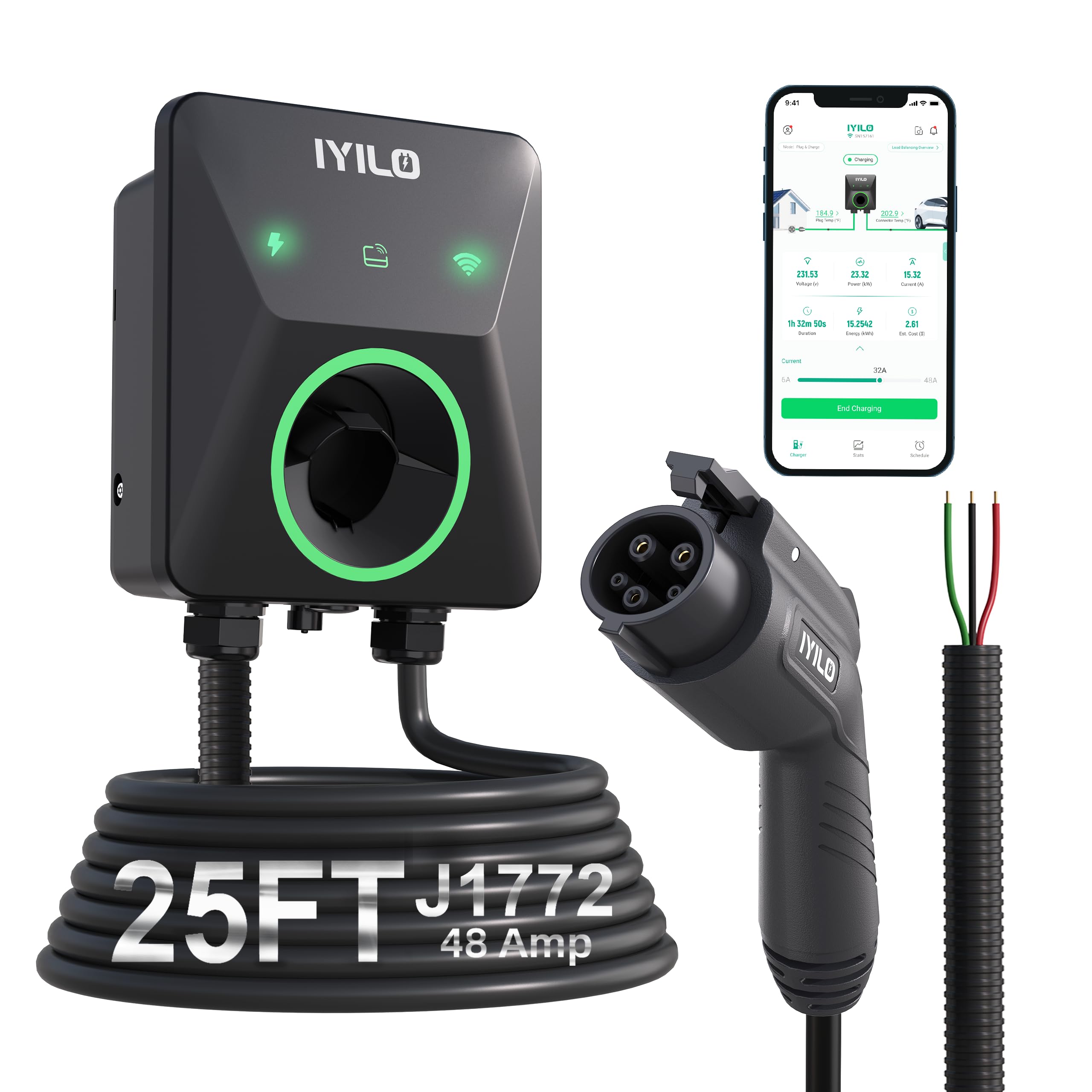
A heat-sensing connector is the standout detail here. The J1772 plug has a built-in NTC sensor — a small thermistor that reads temperature — and it reports that reading in the app. If the connector runs above 221°F, the station stops charging on its own to keep your car safe. The 25-foot cable reaches a 48A / 11.5 kW output when hardwired on a 60A breaker, and current adjusts in 1A steps all the way from 6A to 48A.
Against the other 48A picks, this one leans hardest into power management. Power Sharing lets two chargers run on one circuit breaker without tripping it, and dynamic load balancing works with an energy meter (sold in a bundle) to avoid a panel upgrade. It also supports Time-of-Use rates and RFID card access in the app. Owners land on the functionality and the near-max-speed charging as the highlights.
Two things to know going in. The radio is 2.4 GHz WiFi only — 5 GHz networks are not supported — and connectivity has split feedback, so put the router on the older band before setup. Beyond that you get a NEMA 4 waterproof rating, a built-in GFCI breaker, and a 3-year warranty, which is a serious list for a mid-range hardwired station.
The safety edge it holds
- Connector temperature sensor with automatic shutoff above 221°F
- Current adjustable in 1A steps from 6A to 48A
- Power Sharing runs two chargers on one breaker
- NEMA 4 waterproof rating and built-in GFCI breaker
The setup catch
- 2.4 GHz WiFi only — no 5 GHz support
- Connectivity feedback splits, so router placement matters
- Load balancing needs the energy-meter bundle
Made for: owners who want max amps plus a shutoff safeguard, on a 60A breaker.
Not for: anyone relying on a 5 GHz mesh network in the garage.
5. Grizzl-E 48A Ultimate Level 2 Fast EV Charger
Built to share one circuit between two cars without tripping the breaker.
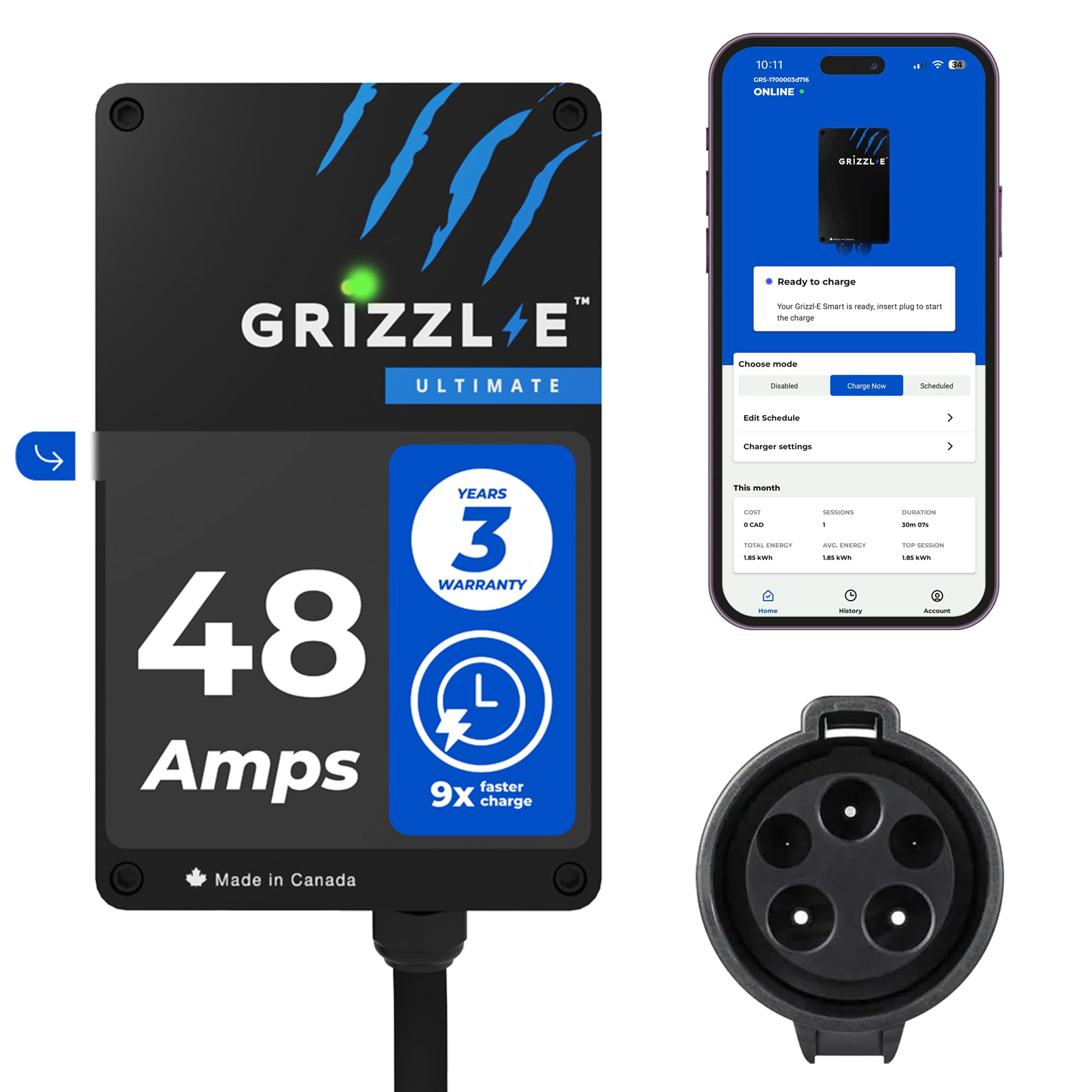
Intelligent Power Distribution is the reason to pick this over the cheaper Classic Connect. When you own two EVs, this station balances charging power automatically — either equal sharing for a fair split, or priority mode that tops the daily driver first. The 48A output reaches 11.5 kW, and the aluminum cast enclosure carries a UL Type 4 rating for the harshest weather.
It is hardwire-only, and the kit — terminal lugs and heat-shrink wrap — is in the box, so the electrician has what they need on install day. The 25-foot J1772 cable matches the other premium picks. UL and ENERGY STAR certified, with a 3-year warranty and full electrical protections. The external WiFi antenna is a thoughtful detail that helps the signal from a metal-clad garage wall.
Owners are very happy with how it performs and how clean the wiring goes in. The honest note is WiFi: connectivity is a genuinely mixed experience, and some owners mention trouble getting it online at all. If you plan to run every session from the app, that is the one thing to test early. The station still charges without an online connection, which softens it.
Where it wins: two-EV households on a single dedicated circuit, thanks to automatic power sharing.
Watch the signal: WiFi pairing is hit-or-miss for some, though charging continues offline.
Choose it for: a two-car household that needs to split one circuit smartly.
Skip it for: a single car, where the Classic Connect does the same job for less.
6. ApexCharger MACH 2 Hardwired Level 2 EV Charger
The only station here that ships with both a J1772 plug and a NACS adapter in the box.
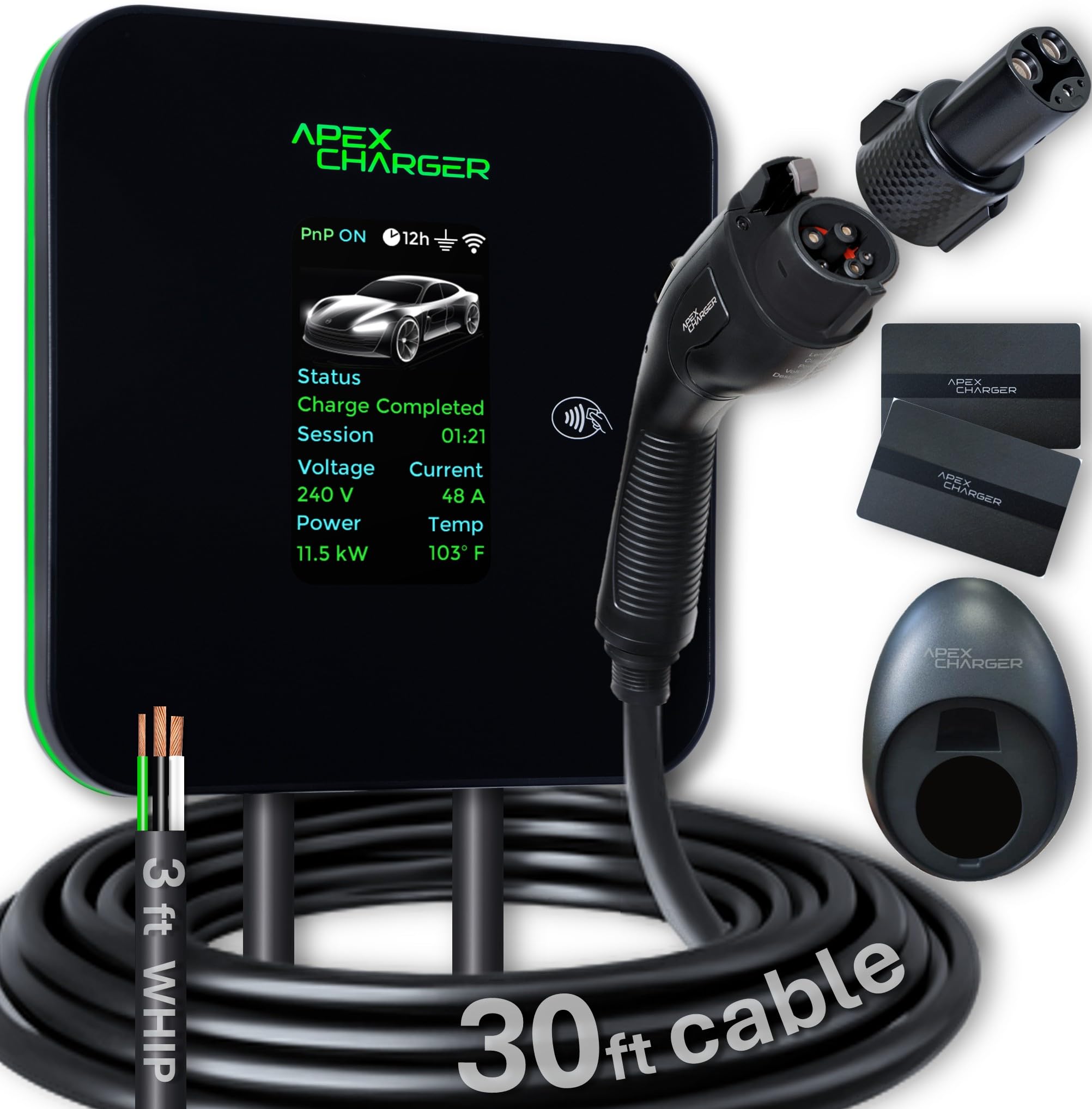
If your driveway holds one Tesla and one non-Tesla, this is the answer. It comes with a Type 1 SAE J-1772 connector plus a bundled PRO 1 NACS adapter, so either car charges without a separate purchase. The 48A / 11.5 kW output matches the other hardwired flagships, and the cable stretches 30 feet — the longest on this list, five feet longer than the Emporia at the top.
The extras are unusually complete for the category. There is a 4 3/4-inch LED display panel with a standby function, two RFID cards, Bluetooth and WiFi, an anti-theft bolt on the cable holder, and a breathing-light charge indicator. Certification includes ETL, ENERGY STAR, and UL up to UL 2594:2022 Ed.3. Coverage runs 5 years, the longest warranty here.
Customers note a smooth install and reliable day-to-day charging. The honest caveat is the size of the track record: this is the newest station on the list, so there is far less long-term feedback than the Emporia or Grizzl-E units have accumulated. You are buying on specs and a strong short-run reputation rather than years of history.
The single reason to buy: a bundled NACS adapter plus a 30-foot cable covers every car in a mixed household.
The one unknown: it is the newest pick here, so long-term durability is unproven compared to the veterans.
Perfect for: a two-car garage with one Tesla and one J1772 EV, on a hardwired circuit.
Hold off if: you want a decade of owner history behind the marque.
7. Autel 40A Level 2 EV Charger — NEMA 14-50, WiFi, 25ft Cable
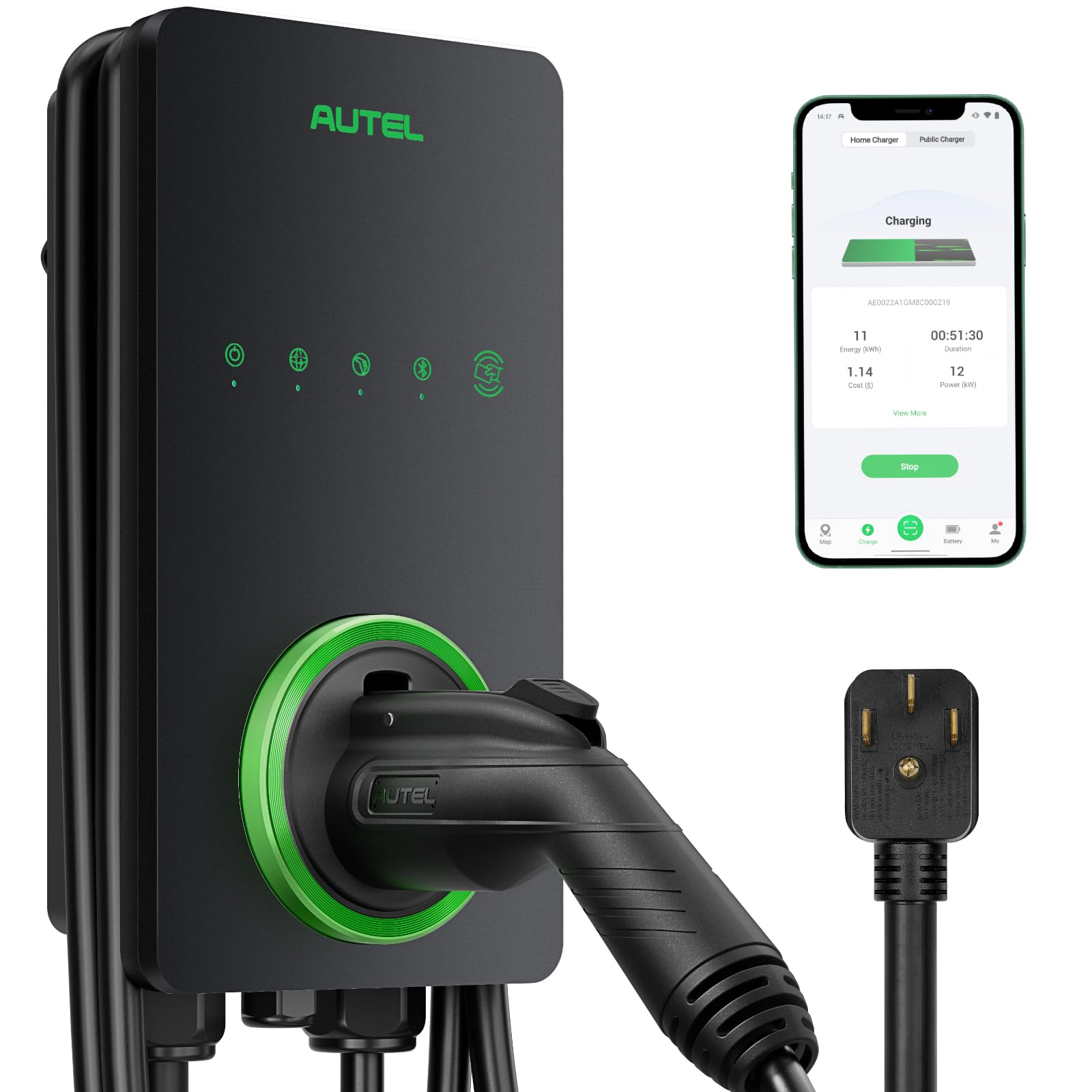
Designed around the outlet, so plugging in is the whole install.
Autel built this around the premise that the outlet already exists. You plug it into a NEMA 14-50 and you are charging in five minutes — no hardwire kit, no electrician visit beyond the one that ran the outlet. The 40A output is adjustable down to 16A in the app, and the 25-foot cable gives plenty of reach. NEMA 4X rates the housing dust-tight and water-tight for outdoor mounting.
The brand side carries weight in the category: Autel has built automotive diagnostic and energy gear since 2004, and this MaxiCharger was engineered over two years before launch. The Autel Charge app handles scheduling, energy monitoring, and RFID start/stop so a neighbor cannot siphon a charge. A 3-year warranty and 24/7 support round it out. Reliability is what stands out to owners, with the charger working as promised and behaving fine on a 30-amp circuit.
The catch is fine-print compatibility. Some reviewers point out problems using it with Con Edison smart charging programs, and it will not play nicely with every GFCI outlet out there. The plug-in design is the reason — a hardwired unit sidesteps both, at the cost of a moveable install.
Why it is the no-fuss pick: a preexisting 14-50 outlet is all it needs, and the NEMA 4X housing handles outdoor mounting.
The compatibility snag: utility smart-charging programs and some GFCI outlets are not guaranteed.
Fit for: owners who already have a 14-50 outlet and want charging today, not next week.
Look past it if: you need a utility rebate that depends on smart-charging enrollment.
8. WOLFBOX Level 2 EV Charger — 40 Amp, NEMA 14-50, 25FT Cable

A 4.3-inch LCD that shows the charge rate, time, and voltage right on the unit.
Some people want the number without opening an app. This station puts it on the box. The 4.3-inch LCD displays charging rate, time, voltage, and amount charged, so a glance at the garage wall tells you everything. The 40A output delivers 38 miles of range per hour, and the 25-foot cable reaches across a standard two-car garage. CSA certified to UL 2594 and built with a NEMA 4X waterproof housing.
Voice control is the unusual extra: it works with Alexa and Google Assistant, and multiple people in the house can control one unit at the same time. Sign-in runs through a Google account. Owners describe the wall mounting as simple and the app as intuitive, and the appearance earns its own complements — this is a station that looks good hanging outside.
Two honest notes. The 40A rating means it needs a 50A or larger circuit breaker, so check the panel before you buy. And while the WiFi setup itself is simple, getting the phone to connect is where feedback splits — some units pair without drama, others fight it. Charging time itself has split feedback too, so test a full session early.
What is different here
- 4.3-inch LCD for charging rate, time, voltage, and amount
- Alexa and Google Assistant voice control
- CSA certified to UL 2594
- NEMA 4X housing for outdoor walls
- 38 miles of range per hour at 40A
Where it pushes back
- Phone-to-station WiFi pairing is hit-or-miss
- Requires a 50A or greater circuit breaker
- Charging-time feedback splits between owners
Built for: someone who wants charge data on the wall and voice control in the app stack.
Rethink if: a 50A breaker is not in your panel’s future.
9. Autel 50A Level 2 EV Charger

Fifty amps and 12 kW — the highest hardwired output on this entire list.
When 48A is not enough, this is the ceiling. The MaxiCharger delivers 50A and 12 kW of Level 2 power, and the current stays adjustable from 6A to 50A so you can dial it to your vehicle and panel. That is a couple of amps above the Emporia at the top, which is the whole reason a speed-chaser would pick it. The 25-foot J1772 cable handles standard driveway reach, and installation is permanent 240V hardwired with an integrated cable holster for clean storage.
Smart control runs through the Autel Charge app over WiFi and Bluetooth, and owners find it reliable, easy to use, and quick — full charges come in under two hours for some vehicles. The NEMA 4X housing and CSA certification cover indoor and outdoor installs. Reliability is the most-praised trait here, with owners calling it a great home EV charger that keeps working.
One spec to read carefully: connectivity is genuinely mixed, and the usual WiFi-versus-Bluetooth question comes up, so plan how you will run it. The hardwired-only design is the other thing — no outlet, no portability. If you move, the electrician comes back.
The amp ceiling: 50A and 12 kW put it ahead of every other station here on raw output.
The Bluetooth/WiFi question: connected control is not universally smooth, so sort your signal out before install day.
Pick this if: you want the absolute highest hardwired amperage and can commit to a permanent install.
Pass if: portability or easy relocation is part of your plan.
10. EMPORIA Level 2 EV Charger w/ NACS — 48 Amp, Hardwired
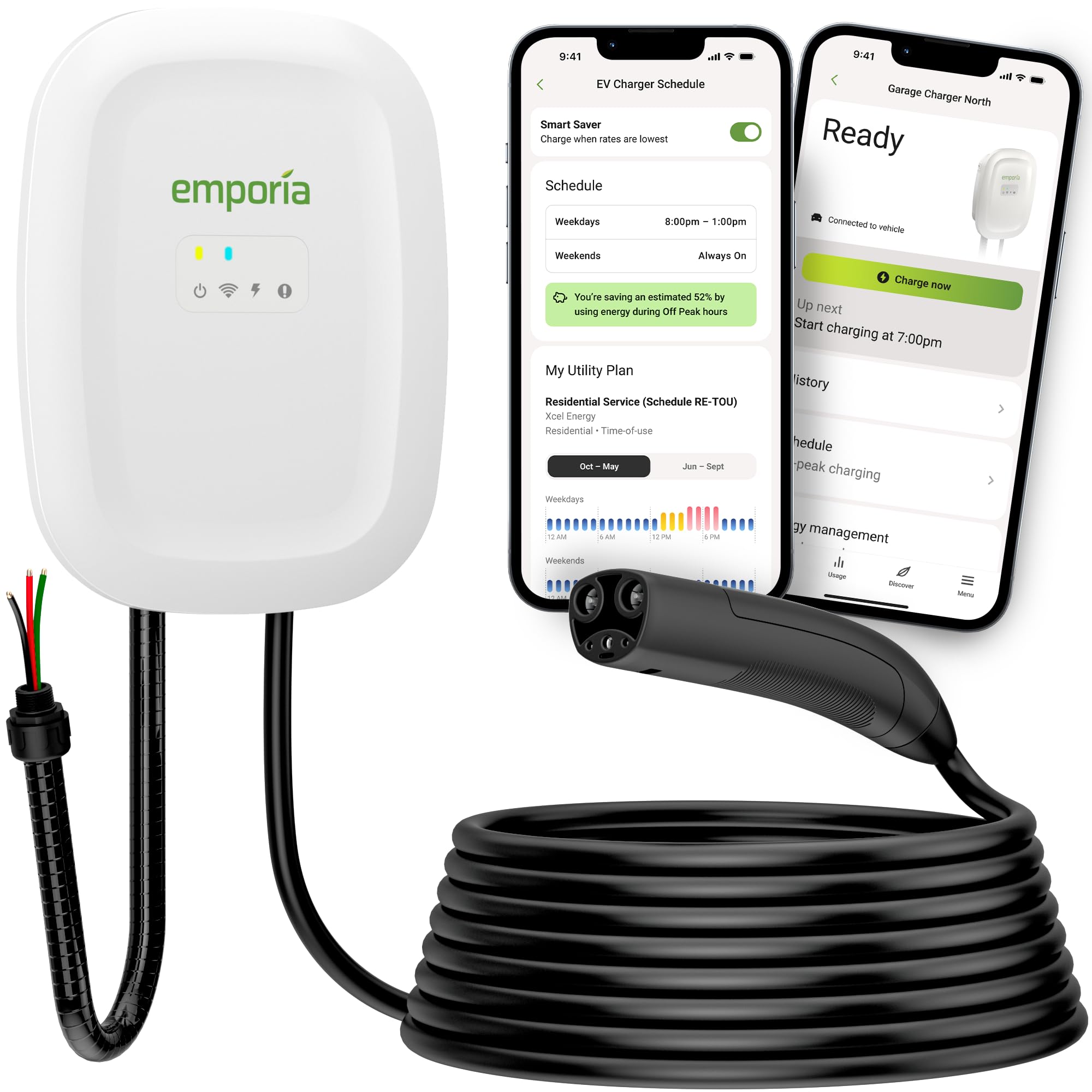
The Tesla-native twin of our top pick, with the plug already built in.
Same 48A hardwired hardware as the station at the top, but with an NACS connector instead of J1772. Tesla owners get a true one-plug fit with no adapter in the middle, plus the fun detail of opening the charge port door remotely from the app. The output reaches 46 miles of range per hour, and the cable is 24 feet — a foot shorter than the J1772 version. UL and ENERGY STAR certification carry over unchanged.
Owners charge consistently at 11.1 kW and find the app user-friendly, the install straightforward, and the WiFi connection reliable. Charging performance is the standout when you talk to buyers — it holds that top rate rather than tapering. The 24-foot cable draws its own share of nice words, especially from anyone who used to fight a shorter cord.
The fine print mirrors the J1772 version: hardwired install means an electrician and a 60A breaker, and scheduling depends on 2.4 GHz WiFi. The only buyer who should hesitate is one with a non-Tesla EV — that car will not fit this connector, and the J1772 station higher up is the match.
What a Tesla owner gets
- NACS connector with no adapter in the chain
- Remote charge-port door release from the app
- 48A hardwired, up to 46 miles per hour
- Consistent 11.1 kW delivered to the car
What stays the same
- Hardwire install needs a 60A breaker and electrician
- Shorter 24-foot cable than the J1772 twin
- Will not fit a J1772 car
For Tesla owners who want one plug: a native NACS fit at the same 48A ceiling.
Keep shopping if: your household also drives a J1772 car.
11. ChargePoint HomeFlex Level 2 EV Charger — Hardwired NACS

A home charger that also opens the door to a huge public network.
The reason to look here is the network. ChargePoint’s footprint runs 274k+ stations across North America and Europe with 565k+ roaming partner stations, and the mobile app connects to all of it while managing the home unit. The 50A NACS hardwired output delivers up to 45 miles of range per hour, roughly 9× a 120V outlet. The UL certification and cold-resistant cable make it a fit for cold-climate driveways too.
Owners consistently find it easy to use and super simple to install, and the one-question rule is worth stating plainly — is this the safest choice for every home? Not quite, because its track record is where it loses points against the leaders above. The recurring gripes are real: WiFi connectivity is the weak spot, and some units do not hold the correct amperage. It also asks for a 20A or 80A circuit, so the electrical planning matters.
Treat this as the pick for someone who values the public network and the app ecosystem over a spotless home-charging record. If you mostly just need your own driveway to work every night, the Emporia and Grizzl-E stations at the top are the steadier everyday bet. If roaming across the continent matters, this opens more doors.
The headline feature: access to hundreds of thousands of public stations from the same app.
The honest trade: WiFi dropouts and occasional amperage issues fold into a lower home-charging trust score than the leaders.
Worth it if: you value the public network and app ecosystem over raw home reliability.
Think again if: you want a set-and-forget driveway charger.
Know the Specs
Amperage and the breaker behind it
Amperage is the size of the pipe the electricity flows through. In the charger world, the amp rating means one thing in practice — how fast your car fills. A 40A station needs a 50A breaker. A 48A station needs a 60A breaker and a licensed electrician. Some stations let you dial amperage down to suit a smaller panel, which is the flexible option if your box is already crowded. Higher amps means faster charging, but only if the electrical supply can carry it.
J1772 versus NACS connectors
J1772 is the round connector that most non-Tesla EVs sold in North America use. NACS is the Tesla-style connector that newer cars are adopting. The two do not mate without an adapter. Two picks here ship with a NACS adapter or a dual connector, which is the simplest way to handle a mixed household. Check the port on your own car first, then match the station to it — this one decision outranks every other spec on the page.
Hardwired versus plug-in
A plug-in station connects to a NEMA 14-50 outlet. You pay for the outlet once, then the station unplugs and travels. Hardwiring skips the outlet and usually open up the higher 48A ceiling because there is no receptacle limiting the circuit. The trade-off: moving house means an electrician visit either way, but hardwired also means the station cannot come with you without a disconnect. For a permanent home, hardwired is the stronger choice. For renters or frequent movers, plug-in wins.
Weather ratings and certifications
NEMA 4X is the enclosure rating that means dust-tight and water-tight, suitable for outdoor mounting. IP65 means the same thing in a different rating language. Look for UL 2594 for the charger itself, plus ETL, CSA, or ENERGY STAR where stated. For a wall that faces snow and rain, the rating matters much more than for a garage. If the station stays indoors, a lighter rating is fine.
Common Questions
Will a J1772 charging station fit my Tesla?
Do I need an electrician to install a Level 2 charging station?
What size circuit breaker does a 48-amp charger need?
How fast is Level 2 charging compared to a wall outlet?
Can I use two EV chargers on one circuit?
Is a NEMA 4X rating enough for an outdoor charging station?
Does the app still work if my WiFi drops?
Will my utility’s smart charging program work with any of these stations?
What is the difference between a 40-amp and a 48-amp charger in daily use?
How long should a charging station’s cable be for a two-car garage?
Do these stations work with plug-in hybrid vehicles?
The Bottom Line
For most J1772 drivers who own their home, the shop ev charging stations winner is the EMPORIA Level 2 w/ J1772, because it pairs the top 48A hardwired output with UL and ENERGY STAR certification and app scheduling that actually saves money on peak rates. If you drive a Tesla, skip the adapter hunt and take the EMPORIA NACS version — same hardware, native plug, remote charge-port release built in. And if you rent, move often, or just need a charger that travels in a bag, the Lectron remains the plug-in that goes with you.
The other picks each own a narrow job: the Grizzl-E Classic Connect wears the toughest metal case for an exposed outdoor wall, the Grizzl-E Ultimate 48A handles two cars on one circuit, and the ApexCharger MACH 2 settles a mixed Tesla-and-J1772 garage with a bundled adapter and a 30-foot cable.
How we choose
We do not accept paid placement. Every pick is matched to a real buyer and a real use-case; we do not hands-on test units.
Sources
Specifications: manufacturer listings and product documentation. Review insights: verified customer reviews, as of November 2026. Pricing: not shown on this page (it changes often); check the current price via the retailer link.
As an Amazon Associate, Tactical Gear Guy earns from qualifying purchases. This does not affect which products we feature.