Specs are compiled from manufacturer listings and verified buyer reviews and can change over time — please confirm the key details on the product page before buying.
Cold feet ruin a whole morning faster than almost anything else. The fix is a boot lined with sherpa (that soft fleece-style pile lining) so your toes stay warm the moment you slide your foot in. The three picks below cover the real choices most men face: a classic lace-up that works almost anywhere, a fuzzy slip-on for the house and quick errands, and a snow boot built for slush, ice, and deep cold. Two of the three run true to size, one runs small — that detail alone decides whether you are comfortable or sending boots back.
This guide is built by comparing the manufacturers’ published specifications and the patterns across verified customer reviews, so you get each pick’s real strengths and trade-offs instead of marketing spin.
Warmth is only half the equation — traction, waterproofing, and ankle support decide whether a lined boot works on ice and slush. Here is the shortlist of sherpa boots for men that holds up once the temperature drops.
Top Picks
How To Choose The Best Sherpa Boots for Men
A lining alone does not make a boot warm. What keeps your feet comfortable on a cold morning is the combination of a pile lining against the skin, a shell that blocks wind and wet, and an outsole that will not slide out from under you. Decide first where you will actually wear them — indoors and around the yard, or on ice and packed snow — because that answer narrows the list to one pick fast.
Match the outsole to where you walk
If your day is a kitchen floor, a driveway, and a quick trip to the store, a rubber indoor/outdoor outsole is plenty. If you are walking on ice, slush, or a shoveled-but-slick sidewalk, look for deep traction lugs (raised rubber blocks that bite into snow and mud). A smooth house slipper sole belongs indoors only.
Check the lining and the tongue
A sherpa or faux-shearling lining is the pile you feel against your foot — that is the warmth layer. Just as important is a gusseted tongue, which is a flap of material that closes the gap behind the laces so snow and wind cannot sneak in through the top of the boot.
Get the size right before anything else
Lined boots eat up space, and a pile lining makes a tight boot tighter. Some run true to size and feel roomy; others run small and need a full size up. Read the sizing notes for the specific boot you are buying rather than assuming your normal number will fit the same way twice.
Side-by-Side Comparison
| Model | Best For | Shaft Height | Lining Style | Outsole | Amazon |
|---|---|---|---|---|---|
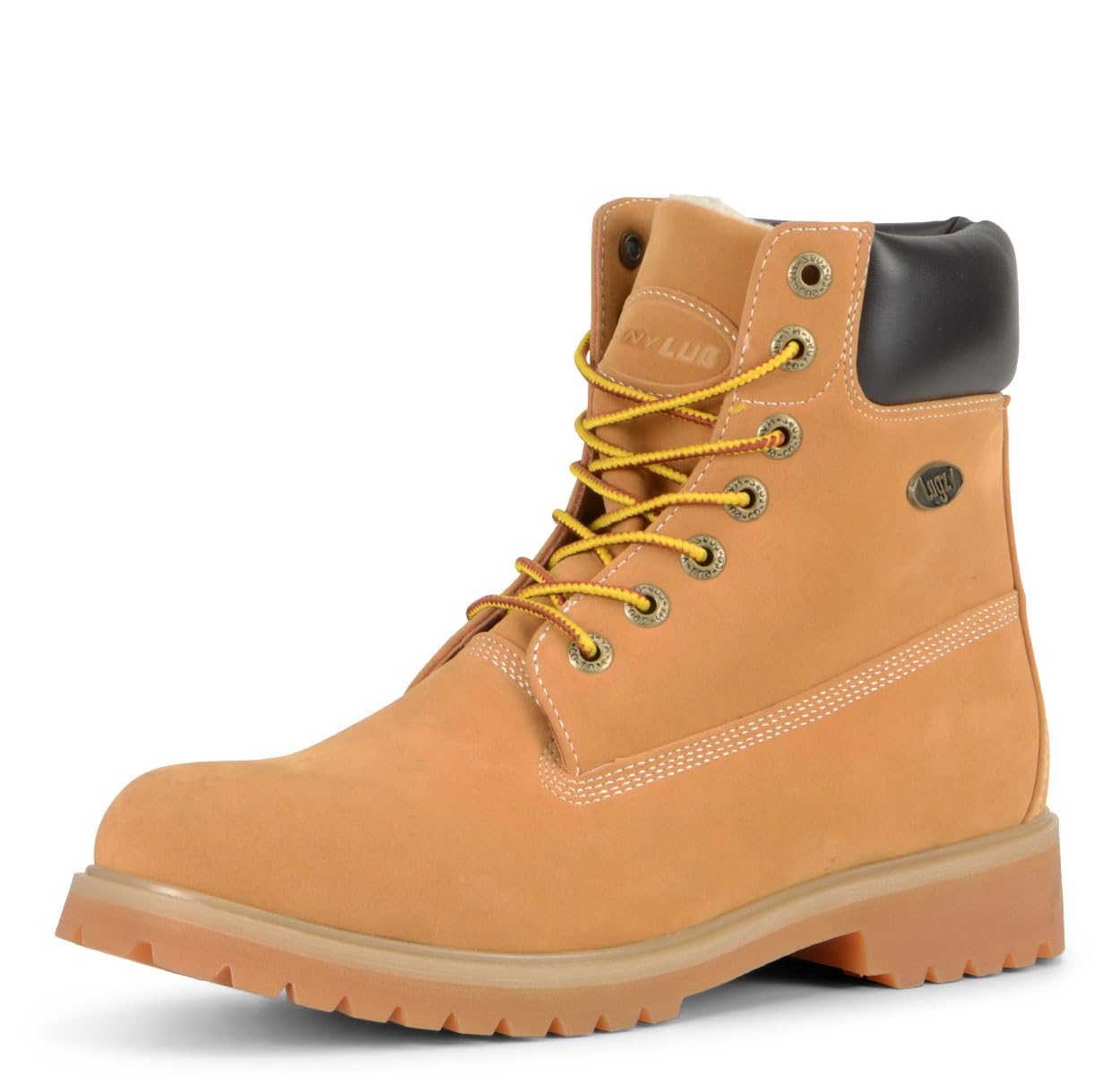
| Lugz mens Convoy Classic 6-inch Chukka Boot★ Best Overall | Everyday wear, work, and casual outings | 6 inch | Padded collar and tongue | — | Amazon |
| FREE SOLDIER Men’s Waterproof Fleece Winter Snow Boots | Snow, ice, hiking, and cold wet weather | 8.3 inches | Fleece lining | Rubber with deep traction lugs | Amazon |
| Guide Gear Men’s 10” Suede Slipper Boots | House, yard, and quick errands | 10 inch | Faux shearling, sheepskin-covered insole | Indoor/outdoor rubber | Amazon |
Detailed Reviews
1. Lugz mens Convoy Classic 6-inch Chukka Boot
Our pick — 4.5+★ from 13,500+ verified ratings; the strongest balance of quality and price.
The classic 6-inch lace-up that men wear to work and forget they have on.
For a boot that has to do one job every day — go to work, run errands, handle a cold walk to the truck — the Lugz Convoy is the safe, comfortable center of this list. The padded collar and tongue are the parts you notice first: the collar is the ring around your ankle opening, and the padding there means the boot does not dig in when you lace it snug. It is a 6-inch shaft, meaning the leather rises about six inches above your ankle — enough coverage to keep wind out, short enough to walk in all day without a break-in battle.
What wins people over is the build. Quality is the trait buyers go out of their way to praise, and the look follows close behind — plenty of men report it reads dressier than the boot actually is. The fit also lands well, with enough room for feet to spread rather than squeeze. Buyers also report wearing them for 13 hours straight without discomfort. That is a long shift or a long travel day handled without a wince.
Here is the honest trade-off. Durability is the aspect that draws the most complaints, so treat these as everyday casual boots rather than construction-site armor, and expect wear if you push them hard. Color also draws a few mixed notes — check the shade carefully if you care about an exact match.
Where the Convoy Earns Its Place
- Padded collar and tongue cushion the ankle through a full day
- 6-inch shaft gives ankle coverage without restricting your stride
- Roomy fit lets your toes spread instead of pinch
- Reads sharp enough for casual outings, not just chores
What To Keep In Mind
- Durability is the biggest recurring gripe — fine for daily casual wear, not heavy labor
- Some shoppers find the color slightly off from the photos
- Not a waterproof snow boot, so deep slush is out of its lane
Reach for this if: you want one lined boot for work, weekends, and everything between, and you value all-day comfort over heavy-duty toughness.
Look elsewhere if: you need a boot for deep snow and ice — the FREE SOLDIER below is the winter-specific pick.
2. FREE SOLDIER Men’s Waterproof Fleece Winter Snow Boots
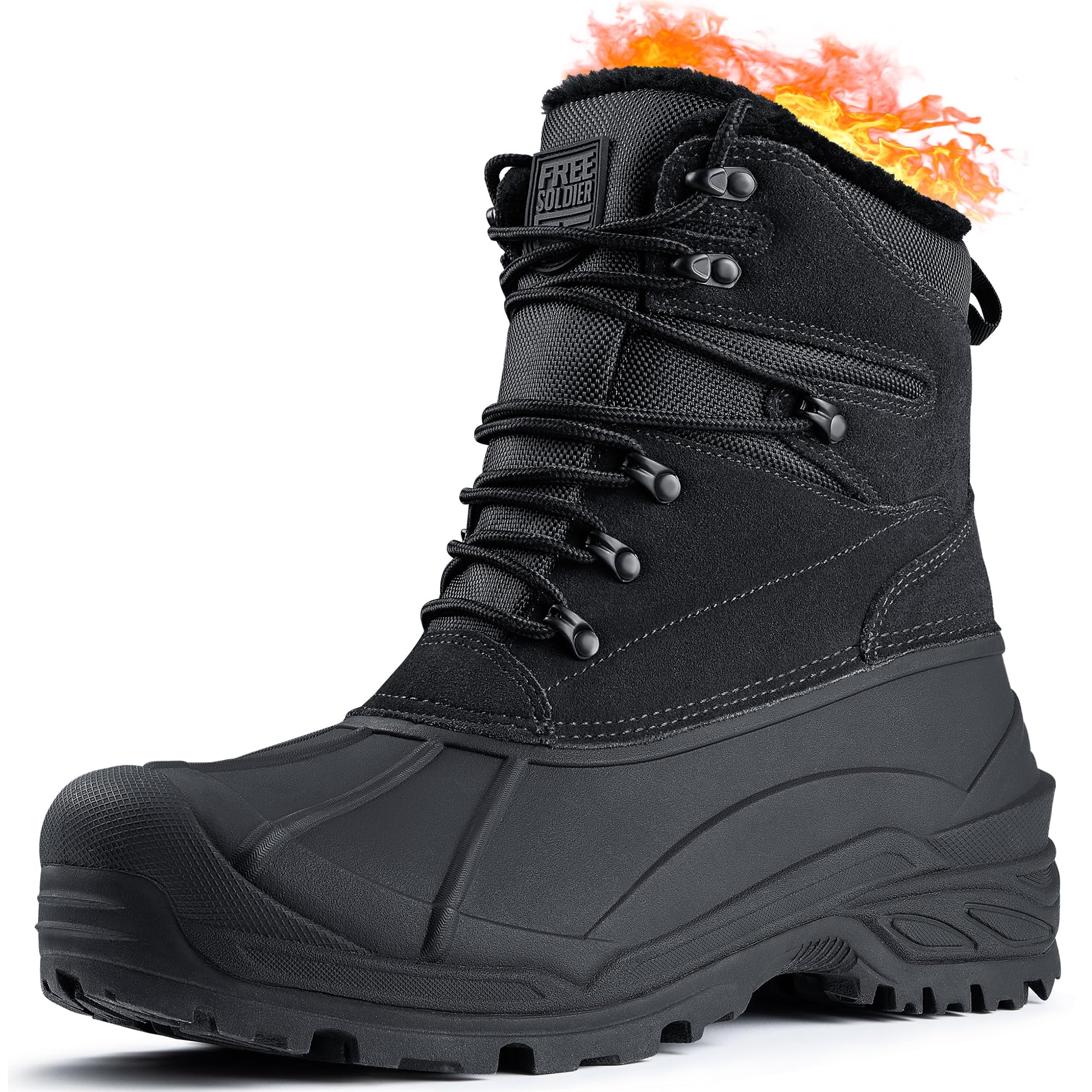
Built for the morning you have to shovel the driveway, not just walk to the car.
If your winter involves actual ice and packed snow, this is the pick to start with. The fleece lining is rated to lock in warmth down to -25°F, the lowest temperature rating on this list. The upper is waterproof faux suede with a gusseted tongue — that flap seals the lacing gap — so wind, snow, and rain stay on the outside where they belong. A composite-reinforced toe cap adds a barrier against bumps and scuffs, handy when you are kicking through snowbanks or working around the yard.
Traction is where the FREE SOLDIER pulls ahead of the other two for winter duty. The sturdy rubber outsole carries deep traction lugs that grip snow, ice, mud, and wet pavement, so footing stays stable when the sidewalk turns slick. The quick-lacing system with sturdy hooks lets you tighten or loosen in seconds, which makes pulling them on and off with cold hands far less of a fight. At 8.3 inches the shaft rises higher than the Lugz, so more of your ankle and lower calf stay covered.
The catch is longevity under heavy use. Durability feedback is mixed, with some reporting the soles cracking early, so these are best treated as seasonal winter boots rather than year-round beaters. Water resistance also gets mixed notes — the suede upper handles snow and rain, but do not expect it to stand in deep puddles for long. Warmth and fit, on the other hand, are what buyers praise most consistently, and the fit runs true to size.
The winter case: warm down to -25°F, waterproof suede, and a lugged rubber outsole that actually bites — this is the boot for snow shoveling, ice fishing, hiking, and dog walks in cold, wet conditions.
The honest limit: soles have cracked early for some buyers, so buy these for winter season service and check the outsole now and then.
Best for: anyone facing real snow, ice, and sub-freezing mornings who wants a fleece-lined boot with proper grip.
Think twice if: you want one boot to last years of daily hard use — the seasonal build is the trade-off for the cold-weather performance.
3. Guide Gear Men’s 10” Suede Slipper Boots

A 10-inch fleece slipper boot for cold floors, with a sole that escapes the house.
This is the one you buy for the chilly kitchen floor and the quick trip to the mailbox. The genuine cow suede upper wraps a plush faux shearling lining, and the OrthoLite insole carries a sheepskin cover that wicks moisture away from your foot. The 10-inch height is the tallest here, and that matters — the high tops give ankle and calf support, so the boot stays put when you are padding around in them for hours. Warmth is the second thing buyers notice most, and mornings that start cold are exactly where this boot earns its keep.
Where it beats the other two picks is convenience. The indoor/outdoor rubber outsole means you can wear it around the house, out to the yard, and around town without swapping shoes — a slipper you do not have to change out of. Construction is solid, with clean stitching that holds up, and the value lands well for what you get.
Sizing is the thing to get right. This boot runs small, and the maker says to order one full size larger than normal, so do not ignore that note. Fit feedback is split — some find plenty of room at the toes, others find it tight up front — which makes the size-up advice worth following. Get the fit right and it is the coziest boot on the list; get it wrong and the toe box will let you know.
Why it feels custom: genuine cow suede outside, faux shearling inside, and a sheepskin-covered OrthoLite insole underfoot — the whole boot runs warm and soft from every angle.
Order up: running small is the one rule to follow, so size a full step larger than your usual number.
Pick this one for: house-and-yard comfort on cold mornings, where a fuzzy slip-on boot you can wear outside is the whole point.
Not the right call for: ice, slush, or deep snow — the sole is for indoor and light outdoor use, not winter traction.
Know the Specs
Shaft Height — What Those Inches Mean
Shaft height is how far the boot rises above your ankle. A 6-inch boot covers the ankle and stops there, which keeps your stride free for walking and driving. An 8.3-inch boot climbs toward the lower calf, giving more coverage against snow and wind. A 10-inch slipper boot rises higher still, which is why it feels supportive around the ankle and calf when you wear it around the house. Taller is not automatically better — it is a trade between warmth coverage and freedom of movement.
Waterproofing and the Gusseted Tongue
A waterproof upper is the shell that keeps wet out; a gusseted tongue is the flap that closes the gap behind the laces so snow cannot drop in through the top. Both matter on a winter boot. Faux suede with a gusseted tongue handles snow, rain, and wind on a cold walk. That is a different job from standing in deep puddles, so treat water-resistant winter boots as built for weather, not for wading.
Lug Outsoles and Real Traction
Traction lugs are the raised rubber blocks on the bottom of the outsole. Deep lugs bite into snow, ice, mud, and wet pavement so your foot plants instead of sliding. A smooth indoor/outdoor rubber sole is fine on a driveway or a store floor but will not grip ice. Match the outsole to the surface you actually walk on and you avoid the most common winter-boot regret.
Sherpa and Faux-Shearling Linings
A sherpa or faux-shearling lining is the soft pile layer against your foot — that is what makes a lined boot feel warm the second you put it on. Some boots pair the lining with a moisture-wicking insole cover (sheepskin in the Guide Gear) to pull dampness away. A pile lining plus a wind-blocking shell is the combination that actually holds heat on a cold morning.
Common Questions
Are sherpa-lined boots actually warmer than regular boots?
Do sherpa boots for men run true to size?
Can I wear sherpa boots in snow and slush?
What is the difference between sherpa and faux shearling lining?
Are these lined boots good for walking all day?
How do I keep my feet from sweating in a fleece-lined boot?
Will the FREE SOLDIER snow boots keep my feet dry in rain?
How long should a pair of lined winter boots last?
Which of these boots works best for shoveling snow and icy sidewalks?
Do sherpa boots work as house slippers too?
The Bottom Line
For most men, the sherpa boots for men winner is the Lugz Convoy because it covers work, weekends, and cold-weather errands in one padded, roomy boot that men wear all day without complaint. If you need real snow and ice performance, grab the FREE SOLDIER snow boots, with their -25°F fleece lining and deep-lug rubber outsole. And for cold kitchen floors and quick trips outside, the Guide Gear slipper boots are the fuzzy, suede-wrapped pair to reach for — just order a full size up.
How we choose
We do not accept paid placement. Every pick is matched to a real buyer and a real use-case; we do not hands-on test units.
Sources
Specifications: manufacturer listings and product documentation. Review insights: verified customer reviews, as of November 2026. Pricing: not shown on this page (it changes often); check the current price via the retailer link.
As an Amazon Associate, Tactical Gear Guy earns from qualifying purchases. This does not affect which products we feature.