Specs are compiled from manufacturer listings and verified buyer reviews and can change over time — please confirm the key details on the product page before buying.
If your shed turns into an oven by midday, the fix is usually a vent that lets hot air escape at the top of the gable — and the right one costs very little. The short answer: the 8″x8″ Aluminum Gable Vent with Screen is the safest all-round pick for most sheds, while the Hon&Guan 8″ x 8″ is the better choice if you want a lighter panel and a tighter built-in screen. Everything below is sorted so you can compare two or three finalists and stop reading.
This guide is built by comparing the manufacturers’ published specifications and the patterns across verified customer reviews, so you get each pick’s real strengths and trade-offs instead of marketing spin.
A gable vent is simply the grill that sits in the triangle-shaped end of a shed roof, moving hot air out and cooler air in. The trick is matching the outside size, the vent opening, and the critter screen to the hole you already have or plan to cut. These are the shed gable vents worth your time, ranked by how they actually perform once screwed to a wall.
Top Picks

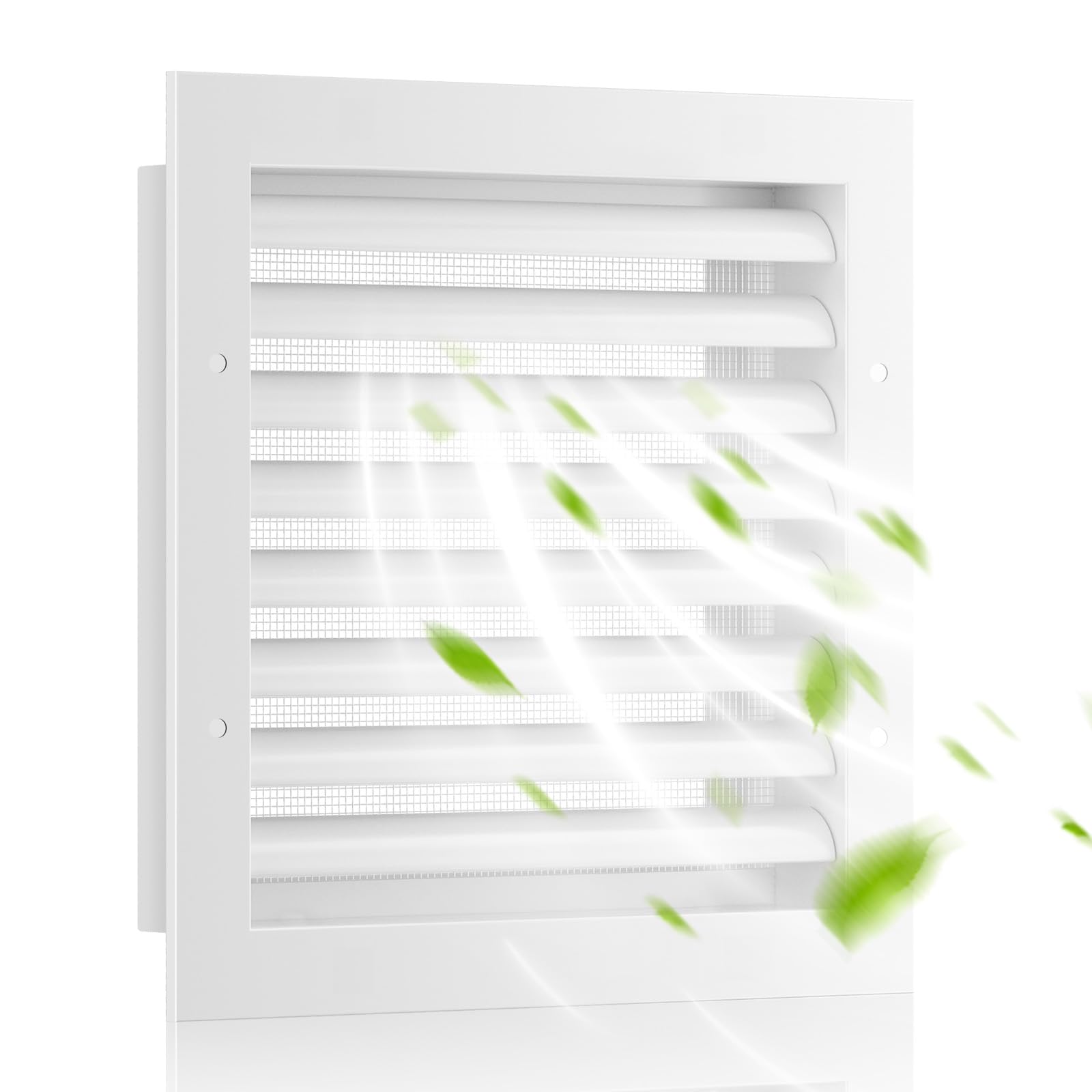
How To Choose The Best Shed Gable Vents
Most shed vent mistakes happen before a single screw goes in. You buy the wrong outside size, or you match the outside size and forget the opening behind it. Get those two numbers right and the rest — screen, finish, material — is easy.
Measure the hole, not the panel
A gable vent carries two measurements. The outside dimension is the face plate that sits against your siding. The vent opening is the actual hole the air passes through, which is always smaller. The 8″x8″ Aluminum Gable Vent with Screen is 8″ x 8″ outside but 6″ x 6″ inside. The Hon&Guan is 8″ x 8″ outside and 6.2″ x 6.2″ inside. Cut your shed opening to the inside number, then let the outside flange overlap the wall.
Decide how much air you need to move
A bigger panel moves more air, but only if the louver slots and screen stay open. A 12 x 12 inch vent suits a larger shed wall, while an 8 x 8 vent fits a small garden shed or a storage container. Bigger is not automatically better — a giant vent on a tiny shed just gives rain and windblown dust more ways in.
Look at the screen before the shine
The screen is what keeps wasps from nesting between the slats and mice from treating your shed as a doorway. A fine mesh backing blocks dust and debris. A coarser mesh blocks bigger critters but lets fine grit through. Check that the screen is attached firmly, because a loose one is the first thing to fail.
Side-by-Side Comparison
| Model | Best For | Outside Size | Vent Opening | Material | Amazon |
|---|---|---|---|---|---|
| 8″x8″ Aluminum Gable Vent with Screen★ Best Overall | Most sheds, all-round pick | 8″ x 8″ | 6″ x 6″ | Aluminum | Amazon |
| Hon&Guan 8″ x 8″ Aluminum Gable VentMost Precise Fit | Lightweight panel, tight screen | 8″ x 8″ | 6.2″ x 6.2″ | Aluminum | Amazon |
| Hicarer Aluminum Gable Vent 12 x 12 | Larger wall, kit included | 12″ x 12″ | — | Aluminum | Amazon |
| 2 Pcs 12 x 12 Inch Aluminum Attic Vents | Two openings in one buy | 12 x 12 inches | — | Aluminum | Amazon |
| Duraflo 621218 Gable Vent | Wide net free area | 12″ x 18″ | 112 Sq. In. Net Free Area | Polypropylene | Amazon |
| 10″x10″ Aluminum Gable Vent with Screen | Middle size, dark finish | 10″ x 10″ | 8″ x 8″ | Aluminum | Amazon |
Detailed Reviews
1. 8″x8″ Aluminum Gable Vent with Screen
Our pick — 4.5+★ from 600+ verified ratings; the strongest balance of quality and price.
The one that fits the hole most small sheds already have — 8 inches outside, 6 inches through.
Start with the number that decides whether this vent drops into your wall: the face plate measures 8″ x 8″, and the vent opening behind it measures 6″ x 6″. That split is normal, and it means you cut a 6-inch square hole and let the wider flange cover the edge. If your shed gable already has a rough opening near 6 inches, this is the least fussy path to a working vent.
This panel holds up outdoors without swelling or splitting because it is made of aluminum. It ships in white with a surface that takes paint, so you can match your siding instead of living with a bright white square. The built-in screen is the part that earns its keep over a season: it keeps insects and small animals from turning the louver slots into a nest.
The louvered slots behind the screen let hot air rise out of the gable instead of trapping it under the roof. That is the whole point of a gable vent, and this one does it without needing power, wiring, or moving parts. Four screws into the pre-drilled flange, an optional coat of paint, and it’s done.
What earns it the top spot
- Standard 8″ x 8″ face plate with a 6″ x 6″ opening — a common shed cutout size
- Paintable surface so the white panel can match your shed color
- Built-in screen keeps bugs and small critters out of the louvers
- Aluminum body resists weather without rotting or rusting through
Where it asks for a little patience
- The 6-inch opening moves less air than a 12-inch panel, so it suits small-to-mid sheds rather than big barns
- You will want to confirm your cutout matches before ordering, because the outside flange is fixed
Reach for this one if: your shed gable has a roughly 6-inch square opening and you want a vent you can paint to match.
Think twice if: your shed is large enough that you need a wide 12-inch panel to move serious air.
2. Hon&Guan 8″ x 8″ Aluminum Gable Vent with Screen
A lighter panel that squeezes a touch more airflow through the same 8-inch footprint.
Here is the direct comparison worth knowing: both this vent and the Best Overall pick are 8″ x 8″ outside, but the Hon&Guan opening measures 6.2″ x 6.2″ against the other one’s 6″ x 6″. That extra fraction of an inch means marginally more air through the same size face plate. At 7.4 ounces it is also lighter than the 8″x8″ Aluminum Gable Vent with Screen at 10.8 ounces, which matters if you are holding it overhead on a ladder.
The build is heavy-duty aluminum with a powder coating, a baked-on finish that resists corrosion better than bare metal. The louvered face is fixed and angled to push rain away from the opening while still letting air move. Behind the louvers sits a fine mesh backing, which cuts down on windblown dust and debris drifting into your shed.
Where owners get tripped up is the hardware. Screws are not included, so plan to supply your own before you climb the ladder. The pre-drilled mounting holes are there, which keeps the actual job quick once you have fasteners in hand.
Quiet airflow, by design: the angled fixed louvers are shaped to promote smooth airflow while keeping wind noise down, so a breezy day does not turn the vent into a whistle.
Better fit for you if: you want a lighter aluminum panel with a powder-coated finish and a slightly larger opening.
Make sure to grab: your own screws, because the package does not include them.
3. Hicarer Aluminum Gable Vent 12 x 12”
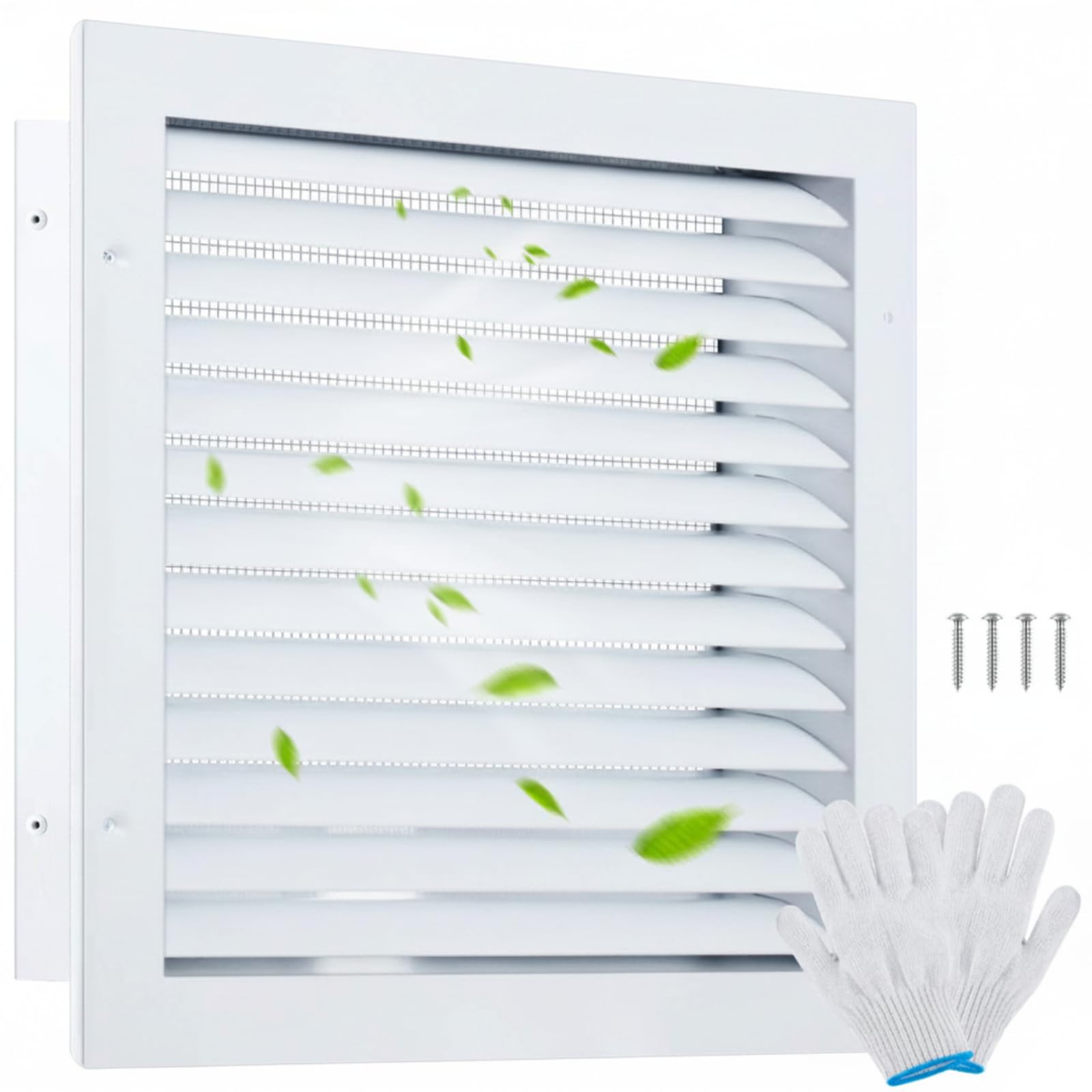
A 12-inch panel that arrives with the screws and gloves, so nothing stalls the install.
Measurements here run about 12 x 12 inches, which puts this in the larger-panel class for a shed gable wall. The bigger face lets more air circulate than the 8-inch options above, so it suits a roomier shed that heats up fast. The aluminum alloy body carries a clean white finish that reads tidy on most siding.
The reason to pick this one is the kit. It ships with 4 screws and a pair of gloves, so the install is a single trip up the ladder rather than a scavenger hunt for fasteners. No hunting for fasteners mid-install.
The louvered design blocks water and debris from entering while still letting air pass, and the components are built to run noise free, which keeps rattles and vibration out of the equation. It can serve as an air intake or exhaust in settings like garages, sheds, offices, bathrooms, and RVs, whether mounted on a wall or a ceiling.
The trade-off to know: a 12-inch face is a lot of panel for a small garden shed, so confirm the wall can carry it visually before you commit.
Where it shines: the included screws and gloves make this the least-fuss large-vent option in the list.
Best matched to: a mid-size shed or garage wall where you want a bigger louvered panel and a ready-to-go install kit.
Pass it by if: your opening is a small 6-inch cutout that needs the 8-inch face plate instead.
4. 2 Pcs 12 x 12 Inch Aluminum Attic Vents
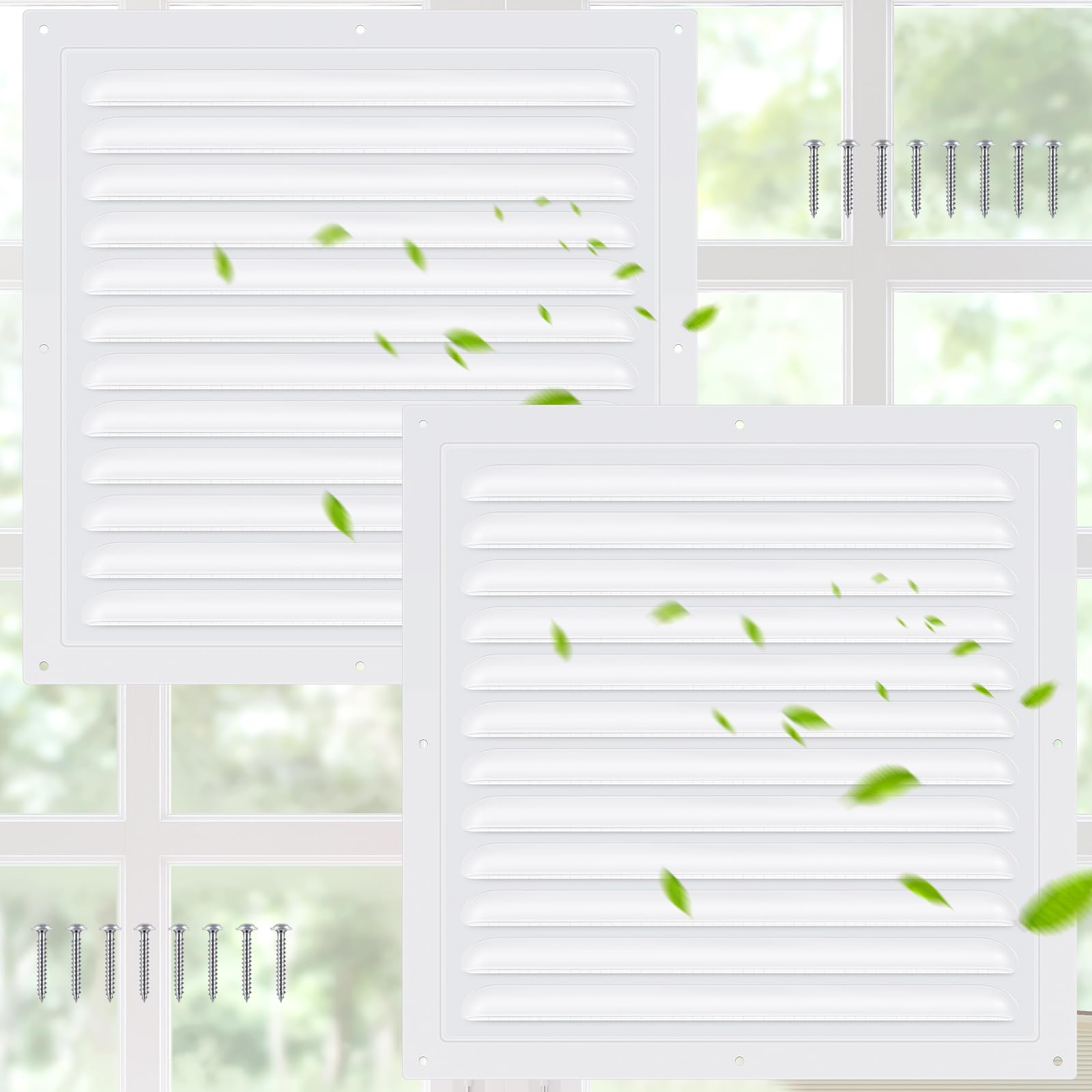
Two 12-inch vents and 16 screws in one box, for a shed with openings on both gable ends.
The headline number is the package quantity. You get 2 pieces of white gable vent and 16 pieces of screws, where most single vents here ship one panel. If your shed is double-ended or you are venting two walls, that package count does real work. The panels themselves measure approximately 12 x 12 inches and suit ventilation openings of the same size.
The body is aluminum with a plastic mesh screen built in, sized to let fresh air circulate while blocking water, leaves, and small debris. The white finish blends with most light siding. The plastic mesh blocks leaves and bugs without choking off the airflow through the louvers.
One caveat worth flagging before you buy: the mounting hardware is the weakest part of the package. The screws that come with it are on the small side, and a few buyers swap them for sturdier fasteners. Also check the size against your wall — these read small for a larger shed and fit smaller structures best.
Why the two-pack makes sense
- Two 12 x 12 inch vent panels plus 16 screws in one order
- Aluminum body with a built-in plastic mesh screen
- White finish that matches most shed and house siding
- Works as a shed vent, attic vent, or wall vent cover
Set your expectations on the small stuff
- The included screws are small enough that some buyers replace them
- The 12-inch size reads small for a big shed — best suited to smaller structures
Buy this when: you have two openings to cover or want a spare panel on the shelf, and value the included screws.
Skip it when: you need one generously sized vent for a large shed wall.
5. Duraflo 621218 Gable Vent, 12-Inch X 18-Inch

The widest panel here, rated for the air a serious shed or workshop needs to shed heat.
This is the only vent in the list with a published net free area: 112 Sq. In. That figure is the actual open space air can pass through once the louvers and screen are counted, so it is the number that tells you how much breathing room you get. The panel measures 12″ x 18″, noticeably wider than the 12 x 12 and 8 x 8 options above. At 1.2 pounds it is lighter than the 2 Pcs 12 x 12 Inch set at 1.46 pounds, despite being the larger face.
Material is polypropylene, a molded plastic that shrugs off moisture rather than soaking it up. The maker lists high UV resistance, so sun exposure is less likely to chalk or fade the surface. It carries a CSA approval, a mark that indicates the vent has been tested to a recognized safety standard.
The honest catch is the screen side. Insect resistance is the mixed note on this one — the wide opening is great for air, but you may want to check the screen coverage before you trust it to keep every wasp out. The white color is standard, and there is no paint prep needed, since the plastic holds its color.
Where it earns its place: a 112 Sq. In. net free area and a 12″ x 18″ face make this the strongest airflow option for a larger shed or workshop.
Pair it with: a large shed or workshop gable where you want the biggest published open area in this list.
Check first: the insect screen coverage, since critter resistance is the one mixed note buyers raise.
6. 10″x10″ Aluminum Gable Vent with Screen

The in-between size: 10 inches of face plate, 8 inches of actual airflow, in a dark finish.
Not every shed wants an 8-inch panel or a 12-inch one, and that is exactly the gap this fills. The outside measures 10″ x 10″ and the vent opening inside measures 8″ x 8″. That gives you more airflow than the 8-inch vents above without committing to a full 12-inch face. The black finish is the other difference — this is the only dark panel in the list, which makes it a natural fit for a shed with dark trim.
High-quality aluminum builds the body, so the panel resists weather without rusting through. The louvered face moves air while the built-in screen handles the critter side. Owners mention the small slots specifically, because tight louver gaps stop bees from building nests between the slats — which is the exact complaint that drives people to replace an old open vent.
Installation is meant to be straightforward, no professional needed. The aluminum frame is light enough to hold one-handed on a ladder, and the paint-ready surface takes your shed color if black is not quite right. For a mid-size shed that runs hot in summer, the 8″ x 8″ opening splits the difference between the 6-inch and 12-inch options.
The mid-size argument
- 10″ x 10″ face with an 8″ x 8″ opening — a middle ground between the small and large options
- Tight louver slots that help keep bees from nesting between slats
- Black finish stands out nicely against dark shed trim
- Aluminum body with a paint-ready surface
What to weigh
- The black color will not blend with light or white siding the way the white panels do
- The 8-inch opening is still smaller than the 12-inch options, so it suits mid-size sheds rather than large barns
Fit this to: a mid-size shed where an 8-inch vent is too small but a 12-inch panel is more than you need, especially with dark trim.
Hold off if: your siding is light-colored and you want a vent that disappears into it.
Know the Specs
Outside Size vs Vent Opening
The outside size is the face plate that covers the cut edges of your shed wall. The vent opening is the smaller hole air actually passes through. An 8″ x 8″ vent usually runs a 6″ x 6″ opening, while a 10″ x 10″ panel runs an 8″ x 8″ opening. Cut to the opening, not the face plate, and let the flange overlap.
Net Free Area
Net free area is the real open space left for air once louvers and screen are accounted for. It is measured in square inches. A higher figure means more air moves through the vent, which matters most on a shed that traps heat under the roof. The Duraflo lists 112 Sq. In. of net free area for its 12″ x 18″ panel.
Screen Mesh and Louvers
The louver is the angled slat that pushes rain away from the opening while letting air through. The screen behind it blocks insects and small animals. A fine mesh cuts out windblown dust, while a coarser mesh cuts out larger critters but lets grit through. Tight louver slots also help keep wasps from nesting between slats.
Material and Finish
Aluminum resists weather, does not rot, and takes paint easily, which is why most vents here use it. Polypropylene is a molded plastic built to shrug off moisture and UV. Powder coating is a baked-on finish that resists corrosion better than bare metal. White blends with light siding; black suits dark trim.
Common Questions
Will an 8 x 8 vent fit the hole already in my shed gable?
Do I need to cut a new opening or can I replace an existing vent?
What does net free area mean on a gable vent?
Will the built-in screen keep wasps and mice out of my shed?
Do these gable vents come with screws?
Can I paint an aluminum gable vent to match my shed?
Is bigger always better when choosing a gable vent?
How do I install a gable vent on a shed wall?
What is the difference between a gable vent and a roof ridge vent?
How long does an aluminum gable vent last outdoors?
The Bottom Line
For most sheds, the shed gable vents winner is the 8″x8″ Aluminum Gable Vent with Screen because its 8″ x 8″ face and 6″ x 6″ opening fit the common small-shed cutout and its paint-ready surface blends in. If you want a lighter panel with a slightly larger opening, grab the Hon&Guan 8″ x 8″. And for a larger shed that needs real airflow, the Duraflo 621218 with its 112 Sq. In. net free area is the one to reach for.
How we choose
We do not accept paid placement. Every pick is matched to a real buyer and a real use-case; we do not hands-on test units.
Sources
Specifications: manufacturer listings and product documentation. Review insights: verified customer reviews, as of November 2026. Pricing: not shown on this page (it changes often); check the current price via the retailer link.
As an Amazon Associate, Tactical Gear Guy earns from qualifying purchases. This does not affect which products we feature.