Specs are compiled from manufacturer listings and verified buyer reviews and can change over time — please confirm the key details on the product page before buying.
Buying a sewing machine with a cabinet means solving two problems at once: you want a motor with real punching power, and you want a stable work surface that does not shimmy when you push heavy fabric through it. The catch is that nearly every industrial machine in this category arrives in multiple boxes with the table unbuilt. Skip the assembly reality and you will end up frustrated before your first seam. The five picks below are the ones whose motors, tables, and feed systems actually hold up — and whose known weak points you should hear about before you click buy.
This guide is built by comparing the manufacturers’ published specifications and the patterns across verified customer reviews, so you get each pick’s real strengths and trade-offs instead of marketing spin.
The short answer: a walking-foot machine beats a plain lockstitch for leather and upholstery, and the knockdown table matters as much as the motor. Below you will find the full breakdown of the best sewing machines with cabinets for heavy work.
Top Picks
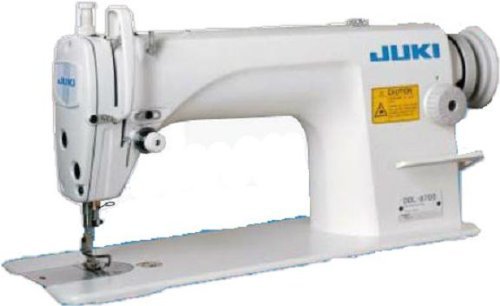

How To Choose The Best Sewing Machines with Cabinets
The cabinet is not a bonus here — it is half the purchase. An industrial head bolted to a wobbly table will vibrate at speed and ruin your seam allowance. Before you compare motors, decide what you are actually sewing and how much floor space you can give it.
Walk the feed system before you fall for the motor
A standard lockstitch machine pulls fabric from below only. A walking foot machine moves the top feed and the needle together, which is what keeps leather from skating. If your work is denim, canvas, or auto upholstery, prioritize a machine that names a walking foot or compound feed in its own listing. If you only sew garment cotton, a straight lockstitch is fine and usually simpler to learn on.
Read the stitch length, not just the speed
Stitch length is the distance between needle holes, measured in millimeters. A longer stitch length means you can run heavier thread and thicker material without crowding the fabric. Speed ratings tell you the ceiling the motor can reach, but a servo motor lets you dial that ceiling down — which matters far more when you are steering a leather seam around a corner.
Plan for assembly and table quality
Almost every unit ships knocked down, meaning the table arrives unbuilt and the head sits separately. Budget an afternoon and a second set of hands. Check the table top size and whether the legs are described as heavy duty or adjustable, because that determines whether the surface stays level once the head is bolted on.
Side-by-Side Comparison
| Model | Best For | Feed Type | Motor | Machine Weight | Amazon |
|---|---|---|---|---|---|
| Juki DDL-8700-H★ Best Overall | Heavy material, straight seams | Single needle lockstitch | 1/2 H.P servo, 0–3300 RPM | — | Amazon |
| Juki DDL-8100 + TableBest for Denim | Denim and garment production | Single needle lockstitch | 550W servo | 57.3 pounds | Amazon |
| Consew P1206RB | Upholstery and canvas | Drop feed, needle feed, walking foot | Servo included | 185 pounds | Amazon |
| Consew 206RB-5 | Leather and marine vinyl | Walking foot compound feed (triple feed) | Servo included | 200 pounds | Amazon |
| Juki DU-1181 | Layered and hard-to-feed material | Top and bottom feed walking foot | 3/4 H.P servo, 0–3300 RPM | 170 pounds | Amazon |
Detailed Reviews
1. Juki DDL-8700-H Sewing Machine
Our pick — 4.0+★ from 200+ verified ratings; the strongest balance of quality and price.
Juki’s heavy straight-stitch head arrives with the table, drawer, and lamp already in the boxes.
If your work is thick denim, webbing, or layered canvas and you want a straight seam, this is the pick. The DDL-8700-H is Juki’s “Heavy” model, built for heavy material in a single-needle lockstitch layout. The servo motor is rated 1/2 H.P, 1 phase, 110 volt, and runs from 0 to 3300 RPM. That range means you can creep at a crawl for a tight curve and then open it up on a long straight run.
You get a real cabinet package, not a bare head. The table top measures 48 inches by 20 inches, with heavy duty legs, a drawer, a belt, tools, a lamp, and an instruction manual. The machine also brings an auto-lubricating hook on a horizontal axis, an adjustable reverse feed, and a knee lifter. Five extra bobbins and ten extra needles are in the box too. For a first industrial setup, that saves you a second shopping trip.
One thing to flag clearly: this model is not a walking foot. Juki’s own listing says the walking foot mechanism is absent. So if leather keeps sliding on you, the Consew picks below are the better match. The other honest caveat is assembly — the machine ships unassembled across multiple boxes, and the printed guidance is thin. Experienced sewers get there in an afternoon; total beginners should line up a video walkthrough beforehand.
What earns the top spot
- A 1/2 H.P servo running 0–3300 RPM gives you slow control and top-end speed in one motor.
- The 48″ x 20″ table top plus heavy duty legs, drawer, lamp, and tools arrive as a complete cabinet kit.
- Auto-lubrication on the hook and adjustable reverse feed keep long production runs going without constant fiddling.
Where it asks more of you
- No walking foot — heavy leather that slips will need one of the compound-feed machines instead.
- Assembly is genuinely hands-on, and the included instructions leave gaps.
Reach for this if: you sew heavy woven material and want a straight stitch with a full table setup in one order.
Keep looking if: your main material is thick leather — step to a walking foot model.
2. Juki DDL-8100 Sewing Machine
A 57.3-pound lockstitch package that plows through denim hems without complaint.
Denim is where this machine makes its case. The DDL-8100 is rated up to 4500 stitches per minute, and buyers report it sews up to four layers of denim without issues. The maximum stitch length is 5 mm, and the maximum foot lift reaches 13 mm by knee — enough room to slide a folded jeans hem under the foot before you drop it. The presser foot also lifts 5.5 mm by hand for quick adjustments.
Weight is the practical story here. At 57.3 pounds, this is the lightest machine in this lineup by a wide margin — the Consew 206RB-5 comes in at 200 pounds. If your workroom is a spare bedroom or you ever need to shift the setup, that 143-pound gap matters. The package includes the table top at 48 inches by 20 inches, heavy duty adjustable legs, a 550W energy-saver DC servo motor, a V-belt, hardware, a thread stand, bobbin winder, oil pan, knee lifter, extra bobbins, and extra needles.
The known friction point is the build process. Assembly is a mixed experience across the board, and the instruction situation is thin — some buyers get the whole thing together in an afternoon on their own, others find the directions unhelpful and turn to short video guides instead. A few mention the table arriving with small chips. It is a real caveat, not a reason to dodge the machine; just inspect the table on arrival and plan a build session with a helper.
Where the value sits: the 550W servo and the 48″ x 20″ table arrive as one kit at the entry end of this category, so you are not hunting for legs or a belt separately.
The table caveat: some units show up with minor chips at the edges, and the assembly directions are sparse. Build it on a clean floor where you can lay parts out.
Who it beats: anyone sewing jeans, canvas bags, or layered workwear who wants a lighter table setup than the 200-pound Consew.
Who should pass: if you need a walking foot for leather, this straight lockstitch head is not it.
3. Consew Upholstery Walking Foot Sewing Machine

Drop feed, needle feed, and walking foot in one head — three ways to keep fabric moving.
Consew’s P1206RB is built for the material that fights back. The listing names leather, vinyl, upholstery, synthetics, canvas, and coated and laminated products as its targets. It also lists the finished goods: auto and boat upholstery, tarpaulins, sails, tents, awnings, luggage, handbags, and camping equipment. If your workshop runs across several of those jobs, this is the most flexible feed system in the lineup because it combines drop feed, needle feed, and walking foot.
At 185 pounds, it sits between the lighter Juki straight-stitch machines and the 200-pound Consew 206RB-5. The oil pump system comes with a pump, oil pan, and adjustable oil flow, so you can tune lubrication to the material you are running. It arrives unassembled in three separate boxes, so count on three deliveries and a proper build space. The table and servo motor are both part of the package.
The honest trade-off is documentation and table condition. Consew’s knockdown tables have a reputation for arriving without much guidance, and Consew’s own manuals for this family are thin. Treat the build as its own project — a clear floor, a helper, and a video reference will get you there faster than the paperwork. The payoff is one head that handles canvas and heavy upholstery fabric in the same session without swapping setups.
The feed advantage: a three-part feed system means slippery vinyl and layered canvas both get walked through rather than dragged.
Plan the delivery: three boxes means three chances for a table edge to arrive dinged. Open and inspect before you start bolting.
Best fit for: a shop that jumps between boat covers, furniture, and bags and needs one head to handle all three.
The real limit: you are building the table yourself with minimal printed help — set aside an afternoon.
4. Consew 206RB-5 Sewing Machine
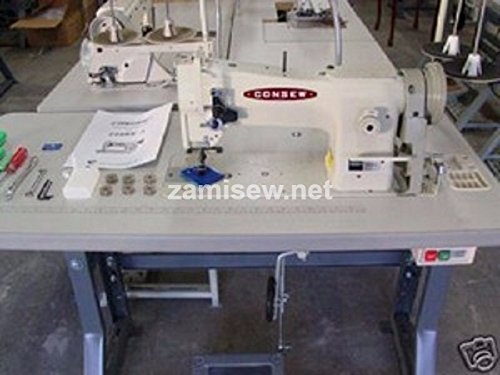
Two hundred pounds of compound-feed iron aimed squarely at leather and marine vinyl.
This is the machine the upholstery trade reaches for. The 206RB-5 runs a walking foot compound feed — also called triple feed — which means the needle, the presser foot, and the feed dogs all move the material together. On 2 oz. leather, owners mention it sews through four layers. On marine vinyl it runs layers quietly and with ease. The servo motor and table come with it, and the spec sheet lists a 45″ x 50″ x 20″ footprint at 200 pounds.
Set it against the Juki DU-1181 above and the split is clear: the Juki tops out at 9 mm stitch length, while this Consew does not publish a stitch length in its listing — what it publishes is the feed system and a stated ability to take 9/16 inch of material. If your material is leather and you want the machine professionals name first, the 206RB-5 is the pick. If you need the longest stitch for thick thread and webbing, the Juki’s 9 mm is the number to chase.
Now the part nobody enjoys. Assembly is the loudest complaint in this machine’s history, and the table itself is the usual villain — hardware that does not line up, missing guidance, and occasional chipping. A few owners have had to sand the head opening before the machine would seat. Build it outdoors or in a garage where dust and shavings do not matter, and dry-fit the table before you tighten anything. Once the table is together and leveled, the 206RB-5 head itself runs sturdy and quiet.
Why leather workers choose it
- Compound triple feed keeps thick leather and vinyl from slipping or puckering.
- Handles four layers of 2 oz. leather, plus marine vinyl, without strain.
- Table and servo motor ship in the same order, so the cabinet is covered.
The build-day reality
- Table assembly is the most-discussed frustration, and the hardware does not always line up.
- Some table openings need light sanding before the head will seat.
The verdict: the machine to buy if leather and marine vinyl are your core work and you can tolerate a rough build afternoon.
Think twice if: you want a plug-and-sew first session — this one rewards patience at the bench.
5. Juki DU-1181 Walking Foot

Nine millimeters between needle holes — the longest stitch here by a wide margin.
Stitch length is the whole reason to consider this Juki. It runs a maximum stitch length of 9 mm, where the DDL-8100 tops out at 5 mm. That extra reach is what lets you run thick thread through webbing, belts, and layered canvas without the stitches crowding each other. Sewing speed maxes at 2,000 stitches per minute — slower than the straight-stitch Jukis, but that lower ceiling is exactly what you want on hard-to-feed material. The presser foot lifts 15 mm by knee.
Feed quality is the second argument. Juki describes a strong top and bottom feed mechanism built to move hard-to-feed materials and multilayered sections at a steady rate, so stitch pitch stays even around curves and seams. There is an automatic lubricating mechanism that cuts down on maintenance time. The motor is a 3/4 H.P, 1 phase, 110 volt DC servo rated 0 to 3300 RPM, and the knockdown table, drawer, belt, tools, lamp, and manual all come in the boxes. At 170 pounds, it is lighter than the Consew 206RB-5’s 200 pounds.
Here is what the machine’s own history warns you about: the table, not the head. The Juki head itself is described as great in review after review, while the accompanying table and the support around it draw the sharpest words in the record. Assembly instructions for the table are absent, and the foot pedal sits on a bar resting under the legs, which drops its profile lower than you might expect. Budget time for the stand, and source your own build guide before the boxes land.
The headline spec: 9 mm stitch length and a 15 mm knee lift let you feed thick, layered material a full stitch at a time.
The honest catch: the head is the star, the knockdown table is the weak link, and the pedal sits low on a bar under the legs.
Pick this when: you need long stitches through webbing, belts, or heavy layered canvas and can handle a stand build.
Look elsewhere when: you sew fast production seams on lighter fabric — the 2,000 spm ceiling will feel slow.
Know the Specs
Feed System: Walking Foot vs Lockstitch
A lockstitch machine pulls material from the feed dogs underneath only. A walking foot adds a top feed that moves with the needle, and a compound or triple feed adds needle feed as well. For leather, vinyl, and stacked canvas, the top feed is what stops the material from slipping between layers. For flat garment cotton, a plain lockstitch is simpler and usually easier to learn.
Servo Motor Power and RPM
Horsepower on a servo motor sets how much push the machine has against thick material, and the RPM range sets how fast it can run at the top and how slowly you can dial it down. A 0 to 3300 RPM range on a servo means the motor starts from a standstill rather than jumping to full speed. That control matters most on curves and short seams in heavy fabric.
Stitch Length in Millimeters
Stitch length is the gap between needle holes. A longer stitch lets you run heavier thread and thicker material without the stitches bunching. A 9 mm maximum suits webbing and belts; a 5 mm maximum suits denim hems and garment work. Check this number before you assume two machines with similar motors will behave the same on thick fabric.
Table, Stand, and What Arrives Unbuilt
Almost every industrial machine in this category ships knocked down. The table top, legs, belt, and motor arrive separately, and the head sits in its own box. Look for the table top dimensions and whether the legs are described as heavy duty or adjustable. A table that is not level will vibrate at speed, so inspect the parts on arrival and dry-fit before tightening bolts.
Common Questions
Do these sewing machines come with the cabinet assembled?
What is the difference between a walking foot and a lockstitch machine?
How thick a material will these machines sew?
What does stitch length in millimeters mean for my work?
Do I need a servo motor or is a clutch motor fine?
How do I keep the machine lubricated?
What size table top do these setups include?
Can I sew leather on the straight stitch Juki machines?
What does knockdown stand mean for the setup?
Why does the head need to fit the table opening so precisely?
The Bottom Line
The best overall pick here is the Juki DDL-8700-H — It pairs a 1/2 H.P servo with a 0–3300 RPM range and a full 48″ x 20″ cabinet package in the same order. It gives you a heavy straight stitch and a complete table without hunting for separate parts. If your daily material is denim or canvas workwear, the Juki DDL-8100 is the lighter, more build-friendly alternative at 57.3 pounds versus the 200-pound Consew. And when leather and marine vinyl are the real job, reach for the Consew 206RB-5 with its compound triple feed. Whichever you pick, budget an afternoon for the knockdown table build.
How we choose
We do not accept paid placement. Every pick is matched to a real buyer and a real use-case; we do not hands-on test units.
Sources
Specifications: manufacturer listings and product documentation. Review insights: verified customer reviews, as of November 2026. Pricing: not shown on this page (it changes often); check the current price via the retailer link.
As an Amazon Associate, Tactical Gear Guy earns from qualifying purchases. This does not affect which products we feature.