Specs are compiled from manufacturer listings and verified buyer reviews and can change over time — please confirm the key details on the product page before buying.
Your Sea-Doo 4-TEC needs a battery that cranks a high-compression engine and survives salt water, spray, and months of sitting between rides. The wrong pick shows up as a slow, labored turnover on the ramp — or a ski that will not start at all after winter storage. This guide sorts the eight strongest options by what actually matters on the water: correct group size, cranking amps, and how each one handles the brutal life a PWC battery lives.
This guide is built by comparing the manufacturers’ published specifications and the patterns across verified customer reviews, so you get each pick’s real strengths and trade-offs instead of marketing spin.
Terminal layout, weight, and chemistry change the whole ownership experience, so every pick below is judged on those. The right sea-doo 4 tec battery is the one that fits your hull, cranks hot, and does not leave you floating.
Top Picks
How To Choose The Best Sea-Doo 4 Tec Battery
A 4-TEC engine is a big, high-compression powerplant, and it asks a lot of a battery that sits low in the hull getting splashed. Before you look at brands, confirm the physical group size fits your model’s battery box. Then weigh chemistry against your riding habits, because the gap between a lead-acid AGM and a lithium pack changes everything about weight, charging, and how long the thing lasts.
Group size and terminal layout come first
Most 4-TEC Sea-Doo models take a YTX20L-BS footprint, which is a sealed battery shaped to slide into that tray with the posts on the right polarity. A battery that is the wrong physical size simply will not clamp down, and a reversed post will not reach your cables. Check your own hull’s tray and cable positions before ordering, because a perfect battery in the wrong size is useless.
Cranking amps versus cold starts
CCA, or cold cranking amps, is the burst of power a battery delivers in the cold to spin a stiff engine. A 4-TEC likes a healthy figure here so it fires on the first push rather than grinding. When you see a 310 CCA rating on a lead-acid pack, that is a strong number for this class of watercraft. Lithium options quote very high amp figures too, but they deliver that power differently, so read each pick’s notes carefully.
Lithium or lead-acid AGM
Lithium (LiFePO4) packs drop a huge amount of weight off the nose of your ski and hold their charge with less fuss. They also cost more and need a lithium-compatible charger. AGM (absorbed glass mat) lead-acid is the familiar, budget-friendlier route, heavier but proven. Pick lithium for weight savings and cycle life, or AGM for a lower entry cost and simpler charging.
Side-by-Side Comparison
| Model | Best For | Chemistry | Cranking Amps | Weight | Amazon |
|---|---|---|---|---|---|
| Forgetyo YTX30L-BS LiFePO4★ Best Overall | Weight savings and long cycle life | LiFePO4 | 850A | — | Amazon |
| Goodyear GYTX20LBest Cheap Trusted Brand | Sealed AGM with a certified build | Lead Acid | 270 CCA | 13.5 lb | Amazon |
| Caltric AGM YTX20L-BSBest for OEM Cross-Reference | Maintenance-free AGM on a budget | Lead-Acid, AGM | — | 16 lb | Amazon |
| AJC Battery for BRP Sea-Doo 1500CC | Direct-fit replacement, low fuss | Lead Acid | 270 CCA | 12.1 lb | Amazon |
| Caltric AGM for GTX 4-TEC | Older GTX 4-TEC fitment | Lead Acid | — | 21 lb | Amazon |
| Interstate YTX20H-BS | High cranking reserve from a proven brand | Lead-Acid, AGM | 310 CCA | 14.9 lb | Amazon |
| Forgetyo YTX20L-BS LiFePO4 | Ultra-light lithium on a budget | LiFePO4 | 700A | 3.7 lb | Amazon |
Detailed Reviews
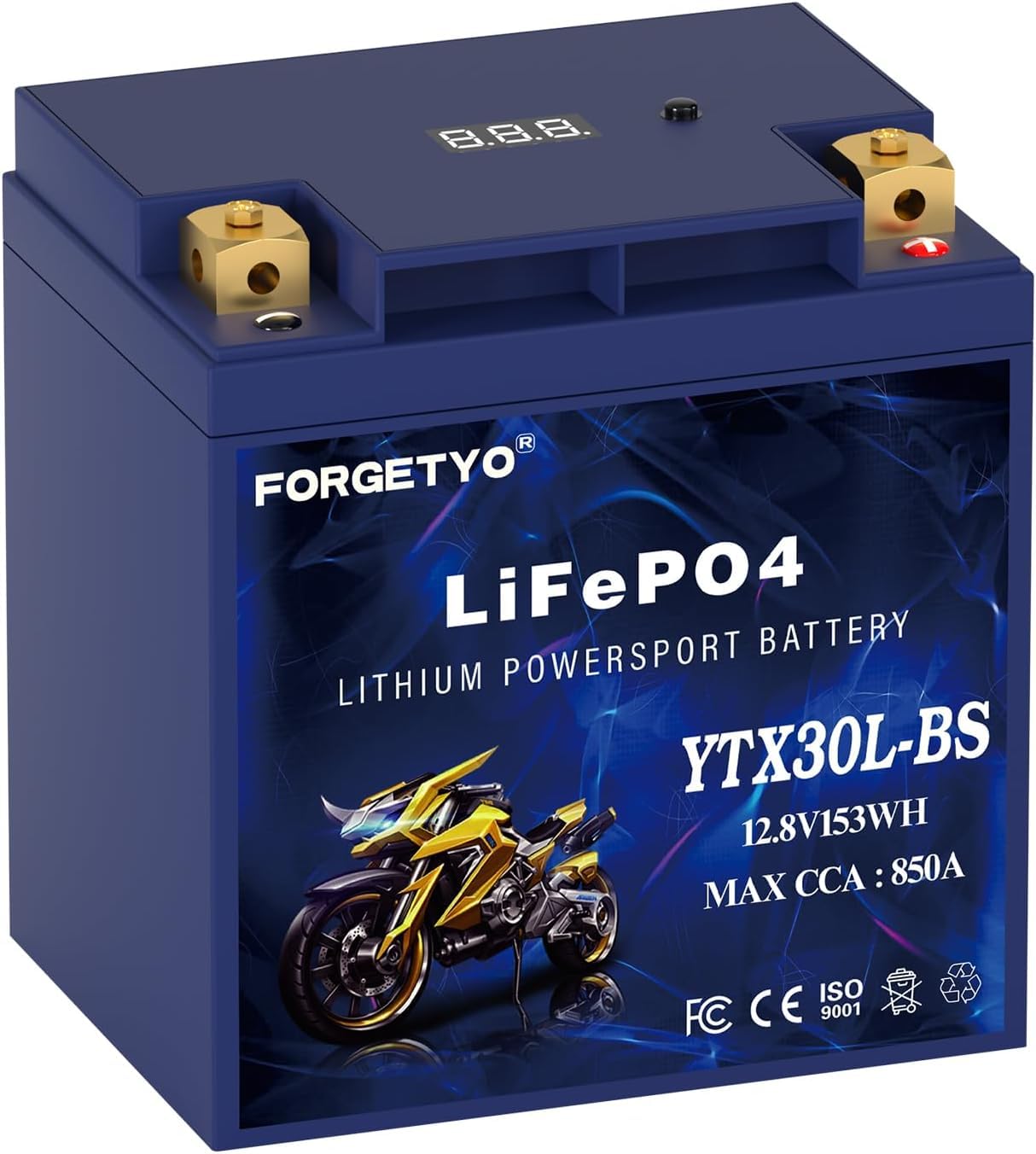
1. Forgetyo YTX30L-BS LiFePO4 Battery
Our pick — 4.0+★ from 250+ verified ratings; the strongest balance of quality and price.
The lithium pack that fires a big engine fast and lasts through far more rides than lead-acid.
This is a 12.8-volt lithium LiFePO4 pack rated at 850A, and that huge cranking figure is exactly what a 4-TEC wants on a cold morning. It drops to roughly a third of a lead-acid battery’s weight, so your ski’s nose feels lighter and the tray takes far less stress. Forgetyo rates it for 2000 discharge cycles versus 300 for lead-acid, so it lasts through far more seasons.
Charging is refreshingly simple once you own the right gear. A compatible 14.6V lithium charger tops it off in about 6 hours at 2A or around 2 hours at 6A. Forgetyo recommends the gentler 2A rate for long-term health. The built-in BMS — a small circuit board that guards the cells — cuts the flow when it senses overcharging, over-discharging, short-circuiting, or overheating, so an accidental deep drain on the trailer does not kill the pack.
What wins buyers over most here is longevity; the long-term battery life is the single most talked-about strength, followed by straight-line performance. The catch is the charger — you cannot top this up with a lead-acid trickle charger, so budget for a lithium-compatible one. Compared with the AJC lead-acid above, this is a far lighter and longer-lived route to a reliable crank.
What It Does Right
- 850A cranking power spins a high-compression 4-TEC with ease
- About a third the weight of a lead-acid pack
- 2000 discharge cycles versus 300 for lead-acid
- Built-in BMS guards against overcharge, deep drain, short circuit, and heat
What To Know First
- Needs a dedicated 14.6V lithium charger you supply separately
- Must match your installation space, post polarity, and starting-power demand
Buy this one if: you ride a lot and want the lightest, longest-cycling option that fires instantly.
Think hard if: you only have a lead-acid charger, since the lithium top-up gear is an added purchase.
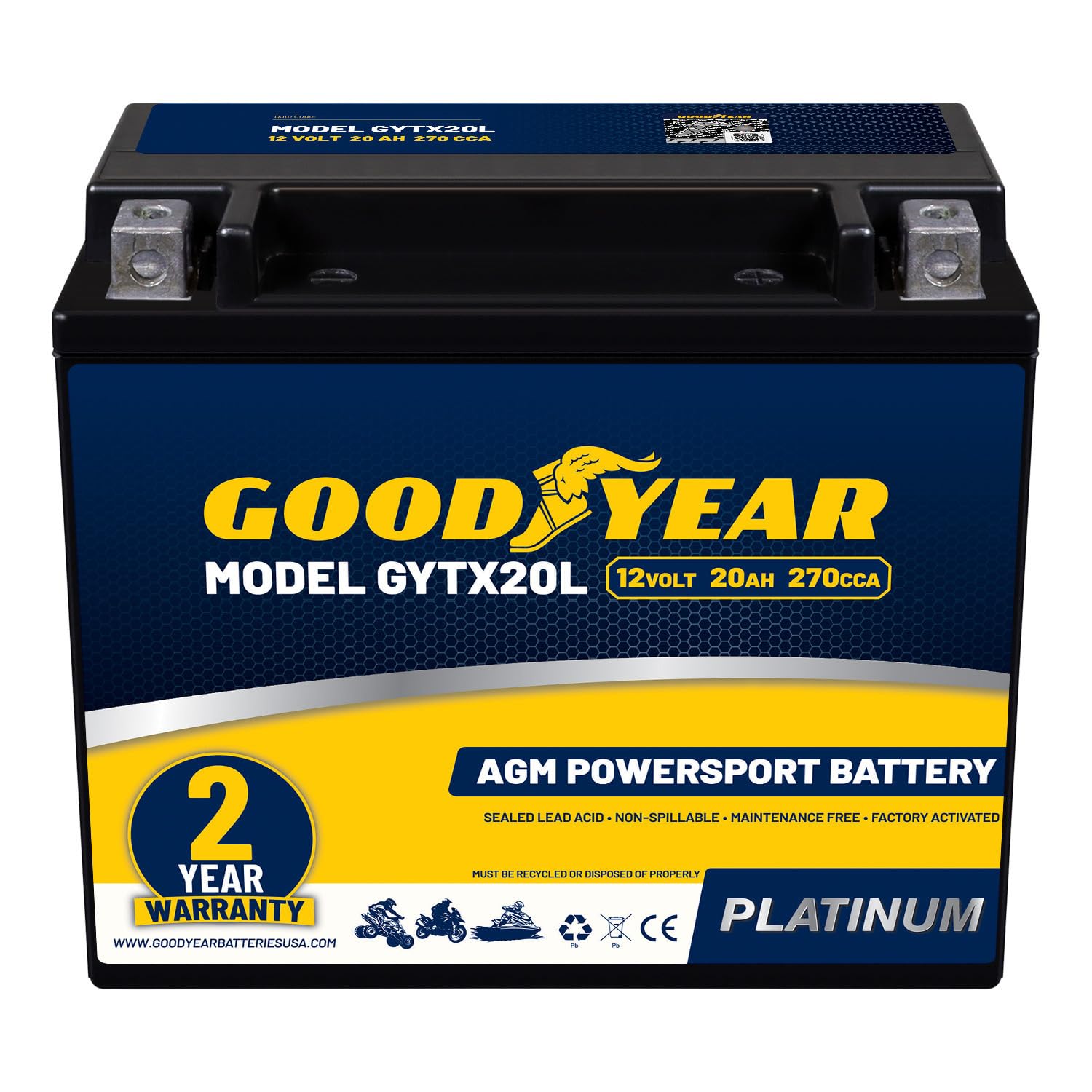
2. Goodyear GYTX20L AGM Battery
A sealed 20 amp-hour AGM with a certified build and a generous two-year warranty.
If you want a proven lead-acid pattern without fuss, the Goodyear GYTX20L gives you a 20 amp-hour sealed AGM rated for 270 CCA. That crank figure is enough to turn a 4-TEC over briskly on a cold morning, and the sealed design means no water checks ever. It ships ready to drop in, and Goodyear says it can mount in any position except upside down, which helps when the tray is an awkward shape.
The build quality is what buyers tend to notice first — it comes out as the clear standout strength. The specs back that up: CE certification and assembly in an ISO-certified facility, plus a two-year limited manufacturer’s warranty that outlasts most rivals here. At 13.5 pounds this lands between the featherweight lithium packs and the heavier 16-pound Caltric AGM, and its 6.88-by-3.42-by-6.1-inch footprint is a standard 20L shape that fits many PWC trays.
Here is the honest trade-off: a share of owners find the lifespan falls short of what they hoped, and value opinions split accordingly. Treat it as a solid, certified AGM at a fair outlay rather than a forever battery, and keep a tender on it through the off-season. For a brand-name sealed pack with real warranty cover, it is a sensible, low-drama choice.
Where it earns its spot: A certified, maintenance-free AGM with 270 CCA and a two-year limited warranty, at 13.5 pounds.
The honest caveat: Lifespan expectations vary, so plan to keep it on a maintainer when the ski sits unused.
Reach for this if: you want a sealed, certified AGM from a household name with real warranty cover.
Look elsewhere if: you expect a decade of service and refuse to maintain it through storage.
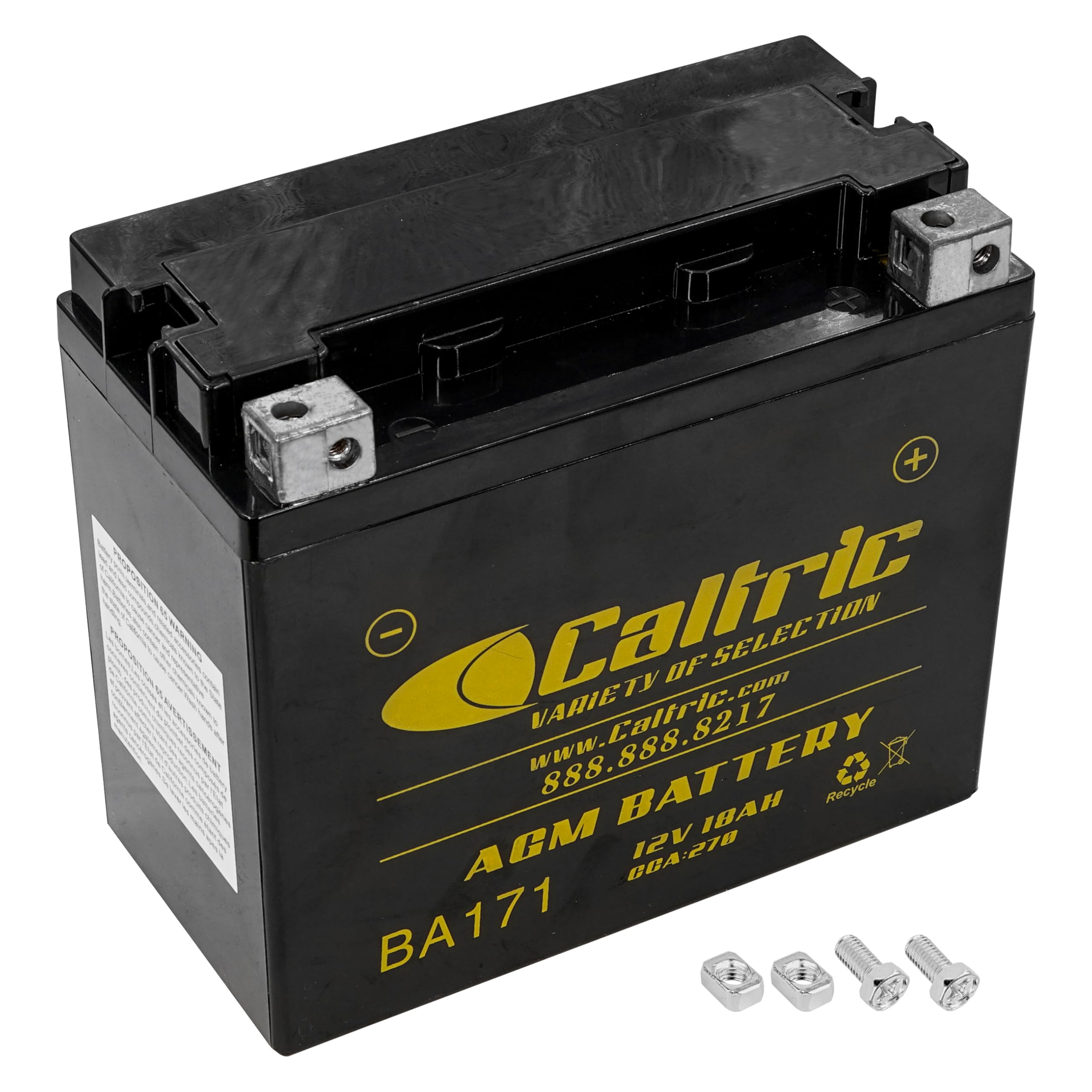
3. Caltric AGM YTX20L-BS Battery
The cross-reference champion for riders who want to confirm the part number before they order.
Caltric’s AGM packs one of the deepest OEM cross-reference lists you will find, covering a long run of Can-Am, Sea-Doo, Ski-Doo, Polaris, Honda, Yamaha, and Harley part numbers. If you have your hull’s factory part number in hand, this is the pick that lets you check it off with confidence. It is a 12-volt, maintenance-free AGM that never needs water, and it measures 3.43 by 6.89 by 6.1 inches in a standard 20L footprint.
At 16 pounds this is a heavier AGM than the Goodyear and notably heavier than the AJC at 12.1 pounds, so you feel the difference lifting it into the tray. Caltric backs it for 90 days, which is a short window compared with the Goodyear’s two-year cover, so confirm fitment before you install. The maintenance-free design is the real draw for a busy owner — no acid top-ups, no water checks between rides.
Where it lands for value is simple: you trade a shorter warranty and extra weight for a broad fitment match and a simple AGM. For an older hull with an odd part number and a tight tray, that certainty is worth having.
Why it stands out: A maintenance-free 12V AGM with a comprehensive OEM cross-reference and a standard 20L footprint.
One thing to weigh: The 90-day warranty is short and the 16-pound build is heavier than most rivals here.
Suit yourself to this if: your factory part number appears on its cross-reference list and you want maintenance-free AGM simplicity.
Pass it by if: long warranty cover or light weight matter more to you than the fitment match.
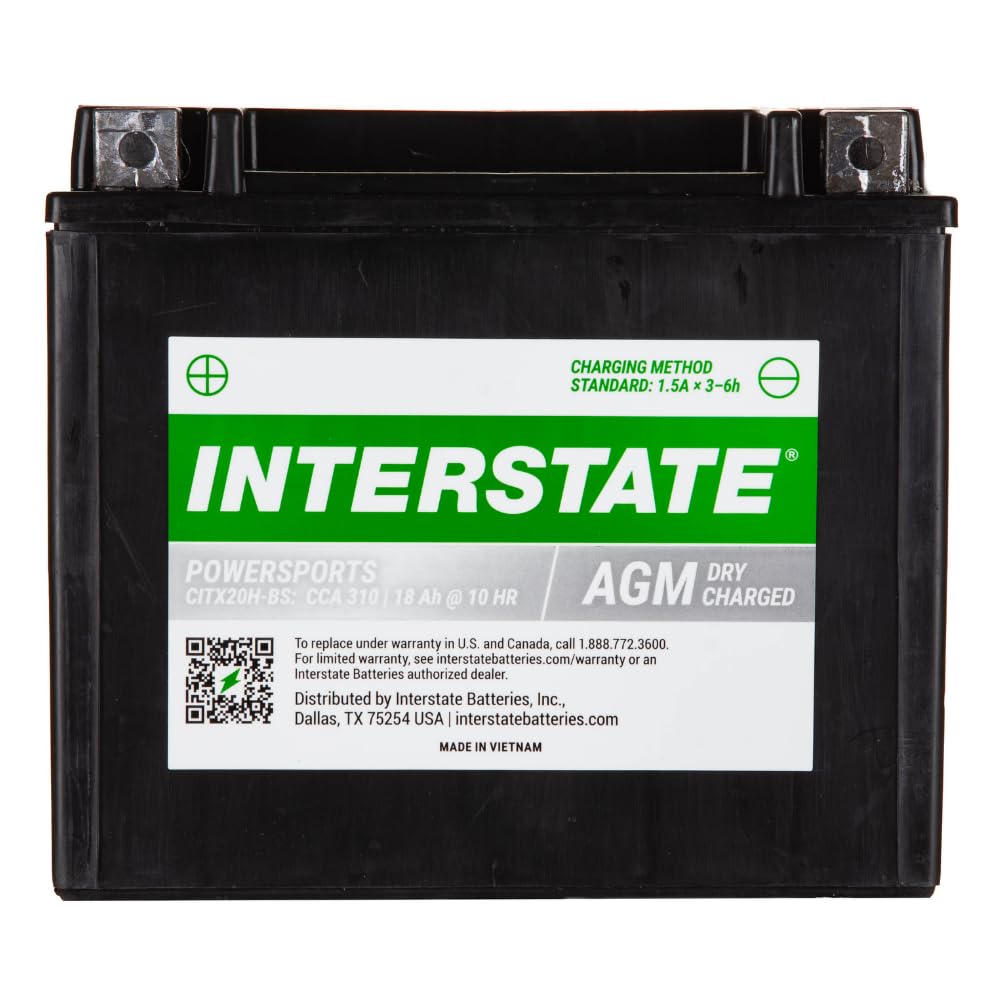
4. Interstate YTX20H-BS AGM Battery
A veteran brand bringing 310 cranking amps and a flame-arrestor safety build to the tray.
Lead-acid can still punch hard, and Interstate proves it with 310 CCA in an 18Ah AGM — the strongest cold-cranking figure among the lead-acid picks here. On a cold morning at the ramp, that reserve is the difference between a crisp spin and a labored grind. The pack arrives dry with a pre-mixed, no-pour acid pack for the freshest possible fill, then seals permanently once filled, so you never check water again.
Interstate has been building batteries for over 70 years, and its engineers have put real thought into this one. A Safety Flame-Arrestor is built in, the active material is compounded to resist vibration, and the sealed case can mount at virtually any angle without spilling or leaking. Quality is the strongest signal owners get from this pack, and the brand’s long professional track record explains why so many shops reach for it.
The caveat worth naming: fit is a common sticking point, since the YTX20H shape is slightly different from a plain 20L and does not drop cleanly into every tray. Measure your box first. Otherwise, for a heavier engine that wants a serious cranking reserve, this is a steady, well-made choice at 14.9 pounds.
Why Riders Reach For It
- 310 CCA — the highest cranking figure among the lead-acid picks here
- Safety Flame-Arrestor built in, plus vibration-resistant active material
- Pre-mixed no-pour acid pack keeps the fill fresh, then seals permanently
- Mounts at virtually any angle without leaking
The Details to Check
- The YTX20H shape does not fit every 20L tray — measure before buying
- Some owners find the fit does not match their particular hull
Made for: the rider who wants maximum cranking reserve and a proven safety build from a legacy brand.
Measure twice if: your tray is a strict 20L footprint and you cannot verify the H-group dimensions first.
5. Caltric AGM Battery for Sea-Doo GTX 4-TEC

Tuned for the GTX 4-TEC era, with a stud terminal and a fit that owners say lands right.
This Caltric is aimed squarely at the GTX 4-TEC hulls, and its stud terminal is the detail that matters when your factory cables expect a bolted post rather than a clamp. It is a 12-volt maintenance-free AGM listed against Sea-Doo OE numbers 278001882, 515176151, and 278001763. The fit is what owners praise most — the battery drops in as expected and, as the consensus goes, it starts on the first try.
At 21 pounds this is the heaviest pack in the group, so expect a solid lift into the tray. The deep OEM cross-reference across Can-Am, Arctic Cat, Polaris, Ski-Doo, and BMW gives you room to verify your fitment before ordering. It measures 5 by 6.56 by 6.87 inches, a taller footprint than the standard 20L, so confirm your tray has the extra height.
The honest note is value: opinions split, with a share of owners feeling it does not deliver for what it asks. For a GTX 4-TEC owner who wants the right terminal and a first-try start, it still earns its place — just confirm your model year is on the list.
What it nails: The right stud terminal and a GTX 4-TEC fitment that owners say seats correctly and starts first time.
What to know: It is the heaviest pick here at 21 pounds, and value opinions split.
Your match if: you own a GTX 4-TEC and want the correct stud-style terminal and a fit that seats cleanly.
Keep looking if: your hull needs a lighter pack or a shorter footprint.
6. AJC Battery for BRP Sea-Doo 1500CC
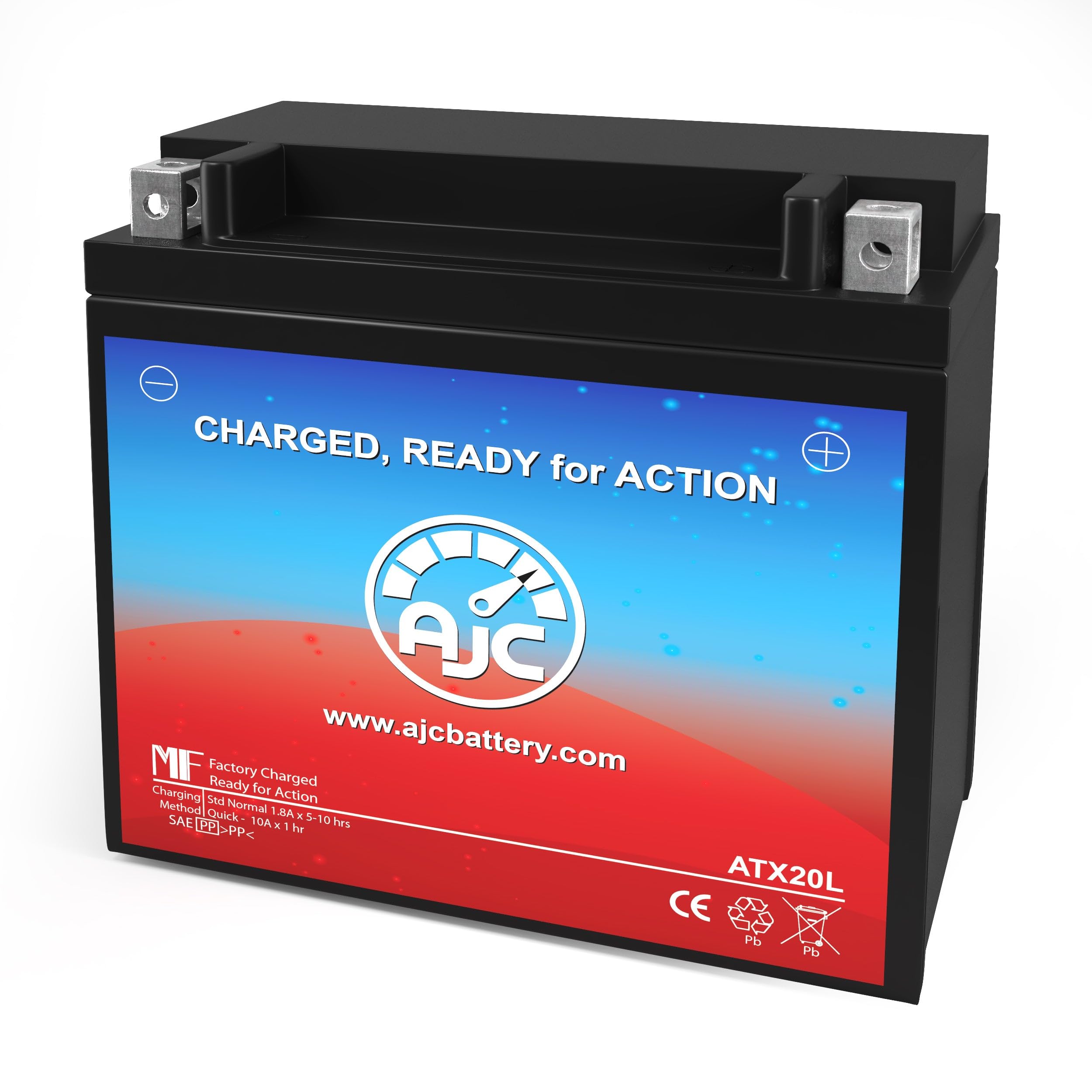
A lightweight direct replacement for 1500CC Sea-Doo hulls with the right Terminal B post.
AJC builds this as a direct replacement for the 1500CC Sea-Doo family across the listed model-year span, with a -/+ polarity and Terminal B post layout. At 12.1 pounds it is the lightest lead-acid pick in the group — noticeably lighter than the 16-pound Caltric AGM and easier to swing into the tray. It is a 12-volt lead-acid rated at 270 CCA, matching the Goodyear’s cranking figure.
Its 6-cell construction and 12-month warranty give you a familiar, dependable lead-acid pattern. The real fitment advantage is that Terminal B layout, which matches stock cables without adapters on the models it lists. If your hull is one of them, this is a straightforward, low-cost way back onto the water.
Be honest with yourself about longevity, though: reliability feedback runs mixed, with a share of owners finding it only lasted a season or so while others had no trouble. Keep it on a maintainer through storage and treat it as a dependable short-term replacement rather than a decade-long investment.
Where it wins: The lightest lead-acid here at 12.1 pounds, with a Terminal B post that matches stock cables and a 12-month warranty.
The fair warning: Longevity expectations run mixed, so plan to keep it on a tender when the ski sits idle.
Grab it when: you want a light, direct-fit 1500CC replacement with the right Terminal B post and a low outlay.
Weigh it carefully if: you want a battery that will sit untended for half the year without care.
7. Forgetyo YTX20L-BS LiFePO4 Battery

The 3.7-pound lithium that turns a 4-TEC over with 700 cranking amps and almost no weight.
Weigh the numbers on this one: 3.7 pounds against the 12.1-pound lightest lead-acid here, and 12.8 volts rated for 700A of cranking power. That is a big power-to-weight jump, and the pack arrives fully charged and ready to bolt in — no activation, no acid, no maintenance. Forgetyo claims a third of a lead-acid pack’s weight and 5X longer service life, but judge it on the 3.7 pounds and 700A crank, which are real.
A compatible 14.6V lithium charger fills it in about 5 hours at 2A or around 2 hours at 5A, with 2A the gentle recommendation. A built-in BMS guards against overcharge, deep drain, and short circuit while balancing the cells. The one word of caution is battery life — a share of buyers report it worked well for a couple of months and then would not hold a charge, while others had no issue, so treat the maker’s warranty claim as your backstop and keep the charger handy.
For a rider who wants the absolute lightest lithium on a tighter outlay and is happy to manage the charge routine, this is the compact pick. It also suits smaller craft where shaving pounds off the nose is a real handling advantage.
The Draw
- Only 3.7 pounds — the lightest pack in the group
- 700A cranking power at 12.8 volts
- Ships fully charged, no acid or upkeep
- BMS guards against overcharge, deep drain, and short circuit
Check Before You Commit
- Battery life runs mixed — some units stop holding a charge after a couple of months
- Needs a 14.6V lithium charger you supply separately
Pick this if: saving every ounce of weight matters and you want big crank amps on a tighter budget.
Reconsider if: you want a battery you can set and leave for months without a lithium charger on hand.
Know the Specs
Cranking Amps (CCA and Amp Figures)
CCA stands for cold cranking amps — the burst of current a battery delivers in cold conditions to turn a stiff engine. Higher is better for a big 4-TEC that resists turning over at the ramp. A 310 CCA lead-acid pack like the Interstate delivers a strong reserve. Lithium packs quote very high amp figures such as 700A or 850A, but exactly how that translates to a PWC start depends on the pack’s own design, so read the fitment notes for each.
Group Size and Terminal Layout
Group size is the physical shape and post placement of a battery. A YTX20L-BS footprint is the common match for many Sea-Doo trays, while the YTX20H shape is slightly different and does not fit every box. Terminal type matters too — a stud terminal bolts your cable on, while Terminal B is a specific post arrangement. Check your hull’s tray, cable ends, and polarity before you order, because a great battery that will not seat or reach the cables is no help.
Lithium Versus Lead-Acid
LiFePO4 is a lithium chemistry that weighs far less and cycles many more times than lead-acid, but it needs a dedicated 14.6V lithium charger. Lead-acid AGM (absorbed glass mat) is heavier and cheaper, proven for decades, and charges on conventional gear. Lithium suits frequent riders chasing light weight and long life; AGM suits budget owners who want simple charging.
Warranty and Maintenance
Warranty length varies widely — from 90 days on some budget AGM packs to a two-year limited warranty on the Goodyear. A maintenance-free design means no water checks, which is a real benefit on a wet, bouncing PWC. Through winter storage, a battery maintainer keeps a lead-acid pack alive; lithium packs hold charge longer but still benefit from the right charger.
Common Questions
Will a YTX20L-BS battery fit my Sea-Doo 4-TEC?
Is a lithium battery better than lead-acid for a 4-TEC?
How many cranking amps does a Sea-Doo 4-TEC need?
Can I charge a LiFePO4 battery with a normal trickle charger?
What is the difference between YTX20L-BS and YTX20H-BS?
How do I keep my PWC battery alive through winter storage?
Does terminal layout really matter on a personal watercraft?
Why does the same brand offer different batteries for GTX and GTI models?
Do these batteries come ready to install?
What happens if my battery is slightly the wrong size for the tray?
The Bottom Line
For most riders, the sea-doo 4 tec battery winner is the Forgetyo YTX30L-BS LiFePO4, because it pairs a huge 850A crank with about a third the weight of lead-acid and 2000-cycle longevity. If you want a certified sealed AGM from a household name with a two-year warranty, grab the Goodyear GYTX20L. And for the strongest cranking reserve on a proven lead-acid, the Interstate YTX20H-BS at 310 CCA is the one to reach for.
Match the group size and terminal to your hull first, then let chemistry decide the rest. Match the group size and terminal to your hull, and any pick here will crank on the first press.
How we choose
We do not accept paid placement. Every pick is matched to a real buyer and a real use-case; we do not hands-on test units.
Sources
Specifications: manufacturer listings and product documentation. Review insights: verified customer reviews, as of November 2026. Pricing: not shown on this page (it changes often); check the current price via the retailer link.
As an Amazon Associate, Tactical Gear Guy earns from qualifying purchases. This does not affect which products we feature.