Specs are compiled from manufacturer listings and verified buyer reviews and can change over time — please confirm the key details on the product page before buying.
The suit you actually need is the one whose neoprene thickness matches the water temperature you dive in most — not the thickest suit on the page. A 5 mm suit in 80-degree tropical water will cook you, and a 3 mm suit in cold water leaves you shivering within the first ten minutes of a dive. Get the thickness right and seams, zipper, and fit become refinements instead of compensations.
This guide is built by comparing the manufacturers’ published specifications and the patterns across verified customer reviews, so you get each pick’s real strengths and trade-offs instead of marketing spin.
Below you’ll find thick cold-water steamers, flexible travel suits, and women’s cuts with different fits, sorted by what each one is actually built to do. Every pick here is a full-body suit with a real thickness rating behind it, so you can match one to your water instead of guessing from a product photo. This breakdown covers eleven Scuba Diver Suit options with thickness, seam type, and fit notes for each.
Top Picks


How To Choose The Best Scuba Diver Suit
Three things decide whether a suit works for you: the water temperature you dive in, how the seams are built, and whether the size chart fits your chest and height. Ignore any one of those and you end up with a suit that either freezes you or floods on every dive.
Match the neoprene thickness to your water temperature
Thickness is measured in millimeters, and it’s the single number that decides how cold a dive you can handle. A 3 mm suit is a warm-water and travel suit. A 5 mm suit handles cooler water and is the common choice for temperate diving. Anything in the 7 mm and up range is built for genuinely cold water and often uses a semidry design with internal dams at the neck, wrists, and ankles to keep water from flushing through.
The wrong assumption beginners carry: thicker is always better. A thick suit in warm water traps heat you don’t want and restricts your movement, which tires your arms out faster on a long dive.
Know your seam types before you buy
Overlock cuffs are stitched edges at the wrist and ankle — simple and durable, but they let more water move through than a sealed seam. GBS (glued and blind-stitched) seams glue the neoprene together with waterproof glue, then stitch only halfway through the material so fewer holes pierce the suit. That makes the seam stretchier and warmer. Fully taped seams add another layer of reinforcement and are the most water-resistant of the three.
Read the size chart, not your t-shirt size
Wetsuit sizing runs on chest, waist, and height — not the size you wear in street clothes. A suit should feel snug against your body with no loose folds, because a loose suit lets water pool inside and that water steals your heat. Check the manufacturer’s chest and height numbers directly and size to those.
Side-by-Side Comparison
| Model | Best For | Thickness | Zipper | Material | Amazon |
|---|---|---|---|---|---|
| Cressi Men’s Ultraspan Morea★ Best Overall | Warm-water all-rounder | 3 mm | Back zip | Neoprene | Amazon |
| Owntop 5mm WetsuitBest Value | Budget cold-water coverage | 5 mm | Back zip | Neoprene, Nylon | Amazon |
| Aunua 5mm Full WetsuitBest Seams | Cold-water value with GBS seams | 5 mm | Back zip | Neoprene | Amazon |
| REALON Women’s 5/4mm Wetsuit | Women’s cold-water fit | 5 mm | Back zip | Neoprene | Amazon |
| ZCCO Men’s 5mm Wetsuit | Front-zip easy entry | 5 mm | Front zip | Neoprene, Nylon | Amazon |
| O’Neill Women’s Reactor-2 | Beginner-friendly women’s suit | 3 mm | Back zip | Neoprene | Amazon |
| Cressi Fast 5mm | Cold-water comfort and knee armor | 5 mm | Back zip | Neoprene | Amazon |
| SCUBAPRO Definition 3mm | Warm-water precision fit | 3 mm | Zipper | Neoprene | Amazon |
| O’Neill Hyperfreak 3/2+mm | Cold-water flexibility | 3.2 mm | Chest zip | Neoprene | Amazon |
| SCUBAPRO Definition 5mm | Cold-water extended diving | 5 mm | Zipper | Neoprene | Amazon |
| Hollis NeoTek 8/7/6mm | Deep cold-water semidry | 8 mm | Front zip | Neoprene | Amazon |
Detailed Reviews
1. Cressi Men’s Ultraspan Morea 3 mm Wetsuit
Our pick — 4.5+★ from 600+ verified ratings; the strongest balance of quality and price.
Three millimeters of Italian-designed neoprene that covers tropical reefs and beach days without cooking you.
If you dive warm water mostly and want one suit to do snorkeling, surfing, paddle boarding, and entry-level scuba, this is the one to start with. The body is 3 mm Premium Quality Neoprene, which is the warm-water thickness — enough insulation for a reef dive in the eighties, not a suit built for cold-water immersion. It’s a full adult one-piece with the arms and legs cut in Ultraspan neoprene, a stretchier grade that lets your shoulders and legs move freely and makes getting the suit on easier.
You get extra warmth where your core needs it most. The chest panel uses rubberized neoprene, a coated stretch fabric that holds heat against your torso. The dorsal YKK zipper (the back zipper running down your spine) carries an Aquastop flap, a barrier that cuts down how much water leaks in through the entry. The wrists and ankles finish in Overlock cuffs, stitched edges that are durable and simple, though they are not a watertight seal. The knees have bump-and-scratch protection, which saves you when you kneel on a rocky bottom to check your gauges.
Here is the honest trade-off. This is a warm-water suit, and in genuinely cold water it will not keep you warm; the 3 mm body simply isn’t built for it. Compared directly to the ZCCO Men’s 5 mm anorak a few picks down, this Cressi is a full 5 millimeters thinner versus that suit’s 5 mm, and its 33-inch chest size sits against the ZCCO’s 44-inch chest. That’s the point of this suit: it’s a smaller, lighter, more flexible cut built for warmer water and easier movement, not deep cold. Cressi has been making dive and snorkel gear since 1946, and the anatomical cut here adapts to different body shapes rather than forcing a square fit onto a round body.
Where It Wins You Over
- 3 mm neoprene is the right thickness for warm-water snorkeling and reef diving
- Ultraspan arms and legs move freely and go on easier than stiffer neoprene
- Aquastop flap on the YKK back zipper reduces water leaking through the entry
- Padded knees protect against bumps and scratches on rocky bottoms
- Anatomical one-piece cut adapts to different body shapes
What To Weigh First
- Not a cold-water suit — 3 mm insulation will leave you cold in low temperatures
- Overlock wrist and ankle cuffs are durable but not a fully watertight seal
Reach for this if: you dive warm water, snorkel, surf, or paddle board and want one flexible suit that covers all of it.
Think twice if: your regular water runs cold — go thicker, because 3 mm won’t hold your heat there.
2. Owntop 5mm Wetsuit for Men and Women
A 5 mm full-body suit that brings cold-water warmth to a budget-friendly tier.
For the diver on a tighter budget who still needs genuine cold-water coverage, this is the pick. The body is 5 mm neoprene with 4 mm CR neoprene cuffs at the wrists and ankles, and that extra cuff thickness plus the snug-fit design there is what keeps water from flooding up your sleeves and legs. What wins people over here is the build quality relative to what you’re spending — the neoprene-and-nylon fabric also carries UPF50+ sun protection, and it doubles as a barrier against jellyfish stings and coral scrapes.
Getting in and out is handled by a smooth back YKK zipper with an extended pull rope, which lets you reach over your shoulder and pull it down yourself. Warmth is the other thing buyers keep coming back to — this is a suit built for cold water sports like surfing and snorkeling, and the 5 mm body does the work.
The catch a buyer should know up front is fit. Sizing runs tight for many people, and the manufacture says it plainly: use chest, waist, and hip measurements as your first reference and do not pick a size based on the clothes you normally wear. There’s also some mixed feedback on the zipper holding up. Measure your chest, waist, and hips against the maker’s chart first — this 5 mm suit rewards an accurate fit and punishes a guess.
Size it by numbers: order directly off the chest, waist, and hip chart the maker publishes, because the snug cut rewards an accurate measurement and punishes a guess.
The real limit: sizing feedback skews tight and a few zippers have given trouble, so measure carefully and treat the zip gently.
Pick this one when: cold water is on the schedule and you want 5 mm warmth without moving into the premium tiers.
Hold off when: you can’t measure yourself accurately before ordering — this cut has little slack for a wrong size.
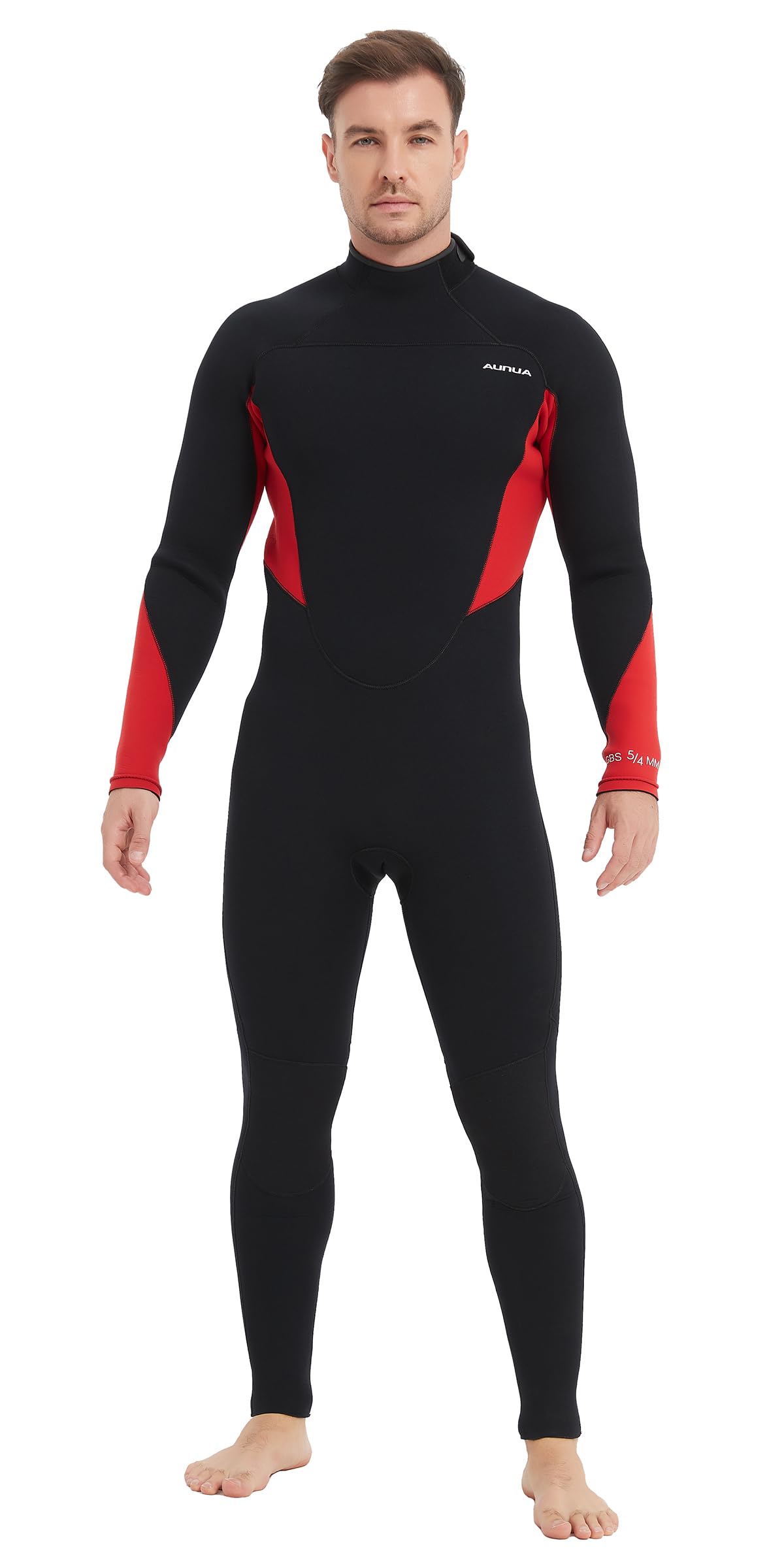
3. Aunua Men’s 5mm Full Wetsuit
Glued and blind-stitched seams and a 5/4mm cut built to keep cold water out and your arms moving.
The seam construction is the reason to look here. This suit uses GBS seams — glued together with waterproof glue, then blind stitched so the stitch only passes halfway through the neoprene, making fewer holes. That’s the seam that makes a much stretchier join and significantly reduces water entry, and the maker adds a strip of taped dots inside for extra durability and warmth. Thickness runs 5/4mm, meaning a 5 mm body with 4 mm panels for flexibility, and the maker rates it for water as cold as 44°F.
Fit is the thing that lands with owners — it’s the most-praised trait of this suit, with quality right behind it. Value for money, warmth, and comfort all show up as strong positives too, and the SuperStretch neoprene keeps your arms from tiring so you can stay in the water longer. A key loop adds a secure spot for your key while you’re diving.
The honest note is the break-in smell. A new suit can arrive with a pungent odor, which the maker says is not harmful and fades once you hang it in the open air. Wash it in cold water with mild detergent and air dry it flat — never iron it or use bleach — and expect a short airing-out period. Ease of use draws some mixed notes, so allow a little practice getting it on the first few times.
Why divers pick it: GBS seams plus a 5/4mm cut mean a warm, stretchy suit that rates down to 44°F water.
Give it a day to air: a faint new-neoprene smell is normal and clears after hanging it out.
It beats the basic back-zip suits on: seam warmth for cool-water diving, at a mid-range place in the lineup.
Just know walking in: plan on a short airing period and a few tries to dial in getting it on smoothly.
4. REALON Women’s 5/4mm Wetsuit

A women’s-cut 5 mm cold-water suit with knee armor and an inner zip cover that guards your skin.
If you’re a woman diving cold water, this suit gives you a real option. It’s a 5/4mm one-piece (5 mm in the core, 4 mm in the panels) in women’s sizing with a 34-inch chest. The inner protective flap behind the zipper keeps the metal off your skin, which matters when you pull the zip closed on a cold morning. Folded cuffs at the wrists and ankles are designed to minimize water ingress, so less cold water flushes through. A reinforced knee pad adds durability where you kneel against the bottom.
Quality is what owners talk about most, and it comes back strongly positive. The suit is also built to add buoyancy and cut water resistance, which helps you stay afloat with less effort while you’re still learning to dive. The back zipper makes entry and exit straightforward, and it handles swimming, surfing, snorkeling, paddle boarding, scuba, kayaking, jet skiing, and spearfishing.
The thing to plan around is sizing — the cut runs big for smaller women’s sizes, so several buyers found they needed to size down. Use the chest and height measurements as your guide and don’t assume your usual dress size maps across. After a dive, rinse it thoroughly with clean water and hang it on a wide hanger until both sides are fully dry.
Strong Points
- 5/4mm cold-water thickness in a true women’s cut
- Inner zip cover keeps the zipper off your skin
- Reinforced knee pad holds up to kneeling on the bottom
- Folded cuffs at wrist and ankle reduce water ingress
Size It Carefully
- Runs big for smaller women’s sizes — many need to size down
- Not built for the deepest cold; 5 mm handles cool, not freezing
Go for it if: you’re a woman diving cool water and want a snug 5 mm suit with knee protection and a protected zip.
Measure first: this cut runs generous, so size down rather than up if you’re between sizes.
5. ZCCO Men’s 5mm Front-Zip Wetsuit

A long front zipper with four extra zips at the arms and legs makes this the fastest suit here to get in and out of.
Divers who hate wrestling a back zip over their own shoulder should start here. This suit puts a long, smooth front zipper on the chest and adds four small zippers at the arms and legs, so you can dress and undress faster than a standard back-zip suit. The body is 5 mm neoprene and nylon for cold-water warmth, and the maker rates it with UPF 50+ sun protection.
On paper, this is the biggest suit in the warm-and-thick group. Its chest measures 44 inches, against the Cressi Morea’s 33-inch chest, so broader frames have more room. Its 5 mm body gives you the full cold-water thickness that 3 mm warm-water suits leave out. The collar, wrists, and ankles use a smooth-skinned neoprene inner layer that seals tightly to your skin to cut down water entry. Thickly padded nylon knee pads let you kneel on rough bottoms without bruising.
The fit is the one honest wrinkle. Feedback runs mixed on sizing, with part of the range being too big for some bodies — so check the chest measurement against your own before ordering rather than trusting a general size. Match the 44-inch chest to your own frame and the front zip plus four limb zips make this the fastest suit here to get in and out of.
Fastest in and out: a front zip plus four limb zips means you’re dressed before the back-zip crowd is halfway up.
Watch the sizing: the chest runs large for some, so match the 44-inch measurement to your own frame.
The suit for you if: cold water is your home turf and you want to stop fighting a back zipper every dive.
skip it if: your chest doesn’t line up with the listed measurement — this fit isn’t forgiving of a size guess.
6. O’Neill Women’s Reactor-2 3:2mm Back Zip Full Wetsuit
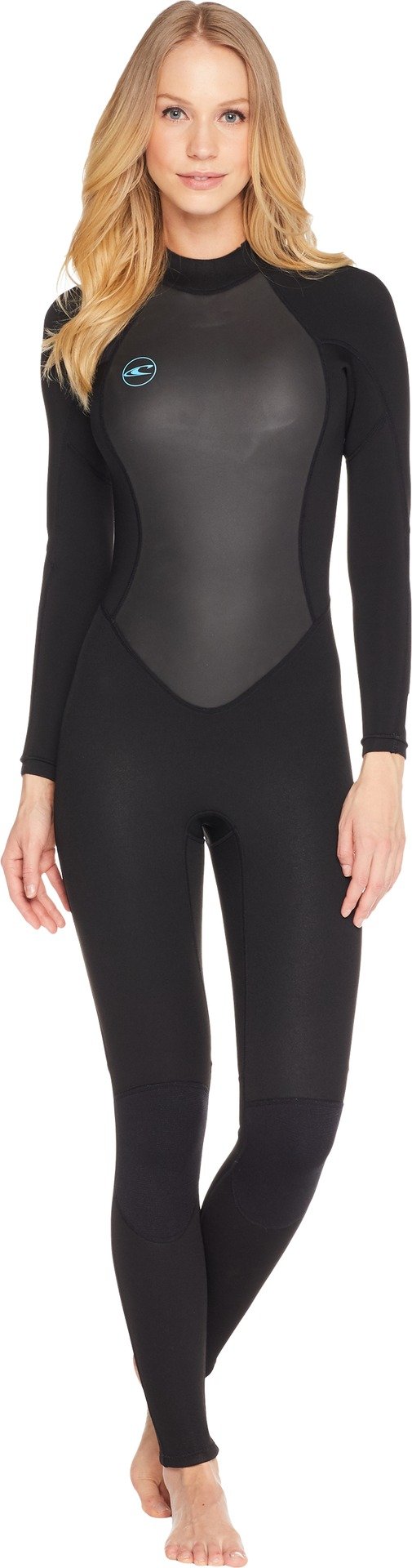
A women’s entry-level steamer (a full one-piece wetsuit) with smooth paddle zones and a smoothed skin that shrugs off wind.
New women divers who want a warm-water suit that goes on easily will get along with this one. The thickness runs 3:2mm — a 3 mm core with 2 mm panels for flexibility — in a cut aimed at surfing, diving, paddle sports, lake days, and the beach. O’Neill builds it as an entry-level, value-driven suit. The parts that matter are all here: an ultra-stretch neoprene that feels soft against the skin, a back-zip system with a water-resistant closure for easy entry and exit, and wind-resistant smoothskin on the chest that adds insulation against the cold and the breeze.
The closed shape is where this suit earns its keep. smooth paddle zones put the least seam possible where your arms rotate, so you can paddle and swim without seams chafing your shoulders. Fit is the standout: buyers report a good fit with real length in the torso, legs, and arms, and the suit works comfortably in water around 70 degrees. The women’s size 10 is cut for a 34 to 36-inch chest and a 5’6″ to 5’8″ height.
Two things to plan for. Sizing feedback is mixed, so measure your chest and height rather than trusting your usual dress size. And this is a warm-water suit — in cold water the 3:2mm build won’t hold heat the way a 5 mm will. For a first suit or a warm-trip suit, it’s a dependable choice from a brand that has been building wetsuits for a long time.
Built for your shoulders: smooth paddle zones keep seams off the spots that rotate, so your stroke stays chafe-free, and the smoothed chest blocks wind.
Warm-water only: 3:2mm suits the tropics and lake day, and runs cold past that.
A smart first suit for: women diving or surfing warm water who want easy entry and freedom through the shoulders.
Not the right one for: cold-water diving, where you’ll want a 5 mm or thicker suit.
7. Cressi Fast 5mm Full Wetsuit
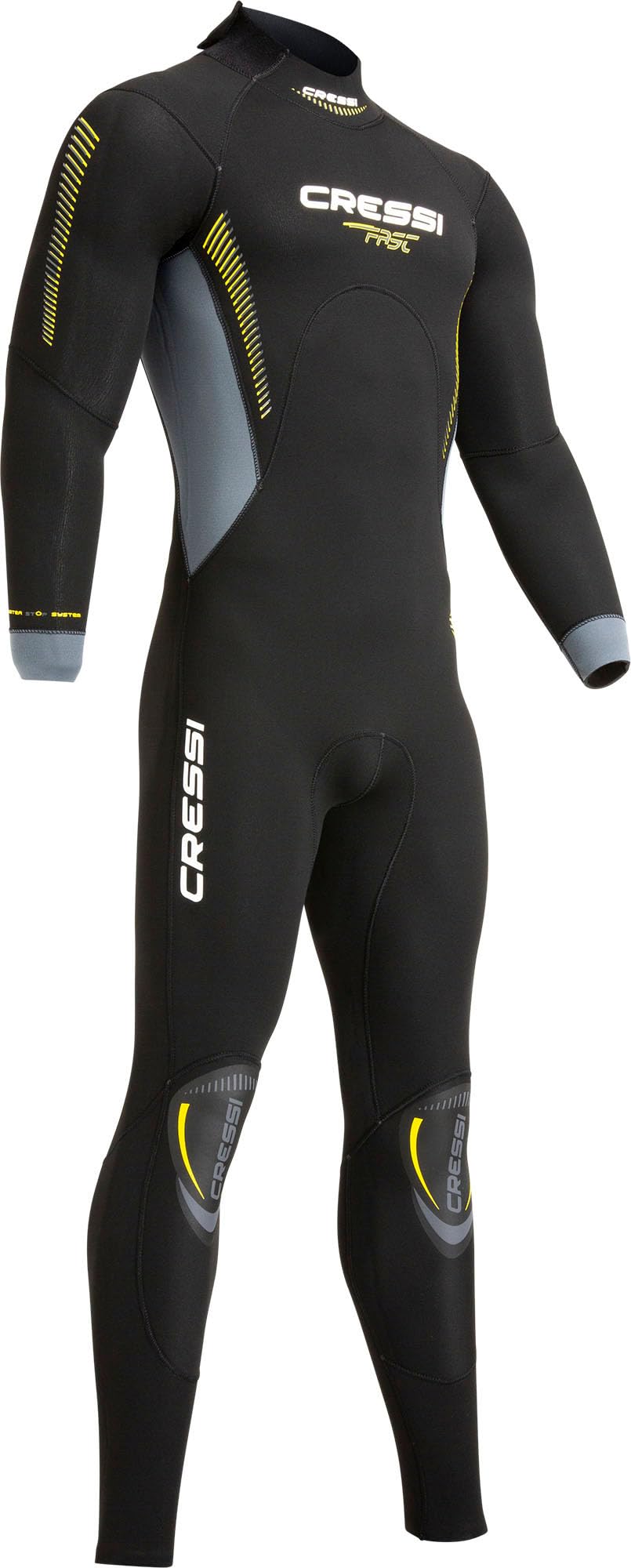
A 5 mm cold-water steamer with a neck preformed at 120 degrees so it stops pinching your throat.
Cold-water divers who care about comfort at the neck and knees should look at this one. It’s 5 mm double-lined neoprene that resists compression at depth, which is what keeps heat from being squeezed out of the material as you go deeper. The neck is preformed at 120° and the legs are pre-shaped to improve flexibility and make kicking easier — details you feel on a long dive, not a short one.
The protective touches sit where wear happens. The sleeves carry a “Seal” system for tightness and durability under frequent use. The closure flap is wider and the nape is extended to block water infiltration when you tilt your head underwater. The knees and shoulders get Tatex anti-wear elastic reinforcements, so high-friction spots last longer. A YKK back zip with an under-zip lining and water-stop system closes the suit. It’s a premium-tier cold-water build, made in 5 mm double-lined neoprene and designed in Italy by Cressi.
Know what you’re buying: at 5 mm it’s for cold water, not the tropics, and the 3.9-pound weight reminds you it’s a substantial suit to haul around. For a diver who feels the cold and wants a suit that works through a long bottom time, the reinforced knees and the extended nape are worth the heft.
The Strong Case
- 5 mm double-lined neoprene resists compression at depth to hold heat
- Neck preformed at 120° for comfort against the throat
- Knees and shoulders reinforced with Tatex anti-wear panels
- Extended nape and wider flap block water when you tilt your head
The Thing To Accept
- Heavier at 3.9 pounds — a substantial suit to carry and pack
- 5 mm is a cold-water build, so it’s too warm for tropical diving
This settles the cold-water question: for a diver who feels chill and wants reinforced knees plus a neck that doesn’t bite.
Leave it on the rack if: you dive warm water — 5 mm double-lined is more suit than you need there.
8. SCUBAPRO Definition Steamer 3mm

A warm-water steamer cut with SCUBAPRO’s 3D Body Map System so the fit sits close and moves with you.
Consider this if warm water is your diving home and you want a suit built to fit a real body shape, not a flat pattern. It’s 3 mm N2S (Nylon 2 Sides) neoprene, rated as a Class D dive suit for water temps above 72°F (22°C), which is a suit for the tropics and warm destinations. The Body Map System is the selling point — a 3D cut with special tailoring and material inserts gives extra stretch exactly where your body needs it, so the suit hugs close without binding your shoulders.
Inside, an infrared fleece lining reflects body heat to add warmth, and it feels soft against the skin rather than scratchy. In a warm-water suit, that lining is the difference between a comfortable long dive and a distracting one. The size is Xtra Large with a chest of 42 to 44 inches, a waist of 37 to 39 inches, and a height of 6’1″ to 6’3″, so check those against your own measurements.
The trade-off is scope. This is a warm-water suit rated above 72°F, and it’s the thinnest premium option in this lineup, so it isn’t meant for cold water or deep cold-sea diving. If your dives are tropical and your priority is a fit that follows your body, the 3D cut is the feature here that earns the ticket.
The 3D cut is the star: tailoring plus inserts puts stretch where your body flexes, so a warm-water suit feels trim rather than baggy.
Match it to the map: the Xtra Large maps to a 42 to 44-inch chest and a 6’1″ to 6’3″ height — verify those against your own frame.
The warm-water diver’s pick: a 3D-tailored 3 mm suit that rates above 72°F water with a fleece lining for comfort.
Not for cold water: this is a tropical steamer — cold-sea dives need a thicker suit and a semidry design.
9. O’Neill Hyperfreak 3/2+mm Chest-Zip Wetsuit
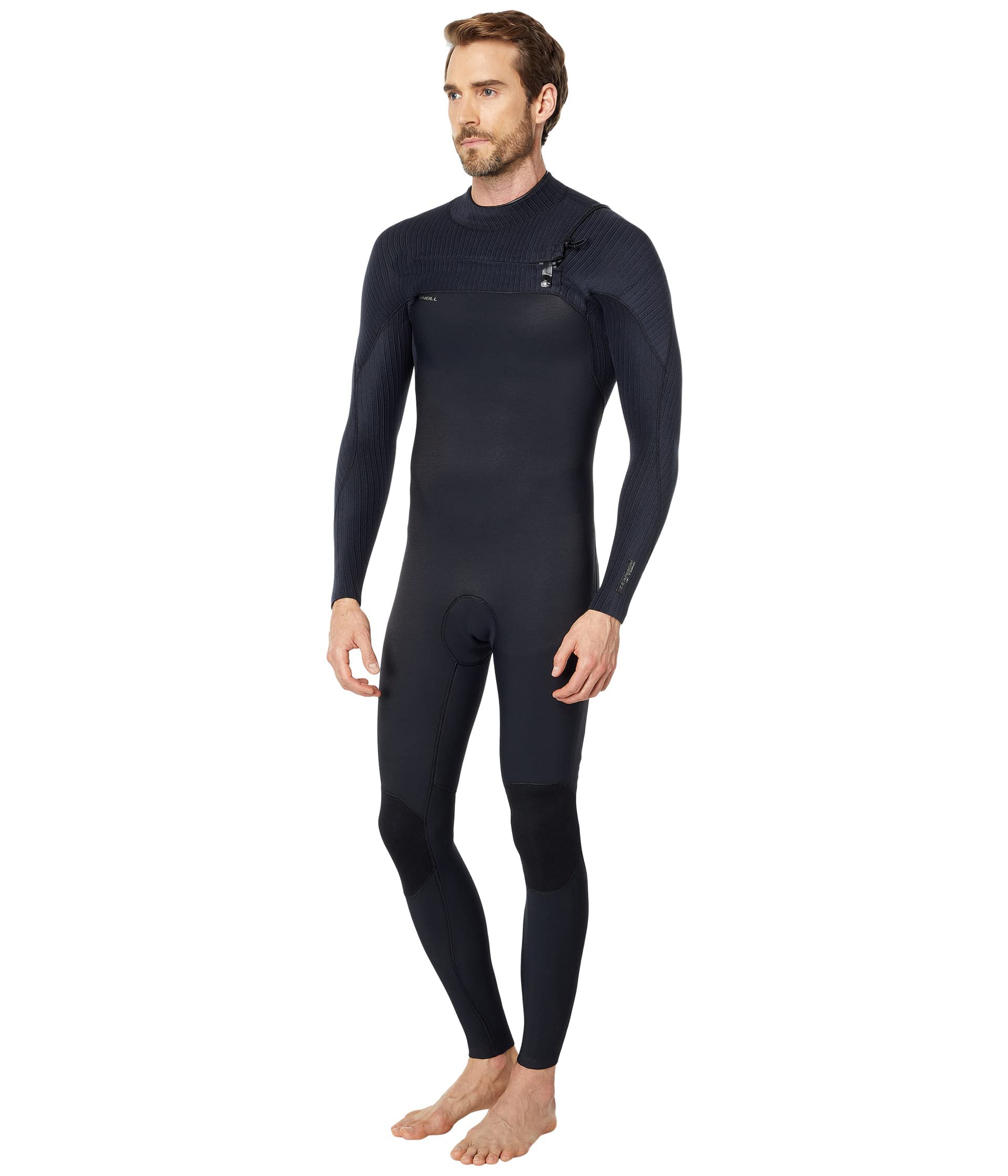
A chest-zip 3/2+mm suit with a 360-degree barrier system built to keep cool water out and let you move.
Divers and surfers who want serious flexibility with real cold-water protection land here. The thickness is a strategically designed 3/2mm+ — 3 mm body with 2 mm panels — and the F.U.Z.E. chest zip closure does the water-blocking work, backed by a 360-degree barrier system that limits entry around the zip and drain holes that release whatever gets in. Glued and blind-stitched seams prevent seepage, and fully taped seams reinforce the suit for long service.
What everyone raves about is the feel: quality, warmth, and flexibility all come back strongly positive, and the fit is described as close like a glove while still easy to put on and off. The advanced neoprene gives freedom of movement through your stroke or fin kick, and the smoothskin adds insulation against the cold on the water.
The honest caveat is durability over time. Some owners mention seam rips after about five months of use, so treat the taped seams with care and rinse after every dive. This is the top of the flexibility-first range — a suit for cool-water surf and dive sessions where you want to move, and one to baby if you want it to last.
Freedom first: the chest zip plus a 360-degree barrier and taped seams make this a warm, flexible suit for cool water.
Handle with care: some seams have torn after roughly five months, so rinse and store it properly.
Ride this wave if: you want cool-water flexibility and a chest zip that keeps water out without pinching.
Look elsewhere if: you need a suit to take constant hard use without babying — the seams ask for care here.
10. SCUBAPRO Definition Steamer 5 mm

A 5 mm steamer rated for 50 to 64.5°F water, built with stretch panels that make getting it off easier.
This is the pick for cold water in the 50 to 64.5°F (10 to 18°C) range — it’s certified as a Class B dive suit, so the maker’s own temperature rating tells you exactly what it’s for. The body is 5 mm neoprene with an Ultraspan chest panel and Stretchtec fabric running through the sides, arms, and legs, so the thick suit still gives where your arms and torso need to move. The Body Map 3D cut and tailoring keep it fitting close.
Getting it off is what separates it from the warm-water Definition 3mm. It uses smooth single arm and leg stretch panels with double zippered seals, which makes donning and doffing (putting on and taking off) noticeably easier than a standard thick steamer — a small design win that matters a lot on a cold morning at the dive site. It’s 4 pounds of neoprene, in Xtra Large with a 42-inch chest, a 37 to 39-inch waist, and a 6’1″ to 6’3″ height.
The honest limit is clear: this suit is built for cold water and won’t suit tropical diving, and it’s a premium-tier purchase. For a diver whose home water sits in that 50 to 64.5°F band, though, the rated temperature, stretch construction, and easier entry put it right where it needs to be.
Why It Belongs In Cold Water
- Certified Class B, rated for 50 to 64.5°F (10 to 18°C) water
- Ultraspan chest panel plus Stretchtec on sides, arms, and legs
- Double zippered seals and smooth panels make entry and exit easier
The Cold Truth
- Too warm for tropical water — this is a cool-to-cold suit
- A premium-tier purchase compared with value 5 mm options
Built for your water if: you dive between 50 and 64.5°F and want a rated cold-water suit that goes on without a fight.
Overkill if: you dive the tropics — a 3 mm warm-water suit will serve you better.
11. Hollis NeoTek 8/7/6mm Semidry Wetsuit
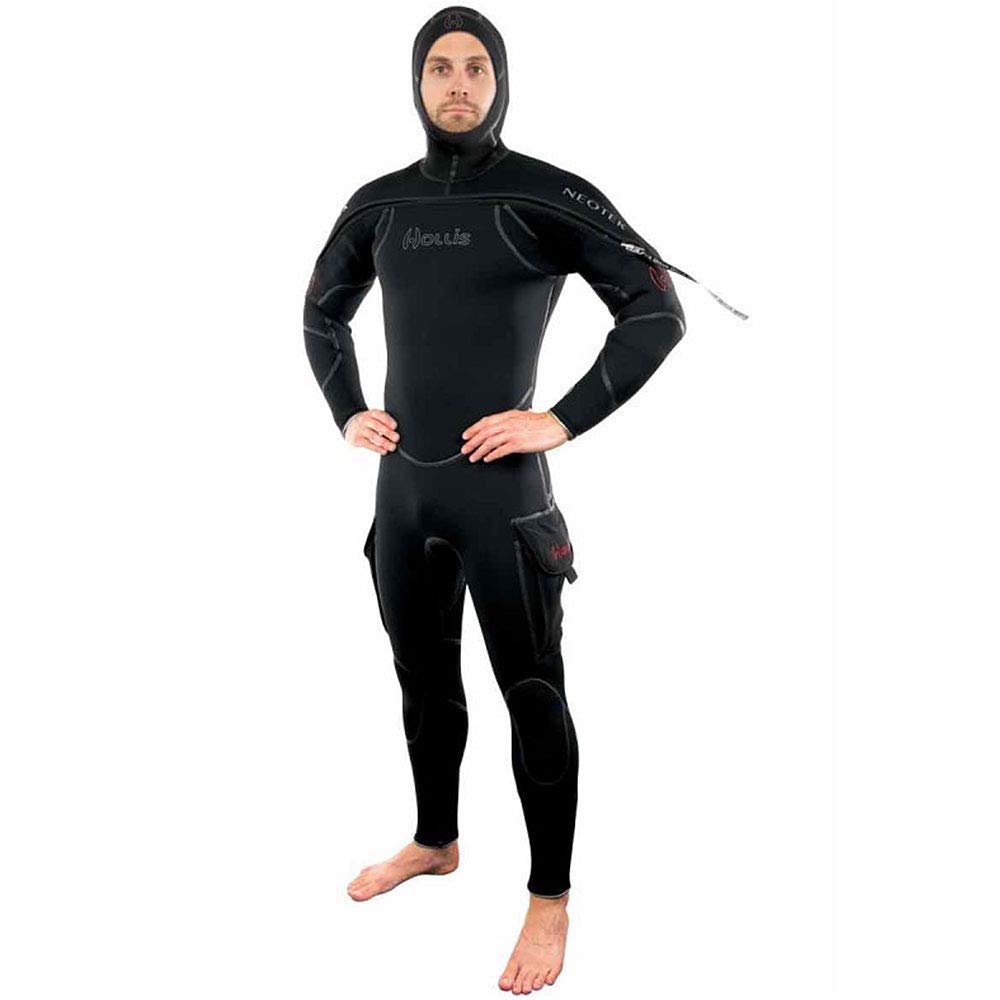
The thickest suit on this list — an 8/7/6mm semidry built for genuinely freezing water.
When the water you dive runs truly cold, this is the suit that matches it. The thickness is a mix of compression-resistant and superstretch neoprene running 8/7/6mm, the most substantial build here, and internal dams at the neck, wrists, and ankles stop water from flushing through even on a long bottom time. The horizontal front zipper with an internal bib makes getting into a thick suit easier than a back-zip design would.
Warmth and fit are what owners talk about most, and both draw strong praise. It holds heat in sub-50°F water and even in the low 50s, stays comfortable in 60-degree water, and carries nice pockets for stowing gear. Durability shows up as a positive too, with the suit holding up over dozens of dives. That’s the point of a semidry with internal dams — no water rushing in at your neck on every turn.
The honest note is the zipper and entry. Ease of use draws mixed feedback, and some owners find the suit can be difficult to open. Get through that initial struggle and the 8/7/6mm build is the coldest-water answer in this lineup — at 4 pounds, it’s a heavy suit to haul, but that weight is the insulation you’re buying.
Made For Freezing Water
- 8/7/6mm mix is the thickest build on this list
- Internal dams at neck, wrists, and ankles stop water flushing through
- Horizontal front zipper with internal bib makes entry easier
- Warmth, fit, and pockets all draw strong praise
Expect To Work For It
- The thick suit can be difficult to open and close
- Heavy at 4 pounds and overkill for warm or even mild water
For the ice-water diver: the 8/7/6mm semidry with internal dams is the suit for genuinely cold dives.
Leave it for tropical trips: this much neoprene is far too warm for the tropics and heavy to pack.
Know the Specs
Neoprene Thickness (mm)
Thickness is a number in millimeters that tells you how cold a water temperature the suit is built for. A 3 mm suit handles warm tropical water and travel. A 5 mm suit handles cool water. A 7 mm or an 8/7/6mm build is for genuinely cold water. Thinner suits move better but hold less heat; thicker suits hold heat but take more effort to swim in. A 3 mm suit suits the tropics, a 5 mm suit suits temperate water, and a 7 mm or 8/7/6mm build suits genuine cold.
Seam Construction
Seams are the stitched joins in the suit, and they decide how much water sneaks through. Overlock cuffs are stitched edges at wrists and ankles — durable but looser. GBS (glued and blind-stitched) seams glue the neoprene with waterproof glue and stitch only halfway through, making fewer holes and a stretchier, warmer seam. Taped seams add another reinforcing layer for extra water resistance. GBS seams cut water entry compared with overlock cuffs, and taped seams cut it further still.
Zipper Placement
Back zips run down your spine and are the classic layout, though reaching over your shoulder to pull them can be awkward. A front or chest zip puts the entry where you can see and reach it, which speeds up getting dressed and can block water better with a barrier system and drain holes. On thick cold-water suits, a horizontal front zip with an internal bib makes entry far easier than a back zip.
Fit and Sizing
Fit and sizing are read from your body measurements, not your clothing size. A wetsuit should sit snug with no loose folds, because trapped water steals your body heat. Measure your chest, waist, and height and compare those to the maker’s chart. Women’s cuts run differently from men’s, and some suits run big for petite frames, so always size from the numbers rather than the letter on the tag.
Temperature Ratings
Some suits carry a stated temperature range written by the maker, such as a Class D suit rated above 72°F or a Class B suit rated for 50 to 64.5°F. Those ratings are useful shortcuts because they tell you at a glance which water the suit was built for. If a suit has no stated rating, read the thickness and seams together: a 3 mm suit with overlock cuffs sits at the warm end, and an 8 mm semidry with internal dams sits at the cold end.
Internal Dams and Seals
On cold-water semidry suits, internal dams are stretchy seals hidden at the neck, wrists, and ankles that stop cold water flushing through the suit on a long dive. They work alongside smooth-skinned neoprene inner layers that press tightly against your skin. A semidry with dams at all three points holds heat noticeably longer than one with a sealed neck alone.
Common Questions
What thickness scuba suit do I need for cold water?
Will a 3 mm wetsuit keep me warm enough for diving?
Is a chest-zip suit better than a back-zip suit?
How do I size a scuba suit correctly?
What is the difference between GBS seams and overlock cuffs?
Do scuba suits with UPF protection also block scratches?
How should I wash and store my scuba suit?
Is a semidry suit different from a regular wetsuit?
Will a thicker suit slow me down in the water?
Does a front zip make a thick cold-water suit easier to get on?
The Bottom Line
For most divers, the scuba diver suit that covers the widest range is the Cressi Men’s Ultraspan Morea, because its 3 mm neoprene handles snorkeling, surfing, and warm-water diving in one flexible suit. If you dive cool water and want GBS seams holding the warmth in, the Aunua 5mm Full Wetsuit is the one to reach for. And for the coldest water on this list, the Hollis NeoTek 8/7/6mm Semidry with internal dams at neck, wrists, and ankles is the suit built for it.
Start with the water temperature you dive most, then choose seam type, zipper placement, and size to match it. A 5 mm suit in 80-degree water traps heat you don’t want; a 3 mm suit in cold water leaves you shivering within ten minutes.
How we choose
We do not accept paid placement. Every pick is matched to a real buyer and a real use-case; we do not hands-on test units.
Sources
Specifications: manufacturer listings and product documentation. Review insights: verified customer reviews, as of November 2026. Pricing: not shown on this page (it changes often); check the current price via the retailer link.
As an Amazon Associate, Tactical Gear Guy earns from qualifying purchases. This does not affect which products we feature.