Specs are compiled from manufacturer listings and verified buyer reviews and can change over time — please confirm the key details on the product page before buying.
If a floor in your house dips when you walk across it, you do not need a contractor to tell you something is wrong. You need a steel post that sits under the sagging beam and holds it there. The tricky part is picking the right one, because a screw jack post has to match your ceiling height, carry the actual weight above it, and fit the beam or post you are propping up. Get the height range or the load rating wrong and the jack is either too short, too tall, or simply not strong enough for the job. This guide breaks down nine real options by height range, load capacity and what they are actually built to support, so you can match one to your basement, crawlspace or deck.
This guide is built by comparing the manufacturers’ published specifications and the patterns across verified customer reviews, so you get each pick’s real strengths and trade-offs instead of marketing spin.
Height range is the number that decides whether a jack is worth ordering, and load rating is what keeps it honest once the weight settles. From there, materials and the base plate tell you how it will hold up in a damp crawlspace over time. Here is the breakdown that makes choosing the right screw jack post a whole lot easier for your next structural repair.
Top Picks

How To Choose The Best Screw Jack Post
A screw jack post is a steel column with a threaded screw that you turn to raise a top plate against a beam. Turning the screw lets you dial in the height precisely instead of stacking wood shims or concrete blocks. The single most common mistake buyers make is ordering a jack without measuring the clear opening first. Do that and you end up with a post that either will not fit under the beam or bottoms out before it touches it.
Match the height range to your actual clear opening
Measure from the floor to the underside of the beam you want to support. Every jack has a minimum and maximum height, and that range has to cover your measurement with a little room to raise the beam. A short jack like the U-shaped 2-pack tops out at 8.5 inches, so it suits tight crawlspaces, not a full basement. A tall unit like the DIOOSN spans 47 to 93 inches, which puts it in mobile-home and high-ceiling territory. Get the range right and the load rating and material choices fall into place.
Check load capacity against what is actually overhead
Load capacity is the weight one jack is rated to hold, and it varies enormously here, from 6000 pounds on a compact U-head pair up to 24,700 pounds on a single VEVOR shore jack. If you are propping up a heavy beam, you want the capacity to exceed the load you are carrying, not just meet it. Spreading the load across several jacks is common under a long beam or a wide room. Pay attention to whether a figure is per jack or per pack, because a 4-pack rated per unit gives you far more total support than one post rated the same.
Side-by-Side Comparison
| Model | Best For | Height Range | Load Capacity | Material | Amazon |
|---|---|---|---|---|---|
| VEVOR House Floor Jack 19″-36″★ Best Overall | All-round basement and beam support | 19″ to 36″ | 18,000 lbs | Q235 carbon steel | Amazon |
| VEVOR Screw Jack Post 4″ x 4″Highest Capacity | Standard 4×4 wood post shore | 13.2″ to 18.7″ | 24,700 lbs | Q235 steel | Amazon |
| 4×4 Screw Jacks by NAXVIOPermanent Build Ready | Permanent and temporary repairs | 14.5″ to 18.5″ | 24,000 lbs | Q235 steel | Amazon |
| 2 Pack U-Shaped Floor Jack | Crawlspace and tight low spaces | 6″ to 8.5″ | 6,000 lbs | Carbon steel | Amazon |
| HYPERGIANT 2 Pack 11–16″ | Fine-leveling crawl space jobs | 11″ to 16″ | 12,000 lbs | Metal | Amazon |
| QARCMQ Heavy Duty 4×4 Basement Jack | 4×4 posts with tight fit tolerance | 11.5″ to 20″ | 10,000 lbs | Carbon steel | Amazon |
| Bldewstg 4 Pack 11″–16″ | Multi-point leveling across a room | 11″ to 16″ | 11,023 lbs | Alloy steel | Amazon |
| DIOOSN House Floor Jack 47″–93″ | Tall mobile home and high ceiling support | 47″ to 93″ | 16,070 lbs | Carbon steel | Amazon |
| ASTAMOTOR 4 Pack 19.5″–34.5″ | Whole-room multi-jack coverage | 19.49″ to 34.45″ | 2 ton (4400 lb) per jack | Alloy steel | Amazon |
Detailed Reviews
1. VEVOR House Floor Jack 19″-36″
Our pick — 4.5+★ from 550+ verified ratings; the strongest balance of quality and price.
The wide-range workhorse that fits most basements without a fight.
The headline here is range. This jack adjusts from 19 inches up to 36 inches, so it covers the ceiling heights that most basement and first-floor sag jobs actually sit at. It does that while rated to hold 18,000 pounds, which is more than enough for a residential beam repair. Together, the tall range and high rating are why this is the first pick: it fits where others are too short, and it has capacity to spare.
The steel is Q235 carbon steel, a tough structural grade that resists bending under a load. The base plate is welded to the pipe in one piece, so there is no separate plate to bolt on or lose. Height changes happen by rotating the lever — no wrench or extra tool needed. Two lock pins come in the box to hold the setting once you have the beam where you want it. Owners consistently describe it as heavy-duty and easy to set up, and the clean threads and thick tube come up again and again as the reasons it feels well built.
Here is the honest catch. Adjustability draws mixed reactions — some find the screw turns smoothly, while others say the threads need greasing before the lever moves freely. Grease the threads on day one and that friction mostly goes away. The other thing to plan for is the height range: at 36 inches max, this will not reach a tall crawlspace or a high-ceiling garage, so measure before you order.
Where it earns its keep
- 19″ to 36″ range covers most basement and first-floor repairs
- 18,000-pound rating handles heavy residential beams
- Welded base plate means no separate plate to bolt down
- Two lock pins keep the set height secure once loaded
What to plan for
- Screw can feel stiff until the threads are greased
- 36-inch max height will not reach tall crawlspaces
Reach for this if: you want one jack that covers a typical basement joist or beam repair without guessing.
Look elsewhere if: your clear opening is over 36 inches and you need a taller post.
2. VEVOR Screw Jack Post 13.2″-18.7″
A short, fierce shore jack that carries more weight than most beams will ever put on it.
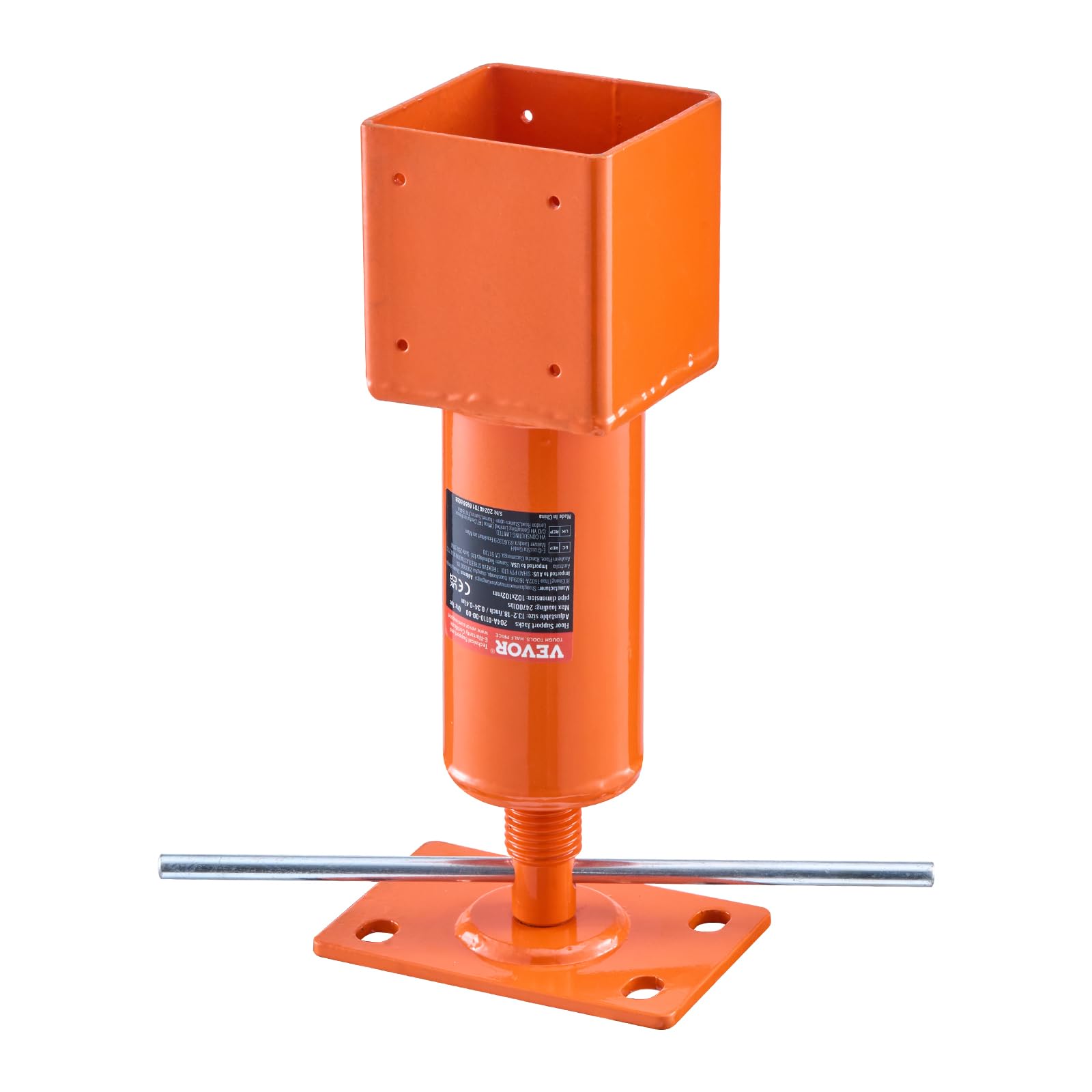
If your job is propping up a standard wood post in an existing crawlspace, this is the one built for it. It is sized to accept a standard 4 x 4 inch wood post, and it carries up to 24,700 pounds — the highest rating in this entire lineup. That is 4.1 times the 6000-pound capacity of the compact U-head pair below, in a single shore jack. For a heavy deck, a porch or a stair landing, that margin is why the extras hold up where lesser jacks might not. It is also a genuine heavyweight at just 9.2 pounds.
What owners appreciate most is the build quality — the thick steel and sturdy welds are what people describe when they talk about this jack. The 13.2 to 18.7 inch range is tight and short, meant for spaces where the ceiling sits low. One thing to keep straight: that range is measured to the top of the post, not to the base of a 4 x 4. So you cut your wood to fit inside the jack’s frame, then the adjustable range raises it the rest of the way. The lever is removable for easy storage, and there are no extra tools to fiddle with when you are changing height.
You trade height for strength here. At just over 18 inches at full extension, this jack will not reach a full basement with eight-foot ceilings. It is a low-clearance tool, so if you need reach, look at the taller VEVOR floor jack above instead. For a tight crawlspace holding a standard 4 x 4 shore (a 4-inch-by-4-inch wood post), though, the load rating is tough to top.
Load rating to spare: at 24,700 pounds, this jack can hold a heavy deck, roof or staircase with the kind of margin that lets you work comfortably under it.
One measurement to make: remember the height range reaches the top of the post, so plan your 4 x 4 cut length around the frame it sits in.
Built for: propping up a standard 4 x 4 wood post in a low crawlspace or basement shore job.
Keep moving if: your ceiling opening is above 18.7 inches and needs a taller post.
3. 4×4 Screw Jacks
An oxidized-steel jack made to sit under a beam for the long haul, not a weekend.
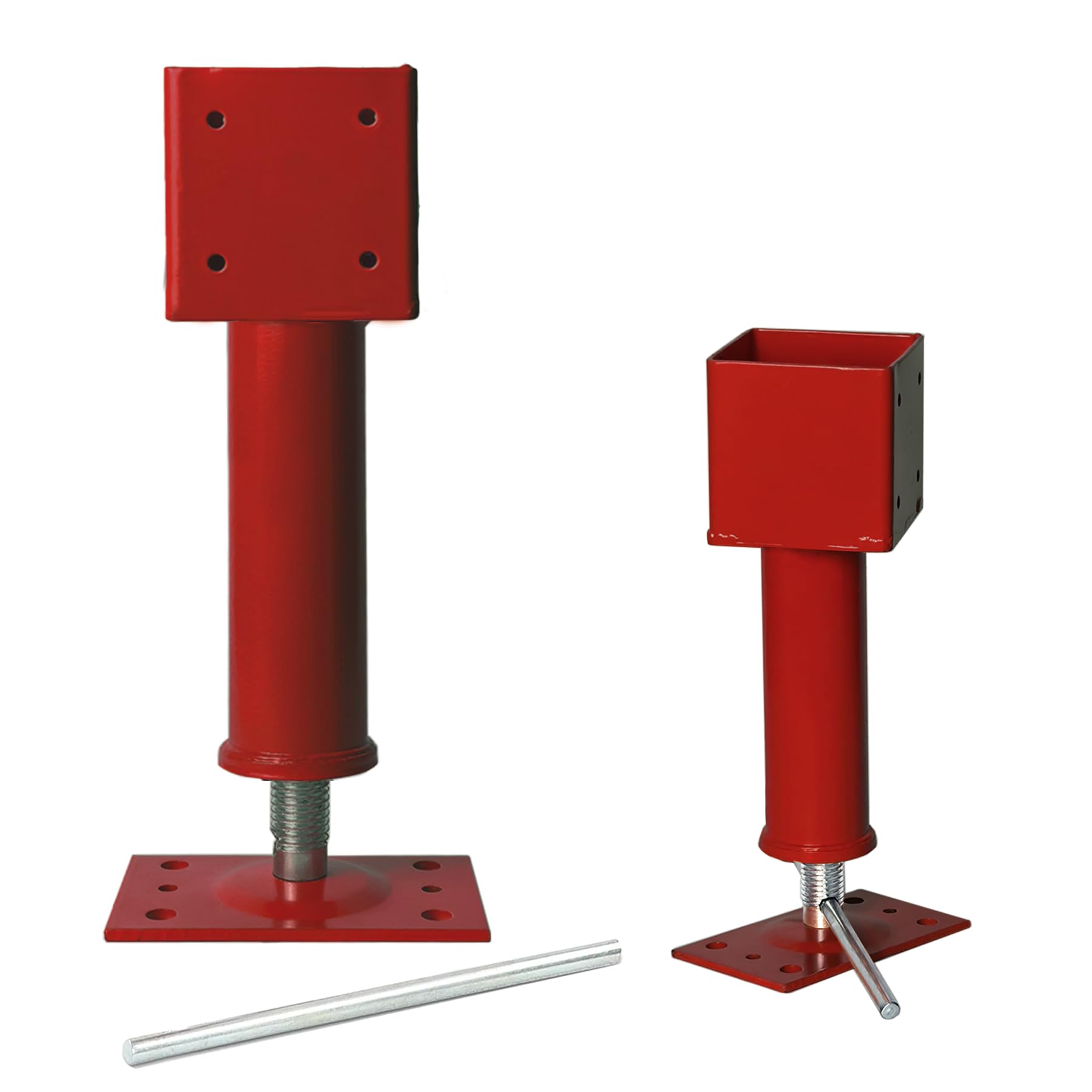
Most jacks in this lineup are priced by the load they carry, but this one stands out for permanence. It fits standard, nominal or dressed 4 x 4 square lumber in a 3.5-inch square opening, and it is rated to carry up to 24,000 pounds. That high-carbon steel frame is wrapped in an orange oxidized coating, which is there to fight rust and corrosion in a damp basement or crawlspace over years of sitting under a beam. If you want a jack you install once and forget about rather than a temporary shim, this is shaped for that job.
The base plate measures 4 x 4 x 0.28 inches and comes with four 0.6-inch and two 0.3-inch mounting holes so you can bolt it down. That level of mounting flexibility is unusual at this size. The swivel bar is M22 size, and you use the included metal handle to turn the top plate to height. Set the wood in, secure it with screws, hold the base steady, and you are lifting in seconds — no extra tools needed. A two-year manufacturer warranty backs the whole thing, which is a real plus for a permanent install.
The one wrinkle to know is the height figures in the listing. The main spec says 13.2 to 18.7 inches, while a secondary field lists 14.5 to 18.5 inches. Treat the range as short-to-mid, roughly the low teens to just under 19 inches, and measure your opening against that. If it fits your gap, the oxidized steel and two-year warranty suit a post you leave under a beam for years.
Coated for damp spaces: the oxidized finish is built to resist rust in a crawlspace or basement where moisture is a constant.
Confirm the range first: the listing shows two slightly different heights, so measure your opening and leave room to raise the beam.
Worth it for: a permanent beam or floor support where you want rust protection and a warranty behind the steel.
Hold off if: your opening is taller than roughly 19 inches, since this is a short-range post.
4. U-Shaped Floor Jack 2 Pack
The tiny two-pack built for the spaces no full-size jack can reach.
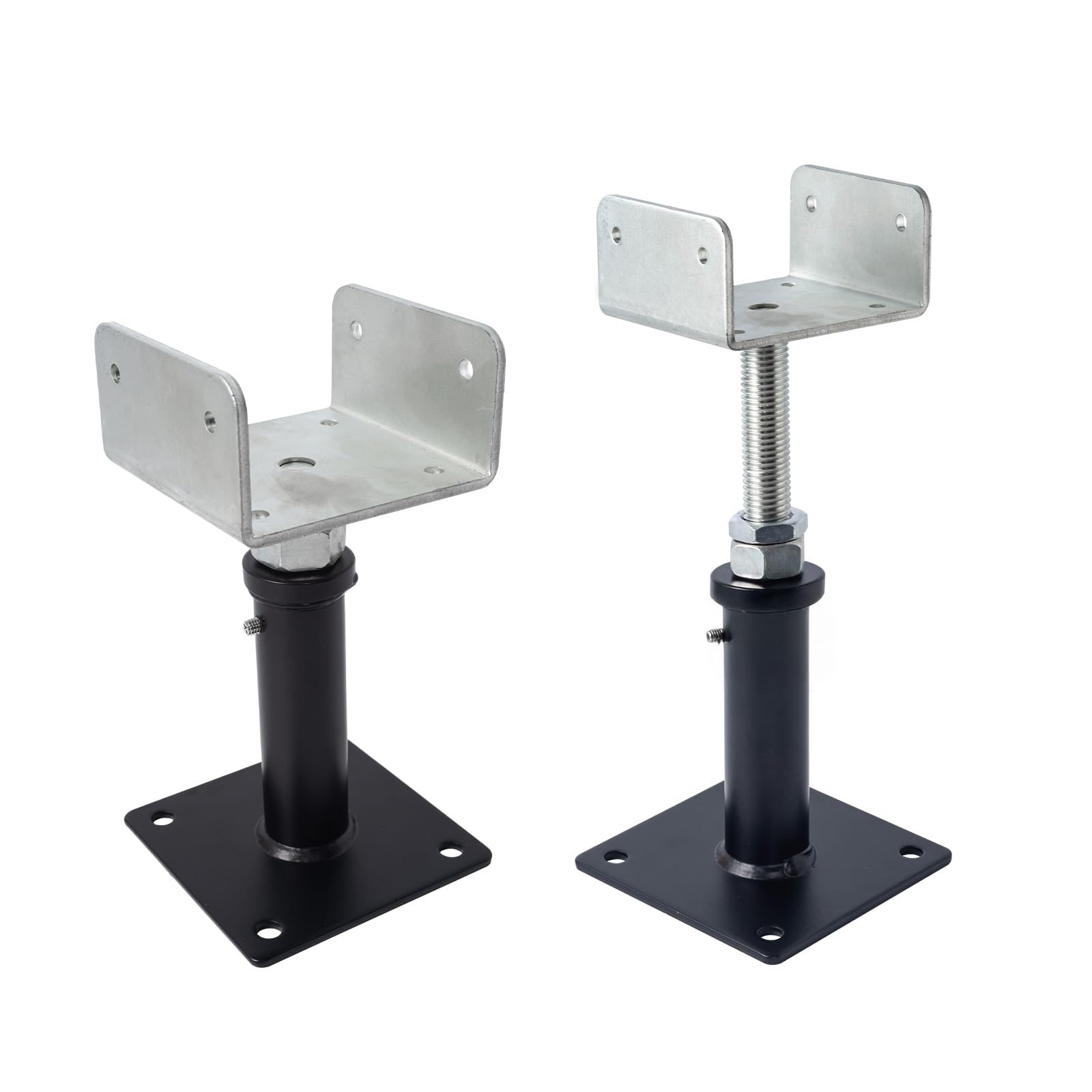
At 6 to 8.5 inches of range, this pair is the shortest option here — and for tight spots, that is exactly the point. The U-shaped head cradles a 4 x 2, 4 x 4 or 4 x 6 joist so a thin 2×10 or a full 4×4 drops right in. Each jack carries 6,000 pounds. It is a fine-level shim for low clearances, a porch post, or a pump stand that slipped. The pair weighs just 3 pounds total, so slinging them under a low deck is easy work.
The finish is split by function. The upper part is galvanized and the lower part is black oxide, both there to resist rust. Functionality is what people talk about most with these, and they get used in unexpected places — as a cradle doubling up 2x10s or as a steady prop under a broken stand. The slim build slips into places a big screw jack never would.
Your catch is straightforward: with only a 2.5-inch range between 6 and 8.5 inches, this is not a height-adjustable post for a room. It is a support shim. If your gap sits inside that window, the small footprint and light weight make it a clever little helper; if you need real reach, it will not do the job.
Best fit for: low crawlspaces, porch posts and joist shimming where a full post will not fit.
Not the tool for: a tall ceiling or heavy beam that needs a long, high-capacity post.
5. HYPERGIANT 2 Pack 11–16 Inch Floor Jacks

A two-pack for fine-tuning a floor one careful turn at a time.
What sets this pair apart is the contact system. A square top plate, a silver threaded steel screw, a lock nut and an eight-rib stamped base create a visible load path from beam to floor. You insert the turning rod, rotate to raise or lower the plate, seat it firmly, then tighten the lock nut before you load it. Each jack carries 12,000 pounds, so a pair handles a solid crawl-space job with margin. This is a screw mechanism for controlled positioning and support, not a hydraulic lift, so expect to turn deliberately rather than pump quickly.
You have three height ranges to choose from — 7 to 11, 11 to 16 or 16 to 21 inches — and this is the middle one, 11 to 16. Choose two packs for focused support points or four packs when a whole basement needs coverage. Four corner holes on each plate let you fasten the jack down for project-specific stability. The orange finish is made for jobsite handling and helps resist rust in support areas. It suits crawlspace, basement, floor joist and beam work when the jack sits on a solid, level surface.
The honest note is that there is no manufacturer warranty — support comes through the seller. For a support tool that mostly just sits there, that matters less than for something with moving parts you rely on heavily. Still, check the surface you set it on is flat and firm, since the load path depends on that base staying put.
Visible load path: the threaded screw, lock nut and ribbed base show exactly where the weight travels from beam to floor, so you can confirm contact before you load.
Range choice matters: this 11 to 16 inch version sits between the short and tall options, so measure your opening before picking a size.
Pick it for: controlled, fine-level support in a crawlspace where you want two matched jacks.
Think twice if: you want factory warranty coverage, since there is none here.
6. Heavy Duty Floor Jacks 11.5-20 inch
The jack that solves the one problem every 4×4 owner hits: the wood does not fit.
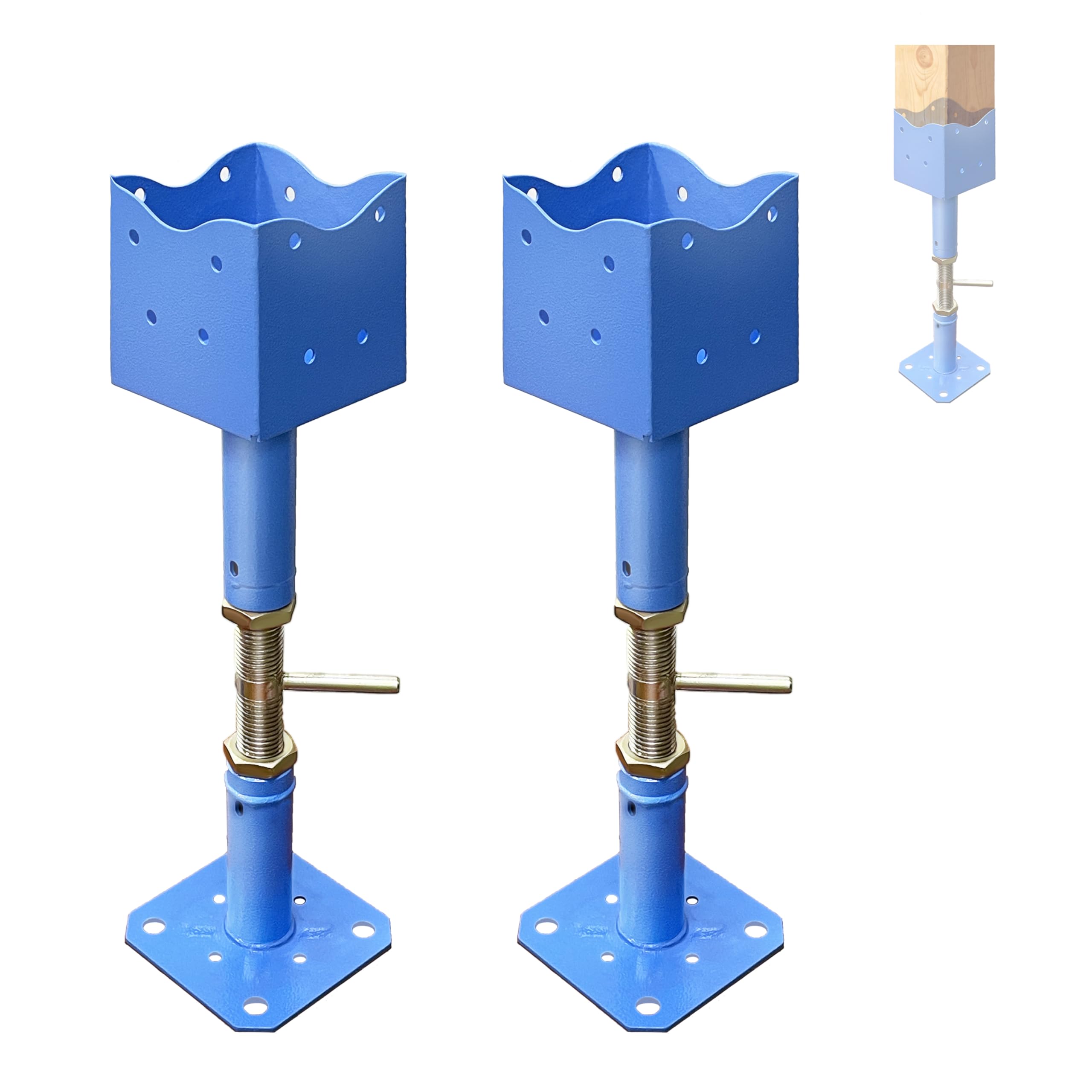
Standard 4 x 4 timber swells and shrinks with moisture, and a jack with a tight 4-inch opening can fight you when you try to seat the post. This one uses a 4.01 x 4.01 inch internal opening, sized to clear that expansion so a standard post drops in without extra planing. That saves time and labor on a job where every minute counts. It carries a 10,000-pound load, adjusts from 11.5 to 20 inches, and finds use in crawlspace reinforcement, attic floor stabilization, patio deck leveling and stair platform reinforcement.
The steel is SAE 1045 carbon steel with good tensile strength, and the base plate is 5 x 5 inches at 0.16 inches thick. The support tube is 1.5 inches in diameter with a 0.1-inch wall. Triple safety touches include reinforcing ribs under the base to stop sliding on uneven ground, plus a screw-jack limit observation window that shows you when you are near the top of the range. The handle turns to adjust height even after the base and top are secured, which owners specifically call out as convenient — you set it, then fine-tune it in place.
The height note is the same gotcha that runs through this whole category: the 11.5 to 20 inch range is measured to the top of the post, not the base of your 4 x 4. So your cut length needs to account for the height of the wood inside the frame. Get that right and the fit tolerance, the reinforcing ribs and the observation window make this a smart pick for a properly seated permanent 4×4 shore.
Why the fit tolerance wins
- 4.01-inch internal opening clears swollen standard 4×4 timber
- 10,000-pound load supports heavy structural beams
- Reinforcing ribs resist sliding on uneven surfaces
- Limit window shows when you near the top of the height range
Measure before you cut
- Height range covers the top of the post, so wood cut length must allow for the frame
Choose this when: you are seating standard 4×4 lumber and want an opening sized to clear swollen wood.
Pass if: you need a light, portable jack — this is a heavier, purpose-built basement unit.
7. Floor Jacks 4 Pack 11″ – 16″
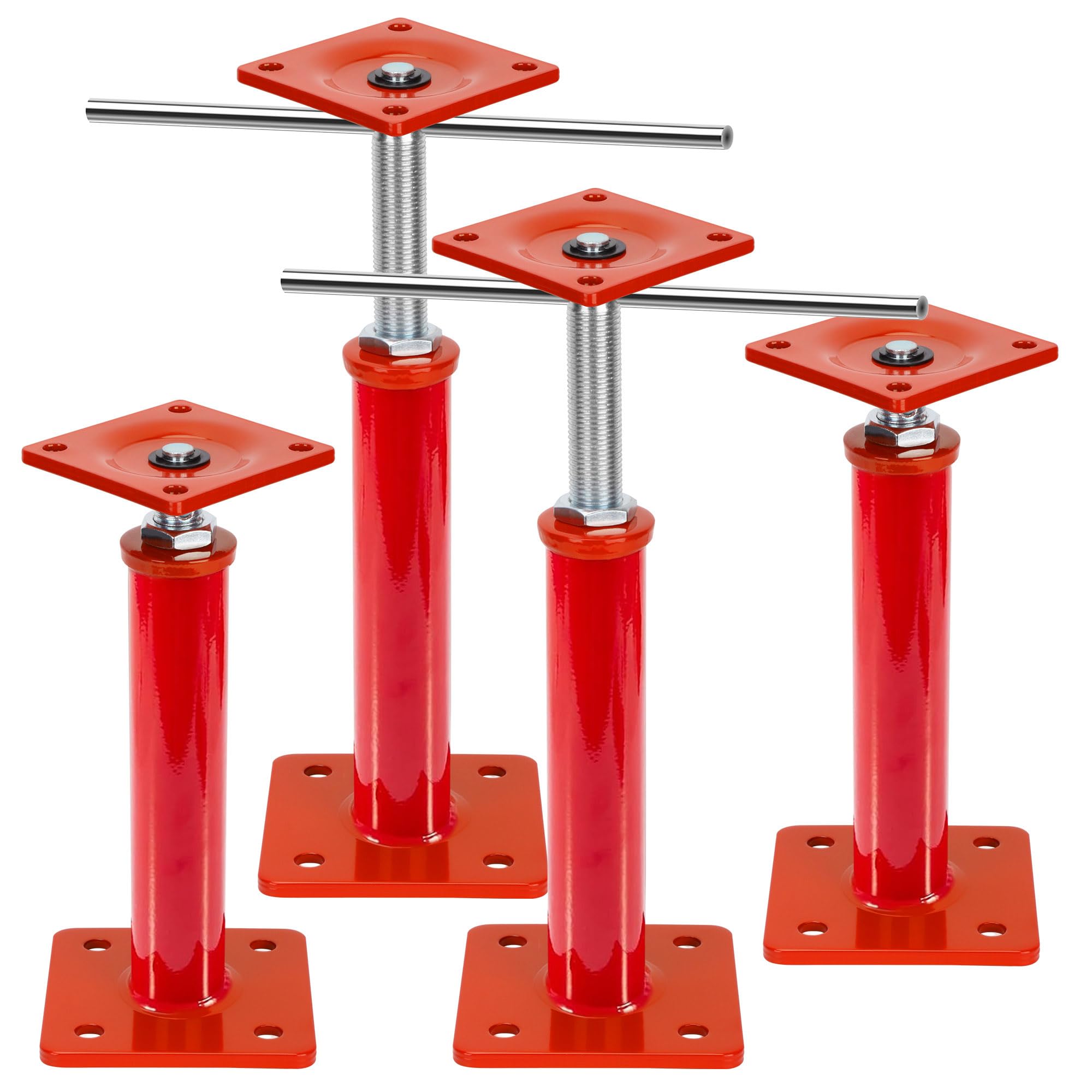
Four matched jacks for leveling a whole room, not just one sagging joist.
One jack fixes a point. Four fix a room. This set gives you four Q235 steel jacks, each rated to carry 11,023 pounds, so you can spread support across a long beam or several joists at once. The range runs 11 to 16 inches, a good middle ground for most basement ceilings. The top plate swivels as you turn the screw, so it auto-levels itself for full contact in tight or uneven crawlspaces. That self-aligning top is a real help when the beam above is not perfectly square.
Setup is simple by design: place the jack, insert the lever, turn it to height, then tighten the M22 nut with a standard wrench. The M22 locking screws and pins add extra holding strength for beams, joists and foundation repairs. Each base plate is welded to the pipe in one piece, so there is no wobble and no separate plate to fuss with. Two adjusting rods come with the four jacks. Wide application covers leveling beams, supporting patios, reinforcing joists, stabilizing crawlspaces and roof framing.
The practical limit is coverage versus reach. With a 16-inch maximum, this will not handle tall spaces, so it suits low-to-standard basements. Plan on a standard wrench for the M22 nut and a flat base for each jack. If you are leveling a broad area and want four posts that match, this set spreads the load cleanly across the job.
Four-point spread: four jacks at 11,023 pounds each let you support a long beam at multiple points instead of leaning on one post.
Swivel top bonus: the self-aligning plate seats against an uneven beam for full contact.
Right for: a whole-room leveling job that needs several matched support points.
Look up if: your ceiling is above 16 inches and you need a taller post.
8. DIOOSN House Floor Jack 47”-93”
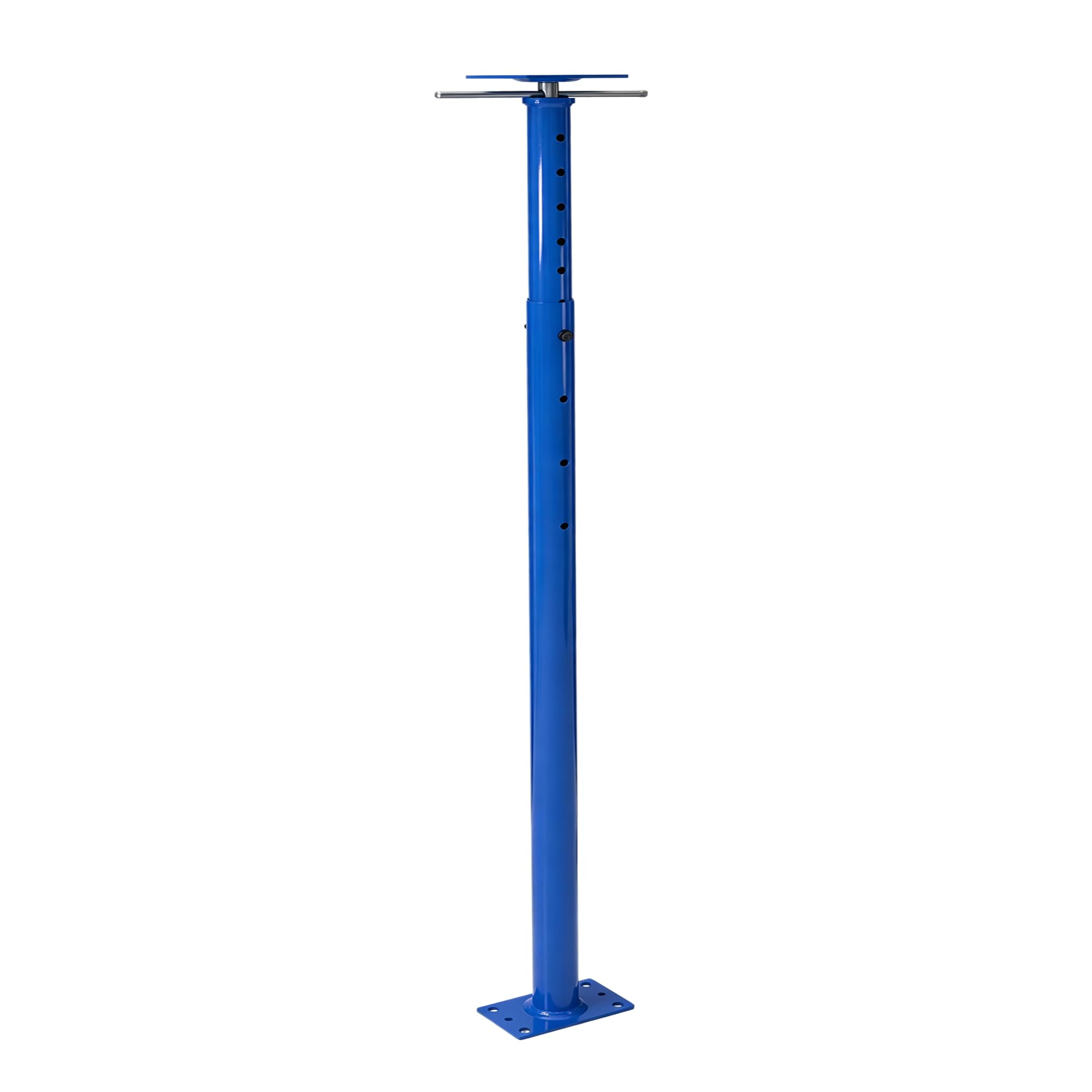
The long-reach post for mobile homes and ceilings no short jack can touch.
Nothing else in this lineup comes close on reach. This jack adjusts from 47 to 93 inches, more than three feet of range, which makes it the go-to for mobile home leveling and tall structural support. At 36 inches, the VEVOR floor jack above is less than half this post’s maximum height. It carries up to 16,070 pounds through a reinforced Q235 carbon steel column and a solid screw mechanism. For an improve structure or a high beam, this is built to reach it.
Operation is fully manual. You rotate the adjustment bar to change height, then set locking pins to hold your position, no powered tools needed. The wide base plate spreads the load for ground stability, so it performs indoors and outdoors alike. At 16 pounds it is the heaviest single jack here, which makes sense for a post this tall and this strong. This is a structural support tool, built to hold a beam in place, not a lifting floor jack for a car.
The catch is clear: this is a tall-space tool only. If your basement ceiling is around eight feet, this is overkill and awkward to handle. For a mobile home, a porch roof or a tall structural shoring job where the height genuinely runs toward 93 inches, though, the reach and the 16,070-pound rating give you a post that no short unit can replace.
Made for: mobile home leveling and tall beams that need a post reaching toward 93 inches.
skip it if: your ceiling is short — a compact jack is far easier to handle in a low basement.
9. House Floor Joist Support Jack 4 Pack

A four-pack of galvanized jacks built to spread support across a wide floor.
Four jacks in one set, each carrying 2 tons, or 4400 pounds, for 8 tons of total support across the group. The galvanized steel finish resists corrosion, which matters for a set that may live in a crawlspace for years. The range runs 19.49 to 34.45 inches, tall enough for most basement and crawlspace ceilings while still narrow enough to fit under a beam. The base plate is 4.92 x 4.92 inches, and the double carriage locks add strength and safety once you set the height. With the included bolt and nut, a set goes in within a few minutes.
Functionality is what wins people over here — these get used to prop up an office area, shore up a deck and reinforce weak spans, and the double carriage locks hold the set height under a steady load. The height control lets you level an off-grid above-ground deck or a sagging floor. Owners describe the galvanized four-pack as sturdy and well worth the money, and it goes together in minutes with the included bolt and nut.
A real word of warning is the adjusting mechanism. Some buyers expect a nut to turn the jack up, but this design needs the adjustable bar to raise the height, and the top does not swivel. So plan on that bar being on hand, and remember you are setting height by the post, not a spinning top plate. Treat it as a fixed-height support set with the adjustable bar and it does its job; expect a swivel-top screw and you will be frustrated.
What the four-pack delivers
- 8 tons of total capacity spread across four jacks
- Galvanized steel resists corrosion in damp crawlspaces
- Double carriage locks add holding strength
- Installs in minutes with the included bolt and nut
The one thing to understand
- Height is set with the adjustable bar, not a turning nut, and the top does not swivel
Worth grabbing for: a broad leveling job that needs four corrosion-resistant jacks to cover a long span.
Know before you buy: budget for the adjustable bar and expect a fixed, non-swiveling top.
Know the Specs
Load capacity per jack vs per pack
Load capacity is the weight one jack is rated to hold, and it is the number that decides whether a post is right for your beam. A compact U-head pair tops out at 6000 pounds, while a single VEVOR shore jack carries 24,700. When a jack is sold as a set, check whether the figure is per unit or for the whole pack. A 4-pack rated at 2 tons each gives you a combined 8 tons across the group, which is why multi-packs suit long beams that need several support points. Match the per-jack rating to the load directly overhead, and never count on fewer jacks than the beam actually needs.
Height range and where it is measured
Height range is the span from the jack’s lowest setting to its highest, and it has to cover the distance from your floor to the underside of what you are supporting. A low crawlspace may need a jack that starts around 6 inches, while a mobile home or tall ceiling needs one that reaches toward 93 inches. Here is the detail that trips people up: on many 4×4 shore jacks the range is measured to the top of the post, not the base of the wood. So you cut your 4×4 to fit inside the jack’s frame, then the adjustable range lifts it the rest of the way. Leave a little headroom above your measured opening so the jack can actually raise and seat against the beam.
Common Questions
How do I measure for a screw jack post before ordering?
Does the load capacity refer to one jack or the whole pack?
Can a screw jack post be used for permanent support?
Why is my 4×4 wood post a tight fit in the jack?
How much weight does a screw jack post hold compared with a floor jack for a car?
Can I use a screw jack post under a mobile home?
Do I need multiple jacks to level a floor?
What does Q235 carbon steel mean for a jack post?
Will the base plate of a screw jack post rust in a damp crawlspace?
How is height adjusted on a screw jack post?
The Bottom Line
If your floor or beam is sagging, the screw jack post to buy is the VEVOR House Floor Jack. Its 19 to 36 inch range fits the common basement ceiling, and its 18,000-pound rating carries a residential beam without strain. Need to shore up a standard 4×4 wood post? The VEVOR 4×4 shore jack carries the highest load here at 24,700 pounds. For tall mobile home or high-beam work that nothing short can reach, reach for the DIOOSN 47-to-93-inch post. Measure your opening first and match the per-jack capacity to what is overhead, and any of these will hold the floor where you set it.
How we choose
We do not accept paid placement. Every pick is matched to a real buyer and a real use-case; we do not hands-on test units.
Sources
Specifications: manufacturer listings and product documentation. Review insights: verified customer reviews, as of November 2026. Pricing: not shown on this page (it changes often); check the current price via the retailer link.
As an Amazon Associate, Tactical Gear Guy earns from qualifying purchases. This does not affect which products we feature.