Specs are compiled from manufacturer listings and verified buyer reviews and can change over time — please confirm the key details on the product page before buying.
Tinted lenses are the easiest thing in eyewear to get wrong, because a dark-looking pair and a genuinely filtering pair can look identical on a shelf. The figure that decides the job is how much blue light the lens blocks at 450nm, where screens put out most of the light that keeps you alert at night. A pair blocking 35% is a desk-comfort lens; a pair blocking 98% is a wind-down lens you should never wear while colour grading video. Everything else — frame weight, lens clarity, how the temples sit on your ears — decides whether you actually keep wearing them past the first week.
This guide is built by comparing the manufacturers’ published specifications and the patterns across verified customer reviews, so you get each pick’s real strengths and trade-offs instead of marketing spin.
Below you’ll find nine pairs sorted by what they are actually good at, with the blocking percentage, frame weight, and honest fit notes on each one.
I’ll separate the pairs that genuinely filter from the ones that simply look tinted, so your next pair of screen time glasses actually earns its place on your desk.
Top Picks
How To Choose The Best Screen Time Glasses
The mistake most people make is buying the darkest lens they can find and then being surprised they can’t read a spreadsheet. Blue-light glasses are a tool with a job description, and the tint has to match the job. Once the tint matches the job, fit, weight and frame shape are simple preference.
Start with the blocking percentage, not the shade
Filter strength is measured at a specific wavelength, usually 450nm, which sits in the blue band your monitor leans on hardest. A clear lens that blocks 35% of blue light at 450nm is built for office work, photo editing and anything where colour accuracy matters. An amber lens at 65% suits general computer work and reading. An amber max lens at 98% is for winding down before bed. Pick the percentage for the hours you’ll wear them, because a 98% lens in daylight leaves you squinting at paper in low light.
Match the tint to the hour you’ll wear them
Clear lenses keep the world looking normal, so nobody at a meeting notices. Rose FL-41 lenses filter the harsh part of the spectrum that fluorescent tubes and LED panels throw at you, which makes them a natural fit for light-sensitive eyes. Red lenses push the whole view warm and are best kept for evening screen sessions. The tint is not a style choice — it is the thing that decides whether the lens can still be worn at noon.
Weigh the frame before you commit to all-day wear
Slim metal and TR90 frames sit in the sub-ounce range and disappear on your face. A package-listed 2.89 ounces is roughly four times heavier and lands right on the bridge of your nose, which is exactly where you feel it after hour six. If you only need glasses for the last two hours before bed, weight barely matters. If they live on your face from nine to five, it is the only thing that matters.
Decide whether they need to fit over your existing pair
A fitover frame slots over prescription glasses and gets its coverage from a wraparound shape with side protection. A standard frame is worn instead of your normal glasses and relies on the lens itself. If you are nearsighted and don’t want a second prescription, the fitover route is the one that works — but it is a bigger, more visible object on your face, and that has to be fine with you.
Side-by-Side Comparison
| Model | Best For | Fit | Lens / Tint | Key Limit | Amazon |
|---|---|---|---|---|---|
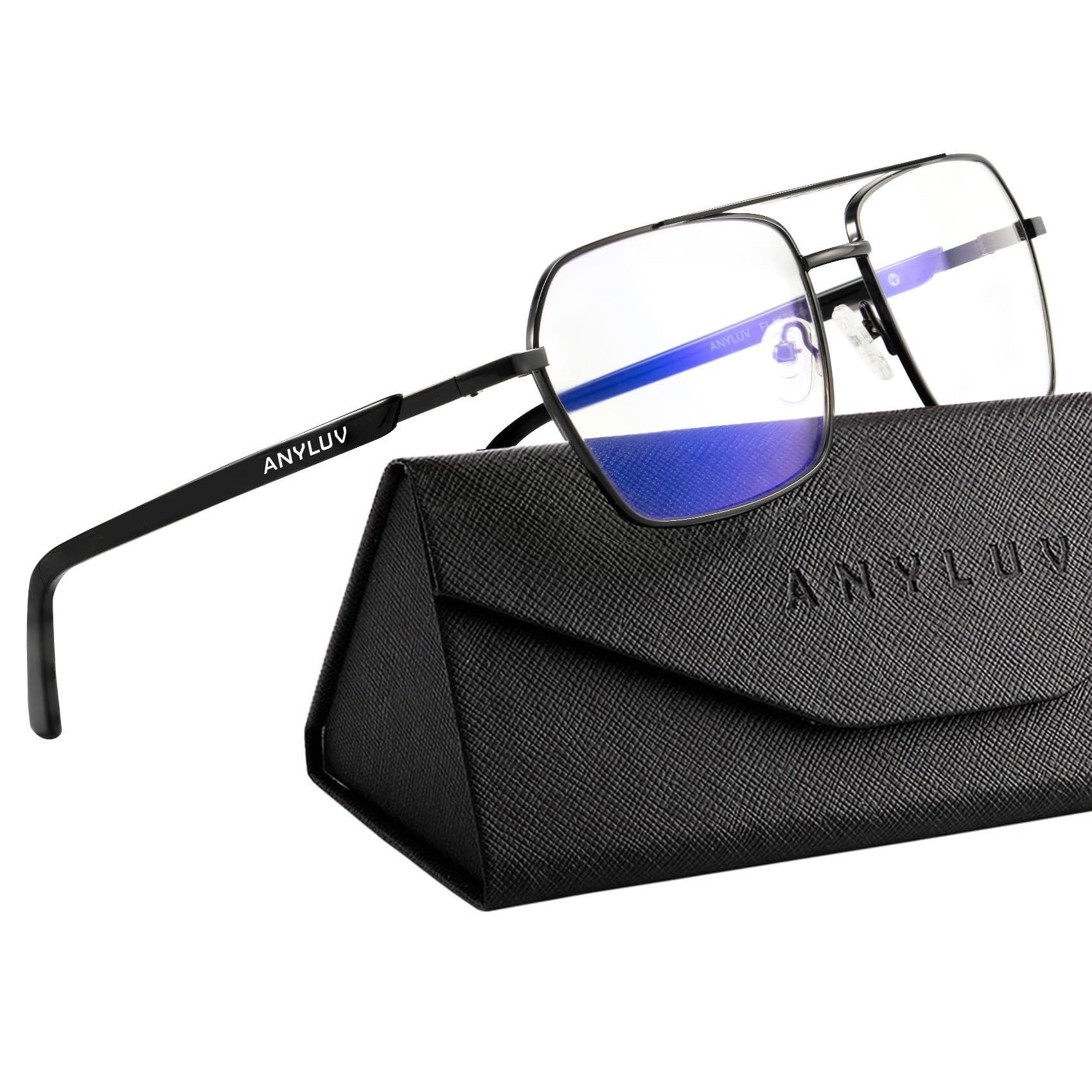
| ANYLUV Mens Blue Light Blocking Glasses★ Best Overall | All-day desk and gaming wear | Standard frame | Classic square, clear tint | No published blocking percentage | Amazon |
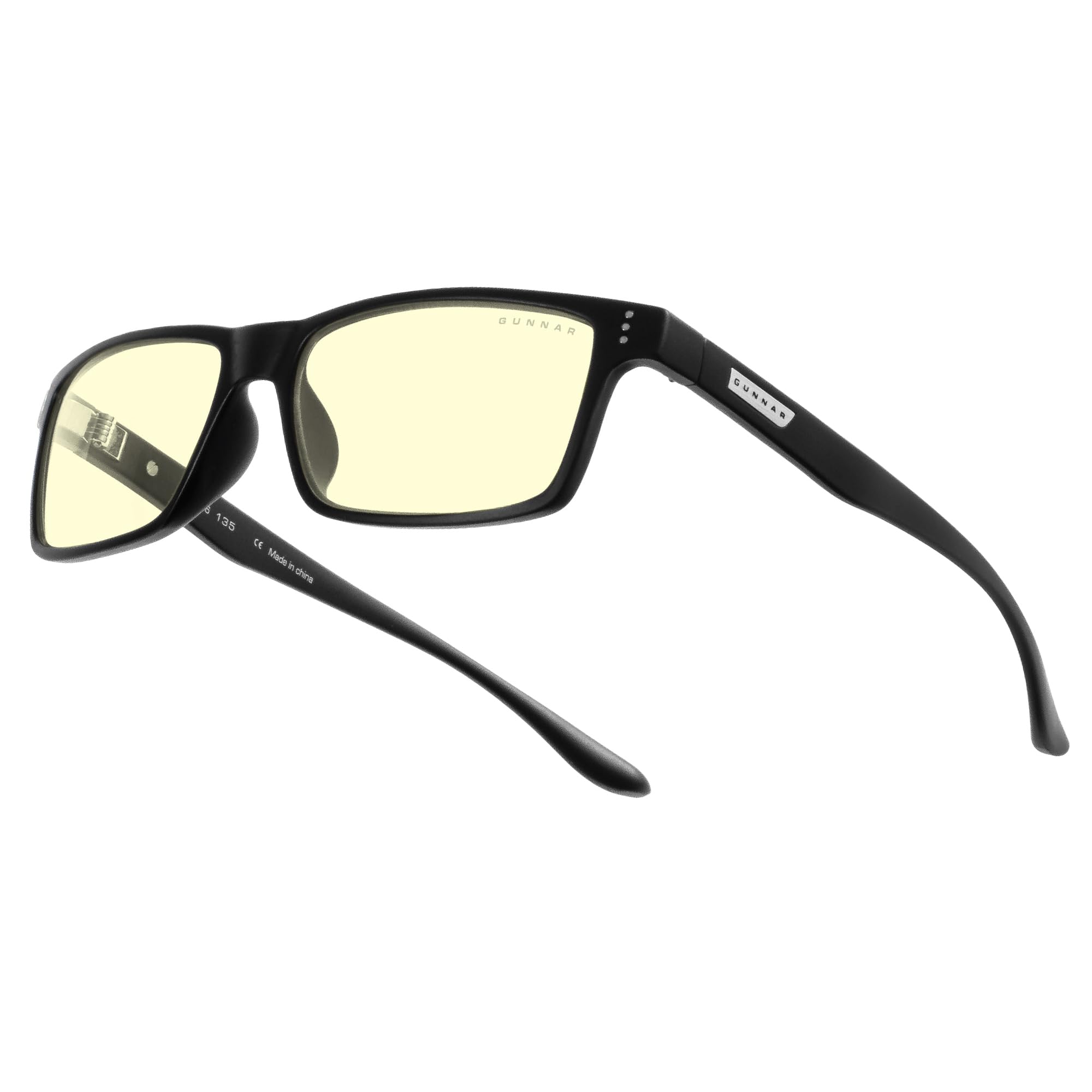
| GUNNAR VertexSharpest Spec Sheet | Choosing your exact filter strength | Standard frame | Four tints, 35% to 98% at 450nm | Premium tier | Amazon |
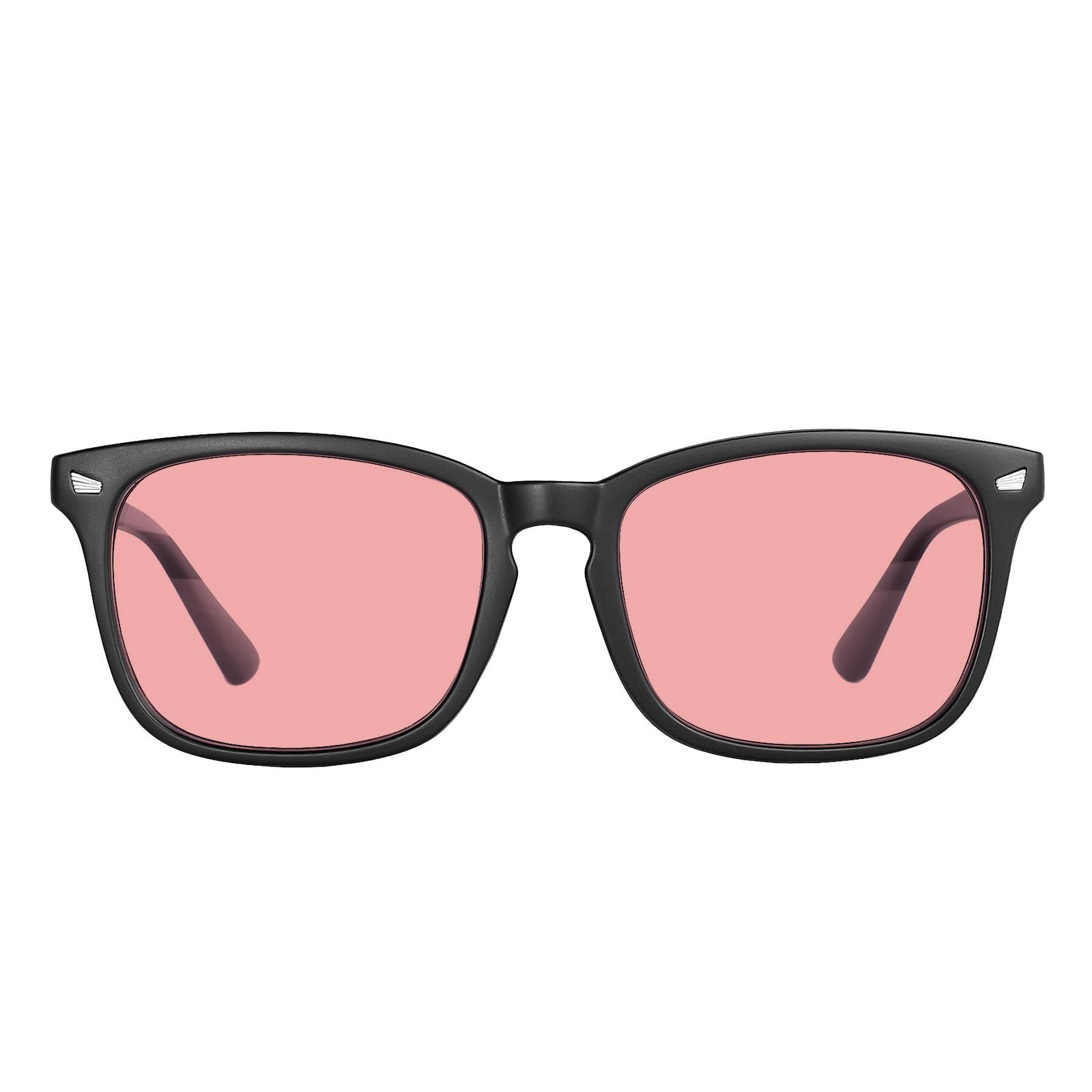
| MAXJULI FL-41 RoseBest for Bright Rooms | Fluorescent and LED glare | Standard frame | Rose FL-41, polycarbonate HD | Mixed clarity reports | Amazon |
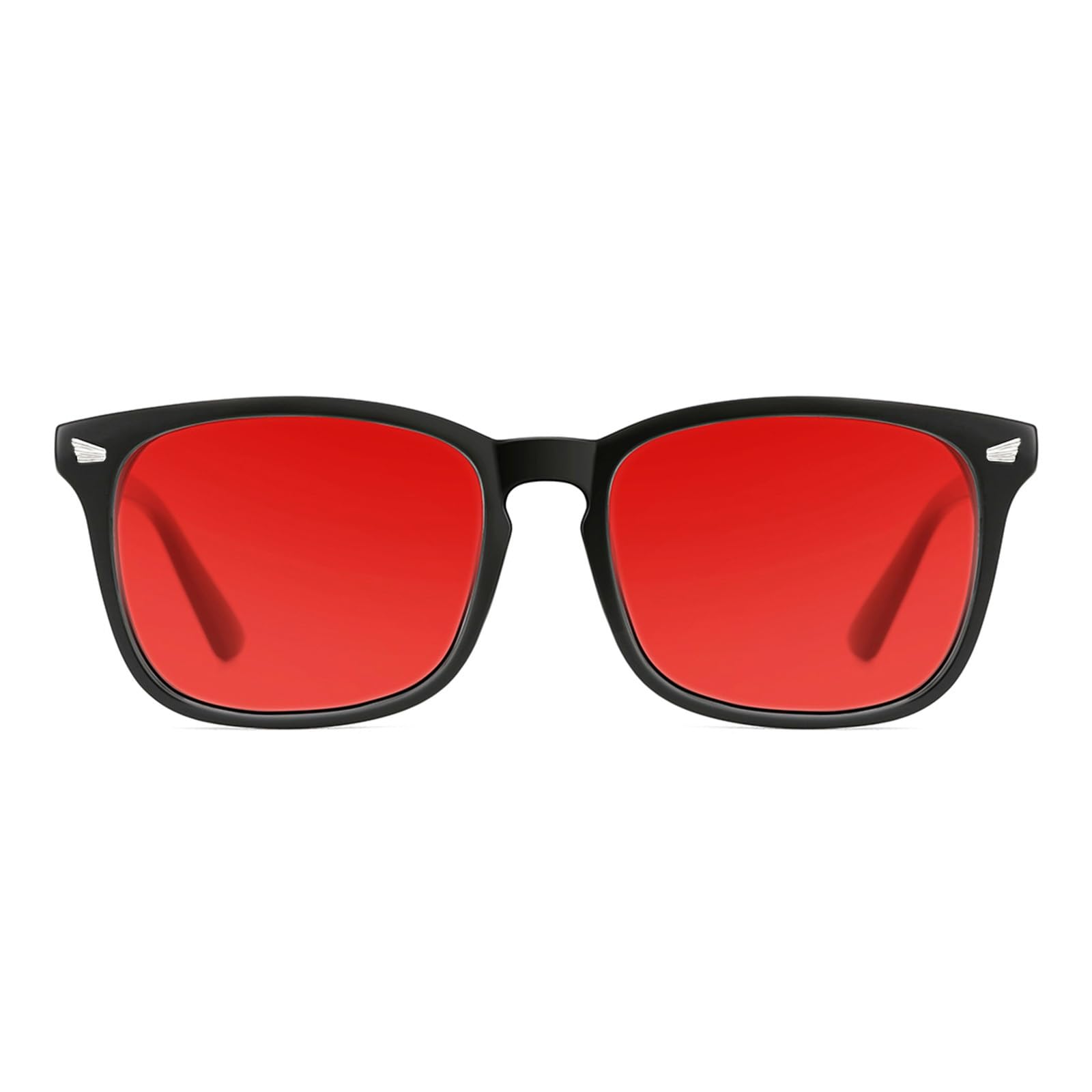
| TIJN Sleep Glasses | Evening wind-down and sleep | Standard frame | Red lens, blue and green blocking | 2.89 oz package weight | Amazon |
| NoBlue Amber Safety Sunglasses | Night use plus workshop safety | Fitover | Dark amber, 99.9% blue and UV claim | Very dark indoors | Amazon |
| ANYLUV Metal Bluelight Gaming Glasses | Slim metal frame, everyday laptop use | Standard frame | Metal frame, clear tint | No published blocking percentage | Amazon |
| GUDVUE Metal Lightweight | Anti-glare in bright offices | Standard frame | TR90 and metal, UV400 | Mixed sizing reports | Amazon |
| Cyxus 8169 | Featherweight wear with nose pads | Standard frame | HEV Absorb lens substrate | Mixed durability reports | Amazon |
| livho High Tech 8082 | Budget two-pair backup | Standard frame | Clear nylon frame, UV protection | Mixed filter-strength reports | Amazon |
Detailed Reviews
1. ANYLUV Classic Square
Our pick — 4.5+★ from 900+ verified ratings; the strongest balance of quality and price.
The pair that stays on your face for a whole shift without announcing itself.
This is the one to start with if you sit at a screen all day and want a normal-looking pair of glasses that you forget you’re wearing. The frame is a classic square shape in a unisex cut, so it works on most face widths and doesn’t look like safety equipment in a video call. The reviews come back with the same story again and again: people put them on for a workday and simply don’t take them off.
What wins people over is how long they can stay on. Buyers describe wearing them for hours without discomfort, and the compliments on the look come up just as often as the comfort does. That combination is rarer than it sounds in this category — plenty of cheap pairs look fine and pinch by lunchtime. You also get a pair that owners consider genuinely good value, which is the reason this one sits at the top of the list.
The honest gap: ANYLUV doesn’t publish a blocking percentage in the listing data, so if you need a hard number for a specific wavelength you won’t find one here. If your goal is measurable sleep-shifting filtration, go for the TIJN or the NoBlue instead. If your goal is a comfortable pair you’ll actually keep on, this is the one.
Where it earns its place
- Buyers report wearing them for hours without discomfort, which is the whole point of a desk pair
- Classic square unisex frame draws compliments rather than sideways looks
- Holds the top score in this lineup and the value read reinforces it
Where it stops short
- No published blocking percentage at 450nm, so you can’t compare filter strength on paper
- Not the right pick if you want a tint that visibly warms your view in the evening
Reach for this if: you want one comfortable, good-looking pair for the whole working day and filter percentages aren’t part of your buying decision.
Look elsewhere if: you’re buying specifically to wind down before sleep — the tint here doesn’t do that job.
2. GUNNAR Vertex Premium Gaming and Computer Glasses
The only pair here that tells you exactly what it blocks and offers you the choice.
Nobody else in this lineup publishes a blocking figure at 450nm. GUNNAR publishes four of them, and that changes how you shop. The clear tint blocks 35% of blue light at 450nm and is intended for office work, photo and video editing, and graphic design. The amber tint blocks 65% at the same wavelength for all-purpose computer work, reading and data entry. Amber max jumps to 98% for sleep improvement, migraine management and post-concussion use. There’s also a sun tint at 90% for outdoor digital viewing.
That ladder is the reason this pair earns a higher spot than its position in the range might suggest. If you edit photos for a living, the clear lens keeps your colours honest while still cutting the worst of the blue. If you’re buying for the two hours before bed, you pick amber max and know precisely what you’re getting. Compare that to the ANYLUV above, which is comfortable but silent on filter strength, and you can see why the spec sheet matters to a careful buyer.
The trade-off is straightforward: you’re paying the most here for the documentation and the tint options, not for a leap in frame comfort. The packaging data lists an 8 x 3 x 3 inch box with no frame weight published, so if a featherlight bridge fit is your priority, the Cyxus further down is the better physical choice. Buy this one for the filter precision.
What you’re really buying: a documented filter ladder — 35%, 65%, 90%, 98% at 450nm — so the pair matches the task instead of guessing at it.
The honest catch: the tint you choose sets your ceiling. A 98% lens in daylight is a squint, and a 35% lens won’t do the sleep job at all.
Worth it for: editors, designers and shift workers who need one pair that provably matches their working conditions.
Think twice if: you just want a cheap clear pair for casual laptop use — the GUDVUE covers that for far less.
3. MAXJULI FL-41
A rose tint built for fluorescent tubes and LED panels, not just for monitors.
The FL-41 rose lens is the reason to look at this pair. It selectively reduces blue and high-stimulus light from fluorescent, LED and digital screens, which is a different job from sitting in a dark room filtering a laptop. If your day is spent under overhead strip lighting in an office, a classroom or a hospital corridor, this is the frame that targets that specific glare. The lens is polycarbonate and anti-reflective, and it’s non-prescription, so it works whether or not you normally wear contacts.
Functionality and quality are what the reviews keep returning to — the pair does its job and the build holds up. The comfort holds too: owners describe them sitting well and not sliding down the nose, which is a bigger deal than it sounds when you’re tilting your head toward a screen for hours. Several families bought a pair for a child using a Chromebook, which tells you the fit runs generous enough for smaller faces as well as adult ones.
Two things to keep in mind before you buy. The lens can be fussy to clean — a film that blurs the view is a recurring gripe, so keep a proper microfibre cloth on hand. And the fit is not universal: a small share of wearers find the arms press on the back of the ears. The rose tint also lives permanently in your view, so treat this as an indoor pair rather than something you’ll wear outdoors.
Why it holds a top-three place
- FL-41 rose lens targets fluorescent and LED glare, not just screen light
- Owners say the frame sits still and doesn’t slide down the nose
- Non-prescription, so it layers over contacts without a new script
- Lens is removable if you ever want to swap it
Real-world friction
- The lens smears and needs a proper cloth to keep it clear
- Some wearers find the arms press on the back of the ears
- The rose cast is permanent — not a pair for outdoor daylight
Suits you if: fluorescent overheads are the enemy and you want a lens aimed at that specific glare.
Give it a pass if: you need a lens you’ll wear outdoors as well as at the desk.
4. TIJN Sleep Glasses with Blue Green Light Blocking, Red Lens
A red lens that pulls double duty, and a weight you’ll notice by hour two.
This pair is built around a red lens that filters a wide range of blue and green light, which is the pairing most sleep-focused frames aim for. Green light matters as much as blue when you’re trying to wind down, and the softer viewing tone here is the whole point. The frame is a classic square unisex shape that works on a casual desk, a gaming station or a TV couch without looking clinical.
Weight is the figure to sit with. The package data lists 2.89 ounces, and comparing that directly against the Cyxus at 0.71 ounces shows the gap — this is a substantially heavier object on your bridge. For a two-hour evening session that’s fine. For an eight-hour shift you’ll feel it, and the fit notes reflect that: some wearers say it presses on the nose after extended use, and a few smaller faces find the frame oversized.
Where it earns its keep is the look and the light feel. The style draws attention in a good way, and the square cut sits well on round and oval face shapes without clamping the temples. If you want a frame that reads as deliberate rather than medical, this delivers that.
The clarity is the one thing to check on arrival. A share of owners mention a haze on the lens that wouldn’t clear, and a smaller group found the view blurry enough to return it. That’s a quality-control lottery rather than a universal flaw, but order from a place with an easy return window and look through them the same day they land.
The sleep angle: blue and green light both get filtered by the red lens, which is what makes this an evening frame rather than a nine-to-five one.
Buy with a return window: lens haze is the recurring hiccup, so check the clarity on day one rather than week three.
Pick this one if: your goal is winding down in front of a screen before bed and you want a frame that looks good doing it.
Pick the Cyxus instead if: you need a pair light enough to forget about during a full workday.
5. NoBlue Blue Light Blocking Safety Sunglasses, Amber Lenses

Dark amber lenses that fit over your prescription pair and survive the workshop.
Two things separate this from everything else on the list. First, it’s a fitover frame, so it slots over your existing prescription glasses instead of replacing them. Second, it meets ANSI Z87.1-2003 and CSA Z94.3 safety standards with a wraparound design and side protection, which means it’s rated for a shop or garage as well as a desk. No other pair here carries a safety certification.
The amber lens is claimed to block 99.9% of blue and UV light, and it is genuinely dark. That’s the intended design — wear it one to two hours before bed to cut artificial blue light — and it’s also the limitation. Reading a printed page in low light through these is a strain, and a few wearers note exactly that. The frame weighs 1.76 ounces and uses soft temple tips, and owners describe wearing them for hours while working or winding down without pinching, even though the fitover shape is a big visible object on your face.
Sleep-focused owners are the ones who come away happiest: the frame fits well, the build has held up over months of use, and the evening calm-down routine is the payoff. If your spouse keeps borrowing them, budget for a second pair.
The case for it
- ANSI Z87.1-2003 and CSA Z94.3 certified, with side protection a plain desk frame doesn’t have
- Fitover shape means it works alongside your normal prescription glasses
- 1.76 ounces with soft temple tips stays put through a long evening
- Dark amber tint is the strongest filter in this lineup
The cost of that tint
- Too dark to read paper comfortably in low light
- Bulky on the face — not a pair you’d wear on a video call
- Long-term durability is a year-plus, not forever, under heavy nightly use
This is your pair if: you already wear prescription glasses, work with tools, and want maximum blue-light filtering after dark.
Not the one for you if: you need to read documents or do colour work while wearing them.
6. ANYLUV Metal
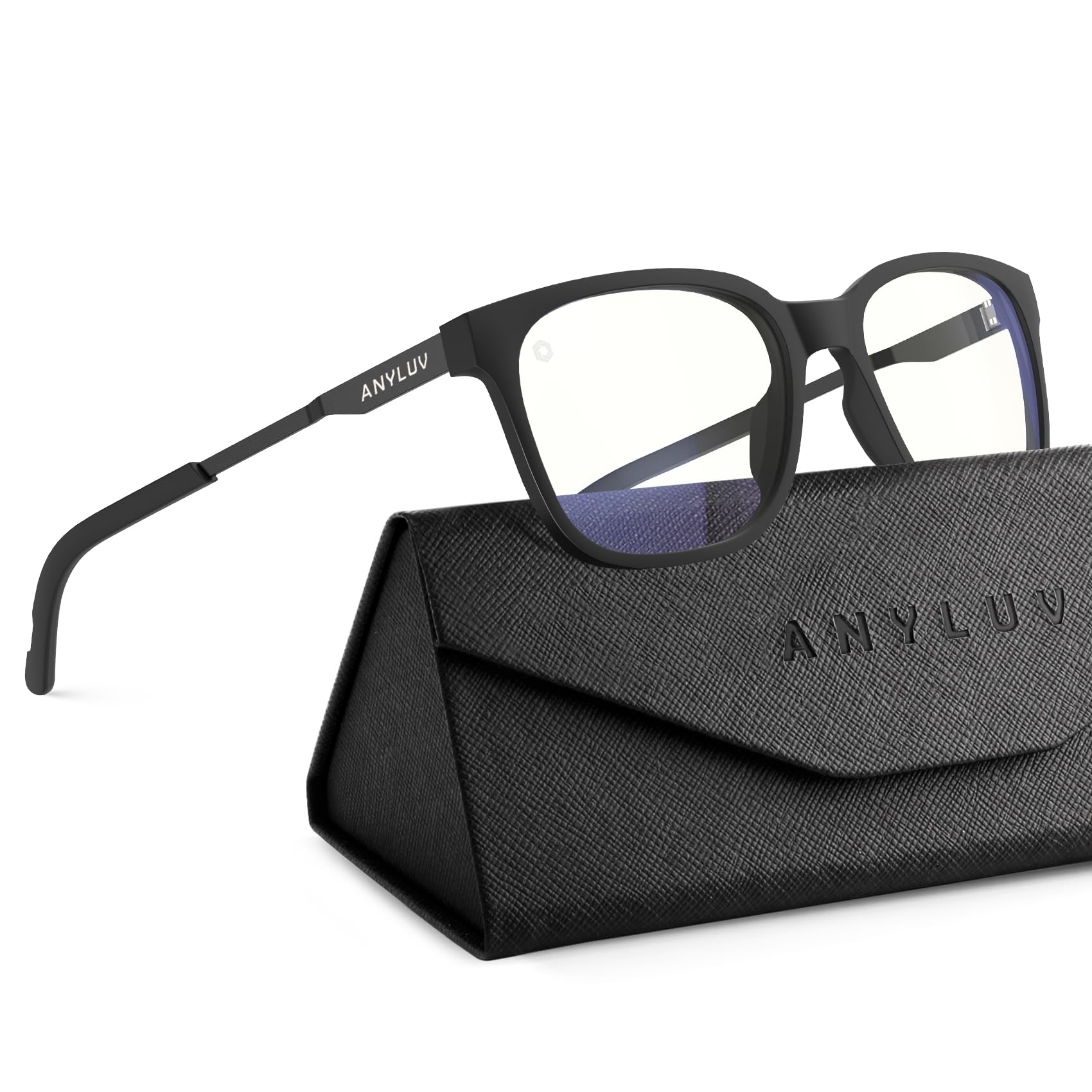
A metal frame that filters the harsh end of the spectrum and leaves the useful part alone.
The design brief here is selective filtering: it cuts out the high-energy blue light that tires your eyes while letting beneficial blue light through so your view doesn’t go muddy. That’s a different philosophy from the amber-max lenses that block almost everything. If you wear glasses for work and also need to see accurately, that middle path is the one that keeps both jobs possible.
The metal frame is the second draw. It’s lighter and slimmer through the temples than the chunky fitover style, and owners consistently mention durability and a lightweight feel across months of use. Comfort scores high here too, and people describe wearing them all day in front of a computer without needing to take a break from them.
The contrast with the ANYLUV square pair at the top is worth noting: both come from the same maker, but this one is the metal build and the square one is the classic plastic shape. If you prefer the look of wire temples and a slimmer profile, this is the version for you. The trade-off is the same as its stablemate — there’s no published blocking percentage, so you’re buying on the selective-filtering description rather than a number.
The filtering idea: block the harmful end of the blue band, keep the useful part — a smarter balance than a blanket dark tint for daytime work.
What you won’t get: no published percentage at 450nm, so the claim stays a description rather than a spec you can compare.
Made for: the buyer who wants a slim metal frame and daytime filtering that doesn’t distort colour.
Not your pick if: you’re shopping for a measurable evening filter — the TIJN or the NoBlue answers that better.
7. GUDVUE Metal Lightweight

The glare-cutting pair that pairs a light frame with a UV400 lens.
Anti-glare is the strongest thread running through this pair’s feedback, and it makes sense for what the lens does. The build combines anti-blue-light, UV400 protection (a lens rating that filters the UV band) and anti-glare treatment, which is a three-part job rather than a single filter. UV400 matters if you’re the type to step outside with the same pair on — it’s the one frame here that explicitly covers that side of things.
The frame is TR90, a flexible lightweight plastic, reinforced with metal, and the result is a pair that sits light on the face and survives being shoved in a bag. Appearance draws steady praise, and owners note it’s easy to match with whatever they’re wearing, which is the practical benefit of a simple metal-and-plastic shape. Fit and comfort hold up well for the majority.
The catch is sizing. A small group of wearers find the frame runs tight or off for their face, and build quality gets mixed reads, so it’s worth checking the dimensions against a pair you already own before ordering. It’s a minor share of an otherwise positive picture, but this is a category where a few millimetres decides whether a pair gets worn.
The three-in-one lens: anti-blue-light, UV400 and anti-glare in a single lens — the widest protection brief in the value tier.
Measure first: fit is the recurring wobble, so compare the frame size to a pair you know works on you.
Go for it if: glare from windows and overheads bothers you more than blue light alone, and you want one pair for indoor and outdoor use.
Go elsewhere if: you have a wide face and need a fit that’s confirmed generous — the MAXJULI runs roomier.
8. Cyxus 8169

At 0.71 ounces, this pair almost disappears — and the nose pads seal the deal.
Start with the weight, because it’s the headline. At 0.71 ounces this is the lightest frame in the lineup, and put beside the TIJN at 2.89 ounces the difference is the gap between a pair you forget about and a pair you feel. The frame is also the only one here that openly advertises nose pads, which owners who struggle with plastic-on-bridge pressure specifically went looking for. Cyxus builds its filtering into the lens itself with HEV Absorb technology, which absorbs high-energy visible light while keeping light transmission high so the view stays natural.
The look and the effect both land. Owners call them modern-looking and easy to wear through a full day, and the reduction in strain after long screen hours is what people keep coming back to. The minimalist frame matches office wear and casual clothes without effort, which is why so many buyers treat it as the everyday pair rather than a special-occasion one.
Now the honest part. Durability is the soft spot — screws working loose and a frame that bends out of shape under desk use come up often enough to plan for. Comfort is split between people who find them fine and people who find them tight at the temples. Neither issue is universal, and at this weight and finish most owners are satisfied. Just handle them like the light object they are, and keep a small screwdriver nearby.
What makes it stand out
- 0.71 ounces — the lightest frame here by a wide margin
- Nose pads, which is surprisingly hard to find on blue-light frames
- HEV Absorb lens keeps the view clear and natural rather than tinted
- Minimalist look that works with office and casual clothes alike
What to expect
- Screws work loose and the frame bends under rough handling
- Temple pressure divides opinion — check the width if you have a broader head
Best match for: anyone who hates the feel of weight on their nose and wants a nearly invisible daytime pair.
Fair warning: treat it gently — this is a light frame, and light frames flex.
9. livho High Tech Blue Light Glasses, 8082
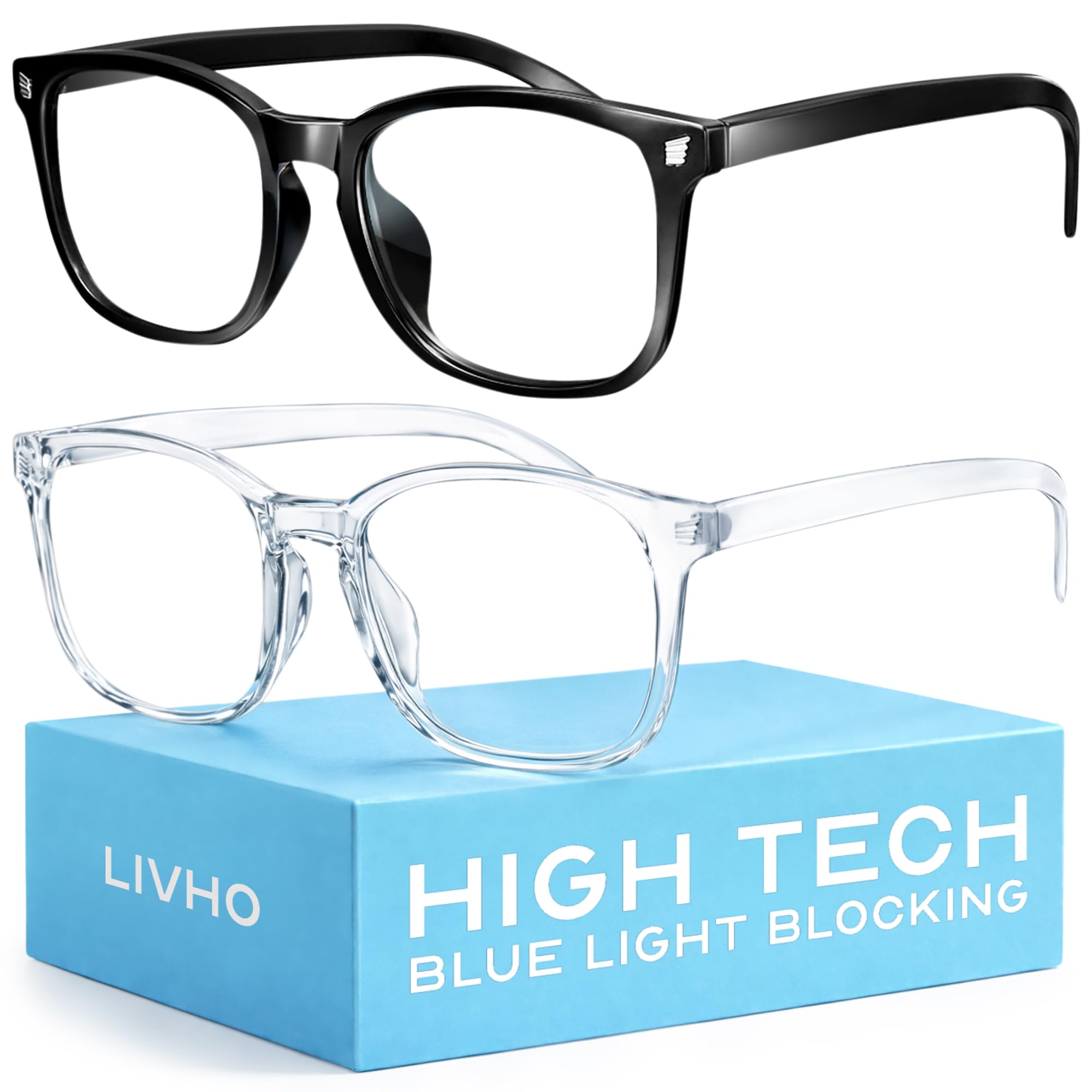
The pair you buy in twos and leave in two different bags.
This is the entry point into the category, and the most useful way to read it is as a spare-pair purchase. The frame is ultra-light nylon that flexes rather than cracks, comes in a unisex cut, and is listed at 0.8 ounces — a fraction heavier than the Cyxus but in the same featherweight class. You get UV protection in the lens as well as the blue-light filtering, which is more than most budget frames bother with.
Owners who wear them daily at a desk report less strain over a working week, and the looks draw steady compliments. It’s the kind of frame that’s easy to leave in a laptop bag and forget about until you need it.
The word to weigh carefully is “mixed” on filter strength. Some owners run their own blue-light tests and find the lens doesn’t block as much as claimed, and a few mention the lenses aren’t perfectly clear. Treat this as a comfort-and-glare pair for casual screen time rather than a measurable filtering tool. If you need documented blocking strength, the GUNNAR’s published ladder is where that lives.
The value read: flexible nylon, UV protection and a featherweight frame for two-pair money — the spare-pair maths works.
The honest limit: filtering strength is inconsistent, so don’t buy it expecting a documented percentage.
Good buy for: students, second-desk setups and anyone who wants a spare pair without much outlay.
Look higher up the list if: filter strength is the reason you’re shopping at all.
Know the Specs
Blocking percentage at 450nm
This is the share of blue light the lens removes at 450 nanometres, the wavelength screens lean on hardest. It’s the only number that tells you what the lens actually does. A clear lens at 35% is built for colour-accurate daytime work. An amber lens at 65% suits general computer use and reading. An amber max lens at 98% is for winding down before sleep. A dark amber fitover claims 99.9% of blue and UV, which is the strongest filter you’ll find here. A higher percentage isn’t better — it just narrows what you can still do while wearing them.
Frame weight in ounces
Weight is what decides whether a pair survives a full working day on your face. A 0.71-ounce nylon frame goes unnoticed for hours. A 2.89-ounce frame is a different experience and you’ll feel it on the bridge of your nose well before lunch. Note that some listings quote package weight rather than the frame alone, so treat those figures as an upper bound rather than a precise frame weight. If the glasses only come out for the last two hours before bed, weight barely matters. If they’re worn from nine to five, it’s the deciding spec.
Lens tint and colour accuracy
The tint decides what you can still do while wearing the glasses. A clear lens keeps colours honest, so designers and photo editors can work through it. Rose FL-41 filters the harsh part of the spectrum that fluorescent tubes and LED panels produce, which suits light-sensitive eyes indoors. Red lenses push the view warm and belong in the evening. Dark amber is for night and workshop use. Choose the tint for the hours you’ll wear them, not for how the frame photographs.
Fit style — standard versus fitover
A standard frame replaces your everyday glasses and keeps its look discreet. A fitover frame slots over your existing prescription pair and gets its coverage from a wraparound shape with side protection, which is why the safety-certified option here is a fitover. The fitover route is the one that works if you’re nearsighted and don’t want a second prescription, but it is a larger object on your face. Decide whether you can live with a fitover on your face before comparing any other spec.
Common Questions
Will screen time glasses fit over my prescription glasses?
How much blue light should a lens block for evening use?
Are blue light glasses safe to wear all day at a desk?
Do screen time glasses really help with headaches from monitors?
What is the FL-41 rose tint actually for?
Can I wear tinted blue light glasses while editing photos or video?
Why do so many blue light frames break at the screws?
How long should I wear screen time glasses before bed?
Does frame size matter for blue light glasses?
Are UV400 lenses worth having on a computer pair?
The Bottom Line
For most buyers, the screen time glasses winner is the ANYLUV Mens Blue Light Blocking Glasses, because it’s the pair owners describe wearing for hours without discomfort and it does that while still looking like normal eyewear. If you want to choose your filter strength deliberately rather than trust a description, the GUNNAR Vertex is the only one here that publishes its blocking percentage at 450nm across four tints. And for the hours before sleep — dark room, bright screen — the NoBlue Amber Safety Sunglasses is the one to reach for, with the strongest filter on the list and a safety certification nothing else here carries.
How we choose
We do not accept paid placement. Every pick is matched to a real buyer and a real use-case; we do not hands-on test units.
Sources
Specifications: manufacturer listings and product documentation. Review insights: verified customer reviews, as of November 2026. Pricing: not shown on this page (it changes often); check the current price via the retailer link.
As an Amazon Associate, Tactical Gear Guy earns from qualifying purchases. This does not affect which products we feature.