Specs are compiled from manufacturer listings and verified buyer reviews and can change over time — please confirm the key details on the product page before buying.
Your helmet is the one piece of gear you never want to test the hard way. So start with three things: a safety certification (DOT, ECE 22.06, or Snell — official testing standards), a snug fit to your head shape, and a real impact shell and liner, not just tough-looking paint. Every pick below clears that bar, from budget-friendly to premium, so you decide how much shell engineering you want to pay for.
This guide is built by comparing the manufacturers’ published specifications and the patterns across verified customer reviews, so you get each pick’s real strengths and trade-offs instead of marketing spin.
The picks below are grouped by real-world use — commuting, touring, and long-distance riding — with notes on fit, noise, and ventilation. The Shoei Neotec II is the one to buy first.
Top Picks


How To Choose The Best Safest Motorcycle Helmet
Safety starts with the shell material, the EPS liner, and the certification label, not the paint. Two helmets can look identical and still differ sharply in impact test results. The specs below are the ones that actually tell you which is which.
Certification: DOT, ECE 22.06, and Snell
DOT is the U.S. minimum standard (FMVSS 218) — every helmet sold here as a motorcycle helmet should meet it. ECE 22.06 is a newer European standard that many riders look for because it tests more scenarios. Snell is a separate U.S. testing body known for tighter requirements. A helmet with more than one of these is a good sign, because it means more testing passed.
Shell and impact liner
The outer shell (fiberglass, polycarbonate, or a composite) spreads impact across a wider area, and the inner EPS foam (expanded polystyrene) absorbs the energy. A multi-layer or dual-density EPS liner is worth looking for because it handles low and high-speed impacts better.
Fit is a safety feature
A helmet that shifts on your head can’t protect you, so a snug fit without pressure points matters as much as any spec. Check the size chart, measure the widest part of your head, and expect a little break-in time. Many models now offer adjustable liners or cheek pads you can swap.
Side-by-Side Comparison
| Model | Best For | Certification | Shell / Liner | Weight | Amazon |
|---|---|---|---|---|---|
| Shoei Neotec II★ Best Overall | Long-distance touring | DOT, ECE | Fiberglass + EPS (AIM) | 4.1 lb | Amazon |
| HAX Obsidian Pro SeriesBest Value | Style + daily rides | DOT | ABS / PC + EPS | 4.6 lb | Amazon |
| ILM MF510Best Fit Range | Fit customization | DOT, FMVSS 218 | ABS + EPS | 6.4 lb | Amazon |
| LS2 Stream II | Everyday value | DOT, ECE 22.06 | Kinetic Polymer Alloy | 4.6 lb | Amazon |
| HAX Force | Street & e-bike commutes | DOT, ECE 22.06 | ABS / PC + EPS | 4.6 lb | Amazon |
| ScorpionEXO R430 | Snell-rated street riding | DOT, Snell | Polycarbonate + multi-layer EPS | 4.98 lb | Amazon |
| BELL Qualifier DLX MIPS | Auto-tint visibility | DOT, ECE 22.05 | — | 4.85 lb | Amazon |
| ScorpionEXO T520 | Touring comfort | DOT, ECE | Polycarbonate + dual-density EPS | 4.8 lb | Amazon |
| AGV K1 S | Sport riding | ECE, DOT FMVSS 218 | Thermoplastic + EPS | 1580 g | Amazon |
| Shoei RF-1400 | Premium full-face | DOT, FMVSS 218, Snell | Fiberglass + EPS | 3.6 lb | Amazon |
Detailed Reviews
1. Shoei Neotec II Modular Motorcycle Helmet
Our pick — 4.5+★ from 600+ verified ratings; the strongest balance of quality and price.
Flip the chin bar up at a gas stop, snap it down for the highway — the modular shell that does both.
The Neotec II earns the top spot because its face cover flips up so you can talk, drink, or cool off without taking the helmet off, then locks down into a full-face shell when you ride. That flip-up chin bar is rare in this group. The shell is Shoei’s Advanced Integrated Matrix — a blend of fiberglass and EPS foam (expanded polystyrene, the impact-absorbing foam) designed to stay strong while keeping weight down.
What owners talk about most is outright build quality, and fit follows close behind. The interior is comfortable over long hours, and the QSV-1 sun shield (a drop-down tinted visor) is anti-fog and anti-scratch, so you can cut glare without stopping to swap shields. Ventilation is another consistent win — airflow moves through the shell well and humidity doesn’t build up behind the visor. At 4.1 pounds it is one of the lighter modular helmets here, which matters on a 300-mile day when neck fatigue sets in.
Here is the honest part. Noise is genuinely divisive: some riders call this one of the quietest helmets they’ve owned, and others find it loud at highway speed, so your windscreen and riding position will affect what you hear. Value also splits opinion, because this sits in the premium price tier. The micro-ratchet chin strap is quick to fasten, but if you prefer a double D-ring, this isn’t it.
Why it takes the crown
- Flip-up chin bar with DOT and ECE certification, so you get open-face convenience with full-face coverage
- Drop-down QSV-1 sun visor that is anti-fog and anti-scratch for changing light
- Fiberglass AIM shell at 4.1 pounds — noticeably lighter than the 6.4-pound ILM MF510
- Strong ventilation and comfort over long touring days
Where it asks you to compromise
- Noise reports split both ways depending on your bike and windscreen
- Premium tier means you pay for the engineering
- Ratchet strap rather than a race-style double D-ring
Made for: Tourers and commuters who want flip-up convenience without giving up full-face safety certification.
Think twice if: you need a double D-ring closure or ride mostly at high speed on a naked bike where wind noise is already loud.
2. HAX Obsidian Pro Series Dual Visor Full Face Motorcycle Helmet
Two visors, a graphics menu, and DOT certification for riders who want presence on the road.
The Obsidian Pro runs an outer clear visor plus an inner sun visor, and HAX says that pair has been tested to block about 98% of ultraviolet radiation. For bright afternoon commutes that means you can drop the tinted shield without stopping. It carries DOT certification, and the shell is a three-material mix of ABS, polycarbonate, and EPS foam — the same basic recipe as most helmets at this tier. The weight lands at 4.6 pounds.
Looks are what buyers respond to here — the design earns the single biggest share of positive comments, and the colorways come in for their own praise. Fit is comfortable without squeezing, and the hypoallergenic liner (built to be kinder to sensitive skin) adds to the comfort. Eyeglass wearers can slot their frames in, and there’s a built-in Bluetooth headset pocket if you want comms later.
The catch is the visor setup. The helmet is Pinlock ready, but the anti-fog insert itself is not included — you buy the appropriate lens separately. So budget for that if you ride in cold or wet weather, or you’ll be wiping fog off the inside.
Style-first value: a DOT full-face with a dual visor system at a budget-friendly tier, with looks that carry the day.
Plan for extras: the Pinlock insert ships separately, so add it before the rainy season rather than after.
Worth it for: riders who want a striking full-face shell with sunglasses built in, without moving into the premium tier.
Look elsewhere if: you want a Snell-rated shell or expect the anti-fog lens to come in the box.
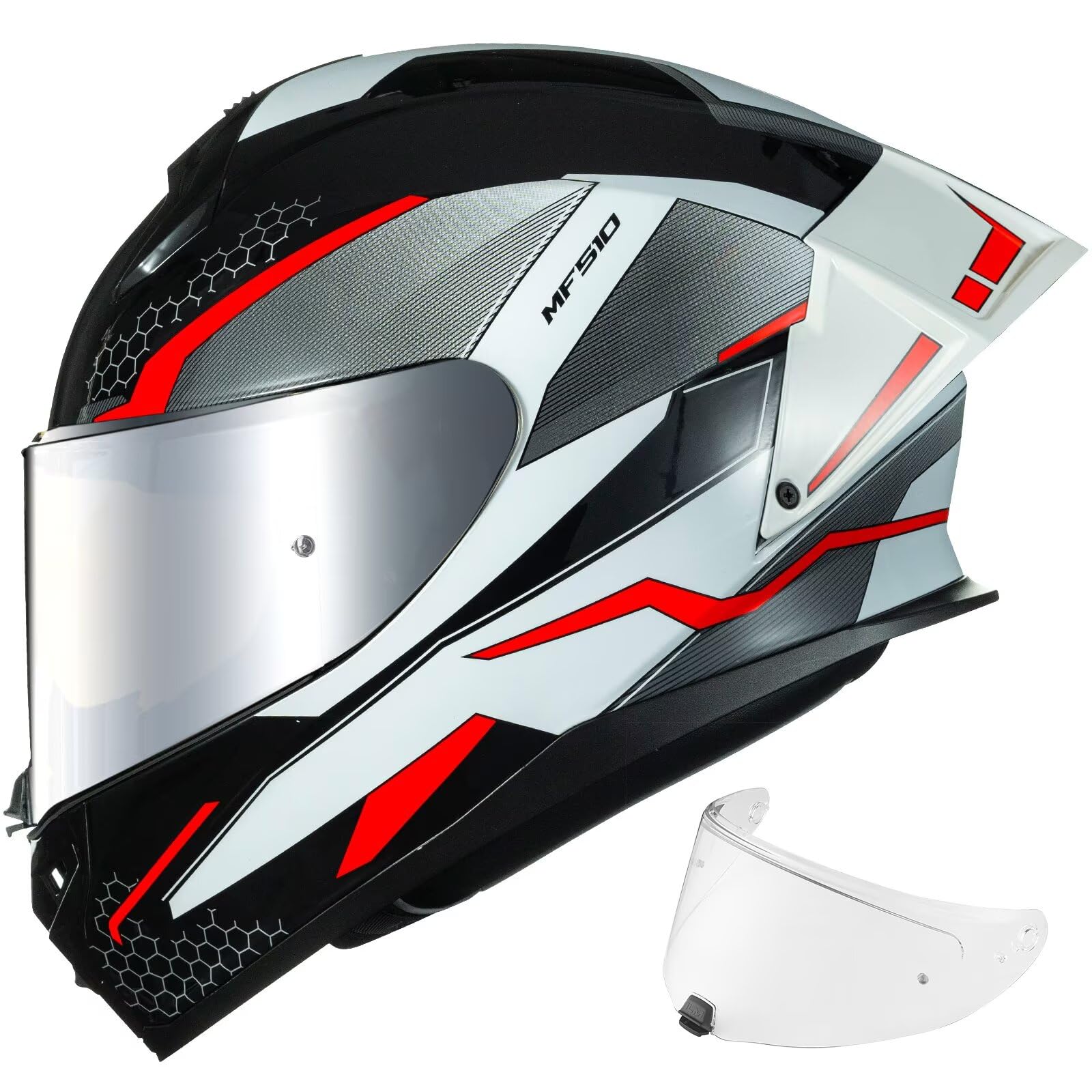
3. ILM Motorcycle Helmets Full Face for Adult Men Women with Pinlock DOT MF510
Eighty-one liner combinations — the helmet that tries to fit your head, not the other way around.
Fit is the feature ILM leads with. The MF510 has an Adjust Liner System with 81 different liner options, one of the widest adjustment ranges you’ll find on a full-face at any tier. The idea is simple: the shell stays fixed, and the liner reshapes inside it to match your head, so you don’t have to accept a loose spot or a pressure point. Combined with the Pinlock 70 anti-fog insert, which comes in the box, this is a strong fit-and-visibility package.
Safety-wise, it meets FMVSS 218 (the U.S. helmet standard) and carries DOT certification, with FlexImpact technology intended to absorb and disperse impact energy. The visor is UV-treated for glare, and a large rear spoiler plus a multi-channel vent system steadies airflow at speed.
One number you have to know: this helmet weighs 6.4 pounds, versus the 4.1-pound Shoei Neotec II at the top of the list — a big gap on a long ride. Sizing also runs mixed, with some riders needing to size up. If fit flexibility matters more than weight, this is a smart pick; if you’re prone to neck fatigue, weigh that 6.4 pounds honestly.
The fit advantage: 81 liner options let you dial in a snug fit even if your head is hard to fit, and the included Pinlock 70 insert (an anti-fog lens) keeps your visor clear in rain or cold.
The weight penalty: at 6.4 pounds it is the heaviest pick here, well above 4.1-pound modulars and the 3.6-pound Shoei RF-1400 — so it suits shorter rides better than all-day touring.
Reach for it if: nothing you’ve tried fits right and you want a DOT full-face with an adjustable liner and included anti-fog lens.
Pass if: you put in long highway miles and want the lightest shell you can get.
4. LS2 Stream II Full Face Motorcycle Helmet

A rotational-impact liner and DOT approval in a clean sport shell that commuters will appreciate.
LS2 built the Stream II around AreM rotational energy management, a liner design that addresses the twisting forces that can happen in a crash, and it meets ECE 22.06. It’s also DOT approved and meets FMVSS 218. The shell is LS2’s Kinetic Polymer Alloy — a lightweight polymer blend — and it uses flow-through ventilation. At 4.6 pounds it stays reasonably light for a full-face with a sun shield.
What riders like most is straightforward quality and value: the build feels solid and the price tier makes it an easy entry into a properly tested brand. Appearance and comfort both land positively. Just know that it ships with a clear shield, and the tinted shield shown in photos is optional — so the drop-down sun shield is your tint unless you buy an extra.
The sizing is where you have to be careful. The cheek pads run tighter than expected, and the shell tends to run small, so measuring before ordering is worth the effort. Wind noise also varies a lot by bike and rider position.
What it gets right
- AreM rotational energy management liner meets ECE 22.06
- DOT approved and compliant with FMVSS 218
- Kinetic Polymer Alloy shell at 4.6 pounds with flow-through ventilation
- Clean sport styling and strong value at this tier
What to plan around
- Shell and cheek pads tend to run small — measure first or size up
- Clear shield only; the tinted shield is optional
- Noise and airflow reports vary with riding position
A solid daily shell for: commuters and weekend riders who want an AreM liner and ECE 22.06 certification at an everyday tier.
Measure before ordering if: you’re between sizes — this one rewards going up rather than hoping it stretches.
5. HAX Force Full Face Motorcycle Helmet

Street-bike shaped, dual-certified, and sized from small to xx-large with a carrying case in the box.
The Force pairs DOT and ECE 22.06 certification with an outer UV-protective lens and a retractable sun visor — sunglasses built in, so bright mornings are handled. The ABS and polycarbonate composite shell is impact-resistant and keeps weight to 4.6 pounds. It’s designed for street bikes and e-bikes, covering both daily commutes and long-distance rides.
What buyers respond to is the look and the fit — the styling draws the biggest share of praise, and the size range from small through xx-large gives riders a real shot at a snug, stable fit. The breathable, hypoallergenic liner comes out for washing, which matters in summer, and the retractable sun visor earns steady approval. Eyeglass wearers can ride with frames in, and it’s Bluetooth and Pinlock ready if you want to add comms or an anti-fog insert later.
Visibility is the honest caveat. Some riders report it fogs up badly, and at speed some find the wind noise picks up. Keeping a visor treatment or anti-fog insert on hand handles the first; a quieter bike or windscreen helps the second.
Size range that helps: head-circumference sizing from 21.5 inches on the small up to 25.2 inches on the xx-large means many riders find a real fit without compromise.
Fog and wind: the retractable sun visor is a win, but the face shield can fog and the wind gusts get loud at highway speed.
Best for: street and e-bike riders who want dual certification, a built-in sun visor, and a wide size range.
Skip if: your commute is in cold damp weather and you don’t want to add an anti-fog insert.
6. ScorpionEXO R430 Full Face Helmet X-Large
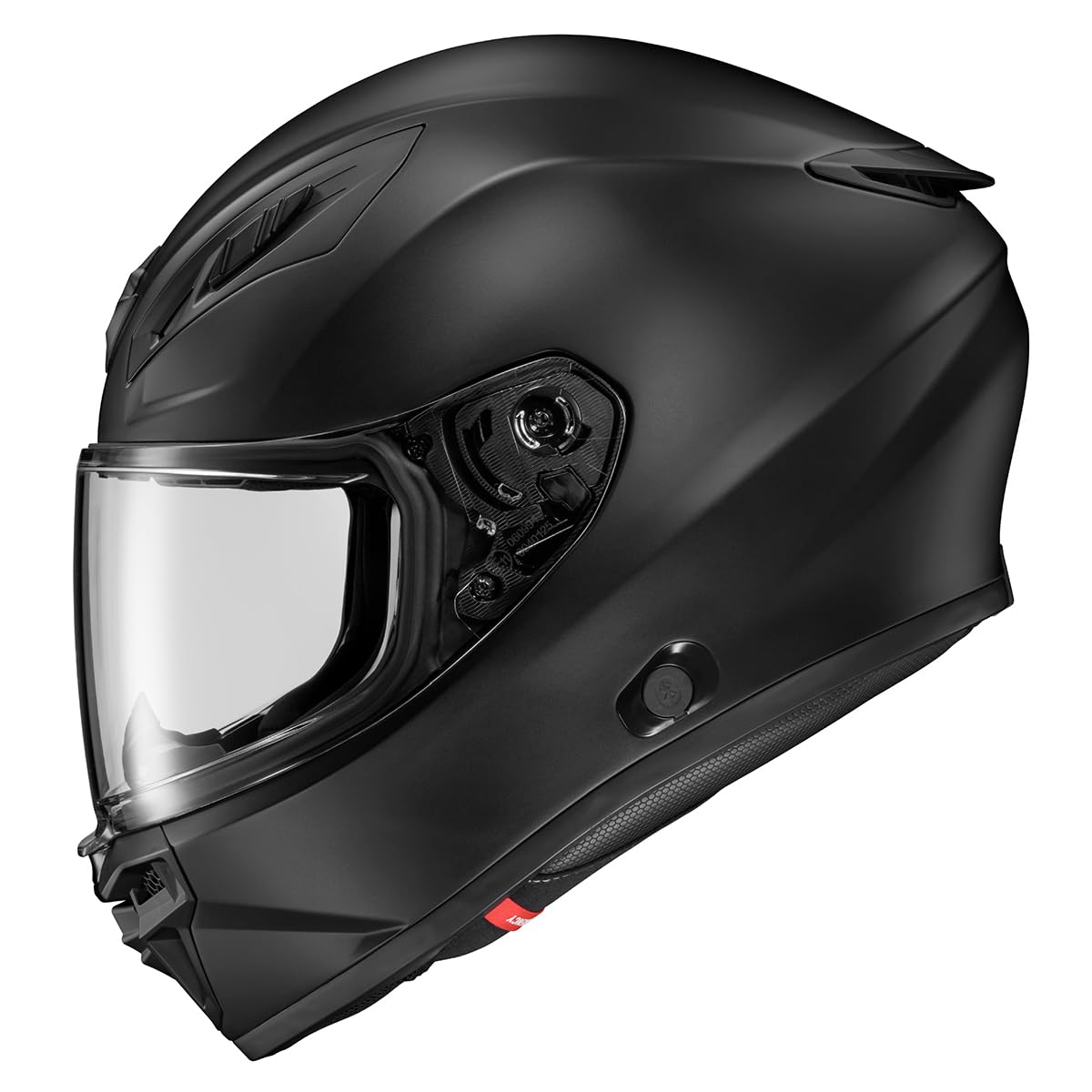
Snell certification in a street shell — the extra testing tier for riders who want more than DOT.
Snell is a tougher bar than DOT, and the R430 clears it. The shell is advanced polycarbonate with a multi-layer EPS liner for energy absorption, and the aerodynamics are shaped to reduce lift and turbulence. The Optical Class 1 shield has varied lens thickness to cut glare and distortion, and it’s coated for 99% UV-A and UV-B protection. The Ellip-Tec III ratchet has a smaller footprint for a little less weight, with firm detents.
The parts riders praise are fit and build quality — this is a helmet that feels substantial. The Emergency Release System cheek-pad tabs are there, the KwikWick C liner is machine washable, and the KwikFit cheek pads are shaped for eyeglass wearers. It weighs 4.98 pounds, and the warranty is five years.
The visor mechanism is the rough edge: some riders find it takes effort to take the visor off. Sizing also comes back mixed — some find it the right fit, some say it’s smaller than expected. Order with that in mind.
The safety case
- Snell approved alongside DOT — a tougher testing tier than DOT alone
- Optical Class 1 shield with 99% UV-A/UV-B protection and anti-scratch coating
- Multi-layer EPS and Emergency Release cheek-pad tabs
- Five-year warranty and a machine-washable liner
The honest catches
- Visor can be stiff to remove
- Sizing runs smaller than expected for some riders
- At 4.98 pounds, one of the heavier shells in this group
Pick it for: the stricter Snell rating and an optical-grade shield, in a street-focused shell with emergency-release cheek pads.
Think about size: confirm your measurement rather than trusting habit — this one runs small for some riders.
7. BELL Helmets Qualifier DLX MIPS – Red/White Tarmac, Medium
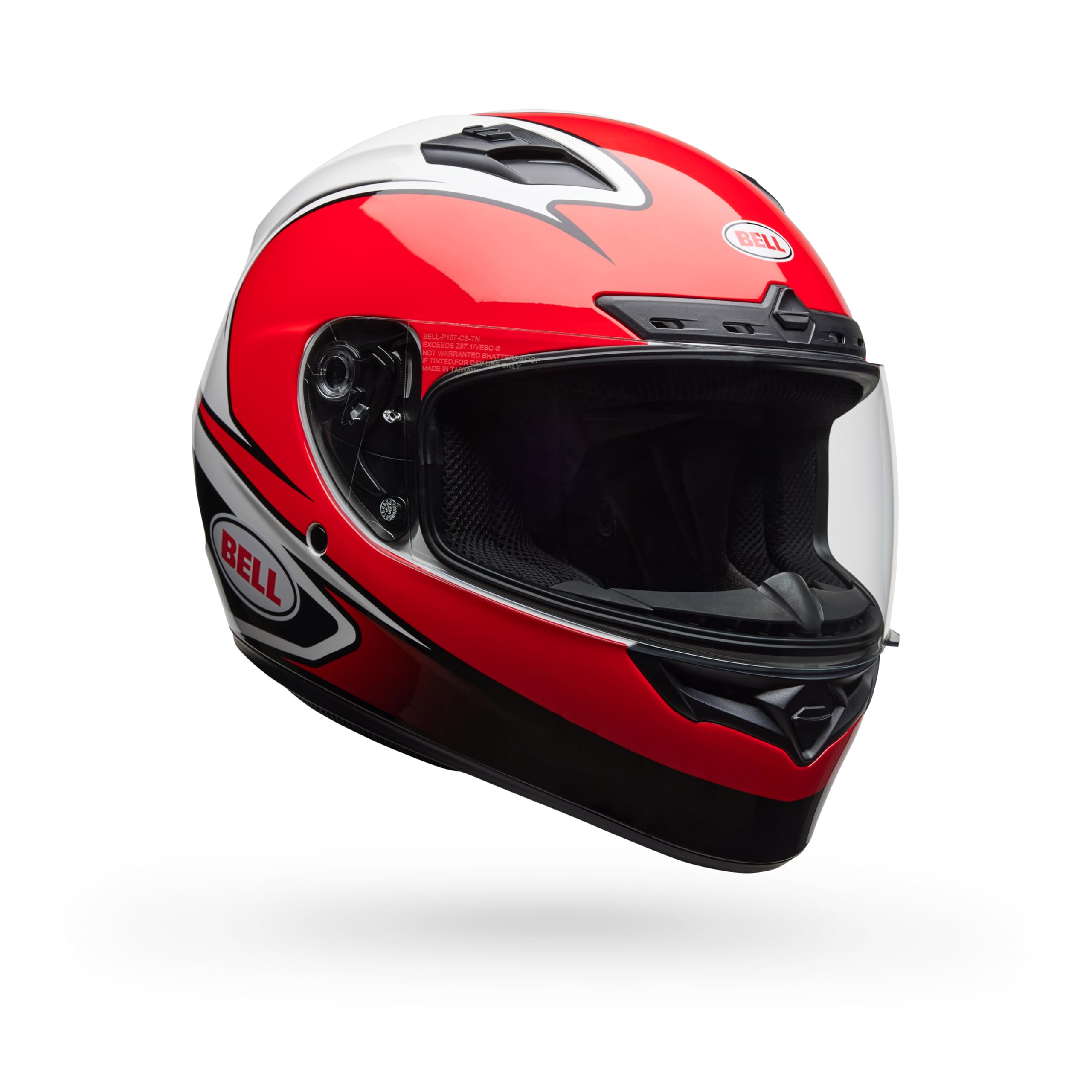
A visor that tints itself under sun and clears in tunnels — plus MIPS inside the shell.
Two things make the Qualifier DLX stand out. First, MIPS — Multi-directional Impact Protection System, a slip-plane layer inside the helmet designed to help reduce rotational forces in certain impacts. Second, the auto-tinting transition lens: it darkens under sun and stays clear in shade, so you roll into a tunnel and can still see. Riders specifically cite that functionality as a reason they bought it.
It meets DOT and ECE 22.05 standards, and the fit is consistently described as snug. Ionic+ padding is quick-drying and is designed to fight odor-causing bacteria. Ventilation gets noted for moving air better than many helmets at this tier, and the weight lands at 4.85 pounds.
Noise is the single sharp complaint: this helmet is reported as noticeably noisy, so if you ride fast with an open windscreen, earplugs become part of the routine. The transition visor is also the star feature — if it ever fails, the whole appeal dims.
The transition-lens win: clear in the dark, tinted in sun, no stopping to swap shields — combined with MIPS, it’s a unique safety-and-visibility package in this group.
Bring earplugs: the recurring knock is highway noise, so the quietest ride isn’t this one’s strong suit.
Best for: riders who hate swapping shields and want MIPS plus an auto-tinting lens that handles sun and shade in one ride.
Think twice if: you ride a loud naked bike and wind noise is your biggest daily gripe.
8. ScorpionEXO T520 Full Face Touring Motorcycle Helmet
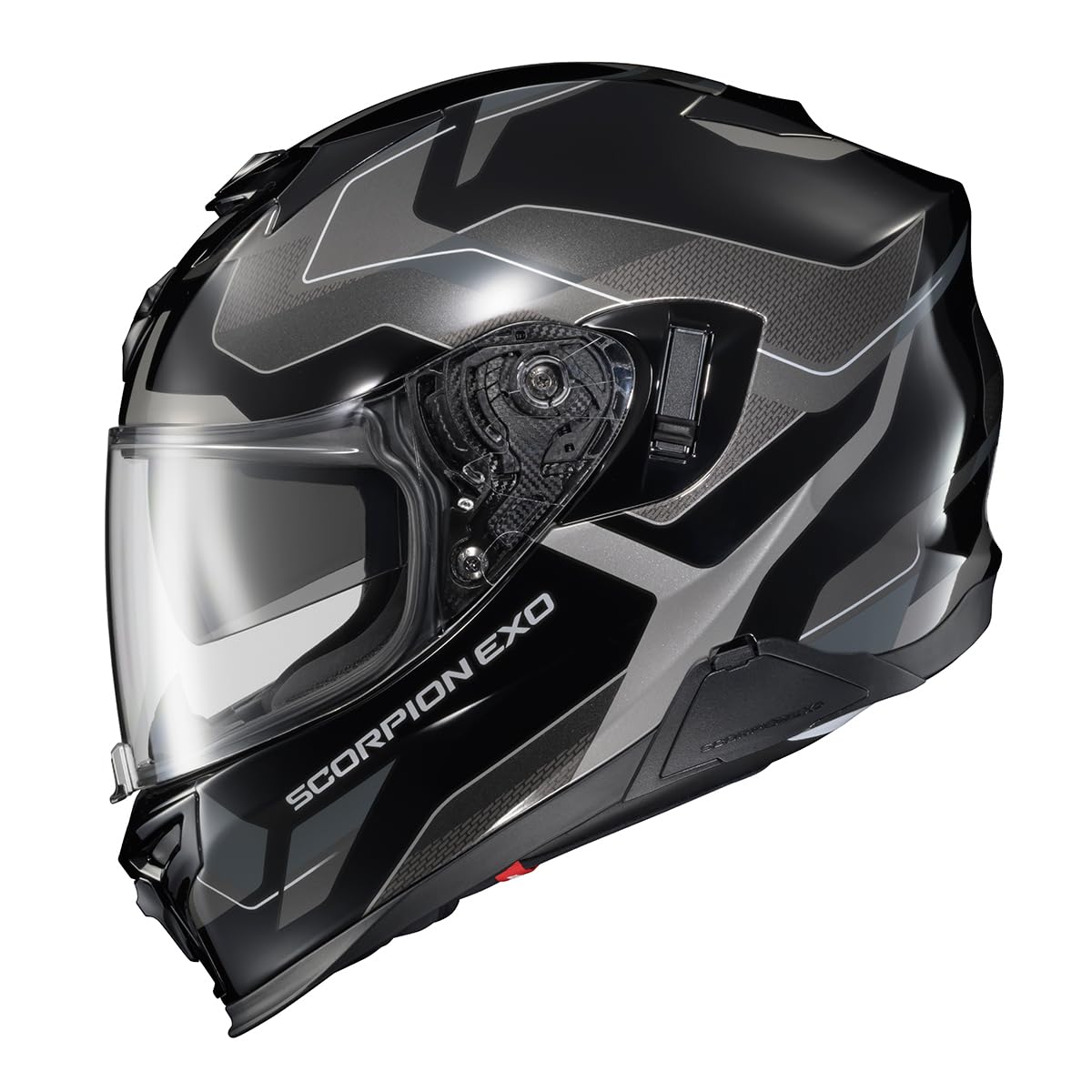
Inflatable cheek pads that dial in your fit — a touring shell built to kill wind noise and lift.
The T520’s neat trick is AirFit. The cheek pads inflate to custom-fit your face, which lets you close up gaps that cause wind noise and helmet lift — a real fix for riders whose heads sit between sizes. It also uses three shell sizes across the range, so the shell is scaled to your head rather than one giant shell with thicker foam, and it’s DOT and ECE certified.
Tourers will notice the Everclear no-fog shield (fog-free on both surfaces, shatter resistant, anti-scratch, with 95% UV-A/UV-B protection) and the speed-view drop-down sun visor. Ventilation includes closeable top intakes, exhaust vents, and a two-position mouth vent where the first setting acts as a defroster. Large speaker pockets take most Bluetooth comms speakers, and there’s an EXO-COM integration point if you want that kit. Six vents total, 4.8 pounds, five-year warranty, and a KwikWick C moisture-wicking liner.
The honest part: sizing runs small on this model, and the noise reports are mixed — some find it quiet, some a little loud. The double D-ring closure is secure but slower at a gas stop than a quick buckle.
Where the touring money goes
- AirFit inflation system custom-fits the cheek pads to cut noise and lift
- Everclear no-fog shield fog-free on both surfaces, with 95% UV protection
- Three shell sizes, six vents, and a retractable SpeedView sun visor
- Large Bluetooth speaker pockets and EXO-COM ready, five-year warranty
Trade-offs to know
- Runs small — several riders need to size up
- Noise is rated well by some, worse by others
- Double D-ring is secure but slower to fasten
Suits the long-distance rider: AirFit cheek pads, a no-fog shield, and comms-ready pockets make this a genuine touring shell.
One caution: measure carefully and consider going up a size, since this model has a small-running reputation.
9. AGV K1 S Solid Gloss Full Face Motorcycle Racing Helmet
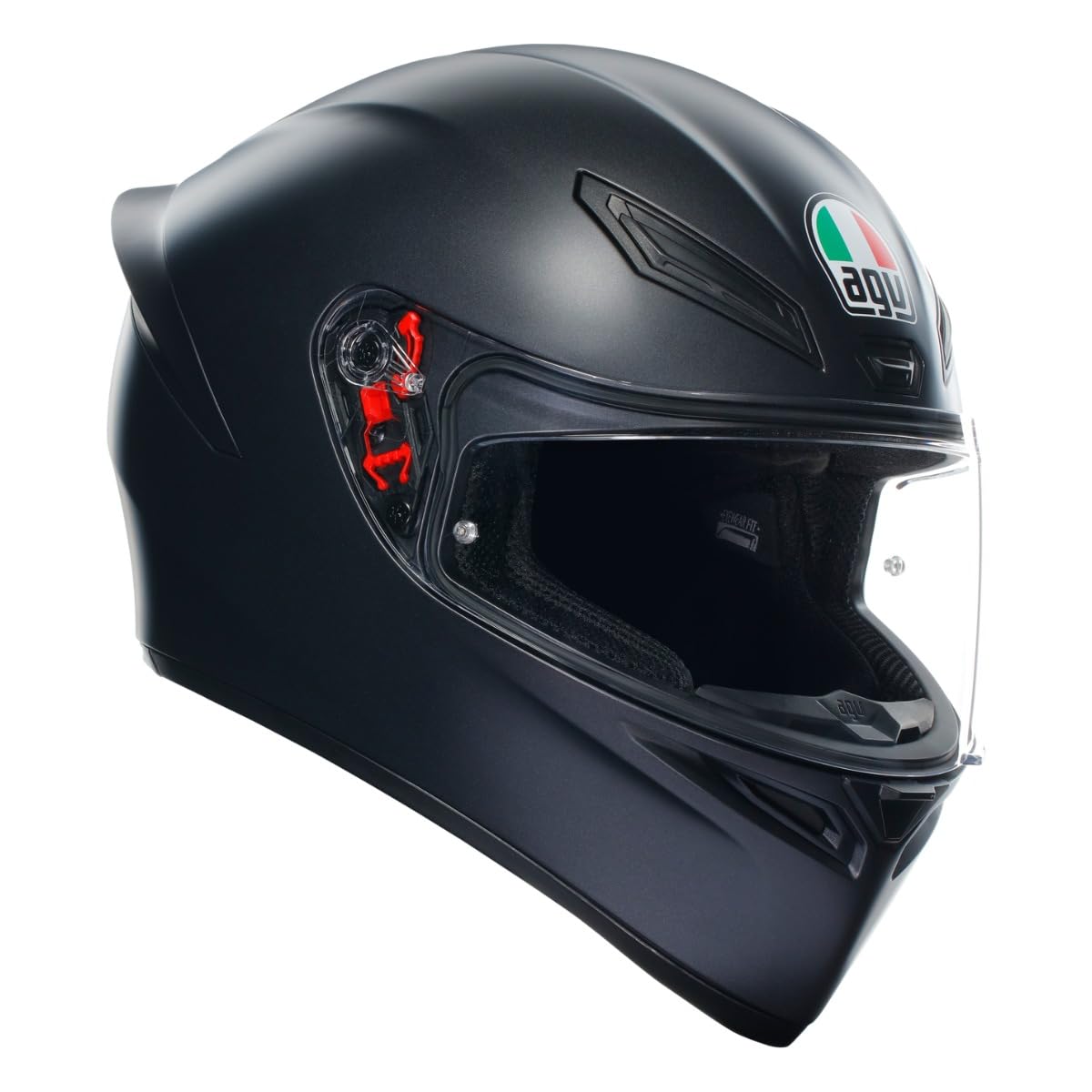
A racing-bred shell with a wide-view GT4 visor and a double D-ring built for the track.
AGV’s race pedigree shows up in the details here. The high-resistance thermoplastic shell comes in two shell sizes, so the fit is scaled to your head. Ventilation is generous — large front and crown vents with rear extractors push constant air through. The GT4 visor is Pinlock MaxVision-prepared with a wide field of view, and a clear visor ships in the box.
Crucially, the closure is a double D-ring — the race-proven setup many track-day organizers prefer because it stays put and can’t loosen mid-ride. It meets DOT FMVSS 218 and ECE. The liner is removable and washable, which keeps the inside of a helmet that sees heavy use from getting grimy. At 1580 grams it’s on the lighter side of the full-face crowd.
At speed the shell will produce some wind noise, and a few riders find the sizing runs a touch small. Neither is a dealbreaker for a sport rider who wants an aerodynamic, vented shell, but both are worth knowing before you order.
Built for the sprint: two shell sizes, front and crown vents with rear extractors, and a wide GT4 visor make this a genuine sport-riding tool.
Wind and fit notes: noise at speed is the trade-off, and a few riders find it runs small — try before you commit if you’re between sizes.
A sport rider’s shell: double D-ring closure, Pinlock MaxVision-ready GT4 visor, and generous venting for aggressive riding.
Best to avoid if: you want a drop-down sun visor — the K1 S uses a single clear Pinlock-ready shield instead.
10. Shoei RF-1400 Full Face Motorcycle Helmet

The lightest shell on this list — 3.6 pounds of fiberglass with Snell, DOT, and FMVSS 218 all passed.
Weight is the headline: at 3.6 pounds the RF-1400 is the lightest helmet in this whole group, and it’s fiberglass with an EPS liner rather than polymer. It carries DOT, meets or exceeds FMVSS 218, and is Snell approved — three separate testing boxes ticked. The CWR-F2 shield system is revised for better visibility, quieter operation, and finer adjustment. A clear shield is included, and a Pinlock EVO lens comes in the box alongside the breath guard and chin curtain.
Riders consistently notice the weight — it stays comfortable on long rides without the slow neck strain. The 3D Max-Dry interior wicks sweat, noise reduction is a strong suit, and ventilation moves air through the shell without extra roar. Quality and fit both land high, including for riders with larger heads.
Value is the mixed note: this is the most expensive pick here, and some riders feel it. The CWR-F2 visor mechanism also takes a bit of learning. If you want the lightest, most-certified shell and can justify the premium tier, this is it — just accept that the price and the visor feel are part of the deal.
Why it commands the premium tier
- 3.6 pounds — the lightest helmet here, ahead of the 4.1-pound Neotec II and the 4.85-pound Bell
- Snell approved plus DOT and FMVSS 218 compliance — three certifications
- Fiberglass shell with 3D Max-Dry interior and included Pinlock EVO lens
- Recognized for quiet operation and effective ventilation
Price and visor notes
- Sits at the top of the price range — value is a matter of what you prioritize
- Visor mechanism takes some getting used to
- No drop-down sun visor; the tinted shield is sold separately
For the rider who wants the lightest shell: three certifications and a 3.6-pound fiberglass build are what the premium tier buys you here.
skip it if: you want a built-in sun visor or you’re not ready to pay for the lightest option.
Know the Specs
Certification Types
DOT is the U.S. minimum. ECE 22.06 is a newer European standard with broader testing. Snell is an independent U.S. standard often seen as stricter than DOT. A helmet that lists multiple certifications has passed multiple testing regimes, which is generally a good sign — but certification never replaces a correctly fitted helmet.
Shell Material and Liner
Fiberglass (used on the Shoei picks) tends to be lighter and strong. Polycarbonate and ABS composites are common at lower tiers and still absorb impact when paired with a proper EPS liner. Multiple EPS layers or rotational-management designs (like MIPS or AreM) address more types of impact. The EPS liner absorbs the impact energy, so judge it as closely as the outer shell.
Weight
Helmet weight at the 3.6–4.9 pound range is normal for full-face and modular designs; above five pounds starts to feel heavy on long rides. Lighter shells reduce neck strain on touring days. Weigh actual weight against features — a drop-down sun visor or modular mechanism always adds some.
Fit and Ventilation
A snug fit without painful pressure points is a safety feature — a loose helmet can shift on impact. Adjustable liners and inflatable cheek pads help dial it in. Ventilation keeps you cool and fog-free; closeable intakes and a defroster position on the mouth vent make a real difference in cold, wet weather.
Common Questions
Is DOT enough, or do I need ECE or Snell certification?
Will a full-face helmet fit over my glasses?
How do I know if a helmet runs small?
Can I add a Bluetooth communicator to any of these helmets?
Does a modular flip-up helmet protect as well as a full-face?
How much does helmet weight really matter on a long ride?
Do these helmets include an anti-fog insert?
What’s the difference between a double D-ring and a ratchet or buckle closure?
Should I replace a helmet after it’s been dropped?
Can I wear a full-face helmet in summer without overheating?
The Bottom Line
For most riders, the safest motorcycle helmet to start with is the Shoei Neotec II. It carries both DOT and ECE certification, adds a flip-up chin bar for everyday convenience, and stays light at 4.1 pounds across a full touring day. If you want the simplest, most-certified full-face shell, the Shoei RF-1400 gives you Snell, DOT, and FMVSS 218 (the U.S. federal helmet safety standard) in the lightest 3.6-pound build here. And for a first full-face on a tighter budget, the ScorpionEXO R330 pairs DOT and ECE 22.06 with an emergency-release liner (cheek pads that pull out so medics can remove the helmet safely). Whichever you pick, get the fit right first — a loose shell slides out of position in a crash.
How we choose
We do not accept paid placement. Every pick is matched to a real buyer and a real use-case; we do not hands-on test units.
Sources
Specifications: manufacturer listings and product documentation. Review insights: verified customer reviews, as of November 2026. Pricing: not shown on this page (it changes often); check the current price via the retailer link.
As an Amazon Associate, Tactical Gear Guy earns from qualifying purchases. This does not affect which products we feature.