Specs are compiled from manufacturer listings and verified buyer reviews and can change over time — please confirm the key details on the product page before buying.
Most runners buy a watch for the heart rate number and then stop trusting it after the first hill. The fix is a watch whose optical heart rate sensor keeps sampling through intervals and whose GPS battery covers your longest run. This guide covers nine running watches with built-in heart rate monitoring, sorted by what each one does best: race-day accuracy, multi-day battery, or all-night recovery tracking.
This guide is built by comparing the manufacturers’ published specifications and the patterns across verified customer reviews, so you get each pick’s real strengths and trade-offs instead of marketing spin.
Some watches here last two days and some last sixteen, so the right pick depends on your weekly mileage. Below you will find honest strengths, real trade-offs, and a clear verdict on the best running watch with HR monitor for your training style.
Top Picks

How To Choose The Best Running Watch with HR Monitor
You are shopping for an optical sensor that keeps sampling when your heart rate spikes and your arms start swinging. Four specs decide whether the heart rate data holds up on the run.
Wrist heart rate sensing frequency beats fancy labels
A wrist optical sensor shines light into the skin and reads how much blood is moving under it. The more often it samples, the closer it tracks a real surge in effort. The Apple Watch Series 12 takes background heart rate readings every five seconds, which is the sort of cadence you want for interval work. If a listing only says “heart rate monitor” with no sampling detail, expect the standard every-few-minutes reading meant for resting and steady runs.
Separate your smartwatch battery from your GPS battery
Every watch here quotes two battery numbers, and they are not interchangeable. Smartwatch mode is the day-to-day figure with notifications and heart rate running in the background. GPS mode is how long the satellite chip survives with tracking switched on. A watch rated for 10 days of daily use may only hold 43 hours of GPS tracking — plenty for daily runs, not enough for a multi-day ultra.
Match the sensor suite to your terrain
A barometric altimeter (a sensor that reads air pressure to measure elevation gain) matters if you train on hills and want honest climb data. A 3-axis compass and multi-GNSS support keep your route honest when you leave the pavement. If you never leave the city grid, you can skip those and spend on a brighter display instead.
Decide how much recovery coaching you actually use
Training readiness scores, HRV status and nightly recharge figures all read your body between runs. They are useful when you follow a plan. They are clutter if you just want pace and distance. Be honest about which runner you are before paying for the deeper analytics.
Side-by-Side Comparison
| Model | Best For | Battery — Smartwatch Mode | Battery — GPS Mode | Weight | Amazon |
|---|---|---|---|---|---|
| Apple Watch Series 12 GPS 42mm★ Best Overall | Everyday runners who want health data and phone-free calls | Up to 24 hours | — | 8.6 oz | Amazon |
| Mibro AeroPaceFeatherweight Pick | Lightest-feeling training partner with AI coaching plans | Up to 8 days | Up to 12 hours (GPS Performance Mode) | 32 g | Amazon |
| Garmin Instinct E, 45mmTrail Tough Pick | Rugged trail days and rough handling | Up to 16 days | — | — | Amazon |
| Polar Street X | Hybrid gym-and-run weeks with route guidance | Up to 240 hours | Up to 43 hours | 48 g | Amazon |
| Samsung Galaxy Watch Ultra (2025) 47mm LTE | Sleep analysis and workout variety on a big titanium case | Up to 40 hours | — | — | Amazon |
| Polar Vantage M3 | Structured training with turn-by-turn navigation | Up to 7 days | Up to 30 hours (training mode) | 53 g | Amazon |
| Garmin Forerunner 570, 47mm | Race training with readiness scores and daily suggestions | Up to 11 days | Up to 18 hours | — | Amazon |
| Casio G-Shock Move GBD-H1000-4 | Tough solar-assisted training in harsh conditions | Solar-assisted daily operation | — | — | Amazon |
| Garmin Fenix 7X Sapphire Solar | Multi-day adventures with maps and solar charging | Up to 28 days indoors / up to 37 days with solar | Up to 89 hours indoors / up to 122 hours with solar | — | Amazon |
Detailed Reviews
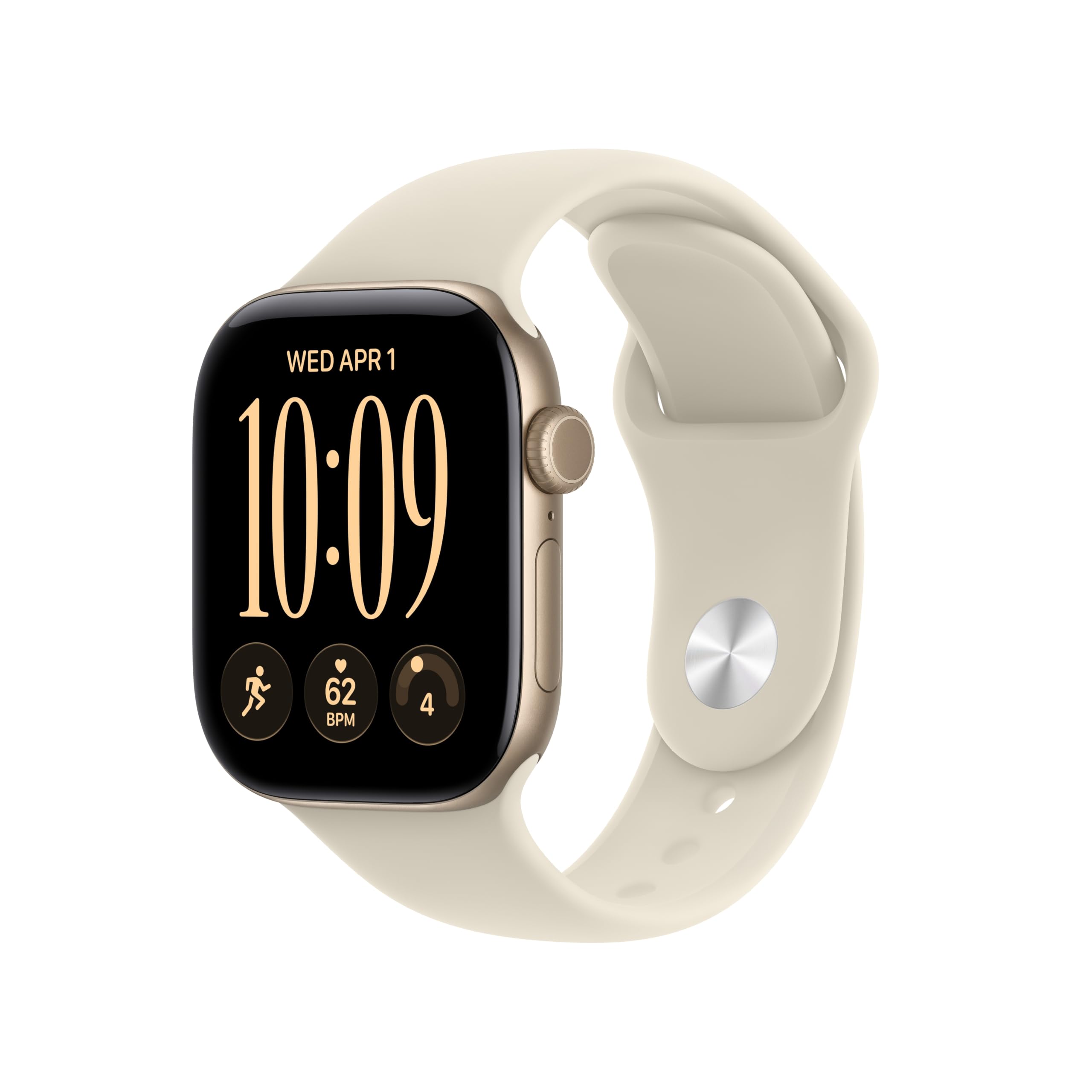
1. Apple Watch Series 12 GPS 42mm Smartwatch
Our pick — 4.5+★ from 500+ verified ratings; the strongest balance of quality and price.
Background heart rate every five seconds, dense enough to catch a surge on the second hill.
If you run the same loop three times a week and want one watch to also buzz with texts and log your sleep, this is the one to buy. Its defining number is the sampling rate: background heart rate readings land every five seconds. That is the kind of density that catches a surge on the second hill rather than the third, which matters on a tempo run or a track session. It also measures HRV (heart rate variability, the tiny gaps between beats) as often as every five minutes for stress and recovery insight — roughly the resolution you want to spot a heavy week before it turns into a bad one.
Where it leads the pack is the recovery side of the health picture. A readiness view weighs your recent activity, vitals and sleep so you get a plain answer on whether to push or back off. Vitals pulls your overnight metrics into one screen, and the daily sleep score reads the night you just had. Running-specific tools include Pacer (a pacing guide you follow with your wrist), Heart Rate Zones, and Workout Buddy powered by Apple Intelligence from your nearby iPhone. Safety is baked in too: it can detect a hard fall or severe car crash, connect you with emergency services, and notify your emergency contacts.
Here is the honest comparison — the battery is the short straw. You get up to 24 hours of normal use, against 240 hours on the Polar Street X and 11 days on the Garmin Forerunner 570. That gap is real, and it means a charging routine rather than a weekly forget-about-it. The 15-minute fast-charge for up to 12 hours of normal use softens it — a shower-and-coffee stop covers most of a day. The 8.6 oz shipping weight is note for a 42mm case, and you are tied to an iPhone for setup and calls.
What makes it worth the wrist
- Background heart rate every five seconds — dense enough for interval work
- HRV read as often as every five minutes for stress and recovery insight
- Fall and crash detection that can reach emergency services and your contacts
- Ceramic Shield 2 front glass, called tougher than any smartwatch glass by the maker
- 15-minute fast-charge for up to 12 hours of normal use
The trade you make
- Up to 24 hours of normal use means a nightly charging habit
- GPS is tied to your iPhone or Wi-Fi
- Some Siri AI and Audio Intelligence features are still rolling out
The call: Buy it if you log daily runs, want the most frequent wrist heart rate sampling here, and already carry an iPhone.
Where it costs you: The polar and Garmin picks stretch that battery into days or weeks, so long weekend runs off the grid need a different watch.
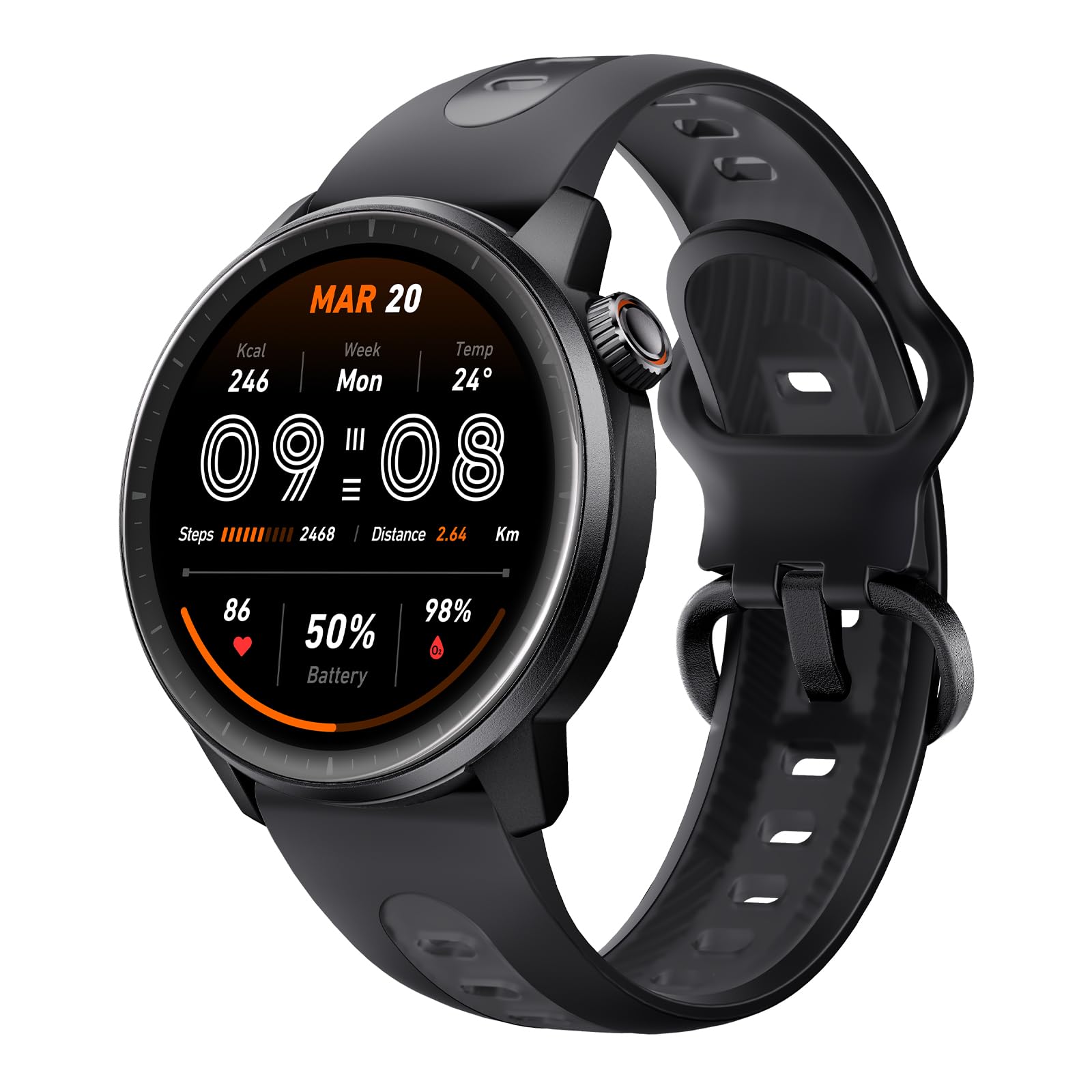
2. Mibro AeroPace GPS Running Watch
At 32 g with the woven strap, it is 16 g lighter than the 48 g Polar Street X.
This is the pick for the runner who has ever shaken a heavy watch off mid-stride. At 32 g with the woven strap, it is 16 g lighter than the 48 g Polar Street X — a difference your forearm feels on every swing. The case measures 44mm across and 9.2mm thin, and both woven and silicone straps come in the box so you can swap training for daily wear. The 230 mAh battery is the smallest here compared with the 590 mAh in the Samsung Galaxy Watch Ultra, but it is tuned for endurance rather than features: up to 8 days of daily use, up to 12 hours in GPS Performance Mode, up to 15 hours in Smart Mode, and up to 20 hours in Low-Power Mode. Against the Garmin Instinct E’s 16 days, that 8 days is half — but you are carrying a fraction of the weight.
The running tools are where the value sits. Dual-band, five-system GNSS (two satellite frequencies at once across five navigation systems) tracks your route in dense city blocks and tree cover. Free global vector maps support offline route following, off-course alerts and return navigation, so you can navigate without a phone in your pocket. The 1.32-inch AMOLED (an active-matrix OLED panel — bright, high-contrast, readable in sun) hits 2000-nit peak brightness at 466×466 resolution and a 60fps refresh rate, and adaptive brightness keeps it legible at dawn or midday.
Mibro Coach is the differentiator: a chat-based coach that builds personalized 4–20 week plans and adjusts sessions as your needs change. Note the terms — it comes with a 30-day free trial, then a subscription. The multi-LED 4PD optical sensor and upgraded algorithm promise more stable heart rate tracking during intense workouts, with real-time guidance on effort. Beyond heart rate you get pace, cadence, stride length, ground contact time and vertical oscillation, plus a VDOT Running Index, VO2 max and race-time estimates for 5K through the marathon.
The training load angle: Reviewing training load, 24/7 HRV and sleep insights in one weekly report is the sort of data most watches at this level leave out. PFEDA Smart Analysis then turns that into one takeaway on what to work on next.
The catch: The coach that arguably sells this watch needs a paid subscription after the 30-day trial, so budget for it if you want the full plan-building side.
Reach for this if: You want offline maps, dual-band positioning and coaching help in the lightest case on this list.
Look elsewhere if: You refuse a subscription for coaching or want a battery measured in weeks.
3. Garmin Instinct® E, Rugged GPS Smartwatch, 45mm
A 45mm fiber-reinforced polymer case rated to MIL-STD-810 for shock and thermal resistance, with a 3-axis compass for heading.
Some runners want a screen they can read in a rainstorm, not a wrist computer. This one answers that with a 45mm fiber-reinforced polymer case and a 10 ATM water rating (rated to survive pressure at the equivalent of 100 metres of depth for swimming and shower use, though it is not for diving). It is also engineered to MIL-STD-810 for thermal and shock resistance — the military durability standard, meaning it is tested against temperature swings and hard knocks. On the wrist, the 22mm silicone band and charcoal color keep it low-key.
The heart rate sensor is wrist-based and sits alongside advanced sleep monitoring and Pulse Ox (a blood oxygen estimate, not available in every country). Garmin is careful to label the data as close estimation rather than a medical readout, and that honesty is worth trusting. Navigation is handled by a 3-axis compass, barometric altimeter and multi-GNSS support — a combination that gives you elevation gain and heading even when the city grid disappears.
Battery is the headline: up to 16 days, drawing from a 300 mAh lithium-ion cell. Compare that to the 24 hours of the Apple Watch Series 12 and the gap is a lifestyle difference, not a spec-sheet nicety. It also connects to the Connect IQ Store for apps and watch faces when paired with your phone, and pushes smart notifications through. Where it has drawn mixed feedback is long-term reliability — most units hold up, but a minority report failures, so treat the warranty as part of the purchase.
What wins people over: The build. Owners tend to praise how the watch keeps working through rough handling, and the 16-day battery keeps it on the wrist instead of the charger.
Where it stings: Reliability is the mixed signal — nothing alarming, but worth registering the watch on arrival to keep support simple.
Best fit: Trail runners, hikers and anyone who regularly abuses their gear and wants altitude and heading data.
Skip if: You want a bright touchscreen and deep training analytics — this is a button-first, toughness-first tool.
4. Polar Street X GPS Running Sports Watch
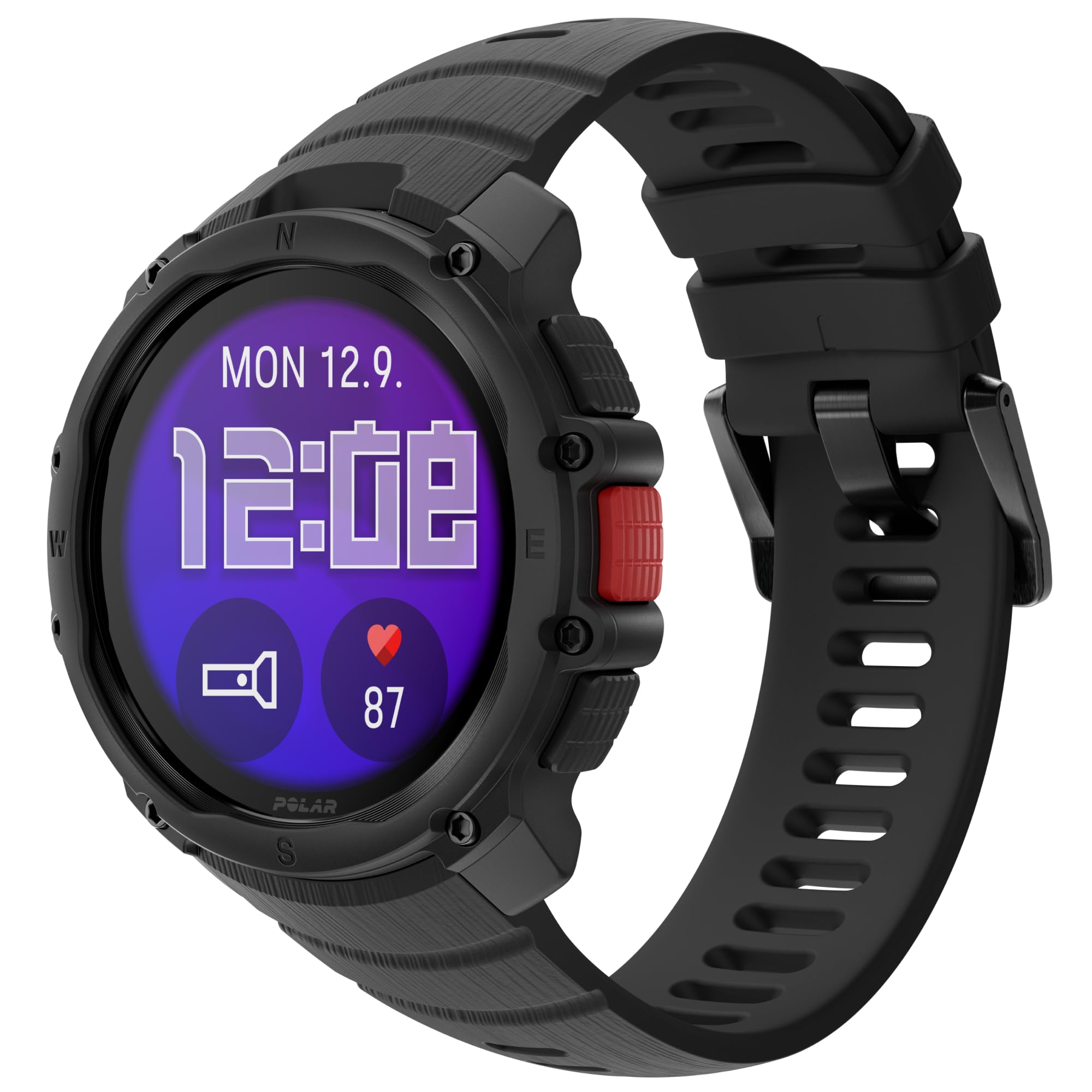
Ten days of battery on an AMOLED screen, for the runner who also lifts.
If your week mixes a 5K with a strength session and a spin class, the 170+ sport profiles here are the reason to look. Running, strength, HIIT and cycling all get their own tracking modes instead of one generic “workout” bucket. Built-in GPS handles distance, pace and performance, with route guidance and back-to-start navigation for city runs and outdoor sessions. The AMOLED display (a bright, high-contrast panel that stays readable in daylight) keeps that route view clear, and Polar keeps the interface on physical buttons rather than touch.
Battery is the standout. Up to 10 days of daily use and 43 hours of GPS tracking come from a cell rated at 240 hours of average life — compare the GPS figure with the 18 hours on the Garmin Forerunner 570 and the 12-hour GPS Performance Mode on the Mibro AeroPace, and this is the watch you take on a long weekend without a charger. The 48 g weight, though, is where it separates from the featherweight picks: it is 16 g heavier than the 32 g Mibro, and you feel that on a long run if you are sensitive to swing weight.
Heart rate is wrist-based, so no chest strap is needed — you get real-time effort data to manage effort on the move. The case is shock-resistant with 50 m water resistance (rated for rain, gym sessions and splashes, though not for deep swimming). Rugged, light enough for all-day wear, and honest about the trade it makes.
Strengths that show up on a schedule
- 170+ sport profiles across running, strength, HIIT and cycling
- 43 hours of GPS tracking for long sessions and weekends
- Route guidance and back-to-start navigation built in
- Wrist-based heart rate with no chest strap needed
What you give up
- 48 g is heavier than the ultralight picks on this list
- 50 m water resistance covers rain and splashes, not diving
- No maps — route guidance only
The short version: A button-first hybrid trainer that keeps the GPS chip running across a long weekend.
Know this first: The 48 g case is the heaviest on this list, so a featherweight feel is not what you are buying.
5. Samsung Galaxy Watch Ultra (2025) 47mm LTE Smartwatch
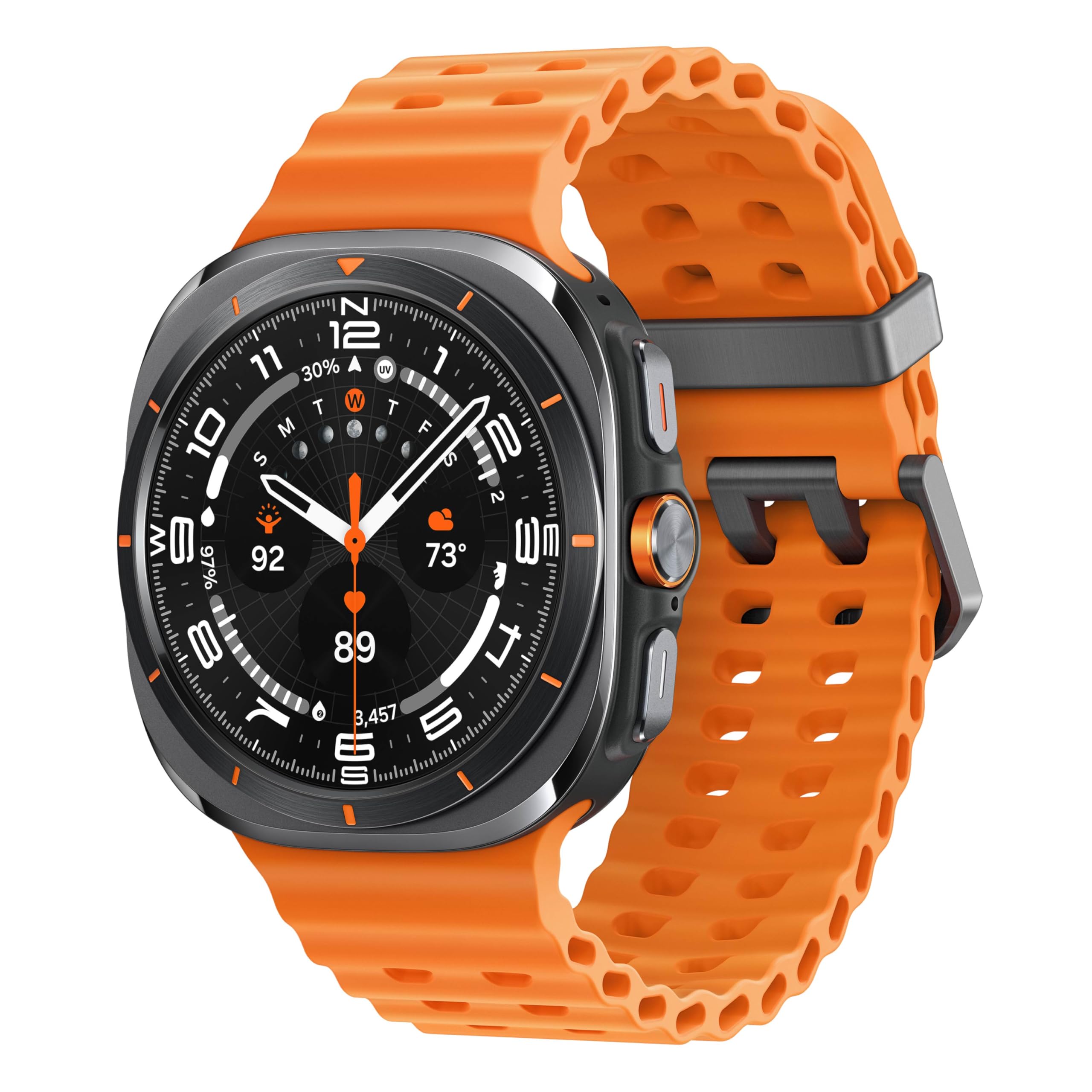
A 47mm titanium case with an orange band and a 590 mAh cell inside.
It drives up to 40 hours of average life, which stretches your charging routine from nightly to every other night. The titanium case (a light, hard-wearing alloy commonly used in outdoor gear) and 47mm sizing give it a presence on the wrist, and the LTE version (its own cellular connection, so the watch can operate without your phone nearby) keeps calls, messages and notifications coming while your phone stays at home.
Heart rate tracking runs continuously through the accelerometer and activity tracker, and the watch pairs that with a running coach and an energy score for daily guidance. Sleep coaching is the deeper play — nightly breakdowns of how long and how well you slept. The customers who live with it most often talk about the build quality and how well the workout modes cover what they actually do. Battery life and sleep monitoring both surface as wins.
The honest caveat is the two-word version on the listing: this is a renewed unit. That means it has been refurbished by the seller, not sold new. If you are comfortable with that, the titanium build and LTE freedom make it a serious contender. If you want a sealed box, look at the Garmin picks. Also note the color on the box says gray while the band listed is orange — double-check the exact variant before ordering.
Where it shines: A 590 mAh cell, a titanium case and LTE together make this the most overbuilt watch per hour of use on the list.
The trade-off: It is a renewed unit, so you are trading a new-in-box purchase for a refurbished one at this price tier.
Good match for: Runners who want a big titanium watch, deep sleep analysis and a phone-free run without carrying a slab of glass.
Not the pick if: You want a factory-sealed watch or a smaller case on a slender wrist.
6. Polar Vantage M3 Multi-Sport Smartwatch

When the numbers matter more than the notifications, this is the training brain.
The differentiating capability is the running data: this watch measures running power (how hard you are pushing per stride, not just how fast you are going) along with training load and recovery. That running-power number is the one most runners never get from a heart rate watch, and it is what lets you hold effort steady on rolling hills. The 1.28-inch AMOLED touchscreen is protected by Gorilla Glass 3 for scratch resistance, and the stainless steel case sits at 53 g — 5 g heavier than the 48 g Polar Street X, but on a watch built for the long haul rather than the daily run.
Navigation is a step above the Street X. Dual-frequency GPS (two satellite bands at once, which sharpens the fix between tall buildings and tree cover) pairs with offline topographic maps, route planning and turn-by-turn guidance powered by Komoot. For trail runs and unfamiliar city routes, that is a real navigation system rather than a back-to-start arrow. On water and weather, the watch is rated to 50 m water resistance and stays comfortable across all sport conditions.
Battery splits between up to 30 hours in training mode and up to 7 days in smartwatch mode, drawing from a 310 mAh cell. Beyond running, it covers 150+ sport profiles with performance tests, sleep tracking and recovery tools: Nightly Recharge, SleepWise and Training Load Pro. Both S and L wristbands come in the box, plus a USB-C charging cable. Reliability is the mixed signal — most owners get what they expect, but a minority consider it a letdown, so plan on registering the watch and keeping proof of purchase on hand.
Where the training depth pays off
- Running power, training load and recovery in one system
- Dual-frequency GPS with offline topo maps and turn-by-turn routing
- 150+ sport profiles and a full recovery suite
- Both S and L wristbands included
The costs to weigh
- 53 g is the heaviest on this list
- Reliability draws mixed feedback from a minority of owners
- 30 hours of training mode means charging more often than the week-long picks
Worth it for: Runners and triathletes who follow structured plans and need turn-by-turn navigation on the hoof.
Think twice if: You want set-it-once simplicity or a featherweight case; this watch wants engagement.
7. Garmin Forerunner® 570, 47mm, Aluminum
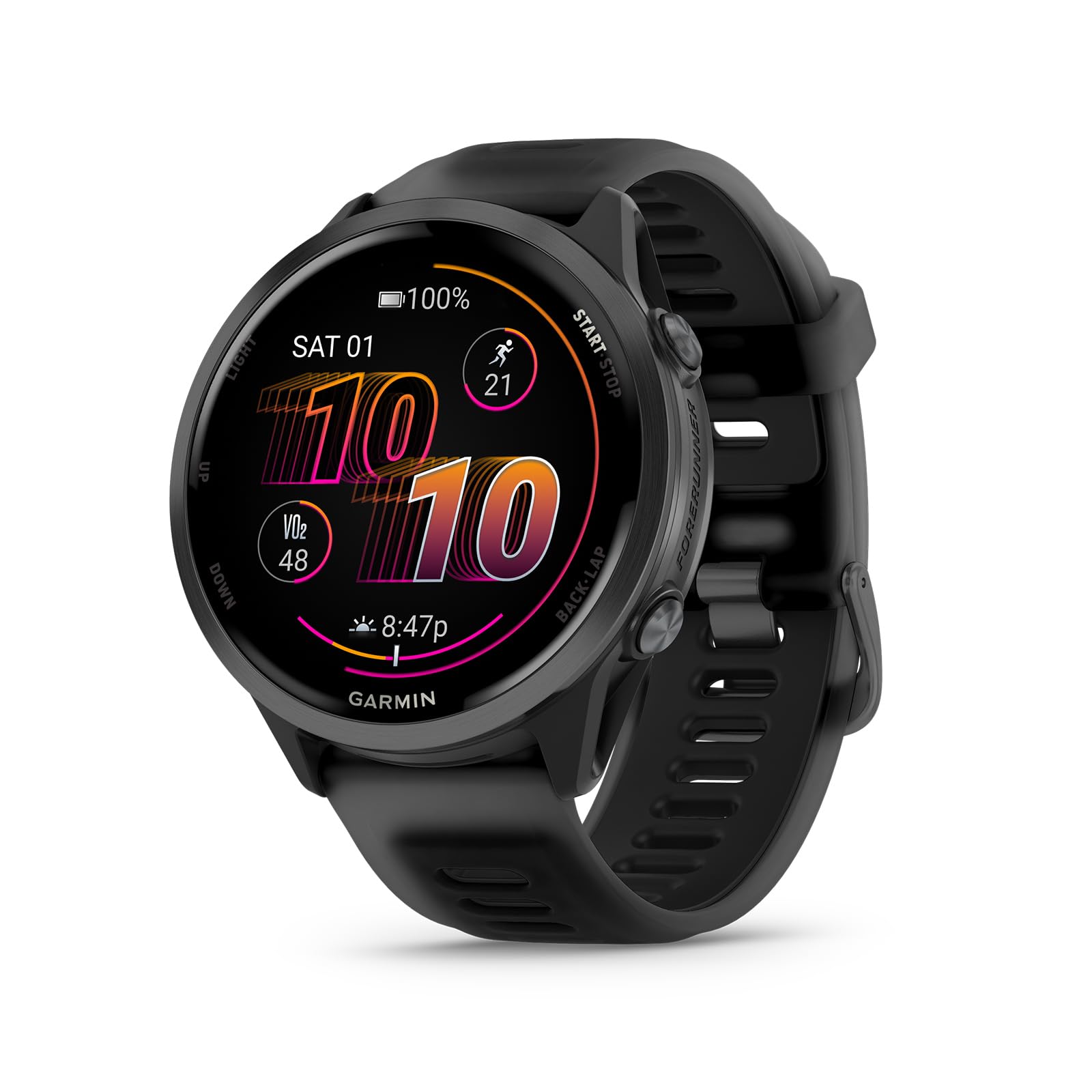
The coach on your wrist actually tells you whether to go hard today.
Every running watch in this list measures heart rate. This one turns that heart rate into a decision. The training readiness score blends sleep quality, recovery, training load and HRV status (heart rate variability — the variation in the gaps between beats, which correlates with how recovered you are) into a single answer on whether you are primed for a hard session or should back off. That readiness score is what separates this watch from a plain heart rate logger. The 47mm aluminum bezel case and brightest-yet AMOLED touchscreen (high contrast, with button controls for gloves and wet hands) keep it usable in any weather.
Battery is up to 11 days in smartwatch mode and up to 18 hours in GPS mode from a 300 mAh lithium-ion cell. Against the 7 days of smartwatch mode on the Polar Vantage M3 and the 24 hours of normal use on the Apple Watch, that is comfortably in the middle: enough to forget about charging for a while, not the weeks-long endurance of the rugged outdoor picks. Where it really separates is the coaching: Garmin Coach training plans for running and triathlon adapt to your performance and recovery rather than following a fixed calendar.
The daily suggestions, morning report and evening report build a loop that keeps you on track without a spreadsheet. The built-in microphone and speaker let you take calls from your wrist when paired to your phone, and you can use your phone’s voice assistant to reply to messages. Indicators like HRV status, recent exercise history and VO2 max roll into a training status that tells you if you are peaking or strained. The GPS tracking is a standout in owner feedback — accurate enough for interval work, and sleep tracking holds up well enough that comparison to the Apple Watch comes up favorably.
Where it earns its keep: Readiness, training status and daily suggested workouts make this the watch for someone training toward an event, not just logging runs.
The honest catch: The 18-hour GPS mode is on the shorter side for ultra-length events, and the deep analytics only pay off if you actually follow the plan.
Suits you if: You are building toward a race and want your watch to adapt the plan as you go.
Another route: Go for a week-long battery pick if long events matter more than coaching depth.
8. Casio G-Shock Move GBD-H1000-4

Five sensors, solar assist, and the build you would wear into a construction site.
Casio packed this one with the full outdoor sensor set: an optical heart rate sensor, plus bearing, altitude/barometric pressure and temperature sensors, plus an accelerometer for step counting. All five run in real time, so your pace, effort and elevation are all live rather than logged after the fact. GPS signals let the watch record distance, speed and pace when combined with the stopwatch, and the heart rate and speed data feed a VO2 max value — an estimate of your cardio capacity that is useful when training for stamina. VO2 max and other analysis come from a library by FIRSTBEAT, a sport science company.
The build is pure G-Shock. The back-cover surface is shaped to reduce interference with the back of your hand, and the soft urethane band follows your wrist for a better fit. Bi-color molded buttons keep controls easy to find mid-run, and a high-definition MIP LCD (a monochrome memory-in-pixel screen that holds up in direct sun) keeps the readout legible. Charging is dual: USB or solar, with solar covering daily operation only — not heart rate monitoring or GPS. That is the caveat worth understanding before you buy.
The watch runs a training plan you can set by target, so it auto-builds a schedule based on what you tell it. Phone apps handle configuration and workout management, which is a relief on a device with this many buttons. The resin strap and red colorway keep the sportiness intact. It is a serious tool and an honest one: solar here is a supplement to charging, not a replacement for it.
Built for real weather
- Five sensors: heart rate, bearing, barometric altitude, temperature and accelerometer
- Dual USB and solar charging for daily operation
- VO2 max analysis powered by the FIRSTBEAT library
- High-definition MIP LCD legible in direct sun
Where it holds back
- Solar charging does not cover heart rate monitoring or GPS
- MIP LCD is monochrome rather than a color AMOLED
- Deep configuration lives in the phone apps rather than on the watch
Pick it when: You want a watch that survives rough conditions, reads in full sun and has every outdoor sensor on the outside.
Pick differently when: You want solar to mean endless battery — here it is a supplement.
9. Garmin Fenix 7X Sapphire Solar

Solar charging, sapphire glass and preloaded maps — the watch you take off-grid.
The battery numbers here have no equal on this list. In smartwatch mode you get up to 28 days indoors or up to 37 days with solar charging given 3 hours of direct sunlight at 50,000 lux per day. In GPS mode it runs up to 89 hours indoors or up to 122 hours with solar charging in direct sunlight. Compare the GPS figure with the 18 hours on the Garmin Forerunner 570 and the difference tells the whole story: this watch is built for multi-day events, not just daily runs. The scratch-resistant Power Sapphire lens and always-on 1.4-inch display sit at the center, and a built-in LED flashlight keeps you going after dark.
Health monitoring runs 24/7 with wrist-based heart rate, Pulse Ox, stress and enhanced sleep tracking — with Garmin’s own note that these are estimates, not medical readings. Positioning is the most precise of the Garmin picks here: multi-band frequency with GNSS network support (GPS, GLONASS and Galileo) plus a 3-axis compass, gyroscope and barometric altimeter. Preloaded TopoActive maps and maps for thousands of golf courses and ski resorts keep you oriented, and Wi-Fi lets you download maps for any continent without a computer. It pairs with a compatible smartphone for notifications, music storage and Garmin Pay contactless payments in supported markets, and the titanium case is finished in Mineral Blue DLC with a Whitestone band.
Training tools include endurance and real-time stamina tracking, training status, advanced performance metrics and 30+ built-in sport apps. Reliability is what most owners talk about — the watch works and offers strong value. Some noted it does not always stretch the full 28 days, and a few flagged customization and display visibility as mixed. Those are honest notes, not dealbreakers — and like the Samsung, this one is a renewed unit, so confirm the condition on the listing.
What the battery buys you: 122 hours of GPS with solar is the sort of figure that covers a weekend event without a cable, and solar stretches the gap further with sun.
What to know: It is a renewed watch, and a few buyers report shorter smartwatch battery than the full 28 days, so you are buying capability with a caveat.
The watch for: Ultra runners, hikers and anyone who needs maps, sol, and a LED light in one titanium package.
Not for: You want a small case or a new-in-box purchase — the 47mm-plus body and renewed condition are the trade.
Know the Specs
Heart Rate Sampling vs. Heart Rate Accuracy
These are two different things. Sampling is how often the sensor reads your pulse — the Apple Watch Series 12 reads background heart rate every five seconds. Accuracy is how close those reads land to a chest strap. A dense sampler with a loose wrist strap still drifts. The fix is a snug fit just above the wrist bone, which is the single biggest thing you can do to keep any optical sensor honest.
Smartwatch Battery vs. GPS Battery
A watch quoted at 16 days is measured in smartwatch mode — notifications on, heart rate on, satellite off. The GPS figure is the one that governs long runs. A Polar Street X rates 240 hours of average life but 43 hours of GPS tracking; a Garmin Fenix 7X Sapphire Solar runs up to 122 hours of GPS with solar. Always match the GPS figure to the longest run or event you plan.
Dual-Band vs. Standard GNSS
GNSS is the umbrella term for satellite positioning networks — GPS, GLONASS, Galileo. Standard watches lock onto one band; dual-band watches listen on two frequencies at once, which sharpens the fix in tight city streets and tree cover. The Mibro AeroPace, the Polar Vantage M3 and the Garmin Fenix 7X Sapphire Solar all lean on multi-frequency positioning.
HRV and Training Readiness
HRV, or heart rate variability, is the tiny variation in the time between heartbeats. Higher HRV generally means a more recovered body; lower HRV often follows a hard training block or poor sleep. Watches like the Garmin Forerunner 570 and Polar Vantage M3 merge HRV with sleep and training load into a readiness score. Treat that score as a guiding estimate, not a medical reading.
Common Questions
Can I trust a wrist heart rate monitor during interval training?
How many days of battery should I expect from a running watch?
Do I need a chest strap if my watch has an optical sensor?
What does training readiness actually measure?
Is dual-band GPS worth the extra cost?
How accurate is solar charging on a running watch?
Can I wear my running watch in the pool?
Will a 47mm watch fit a smaller wrist?
What does VO2 max mean on my watch?
Are the Samsung Galaxy Watch Ultra and Garmin Fenix 7X renewed or new?
The Bottom Line
For most daily runners, the running watch with hr monitor that earns the top spot is the Apple Watch Series 12 — it takes background heart rate readings every five seconds and folds readiness, sleep and vitals into one screen, which is exactly the combination a runner actually uses. If your priority is long days between charges and deeper race-prep coaching, the Garmin Forerunner 570 leads on training readiness and daily suggested workouts. And when the run turns into a multi-day adventure with maps and sun for backup power, the Garmin Fenix 7X Sapphire Solar is the one to strap on, while the Mibro AeroPace covers the featherweight, offline-map end for anyone who wants a nearly weightless wrist.
How we choose
We do not accept paid placement. Every pick is matched to a real buyer and a real use-case; we do not hands-on test units.
Sources
Specifications: manufacturer listings and product documentation. Review insights: verified customer reviews, as of November 2026. Pricing: not shown on this page (it changes often); check the current price via the retailer link.
As an Amazon Associate, Tactical Gear Guy earns from qualifying purchases. This does not affect which products we feature.