Specs are compiled from manufacturer listings and verified buyer reviews and can change over time — please confirm the key details on the product page before buying.
You are standing at a junction with no phone signal, and the only thing that matters is whether the watch on your wrist can find the trail back and still be alive by the time you reach the car. That is the whole game with a rugged GPS smartwatch: satellite positioning plus a build that shrugs off knocks and water. Below you get eight picks that survive drops, water, and long days out, with honest notes on which ones do it best.
This guide is built by comparing the manufacturers’ published specifications and the patterns across verified customer reviews, so you get each pick’s real strengths and trade-offs instead of marketing spin.
Some watches here rely on solar top-ups, others on big internal cells and offline maps (maps stored on the watch, so they work with no signal), so the real question is which one fits your terrain and your charging habits. Every pick below earns its spot in this guide to the best rugged gps smartwatch.
Top Picks

How To Choose The Best Rugged GPS Smartwatch
Shopping by screen size or colour is the wrong way to buy one of these. Instead, picture your worst day outdoors — cold rain, a river crossing, a dropped pack — and check whether the watch survives it. Three specs tell you almost everything: the water rating, the GPS-mode battery life, and the satellite systems it can lock onto.
Decode the water rating before anything else
A rating like 10ATM means the watch is tested to withstand pressure equivalent to a 100-metre depth, which covers swimming, surfing, and most water sports. IP69K is about dust and high-pressure water jets rather than depth. If you dive, look for a stated dive certification — the Amazfit T-Rex 3 Pro lists diving certification to 45m, which is a stronger claim than a bare ATM number.
Read the battery line twice
Manufacturers quote two numbers, and they are wildly different. Smartwatch mode is everyday wear with notifications and heart rate. GPS mode is with satellites running, and it drains far faster. One watch here runs 48 hours in GPS mode with solar assist in direct sunlight, another runs 22 hours of continuous GPS tracking. Match the GPS number to your longest planned day, not the headline figure.
Check the satellite systems and the maps
Multi-GNSS means the watch listens to more than one satellite constellation at once — GPS plus GLONASS plus Galileo in most cases here. Dual-band takes it further by using two signal frequencies, which helps in narrow canyons and thick woodland. Offline maps matter just as much, because a watch with turn-by-turn navigation and no phone signal is the difference between a confident route and a guess.
Side-by-Side Comparison
| Model | Best For | Battery (Rated) | Water Rating | Case Material | Amazon |
|---|---|---|---|---|---|
| Garmin Instinct 2 Solar★ Best Overall | Solar top-ups on multi-day trips | 48 hours GPS | 100 meters | Fiber-reinforced polymer | Amazon |
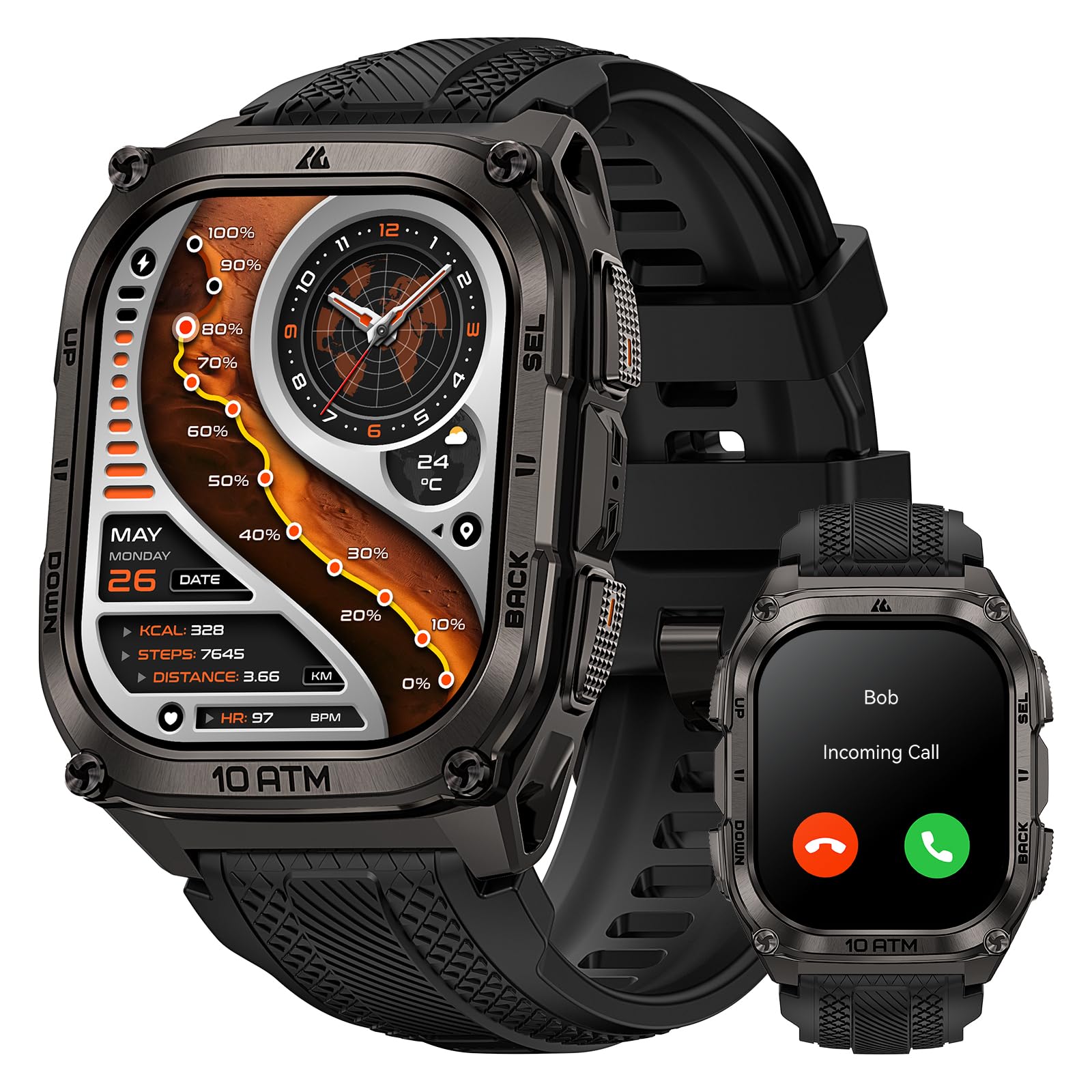
| KOSPET TANK M4Toughest Build | Tactical toughness and long standby | 50 days | 10ATM / IP69K | INOX 360 stainless steel | Amazon |
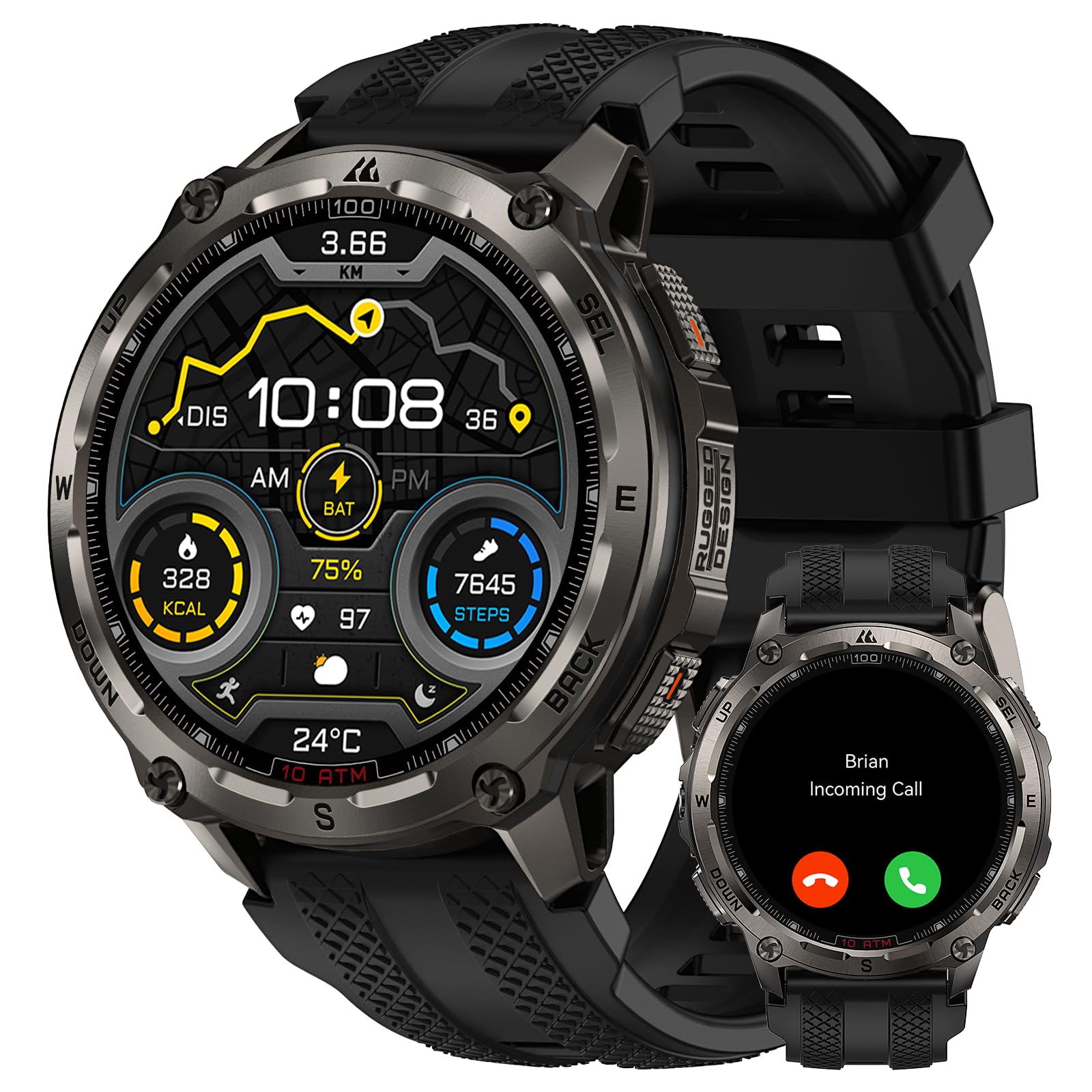
| KOSPET Tank T4Budget Navigator | Offline maps on a tighter budget | 50 days | 10ATM / IP69K | INOX 360 stainless steel | Amazon |
| Garmin Instinct E 40mm | Smaller wrists wanting two weeks off-grid | 336 hours | 10 ATM | MIL-STD-810 rated | Amazon |
| Amazfit T-Rex 3 Pro | Bright display plus a built-in flashlight | 17 days | 10 ATM | Titanium alloy bezel | Amazon |
| Samsung Galaxy Watch Ultra2 | Staying connected without your phone | — | 10ATM / IP69K | Titanium | Amazon |
Detailed Reviews
1. Garmin Instinct 2 Solar, Smaller-Sized Rugged Outdoor Watch
Our pick — 4.5+★ from 950+ verified ratings; the strongest balance of quality and price.
The solar panel that quietly ends the charging routine on a long backpacking trip.
If your trips stretch past a week and you hate packing a cable, this is the watch to start with. Garmin rates the Instinct 2 Solar at unlimited battery life in smartwatch mode with solar charging, assuming all-day wear with 3 hours per day of direct sunlight at 50,000 lux conditions. That is a specific set of conditions, and it is worth reading literally: sun exposure is the fuel source here, not a bonus trickle.
With satellites running, the watch is listed at up to 48 hours in GPS mode with solar charging continuously in direct sunlight. On a multi-day trek you get real, usable tracking without carrying a battery pack. The case is water-rated to 100 meters and built from fiber-reinforced polymer with scratch-resistant Corning Gorilla glass, which is exactly the combination you want when a wrist regularly meets rock faces and pack straps.
Navigation is where this one earns its keep. You get multiple global navigation satellite systems — GPS, GLONASS and Galileo — plus a 3-axis compass, a barometric altimeter, and TracBack routing that walks you back along the path you came in on. Health tracking covers wrist-based heart rate, sleep, Pulse Ox, and respiration, with Garmin noting the estimate is not a medical measurement. The 22-centimeter silicone band is long enough to sit over a jacket cuff in cold weather.
What holds up in the field
- Solar charging extends smartwatch mode to unlimited with daily sun exposure
- 100-meter water rating plus 3-axis compass and barometric altimeter
- TracBack routing retraces your own path back to camp
- Powered by GPS, GLONASS and Galileo together for a faster satellite lock
Where it asks something of you
- Solar gains depend on direct sun — heavy tree cover limits the top-ups
- Accuracy and reliability draw mixed feedback from owners in this tier
- Charging from empty takes about 2 hours by cable
Best for: hikers and backpackers who spend hours outside in daylight and want a watch that feeds itself.
Think twice if: most of your time is in dense shade or on night shifts — you will want the cable more often.
2. KOSPET TANK M4 Smart Watch
A stainless-steel tank that carries offline maps and a walkie-talkie into dead zones.
Here is the number that sets this watch apart from almost everything else on the list: a 500 milliamp_hours battery. That is ten times the capacity of the 50 milliamp_hours cell inside the Garmin Instinct E. The payoff is a rated 50 days of average battery life and up to 15 days of typical use with 22 hours of continuous GPS tracking. For industrial work or long expeditions, that is a fundamentally different experience from charging every night.
The build is the second headline. An INOX 360 stainless steel body paired with 3rd Gen Corning Gorilla 9H glass, tested to 20 MIL-STD-810H standards and rated for temperatures from –58°F to 158°F. Water resistance is 10ATM with IP69K, and the maker lists operation down to 148 feet (45 meters) for swimming, scuba, freediving, and surfing. Mapping runs on dual-band GNSS across six satellite systems, with downloadable offline maps and turn-by-turn navigation when there is no cell coverage at all.
What wins people over most clearly is the perceived quality of the thing — it feels like a serious tool rather than a toy. Value ranks right behind that. Two caveats worth knowing before you commit: reliability feedback is split, with some units reported to stop working entirely, and the battery life rating is marked mixed even though the raw capacity is large. A built-in walkie-talkie lets you talk to up to four people with a touch-and-hold, which is genuinely useful on a work site.
The capacity story: 500 milliamp_hours is a serious reserve for a watch, and it is why 22 hours of GPS tracking is possible here without a solar panel or a power bank.
The honest catch: a handful of units have been reported to quit completely, so buy from a seller with a clean return path and register the 24-month warranty on day one.
Worth grabbing if: you need a watch that takes hits, works in extreme cold, and runs for weeks between charges.
Look elsewhere if: you want a long, settled reliability record rather than a newer platform still finding its feet.
3. KOSPET Tank T4 Smart Watch
Offline turn-by-turn navigation in a stainless body, without paying flagship money for it.
Leave the phone in the pack. The Tank T4 pairs dual-band GNSS with six satellite systems, which is the same positioning approach the TANK M4 takes, aimed at narrow canyons and thick woodland where a single-constellation watch tends to drift. You download offline maps before you go, plan the route, and get clear turn-by-turn guidance with no cellular signal whatsoever.
Physically this is a near-twin of the M4: INOX 360 stainless steel, 3rd Gen Corning Gorilla 9H glass, 20 MIL-STD-810H tests passed, and an operating range from –58°F to 158°F. Water handling reaches 10ATM and IP69K with a stated 148 feet (45 meters) for swimming, scuba, freediving, and surfing. Battery capacity matches at 500 milliamp_hours with a rated 50 days of average life, up to 15 days typical use and 22 hours of continuous GPS tracking.
Training coverage is broad — 180+ sport modes including 23 ApexMotion modes, with a 6-axis gyroscope behind the motion tracking. You also get the same built-in walkie-talkie for up to four people, always-on display, and the ApexMove app for health reports and watch faces across Android and iOS. The T4 is the newer, thinner-reviewed sibling, so treat it as the value route into the same shell rather than a proven veteran.
Why it lands here: you get the mapping, the dual-band positioning, and the 500 milliamp_hours battery capacity in a metal case, at the entry end of this category.
The right call for: hunters, hikers, and cyclists who want offline route guidance and are comfortable being early on a newer model.
The trade-off: the track record is thin compared to the established names, so go in expecting to rely on the 24-month warranty if something misbehaves.
4. Garmin Instinct E, Rugged GPS Smartwatch, 40mm

A 40mm case that stops a rugged watch from swallowing a narrow wrist.
Most watches in this category are chunky, and that is a problem if your wrist is small. The Instinct E answers it with a 40 mm case while keeping the MIL-STD-810 thermal and shock resistance intact. Garmin rates it at up to 14 days of battery life, and the published battery average life comes in at 336 hours. Compare that to the 48-hour GPS-mode rating on the Instinct 2 Solar above and you can see the trade: this one leans on long everyday endurance rather than solar top-ups.
You get long rated runtime from a small battery cell of just 50 milliamp_hours (a measure of battery capacity) — roughly a tenth of the 500 milliamp_hours in the KOSPET TANK M4. Garmin gets there with efficient power management rather than brute capacity. Water resistance is 10 ATM (rated to survive the pressure of a 100-meter dive), so rain, river crossings, and swimming are fine. Navigation runs on multi-GNSS (several satellite systems at once, so a fix is easier to hold in canyons and tree cover), with a 3-axis compass and barometric altimeter (an air-pressure sensor that shows your elevation). Health features cover wrist-based heart rate, advanced sleep monitoring, and Pulse Ox (a blood-oxygen estimate), with Garmin stating the readings are close estimates rather than medical data.
Owners tend to see this as strong value, with the battery life, functionality, and durability all landing positively and several calling it a favourite gift. Reliability is the split point: plenty report it working exceptionally well, and a smaller group report failures. That is the fair read — a sturdy small watch that mostly behaves, with an occasional dud in the batch.
Reasons it earns the wrist time
- 40mm case suits smaller wrists without dropping the rugged rating
- Up to 14 days of battery life on a 336-hour rated average
- 10 ATM water rating and MIL-STD-810 shock resistance
- Multi-GNSS plus compass and barometric altimeter for navigation
What to weigh up
- No solar charging on this model
- Reliability feedback splits between flawless units and a few failures
- Small 50 milliamp_hours cell means no room for heavy GPS days
Suits you if: you have a smaller wrist and want two weeks of wear between charges with proper outdoor navigation.
Skip the fit if: you plan long GPS-tracked days in the backcountry — the solar version above is built for that.
5. Amazfit T-Rex 3 Pro Smart Watch, 1.32″ AMOLED Sapphire Glass

A 3000-nit screen you can actually read at noon, plus a flashlight on your wrist.
Squinting at your wrist in full sun is the oldest complaint about outdoor watches. The T-Rex 3 Pro answers it with a 3000-nit AMOLED display behind sapphire glass and a titanium alloy bezel and buttons. Nit here is a brightness measure, and three thousand of them is the kind of number that keeps the screen legible on an exposed ridge. It comes in 48mm or 44mm case sizes.
Navigation is serious: dual-band support from six satellite systems for tracking under tall buildings and dense tree cover, plus offline POI search, auto rerouting, round-trip route creation, and detailed ski maps. Water handling reaches 10 ATM with diving certification to 45m, and there are 180+ sport modes including HYROX training. Battery is rated up to 17 days, which puts it within striking distance of the Garmin Instinct 3 Tactical at 24 days — a difference you notice on a multi-week trek but not on a weekend.
The feature that gets used most often is probably the built-in two-colour flashlight, which switches between soft red for low interference, bright white for clarity, and a Turbo Mode for maximum visibility, with an SOS signal as backup. Bluetooth calls and hands-free message replies through Zepp Flow round out the connected side. What wins people over is the overall functionality, with battery life a close second, and owners describe the menu as easy to navigate. Durability and connectivity sit in more mixed territory, so treat drop protection as good rather than invincible.
Standout spec: a 3000-nit AMOLED panel is the brightest in this group, and it is the one upgrade you feel every single daylight hour.
Fair warning: the magnetic charging base ships without a USB Type-C cable, so plan for that before the first charge.
Go for it if: you want a vivid, glove-friendly outdoor screen, on-watch maps, and a flashlight you will use more than you expect.
Consider the alternative if: maximum battery endurance and a long-running reliability record matter more than display punch.
6. Garmin Instinct 3 Tactical, 50mm, Black
The one watch here that calls for help with your phone still in the truck.
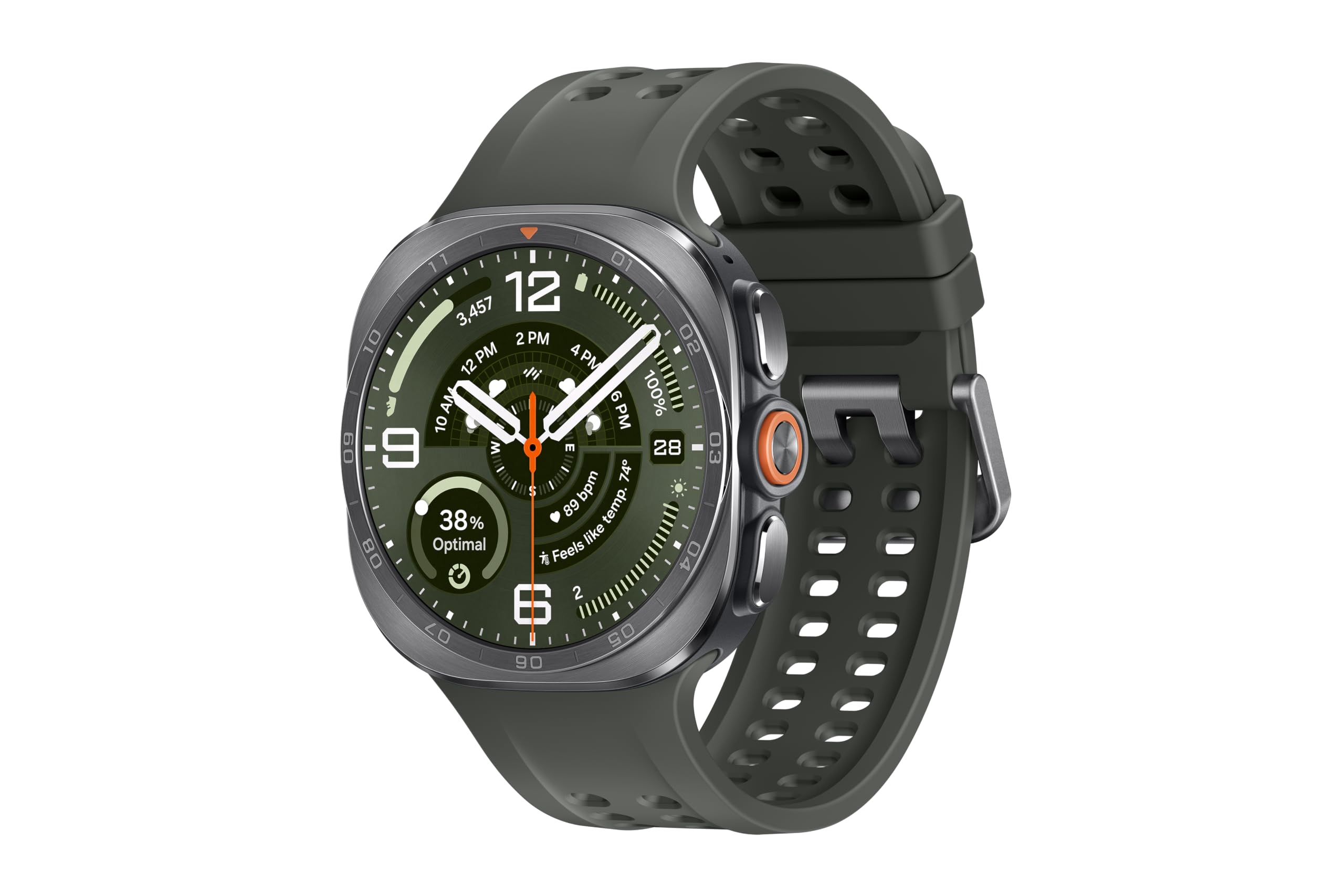
Most rugged watches assume you left your phone behind deliberately. The Watch Ultra2 assumes you might want to make a call anyway. Built-in LTE connectivity lets you make calls, send texts, and get updates from the wrist with no phone nearby. A 5000-nit display keeps it readable on a sunny hike, and the titanium build is rated IP69K and 10ATM for dust-tight and water-resistant performance up to 100m.
Trail features lean on guidance rather than raw maps — path, elevation, and pace direction on the run, plus personalized hydration alerts along the way. There is a dive computer app from Mares, with the watch described as EN13319-certified and offering ascent and descent monitoring, limit depth notification, and safety stop information. Vitals tracking follows five health metrics during sleep and flags shifts from your usual patterns. On the interface side, you can raise your wrist, talk naturally, and get AI assistance with no wake phrase.
Quality is the first thing owners notice, with functionality and appearance close behind. Battery life is the honest sticking point — feedback splits between great and poor, and connectivity draws concern because it does not work with Verizon or with an iPhone. It pairs with Samsung phones and other Android devices, so this is an Android-first watch. Check that compatibility line before you buy, because it decides whether the watch works on your wrist at all.
Why it earns a slot
- Built-in LTE keeps calls and texts going without your phone
- 5000-nit display for full-sun legibility
- IP69K and 10ATM with a Mares dive computer app
- Titanium case in a 47mm size
What to check before buying
- Does not work with Verizon or with an iPhone
- Battery life feedback is mixed rather than settled
- No published GPS-mode battery figure in the listed specs
Right for you if: you carry an Android phone, want to leave it behind sometimes, and need a screen that survives direct sun.
Not for you if: you are on Verizon or an iPhone — compatibility is the deal-shape here, not the hardware.
Know the Specs
Battery capacity versus battery life
Capacity, measured in milliamp_hours (mAh), is the size of the fuel tank. Battery life is how far that tank gets you, and it depends heavily on whether GPS is on. A 500 milliamp_hours cell can fuel weeks of standby because a watch draws very little when satellites are off. A smaller 50 milliamp_hours cell can still reach long rated runtimes through efficient power management. Watch the GPS-mode figure separately — it is usually hours, not days, and it is the number that decides a long day out.
Multi-GNSS and dual-band positioning
GNSS stands for global navigation satellite system, and multi-GNSS means your watch listens to more than one family of satellites at once, which speeds up the first fix and keeps it steadier. Dual-band adds a second signal frequency, which helps in narrow canyons and dense tree cover where signals bounce around. Offline maps stored on the watch pair with this positioning to give turn-by-turn guidance with no phone signal at all.
Common Questions
Does a rugged GPS smartwatch need my phone to navigate?
What is the difference between 10ATM and IP69K water ratings?
How long does GPS mode really last on these watches?
Will the Samsung Galaxy Watch Ultra2 work with my iPhone?
Do I need solar charging on a rugged GPS smartwatch?
Can I wear these watches in the shower and while swimming?
Is a touchscreen or buttons better for outdoor use?
What does MIL-STD-810H actually test?
Do these watches track heart rate and sleep accurately enough to train with?
Can I take calls on a rugged GPS watch?
The Bottom Line
For most people chasing the best rugged gps smartwatch, the Garmin Instinct 2 Solar is the sensible landing spot. Solar charging stretches smartwatch mode toward unlimited, so a sunny week outdoors can mean little charging. It carries a 100-meter water rating and TracBack routing (it retraces your route to walk you home). Owners back it too: 4.5+ stars across 900+ ratings. If raw battery capacity and a stainless tank build are what you want, the KOSPET TANK M4 answers with 500 milliamp_hours and 22 hours of GPS tracking. And if you need to stay reachable with the phone left behind, the Samsung Galaxy Watch Ultra2 is the only LTE pick here (LTE is the cellular network, so the watch works without your phone nearby) — just confirm your carrier and phone first.
How we choose
We do not accept paid placement. Every pick is matched to a real buyer and a real use-case; we do not hands-on test units.
Sources
Specifications: manufacturer listings and product documentation. Review insights: verified customer reviews, as of November 2026. Pricing: not shown on this page (it changes often); check the current price via the retailer link.
As an Amazon Associate, Tactical Gear Guy earns from qualifying purchases. This does not affect which products we feature.