Specs are compiled from manufacturer listings and verified buyer reviews and can change over time — please confirm the key details on the product page before buying.
Rats and mice do not chew through wire mesh — they chew through the gaps you left. That is the whole buying decision in one line: you need a roll with openings small enough that a determined rodent cannot get its head through, and wire thick enough that it cannot be bent aside. Every pick below meets that bar with openings in the quarter-inch to half-inch range. One honest note before you read: this list uses flexible matching, so not every roll is the exact size or spec you may have typed into the search bar. The nearest same-type size does the same job, and each listing states plainly what you are getting.
This guide is built by comparing the manufacturers’ published specifications and the patterns across verified customer reviews, so you get each pick’s real strengths and trade-offs instead of marketing spin.
Some rolls are welded and galvanized for long outdoor life; others are stainless and small enough for vents and eaves. The comparison below separates price tiers from job tiers. Here is the honest breakdown of the best rodent wire mesh for sheds, coops, vents, and garden beds.
Top Picks

How To Choose The Best Rodent Wire Mesh
A mouse can pass through a gap the width of a pencil. That single fact rules out most cheap garden netting sold as pest control. The mesh has to be dense enough that the animal cannot push its skull through, and stiff enough that it cannot simply chew the wire aside.
Opening size: the number that actually stops rodents
Quarter-inch mesh is the standard for serious rodent work. The one-half-inch roll, by contrast, is a heavier structural cloth — it is the right pick when you are building a coop panel or a frame, not when you are sealing a mouse run along a sill.
For vents, eaves, and the gap under a shed, you want the finer quarter-inch material. For a garden bed or a tree guard where the target is a gopher or a vole, either size works, and the wider mesh covers ground faster.
Gauge, and why thin wire is not automatically a weakness
Gauge is the wire’s thickness number, and lower numbers mean thicker wire. A 23-gauge roll is springy and light; a 19-gauge roll is a genuine structural cloth. Thicker wire holds its shape against pushing and pulling. Thinner wire cuts with ordinary snips and wraps tightly around odd corners.
Read the gauge against the job. A vent screen wants thin and easy to bend. A coop wall wants thick and hard to deform.
Galvanized or stainless
Hot-dip galvanizing coats the wire in zinc after it is welded, so the joints are protected too. That is what keeps a roll alive through wet seasons outside. Stainless steel skips the coating entirely and simply does not rust — a real advantage underground or in a damp crawl space.
Both are legitimate. The question is where the mesh will live.
Side-by-Side Comparison
| Model | Best For | Mesh Opening | Wire Gauge | Roll Size | Amazon |
|---|---|---|---|---|---|
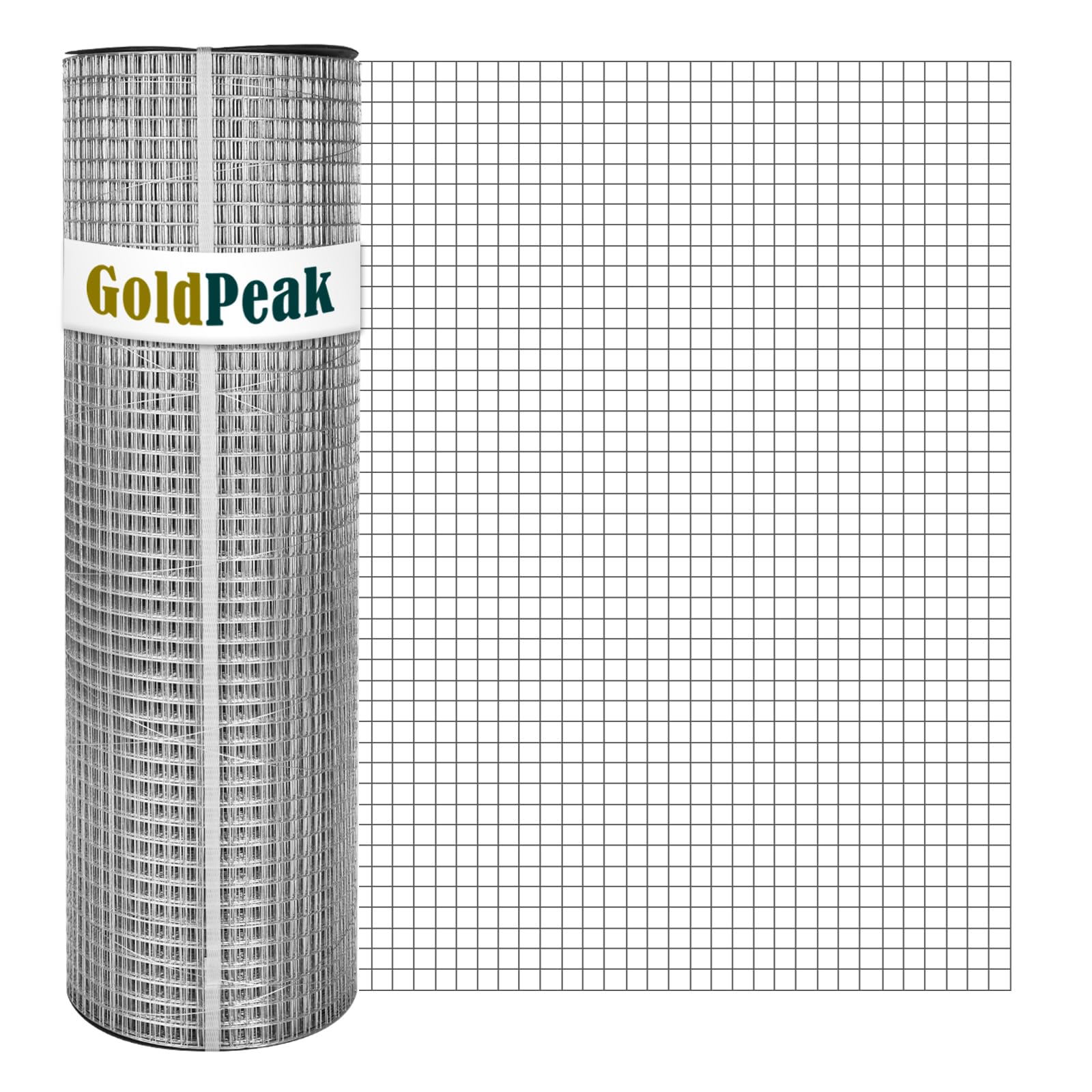
| GoldPeak Hardware Cloth 1/2″ 48″x50′★ Best Overall | Coop panels and heavy framing | 1/2 inch | 19 Ga | 48″ x 50′ | Amazon |
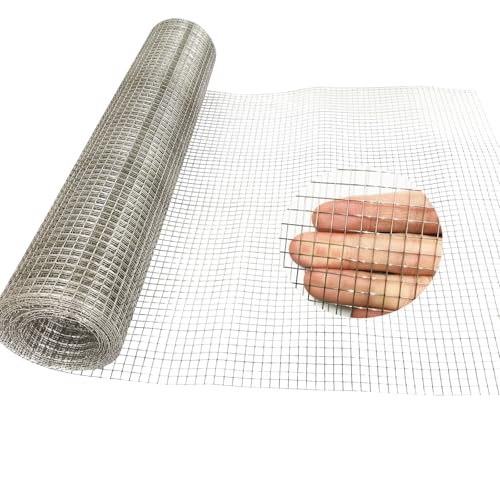
| LOVEERCT 12in x 20ft Hardware ClothBest Mid-Range | Garden beds and shed skirting | 1/4 inch | 23 Ga | 12″ x 20.34′ | Amazon |
| LOVEERCT 304 Stainless 16in x 10ftRust-Proof Pick | Attic vents and damp spaces | 1/4 inch | 23 Ga | 16″ x 10′ | Amazon |
| GUBAO 304 Stainless Hardware Cloth | Coops, hutches, and craft cuts | 1/4 inch | 22 Ga | 15.7″ x 9.6′ | Amazon |
| WURJHSONG 16″ x 30′ Galvanized Roll | Long runs along walls and eaves | 1/4 inch | 23 Ga | 16″ x 30′ | Amazon |
| VEVOR Hardware Cloth 36in x 50 ft | Big garden and coop builds | 1/4 inch | 23 Ga | 36″ x 50′ | Amazon |
| Trenk Hardware Cloth 36” x 100′ | Underground and full-yard jobs | 1/4 inch | 23 Ga | 36″ x 100′ | Amazon |
| YIDIAN 304 Stainless 12in x 10ft | Small patch jobs and vents | 1/4 inch | 23 Ga | 12″ x 10′ | Amazon |
Detailed Reviews
1. GoldPeak Hardware Cloth 1/2″ Mesh 48″x50′ 19 Ga
Our pick — 4.5+★ from 700+ verified ratings; the strongest balance of quality and price.
A full half-inch structural cloth in a roll big enough to wrap a whole coop wall.
This roll is the heavy lifter of the group. At 48 inches wide and 50 feet long it hands you a broad, continuous sheet, and the 19-gauge wire makes it a genuine building material rather than a screen. One buyer wraps it cleanly around corners without the weave unraveling. That is what welded joints and thicker wire buy you: the cloth stays put when you fold it into a frame. The zinc coating is applied after welding, so the joints — the first place cheap cloth fails — carry protection too. If your problem is a predator pushing at a coop panel, this is the panel.
The scale is real, and so is the weight. It arrives at 24.3 pounds, against the 1.1 pounds of the small stainless roll further down this list — those are two entirely different tools for two entirely different jobs. Plan for help getting it from the start, and have a solid frame ready before you unroll it. It is also a half-inch opening, not a quarter-inch, so it is sized for larger animals and structural duty rather than for sealing a mouse run along a sill.
What wins people over is the quality of the cloth itself — the sheer sturdiness of it, and the sense that it will outlast the fence you build around it. Owners use the 19-gauge panels to keep chickens safe from predators, at roughly half what similar wire costs. Cut it with proper snips, wear the gloves that come in the carton, and it will frame a garden or a coop for a long time.
Where It Earns Its Keep
- 48-inch by 50-foot sheet covers a full wall in one piece
- 19-gauge welded steel resists pulling and tearing
- Galvanized after welding so the joints stay protected outdoors
- Ships in a sturdy carton with gloves included
What To Plan Around
- 24.3 pounds is a two-person lift from the start
- The half-inch opening is coarse for sealing mice out of tight gaps
Reach for this if: you are building a coop panel, a garden frame, or a barrier that has to hold under real physical pressure.
Look elsewhere if: your job is a narrow sill or vent gap, where the quarter-inch stainless rolls below fit far better.
2. LOVEERCT 12in X 20ft Hardware Cloth 1/4 Inch, 23 Gauge
Quarter-inch openings on a twenty-foot roll — the sweet-length format for skirting a shed.
Twenty feet of quarter-inch mesh at 12 inches wide is the length that makes sense when you are running a continuous strip along the base of a shed or the bottom edge of a fence. The mesh is hot-dip galvanized after welding, which means the zinc goes on once the joints are already formed. Those joints are where rodent pressure and rust both attack first, and they are coated here. The material is low-carbon steel, so it unfolds without fighting you and cuts to length with ordinary tools.
Where it shines is rodent work specifically. The cloth keeps rats and mice from nestling under sheds and stops small animals slipping through fencing gaps. A quarter-inch opening is fine enough that a mouse cannot push its head through, yet the roll is still light at 2.59 pounds, so you can hang it overhead on eaves without a second pair of hands. The 12-inch width is deliberately narrow — it is a strip product, not a panel product.
The trade-off is that narrow width. If you are covering a wide coop face or a large raised bed, you will be seaming multiple runs, and seams are extra work. It is also a galvanized roll rather than stainless, so in a permanently wet crawl space, the stainless picks earn their place instead. For shed skirting and fence-gap sealing, this is the practical middle choice.
The length-to-weight read: twenty feet of quarter-inch galvanized cloth at 2.59 pounds is a genuinely manageable roll — light enough to carry up a ladder and long enough to finish a wall base in one pass.
The honest limit: 12 inches wide means you are buying a strip, so wide faces need seaming, and galvanized cloth wants a dryish home rather than standing water.
Best fit: anyone sealing shed skirting, fence gaps, or the long low seams where rodents slip through.
Think twice if: your project is a broad panel or a perpetually damp underground space — the wider or stainless rolls suit those.
3. 304 Sturdy Stainless Steel Mesh 16in X 10ft, 1/4 Inch
The vent-screen specialist that shrugs off damp, heat, and a squirrel’s best effort.
This is where stainless earns its premium. The wire is 304 stainless steel at 23 gauge with quarter-inch square openings, so it will not rust the way a zinc-coated roll eventually can. There is no coating to chip or wear through — the steel itself is the protection. Owners use it to cover attic vents and stop squirrels getting in, and the strength-to-openness ratio is exactly why it works there: fine enough to exclude, stiff enough to hold.
The temperature numbers are unusual for this category. It tolerates -196℃ to 800℃, which matters for a fireplace surround, a radiator screen, or a vent near a heat source. It is also genuinely easy to work. Bend the edge over a piece of wood and tap it flat, and you get a clean, safe rim instead of a row of sharp wire ends. Cut it with diagonal cutters.
Ten feet by 16 inches is a modest roll. On a large vent bank or a long soffit run you will run short and need a second roll, which is the main reason to look at the bigger galvanized options. It is a patch-and-vent product, sized for covering openings rather than building walls. For damp, hot, or awkward spots where rust would ruin a galvanized roll, nothing here beats it.
Why stainless wins here: no zinc coating to fail means no rust bloom on a damp vent face — the 304 steel does the work on its own, across that -196℃ to 800℃ range.
The catch: 16 inches by 10 feet is patch-sized, so a long soffit or a big vent bank will want a second roll.
Pick this one when: the mesh goes somewhere wet, hot, or hard to reach again — an attic vent, a fireplace surround, a damp crawl space.
Keep looking if: you need bulk coverage for a coop or garden, where a 50-foot galvanized roll does the job for less fuss.
4. GUBAO 304 Stainless Steel Hardware Cloth 1/4 Inch 22 Gauge

A 22-gauge stainless cloth for hutches and hole-sealing, light enough to hold in one hand.
At 22 gauge, this is the thickest wire among the stainless picks here, and the reinforced weld joints are built to resist deforming under normal handling. Stainless means it handles both indoor and outdoor duty without the corrosion worry that comes with a coated roll, and that is why it turns up sealing holes rodents and birds use to slip into a structure. The roll is 15.7 inches by 9.6 feet and weighs just 1.5 pounds, so it is comfortable to work with overhead or at arm’s length.
Owners like that it holds its shape instead of sagging once it is stapled down, and it earns its place around chickens and smaller birds as well as on rodent gaps. The quarter-inch opening does the actual work there — a mouse has no route through it. The one thing to know about stainless in a coastal or high-salt area: rinse and wipe it down occasionally and it will stay clean and bright far longer than a galvanized roll would.
Where it falls short of the bigger picks is sheer coverage — 9.6 feet is not a wall’s worth, and if you are cladding a coop or a large garden bed you will need several rolls. It is a targeted repair material, the roll you grab for the specific gap the mice are using. For that job, it is one of the more precise tools here.
Why It Belongs On The Shortlist
- 22-gauge wire with reinforced welds resists deformation
- 304 stainless holds up indoors and outdoors
- 1.5 pounds — easy to carry and hold in place
- Trims to size with the right cutting tools for craft and repair work
The Limits Worth Knowing
- 15.7 inches by 9.6 feet is a repair-sized roll, not coverage for a wall
- Coastal or high-salt homes should plan on occasional cleaning
It suits you if: you have identified the exact hole or hutch panel that needs sealing and want a stainless patch you can cut and fit in minutes.
Not your roll if: the job is a whole coop wall — buy the 50-foot galvanized cloth instead.
5. 16” x 30′ Hardware Cloth 1/4 in

Thirty feet of hot-plated quarter-inch cloth — the run-length answer to a mouse line along the siding.
The number that sells this roll is 30 feet. Run it along the base of a wall, tuck it under the eaves, or work it around a raised bed, and you still have length left. The galvanizing is done by hot plating rather than cold plating, and the difference is real: cold-plated wire rusts after a while outdoors, while this process is built for long outdoor life. The quarter-inch opening and 23-gauge wire are the standard fine-mesh combination for keeping critters like voles, gophers, and raccoons out of places they should not be.
Buyers report it turning back rodent activity along siding edges, and the 23-gauge cloth bends easily into corners. It cuts with scissors — no special tooling required — which makes it a friendly roll for a first-time fence builder. The packaging upgrade makes a difference too: film wrap inside a paper box protects the roll from denting in transit, so it arrives flat and usable rather than bent into a bad arc.
The wire is thin, and that is the honest trade-off. A 23-gauge galvanized roll is easy to cut, but it will not shrug off a heavy predator the way the 19-gauge GoldPeak cloth will. It is also galvanized rather than stainless. For the mouse-and-vole line along a wall, it is exactly right. For a serious predator barrier, choose the thicker cloth.
The coverage angle: 30 feet by 16 inches at 23 gauge is the practical middle — long enough to finish a siding run without seaming, light enough to manage alone.
Read this before you buy: the wire is on the thin side, so it is a fine-mesh exclusion cloth rather than a heavy predator panel.
The run-length choice for: siding edges, eaves, and garden edges where you need distance more than brute strength.
Step up instead if: a determined, large predator is the threat — thicker 19-gauge cloth is the better weapon.
6. VEVOR Hardware Cloth, 1/4 inch 36in x 50 ft 23 Gauge

A yard-sized sheet of fine quarter-inch mesh that makes coop and garden builds feel easy.
Compared with the smaller rolls here, the VEVOR brings volume. At 36 inches by 50 feet it covers real ground, and the 1/4-inch opening is fine enough that even small animals find it hard to push through. It is welded from low-carbon steel wire and then galvanized, and each weld point carries its own zinc coat so the joints do not come apart under pressure. Its salt-spray pretest is the marker for how the hot-dipped zinc holds up across wet seasons outdoors.
The weight tells you this is serious stock — 16.1 pounds. That is more than twice what the 30-foot galvanized roll weighs, which is exactly the difference between a strip and a panel. It is also packed with care: five layers of reinforced cardboard, sealed at both ends, with film and paper inside to keep the roll from arriving bent. Owners mention the 36-inch panels holding through heavy snow loads, the failure mode that bends a cheap roll.
Here is the honest note. The recurring gripe on this roll is thinness — the wire can feel lighter in hand than expected for a 50-foot sheet. That does not mean it fails, but it does mean you want solid support behind it when you frame a panel rather than relying on the cloth alone. Cut it with wire cutters or shears, always wear gloves, and it will do a big job cleanly.
The Case For It
- 36-inch by 50-foot sheet covers coops and large garden beds in one roll
- Hot-dipped galvanizing, pretested for salt spray, holds up outdoors
- Each weld point is zinc-coated to resist detaching
- Five-layer reinforced packaging keeps the roll flat and unbent
The Trade-Off
- 16.1 pounds needs a firm surface or frame beneath it
- The wire feels lighter in hand than the sheet size suggests
Built for: anyone building a coop or big garden enclosure who wants one long roll instead of seaming several strip-runs together.
Go thicker instead if: the mesh has to take predator pressure without a solid frame behind it.
7. Trenk Hardware Cloth 1/4 inch 36” x 100′
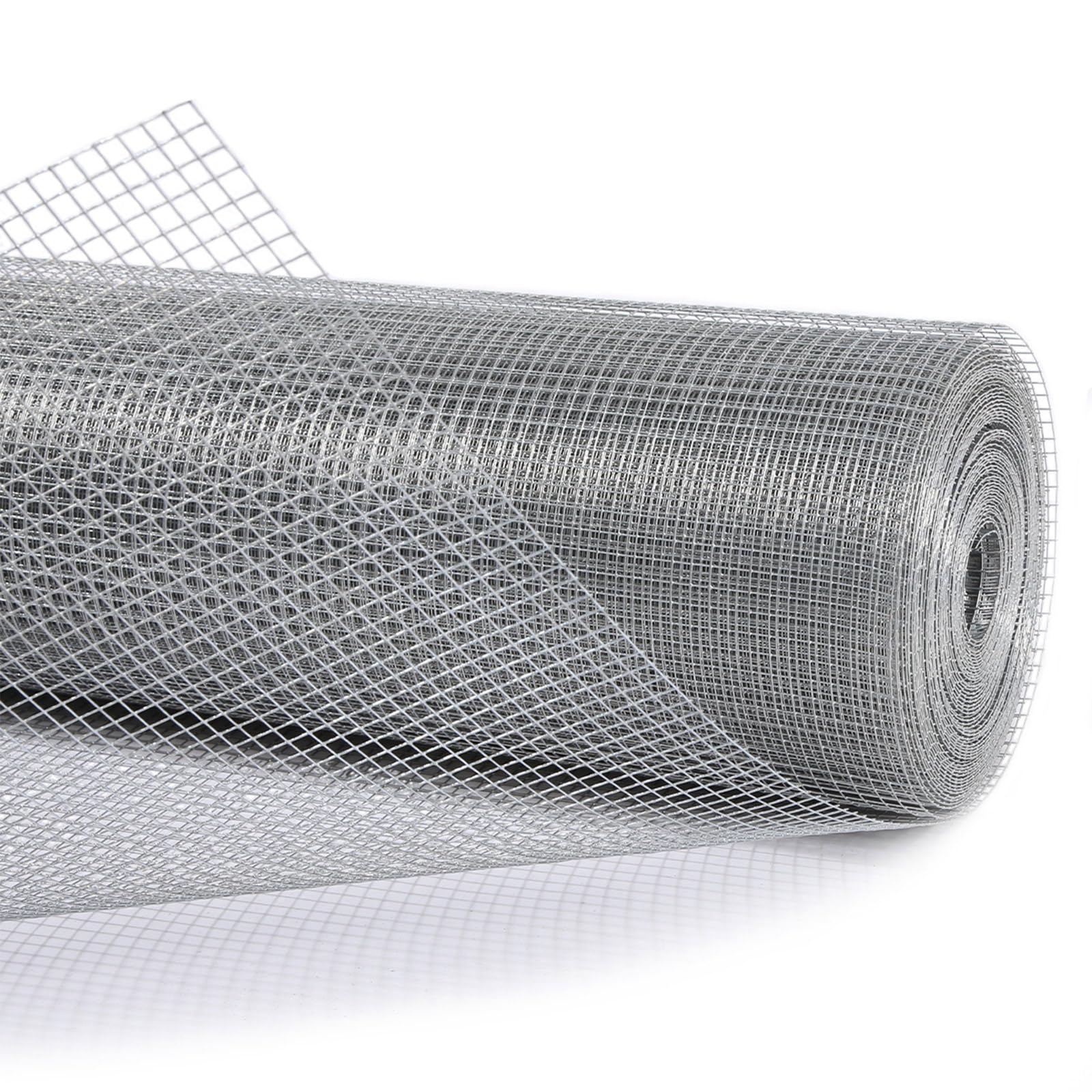
One hundred feet of flat-rolling galvanized cloth, built for burying underground and forgetting.
Three hundred square feet in a single roll is the headline. Where the VEVOR sheet covers 50 feet of length, the Trenk doubles that to 100, at the same 36-inch width. It is the roll you buy before a full-yard barrier job, an underground gopher line, or a garden bed that runs the length of the property. The maker boosts the welding area and the zinc coating relative to comparable rolls, and the hot-dipped galvanizing on annealed steel is aimed squarely at corrosion resistance under the soil.
Two details make this the premium pick. First, the roll comes off flat and holds a consistent arc, with evenly sized openings across the whole sheet — that is the difference between a professional-looking fence and a wavy one. Second, it is inspected for the classic mesh defects (bad welds, thin spots in the galvanization, broken or missing wires) before it ships. Owners bury it as a mole and vole barrier under raised beds and gopher lines, the underground job its hot-dipped coating was built for.
What you give up is easy handling. A 100-foot roll is heavy and awkward to maneuver alone, and you need a plan for where to lay it out. It is also the largest single outlay in this group by a wide margin — the roll is a project-sized purchase, not a patch-sized one. If your job is a single vent or a shed seam, the small stainless picks are far more sensible.
The premium you are paying for: 300 square feet off one roll, consistently sized openings, and a sheet that lies flat instead of curling — 100 feet by 36 inches is a project-scale purchase.
Where it asks more of you: the roll is heavy and awkward alone, and it is the biggest single-buy in the group.
Worth it for: full-yard barriers, underground gopher and vole lines, and raised beds where you want one continuous roll and no seams.
Overkill if: you only need to seal a vent or a skirting strip — the quarter-inch stainless rolls are better matched to that scale.
8. Hardware Cloth 1/4 inch 23 Gauge 12in×10ft

The cheapest way to own real stainless quarter-inch mesh — small, light, and surprisingly tough.
At 1.1 pounds, this is the roll you can carry in one hand and cut with household scissors. That is a huge gap from the 24.3-pound GoldPeak cloth — those two rolls are worlds apart in scale. Yet the material is the same 304 stainless steel as the pricier stainless picks, with quarter-inch openings and solid joints. Stainless means no zinc coating to wear through, and it stays rust resistant even when exposed to moisture outdoors. Snips or scissors cut it to any shape you need.
For the money, it covers an impressive range of jobs. Seal gaps under eaves, cover a ventilation opening, line a fireplace surround, screen a window or door, or fit mesh around pipes and vents. Customers note it stopping chipmunks at vents and eaves, and the 304 stainless stays rust-free for years. The 10-foot by 12-inch size is deliberately small, which is what lets the roll stay light and comfortable to handle up a ladder.
One thing to know before you buy: the advertised 10-foot length can come up a few inches short in practice, so if a job is critically long, buy with a little margin. The edges are firm and can be slightly sharp, so wear gloves when you unroll and cut. And like every small roll here, it is a patch product rather than a wall’s worth of cloth.
Why It Earns The Budget Slot
- 304 stainless steel at 1.1 pounds — light enough to hold overhead
- 1/4-inch openings block chipmunks and mice while staying easy to work
- Cuts with household scissors or tin snips, no special tools
- Small enough to fit tight spaces and odd angles
What To Keep In Mind
- The 10-foot length can run a few inches short on delivery
- The wire edges are firm and may be slightly sharp — gloves on
Snap it up if: you want stainless rust protection without paying for a big roll — vents, eaves, and small patch jobs are its home turf.
Look up instead if: you have a long run or a large panel to cover, where one of the 30- to 100-foot rolls saves you seaming.
Know the Specs
Mesh Opening (Aperture)
The opening is the width of one square hole, and it is the single number that decides whether a rodent gets through. Quarter-inch openings are the practical standard for mice and rats, because a mouse cannot push its head through a gap that small. Half-inch openings are coarser structural cloth meant for coops and framing. Match the opening to the animal: fine for mice, wider for gophers and predators.
Wire Gauge
Gauge is the wire’s thickness number, and lower means thicker. A 23-gauge roll is springy and light, easy to cut with shears and to fold around corners. A 19-gauge roll is noticeably heavier stock that resists pulling and tearing. Neither is better on its own — a vent screen wants the thin gauge, a coop wall wants the thick one.
Galvanized vs Stainless
Hot-dip galvanizing coats the welded cloth in zinc, and doing it after welding means the joints are protected too. That is what keeps a roll alive through wet outdoor seasons. Stainless steel skips the coating and resists rust on its own, which is the better choice for damp crawl spaces, vents, and anything buried underground. Both are durable; the question is where the mesh will live.
Roll Coverage
Multiply width by length to get your coverage. A 12-inch by 10-foot roll is a patch; a 36-inch by 100-foot roll is a whole-yard barrier. Buying for coverage up front saves you from seaming strips together later, and seams are both extra work and extra weak points.
Common Questions
What size mesh actually keeps mice out?
Is galvanized mesh good enough outdoors or do I need stainless?
Can I cut hardware cloth with normal scissors?
What is the difference between 19 gauge and 23 gauge wire?
Will quarter inch mesh stop gophers and voles in a garden bed?
How much mesh do I need to skirt a shed?
Does stainless steel mesh rust underground?
Is it safe to use near a fireplace or heat source?
How do I keep the cut edges from snagging or scratching?
Will a half inch mesh keep rats out or do I need the finer quarter inch?
The Bottom Line
The right rodent wire mesh is the one that matches your job, and for most builds that is the GoldPeak 1/2″ Cloth — 19-gauge steel, hot-dip galvanized, and 48 inches by 50 feet of structural mesh that holds up under real pressure. If you want a finer mesh that seals the seams rodents use, the WURJHSONG 16″ x 30′ Galvanized Roll gives you quarter-inch openings and a long run. And for a damp vent, an attic opening, or anything buried and wet, the 304 Stainless 16in x 10ft Mesh is the one to reach for, because stainless does not need a coating to stay rust-free. Pick by opening size first, then by where the mesh will live, and you will buy the right roll once.
How we choose
We do not accept paid placement. Every pick is matched to a real buyer and a real use-case; we do not hands-on test units.
Sources
Specifications: manufacturer listings and product documentation. Review insights: verified customer reviews, as of November 2026. Pricing: not shown on this page (it changes often); check the current price via the retailer link.
As an Amazon Associate, Tactical Gear Guy earns from qualifying purchases. This does not affect which products we feature.