Specs are compiled from manufacturer listings and verified buyer reviews and can change over time — please confirm the key details on the product page before buying.
Your Ricoh GR IV is a pocket camera with a big-sensor soul, and that is exactly why it is so easy to hurt. A slipped wrist strap, a lens cap left on a café table, a bag with no padding — the GR IV is small enough to carry everywhere and expensive enough that every scratch stings. The accessories worth your money are the ones that solve one specific risk each: protection, power, filtration, grip, or light. Below are seven accessories confirmed to fit the GR IV, ranked by the risk each one solves.
This guide is built by comparing the manufacturers’ published specifications and the patterns across verified customer reviews, so you get each pick’s real strengths and trade-offs instead of marketing spin.
Some of these add real capability, some just stop a bad day, and a couple do both. Every one of them is confirmed to work with the GR IV body rather than the older GR II or GR III alone, which matters more than most shoppers realize. Here is how the Ricoh GR IV Accessories lineup stacks up once you match each add-on to the way you actually shoot.
Top Picks


How To Choose The Best Ricoh GR IV Accessories
The GR IV is a fixed-lens camera, which means every accessory you add has to earn its place on a body that was designed to disappear into a jacket pocket. That single fact rules out half the market. A bulky bag, a heavy flash bracket, or a case that needs to come off before you can swap a battery will all defeat the point of owning a GR.
Confirm the model fit before anything else
Ricoh has shipped several GR generations, and accessory listings routinely lump the GR III, GR IIIx, and GR IV together. Most GR III items do carry over to the GR IV, but the lens adapter and the flash are the two spots where the fit is genuinely model-specific. Check the compatibility line on the listing rather than the product photo — a case photographed on a GR III tells you nothing about the GR IV’s grip.
Decide if you want protection or capability
A case, pouch, or filter protects what you already own. A battery, adapter, or flash extends what the camera can do. Most buyers need one from each column, not five from one. If you shoot street work in daylight, a filter and a slim case cover you. If you shoot at night or in dim interiors, the flash and spare batteries move the needle far more than another layer of leather.
Match the carry method to your actual day
Belt loops, wrist straps, shoulder straps, and carabiners each suit a different routine. A belt-mounted pouch keeps both hands free on a commute, while a wrist strap keeps the camera ready between shots. Think about how you move through your day before you pick a closure type — a magnetic flap that opens instantly on a strap can also pop open in a crowded bag.
Side-by-Side Comparison
| Model | Best For | Protection Type | Key Spec | GR IV Fit | Amazon |
|---|---|---|---|---|---|
| Rieibi Camera Case★ Best Overall | Everyday pocket carry | PU leather shell | 131.5 g | Listed compatible | Amazon |
| JJC UV Protective FilterBest Lens Insurance | Lens scratch coverage | Optical glass filter | 99.5% transmission | Listed compatible | Amazon |
| Hard Belt Travel Pouch | Belt and travel carry | Hard EVA shell | 2 compartments | Listed compatible | Amazon |
| Wasabi Power Battery Pack | All-day shooting | Two spare cells | 1850mAh per battery | DB-120 compatible | Amazon |
| SMALLRIG Leather Case Kit | Grip and vintage look | Top-grain leather | 1/4″-20 screw mount | Listed compatible | Amazon |
| Lens Adapter GA-3 | Filters and wide converters | Metal adapter ring | 49mm filter thread | GR IV only | Amazon |
| RICOH GF-2 External Flash | Night and low light | Add-on flash unit | Guide number 3 | GR IV and GR III-series | Amazon |
Detailed Reviews
1. Rieibi Camera Case Coffee
Our pick — 4.0+★ from 350+ verified ratings; the strongest balance of quality and price.
A coffee-brown retro pouch that makes your GR IV look like it belongs in a 1970s camera bag.
If you want one accessory that covers the most common way a GR IV gets damaged — riding loose in a pocket or bag — this is the pick. It weighs 131.5 g, so it does not turn a pocket camera into a burden, and the retro-textured PU leather gives the case a look that buyers single out again and again. That material is a synthetic leather, which means it wipes clean easily and holds its shape rather than softening into a saggy bag.
The dimensions matter here: the exterior runs 5.12″ long by 1.38″ wide by 5.12″ high, with a slightly smaller 7CM x 3CM x 12CM interior. In plain terms, that interior is sized for a compact body with a small grip attached, so the GR IV slides in with a little breathing room rather than a fight. A magnetic buckle closure lets you pull the camera out in one motion, and there is a belt loop on the back for hands-free carry when you want the camera off your neck.
What wins people over is the build — 21 separate buyers specifically call out the quality of this case, well ahead of any other compliment. The honest catch is the magnet. Some long-term users find the closure lets go when the case is worn on a belt and gets knocked, and one reported stitching failing on a belt-mounted case within days. If you plan to hang this off a belt in a crowd, treat the magnetic flap as a convenience rather than a security lock.
What buyers keep praising
- Soft interior guards the lens and screen from bumps and scratches
- 131.5 g adds almost nothing to a pocket-carry camera
- Adjustable shoulder strap plus a rear belt loop give two carry methods
- Four color options: black, coffee, green, and pink
Where it asks for care
- The magnet closure can release under a knock when belt-mounted
- It is a padded leather pouch, not a hard shell, so it cushions rather than blocks
Reach for this if: you want retro looks and a soft interior at an entry-level tier, and you carry the camera on a strap more than a belt.
Pass it by if: you plan to belt-mount the case and rely on the magnet to hold the camera in a crowd.
2. JJC UV Protective Filter
The cheapest way to keep your GR IV’s fixed lens free of fingerprints and scratches.
Because the GR IV has a lens you can never swap, whatever happens to that front glass stays with you. This filter is a disc of multi-coated optical glass that sticks onto the front of the lens with a 3M adhesive ring, then comes off with the included removal tool. It passes 99.5% of light through to the sensor, so the image you get is essentially the image you would get without it — the bluish daylight cast that UV light can add is what it targets.
The frame is 1.8mm slim aluminium, sized thin specifically to avoid vignetting, which is the darkening you sometimes see in the corners when a thick ring blocks the edges of the frame. The multi-layer coating also makes the glass oil and water resistant, so a quick wipe clears a fingerprint instead of smearing it around. For a camera you throw in a purse or jacket pocket without a case, this is the most direct protection you can buy.
Here is where it wants your patience: this filter is semi-permanent. Several owners describe the removal process as nerve-wracking, and a few report the glass detaching from its ring under heat while the ring stayed glued to the camera. Others note a slight tint in some conditions. Treat it as fit-and-forget, install it once on a clean lens, and it does its quiet job for years.
Why it earns a slot: it guards the one part of the GR IV you cannot replace, and the 99.5% transmission figure means the optical cost is close to nil.
One thing to weigh: the adhesive mounting is permanent enough that removal takes care, so buy it only if you intend to leave it on.
Worth it for: anyone who pockets the camera bare and wants scratch insurance without a case.
Think twice if: you swap filters often or dislike adhesive mounting on expensive glass.
3. Hard Belt Compact Camera Pouch

The pouch that takes the actual hit so your GR IV does not have to.
Where a leather bag cushions, this one blocks. The outer shell is EVA — a stiff, moulded foam-like plastic that holds its shape — with reinforced ribbing across the surface, and the interior is lined with a protective fiber fabric. It claims shock, drop, and scratch resistance along with water resistance, and unlike the Rieibi case above it carries two compartments rather than one. The upper compartment is a semi-open mesh pocket sized for spare batteries, cables, and memory cards.
You get four ways to carry your camera: on a belt, in hand, across the body on the diagonal, or hooked to a bag with the included carabiner. It fits any camera up to 130 x 68 x 36mm (5.12 x 2.68 x 1.42 inches), so the GR IV sits comfortably inside that envelope. A hand strap and a shoulder strap come in the box. Buyers mention material quality most often, with durability a close second.
The recurring gripe is the zipper: a handful of owners find the closure fiddly, and some note the mesh pocket would benefit from a fastener. Nothing that breaks the case — just small friction in daily use. The hard shell is the reason to choose it over the leather pouch if you shoot on a belt or shove the camera into a packed travel bag.
The real-world win: an EVA hard shell for the price of a soft pouch, with a mesh pocket that turns the case into a small kit bag.
Size it up: if your GR IV has a bulky grip or a filter ring attached, check it against the 130 x 68 x 36mm limit before you order.
The match for: travelers and belt-carriers who want a rigid shell and somewhere to stow a spare battery.
Not the match for: minimalists who want a pouch that disappears in a front pocket — this one has volume.
4. Wasabi Power Battery 2-Pack
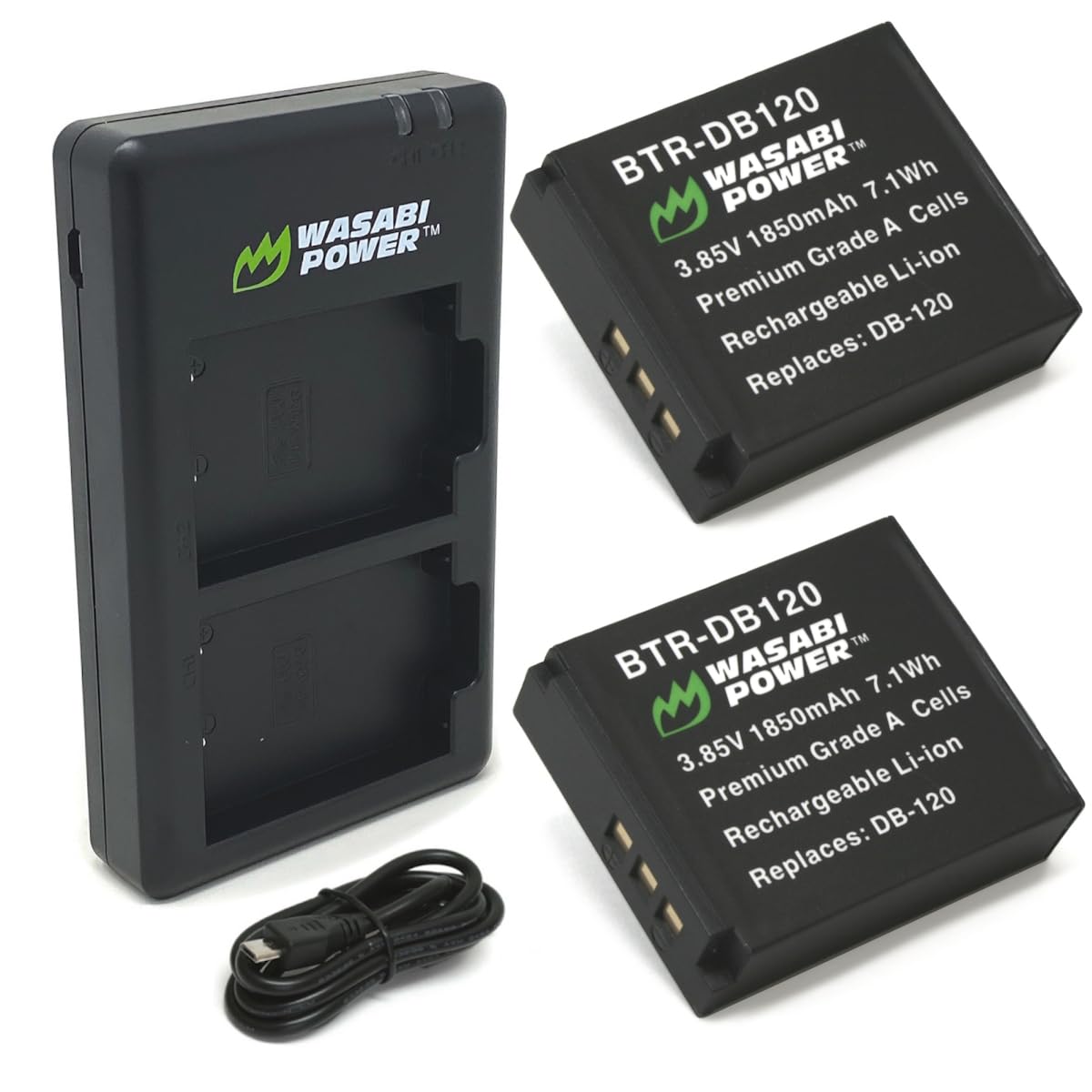
Two spare cells and a charger you can run off any USB port, so a day of shooting never ends early.
A GR IV’s battery is small, and street shooters drain it fast. Each of these two batteries is rated at 3.85V and 1850mAh, and they are Grade-A lithium-ion cells built to match the original DB-120 rather than a generic substitute. The included dual charger takes power from any USB source — a wall adapter, a car socket, or a power bank — and tops up both cells at once. That means one power bank in your bag refills two GR batteries while you keep shooting.
Owner feedback is short and to the point: they perform as well as the originals, and the USB-C charger removes one more cable from the kit. The pack also carries a 3-year manufacturer warranty from Wasabi Power and support based in Pomona, California. For a commodity accessory, that backing is the differentiator over the no-name batteries that flood the listings.
One note on the data: this is a very new listing with only a handful of reviews, so the long-term track record is thin compared to the cases above. What it does have is a clear, honest spec sheet — 1850mAh, dual charging, overcharge protection — that answers exactly what a spare-battery buyer needs to know.
The buying case: two 1850mAh cells plus a dual USB charger in one kit, backed by a 3-year warranty and US-based support.
Fair warning: a new listing with few reviews means you are trusting the spec sheet and the warranty more than a long review history.
Grab it if: you shoot long days and want the safety net of two charged spares plus a charger that runs off a power bank.
Hold off if: you want years of owner evidence before you commit to a third-party cell.
5. SMALLRIG GR IV/GR III Leather Case Kit
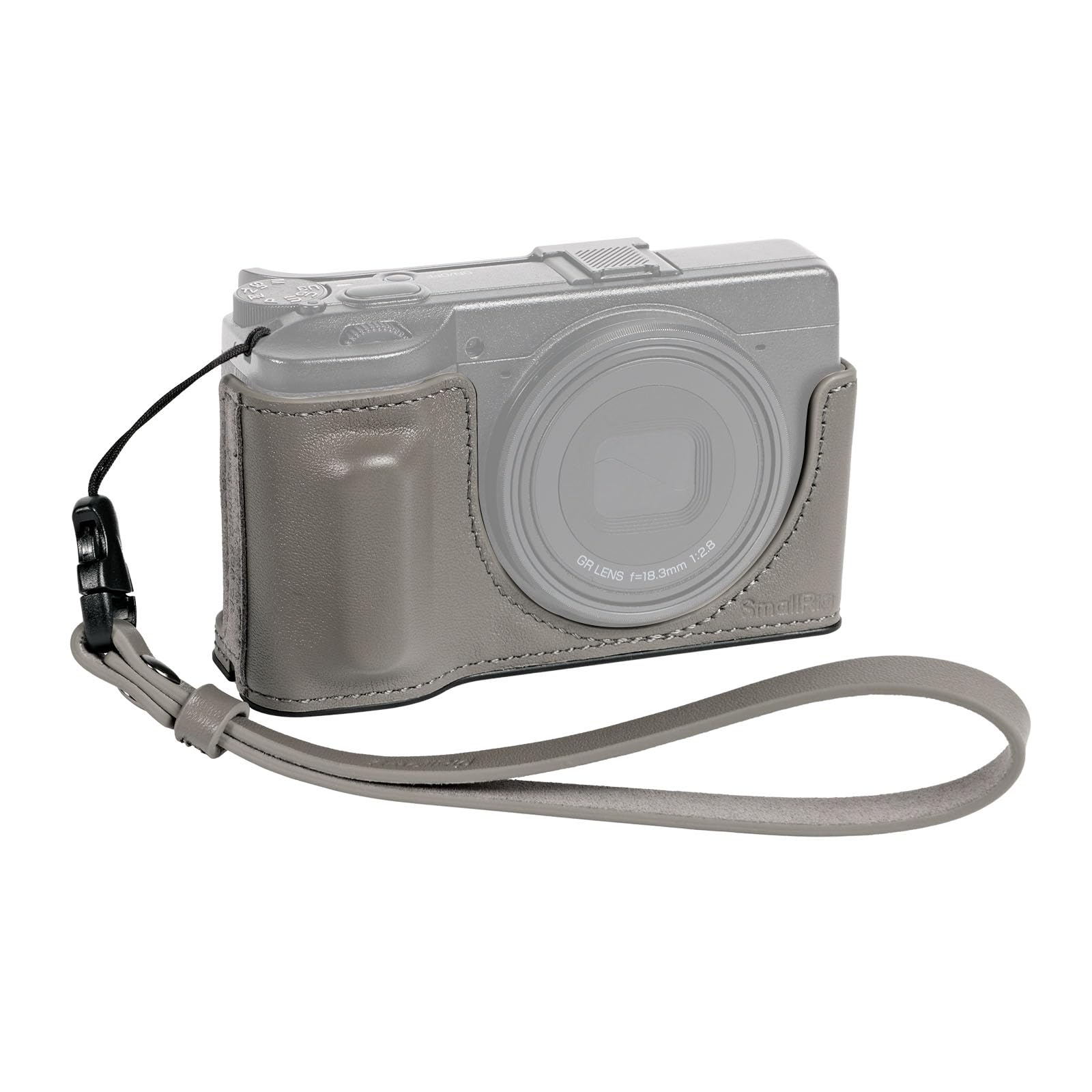
A half-body leather shell that adds a real grip to a camera famous for having almost none.
SmallRig’s take on the GR case solves a different problem than the pouches above: it stays on the camera. This is a half-body shell in wear-resistant top-grain leather, sized 114.3 x 42.1 x 56.0mm, with a built-in cushioned foam handle across the front. That foam is the point — it gives your fingers something to hold, cutting hand fatigue through a long shooting session. The open design leaves every port, button, and the battery compartment accessible without taking the case off.
Mounting is by a single 1/4″-20 hand screw at the bottom, the same thread as a standard tripod plate, so no tools are needed. It also stays compatible with the original lens cap, which means you do not lose the one piece Ricoh shipped with the camera. A vintage-style soft leather shoulder strap is in the box, and the grey leather pairs with the GR’s understated body.
The caveat is visibility: this listing has only a small number of reviews so far, and the 4.5+ star read comes from that thin sample. If you want proven track record, the Rieibi or the JJC pouch have more history. If you want a grip that makes the GR IV feel like a different camera in hand, this is the accessory that does it.
The standout: cushioned foam handle, top-grain leather, and full button access without removing the shell — a real ergonomic upgrade.
Worth knowing: it is a half-body design, so the top plate and lens barrel stay exposed.
Built for: shooters who find the bare GR IV too slippery and want grip plus a vintage look in one piece.
Skip if: you need full-body protection — this guards the hand area, not the lens.
6. Lens Adapter GA-3
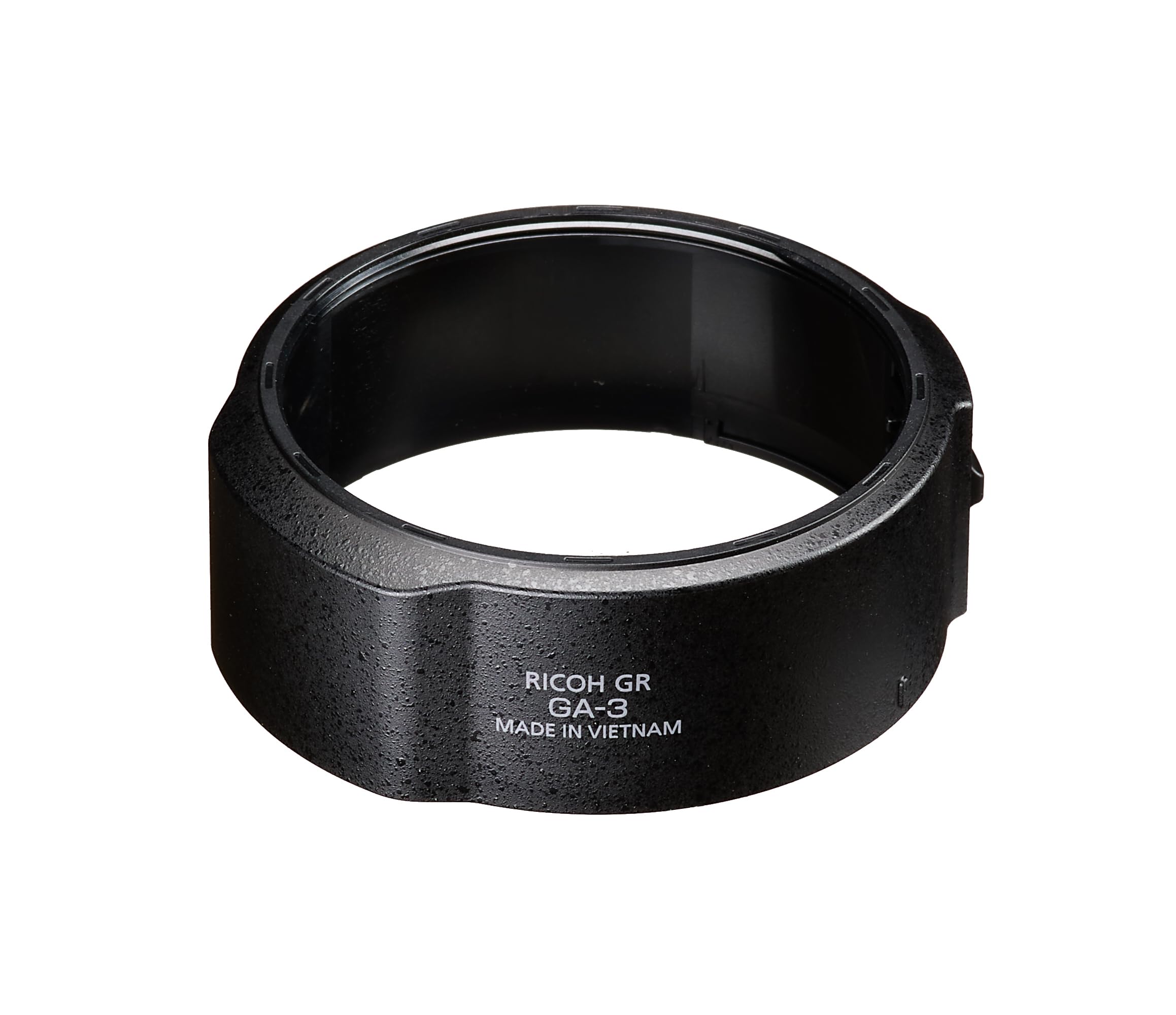
The tiny ring that open up screw-on filters and the wide conversion lens for your GR IV.
You can screw filters on and off whenever you like with the GA-3, a Ricoh-made adapter that mounts to the front of the GR IV and gives you a 49mm thread (the standard size for screw-on filters). That means you can add a polarizer, a neutral density filter, or a protector without gluing anything on, which is what a filter like the JJC above has to do because the GR IV has no filter thread of its own. The adapter also accepts the GW-4 wide conversion lens, and the camera automatically detects that lens and adjusts cropping and image stabilization to match.
The adapter measures roughly 60.6mm across and 21.6mm long, and weighs just 12 g, so it barely registers on a camera built around pocketability. That small footprint is the whole design goal here — it is a mounting point, not a lens barrel. The 49mm figure is the one to remember when you shop filters: anything marked 49mm will thread on.
The trade-off is that it is a mount-only accessory. Buy it and you still need filters to go with it, so the real cost is the adapter plus glass. Owners have logged only a modest number of reviews so far, and the 4.0+ star average reflects a product that does one job without drama. If you plan to shoot with filters at all, this is the correct way to do it on a GR IV.
The capability jump: a proper 49mm thread plus automatic detection of the GW-4 wide converter — features a glued-on filter cannot give you.
The honest catch: it does nothing on its own; you still need to buy 49mm filters to use it.
The right call for: anyone who wants to shoot with a polarizer or ND filter and needs a proper screw mount.
Not for you if: you only want lens protection — the JJC adhesive filter covers that for less.
7. RICOH GF-2 External Flash
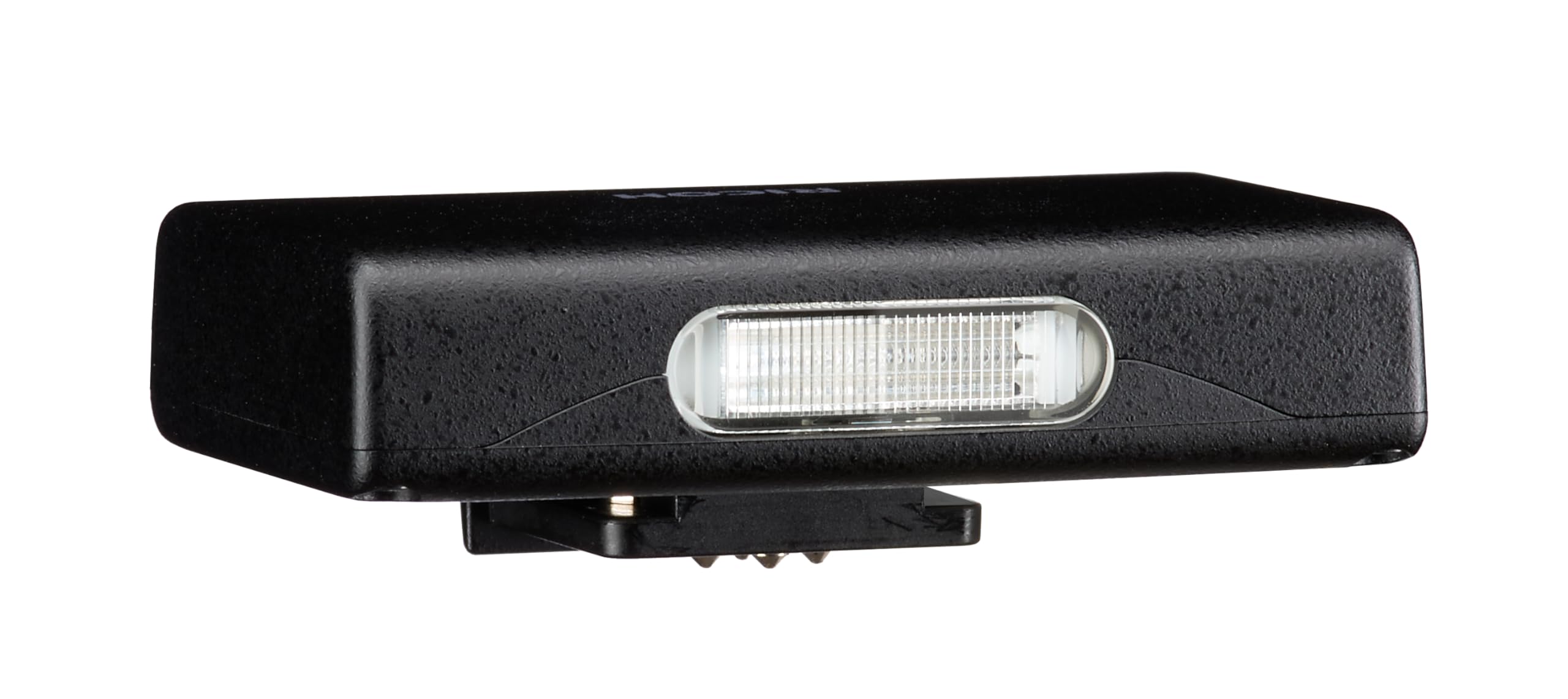
A flash the size of a thumb drive that turns a dark bar into a usable scene.
Ricoh built this flash specifically to disappear. At 51 x 31.4 x 17mm and 19 g, it stays small enough to pocket even when it is mounted on the GR IV. The guide number is 3 at ISO 100/m, which describes how much light it throws — a low number that tells you exactly what this unit is for: close subjects, not a concert hall. In practice that means portraits and street shots from about a meter to three meters, where it is at its best.
Power comes from a built-in rechargeable lithium-ion battery rated for approximately 270 flashes on a full charge, and it tops up through a USB Type-C port in about 2 hours. The internal battery also stabilizes the flash output even when the camera’s own battery is running low, so your exposures do not sag as the camera dies. It syncs with the GR IV body, and it works with the GR III and GR IIIx generations too.
The performance feedback is genuinely mixed, and it is worth understanding why. Some find it a great low-light companion for night shots and dim interiors. Others point out that it lacks TTL — through-the-lens metering, where the camera sets the flash power automatically — and that this is effectively the only flash option for the GR IV. So you are not choosing the best flash, you are choosing the only flash. Set your expectations at “pocketable fill light” and it delivers.
What it is: a 19 g, 270-flash, USB-C rechargeable fill light that syncs with the GR IV and fits in a shirt pocket.
The real limitation: guide number 3 plus no TTL metering means you manage exposure yourself, and it fades fast past a few meters.
The pick for: night shooters and bar photographers who want a tiny fill light and will work within its close-range limits.
Think carefully if: you expect automatic flash metering or full-room coverage — this is a small unit for near subjects.
Know the Specs
Guide number: what a flash can actually light
The guide number tells you how much reach a flash has. It is roughly the distance in meters at which the flash can expose a subject correctly at a given aperture. A guide number of 3 at ISO 100 means the flash is designed for subjects a few meters away, not across a room. That is fine for portraits and street work, and it is exactly what a pocket-sized flash for a pocket-sized camera should be.
mAh: how long a spare battery carries you
Milliamp-hours, or mAh, describes how much charge a battery holds. A cell rated at 1850mAh holds more than a smaller cell, which means more shots before it runs dry. Capacity alone does not guarantee runtime — the camera’s draw matters — but two 1850mAh cells in your bag remove the fear of a dead camera mid-shoot.
Hard shell versus soft pouch: choosing the right protection
A hard EVA shell spreads an impact across its surface, so a knock to a bag does not reach the camera. A leather or fabric pouch absorbs smaller bumps and adds a scratch barrier, but it flexes. For belt carry in a crowd or a packed travel bag, hard shell wins. For a jacket pocket where the camera rides alone, a soft pouch is enough.
Filter transmission and thread size: what the numbers mean
A filter’s transmission figure tells you how much light passes through to the sensor — 99.5% means almost all of it does, so the filter is essentially invisible in exposure terms. Thread size (like 49mm) tells you which filters will screw on. Adhesive filters skip the thread altogether, which is convenient but makes swapping harder.
Common Questions
Will a GR III case or filter fit the GR IV?
Do I need the GA-3 adapter if I already have a JJC UV filter?
How long will the Wasabi batteries last per charge?
Is the RICOH GF-2 flash bright enough for indoor events?
Does the flash have TTL metering?
Will the hard EVA pouch fit a GR IV with a filter attached?
Which is better for the GR IV — a leather case or a hard pouch?
How does the GF-2 flash recharge, and how many flashes do I get?
Do I need to remove the SMALLRIG case to change the battery?
Is a UV filter worth it on a camera with no interchangeable lens?
The Bottom Line
For most owners, the ricoh gr iv accessories lineup starts with the Rieibi Camera Case — a soft, retro PU leather pouch that protects the camera while keeping it pocket-light at 131.5 g. If scratch protection on the fixed lens is your priority, the JJC UV Protective Filter glues on and delivers 99.5% transmission. And for the night shots the GR IV’s small sensor struggles with, the RICOH GF-2 External Flash is the smallest, most practical fill light you can pair with the body. Match each accessory to the way you actually shoot, and the whole kit fits in one jacket pocket.
How we choose
We do not accept paid placement. Every pick is matched to a real buyer and a real use-case; we do not hands-on test units.
Sources
Specifications: manufacturer listings and product documentation. Review insights: verified customer reviews, as of November 2026. Pricing: not shown on this page (it changes often); check the current price via the retailer link.
As an Amazon Associate, Tactical Gear Guy earns from qualifying purchases. This does not affect which products we feature.