Specs are compiled from manufacturer listings and verified buyer reviews and can change over time — please confirm the key details on the product page before buying.
A dead battery should not mean a dead tool. The tricky part is matching voltage and chemistry, because a wrong fit either refuses to seat or drains in minutes. This guide walks through nine replacements that actually match their hosts, from tiny weapon-light cells to 12V deep-cycle packs.
This guide is built by comparing the manufacturers’ published specifications and the patterns across verified customer reviews, so you get each pick’s real strengths and trade-offs instead of marketing spin.
Every pick below is a lithium or lithium-ion cell, so you are not trading lead-acid weight for lead-acid headaches. Read on for the replacement lithium battery that fits your gear.
Top Picks
How To Choose The Best Replacement Lithium Battery
The single most common mistake is buying on capacity alone. A 6.0Ah pack is useless if its terminals do not seat in your charger, or if the voltage runs higher than your tool expects. Start with the label on the battery you are replacing, then work outward.
Voltage Has To Match, Not Just Come Close
An 18V tool wants an 18V pack. A 12V garage door opener backup wants 12V. Some listings round 18V nominal cells up to “20V MAX,” which is a marketing label rather than a different cell — check that the model numbers in the compatibility list include your tool. Buying a 40V pack for a 36V tool, or the reverse, is how you end up with a battery that refuses to charge.
Capacity Decides How Long You Work Between Charges
Capacity is written in milliamp-hours (mAh) on tool packs and amp-hours (Ah) on 12V deep-cycle batteries — 6000mAh is the same as 6Ah. A higher number means longer runtime per charge, but it also means more weight in your hand. A 6000mAh pack at 648 g is a substantial brick compared with an 850mAh weapon-light cell at 19.81 g. Match capacity to the job: a flashlight needs endurance, not bulk, while a chainsaw wants every amp-hour it can get.
Chemistry: LiFePO4 Versus Standard Lithium-Ion
LiFePO4 (lithium iron phosphate) is a lithium chemistry built for deep discharge and long cycle life, and it is what most 12V replacement packs use for solar, fish finders and ride-on toys. Standard lithium-ion is what tool packs use, because it packs more energy into a smaller shell. Neither is “better” — the question is what the host device was designed around.
Side-by-Side Comparison
| Model | Best For | Voltage | Capacity | Chemistry | Amazon |
|---|---|---|---|---|---|
| Streamlight SL-B9 2-Pack★ Best Overall | Weapon lights and EDC | — | 850mAh | Lithium Ion | Amazon |
| HWE Energy 12V 5AhBest Value | Garage door opener backup | 12V | 5Ah | LiFePO4 | Amazon |
| LiBatter 18V XRP + ChargerCharger Included | Dewalt 18V tools, charger included | 18V | 3000mAh | Lithium Ion | Amazon |
| CaliHutt 6.0Ah Craftsman V20 | Longer runtime on Craftsman 20V tools | 18V | 6000mAh | Lithium Ion | Amazon |
| BULL-TECH 40V MAX | Black and Decker 36V/40V yard tools | 40V | 2Ah | Lithium Ion | Amazon |
| Ultraxxis 6.0Ah Ryobi 2-Pack | Two-pack Ryobi 18V coverage | 18V | 6000mAh | Lithium Ion | Amazon |
| JYJZPB 6.0Ah DeWalt 2-Pack | DeWalt 20V MAX tool swaps | 20V | 6000mAh | Lithium Ion | Amazon |
| SEFEPODER 12V 20Ah 2-Pack | Deep-cycle projects and parallel banks | 12V | 20Ah | LiFePO4 | Amazon |
| GOLDENMATE 12V 20Ah 2-Pack | Waterproof outdoor and marine use | 12.8V | 20Ah | LiFePO4 | Amazon |
Detailed Reviews
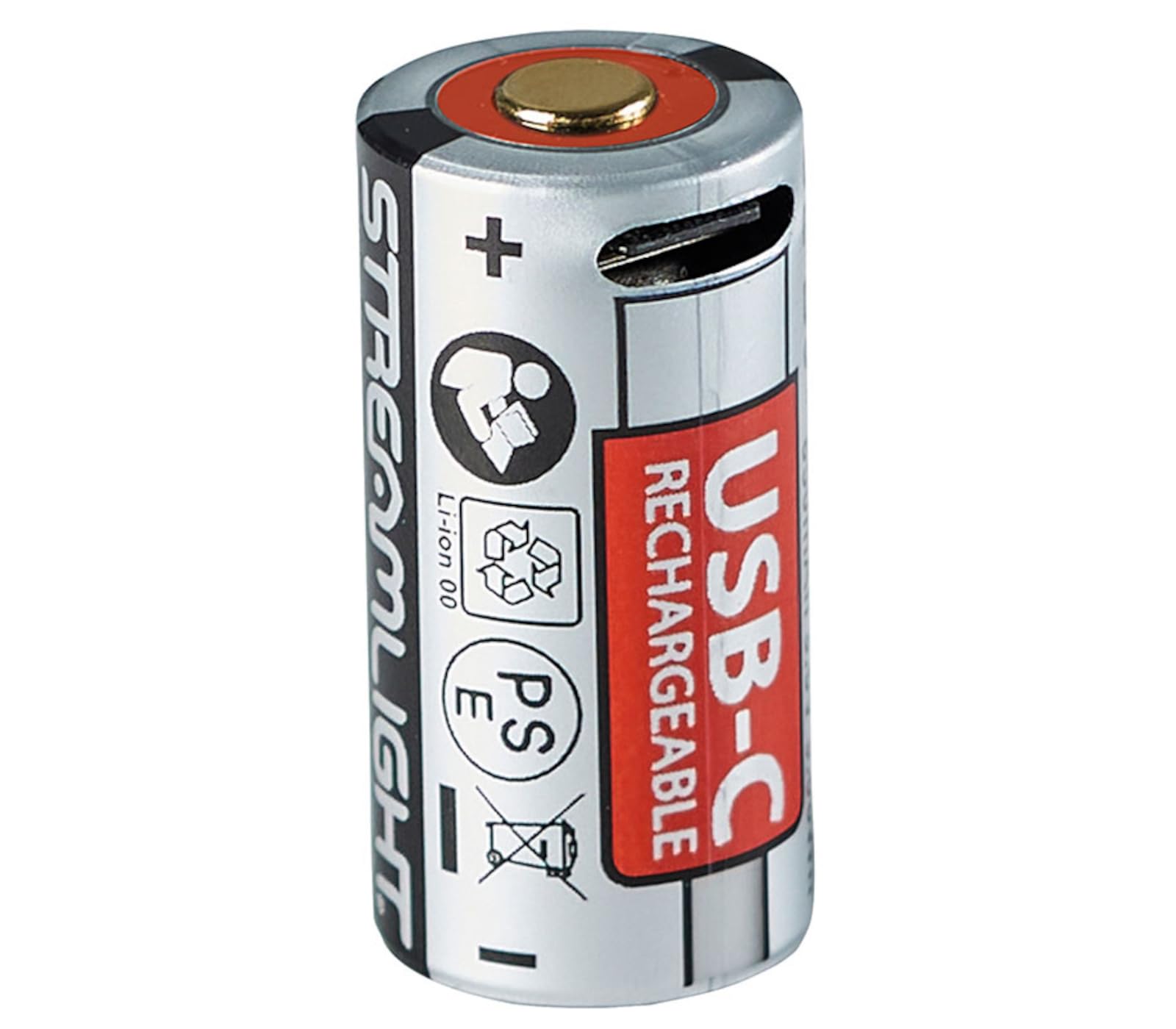
1. Streamlight 20237 USB-C Rechargeable Capable Battery, 2-Pack
Our pick — 4.5+★ from 700+ verified ratings; the strongest balance of quality and price.
The tiny duty-grade cell that replaces a drawer full of disposable batteries.
Weapon lights burn through disposable cells, and the Streamlight SL-B9 is the fix: a lithium-ion pack that clicks into select Streamlight weapon lights and recharges instead of getting thrown away. Each cell holds 850 milliamp-hours (mAh — the measure of how much charge a battery stores), and at 19.81 g you will not feel the difference when it is mounted. It is the crowd favorite here, with a high rating across hundreds of owners running these in duty and everyday-carry guns.
What wins people over is durability and honest runtime. Owners say these last as long as the disposable CR123 cells they replace and drop into one compatible Streamlight after another. Charging is the other joy: USB-C (the reversible oval plug most phones use now) means you skip a dedicated charging station, and the built-in indicator glows red while filling and green when done. One owner reports the light jumping from 1000 to 1500 lumens, per the flashlight maker’s figures.
The catch is fit, not quality. Streamlight builds these for select weapon-light models, so a different brand or an older light body may not accept the pack. Charging also runs about 6 hours with the cable, which is slow by phone standards — fine overnight, less fun mid-shift. The charger itself sells separately.
Why owners keep reordering
- USB-C charging with no dedicated dock — the same cable as your phone
- Red-to-green charge indicator tells you at a glance when it is topped up
- Two cells in the pack, so one can charge while the other rides in the light
- Genuine Streamlight construction, made by the light maker for its own lights
Where it asks you to plan ahead
- Fits select Streamlight weapon lights only — verify your model first
- About 6 hours to recharge from USB-C, so overnight or off-shift fills make sense
- Charger sold separately from the battery pack
Made for: anyone running a Streamlight weapon light who wants to stop buying disposables.
Confirm first: your exact light model appears on Streamlight’s compatibility list.
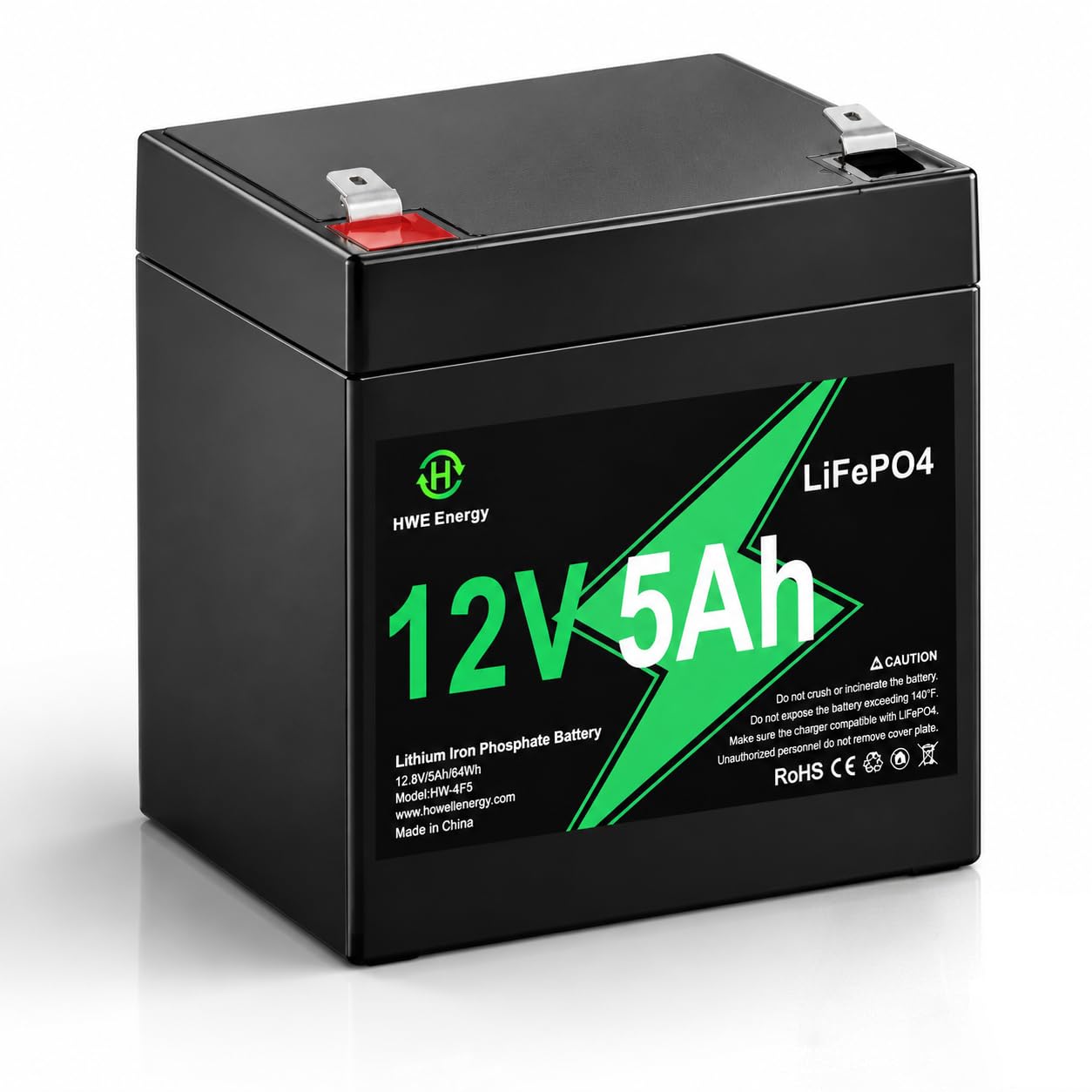
2. 12V 5Ah Lithium Battery Liftmaster 485LM
Half the weight of the lead brick it replaces, and your opener still runs in a blackout.
You usually discover a dead garage door opener battery during a power cut — stuck in the driveway with a remote that won’t work. This HWE Energy 12V 5Ah replacement keeps your opener running, and it is a LiFePO4 pack (lithium iron phosphate — a lithium chemistry built to survive repeated deep discharge). It drops into openers that take 12V 4Ah or 5Ah batteries, including common 485LM, 41A6357-1 and 8500/8550 series bodies. At just 1.6 lbs, it is about half the roughly 3 lbs of the sealed lead-acid pack it most often replaces, so the swap feels noticeably lighter in the tray.
Buyers notice the weight gap first. One review notes the pack “fits well in pump equipment boxes and is half the weight of the AGM battery it replaces.” That same lightness helps in garage openers, fish finders and small UPS units, all on HWE’s compatibility list. It ships with F1 terminals (the narrower 3/16-inch spade tabs) and fits F2 devices too, so most installs are a straight swap. The 64Wh capacity and 3.54 x 2.76 x 3.98 inch body line up with typical opener trays, so it seats without modification.
Long-term behavior is where owners split. Some report packs that stopped accepting a charge, and a few question whether the low-voltage cutoff on the BMS (battery management system — the protection circuit inside the pack) is as sturdy as claimed. Use a LiFePO4-specific charger rather than an old lead-acid trickle charger, which is the most common cause of early failure. Otherwise this is a solid, low-cost replacement for a wear item most people swap once a decade.
What you are buying: a lithium pack with 4000+ deep cycles promised, a 10A smart BMS and a 1-year warranty, at a price that undercuts most lead-acid openers.
Worth knowing: charge it with a LiFePO4-rated charger, not the old SLA trickle unit, to get the cycle life the listing promises.
Reach for it if: your garage door opener, alarm panel or fish finder takes a 12V 5Ah SLA brick and you want to shed weight.
Look elsewhere if: you are running a high-draw 12V solar array that needs 20Ah-class capacity.
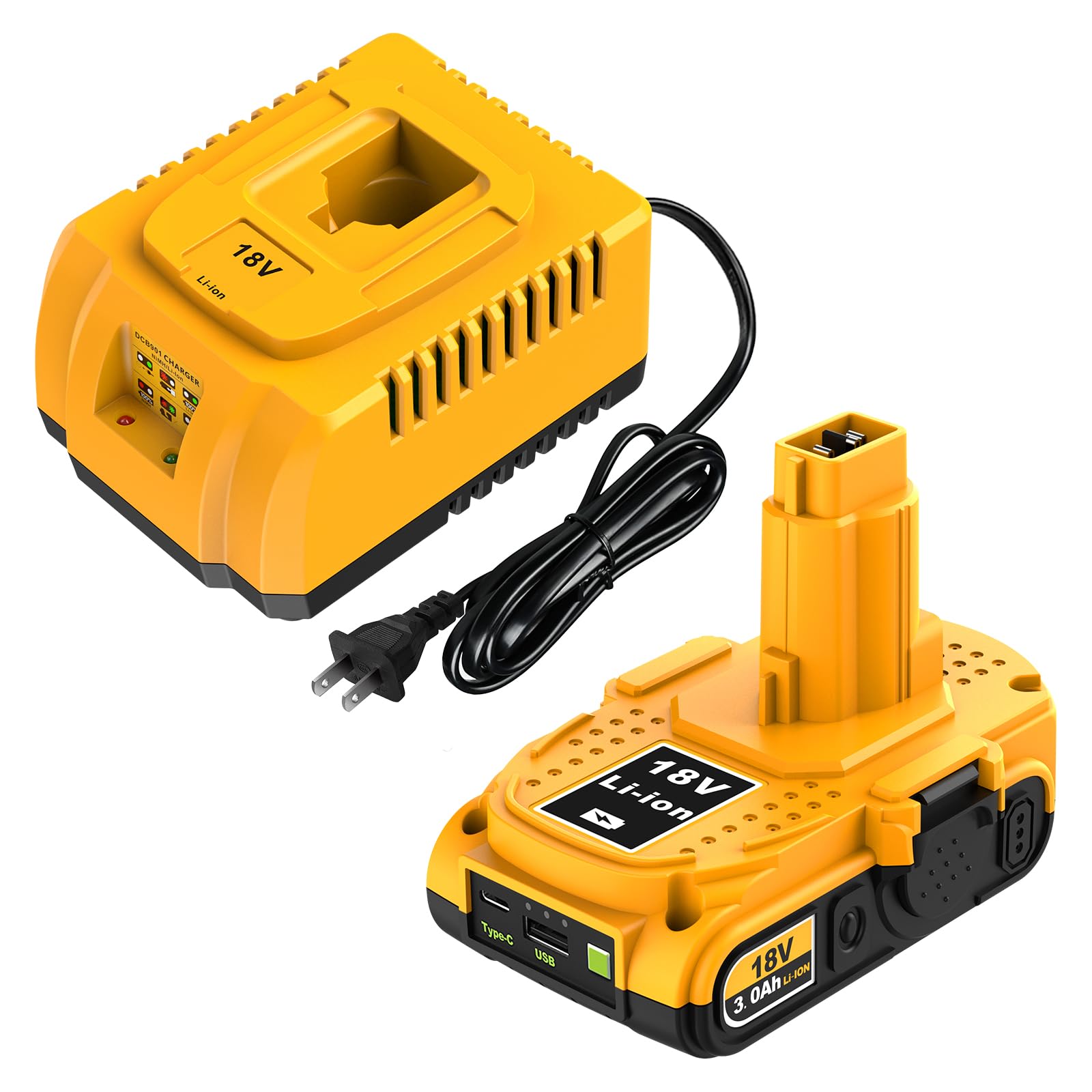
3. 18V Replacement Battery Dewalt XRP DC9096
A battery and a charger in one box, for the 18V XRP tools still in your garage.
When your old Dewalt 18V XRP pack finally gives up, this LiBatter kit gets you back to work with a 3.0Ah lithium-ion cell and a wall charger in one box. That pairing matters because old Ni-MH chargers do not always play nice with lithium. The 100V–240V charger here handles both chemistries — solid red for a finished Ni-MH pack, solid green for a finished lithium one. The battery fits DC9096, DC9098, DC9099, DE9039, DE9095, DE9096, DE9098, DW9095, DW9096 and DW9098 slots.
The unpacking experience is smooth and the fit is clean; installation, in fact, is the aspect that generates the most consistent praise. The 18V 3.0Ah rating is reasonable for a 2.3 pound pack, and the built-in LED charging display tells you where things stand without a meter. This is the pick for anyone with a garage shelf of XRP-era tools who does not want to replace the whole ecosystem.
Runtime consistency is the honest caveat. Some owners get straight 3-4 hour runs out of vacuum duty; others see packs drop to 30 minutes within a few months, and a smaller group reports early failures. Buyers report this honestly: “while some say it runs for 3-4 hours non-stop, others report it only lasts 30 minutes before dying.” Treat that as a fit note, not a knock on the whole kit — it is a budget-friendly way to keep 18V tools working, with real variability on longevity.
What is in the box: one 3.0Ah lithium-ion battery plus a 100V–240V charger, with a 1-year warranty.
The trade-off: runtime is the recurring question mark, so buy it as a working spare rather than a heavy-production pack.
Fits best: older 18V XRP Dewalt tools and vacuums that need a fresh cell and a fresh charger together.
Step back if: you are already on a modern 20V MAX system — this is an 18V kit, not a 20V one.
4. 6.0Ah 20V Replacement Battery Craftsman CMCB204

A 6.0Ah brick that lets your Craftsman 20V vacuum or trimmer skip the mid-job charge.
Craftsman’s factory V20 packs tend to top out at lower capacities, so a 6.0Ah replacement like this CaliHutt cell is where runtime hounds start. The capacity here is 6000 milliamp-hours, double the typical stock Craftsman pack, and the cells are A-grade lithium-ion built for 1000 recharge cycles. At 648 g it is a substantial brick in your hand — fine on a vacuum or trimmer, heavier on a compact drill.
Power is what earns this pack its reputation. Owners mention the vacuum running longer and stronger than expected, the battery clicking into every Craftsman tool they own, and the four-LED indicator giving a clear read on remaining charge at the push of a button. A BMS (the protection circuit inside the pack) guards against short circuit, over-charge, discharge, over-voltage and overheating. Compatibility covers the standard V20 line and original chargers CMCB104 and CMCB124, with one exclusion worth flagging: it does not fit the Craftsman 20V MAX Bolt-On or DieHard series.
The honest split is longevity. Plenty of owners see charge holding as good as factory cells, while a slice reports packs that failed shortly after putting them to work. Given the price versus a brand-name 6.0Ah pack, this behaves like a solid mid-tier option that rewards keeping on a proper charger — a poor fit only if you demand zero variance at premium-brand prices.
What sold these owners
- 6000mAh capacity means fewer swaps per job
- Charges on original CMCB104 and CMCB124 chargers
- Four LED indicators show remaining charge at the press of a button
- BMS protection built in for overcharge, over-discharge and overheating
What to plan around
- Does not fit Craftsman 20V MAX Bolt-On or DieHard series tools
- 648 g is heavy relative to a small stock pack
- Some owners see shorter-than-expected service life
Pick it up if: your Craftsman V20 vacuum, blower or trimmer needs a longer run between charges.
Check first: your tool is the standard V20 line, not the Bolt-On or DieHard variant.
5. 40 Volt MAX 2.0Ah Lithium Battery Black and Decker

The leaf-blower revival kit that turns a dead mower into a working machine again.
Yard tools die in exactly one way: the pack stops taking a charge, and suddenly a perfectly good mower is “broken.” This BULL-TECH 40V MAX replacement revives Black and Decker’s 36V and 40V MAX outdoor line — LBX2040, LBXR36, LBXR2036, LST540, LCS1240, LBX1540, LST136W among them. At 2.0Ah and 1.5 lbs it is trimmer than tool-pack bricks, so overhead work on a hedge trimmer stays comfortable longer.
Battery life is what this pack gets discussed for, and it earns the chat. Customers note weekend-long mowing and hours of weed-wacker duty, and one measured check confirmed the advertised power output. The impact-resistant outer case and shock-absorbing inner liner are engineered around 18650 cells (a common cylindrical lithium cell format), and overload protection runs between battery, tool and charger. It also ships pre-charged, so it works the moment it arrives.
The honest gap is compatibility scope: this is a 36V/40V Black and Decker-specific shape, so it will not cross over to other brands’ 40V lines. If you are already in that ecosystem, it is an easy call; if you are mixing brands on your shelf, you will end up with a second charging station. Owners who bought it specifically to keep their existing B&D mower and blower running tend to reorder singles rather than explore elsewhere.
Why it keeps selling: pre-charged on arrival, correct 40V MAX shape for the B&D line, and real power output on mower duty.
One honest limit: 2Ah capacity means bigger yards may want a spare, but the tool-fit is exactly right.
Built for: Black and Decker 36V or 40V MAX mowers, leaf blowers and trimmers whose stock pack quit.
Only if: you already own that ecosystem — it does not cross over to other brands’ 40V tools.
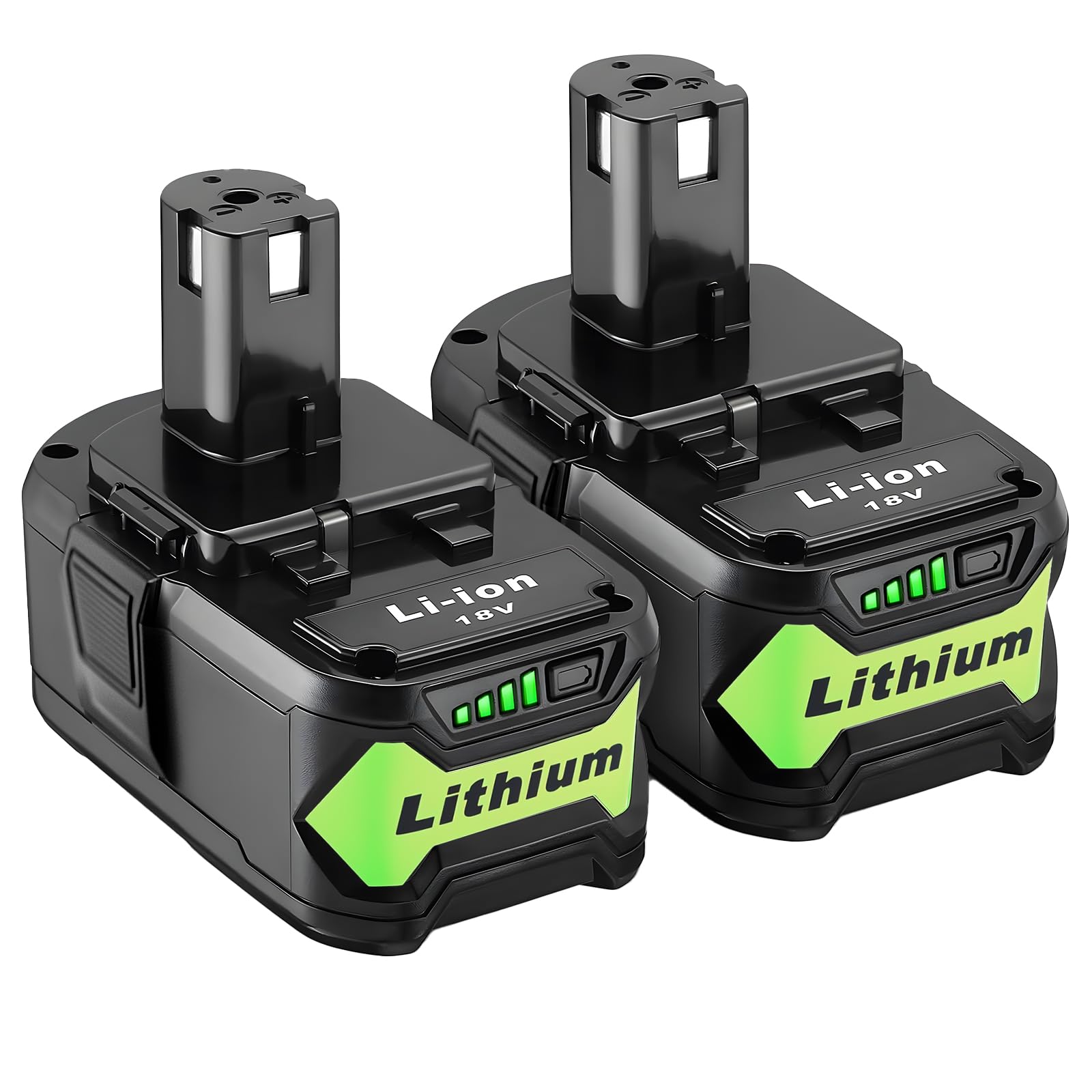
6. 2 Packs 6.0Ah 18V Battery Ryobi
Two 6.0Ah packs that turn a whole Ryobi shelf back into a working workshop.
Ryobi’s ONE+ 18V line is the most DIY-friendly tool ecosystem out there, and this Ultraxxis two-pack matches it with 6000mAh packs that clip into P102 through P109 slots. Two cells in one box means you can keep one charging while the other is on a drill — the single biggest ergonomic upgrade for a home garage running several Ryobi tools.
Quality and value are the consensus: reviewers point out their Ryobi chargers recognize the packs immediately, that the packs fit all their tools, and that the LEDs on the side show remaining charge without needing a meter. Protected against over-charging, over-discharging, over-voltage, over-current and over-heating, they behave like a well-built aftermarket pack should. One owner’s comparison was blunt: “These batteries seem to be completely Ryobi compatible.”
The gripe worth hearing is real-voltage behavior. Some shoppers say the packs losing voltage quickly enough that tools cut out early. A small group found a specific pair of Ryobi chargers refused to charge them — that is a charger-fit issue, not a pack-quality one, so check your charger model before buying. If you run an older Ryobi charger, verify fit first; newer units tend to just work.
What makes the two-pack worth it
- 6000mAh per cell, doubling the runtime of a stock Ryobi 3Ah pack
- LED power indicators on the pack so you know the charge at a glance
- Cross-compatible with P102, P103, P104, P105, P107, P108 and P109 Ryobi slots
- Overcharge, over-discharge, over-temperature and short-circuit protection built in
Where the fit gets fussy
- A small number of Ryobi chargers refuse to recognize these packs
- Tools may cut out earlier than expected when the pack is nearly drained
- Weight and hand-feel change on smaller Ryobi tools
Pick up the pair if: you run multiple Ryobi 18V tools and want two big cells to rotate.
Check the charger first: older Ryobi chargers occasionally reject these packs.
7. 2 Pack 6.0Ah Battery DeWalt 20V MAX DCB206
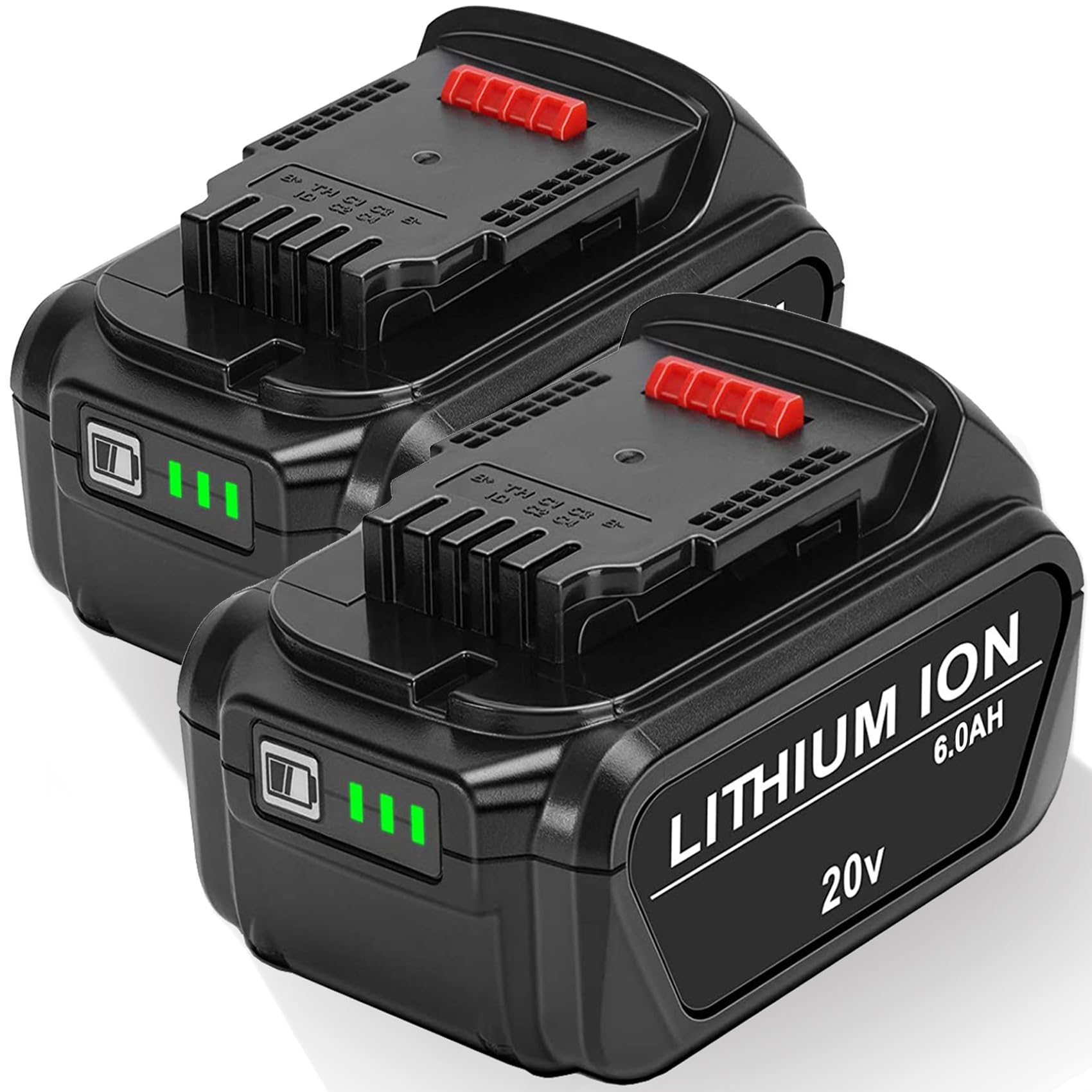
Two 6.0Ah packs that match the Dewalt flavour without the branded price tag.
Dewalt 20V MAX owners know the feeling of a tool that still works fine and a pack that does not. This JYJZPB two-pack puts two 6000mAh lithium-ion cells on your shelf, each 580 g, matching the DCB206 slot and compatible with the DCB107, DCB115, DCB118, DCB104 and DCB102 chargers. Three LED lights on each pack show remaining power.
Owners rate these equal to branded DeWalt packs on power. Buyers report hours on an off-brand flood light without draining, ten to twelve ice holes through 15-18 inches per session before losing a bar, and packs outlasting factory units after months of use. The 6.0Ah rating is the practical win — on heavy tools like a recip saw or circular saw it means real work between swaps, and the DCB206 shape stays compact enough to keep your drill level in the hand.
The honest split is durability. A handful of packs have failed early — one that quit after roughly two months, another that lasted about six — while plenty of owners still run first-pair originals with no trouble. That is variability worth planning around rather than a systemic flaw. Buy two so you have redundancy and you will get the value this pack usually delivers.
The strong pull: true DCB206 fit, 6000mAh capacity per cell, and two cells in the box so you always have a spare.
The fair warning: a small number of packs fail early, so lean on the two-pack as your hedge.
Best for: anyone running DCB206-era DeWalt 20V MAX tools who wants two big cells at once.
Alternative if: you only need one pack and want premium-brand assurance — this is a two-pack value play.
8. 12V 20Ah Lithium LiFePO4 Battery 2 Pack

Two 20Ah LiFePO4 packs for the RV, fish finder or power-wheels rig that eats lead.
For anyone replacing a small lead-acid bank — a fish finder, trolling motor, kids’ power wheels or a mobility scooter — this SEFEPODER two-pack drops two 12V 20Ah LiFePO4 batteries into the same slot. The chemistry is the headliner here: 4000+ charge cycles against roughly 200-300 for traditional lead-acid, and each pack weighs whatever the maker estimates as a fraction of an equivalent lead-acid brick. Each cell weighs 7.9 lbs, and the dimensions of 5.94 x 3.85 x 3.74 inches match most standard small-battery trays.
The BMS (battery management system — the protection circuit inside the pack) handles up to 40A and guards against over-charge, over-discharge, over-current and short circuit. It also allows series or parallel wiring of up to four identical batteries, so you can build toward larger 12V capacity when one pack is not enough. Owners put these into mobility scooters, parallel RV banks and fish-finder duty. One owner ran a Livescope unit all day on a single 20Ah pack. Another wired four in parallel for a 80 amp-hour total system and reported steady operation.
The honest caveat: charge with a LiFePO4-specific charger (not an automatic lead-acid one) or the packs will not fill properly, and there is no memory effect to worry about otherwise. The 12.8V nominal is close enough to 12V for most 12V nominal systems, but check your charger accepts LiFePO4 before plugging it in.
Why deep-cycle buyers like these
- Two 20Ah LiFePO4 packs at a budget-friendly price for a two-pack
- Up to four in series or parallel for larger builds
- Built-in 40A BMS with over-charge, over-discharge, over-current and short-circuit protection
- 4000+ cycle life versus the 200-300 cycles of a typical lead-acid pack
What to know before you wire
- Needs a LiFePO4-rated charger, not an automatic SLA unit
- Each pack weighs 7.9 lbs, so a two-pack is not a light carry
- Terminal hardware is the buyer’s job to source and torque down
The upgrade to grab if: you are swapping lead-acid bricks in a fish finder, scooter or small solar bank and want 4000+ cycles.
Skip the swap if: your charger is a fixed lead-acid automatic unit.
9. GOLDENMATE 12V 20Ah Lithium LiFePO4 Battery 2 Packs
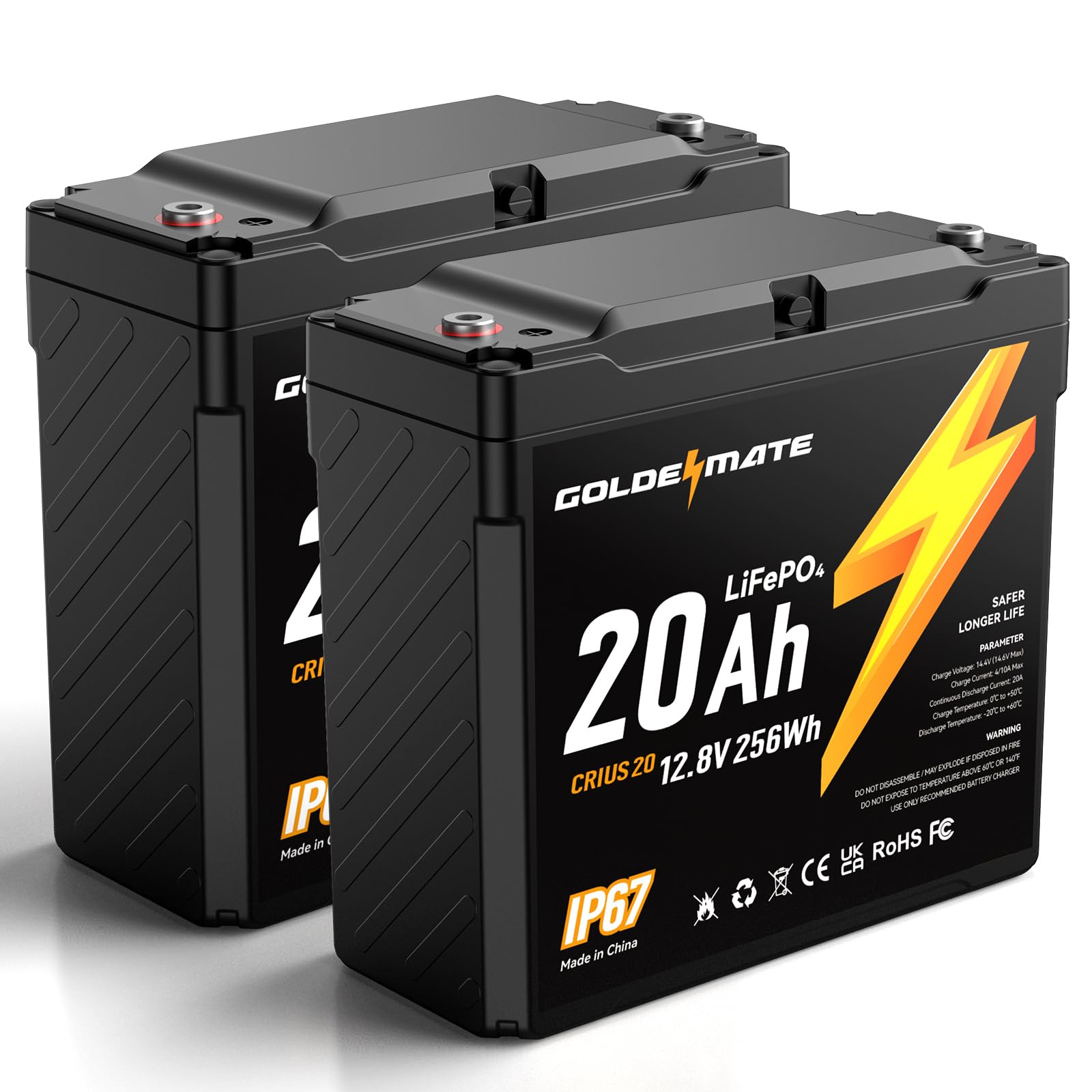
IP67 sealing so a splashy boat deck or rainy campsite does not kill the deep-cycle bank.
The GOLDENMATE CRIUS 20 is the pick for anyone whose batteries live outdoors — a kayak, a boat centre console, a solar shed or an emergency lighting bay. Its IP67 rating (fully sealed against dust and against short immersion in water) is the differentiator on this list. Each pack is 12.8V and 20Ah of LiFePO4, weighs 5.95 pounds, and holds power for up to one year in storage thanks to a low self-discharge rate.
The BMS (battery management system — the protection circuit inside the pack) is rated for 20A continuous discharge, with protection against overcharging, over-discharging, over-current and short circuit. Up to four packs can be wired in series or parallel for a combined 51.2V 80Ah, and the 10A maximum charge current suits fast top-ups via a LiFePO4 charger, MPPT solar setup or generator. Owners run these in ham radios, ride-on toys, boat consoles and camping rigs — One owner reports running a ham radio all day on a single charge, and the 2.99 x 7.13 x 6.61 inch body fits under a boat centre console.
The honest limit is the price of that sealing: this is the priciest pick on the list, and the extra cost buys IP67 protection and 5000+ cycles rather than more amp-hours. If your batteries never see weather, the SEFEPODER two-pack earlier is the more efficient value. If they do — boats, RVs, outdoor security cams — that sealing is what you are paying for.
Most convincing spec: IP67 waterproofing plus 5000+ cycles, which no other pack on this list pairs together.
The catch: you pay a premium for the sealing, so only pull the trigger if outdoor exposure is real.
Best for: boats, kayaks, solar sheds and security installations where a battery gets wet or dusty.
Consider one of the indoor picks if: your battery will never see weather — that saving is yours to keep.
Know the Specs
Capacity and milliamp-hours
Capacity is written in milliamp-hours (mAh) on tool packs and amp-hours (Ah) on deep-cycle batteries — 6000mAh is the same as 6Ah. Higher numbers mean longer runtime per charge, at the cost of weight and size. Match the number to the job: a flashlight can run for hours on 850mAh, while a chainsaw wants at least 5-6Ah to finish a real session.
Voltage and compatibility
An 18V tool wants an 18V pack, and a 12V opener wants 12V. Some tool brands round 18V packs up to “20V MAX” as a marketing label — the cells are still the same voltage class. Always confirm your tool’s model number appears in the compatibility list, because the pack’s physical shape will not cross over between brands.
BMS and safety protection
A BMS, or battery management system, is the tiny protection circuit inside the pack. It cuts power if you over-charge, over-discharge, short-circuit or over-heat the cells, and on 12V deep-cycle packs it also handles the current limit (10A or 40A depending on model). Without a working BMS, lithium cells can be permanently damaged by a single deep drain.
Chemistry: LiFePO4 vs Li-ion
LiFePO4 (lithium iron phosphate) trades some energy density for cycle life — most packs rate for 4000+ cycles and shrug off deep drains. Standard lithium-ion packs pack more energy into a smaller shell, which is why they dominate tool batteries. Use LiFePO4 for solar, RV and fish-finder duty; use lithium-ion for drills, saws and weed whackers.
Common Questions
Will a replacement lithium battery charge in my existing charger?
How long will a replacement lithium battery last?
Does a higher mAh number mean more power?
Can I use a 20V MAX battery in an 18V tool?
Are LiFePO4 batteries safer than standard lithium-ion?
How do I know if my tool battery is a replacement or a genuine OEM pack?
Will a 12V 20Ah LiFePO4 pack run a fish finder all day?
Do replacement lithium batteries need to be charged before first use?
Can I wire multiple LiFePO4 packs in series or parallel?
What is an IP67 waterproof rating on a 12V battery?
The Bottom Line
For most people the replacement lithium battery question really has one answer per tool shelf. If you carry a weapon light and want to stop feeding it disposable cells, the Streamlight SL-B9 two-pack is the cleanest call — 850mAh in a 19.81 g pack that charges over the same USB-C cable as your phone, with the highest rating on this list behind it. For a garage door opener facing a power cut, the HWE Energy 12V 5Ah shaves a lead brick down to 1.6 lbs and adds a 10A BMS (battery management system — the protection circuit inside the pack) on top.
On the tool side, the picture depends on which ecosystem you already own. Craftsman V20 owners who want a longer shift between charges will find the CaliHutt 6.0Ah pack earns its place, and Ryobi hands get two 6000mAh cells in one box with the Ultraxxis pair. And if the batteries live outdoors — a boat, a kayak, a solar shed — the GOLDENMATE 12V 20Ah is the only pack here rated IP67, which is the whole reason to pay a premium for it.
Start with the label on the pack you are replacing, match the voltage and the physical slot, then pick capacity to suit the job. That single sequence will steer you right far more often than any spec sheet will.
How we choose
We do not accept paid placement. Every pick is matched to a real buyer and a real use-case; we do not hands-on test units.
Sources
Specifications: manufacturer listings and product documentation. Review insights: verified customer reviews, as of November 2026. Pricing: not shown on this page (it changes often); check the current price via the retailer link.
As an Amazon Associate, Tactical Gear Guy earns from qualifying purchases. This does not affect which products we feature.