Specs are compiled from manufacturer listings and verified buyer reviews and can change over time — please confirm the key details on the product page before buying.
A reflective rain jacket has to do two jobs at once — block water and bounce light back at drivers — and plenty of cheap shells only manage the first. The pick that gets both right best is the TICONN Reflective Rain Coat, an ANSI Class 3 hi-vis trench that keeps you dry and stands out from a long way off.
This guide is built by comparing the manufacturers’ published specifications and the patterns across verified customer reviews, so you get each pick’s real strengths and trade-offs instead of marketing spin.
Below you will find nine jackets sorted by how well they combine wet-weather protection with visibility, from trench-length work coats to packable cycling shells. Every pick here earns its place, so the real question is which one matches your commute. Here is the honest breakdown of the best reflective rain jacket for riders, road crews, and anyone who works after dark.
Top Picks

How To Choose The Best Reflective Rain Jacket
Most buyers think a rain jacket is a rain jacket, and that the reflective bit is a bonus. It is the other way round. The reflective trim is what keeps you visible near moving vehicles, and the waterproof layer is what keeps you dry through a downpour.
Reflective tape versus a reflective shell
The strips bounce a driver’s headlights back at them, so brighter strips placed on more panels give you more warning time. A fully hi-vis body helps during the day, but at night the tape placement matters most. Look for strips on the chest, arms, and back so you light up from more than one angle.
Waterproof ratings explained in plain words
A waterproof rating like 5,000mm measures how much water pressure the fabric holds back before it leaks through — think of it as how hard it can rain before the seams give. EN 343 Class 3:1 is a European standard for rain protection that serious workwear tends to meet. For a commute or a shift in steady rain, either signal is a good one.
Breathability stops the sweat-soaked problem
Here is the trap beginners walk into: a flawless waterproof shell with no vents becomes a sauna on a hard ride or a long shift. Underarm zips, a vented back yoke, and mesh linings let heat escape. Without vents or a breathable membrane, sweat builds up inside and you end up as wet as the rain would have made you.
Sizing and sleeve length
Hi-vis workwear sizing runs messy — some cuts run large, some sleeves come up long, and a few brands tell you to size up on purpose. Check the seller’s own sizing note before you order. Sleeves that hang past your hands catch on tools and get in the way on the bars.
Side-by-Side Comparison
| Model | Best For | Visibility / Reflectivity | Water Protection | Notes | Amazon |
|---|---|---|---|---|---|
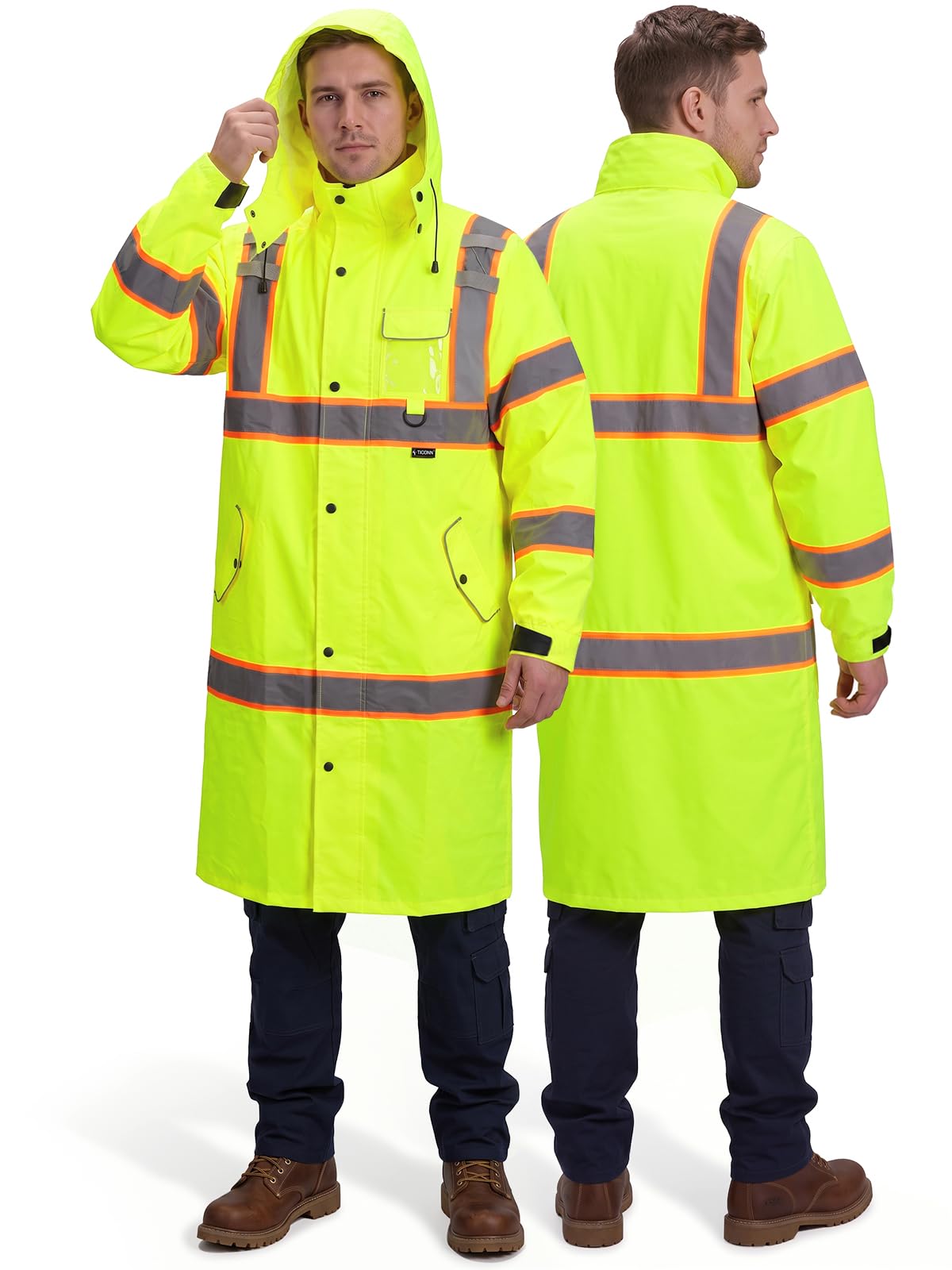
| TICONN Reflective Rain Coat★ Best Overall | Long-coverage wet-day work | 360° high visibility, ANSI Class 3 | Waterproof, stowable hood | Dual mic tabs, clear ID pocket | Amazon |
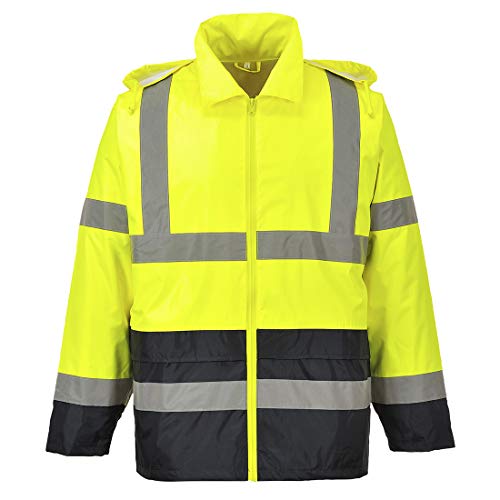
| Portwest UH443 Hi-Vis Contrast JacketBest For Traffic Work | Roadside and traffic work | Hi-vis fabric with reflective tape | PVC-coated 190T polyester | Vented back yoke, eyelets | Amazon |
| Men’s Cycling Running Rain JacketBest for Riders | Cycling and running in rain | Reflective finish, bright orange option | Water-repellent shell | Packable, pocket protection | Amazon |
| Portwest F440 Iona Hi-Vis Jacket | Cold, wet industrial work | Reflective tape, EN 17353 Type B3 | EN 343 Class 3:1, WP 5,000mm | Vented back yoke, machine washable | Amazon |
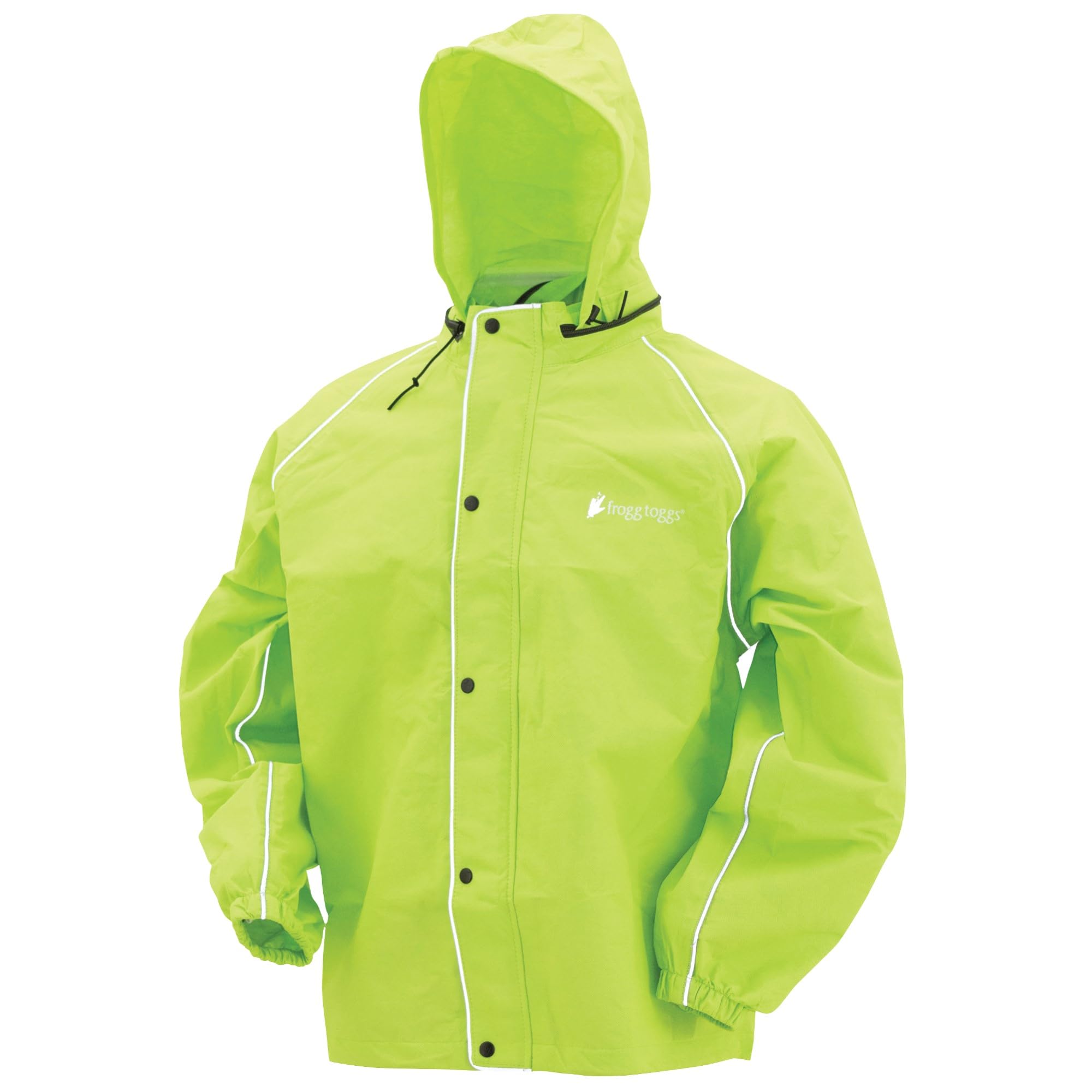
| FROGG TOGGS Road Toad | Motorcyclists and night riders | Frogg Eyzz reflective technology | Zippered front with storm flap | Tuck-away hood, elastic cuffs | Amazon |
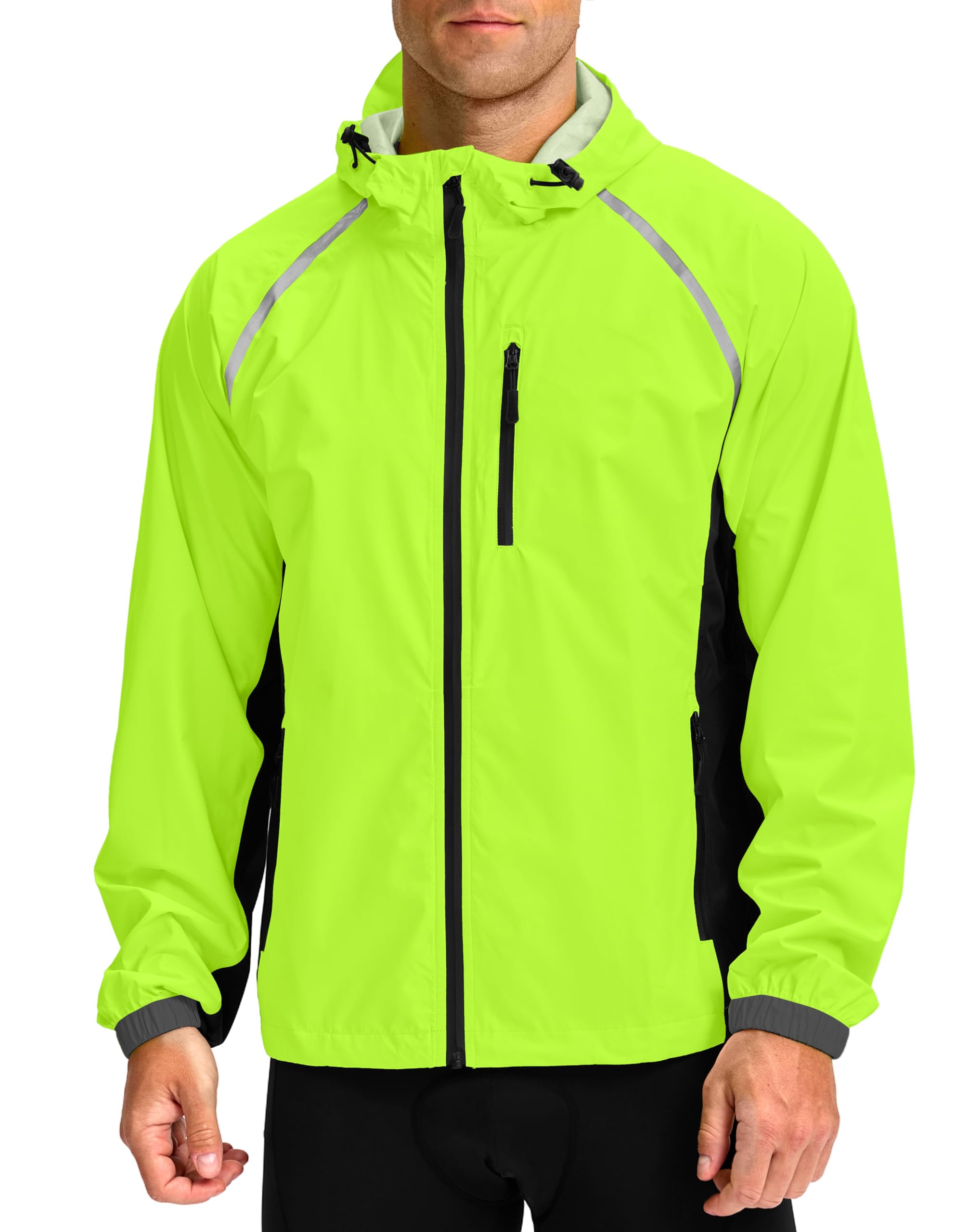
| Bikewa Cycling Rain Jacket | High-sweat rides and commutes | Reflective front, back, and hood | 5000mm rating, laminated TPU | Under-arm zips, 6 pockets | Amazon |
| SRsafety Hi-Vis Waterproof Jacket | Cold-weather construction crews | High-visibility reflective cut | Waterproof shell | Black bottom hides dirt | Amazon |
| FATONE Hi Vis Rain Jacket | Rainy-night rail and port work | ANSI/ISEA 107-2020 Type R Level 3 | 5,000mm polyurethane coat | Mesh lining, hidden hood | Amazon |
| SRsafety Class 3 Reflective Rain Jacket | Maximum nighttime visibility | 3M strips, 600-meter nighttime view | Waterproof shell | Multi-pocket work layout | Amazon |
Detailed Reviews
1. TICONN Reflective Rain Coat
Our pick — 4.5+★ from 650+ verified ratings; the strongest balance of quality and price.
The trench-length coat that keeps you dry and lit up from every angle.
This is the crowd favorite of the bunch — 4.5+ stars across 600+ ratings — and the reason is simple: a trench length that covers more of your legs than a hip-length shell. The ANSI Class 3 rating means it meets a recognized high-visibility standard, so it is built for genuine road and site work, not a fashion trim. For anyone who wants one jacket that handles a soaking commute and keeps them seen, this is the pick.
The visibility story is the headliner — a 360° high-visibility design with a clear ID pocket, dual mic tabs for radio users, and external pockets that stay reachable with gloves on. It also carries a stowable hood, so when the sky clears you can tuck it away instead of wearing a flapping cowl. What wins people over most is the quality of the build, and the waterproofing runs a close second in how owners describe it.
The catch is the fit. Sleeves are long on a fair number of builds and the length runs generous, so measuring your arm before ordering is worth the two minutes. Some buyers also find the sizing runs true while others want it snugger — read the seller’s chart rather than guessing.
What earns it first place
- ANSI Class 3 hi-vis rating with 360° reflective coverage
- Trench length covers more of you than a hip shell
- Stowable hood and clear ID pocket for work days
- Holds up in heavy downpours according to owner feedback
What to know before buying
- Sleeves run long on some builds — check the arm measurement
- Length is generous, so it can feel big on slimmer frames
Reach for this if: you want one trench-length shell for wet commutes and roadside visibility, with a real hi-vis standard behind it.
Measure first if: you are between sizes or short-armed — the long sleeves are the recurring note.
2. Portwest UH443 Rain Jacket
The roadside workhorse built for long shifts in traffic and weather alike.
Portwest builds this one for the job site, and it shows. The contrast panels split the bright hi-vis fabric from the dark sections, which helps the eye separate your shape in low light — exactly what you want when you are standing near moving vehicles. It meets EN ISO 20471 and ANSI visibility requirements, the standards that road crews and industrial sites tend to ask for.
The shell is a PVC-coated 190T polyester, a durable waterproof layer with a water-repellent finish that keeps the fabric cleaner longer. A pack-away hood pops out when the weather turns. The vented back yoke and eyelets let hot air escape so you are not soaking yourself in sweat on a hard shift, and the fabric is a lightweight class that reduces fatigue over long hours.
The honest trade-off is sizing and toughness at the extremes. The cut runs to true-to-size for big people and some find it loose, which most crews prefer for layering. A thin feel and the occasional seam stress show up in the feedback, so treat the pockets gently if you load them with tools.
Who it is built for: anyone whose shift happens on or beside a road — construction, logistics, traffic control — where the contrast panels and reflective tape do the heavy lifting.
The real limit: the shell reads lightweight and thin to some buyers, and one seam-stress note makes the point that rough tool use is best kept light.
Best fit for: road and industrial crews who want certified hi-vis with airflow for long shifts.
Look elsewhere if: you need a heavy, stiff shell for brutal abrasion — this one leans lightweight.
3. Men’s Cycling Running Rain Jacket
A packable cycling shell that stuffs small and glows on the night ride home.
Built for two-wheel commuters, this one is light enough to fold into a backpack and pull on when the clouds break. The bright orange color option is the standout — it reads clearly to drivers in daylight and complements the reflective finish for after dark. The pockets are a practical touch too: they keep your phone and cards dry when you are caught out in the open.
Owners rate the overall quality and water resistance highly, and the shell does a solid job repelling rain on a ride. The fit runs mixed — some find it right, some want it looser over layers — so it pays to check the size chart against your chest measurement rather than relying on your usual letter size.
The thing to weigh honestly is the zipper, which is the piece most buyers point to when something annoys them. A zipper that fights you on a cold, wet ride is a real frustration. Treat it with care, zip it straight, and this remains a capable packable shell for the money.
The rider’s case: packable, water-repellent, and bright enough that traffic sees you — the three things a cycling shell needs most.
The watch-out: the zipper draws the most criticism, so give it a gentle, aligned pull every time.
Pick it for: commuting cyclists and runners who want a compact shell that packs away and stays visible.
Try another if: you need a rugged work coat — this is a lightweight sport shell, not a site jacket.
4. Portwest F440 Classic Iona Hi-Vis Waterproof Rain Jacket

The certified shell that names its numbers instead of hiding them.
Here is a rare thing: this jacket actually tells you what it does. The 100% polyester shell carries a PVC coating for durability and water resistance, and it is rated to EN 343 Class 3:1 with a WP 5,000mm waterproof figure. In plain terms, 5,000mm means the fabric holds back a serious amount of rain pressure before water pushes through — enough for steady wet work rather than a passing shower. It also meets EN 17353 Type B3, a standard for reflective gear in low light.
The reflective tape is the part that earns its keep at dusk, and owners describe it as well-made and genuinely visible in the dark. A vented back yoke and eyelets keep air moving so you are not cooked inside on a hard job. It is machine washable, which matters for a work coat that picks up grime fast.
One thing to plan around: this shell traps warmth. In cold weather that is a gift, but in mild or humid conditions it can feel too warm for some buyers. Layering underneath is easy — there is room for a light hoodie.
Read the label, trust the label: EN 343 Class 3:1 and WP 5,000mm are stated outright, so you know the rain rating before you buy instead of guessing.
Mind the heat: the fabric retains warmth strongly, so this is a cooler-weather pick more than a summer shell.
Choose this when: you want certified waterproof and reflective numbers you can verify for wet industrial work.
Steer clear if: you run hot and work in mild climates — the warmth retention can tip too far.
5. FROGG TOGGS Road Toad Rain Jacket
Motorcycle-ready reflective tech that turns headlights into a beacon.
Frogg Toggs designed this one around night riding, and the Frogg Eyzz reflective technology is the whole point. For a motorcyclist the jacket has to disappear into a backpack by day and light up under headlights after dark, and this design is aimed squarely at that. The zippered front plus a snap-down storm flap keeps moisture out, and the elastic cuffs and raglan sleeve let your arms move freely on the bars.
Owners lean on the quality and waterproofing — it keeps you dry and it does double duty as a windbreaker when temperatures drop. The adjustable, tuck-away hood with E-Z Push cord locks keeps the wind off your head without flapping loose when you do not need it. The open waist design keeps your range of motion clear, which matters more on a bike than on foot.
Two honest notes. The fit is mixed — some find it big, some snug — so try the size chart carefully. And durability is a fair question: this is a light shell, and a few buyers find it rips easily if snagged. There are also no hand pockets to speak of, so keep valuables in a bag.
The night-ride answer: purpose-built reflective tech for motorcyclists, with a tucked hood and storm flap that keep the wind and rain out at speed.
The honest limits: the shell is thin enough to snag, and the missing pockets mean you carry essentials elsewhere.
Ideal for: motorcyclists and night riders whose priority is being seen under headlights.
Think twice if: you want a pocket-heavy work coat — this one travels light and wants gentle handling.
6. Men’s Cycling Rain Jackets
The sweat-savvy shell that vents hard without letting the rain in.
Where the TICONN wins on coverage and the Road Toad wins on night visibility, this Bikewa shell wins on airflow. The laminated TPU membrane — a waterproof layer bonded to the fabric — carries a 5000mm waterproof rating and 3000g/m2/24hr breathability, so it blocks rain while still letting sweat vapor escape. Underarm zips and back vents add another route for heat to leave on a climb.
Reflective elements sit on the front, back, and hood, so headlights catch you from all directions rather than one. There are three waterproof zipper pockets on the front, two inner pockets, and a spacious back zipper pocket — and that back pocket doubles as a storage pouch so the whole jacket packs down small. The fluorescent yellow and black cut fits well over a riding helmet.
It is built for mild weather, so treat it as a rain-and-wind shell for cool-but-not-cold rides — owners note it is not fur-lined and not for really cold days. Between 50 and 65 degrees is where it feels best in their experience.
The strongest case for it
- 5000mm waterproof with 3000g/m2/24hr breathability
- Underarm zips and back vents cut sweat heat on hard efforts
- Reflective on front, back, and hood for all-direction visibility
- Six pockets including a back pocket that doubles as a stuff sack
Where it falls short
- Mild-weather build — not warm enough for genuine cold
- Its breathable fabric favors active riding over standing still
The right call for: cyclists and commuters who sweat hard and need ventilation as much as waterproofing.
Pass it over if: you ride through winter cold — this shell is mild-weather only.
7. SRsafety High Visibility Safety Jacket
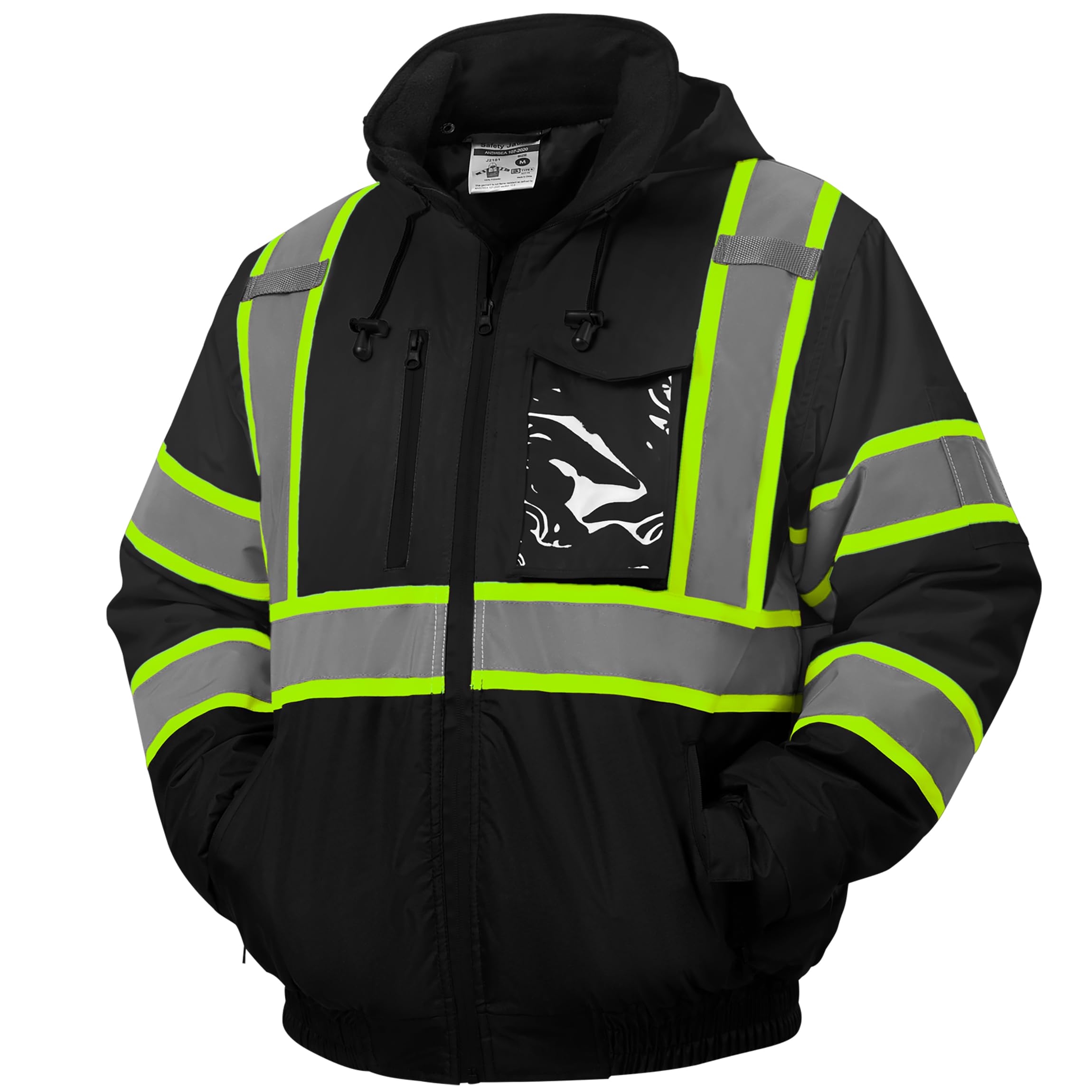
A cold-site work jacket that keeps the grime off with a black hem.
For construction crews who work through the back end of the year, this SRsafety jacket leans into warmth and visibility together. The reflective waterproof shell cuts a hi-vis silhouette that reads clearly in low light, and the black bottom is the practical detail — it hides the oil, mud, and dirt that build up around the hem of a work coat so you still look neat at the end of a shift.
Owners describe it as warm, waterproof, and comfortable, with quality being the part they praise most. It is aimed at men and women both, so the unisex cut is broad rather than tailored to one shape.
The sizing is where you need to pay attention. Sleeves come up long for some buyers — reports of sleeve length running well past the wrist. Durability is also a fair question, with a few finding it does not last through heavy use. Expect it to shine as a warm-weather-defying work layer rather than a decade-long investment.
Cold-shift comfort: the warmth draws the second-most praise, making this a strong pick for cool, wet construction days.
Order with care: the sleeves run long on some builds, so confirm the arm measurement before committing.
Fits best: outdoor workers who want a warm, hi-vis shell and do not mind a generous cut.
Not for you if: short sleeves matter or you need a shell for years of brutal wear.
8. FATONE Hi Vis Rain Jacket
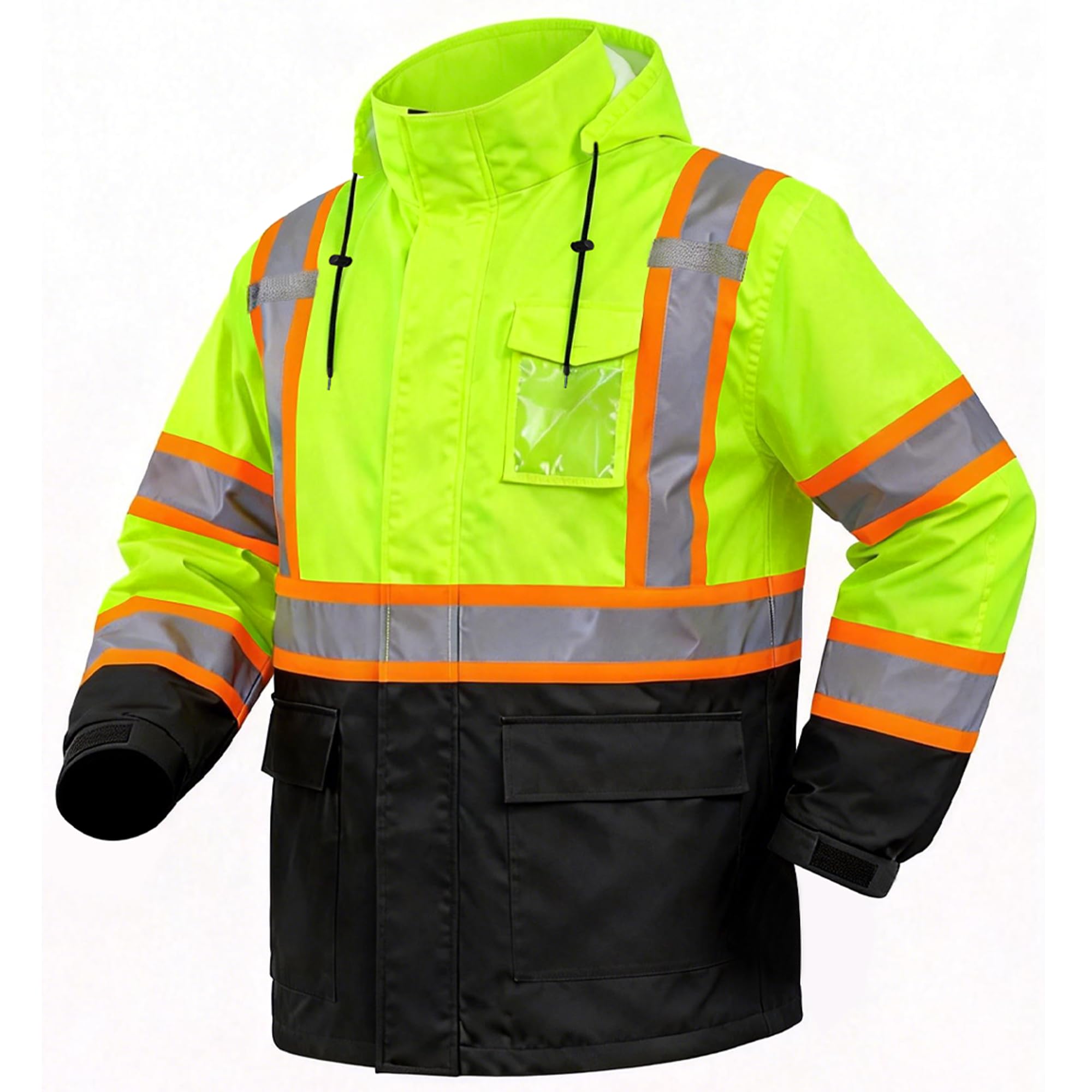
Sealed seams and 300-meter reflective visibility, aimed at night work.
The FATONE focuses on two things that matter most in heavy rain: keeping water out completely and making sure you are seen at a real distance. The outer shell is coated in polyurethane waterproofing and the seams are heat-pressed and sealed, so they can cope with 5,000mm of precipitation in moderate to heavy rainfall. Heat-sealed seams are the detail that separates a jacket that keeps you dry from one that lets water creep in at the stitching.
On visibility, the reflective strips run across the chest, waist, arms, and back, giving 360 degrees of coverage at night. It meets ANSI/ISEA 107-2020 Type R Level 3, and the maker states it can be viewed from an effective distance of 300 meters — that is a long way for a driver’s headlights to pick you up. The fluorescent yellow and orange body helps in daylight too.
Breathability is handled with two ventilation shafts at the back and a mesh lining that stops your clothes sticking to your skin. The catch is the sizing — this one runs big for several buyers, so size down if you are between sizes. A few also report a pocket problem, so check the seams on arrival.
Where it shines: heat-sealed seams and a 5,000mm rating mean this shell is built to take steady rain without seeping.
Order a size down: the cut runs large on several frames, so the size chart is your friend.
Good pick for: rail, port, and road crews who need sealed seams and long-distance reflectivity at night.
Look on if: you are a true-to-size buyer — this cut runs generously.
9. SRsafety Men’s Reflective Rain Jacket

The 600-meter reflector built for the darkest, most dangerous sites.
When being seen is the whole job, this SRsafety jacket makes its case with 3M reflective strips rated for 600-meter nighttime visibility. That is the standout spec in the entire list — a headlight picks these strips up from a serious distance, giving you the maximum warning time in dark or low-light work. It is Class 3 high-visibility workwear, aimed at construction and industrial settings that demand the highest visibility.
The shell is 100% high-density polyester, and the maker states it has been tested to withstand 20,000+ stretches and rubs without damage. The pocket layout is genuinely work-minded: a clear chest ID pocket, an internal waterproof phone and wallet pocket, dual oversized waist tool pockets, and side hand-warmer pockets. That covers the essentials a site worker actually carries.
The honest trade-off is that this is a premium-priced work piece aimed at people whose safety justifies it. If your reflective needs are casual — a walk or a light commute — you are paying for visibility capability you may not need daily.
The distance number: 600-meter rated 3M strips are the farthest-reach reflectivity in this group, giving drivers the most warning at night.
Who should resist: casual wearers who do not need that level of reflectivity will find it more jacket than the job calls for.
Made for: industrial and construction workers on dark, high-traffic sites where maximum visibility is the priority.
Overkill for: light-duty wear and everyday errands where full Class 3 reflectivity is more than you need.
Know the Specs
Waterproof rating in mm
This number measures the water pressure a fabric resists before it leaks — think of it as how torrential the rain can get before the shell gives out. A rating like 5,000mm, seen on the FATONE and Portwest F440, is a solid figure for steady moderate-to-heavy rain. If a jacket lists no rating at all, you are trusting the brand rather than a number.
Reflective tape placement
Where the strips sit decides which direction the light comes back from. Strips on the chest, arms, and back — as on the FATONE and Bikewa — mean a driver sees you from more than one angle. Strips on one panel only leave blind spots, which is exactly where a night-ride problem starts.
ANSI and EN visibility standards
These are the recognized certifications that tell you a jacket is genuinely hi-vis rather than just brightly colored. ANSI Class 3 and EN ISO 20471 are the common workwear marks, and EN 343 covers rain protection. A jacket that meets them has passed a standard you can verify, not just a claim on the label.
Breathability and venting
Breathability like the 3000g/m2/24hr figure on the Bikewa measures how much sweat vapor escapes in a day. Add underarm zips or a vented back yoke and you get physical airflow on top of the fabric’s own breathing. Without any of this, a perfect waterproof shell turns into a clammy sauna on a hard effort.
Common Questions
How far away can a driver actually see a reflective rain jacket?
Is a Class 3 hi-vis jacket required on a work site?
What does a 5,000mm waterproof rating mean in real rain?
Why do hi-vis rain jackets make me sweat so much inside?
Should I size up or down in a reflective rain jacket?
Can I wear a reflective rain jacket over a motorcycle helmet and riding gear?
How long does a waterproof shell stay waterproof?
Do reflective rain jackets need special washing?
Is a packable cycling jacket good enough for work-site visibility?
What is the difference between reflective tape and a hi-vis body?
The Bottom Line
For most riders, road crews, and commuters, the reflective rain jacket worth buying first is the TICONN Reflective Rain Coat — a trench-length ANSI Class 3 shell that covers more of your body and keeps you visible, with the strongest owner consensus in the group. If you live in rain on a bike, the Bikewa Cycling Rain Jacket gives you sealed airflow with reflective elements front, back, and hood. And if nighttime visibility is the whole reason you are buying, the SRsafety Class 3 Reflective Rain Jacket brings the farthest-reach 3M strips here. Whichever you choose, check the sleeve measurement against your arm before ordering — long sleeves are the most common complaint in hi-vis reviews.
How we choose
We do not accept paid placement. Every pick is matched to a real buyer and a real use-case; we do not hands-on test units.
Sources
Specifications: manufacturer listings and product documentation. Review insights: verified customer reviews, as of November 2026. Pricing: not shown on this page (it changes often); check the current price via the retailer link.
As an Amazon Associate, Tactical Gear Guy earns from qualifying purchases. This does not affect which products we feature.