Specs are compiled from manufacturer listings and verified buyer reviews and can change over time — please confirm the key details on the product page before buying.
You want a jacket that keeps you warm on a real winter workday without turning you into a sweaty, bulky mess by the time you reach the truck. The short answer: the North Face McMurdo Bomber is the safest all-round buy for most people, the RefrigiWear Extreme Softshell is the one for bitter cold and low light, and the Carhartt Yukon is the tough everyday workhorse. The rest of this list breaks down which jacket fits which job, so you buy once and stay warm for years.
This guide is built by comparing the manufacturers’ published specifications and the patterns across verified customer reviews, so you get each pick’s real strengths and trade-offs instead of marketing spin.
A winter jacket lives or dies on three things: how much warmth it traps, how well the shell keeps wind and wet out, and whether the fit lets you move and layer. Below you’ll find each jacket’s comfort rating, insulation type, and the honest gripes that show up most. My breakdown of the best professional winter jacket sticks to published specs and owner patterns so you can pick with confidence.
Top Picks


How To Choose The Best Professional Winter Jacket
A work jacket has to hold up to standing in wind, bending and reaching all day, and rain or sleet that would soak through a casual coat. You stand still in wind, you bend and reach all day, and you need the shell to shrug off rain and sleet without soaking through. Here is what to weigh before you commit.
Match the comfort rating to your coldest shift
A comfort rating is the lowest temperature the maker says the jacket keeps you comfortable at, usually in Fahrenheit. A jacket rated to -20°F covers most deep-winter commutes and outdoor shifts. If you work in a freezer or a bitter-cold climate, a rating down to -60°F gives you real headroom.
Down versus synthetic insulation
Down insulation packs warmth per ounce and is measured in fill power — a higher number means more loft and more warmth for the weight. Synthetic insulation, like Thinsulate or PrimaLoft, holds its warmth better when damp. If your shifts get wet, lean synthetic; if you want warmth without bulk in dry cold, down earns its place.
Water-resistant versus waterproof shells
Water-resistant means the fabric sheds light rain and snow but can eventually soak through in steady wet. Waterproof means the shell itself blocks water. For outdoor work in mixed weather, check which one the listing actually claims — the difference shows up on a long, wet day.
Shell toughness and pocket layout
The denier number on a nylon or Cordura shell tells you how heavy and abrasion-resistant the fabric is — a higher denier stands up to rough jobsite contact. Count the pockets too. A chest map pocket or a zippered inner pocket keeps a phone and tools dry and close while your hands stay free.
Side-by-Side Comparison
| Model | Best For | Comfort Rating | Insulation | Weight | Amazon |
|---|---|---|---|---|---|
| The North Face McMurdo Bomber★ Best Overall | All-round winter buy | — | Waterfowl down | 2.85 lb | Amazon |
| RefrigiWear Insulated Work Jacket 0490RBudget Champion | Budget cold-weather work | -20°F | Over 400g insulating power | 3.2 lb | Amazon |
| Eddie Bauer Boundary Pass Down ParkaBest Down Value | Everyday down warmth | — | 650-fill down | — | Amazon |
| Carhartt Women’s Relaxed Fit Utility Coat | Women’s work coat | — | Synthetic | — | Amazon |
| Carhartt Yukon Extremes Insulated Coat | Rugged jobsite wear | — | 150g Thinsulate | — | Amazon |
| RefrigiWear Hi Vis Extreme Softshell | Bitter cold & low light | -60°F | Insulated softshell | 5.94 lb | Amazon |
| TRUEWERK Tower WerkParka | Trade professional coat | — | Insulated work coat | — | Amazon |
| Fjällräven Skogso Padded Jacket | Outdoor everyday wear | — | Synthetic padding | — | Amazon |
| Marmot Fordham Down Jacket | Waterproof down warmth | — | 700-fill down | — | Amazon |
| Helly-Hansen Reine Parka | Wet-weather parka | — | PrimaLoft synthetic | 2.85 lb | Amazon |
| Fjällräven Nuuk Parka | Long-coverage premium parka | — | Synthetic padding | — | Amazon |
Detailed Reviews
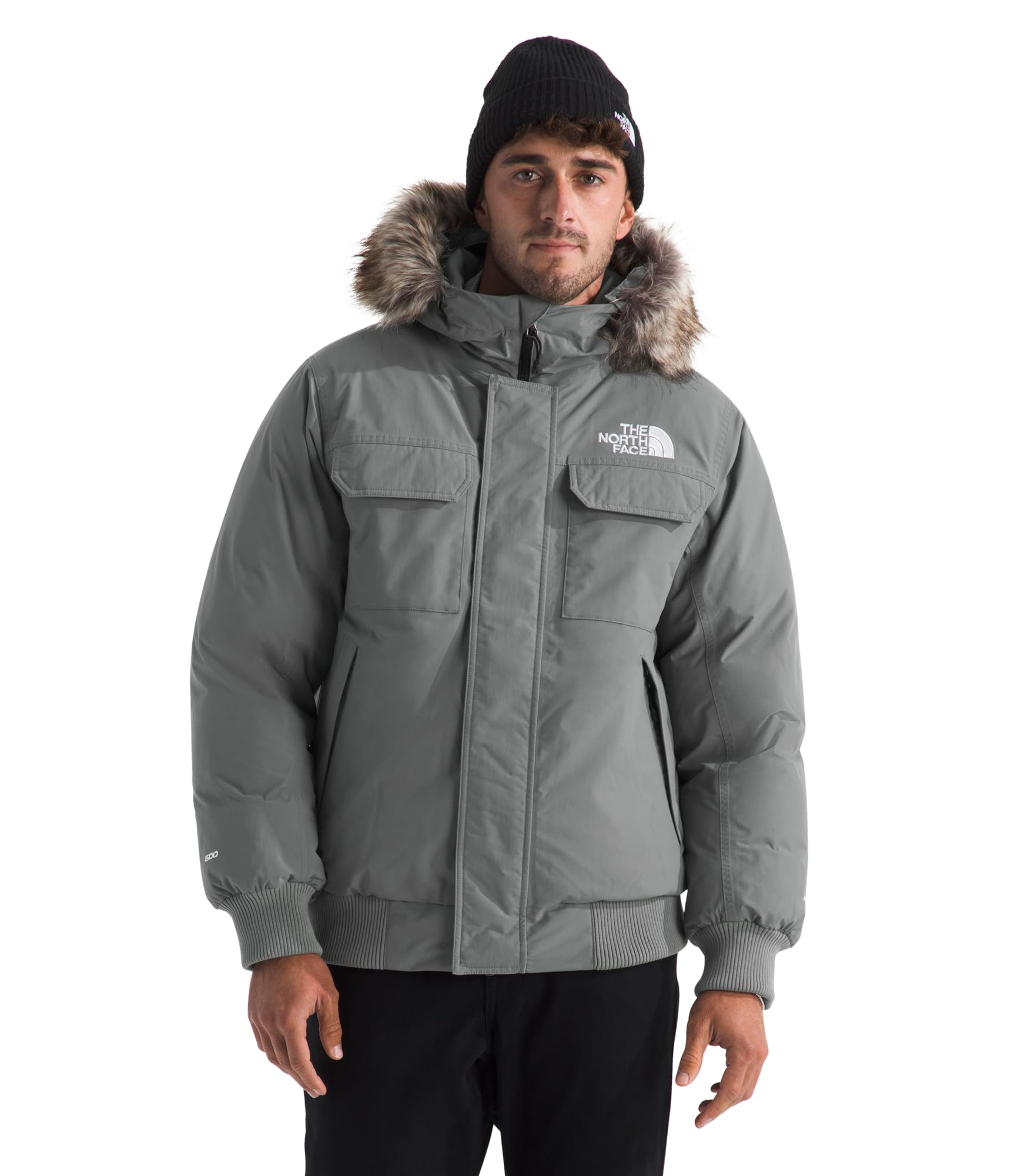
1. THE NORTH FACE Men’s McMurdo Bomber Jacket
Our pick — 4.5+★ from 300+ verified ratings; the strongest balance of quality and price.
The waterproof down bomber that lets you skip the heavy parka without giving up warmth.
The North Face McMurdo is the jacket most people should buy first. It packs waterfowl down insulation — natural feathers that trap warmth without the bulk of synthetic fill — into a waterproof shell, so wet snow and slush roll off instead of soaking in. At 2.85 pounds it stays light enough to wear through a full shift, which matters when you’re reaching and climbing all day.
What wins buyers over is the build quality and the sheer warmth. This is the crowd favorite of the bunch, holding 4.5+ stars from a base of 300+ owners, and the fit draws praise for leaving room to layer a fleece underneath without feeling boxed in. The clean bomber cut works from the jobsite to a night out.
The honest catch is sizing and durability, where feedback splits. A few find the size runs off, so check the chart before you commit, and treat the shell with some care rather than dragging it through brambles. Down also needs a dry cold day to shine — in constant soaking wet, a synthetic stays warmer.
What earns it the top spot
- Waterproof shell paired with waterfowl down keeps you warm and dry at once
- 2.85 pounds — light enough to wear all day without shoulder fatigue
- Room to layer a fleece or sweater underneath without a boxy squeeze
Where it asks a little of you
- Sizing runs a touch inconsistent, so measure before ordering
- Down loses some warmth if it gets thoroughly soaked
Reach for this if: you want one do-everything winter jacket for commute, work, and weekends.
Look elsewhere if: you work in steady rain all day and want synthetic insulation that shrugs off the wet.
2. RefrigiWear Insulated Work Jacket for Men, Rated to -20°F
A budget work jacket rated to -20°F with over 400g of insulating power.
If you want maximum cold-weather coverage for the least money, this is the one. RefrigiWear rates it to -20°F and loads it with over 400g of insulating power — a measure of how much fill is packed in — so it holds heat on genuinely cold shifts. A silver twill reflective lining bounces your body heat back at you, and the softshell is both water-repellent and windproof.
The build quality and warmth are what people talk about most, and for good reason. It carries 4.0+ stars from 200+ owners and the design stays light enough to move in, with the one inside and three outside zipper pockets giving you real storage. The full-zip stand-up collar, adjustable Velcro cuffs, and interior draw cord let you seal out drafts at the neck and waist.
The trade-off is fit around the sleeves — the forearm runs snug on some builds, so try before you rely on it. Sizing overall draws mixed notes, and a few find the cut boxy. For -20°F coverage at this price, the value is tough to top.
Pick this up if: you need dependable -20°F warmth on a tight budget.
Keep looking if: you have a heavier build and need generous sleeve room.
3. Eddie Bauer Men’s Boundary Pass Down Parka
A 650-fill down parka that brings serious warmth to everyday winter wear.
The Boundary Pass earns its spot because of how much warmth it packs into its insulation. Inside is 650-fill down (a rating of how much loft, or fluffiness, the feathers have, so more warmth for the weight). The outside is a polyester shell with Eddie Bauer’s StormRepel water-repellent finish, which beads water and rolls it off in snow and damp.
The winter details are all here. An adjustable insulated hood with a removable faux fur ruff shields your head from wind and cold, storm cuffs seal the wrists, and zippered hand pockets are insulated to keep your fingers warm while holding your essentials. The classic fit layers easily over a sweater or fleece.
One recurring gripe centers on the zipper, which uses a dual design — some folks find it finicky and a few report it giving out early. Treat it smoothly and it’s fine. Otherwise this is a warm, well-loved parka with a solid following.
Why it ranks here: real 650-fill down warmth plus a water-repellent shell is a strong pairing for cold, dry-cold days.
Worth knowing: the dual zipper demands a gentle hand; rush it and it can jam.
This one fits: commuters and travellers who want down warmth with a clean classic look.
Think twice if: you want a zipper you can yank shut with gloves on in seconds.
4. Carhartt Women’s Relaxed Fit Midweight Utility Coat
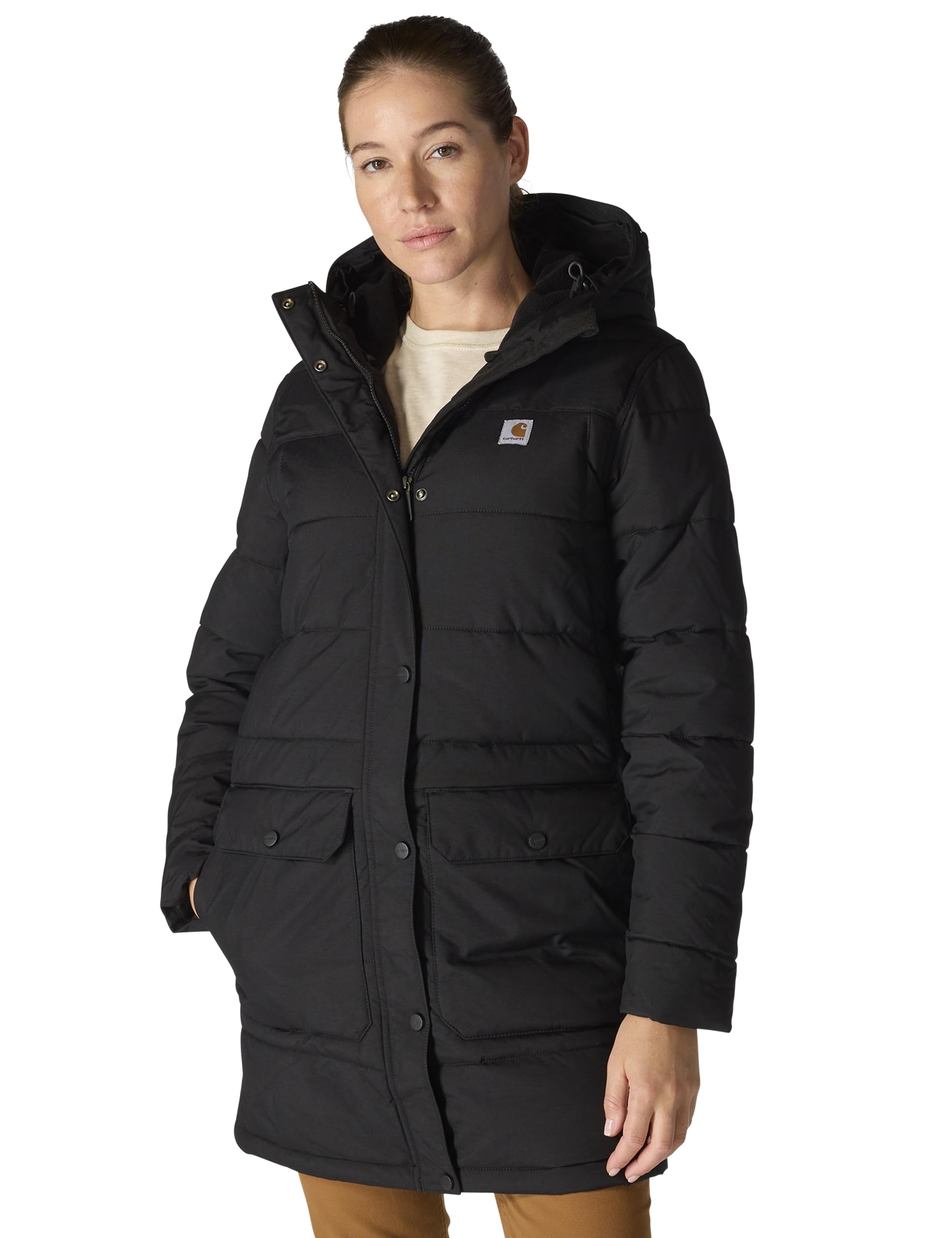
A women’s midweight coat that seals in heat with a sherpa fleece upper-body lining.
For cool and damp workdays, this Carhartt coat brings the right mix. A nylon shell blocks wind and sheds light rain, while synthetic insulation plus a sherpa fleece lining in the upper body lock in warmth where it counts. Knit cuffs and an adjustable hood close the gaps so cold air stays out while you reach and flex.
The storage is a genuine highlight — pockets inside and out give you room for tools, gloves, and a phone. The relaxed fit leaves a little extra space to move and layer. People who live in cold country speak highly of its warmth on the worst winter days, and it holds 4.5+ stars from 300+ owners.
Fit and length split opinion — the relaxed cut and the drop in length land differently on different body types, so check the size guide against your own frame. Get the size right and the sherpa lining and wind-blocking shell keep you warm through a damp shift.
The case for it: a sherpa-lined, wind-blocking shell with pockets everywhere makes it a natural pick for damp winter workdays.
Size it carefully: the relaxed fit and longer length suit some frames better than others, so verify measurements first.
Made for: women who want a rugged, pocket-rich coat for cold, damp outdoor work.
Check the chart if: you’re between sizes or prefer a trimmer, shorter cut.
5. Carhartt Men’s Yukon Extremes Loose Fit Insulated Coat

A jobsite bruiser with a 500-denier Cordura shell that shrugs off scrapes and wind.
The Yukon Extremes is built to take punishment. Its 6.5-ounce, 500-denier Cordura nylon shell — a heavy, tightly woven fabric that resists abrasion — stands up to rough contact, while 150g of 3M Thinsulate insulation holds in warmth. Wind Fighter technology tames the wind and a Rain Defender finish shakes off light rain.
The work details are thoughtful. Triple-stitched seams, a corduroy-trimmed collar with hood snaps, rib-knit storm cuffs, and a droptail hem keep the cold out at the wrists and lower back. 3M Scotchlite reflective taping on the center back and front pockets adds visibility, and there’s a left-chest map pocket plus lower snap pockets and inner zip storage.
Fit runs the conversation — some love the room for layering, a few find the armpit snug. The zipper takes some flak too, so ease it rather than force it. With 950+ owners weighing in and a 4.5+ star standing, this is a proven coat for people who work hard in the cold.
Grab it if: you need a tough, wind-resistant work coat that can take a beating on the job.
Look on if: you want a loose fit everywhere and hate a snug armpit.
6. RefrigiWear Hi Vis Extreme Softshell Jacket, Rated to -60°F

The freezer-and-bitter-cold specialist, rated all the way down to -60°F.
When the thermometer drops past what most jackets can handle, this is the one built for it. RefrigiWear rates it to -60°F — comfort at temperatures that would defeat almost anything else on this list — and wraps it in ANSI Class 3 hi-vis lime so you stay seen in low light. The insulation feels like a heater against your chest in brutal cold.
Workmanship shows through, with flawless stitching and tough hi-vis material that holds up to daily wear. The large size fits well and stays comfortable even through long stretches in subzero freezers. This one has earned a devoted following of people who work in the worst conditions.
Here’s the trade-off that separates it from lighter picks. At 5.94 pounds it’s noticeably heavier than the 2.85-pound North Face McMurdo Bomber, and you’ll feel that when you haul it around. So it suits standing-around cold work better than a light daily commute. If you need maximum cold protection and visibility, that weight buys you serious warmth.
Why cold-weather workers swear by it
- Rated to -60°F — among the deepest cold ratings on this list
- ANSI Class 3 hi-vis lime keeps you visible in dim, dangerous conditions
- Workmanship and hi-vis material built to last
The trade you make
- 5.94 pounds is heavy next to a 2.85-pound bomber
- Serious insulation means it can feel like too much in milder weather
Built for: freezer workers, night crews, and anyone facing brutal cold and low visibility.
Overkill if: you only need a light everyday jacket for moderate winter days.
7. TRUEWERK Men’s Work Coat – Tower WerkParka
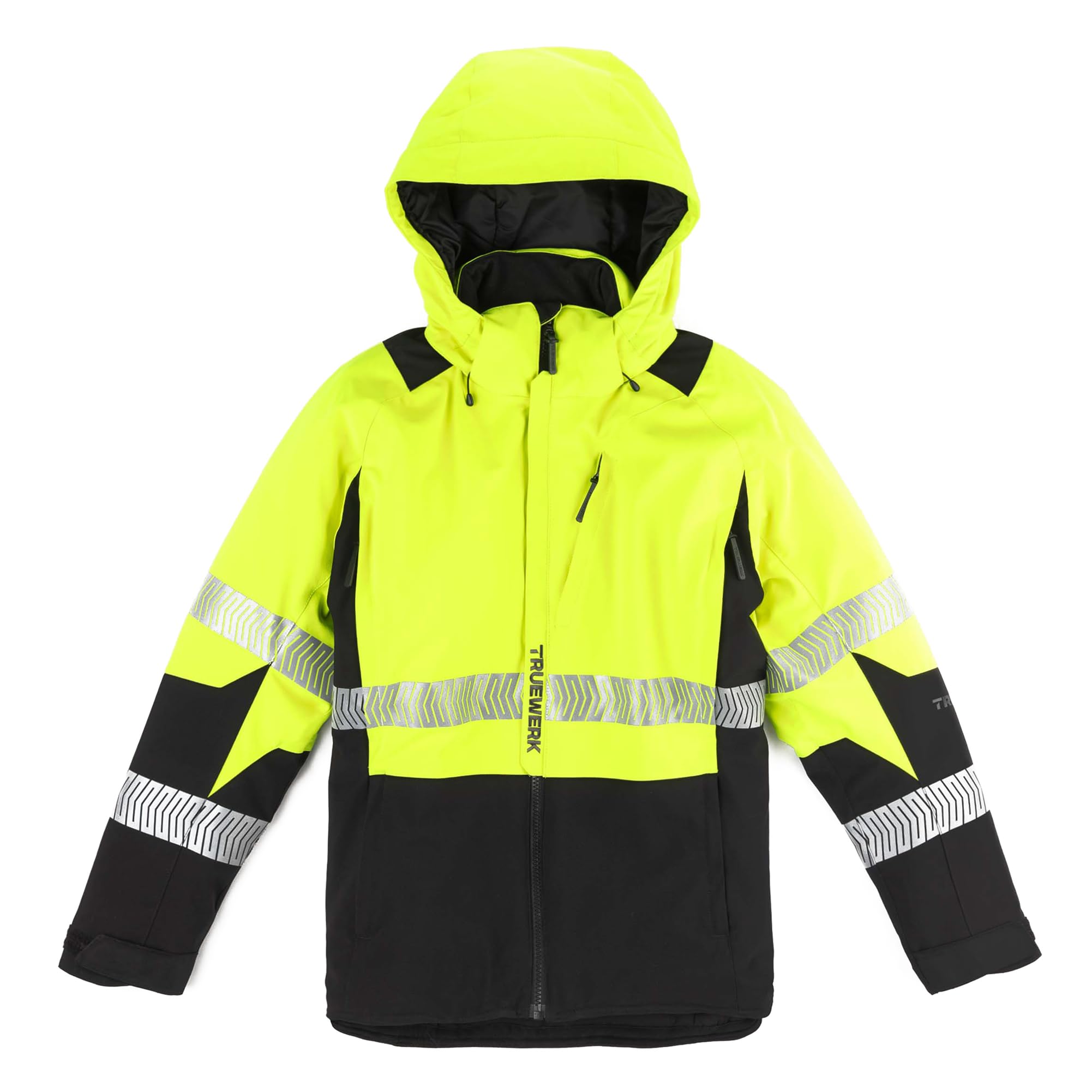
A midweight trade coat tuned for below-freezing days and buffeting wind.
TRUEWERK builds this as a working coat, and it shows in the balance. It’s set at Level 3 of 4 warmth — midweight territory, meant for cold workdays rather than deep-freeze extremes — and it holds up well below freezing while fending off wind. Users describe it as comfortable and wind-resistant through a range of weather.
Quality is the standout here. The build reads as durable and well-made, the kind of coat that earns trust on a trade site. It carries 4.5+ stars from 200+ owners, and the styling suits a professional who wants a coat that looks the part.
Fit is the one point of disagreement — some find it well-fitting, others run into sizing quirks, so lean on the size guide. Water resistance also draws a mixed note, so don’t count on it for a downpour. For cold, dry, windy workdays it does the job well.
The read: a midweight, wind-resistant trade coat with the build quality to match the price tier.
The caveat: size it deliberately and treat it as cold-weather wind protection, not a rain shell.
Suits: trade professionals who want a sharp-looking midweight coat for freezing, windy days.
Skip if: you need a jacket that doubles as a heavy rain shell.
8. Fjällräven Skogso Padded Jacket Men’s Coat
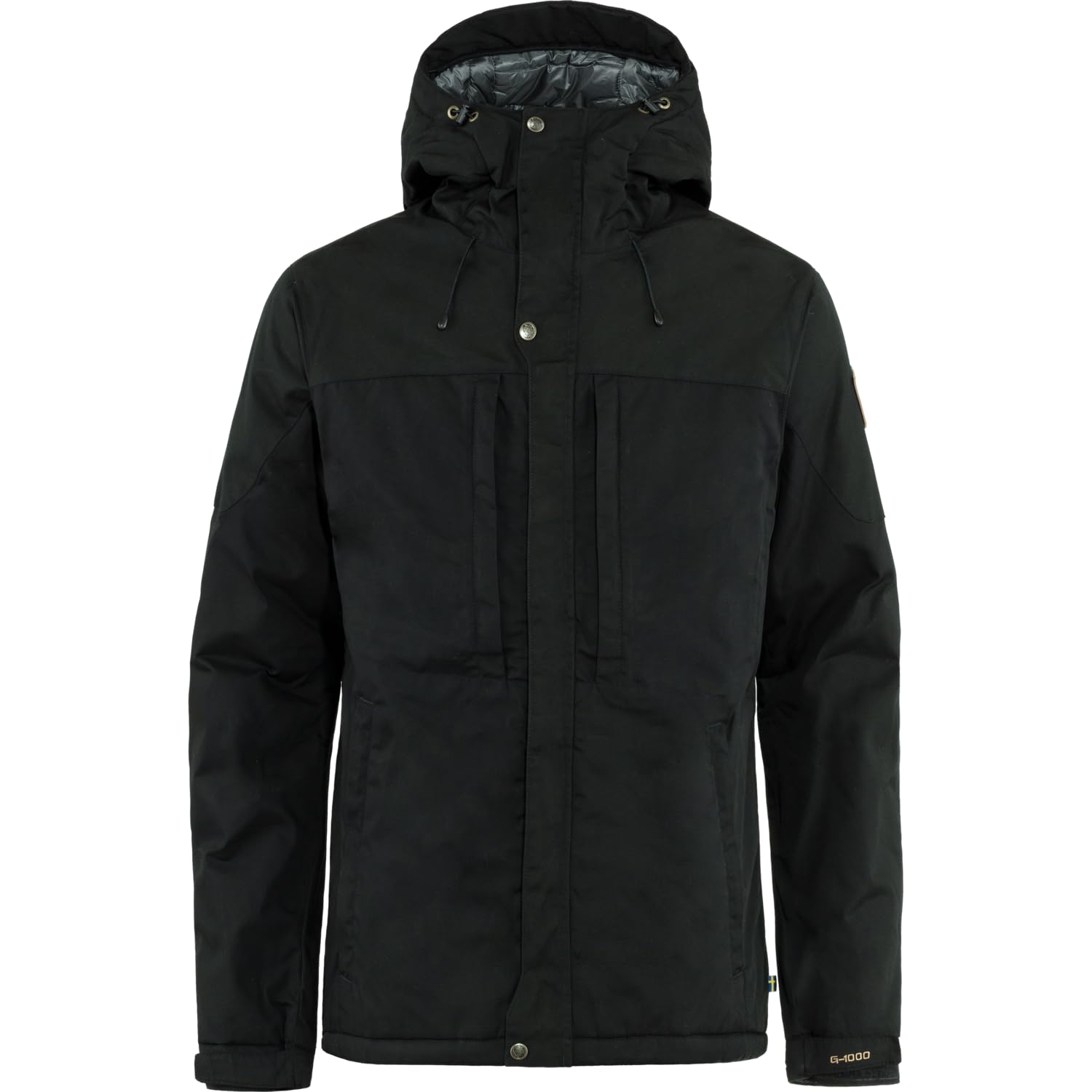
The everyday outdoor jacket that stays warm on long, windy walks through colder months.
This Fjällräven leans into outdoor everyday wear rather than extreme cold. The shell blends recycled polyester and organic cotton, and it’s padded for warmth that holds up in cold, windy weather. It’s a jacket you reach for on a long walk or a cold commute, not a deep-winter expedition.
Fjällräven’s quality reputation carries weight here, and the fit draws praise — the bigger sizes fit true, and it settles in comfortably over layers. Storage is generous, with a zippered chest pocket, hand pockets, an inner pocket, and a phone pocket. Owners point to its warmth in cold and wind as the reason it stays in rotation.
Think of it as a premium everyday layer, not a -60°F freezer coat — its padded synthetic build suits active outdoor wear more than standing still in brutal cold. Buy it for cold-weather walks and everyday outdoor wear, not for subzero standing work.
The right call for: outdoor everyday wear and cold-weather walks where brand quality matters.
Not the one for: extreme subzero standing work or heavy wet weather.
9. MARMOT Men’s Fordham Down Jacket
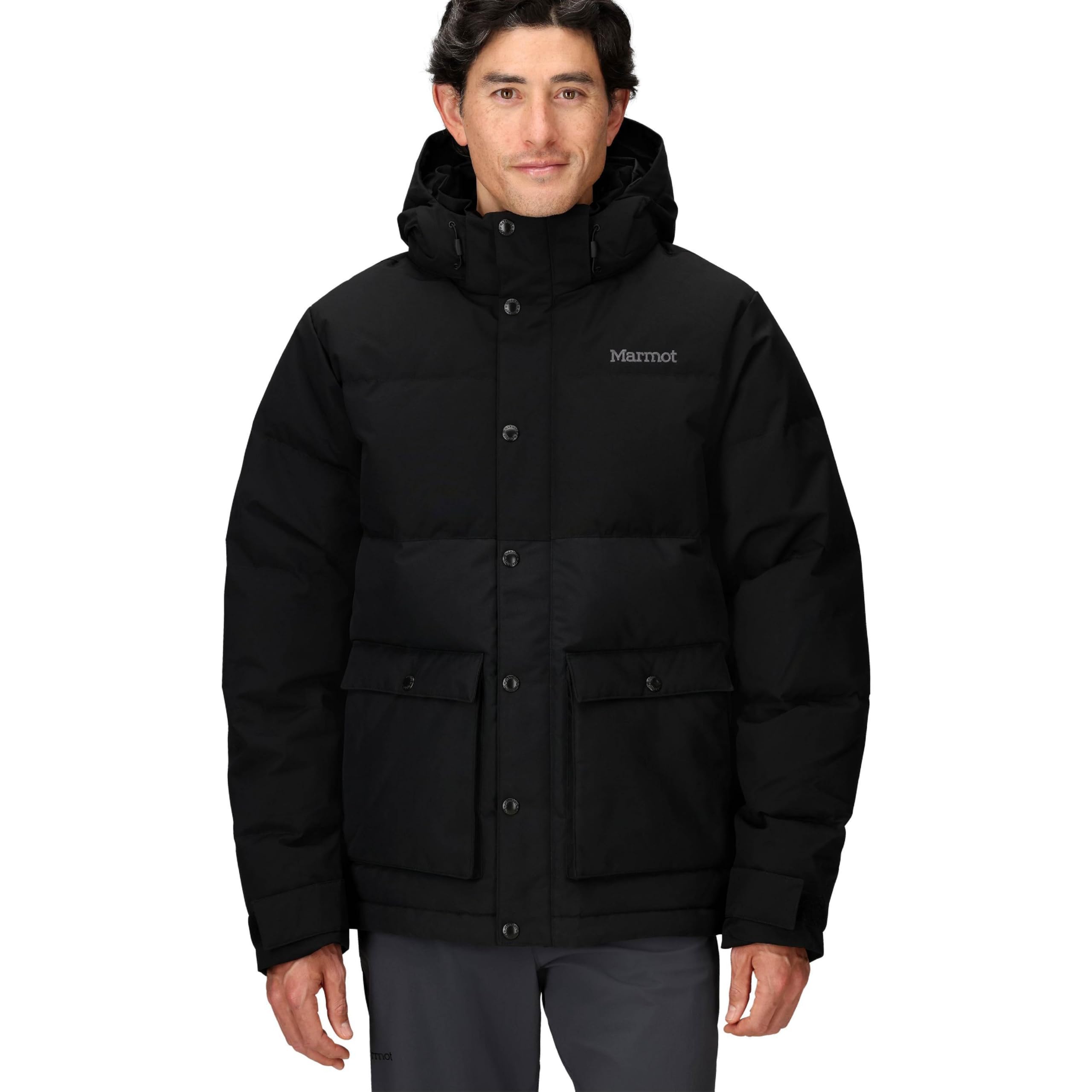
Waterproof and loaded with 700-fill down for blustery mountain days.
This is the jacket for biting cold and gusting wind, especially when wet weather is in the mix. Marmot packs 700-fill down — a high loft rating that means strong warmth for the weight — into a waterproof, breathable shell, so it keeps the wind and wet out while trapping heat in. It’s built for mountains and backcountry as much as the city.
The warmth controls are clever. An elastic draw-cord hem locks in body heat, Velcro cuffs stop condensation creeping into your layers, and microfleece interior cuffs add warmth at the wrists. A removable hood lets you zip it off when you want less weight, and two exterior chest pockets keep small gear within reach.
Construction is where opinion splits — some find it well-built, a few describe it as feeling fragile, so treat the shell with respect. Otherwise the warmth, fit, and two-toned looks earn steady praise from 100+ owners.
Who it sings for: anyone wanting waterproof protection paired with serious 700-fill down warmth.
Handle with care: the shell can feel delicate, so it rewards a little gentleness.
Best fit for: cold, windy, wet-weather days in the mountains or city.
Pass if: you want a shell you can rough up without a second thought.
10. Helly-Hansen Mens Reine Parka
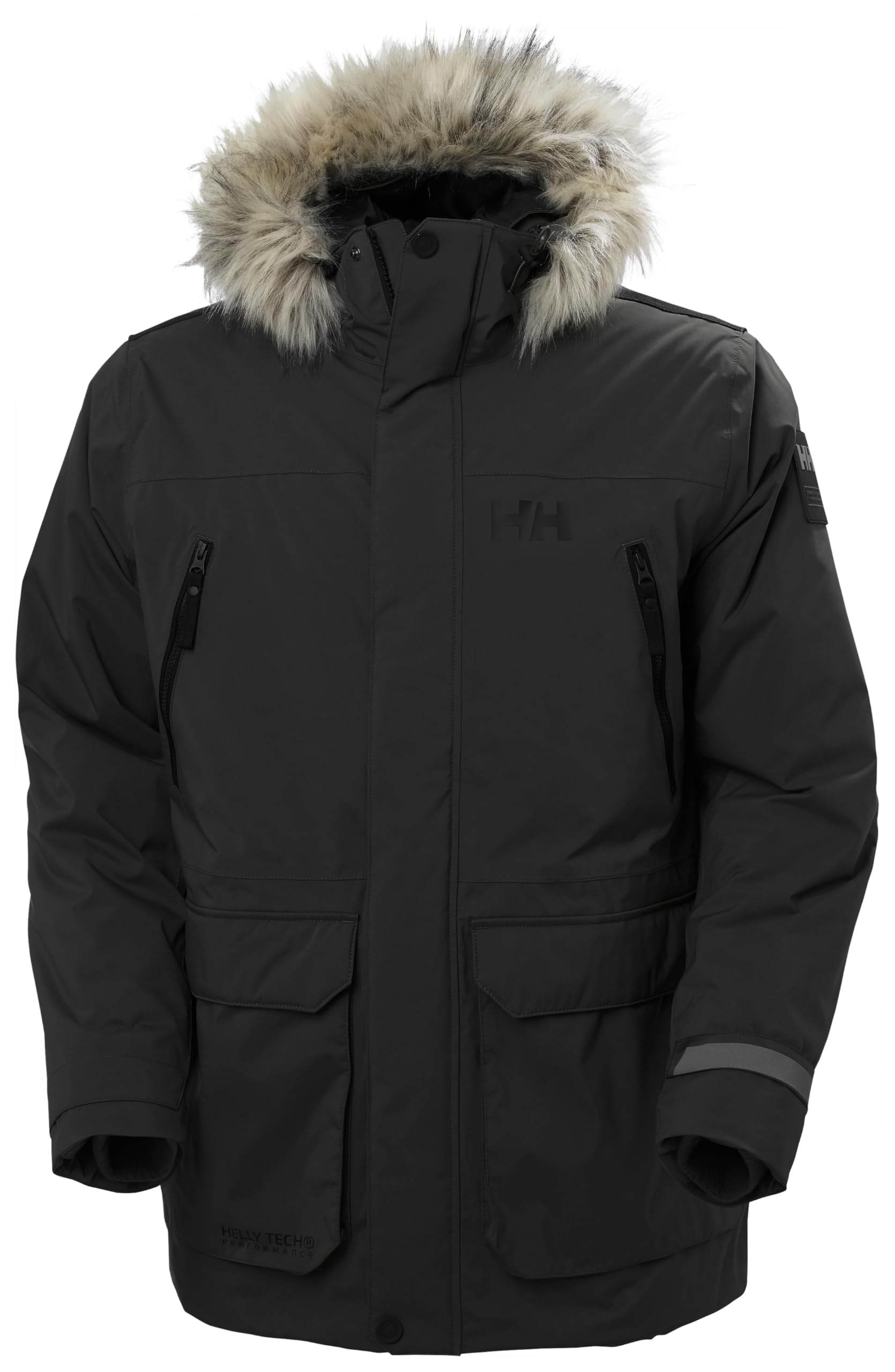
A waterproof parka with PrimaLoft insulation that holds its warmth when the weather turns wet.
The Reine is the wet-weather workhorse. Helly Tech waterproof and breathable fabric keeps the rain out and lets sweat vapor escape, while PrimaLoft insulation holds warmth — and unlike down, it keeps working when damp. At 2.85 pounds it stays light for a parka, so it doesn’t drag you down on a long day outside.
Its 4.5+ star standing rests on 850+ owner reviews, making it among the most widely worn jackets here. Buyers report staying warm and comfortable even on very cold walks, and they thank the waterproof features in driving weather. It looks good too, with a clean parka line that works from the office to the street.
The fit is the sticking point — some find it just right, others find it runs oversized, so size down if you’re between. The zipper draws mixed notes as well. Get the size right and this is a dependable, wet-weather-ready parka with a big following.
Why it earns a spot: waterproof breathable Helly Tech fabric plus PrimaLoft is the right combo for wet, cold days.
Size it down if unsure: the cut runs big on some frames, and the zipper rewards a steady hand.
Ideal for: commuters and outdoor workers facing rain as often as cold.
Consider the fit: if you’re between sizes, order down.
11. Fjällräven Nuuk Parka Men’s Coat
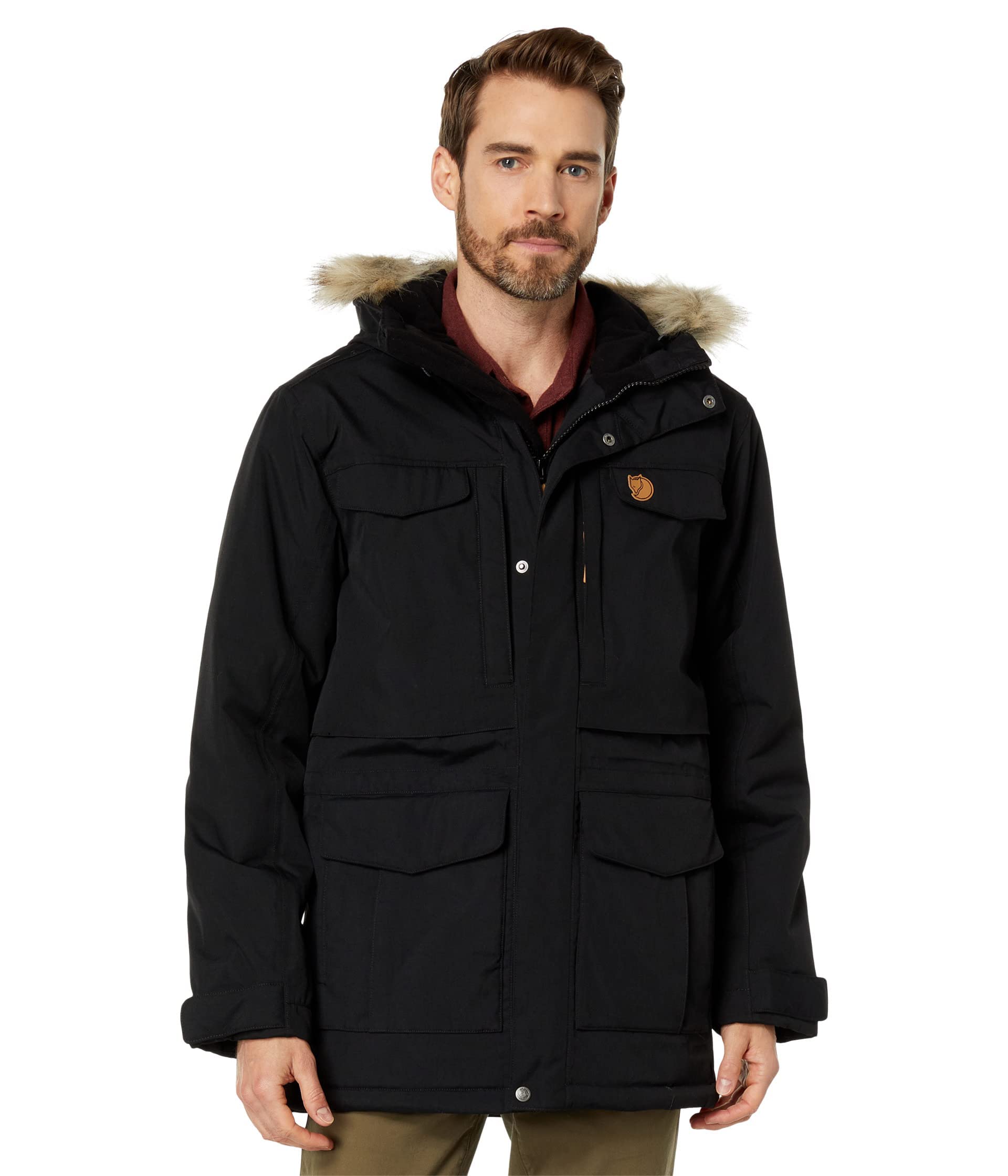
A long, generous parka that reaches down over the rear and thighs to block the wind.
For changeable, cold weather, this long parka brings a lot to the table. It drops down over your rear and thighs for extra coverage, protects against wind and rain, and its synthetic padding keeps you warm in really cold temperatures. A fleece-lined storm hood with a metal wire and a detachable faux fur edging lets you shape it against the wind.
The storage is exceptional — eight pockets give you plenty of room for everyday essentials. A drawcord at the waist keeps the fit close, and a two-way zipper with a protective flap lets you open the bottom for easier movement. This updated version uses more sustainable fabrics and improved fit over Fjällräven’s classic parka.
Sizing is the main sticking point, with several finding it runs a little big — so weigh whether to size down. Quality and cold-weather warmth are what draw people in, and it’s a strong pick if you want maximum coverage and pockets in a premium parka.
Where it shines: long-lined coverage, wind-and-rain protection, and eight pockets make it a top choice for changeable cold weather.
Watch the sizing: it can run big, so plan your size before ordering.
The pick for: anyone who wants a long, roomy, pocket-rich parka for changeable cold weather.
Size down if: you prefer a closer fit rather than a generous one.
Know the Specs
Comfort rating
This is the lowest temperature the maker says the jacket keeps you comfortable at, in Fahrenheit. A rating to -20°F covers deep-winter outdoor shifts, and a rating down to -60°F is built for extreme cold like freezer work. Match the number to your coldest typical day, not the one freak cold snap.
Insulation type and fill power
Down is measured in fill power — a higher number like 650 or 700 means more loft and more warmth for the weight. Synthetic insulations such as Thinsulate or PrimaLoft hold their warmth better when damp. Choose down for dry cold and low bulk; choose synthetic for wet, changeable workdays.
Shell fabric and denier
Waterproof shells block rain outright, while water-resistant fabrics shed light rain and snow but can eventually soak through. The denier number signals fabric toughness — a 500-denier Cordura shell stands up to jobsite abrasion far better than a thin woven face fabric.
Weight and layering fit
Weight matters when you wear a coat all day; a 2.85-pound jacket carries far easier than a 5.94-pound one. Fit should leave room for a fleece or base layer without constricting your reach. Check the size guide and read the fit notes, since a relaxed cut suits layering while a trim one does not.
Common Questions
Is a down or synthetic winter jacket better for outdoor work?
What does a comfort rating like -20°F or -60°F actually mean?
Will a professional winter jacket fit over a hoodie or fleece?
What is the difference between water-resistant and waterproof on these jackets?
How do I pick the right size when reviews say it runs big or small?
Is a heavier winter jacket always warmer?
Are hi-vis work jackets worth it for night or low-light jobs?
How should I care for a down or synthetic winter jacket?
Do I need a hood, storm cuffs, and a drawcord for winter work?
Can a long parka be better than a short jacket for cold weather?
The Bottom Line
The safest all-round buy for most people is the The North Face McMurdo Bomber, because its waterfowl down and waterproof shell balance warmth, weight, and weather protection without a heavy carry. If you face extreme cold or low light on the job, the RefrigiWear Hi Vis Extreme Softshell earns its place with a -60°F rating and ANSI Class 3 hi-vis lime. And for rugged everyday jobsite wear, the Carhartt Yukon Extremes brings a 500-denier Cordura shell and 150g Thinsulate to the fight. Whichever you pick, match the comfort rating and shell type to the coldest, wettest shifts you actually work.
How we choose
We do not accept paid placement. Every pick is matched to a real buyer and a real use-case; we do not hands-on test units.
Sources
Specifications: manufacturer listings and product documentation. Review insights: verified customer reviews, as of November 2026. Pricing: not shown on this page (it changes often); check the current price via the retailer link.
As an Amazon Associate, Tactical Gear Guy earns from qualifying purchases. This does not affect which products we feature.