Specs are compiled from manufacturer listings and verified buyer reviews and can change over time — please confirm the key details on the product page before buying.
You can buy a hearing aid without an audiologist’s invoice, and that is the whole point of the over-the-counter market. Three things decide whether you hear the dinner table or just a wall of amplified clatter: the channel count in the chip, a real noise-reduction setting, and enough battery to get through a day without a mid-conversation blackout. Get those three right and a modestly priced aid can still deliver clear speech. Get them wrong and even a big-name device ends up in a drawer.
This guide is built by comparing the manufacturers’ published specifications and the patterns across verified customer reviews, so you get each pick’s real strengths and trade-offs instead of marketing spin.
This page breaks down each pick by how it handles speech, background noise, fit, and charging, so you can match a device to your own ears and daily routine. Here is the honest read on the price of hearing aids and which devices actually deliver for it.
Top Picks
How To Choose The Best Price of Hearing Aids
A hearing aid is a tiny computer that separates voices from everything else in the room. The job is not to make the world louder — it is to make speech clearer while everything else steps back. The devices that do that well share a few traits, and you can read those traits off the spec sheet before you ever open the box.
Look at the channel count first
Channels are the slices a chip divides incoming sound into. A 16-channel processor (like the one in several picks here) splits the audio into 16 frequency bands and treats each one separately. That lets it lift the frequencies human voices live in while pulling down the rumble of an air conditioner, so conversation comes through instead of the AC. Fewer channels means coarser control and more of an “everything turned up” feel. This is the single most useful number on a hearing aid listing.
Feedback suppression keeps the whistle out
That high-pitched squeal happens when amplified sound leaks back into the microphone. Good feedback suppression cancels it in real time, which is what lets you hug someone or put on a hat without a shriek. If you wear glasses, hats, or have short hair near the ear, this feature matters more than any other comfort claim.
Fit style decides whether you’ll actually wear them
Behind-the-ear models sit with a small tube running to a dome in your ear canal. They tend to be easier to seat and adjust, and the controls are easier to reach. In-ear models tuck the whole device inside the canal — more discreet, but fussier to place and clean. Neither is better; the one you’ll willingly put in every morning is the right one.
Battery and case run time
A single charge that gets you through the day is the baseline. The bigger question is how many full charges the case gives you on top — that is your travel buffer. A case that also dries the device helps with moisture from daily wear, which is the slow killer of tiny electronics that live in your ear.
Side-by-Side Comparison
| Model | Best For | Channels | Run Time | Fit Style | Amazon |
|---|---|---|---|---|---|
| Hearing Aids for Seniors & Adults, 5-Level Volume★ Best Overall | Everyday all-round wear | 16-channel chip | 25 hrs per charge; up to 100 hrs with case | RIC in-ear | Amazon |
| VUIWX OTC Hearing Aids with Dryer CaseLongest Run Time | Moisture-prone users and gifting | 16-channel | 30 hrs per charge; up to 150 hrs with case | Behind-the-ear | Amazon |
| LAMYOO Rechargeable Hearing AidsMost Discreet | Discreet in-ear wear | 16-channel | 16 hrs per charge; over 110 hrs with case | In-ear | Amazon |
| HearCare Bluetooth Hearing Aids | TV and phone calls | DSP smart chip | 12–15 hrs per charge; ~45 hrs with case | In-ear | Amazon |
| Oction Rechargeable Hearing Aids | Simple one-button setup | AI chip, 35 dB max gain | — | In-ear | Amazon |
| Auiioes OTC Hearing Aids | Bluetooth streaming on a budget | Smart chip | — | In-ear | Amazon |
| QIPOPC Rechargeable Hearing Aids | Long trips and TV evenings | Digital chip | 120 hrs battery; magnetic charging case | Behind-the-ear | Amazon |
| Karthus Hearing Aids | No-app simplicity | 16-channel | 24 hrs per charge; up to 96 hrs with case | In-ear | Amazon |
| Qnmittry Hearing Amplifiers | Discreet first-time use | Digital chip | 60 hrs per charge; over 110 hrs with case | In-ear | Amazon |
Detailed Reviews
1. Hearing Aids 5-Level Volume
Our pick — 4.5+★ from 400+ verified ratings; the strongest balance of quality and price.
The all-rounder that keeps its settings where you left them.
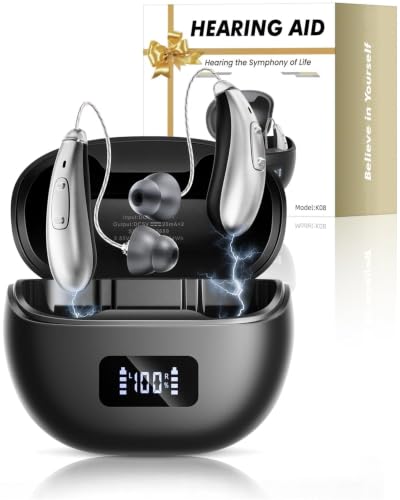
Most people buying their first pair over the counter want one thing: to put them in and hear the room without fiddling. This model leans hard into that. Its 16-channel chip (16 separate frequency slices) with intelligent noise canceling sorts human voices from background clatter, cutting out the echo that makes cheap amplifiers sound hollow. It also uses RIC placement — receiver-in-canal, meaning the speaker sits right at the entrance to your ear canal — so sound travels the shortest possible path to your eardrum and comes across more natural.
You get through a full day on one charge: a single charge runs 25 hours, and the case adds 3 to 4 full charges for up to 100 hours total. An LED display on the case shows the battery level at a glance, which matters if you’re the type to forget the charger on a trip. Controls stay minimal: a short press of “+” or “-” steps through 5 volume levels, and three beeps confirm you’ve hit the top or bottom. The memory holds your last setting, so powering on returns you exactly where you left off. It amplifies up to 40dB±5dB (decibels, a measure of loudness), and the fit runs on soft silicone tips in 1 small, 2 medium, and 1 large so you can chase a real seal.
The honest catch is fit-dependent performance — silicone domes only work if one of those four tips actually seals your canal, and a loose seal is where feedback creeps in. The listing’s own style descriptors are a muddle too, so judge it on the ear-tip selection and the specs, not the odd metadata. What buyers praise most is straightforward functionality: it does the job, and it does it for a fair outlay. Of the two counted traits in its reviews, functionality is the one that keeps coming up, alongside value for money.
Where it pulls ahead
- 16-channel processing with intelligent noise canceling separates speech from room noise
- Up to 100 hours total with the charging case, LED level display built in
- Volume memory returns to your last setting on power-up
- Amplifies up to 40dB±5dB with a natural receiver-in-canal sound path
What to weigh first
- Clarity depends on a good seal from one of the four included tips
- No Bluetooth streaming for calls or TV audio
- Listing metadata is inconsistent and shouldn’t be trusted over the specs
Reach for this if: you want one set-and-forget pair for family dinners, TV, and daily errands with a case that carries you through a week of charges.
Look elsewhere if: you need phone calls streamed straight to your ears — this one amplifies, it doesn’t pair.
2. OTC Hearing Aids Rechargeable Brown
The travel companion that dries your aids while it tops them up.
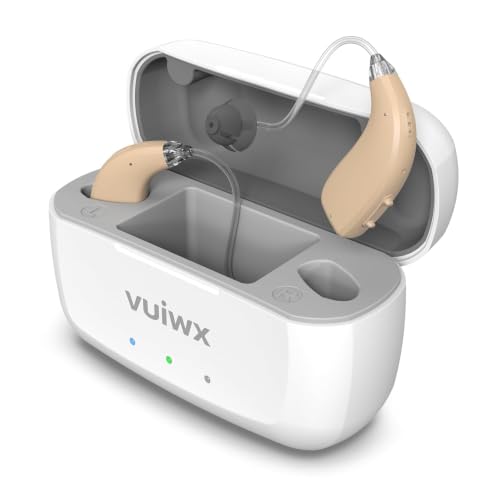
Here’s the number that reshapes your charging routine: up to 30 hours per charge and up to 150 hours total with the portable case. That is the longest total run time in this lineup — far and away beyond the 16 hours per charge of the LAMYOO pick below. If you’re away from a wall outlet for a weekend or a stretch of days, that buffer is what keeps the aids in your ears instead of back in a drawer.
The case does more than hold a charge. It also dries the aids, pulling moisture out from daily wear, which is a quiet but real advantage for anyone who lives somewhere humid or wears them through sweaty afternoons. Setup avoids your phone entirely: buttons on the aids cycle volume and switch between Normal, Party, Outdoor, and TV modes, with voice prompts confirming power and mode changes so you’re never guessing. The 16-channel digital processing adds noise reduction and feedback suppression to keep whistling down, and it’s a lightweight behind-the-ear shape with six pairs of ear tips in the box to find your fit.
What you give up is a big buyer cushion — this is a newer, less-reviewed model than the top pick, so you’re trusting a thinner track record. Nothing in the data says it underperforms; it simply hasn’t been through as many ears yet. The mode buttons are on the aids themselves, so if your fingers are arthritic, plan to practice the Party and TV switching a few times before it feels automatic.
Why the case wins: 150 hours total with the case plus a built-in dryer means fewer charging stops and a cleaner, drier device between uses.
Trade-off to know: A shorter review history than the established picks makes this a slightly bigger leap of faith.
Best suited to: frequent travelers, humid climates, and anyone buying for a parent who forgets to plug things in.
Think twice if: you want a long track record before you commit — the crowd-favorite pick has more history behind it.
3. LAMYOO Rechargeable Hearing Aids for Seniors
Slip them in and they fade from sight — and from your to-do list.
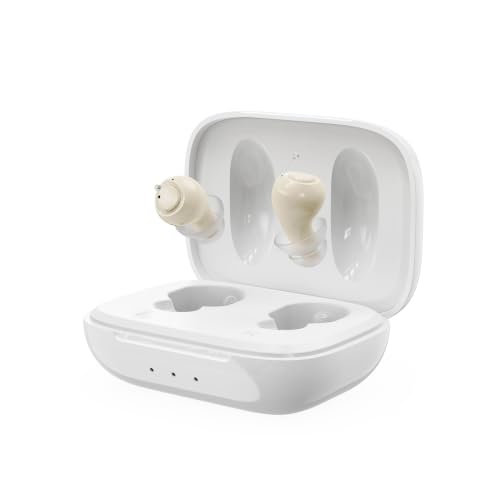
For anyone who has ever felt self-conscious about a device on their ear, this is the format to look at. The whole unit tucks inside the ear canal in an ultra-miniature casing, built from hypoallergenic medical-grade silicone, so there’s nothing perched outside to catch the eye. It’s the sort of aid you can wear to a meeting or a wedding without fielding questions about it.
The drop-in simplicity is the other quiet win. Insert them and they power on by themselves within seconds, then adjust to the sound around them without you touching a control. Under the hood, 16-channel digital signal processing lifts speech frequencies and filters background noise, with adaptive feedback suppression to keep the whistle out. A 2-hour charge gives up to 16 hours of continuous use, and the portable case holds over 110 hours of backup power with a clear display, so you’re set for close to a week of normal wear.
The trade-off is real and worth saying plainly: this listing carries the fewest verified opinions in the top group, so it’s the lightest on independent feedback. Buyers choosing it are betting on the specs and the form factor, not a long pile of reviews. There’s also a 2-year warranty against manufacturing defects to lean on, which helps soften that.
What it nails
- Ultra-miniature in-ear casing that sits essentially invisible
- Hypoallergenic medical-grade silicone construction
- Over 110 hours of backup power in the case
- Auto-on and auto-adjust — no manual switching
What to keep in mind
- 16 hours per charge is the shortest single-charge figure among the top three
- Very thin published feedback, so the specs carry more of the weight
Pick this for: people who want their hearing aid to disappear — at work, at events, in photos.
Skip the format if: you’d rather have easy-to-reach dials and the longest possible single charge — a behind-the-ear pick suits you better.
4. HearCare Bluetooth Hearing Aids
Turn the TV up for your ears only — without touching the volume dial.
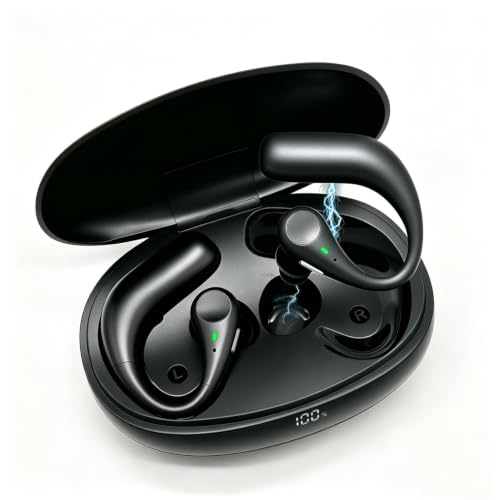
If the nightly argument in your house is over how loud the television goes, this is the pick to look at. It pairs over Bluetooth and auto-switches: it stays in hearing-aid mode by default, jumps to streaming for music, video, or calls, then returns to hearing mode when the audio ends. No menu-diving, no toggling. A built-in DSP smart chip (a processor tuned for speech clarity) drives the sound.
Getting the settings right happens with a double tap. Three scene modes — Indoor, Outdoor, and Noise Reduction — kick in with voice prompts to confirm each change, and each earbud weighs just 4.5 grams, so all-day wear doesn’t drag at your ears. Four ear-tip sizes are in the box for a discreet fit. Battery runs 12 to 15 hours of continuous assistance per charge, with the case adding 3 to 4 charges for roughly 45 hours, and a display on the case shows your power level.
The catch is the shortest single-charge time among the streaming-capable picks at 12 to 15 hours, so heavy talkers will be reaching for the case by evening. And like all Bluetooth aids, calls only sound their best when your phone is nearby. But for the specific job of hearing the TV and taking calls without asking anyone to speak up, it does exactly that.
What makes it useful: Bluetooth auto-switching between hearing-aid mode and streaming is the feature that sells this one. The TV or your phone comes straight to your ears without you changing a setting.
Trade-off: 12 to 15 hours per charge is on the lower end, so plan a case charge most days.
Made for: TV watchers and frequent call-takers who want audio piped straight in.
Not ideal for: the forgetful charger — the short per-charge window assumes you’ll top up the case regularly.
5. Oction Rechargeable Hearing Aids for Seniors, 16-Channel

One button, four volume steps, three modes — no phone, no menus.
The winning trait here is the control scheme. A short press steps through four volume levels, and a long press cycles three modes — indoor, standard, outdoor — so the entire device runs off a single button. For a first-time wearer or an older adult who does not want to learn an app, that is the whole appeal. The AI chip with AL Dynamic Noise Cancellation delivers up to 35 decibels of gain, and the voice-capture tuning is aimed squarely at face-to-face conversation.
It also handles power automatically. Lift them from the charging case and they switch on; set them back in and they switch off, so there’s no button to remember. A sound-memory feature carries your last setting forward, so every morning starts where you left off. The ergonomic in-ear shell is built to sit nearly invisible, and the medical-grade materials are chosen for all-day wear. Oction backs it with a promise of responsive after-sales support if anything goes wrong.
The honest limit is documentation: this model has the least published detail in this group, so you won’t find a long trail of user impressions to weigh. What it lacks in history it makes up in a genuinely simple daily routine.
Go for it when: the person wearing it wants zero app or menu involvement — one button, auto on/off, done.
Consider another pick if: you want a device with a thick published review history behind it before you decide.
6. Auiioes OTC Hearing Aids for Seniors with Hearing Loss
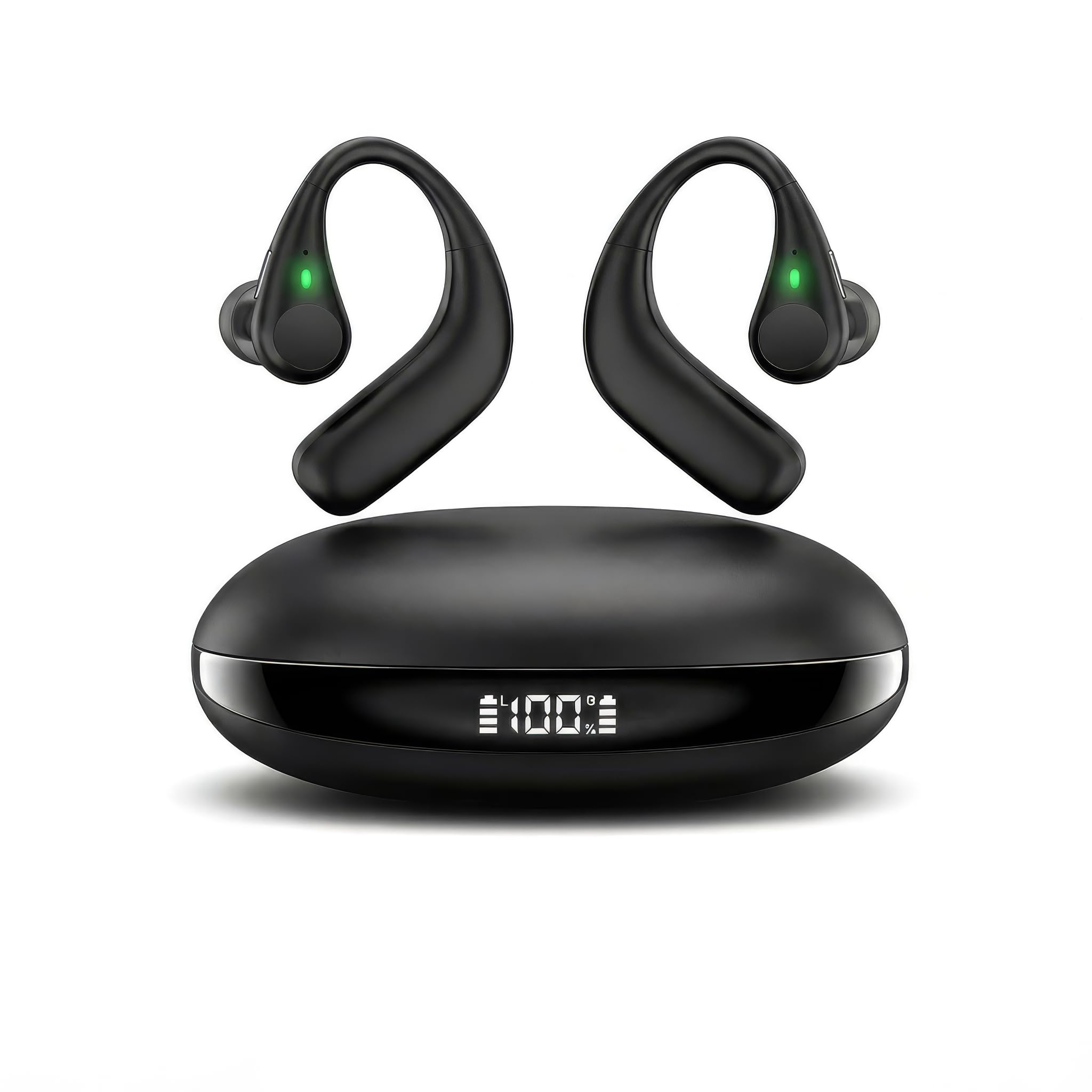
The Bluetooth pair with the longest track record in this lineup.
It is the most-reviewed Bluetooth-capable aid on this page, so plenty of buyers have already tested it in daily use. It runs Bluetooth 5.3 and gives you 8 volume levels to fine-tune, plus 3 modes to switch between for different listening situations. A built-in smart chip handles the speech clarity, and the in-ear design keeps things low-profile.
It streams to smartphones, tablets, and TVs, so calls and video audio come straight to your ears. The lithium polymer battery is rechargeable, and the pair comes set up for both ears in the box. For a buyer who wants wireless convenience without a premium outlay, this is the balance point of the lineup.
Here it pays to be clear-eyed: the listing itself is thin on published specs, so the 8-level volume and Bluetooth 5.3 are confirmed, but finer details like exact per-charge run time aren’t spelled out. That’s a reason to read the product page carefully rather than assume. What it does offer is a large, established user base and the widest volume control here, at 8 levels.
The value read: Bluetooth 5.3 streaming with 8 volume levels is the widest volume control in this group, paired with the biggest user base of any Bluetooth aid on the list.
The catch: Sparse published specs mean you’re trusting the track record and the core features over every fine detail.
Ideal for: value-focused buyers who want wireless audio and the comfort of a large, proven user base.
Look at the HearCare pick if: you want clearly documented per-charge run time spelled out alongside the Bluetooth.
7. QIPOPC Rechargeable Hearing Aids with 120 Hrs Battery
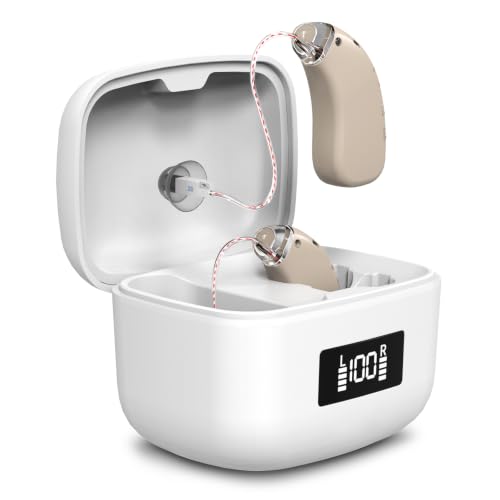
Built for the person who never wants to hunt for a charger.
120 hours of rechargeable battery is the headline, and it’s the kind of number that changes your behavior: you charge on your schedule, not the device’s. The compact magnetic charging case powers and stores the aid together, so it packs neatly for trips, walks, and long TV evenings. For a behind-the-ear pick, that run time is the standout.
The digital chip does the discrimination work that basic amplifiers don’t. Instead of simply raising all volume, it separates speech from surrounding background noise so voices lead during dinners, family talks, and group events. Multiple sizes of soft flexible silicone domes let you dial the seal, and the low-profile behind-the-ear shape stays put while you move. Operation is all buttons — power and volume without menus — so no phone setup is required to start listening. The box includes the aids, the magnetic case, a USB-C cable, spare domes, and a quick-start guide.
The honest trade-off is the behind-the-ear form factor itself. It’s easier to seat and adjust, but the small tube and dome need periodic cleaning, and it’s less invisible than an in-ear shell. If discretion is your top priority, a deep in-ear model suits you better. If reliability and a long gap between charges matter more, this one earns its place.
Why it stands out
- 120 hours of rechargeable battery with a magnetic charging case
- Digital chip separates speech from background noise
- Multiple silicone dome sizes for dialing in a secure seal
- Complete kit with USB-C cable and spare domes
What to plan around
- Behind-the-ear tubing and domes need routine cleaning
- Less discreet than a deep in-ear design
Great choice for: travelers and heavy daily users who want the longest possible stretch between charges in a behind-the-ear frame.
Pass it by if: invisibility is your priority — an in-ear shell hides more.
8. Karthus Hearing Aids for Seniors with Noise Reduction
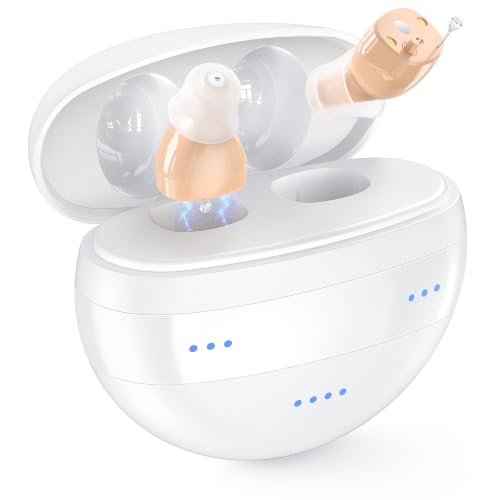
No app, no pairing, no fiddling — pull them out and they start.
Plenty of modern aids want your phone before they’ll work. This one deliberately doesn’t. There’s no app and no Bluetooth — remove the aids from the case and they power on automatically in about 5 seconds, and a single control cycles 6 volume levels. The 16-channel digital chip drives the noise reduction, and two listening modes let you switch strategy: Noise Reduction Mode for busier places, Quiet Mode for TV, reading, and calmer conversation.
Battery is generous for a no-frills aid: up to 24 hours per charge and up to 96 hours total with the Type-C charging case. That’s a full day of use per charge with a case that carries you through several more. The in-ear shape is lightweight for all-day wear, and the box includes both aids, the case, wax guard tools, domes, a cleaning brush, and a cable.
The trade-off is that this model has the same thinner review history as its no-app siblings — you’re buying on specs rather than volume of feedback. There’s also no wireless streaming, so it won’t pipe calls or TV directly into your ears. What you get instead is the simplest possible daily routine: lift, wear, listen, set back to charge.
Where it earns its keep: 24 hours per charge and up to 96 hours with the case, plus auto-on in about 5 seconds and 6 volume levels — all without a phone in sight.
What you give up: No Bluetooth streaming and a shorter published review history than the established picks.
Fits best with: older wearers who want to avoid smartphones and apps entirely and value a dependable daily charge.
Rule it out if: you need phone calls and TV audio streamed straight to the device.
9. Qnmittry Hearing Amplifiers for Seniors, 60-Hour Battery
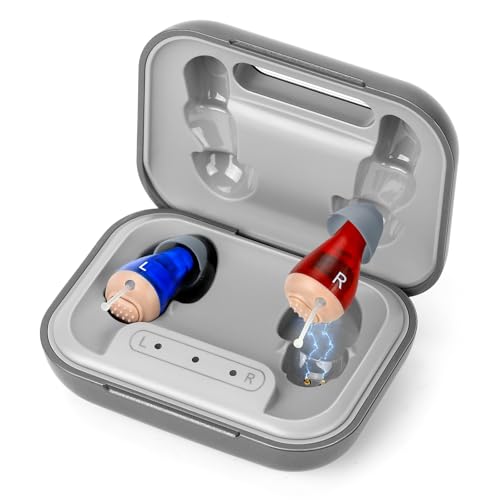
The one that disappears deep in your ear and still lasts the week.
Sound clarity is what wins people over with this one. A latest-generation digital chip with adaptive noise cancellation prioritizes speech frequencies and filters background noise, so conversation holds up even in a loud room. It has the strongest owner feedback in the lineup, with reviews consistently positive on sound, quality, and ease of use. That consistent approval earns it a top-tier spot despite the ultra-small in-ear form.
The engineering is genuinely miniature. These tuck deep inside the ear canal with ultra-miniature microelectronics and stay effectively invisible, while the ergonomic shape follows your canal and is built from medical-grade silicone at only 2 grams. Daily operation is dead simple: a single button cycles 5 volume levels, a long press powers on and off, and the storage case auto-senses insertion and removal to switch the aids on and off for you. Intelligent noise reduction adapts on its own, so there are no modes to remember.
Power holds up for real use: up to 60 hours on a single charge, and the portable case adds over 110 hours of backup — enough for work, travel, or everyday wear without a charger on your mind. The catch is the ultra-mini size itself: it’s more discreet but fussier to seat correctly and clean, and the tiny build means you should be comfortable handling small parts. Get the placement right, though, and this is the quietest, least noticeable way to hear the conversation.
Easy pick when: you want the most discreet tiny aid with the strongest owner feedback and longest single-charge battery in the group.
Reconsider if: small parts are a chore for your fingers — the deeper in-ear size is trickier to seat than a behind-the-ear tube.
Know the Specs
Channel count and digital processing
Channels are the number of frequency bands a chip can treat separately. A 16-channel device (several picks here use one) can lift speech frequencies while pulling down low rumble from a fan or fridge. Fewer channels tend to mean a blunter, “everything louder” result. More channels usually mean cleaner speech separation in busy rooms.
Feedback suppression
Feedback is the whistle you hear when sound leaks back into the mic — common with hats, hugs, or a loose seal. Suppression cancels it in real time. If you wear glasses or move around a lot, prioritize this above most other features.
Run time and case capacity
Single-charge run time tells you how far you get in a day; case capacity tells you how many days between wall charges. Some aids pair 25 hours per charge with a case that adds 3 to 4 full charges. Look at the total, not just the single-charge number, if you travel.
Fit style and ear tips
Behind-the-ear models are easier to seat and adjust but less invisible. In-ear models tuck deep and disappear, at the cost of fussier placement and cleaning. Either way, a good seal from the right ear tip is what prevents leakage and feedback.
Bluetooth vs. no-app simplicity
Bluetooth aids can stream calls, TV, and video straight to your ears. No-app models trade that for a button-only routine that starts the moment you lift them from the case. Pick based on whether wireless audio matters more than push-button ease.
Gain and volume levels
Gain is how much the device can amplify, stated in decibels (dB). A higher figure like 40dB±5dB means more headroom for mild to moderate loss. Volume-level count (5, 6, or 8 steps) determines how finely you can fine-tune the loudness once it’s on.
Common Questions
Do these over-the-counter hearing aids work without a prescription or audiologist?
What is the difference between an amplifier and a hearing aid in this lineup?
How many hours will a hearing aid last on one charge?
Can I wear in-ear hearing aids with glasses or a hat?
Do these hearing aids whistle or squeal, and how do I stop it?
Is Bluetooth on a hearing aid worth it for TV and phone calls?
How do I clean and store these to keep them working?
Will a 5-level or 8-level volume control matter to me?
Are these waterproof or water-resistant for humid weather or sweat?
Can I use one hearing aid or do I need both?
The Bottom Line
If you’re searching the price of hearing aids, the easiest all-rounder to live with day to day is the Hearing Aids for Seniors & Adults, 5-Level Volume. Its 16-channel processing, pitch of up to 40dB±5dB, and 100-hour case cover the basics without fuss. Want the longest possible stretch between charges and a case that dries your aids? Grab the VUIWX 150-Hour set. For streaming the TV and phone calls straight to your ears, reach for the HearCare Bluetooth pair. The field is crowded, but the top pick’s 4.5+ stars across 400+ ratings show it has already proven itself in real homes.
How we choose
We do not accept paid placement. Every pick is matched to a real buyer and a real use-case; we do not hands-on test units.
Sources
Specifications: manufacturer listings and product documentation. Review insights: verified customer reviews, as of November 2026. Pricing: not shown on this page (it changes often); check the current price via the retailer link.
As an Amazon Associate, Tactical Gear Guy earns from qualifying purchases. This does not affect which products we feature.