Specs are compiled from manufacturer listings and verified buyer reviews and can change over time — please confirm the key details on the product page before buying.
Buying a cordless drill is really a decision about a battery platform, not a single tool. Get that wrong and you end up with a drill that fights you on every shelf bracket and cabinet hinge. The nine picks below are the ones worth your money — ranked by real performance, honest motor specs, and how they behave in your hand on an actual Saturday project. The crowd favorite is the Ryobi P215K, sitting at 4.5+ stars across 800+ ratings, and it holds that top spot because it nails the basics without drama.
This guide is built by comparing the manufacturers’ published specifications and the patterns across verified customer reviews, so you get each pick’s real strengths and trade-offs instead of marketing spin.
What follows breaks down torque, chuck size, speed ranges, and battery systems in plain words, so you can match a drill to how you actually work. Every pick here earns its place as the best portable power drill for a specific kind of buyer.
Top Picks

How To Choose The Best Portable Power Drill
A drill is only as useful as the jobs you point it at. A tool that bores through oak decking is a waste if you mostly hang curtain rods. So before you look at voltage stickers, decide what the drill has to do — assemble flat-pack furniture, drive deck screws, drill pilot holes in drywall, or all three.
Torque tells you what it can actually drive
Torque is the twisting force the motor sends to the bit, measured in inch-pounds (in-lbs). Higher torque means the drill can sink a long screw into hardwood without bogging down. A compact driver might push a few hundred inch-pounds, while a more serious tool climbs toward the mid-400s or beyond. Read the torque figure before the voltage number — voltage is just the battery’s push, not how hard the drill works.
Chuck size sets your bit options
The chuck is the metal jaw that grips the bit. A 1/2-inch chuck (0.5 inches) takes the widest range of bits, including large hole saws and big auger bits. A 3/8-inch chuck covers most everyday screwdriver and small drill bits but tops out sooner on heavy work.
Brushless vs brushed motors
A brushless motor uses electronics instead of carbon brushes to spin the tool. In practice that means less heat, longer runtime per charge, and fewer parts to wear out. A brushed motor still works fine for light home jobs and usually costs less, but it runs hotter and drains the battery faster under load.
Battery capacity and the platform you’re joining
Battery capacity is listed in amp-hours (Ah) — think of it as the size of the fuel tank. A 2.0Ah pack holds more charge than a 1.5Ah pack, so it drills more holes before you swap. More important, each brand ties its batteries to a family of tools. Choose a platform you’ll want to grow into, because the bare tool you buy later often costs less once you already own the batteries and charger.
Side-by-Side Comparison
| Model | Best For | Max Torque | Max Speed | Chuck Size | Amazon |
|---|---|---|---|---|---|
| Ryobi P215K 18-Volt ONE+★ Best Overall | All-round home starter | 2-speed clutch, 24 positions | 0-1,750 RPM | 1/2 in. | Amazon |
| SKIL PWR CORE 20 BrushlessBudget Brushed Value | Brushless on a budget | 400 in-lbs | Variable speed | 1/2 in. | Amazon |
| CRAFTSMAN V20 CMCD702D1Top Pick for Home Jobs | Light home projects | 300 UWO | 1,700 RPM | 1/2 in. | Amazon |
| BLACK+DECKER BLD782D1 | Tight-space work | 486 in-lbs | 1,900 RPM | 1/2 in. | Amazon |
| HOTO 16V Cordless Drill Set | Beginners and furniture | 442 in-lbs | 1,700 RPM | 3/8 in. | Amazon |
| CRAFTSMAN V20 Brushless RP CMCD714D1 | Compact power for DIY | Brushless RP | 1,900 RPM | 1/2 in. | Amazon |
| Metabo HPT 18V MultiVolt DS18DEX | Highest torque in class | 620 in-lbs | 2,000 RPM | Keyless metal chuck | Amazon |
| DEWALT 20V MAX XR DCD801B | Pro-level power | 2-speed transmission | 2,000 RPM | 1/2 in. | Amazon |
| WORX SwitchDriver WX177L.2 | Fast bit switching | 445 in-lbs | 2-speed | Dual-chuck design | Amazon |
Detailed Reviews
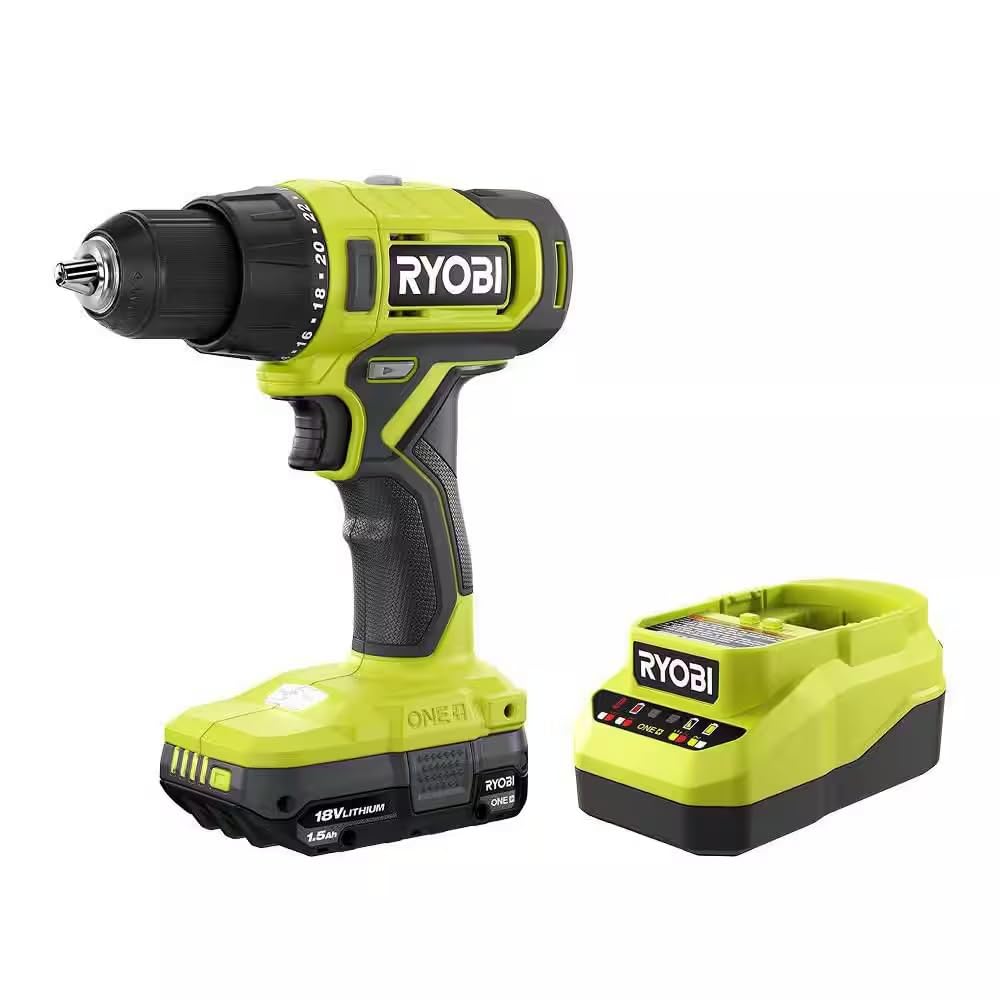
1. Ryobi P215K 18-Volt ONE+ Drill/Driver Kit
Our pick — 4.5+★ from 850+ verified ratings; the strongest balance of quality and price.
The dependable default for home jobs, with a 24-position clutch that keeps screw depth predictable.
This is the drill to buy if you want one tool that handles picture frames, furniture, and light deck repairs without a manual. The 24-position clutch is the part owners lean on hardest — it clicks through 24 torque settings so you can dial down the force and stop burying screws in soft pine. Quality wins people over more than anything else here, and it’s easy to see why: the 1/2-inch single-sleeve keyless chuck grips bits firmly and swaps them without a chuck key.
Speed is split into two ranges — 0 to 450 and 0 to 1,750 RPM — so you can start slow for a clean hole and open up on the high gear for fast driving. The included 1.5Ah lithium-ion battery slides into the whole RYOBI ONE+ lineup, which is the real long-game value: buy the bare tools later and reuse the same pack. It weighs 4.9 pounds, which is heavier than the HOTO set at 2.1 pounds, but that weight is why it feels steady in a long vertical screw.
The honest catch is battery life. Some owners get a full project out of the 1.5Ah pack, while others find it drains before the job is done and want a spare on the charger. If you have a big weekend list, budget for a second battery or step up in capacity. Otherwise, this is the least fussy drill here.
What Earns It First Place
- 24-position clutch cuts torque in fine steps, so screws stop exactly where you want them
- 1/2-inch keyless chuck takes the widest range of bits and hole saws
- Battery and charger fit the entire RYOBI ONE+ family for later tool buys
- Two speed ranges (0-450 / 0-1,750 RPM) suit both careful pilot holes and fast driving
Where It Gives Ground
- The 1.5Ah pack is small — heavy users may want a spare battery
- At 4.9 pounds it’s the heaviest pick here, so overhead work tires your arm sooner
Go for this if: you want a proven all-rounder and plan to build out one battery system over time.
Think twice if: you only ever tighten cabinet screws and want the lightest tool possible.
2. SKIL PWR CORE 20 Brushless Drill Driver Kit DL6280B-10
A brushless motor and 1-inch wood capacity at an entry-level price.
Here’s the number that should get your attention: this drill lists a 1-inch drilling capacity in wood, against the Ryobi P215K’s 0.5 inches. If you want to bore bigger holes for pipe runs or thick lumber, that’s a real gap, not a marketing one. The digital brushless motor pushes up to 400 inch-pounds of torque and runs cooler than a brushed tool, which means more work per charge and less heat building in your hand.
Bits swap fast through the 1/2-inch keyless chuck, and the 17-stage torque adjustment plus a dedicated drill mode gives you 17 settings to fine-tune screw depth. The LED worklight has a pre-light and afterglow, so it stays on a moment after you release the trigger — handy under a sink or inside a cabinet. A 2.0Ah battery and charger come in the box, along with a 2-inch double-end bit.
It’s worth being clear about the size. At 13.7 by 3.46 by 8.46 inches it’s a noticeably longer tool than the compact Ryobi at 6.98 inches long, so it won’t slip into the same tight gaps. Quality is what buyers talk up most, though a few find reliability hit-or-miss under heavy use. Treat it as a capable home and light-contractor tool rather than a daily production drill.
Long-body trade-off: the extra length buys you that 1-inch wood capacity, but it costs you reach into tight corners — a fair swap for framing and plumbing, a poor one for cabinet interiors.
Reach for it when: you want brushless efficiency and bigger hole capacity without moving up a tier.
Look elsewhere if: most of your work happens in cramped spaces where a short body matters more than hole size.
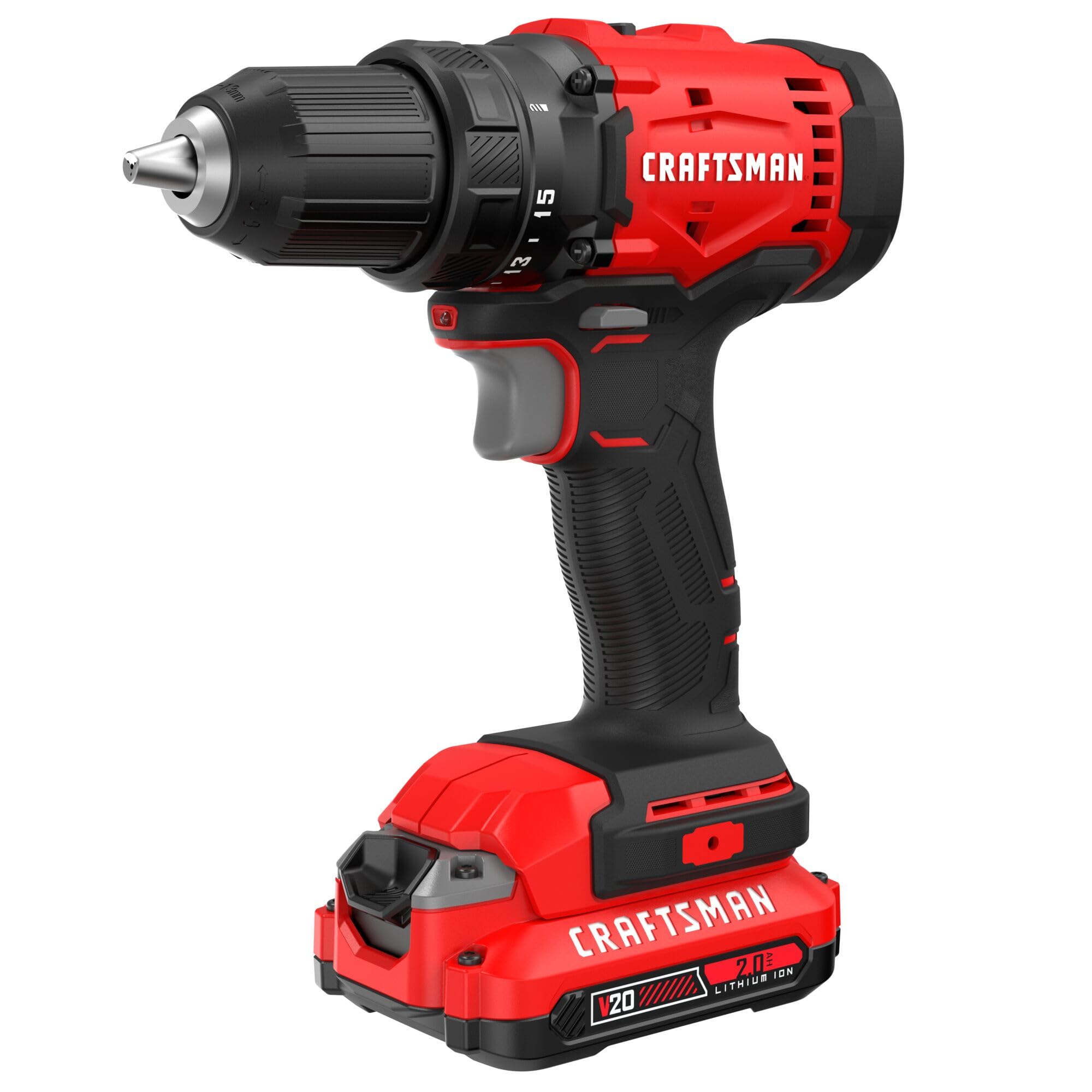
3. CRAFTSMAN V20 Cordless Drill CMCD702D1
A no-nonsense home drill with a 2.0Ah battery and a 1,700 RPM two-speed transmission.
The 2.0Ah battery is the headline here — a bigger fuel tank than the 1.5Ah pack in the Ryobi, and the kind of capacity that keeps a weekend list moving without a recharge. CRAFTSMAN rates it to drill up to 90 holes per charge with the brushed motor, and it delivers up to 300 UWO (unit watts out, a measure of usable power). A 2-speed transmission and variable trigger take it to 1,700 no-load RPM for driving screws quickly.
Quality is clearly the thing buyers praise most, and the pattern behind it is simple: this tool does the home jobs it’s asked to do and doesn’t complain. It’s maneuverable in tight spots thanks to a compact body, and the onboard LED lights the work area. The VERSATRACK compatibility is a nice extra if you already use CRAFTSMAN’s wall-organization system, since the tool clips into the same rails as your other gear.
The brushed motor is the honest limit. It won’t match the brushless picks on runtime or heat under sustained heavy load, and a few owners note the power falls short on the toughest jobs. For furniture, shelving, and drywall, that’s a non-issue. For repeated deck work, step up to a brushless model.
The value read: you get a 2.0Ah battery, charger, and a solid home drill in one box — the kind of complete kit that saves you buying the battery separately later.
Best matched to: homeowners who want a complete, ready-to-run drill for everyday repairs.
Pass it over if: you need brushless-level runtime for long, continuous drilling sessions.
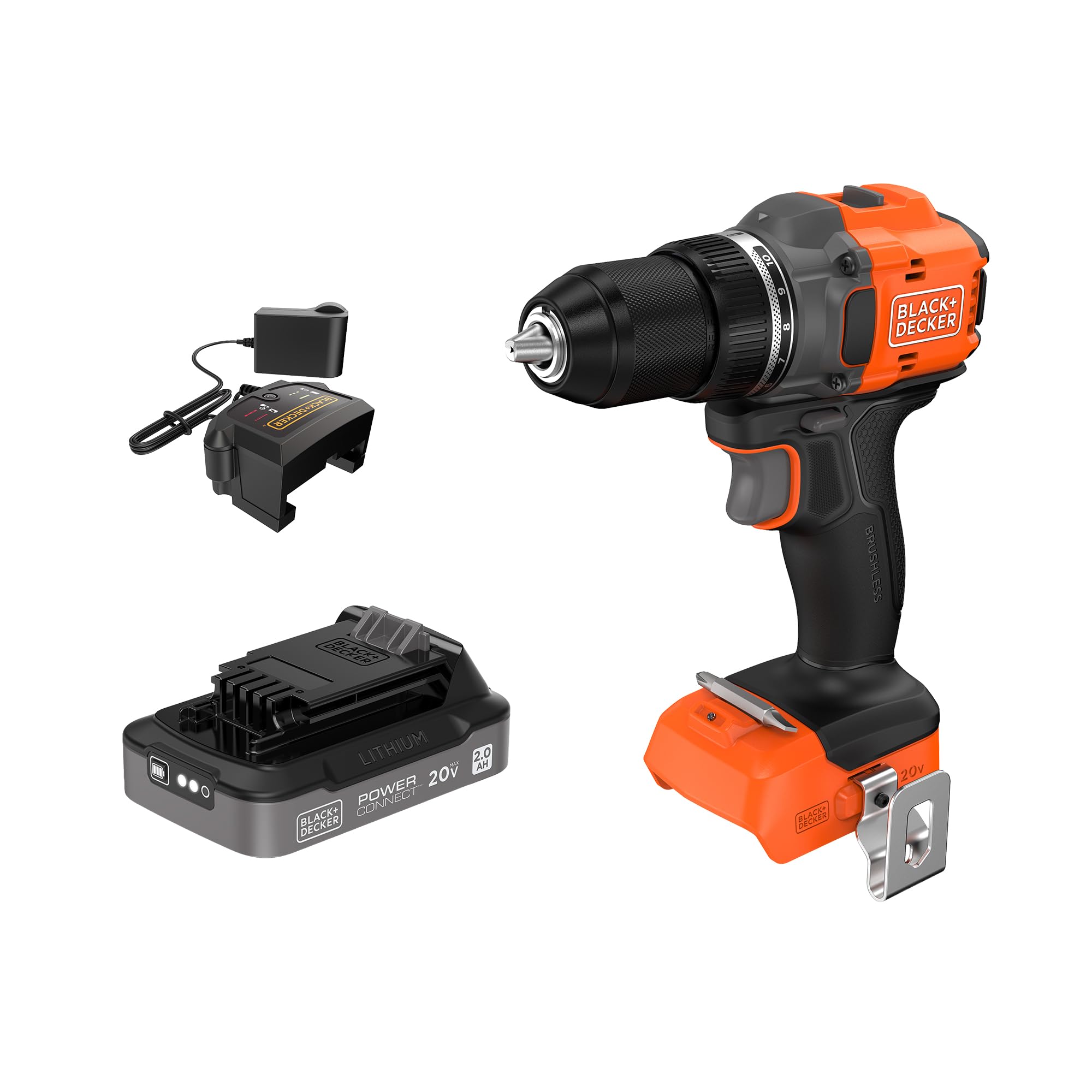
4. BLACK+DECKER 20V MAX POWERCONNECT Drill Driver BLD782D1
Built to squeeze into the gaps where a full-size drill simply won’t reach.
If your projects live inside cabinets and behind appliances, the short body is the feature that matters. BLACK+DECKER built this drill 9% shorter than other power drill drivers, and combined with the belt clip and magnetic bit holder, it’s a tool you keep close and reach for in tight spots. The brushless motor delivers 486 inch-pounds of max torque and drills up to 92 holes per charge — plenty for a weekend’s worth of shelf brackets and picture hanging.
The chuck is a 1/2-inch single-sleeve keyless metal design, so it takes the same wide bit range as the larger picks while staying compact. Two speed ranges — 0-450 and 0-1,900 no-load RPM — plus 10 clutch positions and a single drilling position give you control over both careful driving and fast drilling. The battery has a state-of-charge indicator so you can see how much is left before you start, and the LED lights your work area.
Where it gives way: the 2Ah battery is a smaller pack than the CRAFTSMAN’s 2.0Ah in capacity terms, and this is a lighter-duty tool overall — fine for home repairs, but not the pick for boring large holes in dense lumber all afternoon. For what it is, a compact brushless home drill, it earns its spot.
Why It Fits the Tight-Job Buyer
- 9% shorter body gets into cabinets and corners larger drills can’t reach
- 486 in-lbs of torque from a brushless motor, enough for most home driving
- Belt clip and magnetic bit holder keep bits and the tool on you
- State-of-charge indicator takes the guesswork out of battery levels
The Trade-offs
- The 2Ah battery is on the small side for long drilling sessions
- Lighter-duty build means it’s not the tool for sustained heavy boring
The pick for you if: tight spaces and a compact footprint top your list of must-haves.
Skip if: your work is big holes in dense wood all day — the small pack will slow you down.
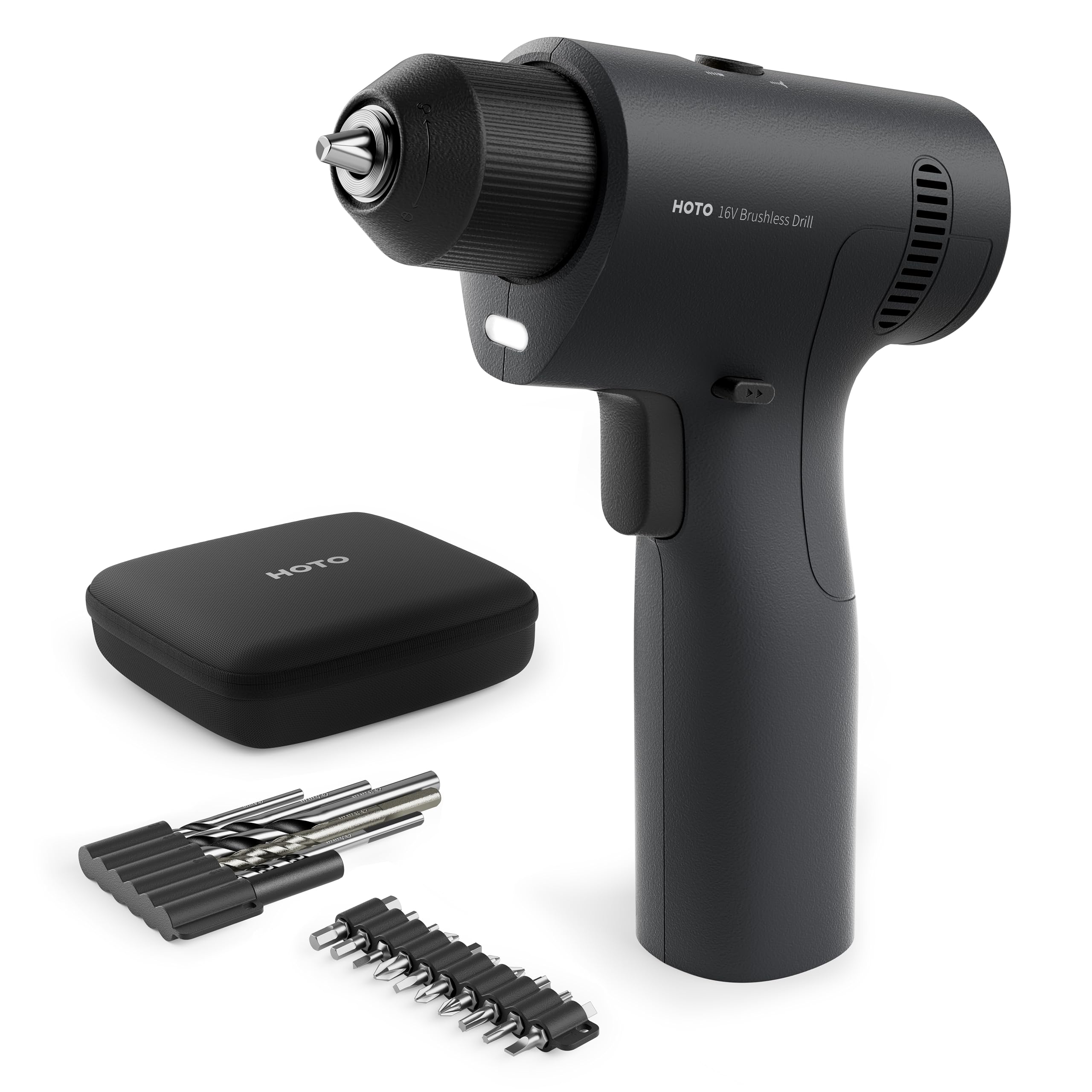
5. HOTO 16V Cordless Drill Set
The 2.1-pound drill that stops before you strip the screw head.
Weight is where this one wins: 2.1 pounds against the Ryobi’s 4.9 pounds makes it the easiest tool here to hold overhead or work with one-handed. The 16V brushless motor puts out 50 N·m (442 in-lbs) of torque, and an auto-stop feature senses when it’s overdriving a screw and backs off — a genuine help if you’ve ever chewed up a flat-pack fastener before it was tight. A clear LED display shows your torque setting, battery level, and mode in real time, so there’s no guessing at what the drill is doing.
The 3/8-inch keyless chuck is smaller than the 1/2-inch chucks on the Ryobi and BLACK+DECKER, which is a real limit if you want to run hole saws or large bits. But it’s the right size for the driver bits and small twist bits that handle most furniture assembly and picture-hanging work. You get 32 torque levels, dual speeds of 400/1700 RPM, and a full accessory set in the box: 10 screwdriver bits, 2 multi-purpose drill bits, 3 woodworking bits, a ceramic bit, and an extension rod, all in organized storage. The 1900mAh battery charges over USB-C, so you can top it up from a laptop or car charger.
The smartest part of the design is pairing the digital display with auto-stop, so you can see your torque setting and the drill backs off before it strips a screw. The screen and display feel is what owners notice first. For a beginner who wants to understand what torque settings mean in practice, this is the friendliest tool in the group.
Why it suits a beginner: the 32 torque levels plus auto-stop turn a task that usually ends with a stripped screw into a controlled process, and the display shows exactly what setting you’re on before you pull the trigger.
Ideal for: first-time drill owners and anyone who puts together a lot of flat-pack furniture.
Not the one if: you need to run hole saws or big bits — the 3/8-inch chuck caps out sooner than a 1/2-inch model.
6. CRAFTSMAN V20 BRUSHLESS RP Drill Driver CMCD714D1
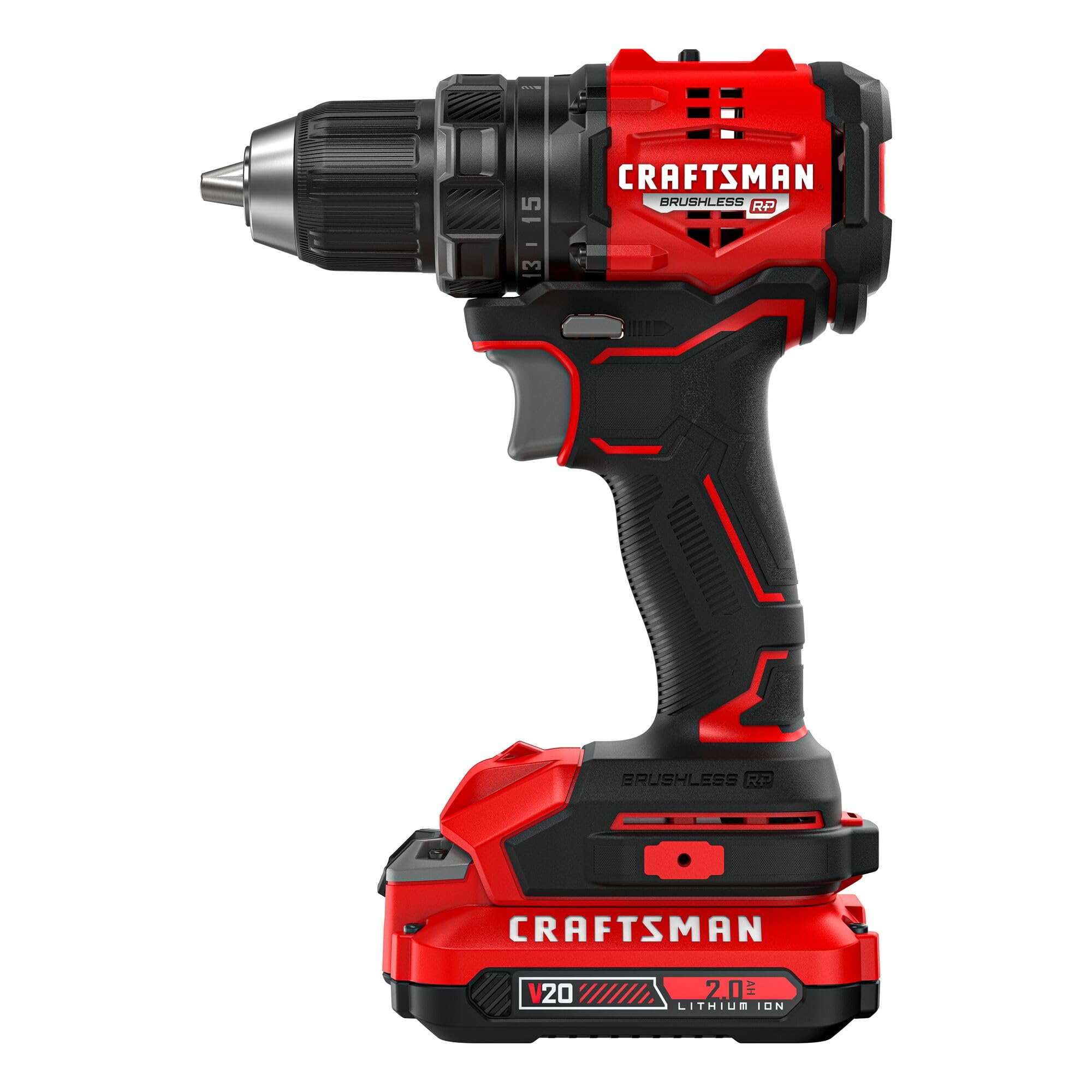
A short-headed brushless drill that fits where the longer bodies won’t.
Six point two inches of tool head is the measurement to fix in your mind — the 6.2-inch head is 25% shorter than a standard-length drill, so it slots between studs and behind fitted cabinets that stop a full-size tool. Its brushless motor delivers up to 40% more power than a baseline brushed drill, enough to bore through electrical rough-ins, and it drills up to 77 holes per charge so a wiring or framing session doesn’t die mid-job. The 2.0Ah battery and charger come in the kit.
Speed runs to 1,900 no-load RPM through a 2-speed transmission and variable trigger, giving you both a slow, controlled start and a quick drive. The head is a 1/2-inch chuck, matching the bigger picks on bit range. What owners talk about most is compactness and power together — the tool feels planted and doesn’t bog down, and it’s light enough to use overhead without fatigue.
On the other side of the ledger, this drill’s real competition inside CRAFTSMAN’s own lineup is the value-focused CMCD702D1, which costs less but comes with the same 2.0Ah battery and more or less the same home-job role. The brushless motor here earns its higher position with runtime and heat control. Choose it if compact reach and brushless efficiency both matter; choose the CMCD702D1 if you’re strictly budget-first.
The spec that decides it: a 6.2-inch head paired with a brushless motor is the combination you want if your work happens inside walls and cabinets rather than on open framing.
Pairs well with: anyone who works inside cabinets, stud bays, or cramped jobsites and wants brushless efficiency.
Second-guess it if: your projects are all open-air and budget is the only criterion.
7. Metabo HPT 18V MultiVolt Driver Drill Kit DS18DEX

The highest torque figure in the lineup, from a body that weighs only 2.6 pounds.
Six hundred and twenty inch-pounds is the number to know — it tops every other drill here, and combined with 2,000 RPM it’s built to drive long lag screws and bore large holes without stalling. The brushless motor adds runtime and durability with less maintenance, and the 18V MultiVolt platform means the included 2.0Ah batteries run on this tool or on Metabo HPT’s 18V and 18V/36V MultiVolt batteries, so one pack covers more than one tool.
For safety, the tool includes Reactive Force Control (RFC) — it senses when the bit binds or the tool overloads and shuts the rotation off, which is the kind of thing that prevents a wrist-catching kickback. The 6.1-inch body and 2.6-pound weight make it easy to maneuver overhead or in tight spaces, and the keyless metal chuck grips bits firmly. Two 18V 2.0Ah batteries and a charger come in the box, plus a carrying bag and belt hook.
The honest caveat is the chuck: a fair number of buyers report bits loosening during use, and the chuck quality overall gets mixed response. Reliability and power are what people praise, so the motor and electronics are sound — it’s worth checking the chuck holds your most-used bits snugly before you commit. If that’s solid, this drill offers real muscle in a small body.
Where the Torque Shows
- 620 in-lbs is the highest max torque in this lineup, for the toughest driving jobs
- RFC safety system stops rotation if the bit binds or overloads
- 2.6-pound, 6.1-inch body maneuvers in tight spaces despite the power
- Two 2.0Ah batteries and a charger included, with MultiVolt compatibility
The Chuck Question
- Chuck quality draws mixed reviews — some owners find bits loosen during use
- Speed-control range is described as touchy by some
The choice for: anyone who needs maximum torque from a small, light body.
Be cautious if: you rely on a perfectly secure bit grip job after job — test the chuck first.
8. DEWALT 20V MAX XR Drill/Driver DCD801B
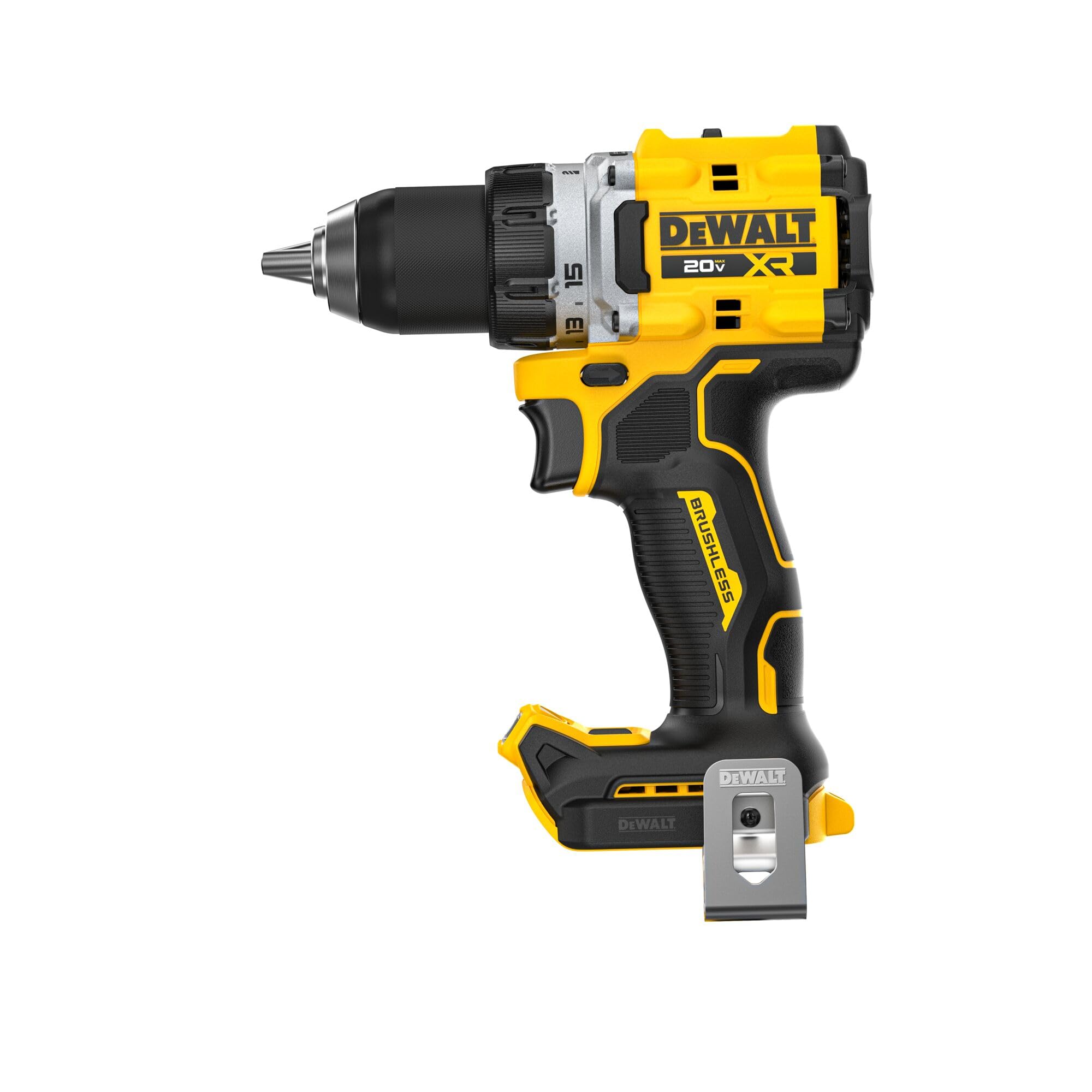
Jobsite-grade performance in a tool that only weighs ounces.
DEWALT rates this drill up to 109% more powerful than its baseline 20V MAX tools, and a 2-speed transmission — 0-650 and 0-2,000 no-load RPM — with a variable trigger gives you both careful control and fast drilling. That’s the kind of safety net that matters when a bit catches in a stud. A 3-position LED delivers 70 lumens and auto-shutoff, so you get light where you aim it without draining the battery.
The tool-only version is worth understanding before you buy. There’s no battery or charger in the box, because it’s designed for someone already invested in DEWALT’s 20V MAX platform — you use the packs you already own. If you’re starting fresh, factor in the batteries separately. For anyone already on the platform, this drill slides into an existing rotation at the top.
The 1/2-inch metal ratcheting chuck holds bits securely, and at 13.76 ounces the drill is remarkably light for a tool in this class. Owners keep coming back to the same points: performance, power, and value, with the 2-speed range covering equally well the slow start of a pilot hole and the fast drive of a deck screw. This is a professional’s everyday drill, and the spec sheet supports that read.
The honest note: no battery and no charger here — this is a tool-only buy, and the value only holds if you already own DEWALT 20V MAX packs.
The right call for: anyone already on the DEWALT 20V MAX platform who wants pro-level power without adding another battery.
Wrong call if: you’re starting from zero — you’ll need batteries and a charger on top.
9. WORX SwitchDriver 2-in-1 WX177L.2
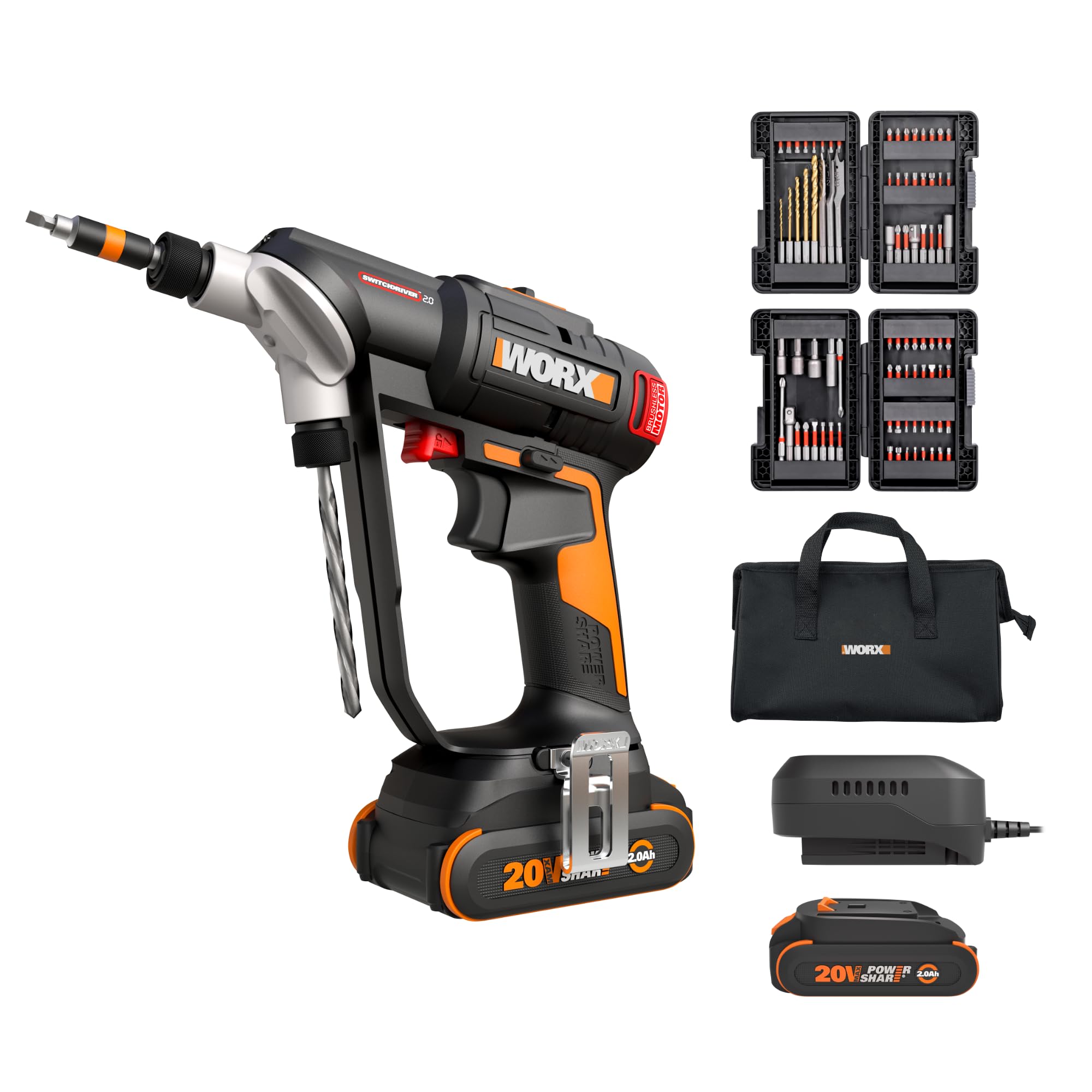
Two chucks that swap with a twist, so you stop hunting for the other bit.
The 2-in-1 rotating dual-chuck design is the reason to buy this one. You load a drill bit in one chuck and a driver bit in the other, then twist to switch between them — no stopping to pull the bit and hunt for the next one. Owners find that switching between flat and Phillips bits is the part they love, and it saves real time when you’re alternating pilot holes and driving screws across a long run of decking. The brushless motor delivers up to 445 in·lb of torque, and the PowerShare battery system lets the 20V pack also run WORX’s 40V and 80V tools by combining batteries.
An intelligent digital display lets you switch modes and adjust torque, and it remembers your torque setting in driver mode — set it once and the drill returns to that number next time. Two speeds and a variable trigger handle the pace. The included 2.0Ah battery and 2A charger keep it running, and the kit is genuinely complete: a 40-piece drilling and impact-driver bit set plus a 45-piece mixed screwdriver set, all in a carry bag.
The catch is the weight. At 3.83 kg (about 8.4 pounds) before bits, it’s the heaviest tool in this lineup — and that’s largely the 40- and 45-piece accessory kits and carry bag included. If you’re carrying the case back and forth to job sites, you’ll feel it. For a home workshop where the case lives on a shelf, the dual-chuck convenience and the comprehensive bit kit more than make up for it.
What earns the versatility label: the rotating dual-chuck layout is the standout — it turns the drill into a drill-and-driver in one body, and the 85-piece accessory kit means you rarely need to grab anything else.
The one for: anyone who alternates between pilot holes and driving screws and wants to skip the bit-swapping.
Think hard if: weight and portability matter most — the kit-heavy package is the heaviest here.
Know the Specs
Torque in Inch-Pounds and Newton-Meters
Torque is the twisting force the motor sends to the bit, and it’s usually listed in inch-pounds (in-lbs) — sometimes as N·m, which is the metric version. Higher torque means the drill can drive a long screw into hardwood or bore a bigger hole without stalling. Compare the drill’s torque figure directly against your hardest job; a compact home drill and a high-torque model can be several hundred in-lbs apart.
Chuck Size and Keyless Design
The chuck is the jaw that grips the bit, and its size sets the bit range. A 1/2-inch (0.5-inch) chuck takes the widest range, including hole saws and big augers. A 3/8-inch (0.38-inch) chuck covers everyday driver and small drill bits but tops out sooner. ‘Keyless’ means you tighten it by hand instead of with a chuck key, which saves time on every bit change.
Motor Type: Brushed vs Brushless
A brushed motor uses carbon brushes to spin the tool; a brushless motor uses electronics. Brushless runs cooler, lasts longer, and gets more work per charge. It usually costs more upfront. Brushed is fine for occasional home jobs and often comes in at a lower price.
Battery Capacity and Platform
Capacity is listed in amp-hours (Ah) — a 2.0Ah pack carries more charge than a 1.5Ah pack, so it drills more holes per charge. The bigger long-term decision is the platform: each brand’s batteries fit only that brand’s tools, so choose the family you want to grow into. A tool-only listing skips the battery and charger, so factor those in if you’re starting fresh.
Common Questions
Is a 20V drill better than an 18V one?
Can I use my existing batteries with a new drill?
What size chuck do I need for hole saws?
How long does a 2.0Ah battery last in a drill?
Do I need a brushless motor for home use?
What is the difference between UWO and in-lbs torque?
Can a cordless drill drive deck screws?
Is a tool-only drill worth buying?
How do I stop my drill from stripping screw heads?
What’s the lightest drill I can buy for overhead work?
The Bottom Line
If you just want one dependable drill for the house, grab the Ryobi P215K — a 24-position clutch, a 1/2-inch chuck, and the entire ONE+ battery family behind it make it the least fussy all-rounder. If you’d rather skip bit-swapping, the WORX SwitchDriver with its rotating dual chucks is the tool that saves you time on any job with a lot of screws. And for anyone chasing maximum torque in a light frame, the Metabo HPT DS18DEX at 620 in-lbs is the muscle pick.
How we choose
We do not accept paid placement. Every pick is matched to a real buyer and a real use-case; we do not hands-on test units.
Sources
Specifications: manufacturer listings and product documentation. Review insights: verified customer reviews, as of November 2026. Pricing: not shown on this page (it changes often); check the current price via the retailer link.
As an Amazon Associate, Tactical Gear Guy earns from qualifying purchases. This does not affect which products we feature.