Specs are compiled from manufacturer listings and verified buyer reviews and can change over time — please confirm the key details on the product page before buying.
You need a pole that reaches the dock line before the wind pushes you off it, and the biggest difference between a good boat pole and a bad one is how the lock behaves when your hands are wet. That single part — the collar or tab that holds each section out — decides whether you get a firm push against a piling or a pole that collapses mid-push. Below are nine real boat poles sorted by how well they handle that job, from a well-proven aluminum hook to long three-stage poles built for bigger boats.
This guide is built by comparing the manufacturers’ published specifications and the patterns across verified customer reviews, so you get each pick’s real strengths and trade-offs instead of marketing spin.
Some poles here float and some simply extend further, so the right pick depends on your boat size and whether you dock solo. Read on for the specs that actually matter when choosing the best Pole for Boat work on open water.
Top Picks



How To Choose The Best Pole for Boat
A boat pole is a simple tool with one hard job: hold its length while you lean weight onto it. A lock that holds under load is what makes the rest of the pole usable. A lock that slips turns every push into a fight with the pole instead of the dock.
The lock is the whole tool
Twist collars and tab locks both work, but they fail differently. A twist collar grips by friction, so it can be hard to untighten after a wet, salty session. A tab lock clicks into a fixed position instead. If you dock in cold weather or with wet gloves, a tab or a quarter-turn collar is easier to operate than a long screw-down twist.
Match the reach to your boat, not to the biggest number
A pole that extends to 12 feet is awkward on a small skiff and unnecessary on a boat you can step off. A 4 to 7 ft hook covers most casual docking and line retrieval. A 5 to 12 ft three-stage pole earns its place on a boat up to 40 ft where you need horizontal reach across the beam.
Weight in ounces decides how long you can hold it up
You hold a boat pole out at arm’s length, often one-handed. A pole that weighs 4 ounces is far easier to keep steady than one at 9.6 ounces or more. The trade-off is that lighter poles usually use thinner tubing, so check the load rating before you push hard against a piling.
Side-by-Side Comparison
| Model | Best For | Extended Length | Weight | Threaded End | Amazon |
|---|---|---|---|---|---|
| Attwood Telescoping Aluminum Boat Hook★ Best Overall | Everyday docking and line retrieval | Extends to 5.5 ft | 4 ounces | — | Amazon |
| SANLIKE Telescopic Boat HookBudget Float | Budget floating pole | 2.58 to 6.66 ft | 16.9 oz | — | Amazon |
| Seachoice Aluminum Telescoping Boat HookHull-Safe Pick | Scratch-resistant hull work | 4 to 7 ft | 9.6 ounces | — | Amazon |
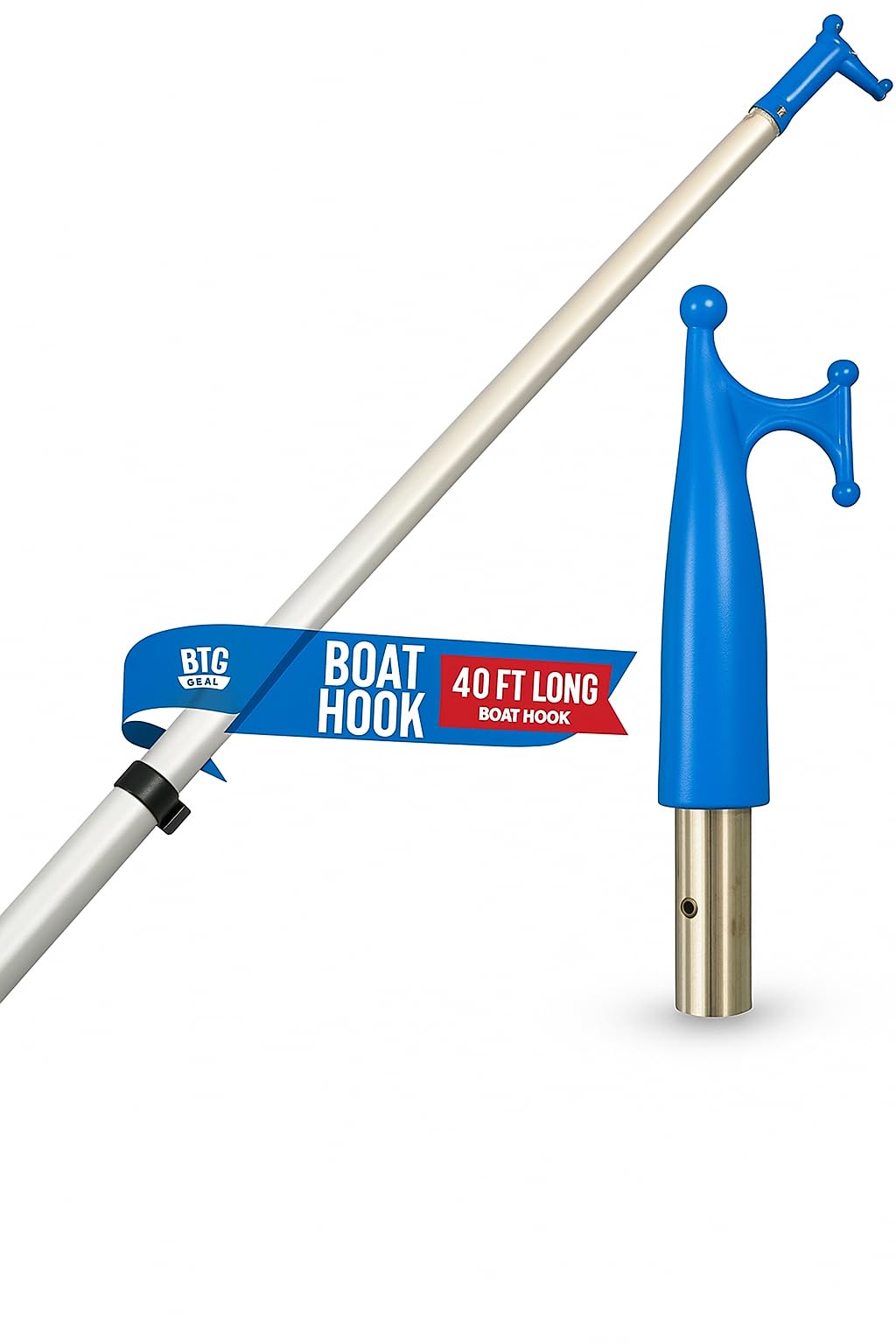
| BTG Gear Cap’n Hook Boat Pole | Boats up to 40 ft | 5 to 8.5 ft | — | Removable hook | Amazon |
| Better Boat Telescoping Boat Hook Pole | Multi-use with brush or mop | 3.5 to 6 ft | — | 3/4″ Acme | Amazon |
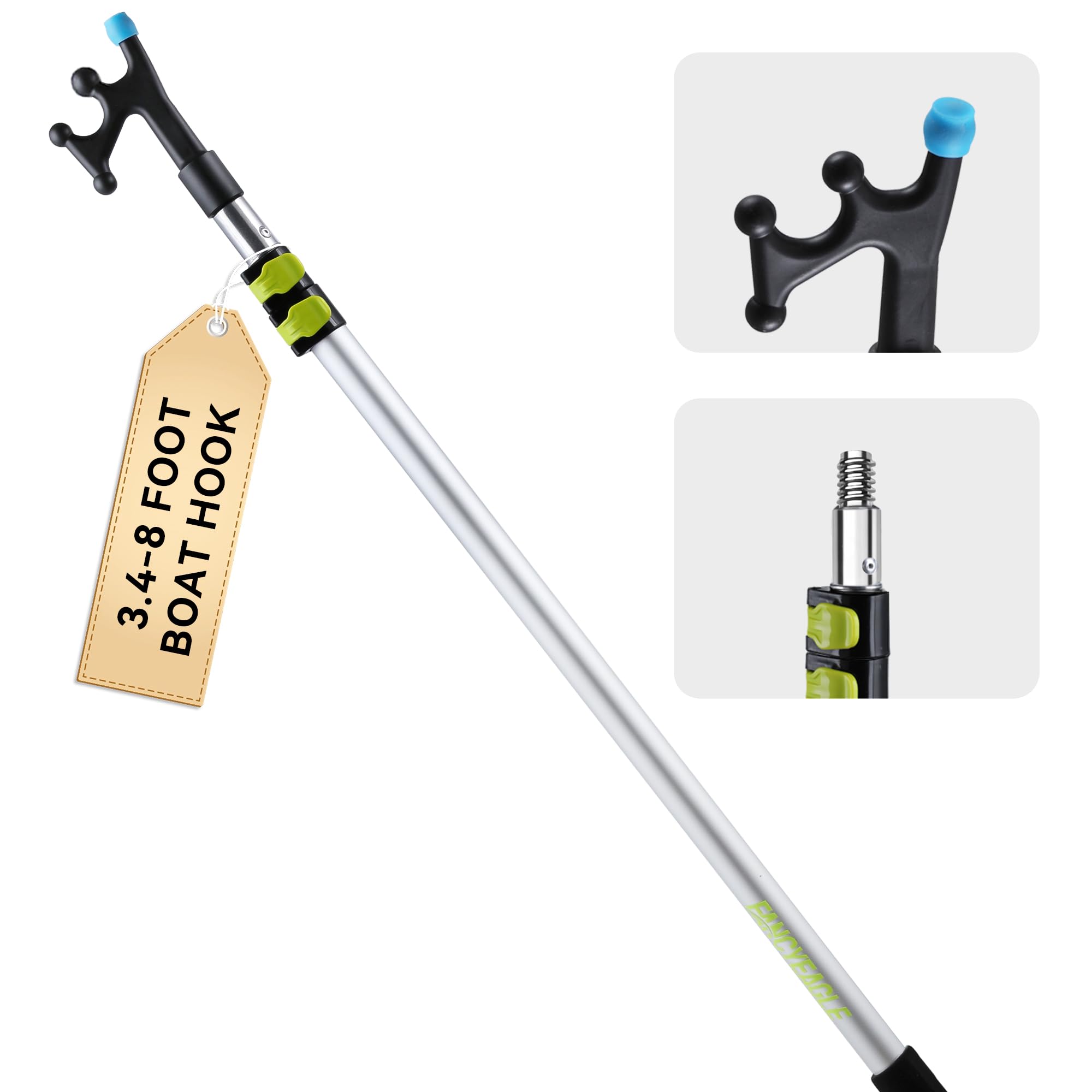
| FancyEagle Telescoping Aluminum Boat Hook | Long reach with rubber tip | 3.4 to 8 ft | — | 3/4″ | Amazon |
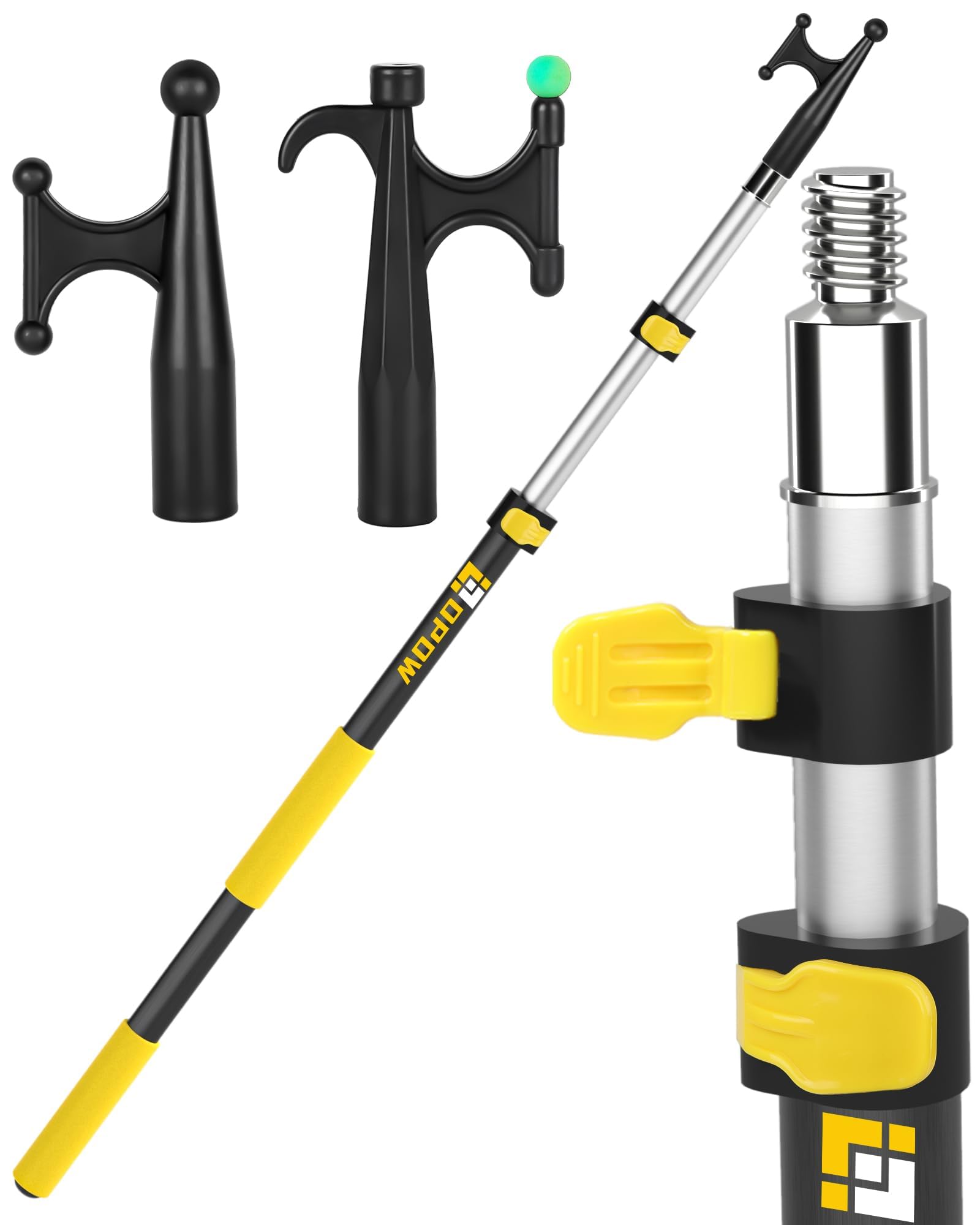
| Opow Heavy Duty Telescoping Boat Hook | Maximum reach from a compact pole | 5 to 12 ft | 2.5 pounds | 3/4″ ACME | Amazon |
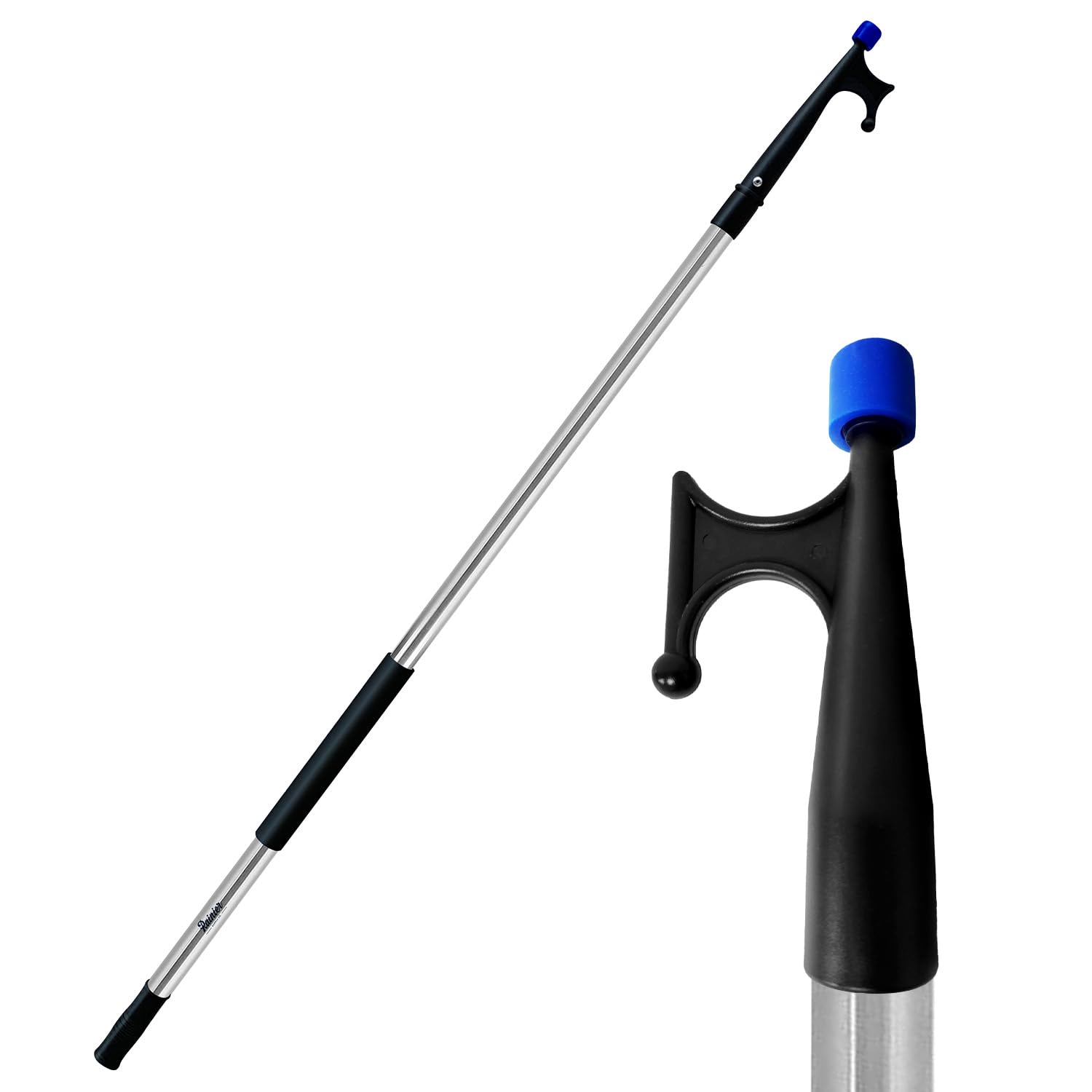
| RainierSupplyCo Telescoping Boat Hook | Two-handed docking leverage | 4.5 to 8 ft | Under 2 lbs | 3/4″ Acme | Amazon |
| TelesPro 3-Stage Telescopic Boat Hook | Very long reach, rarely fully extended | 5 to 12 ft | — | 3/4″ | Amazon |
Detailed Reviews
1. Attwood Telescoping Aluminum Boat Hook
Our pick — 4.5+★ from 700+ verified ratings; the strongest balance of quality and price.
The four-ounce pole that does the ordinary jobs without fuss.
Start with the weight: 4 ounces. That is light enough to hold out at full reach with one hand while your other hand holds the line, and it is why this pole is the one most casual boaters should reach for first. The aluminum tubing carries a marine finish, so repeated splashes off a dock or a saltwater wash at the ramp does not immediately turn it rough.
The head is the practical part. A non-marring polyethylene hook and tip (a soft plastic head that grabs a line without gouging your hull) lets you push off a piling or snag a dock line without leaving a scrape. Rubber vinyl grips cover the handle so your hand does not skate when everything is wet. Extending to 5.5 feet covers most line retrievals and pushes off a floating dock for a small to mid-size boat.
Setting the length is where the honest caveat lives. The molded ribbing on the adjustment collar gives your thumb something to grab even when wet, but a twisting collar is still a twisting collar — it can need a firm hand to lock out at full extension, and it can be stiff to loosen after a day on the water. That stiffness is the price of the 4-ounce build and the simple twist-collar design. If you want a tab that clicks instead of a collar that screws, look at the BTG Gear pick further down.
What earns it the top spot
- Just 4 ounces, so holding full reach one-handed is easy
- Non-marring polyethylene hook protects your hull during a push-off
- Rubber vinyl grips stay usable with wet hands
- Extends to 5.5 feet — enough for line retrieval on most small boats
Where it asks for care
- The twist collar can be stiff to loosen after a salty session
- 5.5 ft maximum reach falls short for a boat in the 40 ft range
Go here first if: you dock a small or mid-size boat and want a light, non-scratching hook you can grab and extend quickly.
Step up instead if: you need reach past 5.5 feet or a lock that clicks rather than twists.
2. SANLIKE Telescopic Boat Hook
A pole that stays afloat and glows when you dunk it in the dark.
Here is the feature that makes this one different: it floats even when extended, so a fumble over the rail does not send it to the bottom. Bright blue accents and a small luminous bead (a tiny glow marker) make it findable at night. Floating and glow marking matter more on the water than any spec sheet suggests — a pole you can fish back out is a pole you still own.
It telescopes in four sections from 2.58 ft to 6.66 ft and weighs 16.9 oz, roughly the heft of a 500ml water bottle. That is easy to carry from the truck to the slip and easy to store in a locker. The removable hook and non-slip soft handle are meant for grabbing lines and pulling a pontoon to a sea wall.
The honest part: this one is the budget pick, and its reviews are mixed on the two hardest-working parts. The locking mechanism and durability draw the most negative attention, with reports of sections not locking properly and units failing early. Functionality and weight are the bright spots — it works for its purpose, and it is light. A good pick for a secondary hook you keep aboard as a spare, or for someone docking a small craft in calm water who values the floating design. Not the pole to lean hard against in a stiff current.
The floating advantage: nothing else at this price point combines a buoyant body with night visibility, so dropping it overboard does not end the trip.
The honest catch: locking and durability are its weakest points, so treat the sections gently and test the lock at the dock before you trust it against a piling.
Reach for it if: you want a spare that floats and glows and you mostly dock in easy conditions.
Look elsewhere if: you need a pole you can push hard against a piling a few times a week.
3. Seachoice Aluminum Telescoping Boat Hook
Aircraft-grade aluminum and a nylon hook built to skip the scratches.
The shaft is the story here: 6063 aluminum with a triple anodized finish (a hardened coating that resists salt and wear). That is the same family of metal used where weight and corrosion resistance matter, and it is why this pole earns a spot above the budget tier. The hook is glass-reinforced nylon instead of bare metal, so a slip against your gelcoat during a push-off is far less likely to gouge.
It telescopes from 4 to 7 feet. Check that against the Attwood pick: at 9.6 ounces versus 4 ounces, this one runs noticeably heavier in the hand, but it reaches almost a foot and a half further. Where the Attwood is the easy one-hander for quick retrievals, the Seachoice is the pole you bring out when you need the extra length and a hook that will not scar the boat. The 1-3/8 inch handle diameter gives you something solid to grip, and the non-slip handle holds up when wet.
The one thing to watch is the clamp. It locks fine at most lengths for most buyers, and the adjustability is generally well-liked, but a few runs of the review pages note the grip can slip from the shaft or the locking ring can fail to hold if you over-tighten. Set the length, snug it, then test the hold with a light pull before you commit your body weight to it. Do that and this is a sturdy, hull-friendly pole that should give years of maintenance-free service.
My pick for gelcoat owners: the nylon hook and triple anodized shaft make it the gentlest option on a hull you care about.
The caveat to plan around: the collar can slip if you force it, so set and test before you push.
4. Marine-Grade Telescoping Boat Pole
Tab locks instead of twist collars, built for boats up to 40 feet.
If you have ever wrestled a wet twist collar at the wrong moment, the BTG Gear’s lock design is the reason to look here. It uses tab locks (small spring tabs that click into each position) rather than a screw-down twist. That is easier to operate with wet gloves and one hand, and it holds where you set it.
The strength numbers are worth noting. It supports up to 110 lbs when retracted and 40 lbs when fully extended, which is the kind of load rating that tells you how much push you can put against a piling at full stretch. Dual soft foam handles give you two grip points so both hands can share the work, reducing strain during a longer pull. And it floats, so a drop over the rail is a retrieval, not a loss.
It is a newer pole with a smaller review history than the top picks, so the long-term track record is shorter. What it lacks in a crowd of reviews it makes up for in the tab-lock design and the 40-foot boat rating — a sensible choice if your docking situation regularly needs a firm, extended push.
Why it stands out for bigger boats
- Tab locks operate better with wet hands than twist collars
- Rated for boats up to 40 ft
- 5 to 8.5 ft reach tops the shorter hooks on this list
- Dual soft foam handles cut strain on longer pulls
- Floats if dropped overboard
The realistic catch
- Fewer reviews than the top picks, so less of a long-term track record
- Load capacity drops to 40 lbs when fully extended
Built for: the owner of a larger boat who docks solo and wants a click-in lock that does not fight a wet hand.
Skip if: you want a long, proven review history behind every choice.
5. Telescoping Boat Hook Pole

One pole that pushes, hooks, and screws on a brush or mop.
The threaded end is the reason to buy this one. A standard 3/4″ Acme thread lets you unscrew the hook and screw on a deck brush, mop, or paint roller. That thread turns the docking hook into a deck-brush or mop handle without a second pole. The rubber bumper at the business end means it will not mar your boat when you use it to push off a mooring, and the thick reinforced plastic holds shape under normal use.
It extends from 3.5 ft to 6 ft with an adjustable lock. That is on the shorter side — the Seachoice hook and the BTG Gear both reach further — so match it to your boat. For a small craft, a pontoon at a calm dock, or a dock you can step off, 6 ft is plenty, and the shorter extension makes it easier to control with one hand. It floats too, with bright blue accents so you can find it after a dunk.
Durability draws mixed notes, so treat it as a tool for steady, gentle work rather than a battering ram against a piling in a chop. Its real strength is flexibility: the 3/4″ Acme thread lets the same pole you dock with sweep the deck. If a single handle that does several jobs is what you are after, this fits that need well.
The multi-job angle: the 3/4″ Acme thread turns it from a hook into a brush or mop handle, so you are not hauling two poles down the dock.
Set expectations: 6 ft is the ceiling here, so it suits smaller boats and calm-weather docking rather than a long reach across a 40-footer.
Best for the tidy owner: someone who wants one handle that docks and cleans, with a bumper that spares the gelcoat.
Think twice if: you regularly need to reach past 6 feet.
6. 3.4–8 FT Telescoping Aluminum Boat Hook
Eight feet of reach with a rubber tip that guards your hull.
Reach is where this one earns its keep. It extends from 3.4 ft to 8 ft in three stages, so you can reach a dock line or guide your bow without leaning over the rail — the kind of move that keeps you safely inside the boat. It stores down compactly for a locker or a truck bed.
The head is built to protect the boat. A rubber-covered tip and a tough ABS hook (ABS is a hard, impact-resistant plastic) push off pilings and grab lines without the metal-on-gelcoat scrape that bare hooks cause. The grip is designed to stay usable with wet hands, and the pole floats if it goes overboard, so a fumble is a quick scoop instead of a loss.
The lock is the part to know before you buy. It locks securely for many owners and just as many find it ineffective, so test the hold before you trust it in a strong current. Durability feedback splits the same way — most say it is strong, a few report the pole collapsing under pressure. It is a newer design with a shorter review trail. Buy it for the rubber tip and the long reach, and treat the lock with a firm hand.
Pick it for: the 3.4 to 8 ft reach and the rubber tip that spares a pontoon or kayak hull.
Test before trusting: the lock needs a solid hold confirmed before you push hard.
7. Heavy Duty Telescoping Boat Hook
Twelve feet of reach in a pole that weighs as little as some short hooks.
The headline is reach and weight together. A three-stage design stretches from 5 to 12 feet, with an 8-inch hook giving extra horizontal grab — the kind of layout that lets you keep both feet planted on deck while you reach well beyond the rail. Given that the Seachoice tops out at 7 ft and the BTG Gear at 8.5 ft, this is the pole for the owner who regularly needs the extra distance across a bigger boat. It weighs 2.5 pounds, light enough to hold out for a long docking without arm fatigue.
The build is aimed at saltwater. Anodized aluminum resists corrosion and galvanized locking mechanisms (zinc-coated parts that fight rust) keep the locks working near salt. It supports 100+ lbs when compacted and 30 lbs when fully extended — plan your hardest pushes for a shorter length. A 3/4″ ACME threaded end takes accessories, and the whole pole floats for up to 5 minutes, time that depends on the actual conditions.
The lock is the honest caveat. Some find it easy to operate and strong, while others report it freezing in place or failing to retract. Keep it rinsed and dry between trips, and it behaves; let salt sit in it, and it can seize. For the buyer who wants the most reach from a lightweight pole and will take care of the lock, this is a strong option.
What makes it the long-reach choice
- Three stages reach from 5 to 12 feet
- 8-inch hook adds horizontal grab at full stretch
- 2.5 pounds — light for the reach
- Anodized aluminum and galvanized locks resist saltwater
- Floats for up to 5 minutes if dropped
The part to watch
- The lock can freeze or resist retracting without rinsing
- Load capacity drops to 30 lbs when fully extended
For the long-reach skipper: the owner of a bigger boat who needs 12 ft of reach but still wants a light pole.
Keep it dry: rinse the locks after saltwater use or they can seize.
8. RainierSupplyCo Boat Hook
Two grip points and a quarter-turn lock for leverage in choppy water.
The two-handle layout is what separates this from the single-grip hooks. A second handle gives your off hand something to pull against, so you can brace and push with both arms instead of one. That matters most in choppy water or when the deck is slick. It extends from 4.5 to 8 ft with a quarter-turn locking mechanism — a short twist that sets the length — and it weighs under 2 lbs, so the extra control does not come with extra heft.
The build targets salt: marine-grade anodized aluminum body, a reinforced nylon tip that resists oil and saltwater, and a design that floats for easy retrieval. A removable tip with a universal 3/4″ Acme thread lets you swap in brushes or mops. Like the Better Boat pole, that 3/4″ Acme thread lets you swap the hook for a brush or mop once docking is done.
The honest limits sit in the small parts. The rubber grip can work loose with use, and the locking mechanism gets its share of complaints about being hard to operate and not holding position. Neither is universal — the body is well-made and sturdy for most owners — but if you buy this one, check the grip seating and the lock each trip. Buy it for the two-hand leverage and the marine-grade aluminum.
Where the leverage shows: two handles let both arms share the push, which is the difference in a stiff crosswind.
The bits to inspect: the rubber grip and the quarter-turn lock are the two wear points, so give them a look before you depend on them.
Right for two-handed dockers: anyone who wants extra lever control with both hands in moving water.
Check first if: you need the lock to be simple and forgettable — this one requires an eye on it.
9. 5-12FT 3-Stage Telescopic Aluminum Pole Boat Hook

A three-stage pole that reaches far and rarely needs to be fully out.
This one is about usable length without the awkwardness of a fully extended pole. It telescopes from 5 to 12 feet across three stages, and owners like that it reaches far while often not needing to be fully extended — a partial extension keeps it stiffer and easier to hold. The reinforced nylon hook and thick nylon body resist deformation, so the hook holds its shape when you are grabbing ropes and pulling a boat in. A standard 3/4″ thread opens it up to accessory heads.
The build gets top marks for sturdiness. The nylon construction is the durability story here: it resists the bends and dings that thin metal hooks can pick up, and it holds a secure grip on lines during a docking push. It doubles as a Christmas light pole hanger around the house, a job the maker names directly. For a five-to-twelve footer at this tier, it covers a lot of ground.
The main thing to weigh is bulk at full stretch. A 12 ft pole is long to store and awkward to hand around a small cockpit when fully out, so extend only as far as the job needs. The dock hook gets a few complaints, but most find it effective. Reach for this if you want three stages of nylon strength and the flexibility to extend partway.
A natural fit for: the boater who wants a long three-stage pole and the option to extend only partway for stiffness.
Think about storage: at full 12 ft extension it is a long tool to handle in a tight cockpit.
Know the Specs
Extension Length and Stage Count
Extended length is the reach you get at full stretch. More stages — two or three — mean more length but also more locks to set and check. A pole from 3.5 to 6 ft suits a small boat; a 5 to 12 ft three-stage pole suits a larger one where you reach across the beam. Match the maximum extension to your boat, not to the longest number on the page.
Weight in Ounces and Load Rating
Weight decides how long you can hold the pole out. A 4-ounce pole is easy to keep steady one-handed; a pole over 2 lbs tires your arm on a long docking. Load rating tells you how hard you can push at a given length — a pole rated near 110 lbs compacted may drop to 40 lbs or less fully extended, so plan your hardest pushes for a shorter length.
Lock Type: Twist Collar vs. Tab Lock
A twist collar sets length by friction and can need a firm hand to loosen after a wet session. A tab lock clicks into fixed positions and is easier to work with wet gloves. Neither is automatically better — the lock is the part that decides whether the pole holds its length under load, so test it at the dock before you trust it against a piling.
Floating Body and the 3/4″ Threaded End
A floating pole saves you a dive if it slips overboard; some also add bright accents or a glow marker for night recovery. A 3/4″ ACME threaded end lets you swap the hook for a brush, mop, or paint roller, turning a docking tool into a maintenance handle. Check both if you dock at night or want one pole that does several jobs.
Common Questions
Will a boat pole hook fit a standard deck brush or mop?
How far should the pole extend for a boat up to 40 feet?
Do boat poles float, and does it matter?
Why does a twist collar get hard to lock after wet use?
What does the load rating on a boat pole mean in practice?
Is a shorter 5.5 ft hook enough for docking a small boat?
Will a metal hook scratch my hull?
How do I keep the locking mechanism working in saltwater?
Can I use a boat pole to hang Christmas lights?
The Bottom Line
The safe pick for most boaters is the Attwood Telescoping Aluminum Boat Hook — at 4 ounces with a non-marring polyethylene hook and rubber vinyl grips, it is the light, non-scratching pole you can extend and use one-handed for everyday docking and line retrieval. If you want a longer reach with tab locks that work better in wet hands, the BTG Gear Cap’n Hook extends from 5 to 8.5 ft and is rated for boats up to 40 ft. And if you need the farthest stretch on the list, the Opow Heavy Duty Telescoping Boat Hook goes from 5 to 12 feet at 2.5 pounds, provided you keep its locks rinsed and dry.
How we choose
We do not accept paid placement. Every pick is matched to a real buyer and a real use-case; we do not hands-on test units.
Sources
Specifications: manufacturer listings and product documentation. Review insights: verified customer reviews, as of November 2026. Pricing: not shown on this page (it changes often); check the current price via the retailer link.
As an Amazon Associate, Tactical Gear Guy earns from qualifying purchases. This does not affect which products we feature.