Specs are compiled from manufacturer listings and verified buyer reviews and can change over time — please confirm the key details on the product page before buying.
Your Campbell Hausfeld compressor will not die quietly from old age. It dies from a clogged paper filter, a burned-out pressure switch, or a valve plate full of carbon — all cheap fixes if you match the part number instead of guessing at the hardware-store bin. This guide covers the nine replacements that actually bring these pumps back, plus the numbers you need to read off your own tank before you order anything.
This guide is built by comparing the manufacturers’ published specifications and the patterns across verified customer reviews, so you get each pick’s real strengths and trade-offs instead of marketing spin.
Most owners wait for the pump to quit before they look anything up, then discover the part numbers on their tag are long discontinued. Every pick below is a verified fit for Campbell Hausfeld gear, cross-referenced against the models each one replaces — a shortcut to the right parts for a campbell hausfeld air compressor the first time.
Top Picks


How to Choose Parts for a Campbell Hausfeld Air Compressor
Compressor repair is a matching game before it is a wrenching game. Campbell Hausfeld has shipped these pumps under dozens of model numbers, and the same physical part often carries three or four different numbers across its life. Your job is to find the number on your own unit and confirm the replacement lists it — not to buy the part that looks closest on the shelf.
Start with the part number, not the picture
Every compressor has a data tag on the tank, usually a silver or black sticker with the model number and serial. Write that number down before you open any tab. Then find the number stamped or printed on the failed part itself. A pressure switch has its own housing number, and a regulator has its own. When both numbers agree with a listing’s replacement list, you are done shopping.
Match the pressure range on switches
A pressure switch is the box that cuts power to the motor at a set pressure and returns it when the tank drains. The two numbers that matter are cut-in — where the motor restarts — and cut-out — where it stops. A 120/155 switch behaves very differently from a 100-135 one. Put a switch with the wrong cut-out on a tank rated for lower pressure and the relief valve becomes your new safety system, which is not a system you want.
Filters are sized in three dimensions
The paper element in a filter housing is not a universal cartridge. It has an inside diameter where it seats on the housing spud, an outside diameter that clears the can, and a height. A 3-inch inside diameter element will not fit a housing built for a 2-inch one, no matter what the listing title says. Measure yours with calipers or a good ruler before ordering a five-pack.
Threads are the third compatibility check
Air fittings use NPT — National Pipe Tapered — threads, which seal on the taper rather than a gasket. A 1/4-inch NPT port will not accept a 3/8-inch fitting, and the two look similar at a glance. If you are adding a shut-off valve or replacing a regulator, read the port size on the compressor and the fitting size on the part side by side. An adapter can bridge the gap, and some kits include one.
Side-by-Side Comparison
| Model | Best For | Part Type | Key Spec | Fitment | Amazon |
|---|---|---|---|---|---|
| 5 PACK Filter Replacement Element★ Best Overall | Routine filter changes | Paper filter element | 35 SCFM flow rate | STO739-03, STO739-03AU, P5050A | Amazon |
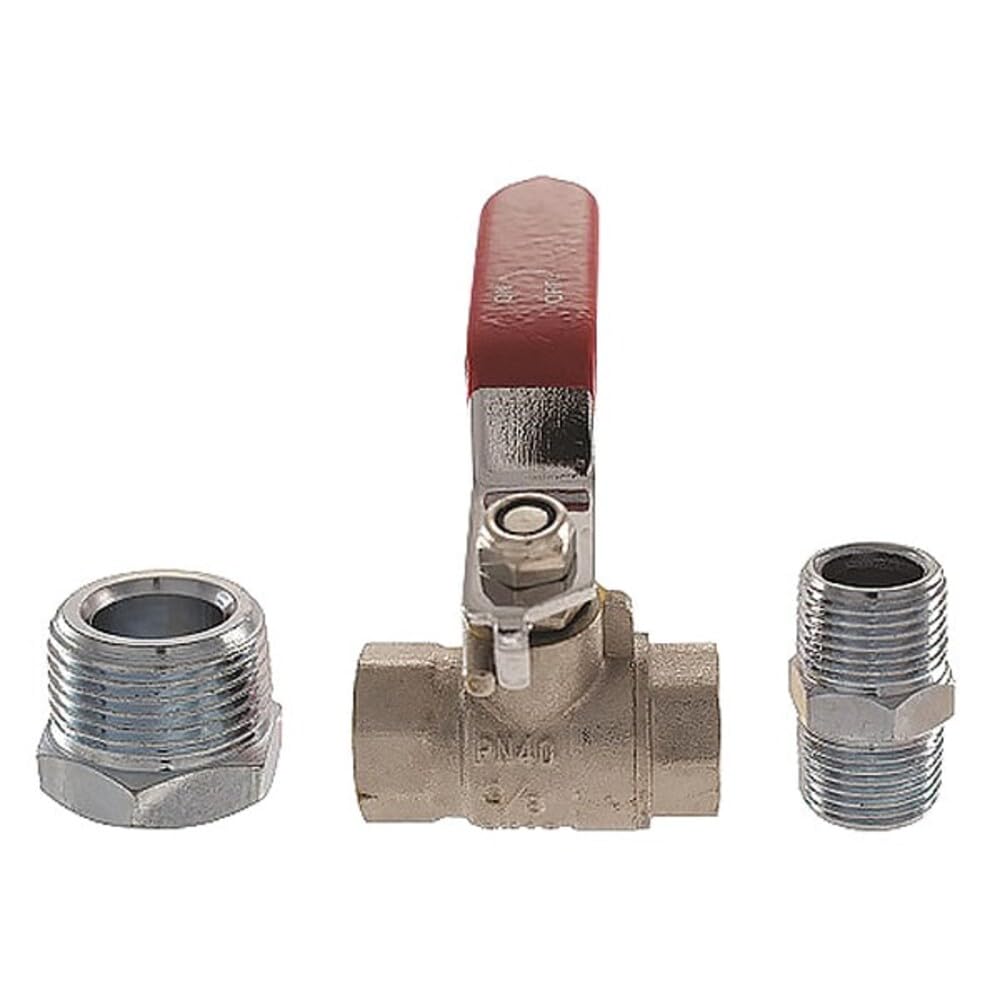
| PA117000AV Shut-Off Valve KitTank Service Kit | Isolating the tank for service | Ball valve kit | 0.38-inch inlet | 3/4-inch tank port to 3/8-inch piping | Amazon |
| ST1253 Compressor OilPump Protector | Oil changes and top-offs | 30-weight pump oil | 16 fluid ounces | Most industrial and home workshop compressors | Amazon |
| CW209300AV Pressure Switch | Standard-duty switch replacement | Pressure switch | 4 ounces | Replaces CW209300AJ | Amazon |
| RE300000AJ Regulator | Restoring outlet pressure control | Air regulator | 1/4-inch NPT threads | VS500102, VS500602, VS502500 and others | Amazon |
| CW209000AV Pressure Switch | Mid-pressure tank control | Pressure switch | 100-135 PSI settings | Iron Force 5 HP 20 Gallon | Amazon |
| CW218800AV Pressure Switch | Higher-pressure tanks | Pressure switch | 120/155 PSI settings | 4-port universal, 1/4-inch QC | Amazon |
| HL026100AV Valve Plate Kit | Rebuilding a tired pump head | Valve plate kit | 7 ounces | HL4000 valve plate | Amazon |
| HOK-VT-12CAH Head Rebuild Kit | Full top-end rebuild | Complete head kit | 8 ounces | VT series Campbell Hausfeld, Speedaire, Sears, Wards | Amazon |
Detailed Reviews
1. 5 PACK Filter Replacement Paper Element
Our pick — 4.5+★ from 350+ verified ratings; the strongest balance of quality and price.
Five fresh elements in one box — the cheapest way to keep a compressor breathing freely.
An intake filter is the least glamorous part on the whole machine and the one that kills pumps fastest when it clogs. This box of five paper elements measures 3 inches inside diameter, 4 3/8 inches outside diameter and 2 5/16 inches tall, which is the size that seats on the intake housing of a long list of Champ, Champion, Curtis and Ingersoll Rand machines. The flow rating is 35 SCFM, so it will not choke a compressor pushing serious volume.
The replacement list is the reason it takes the top spot. It covers Campbell Hausfeld STO739-03 and STO739-03AU directly, plus Champion P5050A, Curtis VA1118, Gardner Denver 2109945, Ingersoll Rand 32170979, Sullair 243196, and Soberg #14. That overlap matters — it means the same element serves several machines in a mixed shop, so a single box of five keeps more than one compressor fed.
Owners treat these as exact duplicates of the factory part, not approximations. The filter media is paper, so it traps dust the way the original did rather than passing grit through to the cylinder walls. Five elements at this price against a single dealer filter is the arithmetic that gets mentioned again and again, and it is the argument that convinced most buyers to switch. 300+ ratings average 4.5+ stars, with repeat buyers reordering the same box.
What works in its favor
- Fits STO739-03, STO739-03AU, Champion P5050A, Curtis VA1118 and more with one part
- 35 SCFM flow rating suits high-volume pumps without starving the intake
- Three exact dimensions — 3″ ID, 4 3/8″ OD, 2 5/16″ tall — let you verify fit before ordering
- Identical to the original in form and fit according to long-term owners
Where it asks something of you
- A five-pack is more filters than a light-use owner will ever burn through
- Paper media still needs a dry intake; oil carryover will clog it early
Buy it if: you run a Champ, Champion or Curtis pump and want a filter that fits first time and lasts several service intervals.
Think twice if: your intake housing uses a different diameter — the 3-inch inside dimension is fixed and will not adapt.
2. Campbell Hausfeld Compressor Shut-Off Valve Kit (PA117000AV)
A three-piece assembly that lets you cut air off at the tank instead of draining the whole system.
Here is the part that solves the most annoying job in a piped shop: working on the line without emptying the tank and waiting for it to refill. This kit threads into a 3/4-inch tank discharge port and steps down to 3/8-inch piping, which is the standard run size for a home garage loop. Inside the box sits a 3/4-inch steel adapter, a 3/8-inch pipe nipple and a 3/8-inch NPT ball valve — everything to build the shut-off in one order.
The plumbing numbers are worth reading twice. The inlet connection is 0.38 inches on a National Pipe Tapered thread, and the assembly measures 3.75 by 2.1 by 7.25 inches overall. Those 7.25 inches of length mean you need clearance below the tank port, so check the space before you plan the install. For comparison, the CW218800AV pressure switch above connects with a 0.25-inch quick disconnect — a smaller, different interface entirely, which is why you cannot swap one for the other.
Owners who install these report the parts resist corrosion well enough for a garage or workshop environment. The body components are PVC with steel and metal fittings, and the maker backs it with a one-year limited warranty. The honest caveat sits in the tightening: NPT threads seal on the taper, so over-torquing the adapter will crack the PVC before it seats. Snug, not cranked.
The value case: you get adapter, nipple and valve together, which saves a second trip and any thread-mismatch guesswork.
The clearance catch: 7.25 inches of overall length hangs below the tank port — dry-fit it before you commit.
The right buyer: anyone plumbing a permanent air line who wants a proper isolation valve at the tank.
The wrong buyer: a compressor with a port that is not 3/4-inch — confirm the discharge size first.
3. Campbell Hausfeld ST1253 Air Compressor Oil – 16 Oz.
Sixteen ounces of 30-weight pump oil — the fluid that decides how long the crank and bearings survive.
No compressor fails more quietly than one running on the wrong oil. This is a 30-weight formula blended specifically for air compressor pumps, in a 16-fluid-ounce plastic bottle that pours without needing a funnel and a steady hand. The maker lists it for both pump and motor duty across most industrial and home workshop compressors, so it covers the common cast-iron and aluminum pump heads.
The claims that matter are about what it keeps out. The formula is built to guard against rust, corrosion and sludge buildup — the three things that turn clean oil into a grinding paste inside a pump that sits idle in a damp garage. Viscosity is the other lever; 30 weight holds a film on moving parts through a long, hot run better than a thinner oil, which is exactly where a home compressor spends its life.
A 4.5+ star average on a modest review count points to steady approval rather than a landslide. What buyers seem to value is the no-drama part: it is the branded fluid for the branded machine, so there is no compatibility question to work through. The catch is simply volume — a 16-ounce bottle covers one change on most small pump crankcases, so plan to buy a couple for a full service or a top-off habit.
Why it earns the shelf space: it is the oil the pump was designed around, in a pour-friendly 16-ounce bottle.
The realistic limit: one bottle rarely covers more than a single crankcase change — order for the interval, not the bottle.
Reach for it when: you are doing a scheduled oil change or topping off a pump that has been sitting.
Skip it when: your compressor is oil-free — this is pump lubrication, not a universal additive.
4. Campbell-Hausfeld CW209300AV Pressure Switch

The switch that fixes a compressor that will not stop running — or will not start at all.
When a compressor hums to full pressure and then keeps humming, or sits dead with a full tank, the pressure switch is usually the culprit. This is the authentic Campbell Hausfeld replacement, four ounces of switches and contacts that bolts in place of the obsolete CW209300AJ. It is the standard-duty unit, not a high-cycle industrial switch, so it is aimed at the home and light-shop machine rather than a two-shift cabinet shop.
What wins people over is straightforward reliability once it is in. It comes preset to cut off at about 125 PSI, and buyers describe the stopping-and-starting cycle settling down right away — a compressor that had been short-cycling starts behaving like it did when new. Fit is well documented too, including the Husky 60-gallon tanks that share the same mounting pattern. Installation is a wiring job, not a machining job.
Now the honest part. A chunk of buyers report the contacts failing early — one unit burned through in a couple of days and left the compressor dead. That is the trade-off on a standard-duty switch: it handles the cycle count of a home garage fine, but it is not the part to fit if your pump runs hard every day. The second consideration is adjustability. The preset 125 PSI cut-off is fixed from the start, so a tank with a different rating needs a different switch, not an adjustment here.
The case for the swap
- Authentic Campbell Hausfeld part that drops in for obsolete CW209300AJ
- Preset cut-off around 125 PSI settles short-cycling right away
- Documented fit on Husky 60-gallon tanks sharing the mounting pattern
- Wiring install — no fabrication, no adapter plate
What to weigh first
- Standard-duty rating suits light-to-moderate cycles, not constant production work
- Cut-off pressure is preset, so a tank needing a different range needs a different switch
Made for: the home or light-shop compressor that has stopped kicking on or off and needs an exact replacement.
Look elsewhere if: your pump runs all day — step up to a heavier switch and save the contacts.
5. Campbell-Hausfeld RE300000AJ Regulator for Air Compressor

A metal regulator that puts outlet pressure back under your thumb instead of the tank’s whim.
A regulator is what stands between your spray gun or impact wrench and tank pressure it was never meant to see. This replacement fits a long roster of Campbell Hausfeld models — VS500102, VS500602, VS502500, VS502601, VS502701, VS503000, VS503100, WL611107, WL650103, WL650203 and WL650602 — plus Husky and Sears units using the same pattern. It replaces part RE206202AV and carries 1/4-inch NPT threads on a universal filter-style body.
Performance is the strong suit here. The 2.25 by 2.25 by 1.7-inch metal body mounts inline or in a modular setup, and the full flow gauge port means a gauge can read line pressure without an extra tee. Buyers replacing a regulator on an old Husky report it holding pressure without fail and restoring the machine to like-new operation, which is the outcome that matters when a compressor has been leaking down for months.
The word to watch is leakage. Most buyers get a clean seal, but a few end up chasing a drip at the threads — usually from a hurried install with no thread sealant or a connection that was not seated square. Treat the threads properly and this is a straightforward swap. The 4.0+ star average reflects a solid regulator whose score hinges on a careful, sealed install. At 5.6 ounces it is light enough that shipping damage is unlikely, but inspect the threads on arrival anyway.
Where it shines: dozens of listed model numbers, 1/4-inch NPT threads, and a full flow gauge port built in.
The one thing to get right: thread sealing — a careless install is where leaks come from.
Pick this if: your old regulator is venting, hunting, or seized, and the model list covers your machine.
Check first if: your compressor uses a port size outside 1/4-inch NPT — this body will not adapt.
6. Hausfeld CW209000AV Pressure Switch

A four-port switch with a 100-135 PSI window — the modern replacement for spring-style units.
If your tank tops out around 135 PSI, this is the switch built for that ceiling. The cut-in and cut-out window is 100-135 PSI, the manifold is a 1/4-inch NPT four-port type, and the unloader is an EV*WSi with a 90-degree 1/4-inch quick connect. The Condor part number on the label is 12PC2FABY, which is the cross-reference to have in hand when the old switch’s markings have worn off.
Owners replacing older spring-style switches say this design holds up better than what came off. The contacts are stainless steel and the actuator is a push button, so the mechanical wear points are simplified. It carries an Auto/Off function, meaning you can park the compressor in the off position between jobs without pulling the plug. For comparison, the CW209300AV above runs a preset 125 PSI cut-off, while this one lets the motor cycle across the full 100-135 band — a meaningful difference for a tank rated at 135 PSI maximum.
One warning belongs in bold, and it comes straight from people who have done the job: the wiring on this switch does not match the unit it replaces. Trace your old connections onto the new terminals before you disconnect anything, or photograph them. Get that sorted and the part behaves flawlessly. A 4.0+ star rating on a solid review base reflects a well-liked switch that trips up the occasional owner at the wiring step, not the pressure step.
Solid choice when: your tank is rated around 135 PSI and you want a modern four-port switch with an Auto/Off setting.
The honest snag: terminal layout differs from many originals — label the old wires before removing them.
Right tank, right part: fit it on a 100-135 PSI machine and it does the job quietly for years.
Wrong tank, wrong part: a 155 PSI system needs the CW218800AV instead — this one will cut out too early.
7. CW218800AV Campbell Hausfeld Pressure Switch 120/155

120/155 PSI4-Port Universal
The switch for a 155 PSI tank — and the one that brings a dead Husky back to life.
Two numbers define this part: cuts in at 120 PSI, cuts out at 155 PSI. If your tank is rated to a maximum of 155 PSI, this is the switch that uses the full range instead of stopping short. The manifold is a four-port universal layout, the inlet is a 1/4-inch quick disconnect for the check valve line, and the body is metal at 11.68 ounces. That 11.68 ounces is nearly three times the weight of the CW209300AV switch — heavier construction, noticeably more substantial in the hand.
The performance story is that it simply works as a direct replacement. Owners mention fitting it to Husky 60-gallon compressors and having the machine run as it should from the first cycle. Fit is precise enough that people describe it going on like it was made for the tank, which for a universal four-port design is the compliment that counts. When a repair quote felt like it might total the compressor, this part turned it into an afternoon job that brought the machine back.
What you give up is cost restraint — this sits at the higher end of the switch options here. What you get is the exact pressure window and the heavier build. Own a lower-pressure tank, and the cut-in at 120 PSI will feel late and the cut-out at 155 PSI too high, so match the switch to the tank plate. A 4.5+ star score on a healthy review base says buyers who match it to a 155 PSI tank are consistently satisfied.
Where the money goes
- 120 PSI cut-in and 155 PSI cut-out use the full range of a 155 PSI tank
- Four-port universal manifold covers most mounting layouts
- 1/4-inch quick disconnect on the check valve line speeds the install
- 11.68-ounce metal body — substantially heavier than the standard-duty switch
What to know before you buy
- Higher cost than the preset 125 PSI standard-duty switch
- Wrong tank rating wastes the window — confirm your tank’s maximum first
The match: a 155 PSI compressor that needs a four-port switch and full-range pressure control.
The mismatch: a 135 PSI tank — this switch cuts in and out above where your tank is happy.
8. HL026100AV Valve Plate Kit HL4000
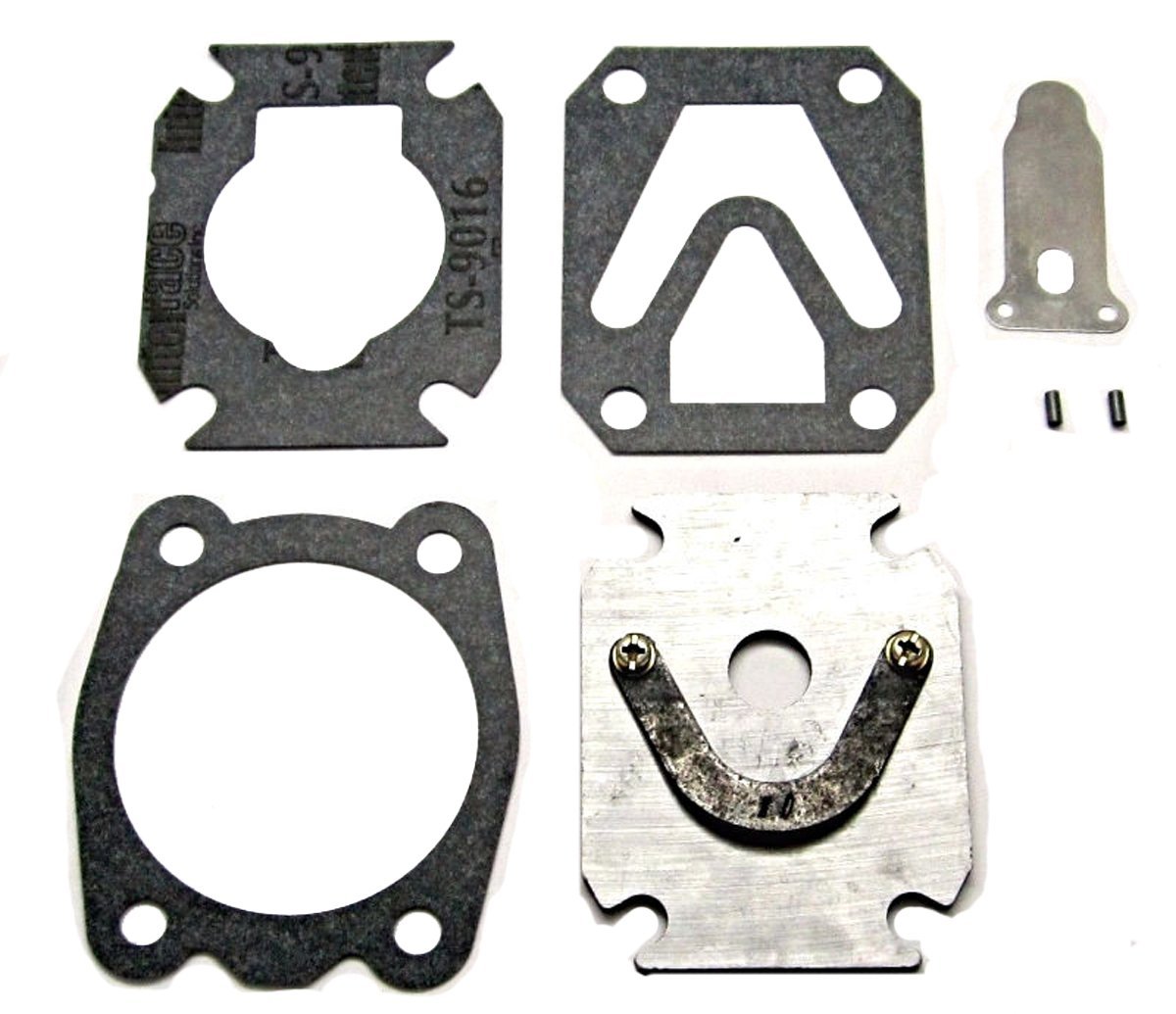
When the pump runs but builds no pressure, this thin stack of plates is the usual answer.
A valve plate kit is the heart of a reciprocating pump head — the reed valves that open on intake and close on compression. When they fatigue or carbon up, the compressor runs and sounds fine but the tank climbs slowly or not at all. This kit is the HL026100AV for the HL4000 head, weighing 7 ounces and packing in the plates plus gaskets needed to refresh the top end.
Buyers fit these as direct replacements and report the pump coming back to life — one mentions restoring the compressor to like-new condition after the swap. Quality of the individual parts is the repeated note, and one owner points out the kit even includes a new cylinder gasket for where the cylinder meets the block. For comparison, the full HOK-VT-12CAH rebuild kit below covers the whole VT series head, while this one is targeted at the HL4000.
The install is where patience pays. Owners who have done it stress two habits: clean the mating surfaces thoroughly, and torque the head bolts carefully and evenly to the recommended spec. Skip either and you will be back in the same head within a season. The kit’s small footprint — it ships in a package roughly 4.92 by 3.94 by 1.22 inches — means you will want a torque wrench and a clean workbench before you start, not a pair of pliers and a kitchen table.
What it restores: compression on a tired HL4000 head, with a cylinder gasket included in the kit.
The install tax: uneven head-bolt torque will undo the repair — this job calls for a torque wrench and clean surfaces.
For the do-it-yourselfer: someone with an HL4000 pump that runs but will not build pressure, and the tools to torque a head properly.
Not for the impatient: this is a bench job, and rushed torque specs are the reason re-repairs happen.
9. Head Rebuild Kit HOK-VT-12CAH
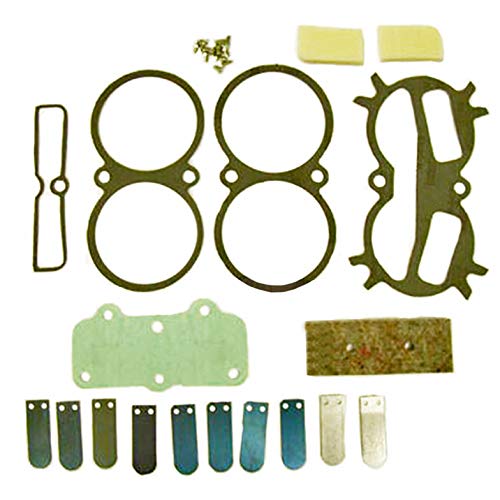
The whole top end in one box — valves, plates and gaskets for a VT series head rebuild.
A full head rebuild kit is the move when one part failed and took its neighbors with it. This one covers VT series heads on Campbell Hausfeld, Speedaire, Sears and Wards compressors, and the maker lists it as containing everything needed to rebuild those pumps. The kit weighs 8 ounces and is the metal-heavy box you want when the whole top end is coming apart rather than just the valve plate.
Where it earns its place is coverage. If you are already pulling the head, having the full set of valves and gaskets on the bench beats ordering the valve plate, discovering a torn gasket, and waiting a week for a second shipment. The metal construction matches what came off the pump. It is the choice for the owner who would rather do the job once, thoroughly, than chase individual parts as they fail.
The honest trade-off is scope. This one assumes you are going all the way through the head. It also asks for the same discipline as any head job: clean surfaces, even torque, and no shortcuts on the gaskets. A 4.5+ star rating on a smaller review base says owners who commit to the full head rebuild come away satisfied.
Why owners choose the full kit
- Covers VT series heads across Campbell Hausfeld, Speedaire, Sears and Wards
- Includes valves and gaskets so a second order is not needed mid-job
- Metal parts that match the originals in construction
Where it asks more of you
- More parts than a single-failure repair needs — overkill for a valve-plate-only job
- Whole-head work demands clean mating surfaces and even torque to hold
Choose it when: you are pulling the entire VT head and want every gasket and valve on hand before you start.
Leave it when: the failure is isolated to one valve plate — the HL4000 kit is the leaner path.
Understanding the Specifications
Pressure switch PSI window
The cut-in and cut-out numbers on a switch decide when the motor restarts and when it stops. A 100-135 PSI switch starts the pump back up around 100 PSI and shuts it off near 135 PSI; a 120/155 switch runs a wider band on a tank rated for it. Match the window to the maximum pressure on your tank plate — a switch that cuts out above the tank’s rating is asking the relief valve to do the safety work. The unloader fitting discharges the line between cycles so the motor does not start against pressure.
Filter flow rate and dimensions
Flow rate, listed here in SCFM (standard cubic feet per minute), tells you how much air the element can pass without restriction — 35 SCFM keeps up with a serious pump. The physical size matters just as much: inside diameter seats on the housing spud, outside diameter clears the can, and height decides whether it fits under the lid. A high-flow filter that is a millimeter too wide will not close. Check all three dimensions by measurement, not by photo.
Thread standards and port sizes
Air fittings use NPT — National Pipe Tapered — threads that seal on a taper rather than a gasket. The sizes listed here, 3/4-inch, 3/8-inch and 1/4-inch, refer to the nominal pipe size, not to the measured thread diameter, which is why they can look bigger than the number suggests. A 3/4-inch tank port accepts an adapter that steps down to 3/8-inch piping; a 1/4-inch regulator runs 1/4-inch NPT on both ends. Getting the size right is what prevents stripped threads and chasing leaks.
Valve plates and rebuild scope
A valve plate kit replaces the reed valves and gaskets that sit between the cylinder and the head. When they fail, the pump still runs and sounds normal but cannot build pressure. A complete head rebuild kit goes further, covering the whole top end with valves and gaskets together. The decision between the two is scope: a single failed plate needs the targeted kit, while a head already off the pump and showing general wear justifies the full rebuild.
Common Questions
How do I match a pressure switch to my Campbell Hausfeld compressor?
Why does my compressor run but not build pressure?
Will these parts fit a Husky air compressor?
How often should I change the air filter element on my compressor?
What is the difference between a valve plate kit and a head rebuild kit?
Do I need to drain the tank before replacing a pressure switch or valve?
What thread sizes do the parts in this list use?
Can the same five-pack of filters serve more than one compressor brand?
Is 30-weight oil the right choice for my compressor?
Why did my replacement pressure switch burn out in a few days?
The Bottom Line
The parts that save a Campbell Hausfeld compressor are the cheap ones — filters, switches and valve plates, not pumps. The 5-pack filter element is the first line of defense — a clean intake keeps grit out of the cylinder and stops the wear that leads to valve plate failures down the road. If it is the switch that has failed, the CW209300AV covers the common short-cycling repair on standard-duty tanks, and the CW218800AV handles the 155 PSPSI tanks. If you are going into the head, the HOK-VT-12CAH rebuild kit puts every gasket and valve on your bench before you start, and that is the difference between a one-afternoon job and a week of waiting on parts. Whichever failure brought you here, order the part that matches the number on your own tank tag — every pick here is cross-referenced to the models it replaces.
How we choose
We do not accept paid placement. Every pick is matched to a real buyer and a real use-case; we do not hands-on test units.
Sources
Specifications: manufacturer listings and product documentation. Review insights: verified customer reviews, as of November 2026. Pricing: not shown on this page (it changes often); check the current price via the retailer link.
As an Amazon Associate, Tactical Gear Guy earns from qualifying purchases. This does not affect which products we feature.