Specs are compiled from manufacturer listings and verified buyer reviews and can change over time — please confirm the key details on the product page before buying.
If your phone only has a USB-C port and you want full-size headphones that plug straight in, the short answer is to start with the Beats Studio Pro. It handles USB-C lossless audio, adds active noise cancelling, and gives you 40 hours of battery for the longer trips. The other seven picks here cover everything from a basic wired studio monitor to a wood-cupped audiophile build, so you can match the headphone to how you actually listen.
This guide is built by comparing the manufacturers’ published specifications and the patterns across verified customer reviews, so you get each pick’s real strengths and trade-offs instead of marketing spin.
Some picks are wired-only and rely on a USB-C cable for sound, while others are wireless cans that also accept a USB-C audio feed. Decide which side of that split you need before you compare models, because it rules out half the list.
Top Picks

How To Choose The Best Over-Ear USB-C Headphones
Your first decision is cable or wireless, not brand. A wired USB-C headphone carries both power and audio over one cable, so you never charge a battery or redo a Bluetooth pairing. A wireless headphone with a USB-C port lets you plug in for a lossless feed (full-quality audio with no wireless compression) when you want it, but you still carry a battery.
Wired USB-C or wireless with a USB-C option
Wired-only sets suit desk work, studio mixing, and long calls where you never want to think about charge level. They also sidestep Bluetooth dropouts entirely. Wireless sets with USB-C audio suit travel and commuting, because you can go cable-free on the move and then plug in for lossless listening at your desk.
Driver size and what it changes
The driver is the speaker inside each cup, measured across in millimeters. A larger driver, such as the 50 mm unit in the ENCASED V200 Pro, tends to move more air and can push stronger bass. A smaller driver, like the 40 mm units in the Beats Studio Pro and the Bowers & Wilkins Px8 S2, can still deliver a balanced, detailed sound when the tuning and amplification are good.
Comfort for long sessions
Over-ear headphones sit around the ear rather than on it, so the earpad material and the headband adjustment decide whether a four-hour session ends in relief or a headache. Look for padded cushions and a headband that adjusts across many points. A self-adjusting headband, as on the MEZE 99 Classics, spreads pressure without you fiddling with sliders.
Noise cancelling, transparency, and where they work
Active noise cancelling uses microphones to sample the room and generate a cancelling signal, and transparency mode pipes the outside world back in. These features are almost always a wireless-headphone addition. A wired-only studio monitor instead relies on passive isolation, meaning the physical seal of the earcups blocks sound.
Side-by-Side Comparison
| Model | Best For | Connection | Battery | Driver | Amazon |
|---|---|---|---|---|---|
| Beats Studio Pro★ Best Overall | Everyday all-rounder | USB-C + Bluetooth + 3.5 mm | 40 hours | 40 mm | Amazon |
| ENCASED V200 ProBudget Champion | Budget wired studio work | USB-C + 6.5 mm aux | — | 50 mm | Amazon |
| Sennheiser HD 400UBest for Travel | Simple wired calls | USB-C | — | — | Amazon |
| Nothing Headphone (1) Pro | Long-haul battery | USB-C + Bluetooth | 68 hours | 40 mm | Amazon |
| MEZE 99 Classics Gen 2 | Wood-cup build quality | USB-C adapter + 3.5 mm | — | — | Amazon |
| Sennheiser HDB 630 | Parametric EQ tinkering | USB-C + Bluetooth | 60 hours | 42 mm | Amazon |
| Focal Bathys | Leather-clad listening | USB-C + Bluetooth + 3.5 mm | 30+ hours | — | Amazon |
| Bowers & Wilkins Px8 S2 | Audiophile wireless | USB-C + Bluetooth + 3.5 mm | 30 hours | 40 mm | Amazon |
Detailed Reviews
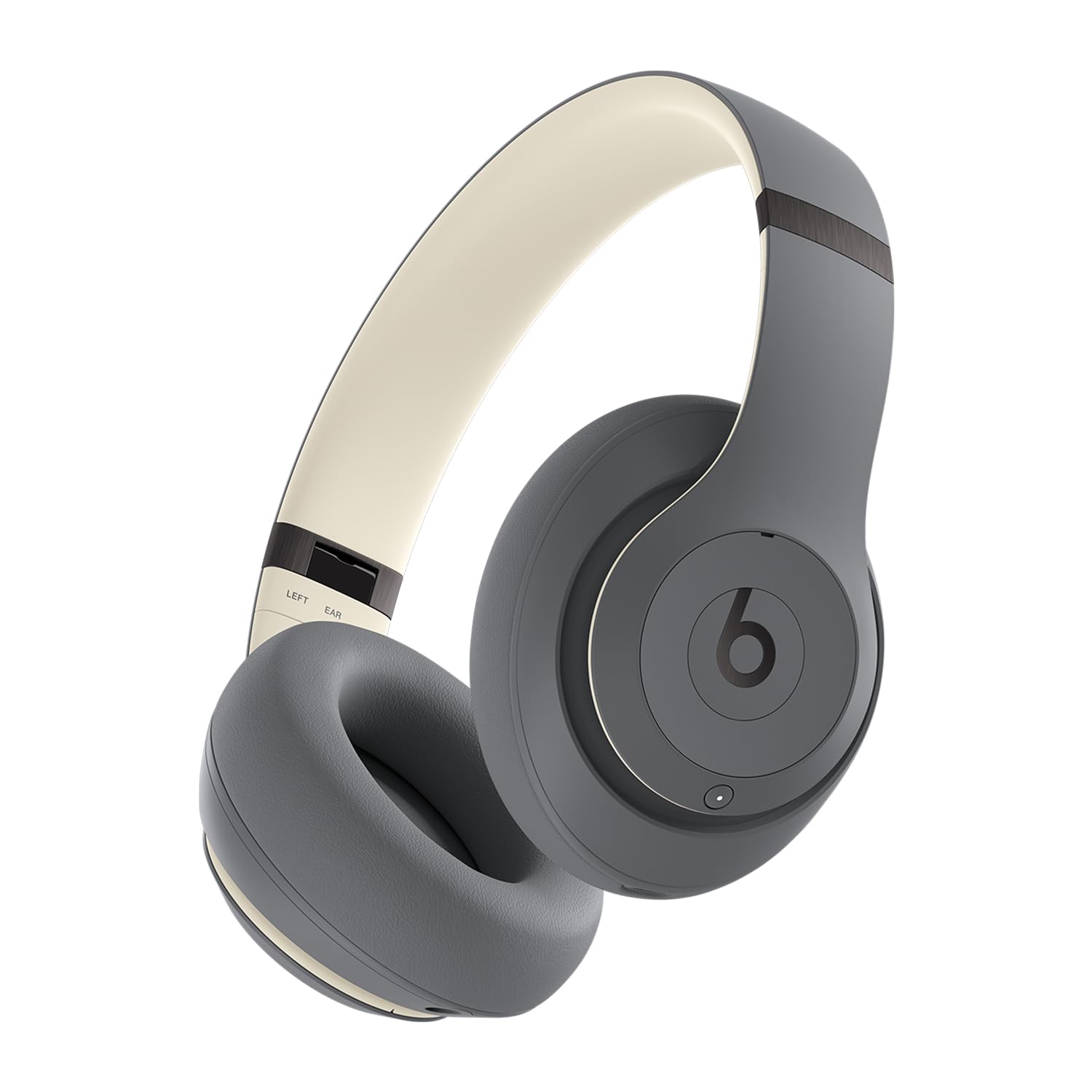
1. Beats Studio Pro Over-Ear Headphones
Our pick — 4.5+★ from 29,000+ verified ratings; the strongest balance of quality and price.
The one that plugs into your phone and keeps going for 40 hours.
This is the pick that does the most jobs at once. You get USB-C lossless audio for a pure digital feed from a laptop or a USB-C phone, plus Bluetooth for when you want to move around. There is also a 3.5 mm cable in the box for a standard analog connection, so a borrowed airplane seat adapter is covered too. For the money, that triple connection is the reason it holds the top spot.
The battery is the number that matters for travel. Beats rates it at up to 40 hours, and Fast Fuel gives you up to 4 hours of playback from a 10-minute charge. That is the difference between hunting for an outlet at the gate and just boarding. Sound quality is what wins listeners over most, and the custom acoustic platform is tuned for rich, balanced audio across music and calls. Voice-targeting mics work to cut background noise so the person on the other end hears you rather than the coffee grinder.
Here is the honest catch. Noise cancelling is the split opinion in the reviews, with some finding it excellent and others hearing static, and the review pages mention static enough that it is worth testing in your first week. The plastic-heavy build is also the trade-off for the 1.39-pound weight. Durability stories exist, including a set that broke after a short fall, so treat the hinges with some care rather than tossing them loose into a bag. The travel-ready woven carrying case helps here.
What earns the top spot
- USB-C lossless audio, Bluetooth, and a 3.5 mm cable in one headphone
- Up to 40 hours of battery, plus 4 hours from a 10-minute Fast Fuel charge
- Personalized spatial audio with dynamic head tracking for movies
- Voice-targeting mics built for clear calls in an office or on the move
- One-touch pairing with both Apple and Android devices
Where it asks for patience
- Noise cancelling draws split reactions, and some report static
- Comfort and fit are mixed, so head shape decides the experience
- At 1.39 pounds it is not the lightest set here
- Build durability is a recurring caution in the review pages
Reach for this if: you want one headphone that covers USB-C wired listening, Bluetooth commuting, and long-haul battery without carrying three pairs.
Test it early if: you are sensitive to noise-cancelling artifacts, because the static reports are real and a return window is your friend.
2. ENCASED USB-C Over Ear Headphones Wired (V200 Pro)
The biggest driver on this list, at the smallest spend.
If you mix on a laptop or plug into a USB-C phone for desk work, this is the entry point that still brings real hardware. Each cup holds a 50 mm neodymium driver, and that is the largest driver in this roundup. For comparison, the Beats Studio Pro runs a 40 mm driver, so the V200 Pro is pushing more moving surface into the low end. The RVRB-8 tuning is meant to keep that wide frequency response accurate rather than boomy.
There are two wires in the box: a 4 ft USB-C audio cable and a 4 ft 6.5 mm aux cable. That dual option is what makes it workable for both a phone and a studio interface without an adapter. The in-line remote puts the mic plus volume and playback controls on the cable, so you are not reaching for the phone mid-track. A 16-point adjustable headband is built to fit a wide range of head sizes, and the padded cushions are bolstered for longer sessions.
The honest read: this is a wired-only set, so there is no noise cancelling and no battery. You are buying driver size and cable flexibility, not features. The 30+ ratings put it at 3.5+ out of 5, which is a small sample and worth weighing against the big brands above it. It does list compatibility with Pixel, Samsung, and iPhone 15 and 16, which covers the USB-C phone crowd.
Why it still earns a slot: a polycarbonate enclosure keeps it light enough for long desk stretches, and the closed-back design helps block a noisy room without any electronics involved.
Best for: home studio mixing, podcast editing, or anyone who wants a USB-C cable straight into a laptop with no charging routine.
Know before you buy: you get no Bluetooth and no ANC here, so this is a desk companion rather than a commute headphone.
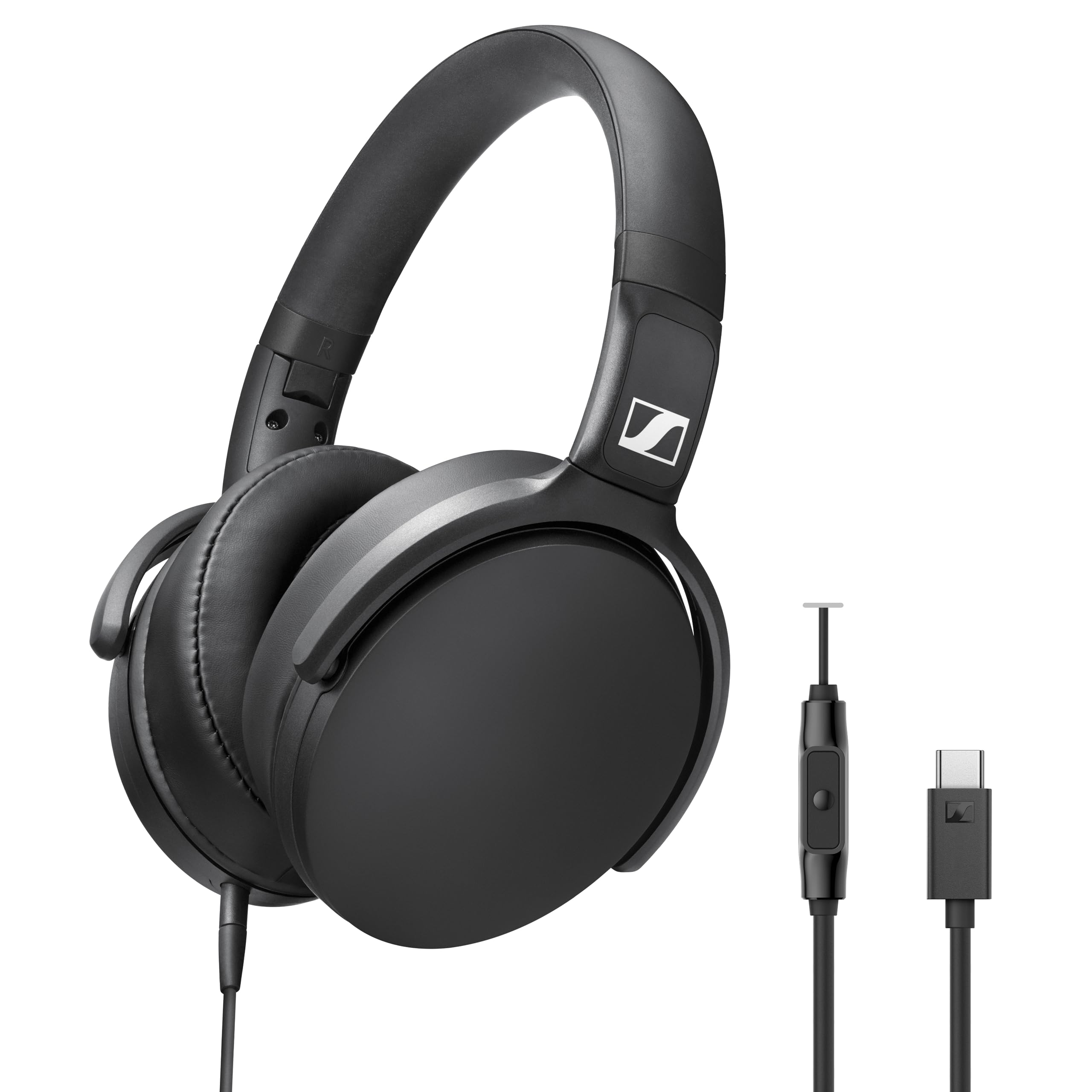
3. Sennheiser HD 400U Wired Over-Ear Headphones
Folds flat into a bag and runs off one USB-C cable.
The HD 400U is for the person who wants a simple wired pair that tucks away when the trip ends. It folds for storage, and Sennheiser includes a protective case in the box. The wired USB-C connection is aimed squarely at smartphones, and there is a built-in mic with a remote for calls and playback. A closed-back design with ergonomic ear cushions is meant to reduce background noise and keep detail intact.
The sound is the part to weigh carefully. Reviews split down the middle here, with some hearing a clear, balanced presentation and solid bass, and others finding it hollow or thin compared with cheaper in-ear sets. Fit draws the same split, with tight clamping and warm ear pads coming up alongside praise for comfort. One practical bonus: it accepts both a USB-C plug and a headphone jack, which is handy for a student moving between a phone and a classroom computer.
The appeal: a foldable, cased, single-cable headphone is about as simple as over-ear listening gets, with no battery to monitor.
The trade-off: at 3.5+ out of 5 across 100+ ratings, this is the lowest-scoring wireless-free pick here, and a few units reportedly arrived with a dead channel, so test both sides on day one.
Pick this if: you need a low-cost, cable-only headphone for online classes and phone calls, and folding size matters more than audio depth.
Look elsewhere if: you want rich bass or noise cancelling — this is a plain, functional wired set.
4. Nothing Headphone (1) Pro Noise Cancelling Headphone
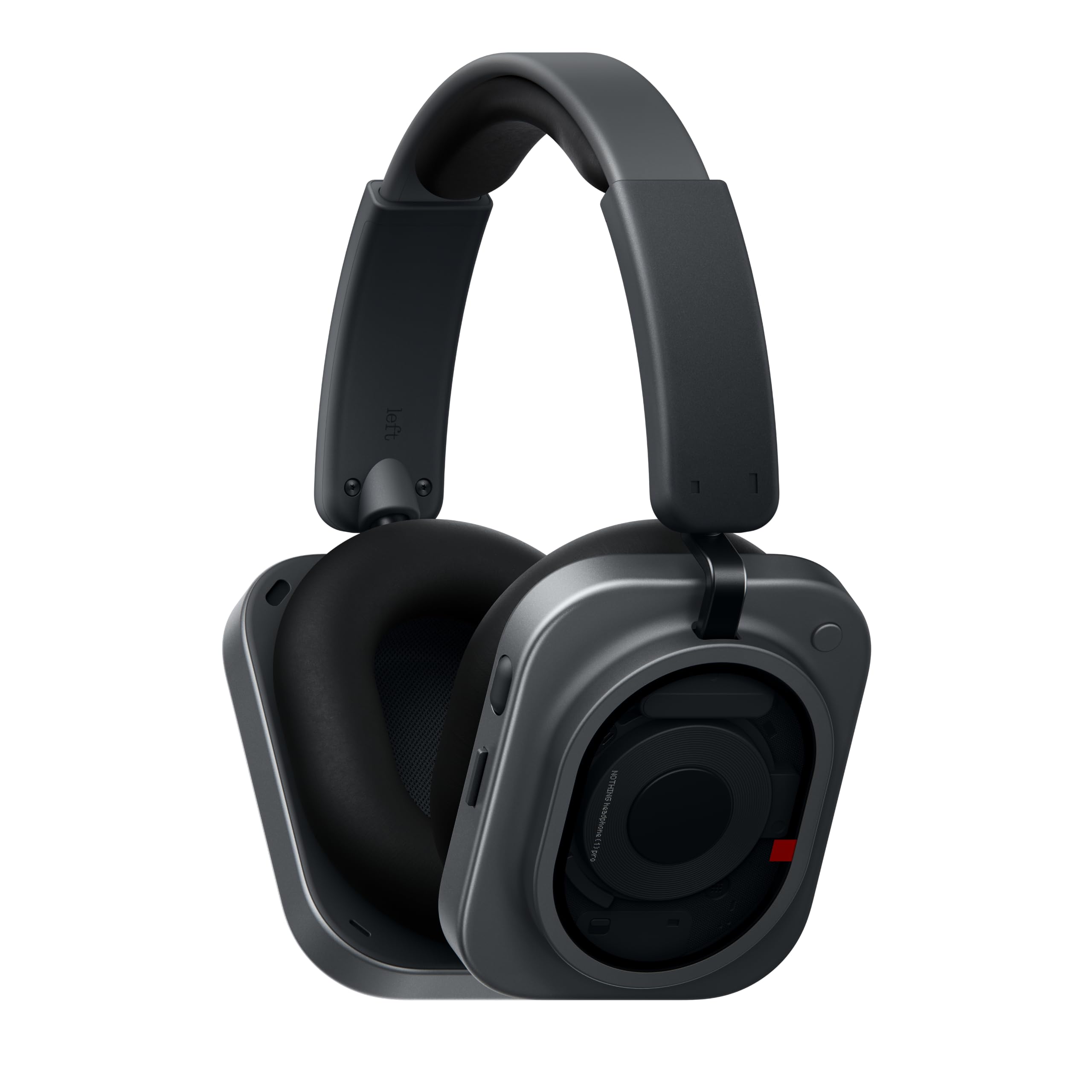
Three drivers, 68 hours, and a titanium shell that looks the part.
The headline number is the 68 hours of playback with ANC off. Put that next to the Beats Studio Pro and the gap is stark: 68 hours versus 40, which is 70 percent more. For a long-haul trip or a week of desk work, that means the charger stays in the drawer. Fast charging tops it up with 5 minutes for 4 hours of listening, so a quick plug before a meeting is enough.
Then there is the driver setup. Three drivers split the frequency range: a 40 mm bass driver, a precision driver, and a treble XMEMS driver. The point is that each part does one job, which is meant to give deeper bass and sharper vocals without one driver muddling both. USB-C gives you lossless playback up to 24-bit/192 kHz, and the 10-microphone system delivers up to 46 dB of adaptive noise cancelling. A silicone wall baffle inside the ear cushion adds passive isolation on top.
What wins owners over most is the sound, and the flat EQ switch is a favorite for engineering-minded listeners. Glass-wearers also report the cushions play nicely with frames, which is not a given on over-ear sets. The catch is weight and price. Some find them heavy-looking, though others say they wear lighter than they appear. It is the second-priciest pick here, so you are paying for the triple-driver design and the 68-hour figure rather than for bargain hunting.
Standout strengths
- Up to 68 hours of playback with ANC off, versus 40 on the Beats above
- Three-driver architecture with a dedicated 40 mm bass driver
- Up to 46 dB of adaptive noise cancelling from 10 microphones
- USB-C lossless playback up to 24-bit/192 kHz
- Machined titanium and scratch-resistant glass build with tactile controls
Points to weigh
- Weight draws some attention, even if it wears lighter than it looks
- Premium pricing puts it above most of this lineup
- Dynamic Spatial Audio modes are a taste call, not a necessity
Made for: travelers and desk workers who hate charging, and listeners who want a flat, neutral switch for critical listening.
Skip the upgrade if: the 68-hour figure is wasted on you because you keep the headphone plugged into a laptop all day.
5. MEZE AUDIO 99 Classics Second Gen
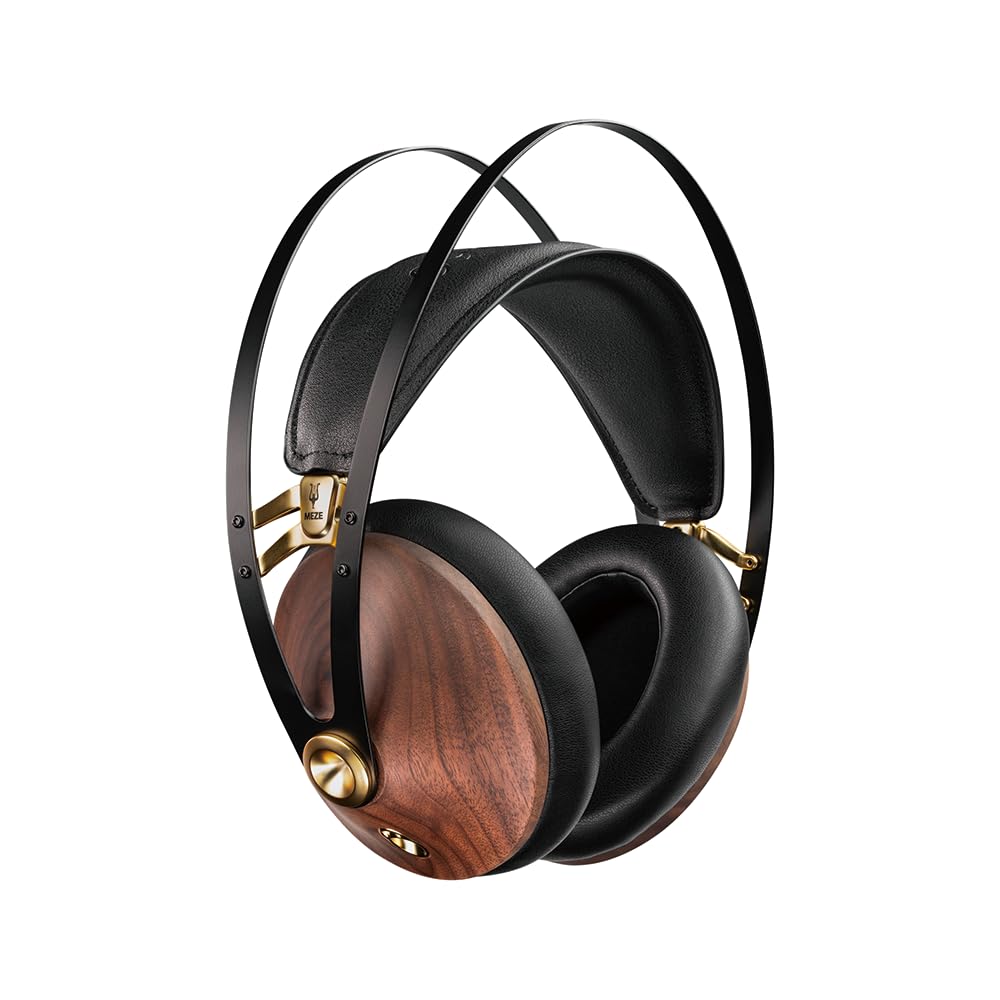
Hand-finished walnut cups that you will want to keep on a stand.
Each pair here is cut from solid walnut, machined and then hand-finished, stained, and polished. The grain and color vary from one set to the next, so no two look the same. That craftsmanship is the draw, and build quality is what earns the most praise in the reviews, with the 2nd Gen seen as a step up from the original 99 Classics. Appearance runs a close second in owner sentiment.
The comfort story is the self-adjusting headband, a manganese spring steel frame that spreads pressure evenly without sliders. Snap-fit earpads can be swapped in seconds, which matters for long-term maintenance. Meze also builds the whole thing with screws instead of glue, so earcups, pads, cables, and the headband can each be replaced. A Kevlar-sheathed OFC cable and an enlarged 7 mm input socket round out the hardware, and a compact USB-C DAC/AMP is included for phones without a headphone jack.
Now the part you need to know before buying. Sound is the split opinion in the reviews, with some loving the warm, accurate presentation and others finding the bass gone compared with the original. Tuning on the 2nd Gen moves toward neutral, with a set of acoustic absorbers letting you shift toward a warmer voicing if you prefer. Two tonalities in one headphone gives you some room to dial in your taste, but it is not a fix for everyone. At 3.5+ out of 5 across 40+ ratings, the sample is small and the response varies by listener.
The signature strength: a fully serviceable, screw-together design with user-replaceable pads and a self-adjusting headband is rare at any price.
The honest gap: the sound profile is not for everyone, so audition the neutral tuning against your favorite bass-heavy tracks before you commit.
For the listener who: values a wooden, repairable, heirloom-style headphone and wants a USB-C DAC in the box for a modern phone.
Not for the bass chaser: if the original 99 Classics’ low end is what you loved, this retuned 2nd Gen may leave you cold.
6. Sennheiser HDB 630 Wireless Audiophile Headphones
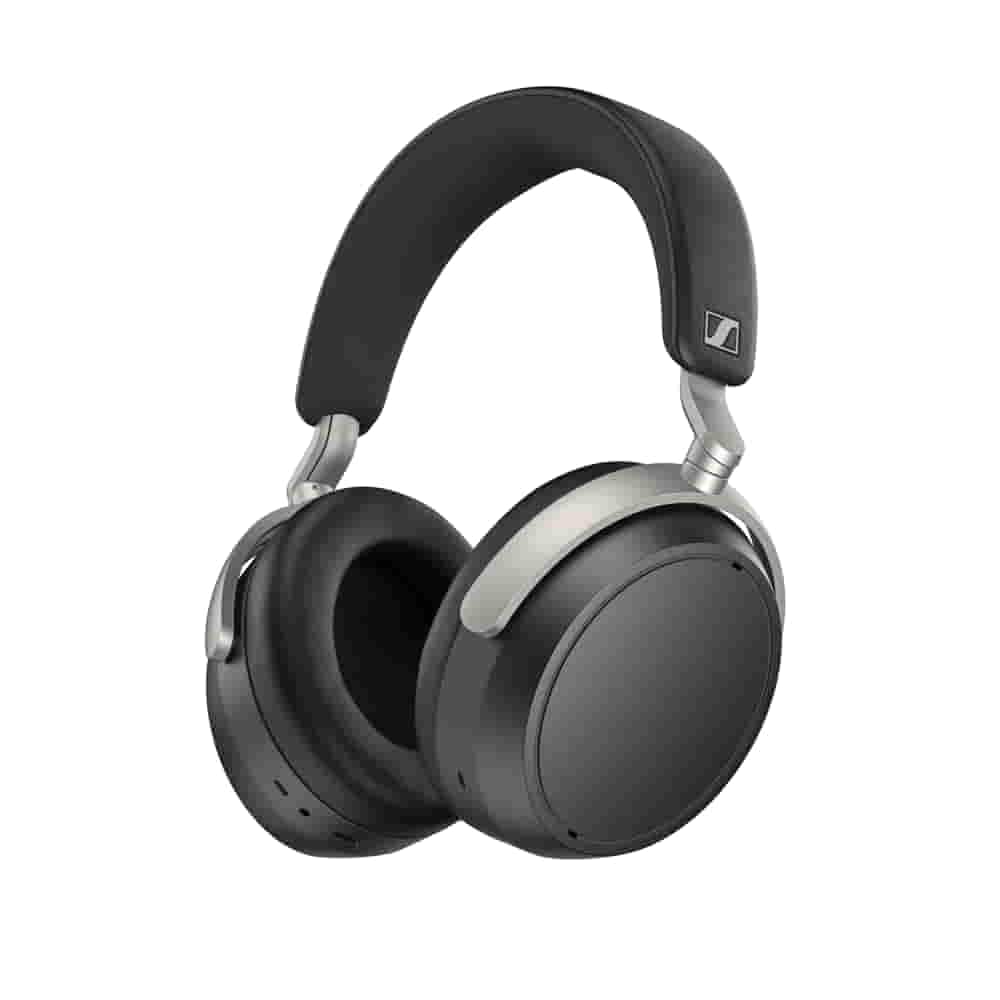
Studio-grade EQ sliders and an included dongle for wireless detail.
This one is for the tinkerer. Sennheiser gives you a parametric EQ, which lets you set exact frequency bands, widths, and filters rather than nudging a simple bass knob. If you want to scoop out a harsh vocal or lift a dull kick drum, you can. The 42 mm transducer is tuned for a neutral sound with lifelike mids and a wide stage, and it keeps digital processing minimal to stay true to the recording.
Connectivity is the other reason it appeals. The included BTD 700 Bluetooth adapter supports aptX HD and aptX Adaptive for high-resolution wireless, and USB-C gives you a lossless wired feed up to 24-bit/96 kHz. A 60-hour battery keeps a full work week going, and 10 minutes of charging adds up to 7 hours of playback. Adaptive ANC blocks distractions, and transparency mode lets the room back in when you need to hear a knock at the door.
What you should know before you buy is where owners get frustrated. Sound is the biggest talking point and it splits, with some hearing fantastic detail and others finding the audio through the dongle flat. Noise cancelling is described as weaker than hoped by some. Fit is the recurring physical gripe, with cups that run on the small side and can pinch a longer session. At 4.0+ out of 5 across 261 ratings, it is a strong set that wants a fair trial at home.
Why tinkerers love it
- Parametric EQ with full control over frequency bands and widths
- 60-hour battery, plus 7 hours of playback from a 10-minute charge
- Included BTD 700 dongle for aptX HD and aptX Adaptive wireless
- USB-C lossless wired listening up to 24-bit/96 kHz
- Dongle flagged in reviews as the standout accessory for wireless work
Where it holds back
- The DAC dongle gets mixed reactions to its tone
- Cups run small and can pinch during long sessions
- Noise cancelling does not lead its class
Who it fits: anyone who dials in their own EQ and wants a neutral, detail-forward headphone with a USB-C lossless option.
Who should think twice: larger heads — the small earcups are the most consistent physical complaint.
7. Focal Bathys Midnight Blue
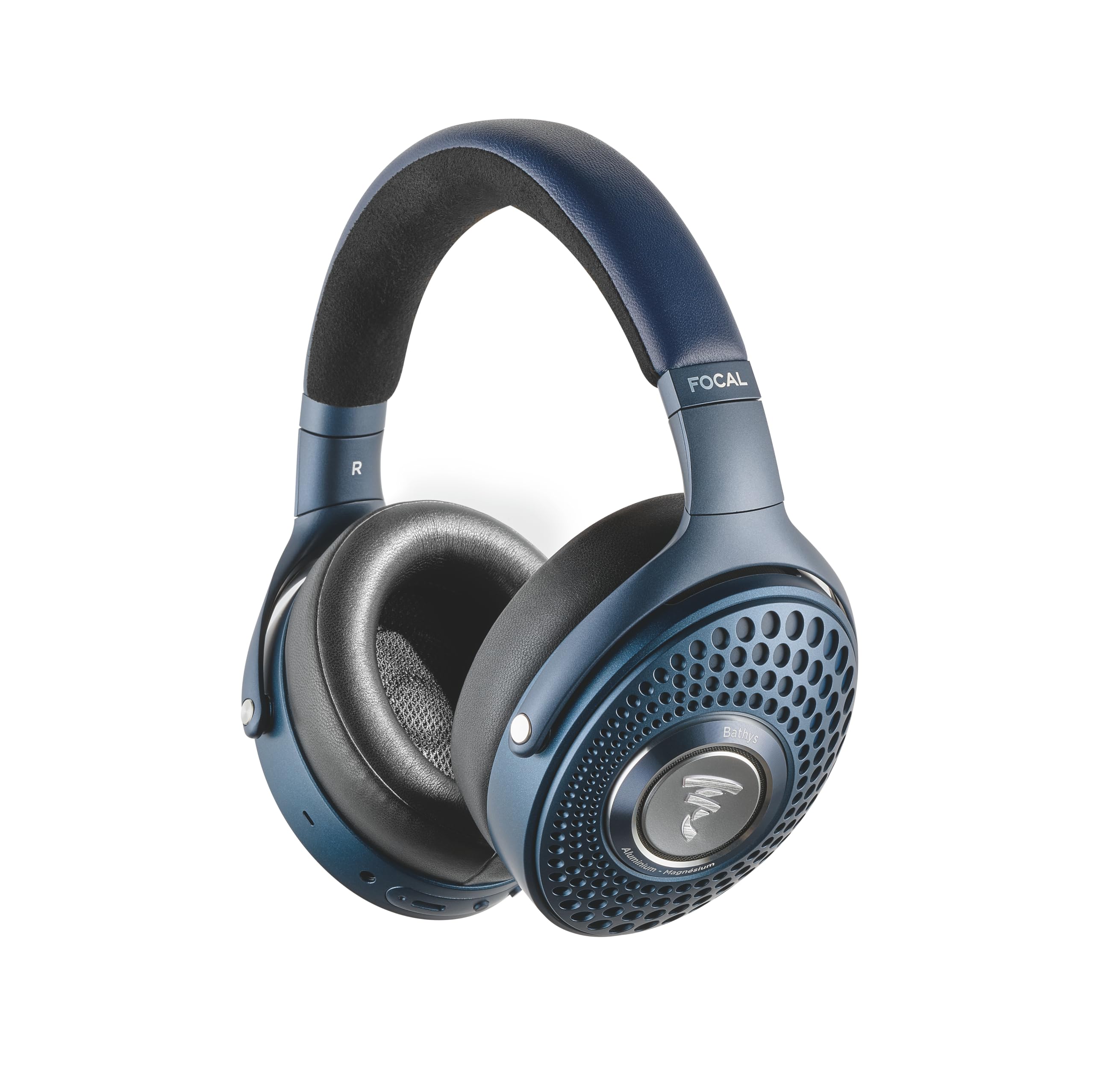
Real leather, an aluminium-magnesium frame, and three ways to connect.
The Bathys is the comfort play. A headband of refined real leather and microfiber is built to sit softly on the head, and the aluminium-magnesium construction keeps the frame light while staying rigid. You get three connection paths: USB-C, a 3.5 mm jack, and Bluetooth. That means a laptop can feed it digitally, a plane seat can run off analog, and your phone can stream wirelessly when you walk away from the desk.
Battery life is over 30 hours, and fast charging puts 5 extra hours in from just 15 minutes on the cable. Active noise cancelling handles the trip, and a transparency mode lets you talk to a barista without pulling the cans off. Build quality leads the praise, with owners describing the headband-to-earcup construction as solid and the leather as soft.
The main tension is sound versus price. Some owners love the tuning, while others feel it does not beat less expensive sets, and a fair share find it does not play loud enough for their taste. Noise cancelling also comes in for criticism as shockingly weak by one owner’s standard, so do not buy these as a pure quiet-cabin device. The headband runs a little narrow for some, which shows up as pressure on top of the head in a long session. At 4.0+ out of 5 across 750+ ratings, it is a strong headphone with a clear personality.
What it nails: materials. Leather, microfiber, and an aluminium-magnesium frame put it ahead of the plastic-bodied picks on touch and finish.
The real caution: this is the second most expensive headphone here, and if quiet is your priority, the noise cancelling is the weak link rather than the sound.
Choose it when: comfort and materials rank above pure noise-cancelling power, and you want USB-C, 3.5 mm, and Bluetooth in one set.
Leave it if: you need a strong ANC for a noisy commute — that is where it comes up short.
8. Bowers & Wilkins Px8 S2 Wireless Over-Ear Headphones
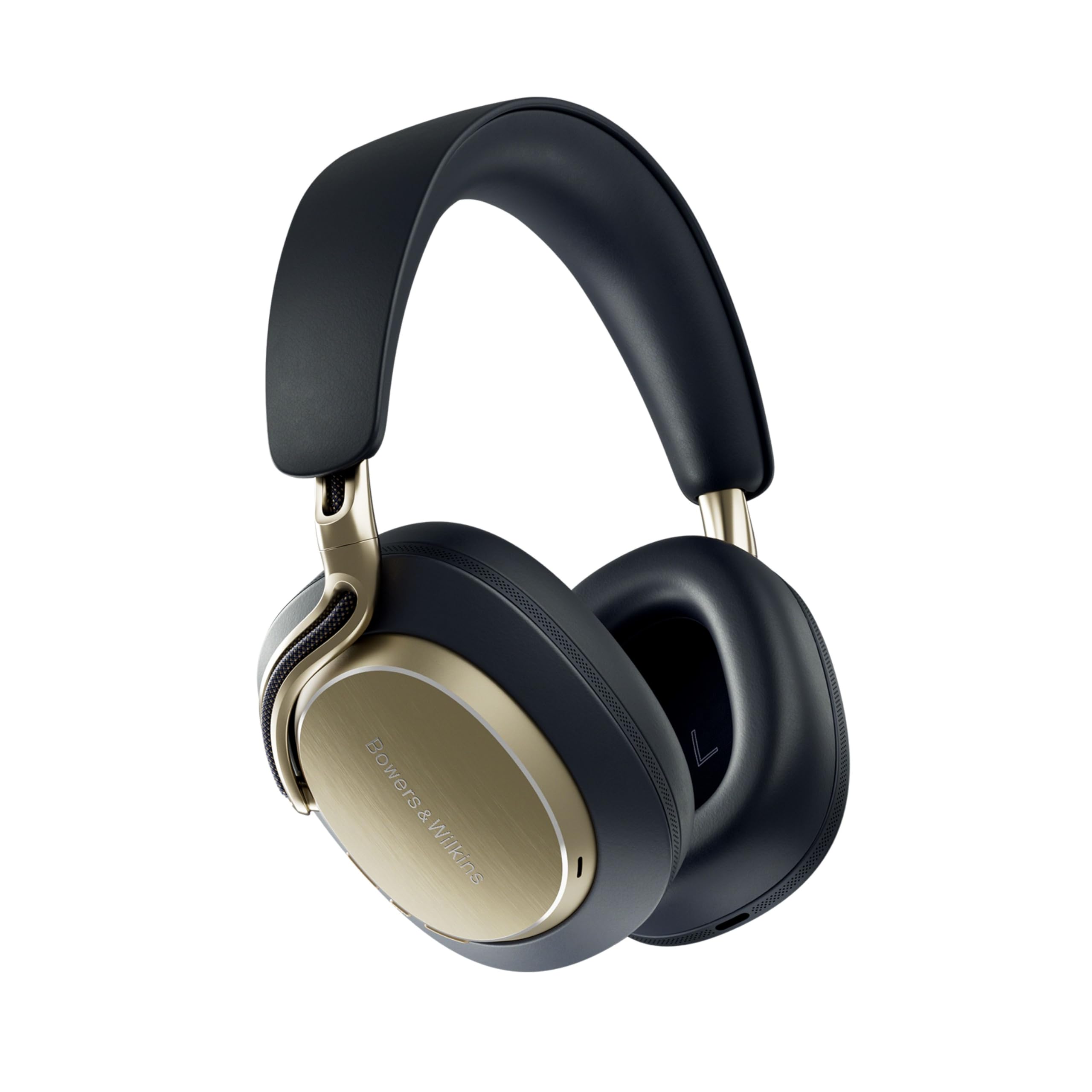
Carbon cones, a dedicated DAC, and Nappa leather where it counts.
This is the fidelity pick. A 40 mm Carbon Cone driver sits at the center, backed by 24-bit DSP (digital signal processing that sharpens the audio math) and a dedicated DAC amplifier. In English: the headphones convert and amplify the signal themselves rather than leaning on your phone. The result, as designed, is a detailed stage with balanced bass and clear mids. For wired listening, USB-C carries the signal, and a 3.5 mm cable is in the box for consoles and older gear.
Build and comfort are what push it up the list. Solid die-cast aluminium arms and soft Nappa leather hold the cups in place without the creak of plastic. Comfort trails sound in owner feedback, which tells you the sound is the star and the fit is a close second. Bluetooth 5.3 supports multipoint, so a phone and a laptop can both stay connected and you switch without repairing. Support for aptX Lossless and Adaptive lets the wireless stream stay high-resolution.
Where it gives ground is noise cancelling and the price. An 8-microphone system monitors the room and the drivers, but the result is balanced rather than class-leading, and owners split on whether the ANC is good or just adequate. Value is the other split. At 4.0+ out of 5 across 600+ ratings, it holds the highest score of any wireless pick here, and sound quality is the aspect that wins listeners over. The 30-hour battery and a 15-minute fast charge that adds up to 7 hours keep a travel day covered.
The case for it: premium materials, a 24-bit DSP and DAC chain, and USB-C wired listening make this a true desktop-and-travel headphone.
The reality check: it is the most expensive set here, and the ANC is balanced rather than the quietest in the lineup. Buy it for sound, not silence.
The right buyer: someone who wants reference-leaning sound in a leather-and-aluminium package, with USB-C on tap for lossless listening.
Look down the list if: you want the strongest noise cancelling for the spend — the Bathys and Studio Pro trade blows there instead.
Know the Specs
USB-C audio versus a 3.5 mm jack
A USB-C audio connection sends a digital signal straight from your phone or laptop into the headphone’s own converter. That can preserve higher-resolution files, which is why the Nothing Headphone (1) Pro and Bowers & Wilkins Px8 S2 both advertise lossless playback over USB-C. A 3.5 mm jack is analog, so the conversion happens at the source instead. Both work, but USB-C is the cleaner path if your source supports it. Many sets here, including the Beats Studio Pro and the Focal Bathys, include both.
Driver size and sound
The driver is the speaker inside each earcup, measured across in millimeters. A 50 mm driver moves more air than a 40 mm one, but tuning and amplification decide whether that extra surface sounds controlled or boomy. The ENCASED V200 Pro runs a 50 mm neodymium driver, the largest here, which is built for strong low-end output. The Bowers & Wilkins Px8 S2 runs a 40 mm Carbon Cone driver in a premium shell. Read the driver alongside the battery and connection, not in isolation.
Battery hours and fast charging
Travelers check battery life first, because a dead headphone mid-flight is useless. The Nothing Headphone (1) Pro lasts longest at up to 68 hours with ANC (active noise cancellation, which mutes surrounding sound) off, against 40 hours on the Beats Studio Pro and 30 on the Bowers & Wilkins Px8 S2. Fast charging matters as much as the total: 10 minutes gives the Beats up to 4 hours, the Sennheiser HDB 630 up to 7 hours from 10 minutes, the Bowers & Wilkins Px8 S2 up to 7 hours from 15 minutes, and the Nothing Headphone (1) Pro up to 4 hours from 5 minutes.
Noise cancelling versus passive isolation
Active noise cancelling uses microphones to sample the room and play a cancelling signal, and it is a wireless-headphone feature on every set here that has it. Passive isolation is different — it is the physical seal of the earcups and pads. A wired-only studio monitor like the ENCASED V200 Pro relies on that seal alone. If you want to press a button and mute a plane cabin, you need an ANC set; if you just want to block a noisy room, the closed-back seal may be enough.
Common Questions
Will a USB-C headphone work with my iPhone?
Do USB-C headphones need a battery?
Is USB-C audio better than Bluetooth?
Can I use these over-ear headphones for gaming?
How long does the battery last on a wireless USB-C headphone?
What is the difference between a 40 mm and a 50 mm driver?
Can I replace the earpads on these headphones?
Will a wired USB-C headphone work on a plane seat?
Does noise cancelling work when listening over USB-C?
Which is the lightest option on this list?
The Bottom Line
For most buyers, the over-ear usb-c headphones winner is the Beats Studio Pro, because one set covers USB-C lossless, Bluetooth, and a 3.5 mm cable, with 40 hours of battery and a 10-minute charge that adds up to 4 hours of playback. If battery life drives your choice, reach for the Nothing Headphone (1) Pro and its 68 hours with ANC off. For the listener who wants reference-leaning sound in leather and aluminium, the Bowers & Wilkins Px8 S2 is the premium one to look at. One honest nudge: the Beats holds the top spot on value, but the Bowers & Wilkins holds the higher score at 4.0+ out of 5, so weigh that if extra fidelity matters to you.
How we choose
We do not accept paid placement. Every pick is matched to a real buyer and a real use-case; we do not hands-on test units.
Sources
Specifications: manufacturer listings and product documentation. Review insights: verified customer reviews, as of November 2026. Pricing: not shown on this page (it changes often); check the current price via the retailer link.
As an Amazon Associate, Tactical Gear Guy earns from qualifying purchases. This does not affect which products we feature.