Specs are compiled from manufacturer listings and verified buyer reviews and can change over time — please confirm the key details on the product page before buying.
Amps get the attention, but the breaker family decides whether your outdoor sub panel takes the breakers already in your main box. Pick the wrong panel and your breakers won’t clip in, or the brand you need isn’t stocked at your local hardware store on a Sunday. The enclosure matters just as much: an outdoor-rated box keeps rain out of live copper. A NEMA 3R label (the outdoor weather rating for rain, sleet and snow) is the line between a code-compliant install and a callback. This guide sorts the panels that install cleanly from the ones that fight you on the wall.
This guide is built by comparing the manufacturers’ published specifications and the patterns across verified customer reviews, so you get each pick’s real strengths and trade-offs instead of marketing spin.
You’ll see what each panel’s space count really means, which breaker lines fit, and where the weatherproofing actually lives. By the end you’ll know which outdoor sub panel matches your breaker stock and your wall.
Top Picks


How To Choose The Best Outdoor Sub Panel
Start with the breakers you already own. If your main service panel is a Homeline box, a Homeline sub panel lets you share breaker stock across both, which matters when a slot dies and you need a replacement the same afternoon. The same logic applies to QO, Siemens and ABB’s GE-style lines. Every one of these panels is a main lug panel — meaning there is no main breaker inside, and it is fed from an upstream breaker — so the amperage you read on the label is the current the panel can carry, not a switch you flip.
Space count versus circuit count
A “space” is a physical slot in the panel; a “circuit” is what you get when a slot holds a tandem or quad breaker that splits into two or four circuits. An 8-space panel listed as 16-circuit means you can run up to 16 circuits if you use tandem breakers, which is how you get a hot tub, a shed circuit and a couple of outdoor receptacles out of a compact box. Buy space if you plan on full-size breakers only; buy for circuit count if you’re happy with tandems.
The enclosure is what makes an outdoor panel outdoor-rated
NEMA 3R is the enclosure rating that tells you the box sheds rain, sleet and snow and resists ice forming on it — it is why outdoor-rated panels cost more than the same guts in an indoor can. A galvanized steel shell is the common build here, and it is what resists rust when the panel sits on a north wall getting sprayed by a sprinkler head. Hubs and rain-tight fittings are usually sold separately, so budget for those before your electrician shows up.
GFCI panels for spa and pool loads
If your load is a hot tub or pool pump, federal code in most areas requires ground-fault protection, and a spa panel with a factory-installed GFCI breaker removes one separate breaker purchase and one more device to fit. The trade-off is that the included breaker is a specific amperage and pole configuration — so check that it matches your equipment’s label before you buy. For plain sheds and sub-fed garages, a standard main lug panel is the simpler, cheaper path.
Side-by-Side Comparison
| Model | Best For | Max Current | Spaces / Circuits | Enclosure | Amazon |
|---|---|---|---|---|---|
| Siemens W0816ML1125CU★ Best Overall | Whole-shed and garage sub-feeds | 125 A | 8 space / 16 circuit | Outdoor rated | Amazon |
| ABB TL412R1PCompact Pick | Tight-wall small-load installs | 125 A | 4 space / 8 circuit | NEMA 3R | Amazon |
| Briidea 60 Amp Spa PanelBest for Spas | Hot tubs and spa hookups | 60 A | 3 circuits | IP65 | Amazon |
| ABB PowerMark Gold TLM1212RCUP | Many-circuit outdoor distribution | 125 A | 14 space / 24 circuit | NEMA 3R | Amazon |
| Square D HOM816L125PRB | Homeline households adding a sub | 125 A | 8 space / 16 circuit | Rainproof cover | Amazon |
| Siemens W0408L1125SPA50 | Spa and hot tub with GFCI included | 125 A | 4 space / 8 circuit | NEMA 3R | Amazon |
| Square D HOM1224L125PRB | Big outdoor loads on Homeline breakers | 125 A | 12 space / 24 circuit | Rainproof cover | Amazon |
| Siemens PN Series PNW1224L1125C | Plug-on neutral and copper bus builds | 125 A | 12 space / 24 circuit | NEMA 3R | Amazon |
Detailed Reviews
1. Siemens W0816ML1125CU Load Center
Our pick — 4.5+★ from 500+ verified ratings; the strongest balance of quality and price.
Eight physical slots that stretch to sixteen circuits — this is the panel most shed and garage sub-feeds actually need.
You get 125 amps of capacity feeding 8 spaces that accept tandem breakers for a listed 16 circuits. In plain terms: run a 240V heater, a 240V welder receptacle, and still have room for lighting and a couple of outdoor outlets without buying a second box. The copper bus is the conductor that carries the current and takes the breaker clips, and copper is the build that holds a clean connection over years of thermal cycling.
Size is the spec buyers disagree on most. At 15.5″L x 13.0″W x 5.3″H and 13.0 lb, it is a mid-sized can — noticeably more compact than the Square D HOM816L125PRB at 21 pounds, but a much bigger footprint than the 8.03″L x 8.03″W x 12.51″H Square D QO816L100RBCP. That extra volume is not wasted: it is the wire-bending room that lets you land conduit and still close the door. If you’re mounting to a narrow strip of wall between a downspout and a window, measure first.
Build quality is the theme that runs through the strongest owner feedback, and it’s why this panel takes the top spot. Owners describe it arriving as described and working without complaint once wired. The honest caveat is the size feedback, which swings both ways: a few buyers expected a roomier box. If you plan on pulling heavy feeders through three conduit runs, the 20.3-pound ABB TLM1212RCUP gives you more interior real estate and 24 circuits.
What earns the top spot
- 125 A capacity feeding 8 spaces and 16 circuits with tandems
- Copper bus material for a connection that stays tight
- 13.0 lb and 15.5″L x 13.0″W x 5.3″H — mid-sized and manageable on a wall
- Built and described as expected, with no wiring surprises after install
Where it can pinch
- Not the roomiest interior if you’re pulling thick conductors through multiple conduit runs
- Hubs are not part of the package, so plan the rain-tight fittings separately
The panel to beat: Sheds, detached garages and workshop sub-feeds where 16 circuits is genuinely enough.
Second-guess it if: You’re routing heavy feeders and want more bending room — the ABB TLM1212RCUP holds 24 circuits and 20.3 pounds of steel.
2. ABB 125A Main Lug Load Center
Six point eight pounds of galvanized steel light enough for one person to hold and screw up alone.
Four spaces, eight circuits, 125 amps of capacity. That’s a light workload — a couple of outdoor receptacles, a pump, a light circuit — and that’s exactly the point. At 6.8 pounds it is the lightest full-size panel here, 6.2 pounds lighter than the 13.0-pound Siemens W0816ML1125CU, so one person can hold it against the sheathing and drive the first screw without a second set of hands. The NEMA 3R galvanized steel shell resists rust and corrosion, which is what you want on a wall that takes weather on three sides.
The interior is a one-piece design that lifts out for wiring and drops back in, and it ships with factory-installed main lugs and full-length neutral bars so you’re not fabricating a neutral termination at the end of the day. It supports single-phase, 3-wire, 240 VAC systems and takes standard GFCI, AFCI and GE-style breakers. The tin-plated copper bus bar is the detail that matters in a damp location — plating resists oxidation that would otherwise build resistance at the clip.
Read the spec sheet twice on the closure caps, though: they’re included, but hubs are ordered separately, and on a small panel one missing knockout fitting is the difference between finishing today and a second trip. Eight circuits also fills up faster than you’d think once a 240V load or two lands — a welder plus a compressor eats most of the box.
The value read: This is the panel for a small, defined load where the box itself is nearly invisible at the end — a well pump, a shed circuit, an outdoor lighting run. The 4-space interior keeps the wiring short and the terminations easy to reach.
The one thing to plan: Hubs ship separately. Add them to the order at the same time or your electrician stands around with a panel that isn’t weather-tight yet.
Grab this if: Your load list is short and your wall space is tight — 6.8 pounds and 4 spaces stay out of the way.
Keep looking if: You’re feeding a shop with multiple 240V tools; 8 circuits will run out before the box does.
3. Briidea 60 Amp Spa Panel
A hot-tub box that arrives with its 60 Amp ground-fault breaker already bolted in.
Sixty amps and three circuits, with two-pole GFCI protection built into the package. GFCI is the ground-fault protection that cuts power when current starts leaking somewhere it shouldn’t — the requirement that makes a spa hookup different from a plain sub-feed. Buying the breaker loose and fitting it yourself is a separate purchase and a separate fit problem; this box removes both. Compare that to the 125 A Siemens W0408L1125SPA50, which carries 2.1x the amperage and its own factory 50 Amp GFCI, and the Briidea is the small-load specialist.
The IP65 enclosure rating is the number to know here. IP65 means dust-tight and protected against water jets from any direction — a stricter water test than the rain-shedding NEMA 3R standard the other panels here carry, and the reason this one can sit beside a splash zone without complaint. The coating is described as waterproof, rust-proof and anti-corrosion, and the interior includes a wiring diagram plus waterproof knockouts so you’re not guessing at a hot tub connection after dark.
Owners’ experience runs cooler than the spec sheet suggests it should, though. The recurring theme in the feedback is that it does the job once it’s installed, and the wiring diagram and included breaker get the credit for getting people through the hookup. Treat the enclosure and its coating with some care when you’re drilling knockouts, and be aware three circuits is a hard ceiling — this is a single-appliance box, not a sub panel for a workshop.
Where it wins: The breaker, the box and the diagram arrive together. One purchase covers the ground-fault protection a spa needs, in a shell rated against water jets rather than just rain.
What it won’t do: Three circuits. If you want the spa plus a pool pump plus lighting on one panel, this isn’t that panel — you’re shopping in 125 A territory.
Made for this: A hot tub or spa where you want GFCI protection inside the box and nothing else added later.
Not your panel if: You need to grow the circuit count — three is a closed door.
4. ABB PowerMark Gold Load Center
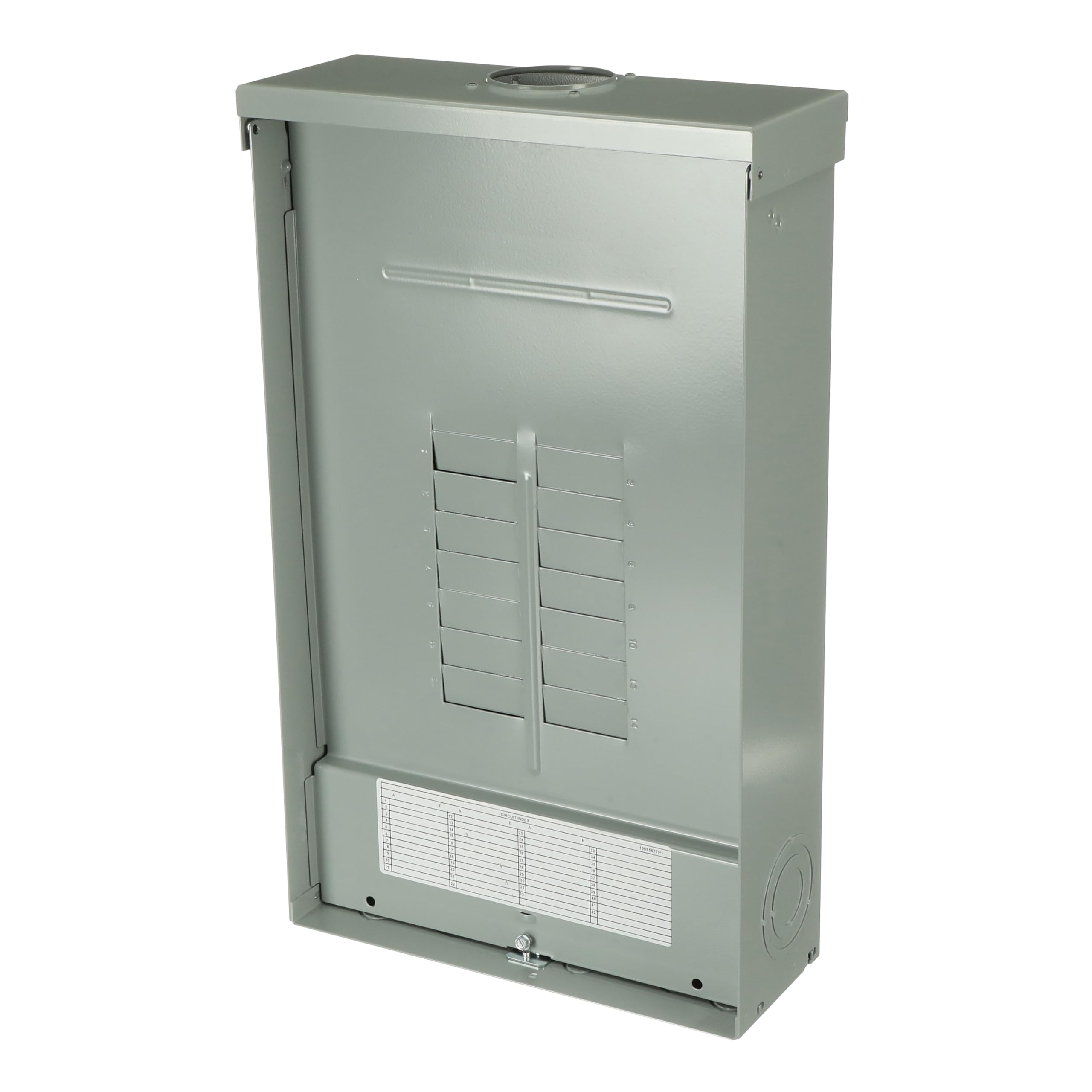
Twenty-four circuits in a galvanized box that converts to a main breaker if you decide you want one.
Of everything on this list, this panel gives you the most room to grow: 14 spaces stretching to a listed 24 circuits, which is three times the circuit count of the Briidea spa panel’s 3. It also carries 22KAIC — the short-circuit current rating that says how much fault current the panel can safely interrupt — and supports single-phase, 3-wire, 120/240 VAC systems. If your plan includes a shop, a detached garage, an EV receptacle and outdoor lighting, this is the box that absorbs all of it.
There’s a flexibility detail worth flagging: this loads out as a main lug panel but converts to a main breaker, which means you can keep the upstream breaker in your service panel or add a disconnect at the box depending on what your inspector wants. It takes GE’s Q Line breakers including the exclusive 1/2 in THQPs, so if you’re already a GE/ABB household, your breaker stock works here.
Weight and wall space are the honest cost of all that capacity. At 20.3 pounds and 13.6″L x 4.47″W x 22.1″H, it is the tallest panel in the group — noticeably more awkward than the 13.0-pound, 15.5″-tall Siemens W0816ML1125CU, and best mounted by two people or braced on a temporary ledger while you screw it up. The one-piece interior removes for wiring, and combination slotted/Robertson screws speed the trim work, but you still want a clear run of wall roughly two feet tall.
Why it’s here: Circuit count is the currency of sub panels, and 24 of them in a NEMA 3R box with a 22KAIC rating covers a full outbuilding without a second enclosure.
Budget the height: Twenty-two inches of box needs twenty-two inches of clear wall. Measure before you commit — this is not a between-the-downspout panel.
Choose it when: Your load list is long and likely to grow, and GE-style breakers are already in your stock.
Pass if: Your wall space is short or you’re mounting solo — the 20.3-pound, 22.1″-tall box wants a helper.
5. Square D HOM816L125PRB Load Center

A Homeline panel that shares breaker stock with the box already on your basement wall.
Here’s the spec that changes the buying decision: a fully distributed neutral bar lets you install Homeline Plug-on Neutral combination arc fault breakers on any space. That’s a big deal in a shed or garage with new wiring, because arc-fault breakers are commonly required for those circuits and the plug-on neutral design means one less wire to land. Each pole space also accepts full-size, tandem or quad breakers, so the 8 spaces reach a listed 16 circuits without a puzzle.
The enclosure details are sensible for weather: a rainproof outdoor cover is included, and the panel is convertible to a main breaker load center with a QOM1 main breaker. Ground and neutral bars accept up to (3) #10-14 equipment grounds per bar, which is the termination capacity that decides how many circuits you can safely bond without pigtailing. It also accommodates a plug-on secondary surge arrestor — a device that adds surge protection without a separate enclosure — though that part is sold separately.
At 21 pounds and made of aluminum, it’s a heavier panel than the 13.0-pound Siemens W0816ML1125CU — roughly a one-person-with-effort lift or an easy two-person job. The straight answer on who this suits: if your house already runs Homeline breakers, this panel means one breaker family in your truck and one set of spares on the shelf. If you’re a QO household, the QO816L100RBCP is the sibling that keeps your stock consistent.
The upgrade that matters: Plug-on neutral on every space makes arc-fault wiring faster and cleaner than a pigtail design.
Hang it with help: Twenty-one pounds of steel against sheathing is a two-person job. Line up a helper before you drill.
Built for: Homeline households adding an outdoor sub-feed who want breaker compatibility and plug-on neutral convenience.
Think twice if: You’re committed to QO breakers — this box won’t take them.
6. Siemens W0408L1125SPA50 Spa Panel

A spa box that ships with the 50 Amp GFCI breaker already seated in the panel.
A factory-installed 2-pole 50 Amp GFCI breaker (the QF250) sits inside a NEMA 3R outdoor enclosure, on a 125 Amp rated interior that reaches 8 circuits across 4 spaces. Two extra spaces are there for branch circuits, and a factory-installed 5-position ground bar saves you a termination step. For a hot tub or pool, this is the box: ground-fault protection already in place, one purchase, one install. Note the amperage ceiling on the included breaker itself — 50 amps — even though the interior is rated to 125 A.
Where this one splits opinion is durability, and honestly the feedback on that front is the weakest in this guide. The recurring complaint is breakers failing prematurely and tabs breaking on opening the box, with some units giving out inside a year. That’s a real trade-off to weigh, not a reason to dismiss the panel — the installation is reported as straightforward, the included hardware gets credit, and the quality of the core unit reads well. But if you’re wiring a hot tub that gets heavy use, go in eyes-open and inspect the interior on arrival.
The strong points
- Factory-installed 2-pole 50 Amp GFCI breaker, no separate purchase
- NEMA 3R enclosure for rain and snow exposure
- 2 extra spaces for branch circuits, plus a 5-position ground bar
- Reported as straightforward to install with hardware in the box
What to watch
- Durability feedback flags premature breaker failures on some units
- Included breaker tops out at 50 amps even though the interior is rated 125 A
Matches this job: A spa or pool install where a pre-installed 50 Amp GFCI saves a breaker purchase at the start.
Check this first: Open the box and inspect the breaker and tabs before the return window closes.
7. Square D HOM1224L125PRB Load Center
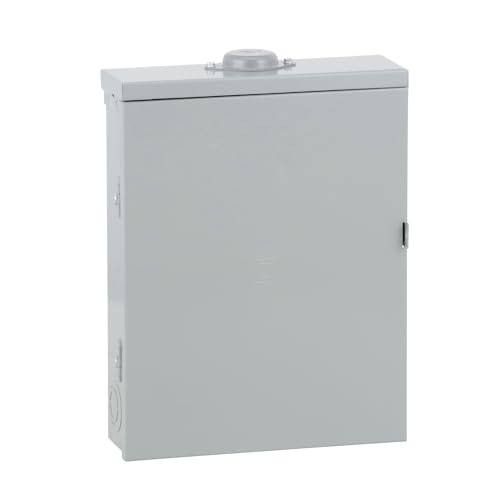
Two times the circuit count of its smaller Homeline sibling, and the same plug-on neutral convenience.
Twelve spaces, 24 circuits, 125 amps, and a fully distributed neutral bar so Homeline Plug-on Neutral combination arc fault breakers clip onto any space. This is the panel for a Homeline household with a real load list — an outbuilding, a shop, a sub-fed garage with 240V equipment. Each pole space takes full-size, tandem or quad breakers, which is how 12 physical slots get you to 24 circuits. At 19 pounds it’s the lighter of the two Homeline panels here by a couple of pounds, and easier to hang alone than the ABB TLM1212RCUP at 20.3 lbs.
The build details are the ones that save time: ground and neutral bars accept up to (3) #10-14 equipment grounds each, a rainproof outdoor cover comes in the box, and the panel converts to a main breaker load center with a QOM1 breaker. It also accommodates a plug-on secondary surge arrestor, sold separately — useful if your structure sits on a long run from the service and you’d rather not add a second box.
Consider the trade-off plainly: this is a main lug panel, so there’s no disconnect switch on board until you add the QOM1. If your local inspector wants a main breaker at the sub panel, budget for that part. If the upstream breaker in your service panel is acceptable, you wire it up and save the cost. That decision sits with your electrician and your permit, not with the box.
Room to grow: 24 circuits at 125 amps with plug-on neutral across every space — the Homeline answer to a busy outbuilding.
Plan the disconnect: It’s main lug only until you add the QOM1, so confirm the inspector’s expectation before your rough-in.
Right answer for: Homeline users with a bigger load list who want 24 circuits without a second panel.
Hold off if: You need a factory main breaker included — this one requires the QOM1 addition.
8. Siemens PN Series Load Center
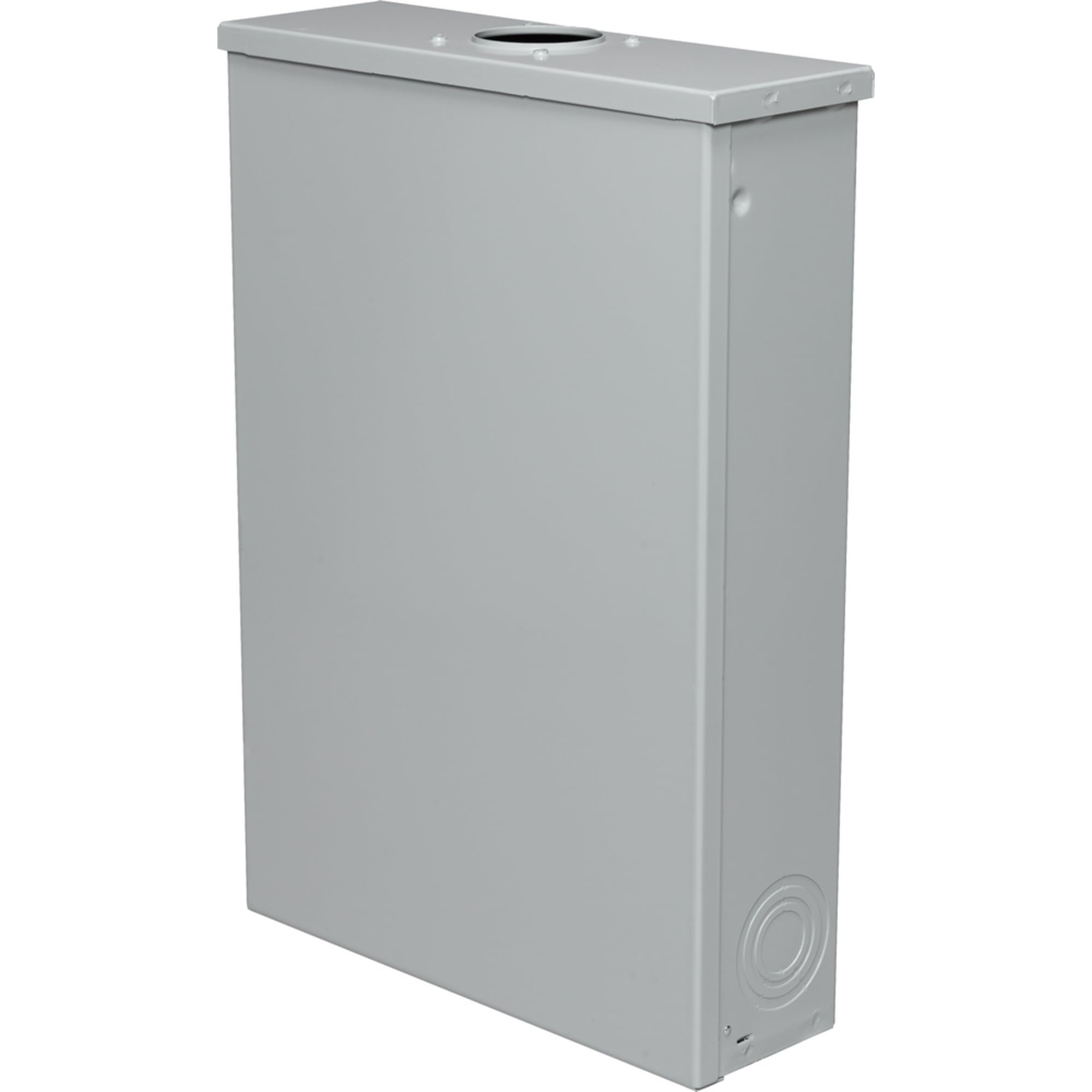
Over four inches of wire-bending space and a hundred-thousand-amp interrupt rating — the panel for installers who hate cramped boxes.
Start with the detail that separates this box from everything else here: more than 4 in. of wire bending space, meaning the conductors can bend inside the enclosure without straining against the sidewall. If you’ve ever fought a stiff feeder into a shallow can, you know why that matters. Then there’s the 100000AIC interrupt rating — the fault-current level the panel can safely clear — which is the sort of headroom you want on a service that sits close to the utility transformer. Copper bus is the conductor build that keeps the breaker clip connection clean over time.
On capacity, you get 125 amps, 12 spaces, 24 circuits, and Siemens’ plug-on neutral system for quick installs. Two factory-installed ground bars save termination time, and it’s set up as a 1-phase, 3-wire, 120/240V system inside a NEMA Type 3R enclosure for outdoor mounting. Compare the circuits here to the 8 that the Siemens W0816ML1125CU offers and you can see where this one earns its premium positioning — twice the capacity in the same brand family.
The obvious caveat: this is a main lug panel with no breaker included, and it asks for Siemens PN-series breakers specifically. If your breaker stock is Homeline or QO, you’re starting a new inventory. That’s the cost of the plug-on neutral convenience and the copper bus — it’s a panel for someone already in the Siemens ecosystem or willing to buy into it.
The engineering read: Over 4 in. of wire-bending space plus a 100000AIC interrupt rating makes this the most install-friendly box in the group for tight, heavy feeders.
The honesty check: Twelve spaces, no breaker included, and it wants Siemens PN breakers. Buy in only if that’s your world.
Worth it for: Siemens-ecosystem installs where wire-bending room and a high interrupt rating reduce the fight on rough-in day.
Skip if: You’re running Homeline or QO breakers — this panel wants its own family.
Know the Specs
Amperage and the main lug design
The amp number on an outdoor sub panel — 60 A, 100 A, 125 A — is the maximum current the panel’s bus and lugs are rated to carry. A main lug panel has no main breaker inside; it is fed from a breaker upstream, so the panel amperage sets the ceiling for total load, not a switch you flip at the box. Every panel here is main lug, which is why hubs, feeders and the upstream breaker appear on your shopping list too.
NEMA 3R versus IP65 enclosure ratings
NEMA 3R is the North American enclosure rating for outdoor use against rain, sleet and snow with ice resistance — the standard most of these panels carry. IP65 is an international ingress rating meaning dust-tight and protected against water jets, which is a stricter water test than rain-shedding; the Briidea spa panel carries it. Both are outdoor-appropriate; just remember the rating covers the enclosure, not the hubs and knockouts you add yourself.
Spaces versus circuits, and breaker families
A space is one physical slot; a circuit is what you get when a tandem or quad breaker splits a space. Tandem breakers are how an 8-space panel lists 16 circuits. Breaker family matters just as much: Homeline, QO, Siemens PN/SPA and GE-style breakers are not interchangeable, so the panel choice usually starts with what’s already in your main box.
Interrupt rating (AIC) and copper versus aluminum bus
The AIC number — the Siemens PN Series lists 100000AIC, the ABB TLM1212RCUP 22KAIC — is the fault current the panel can safely clear, with higher meaning more headroom on a service close to the transformer. Bus material matters too: copper conducts well and holds a clean breaker clip connection, while aluminum appears on some panels here and is a common budget build. Either works when installed to spec; copper is the more desirable conductor.
Common Questions
Do I need a main breaker in an outdoor sub panel?
Can I use Homeline breakers in an ABB or Siemens outdoor sub panel?
What does 8-space 16-circuit actually mean?
Is NEMA 3R good enough for a hot tub or spa panel?
What’s the difference between a spa panel and a regular sub panel?
How many amps do I need for a detached garage or workshop?
Do outdoor sub panels come with hubs and fittings?
Can I mount an outdoor sub panel in direct sun all day?
Is 125 amps overkill for a shed or small outbuilding?
The Bottom Line
For most outdoor sub-panel jobs, the outdoor sub panel winner is the Siemens W0816ML1125CU because its 125 A interior stretches 8 spaces into 16 circuits on a copper bus, in a 13.0 lb box that’s still manageable on a wall — and the build-quality feedback is the strongest of the group. If you’re a Homeline household, the Square D HOM816L125PRB shares your breaker stock with plug-on neutral on every space. For a hot tub hookup, the Siemens W0408L1125SPA50 arrives with the 50 Amp GFCI already inside. And if circuit count is king, the ABB TLM1212RCUP hands you 24 of them behind a NEMA 3R door.
How we choose
We do not accept paid placement. Every pick is matched to a real buyer and a real use-case; we do not hands-on test units.
Sources
Specifications: manufacturer listings and product documentation. Review insights: verified customer reviews, as of November 2026. Pricing: not shown on this page (it changes often); check the current price via the retailer link.
As an Amazon Associate, Tactical Gear Guy earns from qualifying purchases. This does not affect which products we feature.