Specs are compiled from manufacturer listings and verified buyer reviews and can change over time — please confirm the key details on the product page before buying.
If you only remember one thing: buy a shoe with a real lug pattern and a wide toe box, then size it for a swollen afternoon foot rather than a fresh morning one. Everything else — leather versus mesh, waterproof membranes, insoles — is tuning around those two basics. The nine picks below cover trail hikers, gravel walkers, and one waterproof commuter, and each one earns its place for a specific kind of day outside.
This guide is built by comparing the manufacturers’ published specifications and the patterns across verified customer reviews, so you get each pick’s real strengths and trade-offs instead of marketing spin.
Trail shoes fail in predictable ways, so the list is ordered around those failures rather than around brand name. Read on for outdoor shoes that grip wet rock, survive rocky switchbacks, and stay comfortable past the first mile.
Top Picks

How To Choose The Best Outdoor Shoes
Start with the ground you actually walk on. A shoe tuned for rocky trails behaves differently from one built for gravel roads and city parks, and buying past your terrain just adds weight and stiffness you will feel by mile three.
Match the outsole to your terrain
Look at the rubber underneath before anything else. Multidirectional lugs — tread blocks angled in several directions rather than straight rows — bite loose dirt and gravel from every angle, which is why trail-focused pairs advertise them. A softer all-terrain rubber balances grip against how fast the tread wears down on pavement.
Decide if you need a waterproof membrane
A waterproof membrane keeps rain and puddles out, and it also traps heat. For cold, wet, or snowy walks it is worth having. For hot summer trails and dry climates, a breathable textile upper moves air better and dries faster after a stream crossing.
Get the toe box and heel cup right
Most blister complaints trace back to width, not cushioning. A generous forefoot and toe box lets your toes splay on descents, and a form-hugging heel cup stops the heel from sliding. Try shoes late in the day when your feet are at their largest, and wear the socks you hike in.
Weigh the shoe against the distance
Weight is a real trade-off, not a spec-sheet bragging point. Heavier pairs usually carry more leather, more structure, and more protection underfoot. Lighter pairs feel quicker on short loops and travel days. Pick the weight that matches your longest regular walk, not your shortest.
Side-by-Side Comparison
| Model | Best For | Weight | Waterproofing | Upper Material | Amazon |
|---|---|---|---|---|---|
| Merrell Men’s Moab 3★ Best Overall | All-around trail days | 3.06 lb | — | Partially recycled fabrics | Amazon |
| adidas Women’s Terrex AnylanderBest Value | Warm-weather hikes | — | — | Textile | Amazon |
| KEEN Men’s Targhee 4 LowPremium Pick | Wet winter trails | 530 g | KEEN.DRY membrane | Leather | Amazon |
| Amazon Essentials Waterproof Hiking Shoes | Budget wet-weather walking | — | Water resistant | — | Amazon |
| NORTIV 8 Waterproof Lightweight | Wide toe box comfort | — | Waterproof | — | Amazon |
| Columbia Men’s Strata Trail Low | Rocky-surface traction | — | Waterproof | Mesh | Amazon |
| New Balance Women’s Dynasoft Tektrel V1 | Gravel roads and light trail | 2.1 lb | — | Suede | Amazon |
| adidas Terrex Rockadia | Slippery dirt trails | 2.43 lb | — | — | Amazon |
| Oboz Men’s Bozeman II | Trail-to-town versatility | 12.9 oz | — | Suede leather | Amazon |
Detailed Reviews
1. Merrell Men’s Moab 3 Hiking Shoe
Our pick — 4.5+★ from 15,000+ verified ratings; the strongest balance of quality and price.
A 3.06-pound leather-and-mesh hiker with a Vibram outsole that handles rocky trails and wet roots.
What wins people over here is the combination of a new, more supportive insole and a softer, more cushioned midsole, which is why it tends to feel right on the first walk instead of after a break-in period. The grippier Vibram outsole — a rubber tread block layout made by Vibram — is the part that matters on wet roots and loose scree. Version 3 also moves to partially recycled fabrics in the upper, so the shoe carries less virgin material than earlier runs.
On weight, it is honest and substantial at 3.06 pounds for the pair. Compare that with the New Balance Tektrel V1 at 2.1 pounds and you can feel where the extra structure lives — underfoot support and a leather-and-mesh build that shrugs off rocks. On a short gravel loop that heft is not worth it. On a long rocky day with a loaded pack, it is the reason your arches still feel fine at the car.
Buyers report the fit runs generous and the wide widths are genuinely wide, so you get room in the toe box without sizing up. The trade-off: a supportive insole and a cushioned midsole (the layer under your foot that absorbs impact) make it heavier than a minimalist trail runner (a stripped-down shoe with little cushioning). If you want something feathery for fast day-hikes, this is not that shoe. For mixed terrain, it is the safest single pick on this list.
What earns it the top slot
- Vibram outsole grips mixed terrain, wet roots included
- New supportive insole and softer midsole make break-in almost a non-event
- Genuinely wide width options for broad feet
- Partially recycled fabrics in the upper
Where it asks something of you
- At 3.06 pounds it is the heaviest build in this comparison
- Supportive insole means the shoe feels structured, not slipper-soft
Reach for this if: you want one pair for rocky trails, long walks, and the odd wet morning without thinking hard about it.
Look elsewhere if: you are chasing minimum weight for fast, short outings and do not need underfoot protection.
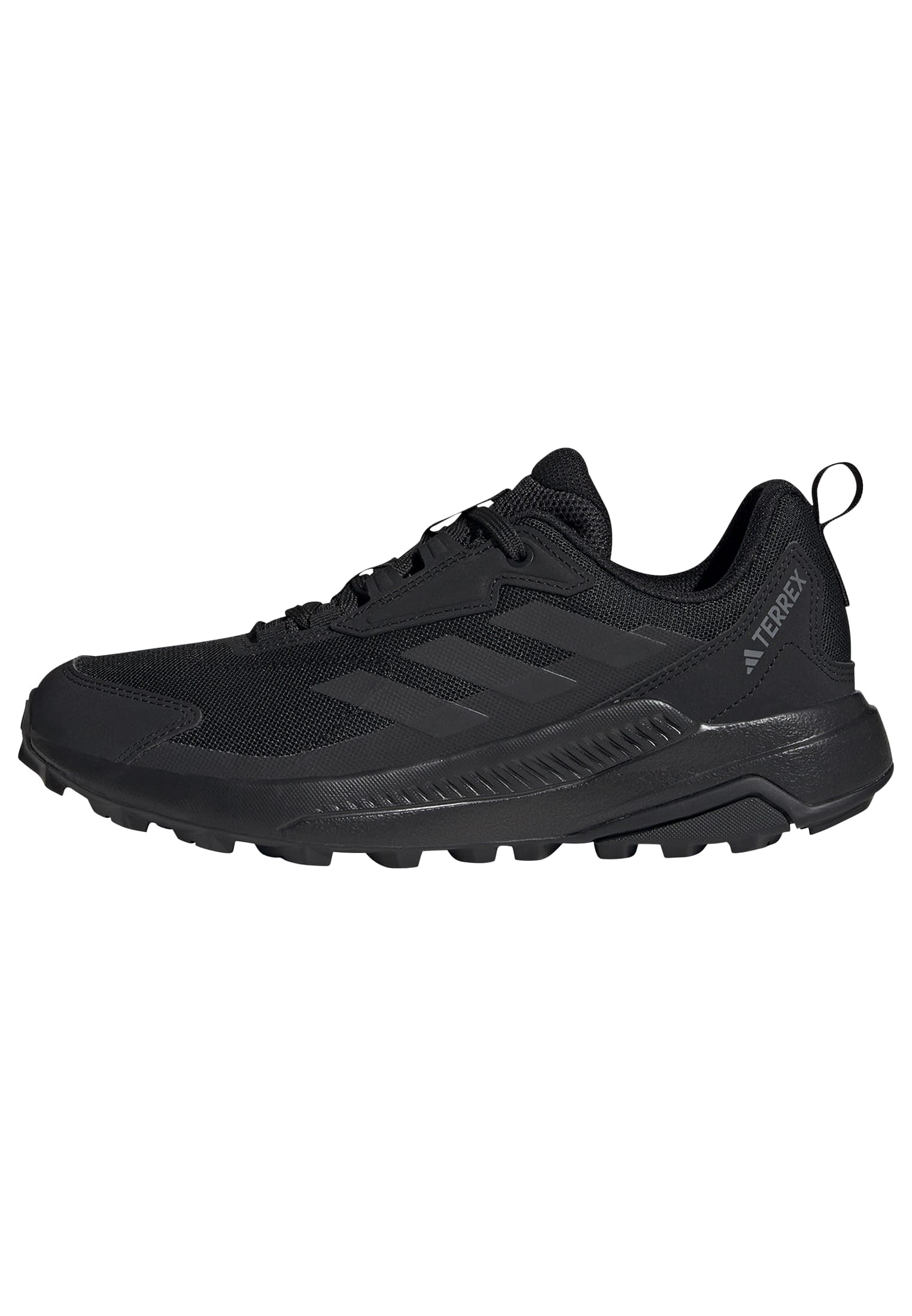
2. adidas Women’s Terrex Anylander Hiking Shoes
A textile-upper summer hiker with an EVA midsole and multidirectional lugs for hot, dry trails.
A textile upper keeps air moving on hot hikes, which is the whole point of this design. The EVA midsole — a foam layer that compresses and springs back under your foot — delivers soft support mile after mile, and the multidirectional lugs grip trails from every angle rather than only in a straight line. A personalized lace system pulls the midfoot secure without pinching across the top.
The arch support is what does the heavy lifting for most owners, and on steep and rocky ground the shoe holds its footing rather than feeling vague. It also takes an aftermarket orthotic insole and still wears comfortably all day from the first outing, which is a real convenience if you already have a prescription insert. Sizing runs true for most buyers, and the shoe looks neat enough that you will not feel odd wearing it into a coffee shop after the trail.
The arch support sits high and far back, and a few owners find it presses in the wrong spot. If you have a flat arch or a very sensitive instep (the top of your foot), try before committing. Others describe the shoe as stiff for the first few outings before it loosens. Size up half a step if you are between sizes and plan to wear thick socks.
What works best: breathable textile, soft EVA cushioning, and multidirectional lugs combine for a shoe that handles summer trails and warm-weather hikes without overheating your feet.
The catch to weigh: the pronounced arch placement suits most arches but not all, and the initial stiffness eases only after a few wears — not a defect, just a fit preference.
Suits you when: your hikes happen in warm weather and you want a lighter, breathable shoe that still grips.
Skip if: you need a very neutral arch or a shoe that feels broken-in on day one.
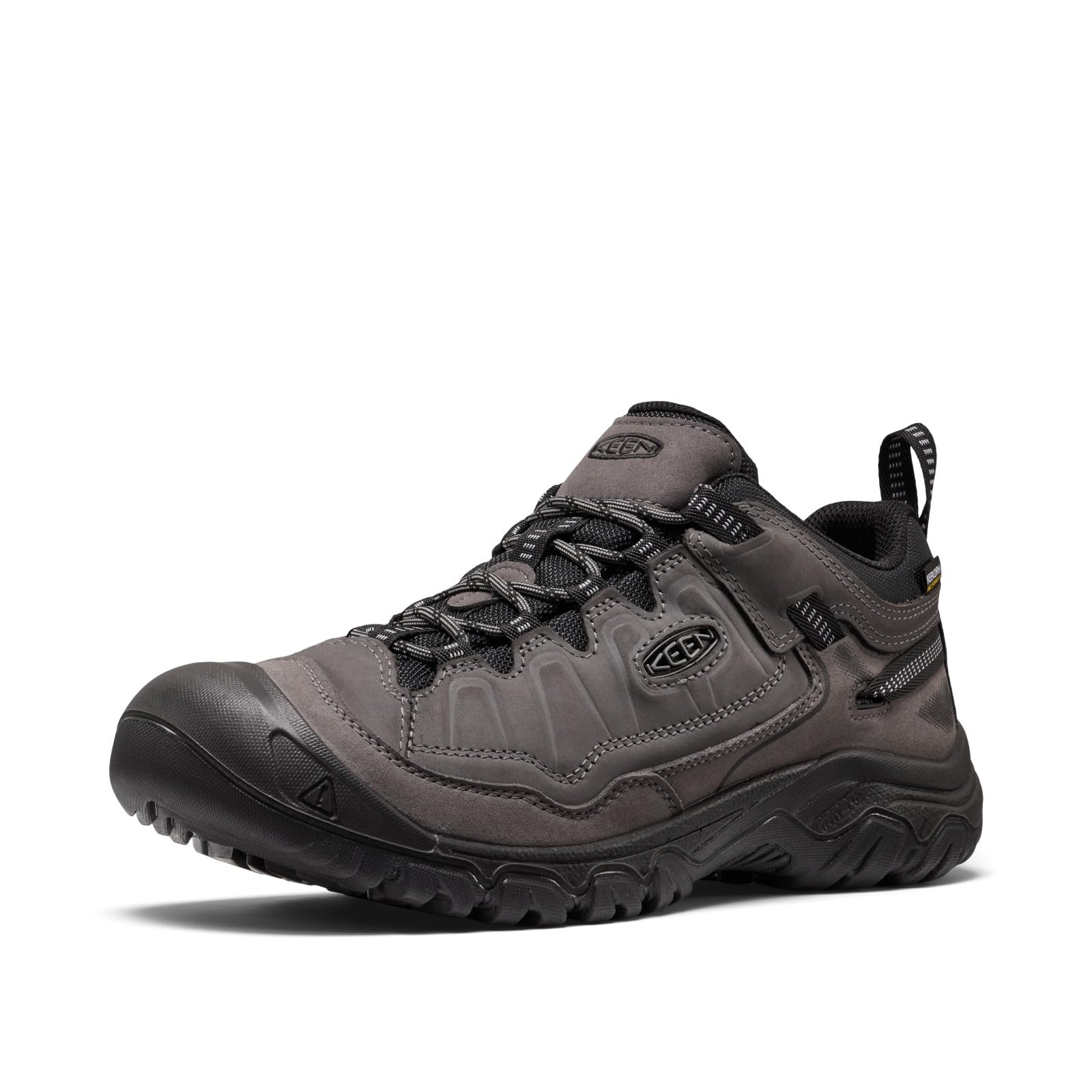
3. KEEN Men’s Targhee 4 Low Height Waterproof Hiking Shoes
A 530 g leather hiker with a KEEN.DRY membrane for rain, slush, and melting snow.
A KEEN.DRY membrane — a thin waterproof barrier sewn inside the shoe — keeps water out while still letting vapour escape, and a water-repellent treatment on the outside handles the first splash. The KEEN.FUSION bond is a glue-free construction that ties the upper to the sole, and it is built not to delaminate, which is the failure mode that ends most trail shoes early. Underneath, the KEEN.RUGGED outsole is rated twice as abrasion-resistant as rubber, so the lugs stay luggy season after season.
The fit leans generous, matching KEEN’s wider original-fit last, and the leather upper adds structure that holds the foot on descents. Owners routinely report wearing these through melting snow and slush with dry feet at the end, and the wide fit is comfortable for anyone who normally has to hunt for a broad last. At 530 g per shoe it is on the sturdier side of the list, but not by much against the leather construction it carries.
Waterproofing cuts both ways. A membrane that seals out water also holds in warmth, so on hot, humid hikes your feet will run warmer than in a breathable textile shoe. That is the trade you accept for all-weather protection. The outsole’s extra abrasion resistance and the glue-free bond are what make it the premium pick — you are paying for build longevity, not for lighter weight.
Built to go the distance
- KEEN.DRY membrane keeps feet dry in rain, slush, and melting snow
- Glue-free KEEN.FUSION bond resists delamination
- Abrasion-resistant KEEN.RUGGED rubber lugs hold their shape
- Wide original-fit last with leather structure
What the membrane costs you
- Warmer underfoot than a breathable textile shoe on hot days
- At 530 g it is a substantial shoe, not a fast-and-light option
Your pick if: you hike in wet or cold weather and want a shoe whose construction holds up across seasons.
Think twice if: most of your trail miles happen in heat and you want maximum airflow.
4. NORTIV 8 Men’s Waterproof Lightweight Hiking Shoes
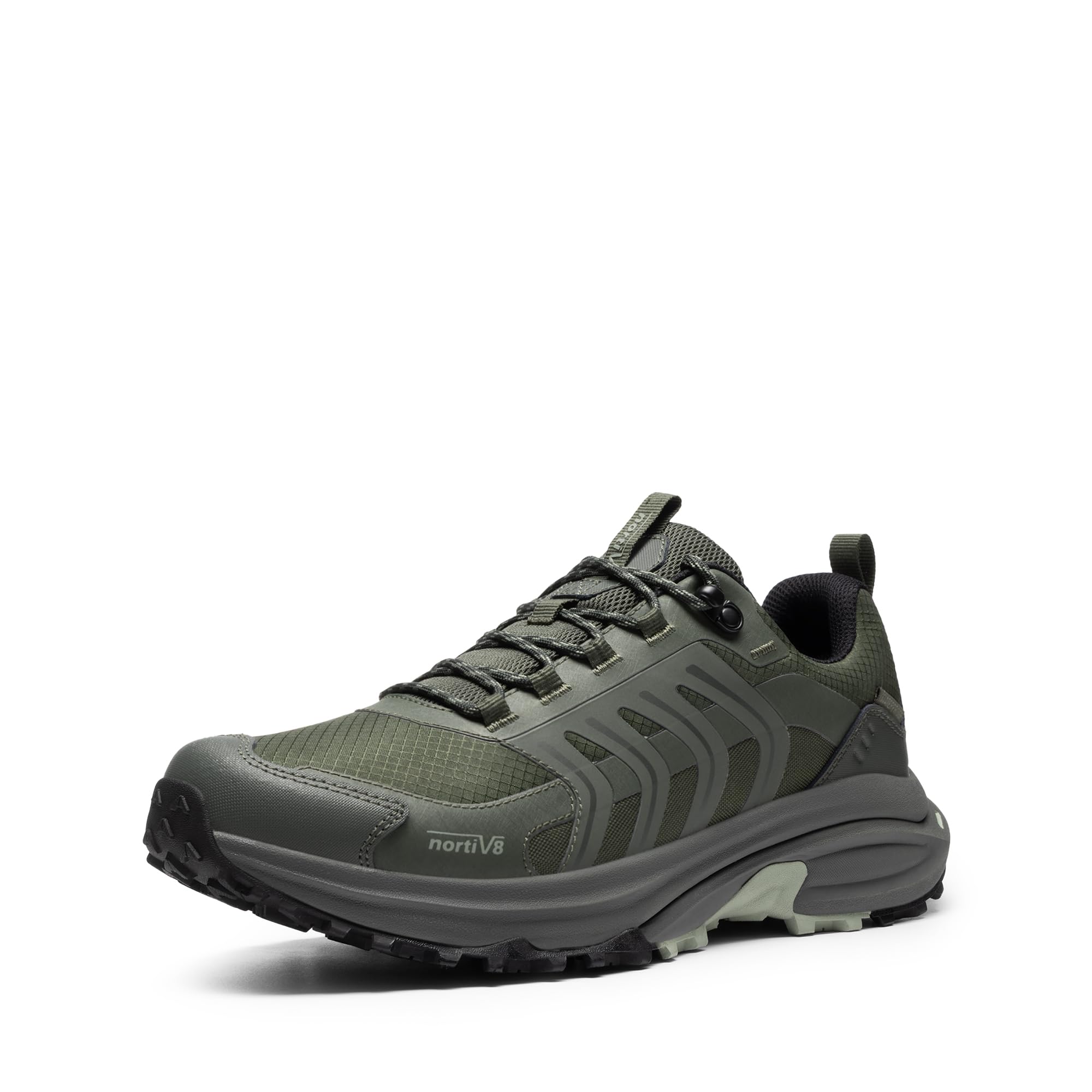
A waterproof hiker with a wide toe box and ankle support for broad forefeet on rocky ground.
Here the wide toe box is the headline, not an afterthought. Toes can splay on descents, which is exactly where a narrow shoe starts pinching. Ankle support is the other pillar, and it is what keeps the shoe feeling planted when the trail turns rocky. That combination explains why owners describe it as a very cushiony sneaker rather than a stiff hiking boot.
Water resistance and cushioning round out the package, and the shoe handles rocks and trails without drama. The 4-in-1 Rebound Tech is the brand’s cushioning-and-support system, and in daily wear it reads as springy underfoot rather than slab-like. Construction quality holds up across regular trail use, and buyers find the fit generous enough to wear thick socks without fighting the shoe.
The question a wide-foot buyer should ask first is whether the shoe stays snug through the midfoot, since a generous toe box can otherwise let the foot slide forward on steep descents. Lace it firmly over the instep and the ankle support does the rest. If you have narrow feet, the generous fit will feel loose — this shoe is aimed squarely at broad forefeet and anyone whose toes have suffered in pointier trail shoes.
Comfort where it counts: a wide toe box plus genuine ankle support and a cushiony ride make this the friendliest option for broad feet and long rocky walks.
What to plan around: the generous fit needs firm lacing through the instep so your foot does not slide forward on steep descents.
Best matched to: men with wide forefeet who want cushioning, ankle support, and water resistance in one shoe.
Not the one for: narrow feet, which will find the volume too roomy.
5. Columbia Men’s Strata Trail Low
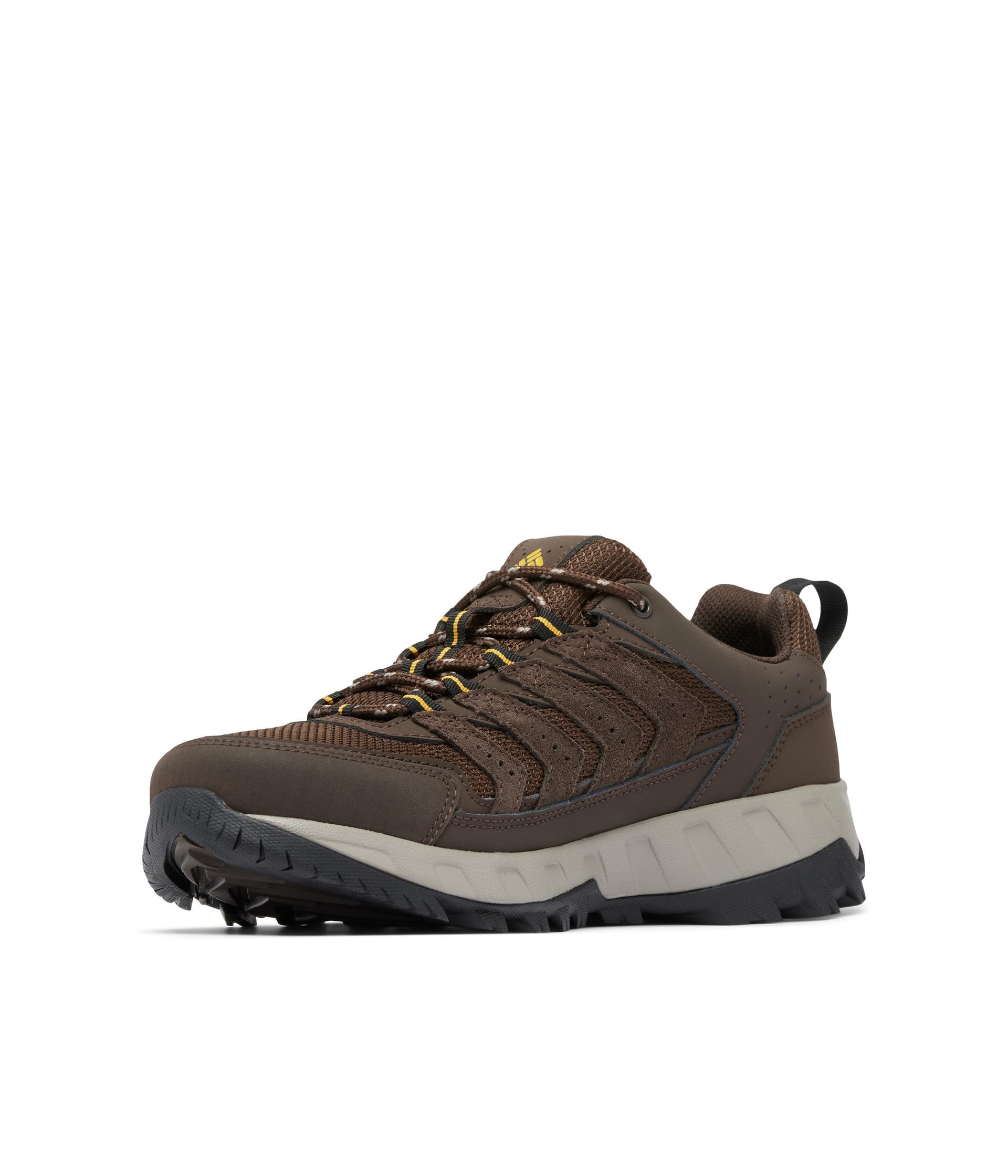
A lightweight waterproof low-cut hiker whose grip on rock is its standout trait.
Columbia engineered this low-cut hiker for supportive stability and all-around protection, and the waterproof build means a wet morning does not end the walk. The toe box runs roomy and the fit is true to size, which removes the guesswork from ordering. On rock, specifically, the grip is the feature that keeps coming up, and that is the terrain where a vague outsole usually betrays you.
The shoe comes in multiple colors and sizes, so finding a pairing that suits your kit is not a fight. Construction quality reads solid across the body of the shoe, and the foot support is designed to keep you going rather than sag mid-hike. Where this shoe differs from the Merrell above is the weight-to-structure ratio: Columbia aims lighter and more flexible, while the Moab builds in more underfoot support.
Durability is the honest question mark. The upper mesh is the part owners mention when something gives out, and a handful report it coming apart after a couple of months of hard use. Most people get far longer. If you are hard on shoes or hike rough scree weekly, expect to inspect the mesh seams periodically and treat this as a lighter-duty trail partner rather than a bombproof one.
What buyers settle on: reliable grip on rock, a roomy toe box, and a true-to-size fit that makes ordering straightforward.
Keep an eye on: the mesh upper is the wear point on this model, so heavy scree use will shorten its life compared with a full leather shoe.
Choose it for: rocky day hikes where grip on stone matters and you want a lighter, flexible feel.
Pass on it if: you need a leather-tough upper that shrugs off abrasive rock year after year.
6. New Balance Women’s Dynasoft Tektrel V1 Suede
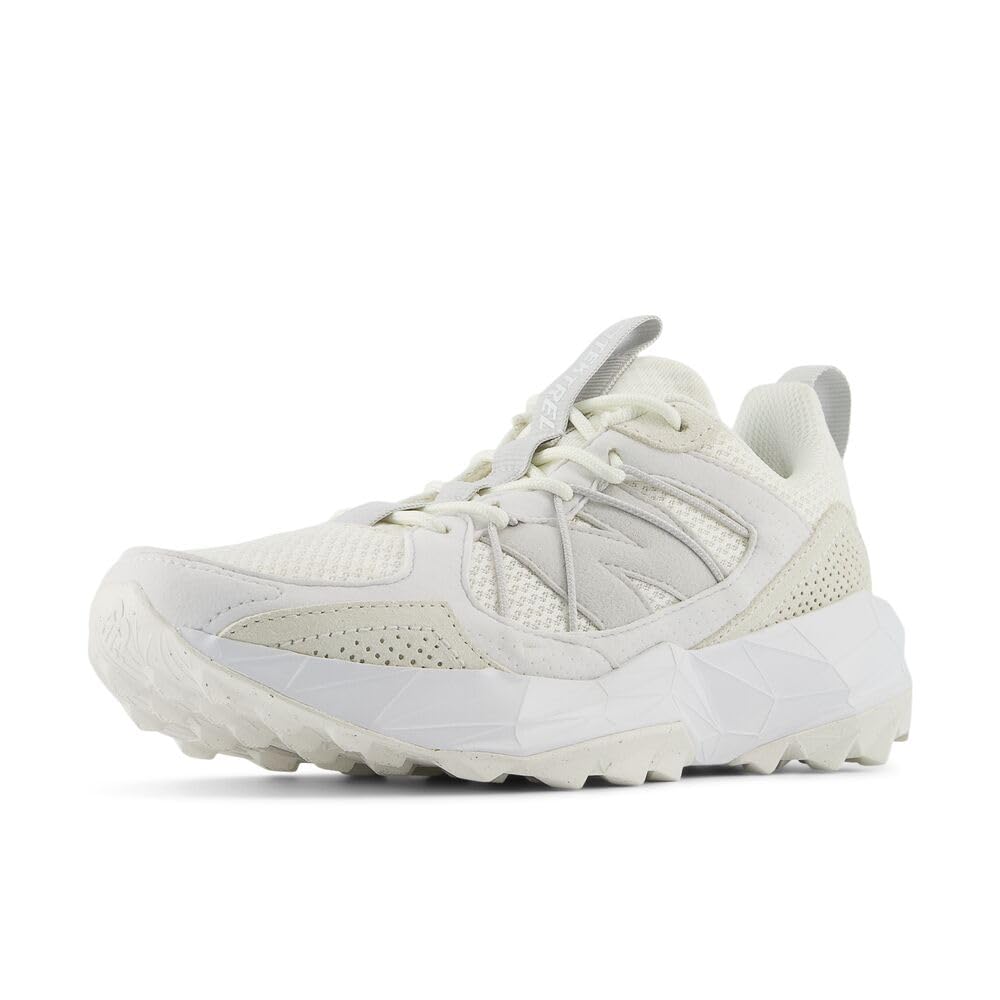
A 2.1-pound suede trail runner with aggressive lugs for gravel roads and light paths.
At 2.1 pounds, it is the lightest pair here by a wide margin — the Merrell Moab 3 sits at 3.06 pounds, so switching from a heavier hiker feels noticeably different on your feet. The aggressive lug design (deep treads on the outsole) keeps traction honest on loose dirt and gravel, so you stay sure-footed on descents. The dynamic midsole underfoot absorbs the chatter of a rough path, so your legs feel less beat up. A stylized suede upper finishes it off, which is why it draws compliments off the trail as well as on it.
Owners wear these for gravel-road walks, energetic activities, and everyday errands, and the shoe switches between those jobs without complaint. Comfort leads the feedback, with quality close behind, and the grip is what people remember once they hit a loose descent. The suede upper looks smart enough for a casual outfit, which is unusual for a lugged trail shoe and a big part of why it gets worn so often.
Two caveats worth knowing. The fit runs small for a portion of buyers, so consider going up if you are between sizes or wear thicker socks. And the arch support is modest — if you need pronounced support underfoot, plan to add an insole. Neither is a dealbreaker, but they change how you order.
Where it stands out: at 2.1 pounds the Tektrel is the lightest option here, and the aggressive lugs give it real grip to go with that low weight.
Order carefully: the fit runs small on some feet and the arch support is modest, so size up and consider an insole if you need more underfoot support.
Made for: women who want a light, good-looking trail shoe for gravel roads, light paths, and active errands.
Not ideal if: you need strong built-in arch support or a roomy fit straight from the start.
7. adidas Men’s Terrex Rockadia Hiking Shoe

A 2.43-pound trail shoe with no waterproofing, built for dry dirt and slippery roots.
Grip on trails with dirt and slippery conditions is where the Rockadia does its best work, and that is the terrain most people actually walk. It is light enough to wear on a travel day without feeling like you packed a boot, and the look is sharp enough that it pairs with jeans as easily as with hiking trousers. Fit leads the feedback on this model, which is a good sign for a shoe ordered sight unseen.
At 2.43 pounds it sits between the featherweight New Balance Tektrel and the structured Merrell Moab, which is a sensible middle for a shoe that has to work on mixed ground. Comfort stays steady across a long day, and the traction holds up on the loose, dusty surfaces where a smooth outsole starts to slide. Buyers also see solid value here — you get trail-specific grip without stepping into the premium bracket.
The catch is that this is a trail shoe, not an all-weather one. There is no waterproof layer to speak of, so a muddy slog will soak through and you will want to dry it out afterwards. If your hikes are mostly dry and dusty, that is no loss at all. If you regularly push through wet brush, budget for the waterproof alternative instead.
Why it grabs a spot
- Reliable traction on dirt and slippery trail surfaces
- Lightweight enough for travel days and long walks
- Fit lands well without needing a size guess
- Clean look that works off the trail too
The limit to accept
- No waterproofing, so wet brush and deep puddles soak through
- Trail-focused build, not a cushioned all-day commuter
Right for you if: your trails are dirt and mixed ground and you want grip without a heavy boot.
Look past it if: you routinely hike through wet conditions and need a waterproof membrane.
8. Oboz Men’s Bozeman II Hiking Shoe

A 12.9-ounce suede-leather hiker with a deep heel cup that looks as smart in town as on the trail.
The Bozeman II is built around a 1.6mm suede leather upper and a 100% recycled polyester lining, and the leather is what gives it the clean, versatile look that carries it off the trail. Inside, the O FIT insole uses triple-density EVA foam — three foam firmnesses layered under the foot — with cushioned pods, a molded shell, a deep heel cup, and arch support for stability. Kinertia cushioning in the midsole adds compression-molded EVA for adaptive comfort across varied ground.
At 12.9 ounces (366 grams) it is lighter than several leather options in this list, and the form-hugging heel cup plus sculpted mid-foot give it a locked-in feel on tricky terrain. The Trail Tread AT outsole uses a softer all-terrain rubber that balances traction against how long the tread lasts. Length runs true to size, and the forefoot and toe box are cut generously for room to move. Oboz also plants a tree for every pair of footwear sold.
One thing to know about fit: the standard width is a C in the heel and a D in the forefoot, and the shoe really suits medium-to-high volume feet with higher arches and insteps. If your feet are low-volume and narrow, the heel cup may feel looser than you like. For everyone with a fuller foot, the sculpted mid-foot and deep heel cup do exactly what a leather hiker should.
Worth knowing: the 1.6mm suede leather upper and deep-heel-cup insole combine for a shoe that feels structured and looks smart enough for everyday wear.
Fit matters: standard width runs C in the heel and D in the forefoot, so low-volume, narrow feet may find it roomy.
This one is for: men with medium-to-high volume feet who want a leather trail shoe that looks as good in town as on the trail.
Check the fit first if: your feet are narrow or low-volume, since the heel cup is cut generous.
9. Amazon Essentials Men’s Waterproof Hiking Shoes
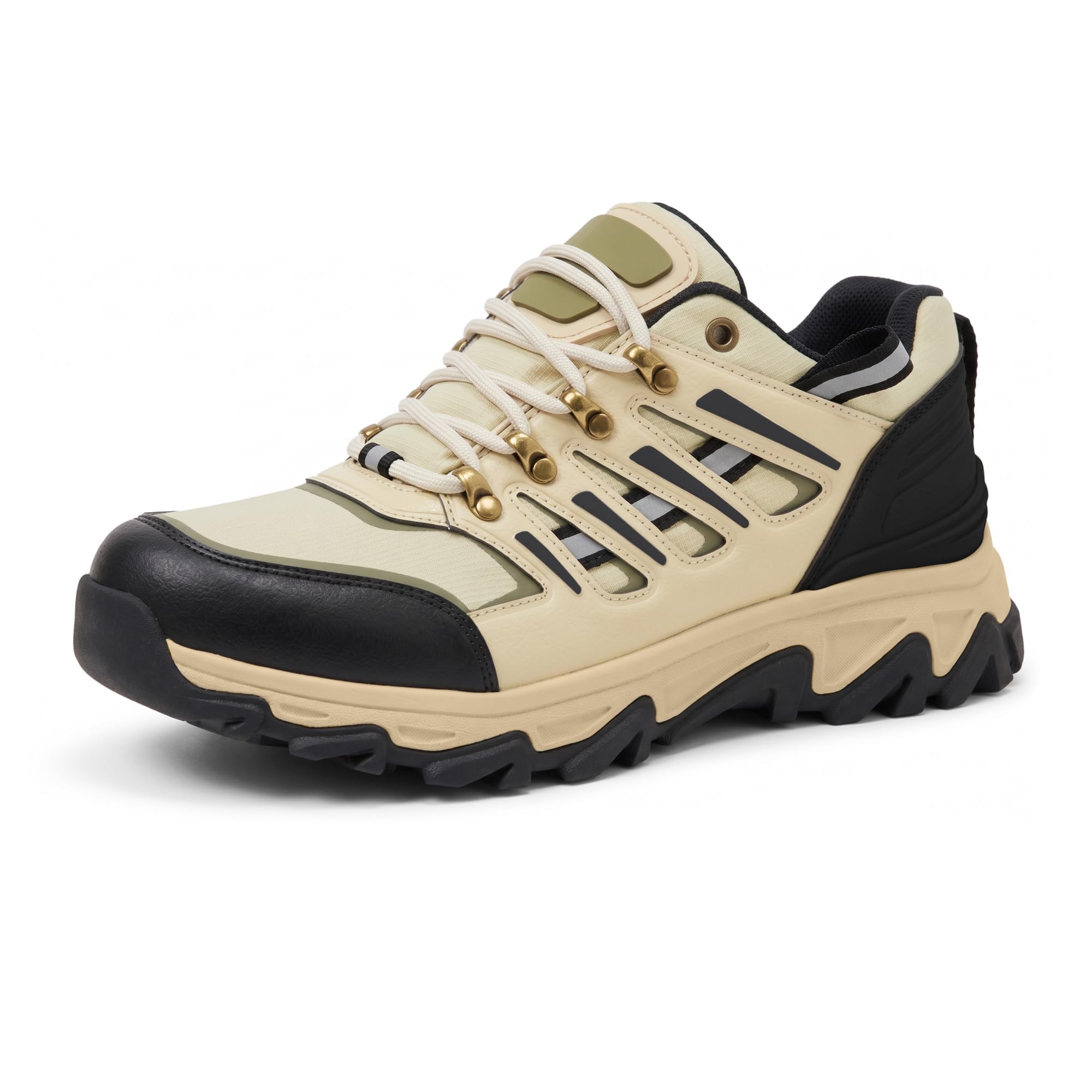
The entry-level pick for wet-weather walking, with a memory foam insole underfoot.
What you get here is straightforward: a water-resistant upper that handles damp grass and light rain, a memory foam insole that molds to your foot, and a build quality that reads better than its price tier. The appearance is neat enough to wear to work, and buyers who use these for dog walks and commutes find the value hard to argue with. It is a sensible starter shoe for anyone testing whether a hiking-style shoe suits their daily routine.
Comfort and water resistance lead the positive feedback, and the shoe handles a steady drizzle without turning your socks to sponges. Construction quality is the strongest part of the package, matching the fit and finish you would expect from a well-run house brand. For light trail use, errands in rain, and general outdoor walking, it does the job without pretence.
The caveats are honest. Durability gets mixed feedback — a few owners mention the seams giving out over time, though most do not. Fit runs tight for some wearers and generous for others, so check the size chart carefully, and the shoe feels heavier than a light trail runner for a portion of buyers. None of those stop it being the right entry-level pick; they just tell you what to expect for the money.
What the budget tier gets right
- Water-resistant upper for damp grass and light rain
- Memory foam insole molds to your foot
- Build quality reads above its price tier
- Neat appearance works for commuting and errands
Where to set expectations
- Seam durability is uneven over long use
- Fit varies between buyers, so check the size chart
- Feels heavier than a light trail runner to some feet
Solid starting point if: you want a waterproof-style shoe for wet-weather walks, commutes, and light trail use without committing to a premium build.
Step up if: you need a shoe whose upper and seams will hold up to regular rough-terrain abuse.
Know the Specs
Lug Pattern and Outsole Rubber
Lugs are the raised tread blocks under the shoe. Multidirectional lugs angle in several directions so they bite loose gravel and dirt from more than one approach, which is why trail shoes advertise them. The rubber compound matters too: softer all-terrain rubber grips better but wears faster on pavement, while abrasion-resistant rubber like KEEN.RUGGED is built to keep its shape longer. Match the outsole to where you actually walk.
Waterproof Membrane vs Breathable Upper
A waterproof membrane is a thin barrier sewn inside the shoe that stops water coming in while letting vapour escape. It keeps feet dry in rain, slush, and puddles, but it also holds warmth in. A textile upper moves air better and dries quickly, which suits hot, dry trails. Neither is better overall — the right answer depends on the weather you hike in.
Weight, Insole, and Cushioning
Weight is a trade-off, not a score. Heavier shoes usually carry more structure and underfoot protection; lighter shoes feel quicker. The insole and midsole decide how the shoe feels underfoot: a supportive insole with a deep heel cup holds the foot in place, while EVA foam midsole layers absorb impact. If you have high arches, look for a shoe with genuine arch support built into the insole.
Toe Box, Heel Cup, and Width
Toe box width and heel cup shape decide blister risk more than any other spec. A generous toe box lets toes splay on descents; a form-hugging heel cup stops the foot sliding. Width is cut on a last — the foot-shaped mold the shoe is built around — so a wide last genuinely fits a wide foot. Try shoes late in the day and wear the socks you hike in to get the sizing right.
Common Questions
Do I need waterproof outdoor shoes for day hikes?
How should outdoor shoes fit my toes and heel?
Is a lighter shoe always better on the trail?
How long do outdoor shoes typically last?
Can I wear my orthotic insoles inside these hiking shoes?
What is the difference between a trail runner and a hiking shoe?
Are wide-width outdoor shoes genuinely wider?
Should I wear outdoor shoes around the house before a hike?
Does the type of insole really matter in an outdoor shoe?
Do outdoor shoes work for everyday city wear too?
The Bottom Line
For most people buying outdoor shoes, the safest single pick is the Merrell Men’s Moab 3. Its Vibram outsole grips mixed terrain, the supportive insole wins over wide feet, and the new softer midsole means less break-in discomfort. If you need wet-weather protection for cold or snowy conditions, the KEEN Men’s Targhee 4 Low is the one to reach for, with its KEEN.DRY membrane and glue-free construction built to last. And for a lightweight everyday trail shoe that suits gravel roads and casual wear, the New Balance Women’s Dynasoft Tektrel V1 delivers comfort and grip in a 2.1-pound build. Take the Moab as your default, then step to a specialist pick only if your terrain or weather demands it.
How we choose
We do not accept paid placement. Every pick is matched to a real buyer and a real use-case; we do not hands-on test units.
Sources
Specifications: manufacturer listings and product documentation. Review insights: verified customer reviews, as of November 2026. Pricing: not shown on this page (it changes often); check the current price via the retailer link.
As an Amazon Associate, Tactical Gear Guy earns from qualifying purchases. This does not affect which products we feature.