Specs are compiled from manufacturer listings and verified buyer reviews and can change over time — please confirm the key details on the product page before buying.
Most outdoor bunny houses fail for one boring reason: they are smaller than the listing photos suggest, and the wood is thinner than a rabbit’s teeth. For a hutch that survives a full outdoor season, weigh floor space first and frame strength second; paint and trim come last.
This guide is built by comparing the manufacturers’ published specifications and the patterns across verified customer reviews, so you get each pick’s real strengths and trade-offs instead of marketing spin.
Run space, tray depth, and roof coverage are the three things that decide whether a hutch works outdoors or becomes a soggy mess. Here is how to sort the real contenders from the pretty failures when you shop for the outdoor bunny house. Floor space and frame strength decide whether a hutch lasts the season; everything else is decoration.
Top Picks

How To Choose The Best Outdoor Bunny House
An outdoor hutch has to do three jobs at once: keep a rabbit dry, keep a rabbit contained, and let you clean it without swearing. Most hutches get one of those right. The picks below are the ones that got two or three.
Floor space beats painted trim
A rabbit needs room to turn around and stretch, and that space lives on the ground floor, not in the raised sleeping box. Look at the overall length first — a 62-inch hutch and a 36-inch hutch sit in completely different leagues for a grown rabbit. If two rabbits share the enclosure, push toward the longest footprint you can fit.
Raised floors and pitched roofs do the weather work
A hutch with an asphalt-coated or slanted roof sheds rain instead of pooling it. Pair that with a raised bottom and you keep the animal off damp ground. Wood standing directly on wet grass is the quiet killer of outdoor hutches.
Trays, wire, and locks decide your daily life
A deep pull-out tray saves you from scraping a shallow pan. A wire mesh floor keeps feet off waste but must be small enough that paws do not drop through the gaps. And metal slide-bolt locks hold far better than a simple wooden turn-piece against a raccoon working a door overnight.
Side-by-Side Comparison
| Model | Best For | Dimensions | Weight | Levels / Doors | Amazon |
|---|---|---|---|---|---|
| GDLF 62″ Rabbit Hutch★ Best Overall | Most families, most rabbits | 62″L x 21″W x 37″H | 49.7 lbs | 2 levels / 3 doors | Amazon |
| PawHut 46″ A-Frame HutchBest for Lawn Rotation | Daily lawn rotation | 45.75″L x 24.5″W x 20.75″H | 19 lbs | — | Amazon |
| FunXplore Hutch with CastersMost Doors | Wheel-it-around cleaning | 40.8″L x 22.8″W x 28.6″H | 35.2 lbs | — / 6 doors | Amazon |
| Mayugardening 2-Story Hutch | Chewers and gnawers | 55.3″L x 17.8″W x 34.5″H | 38.6 lbs | — / — | Amazon |
| PawHut Metal-Frame Hutch | Legs that won’t rot | 36″L x 17.75″W x 27.5″H | 25.5 lbs | — / — | Amazon |
| GUTINNEEN Two-Level Hutch | Chickens and ducks too | 51.6″L x 25.2″W x 36.2″H | — | 3 levels / — | Amazon |
| GUTINNEEN 87.8″ Run Hutch | Two or three bunnies | 87.8″L x 20.5″W x 33.7″H | — | 2 levels / 4 doors | Amazon |
| GEGURI Cedar Hutch | Cedar over fir framing | 48″L x 24″W x 36″H | — | — / 3 doors | Amazon |
Detailed Reviews
1. GDLF 62″ Rabbit Hutch with Ramp and Cleaning Tray
Our pick — 4.0+★ from 750+ verified ratings; the strongest balance of quality and price.
The longest footprint on this list at 62 inches — space a grown rabbit can actually use.
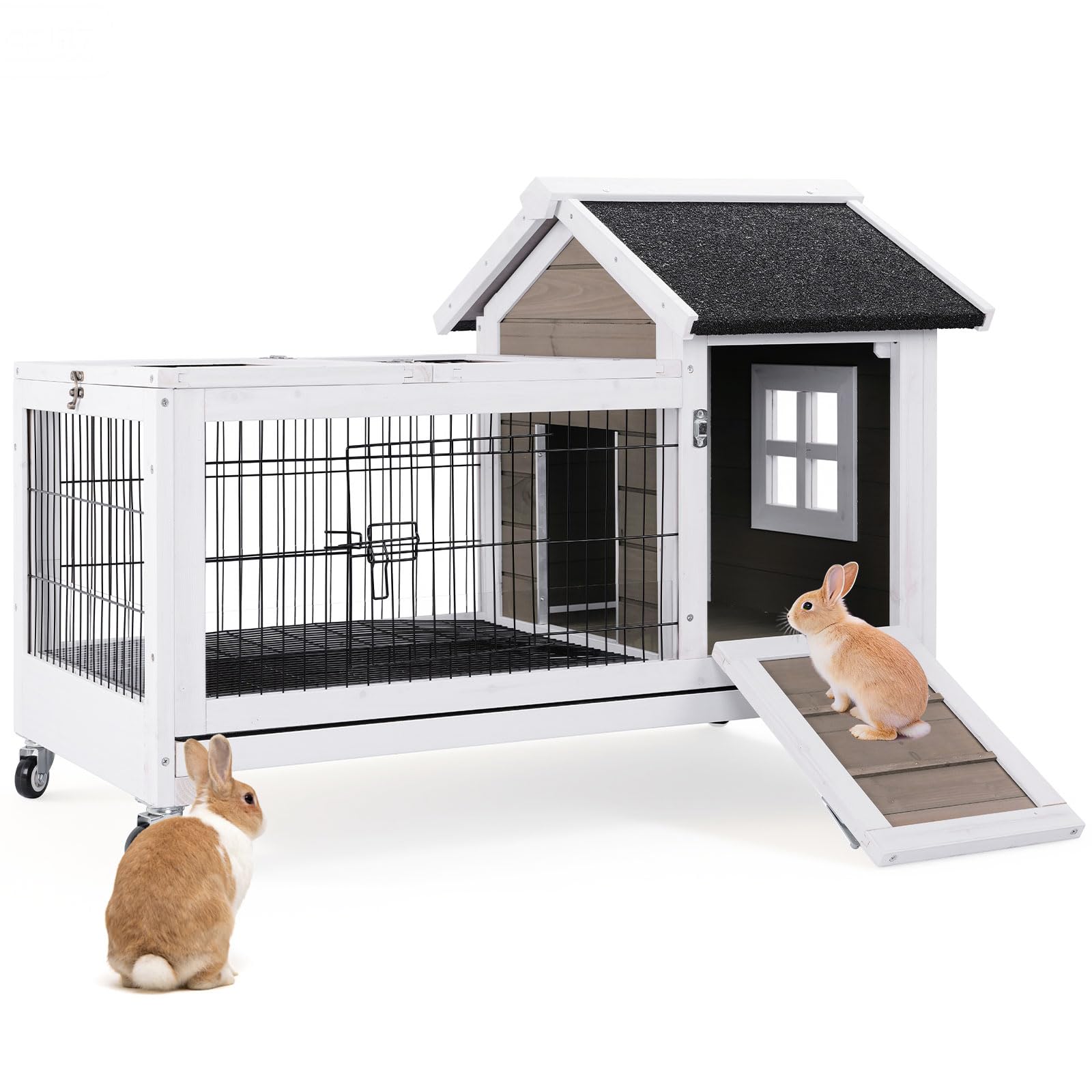
That 62″L x 21″W x 37″H frame is the whole argument. It runs 21 inches wider in length than the FunXplore hutch and stands taller too, and the maker sizes it for 2-3 rabbits or 3-4 guinea pigs. If your rabbit paces a cramped hutch, the extra 26 inches of run length over a 36-inch model gives it room to stretch out.
The build is natural fir wood sealed with a waterproof non-toxic varnish, and the raised upper house measures 27.5″L x 18″W x 20.5″H. Your rabbit reaches it up a ramp with timber ridges cut across the surface so paws do not slide back down. A grid door lets you watch without opening the cage, and the pitched roof means the run stays usable in rain.
What wins people over is the quality of the assembled structure — it goes together cleanly with clear instructions, extra hardware in the box, and a look that reads far better than the flat-pack price tier suggests. The plastic tray lifts out for cleaning, which is the difference between a five-minute job and a twenty-minute one.
Be straight about the trade-offs. The wood is on the soft side, and rabbits that chew hard will test it, so plan to line the edges or supervise. The pans are also shallow, and bedding can escape when you slide the tray. Treat the tray as a quick-flick clean, not a deep scrape.
Where this hutch earns its place
- Longest overall footprint of the eight picks at 62″L x 21″W x 37″H, sized for 2-3 rabbits.
- Ramp with carved timber ridges gives paws real grip on the climb.
- Pitched roof keeps the run dry so your rabbit can stay out in light rain.
- Removable bottom tray makes routine cleaning quick rather than dreaded.
- Arrives well packaged with clear instructions and spare hardware.
Where it asks a little back
- Soft fir wood is no match for a determined chewer without extra protection.
- Shallow trays let bedding spill when you pull them out.
- Wooden latches on the doors are the weak point — swap them for metal clips.
Reach for this if: you have two or three rabbits or a pair of guinea pigs and want the most usable floor space on this list.
Chance the trade: you have a heavy chewer and no appetite for adding protective edging to the frame.
2. PawHut 46″ x 24″ Wooden A-Frame Outdoor Rabbit Hutch
At 19 pounds you can pick this up and move it to fresh grass before breakfast.
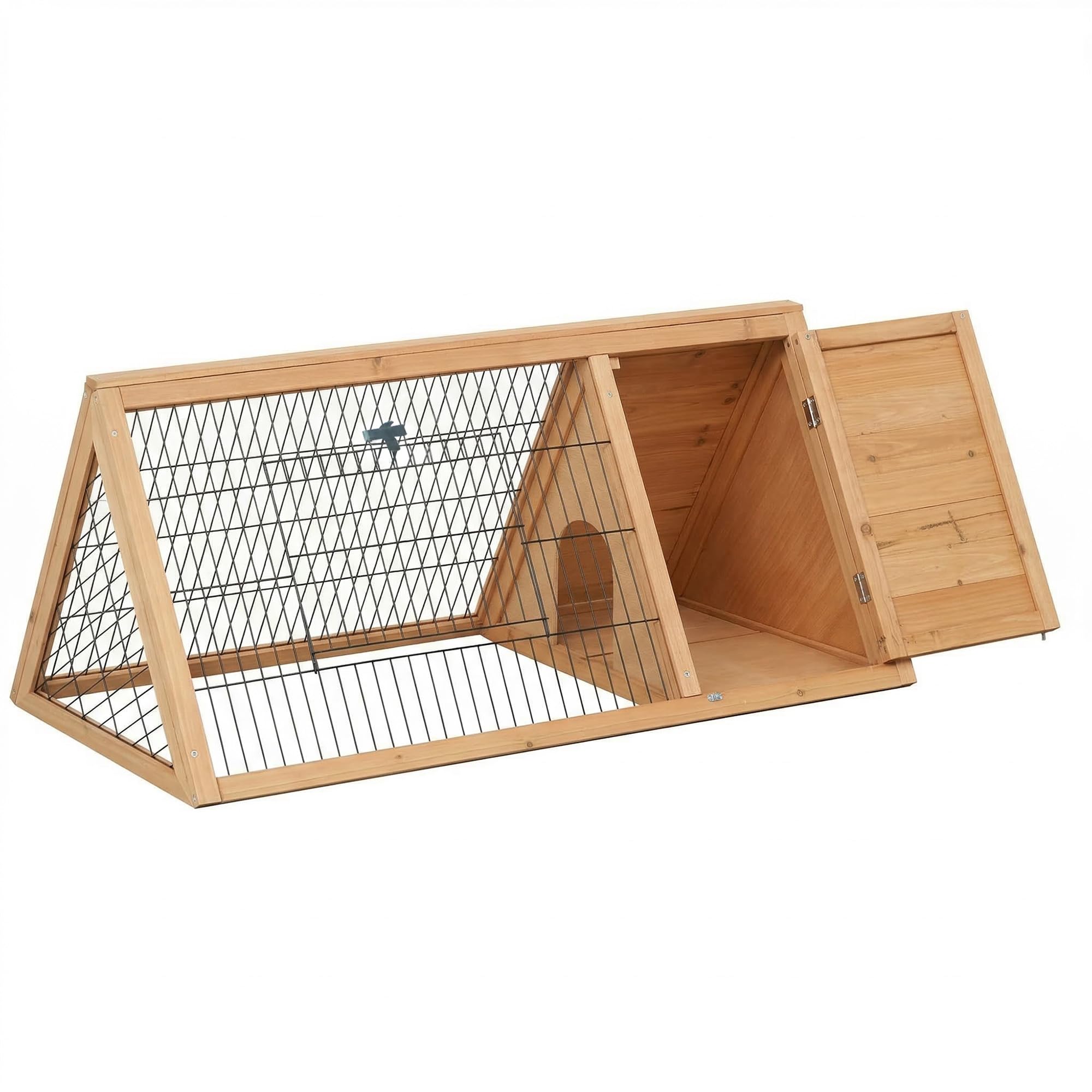
That weight is the entire pitch. The GDLF hutch tips the scales at 49.7 pounds and stays where you set it down; this PawHut is a fraction of that and shifts with one hand. You can move it to fresh grass daily, which stops a lawn patch being grazed down to dirt.
The triangular A-frame at 45.75″L x 24.5″W x 20.75″H splits into a cosy closed sleeping section and an open wired run. Two doors give you feeding and cleaning access, and the fir wood frame with wire mesh keeps air moving while blocking predators. The maker lists it for small and medium breeds, and owners run it for tortoises, guinea pigs and chicks as well.
Size is the thing people are happiest about — it delivers more usable internal room than the compact silhouette suggests, and assembly is genuinely simple. It suits a young rabbit or a small-to-medium breed that spends part of the day out of the hutch anyway.
Honest limit: the floor panel is the weak point. The wood feels light in hand, and a determined rabbit working a corner overnight can break through. So treat it as a daytime run and bring your rabbit in at night, or reinforce the base before trusting it with a digger.
The mobile advantage: 19 pounds of fir frame is easy to reposition, which is why people use it as a rotating outdoor pen rather than a permanent home.
The floor is the question mark: flimsy base panels are the recurring gripe, and the simple wooden latches want replacing with something metal before you leave a rabbit unattended.
Fits best: a small or medium rabbit that gets supervised outdoor time and a fresh patch of grass each day.
Not for: a large breed or a rabbit left outside overnight without reinforcing the floor.
3. FunXplore Rabbit Hutch with Casters and Urine Guards
Six doors and four locking wheels — this one is built around your cleaning routine, not the rabbit’s.
Three urine baffles run along the base to stop waste and hay escaping, and the trays sit deeper than most. The wire mesh floor lifts your rabbit off the tray so it is not standing in its own mess. Ten plastic bags come in the box so you can line the tray and lift the whole mess out in one motion.
Six doors is the most on this list — the GDLF hutch has three — and every one of them opens onto a different section. That is how you reach a corner without dismantling anything. The four locking casters let you roll the whole hutch from patio to lawn and lock it in place again, which is why people run it as a half-indoor, half-outdoor home.
Constructed from spruce with an eco-friendly waterproof non-toxic varnish, at 40.8″L x 22.8″W x 28.6″H. The quality of the assembly draws the most praise, and owners compare it favorably against farm-store hutches they handled in person.
The catch is footprint and finishing. At 40.8 inches long it is a tighter home than the GDLF, and one buyer measured it too snug for a large lop. The wheel mounts ship without pre-drilled holes, so drill pilot holes before driving screws or you will split the wood.
Built for the person doing the cleaning: six doors, deep leak-guard trays and locking casters turn a chore into a two-minute pass.
Size honestly limits it: this is a compact hutch, and rabbits at the larger end of the breed range will feel it.
Pick it when: you want to wheel your rabbit between indoors and the garden and value easy access over maximum floor area.
Think twice if: your rabbit is a large breed, or you are not comfortable drilling pilot holes for the casters.
4. Mayugardening 2-Story Bunny Cage with Lockable Wheels
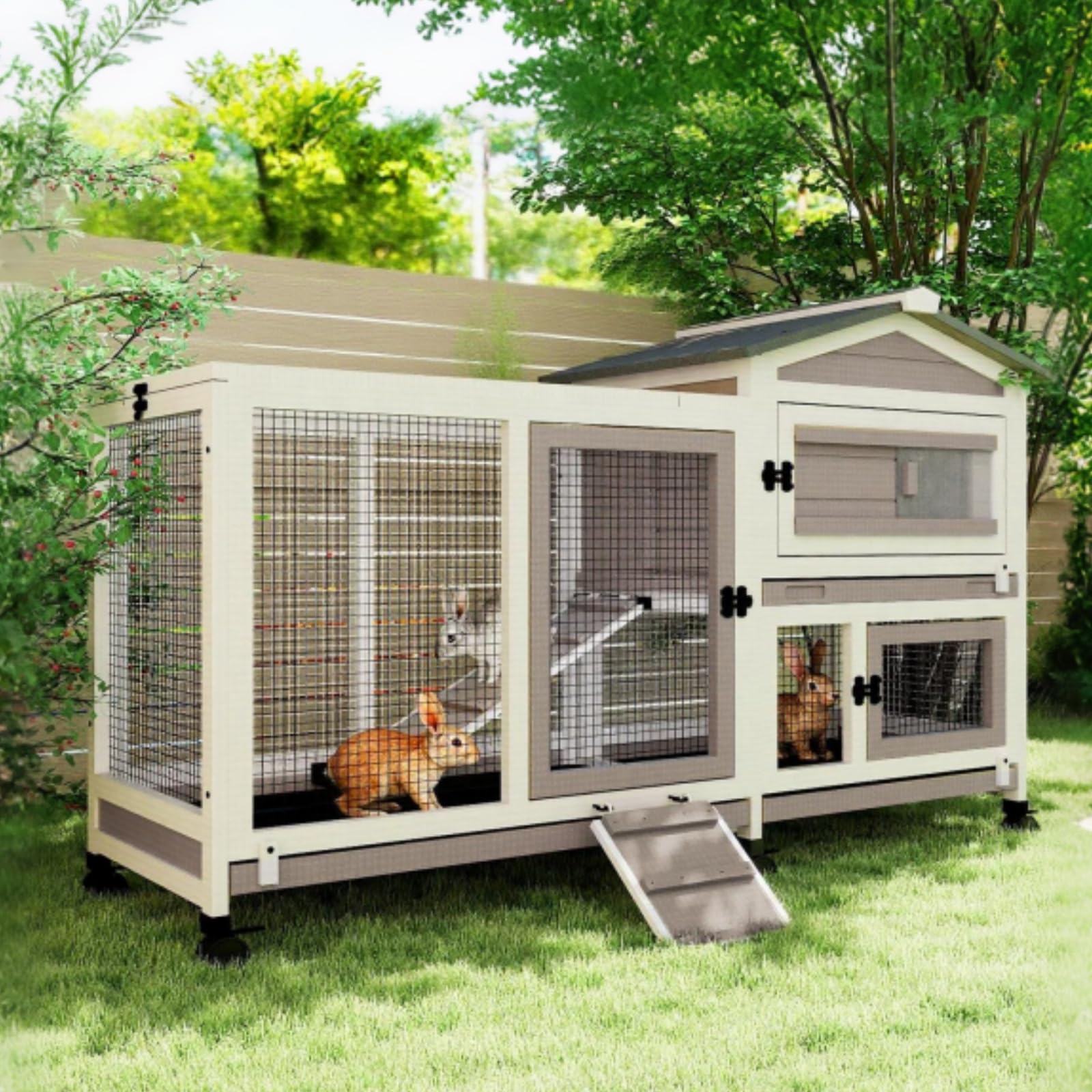
Metal guarding on both ramp edges — aimed squarely at the rabbits that eat their own furniture.
Wooden ramps are the first thing a bored rabbit destroys. This one has metal edges on both sides, and the maker claims the metal edges double its lifespan versus a bare wooden ramp. You get three separate deep trays in smooth one-piece molded plastic — no seams to leak, just a smooth surface you wipe in seconds.
The roof is asphalt-coated for a dry interior, and the whole frame is waterproof and raised off the ground. Six locking casters let you roll it out for sun or into a new spot for cleaning. The 55.3″L x 17.8″W x 34.5″H frame is a two-level layout with an upper sleeping box and a lower run, and the maker sizes it for 1-2 rabbits.
Owners are clear that the plastic trays and the clean-up ease are the best part of living with it day to day. Set aside an afternoon for assembly, and work with a helper if you can — it goes together in a few hours that way rather than dragging.
What to watch: the wood is a soft grade. A heavy chewer will find the unprotected panels quickly, so the metal-guarded ramp only solves half the problem. Route your cabling and bedding away from the corners if your rabbit likes to gnaw.
The selling points that hold up
- Metal edges on both sides of the ramp tackle the number-one chew failure point.
- Three smooth molded trays wipe clean in seconds and resist leaks.
- Asphalt-coated roof keeps the interior dry in wet weather.
- Six locking casters make repositioning a one-person job.
What you are signing up for
- Soft wood grade elsewhere on the frame still invites chewing.
- Assembly takes a few hours and is far easier with two people.
- At 17.8 inches wide it is a narrower footprint than the long single-level hutches.
Suits: owners of a rabbit that has already chewed through one ramp and wants a two-level layout with trays that clean fast.
One compromise: a narrow frame means less turning room than the wider single-level options.
5. PawHut Metal-Frame Rabbit Hutch with Asphalt Roof
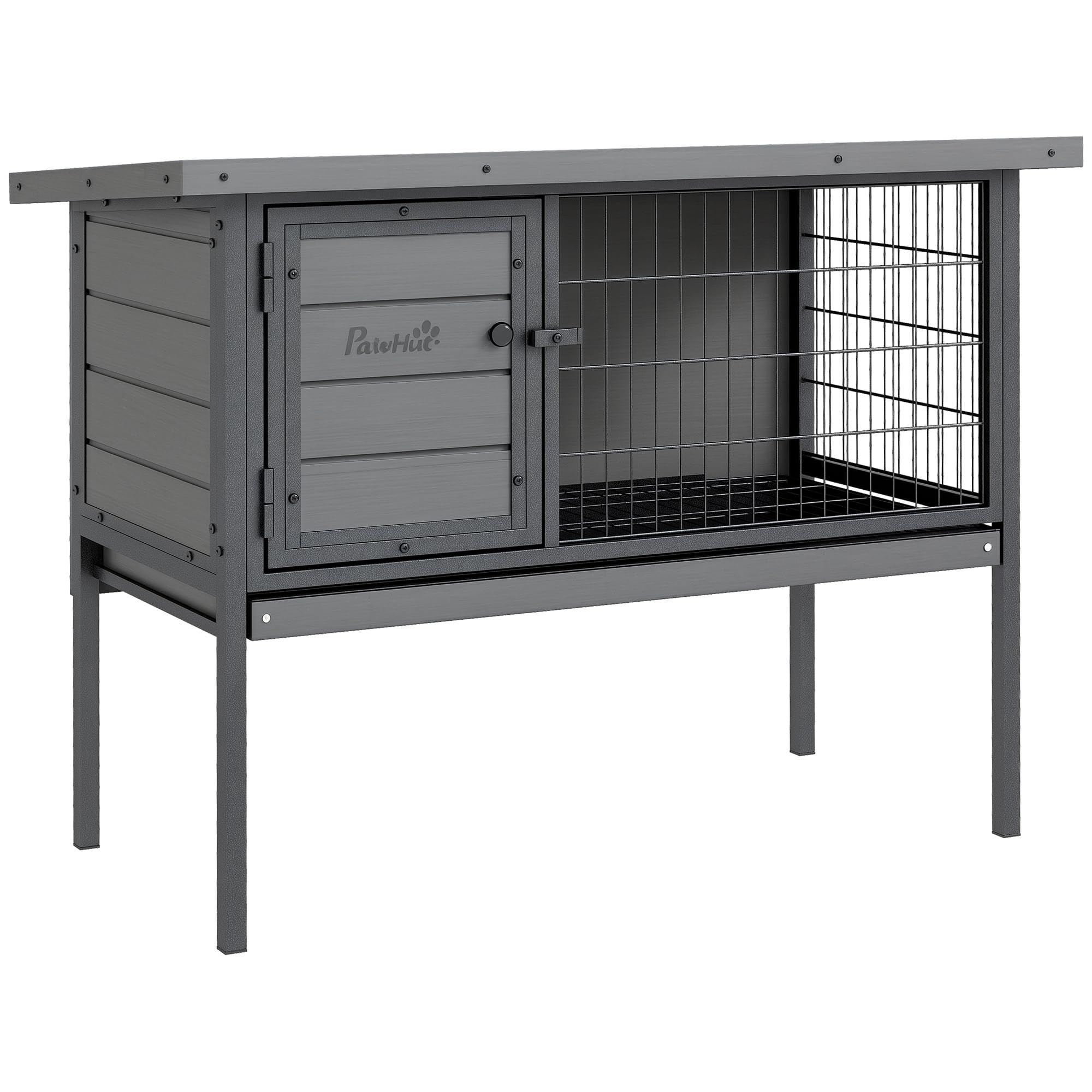
Fir wood welded to a steel frame — the legs will not rot in wet grass.
Most hutches on this list put bare wood directly on the ground. This PawHut welds fir wood to a strong steel frame and coats the whole thing in weather-resistant paint, so the legs survive a garden year round instead of softening at the base. The asphalt roof shields against mild weather and the raised bottom keeps the floor off damp ground.
The measurements are 36″L x 17.75″W x 27.5″H, with a main house of 32.25″L x 15.25″W x 13.75″H and a 30.5″ x 14.75″ tray. The maker sizes it for 1-2 rabbits, and it suits guinea pigs and chinchillas too. Lockable doors, a galvanized wire window for air and visibility, and a removable pull-out tray with an openable roof for clean-up.
Assembly is genuinely quick — one owner’s 12-year-old put it together unaided in under 40 minutes. The metal wire frame above the litter tray is the part people single out as smart design.
Where it falls down is room. This is the smallest hutch on the list at 36 inches long, and owners of Dutch rabbits report their animals have nowhere to run inside it. The interior height also reads lower in person than on the page. The bottom grate gaps are wide enough that small feet can catch, so plan a solid flooring layer over the wire.
The steel frame is real: welded metal legs mean this hutch holds up to a wet garden in a way bare wooden feet do not.
Small by design: at 36″L x 17.75″W it is a shelter for one or two small rabbits, not a full-time home for a larger breed.
Go for it if: you need a hutch whose legs survive wet ground and you have one small rabbit or a pair of guinea pigs.
Look past it if: your rabbit is a larger breed — this footprint will feel cramped.
6. GUTINNEEN Large Two-Level Rabbit Hutch with Waterproof Roof
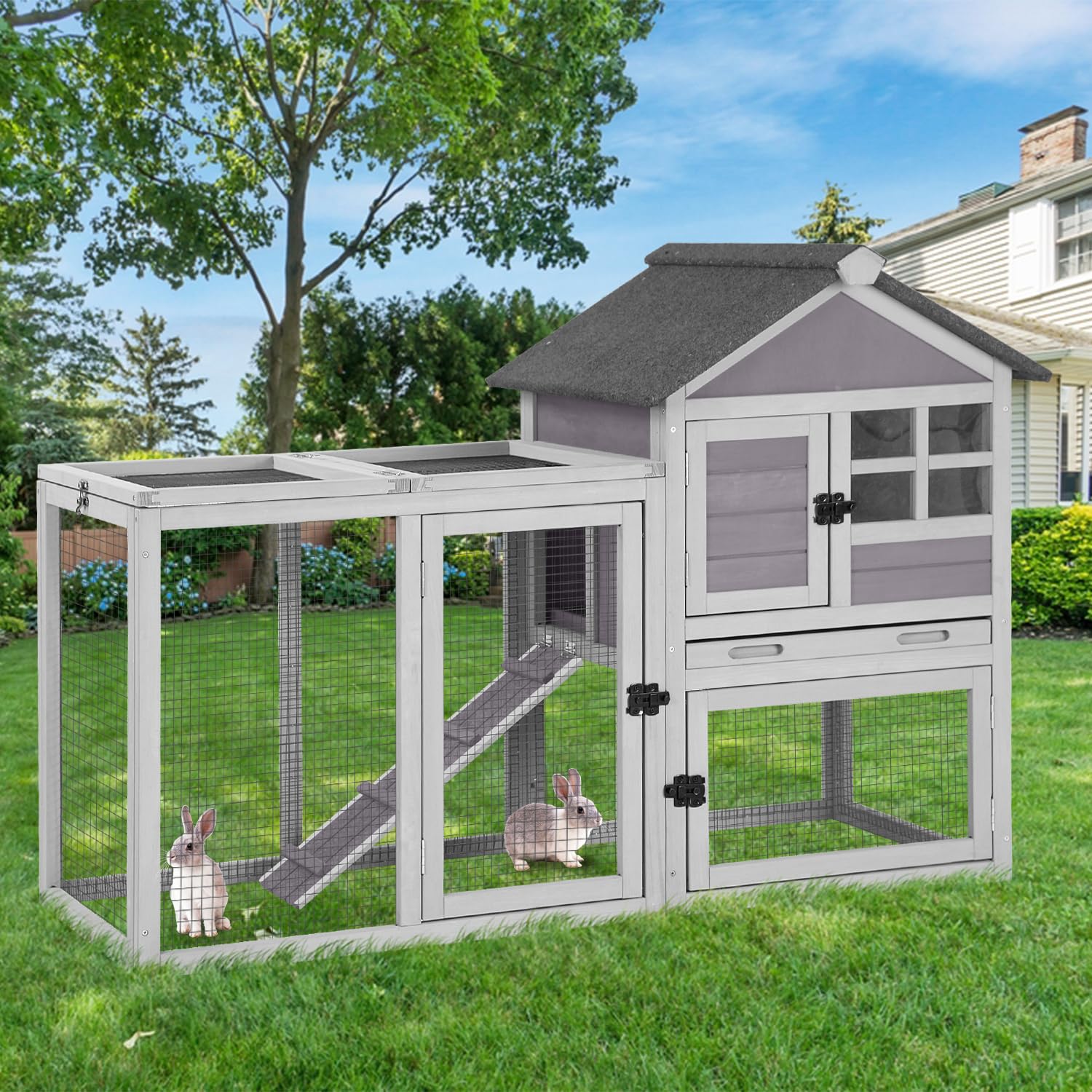
Sized 51.6″L x 25.2″W x 36.2″H and built for chickens and ducks as readily as rabbits.
The maker is explicit that this is larger than standard coops and works for chickens, ducks or bunnies. That flexibility is why it lands here. The two-level layout puts a sleeping box up top and a broad run below, giving your animal separate zones for rest and activity instead of one flat box.
Acrylic viewing windows let you check on your pet without opening a door and starting a stampede. Wire mesh walls keep air moving so the interior stays fresh and less odorous. Slanted waterproof roofs shed rain rather than pooling, and the improve design lifts the floor off ground pests and cold damp. Multiple latched doors make feeding and cleaning quick.
Assembly is a real strength — pre-drilled holes and all parts included, with owners finishing in well under an hour. The ramp gets used confidently, and the appearance pleases.
The honest weak spots: hardware quality and mesh sturdiness. Screws have snapped during assembly, and the wire mesh has been reported as flimsy. The size also divides opinion for a pair of rabbits, with some finding it snug once full-grown. Budget for a handful of replacement screws and check the mesh tension on arrival.
Why it earns the chicken-and-duck slot
- 51.6″L x 25.2″W x 36.2″H frame suited to chickens, ducks and rabbits alike.
- Slanted waterproof roof keeps the interior dry in sun, wind and light snow.
- Acrylic windows let you check on pets without disturbing them.
- Pre-drilled holes make setup fast, often inside an hour.
The honest trade-offs
- Included screws have been reported snapping during assembly — have spares ready.
- Wire mesh can arrive flimsier than expected.
- Snug for a pair of full-grown rabbits.
Best for: a mixed backyard where rabbits, chickens or ducks might swap in and out of the same enclosure.
Caveat to plan for: reinforce the hardware and mesh before you rely on it as a predator-safe night house.
7. GUTINNEEN 87.8″ Rabbit Hutch with PVC Bottom Layer
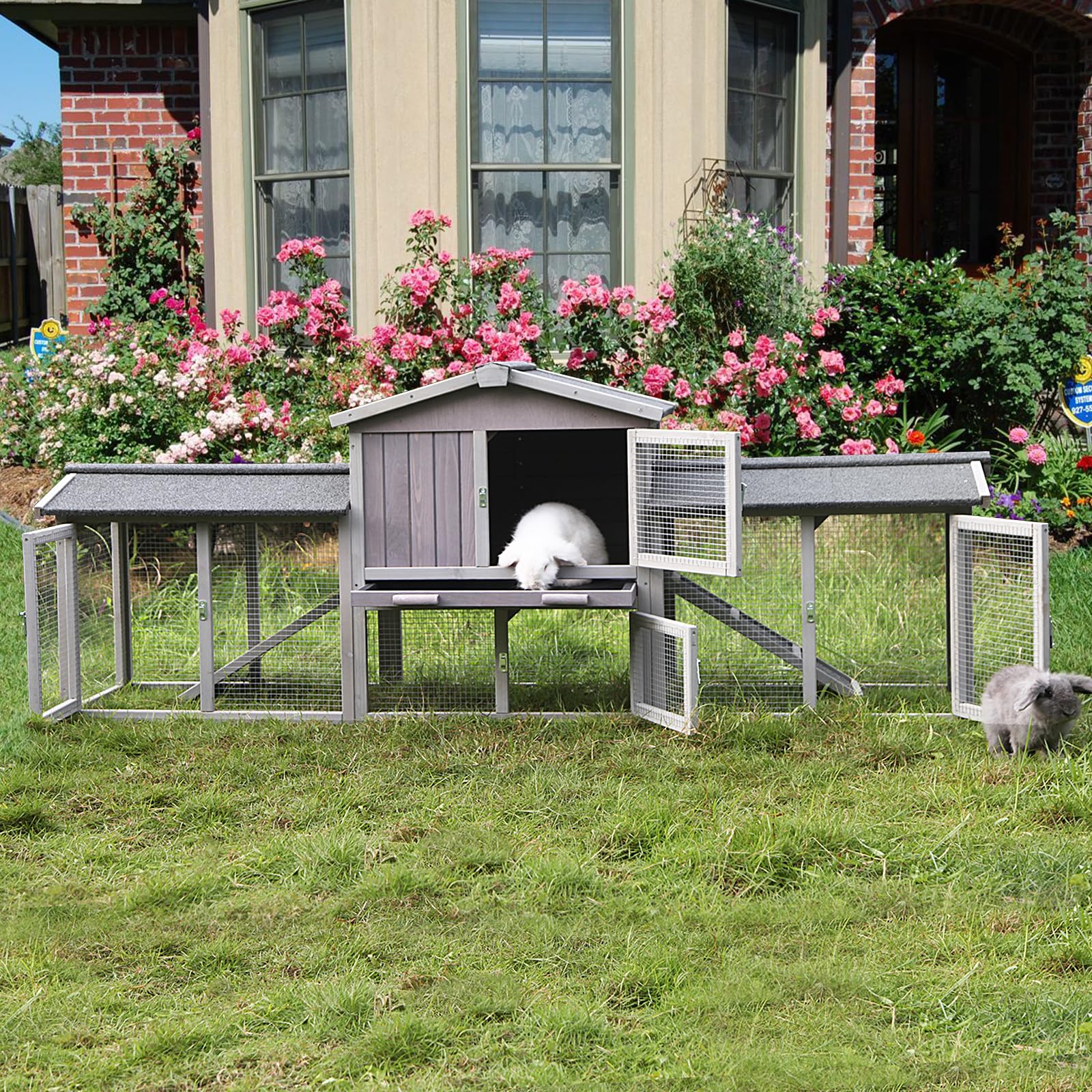
87.8 inches of length and two run sections — the roomiest layout if you have the wall space.
For reference on scale, the GDLF Best Overall pick runs 62 inches long; this one is 87.8″L x 20.5″W x 33.7″H. That extra length buys two separate run areas with two ramps connecting up to the raised house, so a pair of rabbits can spread out instead of crowding one section.
The base is the standout detail. A PVC bottom layer sits under a plastic tray to stop urine soaking into the wood floor and keep the house clean. The asphalt roof is weather resistant, walls are galvanized wire, and safety locks keep pets in and predators out. Four front doors open onto different zones, and the improved latches hold better than earlier versions.
The maker sizes it for 2-3 bunnies, plus chickens, ducks and other small animals. It draws more praise for appearance than for any other aspect. Setup is straightforward, though the geometry is challenging enough to want a patient hour rather than a rushed ten minutes.
Two things to know before buying. Build quality divides opinion — a few units arrived with damage, and one reported a compromised part right from the start, so inspect on delivery and open a claim immediately if anything is broken. The locks are a safety-improved design but the frame still rewards a little reinforcement.
Space is the headline: two runs, two ramps and 87.8 inches of length make this the roomiest home for a bonded pair or trio.
Quality varies by unit: inspect the delivery fully and photograph any damage before assembly begins.
Right choice for: two or three rabbits that need genuine running length, or an owner with a long garden wall to line it against.
Check first: that a nearly 88-inch footprint fits your space, and open the boxes on arrival to catch any transit damage.
8. GEGURI Wooden Rabbit Hutch with Waterproof Roof
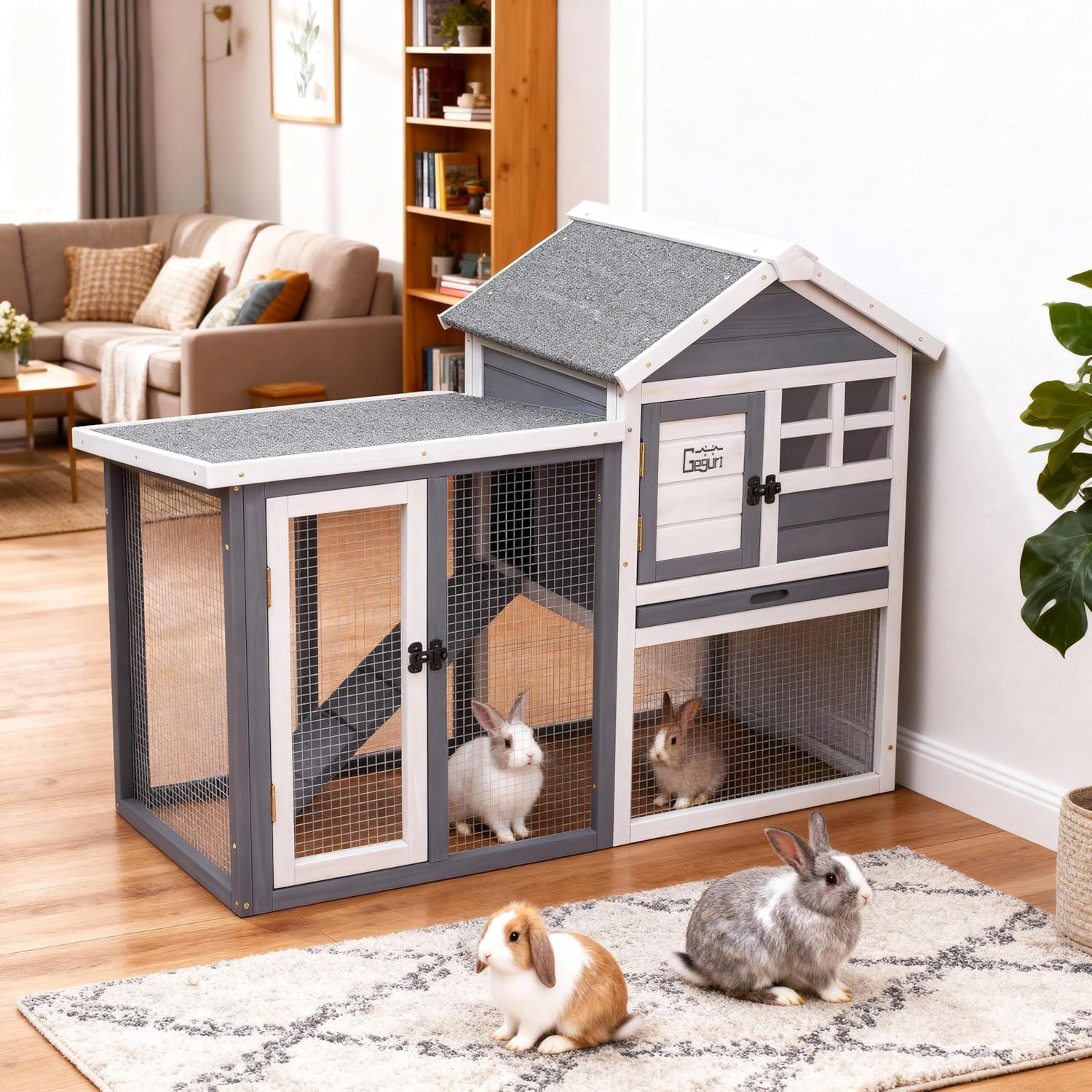
Cedar framing and a deeper pull-out tray — the quiet workhorse of this shortlist.
Cedar is the material choice worth noting. Where most picks here use fir, this GEGURI is built with durable cedar wood, a denser, rot-resistant wood than the fir used on most picks here. The asphalt roof shields against intense light and rain, and the frame measures 48″L x 24″W x 36″H with a private sleeping area plus exercise space for rabbits, guinea pigs, chickens or ducks.
The tray is a deeper pull-out plastic design that resists leaks and rust, and it comes out for a quick clean. Well-welded wire mesh and metal slide-bolt locks hold doors shut against escape. Pre-drilled holes and a detailed manual make setup fairly smooth; owners have built it as a family project without drama.
The quality of the finished hutch draws the most satisfaction, and appearance pleases. It is a solid starter cage that does the shelter job well and looks the part on a patio.
Two limitations to respect. First, this is not built for climbers — the frame suits ground-level animals, so a rabbit that scales surfaces is a poor match. Second, some assembly steps rely on holes that are not pre-drilled, and a few units have shown durability issues, so add your own reinforcement at the joints and check it after storms.
What it does well
- Cedar framing resists moisture and rot better than the fir used on most picks here.
- Deeper leak-resistant plastic tray pulls out for quick cleaning.
- Metal slide-bolt locks add real security over wooden latches.
- 48″L x 24″W x 36″H footprint with a dedicated sleeping box.
Set your expectations
- Not suited to animals that climb — the frame is for ground-level use.
- Some joints lack pre-drilled holes, so expect to add your own reinforcing.
- Roomy enough as a starter or sleep cage, less so as a full-time home for a large rabbit.
Matches: a guinea pig or rabbit owner who wants a cedar frame, a leak-resistant tray and metal locks in one package.
Not the fit for: a climbing rabbit or a large breed that needs floor-level running length.
Know the Specs
Overall dimensions and floor area
The L x W figure on an Outdoor Bunny House is what tells you how much ground-level running room your rabbit actually gets. A 62-inch hutch and a 36-inch hutch look similar in photos but give wildly different turning space. Longer is better than taller for a rabbit that needs to stretch out, while a two-level design adds a private sleeping box without eating your floor print.
Number of doors and levels
More doors means easier access from every side, which cuts cleaning time. A hutch with six doors opens onto multiple sections so you can reach any corner. Levels add vertical space for a sleeping area above a run, but check the ramp quality — a ramp with cast timber ridges or metal edges stops paws slipping back down.
Tray depth and leak-proofing
A deeper pull-out tray holds more waste before you empty it, and a smooth molded plastic surface wipes clean in one stroke. Look for leak-proof or urine-guard designs on hutches that use PVC (a plastic liner) or plastic liners under the tray. Shallow pans spill bedding when you slide them out.
Materials and weather resistance
Fir is common and affordable, cedar is more durable, and a steel or metal frame on the legs fights rot where bare wood meets wet grass. An asphalt-coated or slanted wire roof sheds rain; a waterproof non-toxic varnish protects the wood underneath. Raised floors keep the whole structure off damp ground.
Common Questions
How big an Outdoor Bunny House does one rabbit need?
Will wood rot if I leave an outdoor hutch on grass all year?
Can I use the same hutch for chickens and rabbits?
What stops a rabbit chewing through the wood frame?
How long does a pull-out tray take to clean?
Are locking casters strong enough for a grass lawn?
Do I need to swap the included locks for better ones?
Will an outdoor hutch keep my rabbit warm in winter?
How much assembly time should I expect?
Can a rabbit use the ramp safely?
The Bottom Line
The strongest all-round outdoor bunny house is the GDLF 62″ Rabbit Hutch because it combines the longest footprint on this list, a grip-ridged ramp, a pitched roof and a removable tray at a mid-range tier. For a rolling, easy-clean layout, the FunXplore hutch with casters is the one with six doors and leak guards. And where two or three bunnies need real running length, the GUTINNEEN 87.8″ Hutch is the reach. Buy for floor space, reinforce the frame, then let your rabbit enjoy the garden.
How we choose
We do not accept paid placement. Every pick is matched to a real buyer and a real use-case; we do not hands-on test units.
Sources
Specifications: manufacturer listings and product documentation. Review insights: verified customer reviews, as of November 2026. Pricing: not shown on this page (it changes often); check the current price via the retailer link.
As an Amazon Associate, Tactical Gear Guy earns from qualifying purchases. This does not affect which products we feature.