Specs are compiled from manufacturer listings and verified buyer reviews and can change over time — please confirm the key details on the product page before buying.
The hardest part of office noise isn’t the volume — it’s the unpredictability. A desk fan hums at a steady level you can tune out. The chatty desk behind you spikes without warning. To actually kill that, you need a pair of active noise-cancelling headphones with adaptive circuitry (a chip that re-tunes the cancellation as the room changes), not just thick earcups. The picks below are ordered around that single job: making an eight-hour workday quiet enough to concentrate. My top pick is the Bose QuietComfort Headphones (2nd Gen) — 4.5+ stars across 460+ owners, with sound quality the review pages keep coming back to.
This guide is built by comparing the manufacturers’ published specifications and the patterns across verified customer reviews, so you get each pick’s real strengths and trade-offs instead of marketing spin.
Below you’ll find nine ANC over-ears ranked by how well they hold up in a real office, from budget-friendly workhorses to premium audiophile gear. If your desk sits near a printer or a call-center floor, the right pair of Office Noise Reduction Headphones decides whether the afternoon gets spent working or listening to everyone else.
Top Picks


How To Choose The Best Office Noise Reduction Headphones
An office is a specific kind of noisy. You get low, constant hum from HVAC vents and server racks. You get sharp, unpredictable spikes from keyboard clatter, chairs rolling, and conversations two rows over. Active noise cancellation (ANC — a circuit that listens to the room with microphones and plays an opposite sound wave to cancel it) handles the hum beautifully. It handles the human voice less well, which is why the number of microphones and whether the system adapts matter so much.
Count the microphones, not just the modes
Microphones do two jobs on a work headphone: they feed the noise-cancelling circuit, and they feed the beamforming array (a setup that points the mic pickup at your voice and away from the room). More microphones generally means better cancellation and cleaner call audio. The Sennheiser Momentum 5 runs 8 digital microphones for its ANC. The Sony WH-1000XM6 runs 12 adaptive microphones. More isn’t automatically better, but a headphone with one or two mics will struggle in a genuinely loud room.
Separate the two battery numbers
Almost every listing quotes a big battery figure that assumes ANC is switched off. That’s not how you’ll use it at work. Always hunt for the ANC-on number. The JBL Tune 780NC quotes up to 76 hours with ANC off but up to 50 hours with it on. The Bose QuietComfort (2nd Gen) is rated at 24 hours with full noise cancelling engaged, dropping to 18 hours if you also use its spatial audio. For an eight-hour workday, anything that clears 20 hours ANC-on gets you through a full week of office shifts on one charge.
Check whether you can still hear your name
Good office headphones need an off-ramp from total silence. Transparency, or Aware mode, pipes the room back in through the mics so you can catch a question without pulling the cans off your head. The Bose model uses ActiveSense to smooth out loud spikes while you’re in Aware Mode. The JBL Tour One M2 offers ambient-aware listening through its app. If you share a desk bank with colleagues who tap you on the shoulder, this mode is the one you’ll use more than you expect.
Side-by-Side Comparison
| Model | Best For | Driver Size | Battery (ANC On) | Bluetooth | Amazon |
|---|---|---|---|---|---|
| Bose QuietComfort (2nd Gen)★ Best Overall | All-round office default | 30 mm | Up to 24 hours | 5.4 | Amazon |
| JBL Tune 780NCBudget Champion | Marathon battery, tight budget | 40 mm | Up to 50 hours | 6.0 | Amazon |
| Beats Studio ProMost Versatile | Apple-first desks | — | Up to 40 hours | — | Amazon |
| JBL Tour One M2 | Long meetings, call clarity | 40 mm | Up to 30 hours | 5.3 | Amazon |
| Sony WH-1000XM6 | Adaptive cancellation | 30 mm | Up to 30 hours | 5.3 | Amazon |
| Sennheiser Momentum 5 | Battery with replaceable cell | 42 mm | Up to 57 hours | 5.4 | Amazon |
| Sonos Ace Ultra | Sonos home system owners | — | Up to 35 hours | — | Amazon |
| Bowers & Wilkins Px8 S2 | Audiophile desk listening | 40 mm | Up to 30 hours | 5.3 | Amazon |
| Focal Bathys MG | Critical music listening | — | Over 30 hours | 5.2 | Amazon |
Detailed Reviews
1. Bose QuietComfort Headphones (2nd Gen)
Our pick — 4.5+★ from 450+ verified ratings; the strongest balance of quality and price.
The pick that settles the open-office debate: 24 hours of cancellation with ANC on.
If your day is a mix of deep-focus blocks and sudden “hey, quick question” interruptions, this is the pair that handles both. Bose’s QuietControl cancellation with updated ActiveSense Tech listens to the room and smooths out sharp spikes rather than just flattening the constant hum. That means a door slamming or a laugh two desks over gets softened instead of cutting through. The pill-shaped earcups and the wider-than-before sliding headband spread the clamping force, so the “lightweight feel” Bose promises is a genuine eight-hour property, not a quick-try property.
Sound quality is what wins people over here, and by a clear margin. These are tuned for a natural, balanced presentation rather than thumped-up bass, so spoken-word podcasts and long call recordings stay easy to follow for hours. The 30 mm dynamic drivers are smaller than the 40 mm units on the JBL Tune 780NC below, yet the tuning is the reason people stay. On the connection side you get Bluetooth 5.4 with a 30-foot range, which comfortably covers a desk-to-meeting-room walk without dropping. A USB-C cable open up lossless audio, and the same port charges the cans while you keep listening.
You get 24 hours of playback with full noise cancelling on, and that drops to 18 hours if you leave TrueSpatial rich Audio (the brand’s spatial sound mode) running. A 15-minute quick charge gives back 2.5 hours of playback, so a forgotten overnight charge won’t leave you silent on the commute. Five listening states cycle through: Quiet Mode, Aware Mode, Immersion, Cinema Mode, and ANR off (ANR means active noise reduction, the cancelling itself). Most days you’ll sit in Quiet for focus work and switch to Aware for hallway conversations. One recurring note from buyers: Bluetooth pairing draws more mixed feedback than the sound does, so pair it cleanly the first time and it behaves.
What earns its place on your desk
- ActiveSense adaptive cancellation smooths sudden office noise spikes
- Wider headband and pill earcups make long shifts comfortable
- Lossless audio over USB-C, and you can charge while listening
- Five listening modes including a proper transparency setting
Where it asks for a little patience
- 24 hours ANC-on is modest next to the 76-hour JBL Tune 780NC
- Bluetooth pairing gets more mixed feedback than the audio does
- Full charge takes about 3 hours
Made for: the hybrid worker who wants one headphone for focus blocks, calls, and the walk between them.
Think twice if: you want a week of charge between plug-ins — the JBL Tune 780NC goes far longer per charge.
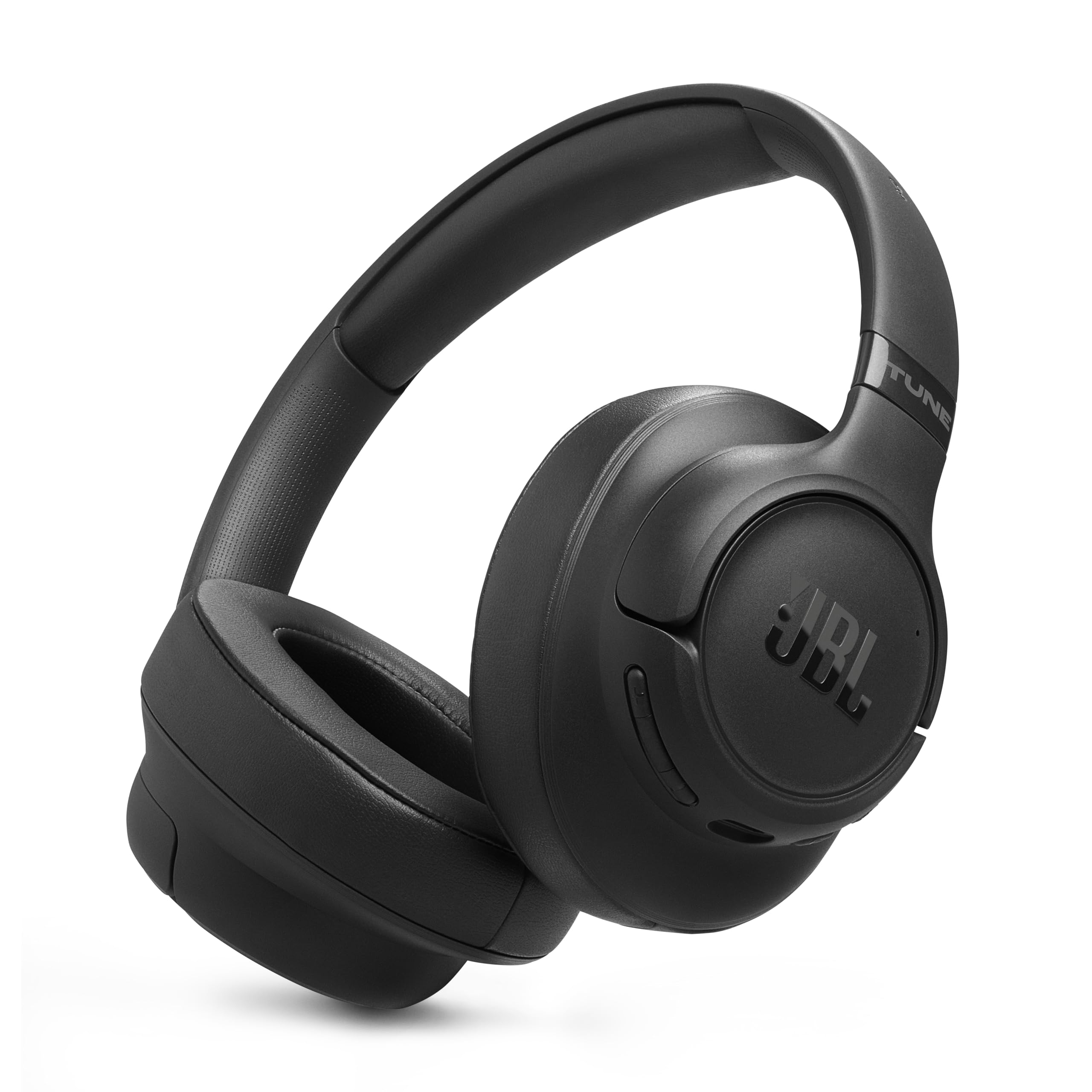
2. JBL Tune 780NC
Up to 50 hours with ANC on, so it lasts a full work week and still folds flat into a bag.
Battery is the headline, and it isn’t close. The Tune 780NC is rated at up to 76 hours with ANC off and Bluetooth on, or up to 50 hours with cancellation running. The Bose QuietComfort (2nd Gen) at the top of this list tops out at 24 hours with ANC engaged — 50 hours versus 24 hours is the honest spread. For anyone who resents charging another device, that gap is the whole pitch. A 5-minute speed charge buys another 5 hours of playtime, and a full refill takes about two hours.
The drivers are bigger too: 40 mm units against the Bose’s 30 mm, and JBL’s Pure Bass tuning pushes more low-end weight into the mix. That suits a working playlist and makes movie trailers feel bigger during a lunch break. Bluetooth 6.0 with multipoint pairing lets you run your laptop and your phone at once, so you can stay on a Teams call and still catch a text alert. The two beamforming mics target your voice and suppress the room, which matters on a conference call from a busy floor. When you’d rather not spend battery on wireless, the included USB-C to 3.5 mm cable gives you a wired path.
Buyers keep coming back to how solid the set feels in the hand, and that’s a fair read for the tier — the soft over-ear cups and padded headband make long sessions easy, and the whole set folds flat into a laptop bag. Honest caveat: build quality is the most-discussed topic and it’s not unanimous, with a minority of feedback on the negative side. Some of that lands on reliability and wired connectivity rather than the sound itself. The 40 mm drivers (the speaker units that produce the sound) and Bluetooth 6.0 (the wireless standard) still make this the value play in this lineup.
The week-long charge: 50 hours ANC-on is the longest runtime here, and it means you charge on Sunday, not every night.
The trade-up: you’re giving up Bose’s adaptive spike-smoothing, and a small slice of feedback questions long-term reliability.
Reach for this if: your priority is not touching a charger for days and you want the biggest drivers in the value tier.
Look elsewhere if: adaptive spike cancellation against sudden voices is the thing you actually need.
3. Beats Studio Pro
The bass-forward workhorse that pairs in one tap with MacBooks and iPhones.
This is the pick for a team that runs on iPhones and MacBooks. One-touch pairing with Apple and Android handles the setup, and Class 1 Bluetooth (a stronger radio class than standard, aimed at fewer dropouts) keeps the link steady as you move around the building. The custom acoustic platform leans into deep bass, and that’s the character buyers describe most. If your workday soundtrack is hip-hop, electronic, or film scores, this delivers more physical punch than the neutral Bose tuning.
Battery runs up to 40 hours, and Fast Fuel is the real convenience: a 10-minute charge gives up to 4 hours of power. That’s the number that rescues a Monday morning when you find the cans at zero. ANC blocks the office drone, and Transparency mode lets the room back in for a quick hallway chat. Spatial Audio with dynamic head tracking adds a sense of direction to movies and games, which is a nice at-home bonus after the workday. Voice-targeting mics cut background noise on calls, and the box includes both a 3.5 mm cable and a USB-C cable for a wired or lossless session.
Here’s the fair picture on the trade-offs. Noise cancellation is the most-discussed feature and it splits opinion — plenty find it excellent, while a portion describe it as less effective and a few report static. Comfort and fit also divide people: some wear them for hours without issue, others find the clamp too tight and the fit too loose at once. Durability is the softest of the bunch, with the inner headband cracking after months of use showing up in the feedback. Weight is 9.2 ounces. None of that makes them a bad buy — it makes them a bass-first, Apple-first pick you should try before committing to a twelve-hour wear schedule.
The Apple advantage: one-touch pairing and hands-free switching across devices makes this the path of least resistance on a Mac-and-iPhone desk.
The honest catch: the deep bass is the draw, but durability and long-wear comfort are the two areas where the feedback gets most divided.
Best fit for: Apple-ecosystem workers who want bass weight and a quick top-up charge over reference-flat sound.
Not the pick if: you need cancellation that holds firm against a genuinely loud floor.
4. JBL Tour One M2

Four beamforming mics aimed at your mouth, so callers hear you instead of the office.
The Tour One M2 is built for the person who spends more of the day on calls than in music. Four beamforming microphones point at your voice while suppressing wind and room noise, and the result is call audio that holds up on a busy floor. Adaptive noise cancelling handles the desk-side drone, and JBL Pro Sound tuning keeps music lively in between meetings. The 40 mm dynamic drivers match the Tune 780NC’s size, so you’re not sacrificing driver real estate to get the better mic array.
Battery is rated at up to 50 hours without ANC and up to 30 hours with it on, with a two-hour charge time. That 30-hour ANC figure is a step above the Bose’s 24 hours and right in line with the Sony and Sennheiser figures. The included 3.5 mm audio cable is removable, and there’s a flight adapter in the box for travel days. Bluetooth 5.3 with a 10-meter range covers a normal office footprint, and spatial audio plus a Personi-Fi sound-curve feature in the JBL Headphones app let you shape the tuning to your own hearing.
The one thing to plan around: the control method is listed as remote rather than on-earpad buttons, so your phone or the app is where the adjustments live. That’s fine if your phone sits on the desk, less convenient if it’s in a bag. Voice control via the app is the workaround. If call clarity is what’s been missing from your current setup, this is the most focused tool for the job in this lineup.
Pick this for: back-to-back conference calls where the mic is doing more work than the music.
Skip if: you want physical buttons on the earcup for on-the-fly volume and mode changes.
5. Sony WH-1000XM6

Twelve adaptive microphones that re-tune the cancellation as the room changes.
The number that matters here is twelve. Twelve adaptive microphones measure your environment and your wearing style, then feed a noise-cancelling processor that Sony says is 7x faster than the QN1 it replaces. A faster processor means the cancellation reacts in real time rather than lagging behind a change in the room. When a meeting lets out and the corridor volume jumps, this is the headphone that adjusts without you touching a button. The custom driver uses a lightweight carbon fiber dome to reproduce high frequencies with detail, and the result is a studio-leaning sound rather than a bass-heavy one.
Auto Ambient Sound Mode is the office feature worth knowing. It balances your music against external sound automatically, so an announcement or a question reaches you without taking the cans off. You can then dial in cancellation, ambient levels, and EQ from the Sony Sound Connect app on your phone. Battery is rated at 30 hours, and the listed charge time is 3 minutes — a brief top-up is all the spec sheet promises. Bluetooth 5.3 with a 10-meter range keeps the link steady across a standard floor, and the box includes a protective case and a detachable USB-C charging cable.
Where the feedback clusters: sound quality is the most-praised trait, and the comparison shoppers keep making is that it beats Bose on pure audio. Noise cancellation is the second-most talked-about element and lands positive overall. Value for money also reads well, with most finding it worth the outlay. If your priority is the most adaptive, quickest-reacting cancellation in this group, this is the pick.
The cancellation case
- 12 adaptive mics re-tune to the room and your wearing style
- QN3 processor listed as 7x faster than the QN1
- Auto Ambient Sound Mode keeps you reachable
- Sound quality edges out Bose in the buyer consensus
What to weigh
- 30 mm drivers — smaller than the 40 mm JBL and Beats units
- 30-hour battery is well short of the 57-hour Sennheiser and 50-hour Tour One M2
Made for: the desk in the loudest corner of the floor, where the room changes every twenty minutes.
Consider the trade: smaller 30 mm drivers and a 30-hour ceiling if raw driver size and runtime are your ranking criteria.
6. Sennheiser Momentum 5
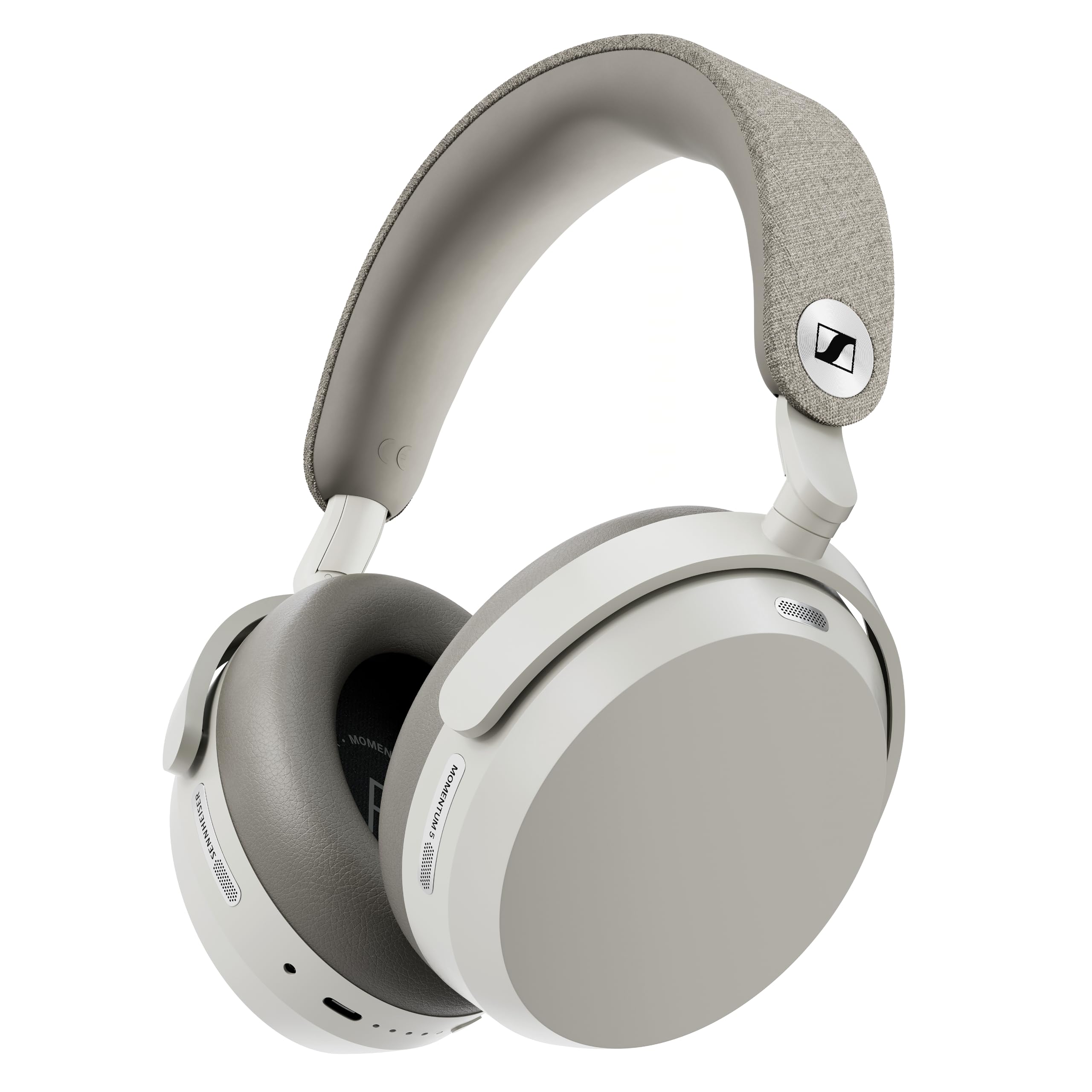
57 hours of playback with ANC on, plus a battery you can replace instead of retiring the headphone.
Most listings quote their best-case runtime. This one is different: 57 hours of playtime is stated with ANC on, not off. That’s the longest cancellation-on figure on this page, and it’s a meaningful edge over the 30-hour Sony and Tour One M2 and the 24-hour Bose. The rechargeable battery is also replaceable, which is rare in this category and extends how long the headphone stays useful. A two-hour charge refills it.
The audio hardware is serious. A 42 mm high-fidelity driver is the largest in this lineup, tuned for clarity and natural balance rather than a scooped curve. The wireless codecs include aptX Lossless, aptX Adaptive, and AAC, so a compatible phone streams at higher quality than plain Bluetooth. Hybrid adaptive ANC is listed as up to 3x stronger in the midrange than the MOMENTUM 4, and it runs on 8 digital microphones. That midrange focus is exactly the band a human voice sits in — useful when the noise you’re fighting is a conversation.
What the buyer consensus keeps landing on is sound quality first, then overall quality, then comfort. Those are the three strengths the feedback keeps repeating, and they line up with a premium build. The honest caveats: value for money and build quality each get a divided reaction, and a slice of the connectivity feedback reports connection problems on some units. Touch controls on the earcups are the interface, which feels modern but takes a few days to learn without accidental taps. Swappable ear pads sweeten the long-term ownership story.
Why it goes the distance: a 57-hour ANC-on rating plus a replaceable cell means this headphone is built to be owned for years, not replaced.
The watch-outs: touch controls have a learning curve, and connectivity complaints exist alongside the strong sound-quality praise.
Your pick if: you want the longest cancellation-on runtime here and a battery that can be swapped rather than thrown away with the headphone.
Better elsewhere if: you prefer physical buttons over touch controls for quick adjustments.
7. Sonos Ace Ultra
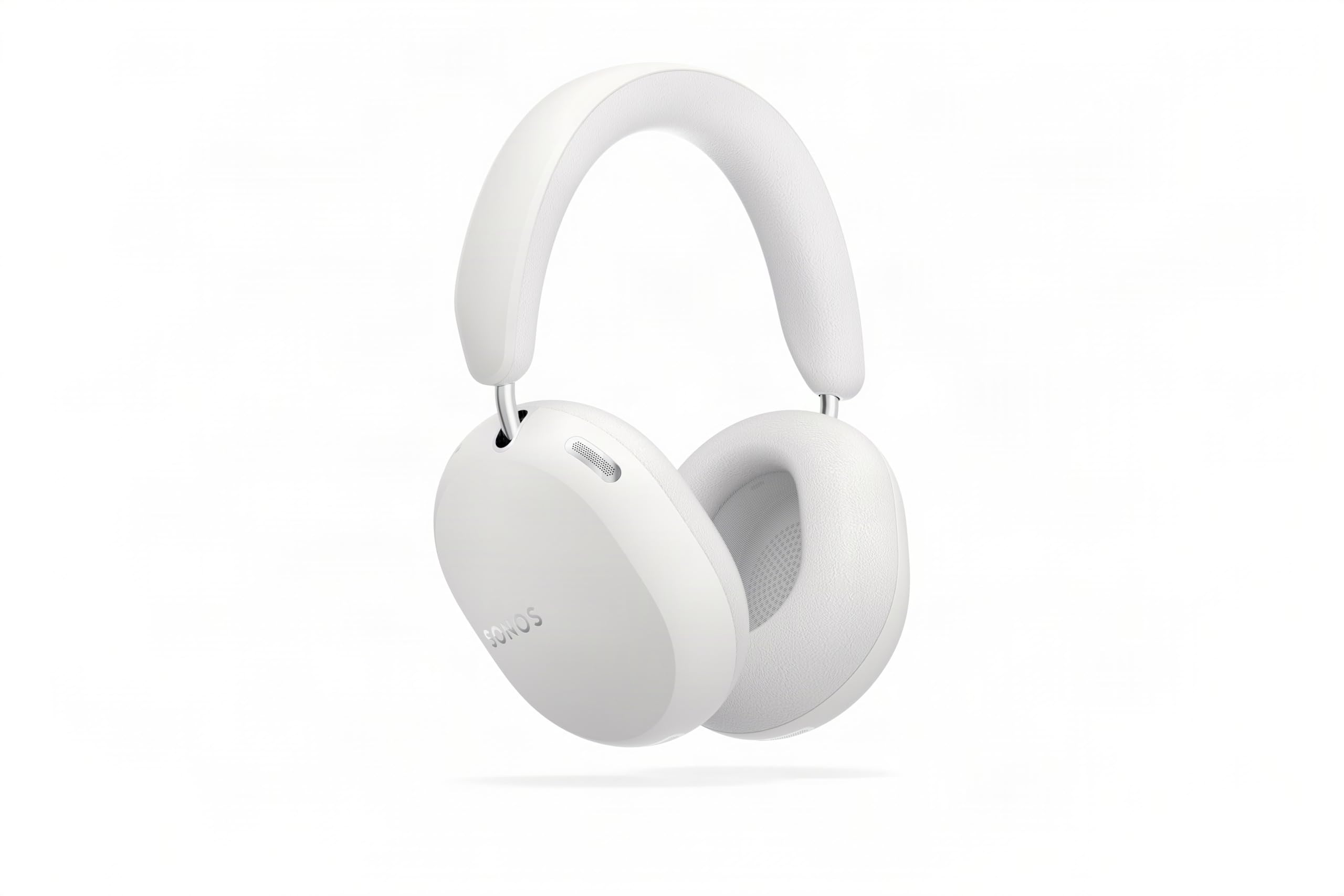
For the desk that already runs on Sonos — cancellation that doubles the original Ace.
The Ace Ultra’s calling card is stated plainly: up to 2x more active noise cancellation than the Sonos Ace. If you already have a Sonos soundbar at home, Sonos Link moves sound between the headphones and your Sonos system, and TV Audio Swap hands the soundbar’s audio to the headphones for a personal home-theater session. That ecosystem handoff is the reason to pick this one, and it’s a capability the Bose, Sony, and Sennheiser picks can’t match. The Sonos-designed driver targets deep, rich, detailed sound with high-resolution wireless audio at low latency, and Adaptive EQ tunes itself to your fit and movement.
Battery runs up to 35 hours with ANC on, which is a solid margin over the 24-hour Bose and the 30-hour Sony, Tour One M2, and Px8. Plush foam and an adjustable design handle all-day comfort, and beamforming microphones isolate your voice on calls. A USB-C port handles the wired interface. Bluetooth connectivity is the one mixed area in the feedback — most find it easy to pair to Bluetooth devices, and a portion report connection issues. For an office desk that’s stationary all day, that’s a smaller worry than it would be for a commuter.
Sound quality is the clear strength and comfort follows close behind. If your home setup is Sonos and you want a work headphone that plugs into that ecosystem at the end of the day, this is the only pick on the list that does it.
Suits you if: a Sonos soundbar already lives in your living room and you want headphones that join it.
Look to Bose or Sony instead if: you want proven adaptive spike-cancellation and don’t own any Sonos gear.
8. Bowers & Wilkins Px8 S2
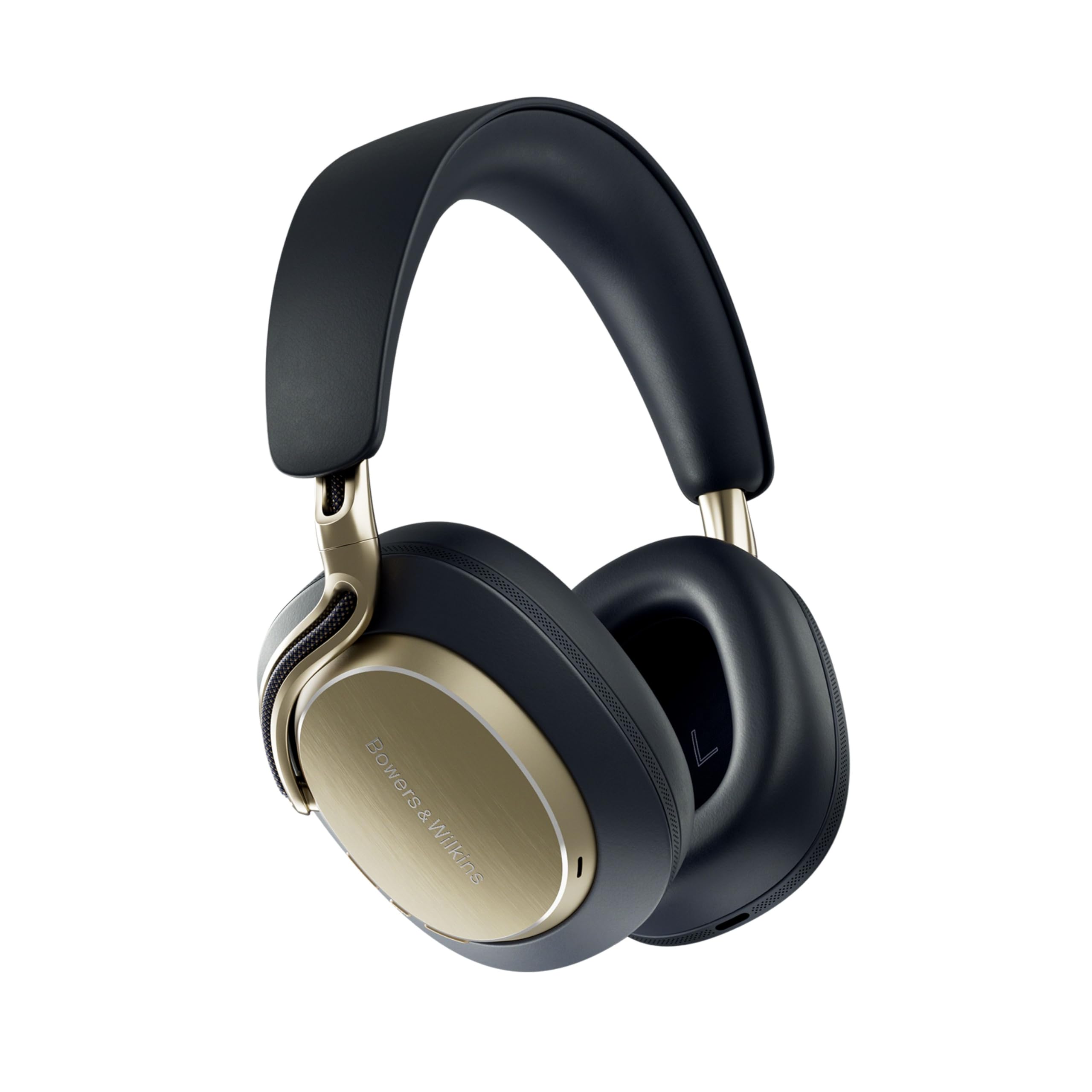
Die-cast aluminum, Nappa leather, and a dedicated DAC — an office headphone for people who care about the music first.
This is built for listeners who put audio fidelity above everything else, and the hardware backs it. Custom 40 mm Carbon Cone drivers pair with 24-bit DSP (digital signal processing — the onboard chip that cleans up the audio) and a dedicated DAC amplifier to produce a detailed soundstage with balanced bass. Solid die-cast aluminum arms and soft Nappa leather replace the typical plastic shell. That combination is rare in a category that leans heavily on plastic construction, and the buyers who prize it say so loudly — build quality is the second-most-praised trait after sound.
Noise cancellation is done with an 8-microphone system that monitors both ambient noise and the driver output to reduce distractions without flattening the detail of the music. That’s a different philosophy from a pure noise-killer — it preserves the audio first and reduces the room second. Bluetooth 5.3 with multipoint pairing covers two devices at once, aptX Lossless and Adaptive carry hi-res streaming, and the included 3.5 mm cable plus USB-C audio covers wired use for gaming or podcasts. Battery runs 30 hours, and a 15-minute fast charge gives up to 7 hours of listening.
The fit is where to be careful: the ear cups run small, and that comes up among the people who find them uncomfortable. Noise cancellation splits opinion too — many call it good, a portion say it’s not great, and the pair works best when treated as a sound-first headphone with capable rather than class-leading cancellation. The 5-band EQ and True Sound mode in the Bowers & Wilkins Music app let you tune the tuning to taste after that.
The material story: aluminum and Nappa leather set this apart from the plastic-shell competition, and the Carbon Cone drivers are the top of the line for desk listening.
The fit note: small ear cups will disappoint larger heads, and cancellation is functional rather than the deepest in this group.
Choose it when: reference-grade sound matters more than the deepest possible silence.
Pass if: you’re buying primarily for maximum noise blocking against a loud floor.
9. Focal Bathys MG
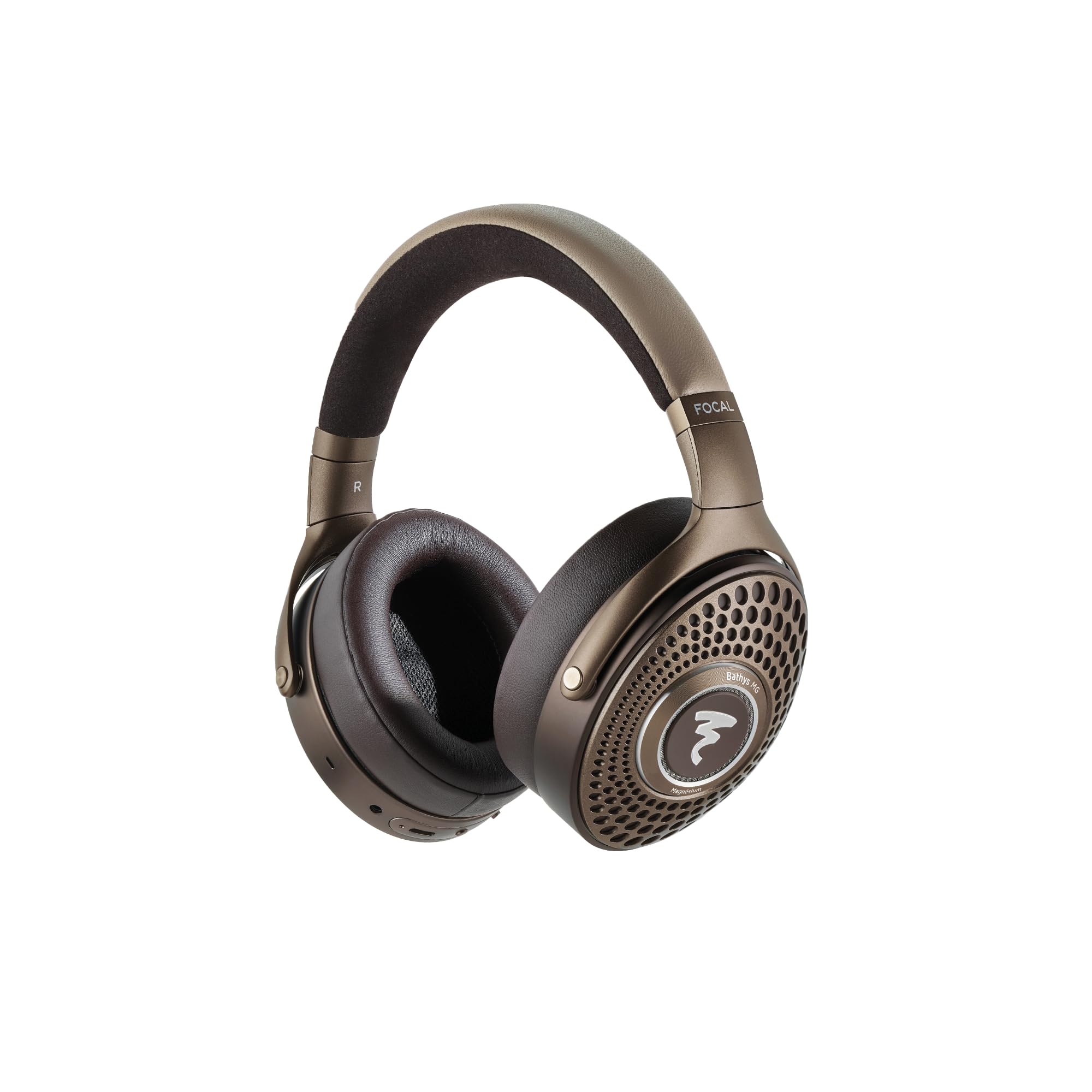
Magnesium ‘M’-shaped domes made in France, for the desk that doubles as a listening chair.
The Bathys MG carries serious audiophile hardware into a Bluetooth ANC package. Magnesium speaker drivers with ‘M’-shaped domes are built in France in Focal’s workshops, and the result is rich, natural, ultra-precise reproduction with powerful bass and clear treble. USB-DAC mode supports high-resolution sound up to 24bits/192kHz over a wired connection — the spec listeners seek out when they want the cleanest path to the source. This is the most uncompromising audio-first pick on this page, and the sound quality and build quality are the two things the buyer feedback praises most.
Battery life is over 30 hours in Bluetooth mode, and the fast-charge function gives 5 hours of listening in 15 minutes, so a quick top-up rescues a forgotten Monday charge. Bluetooth 5.2 with multipoint links two devices at once. The 15-meter Bluetooth range is the longest stated range here, beating the 10-meter listings on the JBL and Sony models. Comfort and fit both read positive — the headphones are designed for extended listening. The backlit logo is a small touch for critical listeners who want the gear to look as considered as it sounds.
Two things a buyer should know. First, value for money is the only mixed area — some find these worth the premium, others aren’t sure they justify it, which is natural for the top of the audiophile tier. Second, noise cancellation is real and works, but it’s voiced for preserving the music rather than burying the room. If your primary need is total office silence, a purpose-built ANC headphone will cancel more. If your primary need is to hear the music without compromise while the room fades to a manageable hum, this is the ceiling of this list.
For the listener: who treats the workday as a serious listening session and wants magnesium drivers and a 24-bit/192kHz wired path.
The honest ceiling: cancellation preserves rather than erases the room, so a dedicated ANC pick serves quieter focus better.
Know the Specs
Adaptive ANC and microphones
Active noise cancellation uses microphones to listen to the room and generate an opposite wave to cancel it. Adaptive ANC adds a processor that re-tunes as the room changes — the difference between cancellation that seals in a steady hum and cancellation that reacts when a door opens. Fewer mics means simpler cancellation; more mics means finer control of the noise you want gone. The Sennheiser Momentum 5 runs 8 digital mics and the Sony WH-1000XM6 runs 12 adaptive ones.
Driver size and sound signature
Driver size (in millimeters) is the diameter of the speaker inside each earcup. Bigger drivers often push more low-end weight; smaller, well-tuned ones can be just as involving. The JBL Tune 780NC and Tour One M2 both run 40 mm drivers, the Sennheiser runs 42 mm, and the Bose QuietComfort (2nd Gen) runs 30 mm — yet Bose’s tuning is what most buyers praise first. Driver size is a factor, not a verdict.
Battery hours: on versus off
Every listing quotes a runtime, but the honest number is the one with ANC engaged. The JBL Tune 780NC goes up to 76 hours off and up to 50 with it on. The Sennheiser reaches 57 hours with ANC on. The Bose QuietComfort (2nd Gen) hits 24 hours ANC-on, dropping to 18 with spatial audio. For a full workday you’ll want at least 20 hours of ANC-on runtime to get through a week of shifts.
Bluetooth version and multipoint
Bluetooth version names the wireless standard a headphone uses; newer versions tend to offer lower power use and lower latency. The JBL Tune 780NC uses Bluetooth 6.0, the Bose and Sennheiser use 5.4, and the Sony and Tour One M2 use 5.3. Multipoint pairing — connecting to two devices at once — matters most at a work desk, where you want the laptop and phone live at the same time without re-pairing all day.
Common Questions
Will active noise cancellation actually block coworkers talking?
Do office noise reduction headphones work for video calls on a laptop?
What is the difference between ANC on and off battery ratings?
Can I keep one pair connected to my laptop and my phone at once?
Do I need a transparency mode for an office job?
Are bigger drivers always better for office listening?
How long does a full charge take on these headphones?
Can I use these headphones with a wired connection for zero latency?
Will an over-ear ANC headphone stay comfortable through an eight-hour shift?
Do these headphones work with both iPhone and Windows laptops?
The Bottom Line
For most desks, the office noise reduction headphones winner is the Bose QuietComfort (2nd Gen), because it pairs adaptive spike-smoothing with a wider headband and true lossless audio over USB-C (a wired connection that carries full-quality sound) — a mix that serves deep-focus blocks and call-heavy days alike. If battery life is what you care about most, the JBL Tune 780NC runs up to 50 hours with cancellation on and folds flat into a bag. And if the noise is loudest right next to your chair, the Sony WH-1000XM6 and its 12 adaptive microphones re-tune faster than anything else on this list. Whichever you choose, match the ANC-on battery figure to your shift length and confirm multipoint (the ability to stay connected to two devices at once) if you juggle a laptop and a phone.
How we choose
We do not accept paid placement. Every pick is matched to a real buyer and a real use-case; we do not hands-on test units.
Sources
Specifications: manufacturer listings and product documentation. Review insights: verified customer reviews, as of November 2026. Pricing: not shown on this page (it changes often); check the current price via the retailer link.
As an Amazon Associate, Tactical Gear Guy earns from qualifying purchases. This does not affect which products we feature.