Specs are compiled from manufacturer listings and verified buyer reviews and can change over time — please confirm the key details on the product page before buying.
If your hands slide forward in downward dog, the mat is the problem — not your form. The fix is simple: buy a mat whose top surface holds your hands and feet, and pick a thickness your knees can take. What follows is nine mats, each picked for one job it does better than the rest.
This guide is built by comparing the manufacturers’ published specifications and the patterns across verified customer reviews, so you get each pick’s real strengths and trade-offs instead of marketing spin.
Grip and cushioning pull against each other, so decide which one your practice needs before you shop. Here are the nine picks that hold up best as non-slip yoga mats.
Top Picks

How To Choose The Best Non-Slip Yoga Mats
Two different kinds of slipping happen on a yoga mat, and they need different fixes. Your hands and feet slide across the top surface — that is a material problem. Or the whole mat slides across your floor — that is a backing problem. Read the listing for both, because a mat that grips your feet but walks across the room mid-flow is no better than a slick one.
Thickness is a comfort-versus-balance trade
A thin mat keeps you close to the floor, which is what standing balance poses want. A thick mat saves your knees and wrists on hard flooring but can feel wobbly in a tree pose. Plush foam mats in the 10mm range suit kneeling, Pilates and stretching more than a demanding vinyasa flow.
Material changes how grip behaves with sweat
TPE is a rubbery plastic foam that most modern mats use — light, low-odor and decently grippy. NBR is a softer, spongier foam that feels plusher but tears more easily. Natural rubber gives the firmest base, and cork actually gets grippier as your hands get damp, which is why hot-yoga practitioners seek it out.
Width and length decide which poses you can do
A standard mat runs 24 inches wide, and that is narrow once your arms spread in warrior two. Wider options at 32 to 36 inches give you room to move without a heel falling off the edge. If you are tall, check the length too — some mats here stretch to 80 inches.
Side-by-Side Comparison
| Model | Best For | Thickness | Size (L x W) | Material | Amazon |
|---|---|---|---|---|---|
| Gaiam Thick Yoga Mat★ Best Overall | Beginners and joint comfort | 10mm (0.39″) | 72″ x 24″ | NBR foam | Amazon |
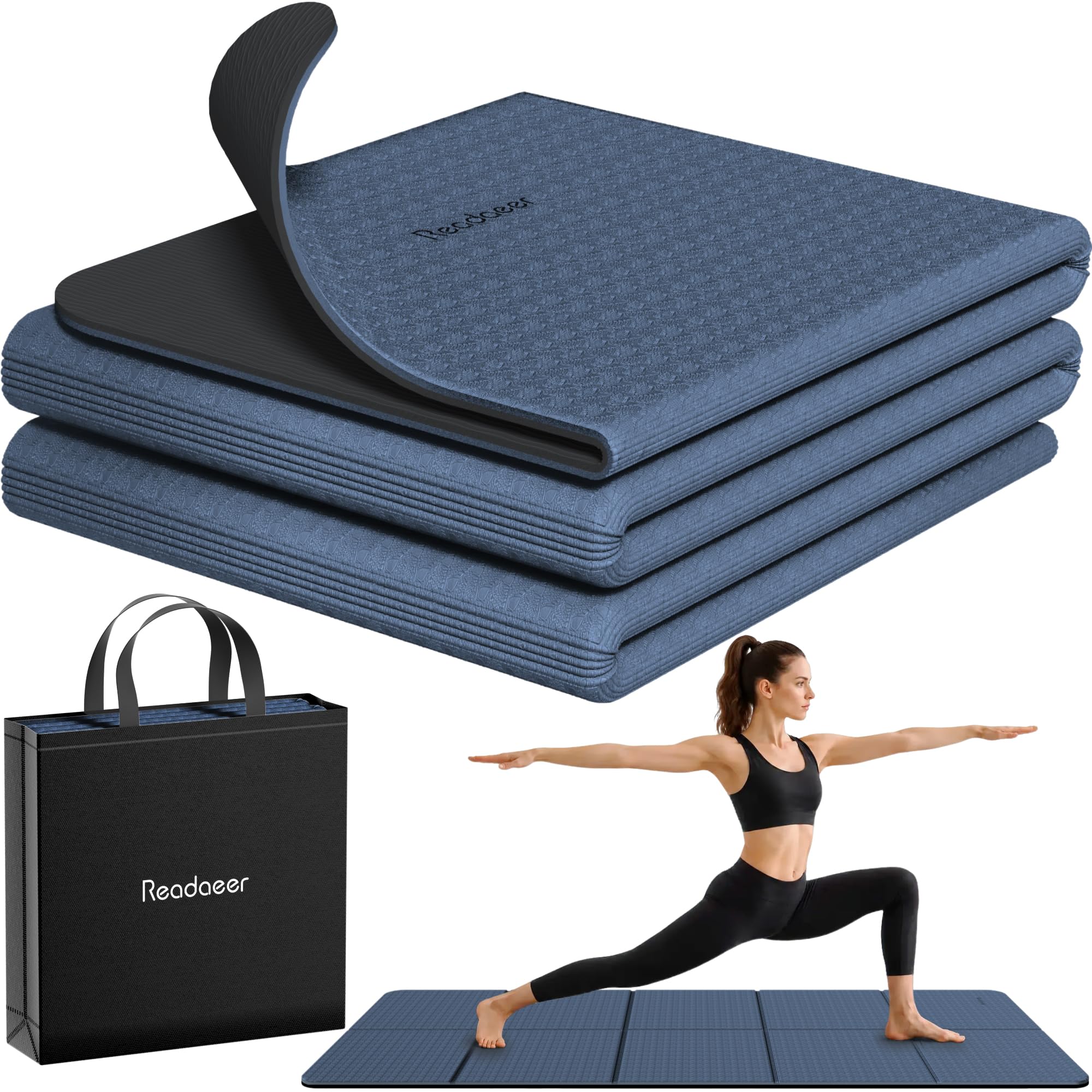
| Readaeer Double Color Yoga MatBest for Travel | Travel and small spaces | 6mm (0.24″) | 72″ x 24″ | TPE | Amazon |
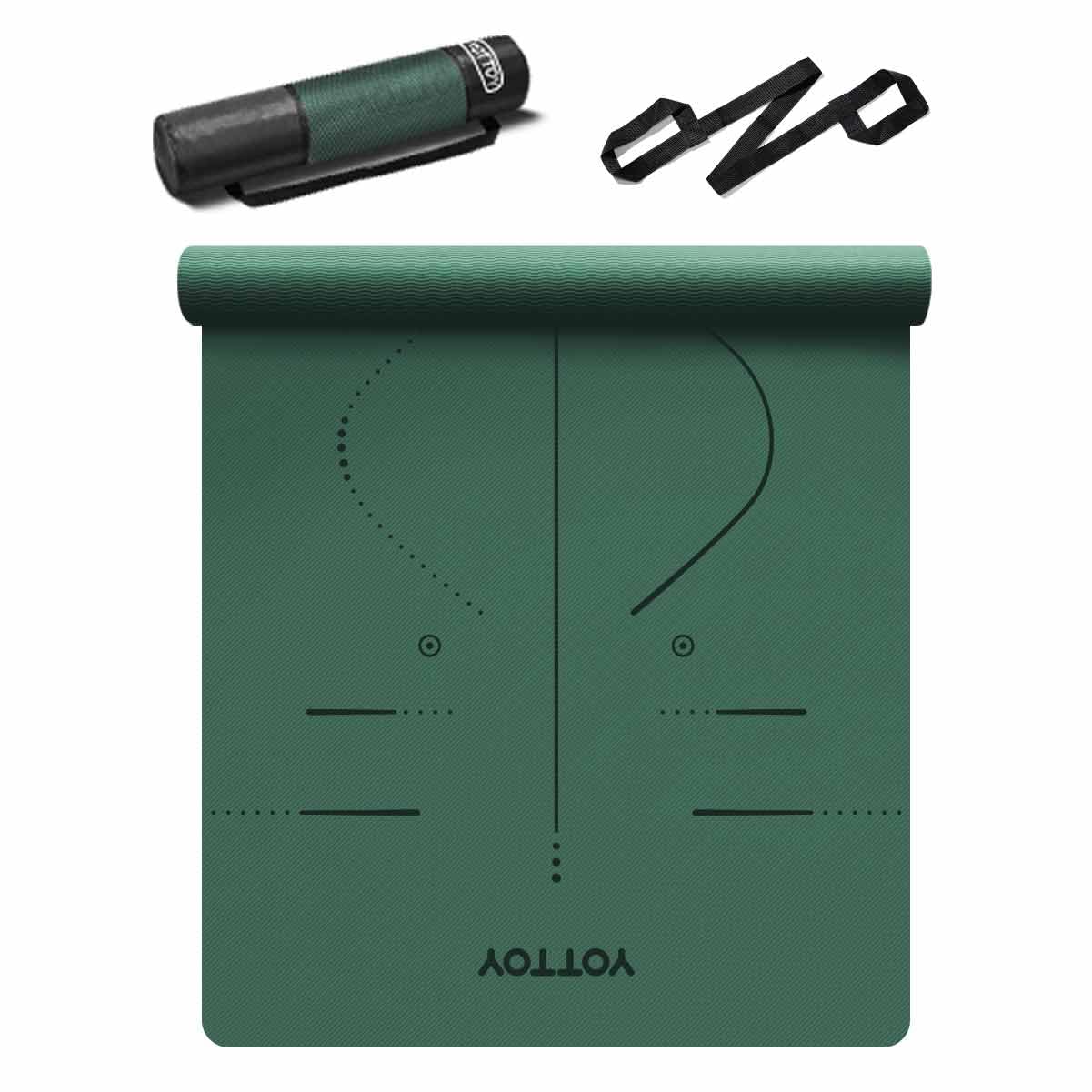
| YOTTOY Extra Wide Yoga MatWidest Value | Wide mat on a budget | 8mm (0.34″) | 72″ x 32″ | TPE | Amazon |
| YOTTOY Extra Thick Yoga Mat | Knees and joints | 12mm (0.5″) | 72″ x 24″ | TPE | Amazon |
| KEEP Extra Wide Yoga Mat | All body types, wide space | 7mm (0.28″) | 72″ x 32″ | TPE | Amazon |
| Hatha Yoga TPE Yoga Mat | Balanced thickness and size | 1/3″ (0.33″) | 72″ x 27″ | TPE | Amazon |
| HAPBEAR Large Yoga Mat | Maximum floor space | 6mm (0.25″) | 72″ x 36″ | TPE | Amazon |
| Plyopic Ultra Grip PRO Yoga Mat | Hot yoga and sweaty hands | 0.17″ | 72″ x 26″ | Natural rubber + PU | Amazon |
| Body By Yoga Cork Yoga Mat | Tall yogis and hot yoga | 0.25″ | 80″ x 26″ | Cork + natural rubber | Amazon |
Detailed Reviews
1. Gaiam Thick Yoga Mat
Our pick — 4.5+★ from 46,500+ verified ratings; the strongest balance of quality and price.
The plush, forgiving mat that saves your knees on a hard floor.
For anyone whose knees complain halfway through a floor sequence, this is the pick. The 10mm (2/5″) high-density NBR foam — a soft, spongy foam that compresses under weight — puts real cushioning between you and tile, concrete or hardwood. In practical terms, kneeling lunges and seated forward folds stop being something you brace for.
What wins people over here is thickness, and it is not a subtle difference over the cheaper thin mats. The textured foam surface also holds its place on most hard floors during dry workouts, so you are not chasing the mat across the room between poses. It rolls up fast and the adjustable strap means it travels between rooms or to a class without a separate bag.
The honest catch is durability. This is a soft foam mat, and soft foam is the material that tears first — treat it as a companion for gentle, cushioned sessions rather than years of aggressive power yoga. New owners also notice a foam smell out of the wrapper, which fades after airing out for 24–48 hours. It is also a 24-inch-wide mat, so wide-stance work feels tighter than on the 32-inch options below.
Where this mat delivers
- 10mm of NBR foam takes the sting out of kneeling and seated poses
- Textured top holds its footing on wood, tile and concrete during dry sessions
- Adjustable carry strap included — no extra bag to buy
- Wipes clean with a damp cloth
What to keep in mind
- Soft foam is the tear-prone kind — gentle use only
- Initial foam odor needs 24–48 hours of airing out
- 24-inch width feels narrow in wide-stance poses
Best match for: beginners, Pilates and stretching routines on hard floors where joint comfort matters more than firmness.
Think twice if: you want a firm, stable base for balance-heavy vinyasa — the plush NBR foam gives under standing poses.
2. Readaeer Double Color Yoga Mat
The mat that folds into squares instead of rolling into a tube.
Rolled mats fight back — they spring open, they refuse to sit flat, and they eat half a suitcase. This one folds like a blanket down to 15″ x 12″ x 4″, which the listing puts at 70% smaller than a rolled mat, then tucks into the included carry bag. If your practice happens in hotel rooms and gym corners, that folded 15″ x 12″ x 4″ footprint is what makes it packable.
Weight is the other quiet advantage. At 1.8 pounds it is a fraction of the 4 pounds the thick YOTTOY mat carries, so the difference is noticeable the moment you pick both up. The dual-textured anti-slip surface grips on both faces, holding firm on hardwood and tile during dry, sweaty or stretching sessions. Twenty-four inches wide and 6mm thick is the familiar standard footprint — enough for most flows, not enough for a wide warrior stance.
One trade-off worth knowing: a folded mat carries crease lines, and the folding method takes a few tries to get crisp. The 6mm TPE feels sportier and firmer than a plush foam mat, closer to the floor and less forgiving on the knees.
The travel case: foldability and portability are what owners value most here, and both come straight from that compact folded footprint rather than any material wizardry.
Sizing reality: standard 72″ x 24″ dimensions mean tall or broad practitioners will want to step up in width before stepping up in price.
Reach for this if: your mat lives in a gym bag, a backpack or a carry-on and you want it to disappear when packed.
Look elsewhere if: you need deep knee cushioning or extra width — this is a firm, standard-size mat built for portability first.
3. YOTTOY Yoga Mat 72″x 32″
Eight extra inches of elbow room without paying extra-wide money.
Step onto a 32-inch mat after years on a 24-inch one and the difference reads immediately: your hands land inside the mat in warrior two instead of hanging off the edge. That width is the headline here — it is the same 72″ x 32″ footprint as the KEEP mat further down, at a more entry-level position in the field.
The surface uses a flipper-webbing texture the maker describes as borrowed from a penguin’s flipper, built to raise the resistance factor so sweat does not turn the top slick. Eight millimeters of TPE sits between you and the floor — enough to soften kneeling poses while keeping you close enough for balance work. Alignment marks printed on the mat give beginners a reference point for hand and foot placement.
Grip is the honest question mark. It holds fine in a dry room, yet enough practitioners find the traction inconsistent that you should not expect hot-yoga-level hold from it. The TPE is certified to SGS & TUV environmental standards and is built to be odorless and easy to wipe down, which makes the first week far more pleasant than a soft foam mat that needs airing out.
Space-to-cost ratio: the extra width is the standout, and it puts wide-stance practice within reach without the premium pricing of the larger mats.
Grip honest read: treat the top surface as a dry-practice grip — if you sweat heavily, the natural-rubber and cork options below are built for that.
Suits you if: you want room to spread out for warrior poses and you practice in a normal, dry room.
Pass if: you run a hot, sweaty class — the traction here is not built for pooling moisture.
4. YOTTOY Yoga Mat Extra Thick 1/2 Inch

Twelve millimeters of foam for anyone whose knees dictate the routine.
This is the mat you buy when sitting cross-legged or kneeling on a hard floor is the part of practice you dread. At 12mm thick, it is the plush end of this entire group, and it is built for kneeling and seated postures where joint pressure builds up. The one-piece foam construction keeps it in a single slab rather than layers that can separate.
Grip gets two separate treatments. The top surface carries granular protrusions — tiny raised bumps that raise friction and pull sweat away from your skin. The reverse side has a water-ripple texture to bite into wood, tile and gym flooring. The TPE material is certified to SGS & TUV standards and described as free of heavy metals and ten types of phthalate, so low odor and easy wipe-clean care are part of the package.
Know the trade-off before you commit: 12mm of soft foam (about half an inch of cushion) is not a stable platform for balance poses. This mat also weighs 4 pounds, which is genuinely heavy to carry next to the 1.8-pound YOTTOY wide mat. Buyers report split results on stability — some find it planted, some find it shifts. A soft, thick mat is simply more prone to squirming than a thin rubber one.
Joint-first pick: quality and cushioning carry this mat, and at 12mm it out-cushions every other pick on this page by a wide margin.
Weight check: four pounds is fine at home and annoying in a tote bag on a commute.
Built for: home practice, physical-therapy-style stretching and anyone who needs their knees off the hard floor.
Not for: travelling light or holding one-legged balance poses, where the thick foam works against you.
5. KEEP Extra Wide Yoga Mat, 7mm Thick 72″ x 32″ Exercise Mat
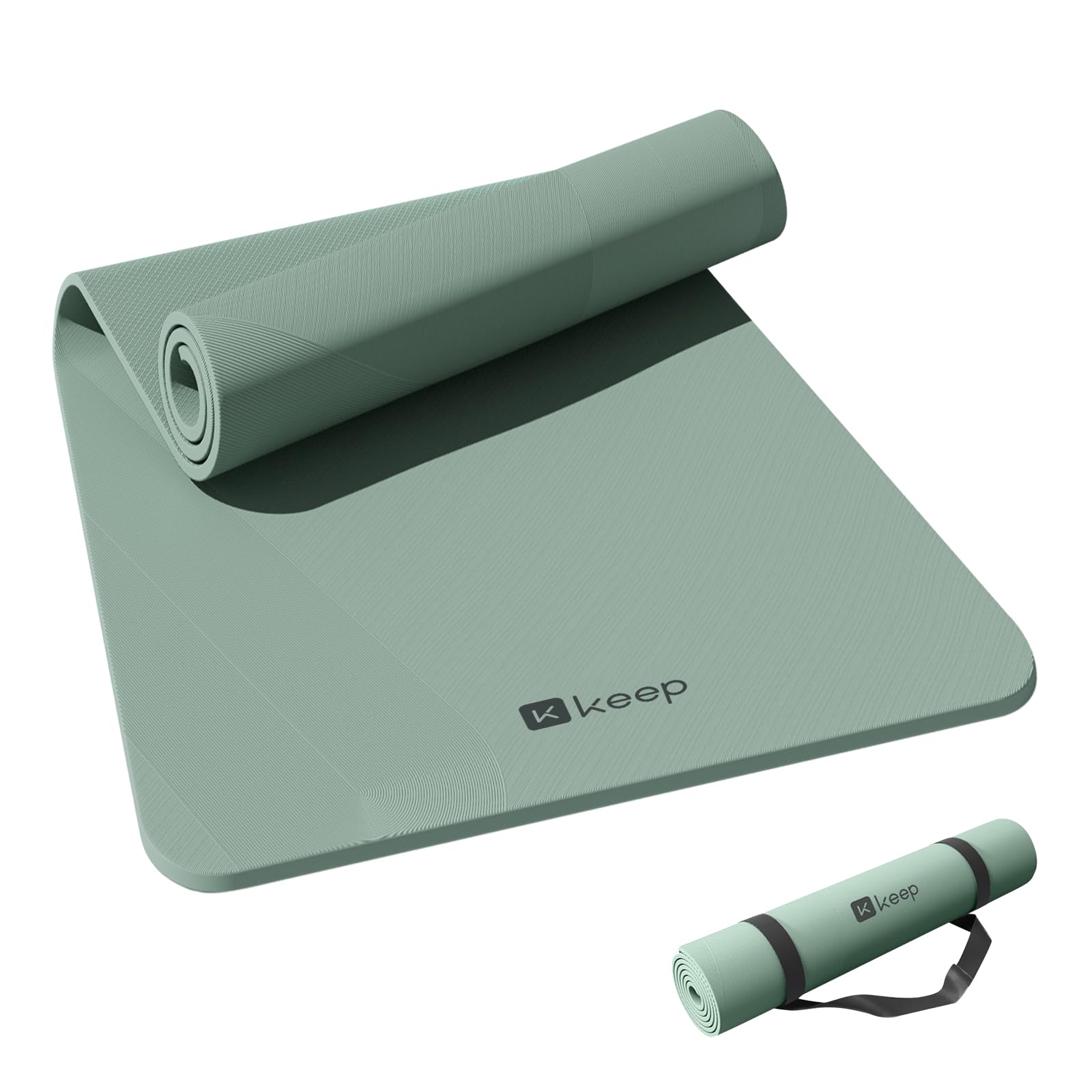
Wide enough for every limb, thin enough to balance on, light enough to haul.
You get cushioning for your knees and a firm footing for balance poses in one mat, because 7mm (about a quarter inch) is the balance between the two. Add 32 inches of width, and this mat fits just about every body type through just about every pose. At 2.86 pounds with an adjustable polyester strap included, it is a genuine carry-around option. It also undercuts the 4-pound YOTTOY thick mat on weight while beating it on width.
The two-layer grip design is the reason it holds. The top layer uses a fingerprint-style texture for precise control under hands and feet. The bottom layer uses a full anti-slip pattern across the whole underside, so no corner is left loose on wood, tile or a gym floor. Quality and size are what owners talk about most, and both hold up in the daily-use reality of a home workout corner.
The caveat is the classic TPE one: it will not stay as tacky as natural rubber under heavy sweat. It arrives with some packaging scent that needs airing out before first use, and the care rules are strict — hand wash only, no soaking, no long sun exposure.
Balanced footprint: 72″ x 32″ at 7mm gives you joint protection and room to move without a wobbly platform.
Care discipline: spot-clean and lay flat to dry — machine washing or a long soak will shorten this mat’s life.
Pick this one if: you are a broad or tall practitioner who wants one mat for yoga, Pilates and stretching at home.
Skip the upgrade if: heavy sweat is your main challenge — the TPE grip holds in dry sessions, not soaked ones.
6. Hatha Yoga TPE Yoga Mat 72″x 27″x1/3″ Non-Slip Exercise Mat

A middle-width mat for anyone who finds 24 inches a squeeze and 32 too much.
Twenty-seven inches is an odd number until you stand on it — it is enough extra width to keep your hands on the mat in wide poses without the bulk of a full extra-wide mat. At 1/3 inch thick, TPE foam adds shock absorption at the knees and shoulders, and quality of build is what most owners remark on first.
The anti-slip story is a double-sided grain, with the maker claiming the grip holds even when sweat wets the surface. It is rated for wood, tile, cement, gym or home floors. The TPE is SGS certified and pitched as the low-odor, easy-clean upgrade over traditional foam mats, with a carrying sling in the box for transport.
Where it wobbles — literally — is stability. Some people find the grain locks them in; others find it still shifts and that the mat is not especially easy to roll up neatly. The thicker TPE also needs care to keep it flat and seated on the floor.
Build feel: the material and finish read as more premium than most TPE mats at this end of the field, and the 1/3-inch slab keeps its shape well.
Roll-up quirk: expect a few attempts before it rolls tight enough for the sling — a minor annoyance, not a functional problem.
Right for: a home practitioner who wants a slightly wider mat with honest cushioning for kneeling and seated poses.
Wrong for: sweaty hot-yoga flows where you need a tack that survives continuous moisture.
7. HAPBEAR Large Yoga Mat
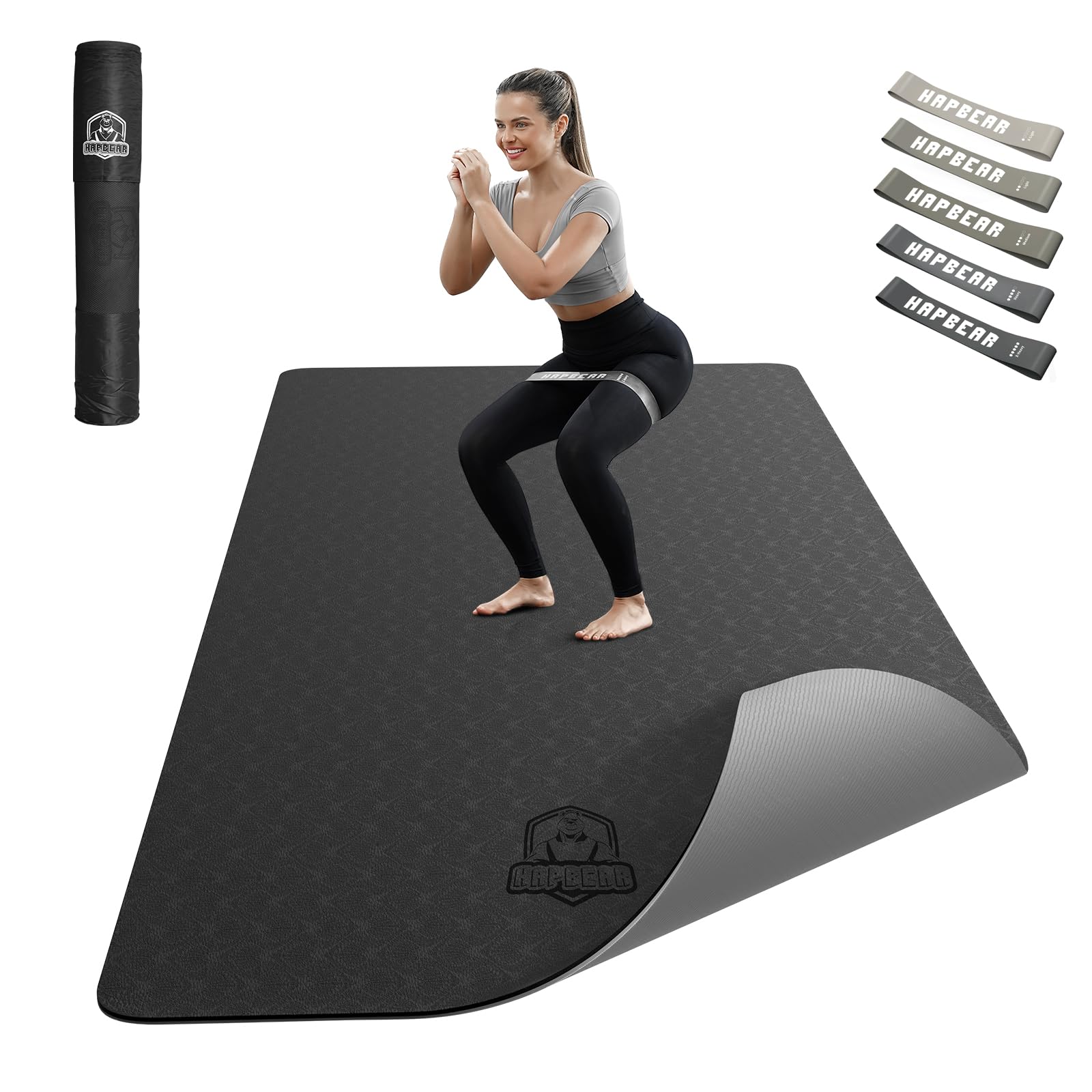
Three feet of width — the mat that finally fits your whole warrior two.
Thirty-six inches wide is the widest mat in this group, and the maker puts it at 50% wider than standard. In real terms, that is a full three-foot stretch of floor where you can spread your arms, step wide and roll sideways without a heel dropping onto bare hardwood. For tall or broad practitioners, that extra foot of width keeps heels and hands off bare hardwood in wide-stance poses.
The mat is built with a textured, double-sided surface that holds firmly on smooth floors. One important note from the maker: it is not for use on carpet, where the texture has nothing solid to bite into. At 6mm thick it adds cushioning for knees and wrists without going soft, and it is light for its size with a carry bag in the box.
Thickness is where opinion splits. Six millimeters is a modest pad, and the feel runs firmer than a plush 10mm mat. Expect a light scent out of the packaging that needs a day or two to air out, and keep it on hard flooring rather than carpet.
Room to move: the 36-inch span is what owners prize, letting you do floor work with a partner or a pet in the frame without running out of mat.
Surface note: hard floors only — the double-sided grip needs a smooth surface to work against.
Go here if: you have a dedicated floor corner and you want the maximum span for stretching and wide-stance work.
Steer clear if: you plan to practice on carpet, where this mat will not grip the way it does on tile or wood.
8. Plyopic Ultra Grip PRO Yoga Mat

The one built for sweat — grip that keeps holding as your palms get damp.
Most mats lose their tack the moment your hands get wet. This one is designed around the opposite idea: an UltraGrip top surface that is meant to keep contact as moisture builds, for dry flows, sweaty sessions and hot yoga. The material is a natural tree rubber base with an eco-PU top — rubber for a firm, planted base, PU for a grippy, sweat-resistant face. Quality and grip are what practitioners rate most highly here.
It also solves a specific annoyance with a printed PoseMap: reference points for hands, feet and center across a wide range of poses, so you can check your positioning at a glance instead of guessing. The 72 x 26 inch size runs a little wider than standard, and the dense natural rubber cushions knees and wrists on hard floors. It is vegan-friendly, PVC-free and ships with a carry strap.
Two honest notes. At 0.17 inch thick this is a close-to-the-floor mat, so people who want plush cushioning under their knees will find it firmer than they hope. And the natural rubber arrives with a scent that needs airing out — the trade-off for a rubber base that actually grips.
Why sweaty hands stay put
- Wet-and-dry grip is the whole point — holds as moisture builds
- Natural rubber base stays planted and stable under you
- PoseMap lines give clear hand and foot reference points
- 72 x 26 inch surface is wider than standard, at a lean 0.17 inch
What you trade for that grip
- Thin 0.17-inch profile means less knee cushioning
- Natural rubber scent needs a few days to settle
Made for you if: you practice hot yoga or sweat freely and grip is the one thing you refuse to compromise on.
Give it a miss if: your knees need deep cushioning — the close-to-floor build favors traction over plushness.
9. Body By Yoga Luxury Cork Yoga Mat
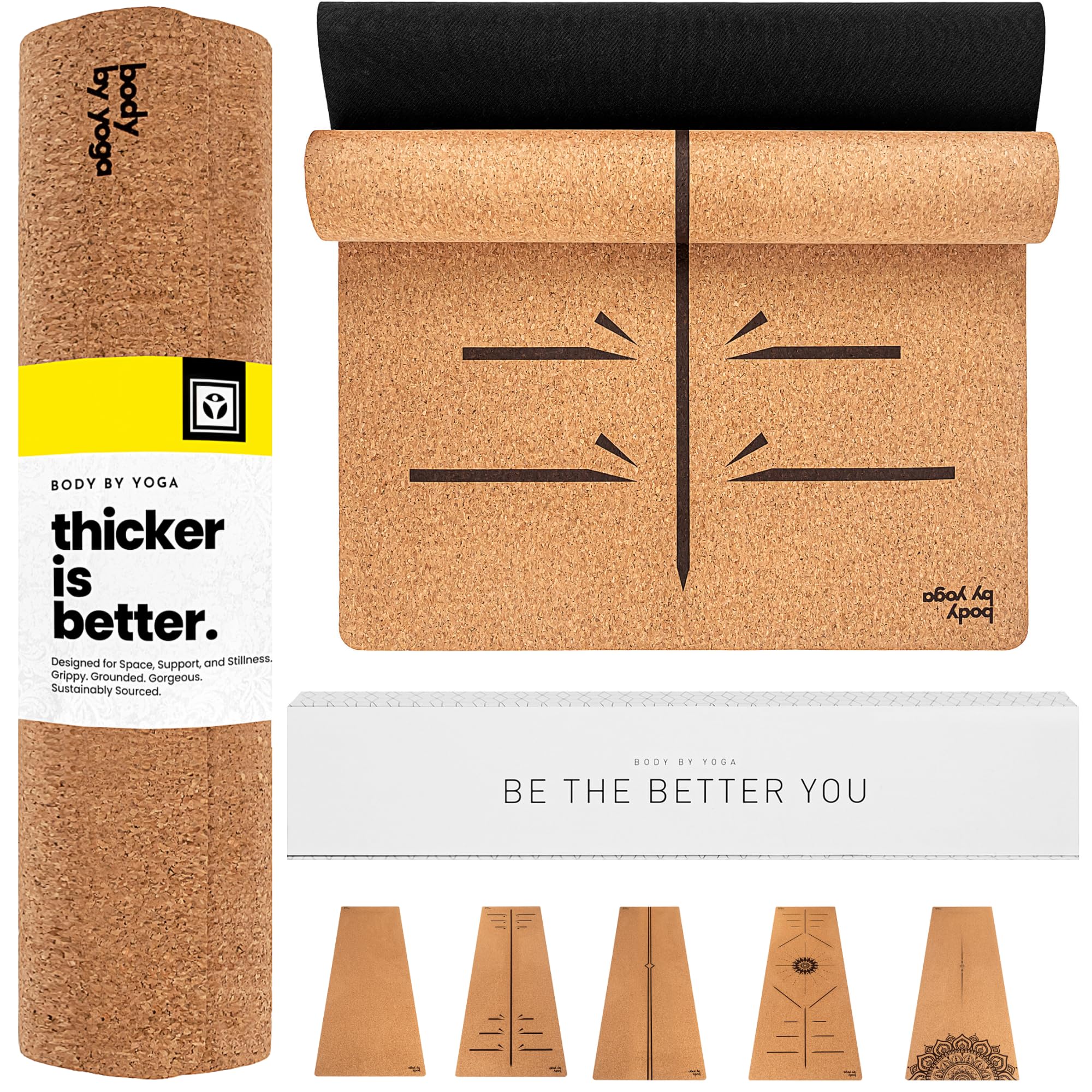
Cork that grips harder the sweatier you get, at eighty inches long.
Tall practitioners and hot-yoga regulars, this is your mat. At 80″ x 26″ it runs long enough to keep your whole body on the surface — the maker pitches it as an extra-long mat for full-body freedom in a stretch or flow. The surface is natural cork over a natural rubber base, and cork does something rubber cannot: it becomes more grippy as moisture hits it, so a sweaty palm gets traction rather than slide.
Quality and grip are what owners rate most highly, and both come from the material choice. The maker points out that most cork mats use a razor-thin cork layer, while this one is significantly thicker — which adds durability, better grip and a softer feel on the skin. It also resists moisture buildup better than porous rubber and wipes clean with water. The natural rubber base provides a firm but cushioned layer under the knees and wrists without feeling wobbly.
At approximately 9.9 pounds this is the heaviest mat on this list by a wide margin — that weight is what keeps it planted and what makes it a chore to carry to a studio. It is a stay-home mat, not a backpack fixture.
Built to last: thick cork over rubber is the most durable construction in this group, and it reads that way the moment you unroll it.
The weight question: nearly ten pounds buys you a mat that never walks across the floor — and never wants to leave the house.
Worth it for: hot yoga and tall practitioners who want a long, stable, moisture-gripping surface at home or in a fixed studio spot.
Not worth it for: anyone who carries their mat to class on public transport — the weight is a real daily cost.
Know the Specs
Grip surface and backing
A mat needs grip on both faces. The top surface holds your hands and feet; the bottom holds the floor. TPE and NBR mats rely on texture — grain, ripples, fingerprint patterns — to raise friction. Natural rubber and cork are the wet-grip options: cork gets tackier as moisture hits it, and rubber stays planted under sweat. If you practice hot yoga, look for a dry-and-wet grip claim, not just “non-slip”.
Thickness in millimeters
A thicker mat saves joints and a thinner mat keeps you balanced. Around 6mm to 7mm is the everyday middle ground. At 10mm to 12mm you get real knee and wrist cushioning, but the surface compresses more under standing balance poses. A mat at 0.17 inch is close to the floor and best for traction-focused practice.
Width and length
The standard footprint is 72″ x 24″. Extra-wide mats run 32 to 36 inches across, which keeps your hands on the mat in wide-stance poses. Tall yogis should look at length as well — 80 inches covers a full body in a stretch without your heels sliding off the end. Measure your widest stance, then pick a mat width that keeps both hands on the surface.
Material and care
TPE is light and low-odor, and suits dry practice. NBR is softer and plusher but tears more easily. Natural rubber grips hardest and weighs the most. Cork wipes clean with water and resists moisture buildup. Most of these mats want spot cleaning with a damp cloth and flat drying — prolonged sun exposure and soaking shorten a mat’s life.
Common Questions
Will a thicker yoga mat stop the slipping during a flow?
Which mat works best if my hands sweat heavily in hot yoga?
How wide should my mat be for warrior poses?
Do I need a different mat if I practice on a wood floor versus carpet?
What is the real difference between TPE and NBR foam?
How long will a yoga mat last before it loses grip?
Can I machine wash a cork or TPE yoga mat?
Is a folding mat better than a rolled mat for travel?
What does SGS and TUV certification mean on a yoga mat?
Why do new mats have a smell, and how do I get rid of it?
The Bottom Line
For most people, the non-slip yoga mats winner is the Gaiam Thick Yoga Mat because it delivers the plush 10mm cushioning that saves knees on hard floors, and it stays put during dry sessions on wood and tile. If wet grip is your whole reason for buying — hot yoga, sweaty palms — reach for the Plyopic Ultra Grip PRO, which is built for moisture rather than dry practice. And if you want a long, planted, cork surface for a tall body, the Body By Yoga Cork Mat is the one to reach for.
If you keep coming back to the KEEP Extra Wide mat, that balanced 32-inch width at 7mm makes it the most versatile everyday pick in the field. It is a worthwhile step up for anyone who has outgrown a 24-inch mat.
How we choose
We do not accept paid placement. Every pick is matched to a real buyer and a real use-case; we do not hands-on test units.
Sources
Specifications: manufacturer listings and product documentation. Review insights: verified customer reviews, as of November 2026. Pricing: not shown on this page (it changes often); check the current price via the retailer link.
As an Amazon Associate, Tactical Gear Guy earns from qualifying purchases. This does not affect which products we feature.