Specs are compiled from manufacturer listings and verified buyer reviews and can change over time — please confirm the key details on the product page before buying.
If your hands slide forward in downward dog, the mat is the problem, not you. Natural rubber grips a wooden or studio floor far better than the foam mats most people start on, and it stays planted when sweat starts pooling. The picks below are all real rubber rather than PVC or TPE foam, ranked so you can see which one fits your practice in about two minutes.
This guide is built by comparing the manufacturers’ published specifications and the patterns across verified customer reviews, so you get each pick’s real strengths and trade-offs instead of marketing spin.
Below you will find nine rubber-based mats split by how you practice, from a travel-thin sheet you can fold into a tote to a heavy cork-topped mat that refuses to shift under a balance pose. Here is the honest shortlist of natural rubber yoga mats worth unrolling.
Top Picks

How To Choose The Best Natural Rubber Yoga Mats
Start with one question: where does the mat live? A mat that stays in your living room can weigh as much as it likes. A mat that rides in a gym bag every morning cannot. That single answer rules out half this list before you read a spec.
Match the surface to how much you sweat
Plain rubber gets tacky when your palms are dry. A PU (polyurethane, a synthetic top layer that grips harder when damp) or cork surface gets grippier once you sweat, so hot yoga practitioners usually want one of those tops. A dry-flow practitioner can save weight and go with straight rubber.
Read the thickness as a comfort-to-balance trade
Thicker mats cushion your knees and wrists but let your feet wobble more in standing poses. The thinnest mat here is 0.08 in, which is a travel sheet you lay on top of a studio mat. The thickest runs 0.25 in, which is a joint-comfort pick for someone with sore knees.
Check the actual footprint before you buy
A mat that is 80 in long fits a tall body that a 70.87 in mat leaves hanging off the end. If you are over six feet, the length column in the table below matters more than any other number on this page.
Side-by-Side Comparison
| Model | Best For | Thickness | Length × Width | Weight | Amazon |
|---|---|---|---|---|---|
| Plyopic All In One★ Best Overall | Hot yoga and sweaty flows | 0.14 in | 71 × 25.5 in | 5.1 lb | Amazon |
| Tatago Hot Yoga MatMost Spacious | Tall and broad practitioners | 0.2 in | 72 × 26 in | 7 lb | Amazon |
| STAASH Premium Yoga SetBest Kit | One-box starter kit | — | — | 3 kg | Amazon |
| Ellylife Alignment Mat | Beginners checking form | 0.2 in | 74.8 × 26.8 in | 3.3 kg | Amazon |
| Manduka eKOLite | Small spaces and daily flows | 0.16 in | 71 × 24 in | 5.2 lb | Amazon |
| Satori Concept Cork Mat | Joint cushioning and space | 0.24 in | 80 × 26 in | 8 lb | Amazon |
| Body By Yoga Cork Mat | Heavy, planted studio mat | 0.25 in | 80 × 26 in | 9.9 lb | Amazon |
| agoy PRO+ Warrior | Laser-etched alignment work | 0.16 in | 72 × 24 in | 5.5 lb | Amazon |
| Liforme Travel Mat | Carrying to class | 0.08 in | 70.87 × 25.98 in | 1.6 kg | Amazon |
Detailed Reviews
1. Plyopic All In One Yoga Mat
Our pick — 4.5+★ from 850+ verified ratings; the strongest balance of quality and price.
Built for hot classes, where its sweat-grip top holds when plain sticky mats turn slick.
Plyopic sells this as a mat and towel combo, and that phrasing is the whole point. The grip is meant to hold from damp palms through a full hot class, so you stop readjusting between poses. Its rubber base is 3.5mm thick, which is thin enough that you feel the floor under your standing leg and thick enough to take the sting out of kneeling poses.
The raw footprint comes in at 71 in long and 25.5 in wide, and it weighs 5.1 pounds. At 5.1 pounds versus the Tatago’s 7 pounds, it is the lighter one on your shoulder, which matters if you carry it across town. Flip it over with shoes on and it doubles as a gym or fitness mat, so one mat covers two habits.
What wins people over is the grip under sweat. Owners consistently find it does not slip once hands get moist, and several describe the texture as smooth through a vinyasa flow while still feeling enough padding under the knees and elbows. The mat is made with SGS-certified materials (a third-party safety certification), which covers the “what am I lying on” question. The one honest catch is thickness: some owners wish it were cushier, so if your knees are the priority, the cork mats below sit higher off the floor.
Where it earns its place
- Grip holds through sweat, which is the top praise across its reviews
- 5.1 lb carries easily between home and studio
- Reverses into a gym mat for floor work in shoes
- Limited-edition designs so you are not on the same mat as everyone else
The part to weigh up
- 0.14 in is on the thin side for sore knees
- Hand wash only, so no machine cycles
- Not the widest mat here for very broad shoulders
Best for: anyone whose hands get slick in a hot or power class and who wants one mat for studio and gym.
Think twice if: you need thick joint cushioning — that job belongs to the cork picks further down.
2. Tatago Hot Yoga Mat
For tall, broad practitioners whose hands and feet keep sliding off a standard 24-inch mat.
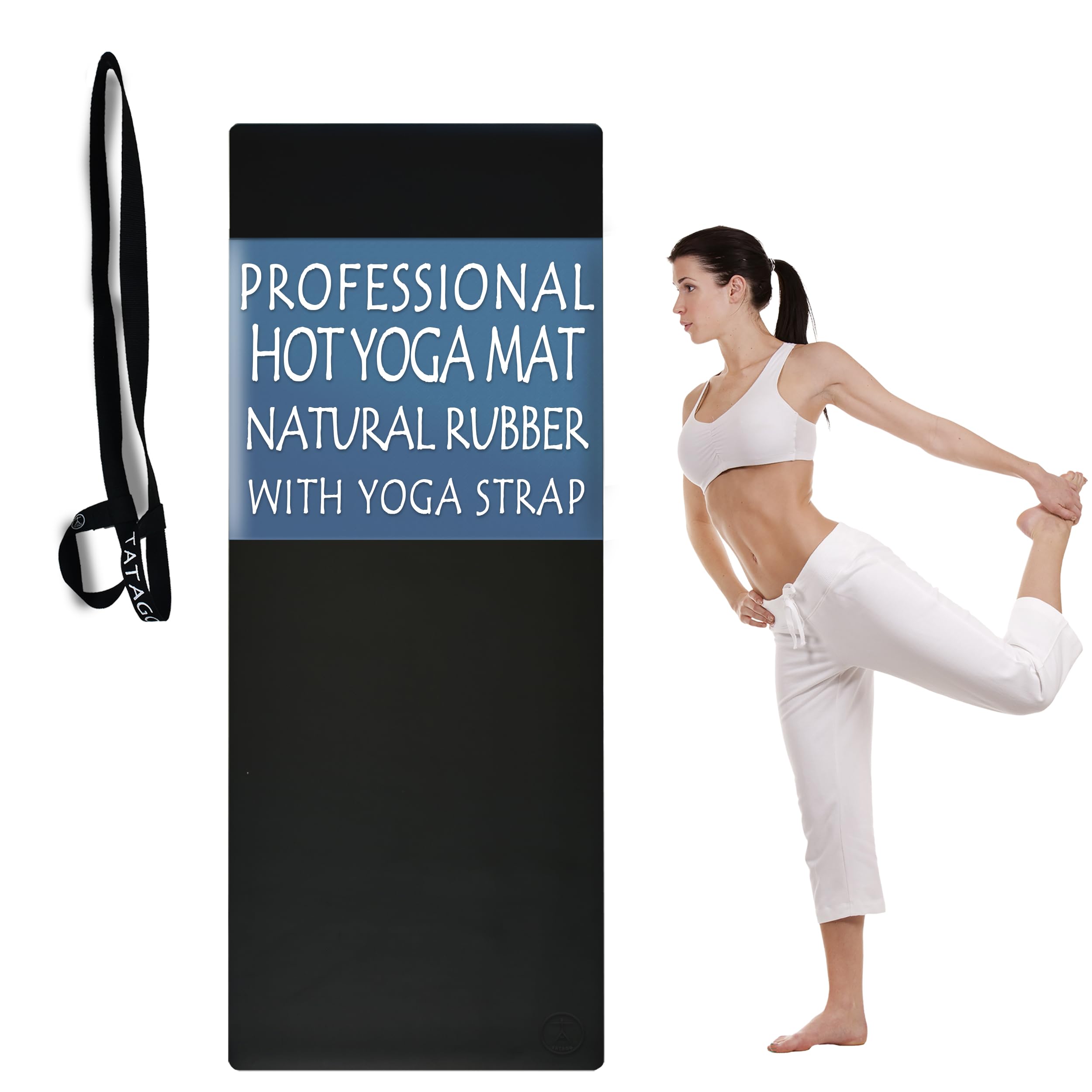
Length is the number that decides this one for a lot of people. At 72 in long and 26 in wide, it gives you a little more room in every direction than the Plyopic above, and that extra width is what stops your hands from drifting off the side in a wide-legged pose. The surface is natural rubber, described by the maker as non-Amazonian, with a non-slip face built for sweaty practice.
It sits at 5mm thick with high-density cushioning, which is the thickest rubber in this group after the cork mats. That extra lift is what makes kneeling and seated poses kinder on the joints. The catch to know upfront is weight: at 7 pounds it is noticeably heavier than the 5.1-pound Plyopic, so this is a mat you leave down at home more happily than one you haul to a studio every day.
Owners describe it as extra long and wide enough for tall people, and the cushioning gets singled out for supporting knees and joints. It ships with a black carrying strap for transport and for stretching work, so you are not buying that separately. A few would like it even thicker, which tells you the density is firm rather than pillowy — fine for stability, less so if you want a cloud.
Who it fits: tall practitioners, broad-shouldered men, and anyone whose old mat left their feet hanging off the end.
Size-to-weight trade: the 72 × 26 in footprint buys comfort at the cost of 7 pounds in the bag.
Reach for this if: your body is bigger than the average mat and knee support matters during floor work.
Look elsewhere if: you commute with your mat daily — the lighter Plyopic above is kinder on a shoulder strap.
3. STAASH Premium Yoga Set
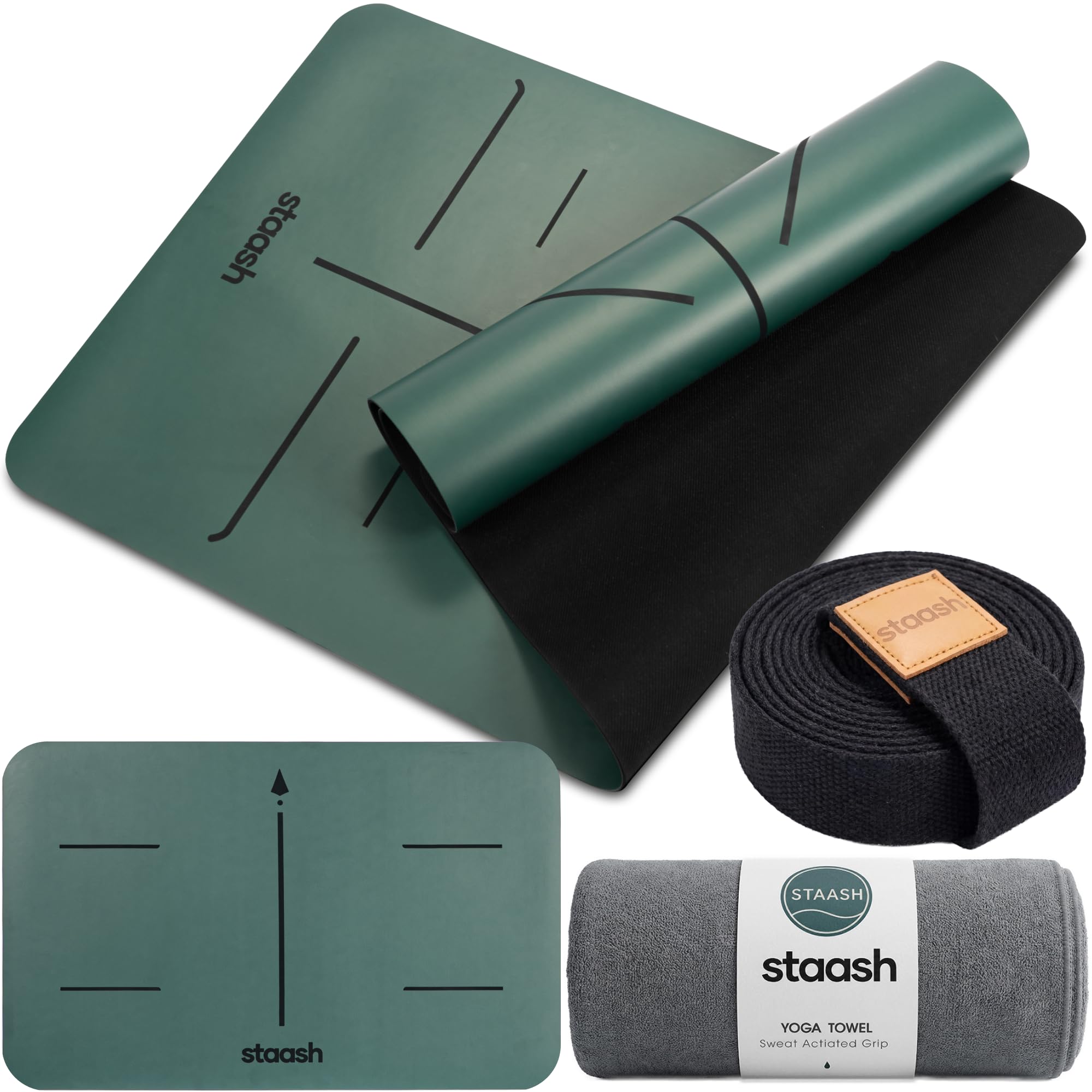
One box, four pieces: a PU-topped rubber mat, a sweat towel, a carry strap, and a knee pad.
This is the pick for the person starting from nothing. Buy this and you own the mat, a microfiber towel for sweat, a strap for stretching and carrying, and a knee pad for floor work — four items, one purchase. The mat itself pairs a PU (polyurethane) top surface with a natural rubber base, so the grip layer is built to hold through hot sessions while the underside stays put on the floor.
It is described as free of PVC and harmful chemicals, and the maker calls the materials non-toxic, which is the promise most buyers of natural rubber mats are actually shopping for. It weighs 3 kg, and the forest green is a calmer look than the usual black slab.
The trade-off is information. The listing does not publish a length, width, or thickness figure, so you are buying on the strength of the kit rather than exact dimensions. If a precise footprint matters to you, one of the mats with published measurements further down is the safer call.
The value read: four pieces for one price is the whole argument, and the knee pad is the piece most single-mat buyers end up ordering separately.
The honest gap: no published length, width, or thickness, so measure nothing in advance here.
Suits: a first-time buyer who wants mat, towel, strap, and knee pad without shopping four separate listings.
Not for: anyone who needs to know the mat’s exact dimensions before it arrives.
4. Ellylife Yoga Mat with Alignment Lines
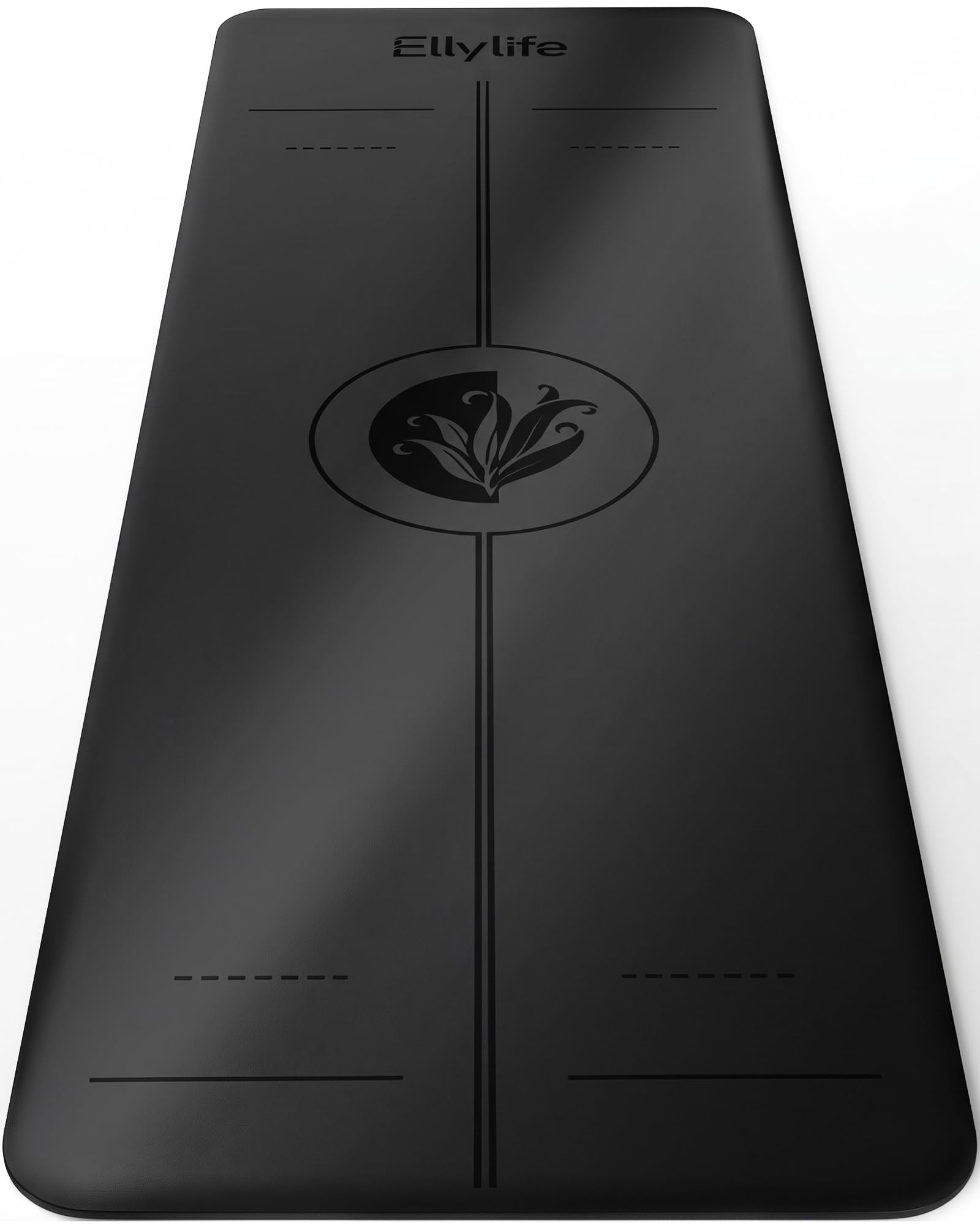
Printed alignment lines let you glance down mid-pose and check that hands, feet, and hips are square.
Alignment lines are the feature that separates this from a plain rubber slab. They are printed onto the mat so you can glance down and see whether your hands, feet, and hips are square, instead of guessing. For a beginner who cannot yet feel when a pose is crooked, that is the single most useful thing on this list.
The footprint is the biggest here short of the cork mats: 74.8 in long and 26.8 in wide, at 0.2 in thick. That is a genuine extra-large mat — enough room that your hands do not slide off the edge, with enough thickness to cushion wrists, knees, and spine without losing the floor under your feet. The top surface is PU, which keeps grip when you sweat, and the natural rubber bottom grips wood, tile, or concrete.
The maker says the mat unrolls flat and stays flat with no curling at the corners, which is the chronic annoyance with rolled-up rubber. It ships with a carry strap and a dust-proof storage bag. The material is described as PVC-free and SGS-certified, and it is built to hold its shape through long-term use rather than denting where you kneel.
What it brings to the room
- Alignment lines you can actually see while practicing
- 74.8 × 26.8 in gives broad shoulders room to move
- PU top stays grippy when palms get damp
- Carry strap and storage bag included
What to plan around
- At 3.3 kg it is not a mat you fold into a day bag
- Hand wash only
- PU tops reward a wipe-down after heavy sweat
Pick this if: you are still learning poses and want the mat to tell you when your stance is off.
Skip the lines if: you already know your form and would rather have a lighter mat to carry.
5. Manduka eKOLite Yoga Mat
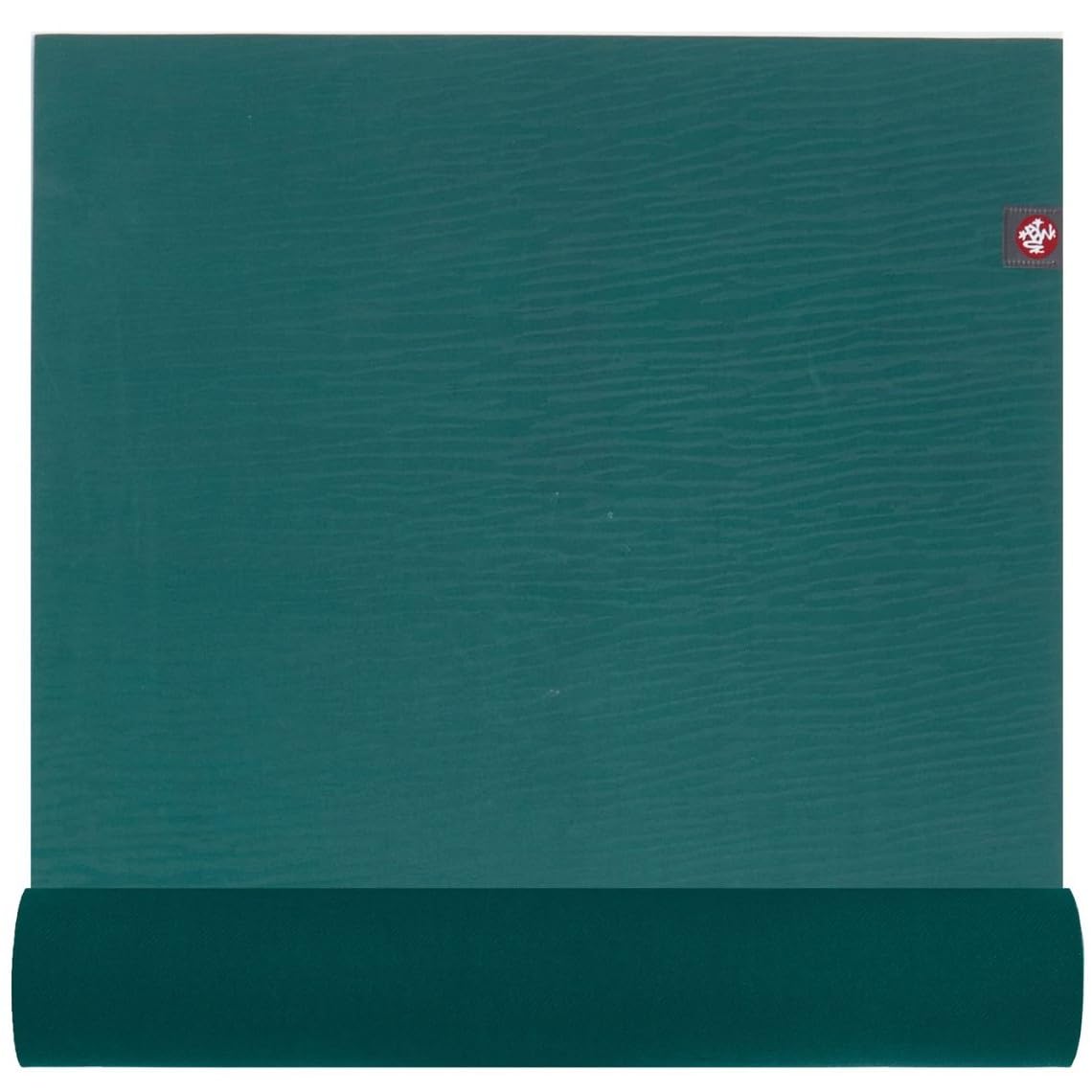
Natural tree rubber with a rippled catch-grip texture that holds firm in slow, dry holds.
Natural tree rubber is the core here, and the surface has a rippled catch-grip texture that you can feel under your palms. The eKOLite is 4mm thick and comes in at 71 in by 24 in, and that narrower 24 in width is the number to weigh: compared with the Ellylife above at 26.8 in, it gives you noticeably less side-to-side room in a wide stance.
Weight sits at 5.2 pounds, which keeps it portable enough to move between rooms without a struggle. The closed-cell design (a sealed surface that keeps moisture from soaking in) is meant to stay hygienic between sessions, and the mat is described as tear and scratch resistant. It is also 99% latex-free, which is worth knowing if latex has ever bothered your skin.
Owners praise the build quality and look, and many use it happily in hot classes. The honest caveats are real ones: grip feedback splits, with some finding it holds flat and others finding it loses tack once they are wet. Care is specific — spray Manduka’s Natural Rubber Yoga Mat Restore, wait 5 minutes, then wipe dry, and keep soap, sun, and a washing machine away from it. Early on it also carries a rubber smell that fades.
A dry-flow favourite: the textured rubber rewards slow holds and strong flows where you are not dripping.
The sweat caveat: if you pour sweat, plan on a towel over the top — that is where the mixed grip feedback lands.
Best matched to: a steady home practitioner who wants a natural tree rubber mat with a distinct texture.
Less suited to: heavy sweaters and anyone who wants a wide 26-plus-inch footprint.
6. Satori Concept Cork Yoga Mat
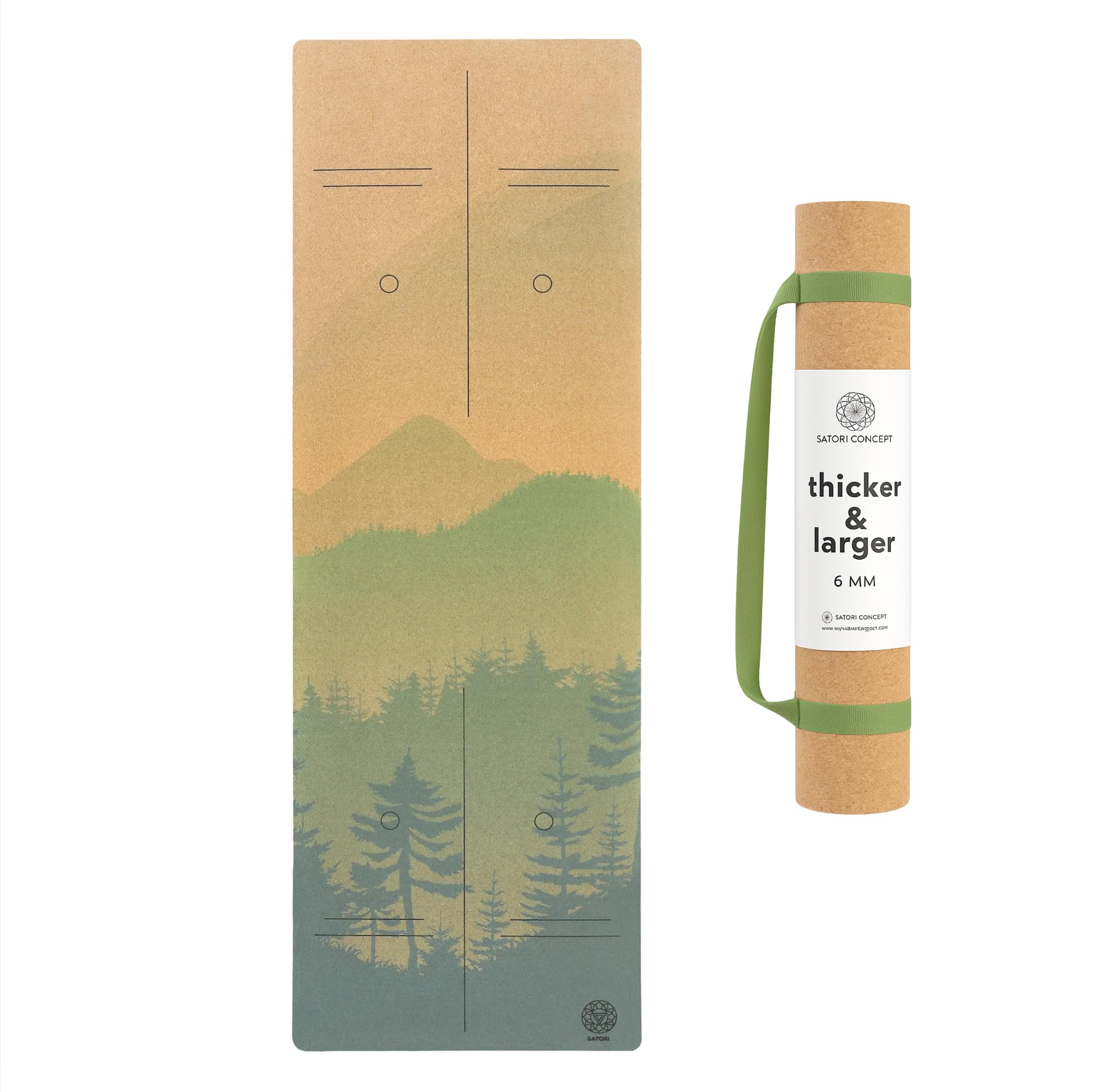
Eighty inches of cork over tree rubber, with a top that gets tackier as your hands dampen.
Cork is the interesting choice here because it behaves the opposite way to rubber. Where a plain rubber surface gets slick as your hands dampen, cork gets tackier — so the grip strengthens as the session heats up. Underneath sits a tree rubber base, and the maker makes the point that this is cork and rubber rather than the synthetic TPE some cork mats use for the base.
The footprint is the headline: 80 in long, 26 in wide, and 0.24 in thick. That extra thickness is what makes it a joint-comfort pick — knees and wrists sit higher off the ground than on a 0.14 in mat like the Plyopic. The longer length also means a tall body fits with room at the head and feet.
Owners describe it as comfortable and durable, and the cork-over-rubber build gets called luxurious to the touch. It arrives with a free strap and recyclable packaging. The one recurring note is weight — some find the 8-pound mat easy enough to move and others call it a bit heavy, so treat it as a mat for a room you practice in rather than a backpack companion.
The comfort angle: 0.24 in of rubber-backed thickness is the reason knees and wrists stop complaining in floor work.
Weight reality: 8 pounds buys that cushioning, and it is the honest cost of the extra thickness.
Go for it if: you sweat heavily, need joint cushioning, or want an 80-inch mat that fits a tall frame.
Leave it if: your practice happens on the move — this one belongs on a floor, not in a tote.
7. Body By Yoga Luxury Cork Yoga Mat
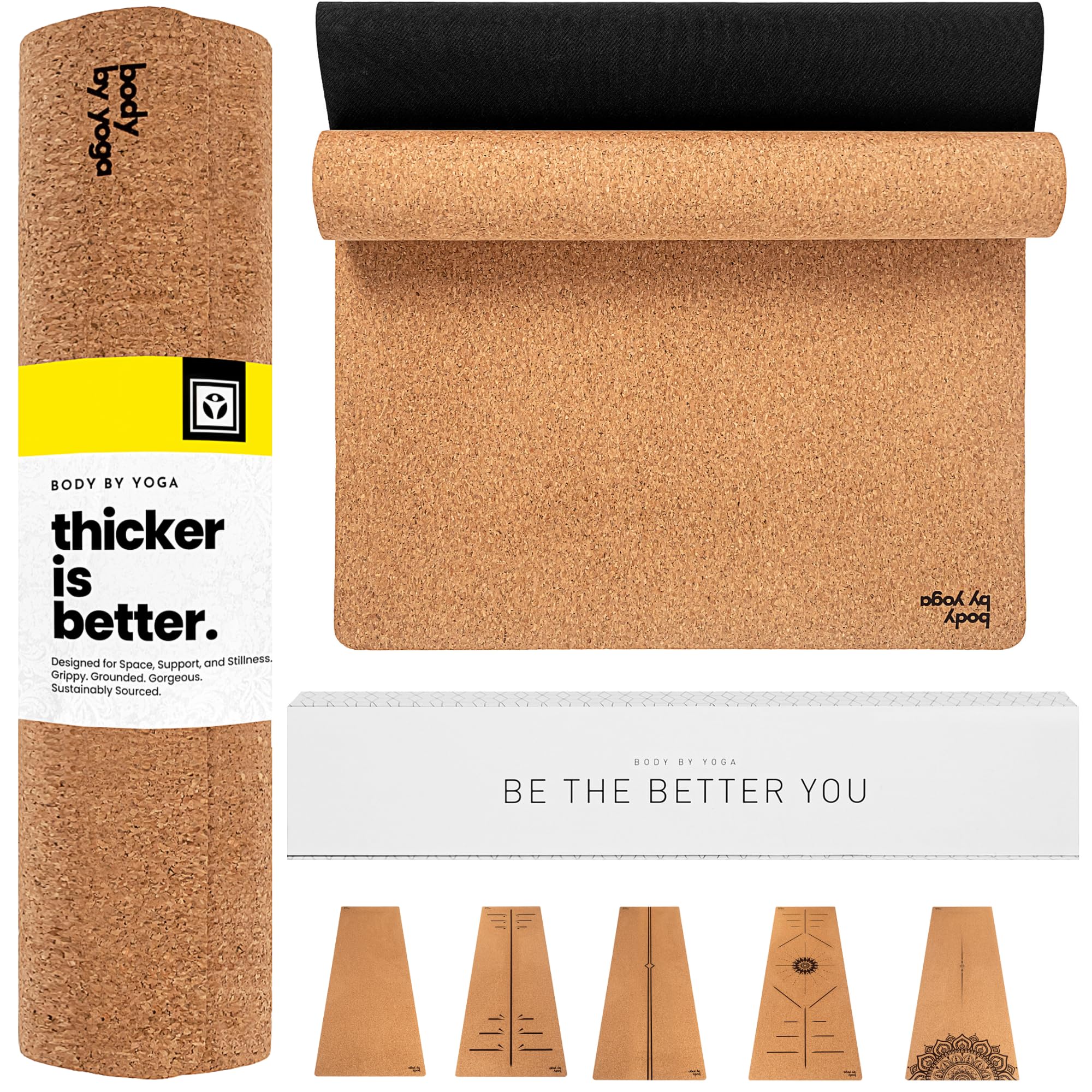
A dense cork top that feels substantial under your palms, on a heavy rubber base that stays anchored.
This one leans into cork density. The maker points out that many cork mats lay down a layer as thin as sandpaper, and says this cork is significantly thicker than standard — you feel that under your hands. It is 0.25 in thick overall, on an 80 in by 26 in body, so tall users get full coverage plus joint padding.
Weight is 9.9 pounds, the heaviest mat on this list, and the maker is upfront that this is deliberate. The natural rubber base adds mass that keeps the mat anchored on the floor during balance poses. At 9.9 pounds versus the Satori cork mat’s 8 pounds, it carries more weight in exchange for that planted feel. Cork wipes clean with water rather than soaking up sweat, and the maker suggests a dedicated cleaner for a deeper refresh.
Owners praise the quality, the grip on the floor, and the thickness that cushions knees while still keeping balance stable. The recurring note is exactly the one the maker predicts: it is heavier than expected. If you practice in one spot and want a mat that never creeps, that weight is a feature, not a flaw.
Why it stays put
- 0.25 in thickness cushions knees without going mushy
- Cork layer grip strengthens with sweat
- 80 × 26 in fits a full-length body
- Wipes clean with water instead of absorbing sweat
The load you carry
- 9.9 lb is the heaviest here — expect a two-hand carry
- Hand wash only with a damp cloth approach
- Overkill if you only practice on carpet at home
Ideal owner: a home practitioner with a dedicated floor space who wants cork’s sweat grip and a mat that never shifts.
Poor fit: anyone carrying a mat to a studio three times a week.
8. agoy PRO+ WARRIOR
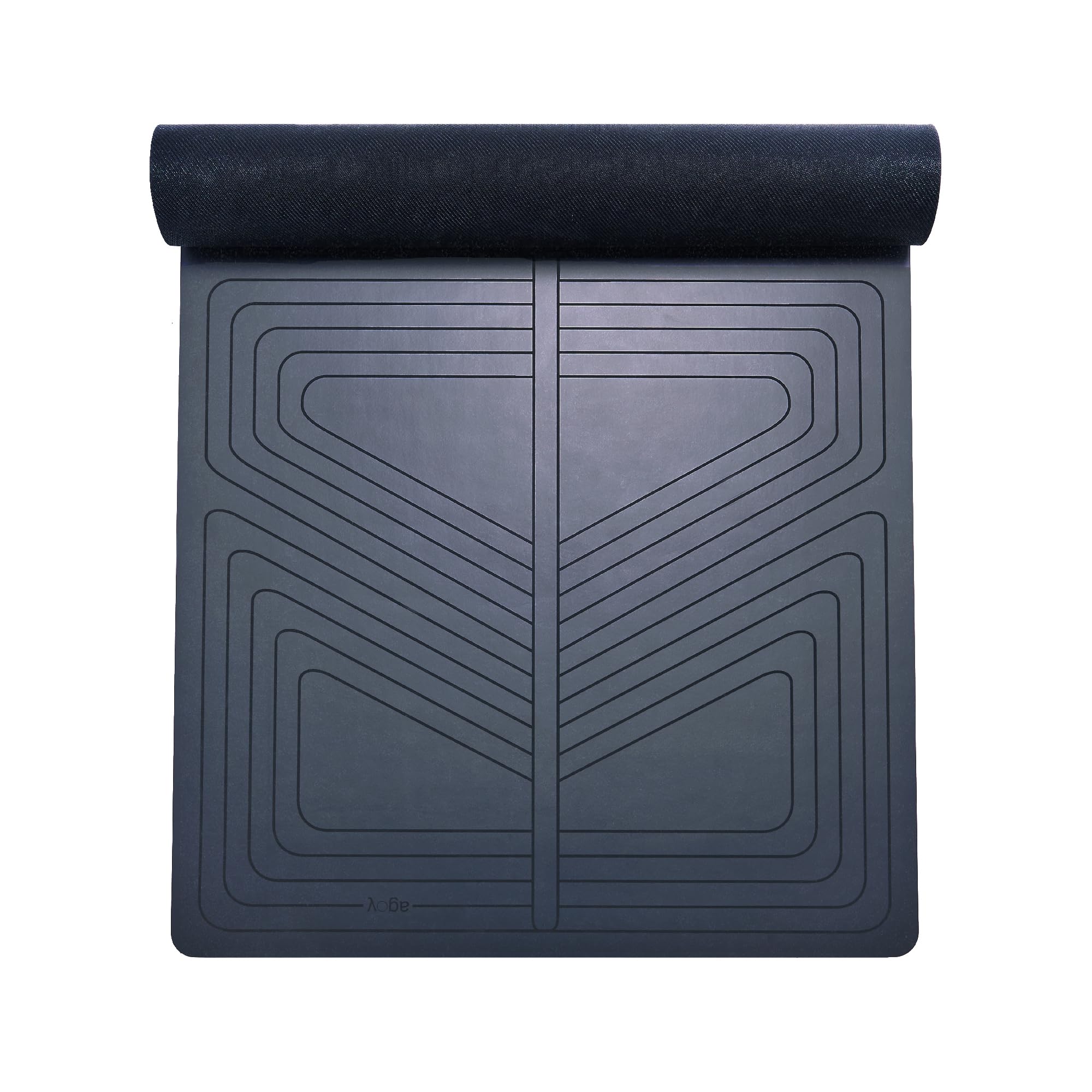
Alignment lines laser-etched into the PU surface instead of printed on top, so they don’t wear off.
The Focus Alignment system is the reason to look at this one. Instead of ink printed on a rubber surface, the alignment lines are laser-etched into the mat, and the maker holds a pending patent on the design. In practice that means the guides sit in the surface rather than wearing off, and you can check hand and foot placement without a mirror.
The top is a PU layer built for both wet and dry grip, so it holds in hatha and in a sweaty flow alike. Under it sits a natural tree rubber base, PVC-free and phthalate-free on the top surface. The mat measures 72 in long by 24 in wide at 0.16 in thick, and weighs 5.5 pounds — that 24 in width is the same narrower stance as the Manduka above, so broad shoulders should note it.
Owners single out the grip as the thing that makes planks and down dogs easier to hold, and the alignment lines get called a real upgrade to their practice. Thickness and build quality also land well. The honest caveats: two people disagree on how easy it is to keep clean, and the top surface is not the most sweat-forgiving here, so a towel on heavy days is sensible.
What stands out: etched alignment guides that stay legible, paired with a wet-or-dry PU grip.
Maintenance note: clean with a damp cloth, and add a towel on the sweatiest sessions.
Worth a look if: you want permanent alignment guides and a PU top that grips damp palms.
Consider the wider mats if: your stance spreads past 24 inches of mat width.
9. Liforme Travel Yoga Mat

A thin sheet you fold into a bag, then lay over whatever studio mat you find.
At 0.08 in thick, this is not a mat you use bare on a hard floor — it is a topper. Fold it into a bag, carry it to class, and lay it over the studio mat for Liforme’s GripForMe (their name for the grippy top material) surface and a clean layer between you and shared foam. The AlignForMe system prints alignment guides on the mat to help with hand and foot placement.
The footprint is 70.87 in by 25.98 in, so it covers a standard studio mat closely while staying light. Weight is 1.6 kg, and a travel mat bag is included. The top is eco-polyurethane over natural rubber, PVC-free, which is the same combination serious grip chasers pay for.
Owners love the portability and say it goes everywhere with them, and the alignment graphics get specific praise for helping place hands and feet. The real caveats are the two the thinness creates: it is not a cushioning mat on its own, and the price lands at the top of this group, with durability feedback split — some mats last years, others do not hold up the way buyers hoped. For a travel-only tool that is a fair trade; for daily home practice you would want something thicker.
The travel logic: 0.08 in folds flat, 1.6 kg carries easily, and the bag is included — this is a class-topper, not a floor mat.
Durability question: feedback on longevity splits, so treat it as a frequent-flyer tool that earns its keep through use.
Choose it for: a mat that lives in a commute bag and layers over studio mats.
Pass on it if: you want one thick mat for home practice — this one gives no real cushioning alone.
Know the Specs
Thickness (in or mm)
Thickness decides two things at once: how much your knees and wrists get cushioned, and how stable you feel in a balance pose. A 0.08 in sheet is a travel topper. Somewhere around 0.16 to 0.2 in is the common floor for daily practice. Above 0.24 in you are buying joint comfort, and the trade is a little less ground feel under a standing foot.
Base material vs top material
Almost every mat here is natural rubber underneath. The variable is the top: plain rubber is tacky dry and slick wet; PU grips in both conditions; cork gets grippier the more you sweat. Look at the top material, not just the word “rubber,” when deciding if it suits a hot room.
Length and width in inches
A standard mat runs about 71 to 72 in long and 24 to 26 in wide. If you are tall, a 80 in mat keeps your head and feet on the surface. If you are broad, go for 26 in or more in width, because a 24 in mat runs out of room in a wide-legged stance.
Weight in pounds or kilograms
Weight is the number that decides whether the mat travels. A 5.1-pound or lighter mat is easy to carry. A 9.9-pound cork mat stays where you put it. Neither is better — they serve different habits, so match weight to whether the mat lives in a bag or on a floor.
Common Questions
Why do natural rubber mats grip better than foam ones?
Will a natural rubber mat smell when it first arrives?
Can I use a cork-topped mat for hot yoga?
How thick should a mat be for sore knees?
Can I put a natural rubber mat in the washing machine?
Is a PU-topped mat better than plain rubber for sweaty hands?
What size mat should a tall person buy?
Will a travel-thin rubber mat work as my only mat?
Do alignment lines on a mat actually help?
How do I stop a rubber mat from sliding on a wood floor?
The Bottom Line
The mat that suits most practices here is the Plyopic All In One, because its sweat-grip top holds through a hot class while the 5.1-pound weight still travels. If you are tall or need knee support, the Tatago Hot Yoga Mat gives you 72 in by 26 in at 5mm thick. And if you want cork’s grip that strengthens with sweat on an 80-inch mat, the Satori Concept Cork Yoga Mat is the one to unroll.
How we choose
We do not accept paid placement. Every pick is matched to a real buyer and a real use-case; we do not hands-on test units.
Sources
Specifications: manufacturer listings and product documentation. Review insights: verified customer reviews, as of November 2026. Pricing: not shown on this page (it changes often); check the current price via the retailer link.
As an Amazon Associate, Tactical Gear Guy earns from qualifying purchases. This does not affect which products we feature.