Specs are compiled from manufacturer listings and verified buyer reviews and can change over time — please confirm the key details on the product page before buying.
You do not need a camera to know someone just pulled into your driveway. You need a sensor that wakes you, a receiver you can hear over the shower, and a battery that does not quit in the rain. The picks below cover all three, and the strongest all-rounder is the Betterlink 1/2 Mile Solar Wireless Driveway Alarm — 4.5+ stars across 800+ ratings — because it installs in minutes and reaches a half mile in open ground.
This guide is built by comparing the manufacturers’ published specifications and the patterns across verified customer reviews, so you get each pick’s real strengths and trade-offs instead of marketing spin.
Range claims, sensor counts, and false-alarm behavior separate the good from the frustrating, and the picks ahead spell out which is which. Here is what actually matters when you shop for a motion sensor alarm for driveway use.
Top Picks

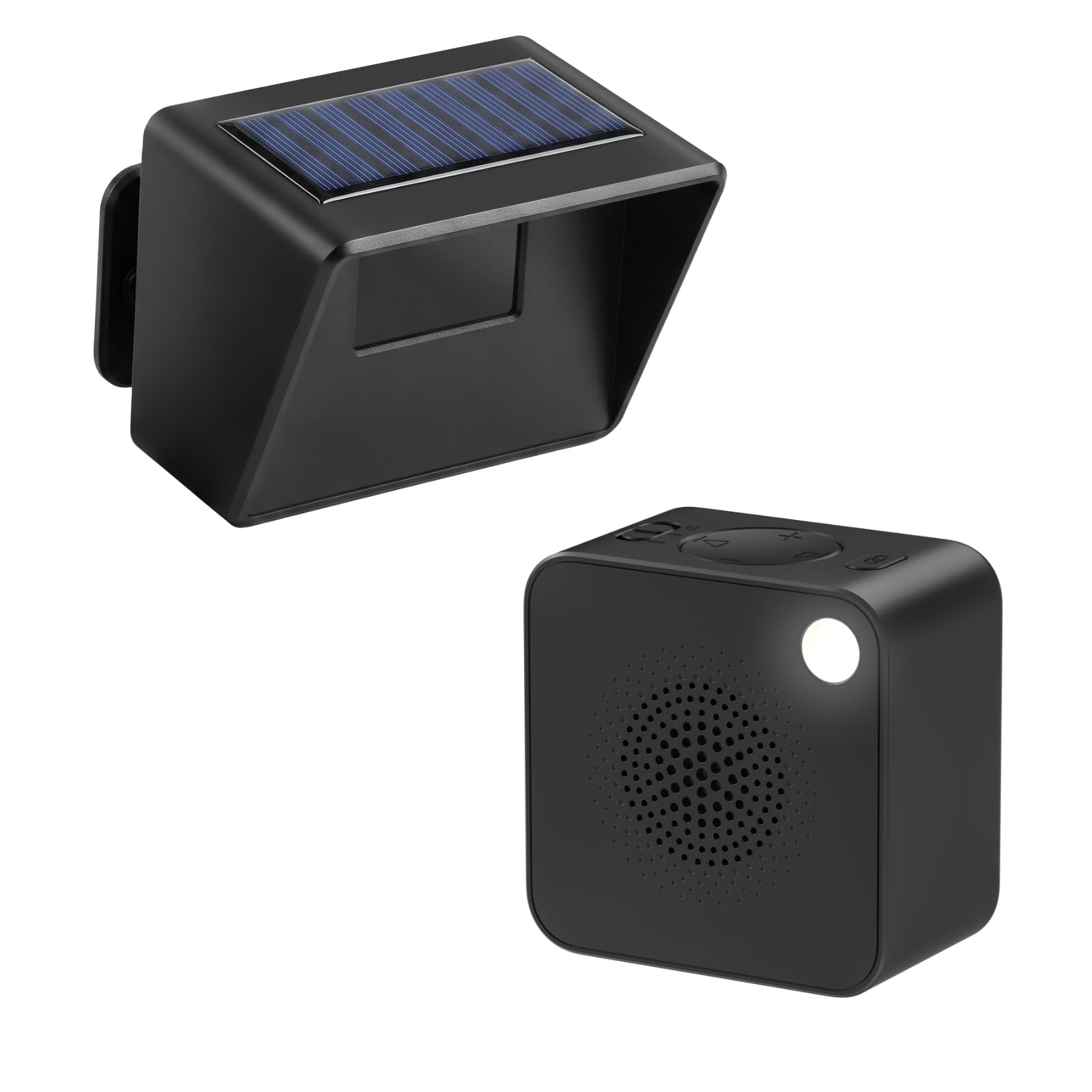

How To Choose The Best Motion Sensor Alarm for Driveway
The mistake most buyers make is shopping detection distance first. Your driveway sensor already sees plenty ten feet out. What decides whether the alarm is useful is whether the chime actually reaches you inside the house, and whether the thing still works after a season of rain.
Range is two numbers, not one
Every system here quotes a wireless transmission range — how far the sensor’s radio signal travels to the indoor receiver. That is the number that matters for a long driveway. A sensor that detects a car at 30 feet but cannot push its signal through your walls is just a battery you have to change.
Detection range is the second number: how far in front of the sensor a moving heat source trips it. Some units let you dial this down on purpose, which is how you stop a passing cat from chiming at 3 a.m.
Battery plan before you mount
Solar sensors recharge themselves through a small panel, so you rarely touch them. Non-solar units run on AA cells you swap. Decide which chore you would rather have, then check the receiver side too — some receivers hold their own rechargeable battery and keep working when the power goes out.
Sensitivity and false alarms
PIR (passive infrared) detection reads body heat, not just movement, which is why the better units ignore swaying branches. Adjustable sensitivity switches let you shorten the detection zone near a mailbox or a busy sidewalk. If rain and wind set yours off constantly, that is a setup and placement problem far more often than a broken sensor.
Side-by-Side Comparison
| Model | Best For | Wireless Range | Detection Range | Power | Amazon |
|---|---|---|---|---|---|
| Betterlink 1/2 Mile Solar Wireless Driveway Alarm 1R1S★ Best Overall | Most driveways | 1/2 mile | 30 ft | Solar + USB-C | Amazon |
| FULNIX Driveway Alarm with Portable Rechargeable ReceiverBest Range | Carry-around alerts | 3000 ft | 55 ft / 32 ft | Solar + rechargeable receiver | Amazon |
| HTZSAFE 1/2 Mile 1 Receiver + 2 SensorsMost Reviewed | Two zones, two tones | 1/2 mile | 35 ft / 50 ft | 3 AA batteries | Amazon |
| Wuloo 1800 Feet 1800mAh (1&2-Brown) | Budget two-sensor coverage | 1800 ft | 30 ft | Rechargeable sensor | Amazon |
| HTZSAFE Solar 1/2 Mile 1R2S | Wide detection zones | 1/2 mile | 25 / 50 / 70 ft | Solar + backup receiver | Amazon |
| eMACROS Pro4 Wi-Fi Solar Driveway Alarm | Phone notifications | 2600 ft | — | Solar + 3-day base backup | Amazon |
| Hosmart 1/2 Mile Wireless 1R2S | Rugged housing | 1/2 mile | 15 ft / 30 ft | 4 AA batteries | Amazon |
| Wuloo Solar 1800ft 1 Receiver + 4 Sensors | Covering a whole perimeter | 1800 ft | 30 ft | Solar + rechargeable | Amazon |
Detailed Reviews
1. Betterlink Solar Wireless Driveway Alarm 1R1S
Our pick — 4.5+★ from 850+ verified ratings; the strongest balance of quality and price.
A half-mile of solar-powered reach in a package that takes minutes to mount.
The Betterlink earns the top spot because it covers the two jobs that actually matter: it sends its signal up to 1/2 mile to the receiver, and its sensor charges itself from a solar panel so you are not on a ladder swapping AA cells every season. Detection runs to 30 feet using pyroelectric infrared (PIR) sensing — it reads the body heat of a moving person, car, or animal rather than every rustling branch.
The alerting is where this one gets flexible. You pick from four ways to be warned: audible alarm, light alarm, sound-and-light together, or pushed through the paired receiver inside the house. The receiver handles up to 16 sensors, so a gate, a side yard, and a back fence can all feed one box. The IP65 rating means the sensor housing is sealed against rain and dust, and the working range spans -4°F to +140°F — so a cold snap in January does not quietly kill your coverage.
What wins people over is simple reliability of function: the motion detector does its job, and it does it without a learning curve. A USB-C cable is included if you ever need to top the sensor up by wire instead of sunlight. The honest trade-off is long-term durability — the unit gets high marks for how it starts and how easy it is, but a minority of systems quit well into ownership, so the two-year manufacturer warranty is worth keeping on file. Mount it where the sensor sees the approach lane, not the mailbox post.
What earns it first place
- 1/2 mile transmission range to the indoor receiver — enough for a long rural drive
- Solar panel plus USB-C backup means no routine battery swaps
- Handles up to 16 sensors on one receiver for whole-property coverage
- Four alert modes, including a 120dB sound-and-light alarm at the sensor
Where it holds you back
- Minority reports of units failing months in — keep the 2-year warranty
- 30 ft detection is tighter than some rivals, so angle matters
- Single sensor means wide gates may need a second unit later
Built for: anyone with a long driveway who wants a self-charging sensor and a loud, four-way alert without a wiring project.
Go elsewhere if: you need fence-line coverage across multiple entry points from day one — the 1Receiver+4Sensor setup covers more ground.
2. FULNIX Driveway Alarm Portable Rechargeable
The receiver you carry in your pocket, not the one bolted to the kitchen wall.
Most driveway alarms nail you to one room. This FULNIX puts a 5000mAh rechargeable battery in the receiver itself — rated for up to 30 days at roughly 10 alerts a day — so you can move it from the kitchen to the garage to the porch without hunting for an outlet. It sends its signal up to 3000 ft in open, unobstructed conditions, and its sensor reads motion out to 55 ft on high sensitivity or 32 ft on low. That 55 ft reach edges the HTZSAFE’s 50 ft for the widest standard detection zone in this group.
The sensor side solves the battery problem differently. A 2500mAh rechargeable battery and solar panel keep it topped up, and the maker rates a full charge at up to 2 years of typical use. It expands to 84 sensors, so if you later want to watch a gate, a barn, and a back door, there is room. Each sensor also has its own on/off switch — pause the mailbox zone without killing the whole system. Voice prompts walk you through a three-step pairing, and you can assign different chimes to different areas.
You get 37 chimes and 10 volume levels on that portable receiver, plus automatic LED flashing and a one-touch mute. The sensor wears an IP65 weatherproof housing for year-round rain, snow, and dust. The catch is setup discipline: with 84 sensor slots and a dozen sound settings, the pairing screen rewards a slow first pass. Get the zones labeled properly the first afternoon and this becomes the most flexible system here.
Why it stands out: a rechargeable, room-to-room receiver is genuinely rare at this level — you get alerts in the workshop or the backyard, not just near the base station.
Worth knowing: the 84-sensor expandability is the ceiling here, far beyond the 8-sensor limit on the Wuloo 1800 ft unit — useful if you plan to grow the system piece by piece.
Choose this when: you are in and out of the garage or yard all day and want the chime to follow you.
Think twice if: your priority is the simplest possible one-box install — the feature set here asks a little more of you upfront.
3. HTZSAFE Driveway Alarm 1 Receiver + 2 Sensors
Two sensors and 35 melodies, so each zone gets its own recognizable voice.
If your driveway approach and your back gate both need eyes, buying two sensors up front beats adding one later. This HTZSAFE box arrives with one plug-in receiver and two motion sensors. Wireless transmission runs up to 1/2 mile in the open, and detection hits 35 ft on low or 50 ft on high. Its FSK+FHSS signal hopping (a frequency-hopping method that dodges interference from other wireless devices) is a real bonus in a neighborhood full of garage openers and Wi-Fi.
The two sensors are the reason this pick sits where it does. You assign a different melody to each — 35 options in total, four volume levels — so the beep at the front gate sounds nothing like the one at the side yard. It expands to 32 sensors and unlimited receivers, running on 3 AA batteries in each sensor. The working range spans -30 to 150 degrees Fahrenheit, so the hardware tolerates a hard winter and a hot summer both.
The trade-off lives outdoors. In steady rain, some sensors let water inside the housing, so mount yours under an eave or a fence cap rather than flat to open sky. A few systems also trip on things you would rather they ignored. Placement and sensitivity tuning are the fixes, and the quality of the build gets strong marks overall. Worth knowing before you buy: this is the most-discussed unit in the roundup, and the sheer weight of long-term reports is what makes its two-sensor value so easy to recommend.
Reasons it climbs the list
- Two sensors in the box, each on its own melody
- FSK+FHSS signal hopping resists interference from other devices
- Expands to 32 sensors for full perimeter coverage
- Wide -30 to 150°F working range
The points to weigh
- Water can get inside if mounted in open, driving rain
- Some false trips reported — dial in sensitivity on setup
- Runs on 3 AA batteries per sensor, which are not included
The right call for: a two-zone property where you want to hear which side of the house just moved.
Pass if: you want a fully sealed sensor with zero mounting fuss — the eave-mounted setups suit this one best.
4. Wuloo Wireless Driveway Alarm 1800mAh (1&2-Brown)

A receiver that doubles as a clock, on a range claim tested through real trees and walls.
Wuloo backs its 1800 ft range claim with a specific testing note: it was measured in settings with trees, buildings, walls, and vehicles in the way. That is the kind of range figure a buyer can actually plan around, since most properties are not a clean empty field. The sensor runs on an 1800mAh rechargeable battery, which sits well under the 2500mAh cell in the FULNIX sensor above — so expect more frequent top-ups on the Wuloo.
The receiver adds a small extra nobody expects: it works as a clock and alarm on top of the driveway chime. Customize the tones and volume, and the sensor trips when a person, vehicle, or large animal moves within 30 feet of the detection zone. You can expand the security zone to up to 8 additional sensors if the property grows.
The honest catch is battery behavior on the receiver side — it earns mixed marks, with a share of base units not holding a charge well over time. Sensitivity also splits opinion: some find it spot-on, others find the sensor a touch eager. Neither is a defect so much as a fit note; if you want a low-fuss receiver, keep it plugged in and treat the rechargeable cell as backup. For a two-sensor budget setup, the values are still there.
The practical case: you get a tested-through-obstacles range claim and a clock-alarm receiver in one box, which few budget units offer.
Weigh before buying: the 1800mAh sensor battery is the smallest of the rechargeable picks here, so plan on charging more often.
Suits you if: you want a two-sensor, easy-install setup on a modest budget and like the clock-plus-alarm receiver.
Not your pick if: you want maximum sensors on one system — this one caps at 8 additional sensors.
5. HTZSAFE Solar Driveway Alarm 1 Receiver + 2 Sensors

Seventy feet of detection reach, the longest standard zone in this roundup.
The headline here is the detection window. This HTZSAFE sees motion from 25 to 70 feet in front of the sensor, with three sensitivity steps — low at 25 ft, medium at 50 ft, high at 70 ft. That 70 ft top end beats the 50 ft ceiling on the betterlink and outruns the Wuloo’s 30 ft, so a long straight driveway gets covered faster. Wireless transmission also reaches up to 1/2 mile in the open, and the sensor itself is solar-powered, charging from its panel even on cloudy and rainy days.
The package includes two sensors and a portable receiver with a built-in rechargeable battery, so the indoor box keeps working when the AC power drops. That receiver has 35 melodies and 5 volume levels; assign the “Driveway” chime to the drive sensor and “Dog Barks” to the backyard so you know where the alert came from without looking. Install is a plug-and-play job you can finish in minutes.
What to keep in mind is longevity. Some of these units stop working after a season, and a share of sensors die within weeks — so the sensor’s long detection arm is the reason to choose it, and a patient warranty claim is the fallback if a unit goes quiet. Mount the sensor so rain runs off, not into, the housing. For a wide entrance or a long run-up, the 70 ft reach justifies picking this over the more conservative sensors above.
Where it wins: the 70 ft detection range catches approaching vehicles earlier than most of the field, giving you more time to react.
The durability caveat: a minority of these units fail inside their first weeks or first season, so buy where returns and warranty coverage are simple.
Best matched to: long, straight driveways and wide entrances where early warning is the whole point.
Look past it if: you want the most proven long-term track record — the heavier-reviewed two-sensor HTZSAFE has that advantage.
6. eMACROS Pro4 Wi-Fi Smart Solar Driveway Alarm

An alert on your phone, not just a chime on the wall.
This is the only pick that pings your smartphone. Its base station connects to a 2.4GHz Wi-Fi network (it does not work on 5GHz), and when the outdoor sensor trips, the base sounds its alarm and fires a push notification to the dedicated app. The sensor transmits up to 1/2 mile — 2600 ft in open areas — using proprietary SST PIR detection built to tell people, cars, and large animals apart from wind, leaves, and small pets.
Both ends carry their own power. The indoor base has a built-in rechargeable battery rated for up to 3 days of backup during an outage, so a downed line does not blind you. The outdoor sensor is IP65 weatherproof and solar-powered for continuous operation without battery swaps. Together that means the system keeps watching even when the house loses power — a real plus for a property you are away from a lot.
Be clear on what it is: a motion detector, not a camera. No video is recorded and it does not pair directly with third-party camera systems. Setup is straightforward on the Wi-Fi side, though connectivity to the phone has drawn mixed feedback, and the base battery life varies widely depending on use. Placement helps the detection: the maker suggests mounting for people at 3-4 feet high and for vehicles at 2-3 feet, kept level and square to the ground. Get that right and the notifications land where you want them.
What makes it different
- Instant push notifications to your phone via the app
- 2600 ft wireless range on a solar sensor
- Base holds up to 3 days of backup power
- SST PIR sensing tuned to ignore wind, leaves, and small pets
Clear before you commit
- 2.4GHz Wi-Fi only — no 5GHz support
- No camera and no video recording
- Mixed reports on phone connectivity and base battery life
Great fit for: owners who travel or want driveway alerts on the phone in their pocket wherever they are.
skip it if: you want footage — this one alerts, it does not record.
7. Hosmart 1/2 Mile Driveway Alarm 1 Receiver + 2 Sensors

Industrial-grade PVC and a rubberized seal, built to shrug off weather.
Hosmart leans into the hardware. The sensor housing is industrial-grade PVC with a rubberized weather-resistant seal and a sunshade, which is the most weather-focused build in the group. Range reaches 1/2 mile in ideal conditions — the maker rates 1500 ft in most real-world conditions after testing through forestry, hail, wind, heavy rain, heat, and snow. Detection runs to 30 ft on high or 15 ft on low, and a swivel mount lets you dial in the sensor’s focus and angle.
Each of the two yellow sensors runs on AA batteries the maker rates for roughly a year, and the square base receiver now has a ringtone button with 38 tones to choose from. Match a different chime to each sensor so the front gate and the side yard sound distinct. It expands to 4 sensors and unlimited receivers, and setup follows a quick-start guide that has you running in minutes. A two-year warranty on parts and workmanship backs the build.
The main adjustment is battery reporting over time — some units read as low earlier than the one-year estimate suggests, so keep spare AAs handy. Setup ease also splits opinion once you are past the first sensor. Neither is a dealbreaker for a rugged two-sensor system; it just rewards a careful first install. Line up the swivel mount at your approach lane and let the dense housing take the weather.
Built to last outdoors: the PVC housing, rubberized seal, and sunshade are the sturdiest construction here, and the swivel mount fine-tunes detection precisely.
Manage the batteries: plan on fresh AAs sooner than the one-year rating for some units, and consider keeping a spare set near the sensor.
Best suited to: exposed properties with harsh weather where the housing has to survive hail, snow, and sun alike.
Choose another if: you want the largest sensor count on one receiver — this one tops out at 4 sensors.
8. Wuloo Solar Driveway Alarm 1800ft (1&4-Brown)

Four solar sensors from the start — enough to ring the whole perimeter at once.
The reason to pay more here is coverage. This Wuloo ships with one receiver and four solar sensors, and it expands to 8 additional sensors — so a long drive, a back gate, a barn, and a side yard can all be watched from one receiver. Range is rated to 1/3 mile (1760 ft; 536m) after real-world testing through trees, buildings, walls, and vehicles. The sensors run on a rechargeable battery kept topped up by a solar panel, the maker rates a full charge at up to 24 months.
The receiver pulls double duty as a clock and alarm, with fully adjustable chimes, sounds, and volumes. Each sensor trips when a person, vehicle, or large animal moves within 30 feet, and you can shorten the detection zone to skip leaves and small animals. A mute mode rounds out the controls for the moments you do not want the chime. It installs in minutes with a quick-start guide.
The watches are accuracy and sensitivity. A share of owners get false alarms and find the sensitivity settings awkward to dial in, so budget a tuning session on day one — walk the zone, watch where it trips, shorten it if needed. Battery life draws mixed notes too, with some sets failing within the first year. But for four solar sensors and a whole-perimeter footprint in one box, the total coverage is hard to match at this level, and it earns its spot for large properties.
What the big kit delivers
- Four solar sensors plus one receiver — full perimeter in a single purchase
- 1760 ft range tested through trees, walls, and buildings
- Expands to 8 additional sensors
- Receiver doubles as a clock and alarm, with a mute mode
Set aside time for
- Mixed accuracy and sensitivity — expect to tune each zone
- Some reports of batteries failing within the first year
- 30 ft detection is shorter than the widest-range sensors here
Made for: large properties, farms, and long perimeters that need four watch points from day one.
Hold back if: you have a single, short driveway — four sensors is more coverage than you will use.
Know the Specs
Wireless transmission range
This is how far the sensor’s radio signal reaches the indoor receiver, and it is often the number that decides whether a system works on your property. A sensor rated to 1/2 mile or 3000 ft can push through walls and distance that shorter-range units cannot. Treat the rating as a best-case figure in open ground; trees, buildings, and walls cut into it, which is why real-world-tested claims are worth more than raw maximums.
Detection range and sensitivity
Detection range is how far in front of the sensor a moving heat source triggers it — 30 ft on many units, up to 70 ft on the widest here. Adjustable sensitivity (often low, medium, high) shortens that zone on purpose to skip mailboxes, sidewalks, and small animals. PIR (passive infrared) sensing reads body heat rather than raw movement, so it ignores swaying branches far better than a simple beam.
Solar power and battery capacity
Solar sensors carry a rechargeable cell topped up by a small panel, so you rarely swap batteries; USB-C or AA backup exists on several models. Capacity is measured in mAh — a 2500mAh sensor cell holds a larger reserve than an 1800mAh one. The receiver’s own battery is the overlooked half: a base with a built-in rechargeable cell keeps alerting through a power outage, which matters if you rely on the chime overnight.
Weatherproof rating
An IP65 rating means the housing is sealed against dust and protected from water sprayed from any direction — enough for most driveway use. The sensor still does best mounted where rain and snow run off, not into, its openings. Housing material matters too: industrial-grade PVC with a rubberized seal and a sunshade resists sun and hail better than bare plastic over years outdoors.
Common Questions
How far can a driveway alarm sensor sit from the indoor receiver?
Will a driveway alarm work if my sensor is far from the house?
Do these driveway alarms need Wi-Fi or an app to work?
What does IP65 actually mean for a driveway sensor?
How many sensors can one receiver handle?
Why does my driveway alarm trip when nothing is there?
Is solar power enough in cloudy weather or winter?
Can a driveway alarm tell a person from a car or an animal?
Do I need to change batteries on a solar driveway sensor?
Will a driveway alarm work during a power outage?
The Bottom Line
For most properties, the motion sensor alarm for driveway that earns the recommendation is the Betterlink 1/2 Mile Solar Wireless Driveway Alarm — a self-charging sensor, four alert modes, and 16-sensor headroom in one easy mount. If you want alerts on your phone and do not need video, the eMACROS Pro4 sends push notifications from a 2600 ft solar sensor. And for a large perimeter that needs four watch points from day one, the Wuloo solar 1&4 kit covers more ground than any single-sensor pick.
Whichever you choose, mount the sensor where rain runs off and the detection zone faces your actual approach lane — that one afternoon of setup is what keeps a driveway alarm useful for the seasons ahead.
How we choose
We do not accept paid placement. Every pick is matched to a real buyer and a real use-case; we do not hands-on test units.
Sources
Specifications: manufacturer listings and product documentation. Review insights: verified customer reviews, as of November 2026. Pricing: not shown on this page (it changes often); check the current price via the retailer link.
As an Amazon Associate, Tactical Gear Guy earns from qualifying purchases. This does not affect which products we feature.