Specs are compiled from manufacturer listings and verified buyer reviews and can change over time — please confirm the key details on the product page before buying.
You want your Xbox games to look smooth and sharp, without the screen tearing you get on a living-room TV. The fastest fix is a monitor built for high refresh rates. Every pick below clears two hard bars: a gaming-capable refresh rate of 120Hz or higher, and variable refresh rate (VRR) support — the handshake that keeps your console and screen in step. One honest note: this list uses flexible matching for those two bars, so not every pick is the exact number or size you searched. Instead, you get the nearest same-type screen that serves the same console purpose. You will always know which is which.
This guide is built by comparing the manufacturers’ published specifications and the patterns across verified customer reviews, so you get each pick’s real strengths and trade-offs instead of marketing spin.
The panel you plug into decides whether your Series X renders at 120 frames per second or stutters through a 60Hz ceiling. Below you will find the resolution, refresh, and port details that actually matter for a monitor for xbox.
Top Picks
How To Choose The Best Monitor for Xbox
Buying a screen for a console is not the same as buying one for a PC. Your Xbox decides what resolution and frame rate to send, and your monitor has to be able to accept it. Get the three basics right — refresh rate, VRR, and the port version — and everything else is preference.
Refresh rate is the first thing you check
A 120Hz refresh rate means the screen redraws the image 120 times per second, so fast pans and quick turns stay readable instead of smearing. Your Xbox Series X and Series S can output 120 frames per second, but only if the screen accepts it. A 60Hz panel caps you at 60, no matter what the console can do. Every pick here is 120Hz or higher, from 120Hz up to 240Hz and 360Hz.
VRR keeps the frame pace in sync
Variable refresh rate (VRR) lets the screen match the console’s frame rate moment to moment, which is what removes the tear line and the judder you see on a fixed-refresh TV. FreeSync and G-Sync Compatible are the two brand names for this, and a set can carry either or both. Look for at least one of them on the spec sheet — every monitor in this list has it.
HDMI 2.1 versus HDMI 2.0 matters more than you think
HDMI 2.1 carries the full 4K at 120Hz signal, so a 4K screen with HDMI 2.1 lets your Series X run its native resolution at the high frame rate. HDMI 2.0 tops out lower at 4K, which means a 1440p panel running over 2.0 still hits its full 144Hz to 180Hz — but a 4K screen on 2.0 cannot do 4K at 120. If you plan to run 4K, confirm the port version.
Resolution, panel type, and stand
1440p gives you a sharp, easy-to-drive image that consoles handle well, while 4K pushes more pixels for a finer picture at the cost of frame rate headroom. IPS panels keep colors steady from an angle; VA panels trade some off-axis color for deeper blacks; OLED panels switch individual pixels for near-infinite contrast. A height-adjustable stand saves your neck over a long session — several picks here have one.
Side-by-Side Comparison
| Model | Best For | Resolution | Refresh Rate | Panel Type | Amazon |
|---|---|---|---|---|---|
| Pixio PX278 Wave Blue★ Best Overall | Console-first value | 2560 x 1440 | 180Hz | Fast IPS | Amazon |
| Dell 27 Plus QHD S2725DSMBest Value | Adjustable all-rounder | 2560 x 1440 | 144Hz | IPS | Amazon |
| Samsung Odyssey G5 G50FBalanced Pick | Balanced 1440p gaming | 2560 x 1440 | 180Hz | IPS | Amazon |
| ASUS TUF VG27AQL5A | Fastest motion response | 2560 x 1440 | 210Hz (OC) | Fast IPS | Amazon |
| LG 27GR83Q-B Ultragear | High-refresh PC crossover | 2560 x 1440 | 240Hz | IPS | Amazon |
| KTC 27 Inch 4K | 4K on a budget | 3840 x 2160 | 160Hz | Fast IPS | Amazon |
| Dell 32 S3225QS | Big-screen 4K console play | 3840 x 2160 | 120Hz | VA | Amazon |
| Dell 27 S2725QC | USB-C desk setup | 3840 x 2160 | 120Hz | IPS | Amazon |
| LG 27G810A-B Ultragear | Dual-mode flexibility | 3840 x 2160 | 180Hz / 360Hz FHD | IPS | Amazon |
| Samsung Odyssey OLED G6 | Deepest contrast | 2560 x 1440 | 240Hz | QD-OLED | Amazon |
| ASUS ROG Strix XG27ACDNG | Competitive speed | 2560 x 1440 | 360Hz | QD-OLED | Amazon |
Detailed Reviews
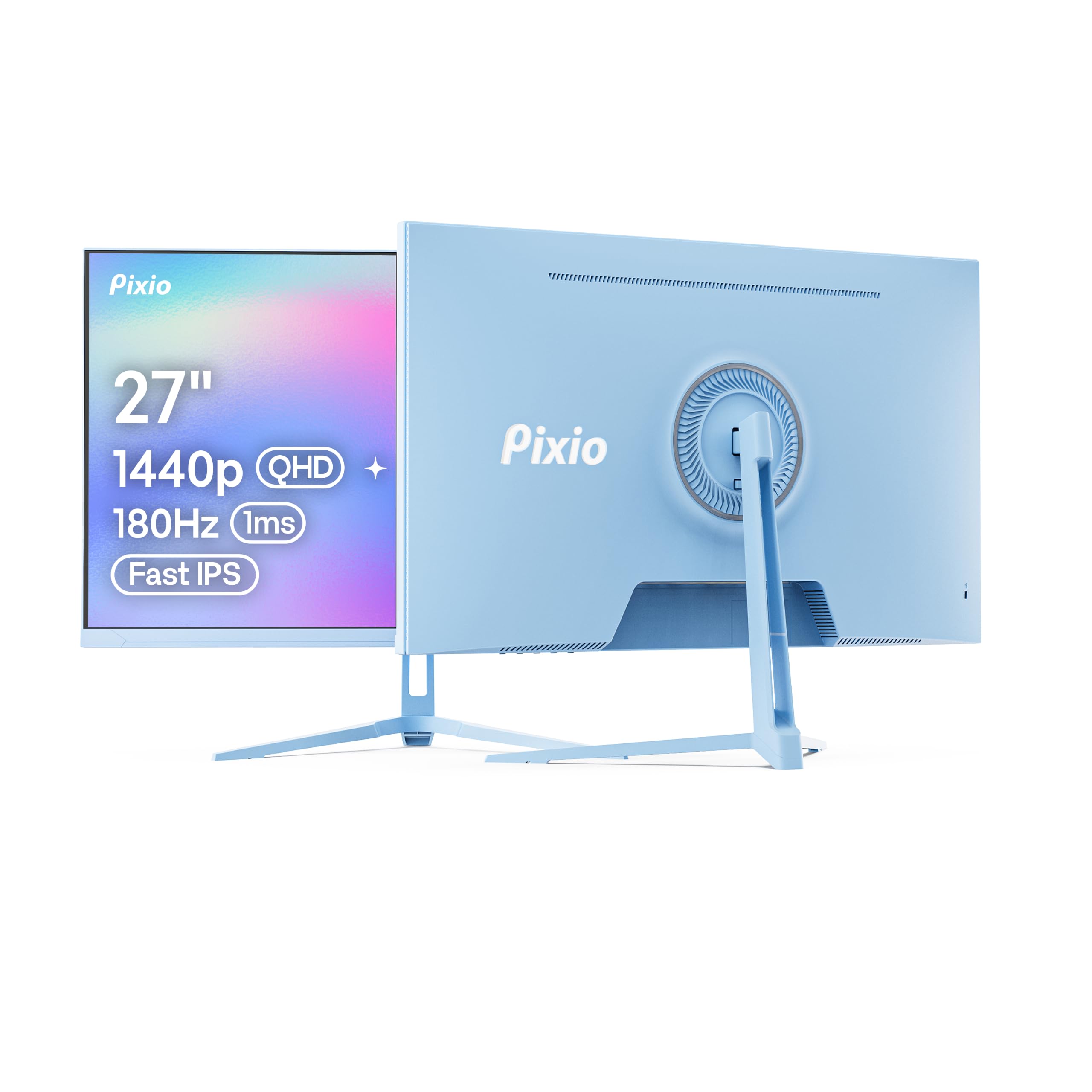
1. Pixio PX278 Wave Blue 27 inch 180Hz Quad HD Gaming Monitor
Our pick — 4.5+★ from 500+ verified ratings; the strongest balance of quality and price.
The console-first screen that hits 180Hz without asking you to spend like a pro.
For an Xbox owner who wants a clean, fast picture and does not need 4K bragging rights, this is the strongest overall package here. The 27-inch panel runs 2560 x 1440 pixels — a step up in sharpness from 1080p that your Series X or Series S renders easily. The refresh rate reaches 180Hz over DisplayPort, and AMD FreeSync keeps the console and panel in step so the tear line disappears. On the two HDMI 2.0 ports the ceiling is 1440p at 144Hz, which still clears the 120Hz console bar with room to spare.
What wins people over is the sense of a solid, dependable build for the money — reliability is the trait owners come back to again and again, and the crisp picture quality backs it. Setup is quick: stand, power adapter, and DisplayPort cable are all in the box, and the blue rear shell gives a desk some personality. The built-in speakers are the honest weak spot. They are adequate for menu sounds and casual play, but anyone serious about game audio should plan on a headset or real speakers.
The stand is the other thing to know. Height is fixed and it only tilts, so if you need the screen at eye level, plan on the included VESA mount adapter plus an arm or wall bracket. Given how much value the 1440p picture delivers at this tier, that is a small ask. Response time is where it loses ground: its 1ms GTG (grey-to-grey, a measure of pixel speed) trails the ASUS TUF’s 0.3ms. That gap on paper means slightly more blur on the fastest pans — though at 180Hz both are quick enough for console play.
What earns it the top spot
- 180Hz over DisplayPort and 1440p at 144Hz over HDMI — both clear the console 120Hz bar
- AMD FreeSync keeps frames synced and screens tear-free
- Sharp 1440p IPS picture with 135.76 color gamut coverage for richer hues
- Stand, power adapter, and DisplayPort cable in the box
Where it asks you to compromise
- Built-in speakers are adequate at best; plan on a headset
- Stand is fixed height and tilt-only — add a VESA arm if you need height
- 1ms response time trails the 0.3ms ASUS on the fastest motion
Reach for this if: you want the best-balanced 1440p console screen here without stretching to premium pricing.
Look past it if: you need height adjustment on the stand itself or take game audio seriously.
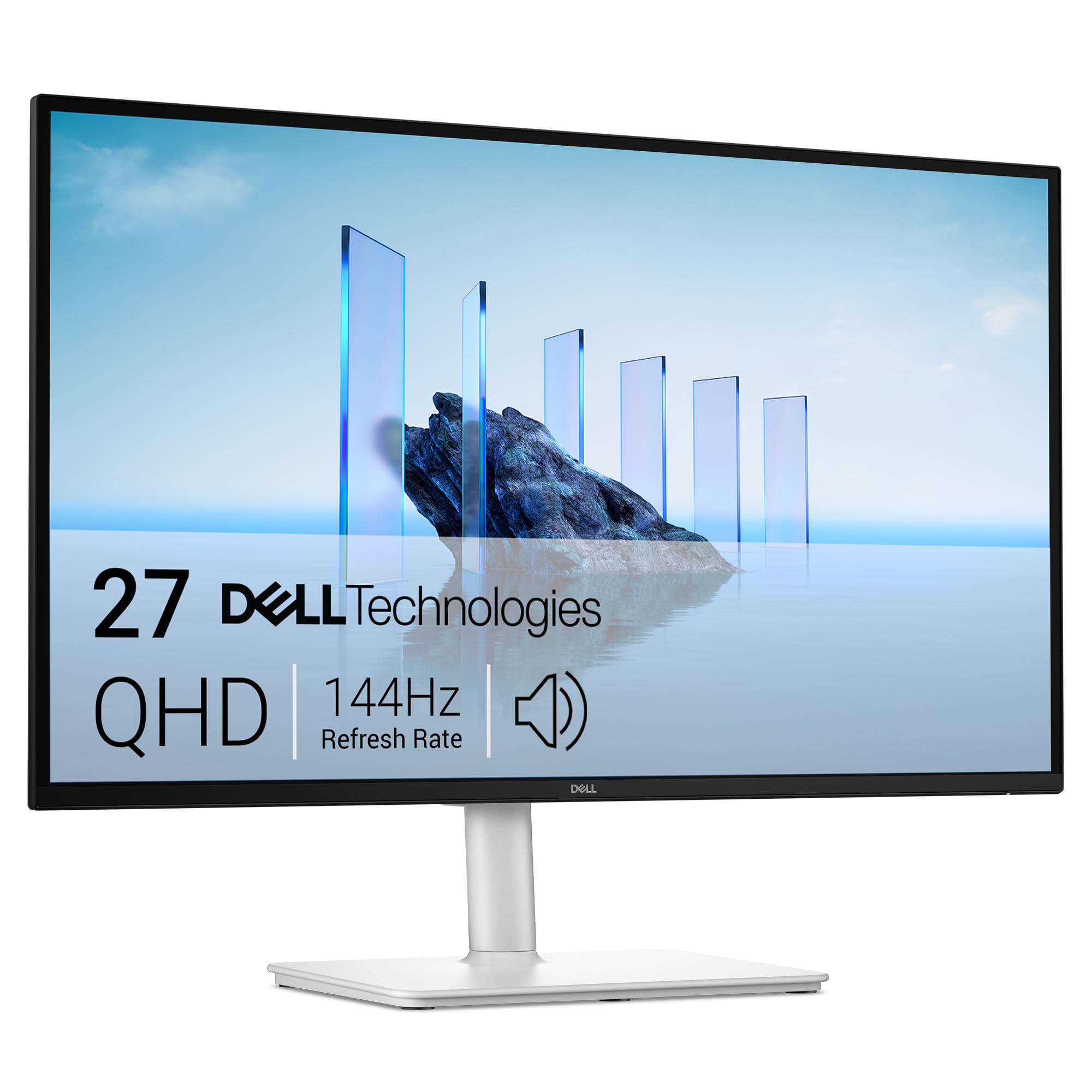
2. Dell 27 Plus QHD Monitor – S2725DSM
A 1,500:1 contrast panel that also moves up, down, and sideways where you want it.
Contrast is the number that makes a picture pop, and this Dell leads the pack here at 1,500:1 — versus the Pixio’s 1000:1. That means deeper blacks and more separation between shadow and highlight in dark game scenes. It pairs that with a 144Hz refresh rate and 1ms MPRT (a blur-reduction measure) so motion stays clean, plus AMD FreeSync for tear-free console output. The 2560 x 1440 panel covers 99% of the sRGB color range, so colors land where they should.
Where it quietly wins is ergonomics. The stand does height, tilt, pivot, and swivel, so you can stand it upright in portrait for a second screen or drop it to eye level for long sessions. The 27-inch screen is described by owners as a wonderful display with crisp, sharp resolution, and the dual 3W speakers get genuine praise — there is even an equalizer to tweak. A 4-star TÜV-certified low-blue-light mode cuts eye strain during late-night sessions.
Refresh rate is the catch. At 144Hz it sits below the 240Hz LG in this list, so if you split time between PC and console and want the fastest motion, the LG is the quicker screen. For pure console play, the Xbox tops out at 120Hz anyway, which makes 144Hz plenty. The HDMI 2.1 cable in the box is a nice touch too, even if this 1440p panel runs its best rate elsewhere.
The buying logic: the best contrast and the most adjustable stand of any mid-range pick here, at a price that undercuts most of the field.
One honest limit: 144Hz leaves the door open to a faster panel if you also game on a high-refresh PC.
Best fit for: a desk where you need to move the screen to the right height and want rich contrast without paying premium.
Less suited to: a PC-and-console player chasing the highest refresh numbers.
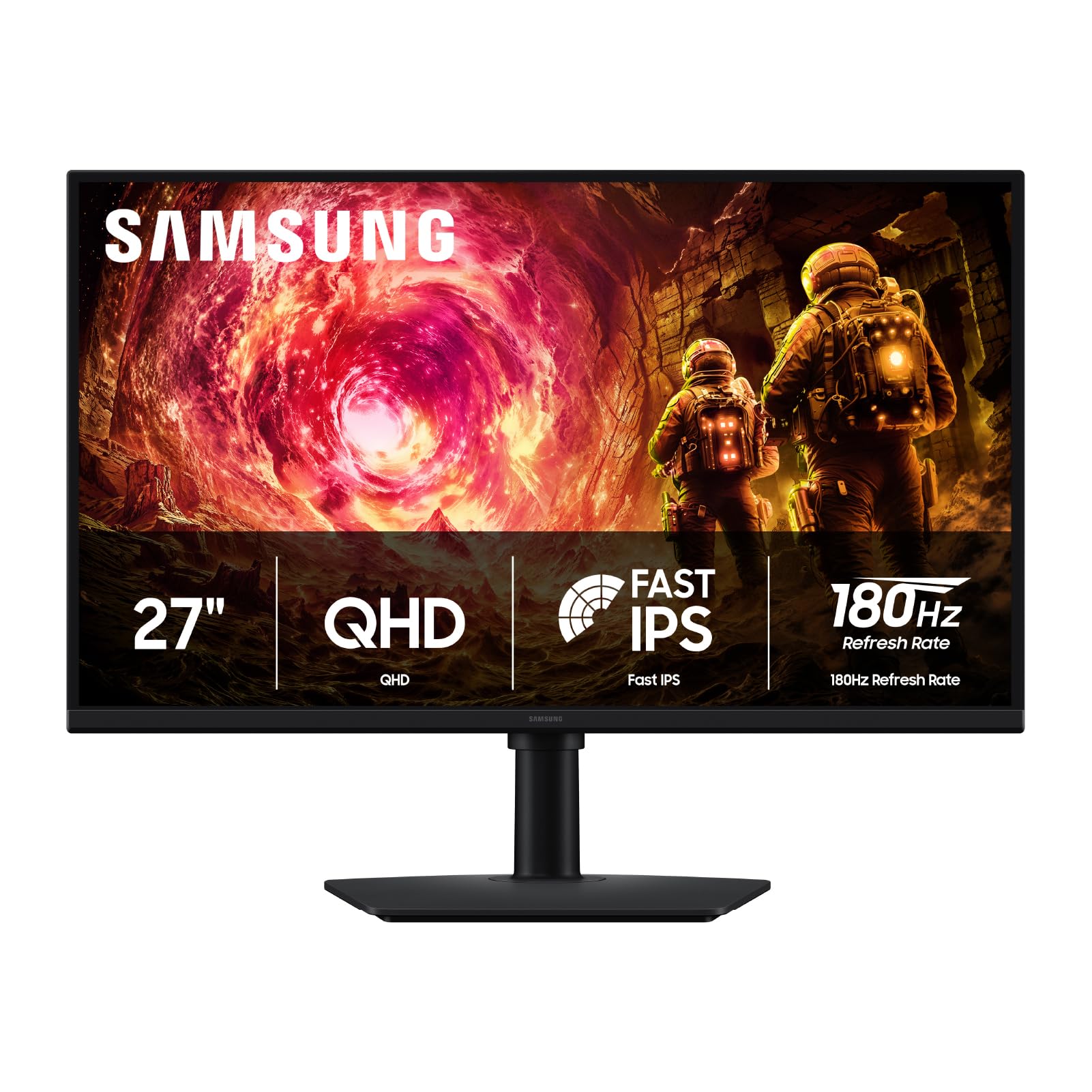
3. Samsung 27” Odyssey G5 (G50F) Series QHD Gaming Monitor
The 178-degree viewing angle makes it the screen two people can actually watch.
Sit off to the side of most monitors and the colors wash out. This Odyssey G5 holds its hues across a 178-degree viewing angle on its IPS panel, which is why it works for a shared living-room corner or a couch setup. The 180Hz refresh and 1ms GTG response keep fast action smooth, and G-Sync compatibility plus FreeSync cover the sync side for whichever console mode you land in. The 2560 x 1440 resolution gives you pin-sharp detail your Xbox renders without strain.
Owners talk first about display quality — that is the trait that comes up most and it earns the praise — with the value for the money close behind. HDR10 lifts highlights and shadows for more depth, and Black Equalizer brightens the darkest corners so you are not ambushed in shadow. Auto Source Switch+ flips between connected devices without poking buttons. The height-adjustable stand pivots, tilts, and swivels, so it disappears into the background of a long session.
Brightness splits opinion. The panel is rated 300 cd/m² (a measure of screen brightness), and some find it plenty bright while others want more punch. If your room is flooded with daylight, know that going in. That is the trade for the deep blacks and rich tint this set delivers. Otherwise it is among the most comfortable all-rounders in the group.
What it is built around: a wide-angle IPS picture with HDR10 and a genuinely adjustable ergonomic stand.
The honest caveat: 300 cd/m² brightness is modest, so a sun-drenched room may want more headroom.
Worth picking when: more than one person watches the screen and you want HDR depth plus a full range of stand motion.
Think twice if: the screen faces a bright window all afternoon.
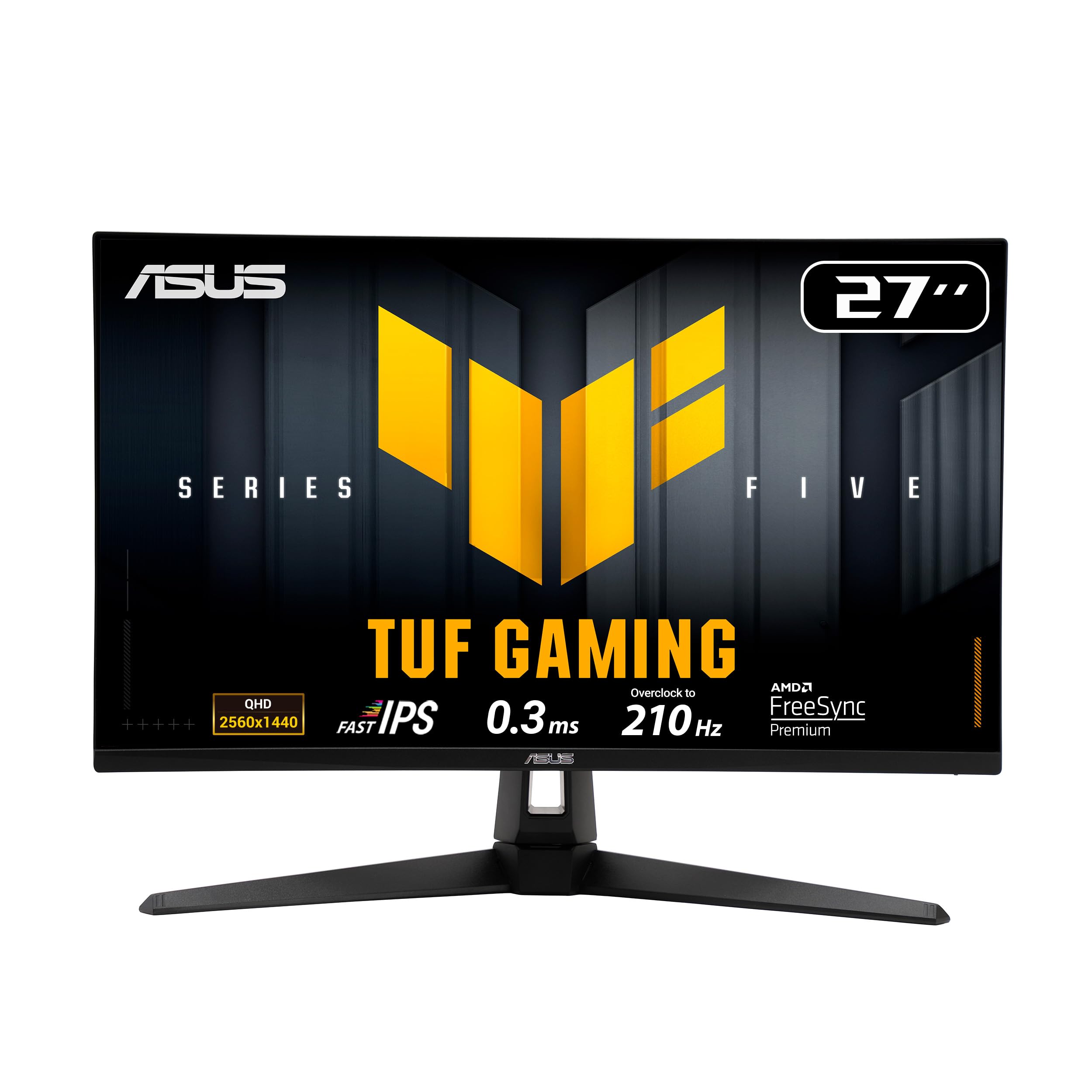
4. ASUS TUF Gaming VG27AQL5A 27 Inch 1440p 210Hz G-SYNC Monitor
A 0.3ms panel that erases ghosting on the fastest pans your console can throw.
Panel speed is where this ASUS separates itself. The 0.3ms GTG response time is the quickest figure in this entire list, and it is what keeps fast strafes and hard camera turns crisp instead of smeared. Add a 210Hz overclocked refresh rate on the Fast IPS panel and ELMB Sync, which runs motion-blur reduction alongside variable refresh at the same time — a combination that usually forces you to choose one or the other. FreeSync Premium keeps frame pacing locked in.
Panel quality is what owners praise most, and the customization crowd likes the DisplayWidget Center, which lets you tune settings with a mouse instead of fiddly rear buttons. The triangular buttons on the back draw their share of approving looks. Height adjustment is there for long sessions, and the box includes a DisplayPort cable, an L-shaped screwdriver, and a power cord.
Here is where it lands against its nearest rival: its 0.3ms beats the Pixio’s 1ms on paper, so it is the sharper choice for twitch reaction play. The follow-up question buyers ask is image uniformity — some units arrive with dead pixels, which is a quality-control roll of the dice rather than the norm. If a clean panel arrives, this is a serious motion machine.
Why motion hounds love it
- 0.3ms GTG response — the fastest on this list
- 210Hz overclock with ELMB Sync for blur reduction plus VRR
- DisplayWidget Center tunes settings with a mouse
- Height-adjustable stand and all cables in the box
The fine print
- Dead-pixel reports circulate, so inspect the panel on arrival
- 210Hz is an overclocked figure, not the native rate
Choose it for: competition-grade motion where the fastest response time is the whole point.
Pass if: you would rather not gamble on panel uniformity at delivery.
5. LG 27GR83Q-B 27-inch Ultragear QHD IPS Gaming Monitor
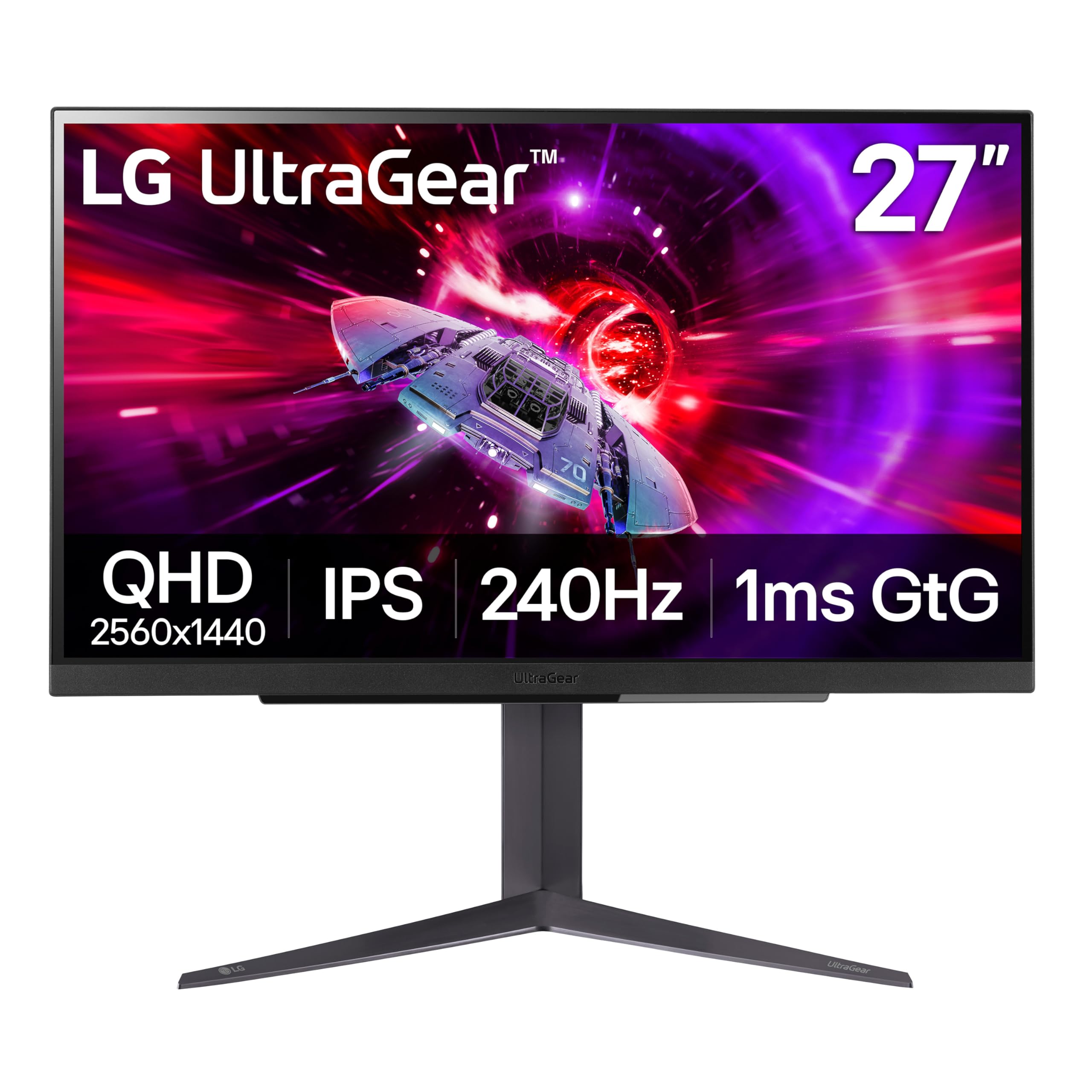
A 240Hz panel that also gives your console an HDMI 2.1 port to breathe through.
If you want the headroom of a high-refresh PC screen and a console in one spot, this LG is built for it. Both HDMI 2.1 and DisplayPort 1.4 support up to 240Hz, so the same panel serves your Xbox today and a fast PC later. The IPS 1ms GTG response keeps detail sharp, and it carries both NVIDIA G-Sync Compatible validation and AMD FreeSync Premium — rare to see the two together. DisplayHDR 400 with 95% DCI-P3 coverage gives colors real depth, and the four-pole headphone jack with DTS Headphone:X sends spatial audio straight to your headset.
The picture and build quality are what people walk away talking about, and the value lands well for the feature set. A suite of gaming extras rides along: Dynamic Action Sync cuts input lag, Black Stabilizer lifts dark scenes, and an on-screen FPS counter with crosshairs is there if you want it. The stand does tilt, height, and pivot, so you can angle it how you like.
The number that raises a question is reliability — it is the one mixed signal in an otherwise strong record, and dead-pixel reports exist alongside it. That does not define the model, but it is worth a careful look at the panel when it arrives. Compared with the Dell 27 Plus, its 240Hz refresh is a big step above 144Hz, so it wins on pure speed and loses nothing on ports.
Why it stands out: a 240Hz panel with both major sync standards and an HDMI 2.1 port — a rare combination at this level.
The question to ask first: panel reliability has mixed feedback, so buy from a seller with a clean return path.
Ideal for: a player who wants one screen to handle a fast PC and a console with equal confidence.
Not ideal for: anyone who would rather not think about panel lottery at all.
6. KTC 27 Inch 4K Gaming Monitor, UHD 160Hz Fast IPS
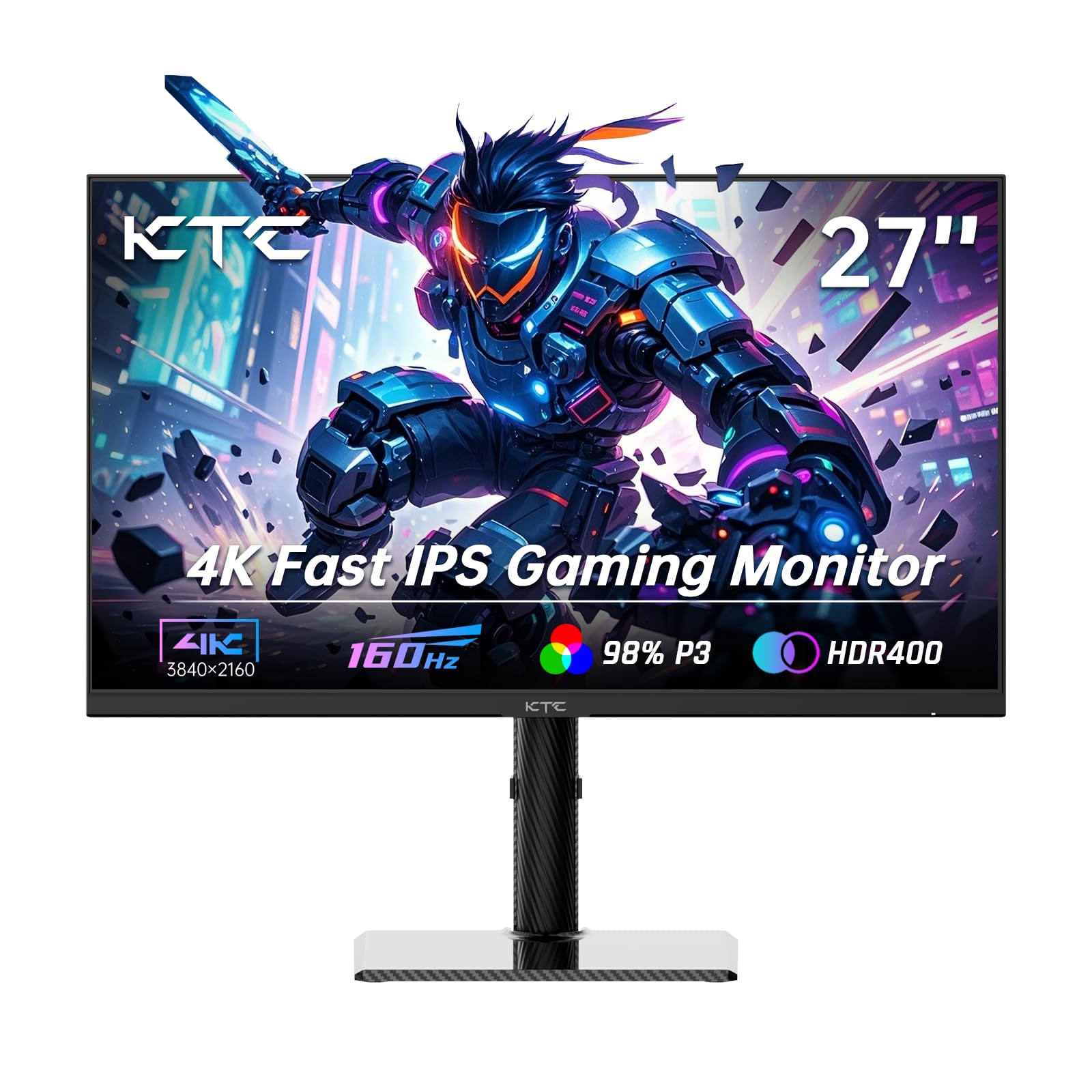
True 4K at a frame rate that actually keeps up, without the premium badge.
Getting 3840 x 2160 into a 27-inch frame used to mean living with 60Hz. This KTC runs that 4K resolution at 160Hz on a Fast IPS panel, so your Series X can push detail and speed together. Two HDMI 2.1 ports and two DisplayPort 1.4 ports give you plenty of ways to connect a console. Adaptive Sync with G-Sync and FreeSync support keeps the tear line off the screen, and the 140% sRGB gamut with 1.07 billion colors makes skies and skin tones look rich.
The ergonomics are better than the price suggests. Height, tilt, swivel, and a side swivel all adjust, so you can dial in the viewing angle. A 75 x 75mm VESA pattern means wall-mounting is an option, and the carbon fiber backplate keeps the body light while staying stiff. HDR400 and a ΔE under 2 color accuracy figure mean the picture holds up in shadow and highlight. Low blue light mode is there for long sessions.
Where it asks a little faith is trust in a less-famous brand. There are not the deep review stacks you get with the big names here, so you are buying on spec sheet and box contents. What you get for the gamble is genuine 4K at 160Hz with two HDMI 2.1 ports — more resolution than the 1440p picks and a higher refresh than the 120Hz 4K Dells.
What you gain: 4K resolution and 160Hz in one panel, with dual HDMI 2.1 ports for consoles.
What you accept: a smaller reputation than the big-brand picks, so lean on the return policy.
Great for: a console player who wants the sharpest picture and a fast refresh without big-brand pricing.
Hesitant buyers should: weigh the thinner track record and buy where returns are simple.
7. Dell 32 Monitor S3225QS, 4K UHD VA, 120Hz

A 32-inch 4K panel that turns a desk into the front row of the theater.
Size changes the experience here. This 32-inch 4K screen fills more of your field of view than the 27-inch picks, so a racing or story-driven game feels closer. The VA panel carries a 1,500:1 contrast ratio for deep blacks, and 4K resolution renders 3840 x 2160 pixels of fine detail. A 120Hz refresh paired with FreeSync Premium keeps motion smooth, and the HDR readiness plus 99% sRGB and 95% DCI-P3 coverage give color real body. ComfortView Plus trims blue light to 35% or less without washing out the palette.
Image quality is what gets praised most — crisp HDR10 and sharp text come up again and again — and the size draws its own mention for how much difference it makes on a desk. The sound has been reworked with more depth and greater decibel range than the previous generation, so you can lean on the built-in speakers for casual play. Ultra-thin bezels and an ash white finish keep it clean on a shelf.
The trade to weigh is panel type. VA (a panel type that deepens blacks) gives you deeper blacks, but color shifts if you view from a steep angle. This is not the set for a wide couch audience like the 178-degree Samsung IPS. Brightness sits at 300 cd/m², and color and brightness feedback is mixed — some want more punch for a sunlit room. For a single-seat desk setup it is a big, sharp, rich pick.
The main draw: 32 inches of 4K with 1,500:1 VA contrast at a 120Hz console-friendly refresh.
The main caution: off-axis color shifts on the VA panel, and 300 cd/m² is not the brightest here.
Reach for this if: you sit close and want the biggest, deepest-contrast 4K picture at a mid-range tier.
Look elsewhere if: several people watch from wide angles or your room is very bright.
8. Dell 27 Monitor S2725QC, 4K UHD IPS, 120Hz

The 4K IPS screen that also tidies your desk with one USB-C cable.
If your setup doubles as a workspace, this Dell earns its place. It carries 4K resolution on an IPS panel at 120Hz, so the crisp 3840 x 2160 detail serves both your console and a laptop. The single USB-C cable carries video and up to 65W of power delivery, so you can charge a laptop while the screen runs — one lead instead of three. A 1,500:1 contrast ratio adds depth, 99% sRGB keeps color true, and FreeSync Premium keeps console motion smooth.
Owners describe the display as sharp and clean, and the full range of stand motion — height, pivot, swivel, tilt — means it fits however you like to sit. The reworked speakers add more output and a wider frequency range than the last generation, handy when you do not want headphones. ComfortView Plus trims blue light to 35% or less for long sessions, and the ash white finish suits a light desk.
Ask yourself if you want USB-C convenience or a bigger panel. At 27 inches it is more compact than the 32-inch Dell, though it gives you the same 4K and 120Hz. For a mixed work-and-play desk, the USB-C power delivery is the feature that tips it.
Worth it for: a 4K 120Hz IPS picture plus USB-C charging for a laptop in one cable.
Worth noting: at 27 inches it gives up screen size versus the 32-inch option.
Pick it for: a clean, single-cable desk where a laptop and console share the screen.
skip it if: you would rather have more inches than more ports.
9. LG 27G810A-B 27-inch Ultragear

One hotkey flips this panel from 4K detail to 360Hz speed.
Dual Mode is the headline and it is genuinely unusual. Play story-driven games in 4K UHD at 180Hz for detail, then hit a hotkey to drop to Full HD at 360Hz for fast competitive play. The 27-inch IPS panel covers up to 95% DCI-P3 with VESA DisplayHDR 400 for deeper blacks and bolder color. A 1ms GTG response keeps motion sharp, and it carries both FreeSync Premium and G-Sync compatibility so console and PC both sync cleanly. HDMI 2.1 is on board for the full 4K console signal.
Display quality is what people call out first — crisp 4K resolution draws the most praise, with the dual-mode flexibility drawing approving notice. Dynamic Action Sync trims input lag, Black Stabilizer lifts shadow detail, and the four-pole jack with DTS Headphone:X handles headset audio and chat in one lead. The stand does height, tilt, swivel, and pivot for a full range of positions.
The mixed signals to weigh are color and responsiveness. Some find the colors dull compared with punchier panels, and responsiveness draws split feedback — plenty say it does the job while others hit hiccups. That is the honest picture. What you trade in out-of-the-box color snap you get back in the dual-mode flexibility no other pick here offers on a 4K IPS panel.
What makes it different
- Dual Mode: 4K UHD at 180Hz, or Full HD at 360Hz, switchable by hotkey
- HDMI 2.1 for full 4K console output
- 1ms GTG with both FreeSync Premium and G-Sync compatibility
- Full stand motion: height, tilt, swivel, pivot
What to go in knowing
- Color feedback is mixed — some find the palette dull
- Responsiveness draws split reports
Best for: a player who wants both a 4K picture and a competitive frame rate from one panel.
Reconsider if: you demand punchy color right from the start.
10. Samsung 27″ Odyssey OLED G6 (G61SH) QD-OLED Monitor
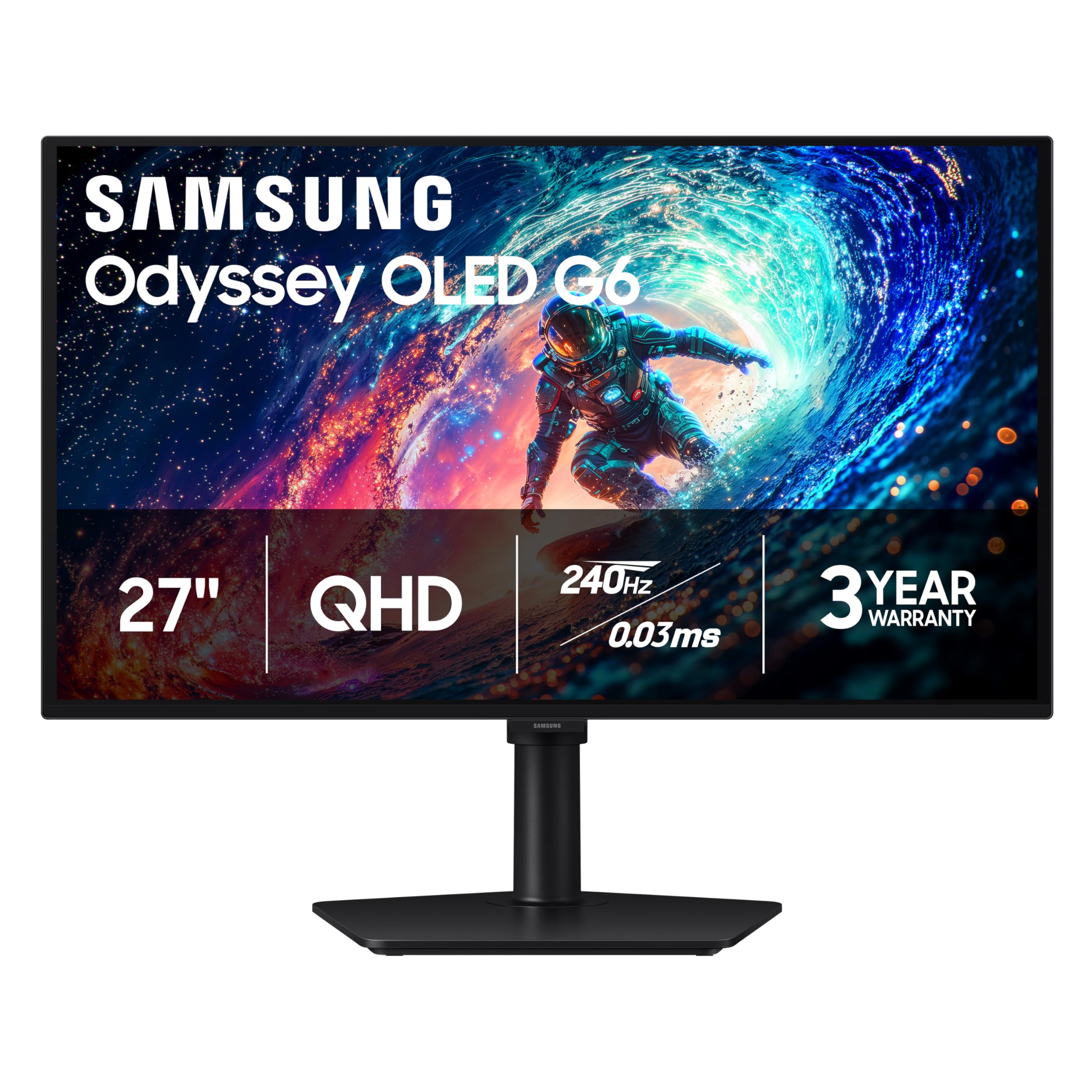
A 1,000,000:1 contrast panel where space actually looks black.
That contrast ratio is not a typo — each pixel on this QD-OLED panel switches on and off individually, so darks go truly dark and brights stand out against them. The QHD 2560 x 1440 resolution rides a 240Hz refresh with a 0.03ms response time, an almost instant figure that makes fast pans look like moving glass. AMD FreeSync Premium keeps the frame pace synced, and Glare Free Technology keeps reflections off the screen when a light sits behind you.
Color is the other story. The panel reproduces 2100+ Pantone-validated colors and 110+ skin tone shades, with HDR10 deepening highlights. OLED Safeguard uses thermal modulation to curb burn-in, the long-term risk on any OLED. Monitor quality and color quality are the traits owners lean on, and the appearance gets its due. The height-adjustable stand pivots, tilts, and swivels.
The honest trade of OLED is longevity care — burn-in is why the safeguard exists, so static images like a paused scoreboard deserve the occasional nudge. Performance and image feedback is mixed, with some owners wanting more polish. If deep blacks and instant response matter more to you than peak brightness uniformity, this is a stunning-looking panel.
The standout spec: a 1,000,000:1 contrast ratio on a 240Hz QD-OLED with 0.03ms response.
The responsibility: OLED burn-in is real, so let the safeguard do its job and avoid long static images.
Ideal for: a dark-room player who wants true blacks and near-instant motion above everything else.
Think hard if: your screen sits on a static dashboard menu for hours.
11. ASUS ROG Strix XG27ACDNG
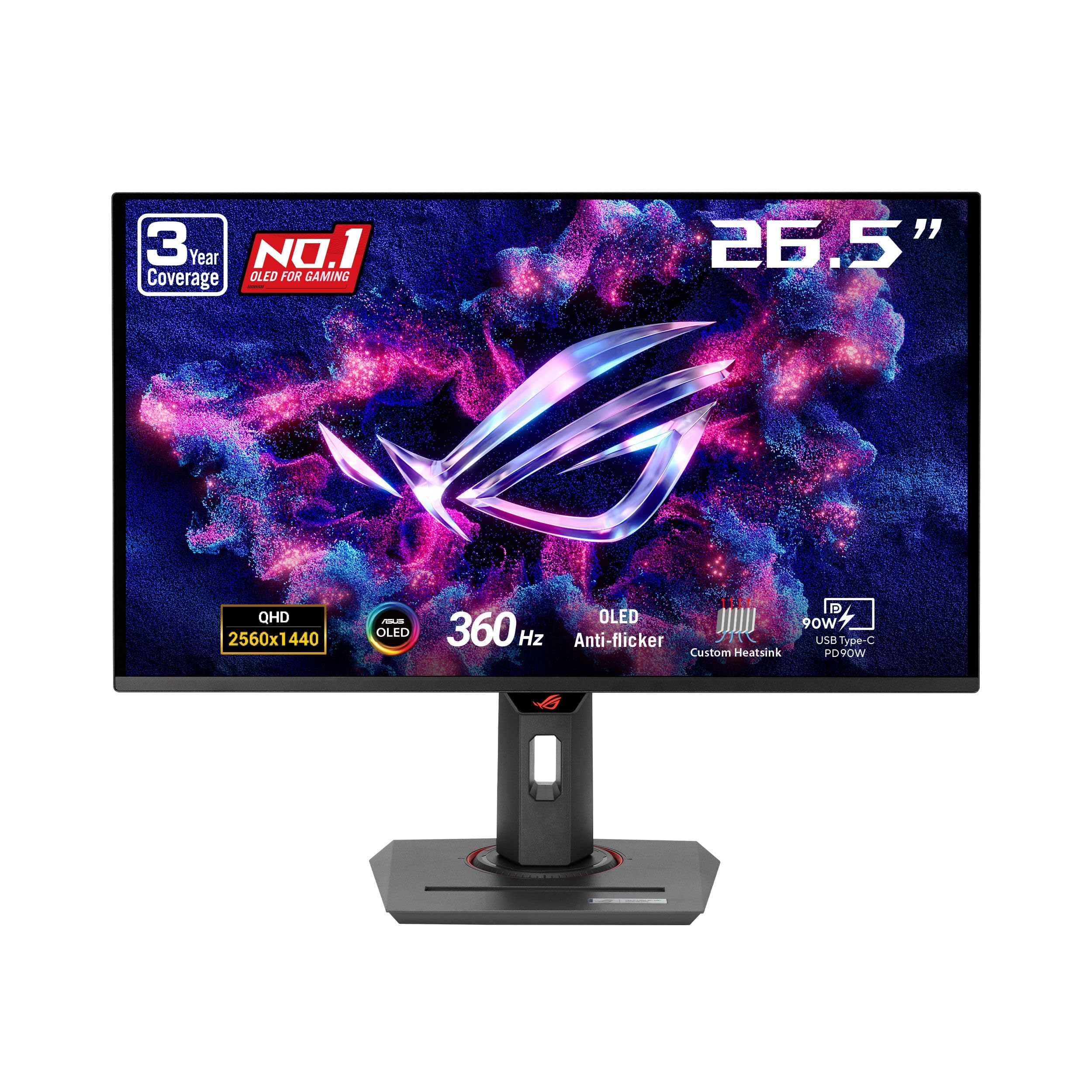
A 360Hz QD-OLED that treats fast motion as its natural habitat.
For the player who lives in first-person shooters, this is the sprint of the group. The 26.5-inch QD-OLED panel runs a 360Hz refresh with a 0.03ms response, so enemies read clearly even as you whip the camera around. It covers 99% DCI-P3 with true 10-bit color and a Delta E under 2, so the palette is accurate rather than overblown. VESA DisplayHDR 400 True Black adds contrast depth an IPS cannot reach.
Keeping a QD-OLED running cool and long-lived is the engineering story here. A custom heatsink and advanced airflow pair with ASUS OLED Care+ to cut burn-in risk, and ROG-exclusive OLED Anti-flicker technology smooths flicker as refresh rates fluctuate. A 3-year warranty covering burn-in backs it, the reassurance OLED buyers look for. G-Sync Compatibility and FreeSync Premium Pro keep frame sync tight, and AI Gaming features add an optional assist.
Picture quality is what people rave about — vibrant colors and deep blacks with a responsiveness that gets its own nod, and the FPS crowd finds it a natural fit. The one thing to accept is that all this speed lives at 1440p, so if 4K detail matters more than frame rate, the KTC or LG dual-mode panels are the alternative. For pure competitive play, this is the fastest screen on the list.
Where the speed lives
- 360Hz refresh with 0.03ms response for the fastest motion here
- 99% DCI-P3, true 10-bit, Delta E under 2 color accuracy
- Custom heatsink plus OLED Care+ to guard against burn-in
- 3-year warranty with burn-in coverage
What you give up
- Capped at 1440p — no 4K mode like the LG dual-mode panel
- Premium tier among these picks
The one to grab if: competitive frame rate is your top priority and 1440p is enough resolution.
Better look elsewhere if: you want 4K detail or a gentler price point over raw speed.
Know the Specs
Refresh rate and VRR
Refresh rate is how many times per second the screen redraws the picture, measured in Hz. A 120Hz panel can show 120 frames per second, which makes fast motion clearer — so a quick turn stays readable instead of smearing. Variable refresh rate (VRR) goes further: it lets the screen match the console’s frame rate moment to moment, which removes the tear line and stutter. FreeSync and G-SyncCompatible are brand names for VRR, and every monitor here supports at least one. When you shop, check that the HDMI port version supports the refresh rate you want at your chosen resolution.
Resolution and panel type
Resolution is the pixel count, shown as width by height. A 1440p panel runs 2560 x 1440 pixels and is easy for a console to drive at high frame rates; a 4K panel runs 3840 x 2160 for finer detail. Panel type changes the look: IPS keeps color steady from an angle, VA deepens blacks but shifts color off-axis, and OLED switches pixels individually for near-infinite contrast. Response time, measured in ms, is how fast a pixel changes color — a lower figure means less ghosting on fast pans.
HDMI 2.1 and console output
HDMI 2.1 carries more bandwidth than HDMI 2.0, which is what allows a 4K screen to accept 4K at 120Hz from a Series X. On an HDMI 2.0 port, 4K tops out lower, though a 1440p panel still reaches its full high-refresh rate. If 4K at high frame rate is your goal, confirm the port is 2.1 before you buy.
Brightness, contrast, and color gamut
Brightness is measured in cd/m² (also written nits), and a higher figure fights glare in a bright room. Contrast ratio is the gap between the darkest black and brightest white — a higher ratio means deeper blacks and more pop. Color gamut, given as a percentage of a standard like sRGB or DCI-P3, tells you how much of the color range the panel can show. HDR support, like HDR10 or DisplayHDR 400, adds brighter highlights and more shadow detail.
Common Questions
Will a 1440p monitor work with my Xbox Series X or Series S?
Do I need HDMI 2.1 for an Xbox monitor?
What is VRR and why does it matter for console gaming?
Is 120Hz enough or should I get a higher refresh rate monitor?
What size monitor is best for a console setup?
Will an OLED monitor get burn-in from gaming?
Do I need a monitor with speakers for my Xbox?
Can I use a gaming monitor with both my Xbox and my PC?
What does response time mean and does it matter for console games?
Should I choose 4K or 1440p for an Xbox monitor?
The Bottom Line
For most people, the winning monitor for xbox is the Pixio PX278 Wave Blue because it delivers 1440p at 180Hz with FreeSync, a crisp IPS picture, and a dependable build for console play. If you want the deepest blacks and the most adjustable stand, grab the Dell 27 Plus QHD and its 1,500:1 contrast. And for competitive frame rate above all else, the ASUS ROG Strix XG27ACDNG is the one to reach for with its 360Hz QD-OLED panel. Whichever you pick, the pair of features that decide the experience are the refresh rate and the VRR support — both already sorted for you here.
How we choose
We do not accept paid placement. Every pick is matched to a real buyer and a real use-case; we do not hands-on test units.
Sources
Specifications: manufacturer listings and product documentation. Review insights: verified customer reviews, as of November 2026. Pricing: not shown on this page (it changes often); check the current price via the retailer link.
As an Amazon Associate, Tactical Gear Guy earns from qualifying purchases. This does not affect which products we feature.