Specs are compiled from manufacturer listings and verified buyer reviews and can change over time — please confirm the key details on the product page before buying.
If someone you care for has fallen on the floor or can no longer push themselves out of a chair, the right lift protects both of you from a back injury during the transfer. Check the weight capacity first, because a lift rated below the person’s weight is not a lift at all — it is a hazard. Then check the lift type: a floor lift raises someone from the ground, a sit-to-stand aid moves someone who can still bear some weight, and a hydraulic hoist handles full transfers with a sling. Below are eleven machines sorted by what they actually do, with the real capacities and the honest trade-offs in plain words.
This guide is built by comparing the manufacturers’ published specifications and the patterns across verified customer reviews, so you get each pick’s real strengths and trade-offs instead of marketing spin.
Every pick below is matched to a specific job — floor recovery, standing transfer, or full hoist — so you can choose the one that fits your home and your strength. That is the whole point of this breakdown of the mobility lift aids worth putting in the room.
Top Picks
How To Choose The Best Mobility Lift Aids
Start with the person, not the product. Can they stand at all and hold their own weight for a few seconds? If yes, a sit-to-stand aid will do the job and takes up far less room. If they cannot stand, or they have fallen and are on the floor, you need a powered lift that does the raising for you. Getting this one call right saves you from buying the wrong machine twice.
Match the lift to the person’s ability, not their weight alone
A sit-to-stand aid such as the Etac Turner PRO is built for someone who can bear weight, stand briefly, and follow simple instructions. It pivots them from a bed or chair to a toilet or wheelchair while the caregiver guides the turn. A powered floor lift, by contrast, is for the person who cannot get up on their own at all — it slides under them and raises them to a seated position with the push of a button.
Measure your doorways and your floor before you commit
This is the step most buyers skip and then regret. A power lift with a wide base can be too broad to roll through a narrow bathroom door. The Vive stand assist, for example, has a base that measures 26 inches across at its widest point, and the maker says plainly to measure your doorways first. Carpet is the other trap: several powered units roll well on tile and hard wood but fight you on deep pile.
Check the battery and water rating if the bathroom is the target
Lifts that go near a tub need a real water rating. IP68 means the unit can be submerged, and IPX6 means it stands up to powerful water jets — both matter if the lift is going to sit in a wet bathroom. A rechargeable hand control also frees you from a cord, which is the difference between using the lift anywhere in the house and being stuck next to one outlet.
Side-by-Side Comparison
| Model | Best For | Weight Capacity | Lift Type | Unit Weight | Amazon |
|---|---|---|---|---|---|
| VOCIC Upgrade Electric Chair Lift AX10★ Best Overall | Floor and tub recovery | 300 lbs | Powered floor lift | 27.8 lbs | Amazon |
| Vive Mobility Sit to Stand Patient LiftTop Performer | Bed-to-chair transfers | 400 lbs | Sit-to-stand | 60 lbs | Amazon |
| Etac Turner PROBest for Tight Spaces | Compact pivoting transfers | 441 lbs | Standing pivot | 17.6 lbs | Amazon |
| Phoenix Premium Power Chair Lift | Getting up after a fall | 300 lbs | Powered floor lift | 28 lbs | Amazon |
| Drive Medical Handicap Hydraulic Lift | Heavy-duty hoist transfers | 450 lbs | Hydraulic hoist | — | Amazon |
| Invacare Hydraulic Patient Lift 9805P | Narrow hallways | 450 lbs | Hydraulic hoist | 68 lbs | Amazon |
| ProHeal Stand Assist Lift | High-capacity standing | 500 lbs | Sit-to-stand | — | Amazon |
| SuperHandy Electric Floor Lift | Dual-power floor lifting | 500 lbs | Powered floor lift | 52.91 lbs | Amazon |
| Vive Electric Patient Lift w/ Sling | Full sling transfers | — | Electric hoist | — | Amazon |
| MediHoist Aluminum Electric Patient Lift | Portable travel lift | 300 lbs | Electric hoist | 57 lbs | Amazon |
| ArjoHuntleigh Sara Stedy | Tall users, no setup | 400 lbs | Sit-to-stand | 65 lbs | Amazon |
Detailed Reviews
1. VOCIC Upgrade Electric Chair Lift with Wheels, AX10
Our pick — 4.5+★ from 500+ verified ratings; the strongest balance of quality and price.
The one lift you can roll into the bathroom and fully submerge without a second thought.
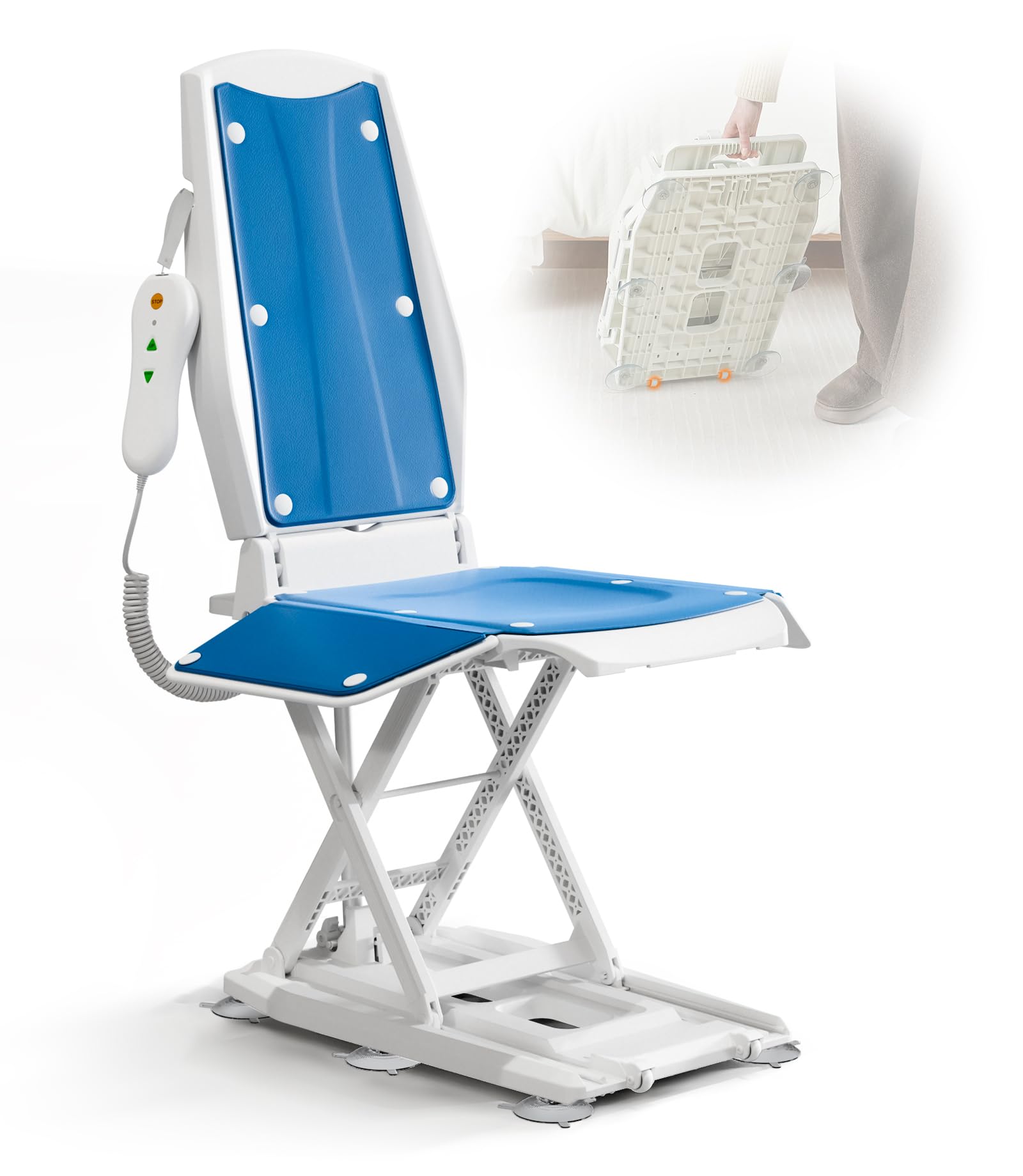
The VOCIC AX10 earns its 4.5+ stars across 500+ owners on one number: a seat that slides from 2.9 to 19.7 inches. It does the hardest job in this category — getting a fallen person up off the floor — with a seat that slides from 2.9 inches to 19.7 inches at the push of a button. That low starting height is what matters, because a person on the ground needs the seat to come down to them, not the other way round. The whole thing weighs 27.8 pounds, so one caregiver can wheel it from the bedroom to the bathroom without lifting it off the ground.
Water is where this unit pulls away from the pack. The motor is fully encased and the connection between the remote and the chair is sealed, which earns it an IP68 rating — the top water-and-dust rating, submersible for roughly 40 minutes. If your transfer happens in the tub, that rating is the feature you are paying for. Two sets of suction cups let it lock onto tile, polished wood, bathroom floors, and carpet, and the rechargeable hand control means no cord tethering you to a wall socket.
The trade-offs are real but sized to who this is for. The chair is heavy to lift by hand, so plan to roll it rather than carry it, and a few owners find it does not roll easily on softer surfaces. Stability gets mixed notes when it meets deep carpet or rugs. None of that changes the fact that the fundamentals — the lifting action and the easy, no-assembly setup — are what win people over. It arrives ready to use, which matters on a night when you do not have ten minutes to read a manual.
wheeled chair lift
- Seat rises from 2.9″ to 19.7″ — meets a person on the floor where they are
- IP68-rated motor and sealed remote, submersible for roughly 40 minutes for tub transfers
- Comes fully assembled with no build step
- Wheels and two suction-cup sets cover tile, wood, bath, and carpet
bulky footprint
- Heavy to lift by hand at 27.8 lbs — roll it, don’t carry it
- Rolling can fight you on soft carpet and thick rugs
home transfers: households where the bathroom is the danger zone and one caregiver needs to move the lift solo.
tight rooms: the transfer always happens on deep-pile carpet, where stability gets shakier.
2. Vive Mobility Sit to Stand Patient Lift for Handicapped
A steel-framed standing transfer that holds 400 lbs and locks itself in place.
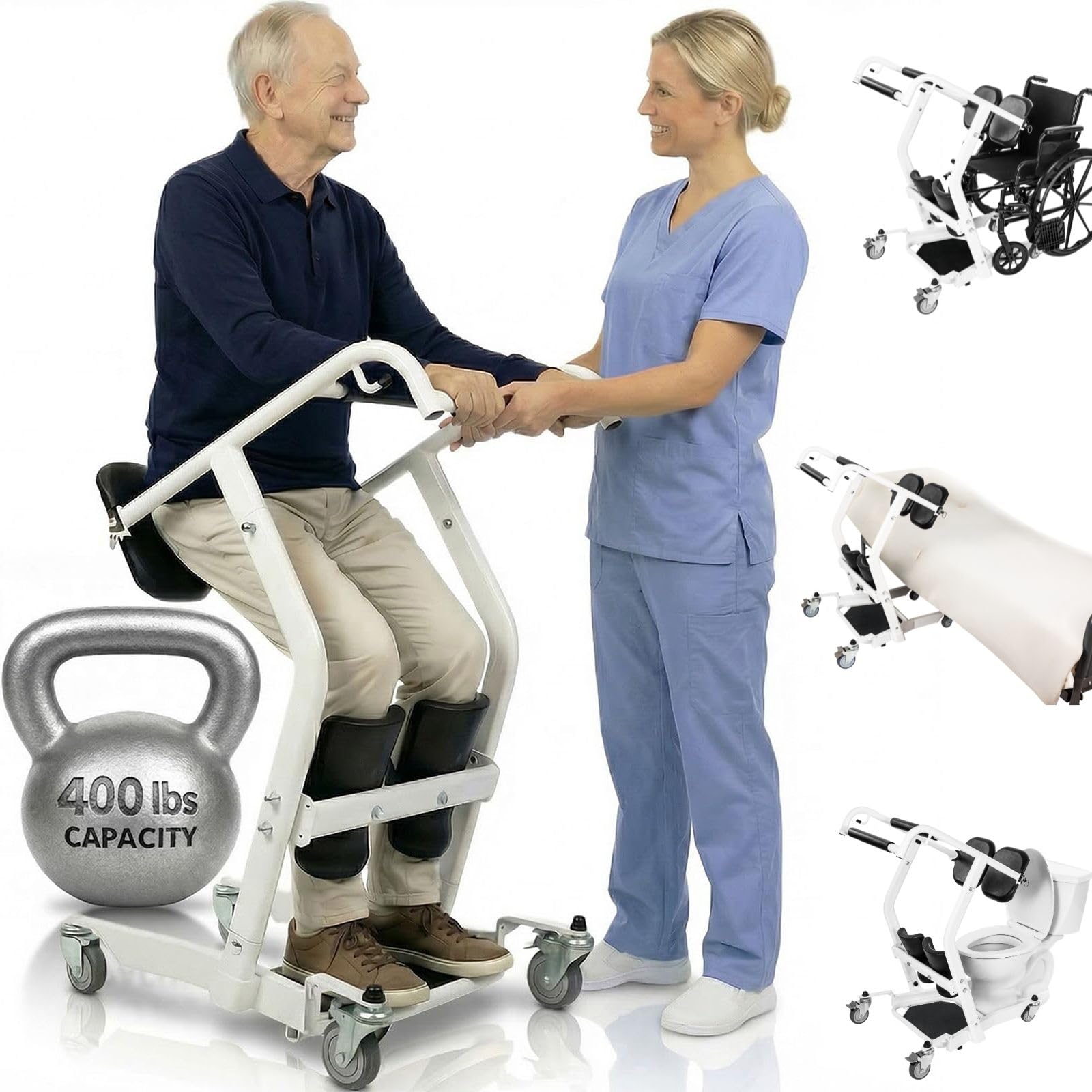
The Vive earns its spot on one number: it is built for a person who can still support 60 to 70 percent of their body weight, and the maker states that limit explicitly. Check that figure before you buy, because it decides whether this aid fits at all. If the user can stand briefly, the Vive moves them from bed to wheelchair, toilet, or sofa while the caregiver steers. The steel frame carries up to 400 lbs, and the handrails are wrapped in soft foam so the caregiver’s grip holds through repeated transfers.
The dual locking brakes stop the frame from drifting mid-transfer, which is the safety feature that matters most here. Cushioned shin rests and split seat pads keep the rider comfortable, and hooks let you add side support straps. A 2-year guarantee backs the frame. Compare it to the Etac Turner PRO and the numbers split cleanly: the Etac carries more at 441 lbs, but the Vive adds padded shin rests, a split seat, and locking brakes that the bare pivot disc does not. The Vive also weighs 60 pounds against the Etac’s 17.6 pounds, a gap you feel every time you move it between rooms.
The honest catch is maneuverability and setup. The base is 26 inches across at its widest, which the maker flags as a problem for narrow doorways, so measure first. Some owners find the locking mechanism fiddly to operate, and assembly gets mixed reactions — clear instructions for some, a struggle for others. What carries the day is how solid it feels once in place: sturdiness and the sense of being held securely are what owners talk about most, and the lift is repeatedly called a lifesaver that improves daily life.
sit to stand aid: the 26-inch base width is the make-or-break number for your hallway and bathroom doors.
measure doorway width: that broad base is exactly what keeps it stable under a 400 lb load — you are trading doorway clearance for footing you can trust.
caregiver assist: the user can stand with help and you want locking brakes and cushioning doing the safety work.
wide frames: your bathroom door is narrow — the 26-inch base simply will not pass.
3. Etac Turner PRO Patient Transfer Aid, Standing Pivot
One clever correction first: at 17.6 pounds this pivots where bulkier lifts cannot go.
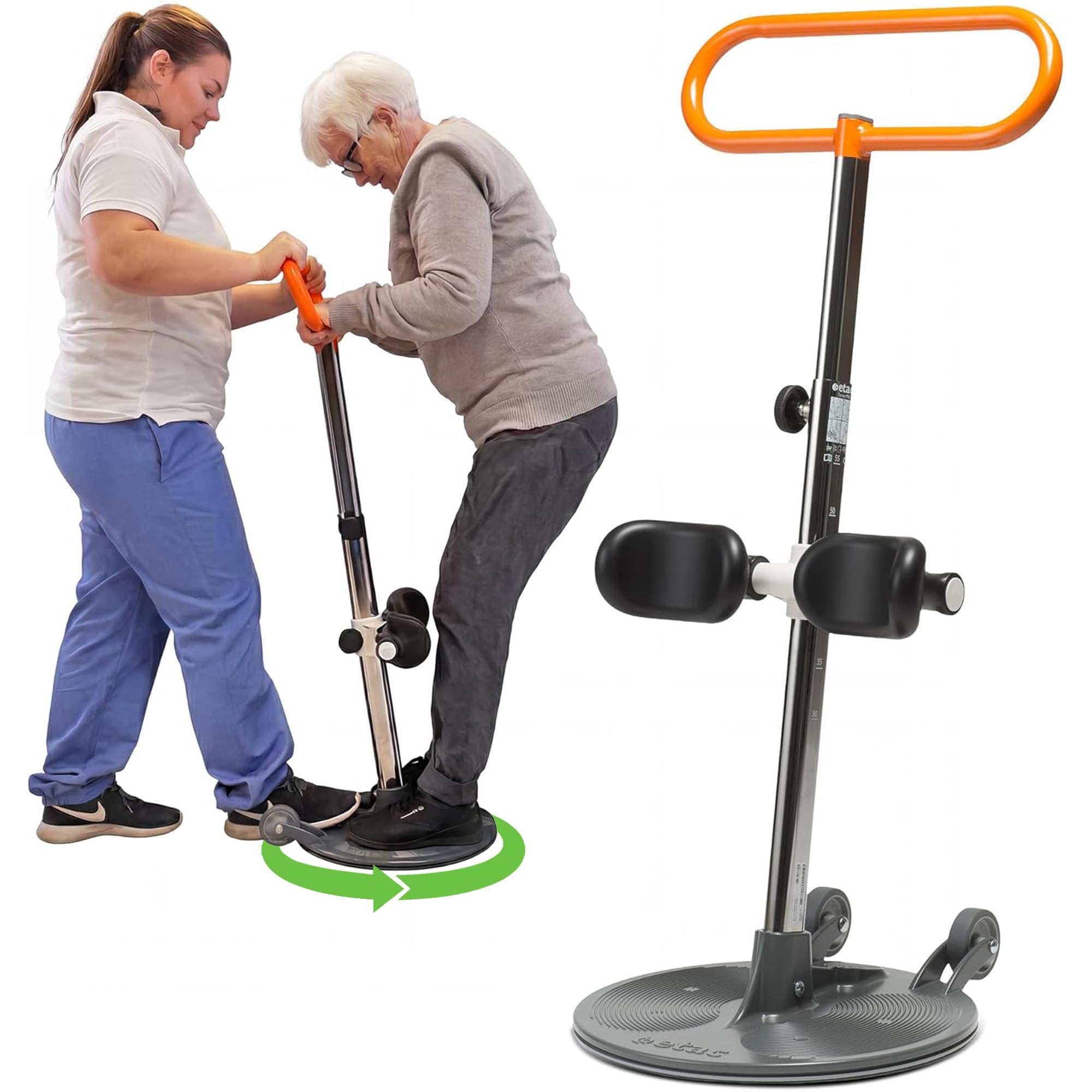
The Etac Turner PRO is not a lifting device, and the maker says so up front. It is a standing-pivot aid for someone who can bear weight, stand briefly, and follow instructions — you move between seated surfaces while the caregiver guides the turn. Feet go firmly on the base, hands take the handle with its non-slip wrap, and the person rises and swivels in one controlled motion. Cast aluminum, powder-coated steel, and chrome go into the build, and it carries up to 441 lbs, which is more than either the VOCIC floor lift or the ProHeal stand assist manage.
Weight is its whole personality. At 17.6 pounds it is 42.4 pounds lighter than the 60-pound Vive stand assist, and that difference is why it fits in a tight bathroom and slides between a bed and a nightstand. The swivel function and anti-slip base plate keep the turn controlled across different flooring, and the soft angled leg pads give lateral stability. For the caregiver, the design promotes an upright posture and lets you stay close and make eye contact, which makes the whole transfer easier to coordinate.
Buyers report that build quality is what they value most, praising it as a solid, well-made tool. “Back-saving” is the phrase that keeps coming up, for the caregiver’s spine and for the user’s sense of support. The one honest sticking point is value: some owners feel it sits on the expensive side for what is essentially a disc and a handle. You are paying for a simple device that does one job precisely rather than a motorized lift. If the person cannot stand unsupported, this is the wrong tool entirely.
quick pivots: a small home with tight bathroom clearance and a user who can stand with a steadying hand.
full support: it cannot lift someone who cannot stand — that job needs a powered or hydraulic lift instead.
4. Phoenix Premium Power Chair Lift Floor Lift
Built for the worst moment — a fall on the floor with no way up.
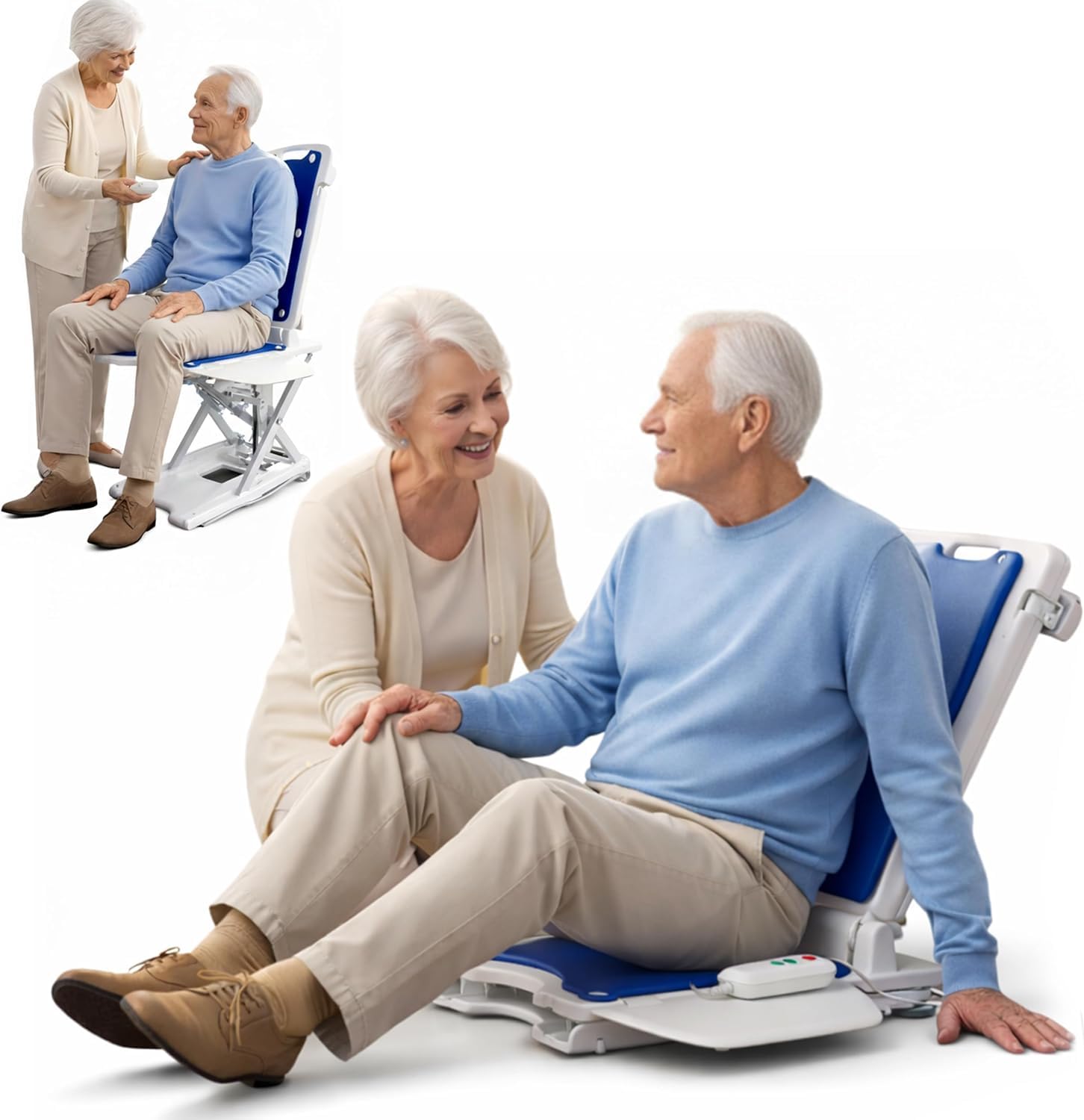
Place the Phoenix beside the person, and they slide onto the seat base from the integrated folding transfer ramps. Then you push a button and the seat raises them to a seated position. That is the entire job, and it handles up to 300 lbs. The whole unit weighs 28 pounds and runs on a rechargeable battery, so it works anywhere in the house or outside — no cord, no outlet hunting. A waterproof build means wet environments are not off limits.
Reviewers describe this lift in life-saving terms again and again, and the lifting action reliably gets a loved one up from the floor to a sitting position. Ease of use is the other big win: one person can do the whole recovery alone without calling for help. A value ultraslide transfer sheet comes bundled to make sliding onto the seat safer and more comfortable.
The catch is surfaces. Stability draws mixed feedback, with the unit being reported as less steady on carpets and rugs, and it can feel a bit heavy for some to reposition. Think of it as a hard-floor specialist: on tile and smooth floors it shines, and on deep carpet you may want a second set of hands. For the specific job of a floor recovery, though, there is very little that does it more simply.
power floor lift: a single caregiver can raise a fallen person to seated without lifting them manually — the pushbutton does the work.
uneven surfaces: on carpet and rugs, stability is the weak spot; hard flooring is where it behaves.
heavy lifts: anyone caring for a person at real risk of a fall who wants a standalone recovery tool ready to go.
carpet floors: homes where the only clear space is deep carpet — expect a shakier base there.
5. Drive Medical Handicap Hydraulic Lift, Silver Vein

The classic hydraulic hoist that lifts a full 450 lbs with a 6-point swivel bar.
If the person needs to be lifted fully — not just steadied — this is a sling hoist, and it is built to do exactly that from any position. The steel-welded silver-vein frame carries 450 lbs, and the 6-point swivel bar takes two to four sling straps with two chain connections to move a patient securely. It needs to be assembled, and you should plan for that on arrival. Height range runs 17.5 to 62 inches so the boom reaches low for a bed and high enough for a chair transfer.
Check your doorway before you buy this one. The base measures 42 inches wide, the widest in this whole lineup — the Invacare 9805P closes down to a slim 22 inches, so the Drive is 20 inches broader and noticeably harder to thread through a bathroom door. That width is the trade for a stable footing under heavy loads. Reach for the Drive if you have open space and want a heavy, planted hoist, and look to the Invacare if your hallways are narrow.
The hydraulic action is what makes daily care easier — owners find it lifts and transfers smoothly, and the ergonomics earn uniform praise, described as a back saver for the caregiver. It assembles with reasonable ease once you get going. One thing to hold in mind is that this is a manual hydraulic pump, not a battery lift, so you supply the pumping effort even though the frame bears the weight. On the right open floor, it is a dependable workhorse.
budget homes: you need a stable 450 lb hoist and have the floor space for a 42-inch base.
fast setups: tight doorways are the norm — the broad base will not squeeze through.
6. Invacare Hydraulic Patient Lift 9805P

Folds its legs to 22 inches to pass a doorway, then opens to 62 for a safe transfer.
The Invacare 9805P is the smart answer to narrow residential hallways. A shifter handle lets you close the legs to a slim 22-inch width for doorway passage, then open them to a stable 62 inches for transfers into a wheelchair or recliner. That closing range is the reason to pick this over the Drive Medical hoist, whose base is 42 inches wide. The bent mast and boom push the lift path outward so the patient does not swing into the metal frame, which is a comfort detail you feel on every transfer. Capacity is 450 lbs, and the lifting range runs 20 to 64 inches.
Weight is where Invacare makes its stand. At 68 pounds it is the lightest manual hydraulic lift in its category, against the 85-pound alternatives the maker compares. The five-inch low-friction casters cut the break-force needed to start rolling, which saves the caregiver’s back on carpet. It disassembles for transport, so it can go in a vehicle and be set up again in any home. A 3-year limited warranty on the frame tops the typical 1-year coverage.
Durability and quiet reliability are what hold up over time — the build is repeatedly described as excellent and stable, and it is called a back saver for caregivers. The split is mobility: it rolls beautifully on hard floors but draws complaints on carpet and with wheel locking. So treat flooring as the deciding factor. On smooth floors this is a delight to steer; on thick carpet, budget for the extra effort.
narrow doorway fit: a 22-inch closed base and a 68-pound frame make this the most maneuverable full hoist here.
hard floor only: it loves hard flooring and strains on carpet — match it to your home.
tight hallways: homes with narrow throughways and hard floors where a full 450 lb hoist has to fit.
plush carpet: the transfer route is mostly carpet, where the casters and locks get fussy.
7. ProHeal Stand Assist Lift, Sit to Stand, 500 lb
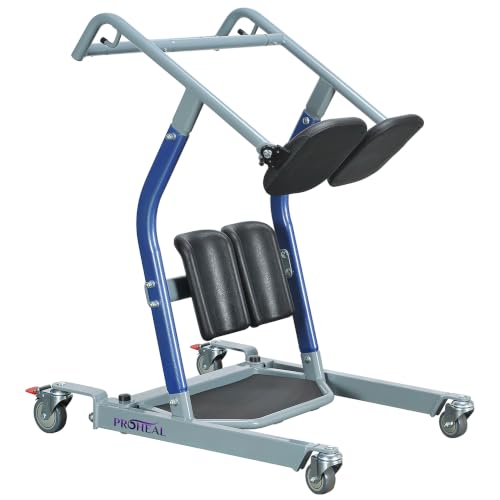
The highest standing-transfer capacity in this lineup — a full 500 lbs, no sling required.
ProHeal’s stand assist is for the person who can support 60 to 70 percent of their body weight. The maker positions it as delivering more dignity than an electric or hydraulic lift, because there are no slings, no hooks, and no rigging — you simply stand and transfer between beds, wheelchairs, toilets, and seats. The 500 lb capacity puts it above every other stand assist here, including the 441 lb Etac and the 400 lb Vive. Dual shin pads add support and comfort, and hooks are built in for optional side and support straps.
Safety hardware includes dual rear locking casters so the frame stays put during a transfer. Assembly and quality are the two things owners reward most — it goes together easily and feels sturdy once built. The utility is the emotional core: it is called a life changer and a huge help, and the back-support function earns uniform praise for saving caregivers’ backs. For a mid-range stand assist with the most weight headroom, this is a strong argument.
The one friction point is movement. Maneuverability draws mixed notes, with some finding it rolls easily and others hitting trouble on carpet. If your floors are mostly hard, that concern fades. On the whole, this is a high-capacity standing aid that keeps the transfer simple and sling-free.
heavy users: you need the most standing capacity available and want to skip slings entirely.
small slings: carpet makes it harder to roll — hard flooring suits it far better.
8. SuperHandy Electric Floor Lift, 500 lbs
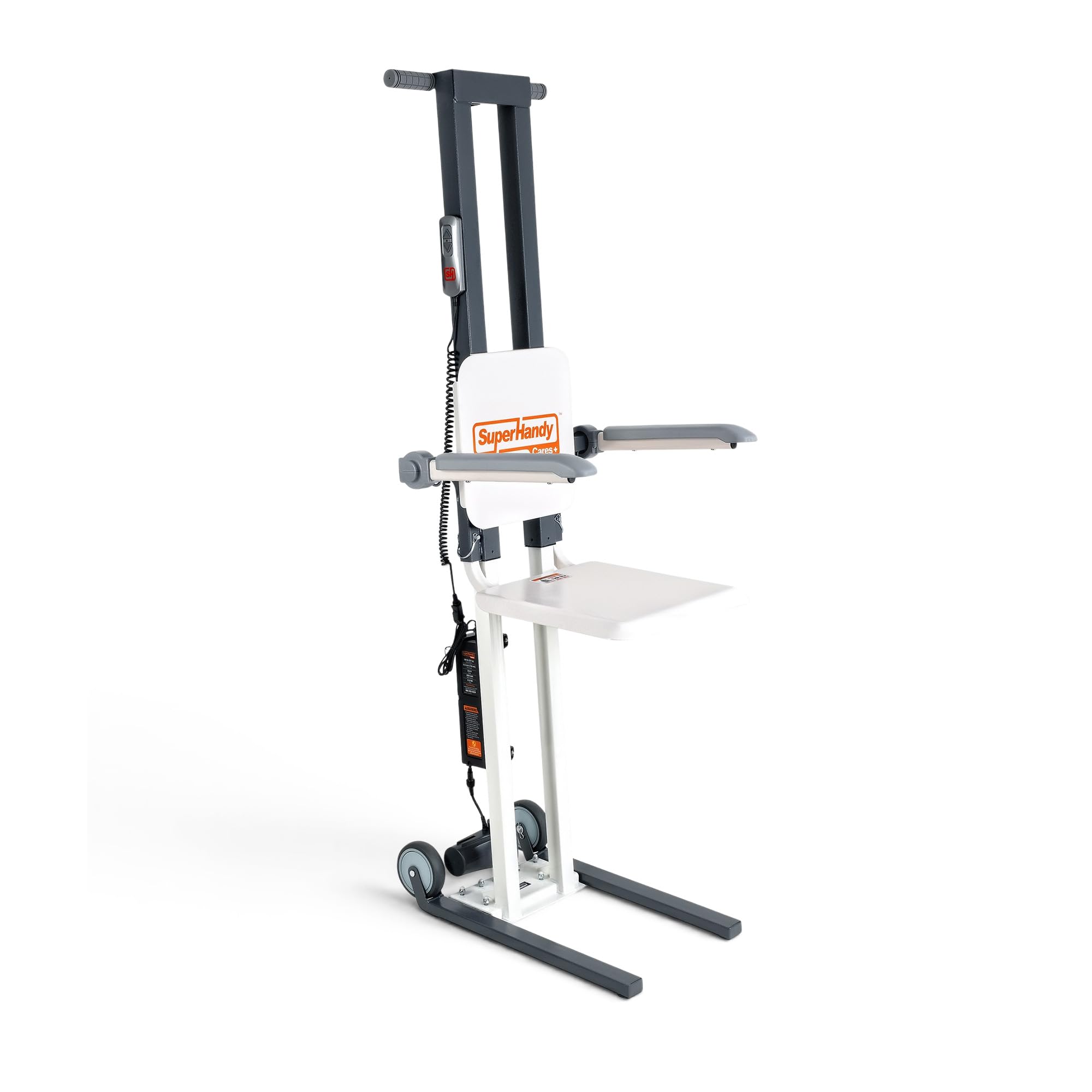
Runs on its own battery, or plugs into the wall if the battery runs low mid-recovery.
Most floor lifts give you one way to power them. The SuperHandy gives you two — a rechargeable battery for cordless use, and the option to plug into AC power for continuous use in an emergency. Rear wheels plus maneuverable front casters on the TX model keep it rolling across surfaces, and foldable armrests with a contoured, slightly sloped seat help prevent slipping. A quick-release safety belt and a magnetic wired remote that stays within reach round out the design.
What owners love is the core job: it raises people from the floor to standing, and several describe being on their feet within a couple of minutes. It is called a lifesaver, especially for people with disabilities, and the sturdiness draws steady praise. Assembly is straightforward with good instructions. At 52.91 pounds it is the heaviest of the floor-lift group, which is worth knowing before you plan to move it between rooms.
The dual-power design is the standout, but the honest note is that this is still a floor-recovery machine, not a daily sit-to-stand aid — it lives on the ground and lifts from the ground. On hard floors it is planted; on carpet it may want more care. For a caregiver who wants a battery lift with a wall-power backup, this is a practical pick.
indoor floors: caregivers who want battery freedom but refuse to be caught without power in an emergency.
over 500 lbs: at 52.91 lbs it is not a one-hand carry between rooms.
9. Vive Electric Patient Lift for Home Use w/ Sling

A full electric sling hoist with a swan-neck frame that tucks neatly into a bedroom.
This is the powered upgrade to a manual hoist. The Vive Electric Patient Lift comes with its own sling and uses a durable electric actuator to move a patient between wheelchairs, beds, sofas, and baths. No pumping by hand — you press and the motor does the lifting. The swan-neck frame is the design flourish: it curves the boom so the lift fits into a room without dominating it, keeping space for furniture and decor. It is indoor-rated and folds into a portable form factor for moving between rooms.
The lift function itself is the sure thing — it earns uniform praise for working exactly as it should, and the appearance draws compliments for looking tidy in a home setting. Assembly and ease of use both get positive notes, and owners consider it worth the money. That is the profile of a modern electric hoist: dependable at the lifting, and pleasant to look at while it does it.
Where it asks patience is mobility. The wheels are described as suited to hard floors, so carpet and rugs can slow you down. Assembly is required, though instructions come in the box. For a bedroom-based sling transfer on smooth flooring, the electric actuator and included sling make this a polished, low-effort choice.
daily home use: bedroom and bathroom sling transfers where the motor should do the work, not your arms.
travel needs: hard floors only, really — the wheels do not take kindly to carpet.
10. MediHoist Aluminum Electric Patient Lift
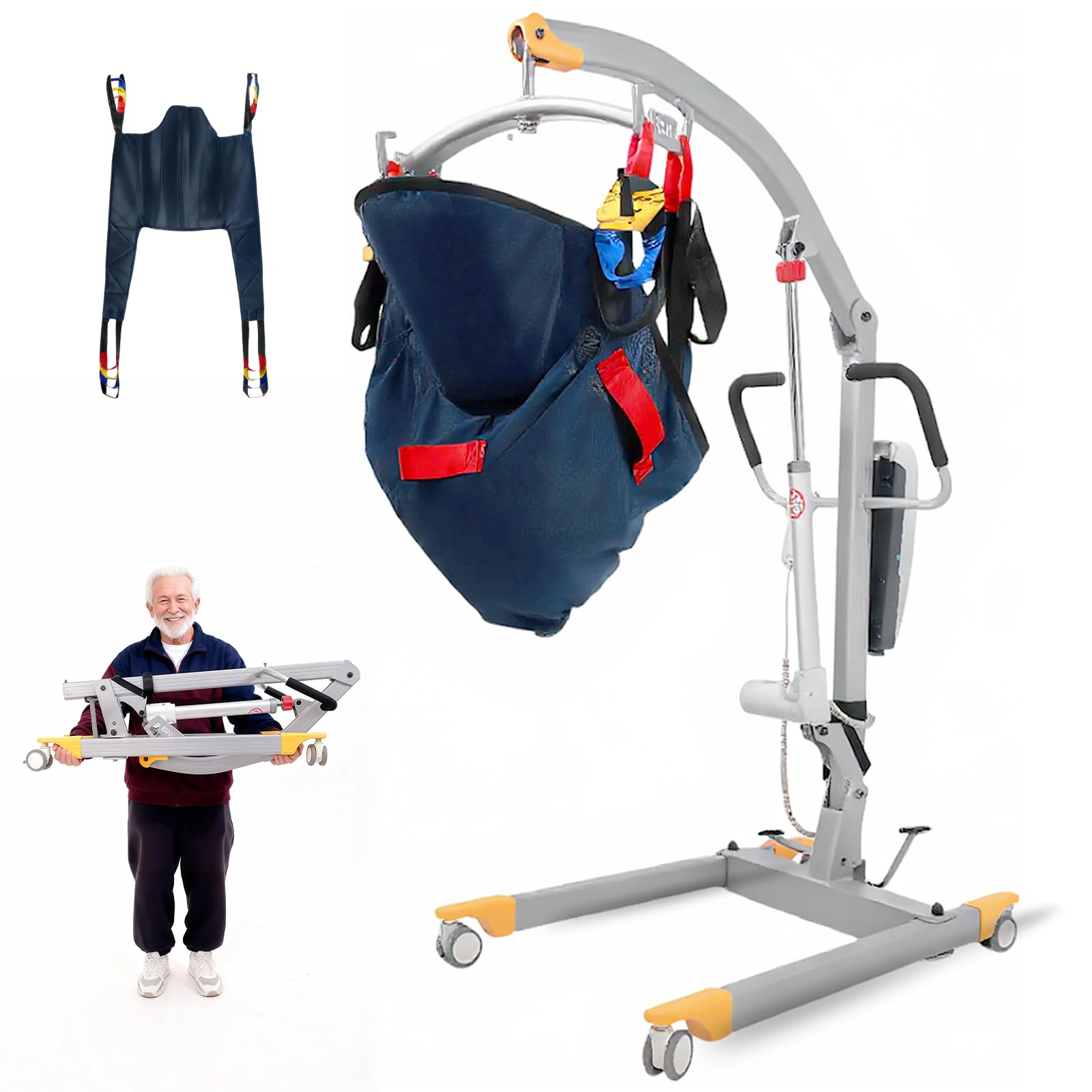
The travel lift — aluminum at 57 pounds, folds down, and reportedly lifts 120 times per charge.
This aluminum lift is the one to pick if the lift has to travel — into a car, into a second home, into a care facility. At 57 pounds it is 44 percent lighter than standard models, per the maker, and folds for car or closet storage. The MOTECK motor runs quietly with IPX6 waterproofing — that rating means it stands up to strong water jets rather than full submersion — and the motor is rated to 8000N, which the maker states as 1760 lbs of lifting force. The unit is intended for up to 300 lbs. A 360-degree rotating jib and adjustable base help it reach the floor, a bed, or a wheelchair, and emergency stop and descent are built in.
A toileting sling comes included, and the manufacturer lists it for fully or partially paralyzed patients, bedridden individuals, and those with mobility issues. It runs up to 120 lifts per charge, a figure that varies with patient weight and temperature. Owners value the lightweight aluminum build and the portability most, and find it easy to assemble and use.
Mobility is the honest split — it glides across hard surfaces with little effort but hits trouble on carpet and uneven ground. The other thing to hold onto is the capacity: at 300 lbs this is the lightest-duty of the full hoists here, well below the 450 lb Drive and Invacare. Know your user’s weight and the floor, and this becomes a genuinely convenient lift for someone always on the move.
portable moves: you need a hoist you can fold, carry, and put in a car without a second person.
heavy patients: the 300 lb ceiling is the lowest among the full hoists here — confirm it exceeds the user’s weight.
11. ArjoHuntleigh Sara Stedy Sit to Stand Manual Lift Aid

The one that arrives fully assembled and fits users from 4’11” up to 6’6″.
The Sara Stedy is the tall-user specialist. It fits a span of 4 feet 11 inches to 6 feet 6 inches and holds up to 400 lbs, which makes it unusually accommodating for a stand assist. It works with someone who can stand with support, letting them rise from a seated position and transfer with the caregiver guiding the motion. Because it arrives fully assembled, there is no setup night — it is ready as soon as it lands.
Mobility is where it earns its premium name. It moves around toilets, chairs, and beds easily, and with 20 separate points of praise on mobility alone, owners clearly find it easy to steer in cramped rooms. Effectiveness is the top theme — nearly every comment on how well it works is a positive, and it is repeatedly called a life-saver that makes caregiving easier. Transfers are counted as safe and easy, and caregivers single it out for reducing their own physical strain and protecting against back injury.
The real question is value at the top of the market. Some owners feel the price is steep for a manual, non-powered aid, and it is true it does not lift or motorize anything. That is the honest trade: you pay for a fully assembled, thoughtfully sized, easy-rolling transfer aid. If budget is the ceiling, the Etac Turner PRO does a similar standing-pivot job for less; if height range and zero setup matter most, the Sara Stedy is the one.
assisted standing: tall users and anyone who wants a stand assist that works the moment it arrives.
weak grip: this is the priciest manual aid here — you are paying for fit, finish, and no assembly.
Know the Specs
Weight capacity and why it is the first number to check
Every lift carries a maximum the maker will not stand behind beyond. A 400-lb rating on the Vive and Sara Stedy, or a 450-lb rating on the Drive and Invacare, tells you the frame is engineered for that load. A lift rated below the user is a safety risk, so always confirm the rating exceeds the person’s weight with room to spare. A powered floor lift like the VOCIC is rated to 300 lbs, while the hydraulic hoists run to 450 lbs — match the machine to the person.
Lift type: floor, stand, or hoist
Floor lifts raise someone from the ground to a seated position, and often come with low-seat ranges like the VOCIC’s 2.9 inches so the seat meets a person on the floor. Sit-to-stand aids, such as the Etac and the ProHeal, help a person who can bear weight rise and pivot. Hydraulic and electric hoists use a sling to lift a patient fully from a bed, chair, or bath. The floor lift is not a daily transfer aid, and the hoist is not a floor-recovery tool — each does one job.
Common Questions
Can a mobility lift aid help someone who has fallen get off the floor?
Will a stand assist lift fit through my bathroom door?
What does IP68 waterproof mean on a mobility lift?
Do I need a sling for a mobility lift aid?
Is a hydraulic lift or an electric lift easier for a caregiver?
How much weight can these mobility lift aids support?
Will a mobility lift aid roll on carpet?
Does the Sara Stedy come assembled while others need building?
Can a tall or short user use the same mobility lift aid?
Is a sit-to-stand aid as safe as a full hoist?
The Bottom Line
For most homes, the mobility lift aids winner is the VOCIC AX10 Electric Chair Lift because it does the hardest job in the category — getting a fallen person up off the floor — with a seat that drops to 2.9 inches and raises to 19.7 inches, backed by an IP68 waterproof build that lets it work in the tub. If you need a full-hoist transfer and your hallway is narrow, grab the Invacare 9805P, whose legs close to 22 inches and whose 68-pound frame rolls with less effort than heavier hoists. And for a standing transfer in a tight room, the Etac Turner PRO is the one to reach for at 17.6 pounds and 441 lbs of capacity. One honest nudge: the VOCIC’s 4.5+ stars across 500+ owners make it the low-risk place to start if you are unsure which type you need.
How we choose
We do not accept paid placement. Every pick is matched to a real buyer and a real use-case; we do not hands-on test units.
Sources
Specifications: manufacturer listings and product documentation. Review insights: verified customer reviews, as of November 2026. Pricing: not shown on this page (it changes often); check the current price via the retailer link.
As an Amazon Associate, Tactical Gear Guy earns from qualifying purchases. This does not affect which products we feature.