Specs are compiled from manufacturer listings and verified buyer reviews and can change over time — please confirm the key details on the product page before buying.
Most jackets that call themselves luxury fall apart at the seams — or turn out to be a thin skin of leather over a plastic backing. The ones worth your money all share three things: real hide you can feel the grain in, a cut that survives more than two seasons, and hardware that does not fail the first time you pull the zipper. Below you’ll find eleven jackets that pass that test, sorted by what each one actually does best.
This guide is built by comparing the manufacturers’ published specifications and the patterns across verified customer reviews, so you get each pick’s real strengths and trade-offs instead of marketing spin.
At this price, the difference between a good buy and an expensive regret usually depends on one spec. Here is how to read the specs before you commit to the best men’s luxury jackets.
Top Picks
How To Choose The Best Men’s Luxury Jackets
Luxury outerwear splits into distinct categories — leather, down, and wool — and each fails differently. A leather bomber, a down parka, and a wool overcoat each fail in completely different ways, so the first step is naming which one you actually need. Pick the wrong category and no amount of money fixes it.
Leather type decides how the jacket ages
Full-grain leather keeps the outer surface of the hide intact, so the grain stays visible and the material develops a patina instead of peeling. Top-grain is sanded down for a smoother finish — softer to the touch on day one, but it shows scuffs sooner. Lambskin sits at the soft end of the scale; it drapes beautifully and feels light on the shoulder, yet it dents and scratches more readily than cowhide. Think about where you’ll wear it: a car coat in cowhide survives daily driving and door frames, while a lambskin moto jacket rewards careful handling.
Lining systems change the usable season
A zip-out lining is the single most useful feature on a leather jacket. It lets one coat cover fall and deep winter by adding or removing a layer, which is why so many Reed jackets build it in. Down insulation works differently — it traps heat by loft, so you want to check the fill number and the shell fabric together. A waterproof, seam-sealed shell with a real down fill handles wet cold; a wool coat handles dry cold and nothing else.
Fit and sizing online
Every brand here runs its own size scale, and the review pages show it. Some cuts are deliberately generous American fits built to layer a sweatshirt underneath; others are slim and should sit close to the body. Measure your chest and your sleeve length, compare them to the brand’s own chart, and expect a roomy cut to feel big on arrival. If the listing calls the fit “loose” or “relaxed,” believe it.
Side-by-Side Comparison
| Model | Best For | Outer Material | Insulation | Fit | Amazon |
|---|---|---|---|---|---|
| REED Est. 1950 Broad Shoulder Bomber | Everyday leather backbone | Top-grain soft leather | Inner lining | Comfort fit, American bomber | Amazon |
| Cole Haan Smooth Lamb Moto | Soft, dressy nights out | Smooth lamb leather | — | — | Amazon |
| REED New Zealand Lambskin | Softest leather in the list | New Zealand lambskin | 3M Thinsulate, zip-out | Comfort fit, American cut | Amazon |
| The North Face McMurdo Parka | Real winter weather | Seam-sealed DRYVENT 2L | 600 fill recycled down | Relaxed, long length | Amazon |
| Cole Haan Cashmere Blend Overcoat | Sharp tailoring in dry cold | Wool cashmere blend | Fully lined | 34-inch length, shirt collar | Amazon |
| Fjällräven Nuuk Parka | Extended winter trips | Waterproof shell | Synthetic padding | Long, generous | Amazon |
| John Varvatos Brando | Denim cut in sheep leather | Fine sheep leather | — | Traditional denim silhouette | Amazon |
| Billy Reid Bond Peacoat | The tailored classic | Melton wool | Unlined | Double breasted | Amazon |
| Moose Knuckles 3Q with Fur | Deep cold statement piece | 74% cotton, 26% nylon | 80/20 duck down | Slim | Amazon |
Detailed Reviews
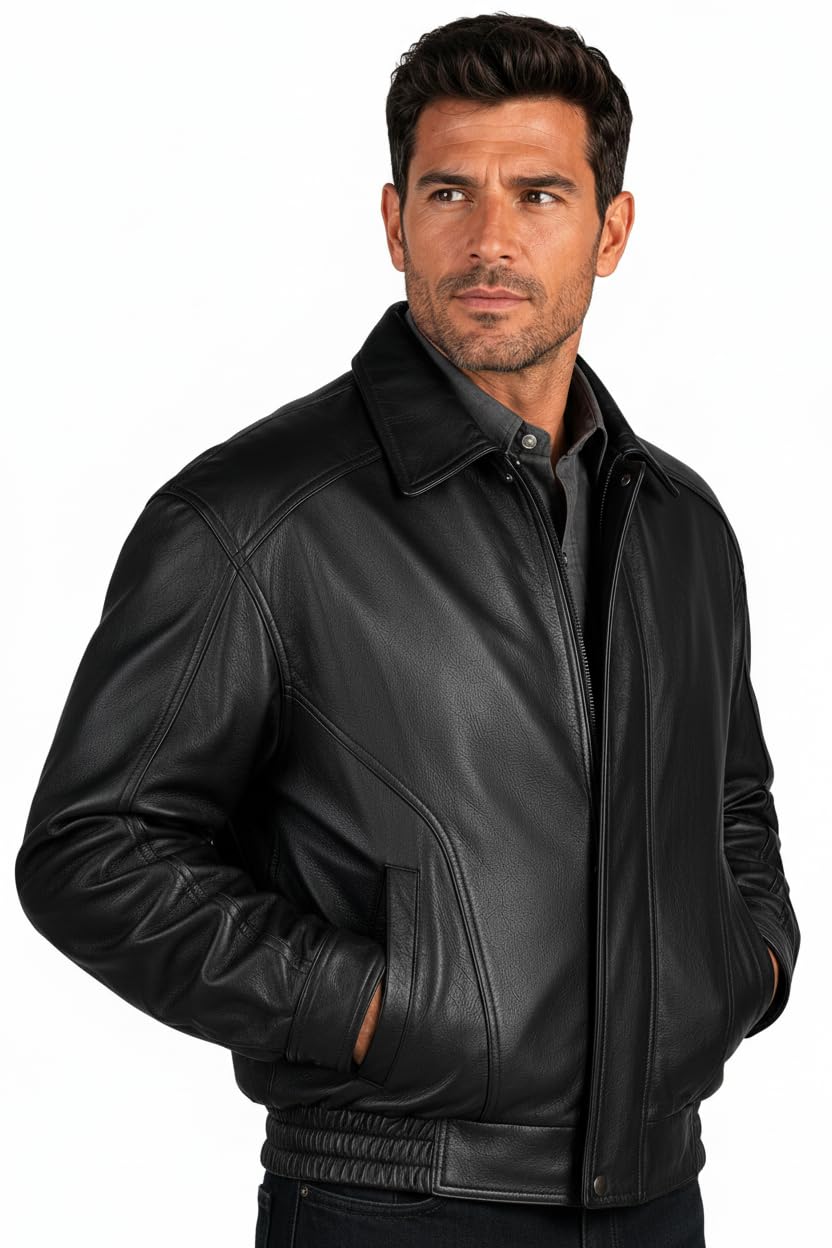
1. REED EST. 1950 Men’s Luxury Leather Bomber Jacket
A top-grain leather bomber on sale since 2014, with a broad shoulder line and an inner lining.
You get one leather jacket that works for the commute, the bar, and the weekend. It is a top-grain soft leather bomber (top-grain means the smooth upper layer of the hide) with a comfort fit and broad shoulder line. The Reed zipper and Reed snaps feel solid in your hand, not tinny. The design has been on sale since May 2014, so real buyers have tested the pattern for years.
What wins people over is the build. The stitching runs uniform across the panels, the leather reads as genuinely thick rather than a thin skin, and the whole coat carries the reassuring heft of a heavy leather coat with an inner lining. That weight is a feature in wind — it keeps the jacket hanging straight instead of flapping at your shoulders. In the hand, the grain is soft enough that it never feels like wearing cardboard.
The catch is sizing, and it runs in both directions. The cut is generous at the chest, so men who normally take a medium may find the collar looking one size too large. Sleeve length tends to come out perfect. Order your true size if you want room to layer a hoodie, and size down if you want a close fit over a t-shirt.
What Earns It First Place
- Top-grain leather with uniform stitching — it looks expensive because the construction is
- Heavy enough to hang straight in wind, with an inner lining for extra warmth
- Broad shoulder fit reads sharp without tailoring
- Genuine value for a full-grain-feel bomber
Where You Should Size Carefully
- Chest runs roomy — the collar can look one size up
- Boxier American cut, not a tapered silhouette
- Not a wet-weather jacket; leather needs a break from rain
Wear it if: you want a single leather coat that handles most of the year and looks better in year three than year one.
Measure first if: you are between sizes — the generous chest is the one thing to plan for.
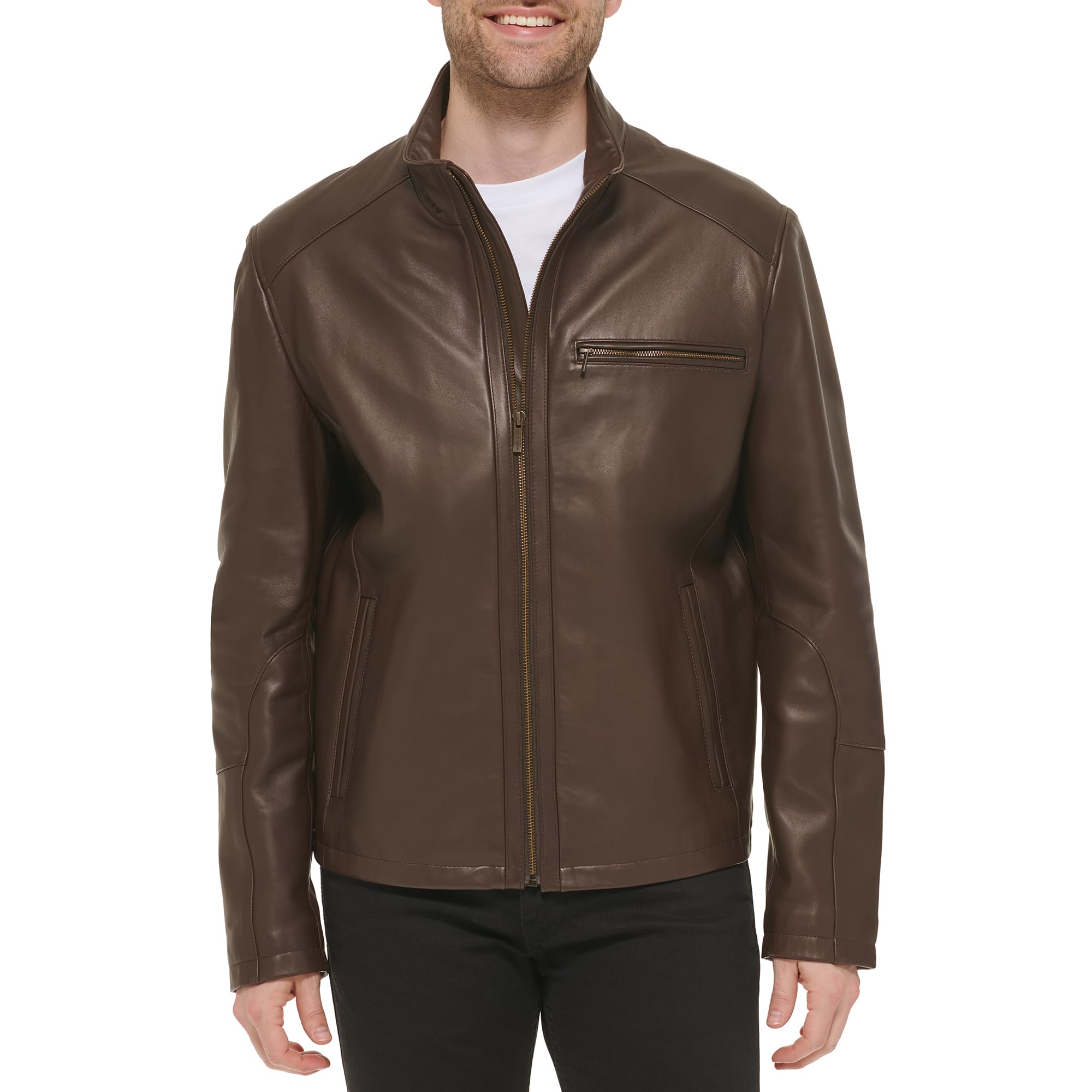
2. Cole Haan Men’s Smooth Lamb Leather Moto Jacket Coat
Dress it up or throw it over a tee — this is the soft one.
Lamb leather is the reason this jacket exists, and it behaves nothing like the cowhide bombers further up this list. It drapes close to the body, feels smooth and supple the moment you put it on, and pulls off a moto silhouette without looking armored. For a dinner reservation or a night out where the coat is part of the outfit, that softness is the whole point.
The size difference between this and the Reed bomber is worth noting. This one packs down small enough that the manufacturer lists its package dimensions at a fraction of a boxed coat’s shipping footprint, which says a lot about how little bulk the lamb leather carries. Slip it into a carry-on and it will not eat half your luggage.
Here is the honest trade-off: lamb leather is soft, and soft is not the same as tough. Some long-term wearers have seen the inside lining stitching come away and buttons give out, so treat the closure gently and don’t stuff the pockets. Sizing also leans large — if you’re between two sizes, take the smaller.
Best thing about it: the supple feel — smooth, close-fitting, and dressy enough for evenings that demand more than a hoodie.
Worth knowing: lamb leather rewards care over brute force; this is a jacket to handle gently, not abuse.
Reach for this: when you want the softest, most formal leather look in the lineup.
Look elsewhere: if you need a coat that shrugs off daily rough handling.
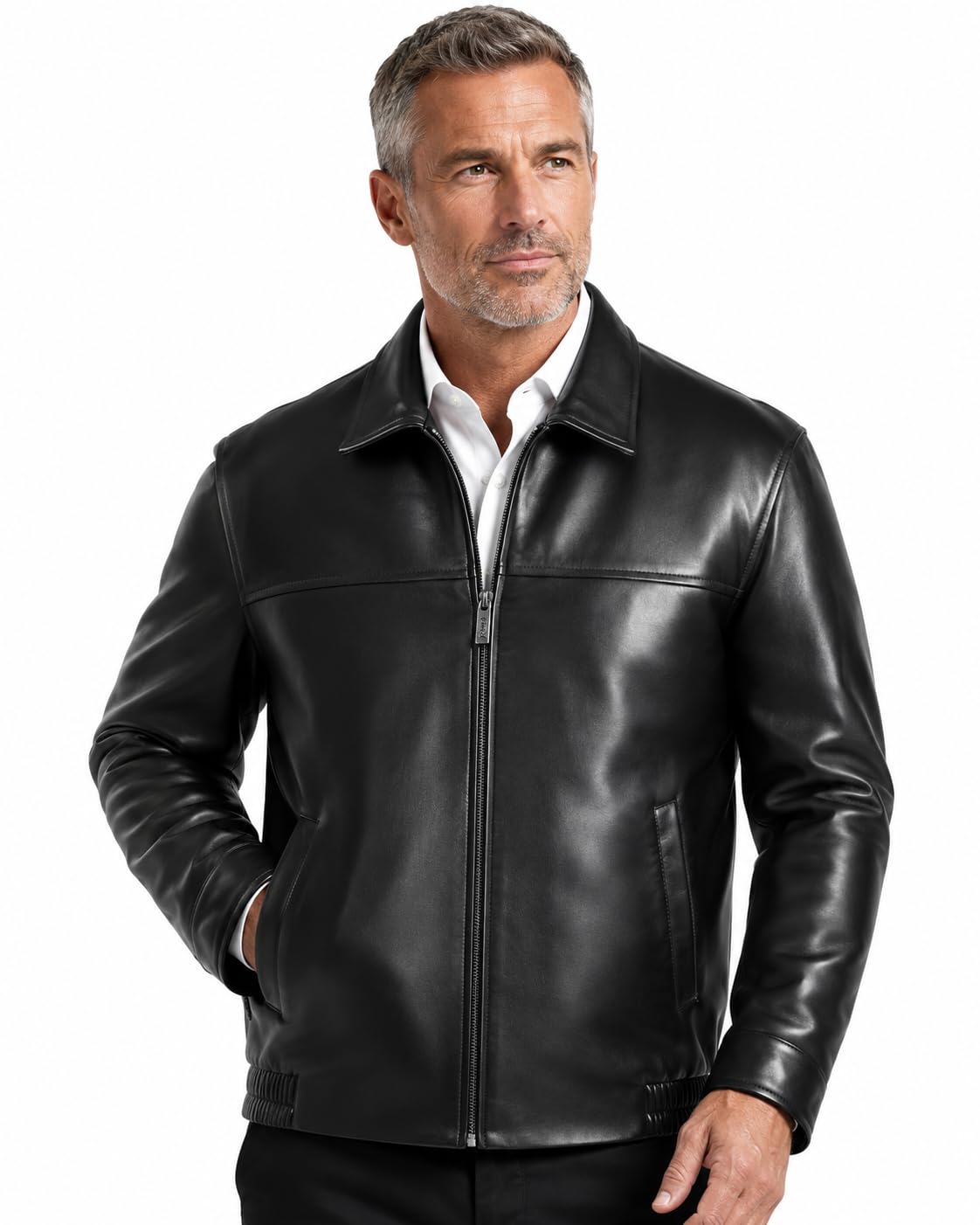
3. REED EST. 1950 Men’s New Zealand Lambskin Leather Jacket
One jacket, two seasons — the lining zips out and the weight stays honest.
New Zealand lambskin sits at the luxury end of the leather scale, and this coat leans all the way into it. The hide is buttery in the hand and drapes without stiffness. Inside sits a 3M Thinsulate lining — the thin synthetic insulation that traps warmth without adding bulk — and it zips out entirely, so the same jacket works on a mild October night and a freezing January one.
Weight is the number to notice here. This is the heaviest leather jacket in the lineup at five pounds, against four for the broad-shoulder bomber — a full pound more hide and lining on your shoulders. That weight is why the jacket hangs so cleanly. It is not a coat you forget you’re wearing, and for a leather jacket that is a fair trade.
Two small notes. The size scale runs slightly small on some wearers, so check the Reed chart before you click. And lambskin at this softness level wants a proper hanger and an occasional conditioning — treat it well and it rewards you with a patina that cheaper leather never develops.
Why it earns the premium tier: real New Zealand lambskin, zip-out Thinsulate, and a heft that lets the coat keep its shape all evening — genuinely two jackets in one.
The one to plan around: the five-pound weight and a size scale that runs tight for some buyers.
Built for: the man who wants one premium leather coat instead of three seasonal ones.
Double-check: your size against the manufacturer chart — this cut runs small for some.
4. REED EST. 1950 Men’s Luxury Aviator Leather Bomber Jacket
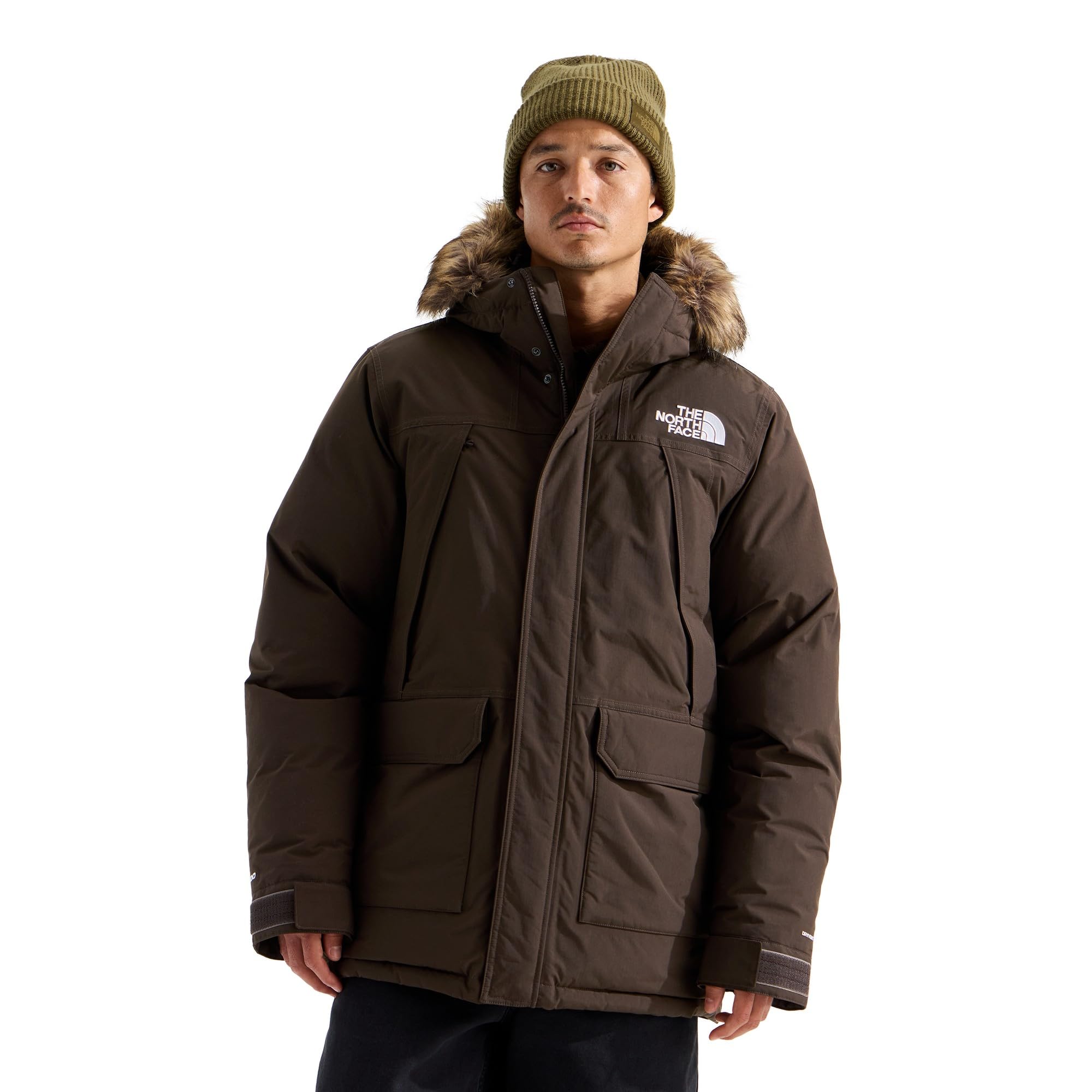
Named after an Antarctic research station — and it dresses for the job.
If your winter actually includes wet cold and wind, leather and wool stop being luxury and start being a liability. The McMurdo is the answer: a seam-sealed DRYVENT 2L shell — a two-layer waterproof fabric with the seams taped so water cannot wick through the stitching — finished with a non-PFC durable water-repellent coating. Inside is 600 fill recycled down, which is real insulation, not padding. The two ways of staying warm are loft from down or a synthetic fill; this jacket goes with the down.
The cut is long and relaxed, with a standard parka length so the coat covers your rear and keeps the wind off your waist. Adjustable hook-and-loop cuff tabs let you dial the sleeves down over gloves, and the two-way center zip with a stormflap means you can open the bottom for walking without exposing your chest. Storage is generous: concealed-zip alpine chest pockets, dual-entry hand pockets, and an internal zip chest pocket. The faux-fur-trimmed hood is adjustable and warm at the ears.
The one honest gripe is cost. This is a premium-tier purchase, and a fair share of buyers report so plainly. What you’re paying for is a waterproof, windproof, insulated coat that can be worn over mid-layers and lightweight insulated layers without feeling like a sleeping bag. For most buyers in genuinely cold climates that math works.
Where it wins: a waterproof, seam-sealed shell paired with 600 fill recycled down — the combination that turns a wet, windy commute into a non-event.
The honest catch: it’s a premium-tier parka and priced like it, though the protection supports it.
Choose it when: you walk or commute in real winter weather and want the coat to be the technical answer.
Not needed if: your winters are dry and mild — wool does that job for less.
5. Cole Haan Men’s Cashmere Blend Overcoat Coat
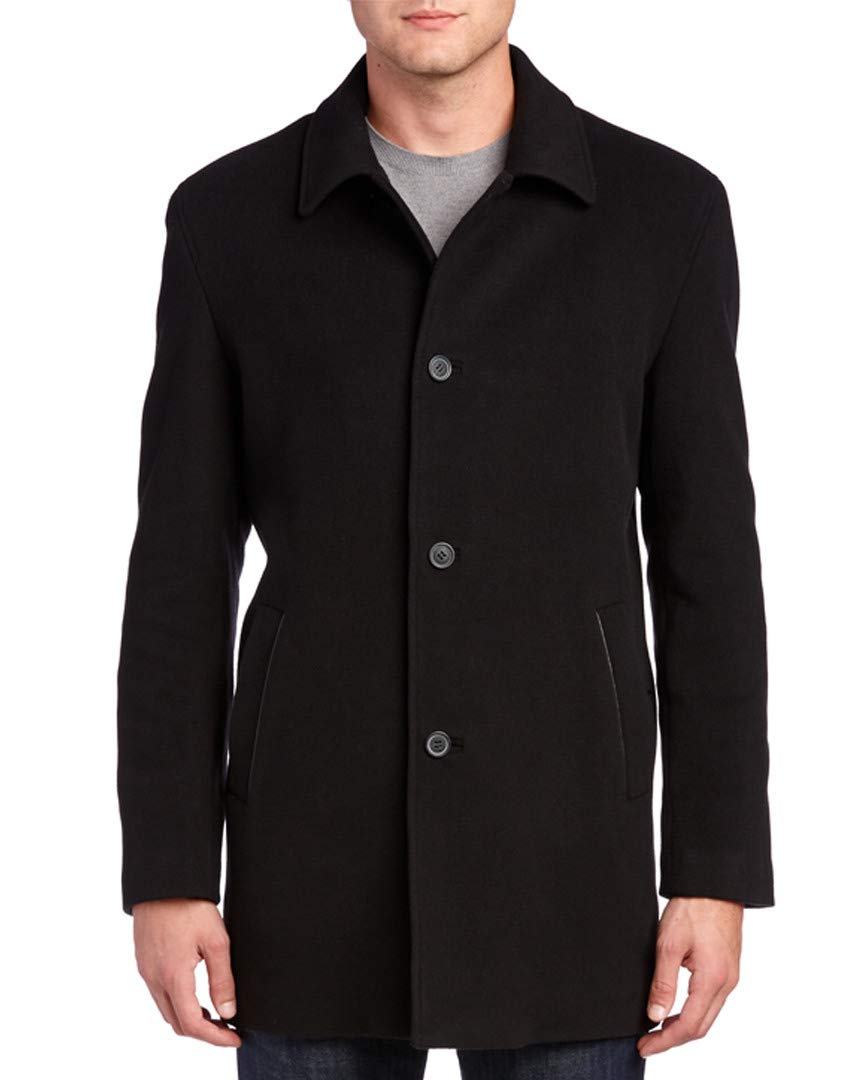
The suit’s best friend — a 34-inch wool cashmere topper that softens a hard look.
Some coats are meant for the commute and some for the room you arrive in. This is the second kind. It is a 34-inch wool cashmere button-front topper with a shirt collar and a full lining, a length that falls just below the hip and stays sharp over a blazer. The cashmere content is the reason it feels softer than a pure-wool overcoat — owners compare it to wearing 100% cashmere, which is high praise for a blend.
Fit is the big conversation around this coat. Some men find it tailors close like a slim fit with a great length; others find it runs a little large with sleeves that go too long. It is not a defect — it is a cut that assumes a certain frame. Measure your sleeve length against the chart, and if you sit between sizes, plan on a tailor. The espresso shade earns strong compliments; a few buyers expected a tan camel and got a deep brown, so look at the photo, not the name.
Where the McMurdo above is engineering, this is tailoring. It keeps you warm in dry cold and looks right in an office or at dinner. It will not survive a snowstorm the way a sealed parka will, and it isn’t trying to.
Why it’s on the list: the wool cashmere hand-feel and the shirt-collar topper cut read far dressier than a standard wool coat.
Size it with care: the shoulders and sleeves run large for some frames, and the shade reads darker brown than a classic camel.
Right for: the man whose winter coat has to work over a blazer and under a boardroom light.
Skip if: you need one coat to handle rain, wind, and snow as well as tailoring.
6. Fjällräven Nuuk Parka Men’s Coat
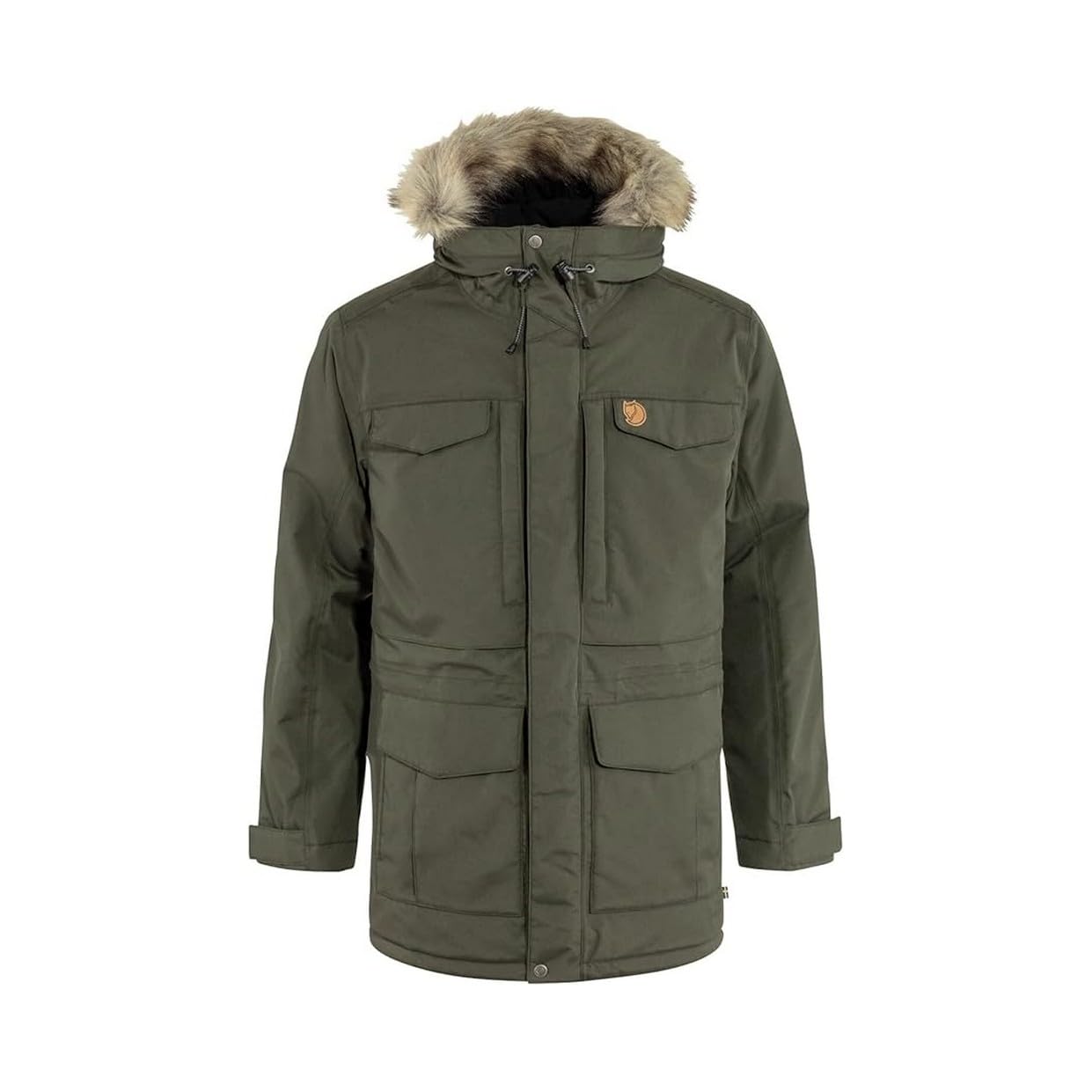
Eight pockets and a hem down to your thighs — built for the long walk.
The Nuuk is the coat for men who hate stopping on the way to the car. It is a long, generous parka that reaches down over the rear and thighs, so the wind has nothing to bite at. The shell shields against wind and rain, and the synthetic padding keeps you warm in really cold temperatures — and unlike down, synthetic fill doesn’t lose its loft when it gets damp. The fleece-lined storm hood has a metal wire in the brim, so it holds a shape and doesn’t flop over your eyes, plus a detachable faux fur edge you can keep or leave at home.
Eight pockets is not marketing; it is a plan. Two hands, gloves, phone, keys, hat, and still room for the extras. The waist has a drawcord so you can pull the coat in against the cold, and the two-way zipper with a protective flap means the front can open from the bottom without letting wind in at the chest. It is a practical, outdoor-first design that happens to look serious in a city too.
Size is the one frustration. This parka runs a little big by nature, and some buyers found the larger sizes went further than expected. The roomy cut is deliberate — it lets you layer — but if you want a close fit you will need to size down. Check the Fjällräven scale rather than assuming your usual.
What It Delivers
- Long hem over rear and thighs blocks wind on the walk
- Synthetic padding stays warm through wet cold
- Eight pockets with a drawcord waist for a snug fit
- Wired storm hood holds shape; faux fur edge detaches
Plan Around This
- Generous sizing runs large — size down if you want a close fit
- Long hem can feel heavy at the hem in deep snow
- The roomy cut is built for layering, not for a slim look
Made for: long, cold, wet walks where you want pockets for everything and a hem that keeps the wind off your legs.
Watch out for: the generous sizing — confirm your size against the brand chart.
7. John Varvatos Men’s Brando Leather Jacket

A denim cut poured into fine sheep leather — the one with the zippers.
Most leather jackets copy the bomber. This one copies your favorite denim jacket and then upgrades the material, which makes it the easiest luxury leather to actually wear. The silhouette is traditional denim, the leather is fine sheep, and the statement zippers give it a classic-cool finish that reads clearly vintage. It slips over a t-shirt as comfortably as it does over a hoodie.
Quality is the clear headline here, and leather quality is the second. That double strength matters in a sheep leather jacket, because the material is judged by touch — and buyers describe the hide as the kind you can tell is good through the sleeve. The fit has been near-universally praised, with the usual one or two exceptions, so order your normal size and expect it to sit close.
The comparison worth making is against the Reed lambskin above. Both are soft leather, but the Varvatos wears its softness in a denim cut with visible zipper hardware, while the Reed goes for a clean blouson. If your style leans rock-and-roll, the Brando is the pick; if you want understated, go Reed.
The standout: a denim-cut jacket in fine sheep leather with statement zippers, so it reads fashionable without looking like a costume.
True limit: sheep leather is soft and it will show marks — this is a jacket for the city, not the job site.
Perfect if: your wardrobe runs on denim and you want the leather version of your favorite jacket.
Hold off if: you want heavy, protective leather that hides scratches.
8. Billy Reid Wool Double Breasted Bond Peacoat
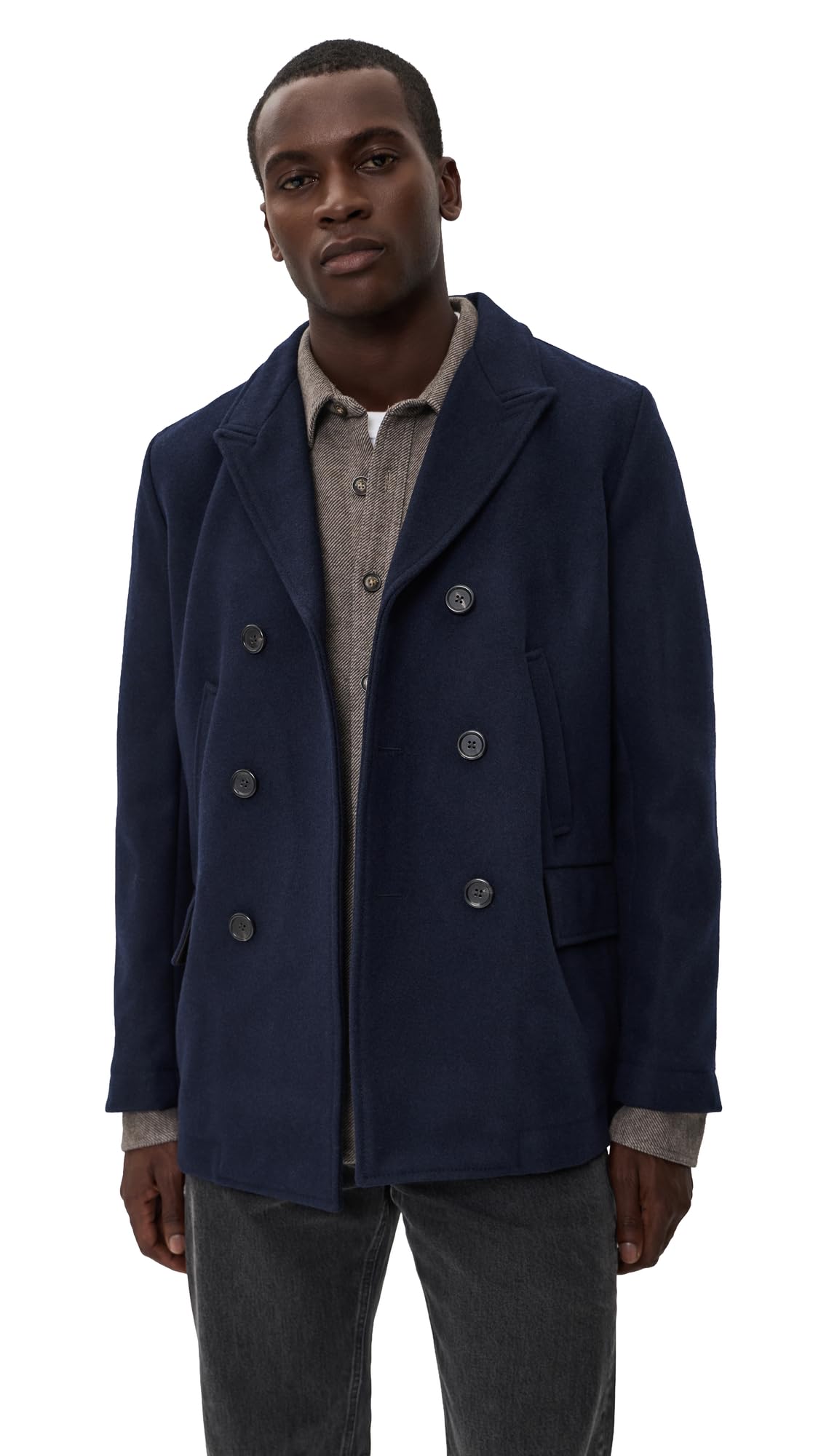
Italy’s answer to the pea coat, in Melton wool with horn buttons.
The Bond pea coat is the most classically tailored coat in this lineup. It is an unlined double-breasted pea coat in Melton wool — a dense, tightly woven wool that holds its shape and keeps wind out without needing a lining — made in Italy. The details tell the story: real leather under the collar, a locker loop at the back, leather beneath the pocket flaps, horn buttons. Single vent, double side-entry pockets, and flap pockets complete the front.
Unlined is a deliberate choice, not a cost cut. It keeps the coat lighter and lets the wool do the work, which is why this is a dry-cold coat, not a wet-weather one. The 3.13-pound weight is a good indicator of the Melton density; it is not a heavy coat in the hand, but it hangs with structure. The double-breasted front means the chest is closed over itself, which adds wind protection where you need it.
Because the coat is unlined and the buttons are horn, it will not feel like a modern tech jacket. If you want warmth in a wet or windy climate, look at the McMurdo or the Nuuk. If you want one coat that makes a suit look finished, this is it.
what separates it: Melton wool (a dense, warm wool fabric), horn buttons, leather under the collar, and Italian construction make it a genuine tailored pea coat, not a casual version.
The catch: unlined and not designed for wet weather — this one belongs in dry cold over tailoring.
Best served to: the man building a wardrobe around suits and overcoats rather than parkas and zip-fronts.
Look elsewhere for: snow, slush, and long wet walks.
9. Moose Knuckles Men’s 3Q Jacket with Fur
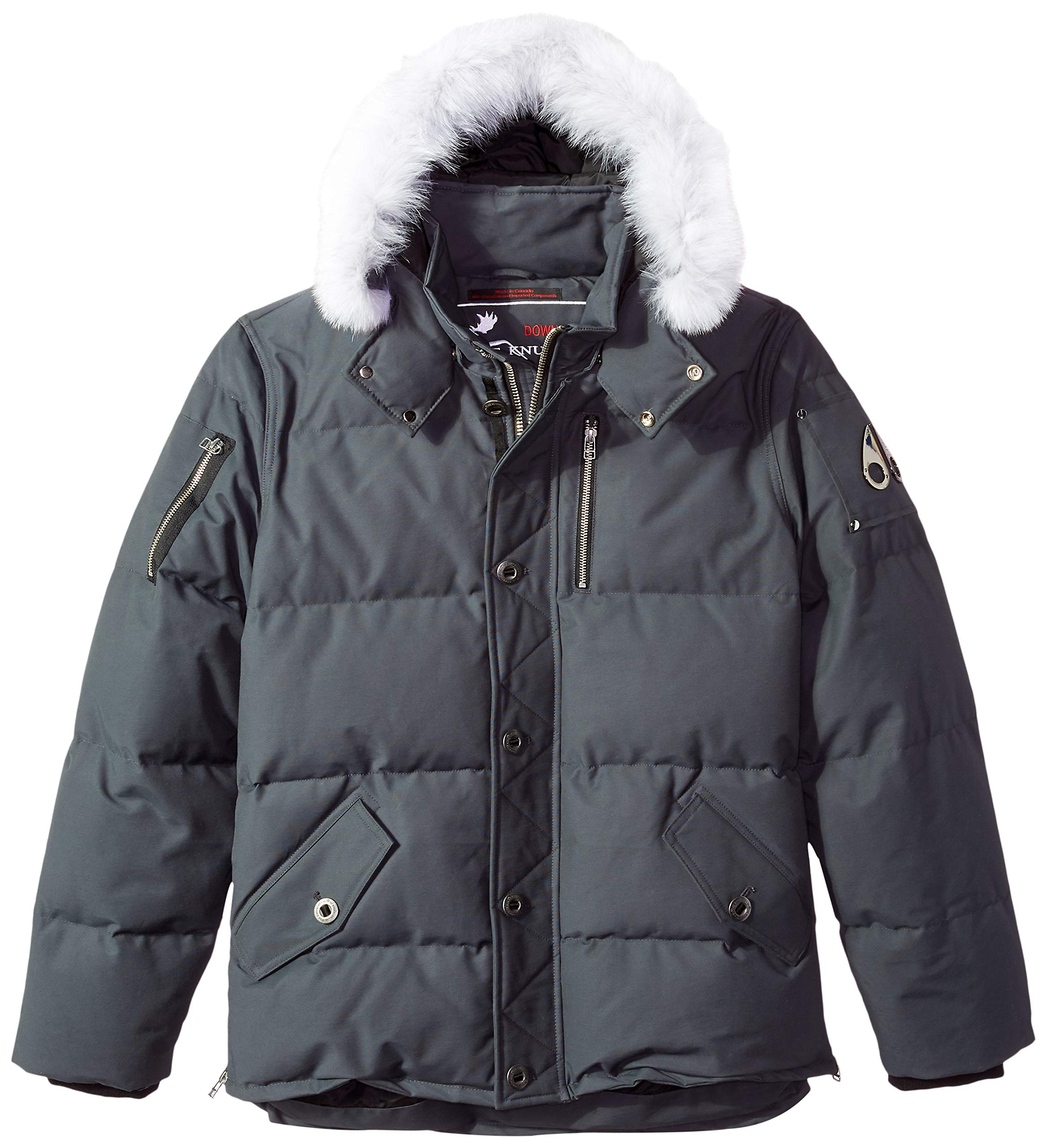
Built for deep cold: 80/20 duck down and a water-repellent shell.
Moose Knuckles is the heavyweight name in cold-weather luxury, and the 3Q is its anchor piece. The outer is a cotton-nylon blend, 74% cotton and 26% nylon, with a water-repellent finish that keeps moisture out and holds up to wind, water, and snow. Inside is 80/20 duck down — 80% down clusters, 20% feathers, a classic loft ratio — so the jacket stays warm no matter the wind chill. The quilted stitching keeps the fill in place and lets the fit stay slim instead of ballooning.
The blue fox fur trim on the hood is the signature, sourced from Canadian and Scandinavian furriers, and the hood detaches if you want a cleaner look. Heavy-duty YKK metal zippers on the front and sides make the pockets easy to reach, and the placket button closure adds a second wind block behind the zip. It has been made in Canada with a mix of domestic and imported materials.
This is a statement coat — a slim fit, visible fur, and a look that does not try to blend in. The trade-off is price: this is the most premium pick on the list, and you pay for the name and the fur as much as the down. The build holds up though, and the fabric is specifically engineered to resist fading through washing and drying.
Why it earns a spot: 80/20 duck down with a water-repellent shell and YKK metal zips — the combination that makes real cold feel ordinary.
The honest limit: it’s the highest-tier purchase here, and the fur trim makes it a look you either commit to or don’t.
This is the one for: a deep-cold statement piece where the fit and fur are part of the appeal.
Look for something plainer if: you want quiet styling and no fur at the hood.
Know the Specs
Leather Grade: Top-Grain vs Naked Cowhide
Top-grain leather has the outermost layer of the hide sanded away for a smooth, uniform finish — it feels soft from day one and takes finish well. Naked cowhide keeps the natural surface intact and develops a patina with wear; it is the grade you see on premium car coats and heritage jackets. Lambskin works the same way but comes from a younger animal, so it is softer and lighter, and more prone to marking. Choose by where the coat lives: lamb for a close, dressy cut; cowhide for a daily driver.
Fill Power, Thinsulate, and Synthetic Padding
Down insulation is measured by how much loft a given quantity of feathers holds — 600 fill down is the number on the McMurdo, and it is a solid warmth-to-weight ratio. Thinsulate is a very thin synthetic layer, so it adds warmth without making the jacket stiff; on a leather jacket, that’s the difference between a fall coat and a winter coat. Synthetic padding is the most weather-resilient of the three, which is why it sits inside the Nuuk’s waterproof shell. No single option is best — match the fill to the climate you actually live in.
Why the Shell Fabric Decides Waterproofing
A waterproof coat is only as good as its seams. A seam-sealed shell has a tape bonded over every stitched line, so water cannot wick through the needle holes — that’s the difference between a jacket rated for rain and a jacket that simply has a water-repellent finish. On the Moose Knuckles and the Nuuk, the outer shell is water repellent, which sheds rain but isn’t the same as a seam-sealed waterproof layer. Know which one you’re buying.
Fit: The One Spec the Size Tag Doesn’t Tell You
American comfort cuts are built with room at the chest and shoulders so you can layer. Slim cuts sit close at the body with no room for a hoodie underneath. Neither is better, but choosing wrong is what generates most of the return complaints in this category. Read the fit notes and the brand’s own chart before you order — especially on coats described as generous or loose.
Common Questions
Is a lambskin jacket softer than cowhide?
How do I shrink a leather jacket that runs big?
What is a zip-out lining and is it worth it?
Can I wear a leather jacket in rain?
What does 600 fill down actually mean?
Is a double-breasted pea coat warmer than a single-breasted one?
How long should a luxury leather jacket last?
Will a slim-fit parka fit over a sweater and hoodie?
Do I need a special hanger for a heavy leather or wool coat?
What should I look for in a down winter jacket’s zipper?
The Bottom Line
The men’s luxury jackets race is decided by what you actually need to survive in. If you want one leather coat that dresses up and down and improves with age, the REED Est. 1950 Broad Shoulder Bomber is the pick — top-grain leather, uniform stitching, a broad shoulder line, and the kind of long-running track record that tells you the pattern holds up.
If cold and wet are the real enemies, reach for the The North Face McMurdo — a seam-sealed DRYVENT shell and 600 fill recycled down do what no leather coat can in a storm. For soft leather dressing up late nights, the REED New Zealand Lambskin with its zip-out Thinsulate lining stretches one jacket across two seasons. And if tailoring is the whole point, the Billy Reid Bond Peacoat in Melton wool and Italian construction closes the wardrobe gap.
Match the shell to your climate and the cut to your frame; the label matters less than either.
How we choose
We do not accept paid placement. Every pick is matched to a real buyer and a real use-case; we do not hands-on test units.
Sources
Specifications: manufacturer listings and product documentation. Review insights: verified customer reviews, as of November 2026. Pricing: not shown on this page (it changes often); check the current price via the retailer link.
As an Amazon Associate, Tactical Gear Guy earns from qualifying purchases. This does not affect which products we feature.