Specs are compiled from manufacturer listings and verified buyer reviews and can change over time — please confirm the key details on the product page before buying.
If you ski or ride, you already know the anorak’s real advantage: no front zipper means no cold strip down your chest when you bend forward, and no zipper gap for wet snow to find. The catch is that pullover ski jackets hide the specs that actually keep you dry — waterproof ratings, breathability numbers, taped seams and powder skirts — behind retro styling. This guide separates the ones that genuinely hold up on wet storm days from the ones that just look the part.
This guide is built by comparing the manufacturers’ published specifications and the patterns across verified customer reviews, so you get each pick’s real strengths and trade-offs instead of marketing spin.
An anorak lives or dies on its waterproof rating, breathability figure and fit over layers, which is why the picks below are grouped by those real numbers rather than by looks. Here is what actually matters in a men’s anorak ski jacket.
Top Picks
How To Choose The Best Men’s Anorak Ski Jacket
An anorak is a pullover ski shell with a half zip or side zip instead of a full front opening. That design gives you a cleaner barrier against wind and snow, but it also means every other spec has to pull its weight because you are not taking it off mid-lift without a fight. Focus on three things: how waterproof the fabric really is, how much it breathes, and whether the fit leaves room for a midlayer without swallowing you.
The waterproof and breathability numbers
Waterproofing is measured in millimeters — shorthand for how tall a column of water the fabric can hold before it leaks through. A 10,000 mm shell handles ordinary resort snow and light rain; a 20,000 mm shell stands up to wet, heavy snow that soaks through cheaper fabric. Breathability is the second number, often shown in grams of moisture the fabric passes in a day, and it is what stops you feeling clammy after a hard run.
Fit, layering and the powder skirt
An anorak needs to sit loose enough for a fleece or puffy underneath but tight enough that snow cannot blow up the hem. A powder skirt — the elastic band inside the bottom hem that snaps around your waist — is the detail that seals out snow on deep days. Jacket-to-pant interfaces do the same job by joining shell and trousers, so check for them if you ride powder. And because pullovers run baggy by design, check the manufacturer’s fit note: some cut oversized and you may want to size down.
Venting, hoods and pockets
Side or pit-zip vents let heat escape on the climb without taking the jacket off — a big deal in a pullover. A helmet-compatible hood with drawstring adjustment keeps snow out of your face on the lift. Look for a dedicated lift pass pocket on the sleeve or chest, plus a zippered internal media pocket so your phone stays warm and its battery keeps working in the cold.
Side-by-Side Comparison
| Model | Best For | Waterproofing | Style | Weight | Amazon |
|---|---|---|---|---|---|
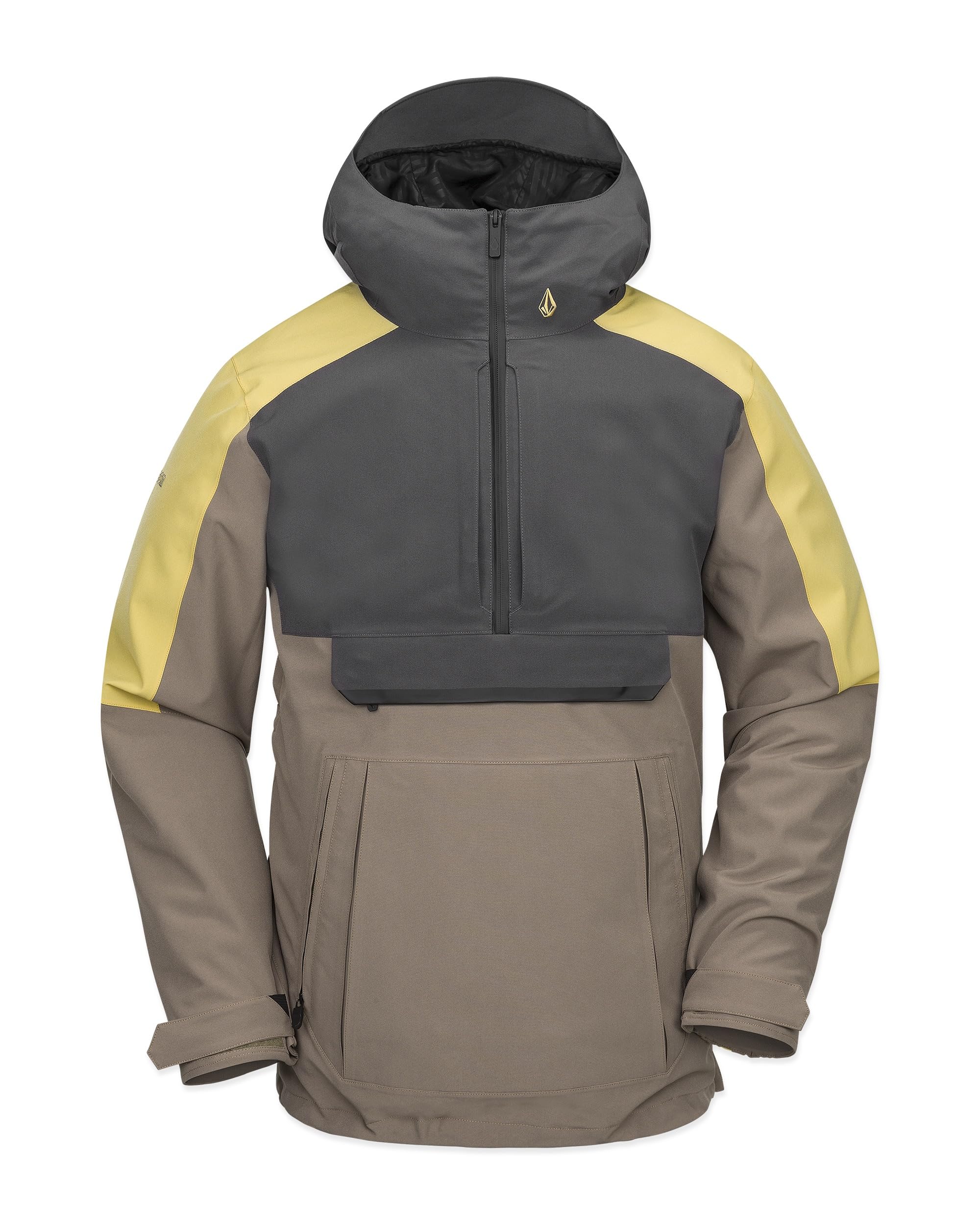
| Volcom Men’s Brighton Pullover Anarok★ Best Overall | Retro look with mountain tech | 15K | Pullover anorak shell | 1 lb | Amazon |
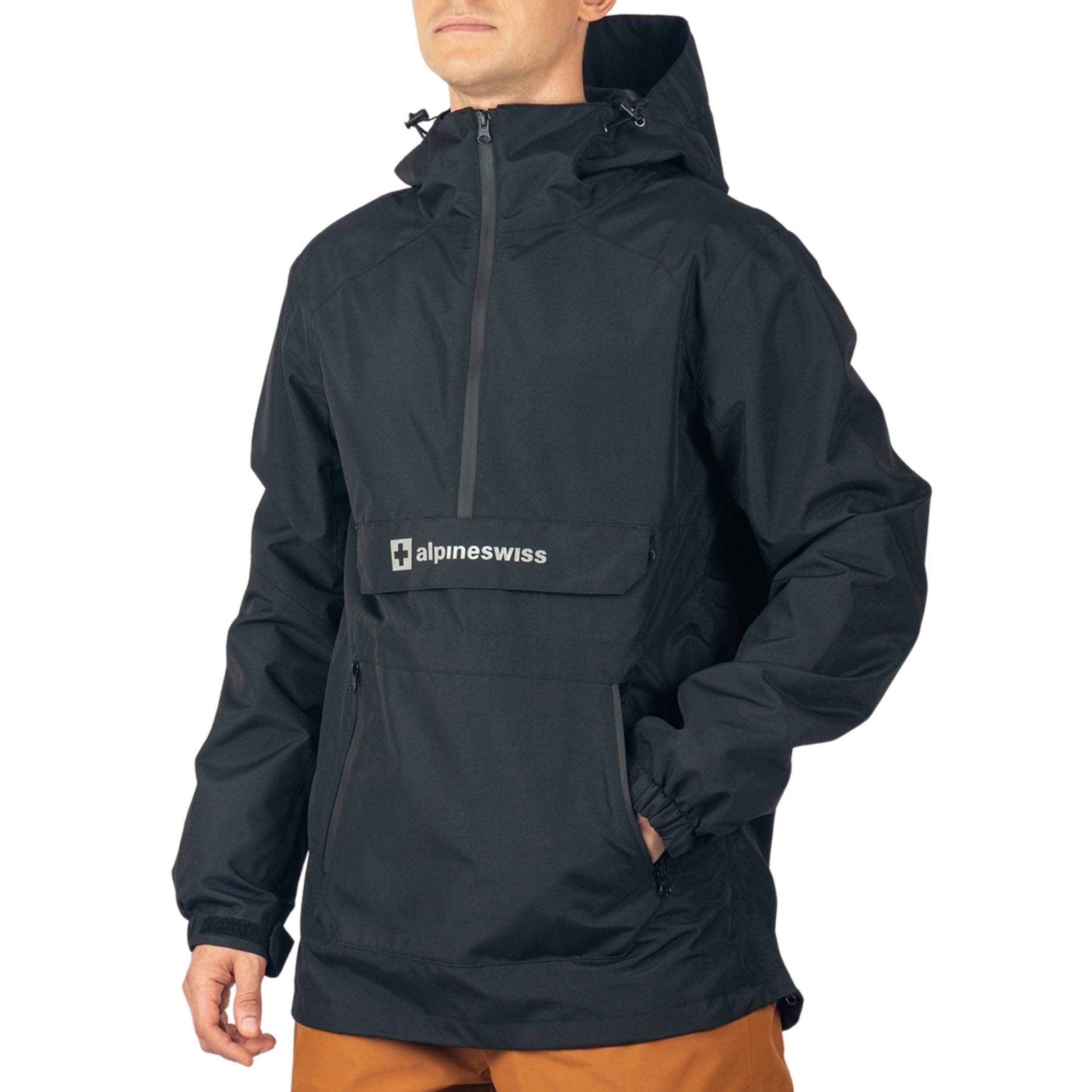
| Alpine Swiss Mens Snowboard Jacket 10K AnorakBest Value | Budget-minded first shell | 10,000 mm | Pullover anorak shell | 2.1 lb | Amazon |
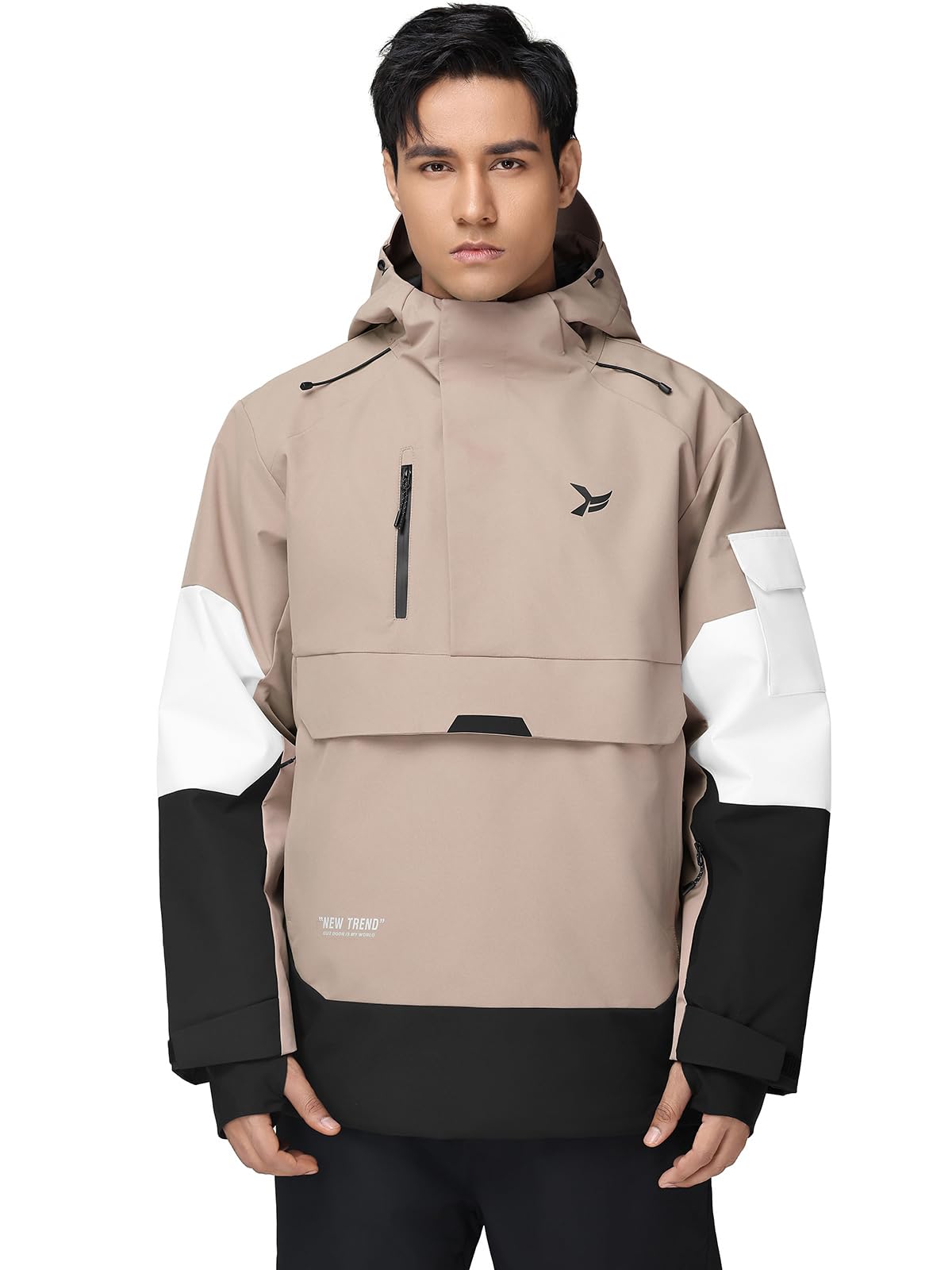
| YEEFINE Men’s Ski Jacket Snowboard PulloverBaggy Fit Pick | Baggy loose-fit riders | — | Baggy pullover hoodie | — | Amazon |
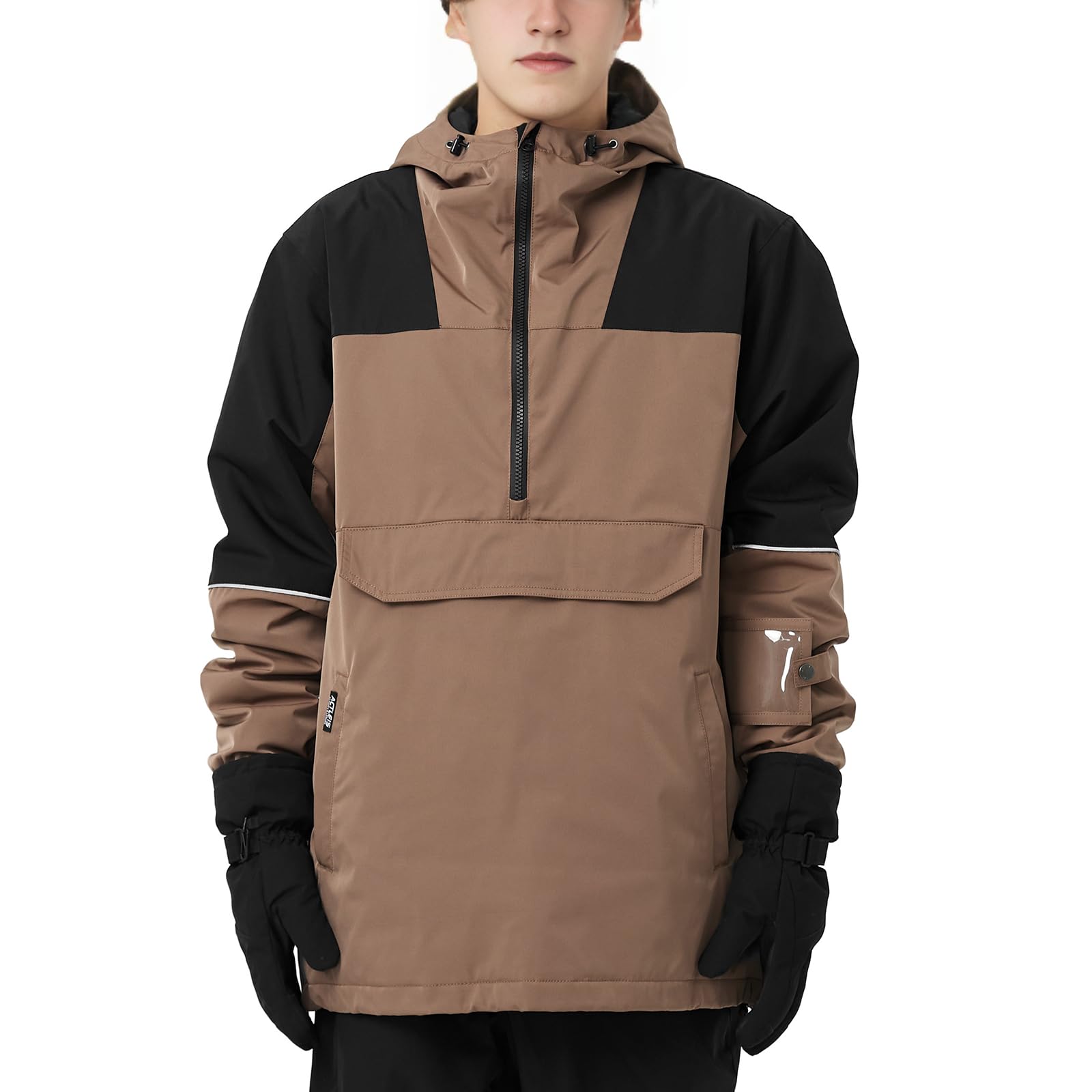
| Mens Pullover Snowboard Jacket Waterproof Insulated | Lightweight insulated value | — | Insulated pullover | 2.2 lb | Amazon |
| Pioneer Camp Ski Jacket Men Baggy Half Zip | High waterproofing on a budget | 20,000 mm | Baggy half-zip | — | Amazon |
| Arctix Men’s Ozark Pullover | Layering on a tight budget | — | Roomy pullover hoodie | — | Amazon |
| Oakley Men’s Divisional Recycled Shell Anorak | Uphill tours and helmet fit | — | 2L shell anorak | — | Amazon |
| Burton Men’s Frostner 2L Anorak | True-to-size modern shell | 10,000 mm | 2L anorak shell | — | Amazon |
| Oakley Thermonuclear Protection TBT Insulated Anorak | Cold days and insulated warmth | — | Insulated anorak | — | Amazon |
Detailed Reviews
1. Volcom Brighton Anarok
Our pick — 4.5+★ from 150+ verified ratings; the strongest balance of quality and price.
Retro looks outside, a 15K waterproof shell and full seam taping on the inside.
The Brighton pairs a retro anorak cut with a 15K waterproof shell and fully taped seams. Its shell blocks water at 15Ks — the “K” being shorthand for thousands of millimeters of waterproofing — which is enough for steady resort snow and the slushy end of a spring day. The V-science lining system is built to move moisture away from your body, so you do not end up damp on the inside after a hard, sweaty run.
The weather details are the reason it takes the top spot. YKK AquaGuard zips (the water-resistant kind with a coated tooth) and fully-taped seams — tape glued over every stitch line where water could sneak in — work together to keep you dry. A drop-tail hem gives extra coverage across your backside when you sit on the snow, and the Zip Tech jacket-to-pant interface joins the shell to Volcom snow pants so snow cannot rush up your back on a tumble.
What puts it above the field is the depth of owner feedback behind that 4.5+ star rating. It earns 4.5+ stars across 190+ ratings, with quality the thing people rave about most — a lot of real-world mountain miles for a 15K shell. Vents let you dump heat on the climb, and the noise pocket with internal media cord routing keeps your tunes wired in and your phone out of the cold. The honest catch is the fit: the drop-tail cut runs large on a fair share of riders, so try your usual size against the size chart before committing.
Where it earns its keep
- 15Ks waterproofing plus fully-taped seams for wet snow days
- YKK AquaGuard zips and Zip Tech pant interface seal the gaps
- V-science lining and vents manage heat on the climb
- 1 lb weight — easy to carry and layer under
What you should know before buying
- Drop-tail cut runs large for plenty of riders; consider sizing down
- Some find it spends above what they hoped for a shell
Reach for this if: you want a retro anorak that backs its looks with 15Ks of waterproofing and sealed seams for real resort days.
Look elsewhere if: you need a guaranteed true-to-size cut without checking the size chart first, since the drop-tail fit runs roomy.
2. Alpine Swiss Snowboard Jacket
The entry-level shell that still brings taped seams, a powder skirt and gaiters.
For a first anorak, the Alpine Swiss is the value story of the lineup. Its polyester shell carries a 10,000 mm waterproof rating — roughly half the protection of the Pioneer Camp’s 20,000 mm shell — paired with a 5000g/m²/24hr breathability figure, the number measuring how much sweat vapor the fabric lets out over a day. That combination keeps you dry in ordinary resort snow, though it will not shrug off the heaviest wet Sierra cement as easily as the higher-rated shells here.
The snow-sealing kit is what makes it worth a look at this level: a non-slip elastic powder skirt with snaps, stretchy wrist gaiters with thumbholes that tuck under your gloves, a fleece-lined chin guard, and a helmet-compatible drawstring storm hood. A long side zip from underarm to hem solves the pullover problem so you can climb in and out without wrestling it over your helmet. A vent zipper under the right arm gives quick cooling when you warm up.
The pocket layout is well thought out for the tier — a large front flap pocket with an internal mesh phone sleeve, a fleece-lined kangaroo hand-warmer pocket with waterproof zips, and a dedicated lift pass pocket on the sleeve. It is a shell you layer under rather than an insulated jacket, and the relaxed fit leaves room for a fleece. At 2.1 lb it is light enough to stow on warm-ups, and the watertight front zipper keeps the center closed against wind.
Small but complete: taped seams, a drawstring hem, velcro cuffs and thumbhole gaiters are details budget shells often skip — here they are all present, which is unusual at this tier.
Think layering, not warmth: this is a shell, so pair it with a midlayer and base layer for cold days rather than expecting insulation built in.
Suits you if: you are building your first slope kit and want a properly sealed shell without a premium bill.
Not for you if: you regularly ride wet, heavy snow where you want a 20,000 mm shell.
3. Men’s Ski Jacket
Cut for the park crowd — deliberately loose, hooded and built for winter sessions.
Some riders want an anorak that looks like it means business on the street as much as the slope, and this YEEFINE pullover is that jacket. It is a loose, baggy-fit hoodie-style shell with a pullover design, aimed squarely at snowboarders, skiers, skaters and winter campers who like room to move rather than a fitted silhouette. If the Volcom above feels too tailored, this is the counterpoint.
It is an insulated winter piece rather than a pure shell, and the listing highlights a heat-reflection lining inside — thin metalized material that bounces your own body heat back at you — to help hold warmth in cold conditions. That makes it a jacket you can wear with a light base layer instead of stacking three things under it. The hooded pullover shape and baggy cut also mean it works for hiking and camping as much as lift laps.
Don’t expect the technical detailing of the premium shells here; there is no waterproof rating published, so treat it as a jacket for dry cold days and casual snow play rather than soaking wet storms. The fit is the main reason to pick it and the main thing to check — loose means very loose, so if you are between sizes, it wins for riders who want that oversized look and loses for anyone who wants a crisp, close cut.
The shape is the sell: a baggy pullover cut with a hood that fits the snowboard-park aesthetic and gives you room to layer without feeling pinned in.
Read it as a winter jacket: no stated waterproof rating in the listing, so keep it for cold, dry outings and casual wear, not soaking storm days.
Grab it for: the loose, hooded look and a warm insulated pullover for dry cold days and snow play.
Pass if: you need a documented waterproof rating for wet mountain weather.
4. Mens Pullover Snowboard Jacket
An insulated pullover where the small mountain details punch above the tier.
Here is the jacket to start with if you want warmth built in rather than assembled from layers. It is an insulated, waterproof hooded pullover with a waist gaiter and a purpose-built lift ticket holder — the little sleeve or chest slot that lets the lift scanner read your pass without you digging for it at the gate. The insulated build means one jacket over a base layer covers most cold resort days.
Detail by detail, it is aimed at the rider who actually spends the day out there. A zipper guard keeps the cold metal off your chin, velcro cuffs cinch tight over gloves to keep snow from climbing your sleeves, and an adjustable hoodie cord pulls the hood down against wind and spindrift. The reflectors add a bit of visibility on evening runs or the walk back to the car. Two waterproof zippered pockets plus one large pocket give you dry, secure spots for a phone, pass and snacks.
What improve it above the simple budget shells is the combination of insulation and slope-smart touches at a mid-tier price. Its listed weight, at 2.2 lbs, comes in heavier than the Volcom Brighton at 1 lb — because it packs insulation the Volcom does not. The trade-off is straightforward: more warmth, a little more bulk, and no published waterproof millimeter rating to compare against the 10K and 20K shells — so if you ride soaking storms often, favor the rated shells instead.
The mountain touches that matter
- Insulated build — one piece over a base layer for cold days
- Waist gaiter and velcro cuffs seal out snow
- Dedicated lift ticket holder speeds up every lift ride
- Reflectors and a zipper guard for comfort and visibility
The trade-offs to weigh
- 2.2 lb — noticeably heftier than a pure 1 lb shell
- No published waterproof mm rating for direct comparison
Pick it if: you want a warm, insulated anorak that handles the small stuff — pass holder, cuffs, gaiter — on cold resort days.
Reconsider if: you ride wet storms and want a documented waterproof rating to compare shells.
5. Arctix Men’s Ozark Pullover

The roomy, flexible pullover for layering on cold, dry days rather than wet storms.
Arctix built the Ozark as a sporty layering piece, and that is exactly how to use it. It is a roomy pullover hoodie made for locking in extra heat under or over other layers, with mobile pursuits in mind. The side zip makes it easy to pull on and off without dragging the hood over your head every time, which is a real convenience on a pullover design.
The storage is genuinely practical — multiple zippered pockets keep the essentials where you can reach them, whether you are gearing up in the lodge or moving around on the mountain. It suits budget-conscious riders, campers or casual snow-day users who want warmth and flexibility without paying for a full technical shell. The flexible fit means it layers under another jacket nicely as an extra warmth layer.
The honest read is that this is the weakest on technical mountain specs of the group: no waterproof rating is published, so treat it as a warmth layer for cold, dry days, not a storm shell. Fit is a recurring gripe in owner feedback, with some finding the roomy cut not as intended, so check the size chart. It remains a sensible, budget-friendly pick for cold-weather layering and weekend snow play, not deep-powder protection.
Where it clicks: the side zip and multiple zippered pockets make a roomy pullover easy to wear and practical to carry.
Where it stops: no waterproof rating and mixed feedback on the roomy cut — best treated as a warmth layer for dry days.
This one is for: budget-minded riders and campers who want a warm, flexible pullover to layer in cold, dry weather.
Best to skip if: you need a rated waterproof shell for wet mountain storms.
6. Pioneer Camp Ski Jacket
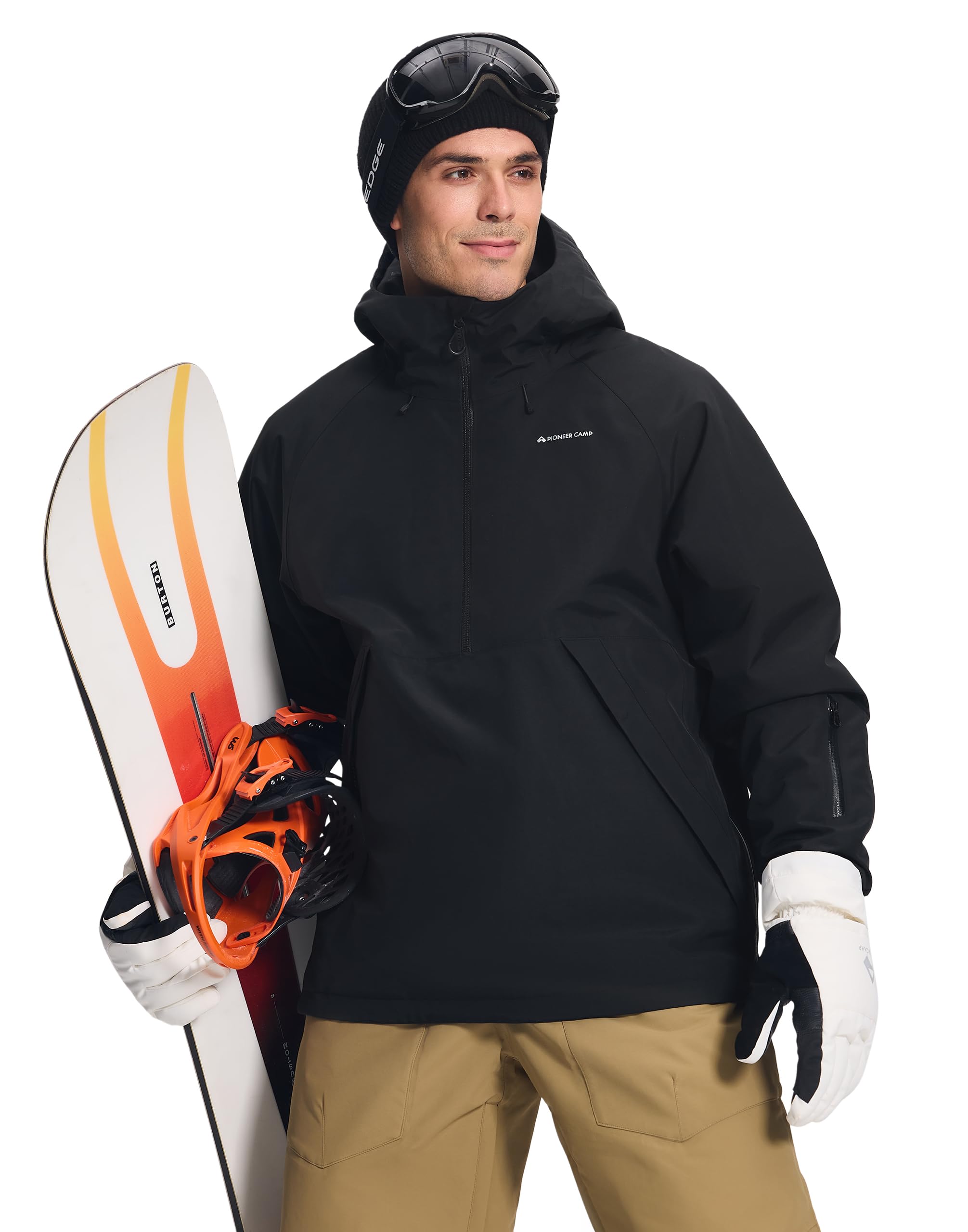
Half-zip anorak with a tested 20,000 mm shell — the highest waterproofing here.
If wet snow is your enemy, start here. The Pioneer Camp carries a tested 20,000 mm waterproof rating, which the listing notes came in above its own hang tag — in plain terms, that is twice the water-blocking ceiling of the Alpine Swiss 10,000 mm shell listed above. A number that high means the fabric resists water pushing through it, so heavy, wet snow sheds off the surface rather than seeping into the seams on a long day out.
It is a baggy half-zip anorak, so the cut is deliberately loose — room for a midlayer and a comfortable range of motion on the board or skis. The insulated construction adds warmth, and the half-zip gives you a quick way to dump heat without pulling the whole thing off. That combination of high waterproofing and insulation is unusual at this tier and makes it the pick for riders who face genuinely damp conditions.
The thing to weigh is that a baggy half-zip is the most forgiving and the least precise fit in this list — great if you want room to layer, less ideal if you prefer a close fit. If your home mountain dumps wet, heavy snow and you want protection to match, the Pioneer Camp brings the highest published waterproofing on this page.
The number that wins: 20,000 mm of waterproofing is double the 10,000 mm Alpine Swiss, and insulation means one jacket handles cold and damp together.
The fit note: baggy is baggy — size with layering in mind rather than for a tailored cut.
Choose this: for wet-snow resorts where you want the highest waterproofing figure on this list plus built-in warmth.
Go another way if: you prefer a close, fitted shell rather than a roomy baggy cut.
7. Oakley Men’s Divisional Recycled Shell Anorak Jacket
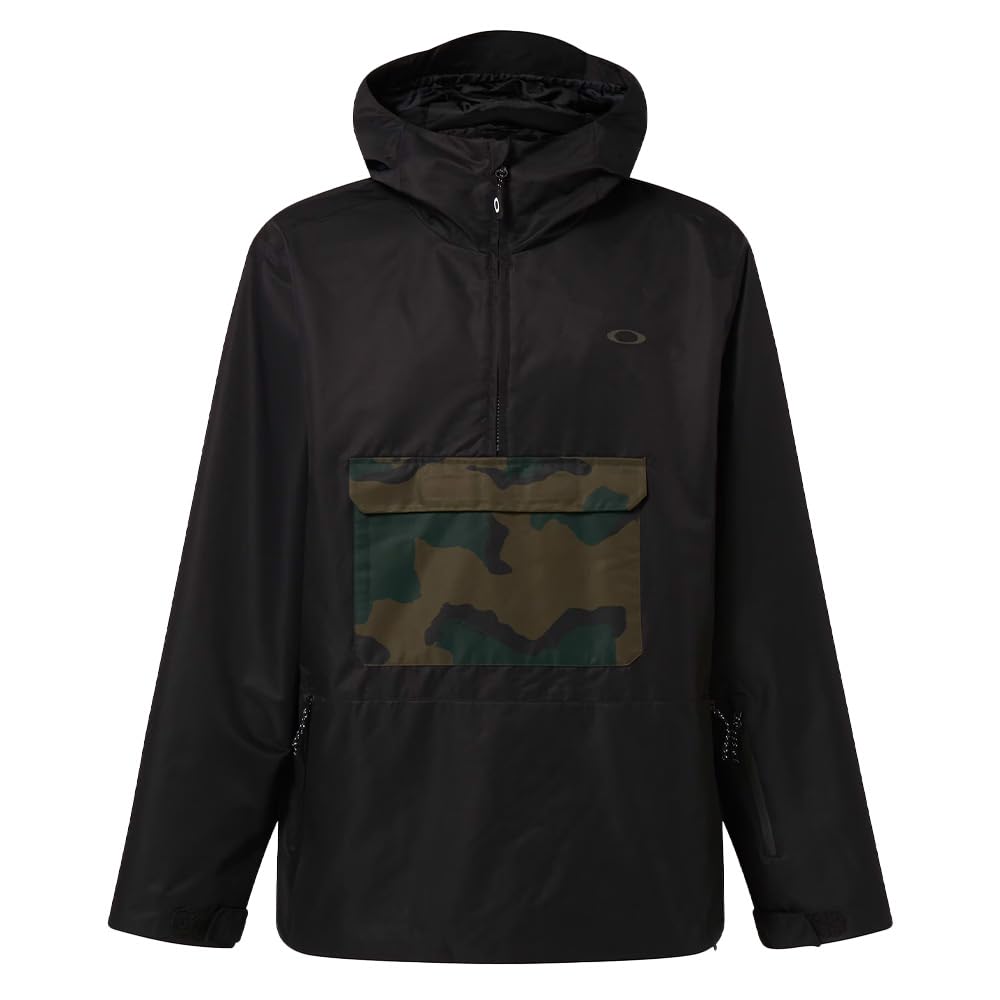
The touring-minded shell that gives a little air on the climb and seals on the descent.
The Divisional RC is built for riders who do the uphill work as well as the lap down. Its shell repels water in snowy sessions while letting air flow on the climb, which is the balance that touring riders need — you sweat on the climb, and you do not want that trapped against your skin when you stop. It is made from recycled polyester, which matters if sustainability is part of how you buy gear.
The snow-sealing and comfort details are all here: critical taped seams over the highest-wear stitch lines, a pant-integrated powder skirt to close the gap at your waist, and an adjustable hood that fits over a helmet. An RFID pass pocket lets the lift reader scan your pass without you digging it out — a small thing you will thank yourself for on every ride. Brushed tricot-lined pockets at the side and front keep your hands warm while you rummage for keys or a phone.
It is a shell rather than an insulated jacket, so pair it with a midlayer according to how cold it is — the upside of that is versatility across conditions. It sits in the premium tier where you are paying for technical detailing and the Oakley name. If you mix skinning up with laps down and want one shell that breathes on the climb and blocks the weather on the way back, this is the one angled at that job.
Climb and descend: airflow on the uphill effort and water repellency on the way down, with a helmet-compatible hood and pant-integrated powder skirt.
The fit and cost note: premium-priced as a shell, and you will want a midlayer for cold days since it carries no insulation.
Worth it for: uphill-touring riders and anyone wanting a breathable, sustainably sourced shell with an RFID pass pocket.
Look past it if: you want insulation built in, since this is a shell only.
8. Burton Men’s Frostner 2L Anorak Jacket
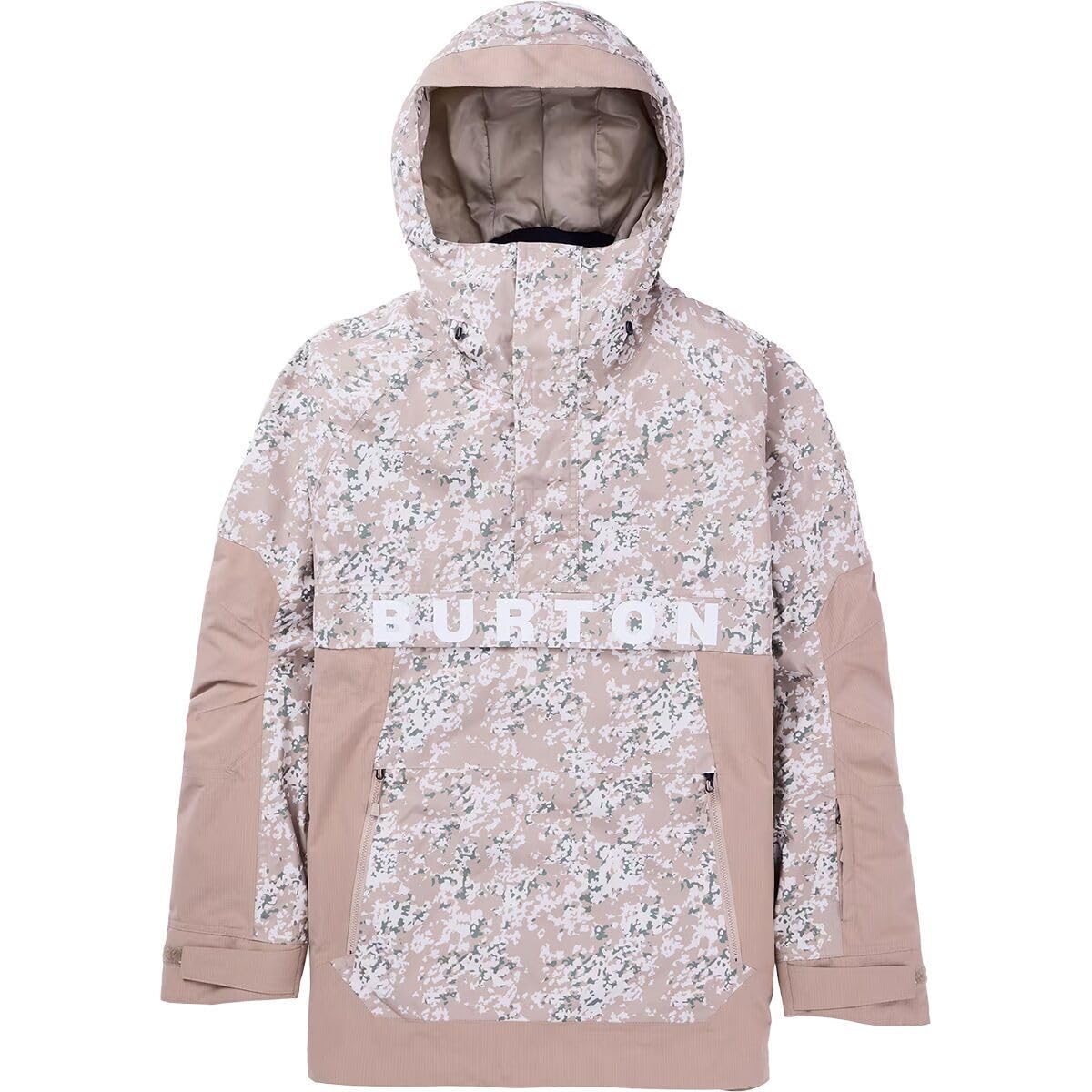
A 10K/10 DRYRIDE shell in a regular fit Burton flags as true to size.
Burton’s Frostner pairs a retro anorak cut with a DRYRIDE two-layer fabric rated 10,000mm/10 — the first number the waterproofing in millimeters, the second the breathability score. That is a solid everyday-resort shell: it seals out foul weather with fully-taped seams while the fabric still lets moisture escape. The Living Lining helps regulate your temperature as you heat up and cool down, so the jacket adapts instead of making you choose between too hot and too cold.
The fit is a highlight — Burton cuts it as a regular fit that runs true to size, neither too tight nor too baggy. That makes it the contrast to the baggy and drop-tail picks above: if you want an anorak without the guesswork of sizing down, this is the one that does what its size chart says. A two-way right-side entry and vent zipper makes the pullover easy to get into and lets you dump heat mid-run.
The storage and warmth details are tuned for cold days: an insulated media pocket keeps your phone’s battery from dying in the chill, a zippered kangaroo pocket has a therma-pocket inside, and there are zippered microfleece hand-warmer pockets plus a zippered pass pocket. A left-side no-snag Pit Zip vent and a helmet-compatible contour hood with front and rear adjustment round it out. It is bluesign approved, meaning the fabric is produced to a reduced-impact standard, and the 10K waterproofing lands well short of the 20K Pioneer Camp — a fair trade for the true-to-size comfort and Burton detailing.
The fit advantage: regular, true-to-size cut — no sizing-down guesswork like the drop-tail and baggy anoraks in this roundup.
Weather ceiling: 10,000mm waterproofing handles resort snow but falls well below the 20,000 mm Pioneer Camp for soaking wet storms.
Right for you if: you want a well-cut, true-to-size 2L anorak with smart pockets and temperature-regulating lining for everyday resort riding.
Choose higher-rated shells if: your days are defined by heavy, wet snow that demands 20,000 mm protection.
9. Oakley Thermonuclear Protection Anorak
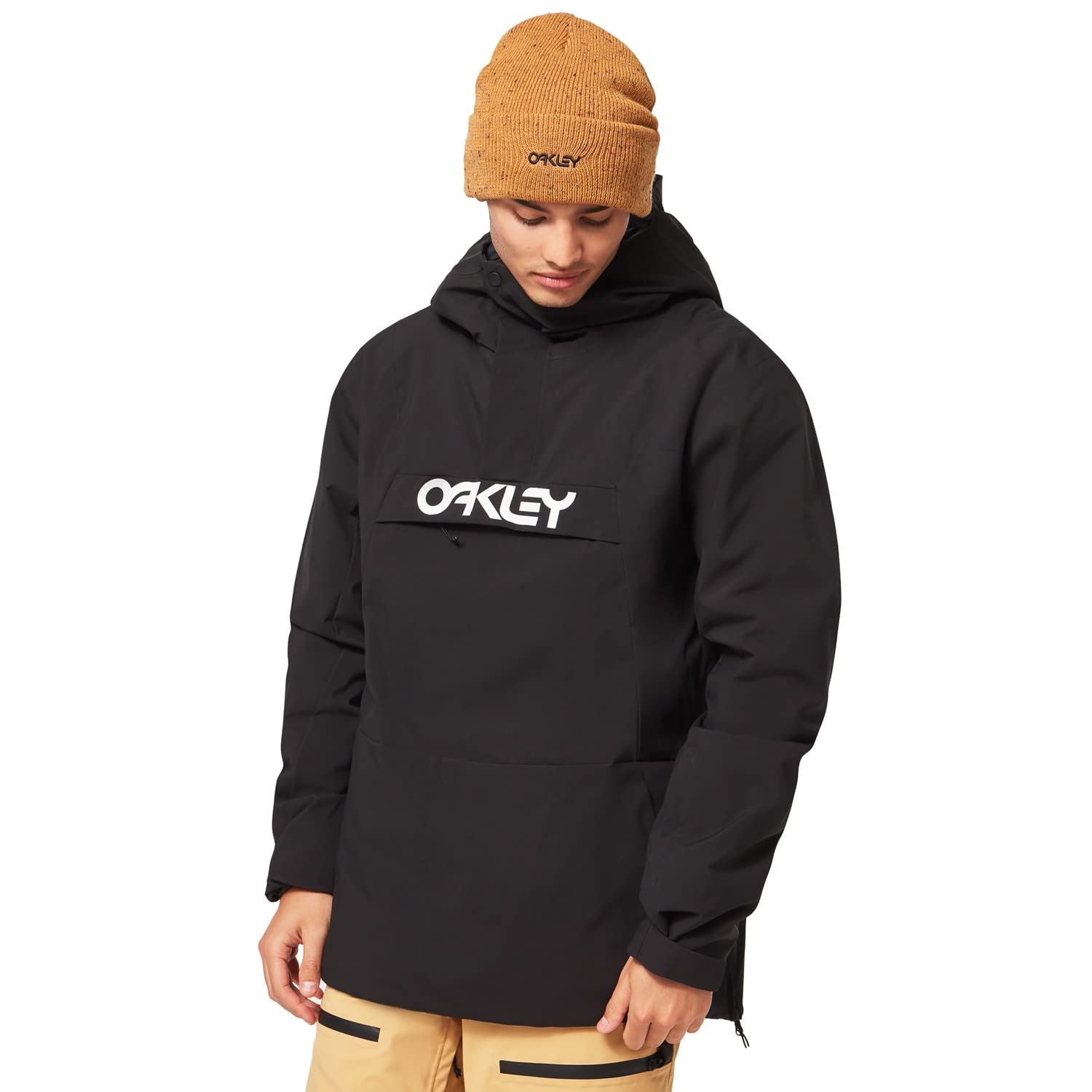
The insulated anorak for riders who want warmth built in, not layered on.
Oakley’s Thermonuclear Protection TBT targets the rider who is tired of assembling three layers before every cold morning. It is an insulated anorak with a water-repellent exterior and taped seams, so it sheds damp weather while the built-in insulation holds warmth for cold-weather activity. The advanced moisture-management fabrication works to keep you from feeling clammy inside, and the intuitive lateral zip opening solves the pullover-in-and-out problem.
What makes it stand out in this lineup is its owner reputation — quality draws the most discussion, with fit and warmth close behind. The insulated build means it is the warmest, ready-to-wear option here, the counterpart to the shell-only picks like the Oakley Divisional that need a midlayer underneath. Its lateral zip makes a normally awkward pullover genuinely civil to put on and peel off on the fly.
The honest trade-off is that it is listed as a unisex-adult fit, so check the size chart against a men’s jacket you already own. And insulation plus a water-repellent finish is not the same as a documented millimeter waterproof rating, so treat it as warm and damp-weather capable rather than a soaking-storm shell. For cold, dry resort days where you want warmth without the layering ritual, it is a strong premium pick.
Warmth, ready to go: insulation and a water-repellent, taped-seam shell mean you are covered without fitting a midlayer.
Mind the cut: listed as unisex-adult sizing, so match it to a men’s size you know before ordering.
The pick for you if: you ride cold, dry days and want a warm, insulated anorak with a lateral zip that is easy on and off.
Look further if: you face soaking wet storms and want a documented 20,000 mm shell.
Know the Specs
Waterproofing in millimeters
Waterproofing is written in millimeters — a measure of how much water pressure the fabric holds before moisture pushes through. A 10,000 mm shell like the Alpine Swiss and Burton Frostner handles ordinary resort snow and light wet weather. A 20,000 mm shell like the Pioneer Camp resists heavier, wetter snow far longer, which is why it leads on that spec here. If your mountain serves up wet, heavy snow, higher millimeters translate directly into staying dry rather than soggy.
Breathability and venting
Breathability, often given in grams of moisture per square meter per day, tells you how fast sweat vapor leaves the fabric — the higher the figure, the less clammy you get on a hard run. The Alpine Swiss lists 5000g/m²/24hr, and the Burton Frostner’s DRYRIDE shell is quoted as 10 at that breathability score. Where the fabric breathes less, vents fill in: pit zips, side zips and arm vents let you dump heat fast on the climb without stripping the whole jacket off.
Shell versus insulated
A shell is a waterproof outer layer with no insulation, and you add warmth with layers under it — the Alpine Swiss, Burton Frostner and Oakley Divisional are shells. An insulated anorak like the Oakley TBT or the Mens Pullover Snowboard Jacket has warmth built in, so one piece over a base layer covers cold days. Shells are more versatile across temperatures; insulated jackets are simpler to wear and warmer straight away.
Powder skirts, gaiters and seams
These are the snow-stopping details. A powder skirt is an elastic band inside the hem that snaps around your waist to seal out snow on deep days, and padded jacket-to-pant interfaces do the same at your back. Wrist gaiters are stretchy inner cuffs, often with thumbholes, that tuck into gloves so snow cannot creep up your sleeve. Fully-taped seams mean tape covers every stitch line where water could leak — a key sign of a shell built for wet weather.
Common Questions
How do I get a pullover anorak on and off easily?
Is 10,000 mm waterproofing enough for skiing?
Should I size down in an anorak ski jacket?
What is a powder skirt and do I need one?
Do I need an insulated anorak or a shell?
Will a ski helmet fit under an anorak hood?
Where should I keep my lift pass in an anorak?
How do I stop snow getting up my sleeves and back?
Are anorak ski jackets good for snowboarding too?
Can I wear an anorak ski jacket off the mountain?
The Bottom Line
For most riders, the men’s anorak ski jacket to beat is the Volcom Brighton Pullover — a retro anorak that leans on 15Ks of waterproofing, taped seams and YKK AquaGuard zips to stay dry, backed by the most owner experience in the group. If wet, heavy snow is your reality and you want the highest waterproofing on this page, the Pioneer Camp brings 20,000 mm. And for cold days when you want warmth built in without the layering ritual, the Oakley Thermonuclear Protection TBT is the insulated pick to reach for.
The one nudge worth acting on: match the waterproof rating to your local snow and check the size chart before you ride — a 20K shell keeps you dry, but a jacket that runs large will still leave you fidgeting on the lift all day.
How we choose
We do not accept paid placement. Every pick is matched to a real buyer and a real use-case; we do not hands-on test units.
Sources
Specifications: manufacturer listings and product documentation. Review insights: verified customer reviews, as of November 2026. Pricing: not shown on this page (it changes often); check the current price via the retailer link.
As an Amazon Associate, Tactical Gear Guy earns from qualifying purchases. This does not affect which products we feature.