Specs are compiled from manufacturer listings and verified buyer reviews and can change over time — please confirm the key details on the product page before buying.
You are not really shopping for a screen or a step counter here. You are buying one thing: that a fall in the bathroom or a wander down the street triggers a call for help fast. The confusion is that the category splits into two very different animals — a self-contained wrist phone that dials your contacts directly, and a monitored system that routes the alarm to a call center that charges every month. Pick the wrong type and you either pay a monitoring subscription you never wanted or find the watch cannot place a call without a paired smartphone.
This guide is built by comparing the manufacturers’ published specifications and the patterns across verified customer reviews, so you get each pick’s real strengths and trade-offs instead of marketing spin.
Below you’ll find the two head-to-head facts that separate the fast performers from the rest, plus which watches call family and which need a monitoring plan first. Here are the picks that make the strongest case for the best medical alert watch.
Top Picks


How To Choose The Best Medical Alert Watch
The first decision is not brand or battery — it is who answers the alarm. Standing in front of the shelf, most people assume every medical alert watch calls 911 the moment something goes wrong. That is the classic beginner mistake in this category, and it is the one that gets people hurt. Some of these watches call a monitored care team through a paid plan. Others call a family member’s phone. Others still require a paired smartphone to place any call at all. Decide the destination of that emergency call before you compare anything else.
The two families of wrist alert
A monitored system routes your button press to a live support representative, then to your emergency contacts. Expect a monthly charge in exchange. ADT Medical Alert Plus and Seculife both work this way, and the Home & WELLNESS co. Stride does too. A direct-dial watch behaves like a tiny wrist phone instead, calling the contacts you program in, with no call center in the middle. The Fajocru watches sit in this group. Neither type is inherently safer — they fail in different ways, so pick the one that matches who lives nearby and how fast help can realistically arrive.
Fall detection is not the same as a button
Automatic fall detection senses a sudden drop and then triggers an alarm. On several watches a countdown runs first so the wearer can cancel a false alarm — COCO gives you 20 seconds, and the Yihou watch uses a cancelable countdown before it alerts your caregiver. A button-only alert depends entirely on the wearer being conscious and able to reach it. If your parent has a history of falls or memory issues, favor a device that acts on its own, and test that alert after setup before you trust it daily.
Water resistance, battery, and where the watch lives
Look for an IP67 (a rating meaning it tolerates dust and brief water immersion) if the watch will be worn in the shower or the yard. An IP67 rating and a battery that survives the day matter more than a fancy face. Battery figures in these listings swing from a single day up to 7 days, and a watch that dies on the bathroom counter is not protection. Charge time matters too, especially for hands that have lost some dexterity — magnetic cables are the friendlier option there.
Side-by-Side Comparison
| Model | Best For | Alert Route | Battery / Charge | Water Rating | Amazon |
|---|---|---|---|---|---|
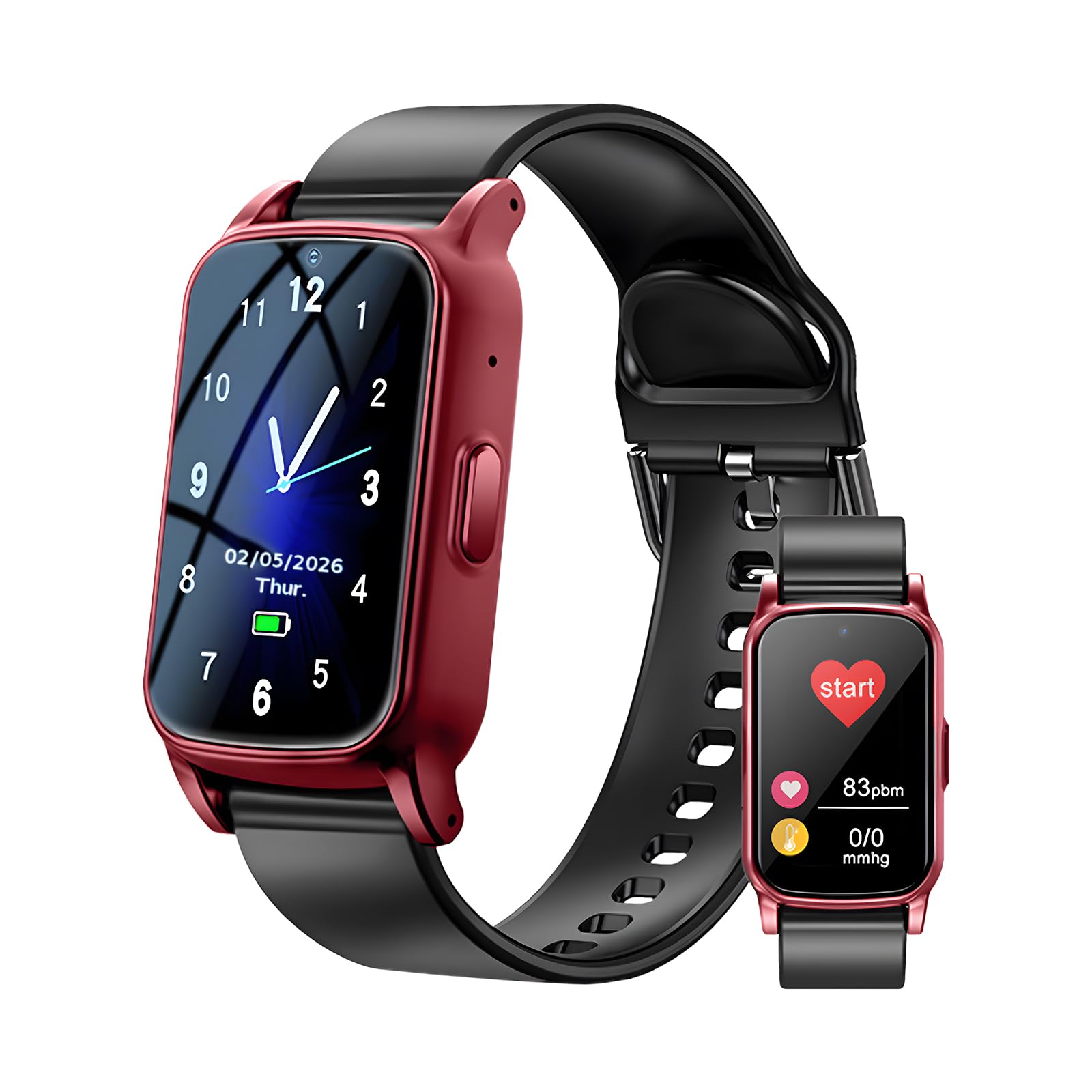
| Fajocru Fall Detection Watch★ Best Overall | Best Overall | Auto fall alert to preset contacts | 600 mAh / 2 hours | IP67 | Amazon |
| ADT Medical Alert PlusMonitored Classic | Monitored home system | 24/7 monitoring center | — / — | Water-resistant bracelet | Amazon |
| Home & WELLNESS co. StrideEasiest Charging | Quick-charging monitored watch | Live support representative | 580 mAh / 1 hour | — | Amazon |
| Seculife Medical Alert Smartband | Direct-to-family alerts | Auto call to selected contacts | 680 mAh / 1 day | IP67 | Amazon |
| Fajocru 4G Video Call Watch | Face-to-face check-ins | Auto fall alert to preset contacts | 600 mAh / 2 hours | IP67 | Amazon |
| COCO Emergency Alert Smartwatch | Reminders and health trends | Emergency Care Team via app | 280 mAh / 4 days | — | Amazon |
| Audar E2 Senior Smartwatch | Long battery and vital trends | SMS, voice, email, platform | 280 mAh / 7 days | IP67 | Amazon |
| No Monthly Fee Fall Detection Watch | Direct 911 calling | One-button 911 call | 480 mAh / 2 hours | Waterproof | Amazon |
Detailed Reviews
1. Fall Detection Watch
The do-everything wrist companion that senses a fall and calls for you, with no monitoring bill attached.
This is the pick for the family that wants help to move on its own, not just when a button gets pressed. The watch watches for a sudden fall and fires an SOS alarm to the emergency contacts you preset — so the call still goes out if the wearer is on the floor and cannot reach the screen. Add real-time GPS through the phone app and a geofence (a virtual boundary you draw around the house or neighborhood) that pings you the moment your parent crosses it, and you have the two features that matter most for someone who wanders. For a household dealing with early memory loss, automatic fall alerts plus geofence pings are the whole reason to buy.
The charging routine is friendly to stiff hands: a magnetic cable snaps on, and a full top-up takes 2 hours on the 600 mAh battery. That is twice the charge time of the Home & WELLNESS co. Stride, which fills in 1 hour — though the Fajocru carries a little more capacity at 600 mAh versus the Stride’s 580 mAh. Worth knowing before you pick between them. The 11-inch rubber band and plastic case keep it light on the wrist, and the large high-contrast touchscreen with a deliberately simple menu suits someone who does not want a computer on their arm.
An IP67 rating means hand-washing and rain are fine, but it is not a dive watch. The honest catch: this is a Bluetooth- and app-dependent device in its core safety chain, so a caregiver has to set up the contacts and confirm the fall alert fires before it can be trusted. Do that once, properly, and the daily routine is just wearing it.
GPS plus fall alert
- Automatic fall detection alerts your preset contacts without a button press
- Real-time GPS plus geofence alerts for wandering
- IP67 water resistance covers hand washing and rain
- Magnetic charging and a simple high-contrast touchscreen
subscription required
- Fall alert and contacts must be configured in the app first
- 2-hour charge time trails the Stride’s 1 hour
- IP67 is splash-grade, not swimming-grade
reach for this if: you want automatic fall response and location tracking with no monitoring contract hanging over the family.
setup is the ask: a caregiver has to pair it, load contacts, and run a test alert before day one.
2. ADT Medical Alert Plus
A live human on the other end, and a range that follows you out to the mailbox.
If your concern is a parent who lives close to family but spends a lot of time alone indoors, this is the model built for that exact setup. Press the alert and you connect to a live support representative, day or night, who then walks your emergency contacts through the situation step by step. The wristband reaches up to 600 feet — enough freedom to move around the house and out into the yard without losing the link. That yard coverage is the practical difference between a device you wear all day and one that lives on a bedside table.
ADT also monitors the home’s temperature and pushes an alert if it rises above 105° F or drops below 35° F — a small feature that quietly matters in heat waves and cold snaps, when an older person indoors may not notice a broken furnace or a stalled air conditioner. The bracelet is described as waterproof, so washing up is not a problem. Weighing in at 1.1 pounds for the kit, it is a fixed home system rather than something you carry to the store.
Here is the trade the buyer needs to see clearly: this requires activation and a monthly agreement billed at /month on quarterly billing before it will work at all. You are paying for a trained human to answer, and that is a different product from a direct-dial watch. If nobody is nearby to respond quickly, that call center is exactly what you want. If you would rather the call go straight to your own phone, look at the direct-dial picks instead.
in-home response system: a monitored response that does not depend on a family member being awake, plus 600 feet of coverage that reaches outdoors.
landline dependency: nothing functions until the paid monitoring agreement is active — this is a subscription product, not a standalone watch.
best fit: a senior who is home most of the day and wants a stranger trained to answer to be the fallback.
not the one if: the plan is to avoid any recurring cost or to send alerts only to family phones.
3. Stride Medical Alert Watch
Looks like an ordinary watch, charges in an hour, and puts a live representative on the line.
Some seniors flatly refuse to wear anything that looks medical. This is the answer to that objection — the case is shaped and finished to pass as a regular wristwatch, so it gets worn instead of left in a drawer. Behind the ordinary face sits a monitored alert button that connects to a live support representative who can help by day or night. GPS tracking and location monitoring round out the safety side. The 4G cellular connection is built in, and a month of service is included in the box so you can test the whole chain before committing.
Charging is where the Stride quietly beats its nearest rival. A full charge takes 1 hour on the 580 mAh battery, versus the 2 hours the Fajocru needs for its 600 mAh cell — and for a device that has to be back on the wrist fast, that hour is the difference between a morning routine and an all-afternoon gap. Daily battery life is listed at 24 hours, so expect a nightly charge as part of the routine.
The catch worth flagging up front: this runs on a monthly fee of with no long-term contract, cancellable anytime. That flexibility is genuinely good, but the cost is ongoing. A tang buckle on a plastic band keeps the fit simple and adjustable, and the whole thing stays light enough to forget you have it on.
go with the stride if: the wearer wants a watch that blends in and you are comfortable with a cancel-anytime monitoring plan.
think twice if: you want zero recurring charges — this one needs its monthly service to reach a representative.
4. Seculife Medical Alert Smartband for Seniors
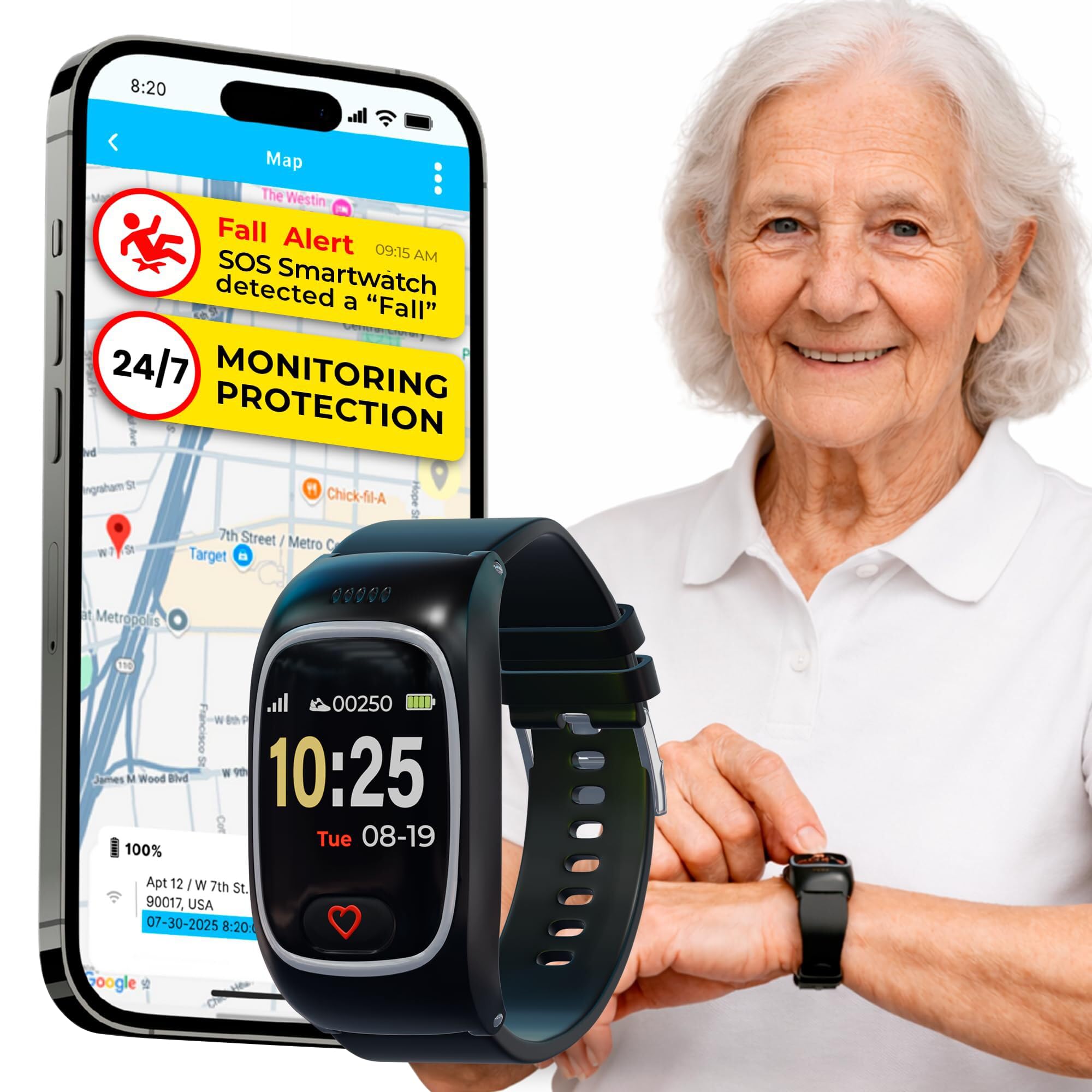
Alerts ring the family directly — no call center, and the biggest battery in the group at 680 mAh.
This is the direct-to-family pick: when the watch detects a fall, or the heart button is held for 3 seconds, it automatically calls the emergency contacts you selected. No middleman, no stranger reading a script — your own people get the call. The 680 mAh battery is the largest in this lineup, and a 4G 5G LTE connection gives it nationwide reach. GPS tracking with geofence zones sends app or SMS alerts the moment the wearer crosses a boundary, which is the feature families of someone with dementia ask about first.
What wins people over is the quality of the build — it is the most-praised thing about this watch by a wide margin, and it shows in daily handling. GPS tracking and call quality earn strong reviews too, and the hands-free auto-answering is a quiet gem: when an approved contact calls in, the watch picks up on its own, so your parent never has to find a button. The generous SOS button and intuitive interface suit someone who has never worn a smart device.
Be realistic about the rough edges. Setup and reliability are the two areas where opinions split — some find pairing easy and smooth, others hit snags getting it configured, so plan to set it up on a calm afternoon rather than the day before you need it. There is a monthly subscription from per month, which covers unlimited fall alerts, live tracking, unlimited voice minutes, and seven-day customer care. The IP67 rating handles rain and hand washing, and battery life is listed at a single day.
smartband form factor
- Fall detection and a 3-second SOS both auto-call your chosen contacts
- Largest battery here at 680 mAh with nationwide 4G 5G LTE
- Auto-answering means no button press to receive a family call
- Geofence alerts land by app or SMS
battery drain
- Subscription starts at per month
- Setup and reliability are the divisive points — expect a patient first session
- One day of battery per charge
pick it for: a household that wants the call to go straight to family and values a big battery and hands-free answering.
skip the rush: give yourself time to configure it and test the fall call before relying on it daily.
5. Fajocru Fall Alert Device
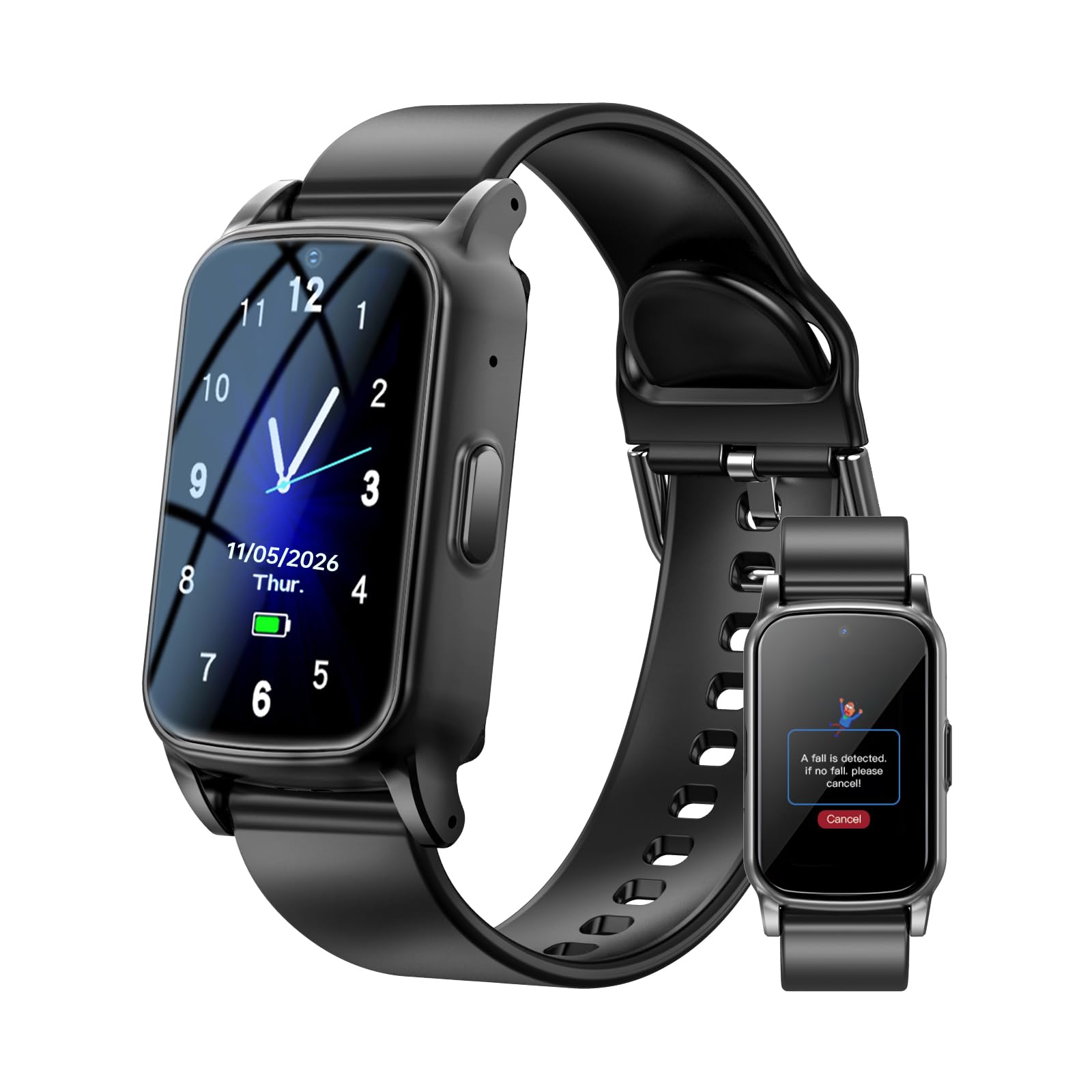
The wrist phone that lets you see your parent’s face, not just hear their voice.
For someone living alone, this watch adds 4G HD video calling so family can see a face, not just hear a voice. Your parent can answer a call and see you — no smartphone required on their end, since it works on iPhone- and Android-compatible setups as a wrist phone. Automatic fall detection still fires an SOS alarm to preset contacts if a fall is sensed, and real-time GPS with geofence zones pings you when the wearer strays outside a safe area. For memory-care families, that combination of a familiar face on the screen and a boundary alert is a real comfort.
Read the fine print on connectivity, because this is where buyers get surprised. The included pre-installed data SIM gives you 1 year of free data service, then /year afterward, and it supports app data only — not calls through a cellular number. For direct calling and SOS calls, you fit your own SIM with VoLTE and data. The SeTracker2 app itself stays free. That distinction is the difference between a smart wrist device and a true phone.
choose this when: video calls and location tracking matter more than a direct 911 line.
go elsewhere if: you need the watch to place cellular calls on its own from the start — that requires adding your own SIM.
6. COCO Emergency Alert Smartwatch for Seniors, BT2-X (Silver)

A four-day battery and remote medication reminders packed into a 1.85-inch screen.
Missed medication sends seniors to the hospital more often than families expect, so remote-scheduled pill reminders are real work. This one lets caregivers set and adjust medication reminders remotely through the CoCo app, and it tracks heart rate, blood oxygen (SpO2), sleep, stress, and breathing as general daily trends. Enhanced fall detection runs a 20-second countdown, then either contacts your Emergency Care Team or lets the wearer tap “Call Now.” A one-touch SOS on the crown means help is a single press away. Four days of battery per charge is the standout spec and the reason it earns a slot here.
The 1.85-inch HD display is easy to read, and the rotating crown plus an AI voice assistant give a senior two ways to navigate without hunting through menus. The zinc alloy case with PVD vacuum plating gives it a dressier look than the plastic-bodied watches in this group. A 280 mAh battery charging in 1.5 hours keeps the routine short. Grey silicone on a 22 mm band keeps it comfortable for all-day wear.
The plain-language caution: appearance and value land well, but everyday function is the contested ground — some users find it does what it says and sets up fairly easily, while others find it less than straightforward for a senior to operate. A 3.0+ average across a large review base tells you this is a device that clicks for some households and frustrates others. Set it up together, do a walk-through of the SOS and the countdown, and you will know within a week whether it fits.
worth it for: a family that wants medication reminders and health trends managed from an app, with 4-day battery life.
second-guess it if: the wearer needs zero learning curve — plan to practice the menus together first.
7. Audar E2 Senior Smartwatch with Fall Detection & SOS

Seven days between charges, backed by a built-in SIM that needs no phone at all.
For a senior who will not carry a smartphone and cannot be relied on to remember a nightly charger, the Audar E2 solves both problems at once. A 280 mAh battery stretches to 7 days with hourly measurements and up to 30 days on standby — no other watch in this list comes close on runtime. A built-in SIM connects directly to low-cost IoT networks in 20+ countries with no roaming charges, so there is no phone, app, Wi-Fi, or Bluetooth required. Remote monitoring and alerts work wherever there is network coverage.
Where it asks you to be careful: functionality, quality, and alarm behavior are the areas where opinions divide, and some report alerts that do not trigger on the watch or attempt a 911 call. Understand that 911 cannot be used as an alert contact — it must route to your designated people. Connectivity is free for the first year, then a annual subscription, and the 10 included wellness reports are followed by optional ones billed at each. Also calibrate with a blood pressure cuff (not included) for more dependable readings.
SOS button combo: 7 days of runtime and a built-in SIM that works without a paired phone in 20+ countries.
fiddly setup: alerts route to designated contacts, never to 911 — and connectivity renews at a year after the first.
fits best: a low-tech wearer who will not manage a smartphone and needs the longest possible gap between charges.
look elsewhere if: you want the watch to dial 911 directly — this one contacts your own designated people.
8. No Monthly Fee Fall Detection Medical Alert Watch

One button, one call to a 911 operator — the most direct emergency line on this list.
If your goal is to bypass family and call the professionals directly, this is that device. Press a single button and you are talking to a 911 operator from your wrist. Automatic fall detection will call 911 on its own when it senses a fall, using any available 2G, 3G, or 4G cellular tower. That dual path — self-triggered and manual — is why it earns a spot for someone whose biggest fear is lying on the floor with nobody nearby. A 72-hour battery rating gives three full days of wear between charges on the 480 mAh NiMH cell, which is a healthy margin for a device on your wrist around the clock.
A 2-hour charge tops it back up, and the silicone band and buckle keep the fit secure through the day. Fully waterproof means you can shower and even swim with it, which no other watch in this lineup claims — the IP67 picks handle splashes and rain, not a pool. For someone who likes the water or takes long showers alone, that is a concrete advantage.
The catch is the one you would expect on a direct-911 device: it arrives as the watch and charging cable, and the expanded features require buying a SIM card and a subscription separately. That means the headline “one button to 911” depends on you finishing the setup with cellular service. Plan for that extra step, and confirm coverage in your area before you count on it.
the right call if: you want the shortest path to a real 911 operator and full swim-grade waterproofing.
factor in: a SIM card and subscription purchase are needed to open up the cellular calling the watch is built around.
Know the Specs
Alert route and monitoring plans
The alert route decides who answers and what you pay. A monitored system like the ADT sends your press to a live support representative through a required monthly agreement. A direct-to-family watch like the Seculife auto-calls your chosen contacts, also under a monthly subscription. A no-fee wrist device calls your own people or 911 with no monitoring charge, though some still need a SIM purchase. Match the route to who can realistically respond, then budget for the plan.
Battery capacity and charge time
Battery figures here run from a single day up to 7 days, so this spec decides how often the watch sits on a charger instead of a wrist. Charge time ranges from 1 hour to 2 hours in this group. A dead watch protects no one, so match the listed runtime to how reliably the wearer will put it on the charger. A magnetic cable fits stiff hands better, and a longer runtime suits someone who will forget the charger.
Fall detection and false alarms
Automatic fall detection senses a sudden drop and triggers an alert without a button press. Several watches run a cancelable countdown first — COCO uses 20 seconds — so the wearer can stop a false alarm. A button-only SOS relies on the wearer being conscious and able to reach it. Test the fall alert after setup, because the feature is only useful if it actually fires when it should.
IP ratings and water resistance
An IP67 rating means the watch tolerates dust and brief water immersion — good for hand washing and rain, not swimming. Some watches are described simply as waterproof, and one claims full swim-grade use. Pick the rating to fit the wearer’s routine. If showers or the pool are part of the day, choose accordingly; if the watch rarely leaves the wrist indoors, IP67 is more than enough.
Common Questions
Does a medical alert watch call 911 automatically?
Do I need a monthly subscription to use these watches?
Will these watches work without a smartphone nearby?
Can a senior wear a medical alert watch in the shower or pool?
How does fall detection avoid false alarms?
How accurate is the GPS tracking on a medical alert watch?
How long does the battery last on a medical alert watch?
Can a medical alert watch detect a fall if the wearer is unconscious?
Is a monitored alert watch better than a direct-dial watch?
How do I set up a medical alert watch for my parent?
The Bottom Line
The strongest all-around pick for most families is the Fajocru Fall Detection Watch — it senses a fall, fires the SOS to your preset contacts, tracks location with geofences, and carries an IP67 rating, all with no monitoring contract. If you would rather a trained human answer the call, the Home & WELLNESS co. Stride adds live support and the fastest 1-hour charge in the group. And for a parent who will not carry a smartphone, the Audar E2 brings a built-in SIM and 7 days of runtime. Whatever you choose, set up the contacts and run a test alert before the first real day of wear — a safety watch is only as good as the one practice drill you do together.
How we choose
We do not accept paid placement. Every pick is matched to a real buyer and a real use-case; we do not hands-on test units.
Sources
Specifications: manufacturer listings and product documentation. Review insights: verified customer reviews, as of November 2026. Pricing: not shown on this page (it changes often); check the current price via the retailer link.
As an Amazon Associate, Tactical Gear Guy earns from qualifying purchases. This does not affect which products we feature.