Specs are compiled from manufacturer listings and verified buyer reviews and can change over time — please confirm the key details on the product page before buying.
You have a limited number of pounds on your back, and every ounce you spend on a cooler is an ounce you cannot spend on food, water or a sleeping bag. That is the whole problem in one sentence. A soft-sided cooler with shoulder straps solves it better than a rigid ice chest, because the load rides on your back instead of hanging off one hand. This guide covers the nine soft coolers that make the most sense for a backpacking trip, sorted by how much cold they hold, how they carry, and what they weigh down your spine.
This guide is built by comparing the manufacturers’ published specifications and the patterns across verified customer reviews, so you get each pick’s real strengths and trade-offs instead of marketing spin.
Weight, capacity and how long ice actually lasts are the three numbers that decide whether a cooler earns a place in your pack. Below you will find each one measured against the others so you can pick once and stop shopping for lightweight soft coolers for backpacking trips.
Top Picks


How To Choose The Best Lightweight Soft Coolers for Backpacking Trips
Most people buy their first backpacking cooler by picking the biggest can count they can afford. That is backwards. On a trail, a cooler is a compromise between three things that fight each other: how much cold it holds, how much it weighs empty, and how comfortably it rides on your back for miles. Miss that balance and you haul dead weight or drink warm water on day two.
Weight empty versus weight loaded
The empty weight is the number printed on the spec sheet, and it only tells half the story. A cooler that weighs 0.74 kg empty but holds 20.5 liters will be far heavier on your shoulders than a 1.75 kg bag stuffed with a single lunch. Look at empty weight first, then ask how much of that space you will actually fill. For a two-night trip, a 9-liter bag packed tight usually beats a 20-liter bag packed half full, because trapped air inside a cooler is dead space that melts your ice faster.
Ice retention claims and what they assume
A “24-hour” or “30-hour” cold rating is measured with the cooler full and closed. The moment you open it on a windy ridge to grab a snack, that clock resets. Thicker foam, a fully insulated lid and a closure that seals tight are what actually buy you hours. Vinyl shells and closed-cell foam liners hold cold noticeably longer than thin polyester walls, and that difference shows up in the first 12 hours, not the last.
Strap systems for real hiking
Two padded shoulder straps distribute weight across your back and leave your hands free for trekking poles or a fishing rod. A single shoulder strap is fine for a walk from the car to the beach and miserable after the second mile. Ventilated back panels matter too — a cooler pressed flat against your spine traps sweat, and a soaked back on a cold morning is its own problem.
Closures, leaks and the mess factor
Melted ice finds every gap. A welded, leak-proof liner keeps water inside the bag instead of dripping down your back. Zipperless roll-top designs remove the most common failure point entirely, while heavy-duty zippers with oversized pulls survive years of sandy, salty hands. Whatever you choose, plan on draining the cooler at camp rather than carrying meltwater up a mountain.
Side-by-Side Comparison
| Model | Best For | Capacity | Empty Weight | Cold Rating / Key Spec | Amazon |
|---|---|---|---|---|---|
| Corkcicle EOLA Insulated Cooler Backpack★ Best Overall | Day hikes and beach runs with wine or cans | 12 cans or 5 wine bottles | 1.75 kg | Neoprene insulation, leak proof | Amazon |
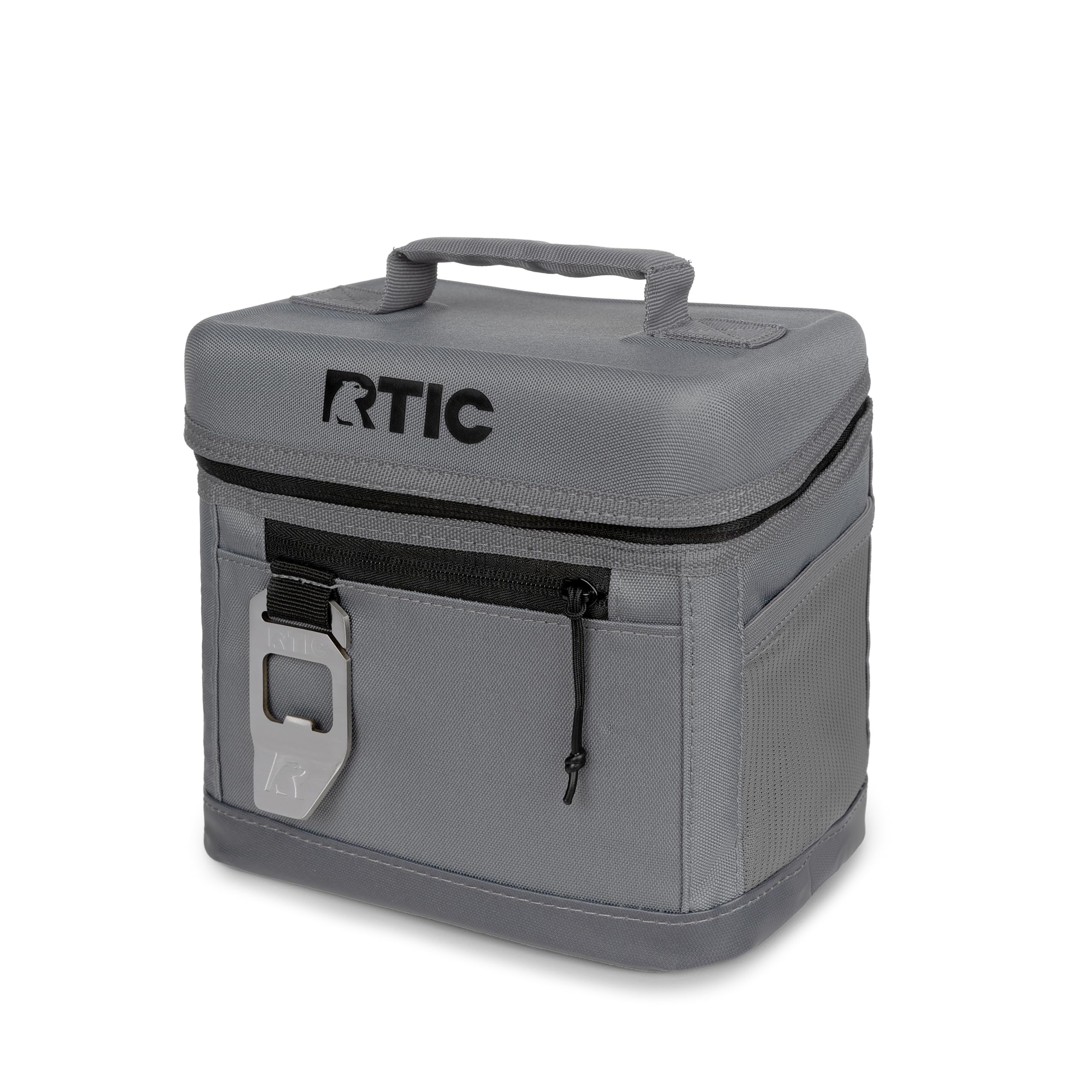
| RTIC 6 Can Everyday CoolerBest Compact Pack | Short solo trips and lunch-sized loads | 5.5 quarts | 1 pound | Closed foam insulation, collapsible | Amazon |
| Amazon Basics Insulated Cooler BackpackBest Capacity | Group trips with a big drink haul | 20.5 liters | 0.74 kg | PEVA foil insulation, water-resistant | Amazon |
| Coleman Pro Soft Cooler | Tailgates and basecamp cold storage | 15.8 quarts | — | 30 hours cold, reinforced base | Amazon |
| Hydro Flask Carryout Cooler 15 L | All-day cold with an ice pack | 15 liters | — | Welded leakproof liner, lifetime warranty | Amazon |
| Stanley All Day Madeleine Backpack Soft Cooler | Family outings and carry-on duty | 14 quarts | 3 pounds | Leak-resistant liner, BPA-free | Amazon |
| ICEMULE Jaunt Collapsible Backpack Cooler | Wet trails, kayaks and river trips | 9 liters (10 cans + ice) | — | 24+ hours cooling, 100% waterproof | Amazon |
| Bison Coolers Softpak Series | Hot-weather durability and rough handling | 5 pounds capacity, 12 cans + ice | 2 pounds | 24+ hour ice retention, 1000 denier shell | Amazon |
| AO Coolers Stow-N-Go Canvas Soft-Sided Cooler | Fitting under seats in trucks, boats and RVs | 13.42 liters | 3.5 pounds | 24-hour ice retention, YKK zippers | Amazon |
Detailed Reviews
1. Corkcicle EOLA Insulated Cooler Backpack
Our pick — 4.5+★ from 250+ verified ratings; the strongest balance of quality and price.
The cooler that carries five wine bottles on your back and looks like a daypack doing it.
If your trip ends at a picnic table or a beach blanket rather than a summit, the EOLA is the one that gets out of your way. It holds 12 cans or 5 full-size wine bottles inside a food-safe liner, so you can pack a real spread instead of a sad sandwich. The neoprene insulation (a stretchy rubber-like foam that traps cold against the contents) is the reason drinks stay chilled for hours rather than minutes.
What wins people over is the build quality — it is the thing owners come back to praise above everything else, and the appearance runs a close second. The Black Neoprene finish is the rare cooler that does not look like a cooler. Adjustable padded shoulder straps make the hands-free carry genuinely comfortable, and the rear zippered pocket swallows keys and a phone. Its 4.5+ star average across 200+ ratings is the highest in this lineup.
The honest catch is weight. At 1.75 kg empty, the EOLA is a full 2.4 times heavier than the Amazon Basics pack in this list, and it swallows 14 inches in every direction (14″D x 14″W x 14″H). That bulk is fine on a two-mile walk into a campsite and less fun on a long climb. A few buyers also note the leak-proof seal is not absolute once you really load it with loose ice.
What carries the day
- Holds 12 cans or 5 full wine bottles in a food-safe liner
- Neoprene insulation holds cold for hours on end
- Padded adjustable straps leave both hands free on the trail
- Rear zipper pocket keeps phone and keys off the ground
Where it asks for patience
- 1.75 kg empty is heavy for a long approach
- 14-inch cube shape eats pack space in a larger bag
- Loose ice can find its way past the seal on a hard shake
Reach for it if: your trip is a day hike, a tailgate or a beach day where comfort and looks count as much as cold.
Leave it home if: you are counting every ounce on a multi-day thru-hike — the 1.75 kg empty weight will cost you.
2. RTIC 6 Can Everyday Cooler, Soft-Sided Collapsible
At one pound empty, this is the cooler you forget you packed until you want a cold drink.
For a solo overnight where cold drinks are a treat and not a mission, the RTIC 6 Can is the least annoying thing you can strap to a pack. It weighs one pound, collapses down into its own lid when empty, and carries a removable stainless steel bottle opener so you never dig through a stuff sack looking for one. Closed foam insulation (dense foam sealed inside the walls) keeps a lunch and a few drinks cold all day.
What buyers consistently like is how well it works as a lunchbox — the quality and temperature retention both land solidly positive, and the multiple pockets inside and out give napkins, silverware and keys their own space. Just know the box is honest about size: it holds 5.5 quarts, and the spec is a 2.9x gap from the 15.8-quart Coleman Pro. Size and capacity draw genuinely split opinions, so go in expecting a six-can bag, not a family cooler.
The dimensions back that up: 6.34″D x 8.9″W x 7.96″H means it slides into a side pocket of a big pack or hangs off a strap without swinging. If you are packing for two people with food and ice, this will feel cramped fast. Pick it for the solo trip and the day hike, and size up for anything bigger.
The weight math: one pound empty with a collapsible body makes this the most packable option here, and the removable bottle opener is a small touch that earns its keep on every trip.
The size reality: 5.5 quarts is a solo lunch and a few cans, so treat the small footprint as the feature it is and plan food separately.
The right call for: solo hikers and day-trippers who want cold drinks without paying in pack space.
Look elsewhere when: you need to feed a group — the six-can capacity runs out fast.
3. Amazon Basics Insulated Cooler Backpack
Twenty-point-five liters of cold on your back, and it weighs less than a full water bottle.
When four people are splitting the drinks and you drew the short straw, this is the bag that makes the job survivable. The empty weight is the real headline: 0.74 kg, which makes it the lightest pack in this whole lineup.
The carrying setup is what turns a heavy load into a manageable one. Padded shoulder straps and a ventilated back panel (a mesh section that lets air move between the bag and your spine) keep things tolerable over a few miles. Two mesh side pockets take water bottles, and two front zipper pockets handle accessories. Cooling performance is what owners praise most, and the temperature retention backs it up on long summer days.
Here is the trade-off, and it is worth knowing before you load it. The leak-proof claim is the one split subject — melted ice water has a habit of seeping through on some units, especially when you are generous with loose ice. Use a sealed ice pack or double-bag your ice and the problem mostly goes away. The water-resistant, dirt-proof exterior wipes clean easily either way.
Reasons it earns the space
- 30-can, 20.5-liter main compartment handles group drink duty
- 0.74 kg empty — the lightest bag reviewed here
- Ventilated back panel keeps the carry from turning into a sweat bath
- PEVA foil liner holds cold for hours
The honest caveats
- Melted ice can seep through the liner on some units
- Fully loaded, 30 cans becomes a genuinely heavy carry
Built for: group camping trips where one person hauls the drinks and the rest haul the tents.
Think twice if: you run loose ice — pack sealed ice packs instead and the liner behaves.
4. Coleman Pro Soft Cooler, 16/24-Can Options
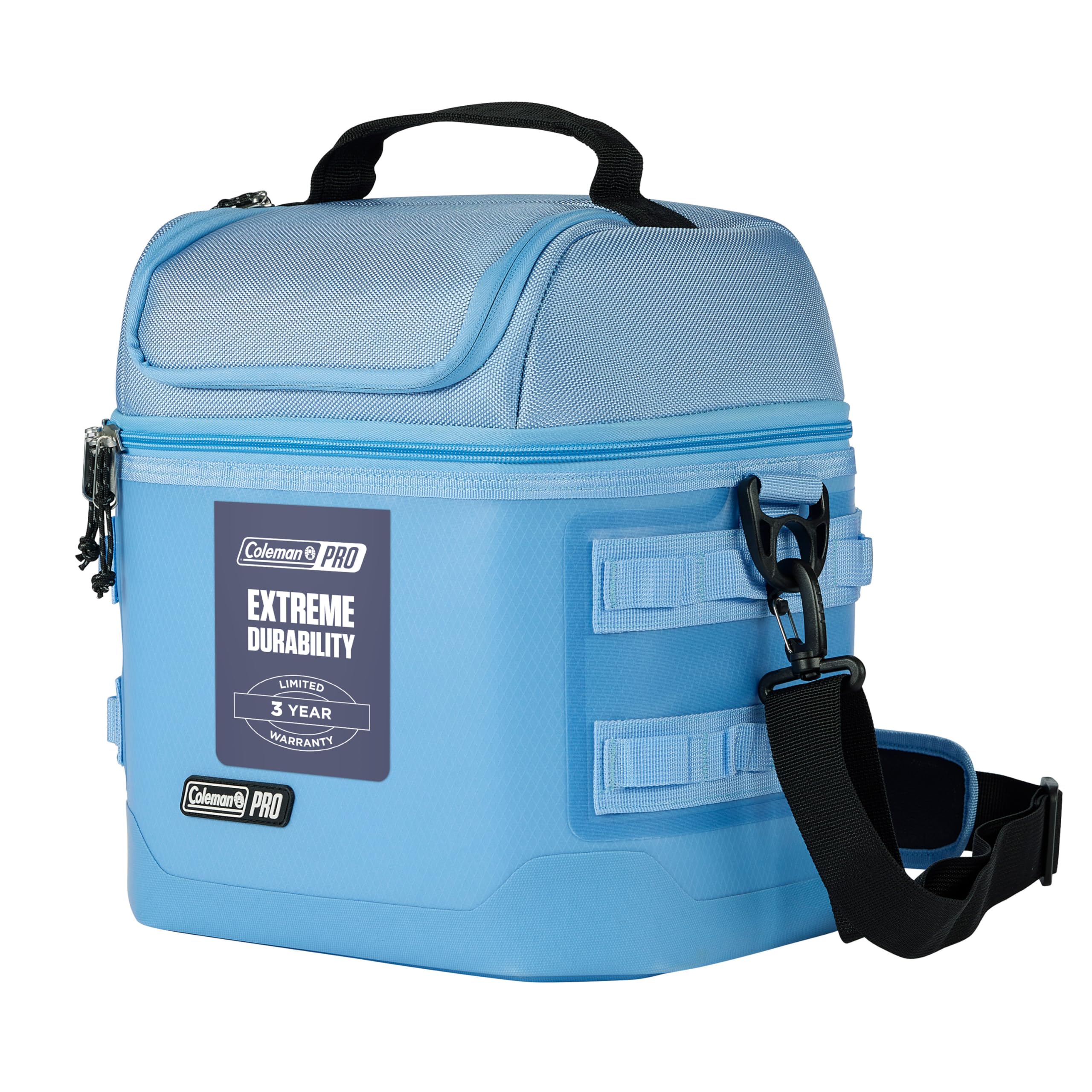
Thirty hours of cold in a bag with a reinforced base and a three-year warranty.
If your trip includes a full day away from the car and you want ice still rattling at sunset, the Coleman Pro is the answer on paper. It rates 30 hours cold thanks to a fully insulated lid and body, and it holds 16 cans without ice in a 15.8-quart body. That is a 2.9x capacity gap over the 5.5-quart RTIC, which is the difference between a solo lunch and a group cookout.
The build is where the “Pro” label earns its place. A reinforced base takes the abrasion of gravel and tailgates, resilient polyester handles wear, and a padded strap lets you carry a loaded cooler without the strap digging in. The oversized zipper is there to reduce snags over years of use — and the 3-year limited warranty is a long promise for a soft bag. Buyers describe the construction as heavy-duty, and the size as exactly right for 16 cans.
The zipper is also the one recurring complaint. Some units arrive stiff or occasionally balk mid-zip, so give it a gentle, straight pull rather than yanking it around a corner. Otherwise this is a cooler built to outlast a few seasons of abuse, and the rugged materials back that up.
Cold-hour proof: the 30-hour rating plus a fully insulated lid and body is what puts this ahead of the shorter-rated bags in the list for a full day out.
The zipper note: an oversized pull reduces snags over time, but treat the track with care and it will treat you well.
Ideal for: tailgates, basecamps and all-day outings where you need ice to survive from morning to evening.
Consider another bag if: you need to collapse it flat — the rugged body does not fold down like the RTIC.
5. Hydro Flask Carryout Cooler, 15 L
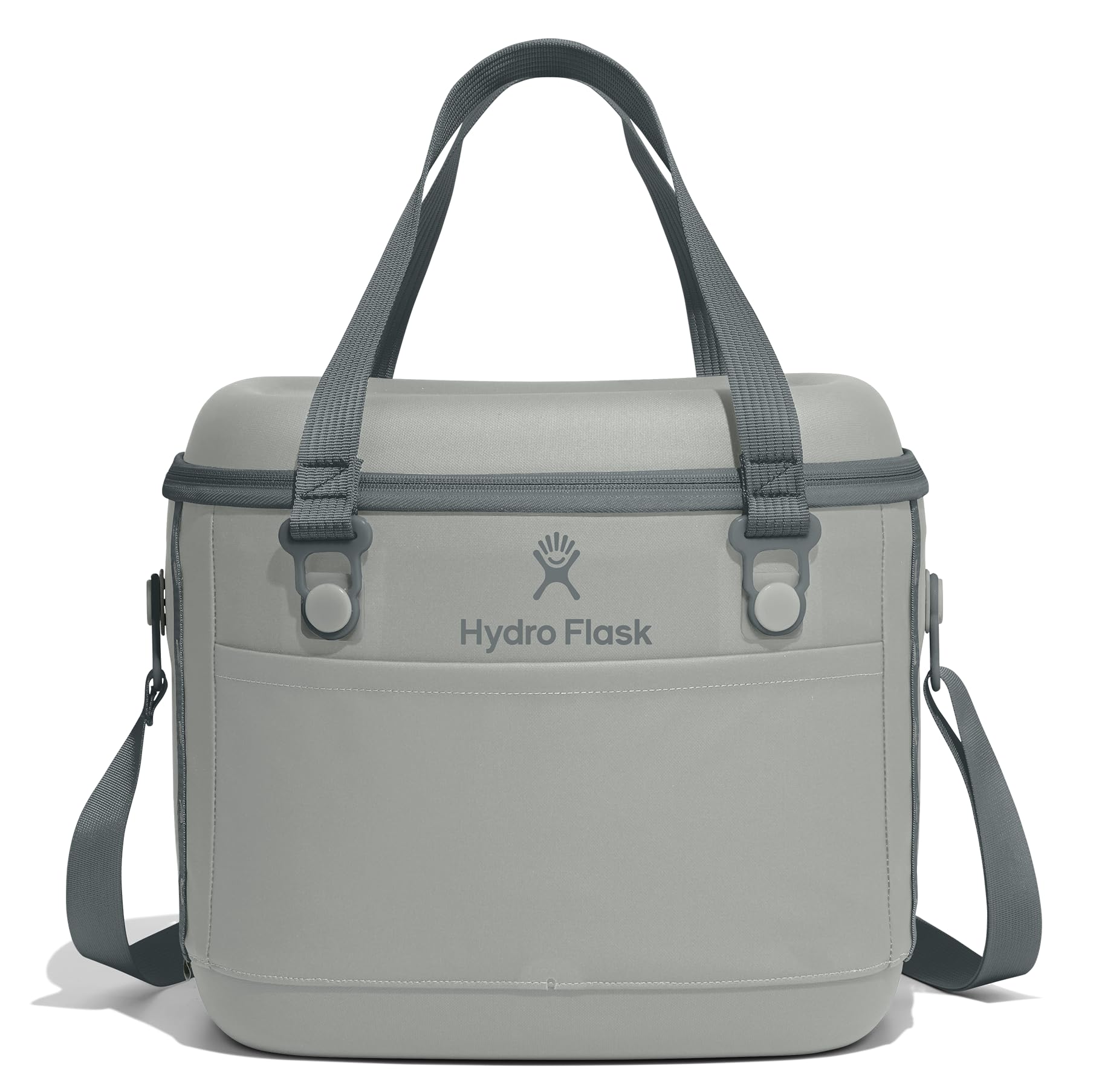
A compression-molded 15-liter body with a welded liner and a strap system you can strip down.
The Carryout is for the person who wants a cooler to feel like a well-made piece of gear, not a plastic sack. The main body fabric is 100% recycled polyester with a durable coating, and the welded, leakproof liner (a liner sealed at the seams so water has nowhere to escape) handles melted ice without drama. A lifetime warranty backs the whole thing, which tells you what Hydro Flask thinks of its own build.
You get 15 liters of space that keeps food cold all day when you add an ice pack — that “when used with an ice pack” part matters, because the insulation holds cold rather than making it. The FlexClip strap system lets you remove or swap the handles and straps, so you can carry it by hand to the beach and sling it on your shoulder for the walk in. Buyers praise the quality and spaciousness most, and the 15-liter capacity fits everything from lunch to a family picnic.
Where it earns its keep on a backpacking trip is the flexibility. The compression-molded body holds its shape when loaded but stays lighter than a rigid cooler, and the removable straps mean you can reconfigure the carry depending on the hike. Stack it against the Amazon Basics pack and you are giving up 20.5 liters of capacity and some empty weight advantage for build and warranty. Fair trade if durability is your priority.
Choose it for: trips where a leakproof liner and a lifetime warranty matter more than raw capacity.
Pass on it if: you need to feed a crowd — 15 liters will not stretch that far.
6. Stanley All Day Madeleine Backpack Soft Cooler, 20 Can

A 20-can backpack that doubles as a carry-on before it ever holds a drink.
Stanley built this for the family outing rather than the solo summit push, and it shows. It packs 20 cans into a 14-quart body and keeps them chilled for hours, with a leak-resistant liner and a BPA-free interior. The winged bear snap-lock closure keeps the whole thing shut on the move, and front and back zipper pockets plus a discreet valuables pocket keep your phone and wallet out of the ice.
The clever bit is the travel trick: pack clothes in it as a carry-on, then convert it to a cooler once you land. That is a genuinely useful feature for a road trip or a fly-in camping weekend. Cooling performance is what owners talk about most, and the Stone color and sleek looks get a lot of love. Stretch-mesh side pockets take extra gear, and it carries a lifetime warranty under Stanley’s built-for-life promise.
Two things to know. It weighs 3 pounds empty, so this is a car-to-campsite bag rather than a thru-hike bag. And the value conversation is genuinely split — some buyers feel the price is fair for the Stanley name and build, others less so. If you want a cooler that pulls double duty as luggage, that trade makes sense.
The dual-role advantage: carry-on clothes hauler one day, 20-can cooler the next — a rare cooler that earns pack space on the flight home too.
Weight and price honesty: 3 pounds empty and a price some find steep, so this is a car-camping pick, not a long-trail one.
Best suited to: families heading to a campsite or beach with the car close by.
Skip it for: long backpacking approaches — 3 pounds empty is a real cost on your back.
7. ICEMULE Jaunt Collapsible Backpack Cooler, 9 L
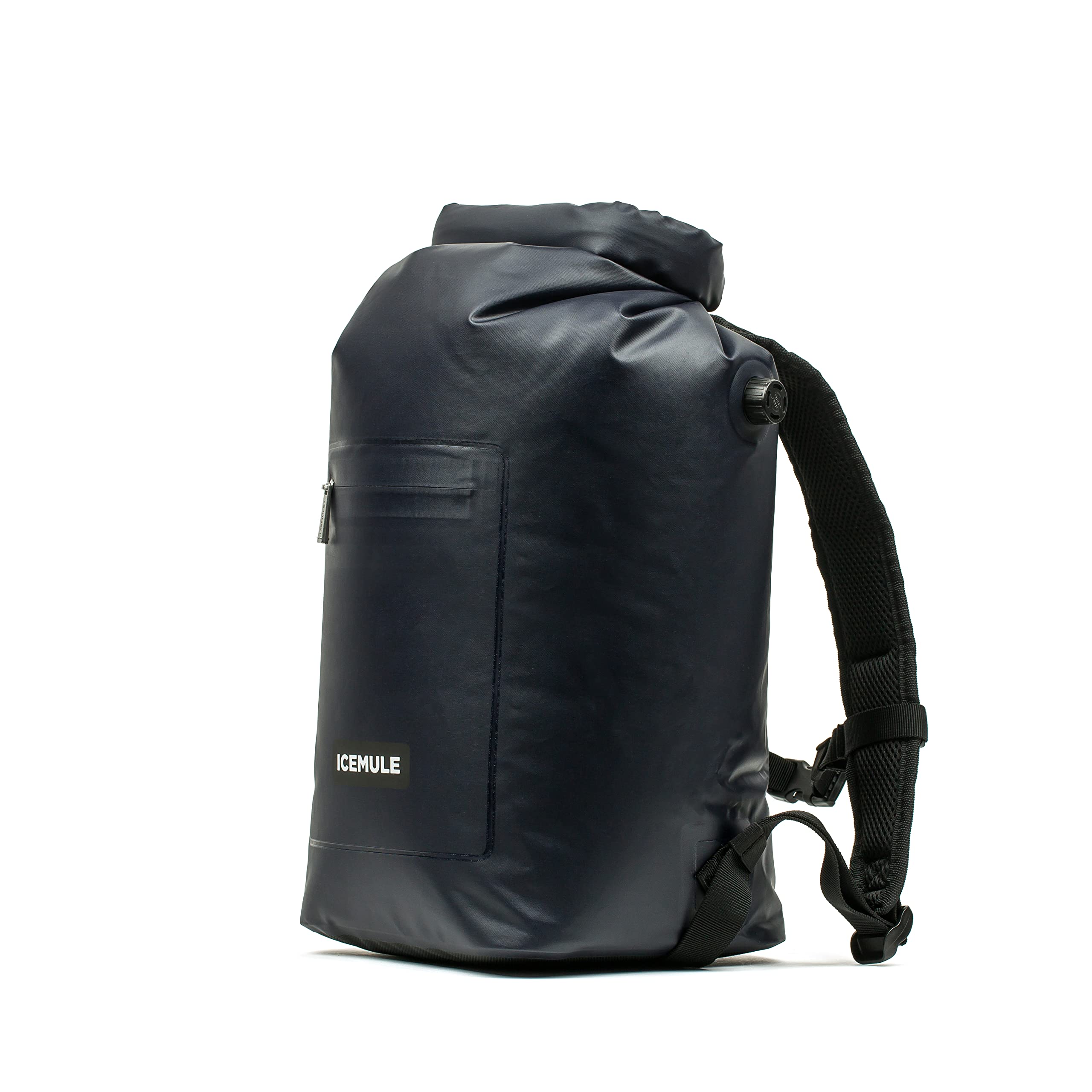
A waterproof, buoyant cooler that floats beside your kayak and rolls up when empty.
Most soft coolers are water-resistant at best. The Jaunt is welded and zipperless, which makes it genuinely waterproof — and it floats. That makes it the pick for river trips, kayak launches and rainy ridgelines where the ground is wet and so is everything you set down. The IM AirValve lets you add air to the insulation layer so it keeps floating even when full.
Cold performance is rated at 24+ hours thanks to PolarLayer insulation (a proprietary foam layer built into the walls) and the MuleSkin exterior and interior. It holds 9 liters, or 10 cans plus ice, inside a body that measures 7″L x 7.50″W x 17″H. Two padded, ventilated straps leave both arms free for a fishing pole or a paddle, and the whole thing rolls up small when empty. Owners rate its cooling above all else, and several say it outlasts far pricier coolers.
Two honest notes. The zipperless closure has a split record on leakage — some report not a drop, others find meltwater working out the top, so pack ice in a bag. And the price draws mixed feelings for a 9-liter bag. The compact size, though, is the point: this is the cooler that disappears into a pack until you need it.
Why paddlers and hikers like it
- 100% waterproof, welded, zipperless design
- Floats beside a kayak, even fully loaded
- 24+ hours of cooling from PolarLayer insulation
- Rolls up and disappears into the pack when empty
What to plan around
- Zipperless closure lets meltwater escape on some loads
- 9 liters is a tight fit for two people’s food and drinks
- Some buyers find the price steep for the small size
Made for: wet environments — kayaks, rafts, river banks and rainy camps.
Not the pick if: you need dry ice retention above all — the zipperless top lets water out and in.
8. Bison Coolers Softpak Series, Made in USA
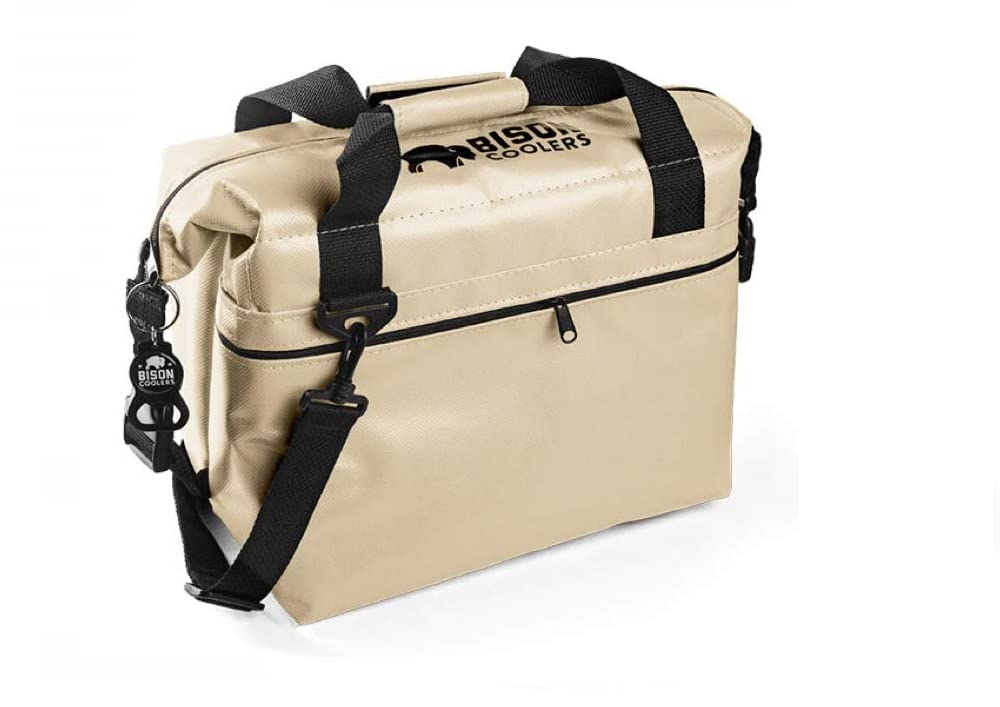
Near an inch of insulation wrapped in a shell that shrugs off rocks, thorns and sun.
Bison builds this one to take abuse. The shell is a heavy-duty 1000 denier vinyl (a thick, tightly woven fabric measured in denier — a unit of yarn weight), and Bison rates the shell to resist 375 pounds of tearing and adds UV protection against fading.. The sand color hides trail dust. Nearly an inch of insulation is rated to hold ice up to 24 hours at 120°F.
The 12-can version carries 12 cans plus 5 pounds of ice in a 13″ x 8″ x 11″ body, and it comes with a built-in bottle opener. If you damage or dislike it, there is a 30-day trial and a 2-year warranty behind it. The molle attachments (webbing loops for clipping on extra gear) are a favorite with buyers who want to lash a light or a knife to the outside. Ice retention is its standout trait, with several owners reporting ice still solid after two days.
The trade-off is a 2-pound empty weight and a stiffer, more rigid body than the soft collapses of the RTIC or ICEMULE. It does not fold flat, so it takes up pack space even when empty. On the plus side, that same stiffness protects the contents and shrugs off the kind of treatment that would wear a thin polyester bag through in a season.
The durability story: 1000 denier vinyl, a claimed 375-pound tear resistance and UV protection make this the bag you take into brush, gravel and desert sun without a second thought.
The space cost: it does not collapse, and 2 pounds empty is real weight — commit only if you value toughness over packability.
Right for you if: your trips involve rough terrain and hot weather and you want gear that survives both.
Better to skip if: pack space is tight and you want a bag that folds flat when empty.
9. AO Coolers Stow-N-Go Canvas Soft-Sided Cooler
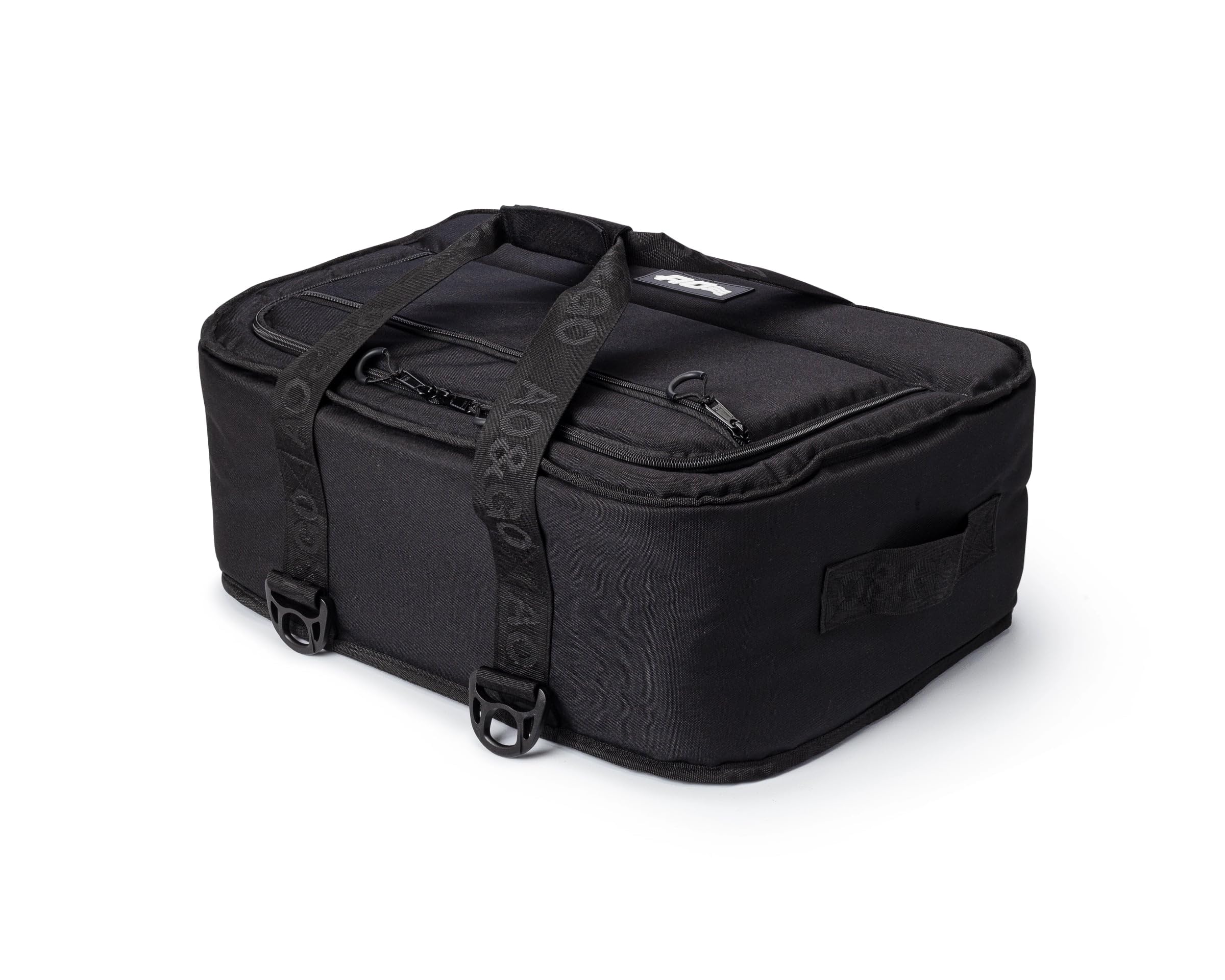
A long, low cooler that slides under a truck seat or into a boat locker without a fight.
This one earns its place on a backpacking-adjacent trip: the drive to the trailhead. The Stow-N-Go is shaped to slide under seats and into compact spaces — boats, UTVs, RVs, frunks and rear seats — and it holds 13.42 liters across a body measuring 8.5″D x 23″W x 15″H. Closed-cell foam insulation (dense foam with sealed air pockets) keeps contents cold a full day at 120°F.
The build is rugged but gentle on surfaces. The soft-sided canvas shell will not scratch gel coat or upholstery, the heavy-duty liner resists tears and leaks, and durable YKK zippers (a name-brand zipper track known for longevity) with double pull tabs make access easy in tight spaces. It is carry-on compatible for most airlines, so it is a solid way to move food or drinks on a trip. Buyers praise the size and fit most, and how well it works stowed under a boat seat.
Worth knowing: at 3.5 pounds empty, this is not a bag you want on a long hike, and the value conversation is split — some find it worth the price, others feel it is overpriced against alternatives. The rugged canvas also tears after multiple hard seasons for a few users. As a vehicle-based basecamp cooler, though, the low profile and full-day cold make it hard to argue with.
Suits you if: you want a cooler that hides under a seat or in a boat locker and stays cold all day.
Look on if: you plan to carry it far — 3.5 pounds empty is car-camping weight, not trail weight.
Know the Specs
Capacity: quarts, liters and cans
Manufacturers describe the same interior space three different ways, and the numbers rarely line up. A 5.5-quart bag may be called a “6 can” cooler, while a 15.8-quart bag is called “16 can.” That is because a can count assumes you pack only cans with no ice, while a quart or liter figure measures total volume. When comparing bags, pick one unit and stick to it — the 20.5-liter Amazon Basics and the 15-liter Hydro Flask are directly comparable, while the 5.5-quart RTIC is a different size class entirely.
Ice retention hours
An “all-day” or “24-hour” claim is measured with the cooler closed and full of ice. Real trips involve opening the lid, and each opening lets cold air out and warm air in. Thicker insulation — closed-cell foam, neoprene, or a vinyl shell with nearly an inch of padding — is what buys you extra hours. Fewer, larger ice blocks melt slower than loose cubes, so packing one big block often beats filling the bag with small ones.
Empty weight and carry system
Weight empty is the number that decides whether a cooler belongs in your pack or in your trunk. Padded shoulder straps distribute a loaded cooler across your back, while a single strap concentrates that weight on one shoulder. Ventilated panels help with sweat on warm climbs. Anything at 1 kg or under carries easily on a hike; anything over 3 pounds is better suited to short walks from the car.
Closures and leak-proof liners
A welded liner has no stitched seams for water to find. A zipperless roll-top removes the zipper entirely — the most common point of wear and leakage. Standard zippers are fine for dry loads, but melted ice is relentless, so a bag with a heavy-duty zipper and a leak-resistant liner will save you a wet pack. Whatever the closure, drain the cooler at camp rather than hauling meltwater uphill.
Common Questions
Can a soft cooler really keep ice frozen for a whole backpacking trip?
How much cooler weight can I realistically carry on a hike?
Do I need a waterproof cooler or is water-resistant enough?
Will melted ice leak out of my pack and soak my gear?
What is the difference between a soft cooler and a hard cooler for backpacking?
How many cans fit in a 15-liter or 20-liter cooler bag?
Are backpack-style soft coolers comfortable on a long hike?
Should I buy a cooler that collapses flat or one with a rigid body?
Can I use a soft cooler as a carry-on for a flight?
Does a warranty matter on a soft cooler?
The Bottom Line
For most backpacking trips, the lightweight soft coolers for backpacking trips winner is the Corkcicle EOLA Insulated Cooler Backpack, because it pairs strong build quality with hands-free padded straps and room for 12 cans or five wine bottles — and it is the highest-rated pick in this group at 4.5+ stars. If you are hauling drinks for a group and want the lightest empty bag here, the Amazon Basics Insulated Cooler Backpack holds 20.5 liters at 0.74 kg empty.
How we choose
We do not accept paid placement. Every pick is matched to a real buyer and a real use-case; we do not hands-on test units.
Sources
Specifications: manufacturer listings and product documentation. Review insights: verified customer reviews, as of November 2026. Pricing: not shown on this page (it changes often); check the current price via the retailer link.
As an Amazon Associate, Tactical Gear Guy earns from qualifying purchases. This does not affect which products we feature.