Specs are compiled from manufacturer listings and verified buyer reviews and can change over time — please confirm the key details on the product page before buying.
Dim pathway lights usually have nothing to do with the fixture — they are the symptom of thin wire and a long run. Buy the wrong cable and your last spotlight glows orange while the first one blazes. The fix is simple: match conductor size to run length, insist on bare copper over copper-clad aluminum, and make sure the jacket is rated for direct burial. That is exactly what this guide sorts out for you.
This guide is built by comparing the manufacturers’ published specifications and the patterns across verified customer reviews, so you get each pick’s real strengths and trade-offs instead of marketing spin.
You’ll see gauge, copper type, and burial rating lined up side by side, plus the honest catch on each spool. Read on for the Best Landscape Lighting Wire for your particular run length and fixture count.
Top Picks

How To Choose The Best Landscape Lighting Wire
Landscape wire is not a place to save a few dollars, because the buried cable is the one part of the system you never want to dig up again. The three things that decide whether your lights stay bright are conductor material, gauge, and burial rating. Get those right and the fixtures take care of themselves.
Bare copper versus copper-clad aluminum
Copper-clad aluminum (CCA) is an aluminum core with a thin copper skin. It costs less and weighs less, and the listings will tell you it is “just as good.” It is not, on a long low-voltage run. Bare copper carries current with less resistance, so voltage drop (the voltage you lose along the length of the cable) stays lower and the far fixtures stay bright. Pure bare copper is the safer spend for anything you plan to leave in the ground.
Gauge and run length
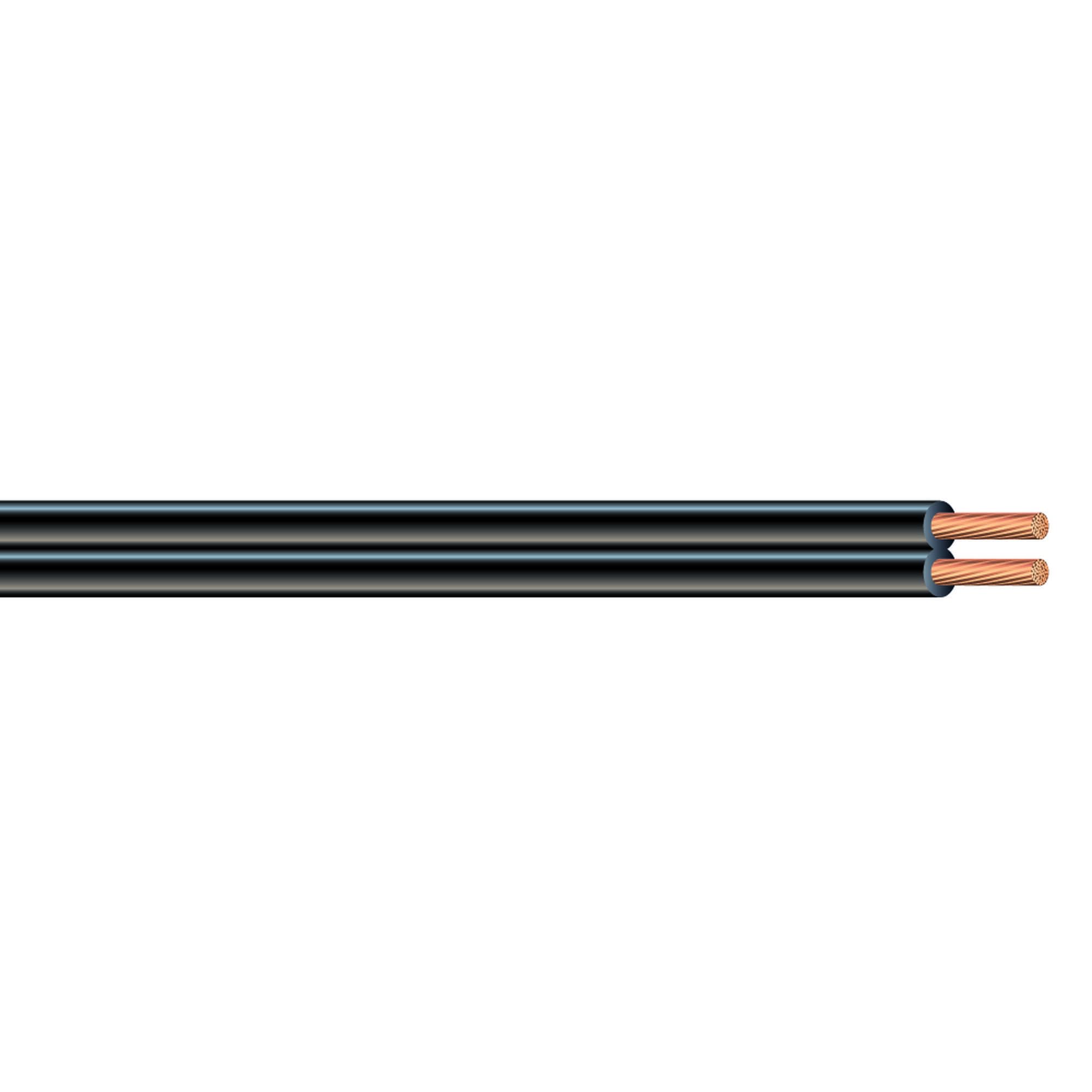
The gauge number works backwards — a smaller number means a thicker conductor. A 12 AWG cable carries more current over a longer distance than a 14 AWG, and 14 AWG beats 16 AWG. For short runs to a few path lights, 16-gauge is fine. For a long run or a string of several fixtures, step up to 12-gauge so the last light in line does not dim. Always check the total fixture wattage against the run length before you pick a spool.
Direct burial and ETL listing
“Direct burial” means the jacket is built to go straight into soil without conduit protecting it. Look for that phrase plus a UV-resistant, waterproof jacket, since the cable will sit through sun, rain, and freeze cycles. An ETL or UL listing is independent proof the cable was tested to a recognized safety standard — worth having when the wire runs under a lawn or beside a walkway.
Side-by-Side Comparison
| Model | Best For | Gauge | Length | Conductor | Amazon |
|---|---|---|---|---|---|
| Lightkiwi 12/2 Landscape Wire 50ft★ Best Overall | Best Overall | 12 AWG | 50 ft | Bare copper | Amazon |
| Lightkiwi 14/2 Landscape Wire 100ftLong-Run Leader | Longer mid-size runs | 14 AWG | 100 ft | Bare copper | Amazon |
| Southwire 55213243 14/2Cold-Weather Pick | Cold-climate installs | 14 AWG | 100 ft | Aluminum | Amazon |
| ubinory 12 Gauge 2 Conductor 100FT | Mixed outdoor fixtures | 12 AWG | 100 ft | Bare copper | Amazon |
| Cableague 16/2 100ft | Short accent runs | 16 AWG | 100 ft | Stranded bare copper | Amazon |
| SUNVIE 100FT 12/2 | Premium Pick | 12 AWG | 100 ft | Bare copper | Amazon |
| ZONEGRACE 12/2 265ft | Whole-yard coverage | 12 AWG | 265 ft | Bare copper | Amazon |
| energeaster 100FT 12 Gauge | Budget spool | 12 AWG | 100 ft | Copper-clad aluminum | Amazon |
Detailed Reviews
1. Lightkiwi 12/2 Landscape Wire 50ft
Our pick — 4.5+★ from 950+ verified ratings; the strongest balance of quality and price.
Short spool, thick conductor — the one that keeps every fixture on a small bed bright.
Here is the number that separates this spool from the pile: 65 strands. That is the count of tiny copper wires braided inside each conductor, and stranded construction is what lets you bend the cable around a tree root or wiggle it through a tight trench without kinking. It is 12 AWG, which is the thicker end of the low-voltage landscape range, so a run to several spotlights suffers less voltage drop — the far light stays white instead of sagging to orange.
Pure bare copper is the material that matters here, not copper-clad aluminum. The listing is blunt about it — this is real copper, and the cable is rated for direct burial without conduit, with a UV-resistant, waterproof jacket. It is also ETL listed, which is independent proof the cable was tested to a recognized safety standard. For a homeowner adding three or four path lights around a walkway, that combination covers the whole job.
What wins people over is the copper itself — the cable performs as listed from the first pull off the roll. The jacket strips cleanly, it bends rather than fights you, and it holds up in wet soil. One honest limit: 50 feet is a short run, so this spool suits a compact bed or an accent cluster, not a full property loop. If your plan already spans the front and back yard, budget for two spools or step up to a longer reel.
What earns the top spot
- 12 AWG stranded bare copper — 65 strands of flexibility that bends around roots and hardscape without kinking.
- Direct burial and weatherproof rated, so no conduit is required for an underground run.
- ETL listed for safety, plus real copper instead of copper-clad aluminum.
- The jacket strips cleanly without fraying the copper strands.
Where it runs short
- The 50-foot length caps how far you can reach — a larger layout needs a second spool or a longer reel.
- Copper pricing puts it above the clad-aluminum spools, even on a short run.
Best for: The homeowner adding three or four path lights around one walkway or bed, who wants real copper and a clean strip.
Think twice if: Your lighting plan reaches the full front-and-back yard — 50 feet will not get you there.
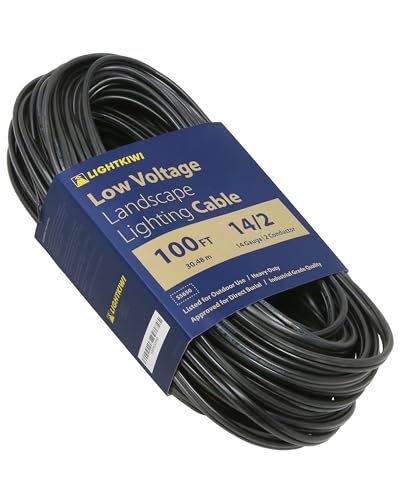
2. Lightkiwi 14/2 Landscape Wire 100ft
Twice the reach of the 50-foot spool, in a slightly thinner conductor that still holds its own.
This is the same copper, made 100 feet long. The gauge drops to 14 AWG, which is a touch thinner than the 12 AWG spool above — 41 strands instead of 65. In plain terms, a 14-gauge cable handles a moderate run to a handful of LED fixtures, while a 12-gauge is the safer pick if the total fixture count climbs high or the line stretches far. For a typical bed of path lights and a couple of spotlights, 14 AWG is a fair fit.
Copper is the story again, and the listing is clear that it is pure bare copper stranded construction, not the clad-aluminum shortcut. It is ETL listed and rated for direct burial, and the jacket is built to resist sun, moisture, dirt, and the freeze-thaw cycle — the cable stays in the ground for years without you touching it. Pure copper is also what keeps the far fixture from dimming, because it carries current with less resistance than clad wire.
The recurring gripe is rigidity — a few owners find the insulation on the stiffer side when they try to bend it around tight corners. Treat it as a fair trade for a jacket that takes a beating, and leave a little extra slack at each fixture so you are not forcing tight bends. Value is strong on this spool; the buyers who bought it twice for two separate projects are the clearest signal of that.
Where it fits best: A single long bed or a line of fixtures that runs partway around a yard, where 100 feet is enough to finish the job without a splice.
The trade to know: Older installers who like to bend cable tight may find it stiffer than they expect — a longer radius at each turn solves it.
Reach for this if: You need more length than the top pick but still want genuine copper and an ETL listing.
Look elsewhere if: Your run carries a heavy fixture load over a long distance — that is a 12-gauge job.
3. Southwire 55213243 14/2 Landscape Lighting Cable
A 100-foot reel rated from -40°F to 140°F, so it does not turn stiff when the ground freezes.
Start with the temperature rating, because it is what sets this reel apart. The jacket is also water, dust, and dirt resistant, and it is rated for direct burial, so it can go in without conduit.
It is 14 gauge and 100 feet, the same length-and-gauge territory as the Lightkiwi spool above. The material here is different: this one lists aluminum rather than pure copper. That is not a deal-killer for a modest run of low-voltage LEDs, but on a long line with several fixtures, the copper spools hold their brightness better. If the run is short and the fixture count low, the aluminum does the job.
Installation is the steady strength here — novices finish the job without trouble, and the cable comes off the reel tangle-free. The point to know is cable separation: a handful of installers find the two conductors hard to split apart when they want to strip them for a longer splice. Leave enough slack at each connection and you will never fight it mid-install.
What owners value
- -40°F to 140°F rating — stays flexible instead of going brittle in winter.
- UL listed, CSA certified, RoHS compliant and Greenspec approved.
- 100 feet of 14-gauge cable rated for direct burial without conduit.
- Tangle-free off the reel and easy enough for a first-time installer.
What to weigh
- Aluminum conductor rather than pure copper — the brightness edge on long runs goes to the copper spools.
- Splitting the two conductors for a mid-run splice can be a wrestling match.
Who it suits: A short-to-medium LED run in a cold climate, where a cold-cracking jacket is the bigger worry.
Who should pass: Anyone pushing a high fixture load down a long line — step up to the copper 12-gauge reels.
4. ubinory 12/2 Landscape Wire 100FT
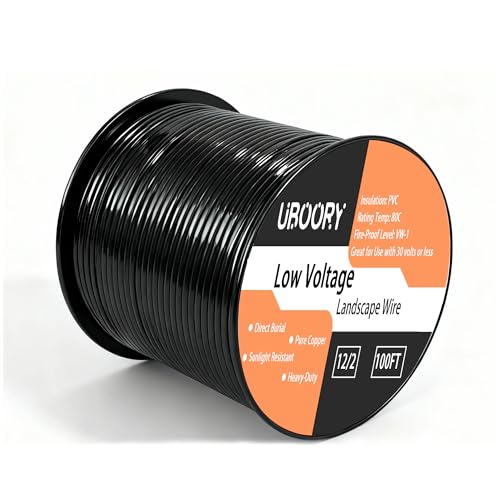
The 12-gauge reel you can bend tight and strip quickly, with a 300V ceiling well above a landscape job.
Look at the voltage ceiling first: this reel carries a maximum working voltage of 300V. Your landscape system runs at 12V or 24V, so that ceiling leaves a wide safety margin. In practice, it means the cable is built for more than just a path light — it happily handles deck, garden, spot, and even underwater fixtures on the same low-voltage system.
Compare it directly to the 12 AWG 50-foot spool at the top: same 12-gauge thickness and same pure bare copper, but this one is 100 feet long. Where the 50-foot spool finishes a single bed, this one reaches across a larger layout. Stranded bare copper keeps the resistance low and the signal strong, so a run to several fixtures holds its brightness the way the clad-aluminum budget reels do not.
The jacket is the practical story: it is built to resist sunlight, wear, damp conditions, and the sort of scrape that happens when you drag cable through gravel. It strips and bends easily, which is the part every installer notices. The one honest caveat: a few buyers find the cable awkward to handle on longer pulls, so a second pair of hands helps on a big loop. Coverage matters more here than speed, and this reel has the length for it.
Standout spec: 300V max working voltage on a 12 AWG pure-copper reel — twice the reach of the 50-foot spool with a wider safety margin.
What to expect: Some owners find the cable awkward to pull on long stretches; the easy strip and the jacket toughness make up for it.
Best for: A large bed or mixed fixture set — path, spot, deck, and accent lights all on one 100-foot run.
Skip if: You want a compact spool for a single walkway; the 50-foot pick covers that with less leftover coil.
5. Cableague 16/2 Landscape Lighting Wire 100ft

Thin, waterproof, and proudly UL listed — the spool for short accent runs where the wire stays hidden in mulch.
The number to weigh here is 16 AWG. That is on the thinner end of the landscape range — a 12-gauge cable carries more current over a longer distance, while 16 gauge is meant for short runs and a few fixtures. Where it earns its keep is the accent run: a string of garden path lights or a couple of spotlights within a compact area, where the short distance keeps voltage drop low and the thin cable hides neatly under mulch.
The listing is unusually precise on the safety side: 100 feet of 16AWG two-conductor cable, rated UL Listed Type CL2 and ETL complied, with a 150-volt rating and 60℃ temperature ceiling. It is stranded bare copper with PVC insulation, and it is rated for direct burial. That covers above-ground and in-ground work, and the waterproof jacket is built to handle prolonged sun exposure. The same cable doubles as outdoor speaker wire, which is a useful bonus if you are already digging a trench.
Durability is the detail owners notice — the jacket is described as heavy-duty, and it holds up under sun, dirt, and wet soil without complaint. One honest limit: on a longer line with several fixtures, the 16-gauge wire will not hold brightness the way the 12-gauge copper reels do. That is not a flaw — it is what thinner wire is for. Keep the run short and the fixture count low and this reel performs.
What it gets right: UL Listed Type CL2 plus ETL complied, a 150-volt rating, and a waterproof direct-burial jacket — real certification on a thin, budget-friendly cable.
Where it falls short: 16 AWG is thin; on a long line to many fixtures, the far lights will dim compared to a 12-gauge reel.
True to its fit: A short accent run or a small garden bed, especially if you also want to run outdoor speaker wire in the same trench.
Not for: A whole-yard loop with many fixtures — that calls for 12-gauge copper.
6. SUNVIE 12/2 Landscape Wire 100FT
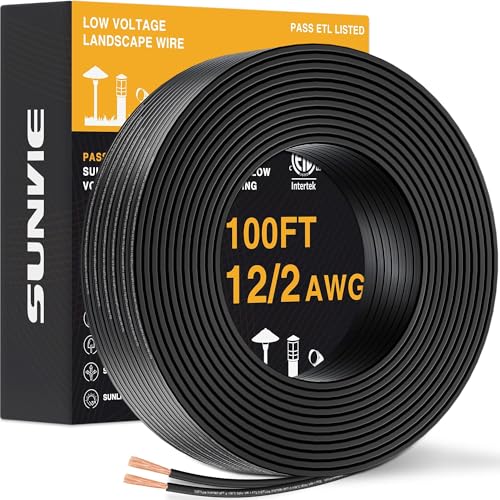
A 100-foot reel of 12-gauge pure copper, at 6.3 pounds — the one for a full system done right the first time.
The spec that earns the premium label is the pairing: 100 feet of 12 AWG pure copper, at 65 strands per conductor. That is the same strand count as the top pick, stretched to twice the length. Thick copper over 100 feet keeps voltage drop low, which means the lights at the end of the line get plenty of power instead of fading. If your plan is a full loop of path lights and spotlights, this is the reel that covers it without a splice.
Compare it head-on with the budget clad-aluminum reel below. Both are 12 AWG and 100 feet, but this one is 100% pure copper with a VW-1 fire-resistant rating and a 300V working ceiling, while the budget spool uses copper-clad aluminum. On a long run, that difference is exactly where dimming shows up. The listing even calls out dimming-prone CCA as the thing it avoids. Pure copper carries current better, so the far fixture stays bright.
The other premium detail is the jacket. The PVC insulation is built to stay flexible in hot and cold conditions, so it strips cleanly and lays out around a circuit without cracking. It is ETL listed and rated for direct burial, with a tough casing that takes sun and abrasion. The one honest note: at 6.3 pounds and a premium-tier price, this reel costs more than the budget spool. That is fine if you are wiring a whole property, less so for a single path.
The case for the premium reel: 100 feet of 12-gauge pure copper, ETL listed, VW-1 fire resistant, and built to stay flexible in heat and cold — the full-system reel.
The catch: It costs more than the budget clad-aluminum spool, and the premium buys length and copper, not speed of install.
Made for: A full yard loop of path lights, wall lights, and spotlights where one long 12-gauge run finishes the job.
Overkill if: You are wiring a single walkway — the 50-foot pick covers that at a lighter weight.
7. ZONEGRACE 12/2 Direct Burial Wire 265ft

The 265-foot reel — one spool that reaches the whole property without a single splice.
Length is the headline: 265 feet of 12 AWG bare copper. That is more than double the 100-foot reels above, and it means a full property loop — path lights, area lights, flood lights, down lights — runs off one continuous cable. No splice means no weak point where moisture gets in. Thick 12-gauge copper over that length also keeps voltage drop in check, so the last fixture in the chain still gets bright power.
Bare copper with heavyweight jackets is how this reel protects the signal. The pure copper carries current with less resistance than copper-clad aluminum, which keeps the far lights bright, and the jacket saves the conductor from tears, scrapes, and cuts as you drag it through beds. It is also ETL listed, which is the contractor’s filter — the cable has been through independent testing to North American safety standards before it goes in the ground.
Installation is where this reel gets good marks — the cable rolls out smoothly and stays very malleable, so laying a long loop goes faster than you would expect. The insulation reads thick, and the thick jacket is the reason. The split to watch is at the strip point: a few installers find the two conductors split apart too easily when they strip them, so score the jacket lightly and you avoid it. That is the trade for a reel that covers the whole yard in one go.
Why the big reel earns its place
- 265 feet of 12 AWG bare copper — the full-property loop without a splice.
- ETL listed, the contractor’s own filter for a burial cable.
- Rolls out smoothly and stays very malleable for a long layout.
- Thick insulation layer and heavyweight jacket resist tears, scrapes, and cuts.
What to plan around
- It is a premium reel — the investment only makes sense for a whole-property run.
- The conductors can split apart too readily when you strip them.
Pick this for: A full property loop where one continuous 265-foot run replaces several shorter reels.
Not the one for: A single bed or small accent cluster — the coil left over would be more than the job.
8. energeaster 12/2 Landscape Wire 100FT
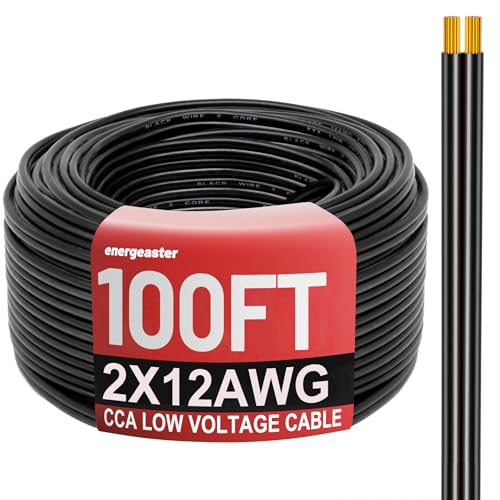
The cheap 100-foot 12-gauge spool — copper-clad aluminum, and the only reel here you should think hard about.
This is the budget option, and the material is the whole story. The conductor is copper-clad aluminum, not pure bare copper — the listing sells it on being lighter, more flexible, and lower cost than copper. All three are true. The catch is that CCA has more resistance than copper, so on a long run to several fixtures the lights at the end dim, and that is exactly the complaint buyers report on this spool. Quality itself is split down the middle in the reviews, with the durability a real question mark — owners mention the wire breaking under normal use and corroding after 8 months.
What the listing does offer is honest: a 12 AWG, 100-foot cable with a flame-retardant, anti-aging, damp-proof PVC jacket, a -35℃ to 105℃ temperature range, and a flexible jacket you can twist and route. On the right job — a short run to a few fixtures, or a repair where the cable never sees weather — it does the work at the lowest cost in the category. It just is not the reel to bet a whole-yard installation on.
If you are pricing a long run and want to save, know the trade before you dig: clad aluminum saves money up front but the brightness and longevity of copper are what you are giving up. Buy this for a small accent job, a temporary setup, or a connector repair — and buy the copper reels for anything you plan to bury for the long haul.
Where it wins: 100 feet of 12 AWG cable for the lowest outlay, with a flame-retardant, anti-aging jacket and a -35℃ to 105℃ range.
Where it loses: Copper-clad aluminum instead of pure copper — long runs dim, and the durability feedback is mixed at best.
Reach for it when: The run is short, the fixture count low, or you need a cheap repair cable in a pinch.
Spend up instead if: You are burying cable for a long-term yard — the copper reels are the safer bet.
Know the Specs
Gauge (AWG) and voltage drop
The gauge number runs backwards: 12 AWG is thicker than 14 AWG, and 14 AWG is thicker than 16 AWG. A thicker conductor carries current with less resistance, so it suffers less voltage drop (the voltage lost along the length of the cable) over a long run. That is why a 12-gauge reel keeps the far fixtures bright where a 16-gauge reel would leave them dim. Match the gauge to your run length and total fixture count.
Bare copper versus CCA
Pure bare copper is the safer material for landscape cable. Copper-clad aluminum (CCA) has an aluminum core with a thin copper layer — lighter, more flexible, and cheaper, but with more resistance. On a short run the difference is small; on a long run to several fixtures, the copper spool holds brightness while the clad one fades. If a listing says “copper-clad aluminum,” know that you are trading brightness and longevity for cost.
Direct burial and jacket rating
“Direct burial” means the cable can go straight into the soil without conduit protecting it. That depends on the jacket — it needs to resist water, dirt, and UV. A temperature rating like -40°F to 140°F tells you the jacket will not crack in the cold or soften in the heat, which is what keeps the wire usable season after season.
ETL, UL, and safety listings
An ETL or UL listing is independent proof the cable was tested to a recognized safety standard. It is the filter contractors use for a reason — the wire runs under lawns and beside walkways, so the listing gives you a documented baseline of quality. Look for it on any cable you plan to bury.
Common Questions
Is 12-gauge wire better than 14-gauge for landscape lighting?
Can I use copper-clad aluminum wire for landscape lights?
Does landscape lighting wire need to be in conduit?
What does ETL listed mean on landscape wire?
How deep should I bury landscape lighting wire?
Will 16-gauge wire dim my landscape lights?
Can landscape lighting wire be used for outdoor speakers?
How long does buried landscape wire last?
What size wire do I need for a long run of landscape lights?
Does landscape wire need to be UV resistant if it is buried?
The Bottom Line
For most readers, the landscape lighting wire winner is the Lightkiwi 12/2 Landscape Wire 50ft because it pairs 12-gauge stranded bare copper with an ETL listing and a direct-burial jacket — real copper and real safety proof on a spool that finishes a single bed cleanly. If you need more length and want the same copper build, grab the SUNVIE 100FT 12/2. And for a whole-property loop in one continuous run, the ZONEGRACE 12AWG 265ft is the one to reach for.
The crowd favorite in this category holds 4.5+ stars across 900+ ratings, and it earns that on copper quality rather than marketing. Buy the thickest copper your run length and fixture count can justify — the cable is the part you never want to dig up again.
How we choose
We do not accept paid placement. Every pick is matched to a real buyer and a real use-case; we do not hands-on test units.
Sources
Specifications: manufacturer listings and product documentation. Review insights: verified customer reviews, as of November 2026. Pricing: not shown on this page (it changes often); check the current price via the retailer link.
As an Amazon Associate, Tactical Gear Guy earns from qualifying purchases. This does not affect which products we feature.