Specs are compiled from manufacturer listings and verified buyer reviews and can change over time — please confirm the key details on the product page before buying.
Your toes should not pay for a snug fit. A women’s climbing shoe sized like a street sneaker will roll and slip on small footholds. Pick the right closure, rubber thickness, and last (the shoe’s foot shape) and you can stand on chips of plastic all evening without your heel lifting. Below are eight women’s-specific climbing shoes: beginner-friendly flat lasts, stiffer edging shoes, and softer bouldering models. Match one to how and where you actually climb.
This guide is built by comparing the manufacturers’ published specifications and the patterns across verified customer reviews, so you get each pick’s real strengths and trade-offs instead of marketing spin.
The right pair should feel snug but not painful, grip on slabs and overhangs, and survive a full season of gym sessions — here are eight women’s-specific shoes matched to how and where you climb.
Top Picks


How To Choose The Best Ladies’ Climbing Shoes
The biggest mistake first-timers make is buying a climbing shoe the same size as their daily sneakers. Climbing shoes are meant to fit snug, with your toes lightly touching the front, so your foot acts as one firm lever on tiny holds. Start by deciding what kind of climbing you do most, then match the closure, rubber, and stiffness to that.
Match the closure to how often you take them off
Laces give you fine control over the fit across the whole foot, which suits longer sessions and all-day comfort. Hook-and-loop straps (the wide velcro-style closures) are faster on and off, so they suit bouldering where you kick your shoes off between attempts. If you climb indoors after work and want a shoe you can loosen on rest breaks, laces are usually the friendlier pick.
Understand the outsole rubber thickness
Thicker outsole rubber tends to last longer and feel more supportive on edges, while thinner rubber gives more feel through the sole. The Black Diamond Women’s Momentum uses a 4.3 mm rubber outsole, and the Scarpa Women’s Helix Lace uses a 3.5 mm Vibram outsole. That is a real difference in how much you feel the hold and how fast the toe wears through.
Pick a last that suits your foot shape
Every shoe is built on a “last,” the foot-shaped form the shoe is molded around. A flat, neutral last (minimal downward toe curve) is comfortable for beginners and vertical gym walls. A downturn puts the toes in a slight curl for pulling on overhangs, which takes more foot strength. Women’s-specific lasts run narrower through the heel and midfoot, so a unisex shoe often feels loose and sloppy on a smaller foot.
Side-by-Side Comparison
| Model | Best For | Closure | Profile / Last | Outsole | Amazon |
|---|---|---|---|---|---|
| La Sportiva Women’s Tarantulace★ Best Overall | All-day beginner comfort | Laces | Flat, low asymmetry | 5 mm FriXion RS | Amazon |
| Five Ten Kirigami Women’sMost Forgiving Fit | Relaxed all-around fit | — | Neutral, medium flex | — | Amazon |
| Black Diamond Women’s Momentum StrapBreathable Value | Breathable gym sessions | Hook and loop | — | 4.3 mm rubber | Amazon |
| Butora Women’s Endeavor | Cute, comfortable entry shoe | Elastic | — | Butora NEO Fuse rubber | Amazon |
| Scarpa Women’s Helix Lace | Trad and multi-pitch comfort | Laces | Flat, slight asymmetry | Vibram XS Grip 2 (3.5 mm) | Amazon |
| La Sportiva Women’s Tarantula Boulder | Stepping up from beginner shoes | Hook and loop | Rounded, no downturn | 5 mm FriXion RS | Amazon |
| La Sportiva Women’s Finale | Improving technique | Laces | Pointed, no downturn | 5 mm Vibram XS Edge | Amazon |
| La Sportiva Women’s Kubo | Progressive soft structure | Hook and loop | Pointed, medium downturn | 4 mm Vibram XS Edge | Amazon |
Detailed Reviews
1. La Sportiva Womens Tarantulace Rock Climbing Shoe
Our pick — 4.5+★ from 200+ verified ratings; the strongest balance of quality and price.
The laced all-rounder that lets a new climber stay on the wall for hours.
If you are buying your first real pair for weekly gym sessions and the occasional outdoor day, the Tarantulace is the sensible center of this category. Its flat, low-asymmetry last (almost no downward toe curl) keeps your foot in a natural position, so you are not fighting the shoe while your foot strength is still building. A lace closure spreads the pressure evenly across the whole foot, which helps over a two-hour session.
What earns it the top spot here is the overall build. The shoes are widely described as top quality and as genuinely beginner-friendly, with rubber that grips the wall and provides good slip resistance. A 5 mm FriXion RS outsole is on the thicker side, which gives you a supportive platform on small edges and stands up to repeated toe-scuffing. That is the same 5 mm FriXion RS rubber the Tarantula Boulder uses — but here it sits under a laced, flatter shoe.
The honest catch is fit, not function. This is the most-discussed point in the reviews, and it splits both ways: some feet feel nicely snug while others find the heel cups too tight and the shoe very stiff at first. The takeaway is to read the size guide carefully rather than default to your sneaker size. There is the crowd favorite factor too — 4.5+ stars across 200+ owners is a strong signal for a first pair.
What works in its favor
- Flat last keeps a beginner’s foot relaxed all session
- Thick 5 mm FriXion RS rubber grips and holds up on edges
- Laces let you fine-tune fit across the whole foot
- Named most often for overall quality, then traction and beginner suitability
Worth knowing before you buy
- Fit is the biggest talking point and splits both ways
- Some feet find the heel cup too tight
- A few find the shoe very stiff to break in
- Durability reports are mixed, with some noting quick toe wear
Best for: the new or returning climber who wants one laced shoe for gym and crag and will spend real time on the wall.
Look elsewhere if: you have a wide heel and want a soft, foot-hugging fit — the stiffness and heel shape suit narrower feet.
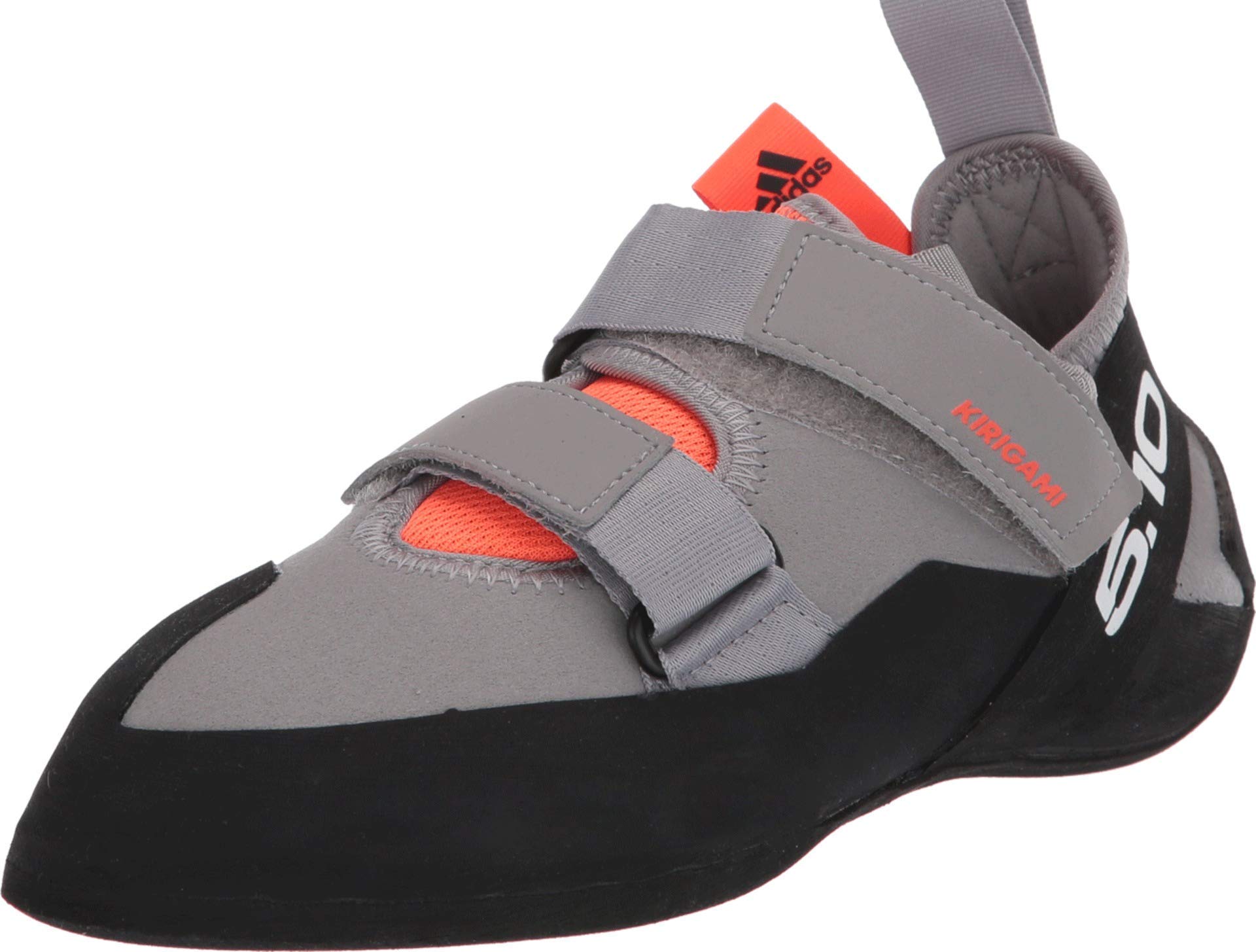
2. Five Ten adidas Kirigami Climbing Shoes Women’s
For feet that refuse a pinched toe box, this is the relaxed, rounded option.
Most climbing shoes punish you in the toe box. The Kirigami goes the other way: Five Ten describes a rounded toe box and a relaxed fit aimed at beginning climbers, with a neutral last and medium flex. That makes it the shoe to reach for if your main fear is spending an hour with your toes curled against an edge. It also gives a longer, less aggressive profile for advanced climbers who want comfort on long routes.
Where it sits in this lineup is the “first-forgiving-day” pick. The neutral fit means the sole doesn’t push your foot into a downward curl, so you can concentrate on footwork drills instead of pain. Medium flex keeps it flexible enough for smearing yet supportive under a heavy step. This is the easy buy if you know your foot hates tight shoes.
The trade-off is that this is a comfort-led design, not a precision edging shoe. If you already climb hard vertical walls or overhangs and want your toe to lock onto tiny foot chips, a flatter, softer shoe like this holds you back a bit. But for early progress on easier routes, the design goal is a lower-stress fit.
The practical read: the shoe fits like an actual shoe rather than a clamp, so you can keep it on for a full beginner session without yanking it off between routes.
Mind the orientation: its whole reason for being is comfort and a rounded toe box, so treat it as a starter-and-trainer pick rather than a hard-edging upgrade.
Go with this: newer climbers with wide feet or sensitive toes who want a real sneaker-like feel.
Not your shoe if: you are chasing tiny edges or aggressive overhangs and want a precise, downturned design.
3. BLACK DIAMOND Women’s Momentum Strap Rock Climbing Shoes
An engineered-knit upper that lets a hot gym session breathe.
The standout number here is the outsole: a 4.3 mm rubber sole, versus the 3.5 mm Vibram outsole on the Scarpa Helix Lace. That 23% thicker rubber means more protection under the toe and less feel through the sole on small features. The engineered knit upper is the other half of the story — it helps the shoe breathe, so your feet run cooler during a long indoor session. It’s built for hours of bouldering and laps, not a single hard send.
The strap closure (a hook-and-loop closure you slap on and peel off) suits bouldering perfectly — you can kick them off between attempts and get them back on fast. Quality and value both come up positively, and the shoe is well regarded as beginner-friendly. Climbing shoes wear out, so a shoe buyers call good value stands out.
Now the recurring theme worth knowing. Sizing is the single most-discussed issue, and it leans negative: the fit is described as tight and narrow, and owners commonly say these run small. That is consistent with a knit upper that has less give than leather, so this is a “size up carefully” shoe. If your foot is wide through the midfoot, try this one with extra attention to the size chart.
Where it earns its place: the knit upper and strap closure make it the friendliest bouldering-gym shoe here for warm conditions and short, repeated attempts.
Fit caution, sized right: the tight, narrow fit is what most of the reviews talk about, and most say to size up.
Made for you if: you boulder indoors, run warm, and like a quick on/off strap.
Try another model if: you have a wide midfoot and want a roomy fit without guessing at sizing.
4. BUTORA Women’s Endeavor Rock Climbing Shoe

The lavender shoe that climbs comfortably and looks the part on the wall.
Butora’s Endeavor is the one that wins on feel. Underneath, the sole is Butora’s NEO Fuse sticky rubber, and the inside is lined with 100% organic hemp, which the maker says controls stretch and odor. A split leather footbed and a 3D injection-molded ABS midsole (a rigid plastic shank that holds the shoe’s shape for edging) round out a shoe that is built around comfort as much as climbing precision. It’s a shoe you can keep on for a full session without wincing.
What people talk about most here is comfort, and appearance comes up positively too — this is the shoe owners call cute. The triple fork webbing (the strap system that wraps the foot) gives a more custom feel than a plain velcro strap, and the elastic closure keeps the fit simple. For a casual indoor climber who wants a shoe that feels good and looks good, the Endeavor hits both.
Fit is the honest caveat. It’s the most-mentioned point by a wide gap, and it splits both ways: some feet find it perfect, others call the sizing bad enough to return. That is common with a leather-lined shoe that stretches. The model name literally carries “Tight Fit,” so use the size chart rather than guesswork and expect the fit to differ between feet. Durability reports are mixed but the overall experience lands positive.
The draw
- 100% organic hemp lining to manage stretch and odor
- Butora NEO Fuse sticky rubber underfoot
- Comfort is the most-praised quality, and owners call it cute
- 3D injection-molded ABS midsole adds shape and support
The thing to weigh
- Fit is the most-discussed point and splits both ways
- Sizing runs tight, so the size chart matters
- Durability experiences are mixed
- Less of a precision edging shoe than the flatter models here
Worth picking if: you want a comfortable, good-looking first shoe and will climb mostly easy indoor routes.
Think twice if: you cannot try before you buy and want a fit that needs zero sizing guesswork.
5. SCARPA Women’s Helix Lace Rock Climbing Shoes

A flat, laced shoe built for long routes and hours in the harness.
Scarpa builds the Helix Lace for the climber who spends the day on a wall, not 20 minutes on a boulder. It has a flat profile with slight asymmetry, a suede upper, and a Vibram XS Grip 2 outsole that is 3.5 mm thick — thinner than the Black Diamond Momentum’s 4.3 mm. Thinner rubber gives more sensitivity under your toes, which is a help on trad and multi-pitch routes where you feel for placements. The shoe weighs in at 7.1 oz (for half a pair in size 38), so it stays light on long days.
The quality story is the most convincing part: it’s the standout positive in the reviews, and comfort follows closely. Climbers report it performs well indoors for top roping and bouldering, and holds up through repeated use. The laces give all-day adjustability, and the suede upper takes the shape of your foot over time. For a vertical-wall and multi-pitch shoe, this is a serious piece of gear.
The trouble is the sizing. It’s the biggest frustration in the reviews, and it points one way: this shoe runs very small. A narrow fit is also mentioned among the fit notes, and some experience a toe curl that presses against the top of the shoe. On top of that, some owners find the grip variable — great for some, poor for others, which may depend on rock type and rubber wear. The takeaway is to size up and expect a break-in period.
Why it stands out: the flat last and laced suede upper make it the long-route shoe here — comfortable across a full session, with a 3.5 mm Vibram sole that keeps you feeling the rock.
Honest caveat: ignore the sizing at your own risk — it runs very small, and a narrow fit catches wider feet.
Pick it for: trad, top roping, and multi-pitch days where you want laced, all-day comfort.
Judge the fit first if: you have a wide foot — the narrow sizing is the recurring complaint.
6. La Sportiva Womens Tarantula Boulder Climbing Shoe
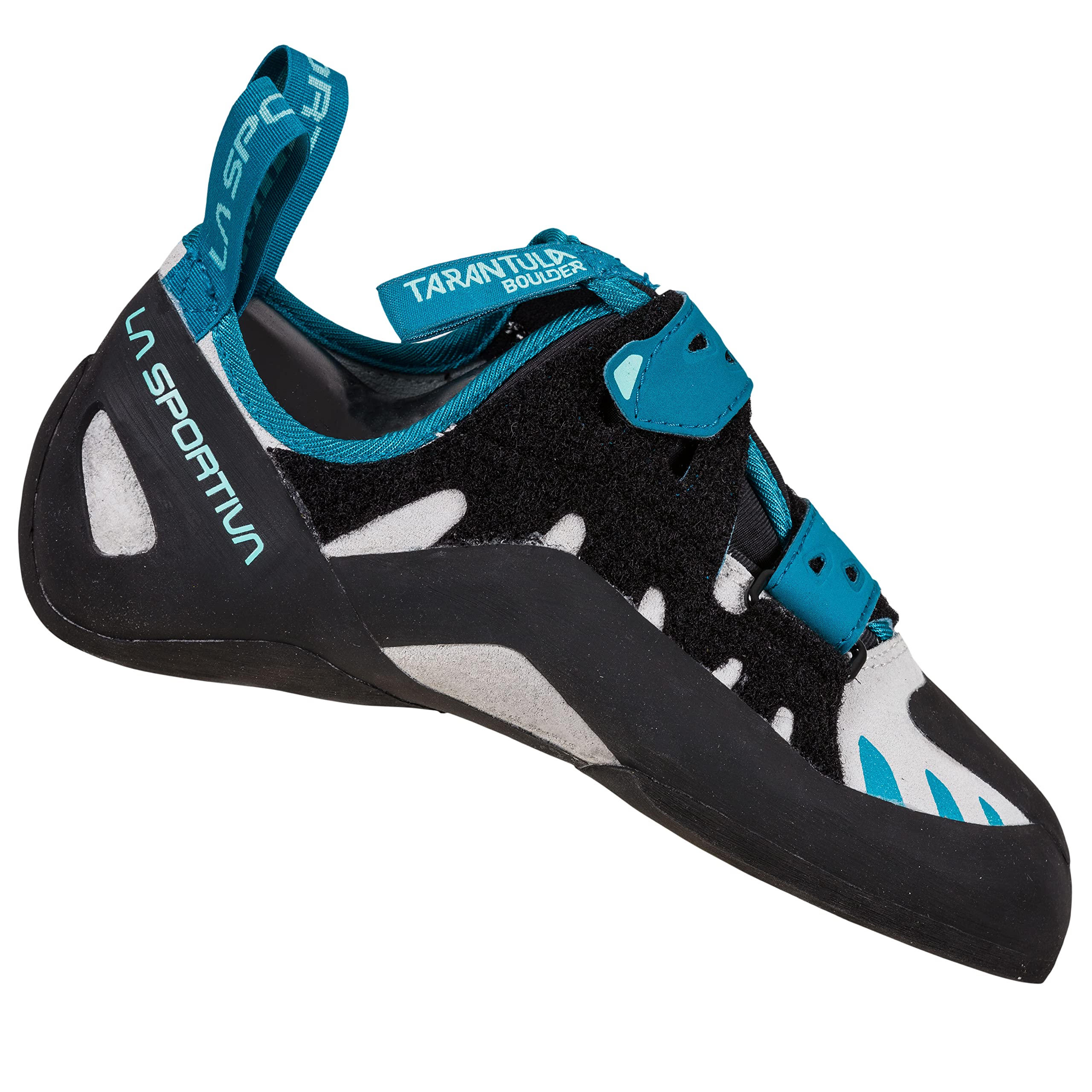
The strap-on bouldering shoe that adds support without the aggressive curl.
Here is the shoe for the climber who has outgrown pure beginner flats but is not ready for a downturned edging machine. The Tarantula Boulder uses a rounded toe with no downturn and low asymmetry, so it stays comfortable while offering a bit more structure than the entry-level Tarantulace. La Sportiva rates its surface sensitivity at 2 and stiffness at 3 on a five-point scale, meaning it is moderately stiff and not super-sensitive. The 5 mm FriXion RS outsole is the same thicker rubber as the laced Tarantulace.
What this shoe brings is a middle ground. A hook-and-loop closure makes it quick to slip on and off between bouldering attempts, and the rounded profile suits vertical walls and smearing. Reviews are solid on quality — that’s the standout positive. It’s the right pick if you boulder a few times a week and want a strap shoe that still feels comfortable.
The mixed note is comfort around the heel: some mention the back digging in, while others find it very comfortable. So a snug fit is a good thing only up to a point. If you want a larger-volume shoe, a medium-width last like this one is not going to feel roomy.
the balance: a strap closure you can pull on fast, a rounded toe that spares your toes, and moderate stiffness that bridges the gap between a soft beginner shoe and a hard aggressive one.
One thing to note: some feet find the heel digs in, so try with a thicker sock or size with care if your heel is sensitive.
A good match if: you boulder regularly and want a quick-on strap shoe with a bit more support than a starter flat.
Keep shopping if: you need a super-soft, high-sensitivity shoe for tiny foot chips.
7. La Sportiva Womens Finale Rock Climbing Shoes

A laced shoe for climbers improving their technique who want an easy fit.
The Finale is aimed at the climber working on technique rather than chasing grades. A pointed toe with no downturn and medium asymmetry, plus a 5 mm Vibram XS Edge outsole, gives you a stable platform that holds on edges while keeping the foot fairly natural. La Sportiva characterises it as progressive, with a stiffness of 4 out of 5, so it has real support for standing on small footholds. The laces let you dial in a snug fit across the whole foot for vertical walls.
Comfort and fit are the bright spots in the reviews. Buyers report the shoes are comfortable and run true to size, which is a meaningful point — sizing can be the hardest part of buying climbing shoes online. Being able to order your normal size removes a lot of the return risk. The pointed toe still needs a bit of dialing, but the overall picture is one of a good-fitting, supportive shoe for vertical terrain.
The honest trade-off is durability over the long run — opinions are mixed, with some saying they hold up and others saying they wear out. A shoe of this stiffness and rubber thickness is not designed to feel soft on your first day either. Treat it as a good value pick for a progressing climber.
Reasons it fits well
- Reported to fit true to size
- Comfort is the standout positive
- 5 mm Vibram XS Edge outsole supports edging
- Lace closure gives all-foot fit adjustment
What to plan around
- Durability opinions are mixed
- Stiffness of 4 of 5 is not a soft-shoe feel
- Pointed toe may take some getting used to
- Less of a bouldering-specific shoe than the Tarantula Boulder
Made for: the upwardly-mobile climber who wants a true-to-size, supportive laced shoe for vertical climbing.
skip it if: you want a cushiony, super-soft shoe from the start — this one is on the firmer side.
8. La Sportiva Womens Kubo Rock Climbing Shoes
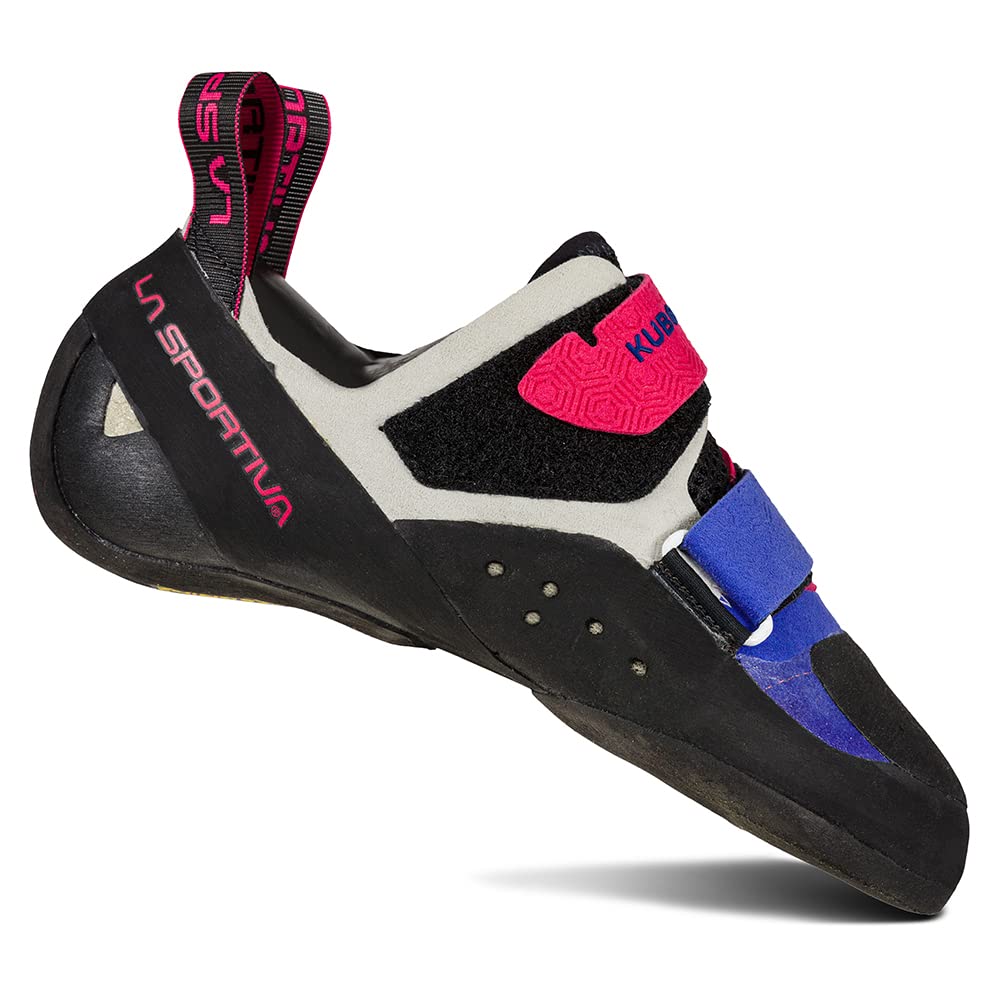
For the climber pushing harder: a soft, downturned shoe with real grip.
This is the most performance-focused shoe in this lineup. The Kubo uses a pointed toe with medium downturn and low asymmetry, and it is rated soft on the five-point stiffness scale at 3, so it bends with your foot for smearing and overhangs. It has a 4 mm Vibram XS Edge outsole underfoot — a serious climbing rubber — and it comes with a hook-and-loop closure for a snug pull-on fit. If you are moving into harder bouldering or steep sport routes, this is the shoe designed for that work.
Reviews are strongly positive. Quality is the standout topic, and comfort and fit both come up favorably — owners say they fit well and feel comfortable. A soft shoe that still fits snug lets you feel the hold and trust the smear. For the climber whose technique is improving and who wants to move toward harder climbs, the Kubo is a natural next step.
Consider the honest limits. A medium downturn and softer build is not the ideal shape for long trad routes — that’s a job for the flat Helix Lace. And with only a modest review base, this is a newer shoe with a shorter track record than the Tarantulace. But the early picture is a strong, focused performer.
Why it’s the top performer: medium downturn, soft flex, and 4 mm Vibram XS Edge rubber make it the shoe for harder moves and steep terrain.
Fit reality: owners mention a good, comfortable fit, so sizing looks consistent — but worth checking the size chart anyway.
The pick for you if: you’re moving into harder bouldering or steep sport climbing and want a soft, grippy shoe that responds to your foot.
Keep looking if: your priority is long days on trad routes where a flatter, more supportive shoe serves you better.
Know the Specs
Outsole rubber thickness
This is the layer of sticky rubber under the shoe, measured in millimeters. Thicker rubber, like the 5 mm FriXion RS on the La Sportiva Tarantulace, gives more protection and support on small edges, so your toes aren’t jammed into the hold. Thinner rubber, like the 3.5 mm Vibram outsole on the Scarpa Helix Lace, gives more feel for the rock and a lighter shoe. Thicker tends to last longer; thinner tends to feel more precise.
Last, profile, and asymmetry
The last is the foot-shaped form the shoe is built around. A flat profile with little downturn suits beginners and vertical walls, because it keeps your foot in a natural position. A moderate downturn curls the toes for pulling on overhangs but is less comfortable on long routes. Asymmetry (how much the toe points inward) adds precision on small holds. Low asymmetry is beginner-friendly; medium or higher suits steeper, more aggressive climbing.
Common Questions
Do women’s climbing shoes fit differently from men’s or unisex shoes?
Should I size up or down when buying climbing shoes online?
How tight should a climbing shoe be for a beginner?
Is a lace or hook-and-loop closure better for climbing shoes?
How long do climbing shoes last before the rubber wears out?
Can I use climbing shoes for the gym and outdoors?
What is the difference between a flat and a downturned climbing shoe?
Are thinner or thicker climbing shoe soles better?
Do climbing shoes stretch out after a few sessions?
What should I do if my climbing shoes hurt my toes?
The Bottom Line
For a first pair of ladies’ climbing shoes, the La Sportiva Tarantulace is the standout: a flat last for comfort, laces for fit control, and a 5 mm FriXion RS outsole that grips and lasts. If a relaxed, sneaker-like fit is your top priority, the Five Ten Kirigami is the friendliest shape here. Want a breathable strap shoe for bouldering sessions? The Black Diamond Momentum fits the bill. For climbers pushing into harder terrain, the La Sportiva Kubo with its medium downturn and 4 mm Vibram XS Edge rubber is the performance step up.
How we choose
We do not accept paid placement. Every pick is matched to a real buyer and a real use-case; we do not hands-on test units.
Sources
Specifications: manufacturer listings and product documentation. Review insights: verified customer reviews, as of November 2026. Pricing: not shown on this page (it changes often); check the current price via the retailer link.
As an Amazon Associate, Tactical Gear Guy earns from qualifying purchases. This does not affect which products we feature.