Specs are compiled from manufacturer listings and verified buyer reviews and can change over time — please confirm the key details on the product page before buying.
If your toes feel pinched by lunchtime and your heel sits lower than your toes, you are in the right place. Every shoe below has a flat sole with no height difference between heel and toe, so your toes can fan out sideways. Each sole is also thin enough that you can feel the ground. The Xero Prio Neo leads the group on strength of build and comfort underfoot. But there is a cheap slip-on here that owners describe as looking like a classic skate shoe — and it costs a fraction of a name-brand pair.
This guide is built by comparing the manufacturers’ published specifications and the patterns across verified customer reviews, so you get each pick’s real strengths and trade-offs instead of marketing spin.
You do not need to spend a lot to get a flat, wide, flexible shoe. The trick is knowing which specs actually change how a pair feels on your foot, and which ones are just words on a listing page. Below you get real numbers on sole thickness, toe room, and weight, plus the honest limits that come with budget construction — everything you need before choosing among inexpensive barefoot shoes.
Top Picks

How To Choose The Best Inexpensive Barefoot Shoes
The search gets confusing fast because almost every budget listing now prints “barefoot,” “zero drop,” and wide toe box on the same label. Three real qualities separate a true barefoot shoe from a sneaker wearing the word. The sole sits flat from heel to toe, the front of the shoe is cut for toes to spread, and the material under your foot bends easily in your hand. Fail any one of those and the shoe will not give you the flat, free feel you came for.
Start with the sole profile, not the upper
A zero drop sole means the heel and the toe sit at the same height, with nothing propping your heel up above your toes. That flat base is what puts your weight back over the middle of your foot instead of pushing it forward. Because your calf muscles have been working against a raised heel for years, most people feel tighter calves for the first week or two of flat wearing, so build up the hours gradually.
Toe room is the whole point of the design
A wide toe box is shaped like a foot rather than a pointed loafer — full and round at the front so your toes can sit straight out instead of curling inward. You will notice this most in the little toe, which has spent its life crushed sideways. When sizing, aim for roughly a thumb’s width of space ahead of your longest toe. A shoe that is too short defeats the whole design even if the toe box is generous.
How thin a sole you can handle
A thin, flexible sole lets you feel pebbles, pavement seams, and smooth gym floors, which is exactly what barefoot wearers want. Too much shoe and you lose the connection to the ground. Too thin a sole on rough gravel can feel sharp. Match the tread to where you actually walk. Smooth urban pavers want a flatter tread pattern. Loose trail surfaces want lugs — the raised bumps under the sole that bite into dirt. The WHITIN W51 runs a stated 3mm trail lug tread for exactly that job.
Budget pairs and how long they last
Lower-cost barefoot shoes usually save money on the upper fabric and the glued sole joint rather than on the flat shape itself. That means a cheap pair can still feel perfectly flat and roomy while wearing through the canvas or separating at the sole edge sooner than a premium shoe. Wash them by hand, keep them out of a hot dryer, and store them loosely rather than crushed in a gym bag so the toe box keeps its shape.
Side-by-Side Comparison
| Model | Best For | Drop | Sole Profile | Toe Box | Amazon |
|---|---|---|---|---|---|
| Xero Shoes Men’s Prio Neo★ Best Overall | All-round gym and daily training | Zero drop (non-improve heel) | Flexible FeelTrue sole, grippy outsole | Wider, foot-shaped | Amazon |
| WHITIN W51 Trail | Trail running and hiking | Zero drop | 3mm dual-directional trail lugs | Wide toe box | Amazon |
| HOBIBEAR Trail Runner Women’s | Multi-sport and casual outfits | Zero drop | Flexible minimal sole | Wide toe box | Amazon |
Detailed Reviews
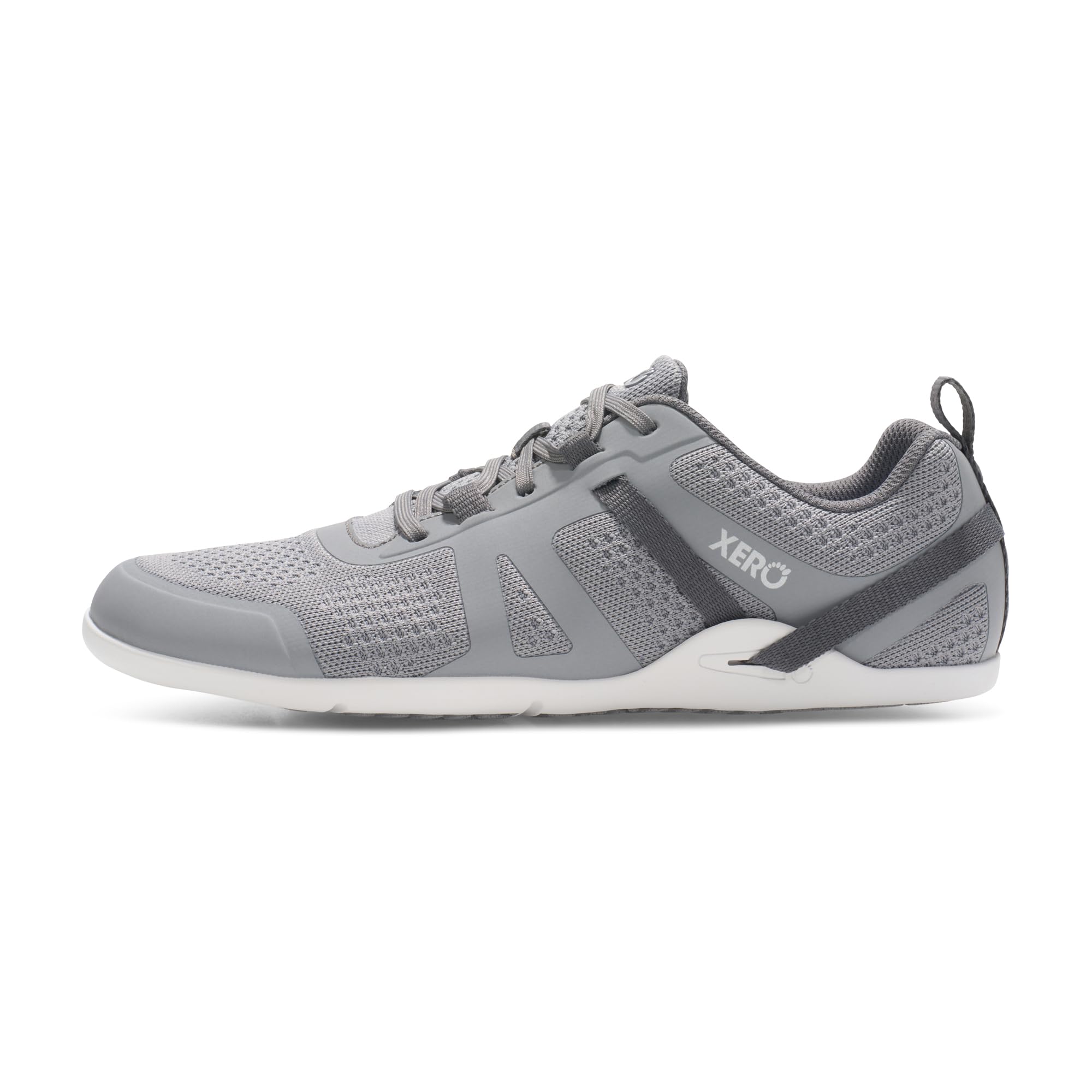
1. Xero Shoes Men’s Prio Neo Barefoot Training Shoes
Our pick — 4.5+★ from 100+ verified ratings; the strongest balance of quality and price.
The only pick here with a stated 5,000-mile sole warranty, at 8.7 oz in a men’s size 9.
The Prio Neo is the only shoe in this group with a stated 5,000-mile sole warranty — the closest thing barefoot footwear has to a durability guarantee. At 8.7 oz for a men’s size 9, it is a genuinely light shoe you can run, jump, and lift in without feeling the weight at your ankle. Xero builds it on the FeelTrue sole, a flexible base that bends with your foot and passes ground feedback back to you so your foot reads the surface underneath.
Where it earns its spot on top: the two adjustable straps — one across the midfoot, one over the heel and instep — lock the shoe down without pinching. Breathable mesh with welded accents keeps air moving, and a moisture-wicking lining pulls sweat away so the inside stays cool through a full training session. The wider, foot-shaped toe box lets your toes spread, and the non-improve zero drop heel keeps you standing level rather than tipped forward.
The honest trade-off sits in the long-term wear reports, which come back mixed rather than unanimous. Some pairs take a beating and keep going, while a share of owners have seen them come apart inside the first month of hard use. In practice that makes the Prio Neo a strong choice for gym floors, short runs, and daily wear, and a weaker one if you plan to hammer it against abrasive trail grit every weekend. It is also the most expensive pick in this set, so if you only need a flat shoe for casual walking, a cheaper canvas slip-on will do the job for far less.
What earns the top spot
- Stated 5,000-mile sole warranty — no other pick here offers one.
- 8.7 oz in a men’s size 9, so it stays light through a whole workout.
- Dual adjustable straps at the midfoot and heel lock the foot down for lifting and lateral movement.
- Breathable mesh upper with a moisture-wicking lining keeps the inside cool and dry.
Where it costs you
- Long-term durability reports are mixed — some pairs wear fast under heavy training.
- The priciest pick in this lineup, by a wide margin over the canvas options below.
Buy it for: gym work, short runs, and the confidence that a stated sole warranty brings.
Think twice if: you only want a flat everyday shoe for errands — the budget canvas picks deliver the same flat base for far less.
2. HOBIBEAR Barefoot & Minimalist Shoe
The pair that gets noticed before it gets worn — squat, wide-toed, and built with a soft flat sole.
This HOBIBEAR is the looker of the group. Plenty of the feedback on it is about styling rather than performance, and the shoe carries a wide toe cap thing in this cheaper end of the barefoot market. The minimalist zero drop sole keeps you flat and connected to the ground, and owners describe the fit as comfortable from the first wear, with a good sense of the surface underfoot.
Where it gets tricky is the fit curve. The width draws praise from people who want room, and frustration from those whose normal size comes up long. Tread on wet surfaces also splits opinion — some find it grippy and slip-resistant, others say it is not truly non-slip, so do not count on it for slick, painted surfaces. The upper also draws fire for feeling like a synthetic vinyl rather than leather; if the look of real leather matters to you, this shoe will not deliver it.
It is also the only pick here with a water-resistant upper, and long-term wear reports on rain use are good. For a commuter shoe you can wear through a wet week without soaked socks, it makes an easy case for itself.
Why commuters like it
- Water-resistant upper keeps feet dry through puddles and wet pavement.
- Minimalist zero drop sole keeps your stance flat and grounded.
- Comfortable from the first wear, with a clear ground feel.
- Holds up well in rain, according to long-term wear reports.
What to watch for
- Fit runs long for some sizes — check the chart against your measured foot.
- Traction on slick surfaces draws mixed reports, so take wet tiles slowly.
- Upper feels synthetic, not leather.
Best matched to: commuters and wet-weather walkers who want a flat shoe that keeps socks dry.
Not the one if: you need reliable grip on painted, slick surfaces or a leather-feel upper.
3. WHITIN Men’s Barefoot Shoes W883
Step in without bending — elastic side gores and a canvas body that looks like a classic skate shoe.
The WHITIN W863 is the answer for anyone who needs to get a shoe on without bending over. Elastic side gore panels stretch enough to slip your foot in without laces, and the canvas body keeps the whole shoe soft and flexible. The zero drop sole keeps the heel and forefoot level, and the textured rubber outsole adds a tread pattern for everyday grip.
The look is a big part of the appeal. A large share of the feedback calls out the style, and owners specifically compare it to Vans-style skater shoes — a compliment for a budget barefoot sneaker. The wide toe box gives your toes room. The slip-on entry draws praise because you can get it on without bending. The fit also accommodates wide feet well. Just note the “slip-resistant” praise is about general walking confidence, not a substitute for a gripping trail sole.
What lets it down is the canvas body. Wear reports are split — some pairs hold up well over time, others come back noting the canvas feels flimsy and the shoe wears thin faster than expected. Treat this as a casual-wear shoe for dry days rather than a wet-weather or heavy-duty option, and the value holds strong.
The everyday case
- Elastic side gore means you can put them on without bending over.
- Canvas upper reads like a classic skate shoe, not a technical barefoot design.
- Wide toe box accommodates wide feet comfortably.
- Zero drop sole with a textured rubber outsole for everyday grip.
The honest caveat
- Canvas body feels thin to some owners and may wear faster than a sturdier upper.
- Not the pick for wet weather or rough terrain.
Made for: anyone who wants a no-laces, easy-on casual shoe with a flat sole and a familiar skater look.
Worth a second thought if: you expect a heavy-duty upper that shrugs off wet weather and rough ground.
4. WHITIN Women’s Wide Barefoot Trail Running Shoes W51
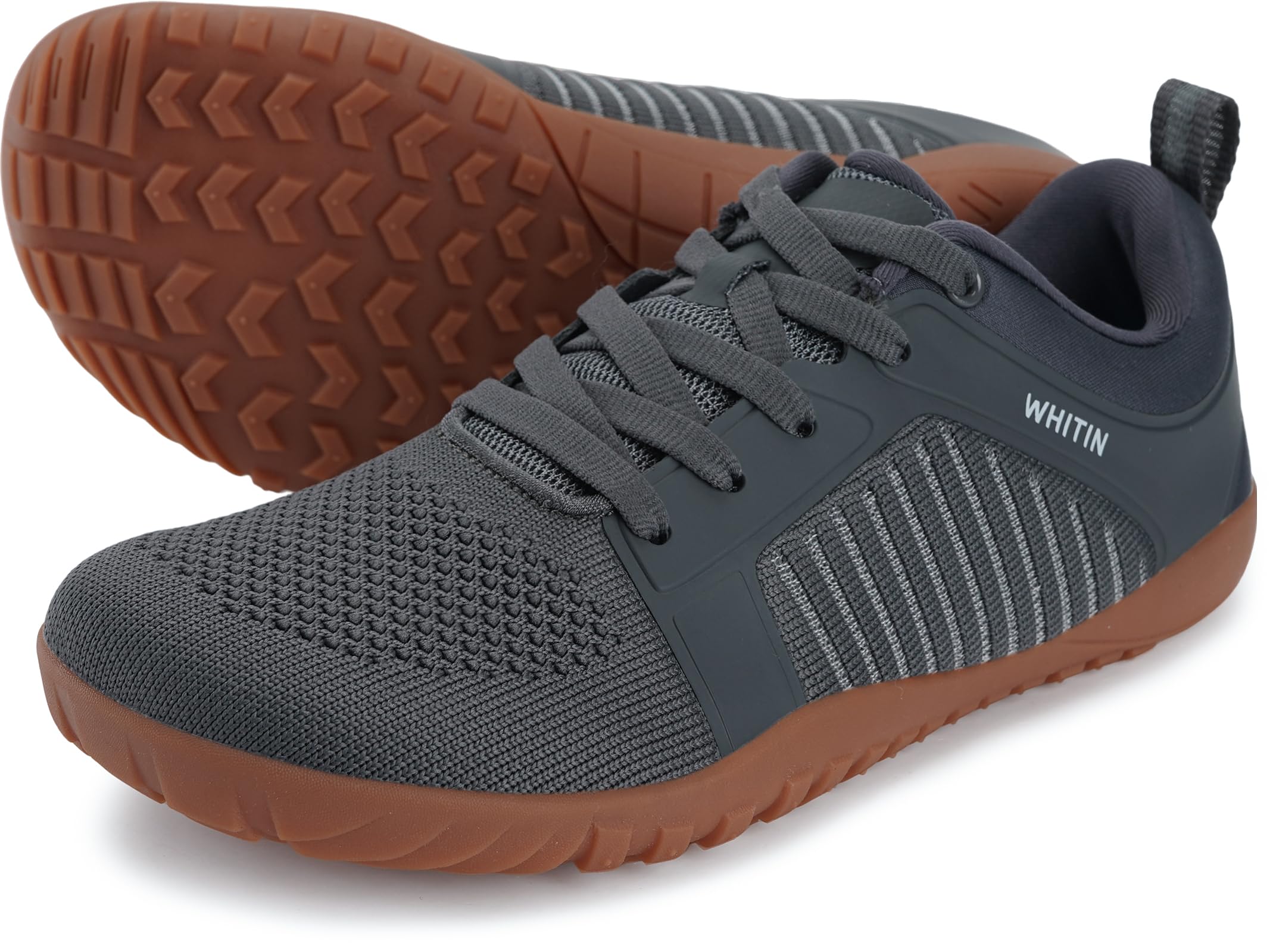
The only true trail shoe in the group — dual-directional 3mm lugs and a zero drop stance.
The W51 is the pick that actually takes on dirt, rock, and mud. Its dual-directional 3mm trail lug tread is the standout spec — raised bumps that bite both forward and back for grip on wet slabs and dry, loose ground. The zero drop sole puts your heel level with the forefoot for a natural stride, and the wide toe box lets the toes splay for balance and power on uneven terrain.
Where it beats the casual picks here is traction. That tread pattern gives you real bite on a loose gravel trail where a flat canvas shoe would slip, and the low height keeps you connected to the surface so you feel the ground through the sole. Owners describe the shoes as very comfortable, with the flexible sole drawing specific praise for how it moves with the foot on the trail.
The catch on a flat trail shoe is arch support, and this one draws mixed feedback on that front. Some owners find it well supported for balance; others say the arch lift is thin. Flexibility is also split, with some finding the sole very flexible and others reporting a stiff feel. Sizing is the other watch-out — some pairs run large and some feel too tight, so measure before you buy. For a flat trail shoe under forty dollars, this is the strongest option here.
Pick these for: trail running, hiking, and off-pavement walks where real lug depth and a zero drop stride matter.
Look at a cushioned option instead if: you need firm arch support or a consistent fit right from the start.
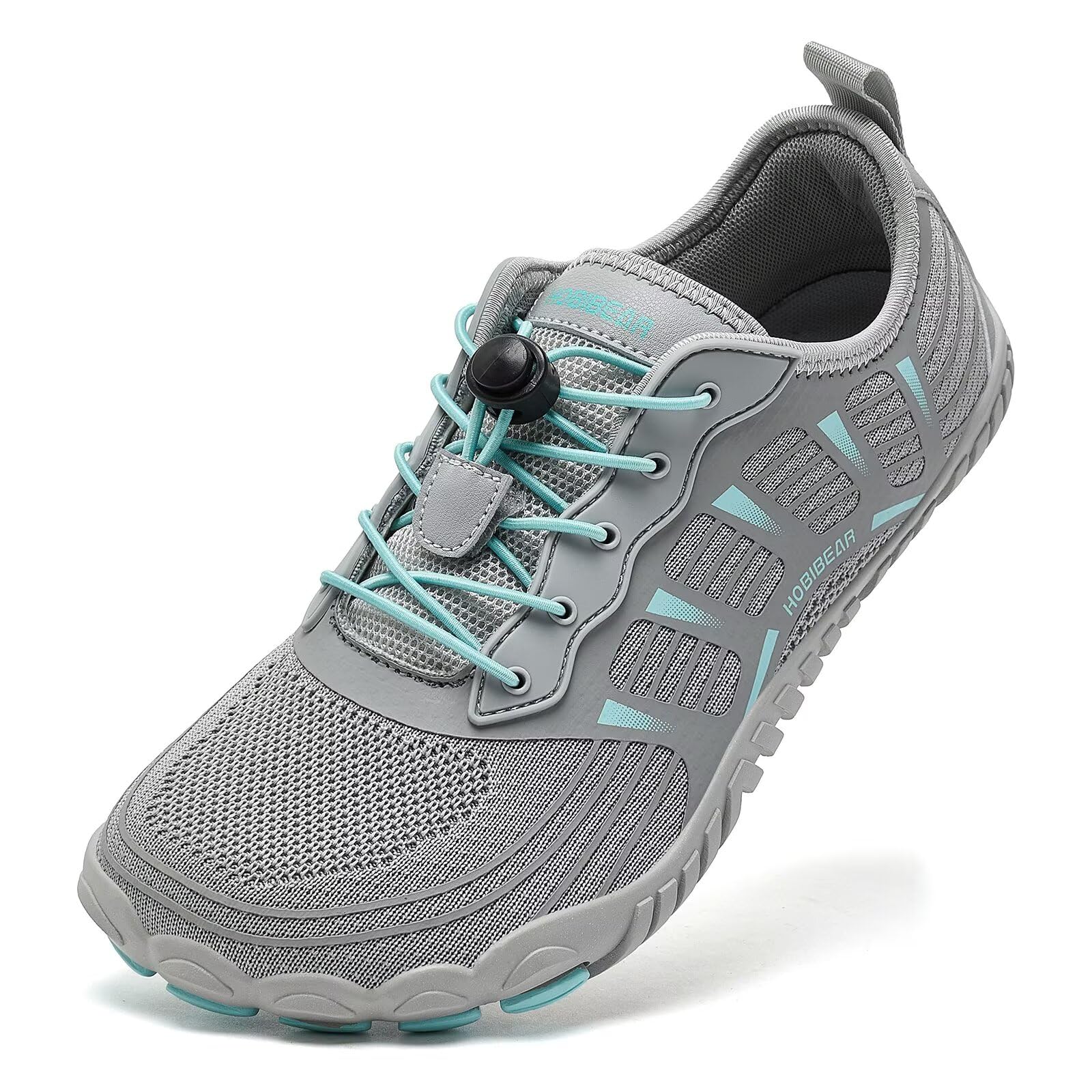
5. HOBIBEAR Barefoot Shoes for Women
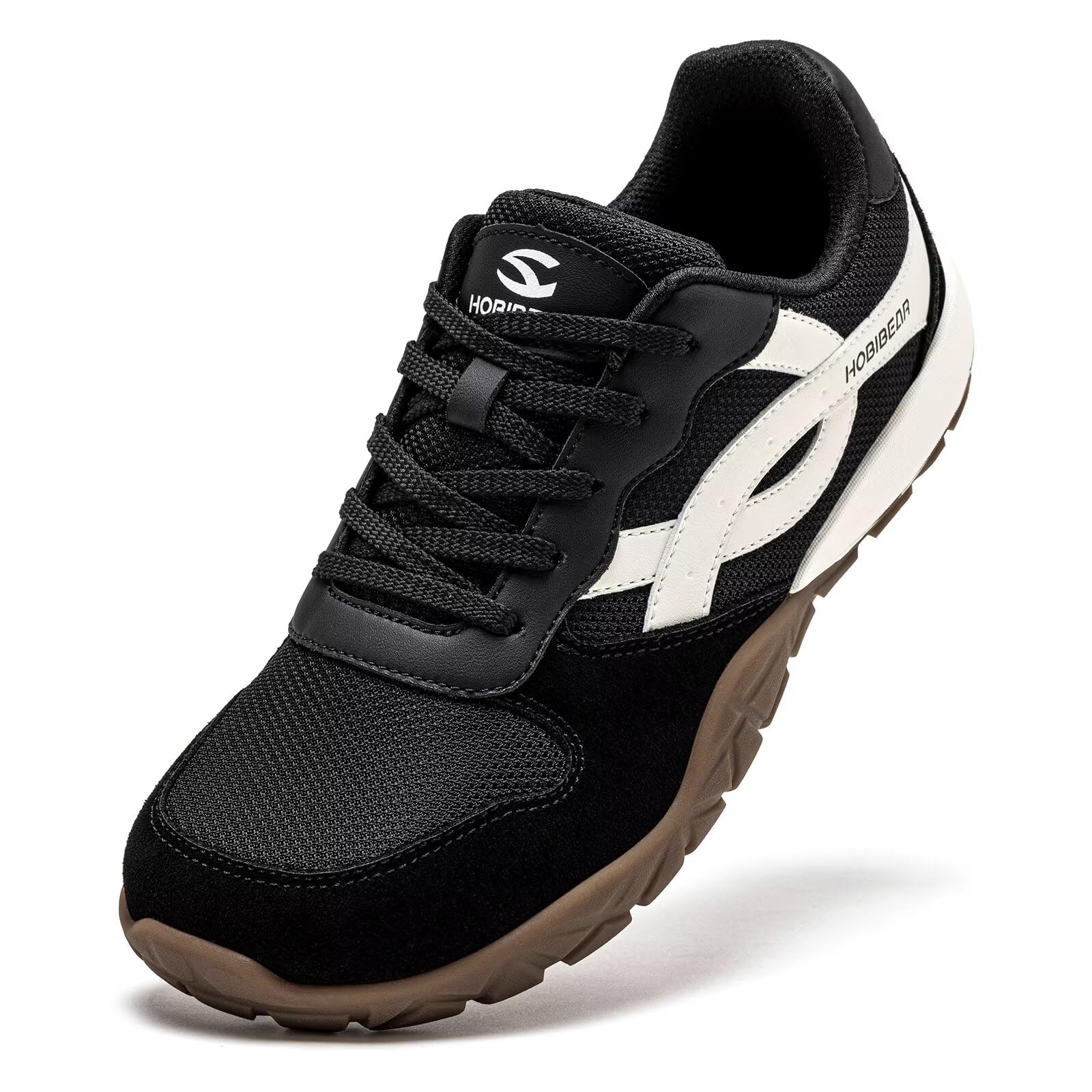
One flat shoe for the run, the gym, and the coffee run after — and it does not look like a barefoot shoe.
The HOBIBEAR trail runner is designed to be the one pair you reach for across several sports. It covers running, walking, hiking, trail running, tennis, gym work, and exercise in a single minimalist build, and the upper is shaped so it can pass as a casual sneaker rather than a technical box-toe design. Owners note the wide toe box is what gives them room, and the bit of insole cushion softens the flat, ground-feel ride for everyday wear.
Quality is the strongest theme in the feedback, and durability on hard wear also comes back positive, with reports of the shoe holding up through heavy use. That durability under heavy use is rare at this price, and it strengthens the case for a shoe covering several activities.
The main issue is fit consistency. Reports split between owners who love the room in the front and owners who find the pair too large, and sizing is not consistent between orders. Some also find the shoe heavier and less cushioned than expected. Order by measured foot length, and if you are between sizes, lean toward the smaller one rather than the larger.
The do-it-all case: running, gym, tennis, and hiking all in one flat shoe, with quality feedback strong and hard-wear durability holding up, so you are not buying a different shoe per activity.
Sizing is the variable: fit reports split and examples run large, so measure your foot and size down if you are between numbers.
Worth picking when: you want one flat shoe for multiple activities and a look that passes as a regular sneaker.
Not quite right if: you need a precise size match without checking the chart, or you want a thicker cushion under every step.
Know the Specs
Zero Drop and Ground Feel
A zero drop sole puts the heel and the ball of your foot at the same height, with 0mm of offset between them. That flat base changes how your weight sits — instead of tipping you forward onto the ball of the foot, it lets you stand evenly. Ground feel comes from how thin and flexible the sole is. A flexible sole that bends in your hand passes surface information back to your foot, which is the point of a minimalist shoe. If the sole is too thick, you lose that connection; too thin on a rough trail, and little stones feel sharp. Match the sole to where you plan to walk.
Wide Toe Box and Foot Length
A wide toe box is shaped like a foot rather than a pointed dress shoe — broad and round at the front so toes sit straight instead of curling inward. This is the part you feel most if you have a wide foot, a bunion, or toes that swell by the end of the day. Toe box width and shoe length are separate things: a wide, roomy shoe that is too short will still jam your longest toe, so measure foot length and check the chart. Several picks here run large or small, so trust the measurement more than the number you normally wear.
Tread and Traction
Tread is the pattern on the sole — the lugs (raised bumps) that bite into the ground. A flatter, smoother tread pattern suits pavement, gym floors, and indoor use, while deeper lugs grip loose dirt, gravel, and mud. Lug depth is the key number: the WHITIN W51 runs a 3mm dual-directional trail lug tread for off-pavement use, which is deeper than the flat casual soles in this group. If you walk mostly on concrete, a flatter tread lasts longer and feels smoother; if you head into loose ground, the deeper lug pattern is what keeps you upright.
Insole, Cushioning, and Drop Range
The insole is the layer directly under your foot, and a removable insole lets you swap in your own insert for a different feel — the WHITIN S24 has one. Cushioning is the softness between your foot and the ground, often from an EVA midsole (a lightweight foam layer). A little cushion softens long walks; too much and you lose the ground feel a barefoot shoe is meant to give. Watch the listed drop too: some picks claim a “zero to low drop” range, which may not be truly flat at zero. If flat is the whole reason you are shopping, confirm the drop is zero before you order.
Common Questions
Should I wear barefoot shoes all day right away?
Do inexpensive barefoot shoes run true to size?
Will a wide toe box fix my bunion pain?
Can I run on trails in minimalist shoes with no cushioning?
Are barefoot shoes waterproof enough for rain?
How long should cheap barefoot shoes last?
Is it better to have zero drop or low drop for everyday walking?
Do I need arch support in a barefoot shoe?
What is the difference between a barefoot trail shoe and a regular sneaker?
Can I put my own insoles in these shoes?
The Bottom Line
For most people shopping for inexpensive barefoot shoes, the Xero Prio Neo is the strongest pick. It pairs a flat, flexible FeelTrue sole with a stated 5,000-mile sole warranty no other shoe here offers. If you need a slip-on for dry-day casual wear, the WHITIN W863 Canvas Slip-On gets you on without bending. And for rain, the HOBIBEAR Unisex Wide has the water-resistant upper the others lack. If trails are your plan, reach for the WHITIN W51, whose dual-directional 3mm lug tread is the only true trail sole in this lineup.
There is one honest nudge worth making. Every shoe in this group sits in the same modest budget band, so the choice is really about shape and use, not spend. Match the sole to your ground — flat canvas for pavement, lugs for dirt, a water-resistant upper for wet weeks — and measure your foot before you order. Sizing is the one thing that trips up buyers most often across this whole category. A pair that is half a size off will feel wrong no matter how wide the toe box is.
How we choose
We do not accept paid placement. Every pick is matched to a real buyer and a real use-case; we do not hands-on test units.
Sources
Specifications: manufacturer listings and product documentation. Review insights: verified customer reviews, as of November 2026. Pricing: not shown on this page (it changes often); check the current price via the retailer link.
As an Amazon Associate, Tactical Gear Guy earns from qualifying purchases. This does not affect which products we feature.