Specs are compiled from manufacturer listings and verified buyer reviews and can change over time — please confirm the key details on the product page before buying.
Most people shopping for an indoor pellet heater get talked into the wrong numbers. A big square-foot rating and a huge hopper sound great, but what actually decides whether you stay warm is heat output in BTU per hour (British thermal units, a measure of heat), how long one fill really burns, and whether the auger (the screw that feeds pellets into the fire) keeps feeding pellets at 2 a.m. This guide covers both the stoves that hold up and the ones that come with a catch you should know about before winter.
This guide is built by comparing the manufacturers’ published specifications and the patterns across verified customer reviews, so you get each pick’s real strengths and trade-offs instead of marketing spin.
You will see how each unit’s hopper, burn time, and efficiency rating translate into a real heating season in your home. Here is the honest, spec-by-spec breakdown of every indoor pellet heater worth considering.
Top Picks
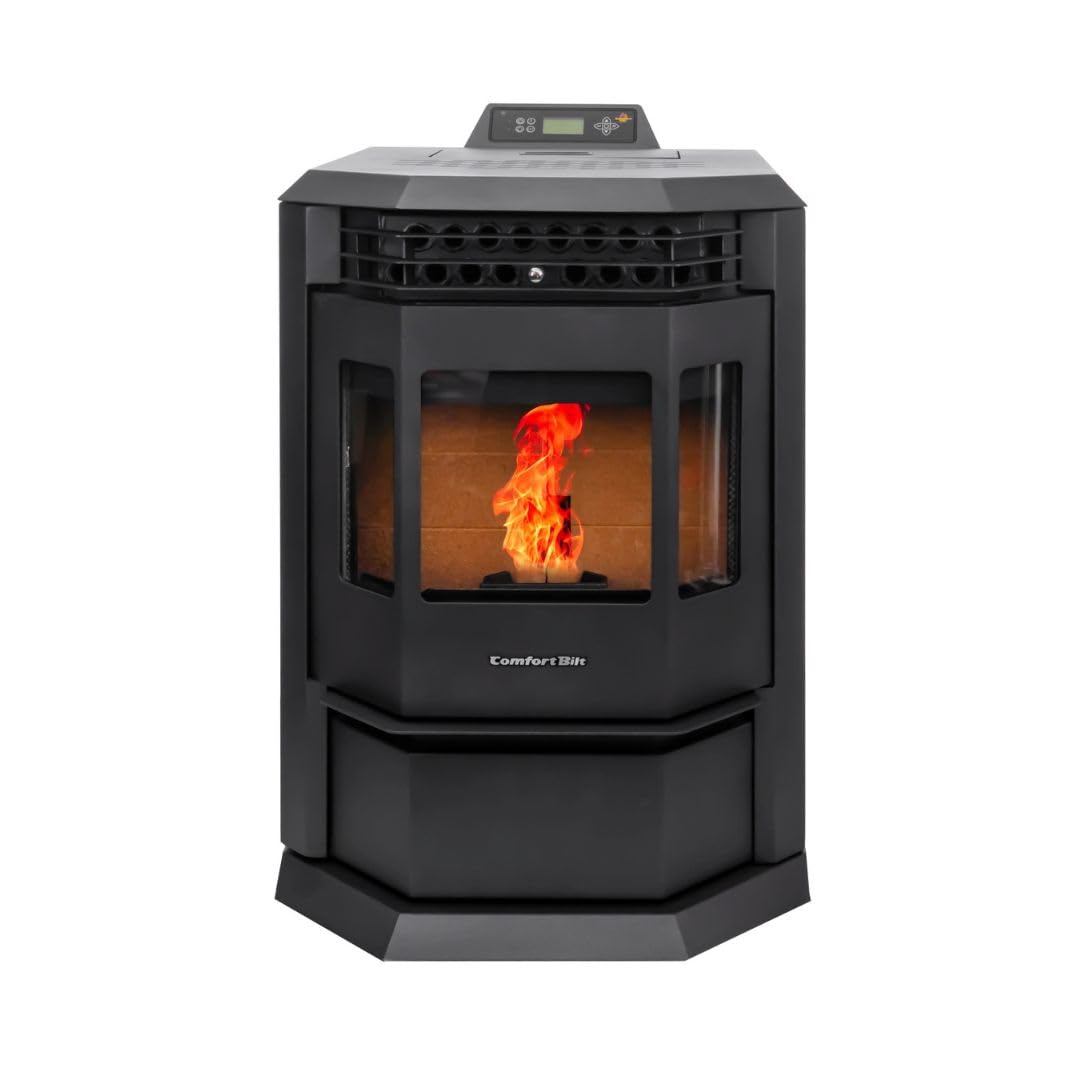
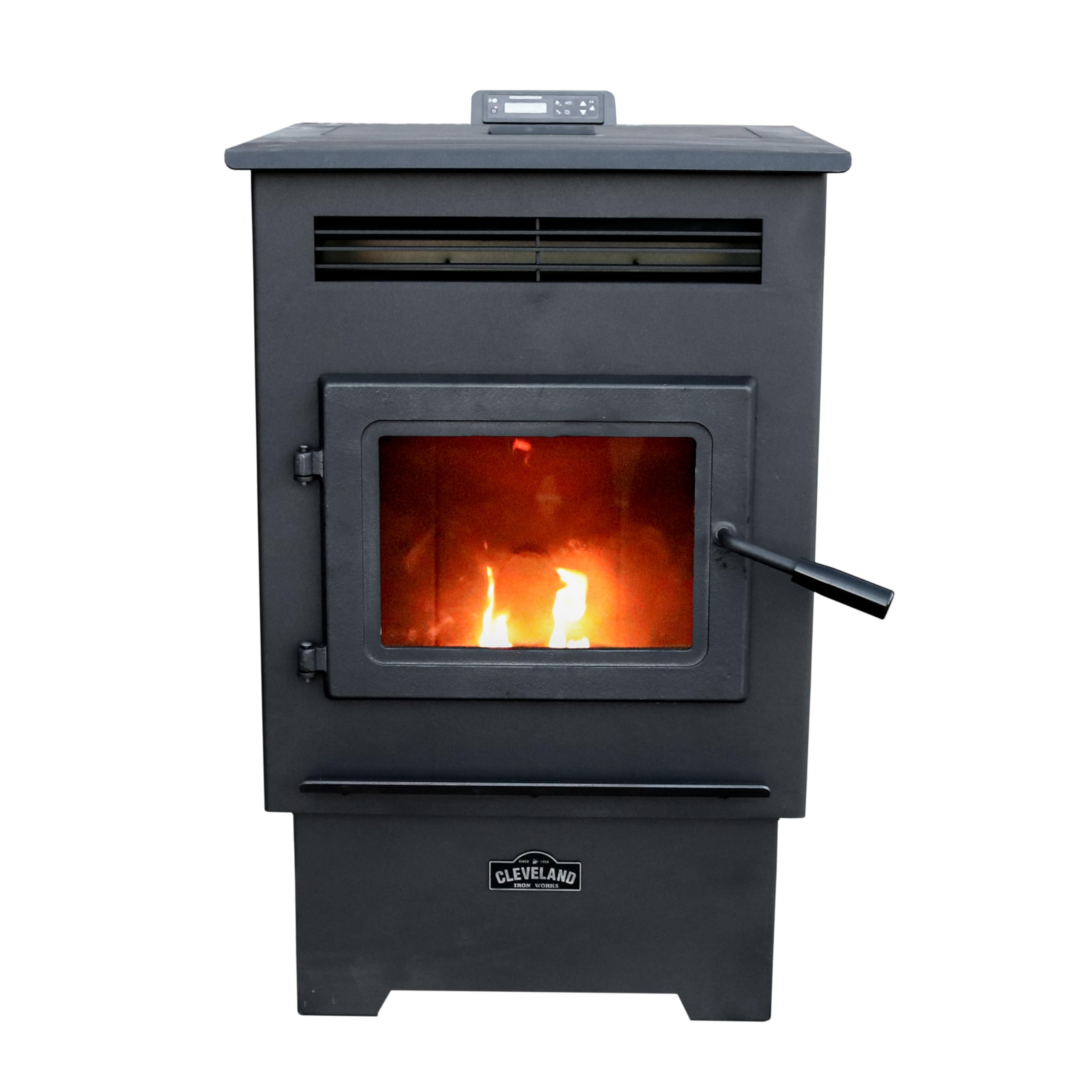
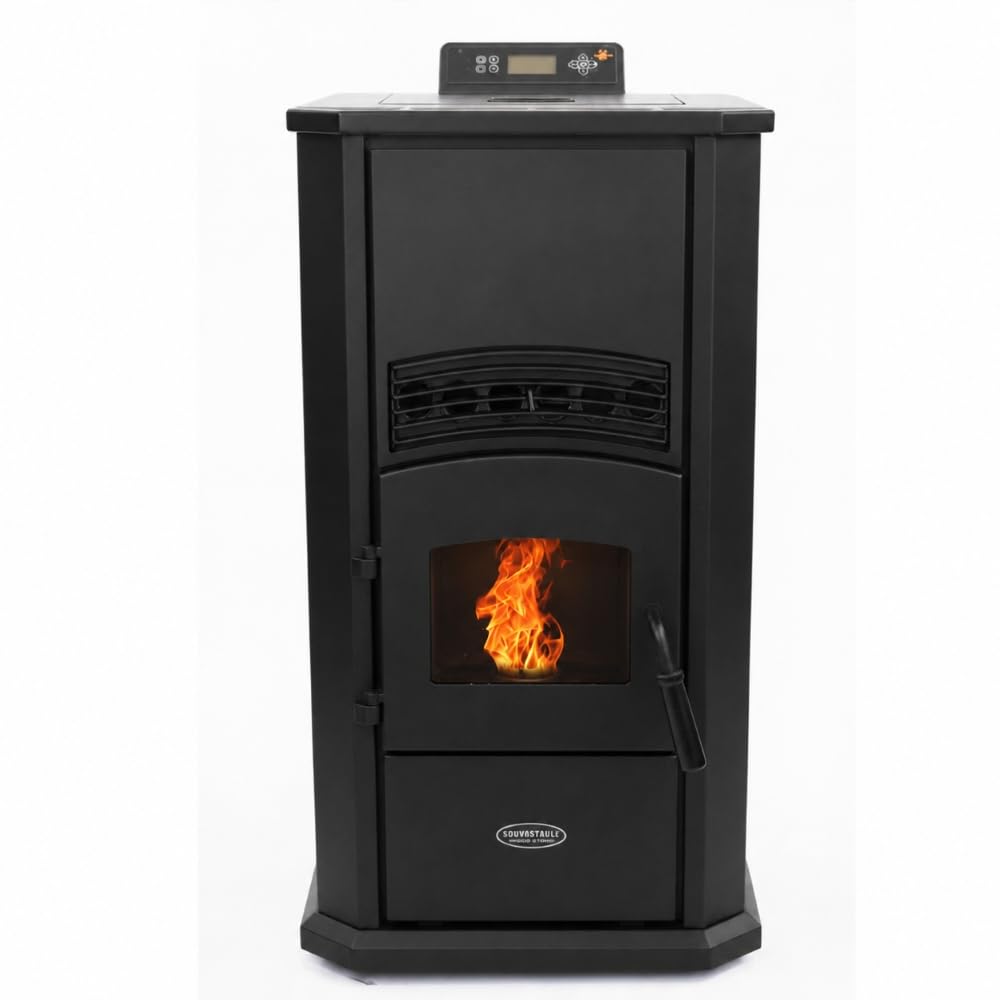
How To Choose The Best Indoor Pellet Heater
An indoor pellet heater is a real heat appliance, so the buying decision is different from picking a space heater. You are choosing a fuel-fed, vented unit (one that burns pellets and sends exhaust outside through a pipe) that will run for hours at a time. It needs to match your room size, your venting path, and how often you are willing to pour in a 40-pound bag of pellets. Start with the room, then work backward to the machine.
Match heat output to your actual square footage
Heat output is measured in BTU per hour, and it is the single most useful number on the spec sheet. A unit rated at 41,000 BTU runs hotter than one at 29,501 BTU, which is why matching output to your space matters before anything else. A stove sized for a small shop will strain to warm a drafty two-story house, and an oversized stove will cycle on and off awkwardly in a single room. Know your heated square footage first, then compare BTU.
Hopper capacity decides how often you stop what you are doing
Hopper capacity is listed in pounds of pellets, and it sets how long the stove runs before you refill. A 40-pound hopper and a 130-pound hopper behave very differently on a cold night. Larger hoppers like the 130-pound units mean fewer trips with the pellet bag. Smaller hoppers are fine for shorter runs or part-time use, but they ask more of you during a cold snap.
Efficiency rating and venting are not fine print
Efficiency ratings, often given as HHV or a percentage, tell you how much of the pellet’s energy ends up as room heat rather than heading up the flue. Higher efficiency units get more warmth from each bag. Venting type, whether the stove is direct vent or vented, changes where and how you can install it, so check that your planned location works with the unit’s venting before you buy. Temperature controls also vary widely, from a simple dial to programmable thermostats and app control.
Side-by-Side Comparison
| Model | Best For | Heat Output (BTU/hr) | Hopper Capacity | Heating Coverage | Amazon |
|---|---|---|---|---|---|
| HP22 Pellet Stove★ Best Overall | Whole-home warmth, proven design | 41,000 | 55 lb. | 2,800 sq. ft. | Amazon |
| Medium Pellet StoveBest for Workshops | Shop and garage heating | 30,124 | 60 lb. | 1,500–2,200 sq. ft. | Amazon |
| HP41 Alpine Pellet StoveRoom-Size Pick | Mid-size rooms with a budget frame | 32,155 | 52 lb. | 2,200 sq. ft. | Amazon |
| Castle 41278 Serenity | Easy-clean, programmable heating | 32,000 | 40 lb. | 1,500 sq. ft. | Amazon |
| HP42 Alpine Pellet Stove | High BTU output with a large hopper | 42,370 | 120 lb. | 2,800 sq. ft. | Amazon |
| Cleveland Iron Works Large | Big hopper with app control | 29,501 | 130 lb. | 2,000–3,000 sq. ft. | Amazon |
| Canyon Lodge Large | Mobile homes and basement installs | 29,501 | 130 lb. | 2,000–3,000 sq. ft. | Amazon |
| PelPro PP70 | Long fills and simple dial control | 42,500 | 70 lb. | 2,000 sq. ft. | Amazon |
| HP50S Pellet Stove | Compact footprint in tight rooms | 42,000 | 47 lb. | 2,200 sq. ft. | Amazon |
| Bay Front Pellet Stove | Fireplace-like viewing with WiFi | 30,173 | 66 lb. | 1,800–2,500 sq. ft. | Amazon |
| Freedom Stove PS21 | Power-outage backup and DIY install | 34,700 | Not listed | 800–1,800 sq. ft. | Amazon |
Detailed Reviews
1. HP22 Pellet Stove, 2,800 sq. ft., 55 lb. Hopper, Black
Our pick — 4.0+★ from 250+ verified ratings; the strongest balance of quality and price.
The whole-house workhorse with enough BTU to keep a big room at shirt-sleeve temperature.
The HP22 is the pick that earns its spot on raw capability. It delivers up to 41,000 BTU per hour (the measure of heat energy it puts out each hour), and that output is paired with a 2,800-square-foot coverage claim. Put another way: this is a machine built to warm a large, open floor plan, not just a single corner. It runs five power settings and a programmable thermostat so the stove heats to your schedule rather than your guesswork.
What wins people over here is the performance across the board. The stove lands strong marks for reliability and for heat output, and the setup story is short — installers report getting it running within an hour. It ships with a remote control and auto ignition, so you are not crouched by the fire pot with a lighter every morning. A 55-pound hopper feeds the burn, and the removable ash pan keeps cleanout quick. It is EPA and CSA certified and carries a bay-view window so you can see the flame.
The honest catch is sound. Some units run quiet and some develop a steady whine that owners notice in a silent room, so noise is the one thing that varies from house to house. Durability feedback is mixed too, with an occasional unit throwing an alarm rather than staying lit. It is also a heavy freestanding stove at 273 pounds, so plan the install with a second set of hands. For a mid-range pick that heats a large space hard, the HP22 is the strongest all-rounder on this list — comfortably the crowd favorite.
Where it delivers
- 41,000 BTU/hr output, a 55 lb. hopper, and up to 20 hours of burn time
- Five power settings plus a programmable thermostat for scheduled warmth
- Remote control and auto ignition cut the daily fuss
- EPA and CSA certified with a bay-view window and removable ash pan
What to weigh first
- Noise is the inconsistent part — some units whine in a quiet room
- 273 lb. freestanding unit needs a planned install location
- A few units have needed attention for alarms or staying lit
Best for big rooms: anyone heating a large open floor plan who wants serious BTU and a big hopper without daily tending.
Think twice if: your stove will sit in a bedroom-adjacent space where a fan whine would keep you up.
2. Medium Pellet Stove – 60lb Hopper
The cast-iron shop heater that runs a paint booth or garage without filling the whole house.
This Cleveland Iron Works unit is a 30,124 BTU heater with a 60-pound hopper (the pellet storage bin), aimed at the 1,500 to 2,200 square-foot range. It uses cast iron for the body, which gives it a solid, planted feel on the floor. what separates it from the bigger stoves here is the built-in WiFi so you can adjust the burn away from the machine. It also carries a set-temp mode that holds the area at a steady number rather than blasting hot and cold.
The workhorse story is the functionality. Owners run this in workshops and outbuildings and report it keeps the space warm and consistent — one 524-square-foot paint shop sat at a comfortable 72. The set-and-regulate behavior means the stove throttles back once the room hits your target, which suits a space you occupy for stretches at a time. It burns pellets cleanly, including softer wood pellets, and installs without drama.
The trade-off you should know before buying is the smart layer. The WiFi and advanced settings are fiddly enough that some owners simply fall back on the basics, and the manual is thin in spots where you need clarity. The app is a convenience, not the reason to buy this stove. For a mid-range unit that anchors a garage or shop with steady heat and a decent hopper, though, it does the job.
Steady heat, proven body: cast iron construction, a 60 lb. hopper, and set-temp regulation make it a reliable space heater for a workshop or garage.
The smart control is optional: treat the WiFi as a bonus and run it on the dial and thermostat, and the stove delivers without fighting the app.
Reach for this if: you want steady heat in a shop, garage, or outbuilding and value a heavy cast-iron build over app polish.
Look elsewhere if: a fussy smart interface would frustrate you — the advanced settings take patience to dial in.
3. HP41 Alpine Pellet Stove
A 2,200-square-foot heater that squeezes more warmth from every bag at 80.3% HHV efficiency.
Here is a stove that trades sheer BTU for fuel economy. The HP41 Alpine tops out at 32,155 BTU per hour with a 52-pound hopper and a large fill lid, and it is rated at 80.3% HHV efficiency. That efficiency figure means a higher share of the pellet’s energy becomes room heat instead of heading up the vent — so you burn less fuel for the same warmth. It sits below the 41,000 BTU of the HP22 above, but it handles a still-substantial 2,200 square feet.
The package mirrors the Comfortbilt formula: five power settings, temperature controls, a remote, and auto ignition. It is EPA and CSA certified with a powerful room blower and a removable ash pan insert tray. The steel build stands 206 pounds with a footprint of 38″D x 26″W x 41″H — a larger floor presence than the Castle Serenity, whose 23.84″D x 18.23″W x 36.35″H frame tucks into tighter spots. It is freestanding and vented, so plan the flue path with the larger footprint in mind.
The caveat is straightforward: this model has a thinner review base than the others here, so its track record is less proven than the HP22’s. It also needs the larger install footprint, so a small alcove may not work. If efficiency per bag is what you care about most and you have 2,200 square feet to cover, the Alpine earns its keep.
Efficiency over brute force: the 80.3% HHV rating and five power settings mean less fuel burned for steady warmth across up to 2,200 square feet.
Give it space: the 38″D x 26″W x 41″H footprint wants a clear wall, not a tight corner.
Best for: a 2,200-square-foot home where you want efficiency-per-bag and Comfortbilt controls without maxed-out output.
Not ideal if: you have only a small footprint to spare or you want a deeply proven track record.
4. Castle 41278 Serenity Pellet Stove, 40lb Hopper, Black

The cleanout-friendly stove with four operating modes you can program from the remote.
Cleanout is the chore that wears pellet-stove owners down, and the Serenity was designed around it. There are no tubes, corrugations, or hidden chambers to dig pellets out of, which makes a routine sweep far quicker than most. It heats up to 1,500 square feet at 32,000 BTU, and it runs 120 volts at an operating wattage of 77 watts.
The controls are the draw for anyone who wants to automate heating. You get Manual, Thermostat, Weekly, and Eco operating modes, and all of them can be programmed from the included remote. Eco mode is the clever one — it toggles the stove on and off to hold your desired room temperature rather than burning flat out. The 40-pound hopper pairs with that smart cycling so you are not refilling constantly. That makes it a good fit for a 1,500-square-foot space on a schedule.
Reliability is where buyers split, and it is the one thing to go into with eyes open. Some buyers report a consistent, steady flame and a full 24 hours out of a 40-pound sack of pellets; others hit startup snags and frustration. The 1,500-square-foot ceiling also puts it behind the 2,800-square-foot Canyon Lodge, which holds about 130 pounds of pellets — a big-picture difference in how far one fill goes. If easy cleaning and programmability top your list, the Serenity delivers that in spades.
The clean-out advantage: no hidden chambers and a 40 lb. hopper make routine maintenance quicker than most.
low-maintenance: Manual, Thermostat, Weekly, and Eco modes are all programmable from the remote, with Eco cycling on and off to hold temperature.
Pick this for: a 1,500-square-foot room where quick cleanouts and scheduled Eco heating matter more than maximum output.
Know before you buy: startup reliability varies unit to unit, so buy from a seller with a solid return path.
5. HP42 Alpine Pellet Stove
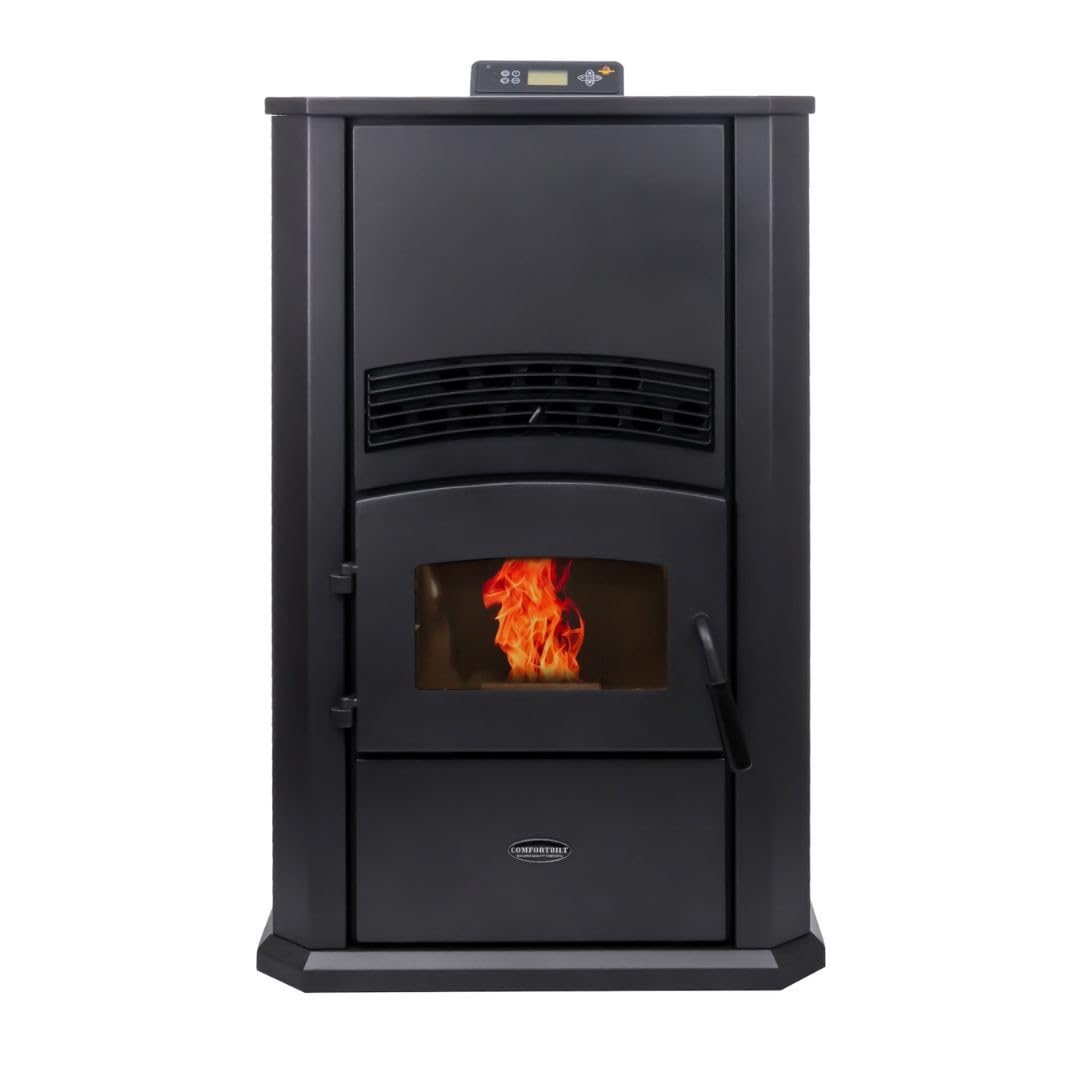
The biggest, hottest Alpine — 42,370 BTU and an oversized 120-pound hopper built for long fills.
Pure output is the headline. The HP42 pushes up to 42,370 BTU per hour, more heat than any other stove here and a clear step above the 29,501 BTU output of the Cleveland Iron Works Large. The oversized 120-pound hopper feeds up to 24 hours of continuous operation at 87.5% efficiency, so one fill covers a long cold stretch. It covers up to 2,800 square feet.
Beyond output you get five power settings, a programmable thermostat, a remote, and auto ignition, plus a powerful room blower and a removable ash pan insert tray. It is EPA and CSA certified. The quiet blower is the bright spot in the feedback — owners moving up from older stoves notice the difference. That clean stream of air plus the throughput makes it a candidate for a large, open, whole-home heating job.
Now the part you cannot ignore: reliability is the recurring theme in the feedback, and it is not a flattering one. Reports of the stove breaking down repeatedly inside the first months show up often enough to matter, and durability is a named concern. Customer support is the second half of that story — several owners describe unanswered calls and emails. This stove is capable on paper but wants a buyer who is comfortable with a return policy and some self-reliance. Buy it for the output and the long fills, and keep the paperwork handy.
What it brings to the room
- 42,370 BTU/hr — the highest output on this list
- Oversized 120 lb. hopper for up to 24 hours of continuous operation
- 87.5% efficiency and quiet blower
- Programmable thermostat, remote, and auto ignition standard
What the reviews warn about
- Reliability complaints are frequent — breakdowns inside the first months
- Customer support is hard to reach for some buyers
- 275 lb. freestanding unit with a large 30″D x 30″W x 46″H footprint
Choose it for the heat: the highest BTU and the longest single-fill runtime on the list, for a large whole-home job.
The real caution: a shaky reliability record and slow support mean you should confirm the return policy before committing.
6. Cleveland Iron Works Large Pellet Stove – 130lb Hopper
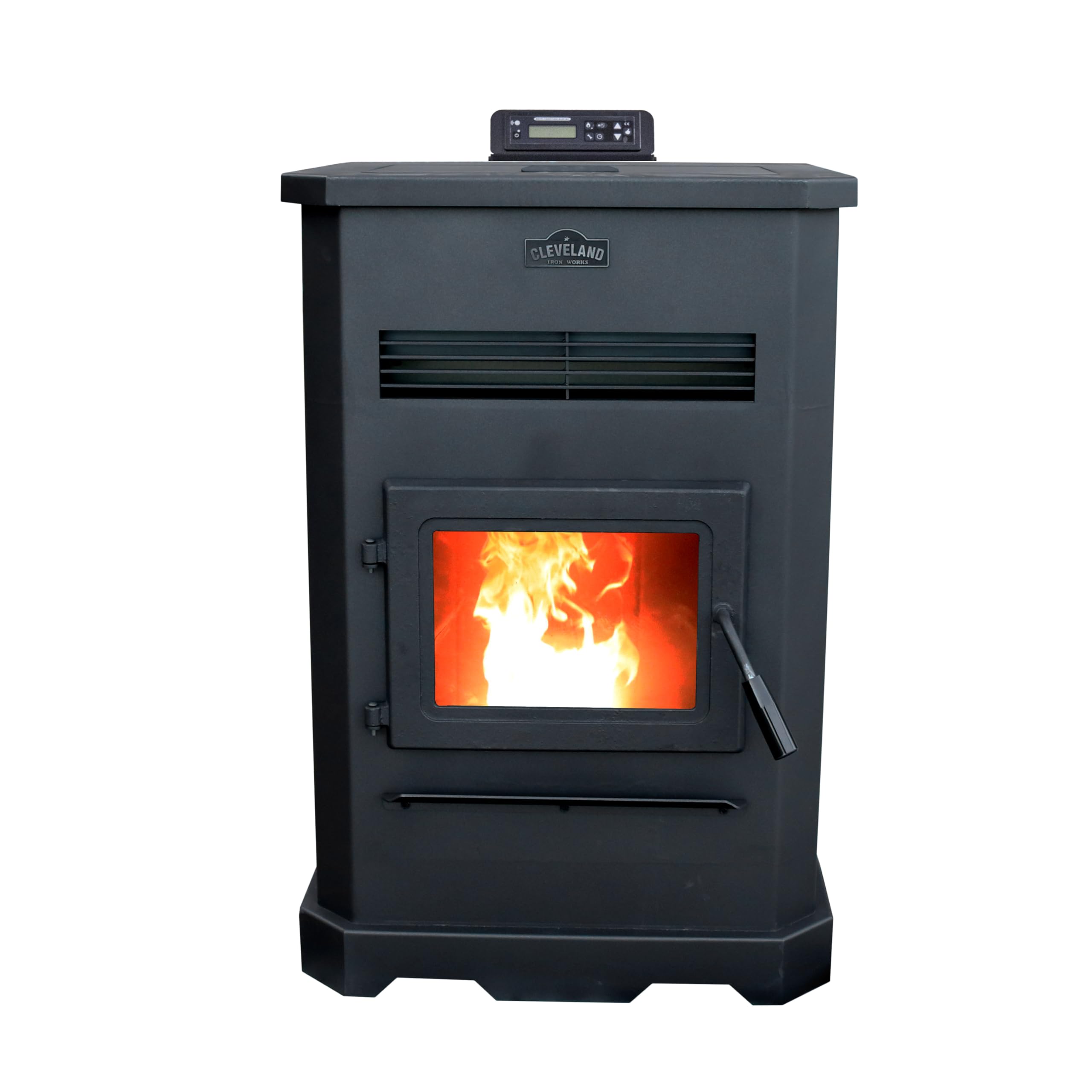
Three bags of pellets go in, and the refill trips drop off your chore list.
The hopper is the whole pitch. This Cleveland Iron Works stove holds a 130-pound hopper — owners mention it takes up to three full bags of pellets, which cuts how often you haul a bag out to the stove. It covers 2,000 to 3,000 square feet at 29,501 BTU output. That is a lower output number than the HP42’s 42,370 BTU, so it leans on the long burn and capacity rather than brute force. Built-in WiFi lets you adjust it from the app.
The effectiveness is what carries it. Owners get the house warmed up quickly once it is burning, and the quality and capacity get consistent praise. Heat is solid once the fire is going, and the app control is a genuine convenience for a stove this large. It sits on the floor as a 209.4-pound cast-iron freestanding unit.
The manuals are the weak link. The instruction book needs a rewrite for clarity, which matters on a burner you are learning to tune. Once you are past that and it is burning, the big hopper does exactly what you want it to. For anyone who hates refilling mid-evening, this is the one to look at.
Fewer refills, more uptime: the 130 lb. hopper holds up to three bags, and WiFi app control lets you adjust it without walking over.
Set expectations on capacity: the hopper runs closer to 115 lbs in practice, still among the biggest here, and the manual is thin.
Right for you if: refilling less often is your top priority and you want app control on a large cast-iron unit.
Look at something else if: you need maximum BTU — this one leads on capacity, not raw output.
7. Canyon Lodge Large Pellet Stove
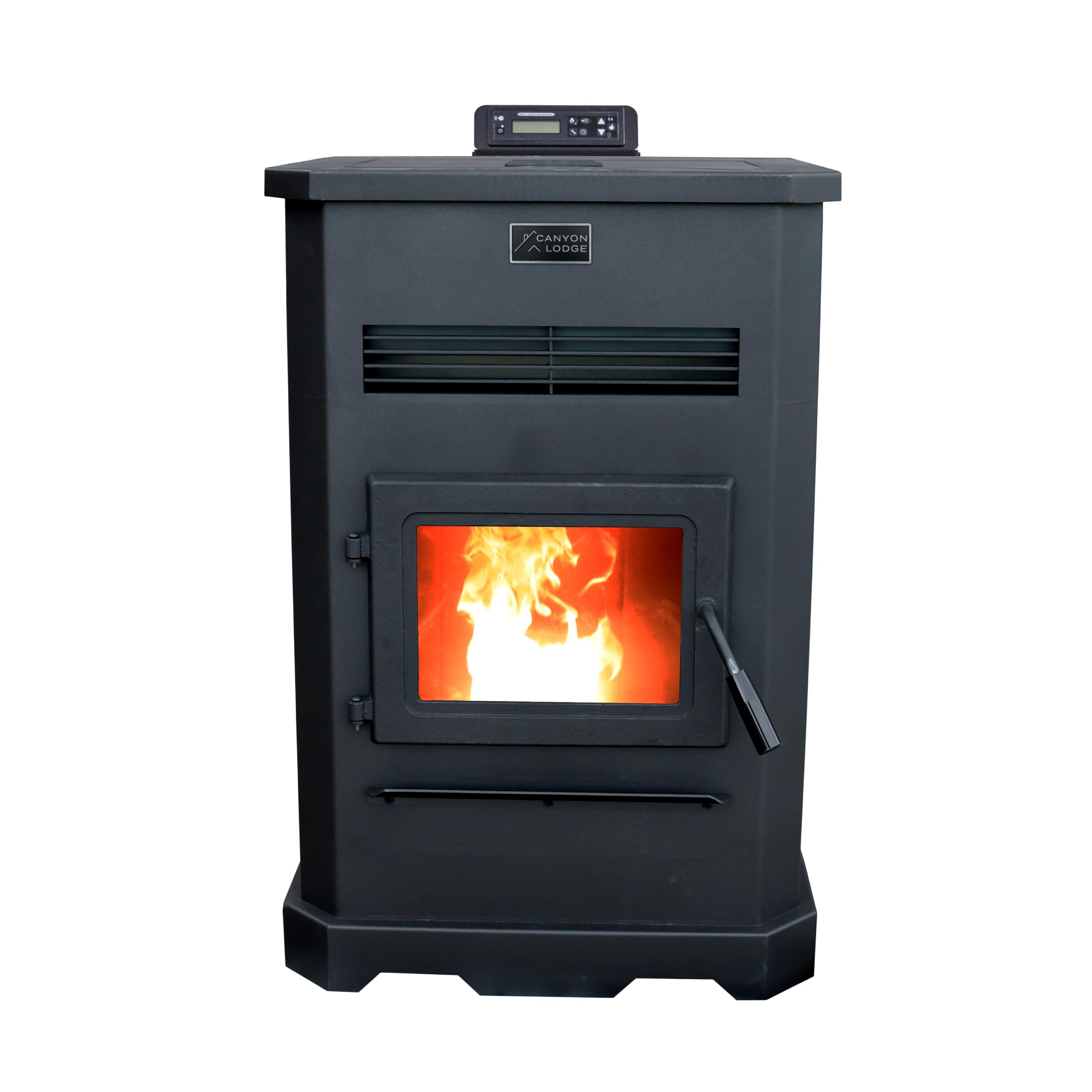
The basement-dweller that warms the whole house from below with a whisper-quiet blower.
Canyon Lodge built this one for installs where space and sound both matter. It is mobile home approved and ships with a fresh air kit included, which is the setup a lot of mobile and manufactured homes need to vent correctly. It covers up to 3,000 square feet at 29,501 BTU with a 130-pound hopper and a steel fire pot. The large viewing glass has an air-wash system to keep the flame visible. Its 130-pound hopper is far ahead of the Castle Serenity’s 40-pound cap — that smaller stove fills three times sooner.
Smart home tech and Whisper Quiet Blower Technology are the daily-use features. It lights automatically, and the quiet blower is the piece you notice at night. The steel fire pot and air-wash glass mean the clean sightlines last longer between cleanouts. It is EPA approved and stands 209.4 pounds. Owners heat whole houses from the basement with it, and a 4-bedroom mobile home gets warm throughout. One buyer sums up the practical view: it is not much to look at, but it is built well and does what it claims.
The one thing to size correctly is the hopper. It does not quite hold the stated 130 pounds, taking around three 40-pound bags instead, so plan your refill rhythm around that. Quality keeps its side of the bargain for most buyers. If your stove lives in a basement or a mobile home and you want quiet operation, this is the model to shortlist.
Built for tight installs: mobile home approval, an included fresh air kit, and a whisper-quiet blower suit basements and manufactured homes.
The basement trick: it has the reach to heat a whole house from one floor down, so stairwell placement works well.
Made for: a mobile home or basement install where a quiet blower and a fresh air kit are non-negotiable.
One honest limit: the hopper falls short of its 130 lb. label, taking roughly three 40 lb. bags instead.
8. PelPro PP70 Pellet Stove, 70 lb Hopper, 42,500 BTU
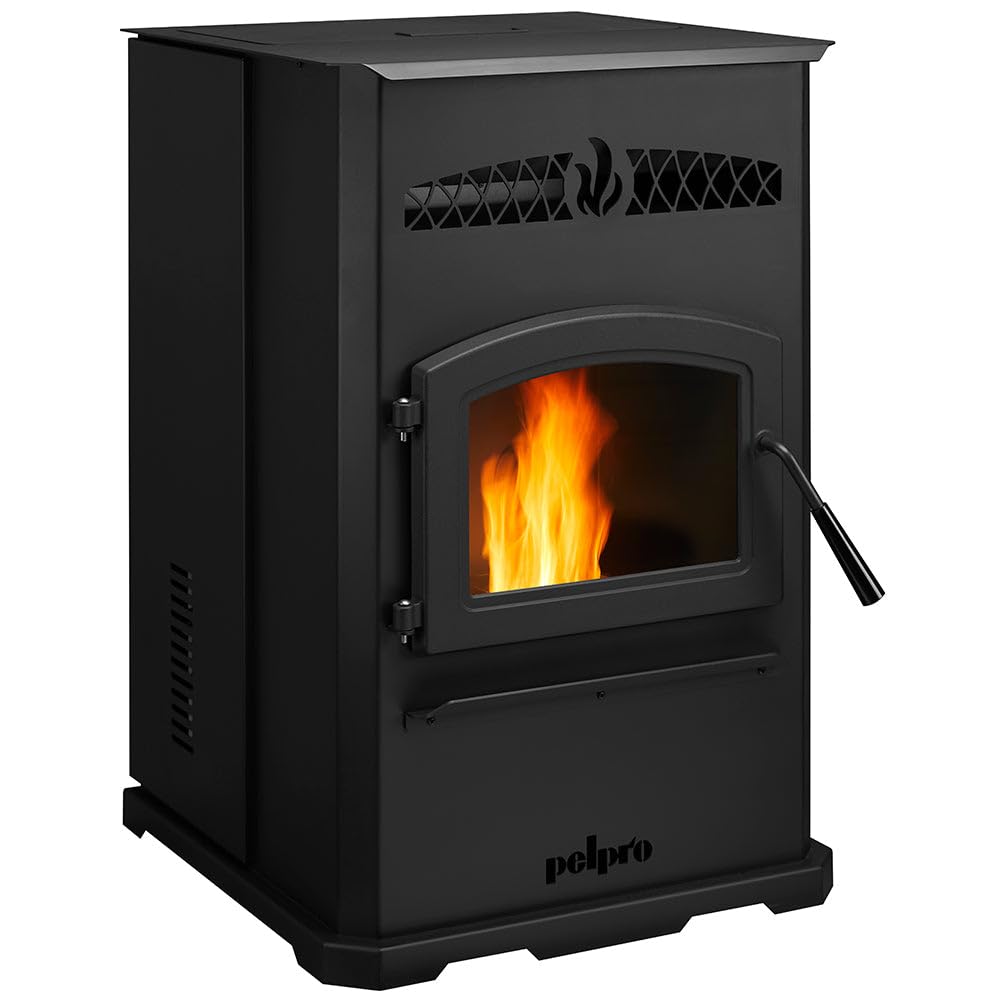
A dial and a thermostat do the thinking, while 88.5% efficiency does the saving.
Efficiency is where the PP70 earns attention. It is EPA-certified at 88.5% efficiency, the highest on this list, so more of each pellet becomes room heat. It delivers 42,500 BTU across up to 2,000 square feet. That makes it a strong fit for an older home, a tiny home, a shop, a garage, a cabin, or a mobile home — it comes with a fresh air kit included for that last one. A 70-pound hopper holds up to two days of fuel at low settings.
The controls are refreshingly plain. Instead of an app or touchscreen, you get a built-in thermostat and an easy dial with 10 variable heat settings, plus a quiet variable speed blower to move the air. A 300W auto-igniter lights the fuel cleanly. The footprint is tidy at 22″ wide, 33″ high, and 22″ deep, and it is made in the USA. If you want to walk up, turn a dial, and get heat without learning a menu system, this is precisely that stove.
Two things to keep in mind. At 2,000 square feet it will not cover the biggest open plans, so match it to your room. And it is a leaner feature set — no WiFi, no remote, no programmable scheduling. What you trade in smart controls you get back in efficiency and simplicity. For a shop or cabin where hands-on controls beat phone apps, that is the right trade.
Efficiency leader: the 88.5% EPA-certified rating stretches every bag, and a 70 lb. hopper holds up to two days of fuel.
Old-school simple: a dial with 10 heat settings and a thermostat — no app to fight.
Pick it for: a 2,000-square-foot shop, cabin, or older home where efficiency and dial-simple control win.
Skip the idea if: you want app control or scheduling — this stove deliberately keeps it manual.
9. HP50S Pellet Stove, 2,200 sq. ft., 47 lb. Hopper, Black
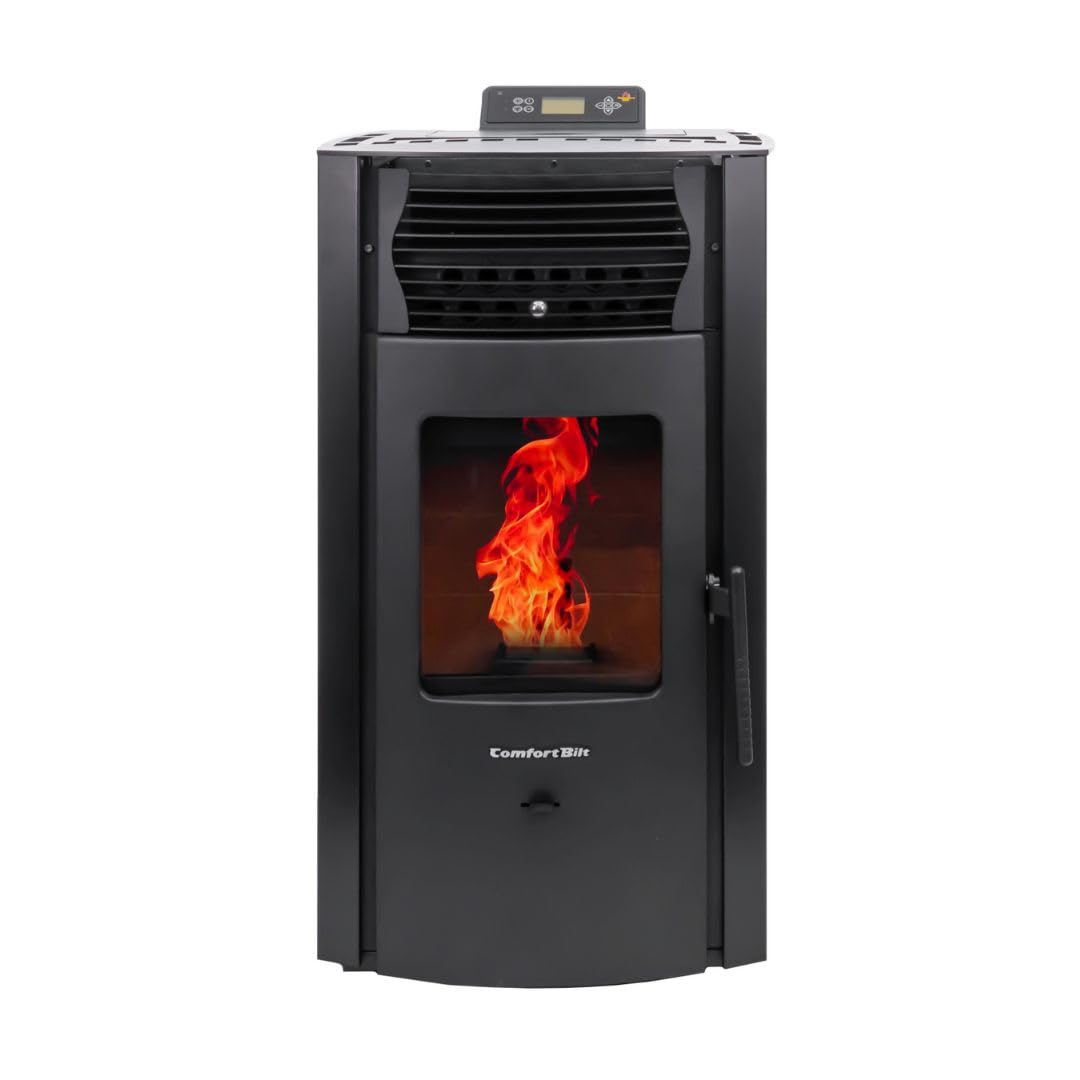
Slim enough for a workshop wall, hot enough to fight off a real winter.
If your room is short on floor space but long on cold, the HP50S is built to fit. It is a slim, space-friendly design at 28″D x 21″W x 36″H, aimed at homes, cabins, basements, and workshops. Despite the compact frame it delivers up to 42,000 BTU per hour and covers up to 2,200 square feet. A 47-pound hopper feeds up to 23 hours of burn time, so the slim frame still runs nearly a full day per fill.
What owners praise most is the efficiency — it turns fuel into warmth without waste, and the heat comes out as genuinely hot air. Customers note heating a 900-square-foot home without trouble, and one measured run took a room from 54 F to 64 F in 3 hours on the low setting. The stove is easy to install and easy to clean, and it burns five power levels with a programmable thermostat, remote, and auto ignition on board. It is EPA and CSA certified with a powerful blower and a removable ash pan.
The honest downside is an auger that has stopped feeding on some units, with owners swapping the motor and fuse without a fix. That is the one real risk here, and it is not universal. Read the operation manual thoroughly before your first burn — the setup expects you to understand the feed sequence. For a slim stove that fits a tight wall and heats a 2,200-square-foot space, the HP50S is a strong balance.
What owners like
- 42,000 BTU/hr in a slim 21″W frame for tight rooms
- Up to 23 hours of burn time from a 47 lb. hopper
- Five power settings, programmable thermostat, and remote standard
- Easy to install and clean with a removable ash pan
What to keep an eye on
- Some units have trouble with the auger stopping the feed
- Setup expects you to read and follow the operation manual closely
Best fit: a cabin, basement, or workshop with limited floor space where a slim 21″W frame and 42,000 BTU both matter.
Worth knowing: the auger is the part to watch, so verify the seller’s support and return terms.
10. Bay Front Pellet Stove w/Smart Home Technology

A bay-front window and a tax credit make this the good-looking, good-value living-room choice.
The bay front is the reason many buyers stop scrolling. This Cleveland Iron Works stove layers a 66-pound hopper into a 30,173 BTU heater that covers 1,800 to 2,500 square feet. It also qualifies for a 30% IRS Biomass Stove Tax Credit, so confirm eligibility before you file. Built-in WiFi and a digital control panel plus remote let you run it away from the fire.
Living-room comfort is where it shines. It heats 40 to 50 pounds of pellets cleanly, runs very quietly, and throws steady heat with a low ash load — one buyer even calls the ash level almost laughable, though a dedicated ash vacuum is worth having. It starts automatically when the room reaches your set temperature, which is what you want in a space you use every day. The appearance and quiet operation round out the package.
The realistic catch is upkeep. A few reviewers point out having to clean the stove every three days and finding the glass blackens over time — that is normal maintenance rather than a fault, but this is not a weekly-clean machine. Installation of a unit this heavy (242.5 pounds) wants help, and the auger has occasionally given buyers trouble. If you want a fireplace-look heater that warms a 2,500-square-foot living space and you are fine with a regular cleanout, the bay front brings real visual and tax-credit value.
Looks and quiet heat: a bay-front viewing window, quiet operation, and automatic temperature-triggered ignition make it a living-room centerpiece.
The tax angle: it qualifies for a 30% IRS Biomass Stove Tax Credit — confirm your eligibility when you file.
Great for: a 1,800 to 2,500-square-foot living space where appearance, quiet operation, and the biomass tax credit matter.
Plan for upkeep: expect to clean every few days and keep the glass wiped, and get help moving a 242.5 lb. unit.
11. PS21 Freestanding Pellet Stove

The only stove here that keeps burning through a power cut, thanks to 24V battery backup.
Storm-prone areas need a different kind of pellet stove, and the PS21 is built for exactly that. It runs on two 12V batteries (sold separately) through a 24V DC system that delivers over 40 hours of runtime during an outage. It heats 800 to 1,800 square feet at up to 34,700 BTU, using a stacked tube heat exchanger for steady warmth. A touchscreen, mobile app, and remote give you several ways to run it.
Performance is the standout. It lights in about 4 minutes and holds heat well, and an ECO mode throttles the pellet feed to stretch each bag. It is built for the do-it-yourselfer: easy to clean, maintain, and repair, and backed by a 5-year limited warranty with U.S.-based support. The swappable side panels take any standard 12×12 tile, and the Marble White finish suits a modern room. Owners heat their homes with it comfortably and value the confidence the backup battery offers.
Two honest limits. It covers a smaller area (800 to 1,800 square feet) than the big 2,800-square-foot units, so it suits a ranch home or a focused space rather than a sprawling floor plan. And the batteries are sold separately, which adds a step to your setup. If winter power failures are your real fear, that battery system is the feature worth paying for.
Power-outage insurance: 24V battery backup holds over 40 hours of runtime, lights in about 4 minutes, and carries a 5-year limited warranty.
DIY-friendly: easy to maintain and repair, with swappable 12×12 tile side panels for a custom look.
Choose it for: storm-prone or off-grid homes where staying warm through an outage is the whole point.
Keep in mind: coverage tops out around 1,800 square feet, and the batteries are sold separately.
Know the Specs
BTU Per Hour and Square-Foot Coverage
BTU stands for British thermal unit, and BTU per hour is the measure of heat energy a stove produces each hour. Higher BTU output means faster, stronger heating for a larger room. Square-foot coverage is the manufacturer’s estimate of how much space that output can warm, often under mild or optimal conditions. Use both together: check BTU for raw power, then confirm the square-foot rating covers the space you actually heat.
Hopper Capacity and Burn Time
Hopper capacity is how many pounds of pellets the tank holds before a refill. Burn time is how long that fuel lasts, often quoted in hours. A larger hopper generally means fewer refills, while a smaller one asks more frequent trips. Burn time also depends on the heat setting and efficiency, so a big hopper run low and a small hopper run high can last closer than you would expect.
Efficiency Rating (HHV)
Efficiency, sometimes listed as HHV or as a percentage, tells you how much of the pellet’s energy becomes room heat rather than leaving up the vent. A higher efficiency rating means more warmth from each bag, which matters when you are buying pellets by the ton. Look for the rated percentage when it is published and weigh it alongside BTU output.
Venting Type and Installation
Venting type describes how exhaust leaves the stove, and it governs where you can install it. Some units are direct vent, others standard vented, and mobile home installs often need a fresh air kit. Check the venting requirement against your wall, flue, and planned location before purchase. Auto ignition, remote controls, and programmable thermostats are convenience featuresthat affect daily use but do not change heat output.
Common Questions
How many BTU per hour do I need to heat my room with an indoor pellet heater?
How long does a 40 lb bag of pellets last in a pellet stove?
Do I need to vent an indoor pellet heater through a wall or can it run without a chimney?
Is a wood pellet stove safe to run overnight while I sleep?
Can I burn softwood pellets or only hardwood in these stoves?
What is the difference between HHV efficiency and the square-foot rating on a pellet stove?
How much floor clearance and space does a large pellet stove need?
Do these pellet stoves work in a mobile home or only in a house?
What kind of maintenance does an indoor pellet heater need each week?
Will a pellet stove keep running during a power outage?
The Bottom Line
For most people, the indoor pellet heater winner is the HP22 Pellet Stove because it pairs a strong 41,000 BTU per hour output with a 55 lb. hopper, a programmable thermostat, a remote, and up to 20 hours of burn time, all on a track record that holds together across hundreds of owners. If you want the biggest hopper and fewer refills, grab the Cleveland Iron Works Large Pellet Stove. And for storm-prone homes where a power cut is the real worry, the Freedom Stove PS21 is the one to reach for, with its 24V battery backup and 5-year limited warranty.
Weigh your room size, your tolerance for refilling the hopper, and if you need reliability over raw output, and one of these eleven will fit your winter better than the rest.
How we choose
We do not accept paid placement. Every pick is matched to a real buyer and a real use-case; we do not hands-on test units.
Sources
Specifications: manufacturer listings and product documentation. Review insights: verified customer reviews, as of November 2026. Pricing: not shown on this page (it changes often); check the current price via the retailer link.
As an Amazon Associate, Tactical Gear Guy earns from qualifying purchases. This does not affect which products we feature.